CNN is set to debut a new late evening show hosted by Elex Michaelson next week, with high-profile guests scheduled for the first week.
The Story Is with Elex Michaelson will debut on Monday evening. The show is set to air from 12-2 AM ET.
“The Story Is will waste no time in bringing together key figures from across the political spectrum to have fair, respectful and inclusive conversations on the issues that are important to our viewers all over the world,” said Michaelson. “By going beyond the predictable talking points, The Story Is will become a surefire source for news that breaks through, often with hope, joy and humor. I’m thrilled to bring this show to the world from LA!”
Included in the first week will be Pete Buttigieg, Rep. Kevin Kiley (R-CA) and Sen. Adam Schiff (D-CA).
Additionally, a panel will include Gloria Allred and Larry Elder, while another will feature Jennifer Horn and Bryan Tyler Cohen.
🚨 Excited to announce that “The Story Issue with Elex Michaelson” debuts on @CNN Monday night from 9-11pm pacific!
Michaelson joined CNN in September after previously working at FOX 11 in Los Angeles. The new program will be based in Los Angeles and will cover “stories that audiences care about across sport, health, technology, entertainment and more,” according to the network.
Barrett Media produces daily content on the music, news, and sports media industries. To stay updated, sign up for our newsletters and get the latest information delivered straight to your inbox.
WFAN host Boomer Esiason pushed back Thursday against First Take’s Stephen A. Smith, who recently suggested President Donald Trump was responsible for the timing of the FBI’s investigation into gambling activities involving current and former NBA players and coaches.
Esiason, speaking on his radio program, said he had not seen Smith’s full segment but had read reports of the comments.
“I did not see it, I only read about it, and I haven’t seen the video yet, but I guess Stephen A. Smith is blaming Donald Trump for the arrest of all these people that are attached to the NBA. Both in the card and poker world and also in the rosier gambling and throwing game world,” Esiason said.
The former NFL quarterback called the claim “ridiculous.” Then questioned why anyone would think the president had orchestrated the investigation.
“The fact that you would actually even think that Donald Trump is doing this when these guys are doing it to themselves. The integrity of the league is at stake here,” he said. “I mean, I don’t know how big this thing is.”
The FBI investigation, which has drawn national attention, involves multiple NBA figures alleged to have engaged in gambling violations. These include poker games and other wagering tactics tied to professional basketball. The timing of arrests and announcements of findings has fueled speculation in sports and political media alike.
Esiason emphasized that the process of determining arrests in federal investigations is independent of political influence. He referenced comments from FBI Director Kash Patel, who stated that law enforcement decisions are made internally and are not directed by former presidents or political leaders.
“Kash Patel goes on to say, ‘I decide which arrest to make, and that’s the way it’s going to be. Nobody tells me who to arrest or when to arrest somebody,’” Esiason noted.
The WFAN host stressed the importance of holding individuals accountable for their own actions rather than attributing legal consequences to external political forces.
“The last thing I think Donald Trump is doing is calling up Kash Patel saying, ‘Go after the NBA players.’ That is so far out in left field that it’s ridiculous,” he said.
Barrett Media produces daily content on the music, news, and sports media industries. To stay updated, sign up for our newsletters and get the latest information delivered straight to your inbox.
After a long career in the radio business, Griffin Media Director of Radio Operations Bruce Law has announced he is officially retiring from the Tulsa radio stations.
Law has had several stops as a leader at various radio companies, including time working for Cumulus Media, Clear Channel, Backyard Broadcasting, and Saga Communications in locations like Grand Rapids, Asheville, and Muncie, Indiana, among others.
Most recently, Law has served as the Director of Radio Operations at Griffin Media in Tulsa. Today, however, is his final day in the role as Don Cristi has been hired to succeed him.
In a post on social media, Law shared his appreciation for the company where he’s ending his career.
“This Friday October 24th will mark my second attempt at full retirement,” Law wrote. “After an unsuccessful first attempt at ‘semi-retirement’, I was wooed back to an awesome company where I’m honored to have served for the last 2 1/2 years and proud to call Griffin my last stop.”
He added his appreciation for the radio industry as a whole as he steps away into full retirement.
“Pretty much my whole life has been in this amazing industry,” he added. “46 years of hard work, relocation, and the absolute pleasure of working with some of the most talented and fun people in America!”
Barrett Media produces daily content on the music, news, and sports media industries. To stay updated, sign up for our newsletters and get the latest information delivered straight to your inbox.
CNN anchor Christiane Amanpour has revealed that her ovarian cancer has returned, and she’s in the midst of battling the disease.
Amanpour was diagnosed with ovarian cancer four years ago, before defeating the disease the first time.
Recently, she has been away from CNN for about a month. She had stepped away to battle what she called a “fairly rare form” of the cancer as it had returned.
While appearing on the Changing the Ovarian Cancer Story podcast, Amanpour revealed that her cancer has returned, and said she was hoping to help others by speaking about her experience.
“I have it again, but it’s being very well-managed, and this is one of the whole things that people have to understand about some cancers,” Amanpour said. “I decided when I got back in front of the camera after four weeks — which included the surgery and a couple of weeks of recuperation before I started chemotherapy — I decided to say something because I actually wanted to do a service.
“Not just to my viewers, but also to those who might be in a similar situation,” Amanpour continued. “And I wanted to say what had happened to me. And I wanted to say listen to your body because part of the reason I got such quick care was because I listened to my body and went straight to the doctors.”
Christiane Amanpour revealed that her cancer is currently between stage one and stage two, sharing that the cancer had attached itself to her pelvis.
Barrett Media produces daily content on the music, news, and sports media industries. To stay updated, sign up for our newsletters and get the latest information delivered straight to your inbox.
The Sporting Tribune Today, the daily podcast and radio show produced by The Sporting Tribune, is joining Westwood One Sports, giving the program a national platform across radio and digital channels.
The partnership brings The Sporting Tribune Today into Westwood One Sports’ growing podcast network, granting access to one of the country’s largest sports radio networks. The move allows the show to share its West Coast storytelling and coverage of Southern California, Las Vegas, and Hawai‘i with audiences nationwide.
Hosted by The Sporting Tribune founder Arash Markazi and staff writer Grant Mona. The show features daily interviews with athletes, coaches, and media personalities. Alongside analysis and commentary on the biggest stories in sports.
The program has cultivated a dedicated following through podcast platforms and streaming channels. Regularly attracting thousands of live listeners on X. On radio, it airs weeknights on KIRN 670 AM in Southern California. 98.5 The Bet in Las Vegas, and The Hawaii Sports Radio Network, 95.1 FM and 760 AM.
“The Sporting Tribune was created to tell the stories that connect fans to the athletes and moments that define the West Coast,” Markazi said in a statement. “Joining Westwood One Sports allows us to share those stories on a national stage. While continuing to highlight the unique energy of Los Angeles, Las Vegas, and Hawai‘i.”
Westwood One Sports, part of Cumulus Media, is known for delivering marquee sports broadcasts on radio. This includes the NFL since 1987, with coverage of both regular and post-season games, including the Super Bowl. Its portfolio also spans NCAA Basketball, including the Men’s and Women’s Tournaments and Final Four, U.S. Soccer, The Masters, NCAA Football, and other major sporting events.
Founded in 2022, The Sporting Tribune has quickly established itself as a multi-market sports outlet. Providing year-round coverage of professional and college sports across Southern California, Las Vegas, and Hawai‘i.
'The Sporting Tribune Today' joins Westwood One Sports and will be on the radio in Southern California, Las Vegas and Hawaii. https://t.co/EKlGsdP65v
Barrett Media produces daily content on the music, news, and sports media industries. To stay updated, sign up for our newsletters and get the latest information delivered straight to your inbox.
Good Karma Brands CEO Craig Karmazin offered insight this week into why his company stepped away from the Green Bay Packers radio network several years ago and shared his perspective on iHeartMedia’s recent decision to flip 97.3 The Game to a music format.
During an appearance on WTMJ’s Wisconsin’s Morning News, Karmazin said the move away from the Packers wasn’t a reflection on the team or the network, but rather a business decision driven by economics and opportunity.
“A few years ago, the Packers changed it [sales opportunities] and took that in-house,” Karmazin explained. “The Packers radio network sold all of those advertisements. All we had at WTMJ was the ability to sell just the commercial breaks. So, when Wayne Larrivee was saying, ‘Oh, they’re in the red zone, brought to you by…,’ we weren’t selling any of that anymore. There just wasn’t as much value for advertisers.”
He added that the costs imposed on Good Karma Brands for maintaining the rights were not aligned with the revenue the company could generate leading to the decision to part ways.
“The amount of money they wanted to charge us for it wasn’t commensurate with the value that we could bring back. Losing a lot of money in this day and age as a media company is really difficult to do. So, it just didn’t make sense. Especially knowing that between ESPN Milwaukee, The Truth, WTMJ. We have so many great content creators that we could do great pregame and postgame coverage where we could sell all of those things,” said Karmazin.
He then emphasized that the decision was grounded in financial prudence rather than a lack of commitment to Packers coverage.
“It was a lost loser,” he said bluntly. “You could argue people think you have the Packers, you’re getting rich off of that. The Milwaukee Brewers will argue much better that they should be a loss leader. The Brewers have 180 games a year. If the Packers are losing a million dollars a year for you in those 18 games. There wasn’t really an opportunity to make that back. Moving on while still providing comprehensive Packers coverage was the better move.”
Karmazin offered he knows nothing of the current agreement the Green Bay Packers radio network has with iHeartMedia. However with the recent format flip of the now defunct 97.3 The Game, which served as the flagship radio station of the Packers. Karmazin says he would “absolutely” be interested in discussions involving a return to Good Karma Brands calling the Packers “an incredible brand.”
Regarding the recent changes at iHeartMedia. Karmazin cautioned against assuming that 97.3 The Game’s format flip signals failure on the part of the staff of the radio station.
“Let’s not assume, ‘Oh, The Game is unsuccessful, so they had to do this or that,’” he said. “They’re a large publicly traded company with billions of dollars of debt. Decisions being made in Milwaukee may have nothing to do with Milwaukee at all. They may have been wildly successful at The Game, but overall budget cuts for the company may have impacted them.”
Karmazin’s comments highlight the difficult balance radio operators face between local audience service and financial sustainability. While Good Karma Brands opted to pivot away from a high-profile but financially draining property. The company continues to leverage its resources across multiple platforms to maintain strong local sports coverage.
Barrett Media produces daily content on the music, news, and sports media industries. To stay updated, sign up for our newsletters and get the latest information delivered straight to your inbox.
Another potential carriage dispute is looming, and this time it could hit sports fans right where it hurts. YouTube TV’s deal with Disney is set to expire next week, and both sides are already posturing publicly as the deadline approaches.
The current agreement between the two companies is set to end October 30 at 11:59 p.m. ET, according to CNBC. If no deal is reached, YouTube TV subscribers could lose access to Disney-owned networks. This includes ESPN, ABC and their family of channels. Disney has already started preparing its audience for the possibility. ESPN began airing ads Thursday afternoon warning viewers that its networks could go dark on YouTube TV if negotiations fail.
In a statement to CNBC, a Disney spokesperson said the company remains hopeful it can reach a “fair deal” with Google, which owns YouTube TV. However, the company did not mince words about its view of the negotiations.
“This is the latest example of Google exploiting its position at the expense of their own customers,” the spokesperson said. “If we don’t reach a fair deal soon, YouTube TV customers will lose access to ESPN and ABC, and all our marquee programming. Including the NFL, college football, NBA and NHL seasons — and so much more.”
YouTube TV responded with its own statement, saying it has been negotiating “in good faith.” While accusing Disney of demanding “costly economic terms” that would drive up subscription prices.
“We’ve been working in good faith to negotiate a deal with Disney that pays them fairly for their content,” a company spokesperson told CNBC. “Unfortunately, Disney is proposing costly economic terms that would raise prices on YouTube TV customers and give our customers fewer choices, while benefiting Disney’s own live TV products — like Hulu + Live TV and, soon, Fubo.”
The streamer added that if the channels are pulled, subscribers will receive a $20 credit.
The timing couldn’t be worse for sports fans or ESPN. The NBA season just tipped off this week, joining an already packed lineup that includes Monday Night Football, NHL broadcasts and a full slate of college football games.
ABC has also been riding high this fall, airing several of the most-watched college football matchups of the season. With Disney holding SEC media rights, both ABC and ESPN have been critical homes for the conference’s marquee games.
Barrett Media produces daily content on the music, news, and sports media industries. To stay updated, sign up for our newsletters and get the latest information delivered straight to your inbox.
New York mayoral candidate Andrew Cuomo is taking heat for comments made during an appearance on 77 WABC. But the station’s morning host, Sid Rosenberg, says he’s responsible for the remarks that have caused controversy, and he won’t be apologizing for them.
During an interview on the morning show, Cuomo asked, “God forbid, another 9/11 — can you imagine Mamdani in the seat?”
In response, Rosenberg said that Mamdani would “be cheering” for the terrorist attack.
With a chuckle, Cuomo responded, “That’s another problem.”
That led to pushback from several sources, including members of Congress, who lobbied charges of racism and Islamaphobia at Cuomo.
On social media, Sid Rosenberg argued that the criticism should be placed on him, not Cuomo.
“Democrats are shameful. I made the comment,” said Rosenberg. “And I think I’m right. Leave Cuomo out of it.”
In a later video, Rosenberg shared he wouldn’t be apologizing for his remarks.
“It is unbelievable. Called out by Zohran Mamdani, called out by Ilhan Omar, Bill de Blasio, Kathy Hochul… what a bunch of losers,” Rosenberg said. “But here’s the best part: they didn’t even call me out. I made the comment on my show this morning that — god forbid — we have a second 9/11, Cuomo asked me what I thought Mamdani would be doing if he were mayor, and I said cheering.
“That’s funny,” Rosenberg continued. “And it’s true … so I’m not apologizing. And Cuomo doesn’t have to apologize because he didn’t even say it.”
Barrett Media produces daily content on the music, news, and sports media industries. To stay updated, sign up for our newsletters and get the latest information delivered straight to your inbox.
The NBA’s return to NBC delivered a massive win for the network and its advertisers, debuting on Peacock and broadcast television with record-breaking numbers and high engagement across platforms.
Tuesday night’s NBA Tip-Off doubleheader averaged 5.6 million viewers across NBC and Peacock, marking the largest opening-night audience for the league since 2010, according to Nielsen Big Data + Panel and Adobe Analytics. The 2010 edition averaged 5.7 million viewers and featured LeBron James’ debut with the Miami Heat.
NBC’s primetime return began with a thriller. The Oklahoma City Thunder outlasted the Houston Rockets in double overtime. The first Tip-Off game to reach that mark in 20 years. The matchup peaked at 7.1 million viewers from 10:45–11 p.m. ET as Shai Gilgeous-Alexander led the defending champions to a one-point victory. Alperen Sengun paced Houston with 39 points, while Kevin Durant added 23 in his Rockets debut.
The Thunder-Rockets broadcast averaged 5.9 million viewers across NBC and Peacock, marking one of the most-watched NBA regular-season games in recent years. It was also only the sixth double-overtime Tip-Off game in league history and the first since 2005.
The second game of the night, featuring the Golden State Warriors and Los Angeles Lakers, averaged 5.1 million viewers from 11:02 p.m. to 12:42 a.m. ET. Jimmy Butler scored 31 points and Golden State drained 17 three-pointers in a 119–109 victory over the Lakers and Luka Dončić, who finished with a game-high 43 points.
Powered by strong linear ratings, NBC won the night among Adults 18–49, outperforming all other broadcast networks. The network’s Average Minute Audience (AMA) on Peacock and NBC Sports Digital reached 1.0 million viewers. NBC Sports’ largest simulstream ever outside the NFL and Olympics.
The nostalgia factor also proved potent. NBC’s “Roundball Rock” open generated 5.6 million impressions on the network’s social platforms. Signaling renewed fan enthusiasm for the league’s return to its longtime television home.
Social metrics underscored the momentum. NBA Tip-Off games drove more social engagement than any other program on Tuesday. It also was the top two trending searches on Google that night.
Thrilling NBA Tip-Off Doubleheader Averaged 5.6 Million Viewers on NBC and Peacock.
Barrett Media produces daily content on the music, news, and sports media industries. To stay updated, sign up for our newsletters and get the latest information delivered straight to your inbox.
Behind every smooth operation lies an invisible network of internal tools that automate repetitive work and turn data chaos into structured insight. These dashboards power decisions, track performance, and connect teams in real time. The faster they run, the faster your company grows.
JavaScript sits at the center of this transformation. From lightweight prototypes to enterprise-grade dashboards, it enables flexible, fast, and visually refined systems that scale with your business. The best frameworks go beyond UI design — they help you turn internal data into strategic clarity.
Frameworks Overview: How to Choose the Right One
The right framework depends on your project’s scale, goals, and workflow. Some teams need enterprise stability, while others prefer lightweight tools for faster delivery. Comparing frameworks through real use cases gives clearer results than following trends.
Here are the main factors that help you decide:
Scalability — ability to handle large datasets and user growth.
Integration — compatibility with application programming interfaces (APIs), databases, and automation tools.
Community support — size, activity, and reliability of contributors.
Performance — speed of data updates and rendering.
Maintenance — ease of debugging, updates, and scaling.
Every choice affects developer productivity and the long-term sustainability of your product. When working with a JavaScript development agency, you can assess these aspects through prototypes and cost–benefit comparisons before committing to a single framework. The right decision early on prevents costly refactoring later.
Top JavaScript Frameworks for Internal Tools and Dashboards
Internal tool development relies on stability, reusable components, and real-time responsiveness. JavaScript frameworks offer all three, but each one has a distinct strength that suits specific business goals.
React — The Industry Standard
React leads the field by combining power with clarity. Its component-based structure lets you design dashboards where each chart, table, or widget updates independently. The framework integrates easily with libraries such as Recharts, Chart.js, and Material UI to enable rich and dynamic data visualization.
State management tools like Redux keep interfaces smooth and responsive, even as datasets expand. React suits projects that require scalability and dashboards that evolve in step with business workflows.
Vue.js — Lightweight and Flexible
Vue is known for its gentle learning curve and intuitive syntax. It helps smaller teams develop polished internal tools without the complexity of enterprise frameworks. Two-way data binding keeps dashboards responsive, while community plugins handle charts, forms, and visual elements with minimal setup. Vue works especially well when the speed of delivery matters more than deep customization.
Angular — Enterprise Reliability
Angular’s strength lies in its structure. TypeScript support, dependency injection, and built-in routing make it a natural choice for large, multi-module systems. Enterprises often use it to unify admin panels, HR dashboards, and analytics tools under a single framework. Its opinionated nature reduces chaos in teams with many developers and ensures consistency and security across internal apps.
Svelte — The Compiler Advantage
Svelte compiles code into pure JavaScript before deployment, which eliminates runtime overhead. The result is lightning-fast dashboards that load instantly and consume minimal resources. Unlike React or Vue, Svelte does not rely heavily on virtual DOMs, so performance remains stable even under heavy data loads. It is ideal for teams focused on speed and efficiency without adding technical debt.
Next.js — Beyond Frontend
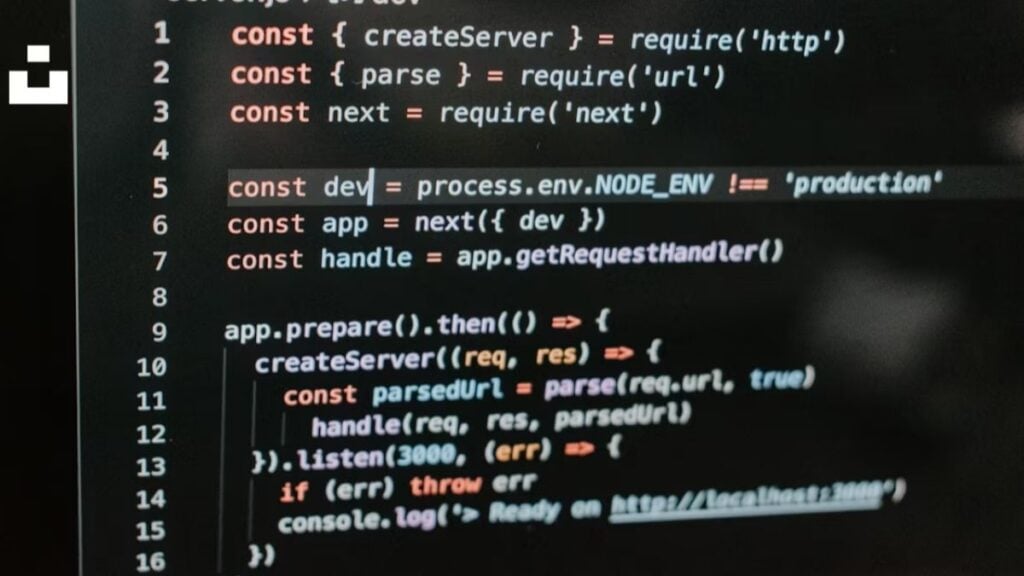
Next.js merges React’s flexibility with server-side rendering and API routes. It enables you to build internal tools that handle authentication, data fetching, and permissions without external plugins. Its hybrid structure supports both static and dynamic pages, which suits internal dashboards connected to live databases.
Many developers choose Next.js for automation panels that require reliability, speed, and SEO-friendly architecture — even when used privately within companies.
Honorable Mentions: Niche or Specialized Frameworks
While the major players dominate the market, some smaller frameworks fill specific needs. They may not match React’s popularity but often outperform in specialized environments where speed or server-side optimization matters most.
Notable options include:
Remix: Efficient server-side rendering and simplified data loading for backend-heavy apps.
Ember.js: A convention-over-configuration framework suitable for large, long-term projects.
Meteor.js: Real-time synchronization between client and server for automation dashboards.
These frameworks deserve consideration when you want to test alternatives that align with unique internal processes or integrate directly with existing server logic.
Integration Trends: AI, APIs, and Workflow Automation
Modern internal tools go beyond displaying data — they interpret it. JavaScript frameworks now connect seamlessly with AI APIs that handle prediction, anomaly detection, or workflow automation. For instance, React or Angular dashboards can trigger AI-driven analytics directly through cloud APIs, while Next.js enables serverless automation routines.
The rise of no-code and low-code extensions further amplifies these frameworks. Platforms such as Retool, n8n, or Appsmith combine JavaScript backends with drag-and-drop interfaces and give non-technical users the ability to build internal dashboards. At the same time, developers integrate serverless databases like Firebase or Supabase to reduce overhead and maintain real-time data pipelines.
The line between code and automation continues to blur. JavaScript stands at the core of this evolution and adapts easily to new tools and APIs that redefine how companies manage information and automate workflows.
A Smarter Path to Efficiency
The framework you choose defines how effectively your internal systems expand. React ensures scalability, Vue adds simplicity, Angular provides structure, Svelte offers speed, and Next.js connects frontend and backend layers. Each serves a clear role but shares one goal — faster, smarter automation.
JavaScript remains the backbone of internal tool development. It unites versatility, performance, and strong community support to create dashboards that guide decisions and improve workflows. With the right approach, your internal platform can grow from a support tool into a hub of intelligence that drives sustained efficiency and progress.