

Home Blog Page 716

Toast to 10: Former Barrett Media Writers Tell Their Tale

0

The Toast to 10 series presented by Premiere Networks, is a month-long series looking back on 10 years of Barrett Media. Throughout the month, you’ll hear from those who’ve shaped the company, managed and created the content, read the site, and partnered with the brand between 2015-2025 to share how they’ve seen it play a role in covering the media industry and educating, celebrating, and challenging the business. 

As Barrett Media celebrates its tenth anniversary this month, we also take time to celebrate some of the former writers and contributors who have added their voices to the Barrett Media brand. For ten years, the efforts of many who sparked the creative mind to elevate, celebrate, and challenge have helped build Barrett Media into the place it holds in the industry today. Numerous voices have covered media in sports, news, and music. Whether it was a single guest column or a daily editorial voice, the industry has been represented by many who have come and gone on to serve the industry today.

Echoing the statements of Barrett Media columnist Demetri Ravanos, I always appreciated how the writers and columnists on Barrett Media, led by Jason Barrett, took a stance that protecting the business does not mean ignoring reality.

There are moments in the industry where the press release doesn’t tell the entire story. The depth of understanding, along with the fearless approach of not being afraid to challenge executives when it called for it, is what drew me in as a reader.

That spirit lives on today, now that I am a daily sports media columnist, feature writer, and the sports editor for the site. It’s a tremendous responsibility to maintain that same approach in a headline world. The battles we constantly face to draw eyeballs into content are because of the depth of information it provides—the detailed storytelling of constant struggles within traditional media and the triumphs of the digital landscape. Putting a story behind a name who recently received a pink slip is just as important as the same narrative around one landing a new opportunity.

To quote a Rage Against the Machine track called Voice of the Voiceless, I always saw Barrett Media as the publication that made “the powerful get nervous, because he refused to be their servant.” Success only happens through consistent effort. Without the effort of many, Barrett Media wouldn’t be standing tall ten years after it launched.

Brian Noe – FOX Sports Radio

Brian Noe (X Screengrab)

Brian Noe is a talk show host on nationally syndicated FOX Sports Radio. He wrote for Barrett Media from 2017 to 2023. Noe became familiar with Barrett Media after overhearing his former co-worker Bruce Jacobs constantly raving about the quality content the website provided. After checking out the website and looking for additional work. Noe saw an ad for a writer to contribute and reached out to Jason Barrett.

“I thought the writing stuff would keep me busy. Plus I’d be able to meet a lot of new people that could possibly help me find more on-air work,” said Noe.

Over the time in which Noe contributed to the Barrett Media brand. He saw expanded growth—adding more content on a daily basis. He saw how the industry was beginning to understand the dynamic that made Barrett Media an online destination for many in the industry.

Noe was in attendance at the Barrett Bash last week in New York City. After hearing the story of how Barrett Media came to be, it led to a comparison to Jerry Jones and the Dallas Cowboys.

“Stephanie [Eads] talked at the Barrett Bash about how JB had basically bet everything he had left on the company. In hopes of signing his first client by a certain date. It was kind of like what Dallas Cowboys team owner Jerry Jones explained at the beginning of the Netflix docuseries America’s Team: The Gambler and His Cowboys. Jerry basically bet it all. Even went into debt, to drill for oil once again in hopes of cashing in,” explained Noe. “For JB to be in a similar, shaky position initially. To go all in in hopes of getting his company off the ground. To now see where the company has grown, it’s pretty wild.”

The FOX Sports Radio host believes Barrett Media serves a vitally important role in today’s industry landscape. Noe remains excited to stay up to date on the news of the day while Barrett Media continues to thread the needle between compliments and criticisms of the media landscape today.

“Barrett Media tells the truth in spite of stepping on toes. That’s so important when you’re seeking the truth as a reader. There is so much fluff these days,” said Noe. “Jason Barrett genuinely loves the industry and wants to see it be the best it can be. That partially includes celebrating the wins and triumphs. It also includes sounding like Bill Parcells when one of the coach’s players didn’t do his job and knew better. That’s at the heart of every piece of content Barrett Media puts out there. He wants to see the industry reach its full potential.”

Stephen Strom – Miami Marlins Radio

Stephen Strom (Insta Screengrab)

Stephen Strom is the radio voice for the pregame and postgame on the Miami Marlins Radio Network. He wrote for Barrett Media for just a year, from June 2022 to April 2023. But he is still an active reader of the website daily. Strom left his position with Barrett Media when he was named to the broadcasting team with the Marlins. He is wrapping up his third season at the helm.

“What Jason Barrett has done for the industry is incredible. It’s provided a way to connect with broadcasters and also learn about the craft,” said Strom. “It’s the broadcaster’s ESPN… you strive to put your work on Barrett Media’s site because you know if you’ve made it there, you’re doing a killer job.”

Strom continues to be one of the more innovative voices in all of Major League Baseball on the radio side. While the wins for the Marlins have not been plentiful in recent years. The organization’s radio product continues to shine and appeal to new audiences with live video streaming and podcasting opportunities. Ideas like that are ones that spark the mind of the reader and also the future of the industry. Strom has continued to be a guiding voice for the future of the industry. From the time he was involved with the Barrett Media brand and into his tenure with the Miami Marlins.

“Any time I talk with a young broadcaster or aspiring journalist. I tell them to head to the site and fish through it,” said Strom. “It’s the best source you can find.”

Ryan Hedrick – 93.1FM WIBC Indianapolis

Ryan Hedrick (X Screengrab)

Ryan Hedrick was one of the first writers on staff when Jason Barrett launched the Barrett News Media brand in 2020. At the time he came aboard, he served in a part-time role. He contributed articles while the brand was still finding its footing. Hedrick shares a passion for the news talk format and became immediately interested when Jason Barrett and he shared a call discussing how Barrett Media would be expanding into news coverage.

Hedrick discussed the initial days of what was called Barrett News Media, and how the platform has grown since it launched.

“When we first launched the news side, it was tough. Program directors in major markets didn’t always respond to us. Barrett News Media was still new and not really on their radar yet,” said Hedrick. “I’ve seen Jason put in the work—constantly. He’s built this thing piece by piece. Whether it’s through hosting seminars for both the sports and news sides, hiring new staff, or juggling multiple projects at once. I’ve seen him redesign the site more than once to match the way the brand was evolving. He’s leaned into video content and sales partnerships to really strengthen the brand and boost its credibility.”

Hedrick, who now anchors news on Indianapolis’ 93.1 WIBC, has always appreciated how the Barrett Media brand has continued to stay neutral with its news stories and featured columns despite living in a very tribal society. Everyone has a voice and is represented on Barrett Media.

“What’s also been great to see is how the brand has grown its network without boxing itself into one political corner. It’s not just about left or right,” explained Hedrick. “It’s about covering the whole space. Creating something valuable for everyone in the industry. No matter what side of the dial they’re on.”

One aspect Hedrick noted in our conversation was how impressed he’s been with the growth of the Barrett Media brand into the music formats. He feels this has led to more opportunities for Barrett Media to connect with more audiences. While delivering the same quality coverage it has when it previously covered just sports and news.

“Combining sports, news, music, podcasting, and the sales side of both radio and TV has really made Barrett Media more well-rounded and diverse,” said Hedrick. “I think music programming often gets overlooked. People don’t always see the talent behind the scenes. The folks running FM and satellite stations who are putting together incredible content every day. There are some real programming geniuses in that space who haven’t always gotten the same recognition as those in sports or news. That’s starting to change. They’re finally getting the credit they deserve, and it’s great to see the brand helping shine a light on that.”

Brian Shactman – WTIC News Talk 1080 – Hartford
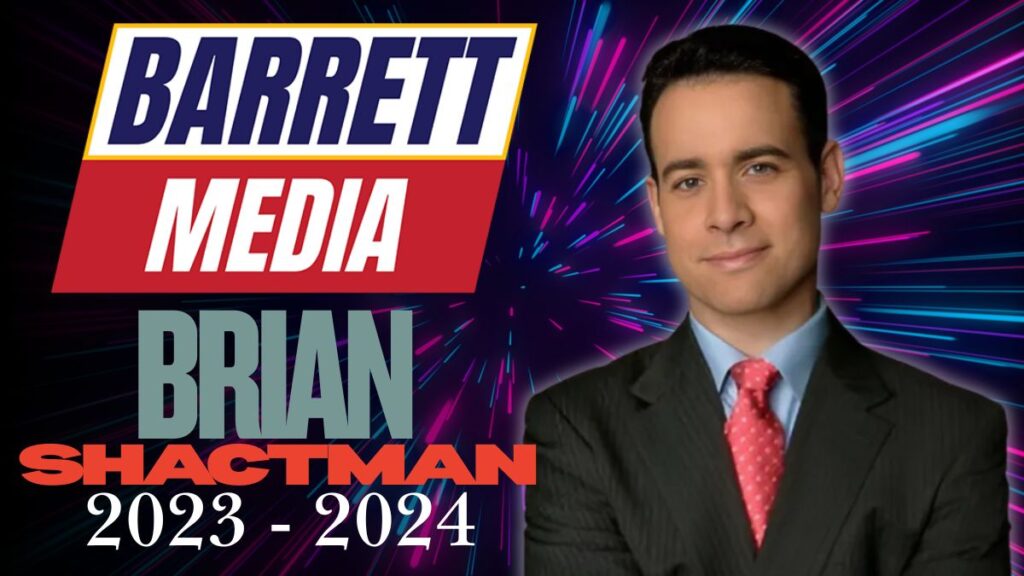
Brian Shactman (X Screengrab)

Brian Shactman grew to know Jason Barrett during their time working for ESPN Radio. After some time working together, both would separate going on their own paths. Barrett remained in sports radio, while Shactman took the television route working for NBCUniversal from 2007 till 2019. In 2023, Shactman joined the Barrett Media team as a weekly columnist for Barrett News Media.

“We had kept an eye on each other’s careers,” said Shactman. “When I went into local radio fulltime, he felt there was a need content-wise and asked if I’d be interested in writing a column.”

Shactman wrote for Barrett Media for just a year from 2023 to 2024 discussing how news talk radio hosts can find elements to always improve their on-air delivery, and further connection with the audience. While writing a weekly column for Barrett Media, Shactman hosted weekday mornings in Hartford, CT on 1080 WTIC on the popular morning program Brian & Company. A position he still holds to this day.

Even away from the brand, Shactman says he still remains in step with the happenings at Barrett Media on a regular basis. He noted how he’s seen the brand continued to grow since his departure last year.

“It has expanded into almost every aspect of media, so the most pronounced change is the growth. They’ve also become more responsive to news. If a consumer is on the distribution list, they’re getting news/analysis quite fast,” said Shactman. “With growth comes more content. With more content, comes more variety. New content is vital to any website, and Jason not only knows this but also delivers it.”

While he continues to work in the industry, Shactman believes the standing that Barrett Media has built over the past decade shows how relevant it is to the health of it.

“We need SO MUCH more of it, although stronger checks/balances are needed. If something egregious happens, people need to have the courage to discuss it,” said Shactman. “I have been impressed by Jason’s aggressiveness, and there’s no reason to think he will slow down in the effort to cover this industry better than anyone else.”

Jordan Bondurant – ESPN Richmond
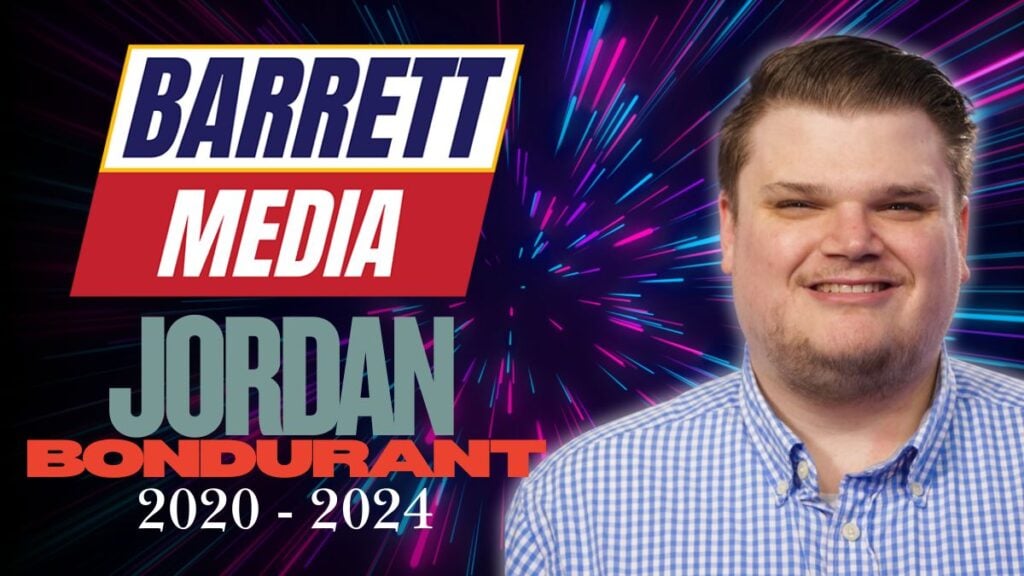
Jordan Bondurant (X Screengrab)

Jordan Bondurant was one of my personal favorite writers to check out on the Barrett Media site when I was an avid reader working in programming for iHeartMedia. Bondurant’s work was a daily encyclopedia of the biggest names in sports media and what they were talking about. So much so, I had reminders set in my personal calendar to check the latest of what Jordan published. It provided so many segments’ worth of content and audio to enhance the products we were producing in Tampa Bay.

Serving the Barrett Media brand from 2020 to 2024. Bondurant reached out to Jason Barrett during the pandemic about a post for writers for the site. Despite no sports being played, sports media headlines continued to be created daily. While the content Bondurant put out served my staff well, he noted he’s seen the site grow more into one producing unique content than any other.

“The site has grown from being more a follower and aggregator of sports media and industry news to being one of the go-to publications for leaders and executives in the radio industry as a whole,” said Bondurant.

He continues to be a daily reader of the Barrett Media brand. He subscribes to the morning and evening newsletters. Bondurant continues to believe the site’s role in the media industry today is to spotlight the meaningful news and work that people put out daily.

While recalling a favorite moment or two from his days working for the Barrett Media brand. Bondurant remembered one of the earliest memories of Barrett News Media as the first that comes to mind.

“Rush Limbaugh passing away was one of the first big stories for Barrett News Media,” Bondurant recalled. “I also thought my piece on the broadcast teams for the 2023 NHL Stadium Series game turned out quite well. Following Pat McAfee from when his internet show started taking off to making the transition to ESPN. Also, following the media rights discussions for college sports conferences was big for me during my time.”

One aspect Bondurant sees continuing to grow outside of the content on Barrett Media’s website are the annual summits put on for both sports media and news media. Looking ahead to the next decade for the brand, he continues to see a bright future.

“I see Barrett Media continuing to dig into the short-form content and video space,” said Bondurant. “The news and sports summits continue to draw bigger crowds and feature more impressive and accomplished speakers. I see Barrett Media continuing to fine-tune its roots as well.”

When Jason Barrett planted the roots of what became Barrett Media, he began with a vision. An understanding there was a hole in the trades for another voice to enter the arena. Ten years is a lifetime for most small businesses but should also be considered a mark of achievement. While the industry faces many challenges of yesterday and today, Barrett Media’s rise to success has been because of the power to think differently, be recognized, and create community for a better tomorrow. All fueled by the many voices who contributed to this platform, and many more for years to come.

Barrett Media produces daily content on the music, news, and sports media industries. To stay updated, sign up for our newsletters and get the latest information delivered straight to your inbox.

How Scott Hanson Is Guiding ‘RedZone’ Through Changing Times With NFL Media

0

Scott Hanson has become a fixture of the NFL Sunday game day experience for football fans across the country. Since his arrival at NFL Media in 2006, he has served as both reporter and host, helping launch NFL RedZone in 2008. Hanson has not missed a single NFL Sunday, delivering the biggest highlights from around the league in real time as the expanding interest in fantasy and sports wagering continues to make every score worth so much more.

This past spring, Hanson found himself in limbo. His contract with the NFL had expired following the Super Bowl, leaving the 54-year-old host contemplating what’s next. Thankfully, in July, Hanson came to an agreement with the NFL to return on a multi-year extension. Keeping him in the role he has best served since 2008: the host of RedZone on NFL game day Sundays.

“We began initial talks about extending my deal as the host of RedZone back in August 2024,” said Hanson. “The negotiation took a while, and I’m very thankful that I’m staying with RedZone for a four-year deal. It’s great to still be in the captain’s chair for the show that everybody loves.”

Hanson is a passionately devout fan of the game of football. He graduated cum laude from the prestigious Newhouse School of Public Communications at Syracuse University and found a career covering the game he once played. Now entering his 17th season as the host of the flagship fast-paced, real-time highlight NFL program, Hanson understands how blessed he is to have found a vessel for sharing his love for the game.

“It’s like being an actor that lands that one role that people love and don’t ever want to see you move away from,” said Hanson. “It’s an incredible honor, a privilege, but also a big responsibility. People trust me with their NFL Sundays, and I do not take that lightly.”

Explaining RedZone Commercials

With a new four-year extension in his rearview, Hanson prepared for this upcoming season like any other. Each week, he studies the league from the view of what the fan should know about. Storylines, key stats, matchup implications, and more. The goal is accuracy through a fun and entertaining presentation. Captivating the viewer to enjoy every second of “seven hours of commercial-free football.”

This year, a change is coming from the NFL. Following a trial run last year of commercial insertion in the broadcast, the NFL conducted extensive testing through focus groups and social media monitoring to analyze viewing habits of RedZone with the strategically placed advertisements. This year, following the results of the trial run, RedZone will feature a limited number of advertisements strategically placed across the show’s more than seven hours of continuous football coverage each Sunday.

“I’m the host of the show. I try to use all my powers to be the best host I can possibly be. The fans have been overwhelmingly positive to my career and whatever bonus I bring to RedZone. My enthusiasm is one hundred percent real, but I’m the host,” explained Hanson regarding the commercial insertion in RedZone this season. “The business folks handle the business side of things. I am not involved with that. There is no one on planet Earth who wants to show you more football than I do.”

ESPN Potential Influence on Redzone

The news of the added commercial load, albeit small in nature compared to a network broadcast of an NFL game, came with much dismay and speculation as to other changes that could be coming to RedZone. With the NFL acquiring a 10% stake in ESPN, the sports network also acquired the NFL Network and the licensing to distribute the RedZone product. This means while ESPN owns and operates the NFL Network programming, RedZone will still be produced and operated by the NFL.

With ESPN being not only a partner but also with the league owning a percentage of the network, there has been speculation that the sports network could have influence on how the RedZone product could be presented when fully ratified, likely sometime next year.

Hanson says he hopes that good partners do have conversations about improving products together. However, he still knows that at the end of the day the NFL will make the call.

“Everyone has an opinion when it comes to sports television—the way we should do this versus the way we should do that,” said Hanson. “To the extent that Disney [ESPN] was interested in the RedZone aspect of this, they’re interested in it because it’s a galactic success. In show business, you don’t mess with a success. Or at least, most people don’t mess with a success in show business. But that’s on a different pay grade than what I’m on.”

Why RedZone Is A Success

RedZone is undoubtedly, as Hanson termed it, a “galactic success.” It is available in more than 50 million homes through TV, satellite, and streaming providers. The channel has become an important destination for football fans who prefer highlight reels in real time. Hanson reasons that people watch RedZone not because of short attention spans preferring scoring plays over the traditional broadcast style. In fact, he questions those who say the RedZone product is curated for those with short attention spans.

“People say this generation has tiny attention spans. That’s true, but it’s also not entirely true,” explained Hanson. “A TikTok video might be 15 seconds, but someone that likes TikTok videos will watch them for three straight hours. Do they have a short attention span or a long attention span? They’re watching 15-second snippets for four hours of scrolling. That’s a common ritual among not only the young generation, but I think the current generation of adults.”

Hanson explained the goal of RedZone has always been to offer the most comprehensive look at NFL football. He believes the moments are what allow football fans to dedicate hours each Sunday to stay tuned in to RedZone. They’ve done so for sixteen seasons.

With his 17th season hosting RedZone officially underway, Hanson said it was the smart thing to do to find an agreement this offseason to remain at his home. With a new extension that will carry his legacy through the 20-year anniversary of the program, and a new partner in Disney/ESPN to work alongside in the future, the vision is bright for Hanson and the outlook of the country’s obsession with RedZone.

“If you loved RedZone last year, you’re going to love it again this year. You’re going to find it in the same place that you found it last year,” said Hanson. “I have no intention of going anywhere anytime soon. The touchdowns are going to be there, and it’s not changing in a material way.”

Barrett Media produces daily content on the music, news, and sports media industries. Sign up for our newsletters and get the latest information delivered straight to your inbox.

What Barstool Sports’ Anniversary Should Teach Sports Radio Talent

1

September 10, 2003, was just another day in sports. The New York Yankees and Atlanta Braves were rolling toward winning their respective leagues. The NFL had just kicked off another season. Joe Nieuwendyk signed with the Toronto Maple Leafs. Just another day in American sports, but a massive day in the history of sports media. Twenty-two years ago today, a small local paper distributed to Boston commuters at public transport stations began circulation—the first day in the history of Barstool Sports.

Over two decades later, the same small-town paper that Dave Portnoy crafted in his Milton, Massachusetts, home is now one of the globe’s largest success stories in sports media. What began as a rag offering satirical takes on sports, gambling, and fantasy football is the standard that all sports media brands look to as the pinnacle.

If vision is the art of seeing what is invisible to others, Portnoy exemplified it. He built a brand through word-of-mouth promotion, social media chatter, and connecting with millions—never losing focus on his mission. Barstool Sports found a niche, overdelivered, and stayed true to its audience. Every sports radio host should take note.

One lesson I always stressed as a programmer was the importance of using your time wisely. The assets a radio station provides are immense and can rarely be fully leveraged. Most stations offer state-of-the-art studios, digital tools, and social media platforms for talent to experiment with. The range of creativity permitted in many buildings has no limits—but only if talent chooses to use it.

It’s getting to that time of year in sports radio.

Prepare Now for What’s Coming

As the fiscal year ends, reductions in force are on the minds of sports radio talent across the country. I’ve seen it happen year after year—talent approaching management about endorsements, ratings, digital growth, or the general content of their programs. There’s never a better time than now to examine what Portnoy started twenty-two years ago and consider thinking in the same innovative frame of mind.

The days of just being a sports radio personality are over. Broadcast companies constantly look for ways to save their bottom line at the expense of talent. Surviving solely by doing what you’ve always done is lucky—but it’s no longer enough. Thinking outside the box isn’t optional anymore.

Looking at Portnoy’s example, he knew the niche to cater to. What started as solely a sports publication grew into male-interest pieces surrounding lifestyle rather than just sports.

Ask yourself, are you still sticking to sports with your audience?

Following an expanding audience and readership, which led to more advertising dollars for Portnoy, he created the Barstool Sports website in 2007. In the same vein, he also expanded paper distribution into New York, Chicago, and Philadelphia. With a desire to reach a younger audience, Portnoy also created a college edition called Barstool U.

For sports radio talent, the lesson is clear: content is no longer limited to your show. Consider launching a podcast outside of your station’s feed. Sell your own advertising. Build a social following. Success leaves clues—and sowing the same seeds will yield similar rewards.

Success leaves clues, and if you sow the same seeds, you’ll reap the same rewards.

Sooner You Start, Sooner You Succeed

Success wasn’t overnight for Portnoy, but he remained consistent because of his focus on the mission. Under a decade later, Barstool Sports found an investor and a 10–15-million-dollar evaluation. Consistency, taking risks, and staying true to the audience are what made Barstool Sports grow from what it was to what it is today.

Isn’t that what sports radio hosts used to do? It’s time to look inward and make a choice.

Barstool Sports talent today are featured in commercials, host podcasts, shoot video, and live in a constant state of content. Everything is content, but it’s not for everybody.

Remember sports radio talent fighting the use of social media with their shows and their lives? Barstool Sports didn’t shy away and has capitalized ever since.

Remember when sports radio talent didn’t feel they had the capacity to do podcasts? Podcasts aren’t optional anymore—they’re a necessity. The world is more on-demand than ever. Ignoring this trend means being left behind. Barstool defined sports podcasting and continues to dominate, despite increasing competition.

What Portnoy saw was what sports radio refused to do, and he ran with it. He built an empire on the mere faults of what sports radio in the past simply ignored. If vision is the art of seeing what is invisible to others, Portnoy saw what sports radio was blind to see.

The tables have turned for sports radio talent. It’s far beyond time to adapt or die.

The message for sports radio talent is urgent: adapt or risk obsolescence. Use the tools available. Promote and amplify your message. Get social. Your niche doesn’t live on your timeline—it lives on your audience’s.

The time is now. The end of the year has arrived. Don’t leave yourself behind before it’s too late.

Success leaves clues, and if you sow the same seeds, you’ll reap the same rewards.

Happy anniversary to Dave Portnoy and Barstool Sports.

Barrett Media produces daily content on the music, news, and sports media industries. To stay updated, sign up for our newsletters and get the latest information delivered straight to your inbox.

Urban Radio in 2025: Local Connection, New Artists, Real Results

0

I did some traveling at the end of last week. It gave me an opportunity to tune in to a few radio stations I hadn’t heard in a while. I’ll admit, I was excited to listen. Maybe it’s just me, but I think you get a better sense of a station’s local flavor when you hear it on the air rather than streaming online. The promos, liners, and even the commercials give you an idea of what’s really happening in the city and on the station.

One local connection that stands out—that even TV stations with broadcast rights to the franchise can’t quite match—is radio’s bond with the city’s NFL team. Many markets embrace this, not just the one I was in. Urban stations in most major cities create weekly homages in the form of a song or rap, celebrating the hometown team. I’ve always been impressed by the song track selections and the creativity behind the lyrics that complete the package.

I’ve long believed that aligning your station with your city and what it’s best known for strengthens its global appeal. Another mantra has always been to “think globally and act locally.” Ride the coattails of your city by tapping into its identity. Hearing stations fully embrace their NFL teams during the first week of football underscored how powerful that approach can be to the start of the fall.

Another win for me comes when I find myself reaching for my phone to open the Shazam app. That’s always a sign of a positive feature for the station. During this listen, I came across some classic tracks I hadn’t heard in a while. I also heard a few brand-new songs that grabbed my attention. While I wouldn’t call myself a die-hard fan of today’s hip-hop and R&B, I do now and again hear songs I think are exceptional. When that happens, I immediately add them to my personal library. To my surprise, this happened far more often than I expected.

Where my experience faltered slightly was in the overall presentation. One station that had once featured a live morning show had now switched to a syndicated program. That was disappointing. I had looked to them first, expecting a truly local voice with my preferred music in the morning. Another station, as anticipated, stuck with its syndicated morning show. The experience was consistent with what I expected—syndicated content that was at least hyper-localized.

The third station I checked out was the most interesting. It delivered exactly what I was looking for: a strong local presence. In fact, it was better than expected. The local flavor was unmistakable, and the on-air team was cohesive,, and clearly in sync. That kind of chemistry matters.

While I need to do more listening, I came away encouraged about where urban radio could go. There are still viable examples of local programming that resonate with the audience. When stations do rely on syndication, hyper-localization helps bridge the gap. Add to that some fresh music and emerging artists who seem to be nudging the format forward, and I can see the potential beginnings of an evolution.

Radio has always thrived on its ability to connect people to their communities while also exposing them to something new. As long as programmers and personalities keep that balance in mind—local connection paired with global perspective—I believe urban radio has room to grow and even reassert its influence.

I’d love to hear your thoughts. Email me or connect with me on LinkedIn.

Why Eric Stanger of the ‘Sean Hannity Show’ Left the BNM Summit Inspired

The third annual BNM Summit took place in New York last week, with several major news/talk radio and news television figures in attendance. One of those figures was Eric Stanger, Senior Vice President of Operations for The Sean Hannity Show, one of the biggest news/talk radio programs in the format.

We sat down with Stanger to talk about his biggest takeaways, what he believes the future of the industry looks like, and how he applies what he learned at the BNM Summit as he returns to The Sean Hannity Show and his daily professional life.

Krystina Alarcon Carroll: What was your biggest takeaway from the summit?
Eric Stanger: My biggest takeaway was the overwhelming positivity about the future of our business. The energy was palpable, and I loved how eager everyone was to connect and share ideas. It was wonderful to be surrounded by radio professionals—some of whom I’ve known for more than 25 years and some I just met for the first time—who were all so energetic and excited about our business!

KC: Which panel do you feel was the most important to hear?
ES: That’s a tough choice because they were all great. “Steering the Format Forward” on Day 1, with my colleague Chris Berry and good friends Phil Boyce, Drew Andersson, and Mike McVay, was especially memorable and thought-provoking. I also thoroughly enjoyed watching my boss, Julie Talbott, receive her well-deserved “Gold Standard in Business” award.

KC: What was the most surprising part of the summit?
ES: Jason and his team did an incredible job with the panels. Not really surprising — maybe “impressive” is a better word. I loved how the panels were produced like actual radio shows, with embedded actualities, top-level guests, and a host who obviously has experience steering the ship and keeping things on track and on time!

KC: How are you going to implement what you learned at the summit going forward?
ES: There are so many takeaways, but I left the summit feeling deeply inspired and motivated about our industry, its future, and the incredible people who are pushing boundaries and driving innovation. I feel energized and excited to be a part of the biggest and the best mass reach medium.

KC: Where do you think Artificial Intelligence is going to have the most impact in the next 3–5 years (i.e., the marketing side, on-air talent, writing, etc.) and why?
ES: I believe that radio is art, and AI will never replace art. I’ve yet to see an AI-generated photo, painting, or movie that looks 100% real. When the human element is missing, it stops being art—and the same goes for radio. Smart radio professionals will use AI as a business tool, just like we use Google or PowerPoint, but it won’t replace human scriptwriters, producers, managers, or on-air talent. The heart of radio is human, and that’s something AI can’t replicate.

KC: What do you think the future of spoken word/radio/podcasting looks like?
ES: We’ll continue to see an expansion of platforms and creators—more people launching podcasts, more companies entering the space, and more mergers shaping the landscape. Terrestrial radio still reaches 82% of Americans weekly, which proves its enduring relevance. And with the 24/7, ever-evolving news cycle, spoken-word mass communication will thrive.

Live radio will remain essential — especially during emergencies and breaking news—when immediacy, trust, and accessibility matter most. It’s a lifeline for communities and a reminder of the power of real-time human connection. Over the next five years, I believe spoken word will continue to grow on every platform as both a business and an art form.

Barrett Media produces daily content on the music, news, and sports media industries. To stay updated, sign up for our newsletters and get the latest information delivered straight to your inbox.

CBS News Folds on Editing Policy as ESPN Refuses to Bow to Censorship Demands

0

It was a blatant attempt at censorship. CBS News totally caved to the Trump administration after accusations of biased editing. But ESPN refused to bow to the pressure to edit out reactions to Trump’s appearance at the U.S. Open. 

CBS folded immediately. But, ESPN forcefully pushed back on a demand from the tennis association to not air crowd reactions to President Trump at the men’s final, saying it would air what it wanted to air. It came to a drastically different conclusion about its policies.

The largest sports network stood up for its long-standing rules of showing high-profile attendees. It didn’t bow to censorship, and is to be commended. It makes me happy that in a world where Trump is suing networks and threatening journalists, the largest sports network basically said, screw you. 

It makes me happy that in a world where Trump is suing networks and threatening journalists, the largest sports network basically said, screw you. 

In a Face the Nation interview with Kristi Noem, Secretary of Homeland Security, she said the network “shamefully” cut out her comments about Kilmar Abrego Garcia, a Salvadoran man who was mistakenly deported in March. The uproar prompted an immediate change in editorial policy.

Initially, CBS said the interview was “edited for time and met all CBS News standards,” noting “the entire interview is publicly available on YouTube, and the full transcript was posted early Sunday morning at cbsnews.com.”

But later, CBS did a total flip. The network said it would no longer edit interviews on its Sunday show Face the Nation, and will only broadcast them if they are live or recorded live-to-tape, meaning the guests’ words will not be edited. Noem said that an important section of her interview was deleted, and published the full transcript on X. 

A press release from DHS said that 23% of her interview was edited, including “exposing the truth about criminal illegal alien Kilmar Abrego Garcia, President Donald Trump’s lawful actions to protect the American people, and Secretary Noem’s commitment to fight on behalf of the American people and their tax dollars.”

Editing for time purposes, or clarity, is standard in the industry. When I have taped lengthy interviews with high-profile celebrities or politicians, I always edited their responses, in part so I could delve into more subjects. Politicians especially know how to filibuster on air. Not editing out redundant or irrelevant points makes it impossible to address more than one or two questions. Changing this long-held practice diminishes the quality of reporting for the viewers. Some say it will bolster credibility. Not so fast.

The radical change in policy can be laid at the feet of the new leader of CBS’ parent company, Skydance Media. David Ellison, whose father is the founder of Oracle and megadonor to Trump, said that CBS News has become “extreme, elitist, and performative,” and promised to change the atmosphere. 

Trump believes Ellison is the answer to turning around the company. “A great man. He actually just bought CBS. And I think he‘s going to do the right thing with it.”

In other changes seeming to favor the administration, there are reports that Skydance is buying Bari Weiss’ website The Free Press and hiring her. Weiss is one of the most polarizing figures in media and critical of “woke” ideology. She left the New York Times because of “bullying by colleagues” and an “illiberal environment.” CBS has also just hired Trump supporter Brendan Carr as ombudsman to root out bias in the newsroom. 

Trump’s bullseye on the back of CBS News started when he sued – and won $16 million, plus free advertising – for editing portions of a Kamala Harris interview during the campaign to make her look more coherent. And these editing and personnel changes are no doubt making him pleased.

ESPN was told to “refrain from showcasing any disruptions to the President’s attendance in any capacity.” It’s not ABC’s or ESPN’s job to dictate their production editing to make Trump look good. While it may be because the USTA didn’t want any political fights, it made the association look bad and is utterly inappropriate. If Trump wants to go to the U.S. Open, as Bill Clinton had done, why not show the public’s reaction? It’s news in real time. 

And ESPN did it without great fanfare. They showed him entering along with the crowd reaction for a brief period of time, just as it shows other celebrities sitting in the stands. And Trump should have expected mixed reactions since almost half of the country disapproves of his handling of his policies.

Both networks reacted with wildly different responses to what seems like an authoritarian smackdown. Who is served by not letting journalists do their jobs? I know Trump has gotten the short end of the stick from mainstream media. His coverage has been extremely critical, to say the least. But for a network to fold when it comes to its journalism policies is downright bad judgment. Kudos to ESPN for sticking to its guns. And shame on CBS for folding.

Barrett Media produces daily content on the music, news, and sports media industries. To stay updated, sign up for our newsletters and get the latest information delivered straight to your inbox.

News/Talk Radio Needs to Copycat the Podcast Industry On This One Issue

0

In news/talk radio, the most valuable asset isn’t the signal, the station brand, or even the reach — it’s the host behind the microphone.

Audiences don’t tune in for traffic reports or weather updates; they’re there because they trust the voice guiding the conversation.

Yet, too often, radio companies treat their hosts as simply interchangeable parts of the programming machine. That might work if you’re airing syndicated shows or relying on jingles, but when it comes to advertising, the numbers don’t lie — hosts themselves are the product.

Host-read ads are an absolute behemoth in the podcasting world. The biggest advertisers in the medium utilize and demand host-read ads. Why? Because they work. It’s isn’t hard to connect the dots that listeners consume their favorite podcasts because they like the hosts, therefore, they’re more inclined to have a more favorable view of the marketers being talked about by said hosts.

They’re one of the most powerful tools available to drive revenue, and the data proves it. According to recent studies, host-read ads carry a 71% brand recall rate, compared to just 62% for non-host-read ads. That’s not a marginal difference — it’s a clear indication that when audiences hear a message from someone they already trust, it sticks. For an industry fighting tooth and nail for every advertising dollar, ignoring that advantage is business malpractice.

More importantly, host-read ads don’t just linger in memory. They move the needle. The same data shows host-read spots increase purchase intent by 50% compared to other ad formats.

Think about that for a second. A listener not only remembers the product but is more likely to buy it simply because their favorite host mentioned it? In a business that’s constantly under the microscope for revenue growth and advertising retention, why wouldn’t radio embrace a proven path?

Podcasts have already figured this out. The genre thrives almost entirely on host-read ads, with listeners accepting them as part of the experience rather than an intrusion. That model has helped the podcast industry scale into billions of dollars annually. Meanwhile, news/talk radio — with decades of credibility and a built-in habit of audience loyalty — often defaults to canned, pre-produced spots that could run on any station in any market. If you’re a program director or sales manager, that should feel like leaving money on the table.

It’s not just numbers on a spreadsheet that make the case. 80% of listeners say they would consider a product or service promoted by their favorite host. That statistic should make every general manager’s ears perk up. When was the last time 80% of your audience agreed on anything? If listeners are practically begging to have products endorsed by the people they trust most, why wouldn’t radio give them more of it?

There’s also a branding benefit that can’t be overlooked. A news/talk host reading an ad blends the message seamlessly into the rhythm of the show. Instead of being a break in programming, the ad feels like an extension of the content itself. Done correctly, it enhances the host’s authenticity and strengthens the bond between talent and audience. Compare that to a commercial — which can sometimes be overproduced — that jars listeners out of the conversation. Which one is more likely to keep ears on the station?

Of course, some will argue that not every host is comfortable doing live reads or tying their reputation to a product. That’s absolutely fair. Credibility is everything in this business. But isn’t that also the point? If a host endorses a product they genuinely use or believe in, that authenticity radiates. It’s the exact opposite of a cookie-cutter spot read by a generic voice actor. And if a host doesn’t feel good about promoting something, maybe the station shouldn’t be running the ad in the first place.

The other objection often raised is scale. Agencies love predictability, and it’s easier to buy 100 identical recorded spots across multiple stations than to coordinate custom host reads. That’s true, but it’s also shortsighted. Radio can’t compete with digital platforms by offering the same thing. It must lean into what makes it unique. And what makes it unique is the human connection between host and listener that no algorithm can replicate.

News/talk radio has been around long enough to know that listener trust is its currency. When that trust is harnessed in an advertising message, it delivers results that rival or exceed anything digital platforms can offer. The industry simply can’t afford to ignore this. Stations and ownership groups desperate for sustainable revenue growth should stop treating host-read ads like an optional add-on and start recognizing them as a core sales strategy.

The path forward is clear. Hosts need to be positioned as brand ambassadors, not just opinion-givers. Sales teams need to be proactive in crafting deals that allow talent to integrate products naturally into their shows. And management needs to understand that while pre-produced spots may feel safe and scalable, they’ll never maximize the true value of what news/talk radio has to offer.

Radio has always been most powerful when it feels personal. Host-read ads capture that intimacy and turn it into measurable business outcomes. With brand recall higher, purchase intent stronger, and listener openness undeniable, the case is closed. News/talk radio doesn’t just have the opportunity to lean into host-read ads — it has the obligation. The medium’s future depends on it.

Barrett Media produces daily content on the music, news, and sports media industries. To stay updated, sign up for our newsletters and get the latest information delivered straight to your inbox.

NBC Sports Sees Second Highest Viewed NFL Opening Weekend in Last Twenty Years

0

NBC Sports launched its 20th season of Sunday Night Football with two nail-biting finishes that delivered historic audiences across broadcast and streaming platforms. The NFL Kickoff Game between the Dallas Cowboys and Philadelphia Eagles, followed by the Buffalo Bills’ comeback victory over the Baltimore Ravens in the Sunday night opener, averaged 26.5 million viewers across NBC and Peacock.

The numbers represent NBC Sports’ biggest NFL Kickoff Weekend since 2015 and the second-highest audience ever to open Sunday Night Football in its two-decade history, according to Nielsen and Adobe Analytics.

The weekend’s average viewership trailed only 2015, when Steelers-Patriots in the NFL Kickoff and Cowboys-Giants in the Sunday opener drew 27.2 million. For NBC, the strong start is another reminder of Sunday Night Football’s position as primetime’s top program, a streak that dates back 14 years.

Streaming played a major role in the audience surge. Peacock and NBC Sports Digital platforms set a Kickoff Weekend record with an Average Minute Audience (AMA) of 4.0 million viewers across the two games. Both broadcasts set individual streaming milestones, further cementing Peacock’s growing footprint in live sports.

Thursday’s Cowboys-Eagles clash was the standout. The game delivered an AMA of 5.0 million viewers via Peacock, NBC Sports Digital, and NFL Digital platforms. That figure marked the second-most simulstreamed NBC NFL game ever, and the most-streamed regular-season matchup in network history. Only Super Bowl LVI in 2022 generated a larger AMA.

Sunday night’s Ravens-Bills thriller also delivered a record, posting an AMA of 3.0 million viewers. It now stands as NBC Sports’ most-streamed Sunday Night Football game on record.

On linear television, Buffalo’s 41-40 win over Baltimore averaged 24.7 million viewers across NBC and Peacock, marking the most-watched Sunday Night Football opener since 2022. Viewership peaked early in the first half at 28.2 million between 9 p.m. and 9:15 p.m. ET, underscoring the continued draw of competitive primetime matchups.

Additionally, NBC broadcasts of both Kickoff Weekend games ranked as the two most-watched primetime programs since February’s Super Bowl LIX on FOX. That positioning further validates NBC Sports’ ability to deliver must-see television at the start of the NFL season.

Barrett Media produces daily content on the music, news, and sports media industries. To stay updated, sign up for our newsletters and get the latest information delivered straight to your inbox.

CBS Sports, FOX Sports Post Massive NFL Week One Viewership Figures

0

The NFL’s opening weekend delivered blockbuster audiences for both CBS Sports and FOX Sports. With each network touting its biggest Week 1 numbers in years. The results, measured under Nielsen’s new hybrid methodology that blends its traditional panel with “Big Data” from set-top boxes and smart TVs, underscored the league’s dominance as a television powerhouse.

CBS Sports emerged as the biggest winner of the week. The network’s national window, headlined by the Detroit Lions’ showdown with the Green Bay Packers, averaged 23.89 million viewers and an 11.0 rating. That made it CBS’s largest Week 1 NFL audience since 1998. The early window, led by Steelers-Jets, drew 17.05 million viewers, the network’s second-best Week 1 performance in that slot since 1998. Combined, the doubleheader averaged 20.38 million viewers — up 15 percent year-over-year.

Streaming also provided a record lift. Paramount+ posted its most-streamed NFL week 1 ever, highlighted by its two most-watched week 1 games of all time. Lions-Packers ranked first, while Steelers-Jets came in second.

FOX Sports, meanwhile, held its own despite ceding the doubleheader. The singleheader averaged 17.9 million viewers, marking the most-watched Week 1 NFL singleheader on any network since 2015. That year, FOX drew more than 20 million viewers. The network noted that this year’s strong performance reaffirmed its singleheader strength even in an unbalanced week.

This was the first time since 2015 that CBS owned the unopposed doubleheader. While FOX was left with the single header. In that context, CBS’s surge was expected, but FOX still managed to deliver one of its best early-season numbers in nearly a decade.

Although the comparisons are eye-popping, analysts are quick to point to the caveat in how the numbers are being tallied. Nielsen’s new methodology, combining panel data with set-top box and smart TV figures, produces higher totals than the panel-only system long used as the industry standard. That shift makes historical comparisons tricky, though the relative growth across networks still speaks volumes about fan demand.

In short, the NFL remains unmatched as an audience magnet. CBS has not drawn an opening-week national window this strong in more than 25 years. FOX’s single header still topped anything seen in the past eight. With both networks now bolstered by expanded streaming reach, Week 1 reinforced the league’s role as appointment viewing across platforms.

Barrett Media produces daily content on the music, news, and sports media industries. To stay updated, sign up for our newsletters and get the latest information delivered straight to your inbox.

The Best Way to Play Slots Online for Real Money Without Losing Your Bankroll

0

Slot machines have a reputation. Some players see them as a quick ticket to glory, while others treat them like a guilty pleasure after a long day. Either way, when you sit down to play slots online for real money, the biggest fear at the back of your mind is obvious. Every player is always worried about blowing through their entire budget in one night.

Playing should feel fun, not like you’re watching your wallet disappear with every spin. If you want a place that knows how to keep the games lively, sites like SlotoCash make it easy to get into the action while still letting you stay in control of your cash.

So, how do you actually play slot games for real money without your bankroll vanishing out of nowhere?

Why Bankroll Management Matters More Than Luck

Luck gets all the attention, but strategy is what keeps you in the game. Sure, you might hit a big win once in a while, but if you don’t pace yourself, you’ll be reloading your account before you even finish your coffee. Bankroll management is just a fancy way of saying, don’t spend everything at once.

Think of it as fuel in your car. You wouldn’t floor it the whole way and expect to make it across town, right? Same with slots. You spread it out, take your time, and enjoy the ride. The beauty of this approach is that it stretches the fun.

More spins lead to more bonus rounds, which translates to more chances at random surprises. Without a bankroll strategy, you’re just a passenger waiting for luck to decide when the ride ends.

The Fun Side of Playing Smart

Playing smart doesn’t mean being boring. It means keeping the game exciting without the stress of wondering how much you’ve lost. Imagine spinning with the mindset that no matter what happens, you’re still coming out smiling. That’s the sweet spot.

There’s something satisfying about walking away with even a small profit. Winning twenty bucks might not sound glamorous, but it feels amazing when you’ve managed your bankroll well enough to leave ahead.

Also, playing smart creates stories. “I stretched fifty bucks into three hours of spins and still cashed out at the end” sounds a whole lot better than “I lost everything in fifteen minutes.”

Tips to Play Slots Online for Real Money Without Burning Through Cash

If you want to keep the fun alive and protect your balance, these tips will save you from bankroll heartbreak.

1.  Set a Play Budget Before You Spin

Pick an amount you’re totally fine with losing. That’s your play money. Once it’s gone, it’s game over for the day. Treat it like movie tickets or dinner out. If you wouldn’t overspend on those, why overspend here?

2.  Divide and Conquer

Instead of dropping it all in one session, split your budget into smaller chunks. Maybe use half in the afternoon and half in the evening. That way, you’ve got more game time and more chances for lucky streaks.

3.  Choose Slots That Match Your Style

Love slow and steady? Low-volatility slots are like steady drips, little wins that keep you spinning longer. High-volatility ones? They’re the rollercoaster rides with fewer payouts but bigger thrills. Neither is “better,” it’s all about what vibe you’re chasing.

4.  Use Bonuses Wisely

Free spins, no-deposit perks, reload bonuses, grab them, but don’t rely on them as your entire plan. They’re boosters and not guarantees. Think of them like free samples at the grocery store. Nice to have, but you can’t live off them.

5.  Don’t Chase Losses

Lost a round? Shrug it off. Chasing losses is like pouring water into a leaky bucket. The faster you pour, the more you waste. Play for fun and not for revenge.

6.  Try Time Limits Instead of Just Money Limits

Set a timer. Play for an hour and then call it. It keeps things lighthearted and prevents you from spiraling into “just one more spin” mode.

7.  Cash Out Small Wins

See a nice balance building up? Withdraw some of it. Even a partial cash-out feels like a reward and keeps you from giving it all back. Nothing beats the joy of knowing you actually walked away with cash.

8.  Mix Up Your Bets

Spinning the same bet over and over gets dull. Keep most spins cheap and playful, then surprise the reels with a bigger shot once in a while. It keeps the pace exciting without burning your balance too fast.

What Makes the Best Online Slots for Real Money Worth Playing

Slot games for real money are a mixed bag. You’ll find ones with goofy themes that make you laugh and others packed with serious firepower like free spins and progressive jackpots. The secret is sticking with games that entertain you and respect your balance.

Look for:

  • Good RTP (return to player) – higher percentages mean better chances over time.
  • Bonus features – because hitting a free spin round is always thrilling.
  • A vibe you like – yes, the theme matters. If you’re into fantasy, Egyptian, or fruit classics, play what excites you.

Also, variety is underrated. Switching between a handful of slots keeps things fresh and stops you from sinking all your cash into just one machine. Your bankroll will thank you.

Avoiding Rookie Mistakes

Even seasoned players sometimes fall into rookie traps. Don’t be that person. Here’s what to dodge:

  • Playing without setting a budget.
  • Believing a machine is “due” for a payout.
  • Going all-in on your first spin.
  • Ignoring payout tables.
  • Drinking and spinning like you’re in Vegas on vacation.

Each one of these sounds harmless until you add them up, and your bankroll is gone.

Why Playing Online Beats the Casino Floor

Online slots give you way more control than physical machines ever could. You can pick your pace, switch games whenever you like, and find the best online slots real money games without wandering around a noisy casino floor. Also, bonuses are way more generous online.

There’s also comfort. You can spin from your couch, your bed, or even during halftime of a game. No dress codes, no long lines, and no strangers watching your every move. Just you, your balance, and reels waiting to spin. Also, spinning in your pajamas with a snack in hand is satisfying. Try pulling that off in a glitzy casino lobby.

Keeping It Fun, Always

Bottom line, slots should never feel like a second job. They’re about excitement, lighthearted risk, and maybe a little bragging rights if you score a nice win. If you leave the session still smiling, whether you’ve got extra cash in your account or not, that’s a victory. Winning is sweet, but fun is the real prize here.

Make your bankroll last, play games that make you grin, and don’t stress if today wasn’t your lucky day. Tomorrow’s reels will still be waiting. Spin smart, and may your next bonus round give you something to smile about.