Edwards was a Milwaukee media staple, working at several stations in the market before helming mornings on the venerable news/talk station. He held positions at WOKY-AM and WRIT-AM in addition to his work at WTMJ during his long career in the market.
In 1999, Edwards became the Public Address announcer for the Milwaukee Brewers before retiring in 2019. The scoreboard control room at American Family Field in Milwaukee is named in his honor for his long service to the Major League Baseball franchise.
Many former colleagues and Milwaukee media members took to social media to remember the longtime host. Several mentioned his extreme kindness as a quality they’ll miss about Robb Edwards.
Farewell to former WTMJ Morning Host Robb Edwards, who died today at 79. A veteran of Milwaukee’s Top 40 AM radio wars (he worked with Bob Collins at the old WRIT-AM) before his 15 year run on mornings at WTMJ. Also the voice of Miller Park. A very nice man.
Saddened to hear of the passing of Robb Edwards. He was a pro’s pro and a heck of a nice guy. He was so kind to me from day one when I got to work with him. The kindness was something I will never forget.
Oh man, I had the pleasure of working with him in his post WTMJ days on WOKY. What a down to earth, honest and great man. True professional #RIPhttps://t.co/9ZMTFxVl7Z
Very sad to learn of the passing of longtime friend and former @620wtmj morning man (and Voice of Miller Park) Robb Edwards. His booming voice only dwarfed by his kindness and support of the next generation that came after him. Love and peace to his family. pic.twitter.com/2XsDDjk0Uc
The passing of the great Robb Edwards, my former colleague at WTMJ Radio, gave me an opportunity to take a walk down memory lane and remember all the incredibly talented people that worked at WTMJ – and unselfishly helped me – over the years. Sail on Robb.https://t.co/Plr7z2bQfI
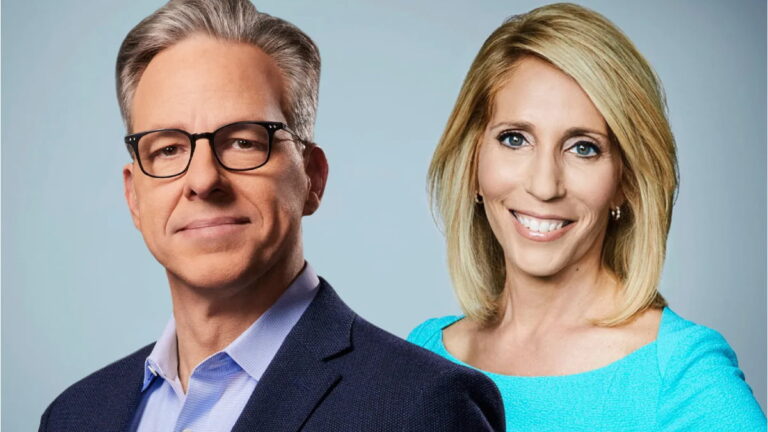
Fox News host Sean Hannity has never been shy in his disdain for CNN anchor Jake Tapper. However, he couldn’t deny that Tapper and Dana Bash were good debate moderators.
During the post-debate coverage on Fox News, Hannity gave Tapper and Bash credit, with a backhanded compliment in the process.
“In fairness to fake news CNN, Fake Jake, and Fake Dana, they put aside their prejudice, their hatred towards Donald Trump for the night, and they actually asked questions and waited for answers,” said Hannity. “I thought they managed the debate fairly well, something I didn’t expect, considering we’ve been playing the tape of them trashing Donald Trump for many years. So — I guess — credit for one night.”
Many in the news media gave props to Tapper and Bash for their performances Thursday evening. The pair received heavy criticism for their previous coverage of former President Donald Trump in the days and weeks leading up to Thursday’s debate.
Earlier this week 590 The Fan KFNS owner Dave Zobrist told his local staff they would be having their final shows this week and the station would be switching to syndicated programming. The station had been local from 7 a.m. to 8 p.m. on weekdays and had some local programming on the weekends. Zobrist has now announced starting Monday KFNS will be known as Fox Sports 590 AM and will now air the network 24/7 with the exception of local play-by-play.
“We’re excited to expand our partnership with FOX Sports Radio to bring the biggest names in the sports talk format to St. Louis,” Zobrist said in a release. “Broadcasting FOX Sports Radio’s lineup, along with local play-by-play, will continue our commitment to delivering bold, exciting and entertaining sports talk to our listeners.”
Zobrist told employees he will leave the station on while he looks for a new buyer. Former station owner Randy Markel has expressed interest in potentially re-acquiring the station and midday host Kevin Slaten said on the station yesterday, “Hopefully we can find some guys or women who want to buy the station. And that’s what we’re trying to do. I know everybody’s working towards the same end, everybody would like to see that as the end result…so that’s what we hope for.”
KFNS had been featuring local media veterans Jim Hayes and Charlie Marlow in the morning along with former St. Louis Blues player Cam Janssen. Frank Cusumano, who is also the sports director for the local NBC affiliate KSDK, had been holding down the mid-morning slot for most of the last 30 years on the station. Others affected by the move include former longtime St. Louis Post-Dispatch columnist Bernie Miklasz and Bally Sports Midwest St. Louis Blues reporter Andy Strickland.
Hire a Music Radio Editor. Check. Add five talented columnists. Check once. Check twice. Anything left to do? Actually there is. Hire four talented features reporters to talk weekly with successful broadcasters.
Over 11,000 radio stations air music today. That means there’s no shortage of stories to tell. For two months, I’ve been interviewing people all across the country, searching for folks to help us elevate and celebrate people, brands, and companies in the music radio business, while addressing key issues facing broadcasters. If professionals can learn through our site how others approach their work, create success, and handle situations that they too may be dealing with, it improves education, and ultimately, performance. We’ve done this for sports and news/talk for nearly nine years, and are eager to do it for music radio too.
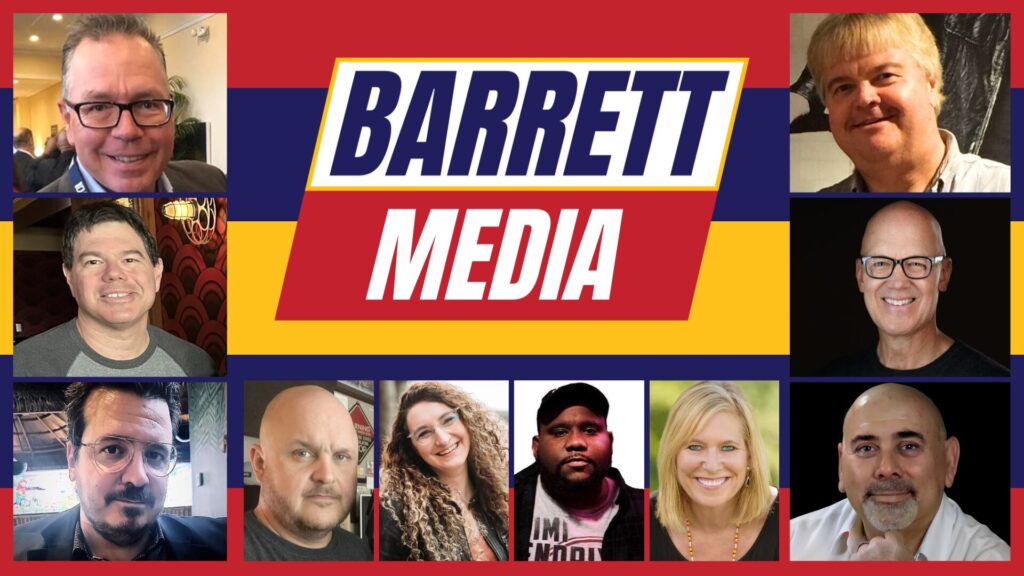
So let me tell you about the four people I’ve hired to bring our vision to life.
Ryan Wild is full of passion, and a seasoned veteran of the music radio business. He has worked for Emmis, Cumulus, iHeart, E.W. Scripps, and others, programming stations in Indianapolis, San Antonio, Milwaukee, Omaha and New York City. Ryan now works for MediaBase as a Support Lead, helping programmers on a regular basis. He joins us to write weekly features on industry professionals working in the Rock/Alternative formats.
Jacquie Cadorette joins Barrett Media following a stint at Audacy. During her 4-year run with the company, she ascended from Digital Content Producer to the Head of Content for Podsauce.com. Her radio career began in 2013 at Philadelphia’s 102.9 WMGK, and continued with an internship on Elvis Duran and the Morning Show, and working for iHeart as a prep content writer. Jacquie will write weekly features on professionals in the Classic Rock/Adult Hits/Classic Hits formats.
DC Hendrix is a guy who instantly puts you in a good mood. DC has spent the past decade in Fort Wayne, Indiana growing from a behind the scenes producer and board operator to On-Air Host and DJ for 1380 The Fan and Big 92.3. He followed that up by becoming PD and an On-Air DJ for MIX 106. He now works as a music data analyst for 1021 Creative, providing data analysis for Apple Music, Spotify, Shazam, Atlantic Records, and more. He’ll be writing weekly features on industry professionals in the Hip-Hop/R&B formats.
Amy Snider brings over twenty five years of media experience to Barrett Media’s writing team. Based in Tampa, Amy works for iHeartMedia and the Total Traffic and Weather Network as an on-air traffic and news reporter, appearing on 25 radio and TV stations statewide including US 103.5 Country, 98 Rock, 95.3 WDAE, and Newsradio WFLA. Her career includes time spent with Westwood One/Metro Networks, WMNF, and WUSF. She will be writing weekly features on radio professionals working in Adult Contemporary/CHR/Top 40 formats.
Country Radio will also be well taken care of. Our editor Jeff Lynn, who has extensive experience covering and working in the format will be featuring format professionals on a weekly basis. If you work on-air in any music radio format and would like to be featured in the future, please send an email to Jason@BarrettMedia.com.
Barrett Media’s content expansion, new website look, logo, and URL, along with the launch of our new music newsletter and reformatted end of the day newsletter goes into effect Monday July 15th. I received more than 400 emails and applications expressing interest in writing for us, and I’m thankful for the interest. However, I can’t hire everyone. I’m very excited about this team, and look forward to showcasing their work once we go live in a few weeks.
If I can ask one small favor, alerting us of news or things created on your airwaves helps a lot. We dig in many places for stories, but anytime we’re made aware of on-air or behind the scenes developments, it makes things easier. A simple email to Jason@BarrettMedia.com, Dave@BarrettMedia.com, Jeff@BarrettMedia.com, and/or Garrett@BarrettMedia.com goes a long way. We can’t tell your story if we don’t know about it.
Lastly, we’ve had outstanding support from voice talent with the launch of our forthcoming Voices section. THANK YOU! We’ve also received additional advertising interest for the new site and our upcoming music newsletter. Once again, we appreciate it. However, we do have some website and newsletter opportunities still available. If interested in exploring marketing possibilities with us, email Stephanie at Stephanie@BarrettMedia.com.
Barrett Media has received GREAT support throughout the years, and we’re grateful for it. We’re making this move to try and make the business better, and on July 15th, you’ll discover what we’ve working on. Thanks for taking the ride with us!
President Joe Biden and former President Donald Trump squared off in a Presidential debate moderated by CNN anchors Dana Bash and Jake Tapper Thursday evening in a made-for-TV event.
Originally scheduled for 90 minutes, the debate ran over by a few moments, allowing for more reactions from news media members who had opinions on a variety of topics.
First, there were observations on how Tapper, Bash, and CNN as a whole performed. Perhaps surprising to many, the consensus from conservative media members was that the moderators and format worked well.
CNN's decision to abrogate its journalistic responsibilities by not fact checking Trump's firehose of lies is unforgivable.
This debate is Biden vs the tag team of Trump and CNN's utter failure as a news organization
So I owe an apology to Jake Tapper and Dana Bash. Concerns about their bias affecting their performance were unfounded. @hughhewitt was right. They have been fair and professional. pic.twitter.com/3dvDG37KKg
— Mike Gallagher Show (@radiotalkermike) June 28, 2024
Closing on the age issue is just awful for @JoeBiden. It was appropriate but the left is going to hammer @DanaBashCNN for doing so. It was the right thing to do but of course it underlined everyone’s real thinking: He’s too old. Already.
50 mins in @jaketapper and @DanaBashCNN doing excellent job insofar as the debate is not about them. asking good questions and letting candidates debate. @CNN
It must kill CNN to know that the rules put in place to help Biden are actually helping Trump tremendously. he is staying on message because he's not playing to a crowd and not being able to interrupt is keeping him from looking boorish to independents.
Many news media observers also declared that Trump was the decisive victor of the evening.
Tonight’s debate was a pass/fail test for Joe Biden. And it was a lenient grading curve. Yet Biden still failed. Even after a full week of preparation. They’re going to replace him.
The only people tomorrow who will not be questioning Biden’s performance are the people at MSNBC who have assured us he is a super genius, super sharp, and agile. Outside the propagandists, the big story will be his age.
For most regular, normal American viewers, this was always going to be a debate about optics over substance. That's what people were tuning in for, to see how both candidates would perform. And the optics are brutal for Biden. Simple as that. #DebateNight#Debates2024#CNNDebate
Old Deuteronomy has lost the debate. And maybe the nomination. Democrats may be stuck but they are most definitely panicking. The yanked Torricelli when he couldn’t win and dusted off Lautenberg.
Entering afternoon drive in Nashville without any previous experience as a full-time radio host, Caroline Fenton knew she had something to prove to the listening audience. Working alongside Jared Stillman two years removed from undergraduate studies at LSU, she studied the local sports teams and came equipped with deft knowledge and compelling opinions. Fenton was also making history as the first female co-host in the history of 102.5 The Game and felt pressure to perform at a high level.
The career move was a stark contrast from her time at ESPN as a digital video and social content producer, some of which involved creating specialized content leveraging the network’s portfolio. For example, she worked with the SportsCenter on Snapchat team, optimizing the flagship program for the social media platform and adjusting when the algorithm changed overnight. Leaving Bristol and relocating to Nashville to join 102.5 The Game represented a leap outside of her comfort zone.
“It was a total 180,” Fenton said. “I went from being forward thinking on digital and caught up in social media trends and search engine optimization, and then going into a more terrestrial, more traditional form of media. I had to relearn everything – I had to learn the radio formula [and] I had to learn what works, but the thing that continued, and it will continue in any form of media, is, ‘What do people care about?’”
Fenton is going to have the chance to fuse her passions for digital media and on-air hosting in a new role with Yahoo Sports. Responsibilities she will have with the company include hosting digital content and a podcast, along with contributing social and digital video pertaining to several sports. Matt Ufford, her former manager at ESPN and the current head of video and audio at Yahoo Sports, reached out to Fenton and informed her that the company was looking for someone with versatility in discussion and looking to re-enter the digital space.
“I wasn’t seeking out this change – the opportunity simply just presented itself, and it happened to be an opportunity where I could match two of my passions of having good discussion about sports and making sports fans smarter while also being in a landscape on digital and on social media where you’re afforded to be a little bit more creative,” Fenton said. “You’re afforded to add different elements, visual elements into the conversation. It married two of my passions, and it just so happens to be a perfect opportunity for me personally and professionally.”
Yahoo Sports continues to penetrate into sports media through various content initiatives disseminated through digital media platforms. Through conversations Fenton had with company employees, she could evince the level of enthusiasm in the direction of the brand and envisioned that it would ultimately materialize into a substantial and tangible fit.
“It was not a move that I was going to make just to make a move,” Fenton explained. “I wanted to make the move because it was the right move with the right people with the right vision in mind.”
YahooOoOoooO!!!????
I am so excited to finally announce that I’m headed to Yahoo Sports. This group is creative and hungry to deliver the best possible content to sports fans and I couldn’t be more eager and honored to be on board.
In joining Yahoo Sports, Fenton will utilize the lessons she has learned along the way in an effort to thrive and make an impact. Even though she worked in digital media for ESPN and hosted her own segment on Baseball Tonight Live, Fenton reflected during the pandemic and recognized that she wanted to land an on-air role. When she joined Cromwell Media-owned 102.5 The Game three years ago, the station was looking to expand its digital livestream efforts and augment its social media presence.
“I give my former co-host Jared Stillman so much credit,” Fenton said. “He held my hand through all of it. On my very first day at the radio station, he told me, ‘I will not let you fail,’ and he didn’t. He didn’t let me fail.”
Stillman served as a mentor to Fenton, challenging her and providing feedback about what she did well and points of improvement. The rest of her colleagues at the station assisted in the process as well and were indicative of a strong support system that facilitated her acclimatization. Fenton was moving into the position that had been held by former Titans general manager Floyd Reese, someone who she perceived to be irreplaceable.
Early in her tenure with the outlet, Stillman sarcastically joked that she and Reese were similar to one another before clarifying that they could not be more different. Two years later, she was moved into middays to host with Willy Daunic and Derrick Mason as part of a change in the weekday lineup.
“Jared and I have a great friendship and a great relationship,” Fenton said. “[The show] had become my comfort zone, so stepping out of that, and not just into a new timeslot but into a completely new role, it was scary and I did have some hesitation, but again, I’ll always go back to everyone at the station [assuring] me that, ‘Look, this is going to be the right move for you, but we’re not going to let you fail.’”
The first six months hosting the program were strenuous, but she gives credit to her co-hosts for accepting her and allowing the show to adapt. Fenton believes that she provides energy and an upbeat sentiment as a host and aspires for the listeners to always feel like they received something new in exchange for their consumption.
Fenton considers Daunic and Mason an extension of her family and valued her time working with them, but there were instances when listeners of the show would call or text into the station and make her feel unqualified for the role. As a result, she consistently reminded herself that she earned the position, put in the work and cares about it. One of her former colleagues advised that she makes a list of people whose opinions she cares about and to review it if faced with challenges.
“It is difficult being a woman in this business,” Fenton said. “I think it’s difficult being underrepresented in any capacity because there might be times when you just feel like you’re sticking out like a sore thumb.”
Last summer, Fenton continued to expand her presence by joining SiriusXM as a host on its College Sports Radio and SEC Radio channels, a role she will continue alongside her new job at Yahoo Sports. Hosting at both 102.5 The Game and SiriusXM several months bestowed additional repetitions and practice in switching her focus from local to national coverage, a difficult part of which was balancing the necessary preparation.
“Whenever you’re on the air for three or four hours a day, it’s really hard to fake it,” Fenton said. “It would be exhausting if I faked my personality for three or four hours a day, and that is something that Jared [Stillman] taught me very early on is that, ‘Don’t feel like you have to be anything other than yourself.’”
Fenton is enthused to begin contributing to programming at Yahoo Sports but leaving 102.5 The Game in the process was not an easy decision to reach. Having worked alongside Daunic and Mason for just over a year, she felt the show was just starting to hit its stride. On top of that, Fenton had continued to grow as an on-air personality and exhibit that she was able to lead a program within weekday prime hours. Broadening her horizons and shattering glass ceilings are parts of the experience she looks back on with appreciation, and she hopes she represented women well.
“It was hard for me to leave 102.5 The Game because I have close relationships with so many people there, and it’s not just the other hosts – it’s the salespeople, it’s the administrators,” Fenton said. “I had close relationships with everyone, and that’s a wonderful pro of working for a smaller company and a smaller-owned company.”
Having previously worked with Matt Ufford at ESPN and conversing with Sam Farber, the head of content for Yahoo Sports, she knew that the chance to join the company was ideal and fused her passions. While speaking with Farber, she felt that they were in alignment with the personality that they wanted the programming to have and with what will happen next.
“I’ll try to collect as much information as I can; I thrive off of feedback, whether that’s good feedback [or] whether that’s constructive criticism, and having people around me that I trust that can provide that feedback and that constructive criticism,” Fenton said.
With her forays in both terrestrial radio and digital media, Fenton believes that the priority should be on reaching as many consumers as possible. In taking part in college football coverage, she knows that not every sports fan necessarily watches college football, thus leading the company to determine how to reach a wide array of people and create enthralling, thought-provoking content. As time progresses, she hopes to be relied on in various different forms, including covering a variety of sports in various capacities.
“I think that you just have to be there,” Fenton said. “Just show up, and I mean that physically and I also mean that in a social and digital sense. Be part of the conversation, be there and then you’ll continue to build some of that trust with your viewers, with your listeners [and with] the users on social media.”
Through the trials and tribulations associated with the dynamic nature of the sports media business, Fenton is ready to take the next step in her career as a host and contributor for Yahoo Sports. Whether she is in front of the camera or behind the microphone, she will aim to foster a connection with the audience and offer informative, entertaining and engaging conversation while helping the company achieve its goals.
“I can’t look too far ahead into the future because frankly, if you would have asked me just six months ago, ‘Do you see yourself leaving local radio for a digital show?,’ I would probably say, ‘Nope, and I’m happy where I am,’ so I think the lessons that I’ve learned about this industry is you take the opportunities that are afforded to you,” Fenton delineated. “You ride the wave, and who knows what will come next, but for now, I’m happy for this new beginning.”
The hiring of JJ Redick as head coach of the Los Angeles Lakers has spurred some mixed commentary in the national media. ESPN’s Austin Rivers did a nice turn on First Take recently talking about the story. Rivers has been an absolute sensation throughout the NBA season and the playoffs.
It’s difficult when you are a second-generation star both as a player and a media personality. Austin’s dad Doc Rivers, currently the head coach of the Milwaukee Bucks, has a sterling resume as an NBA player, coach, and broadcaster, but the younger Rivers has had no issues breaking out of dad’s shadow and forging a name for himself.
His points are so strong and his words so biting that he has carved his own niche in basketball media in a very short time. Rivers tells it like it is, has a no holds barred approach, and doesn’t take any flak from anyone.
It is easy to see why Rivers thinks Redick will thrive as the Lakers’ coach. They have similar personalities and NBA resumes. Both came out of Duke with high expectations, but neither became a superstar in the NBA. They made their money and staked their reputations on intelligence, hard work, and intensity.
In his dissertation, Rivers stomped on every possible pitfall that Redick could face as a first time NBA head coach. He cited that Redick played 15 seasons in the NBA and was one of the most decorated college basketball players of all time. As teammates with the LA Clippers from 2015-2017, Rivers has first-hand knowledge of Redick’s coaching potential. In fact, he raved about Redick’s consistent veteran presence and leadership.
Stephen A. Smith backed up Rivers’ thoughts with an anecdote from when Redick was a member of the New Orleans Pelicans. It was the COVID bubble year, and the Pelicans were getting soundly thrashed. Smith explained that Redick was on the bench seething and glaring at players who were not giving their best efforts.
There is precedent for media personalities jumping into coaching and achieving success. Pat Riley went from calling Laker games alongside Chick Hearn to joining Paul Westhead’s staff and eventually winning four championships as LA’s head coach.
Similarly, Ex-MLB catcher Bob Brenly left the broadcast booth and managed the Arizona Diamondbacks to the 2001 World Series Championship. In the discussion on Redick and the Lakers, First Take host Molly Qerim made the fine point that in today’s NBA, playing experience might be even more important than coaching experience.
Still, a cold move directly from broadcasting to coaching with no prior experience is quite a leap. It’s a whole different game when you are play acting on television. If you’re not good at broadcasting, you lose your job. If you’re not good at being a head coach, your players, assistant coaches, and the people who hired you lose their jobs as well.
Redick’s situation will be magnified given that he is coaching the highest profile team in the NBA, maybe in all of sports save for the Dallas Cowboys. While the Boston Celtics now have more championships than the Lakers, it is the ‘Purple and Gold’ crew that stays in the A-block of most national sports talk shows even when they underachieve on the court.
Los Angeles is not New York, Philadelphia, or Boston, old school cities whose fans and media can be snipingly vicious. However, when it comes to the Lakers, there is a definite ‘win or you’re gone’ philosophy. Just ask Frank Vogel who brought a championship to Tinseltown in 2020 only to be shown the door two years later.
Smith made the point that most of the Laker head coaches who have followed the glory days of Phil Jackson have not fared very well. Very true, so what can the inexperienced JJ Redick do that veteran coaches like Mike Brown, Mike D’Antoni, Byron Scott, and Bernie Bickerstaff could not do?
First off, as an NBA commentator, Redick is as outstanding as he is outspoken. I liken his acumen and depth to that of ESPN football analyst Dan Orlovsky. Orlovsky, however, does not have the edge, fire, or short fuse that Redick possesses.
Orlovsky is like a friendly neighbor – that guy with the goofy hat and sneakers mowing his lawn. Redick is the jerk next door who will come at Orlovsky’s jugular with a hedge trimmer if he steps one inch onto his property.
Stephen A. Smith openly stated that Redick will tell you what he thinks whether you like it or not. This is a valuable asset in dealing with NBA players. Pro hoop stars don’t need BS. They want the truth, good or bad.
Beyond this candor, there is a certain insight gained when a player has been both a superstar and a role player. At Duke, Redick was unquestionably the man following in a long line of Blue Devil legends, who were revered by the Cameron Crazies and despised by pretty much everyone else. In the NBA, he was part of a team, an important piece of the puzzle, but never the main dude.
On television, Redick regularly goes toe to toe with his fellow debaters, most of whom have much more media experience. Can Redick do the same against more seasoned NBA coaches and players? I think he can and here’s why.
If you are going to coach the Lakers, you have to have a bigger personality than the owner, the general manager, the players, the Laker Girls, and the Hollywood fans. Darvin Ham did not have that. Frank Vogel did not have that. Pat Riley with his slicked back hair and tailored suits did. Phil Jackson with his six Chicago rings and Zen Master reputation did. Guess what? JJ Redick does too and much of that comes from his work on television.
Rivers admits that he is traveling the same road as Redick. On a recent edition of The Pat McAfee Show, Rivers openly stated that he is using his media work to raise his profile so that he can eventually be considered for an NBA coaching gig.
Maybe it’s not about being behind the mic, but about sitting behind the Mike, namely, Duke coaching icon Mike Krzyzewski. Bobby Hurley, Quin Snyder, Johnny Dawkins, Tommy Amaker, now Redick, and perhaps soon Rivers – just a bunch of Coach K’s kids looking to pace the sidelines just like their mentor.
Getting seen on television in a positive light as a knowledgeable analyst can pave the way to this goal. Redick has become a basketball media celebrity. Love him or hate him, you cannot ignore him. The Los Angeles Lakers have always been about star power, soundbites, personality, and charisma. JJ Redick is the ideal hire for them.
Redick looks the part, talks the part, and will play his part perfectly in this Hollywood premiere. In fact, Redick the coach is going to be just like Redick the broadcaster. Sometimes he’s right, sometimes he’s wrong, sometimes he’s just plain maddening, but he is always fun to watch.
Whether you’re an agency buyer, a small business owner, or an in-house marketer at a large local business, investing in sports radio advertising can be a significant decision. While sports radio offers a unique and engaged audience, buyers often have common objections. How we approach those objections can vary. Here are three frequent objections to buying ads on a sports radio station and ways to address them.
Cost Concerns
Objection: “Advertising on sports radio is too expensive for our budget.”
Response:
– Compared to What?: Understand the buyer’s current investment in advertising. Sometimes, they might not have a clear picture of the required investment to make an impact.
– Flexible Scheduling: Offer various options from light schedules with off-peak placements to more intensive campaigns. Adjusting ad lengths and placements can help fit different budget constraints. Know whether to buy light or heavy schedules.
– Case Example ROI: Sports radio listeners are highly engaged and loyal, which can lead to higher ad response rates. Share case studies or examples of similar businesses that have seen significant returns from their investment.
Is It the Right Audience?
Objection: “Our target audience isn’t listening to sports radio.”
Response:
– Audience Data: Provide demographic data from the station to show the audience’s age groups, income levels, and interests. For example, many sports radio stations have a significant portion of their audience (e.g., 50% male listeners earning over $100k annually), which benefits sectors like financial services, luxury automotive, or jewelry sales.
– Tailored Messaging: Emphasize the ability to customize ad messages to resonate with specific audience segments. For example, a chain of drive-through coffee shops can advertise during morning drive time and offer discounts if the home team wins.
– Activations: Suggest leveraging the station’s live events with on-site activations. This can help reach a broader audience, including potential customers who might not be regular listeners but fit the advertiser’s target market.
Attribution
Objection: “It’s hard to measure the effectiveness of radio ads.”
Response:
– Tracking Tools: Use tools that track when a visitor lands on the website after hearing a radio ad. Software like Attribute from Veritone shows how many people visit your website within minutes of your ad airing and integrates with Google Analytics to measure overall impact.
– Incremental Metrics: Focus on metrics such as increased social media engagement, foot traffic to the business, or sales spikes during the campaign period. These indicators provide a more immediate sense of the ad’s impact.
Addressing these common objections can help clients confidently invest in sports radio ads and achieve significant returns. By understanding budget constraints, demonstrating audience relevance, and providing practical measurement tools, businesses can tap into a passionate listener base and drive growth through targeted and impactful advertising.
It’s been touted as the most anticipated debate this election season. The first Presidential debate of 2024 was a Hail Mary toss for CNN, yet they landed short of the end zone.
It’s the earliest debate ever held. Neither candidate is technically on the ballot in any state (because they are not yet the nominees of their party). It is also the re-match most people in America did not want and the media is failing in it’s duty to be the fourth estate.
In the first debate where mics of nonspeakers would be muted, it was not surprising both candidates had multiple clipped answers. It’s good because it showed that their audio technician is human but it also showed they muted mics equally and without prejudice.
What was ridiculous was both Biden (46) and Trump (45) stepping over each other on 46’s golf handicap. This would have been a perfect opportunity for Dana Bash or Jake Tapper to step in and get the two elderly statesmen back on track. Yet, this is one of the many examples of the pair failing at their moderator duties.
The first three follow-up questions were all to Trump. In fact, 45 was asked the same question significantly more than Biden. It’s not from Trump lacking an answer and Biden providing perfectly coherent responses. It’s from a failure of their journalistic duty.
The point where Bash failed was when she asked “If [Trump] will accept the results of this election?” 45 answered that question the first and third time she asked it. However, if she had been listening, Bash would have heard the first time Trump answered it. This gives left-leaning outlets a chance to say he didn’t answer the question fully. It also provides them an opportunity to praise Bash for “pressuring” Trump.
Conversely, Tapper missed two opportunities to pressure Trump on key issues (likely because his answers could have picked up some moderate left voters). The first: If Palestine should be a recognized country. The second: What would [Trump] do to make child care more affordable?
There were several instances where Biden did not answer a question, fully, completely, or coherently. However, instead of asking the same question again — like they did with Trump — they asked a follow-up question. To Tapper and Bash’s credit, they both noted when each candidate had time left and asked a second question (provided the candidate answered the first question to their liking).
While both moderators tried to “refocus” Trump on certain questions, neither of them tried to refocus Biden when he did not answer (or stumbled through a response).
A most notable failure? Tapper began asking a question (moving on from the January 6th topic) when Biden raised his finger asking for rebuttal time. No, Jake! This showed your bias. You began asking a question. This means it’s time to move on. Not allow Biden to rebut Trump. This is Tapper handing the debate over to Biden and not maintaining control.
Speaking of moving on, CNN (and all other outlets) need to move on from having commercial breaks. It is ironic and symbolic because it shows how the Presidential race has become more of a commercial enterprise than a public service (which is what our Founding Fathers intended our government to be: public service). Other outlets could have seized the opportunity to review the debate.
All the major outlets aired (their own, not simulcast) commercials during the break. The only people to benefit from the commercial breaks were media suits. It’s a sad day for journalism when what should be a service provided to the American public was manipulated into a profit machine for large corporations.
However, there was one major failure of CNN which came before the debate. In 1992, Ross Perot (I) joined President George H.W. Bush (R), and then-Arkansas Gov. Bill Clinton (D), on the debate stage. It marked the first time ever three people had shared the stage for a Presidential debate. True American politics at work. This is what our system was designed for.
Yet, independent candidate Robert F. Kennedy Jr. was nowhere to be found on this debate stage. While CNN claims he did not meet the qualifications to participate, his campaign says neither did the other candidates (because neither is technically on the ballot as they have not yet been nominated by their party).
In May, the Kennedy campaign filed a complaint with the Federal Election Commission but to no avail. It’s ironic the debate that takes place on Ross Perot’s birthday is not allowing a third-party candidate to participate. Kennedy instead held a real-time debate on X.
Biased “journalist” media outlets have lost integrity and self-respect. Plus drinking games and bets on which President would poop their pants on live tv first. Yes, the 2024 Presidential debate featured exactly what the other 99% of Americans feared: evidence that we are hopeless to the broken system and biased outlets that used to make our Democratic Republic so great.
Regardless of who wins in November (I hope it’s none of the above), we Americas and the American Media need to put our bias aside and unify as a country, something CNN moderators Dana Bash and Jake Tapper did not do. Supporting the President — regardless of party — is extremely important because if the President fails so does the country. We need a media outlet to unify the country. CNN is not said outlet.
Last Friday, I wrote about the critical need for news/talk radio stations to reduce on-air clutter and give audiences a reason to listen more often and for longer periods. We arrived at the best solution, the only solution really: drastically cut the spot load. I mean cut it in half or more.
Now that we’ve agreed to give your listeners and clients a premium product with greater personal service by reducing your content-killing spot and promo load from 24 minutes to 12, what will you do with all that extra time? This is the perfect opportunity to reexamine your program content in detail with a mind toward cutting out anything that’s not an audience grabber. Without putting too fine a point on it, let the dog wag the tail again.
I did my first news anchor shift in 1976 and nearly nothing has changed in the 48 years since. We had network news straight up at the top of the hour, traffic reports every ten minutes, weather at scheduled times, and sports and business news reports also at specific times. Radio programming was managed by the hour, minutes, and seconds.
In 50+ years, the only thing that has changed in all-news radio is the size of the spot load. It’s the radio equivalent of the fabled Great Pacific garbage patch.
No, I’m not saying your clients are garbage but asking your listeners to wait through five or six-minute commercial breaks four or five times an hour is unrealistic, trashy radio and frankly, you’re ripping off your paying customers.
The problem is the clock, the 60-minute hour. That’s what causes the trouble, isn’t it? Everything we do has to fit into 60 minutes.
Why?
Let’s dump the clock. I’m serious. Let’s stop thinking in terms of sound hours illustrated by analog clocks, circles with pie charts, dots, and numbers. Except when you need to be someplace or do something at a specific time what difference does it make? Clocks are just tools but in radio, the clock is a prison. We still do everything in circles, starting at the top and returning there sixty minutes later so that we can start all over again.
Technology has advanced. We can program our very specific personal needs each day. Why can’t radio people jump into the 21st Century and realize that listeners no longer need us to pack their lunches and make sure they catch the school bus on time?
When’s the last time you as a listener punched a station preset in time to catch Traffic on the Fives? And when was the last time the shotgun approach to radio traffic reports gave you any useful information that Google Maps or Waze couldn’t deliver instantly, with real-time details on traffic conditions at your precise location and the best current route to your destination? Never. Radio has never been able to do that.
Back in the good old days traffic reporters were personalities, part of the show. In the best major and medium market stations they flew in airplanes and helicopters, able to describe the tie-ups, alternate routes, crash sites, fires, police activity, and everything else they were seeing. It didn’t usually pertain to your personal location but it was descriptive theater of the mind from a friendly, familiar voice.
Now we have voices from a Los Angeles studio reporting traffic in Salt Lake City, though the reporter has never even been there and can’t pronounce some of the street names correctly.
As a news anchor or talk host preparing for your on-air toss to traffic you know that your L.A.-based reporter has no time to listen and chat with you on the air. She/he is also filing for three other stations in drastically different markets. They don’t even hear your show and may not know your name.
Besides, most of those traffic reports were recorded ten minutes ago. We don’t tell listeners that, of course.
Dump scheduled traffic. Seriously, you’re trying to maintain a useless old-school illusion for your audience. You’re being the Great Oz behind the curtain.
When the big traffic-related stuff happens your newsroom editor or producer can interrupt with the breaking information: “A big rig has crashed at the Hollywood split, 101 to the 134 interchange. Check the News 1280 traffic map for exits and alternates.”
The News 1280 traffic map? Sure, why not? Link your live stream to a real-time traffic map provider. It’s right there on the commuter’s in-dash screen and won’t interrupt the radio show for listeners miles away.
So, that gets rid of another six minutes of tedious, unnecessary, and largely useless information clogging up your content. What else?
Ah, yes. Business and sports reports.
I’ve never understood the point of doing business reports that sound to most people like yodeling cattle auctioneers. People who want that information have far better sources than your radio station. And, sports? If you’re in a market that has its own local or regional sports station, leave the details to them. When there’s big sports or money news that you can’t ignore, stick it in a newscast or make it a segment.
That goes for weather, too, depending on your market and the time of year. Here in North Texas, we get tornados and baseball-sized hail in spring and autumn. That’s worth talking about in detail but usually, “sunny and hot through the weekend” says it all.
Now, we get to the fun part. What do we do with all this newly created extra air time? More news? Maybe, if it’s a busy news day. Longer stories? On less busy news days you can take a little more time with those fascinating, complicated tales now that you don’t have to break for traffic and six minutes of spots. But longer stories in general? Nope. The point is, extra time is extra. You shouldn’t stretch news to get to the next formatted break. Nothing should be predetermined in length.
Why do we still draw pictures of “sound hours” that map out three and five-minute newscasts, spot breaks, and whatnot, specifically down to the minute? That’s exactly what we’re trying to get away from. Somedays your air talents need seven minutes to tell compelling stories, other times 30 seconds works. You’re paying them to have the judgment, talent, and craft to deliver the goods, not to watch the clock.
Do what radio does better than any other medium: Entertain me. Help me like you. Don’t BS me.
I’m not saying anything you haven’t heard a million times. People want a human connection with radio. We want the company of other real people we can relate to, laugh with, and who share our annoyances. We have countless varied and questionable sources of news and information. You only have one morning team and I really like them. I trust them. Give me more of that, people talking about the news and life itself. Give me something to think about and a reason to smile.
Technology is taking us to a new level of creative efficiency but it will never – trust me on this – it will never replace us. It will never have a heart and a soul.