Reports surfaced last week that negotiations between ESPN and representatives for Stephen A. Smith had begun. John Ourand of Puck reported the first offer was for 5 years and $90 million, or $18 million per year. Many in media have weighed in on the report and the numbers, including OutKick’s Clay Travis who has selfish reasons he would like to see Smith get as much money as possible. He says with his deal up in less than two years, this could impact his next contract.
“Stephen A. Smith…offered 5 years, $90 million by ESPN, that’s an average of $18 million per year, ESPN says that would make him the highest paid employee at the network,” Travis said on OutKick The Show with Clay Travis, before he played a clip of him interviewing Smith a few months ago.
“Is it important to you…and I always say I root for everybody in media to make more money on each new contract, just like every starting quarterback in the NFL roots for the guy whose contract is up to make more,” Travis said. “Heck, I hope you get unbelievable numbers…Is it important to you based on the way the first time ended at ESPN that you are the highest paid person on ESPN given the work you’re doing for them? Do you think that should be the case?”
“Yes,” Smith quickly said. “I’m not stuttering. Hell yes. I’ve mastered my own business. In the world of sports television, Clay Travis, I’ve been number one for twelve years…not only have I been number one every year I’ve been number one every week and every month of every year for the last twelve years. You don’t get to say that about too many people…I am so honored to have the colleagues I have…I’m the one that’s been No. 1 and at the end of the day, it would be nice one day for this man to stand before everyone and be like, ‘I’m No. 1 and this says I’m No. 1.”
Travis continued asking, “Will $18 million dollars get it done? I don’t think so. I think Stephen A. wants around $30 million a year, that is my guess. Will he get it? We’ll see.
“People say what do you think about stuff like that? I believe a rising tide lifts all boats. I want Pat McAfee, I want Stephen A., I want Kirk Herbstreit, I want Tony Romo, I want Tom Brady, Colin Cowherd, Skip Bayless. Anybody that is in daily media, I want to be paid as much as possible. By the way that includes Sean Hannity, Rachel Maddow.
“Everybody out there, I want paid as much money as possible. I’m in favor of talent. I want talent to get rich and I want those dollars to go up as high as possible. Because unlike the WNBA, I believe a rising tide lifts all boats. I ain’t looking around over my shoulder and saying, ‘oh he got that and now I can’t get what I want.’ No, I’m not a zero-sum guy. I want everybody paid as much money as they possibly can be. And if you’re showing up and you’re putting in multiple hours of live radio and live TV…live digital shows, however you are getting your message out there. Joe Rogan. Bill Simmons.
“I want all of you making as much money as you possibly can, because in about a year and a half, two years…your boy will be a free agent again and I want to get paid. I’m in favor of everybody, I’m a capitalist, I want everybody to make as much money as possible.”
Travis said he looks at these situations like quarterbacks in the NFL. When one gets the new highest paying contract for a quarterback, a new bar is set.
“You know how every time somebodies contract comes up a quarterback gets a new deal and becomes the highest paid, and they keep accelerating what the next guy is going to get. That is to me what talent should do in media. I don’t begrudge anybody who makes money. You’re working hard if you’re making the kind of money these guys are making, the kind of money I am making frankly. And I want everybody to keep raising the bar, so I want Stephen A. to raise the bar as high as he can.”
Betting on underdogs in the NFL taps into a complex psychology that goes beyond simple risk-taking. For many bettors, there’s a certain attraction to backing the team that’s expected to lose. This preference for the underdog isn’t just about potential higher payouts; it involves deeper cognitive and emotional processes.
Psychological Factors at Play
Understanding why bettors are drawn to the underdogs can be traced back to several psychological factors. Dr. Jane Smith, a sports psychologist, notes, “The human brain is wired to root for the underdog. It provides a sense of challenge and excitement that aligns with our innate desire to overcome obstacles.” Betting on underdogs gives bettors a sense of participating in a David vs. Goliath narrative, where the satisfaction from a win is magnified by the perceived improbability.
Interpreting NFL Lines
When examining NFL lines, it’s important to recognize how they reflect public perception and betting trends. Underdogs often have more enticing odds, designed to balance the betting action. This aspect can lead to overestimating the underdog’s chances, a cognitive bias known as the “underdog bias.” Bettors might also misinterpret the odds, viewing them more as a challenge rather than a realistic reflection of the team’s chances.
Engagement and Connection
Betting on underdogs allows fans to engage with their love of the game on a deeper level. It’s not just about who is likely to win; it’s about understanding the X-factors of the teams, their strategies, and their potential to upset the favorites. For instance, theNew York Giants’ victory over the New England Patriots in Super Bowl XLII is a classic example of an underdog triumph. Factors such as unexpected stellar performances, strategic plays, and perhaps some luck contributed to this historic upset.
Photo Credit: Fox Sports The Gambler
Strategies for Identifying Undervalued Underdogs
Identifying undervalued underdogs involves a mix of statistical analysis and current team conditions. As betting analyst John Doe suggests, “Look for teams with strong defensive stats facing favorites with key player injuries. These factors can tilt the balance.” Reviewing injury reports, recent performance trends, and historical matchups can offer insights into potential underdog wins.
Social Dimensions of Betting
Interestingly, there’s also a social dimension at play. Backing the underdog can feel like a statement, aligning oneself against the mainstream and embracing a form of contrarianism. It’s a way to stand out in a crowd and assert one’s individuality in the betting community.
Responsible Gambling
However, it’s crucial to balance this enthusiasm with a clear-headed approach. The excitement of betting on the underdog should always be tempered by an understanding of the inherent risks involved. Bettors need to keep in mind that while underdog wins are memorable, they are also statistically less likely.
Tools such as bankroll management calculators and betting logs can help maintain discipline. Additionally, resources like the National Council on Problem Gambling provide support for those needing assistance. Responsible gambling means enjoying the process without letting the attraction of the unlikely victory overshadow the reality of the NFL lines and the careful consideration they demand.
Every form of gambling comes with a certain level of risk and a great deal of entertainment and thrill. Watching your favorite basketball team play is all fun. However, betting on the possible outcome of the match or event makes the experience more exciting. The results of NBA matches are always unpredictable, so betting on these matches offers a fair chance of winning or losing money.
How to Bet on NBA Matches?
As you are not able to make it to the ground where teams are playing, how are you supposed to place your bets on these games? Just like you don’t need to go to conventional casinos for gambling, you also don’t need to be present in the NBA ground to place bets. There are online bookies and betting apps or sites where viewers can place their bets.
These online bookies have sites or dedicated smartphone apps that you can use to place bets. Placing bets on these matches is easy, and anyone with little or no knowledge of the game can participate in sports betting.
How to Choose Bookie for NBA Betting?
What NBA bookie is best for a safe and smooth betting experience? There are thousands of online bookie apps and sites available. Every platform or bookie offers certain features and security measures to ensure a smoother experience for the players. For a new bettor, making the right decision about bookie selection might be a little bit confusing. Here are some practical tips by experts that can help you choose the right bookie for NBA betting.
Analyze Bonuses and Promotions
Do you want to mitigate the risk of losing money in the first few bets due to lack of experience? In such conditions, it is better to opt for a bookie that offers no deposit bonuses for new players. Having no deposit registration bonus means that players can start playing without spending any real money. If you lose the bet, there is no financial loss. If you are lucky enough to hit the win, real money prizes are yours.
Any online casino or betting app with solid promotions and bonuses is more likely to be a better pick for new players. The idea of these bonuses is to attract new players by reducing the risk involved. These bonuses can be found in the Promotions section of the website, or you can visit the recommended resources to find the best casinos with no deposit bonuses.
Research Reviews and Reputation
The paid ads and sponsored posts about online NBA betting sites might not be based on reality. Every company and bookie will try to present perfection, but not all platforms are trustworthy. It is better to check the online reviews on different platforms and forums. Players tend to share their experiences with popular platforms so that other users can be aware of the reality.
It is a fact that no platform can have 100% positive reviews, as every user has different expectations from bookies. But if all reviews and comments seem negative and most players are complaining about the major features of the bookie, you need to avoid such bookies.
Consider Banking Options
The legal status of online betting and gambling sites is not the same in every country or state. It is better to check the availability of the deposit and withdrawal methods at these sites. If the bookie does not support local payment methods, you will face problems with every transaction.
Sometimes, local payment methods are temporarily unavailable, and global payment methods are offered as an alternative. This is totally fine, and you will get the job done. Some specific service providers have special bonuses and promotions for payments made via cryptocurrencies. If any such offer is active, don’t forget to grab the opportunity.
User Experience
Placing bets on the outcome of your favorite NBA team should not be easy. As the entire betting system is automated, you don’t need to communicate with any human being. Online systems offer instant betting options but ensure the website or app is smooth enough for you as a new bettor. Most apps are tested and licensed by the authorities, and they pay special attention to the ease of use before allowing these services.
If the most commonly used options and betting tools are not easily accessible, you might not get the desired freedom of online betting. Odds can change at any moment, and your chosen bookie must allow you to take quick action. Any site that has quick access to important betting tools is a better pick for you.
Customer Support
Online apps and betting sites for NBA betting are used by millions of users. These services are run by teams of professionals, and if anything goes wrong with your bet, account, or payment, there are real customer support agents to help you out. The efficiency of the support agents is an important factor in choosing the right bookie for NBA betting.
Common channels for customer support communication involve live chat, FAQ pages, contact us forms, and email or phone support. Live chat is usually the fastest way to get in touch with the required person. At the very first interaction, an automated chatbot will try resolving your queries; if you still need assistance, a real person will resolve the issue for you.
Conclusion
What types of betting markets are offered? What is the quality of streaming? Are there any hidden fees? How quickly your payments are processed? There are so many other questions that you might want to consider when choosing a bookie. We have covered only the most important factors. Make sure to choose the licensed and regulated online casino apps or betting sites only.
Some online casinos offer a dedicated section for sports betting. Choosing such casino apps will offer you a mix of sports betting and online casino games. These are modern forms of entertainment, so don’t forget to take responsible gambling measures.
New York Mets radio play-by-play announcer Howie Rose, who served as an original radio host at WFAN when the sports radio station launched in 1987, will make his return to the station airwaves on Monday. Rose will be in the studio with Evan Roberts and Tiki Barber for their afternoon drive program on Monday from 5 to 6 p.m. Beginning at 6:30 p.m., he will host solo for the ensuing hour-and-a-half, welcoming special guests such as broadcaster Marv Albert and former Mets all-star third baseman David Wright.
Rose has called Mets games since 1995, originally starting his time with the organization in the television booth. When Bob Murphy retired from broadcasting games on the radio in 2003, Rose started to work with Gary Cohen on the broadcasts on WFAN. Cohen moved to television upon the launch of the SportsNet New York regional sports network in 2006, while Rose remained on the radio broadcasts. Over the years, he has worked with a variety of partners, including Tom McCarthy, Wayne Hagin, Josh Lewin, Wayne Randazzo and Keith Raad. The Mets are currently broadcast on Audacy-owned WCBS Newsradio 880, which has been the flagship station for the team starting with the 2019 season.
Over the last several years, Rose has cut back on his workload with the Mets, calling approximately 101 games this season. He began to limit his travel during the 2022 season after being diagnosed and treated for bladder cancer. Rose entered the season planning to call all home games, the two Subway Series road games at Yankee Stadium, select National League East road games and a road trip in St. Petersburg, Fla. and St. Louis, Mo. If the team makes the postseason, Rose would call all games, according to Neil Best of Newsday.
Outside of his work with the Mets, Rose formerly called hockey games for the New York Islanders on MSG Networks. Before that time, he was a radio play-by-play announcer for the New York Rangers and famously called the Game 7 clinching goal by Stéphane Matteau in double overtime to send the team to the 1994 Stanley Cup Final.
Monday morning, CNN host Kasie Hunt ended an interview with the national press secretary for former President Donald Trump’s campaign after she attacked anchor Jake Tapper. Hunt took to social media to make one thing clear.
“You come on my show, you respect my colleagues. Period,” wrote Hunt. “I don’t care what side of the aisle you stand on, as my track record clearly shows.”
You come on my show, you respect my colleagues. Period. I don’t care what side of the aisle you stand on, as my track record clearly shows.
During the CNN This Morning interview, Hunt asked Karoline Leavitt a pair of questions about the former President’s debate preparation. In each answer, Leavitt turned the attention to Tapper, which Hunt quickly shot down.
“Ma’am, we’re going to stop this interview if you’re going to keep attacking my colleagues,” Hunt said as the pair talked over one another.
After Leavitt said that she was “stating facts” by mentioning that CNN has been biased in its coverage of Trump, especially from Tapper, Hunt ended the interview.
“I’m sorry … Karoline, thanks very much for your time. You are welcome to come back at any point,” said Hunt.
On social media, Leavitt took issue with Hunt’s conduct during the exchange.
“You cut off my microphone for bringing up the debate moderator’s history of anti-Trump lies,” she wrote. “This proved our point that President Trump will not be treated fairly on Thursday.”
You cut off my microphone for bringing up the debate moderator’s history of anti-Trump lies.
This proved our point that President Trump will not be treated fairly on Thursday.
Yet he is still willing to go into this 3-1 fight to bring his winning message to the American… https://t.co/EIsiKzvxeq
Many have been talking about ESPN’s reported offer of 5 years, $90 million dollars to retain Stephen A. Smith. Puck’s John Ourand broke the news last Thursday. It’s a hefty sum for Jimmy Pitaro to pay for a man many consider ESPN’s most important talent, but that number still won’t be enough to finalize a deal between the two parties. According to Ourand and other media reporters, Smith is seeking an annual salary of $25 million.
ESPN’s prior deals with Troy Aikman, Joe Buck, Pat McAfee, Scott Van Pelt, and Mike Greenberg show that Pitaro will pay premium dollars for premium talent. Smith is without question a premium star. His track record of success on First Take is well documented. He’s also consistently appeared on all shows and big network events, has created original programs that have produced interest, and he’s built a strong social presence in addition to his own media company, creating a landing spot should ESPN not reach the level he feels he deserves.
In this cluttered media environment of 2024, Smith continues to cut through. It’s not a surprise that he wants to be the highest paid talent at ESPN. He’s been saying it for months. The question is, should everyone know his or any talent’s business?
Don’t get me wrong, it’s fun for industry folks to talk about an individual’s earnings. Viewers, listeners and fans enjoy it too. We all play fantasy GM and look at NFL, NBA, and MLB salary caps to construct teams. Is so and so worth more or less? Where do they go if they don’t re-sign with the company? Which other talent deserves similar compensation? How will this deal affect the market for future free agents?
All of those questions make for good content. People will never not be interested in other people’s paychecks. It’s a key part of what drives daily debates and discussions in sports. The big difference is players, coaches and executives know what they signed up for. Most media people don’t expect their income to become a conversation on radio, TV, print or digital platforms.
Exceptions exist of course for popular national hosts like Smith, game announcers like Buck and Aikman, and top performers in large local markets (ex: Mike and the Mad Dog, Joe Rogan, etc.). But what if this extended to everyone in radio, podcasting or television. How would you feel if your situation was being examined across the entire media business? What if your contract was listed online the way NFL and NBA salary caps are? How would that sit with you?
If you’re being paid $18 million per year, you’re likely prepared to handle these situations. However, if you’re working in a smaller market, making 50K per year, and your salary got reported in the press and was being discussed in media circles, how would you feel? What if you’re a VP/GM and your salary and bonuses were publicly known? Would you be ok with your peers, competitors and friends knowing how much you get paid? What if people knew you were working without a contract, could be let go at anytime with 30-days notice, or that you took a big pay cut during your last negotiation. Would you want that information available?
Stephen A. Smith has been offered $90 million for five years by ESPN. That’s $18 million a year. Good for him. I want everyone in media setting new salary highs when their contracts come up: pic.twitter.com/R6Knz0DtUC
Professionals on the outside of Stephen A. Smith’s sandbox would likely be uncomfortable with that information being released. Their employers wouldn’t like it either. But when information is publicly available, it does create a more competitive marketplace for talent. More suitors appear when they know a qualified broadcaster’s contract is expiring and they’re affordable.
Media folks on local levels often think about one or two landing spots if their situation changed with their current employer. But with limited options comes less leverage, which means a less likely chance of breaking the bank. If the whole world knows about your track record and annual income, you’d be stunned to learn who pays attention and how much more can be earned.
From an agent’s perspective, the more information available to use to help a client, the better. If the information though paints a client in a negative light, it can work the other way too. The same can be said of a company. If a GM has a good deal in place with a rising talent, do they really want the world to know they have a future star under control for 45-50K per year? Heck no. But if they’re trying to get out of a bad contract, they might not complain if outlets create noise for someone they hope to move on from.
I’m not advocating for salaries to be made public. I believe that what someone earns is between them and their employer, and you’re worth whatever a company will pay you that you’re willing to accept. You find out how much your employer values you during contract time, and rarely do companies make their final and best offer during the first conversation. It’s a process. Sometimes it’s easy, other times it’s painful, but it’s always just business. If you let it get personal, you’ll leave money on the table.
If you want to earn the most you can, start with gathering data that shows you deliver audience and proves you positively affect the bottom line. Then make sure you have legitimate suitors interested in your services, and be willing to leave your current place of employment, not just pretend you will. If you fear life without the brand you’re working for, decision makers will smell blood in the water. It will limit you every time. People don’t pay you more out of the goodness of their heart. They do so because they understand your value to their business.
If the relationship is sound between an employee and employer, and both can find common ground to move forward, a deal will get done. Would one side get more or less with the information being publicly available? Probably. The question is, can you be comfortable with that and is it really worth it? Stephen A. Smith and ESPN are about to find out.
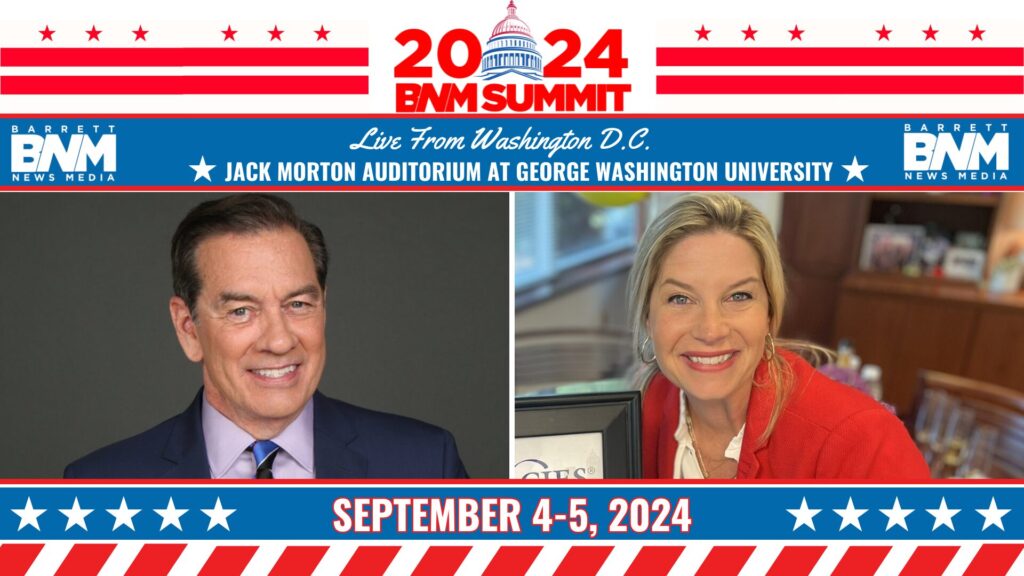
The 2024 BNM Summit continues to add smart, talented professionals to our stellar lineup. I am thrilled today to announce the additions of Westwood One talk radio personality and Newsmax television host Chris Plante, and Cox Media Atlanta’s VP and Market Manager Jaleigh Long to our September conference in Washington D.C.. This now brings our speaker total to 28 with more still to come.
Chris Plante hosts the popular ‘The Chris Plante Show‘ from Washington, D.C.’s WMAL studios, syndicated nationwide by Westwood One. He spent 17 years covering breaking news, the Pentagon and national security issues, and is also seen weeknights at 10pm ET on Newsmax hosting “The Right Squad.” Chris will be part of a panel on Thursday morning September 5th. We’re thrilled to have him join us for this year’s show.
Jaleigh Long meanwhile operates behind the scenes. She’s charged with leading Cox Media Group’s Atlanta cluster, one of the company’s best. Under her watch, 95.5 WSB remains one of the news/talk format’s most successful brands. It is also one of the crown jewels of CMG’s portfolio. Having Jaleigh join Joel Oxley and Chris Oliviero for our Market Managers session on Wednesday September 4th will be a real treat for our attendees.
The BNM Summit takes place on September 4-5, 2024 at the Jack Morton Auditorium at George Washington University. Tickets and hotel rooms can be secured by clicking here. To become a conference sponsor, email Stephanie Eads at Stephanie@BarrettMedia.com.
As we’ve done for each of our events, we’re giving college students an opportunity to attend the show, and meet and learn from industry professionals. Students in the DMV area who are enrolled for the fall semester can qualify for tickets by emailing the code FREE TIX to JBarrett@sportsradiopd.com. Emails will go out this week to local schools informing them of the opportunity for students.
Tom Brady: If you have any doubts about Brady being good in the FOX booth, watch this clip. His recent appearance on The Herd with Colin Cowherd highlighted his intelligence, comfort level, and ability to explain the game. Having listened to many of his Monday morning chats on WEEI, he was always engaging, well spoken, smart, and invested in the conversation. The only thing that limited him was that he was an active player so he couldn’t be transparent. I’d be stunned if Tom wasn’t a massive success on FOX this fall.
Listen to Tom Brady discuss the importance of getting your playmakers involved early in the game.
This is only three minutes and there’s so much. So good to hear him break down the game like this…
Audacy/Chris Kinard: When Spike Eskin returned to Philadelphia to host afternoons on WIP, it left one remaining issue to be solved; who takes the baton as the next VP of Sports for the company. Audacy got this one right. CK has done a terrific job for years in DC, wearing many hats, always trying to move his brands and the business forward. He’s invested in the format, good with people, and someone other PD’s can confidently turn to for guidance. Great move.
Ric Bucher: It didn’t take long to learn where Ric stood on the Lakers hiring JJ Redick. He’s not sold, along with many others. But what stood out here was the reasoning, and the examples used to paint a picture of who Redick may or may not be, and what he’s up against. Just a solid, two-minute piece of analysis supported with a firm opinion. Well done, Ric.
WWE: Coming off of a strong Clash at the Castle PLE, the company followed up by delivering a homerun on RAW with the debut of the Wyatt Sicks, created a viral buzz with Joe Hendry’s appearance on NXT, and then introduced Jacob Fatu to the Bloodline angle on Friday night Smackdown after Drew McIntyre decimated CM Punk in front of his hometown crowd. The WWE hasn’t been this hot in over a decade. Paul Levesque and Nick Khan are on a heater. ______________________________________________________________________________________________________
Thumbs Down
Cam Newton: The former Carolina Panthers QB questioned recently on his YouTube show why minorities don’t get paid the big money from networks like white players do. It was an interesting question that I’m sure some will be bothered by. Marcellus Wiley, Stephen A. Smith and Jason Whitlock addressed the issue and pointed out the obvious reasons – QB’s are treated differently especially those who won championships or played for high profile teams, and there’s a certain conformity, presentation and articulation expected on network TV.
If Patrick Mahomes retires one day and gets overlooked, I’ll be next to Newton asking ‘what’s going on?’ But let’s not use race to disguise the real issue, which is that Cam doesn’t fit the preferred type of hire by networks. And before you make it about executives not wanting to hire minority talent I’ll remind you that Louis Riddick, Charles Davis, Nate Burleson, Jonathan Vilma, Tiki Barber and Mike Tirico all have earned spots in the booth. If you want the bag, and the networks have it, it’s on you to adjust, not them.
ESPN Hiring Office: The College football season starts in just over two months. Lee Corso has been slowing down the past few years, and Pat McAfee generates attention every time he’s on the screen. Why is a deal with McAfee not done yet? College Gameday is one of the best sports shows on TV, and McAfee is a key part of it. This issue shouldn’t be lingering into the summer.
A couple of years ago, 93.7 The Fan in Pittsburgh started making moves with its morning show that led them to where they are today. In May of 2022, Adam Crowley was named the producer of the show and in August of 2022, former NFL player Dorin Dickerson, who had worked for the station since 2017, was named a show co-host. About a year later in June 2023, the station announced show hosts Colin Dunlap and Chris Mack were out and Crowley and Dickerson would take over the show. With that version of the show about a year old, I thought it would be a good time to eavesdrop in on The Fan Morning Show.
Crowley and Dickerson are joined on the show by producer and update anchor Nicholas ‘Harry’ Callas and on this particular episode the show was celebrating Callas recently getting a promotion to being a full-time member of the staff. The show was planning a lunch together later in the day and one of the early topics that came up was about who would pay for the meal. The early interaction between the guys about this along with the technical difficulties they were having with Dickerson’s headsets gave you a pretty good indication of what you were in for over the course of the show.
As is the case sometimes with morning shows, sometimes the best stuff has nothing to do with the sports topics of the day, it is just whatever comes out of the hosts mouths when they first crack that microphone.
In this case, while the tech issues were being worked out, the guys hit on whether or not Callas would sweat through his shirt with no undershirt on, Callas’ plans to buy a $4,000 bus, Crowley asking for advice because his five-month-old baby was not sleeping well and whether or not Crowley used the word ‘solstice’ the day before.
For the record, he did use the word, despite being certain that he did not. Callas found the audio from the day before and played it and that is when the audience learned there was a $1,000 wager made on the issue. Turns out Callas was good with just having his lunch paid for that day, so that settled that discussion. Now, the headsets were working and with all of those quick topics out of the way it was time to talk some Pittsburgh sports.
The two hosts have no problems going back and forth on just about any sports topic or the inevitable life topics that come up. Both hosts are in their 30’s and have families while Callas is in his 20’s.
Dickerson’s football career began in western PA. He was a High School All American and Pennsylvania Player of the Year in 2005 at West Allegheny. He then moved on to play for the University of Pittsburgh and was a First-team All American tight end in 2009. Next came an opportunity to perform at the highest level, entering the NFL as a seventh-round draft pick of the Houston Texans in 2010. He also has worked on the Pitt radio team as an analyst and sideline reporter.
Crowley said the day before, Dickerson had posted his offer letters from high school on social media. “You tweeted out all of your offer letters yesterday, and I spent an embarrassing amount of time zooming in on all of these schools that offered you.”
This led to a discussion about Dickerson being recruited by Pete Carroll at USC and by Urban Meyer at Florida. “I will never forget Pete Carroll walking down the hallway…When he walked in, I was like wow,” Dickerson said. Crowley compared Carroll then to Nick Saban coming prior to his retirement. “Pete Carroll at that time transcended college football, he was a giant,” Crowley said.
This is why you want an athlete who has made it to the highest levels on your station. It was fun and insightful to hear Dickerson talk about his recruitment and about his reasoning behind why he chose to go to Pitt. “Best football decision I ever made in my life,” he said. He talked about making the decision that staying local would open doors for him in the future, something that has obviously paid off.
Crowley is passion personified. No matter the subject, it is clear he loves doing his job and trying to entertain and inform his audience. Half the battle sometimes to keeping an audience engaged is the passion with which you speak about the subject. Crowley has that on lock down. It is easy to get caught up in his passionate and aggressive takes at a lot of the topics of the day.
Even as they talk about the Pirates, who have lost about 60% of their games since 2000, Crowley does so with an energy that is infectious. This season, with the team hovering around .500 which puts them in the running for a Wild Card position, and the tremendous starting pitching they have had, there is actual hope, and you can tell the guys are happy they can talk about something different other than which star players the team will trade away next.
Crowley had mentioned a few times that, “It’s just the three of us today. No guests on the show, it is a Friday, and we are just having fun.”
The segments flowed well, and Crowley keeps it moving along. When they finish a segment, they go to a quick headlines report versus a full sports update and that generally led them to a live endorsement ad from one of the hosts.
On this day, the group spent an entire hour doing Pittsburgh Pirates report cards. Four different segments worth of throwing out player names, assigning them a letter grade and debating the merits of whatever grade they were given. If you were tuning in for heavy Pirates talk you got exactly what you were looking for. If you were not, you were out of luck.
There was some strong hockey talk in another segment as the Edmonton Oilers had evened the Stanley Cup Final series with the Florida Panthers at three games apiece after being down three games to none. “Let’s say they come back, and they win this series from down 3-0 to winning this thing, it is gonna be maybe the greatest postseason in the history of sports,” Crowley said. “And it would be the most legendary comeback in that sport’s history because of the guy who spearheaded it.” The hosts also kicked around the idea of Edmonton’s Connor McDavid winning the Conn Smythe trophy as the series MVP even if Edmonton doesn’t win.
A lot of Crowley’s takes are strong, he doesn’t waver on a lot of things while Dickerson seems to weigh both sides of a subject when he speaks. The two have developed really good chemistry and with Callas, sound like the proverbial buddies having a chat about sports.
They just as easily have a great conversation about the possibility of the NFL expanding its schedule to jumping over to which celebrities don’t seem to age and marveling at the likes of Selma Hayek and Marisa Tomei.
Dickerson again adds great perspective with the NFL schedule discussion. He said as a player he would not have been in favor of extending the regular season schedule. However, he did add, “I am ok with it now, I want more football. After the Super Bowl is kind of depressing. It gets more depressing now, because you are itching for it. If you extend it a little bit longer that takes away a little of the wait.”
Crowley added, “From our standpoint, from a talk radio standpoint our hot time of the year gets extended, so I like it. I used to be in the camp of less is more, not I am in the camp of more is more.”
The schedule talk was followed by another good discussion on the lengths of the seasons in other sports. About hockey’s season, Crowley said, “The Oilers and the Panthers will have played, literally, literally, their season is ten months long. From October all the way through June, are you kidding me? It’s absurd, that’s absurd.”
As they wrap up the week, a fun segment they do is called ‘Social Media’s Biggest Loser.’ While Matt Stafford’s wife, who admitted to dating the backup quarterback in college to get back at Stafford, was the winner, the hosts had more to say about another station in another market and what they were talking about.
Referring to a poll question he saw on social media from WIP in Philadelphia, Crowley said, “…We’re entertaining, we are having fun, we are enjoying a Friday. They are getting hot and heavy on Nick Sirianni’s sideline demeanor.”
“They’re just still irked that they got kicked out of the playoffs, they’re still mad about it,” Dickerson added. “Talk about the Phillies or something.”
“Thats right the Phillies are like the best team in baseball…and they gotta ask about Nick Sirianni acting a fool on the sideline? On June 21st? Who cares?”
Dom Theodore, the man Glenn Beck credits with saving his show, said the famed talk radio host saved his life. After 30 years of friendship, the pair have shared a lot together.
However, Theodore’s influence can be heard on more than just Glenn Beck’s show, it can be heard across the country.
“I’ve only done radio my entire life. I started answering phones at a radio station when I was 12 years old, and I’ve been doing it ever since,” Theodore told Barrett News Media over a Zoom call.
Growing up in Detroit, a young Dom Theodore answered phones for WKQI. “I would come back as the program director of that station, which was kind of interesting.” He eventually landed in Tampa, where he met Beck. “Glenn and I just hit it off really, really well. We became really close quickly.”
Dom Theodore, the Program Director at WFLZ was just across the hall from Glenn Beck, who was doing afternoon drive at WFLA. Soon after was the moment which Beck calls the moment Theodore saved his career.
Just a few months into Beck’s new gig, he dropped a career bombshell on Theodore. “He said, ‘I think I’m getting fired.’ I said, ‘Ok. Why do you think you’re getting fired?’
“‘Well, the program director of WFLA said to me today, ‘I hope it’s too early to say that we hired the wrong person’.”
Doing a show trying to please everyone, Theodore believes Glenn Beck lost sight of his own vision. “I said, ‘You know what? What’s happening is you’re doing somebody else’s show. You’re not doing The Glenn Beck Show. You’re doing somebody else’s show hosted by you. And so that’s never going to work. It’s not connecting because it’s not coming from [the heart].
“’My advice to you is go in there and do The Glenn Beck Show. Do that show that you wanted to do from day one, the one that you told me about.’ And he said, ‘Ok. Won’t I get fired for doing that?’ I said ‘You might, but you know what? Would you rather get fired for doing something that you think might work instead of continuing to do what you know isn’t working?’”
This helped launch Beck into the superstar we know today.
Many years later, Dom Theodore says the radio host saved his life. “I almost died in 2020. They discovered cancer in both of my kidneys. I had to have my kidneys removed and a transplant, all within a period of about six months, and it was a horrible time.
“There was not a test a procedure or anything that I went through that Glenn and (Beck’s wife) Tania weren’t on the phone the night before praying with me. I was at the Mayo Clinic getting a test and Glenn was on the air at the time. And he paused during a stop set and he called me and he prayed with me before I went in for that scan, and I will tell you, that’s a good friend. That’s a real friend.”
Today, Dom Theodore said of his health, “Thankfully, I’m doing ok for the most part. Now I have a transplant, and I’m still standing.”
Still working hard and as passionate as ever, he is looking for more content innovation in the industry. “Because of the debt service that a lot of these big companies have, the focus has been on producing what we’ve always done just at a lower cost point. Instead of experimentation and innovation.”
He noted, “The only way that this industry survives is content innovation. I know no one wants to hear that. I know that I’m saying things that are politically incorrect, and I don’t really care. I don’t really care. The radio industry CEOs hate this when people like me speak. They hate it because they know I’m right.”
Theodore noted what makes good radio is simple and hasn’t changed over the years.
“Somebody asked Les Moonves this question at one of our CBS meetings, and his answer was absolutely brilliant. He said, ‘Entertainment hasn’t changed since the days of the Colosseum. At the end of the day, it’s about having an interesting story and telling it in a really interesting way.’ And I do believe that that is the core basis of everything we do.”
While cultivating good talent takes time, Theodore said good talent often comes from interesting people who are often creative.
“What did the radio industry do in the last 10 or 20 years as it’s become more and more corporate? We threw all those people out. Now, ‘They’re too high maintenance. Just get rid of them. So why don’t we replace them with people that conform, that do as they’re told, and execute the plan that comes from above? Never questions authority.’ There might be a better employee, but that sure doesn’t make for better content.
“By the way, where did all the creatives go? Where do they go? Digital. There’s no rules and on YouTube, I can do whatever the hell I want. Why do I need some program director to tell me what to do? I can do a podcast and do whatever the hell I want. And some of them did it. And we’ve lost a generation of talent because we didn’t want to deal with the maintenance. I mean, how shortsighted is that?”
For those who are less shortsighted and looking to follow in the footsteps of Dom Theodore, he said don’t.
“I made a lot of mistakes through the years. First of all, don’t follow in my footsteps. Learn from my mistakes.”
The second part of his advice is being true to yourself and confidence in your truth. “I think being true to yourself is a matter of not conforming. In your gut that little voice inside you knows that you’re right and you’re doing something that’s different than what anyone else is doing. And therefore, because people don’t understand it, you’re being told that it’s wrong. You’re probably right and they’re probably wrong. And time will bear that out. So, have confidence.”
If you read last week’s column, you know how to use the Nielsen PPM Analysis Tool to look at individual days in the survey month. It’s worth taking time each month to see how your stations as well as your competitors are doing each day. Are you seeing any patterns in the data?
Now let’s drill down even deeper. Again, one of the goals of the PPM system was to let you see discrete days and times and have some confidence in the data because the full panel would be there. In other words, a sample size that limits some of the crazy wobbles we get in the diary service. That has prevented PPM from having some crazy wobbles as well, but for the purposes of this column, let’s set that issue aside.
To start, fire up AT. Much like the day-by-day data, you’ll choose Trends, even if that doesn’t seem all that logical. Last week, I showed you that selecting the drop-down box next to the survey would give you the option to choose “day” which shows all the individual days within the daypart.
Now, go to the “Time Period” option and click on the drop-down box next to the daypart. You’ll see options for “block”, “hourly”, “half-hour” and “quarter-hour”. While I’m going to use the “quarter-hour” option here, you can also use this option to look at individual hours or half hours. Click on the “quarter-hour” option and you’re ready to go.
A warning for you: If you choose a broader daypart such as Monday-Friday, 6AM-7PM or God forbid, total week, AT will spit out a lot of data. That first daypart has 52 different quarter hours (13 hours times four) and if you’re looking at the survey month, you have 20 days. Let’s say you choose four stations to review. 20x4x52 is too much data for you to review at one time.
The best use of the quarter-hour option (or even the hour or half hour) is reviewing something major that happened. For a news/talk station, how did your station perform when Trump’s conviction was announced? Perhaps you had a big-name interview on your air that you promoted heavily? Was there a major local news story that occurred in your market that you covered extensively?
For a sports station with play-by-play, how well does each team perform? When I first joined Cumulus, I reviewed an entire season of the Golden State Warriors on KNBR. It didn’t matter who the opponent was because the best-performing games were the ones when the team went East. A 7 PM ET start time was 4 PM in California meaning more audience as the games were on during afternoon drive. For example, Golden State against a not-so-good team like Orlando or Charlotte on the road would pull far more audience than say, a Lakers game on a weekend. How did the ratings look when a coach or manager was hired or fired?
For any format, how does your morning show perform on a quarter-hour-by-quarter-hour basis? Are there obvious peaks and if so, what is the talent doing? When are the weak times? Those will likely correlate with stop sets and there’s not much you can do but look closely. However, if you have a stop set immediately after the best performing time of the morning, maybe you should move it.
The “hourly” option is useful when you have programming that doesn’t match specific dayparts. Most public stations have actual “programs” versus daypart shifts. Which hours perform best and yes, I know the answer will be Morning Edition and All Things Considered, but even those programs will have stronger and weaker hours.
As always, I also recommend that you select the PUMM option along with your other estimates (persons, share, cume, etc.). Is one of your stronger quarter hours up against less available audience? If so, you might want to consider moving the content to a time when more listeners are available if that’s possible.
We all know that one Nielsen data point does not constitute a trend. While the quarter-hour option in AT offers the opportunity to drill down into the data, you probably need to look at a few months or more of data to discern trends that may motivate you to consider changes.
Nonetheless, it makes sense to analyze your stations and your competition at this level because every quarter hour matters.
The 78th edition of the NBA Draft will be the first to be held over two days. The first round will take place on Wednesday June 26 and will be followed by the second round on Thursday June 27. The draft will be held at the Barclays Center in Brooklyn. SiriusXM will provide full coverage on SiriusXM NBA Radio channel 86, and they have announced Tom Crean will take part in a preview show prior to each round.
The former Marquette, Indiana, and Georgia men’s basketball coach will co-host SiriusXM’s NBA Draft Preview Show, alongside Eddie Johnson and Justin Termine, on Tuesday, June 25 on Wednesday, June 26 prior to Round 1 at 4 p.m. ET, and on Thursday, June 27, prior to Round 2 at 2 p.m. ET.
Crean returned to ESPN as a college basketball analyst in December 2022 after having worked for them previously during the 2017-2018 season. Crean was fired after four seasons at Georgia, prior to his ESPN return.