Prime Video and NHL Productions revealed the trailer for the upcoming original hockey documentary ‘Saving Sakic’ premiering on April 16 for Prime members in Canada and April 17 for ESPN+ subscribers in the U.S.
The documentary follows the high-stakes saga that ensued when Colorado Avalanche Chairman/CEO Charlie Lyons was blindsided by an attempt to sign away the captain of his team, Joe Sakic. With only seven days to raise $15 million to save his star, Charlie finds a lifeline from an unexpected place – Hollywood.
Joe Sakic garnered a slew of accolades over his 20-season NHL career, first for the Quebec Nordiques, who selected him in the first round of the 1987 NHL Draft, and later for the Colorado Avalanche after the Nordiques relocated to Denver. In Colorado, he captured two Stanley Cups, won the Hart Trophy as NHL MVP, and the Conn Smythe Trophy as MVP of the playoffs. As part of NHL’s Centennial celebration in 2017, Sakic was voted one of the 100 Greatest Players in League history.
‘Saving Sakic’ is directed by Jay Nelson with executive producers Steve Mayer, Ross Bernard, and Craig Axelrod for NHL Productions and Gary Cohen for Triple Threat TV. Saving Sakic joins sports content on Prime Video, including original documentaries Chosen One: Alexandre Daigle, Giannis: The Marvelous Journey, Kelce, All or Nothing: Toronto Maple Leafs, and Sportsnet on Prime Video Channels.
Even the NIT is riding the recent hot streak of live sports viewership numbers. According to data provided by ESPN, the 2024 NIT Quarterfinals are up 33 percent compared to last year’s tournament. Perhaps more surprisingly, two NIT quarterfinal games topped one million viewers.
#NCAAMBB action on ESPN platforms continues to shine
The network’s Georgia/Ohio State matchup averaged 1.03 million viewers, while the Cincinnati/Indiana State contest averaged 1.02 million viewers. These two games were the most-watched NIT games since 2017 — including title games. Both Georgia and Ohio State have rabid fanbases, while many thought Indiana State was unjustly left out of the March Madness tournament, which could be a reason why viewers tuned in.
Much of the focus this season has been on the women’s game, thanks to Caitlin Clark, Angel Reese, and the undefeated South Carolina Gamecocks, led by Dawn Staley. ESPN just had its most-watched women’s college basketball season since 2008-09 because of the increased interest in the women’s game. The men’s game, however, hasn’t been heralded as much this season for whatever reason, mostly because numbers seem to be holding steady compared to previous years. However, if the NIT is posting viewership wins, that should bode well for the NCAA Tournament’s incoming viewership totals.
We’ve reached the end of BSM’s ‘Day Spent With‘ series. I hope you’ve enjoyed reading these pieces as much as we’ve enjoyed creating them for you. I want to thank all of the brands, companies, and professionals who made time for Derek Futterman during the past two months. None of these projects work without help from a lot of quality people.
Our goal from the start of this series was to shine a light on what a day entails inside each workplace. Whether folks work in radio, digital, television, voiceover/imaging, media buying or management, consistent success can not be achieved if all departments aren’t working in sync. Fortunately, we’ve got a lot of good ones continuing to raise the bar across the sports media industry.
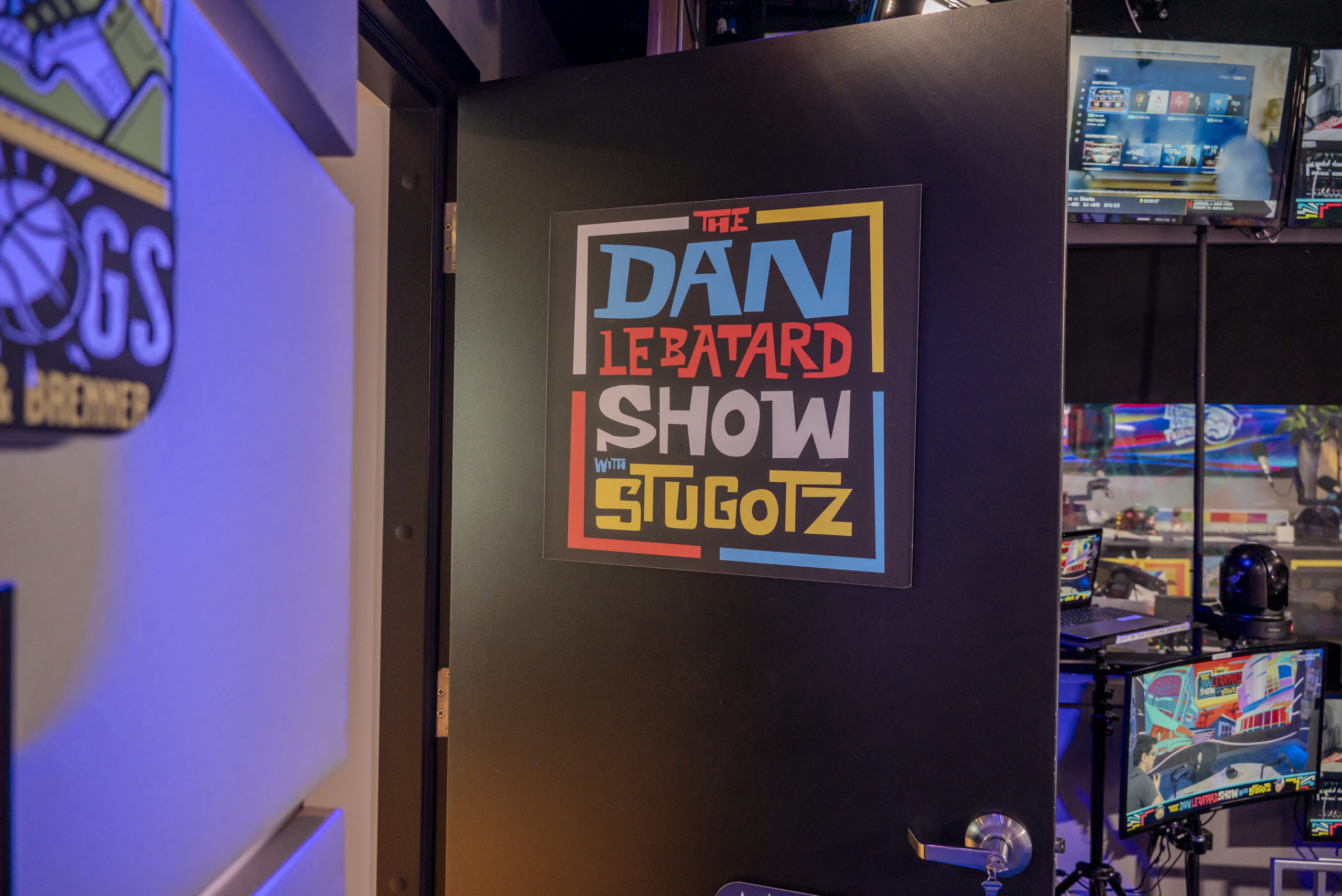
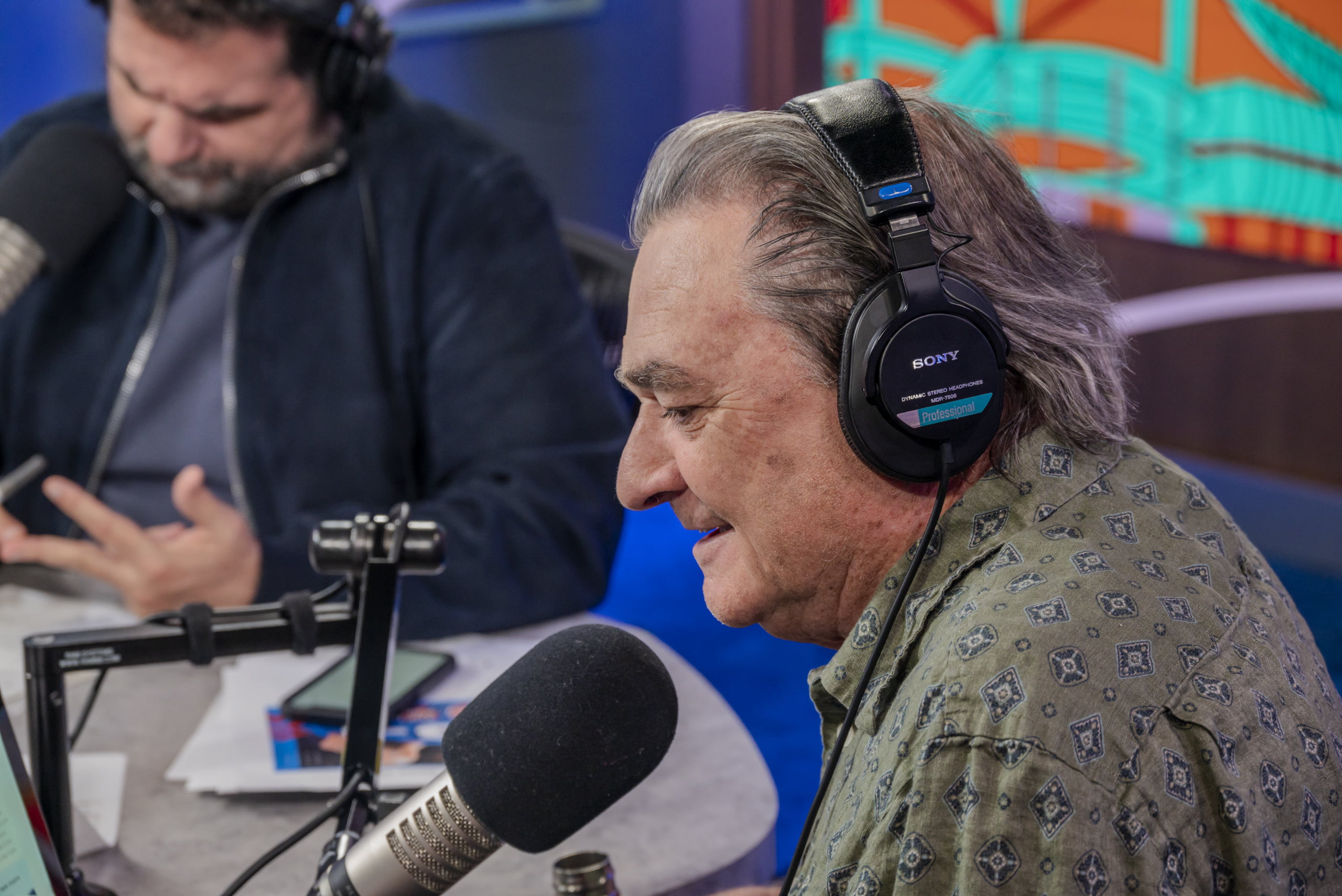
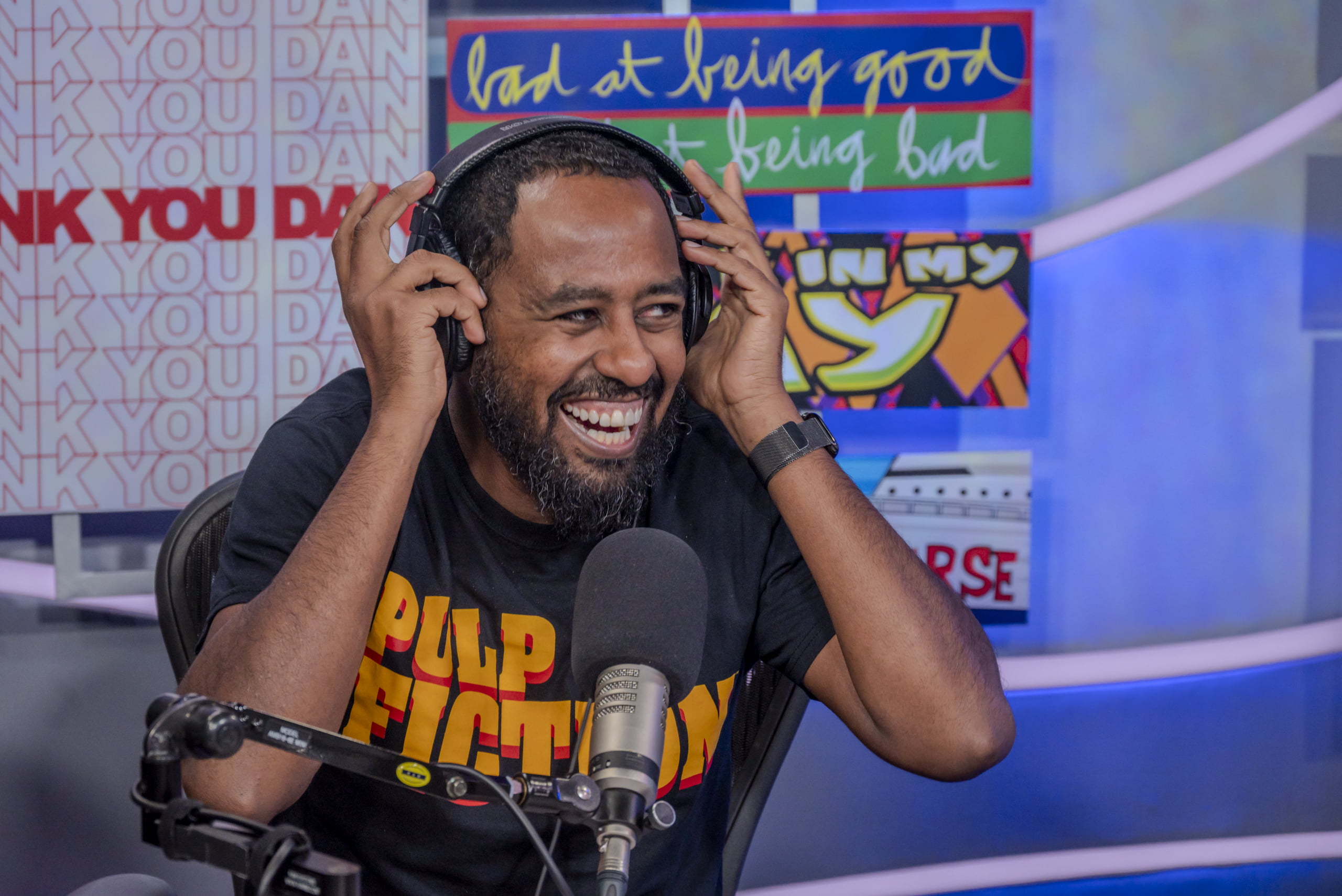
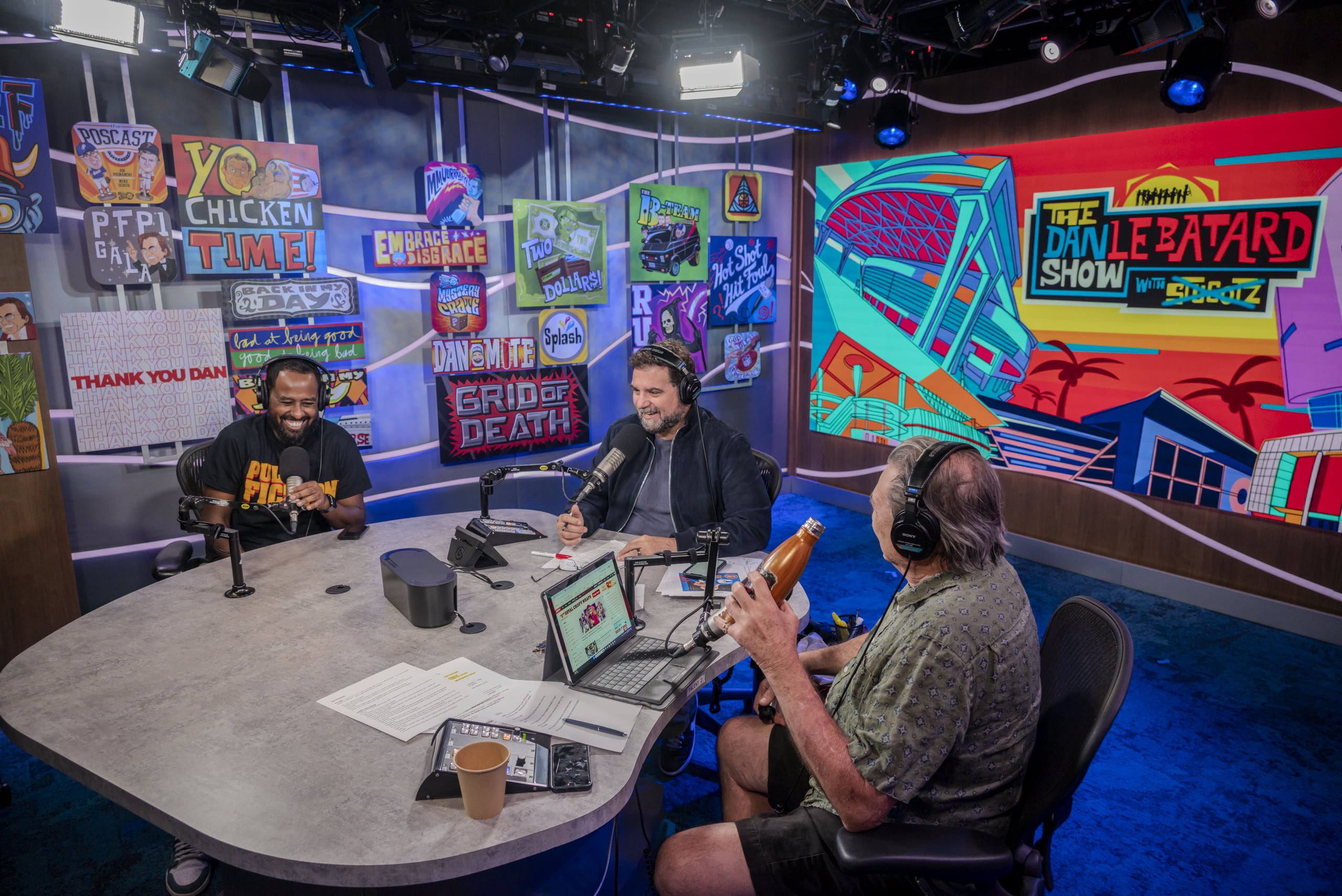
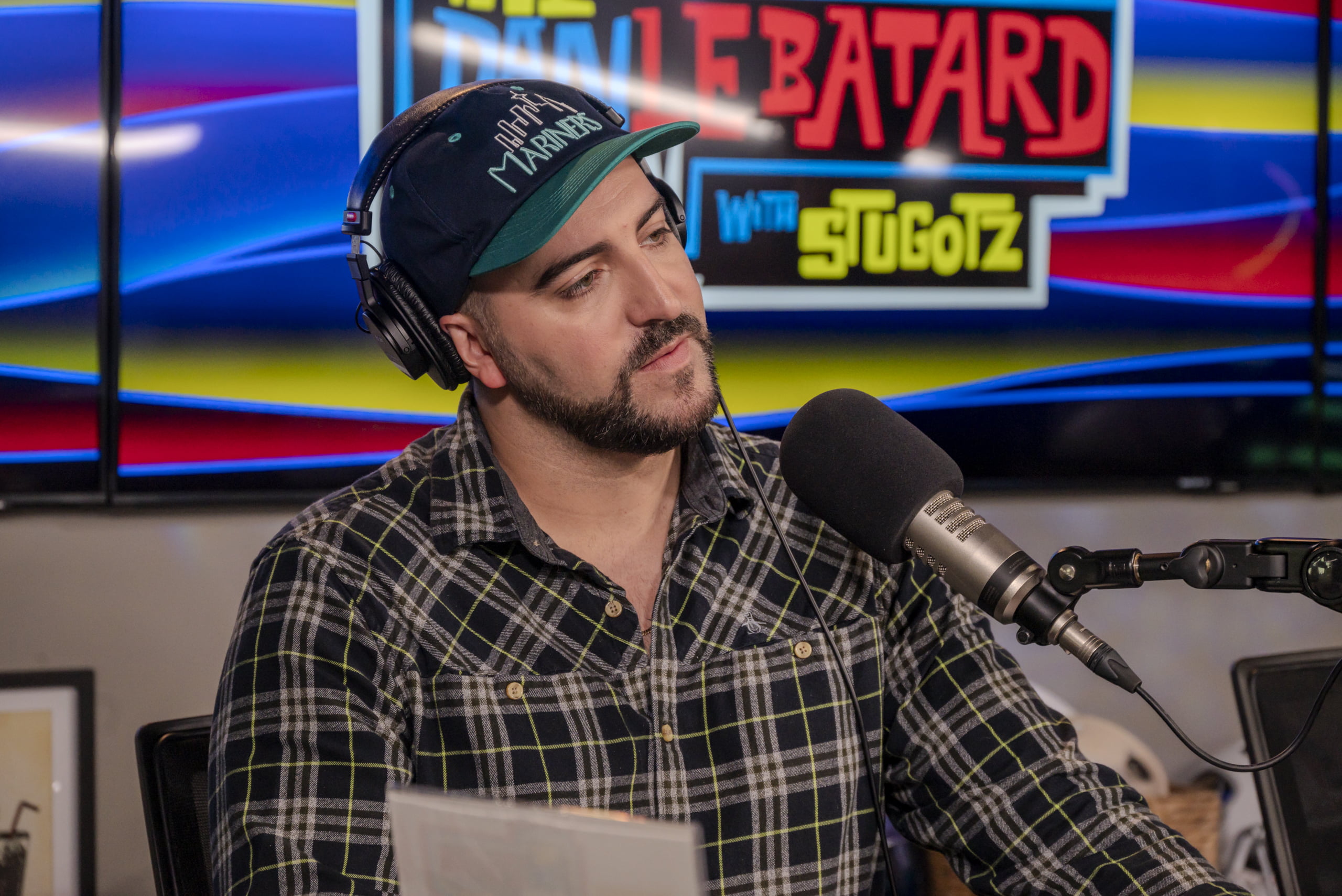
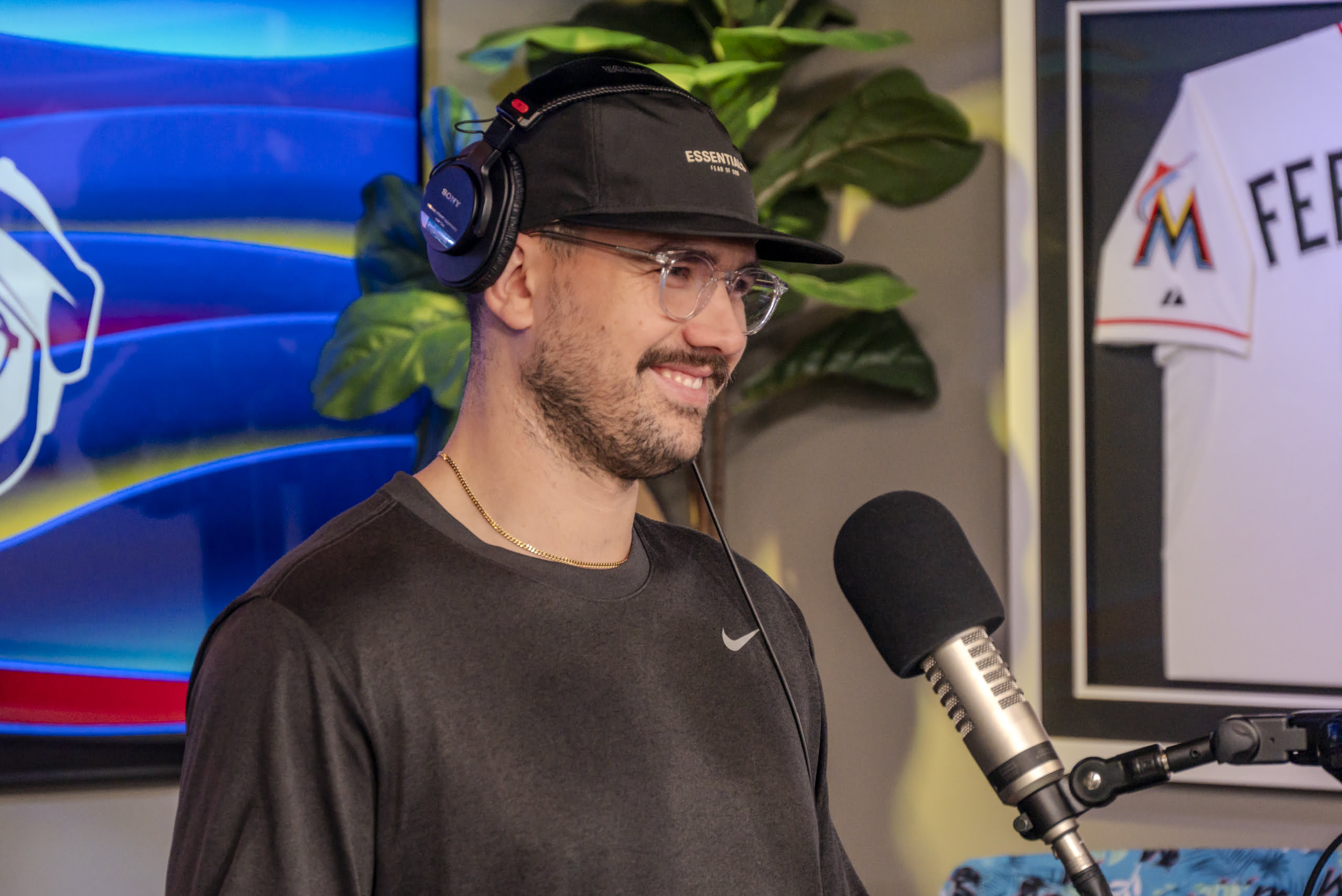
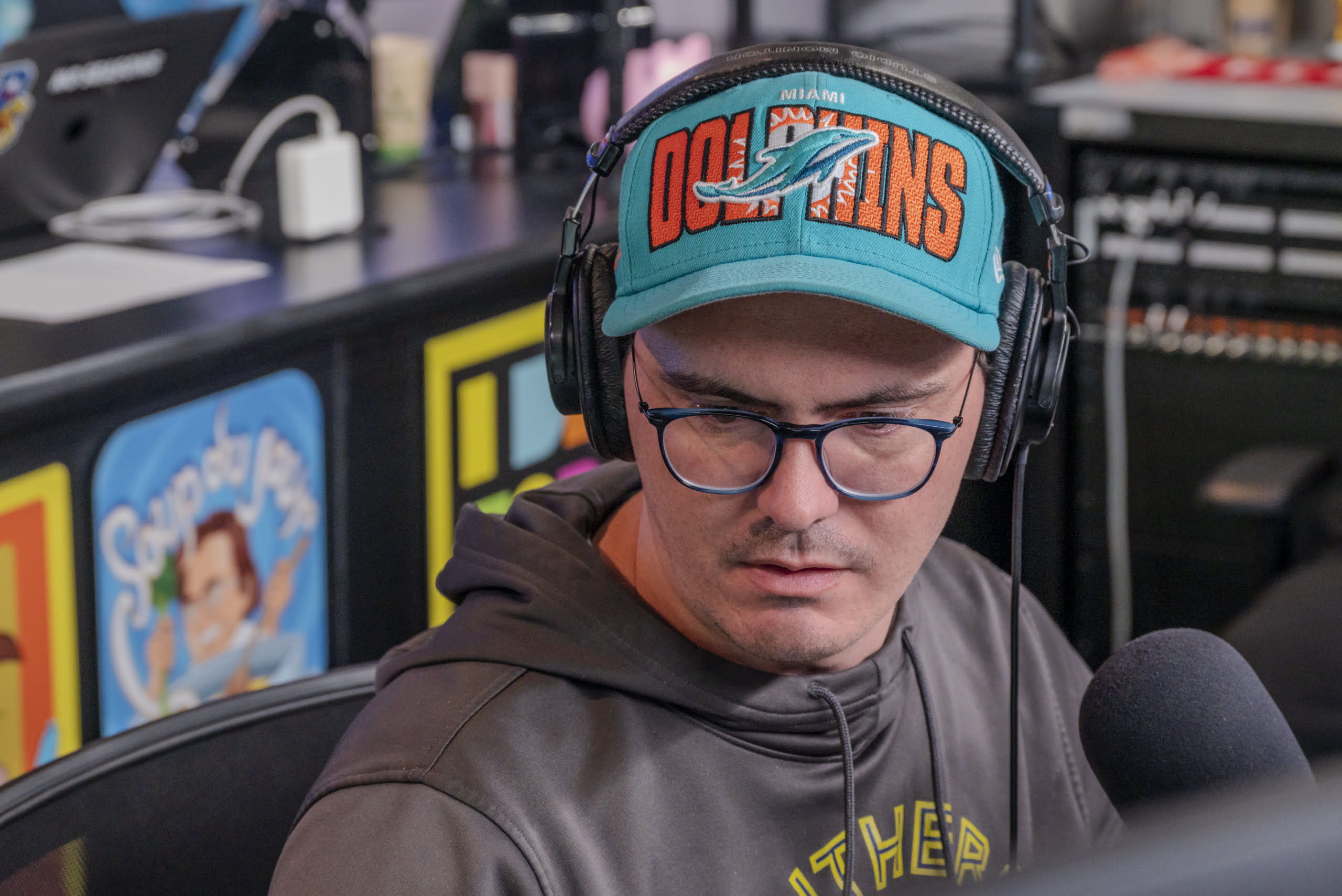
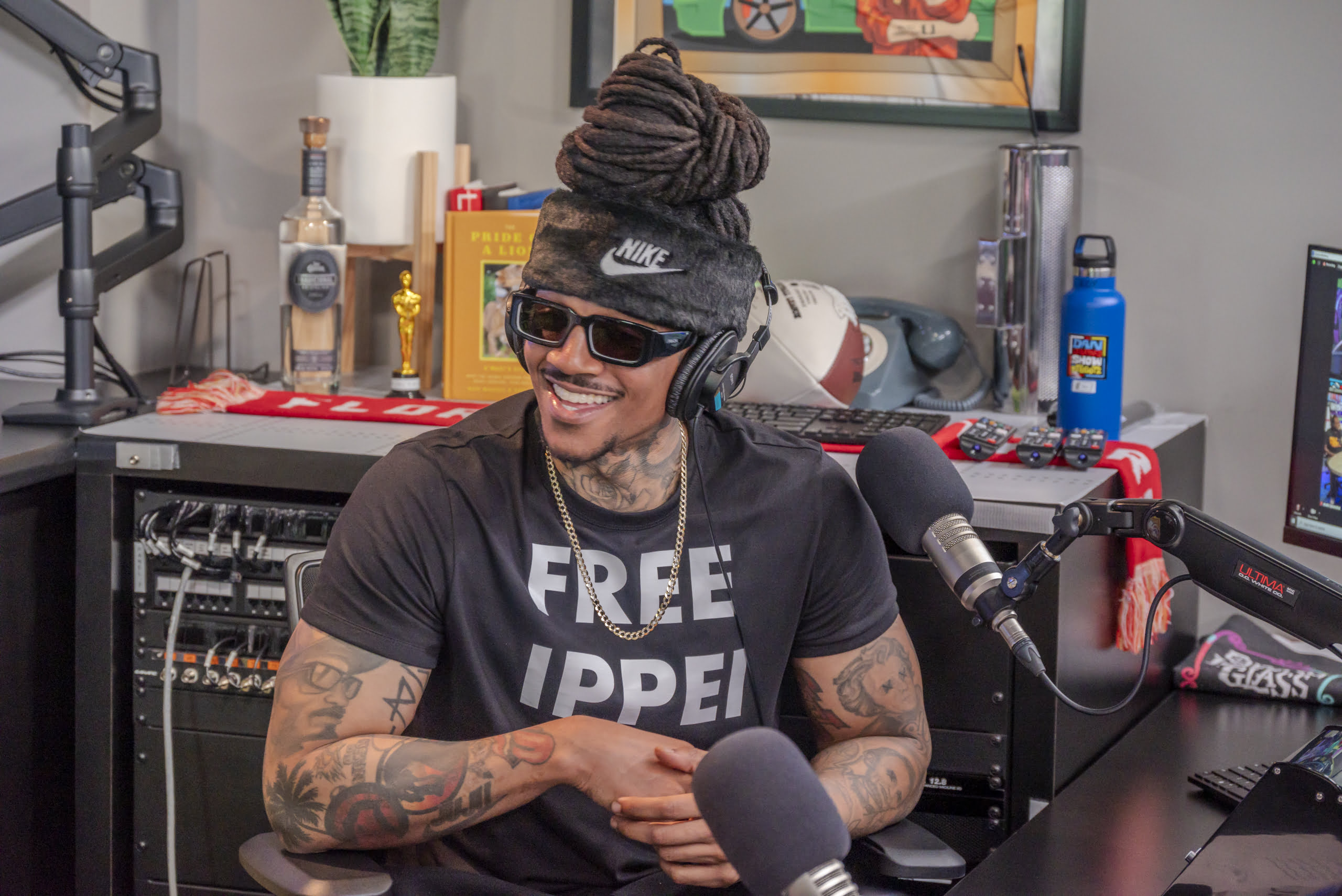
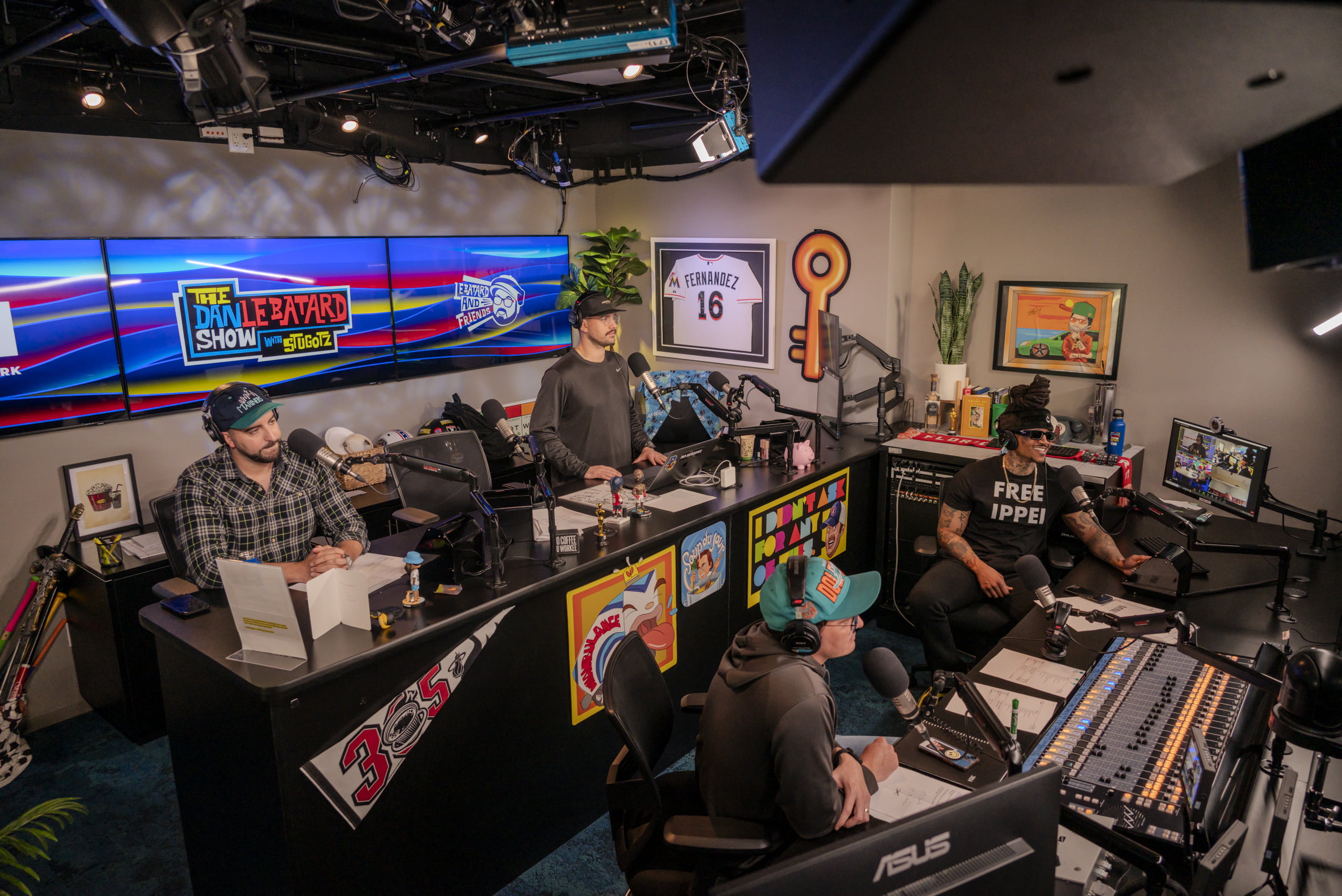
To close things out, we sent Derek to South Beach to spend a full day with The Dan Le Batard Show with Stugotz. My thanks to Dan, and the entire crew for making time for us. I also want to thank Bimal Kapadia for putting the wheels in motion. We don’t travel a lot for projects, but when this idea came up, I thought it’d be a great way to put a bow on an awesome series. I’m sure as you read the piece, you’ll agree that it offers a great peek into life on the pirate ship. I just hope Derek didn’t bring home an eye patch or lose a hand in the process.
A loud bell rings two minutes before the top of the hour, signifying to all those within the facilities that the show is about to begin. This tone, albeit fleeting in its duration, has a resonance that rings true throughout the entirety of The Dan Le Batard Show with Stugotz, but it is hardly the catalyst for the natural energy and congeniality exhibited inside the studio walls. There is a calculated verve and mental calmness that permeates the space combined with an inherent awareness of the expectations and commitment to its audience.
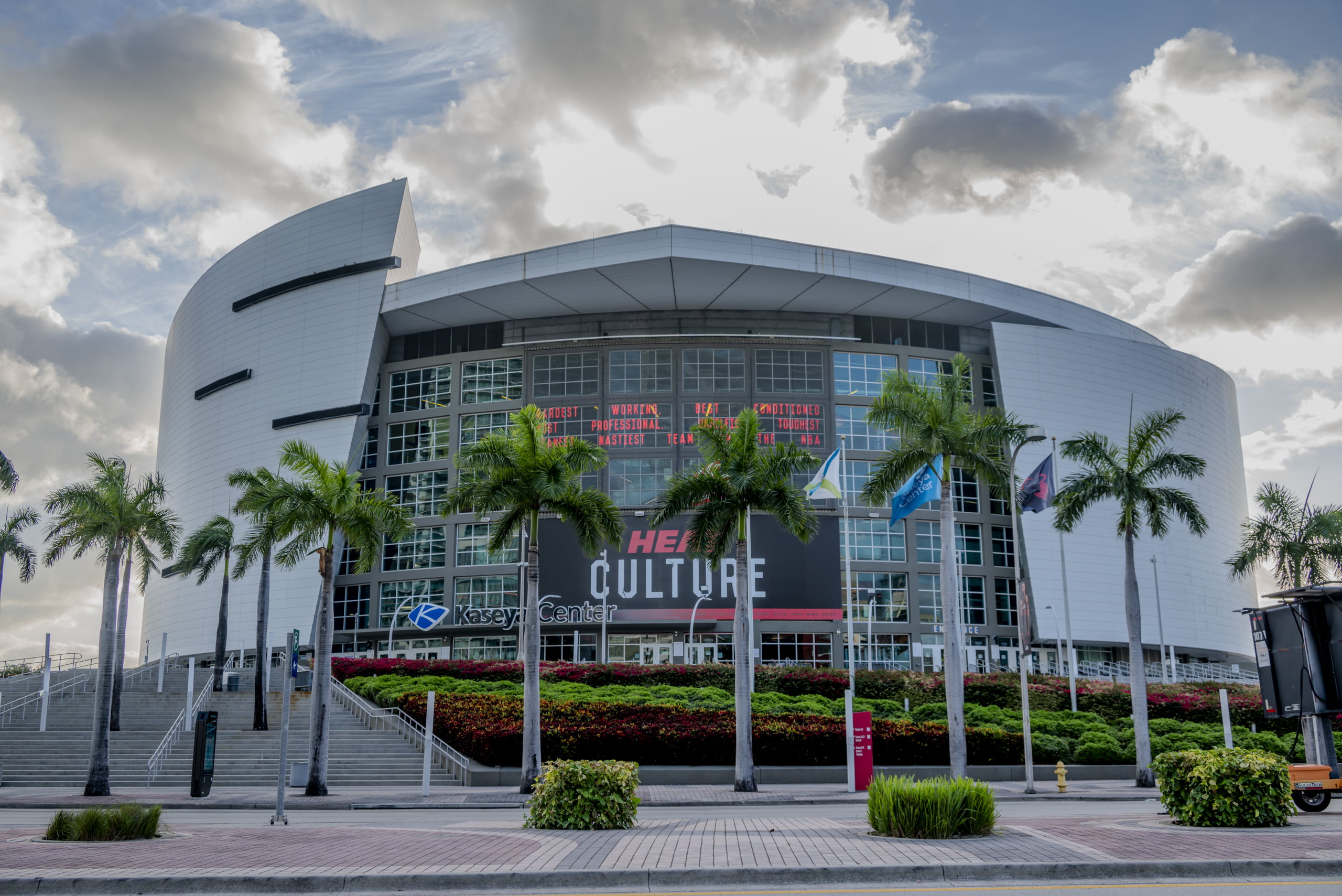
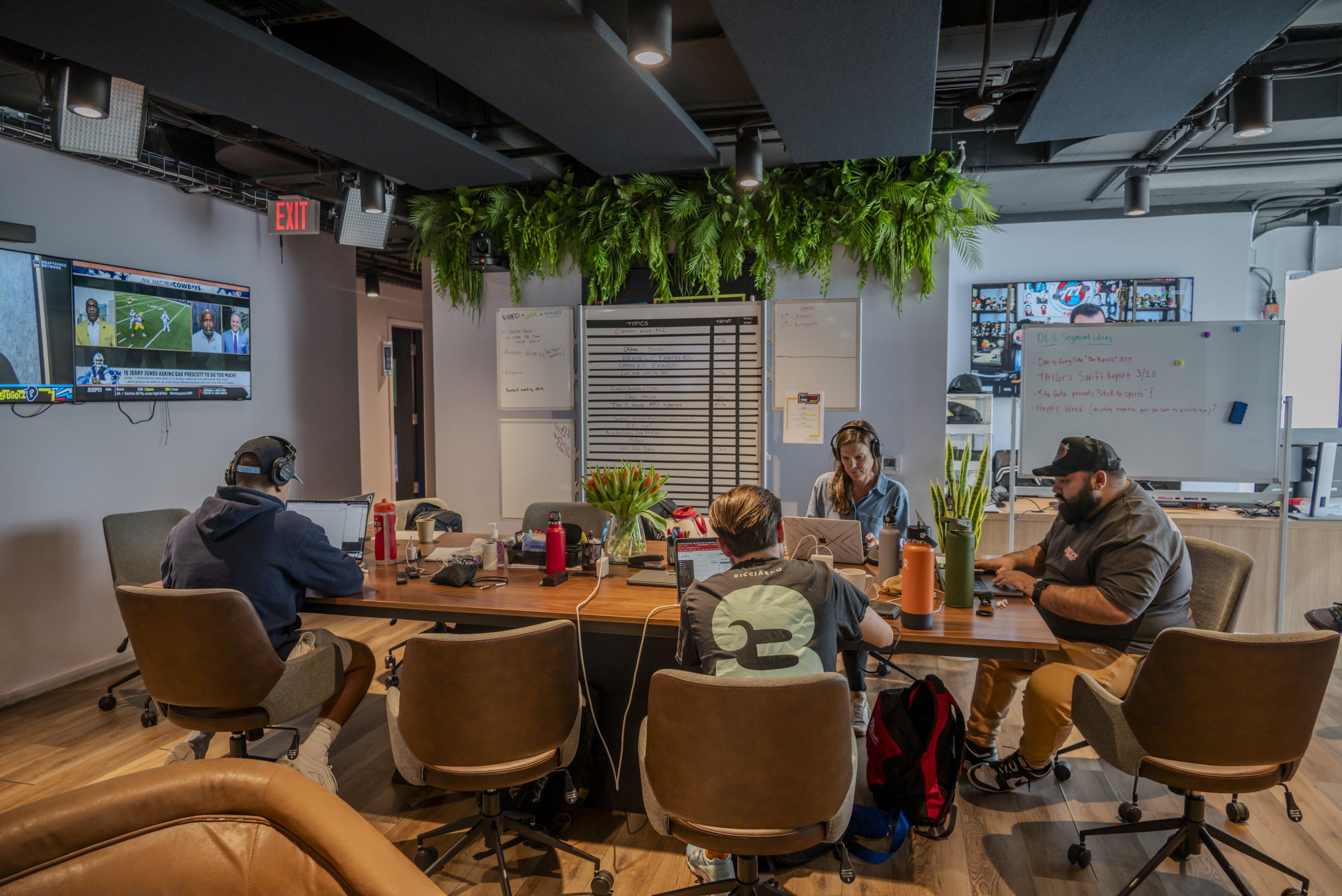
Although there are elements of improvisation and joviality within the three-and-a-half hour show, hosts and contributors do not simply enter the studio without a plan. Personnel arrive at the Meadowlark Media studios in Miami in two waves with a cognizance of news across a variety of topics. In an office space with the Port of Miami and Kaseya Center visible in the distance, the cast brainstorms potential talking points and informs those involved in audio and video production of any content they might need. Of course, part of the job is also remaining prepared for a deviation off script depending on the discussion percolating or breaking news off which to react.
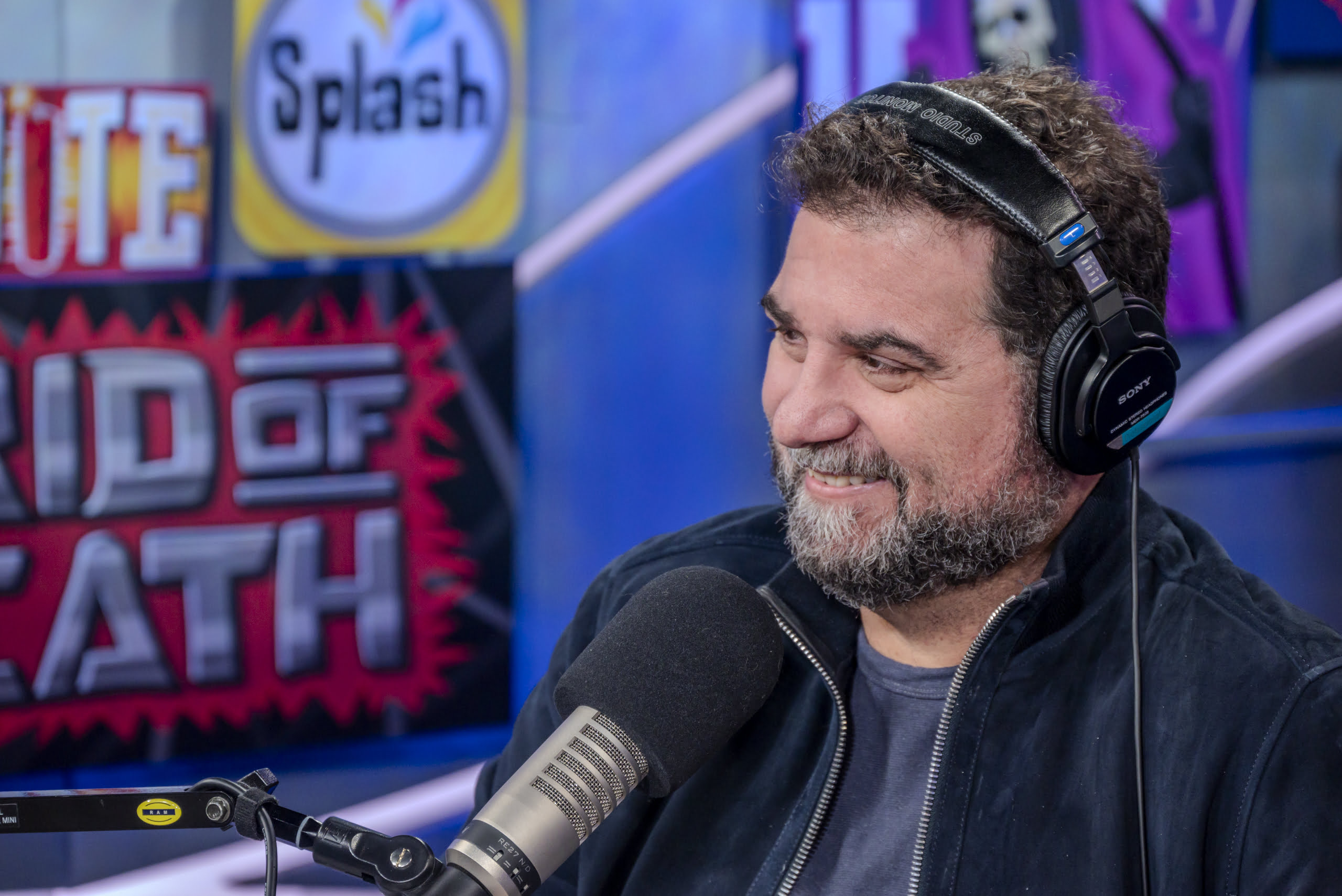
Co-hosts Dan Le Batard and Jon “Stugotz” Weiner have been working together for nearly two decades, first at 790 The Ticket in Miami. The local version of the show quickly flourished through its blend of sports and other worldly discussion. There have been several different permutations over the years. Consistent through it all is knowing and accepting their roles, and embracing the sublime to the ridiculous, while enjoying content selection freedom.
“I would say that we’re following our curiosities, so I want the show to have range, but I’m going to say [it is] a sports show in costume; a sports show in disguise,” Le Batard said. “I want it to be about other things and it also has sports, but I don’t want it to be limited as a sports show.”
Le Batard and his team do not hesitate to address divisive issues head on, adopting a direct approach rather than espousing their opinions in a indirect manner. There is both deliberate and indirect self-effacing comedy within the show, which begins with a “Local Hour” broadcast streamed live on YouTube weekday mornings at 9am ET.
Consumers wait for the countdown to commence to showtime, which is set to a pulsating theme song with its wide array of cast members engaging in different activities around the facility. Conversely, Weiner is stuck in Miami traffic trying to arrive at the studio on time and dashes through the door to arrive just on time. Abstaining from the pre-show meeting, however, is usually part of the plan in how he executes his infamous “Stugotz” character that has been cultivated for nearly two decades.
“In terms of what’s going to be thrown at me, I really have no idea, and there are many, many times I don’t know what my response is going to be to some of the topics of the day until it’s actually asked to me by Dan,” Weiner said. “I’d rather just not know where I’m going to go and just go with my gut.”
On this particular version of the program, Weiner is not in the studio and in the midst of taking vacation. Miami Herald sports columnist Greg Cote is live for his weekly appearance on the program in a tradition that has become a favorite among colleagues and listeners. Le Batard opens on a somber note, discussing the sudden collapse of the Francis Scott Key Bridge in Baltimore, disclosing that the program was not going to show the video of the incident.
Cote believed that the video should be shown one time just as it is any calamity, prompting Le Batard to explain his opinion on how the footage will likely be promulgated by the internet. The program then moves on to discuss Sean ‘Diddy’ Combs, who had his properties raided by authorities as part of a federal investigation pertaining to sexual assault, sex trafficking, firearms and illegal narcotics.
Over the years, industry professionals have frequently associated the word ‘pontificate’ with Le Batard, referring to how he expresses himself and often spans beyond sports. During his time at ESPN, the program had to clear certain creative elements or segment ideas with upper management. Many people began to foresee a split between Le Batard and ESPN approaching, and that resolution was eventually reached. Le Batard thinks critically and objectively about different topics, outlining his opinions about various matters on the air, and he always desired the ability to possess more creative control.
“Our show is just meant as an audio experience in a family-like environment, creating laughter and weirdness and pretending like it doesn’t know a lot of people are watching,” Le Batard said. “That needs to be protected, and we’ve thrown a lot of change at it.”
Dan Le BatardGreg CoteAmin Elhassan
In the last several years alone, the program has enacted alterations in its process pertaining to the studio, cast members, clock, visual elements and start time. At the same time, Le Batard’s brother, David, was battling brain cancer and later passed away, but he did not want to give his audience the vulnerability associated with the hardship. Le Batard considers the creative process to be sacred and values the intimacy of their communication medium.
“I allow our most passionate fans to have strong opinions that make me reconsider mine,” Le Batard said. “I like a community that has sparks in it even if we get accused of being an echo chamber, but I would say that over the last couple of years, I have found fewer and fewer spaces where the criticism is constructive enough to be heard over all of the poisonous devices [and] rhetoric that is now internet spaces that are covered in acid and fire.”
When radio show producer Chris Cote was included in layoffs at ESPN in November 2020 without Le Batard’s knowledge, Le Batard immediately re-hired him as his assistant and offered to pay his salary. For Cote, the act was unsurprising because of Le Batard’s loyalty to his staff members and something he believed precipitated his exit from ESPN.
“That was an interesting time,” Cote recalled. “I would say I’ve made the joke on the air before that people like to blame me and say I’m the reason we left ESPN. I think what happened with me was the final straw that led to the divorce.”
Cote knew Le Batard from the time he was young since he worked with his father, Greg, at the Miami Herald. During those visits though, he did not realize Le Batard could one day be his boss. He now views it as funny that things ended up unfolding in this manner. Le Batard hosted this edition of the show with Greg Cote, someone he originally wanted as his partner on the air.
“If he and I had chosen to do the show with 20 years of reps, it would have felt like Larry David and the late Richard Lewis,” Le Batard said. “It would have been a chemistry because our friendship is real. It’s not borne of television; it’s not borne of broadcasting.”
“My dad brings that special sauce that Stugotz brings to the show where we’re talking about sports and then he says something, and the next thing we know, we’re spending 10 minutes just making fun of something he said,” Cote added. “My dad is like the gift that never stops giving. He’s just a gold mine for random stuff that has nothing to do with the conversation we’re trying to have, and he’s a content factory.”
The character of ‘Stugotz’ is not as much acting as it is an exaggerated version of who Weiner genuinely is in his life. On the show, he tries to represent how most people consume sports, affirming that Le Batard does it in a different manner. Part of his inspiration came from Christopher “Mad Dog” Russo, longtime radio host at WFAN and SiriusXM. Weiner believes that things clicked when he started to mock him rather than try and successfully facsimile his approach.
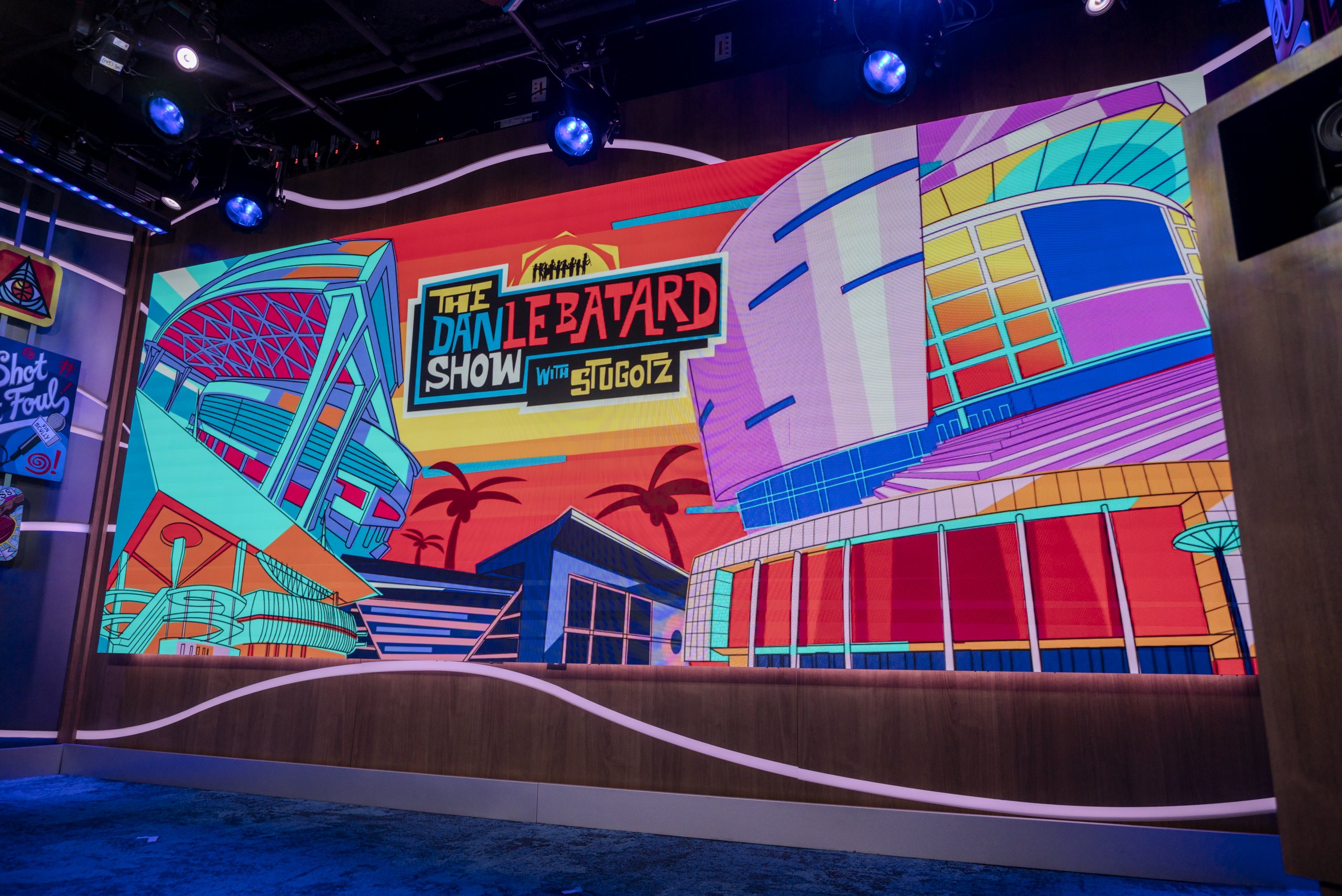
Part of the allure and mystique around ‘Stugotz’ is in his absences and fans not knowing when he will be on the show. As time has progressed, the character has appeared on other programs such as the God Bless Football and STUpodity podcasts, but he has long been synonymous as Le Batard’s sidekick who is relatable and intriguing. When he is missing from the program, the show rebrands its graphics to read “The Dan Le Batard Show without Stugotz” and plays off the aura of the personality.
“I wish it was my idea, I’m upset that it wasn’t my idea and this is the first I’m finding out about it,” Weiner said. “You’re telling me they do this every time I’m not there? Well two things – it shows, (a), how much attention I’m paying to the show when I’m not there, which is slightly less than I am when I am there, and No. 2 is my reaction to it. Me laughing is what makes our show our show. I’m pissed that I didn’t come up with the idea; I am proud of them for coming up with that idea and executing it. It’s laugh-out-loud funny.”
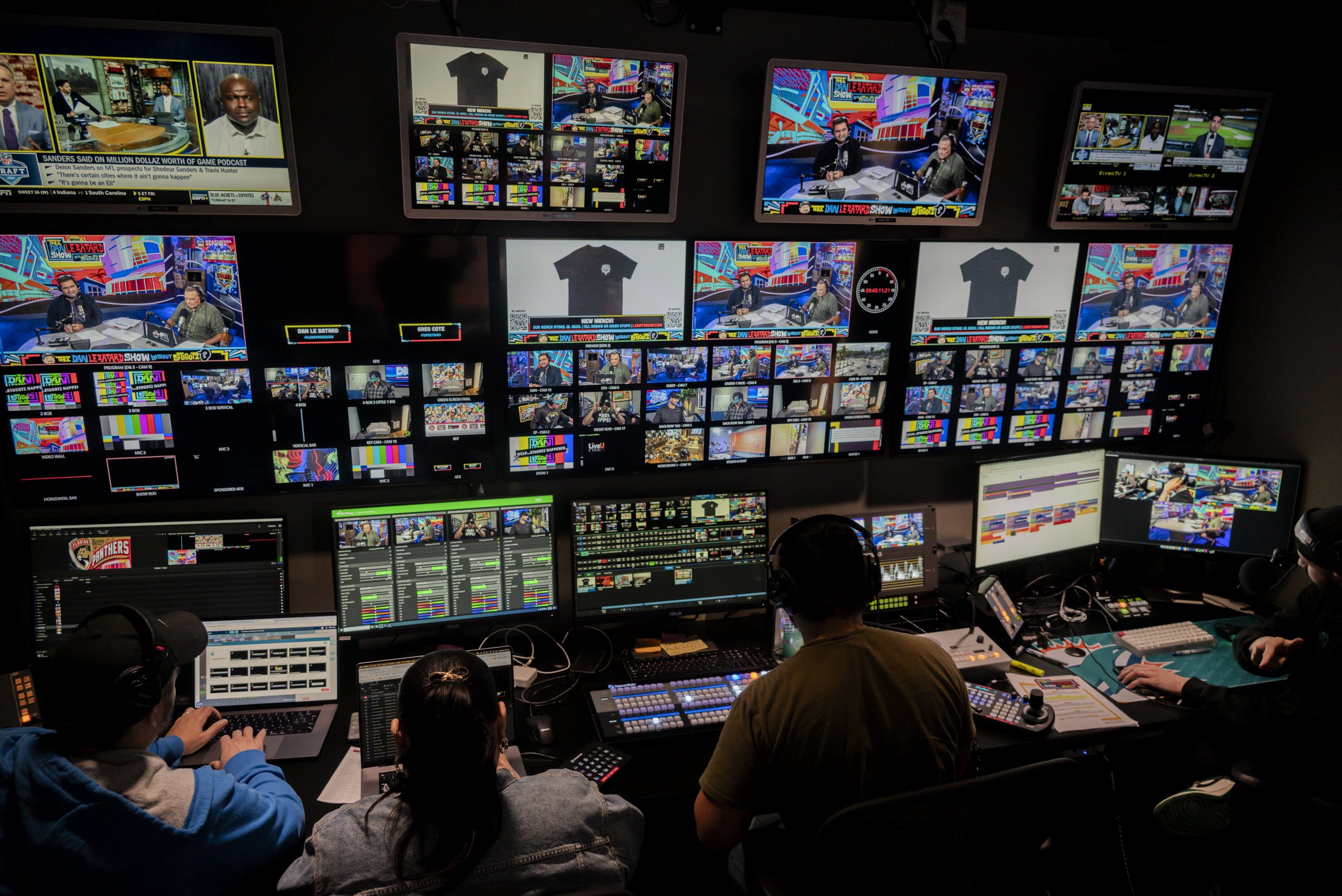
Le Batard and Stugotz broadcast their show facing a pane of transparent glass, behind which lies an addendum to the studio space. Chris Cote is part of the group within the “Shipping Container,” a room containing different producers and contributors who operate audio equipment, coordinate guest appearances and frequently contribute to the conversation. Both areas are adorned with artwork and sports memorabilia from the city of Miami. Mike Ryan (Ruiz) has been part of this labyrinth for several years, especially when he served as the show’s executive producer. In the present moment, this role is filled by several different personnel who rotate depending on schedule and show needs.
“The best shows are when there’s a lot of creative energy bouncing off one another [and] a lot of workshopping because this is basically a writers’ room where we trade off ideas and we try to figure out, ‘Who’s the best vessel for this joke?,’” Ryan said. “Sometimes we feed it to one of the talents; sometimes someone else says it here.”
Joining Ryan in the Shipping Container during this show were Billy Gil, JuJu Gotti and Anthony Calatayud. The live-streamed “Local Hour” is packed with topics and news the show discussed beforehand. Every hour of the program averages approximately 40 minutes on the podcast side and contains two breaks, each with a two-minute duration. Once the hour ends, Le Batard and the staff usually take a 15-minute intermission before resuming the show.
“We have a show that is kind of imperceptible when Dan isn’t driving a show,” Ryan said. “It’s this amorphous ensemble, and the trick is to not let anybody really know that there is a perceived leader – that it’s all just a free-flowing conversation – and I think that that’s a delicate balance that comes with time and developing chemistry.”
Mike Ryan (Ruiz)Anthony CalatayudBilly GilJuJu Gotti
Gil was responsible for executive producing this edition of the show, running the audio board and coordinating with the television producers. When Le Batard mentioned Alan Thicke, Gil sifted through audio archives to track down something related to the topic. Additionally, he was taking notes to denote different titles and descriptions for segments geared to be released in podcast form.
“A lot of times, we’re trying to come up with jokes for Stugotz,” Gil said. “There’ll be days where naturally just bits will form, so then we’re getting sound for the bits; having voices done for the bits; kind of putting that together so there’s opens [and] closes. If a top-five or something comes up naturally, figuring out the top five. There’s a lot of in-show production and things going on that if you’re listening, we’ve gotten away with people being like, ‘Oh wow, that’s a lot of prep,’ and it’s like, ‘It happened on the fly.’”
Le Batard and former ESPN president John Skipper founded Meadowlark Media in 2021, a content studio with a wide array of programming and partnerships spanning sports and entertainment. The move was liberating to many show members and has been built out through The Dan Le Batard Show with Stugotz and other programs available in both audio and video formats. Le Batard’s show in particular has significantly expanded the staff situated within its Shipping Container with young and dynamic talent.
JuJu Gotti, for example, landed the job as the show’s social media manager through a friendship he forged with Ryan. Gotti gained attention when he revealed to Mike Golic and Trey Wingo that he had a tattoo of Greg Cote and was later featured on the program. Even though he does not live in the area, Gotti travels to the city once every two weeks where he provides his opinions and monitors social media platforms. Later in the day, Gotti participates in several meetings with the Miami-based Meadowlark Media team and continues his other work.
“I look at it like it’s a blessing to wake up every day, so anything beyond that is triple exciting because the people who are in the Shipping Container with me [are] not necessarily bad people at all,” Gotti said. “I enjoy hanging with them and talking to them, so it feels wonderful.”
Don’t miss the debut of our new game show, ‘Jupardy’ with @JuJuGotti from Fremont Street in Las Vegas! ????
— Dan Le Batard Show with Stugotz (@LeBatardShow) February 9, 2024
After working as a video producer for Sports Illustrated, Jessica Smetana joined Meadowlark Media in its early stages and is on the verge of her third year with the company. Growing up as a devoted fan of ESPN and Le Batard’s program, she understands that there are diversified interests and opinions. Smetana does not hesitate to present her perspectives on different matters, such as the demise of Sports Illustrated amid uncertainty towards its future with a change in publishers.
“I don’t want to regret not saying what’s on my mind a month from now when I see a bunch of my friends out of jobs,” Smetana explained, “so I think it just comes from not wanting to hold anything back when some of those topics come up.”
Meadowlark Media and DraftKings agreed to a distribution deal in 2021 where The Dan Le Batard Show with Stugotz, along with programs across the “Le Batard & Friends Network” are disseminated to a variety of different outlets. Ninety minutes of Le Batard’s show airs live on DraftKings Network every day as part of a two-hour programming block, the final 30 minutes of which is a replay of selected material from earlier in the show.
Within the ensuing hours of the show, which includes interviews with journalists Jemele Hill and Tim Kurkjian, Le Batard poses interview questions to his guests surrounding current events and new projects. The show also welcomes Amin Elhassan to the studio, who occasionally fills in as a host while also growing his Oddball podcast.
Le Batard, Cote and Elhassan are in the main studio and speak with those in the “Shipping Container” through the glass. Weiner believes the wide array of voices and perspectives keeps the show young and relevant as he and Le Batard continue to grow older. In watching the show evolve over time, Le Batard evinces that the new cast members coerce the audience to face unpredictability and leads to the show deviating from doing things in the exact same ways as it had previously.
As the newest member of the program, Lucy Rohden splits her time between the Shipping Container and reporting around the country. She was recently in Iowa covering the first round of the NCAA Division I Women’s Basketball Tournament, including watching her alma mater Iowa Hawkeyes and star guard Caitlin Clark.
“I found that traveling and creating content on the road is what I enjoy doing most, and so if that means sacrificing time on the show to get to do that, that’s sort of worth it for me,” Rohden said. “But it’s still something I’m balancing and learning how to do, and it’s something that the show is also balancing and learning how to incorporate because they haven’t really had an on-the-road correspondent before, so it’s still a work in progress, but lots of caffeine.”
Smetana and Rohden are the only two women who are in the Shipping Container. They have developed a friendship while working together. When Rohden first joined the show, Smetana helped her assimilate into the program and a new city. Both realized how important it is to include women on the show, especially with the proliferation of women’s sports.
“It’s always disheartening for me when I’m watching a sports show and I’m looking for someone who looks like me or who I relate to,” Rohden said, “and so I think it’s really great for (1), just rounding out the show, and Jess is unbelievably funny and talented, and I believe I do the same.”
“Obviously women’s sports has exploded in the last five years and it continues to explode, and I think there’s still a huge number of really popular sports shows in the U.S. that don’t have any women on them, which I think is crazy,” Smetana added. “But I still think even though I’m on the show now, we obviously could still do better.”
Part of the allure of the program for Weiner is in the unknown of who will be in the Shipping Container on a given day. The show has several contributors and content creators who follow changing schedules, and many of them partake in other projects both related to and outside of Meadowlark Media. Roy Bellamy, for example, started working with the program as an intern at 790 The Ticket and has been involved through various iterations over the years.
During the show, Bellamy focuses on his work and carefully selects when he will speak. A passion for hockey has led him to create a new podcast, titled The Hockey Show, which he recently debuted with co-host David Dwork. While Bellamy reviews metrics and other performance-related information, being able to interact with the fans and hear their opinion on the show is meaningful and keeps him motivated.
“I would say there are a lot of people that come up to us on the street and tell us just how much their lives have been bettered or change or how they got through issues, such as the pandemic, just based on listening to our show,” Bellamy said, “so the impact is there, and the impact is felt and it’s huge.”
Unlike a preponderance of live radio shows, the program does not usually implement callers and instead reviews messages in chat rooms or on social media during the episode. Those in the studio and Shipping Container can communicate with one another through microphone talkback and/or between segments, allowing them to integrate different show components in real time. In Las Vegas, members of the show stayed afterwards for a meet-and-greet session with the audience, providing them a chance to thank their fans. The experience resonated with producer Anthony Calatayud, who recognizes how the show has withstood internal and external changes to realize widespread societal acceptance.
“I think the personal touch in the community that the show has created with people that don’t know each other from all different parts of the globe – that they’re able to sit down and be like, ‘Oh, you get the show? Perfect, I get the show too,’ and have a camaraderie about that is something that can’t be measured with numbers, with money or with anything like that,” Calatayud said. “I think the impact of that is lasting.”
As the show reaches its conclusion within its postgame hour, it continues its ‘March Sadness’ bracket by reviewing entries within the ‘Greg Cote division.’ Preceding this segment was a review of a basketball take from ESPN host Mike Greenberg and another version of ‘Back in My Day’ with Greg Cote.
Once everyone involved in the show emerges from the studio and subsequent control rooms, there are more meetings to be had throughout the day about new content ideas, initiatives and other business matters. Audio and video editors are simultaneously diligently working around the office to deliver the final product en masse. Jeremy Taché is the primary audio editor for the program and also contributes within the Shipping Container a few days per week.
“I have to stay focused on the show every day and plugged in, whether I’m on the air or not,” Taché outlined. “I also write our titles and descriptions for our podcast episodes, so I’m always kind of trying to think, ‘What are the biggest jokes? What are the ones that landed?’”
The Meadowlark Media facility in Miami has an additional production studio that is used to record various podcasts and other audiovisual content. There are days where the studios are packed with shows moving in and out, whereas other afternoons are relatively quiet in terms of new productions.
Meadowlark Media has offices in New York City as well, and signed deals with companies to continue moving into the content space. The Dan Le Batard Show with Stugotz, for example, is available to stream on Max with the B/R Sports Add-On. All The Smoke Productions also agreed to a strategic content partnership with the company for its flagship podcast hosted by former NBA players Matt Barnes and Stephen Jackson.
“We all dream-build over here at Meadowlark, and we’re hoping that it can go to really, really impressive places,” Ryan said. “I don’t mean to sound like we haven’t already accomplished some pretty impressive things so far. The company is growing in great ways, and adding All The Smoke, those are two really reputable talents that give us something in our locker that we didn’t really have before – players’ perspective and a real, true name that you can put up in the marquee there next to Dan’s show.”
Weiner believes that his time on the show is finite, asserting that he does not believe he or Le Batard will want to continue in their sixties. Projecting outward, they want to ensure they provide a professional working environment where employees can create and thrive in the job they want. There exists a possibility where they could one day take over the show, which will be moving to a new location in a few years. For now though, everyone involved is trying to enjoy the ride and help precipitate continued growth.
“I’ve always said the key to our show is Dan’s happiness,” Weiner conveyed. “He’s the straw that stirs the drink, and so in an odd way as frustrating as I can be and as frustrated as I make him, he’s a creature of habit, and having me next to him makes him more comfortable, and I think he would probably acknowledge that. Our staff knows how to produce me in a way that they don’t know how to produce anybody because they’ve been doing it for 20 years.”
“What a beautiful gift to have the ability to make something that is about you; your imaginations; your principles and have it reach and imprint someone else,” Le Batard said. “To be able to express yourself freely is something that my parents fled Cuba so that their kids would have the ability to be a writer in one case, and in the case of my late little brother, an artist. Freedom of expression and freedom in general is why I live in this country.”
Let’s play a little word association, sports media style. If I say TNT, what is your response? Chances are it will be a three-letter abbreviation of your own, namely, NBA. Over the years, TNT has built a reputation as arguably the premiere network to telecast the National Basketball Association.
The NBA on TNT pregame and halftime shows have become the gold standard with stars like Ernie Johnson, Jr., Kenny Smith, Charles Barkley, and Shaquille O’Neal. Still, it’s not just this quartet of roundball royalty that has fortified TNT’s hoops coverage.
The rep was also built on tremendous play-by-play announcers like Bob Neal and Kevin Harlan, color analysts like Doug Collins and Reggie Miller, and courtside reporters like the late Craig Sager and current sideline star Allie LaForce.
Indeed, TNT and the NBA have become synonymous, but I have some news for you. This network is not just about professional basketball. This past week I went off the grid with TNT looking at their in-game and studio coverage of the NHL.
On March 24, the NHL on TNT provided coverage of the Pittsburgh Penguins at Colorado Avalanche matchup. Kenny Albert did play-by-play with Eddie Olczyk on color. Albert is not as noted as his legendary broadcasting father Marv Albert, but he has certainly staked his claim as one of the best in the business – able to cross over to multiple sports with equal aplomb.
Hockey is a strong suit for Albert. His rat-tat-tat, drama-building style draws viewers in and keeps us on the edge of our seats. Similarly, Olczyk is one of the top four or five NHL game analysts in the business. His style is understated, providing calm and clear analysis of key plays. They work really well together.
Albert eschews any kind of hackneyed and trite catch phrases for his goal calls. An emphatic, “He shoots and scores!” is plenty enough.
Hockey is a different beast when it comes to play-by-play. Unlike basketball, baseball, football, or even soccer and tennis, there is a minimum of breaks in the action. With hockey, a play-by-play announcer has to know the names of the players like he or she knows her kids’ names.
To me, it is the hardest sport for play-by-play and equally difficult for a color analyst. In basketball, after a team scores, the play-by-play announcer will keep silent and give the color analyst time to talk until the play crosses center court. In baseball and football, there is ample room for commentary.
Hockey does not offer such space, but Olczyk gets the most out of the minimal amount of time. Watching Albert and Olczyk call a hockey game is like watching Picasso paint and da Vinci sculpt. They are masters of their respective crafts.
Coming back from a break in the game, Albert and Olczyk provided on air commentary and then tossed to ice level reporter Brian Boucher who has grown into a tremendous asset to the TNT broadcasts. Boucher provided real talk about Colorado’s objectives of staying on top of their division and vying for the top seed in the Western Conference.
The Penguins, squarely in a rebuilding year having dumped talent at the NHL trade deadline, surprisingly jumped out to a 2–0 lead in this game, and the TNT between periods studio crew was all over it. The excellent Liam McHugh hosted alongside Colby Armstrong, Anson Carter, and Keith Yandle.
Armstrong was especially entertaining. With Pittsburgh outshooting the Avs 16-4, Armstrong noted that it’s the best he’s seen Pittsburgh play in a long time. His reasoning was that teams get geared up for playing Colorado even if it’s out of fear. Great stuff.
Both teams tallied two goals in the second period giving Pittsburgh a 4-2 lead heading into the final frame. When Colorado’s Nathan MacKinnon set up Jonathan Drouin for a goal to make it 4-3, Albert and Olczyk showed their strengths.
Albert called the pass from MacKinnon and one-timer goal from Drouin, and immediately noted that MacKinnon now had a point in all 34 of Colorado’s home games this season. On the goal replay, Olczyk showed how the play developed pointing out how McKinnon allowed Pittsburgh’s Evgenii Malkin to come in close before making the past to Drouin.
The TNT production team then showed a graphic displaying that McKinnon is now second all-time in longest home points streaks trailing only Wayne Gretzky. This was a sublime sequence of symmetry between talent and technicians like a songwriter, musician, and singer creating beautiful music.
What was supposed to be a blowout win for Colorado had now become a hockey barn burner, and the TNT crew was up to the task. Every goal and key play was followed up with replays from multiple angles showing the genesis of the action.
TNT has certainly taken to the velocity of the hockey broadcast with movement that challenges directors, graphics professionals, and videographers.
When there were breaks in this non-stop action, Olczyk was at his best. No hockey analyst draws on his experience as a player and explains that experience better to viewers. The TNT broadcast also lets Boucher freewheel and join in the flow of discussion without having to be introduced.
TNT does not merely rely on the traditional wide shot of the entire rink. We see close-up shots of each goaltender after a great save and the sweat of players on the bench or in the penalty box.
When McKinnon tied the game at 4-4 with 4:38 left in the third period, we got a series of tremendous crowd shots showing the Colorado fans going absolutely berserk. The sage Albert and Olczyk wisely remained quiet for several seconds, letting the cheers do the talking.
When Drouin scored the game winner at 4:06 of overtime, Albert exercised controlled enthusiasm, raising his voice on the call of the goal, but not becoming the show and overshadowing the play itself. He is definitely in the mold of Dan Kelly, Gary Thorne, and Sean McDonough, announcers who enhance but do not supersede the game.
Putting a cherry on top of this hockey Sunday, TNT showed a graphic that the Avalanche now led the NHL in comeback wins this season with 25 and that they were riding a 9-game winning streak. In analyzing the goal, Olczyk opined that the altitude of playing in Colorado was prevalent as the Penguins seemed to tire as the game progressed – really interesting insight.
In the postgame show, Anson Carter made a great point that the chemistry between Drouin and MacKinnon stems from the fact that they have been playing together going back to junior hockey. McKinnon joined in from the arena for a postgame interview. The analysts asked solid questions and even did a funny MVP chant together as the interview ended.
The NHL on TNT takes no back seat to its elder NBA sister. The broadcast provides viewers with flash, dash, and serious hockey talk from every angle – in studio, from the broadcast booth, and on the ice.
Are your clients dealing with low website conversions? Whenever a marketing campaign is run, and the goal is to convert website visitors into leads, the temptation is to blame low traffic, amongst other issues, for low form fills or appointments being generated. Just spend more money, you may think! Sometimes, you must look at at least four other potential issues to tackle poor conversion rates. Here are some actionable steps using the IT services industry to increase website conversions.
IT Solutions specializes in providing products, services, or solutions related to technology, particularly in areas such as software development, hardware sales, IT consulting, cybersecurity, cloud computing, networking, and digital transformations. They faced challenges with their website conversions. Despite driving substantial traffic through Google Ads and other SEO tactics, they struggled to convert website visitors into form fills for appointment requests. A 2% to 5% conversion rate could be considered reasonable. Of course, conversion rates can vary based on various factors, such as the competitiveness of the local market, the quality of the website (and radio stations help most to fix that) and its user experience, the effectiveness of marketing campaigns, and the reputation and offerings of the IT solutions business. Focusing on improving the quality of leads and providing exceptional customer service can be just as crucial as achieving high conversion rates. Don’t blame EVERYTHING on the marketing tactics!
The Diagnosis
Upon thorough analysis, several critical issues were identified with IT Solutions’ website:
1. High Bounce Rate: Nobody was checking out the business. If 70% or more of website visitors only visit the landing page, that is an issue. It could be slow loading times, irrelevant content, poor user experience, or unclear calls-to-action that prevent them from wanting to know more about IT Solutions. You can check the bounce rate on the Google Analytics page for the website in the left-hand sidebar, click on “Behavior” to expand the menu, then click on “Site Content,” and finally, click on “Landing Pages.” You’ll see a list of landing pages and their respective bounce rates.
2. Complex Navigation: It was hard to move around the website to find relevant information about IT services, and it was unclear who they were initiating contact with and for what purpose.
3. Unclear Calls-to-Action (CTAs): The website lacked clear and compelling CTAs guiding visitors toward requesting an appointment. Simply stating “click here for an appointment” is like asking for a meeting whenever or without establishing value. Here are 28 CTAs for free.
4. Lengthy Forms: The appointment forms were long, without qualifying information, and requested excessive information upfront, deterring potential leads from completing them.
Action Plan
1. Optimize Landing Pages:
– Redo high-traffic landing pages with clear messaging and compelling CTAs.
– Showcase IT Solutions’ services as benefits, making it easier for users to request appointments, thereby increasing user engagement and conversions.
2. Simplify Navigation:
– Reorganize the menu and add more action-oriented links.
– Provide additional options for users to access relevant information, such as “Get a free IT Solutions 15-point checkup NOW” and “Take this 5-question survey to diagnose your IT issues,” motivating them to book appointments.
3. Enhance CTAs:
– Utilize concise and persuasive messaging throughout the website.
– Encourage visitors to take action, whether requesting a free download about “5 things you can do to solve your IT issues on your own” or “get a free pizza for booking an appointment.”
4. Improve the Form Fill:
– Add a further line about the number of employees who qualify for incoming leads.
– Highlight the value of leads based on company size, prioritizing forms with higher potential impact.
Review landing pages, navigation, CTAs, and form experience to address website conversion issues. Don’t assume there isn’t enough traffic; focus on optimizing user engagement once visitors arrive on the site.
News radio is an interruptive format that swiftly moves listeners from one informative topic to the next but over the years we’ve gotten bogged down with an insufferable amount of clutter: too many commercials, endless promos and teases, and pointless production pieces. All of it interrupts the flow and cuts into the interesting information you promise to provide.
Let’s clean the clutter, starting with the anachronistic basis for it all: your hourly format clock.
I’ve never understood why radio stations root themselves to the clock. The show starts at the top of the hour and you bury your boring features at the end. Why? Why should the top of the hour be considered the beginning of anything? It’s not how people live their lives. Radio isn’t like TV where shows start at specific times. Hell, TV isn’t that way anymore.
But with news radio, the top of the hour always begins with a self-aggrandizing, overly-produced introduction to a program I may have been listening to for half an hour already. This is especially true with morning shows, where simple logic would suggest that people trying to get to work by the top of an hour begin listening at various times before then.
Who even owns a clock radio anymore?
The 21st century is nonstop. There is no daily news cycle, no beginning or end to anything but news radio programmers still think of time in divisions of hours, minutes, and seconds. We still draw empty circles depicting analog clocks to plot hourly radio formats.
On news and talk stations, the top of the hour almost always begins with the hourly network report. It’s the biggest of big-time radio, steeped in tradition, professionally detached, global. In other words, it sounds nothing like your radio station in your unique market and it contains the least interesting content you have to offer.
We cling to the networks at the top of the hour for their prestige, because that’s just how we’ve always done it. Any national or international stories of real interest to Americans, the latest Trump-Biden court decisions, for example, will be well covered in talk shows and you’ll probably want to drop it into your local programming, too. How about a one-minute segment twice an hour, 60 seconds of just the big national and world stuff, in 10-15-second boil-in-the-bag headline segments? I’m just spitballing here. You’re the programmer.
In my heretical news radio mind, the networks do great journalism but they still sound flat, stuffy, and old-fashioned. They don’t sound like anything else on my station. I’ll dump the top-of-the-hour five minutes and cherry-pick the network sound bites. We’ll deliver them ourselves.
While I’m carving up your format and trying to get you thinking outside the box, do you need traffic reports every ten minutes? Or, at all? Heresy, I know. Catch your breath and read on.
When we had real-time airborne local reporters telling us what they were looking at it had a gee-whiz factor and the information mattered because it was live, local first-hand reporting. I could imagine the scene as it was being described. Now we have reporters in booths looking at computer feeds and doing shotgun-style traffic reports for multiple cities. Words without pictures.
I knew an L.A.-based traffic reporter who did reports for Salt Lake City though she had never even been there. These so-called “real-time traffic” reports are nearly always recorded and delayed for playback. Does this practice serve any purpose at all except to deceive listeners?
Not incidentally, traffic reports are a prime target for AI exploitation. How difficult can it be to attach state and local transportation agency traffic data to AI voice-to-speech generators? For all I know this is already being done. You can argue it’s cost-efficient but as a longtime morning news host/anchor/personality, I despise it. One of the greatest assets to any morning news team is the interaction between news and traffic people.
When Amy Chodroff and I started working together at KLIF a dozen years ago we had that human contact with remarkable radio veteran Bill Jackson doing traffic from an adjoining studio. Bill wasn’t just a voice, he was a talented news radio veteran and a valued part of our show. He was so good the company, Cumulus, put two more stations on his plate, ripping a valued team member away from us.
As hosts, Amy and I had to assume Bill wasn’t able to listen to the show anymore because he was too busy gathering and preparing his reports for the other stations. Then he was shipped out of the building to do his work from home which made his insights and witty exchanges impossible. We couldn’t talk to each other off the air. We couldn’t exchange glances, smiles, and hand signals or bump into each other in the hall. Our show suffered and our audience became a bit more detached.
Bill Jackson, real name Dale Kuckelburg, was also significantly detached from his career.
But I digress. The biggest problem with traffic reports is the shotgun approach I mentioned, telling everybody in our listening area driving to their unique destinations how traffic is snarled thirty miles away. Good god, we have apps in our cars that do a much better job in real time.
How about the weather? What the hell, we’re swinging the ax here. Let’s be realistic.
There isn’t a day in my life that I don’t wake up with a fair idea of what weather I should expect. I don’t need someone on the radio telling me to carry an umbrella. If it’s iffy the immediate and highly local details are now available at the touch of an app. When the weather becomes of critical and life-threatening importance it’s a major news story and that’s when local radio news shines, making it the center of our continuous attention, not just a regular feature at scheduled times.
It’s your radio station, do what you think is best. I’m only suggesting that you might want to reevaluate all the things we’ve all taken for granted for far too long.
News radio has always been an interruptive format. We promise listeners “the news you need” in the time it takes them to drive to work. They understand that they’ll receive useful and interesting content in exchange for frequent subject switching and sponsorships. The great news stations know how to capitalize on that agreement but too many have sold their souls to commercial clutter that chokes a news team’s ability to serve the promised meal.
As if 22 minutes of inane and repetitive commercials per hour aren’t bad enough programmers, struggling to do their work in a hurricane of increasing spotloads, add to the clutter with recorded promos that simply beseech listeners to keep listening while offering nothing of substance. Meanwhile, the same programmers tell talent to tease, tease, tease the subjects they’ll talk about six, twelve, and twenty minutes from now.
I know the business reality. Radio — especially news radio — is struggling to meet the profit insistence of corporate boards and the overhead needs of staying afloat locally. But at some point, we must answer the question, who do we have to serve first, our clients or our audience?
Station managers and their corporate masters have to stop issuing profit mandates without offering programmers the opportunity to do their jobs, to provide more valuable content while limiting commercial minutes, sponsorship rhetoric, and eliminating distracting bells and whistles.
Clean your clock. Stop filling empty circles with stuff that made sense 50 years ago but is merely clutter today.
The only way to think outside the box is to get rid of the box.
As Americans woke up to a cargo ship hitting Baltimore’s Francis Scott Key Bridge Tuesday morning, the crew at AM 680 WCBM was already hard at work gathering the facts.
Just before 1:30 AM, a cargo ship lost power exiting the Baltimore harbor, striking a support beam that toppled the 47-year-old structure. In the wreckage, six people working on the bridge died, while drivers were rescued from the rubble in the chilly waters of the Curtis Bay.
The AM news/talk station — which celebrated its 100th anniversary Thursday — went wall-to-wall breaking coverage, something most outlets now avoid because of budget concerns. 680 WCBM morning host and Program Director Sean Casey told BNM in an email exchange how his crews handled the breaking news.
BNM: When did you guys hit the air with breaking news coverage?
Sean Casey: We first broke in with updates at 3:30 AM, approximately two hours after the bridge collapsed. Breaking news updates continued every half hour until 6 AM.”
BNM: How did you coordinate coverage in those moments?
SC: Full wall-to-wall coverage started at 6 AM and included full newscasts as well as interviews with state and local law enforcement agencies, eyewitness call-ins, and our national news partners. Our producer made call-outs and our news department shifted to full-blown local coverage.
BNM: How much experience did you have in putting together coverage of an event like that on the fly?
SC: Having been on the air during 9/11, I used the same formula that listeners want to know: Who, What, When, and Where? The why will come later.
BNM: How does your coverage show the importance of both local radio and AM radio?
SC: In times of breaking news events that impact our listeners, local AM radio stations are more in tune with the local listening audience. Our employees live and work here and know what’s important to our listeners. We also know the local players and officials and can get immediate reaction.
The talk component of our news/talk format offers listeners a chance to vent, share, and communicate with each other in good and bad times. This is why AM radio is still relevant. In some emergencies you can lose your cell service or have too weak of a signal, AM radio remains viable for in-car listening and at home with battery backup.
The AM 680 WCBM morning host and Program Director concluded his thoughts by noting the importance of a team effort, not only in coverage of breaking news events but also in operating a successful station and business as a whole.
“One of the biggest concerns we have is budgetary. More and more AM stations are abandoning the format because of its expense. Very few can afford a live and local news staff and show hosts,” Casey told Barrett News Media.
“Now more than ever, it’s vital that there be synergy between ownership, sales, and programming to maximize ratings and revenue so that we can continue to deliver vital information to listeners in our market.”
Former New York Giants and current Philadelphia Eagles running back Saquon Barkley made an appearance this week on New Heights, the podcast hosted by Travis and Jason Kelce. In addition to several football related topics, Barkley spoke about his war of words with WFAN host and former Giants running back Tiki Barber.
After Barkley signed with the Eagles on a three-year, $37.5 million deal, Barber said that Barkley was “dead to us,” referring to New York Giants fans. Barber has said those comments were more about what the fans were thinking and were “tongue-in-cheek.” Barkley came back at Barber on social media and said he was a “hater” since he came to New York.
In explaining what made him upset about Barber’s response, Barkley said he didn’t think it was right to be attacked by a former player.
“I love seeing NFL guys, I love seeing OGs, I love seeing you guys, you have a platform, this is a place where you know ball, you can talk, you can educate fans,” Barkley said. “Maybe use that time to show, ‘Maybe this is why Saquon is going to Philly’ … the business side of it, use that to show, I’m not saying you got to have loyalty to me because I don’t care for that, to be honest, but you are an ex-NFL player, an ex-NFL athlete, don’t feed into the B.S., let fans do that, they’re supposed to do that, they’re emotional.”
Barkley said any narrative that he chose to go to Philadelphia over staying with the Giants is incorrect because New York never offered him a contract.
Saquon shared his thoughts on the RB market, and the reactions to him signing with Philly pic.twitter.com/lsvMetu0rI
Former RNC chair Ronna McDaniel is no longer a contributor at NBC News after intense internal backlash. Dana Loesch believes that while McDaniel wasn’t a successful political leader, she had the right intentions with her media aspirations.
During The Dana Show, Loesch argued that she was upset about the reactions from MSNBC hosts that ultimately led to McDaniel’s departure, saying she never wanted to be in a position of supporting the former RNC chair.
“I’m mad because I feel like these people are putting me in a position where I’m defending her,” said Loesch. “And that makes me mad because I don’t want to defend her. I think that she was an incompetent RNC head.”
However, she pushed back on the idea that Ronna McDaniel made a mistake by partnering with a liberal cable outlet like MSNBC to begin with.
“People are like, ‘Well, her first mistake was going to MSNBC.’ I disagree. I like to go where the fight is,” Loesch revealed. “I was one of the first token conservative contributors at CNN back in this was like 2011, 2012, 2013. Yeah, you kind of know that most of the people hate you. But you do have a couple of allies.
“I like to go where the fight is. Because sometimes it’s not about winning the battle, but planting the seed is the victory, right? So that’s how I look at stuff. I’ve never shied away from — clearly — going into any arena, literally or anywhere else. So I don’t fault her for going to MSNBC.”
Dana Loesch concluded by positing that the money for McDaniel’s contract — reported to be $300,000 per year — was an impressive figure because most contributors are only paid around $75,000.
The NFL will reportedly put its Christmas Day games up for auction, allowing its current media partners to bid for the games. Now, it’s up to CBS, FOX, ESPN, NBC, and Prime Video to pay up for rights to one of these two marquee games.
According to Front Office Sports‘ Michael McCarthy, preference will be given to linear networks, so Prime Video and Peacock may sit this one out. Bidding is expected to start at $50 million but McCarthy and his sources expect that number to rise. John Kosner, the former ESPN executive, thinks the new Christmas Day games could sell for $75 million to $100 million apiece.
The NFL announced a Wednesday Christmas Day doubleheader during its annual league meetings. The league originally said it wouldn’t force games on Christmas Day if the holiday fell on an odd day of the week, though as the NFL continues to put games on days outside of Sundays, Mondays, Thursdays, and sometimes Saturdays, we’re running out of days that don’t feature NFL football.