Tucker Carlson is a polarizing figure. Some believe he’s the leading voice on the political right, while critics question his every move. Joe Rogan falls somewhere in the middle.
While discussing the former Fox News host on The Joe Rogan Experience, the comedian defended Carlson from his critics.
“He’s not a bad guy, man. He’s not. I hung out with the dude. I met him a couple of times,” shared Rogan.
During the exchange with comedians Mark Normand, Shane Gillis, and Ari Shaffir, Rogan played a viral clip of Carlson fishing in Central Park when confronted by a man who didn’t appear to know who the cable news star was. Shaffir shared that he thought Carlson came off as nice during the conversation. Later, he shared that Carlson was a former “Dead-head”, a fan of The Grateful Dead. He added that people “get a bad idea about all these people” who are conservative media pundits.
“He’s in the f—ing belly of the beast, and he recognizes it,” Rogan said, noting that while he believes Tucker Carlson is “very odd,” he also finds him to be “a good dude.”
“He’s a nice guy, man. I’m telling you. He takes on controversial subjects and becomes a lightning rod for hate.”
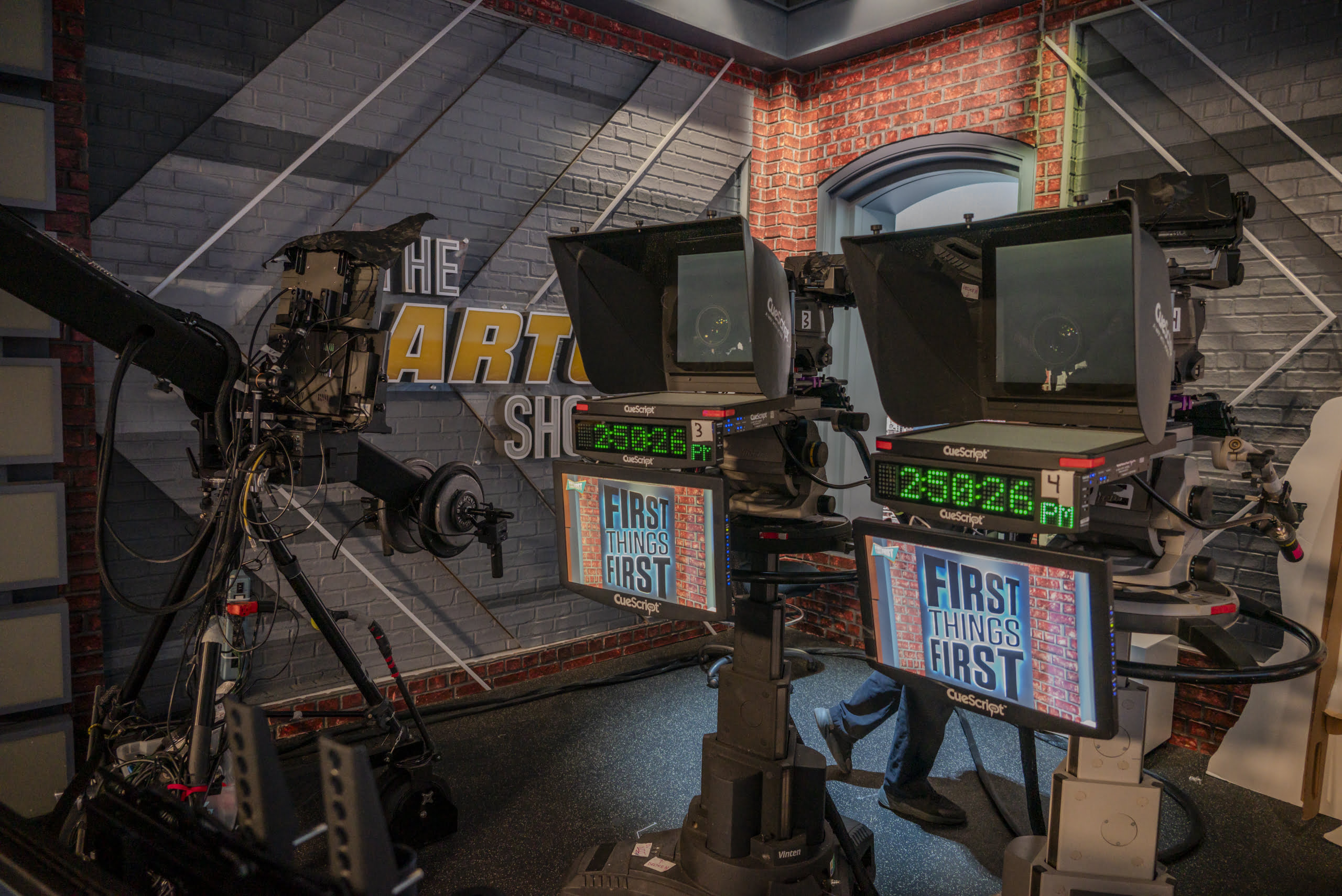
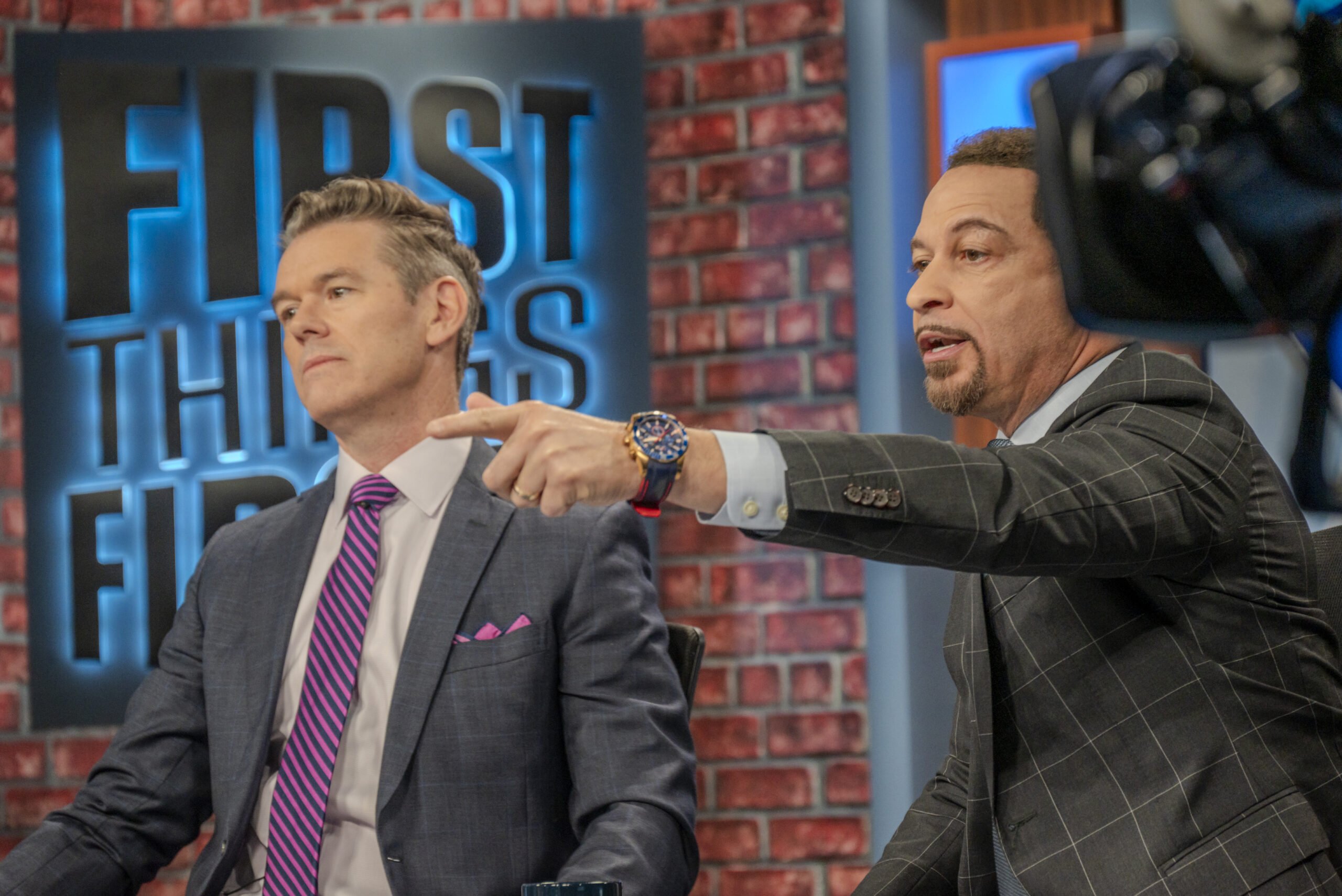
We’re nearing the finish line of BSM’s Day Spent With series. Today’s feature on Fox Sports 1 offers a peek into a day in the world of two sports television shows, The Carton Show and First Things First. My thanks to Craig, Nick, Chris, Kevin, Charlie Dixon and the Fox Sports PR and production teams for providing BSM with access to capture the daily happenings with both shows.
We have one more story still to come. That will drop next Friday March 29th. I think readers will enjoy what’s planned. This one involves sending Derek Futterman to a city that’ll help him with his pre-baseball season tan. I’m sure he’s looking forward to it.
In the meantime, enjoy the latest edition of a Day Spent With Fox Sports 1.
Jason Barrett
Part I: 7 – 9:30 a.m. EST: “The Carton Show”
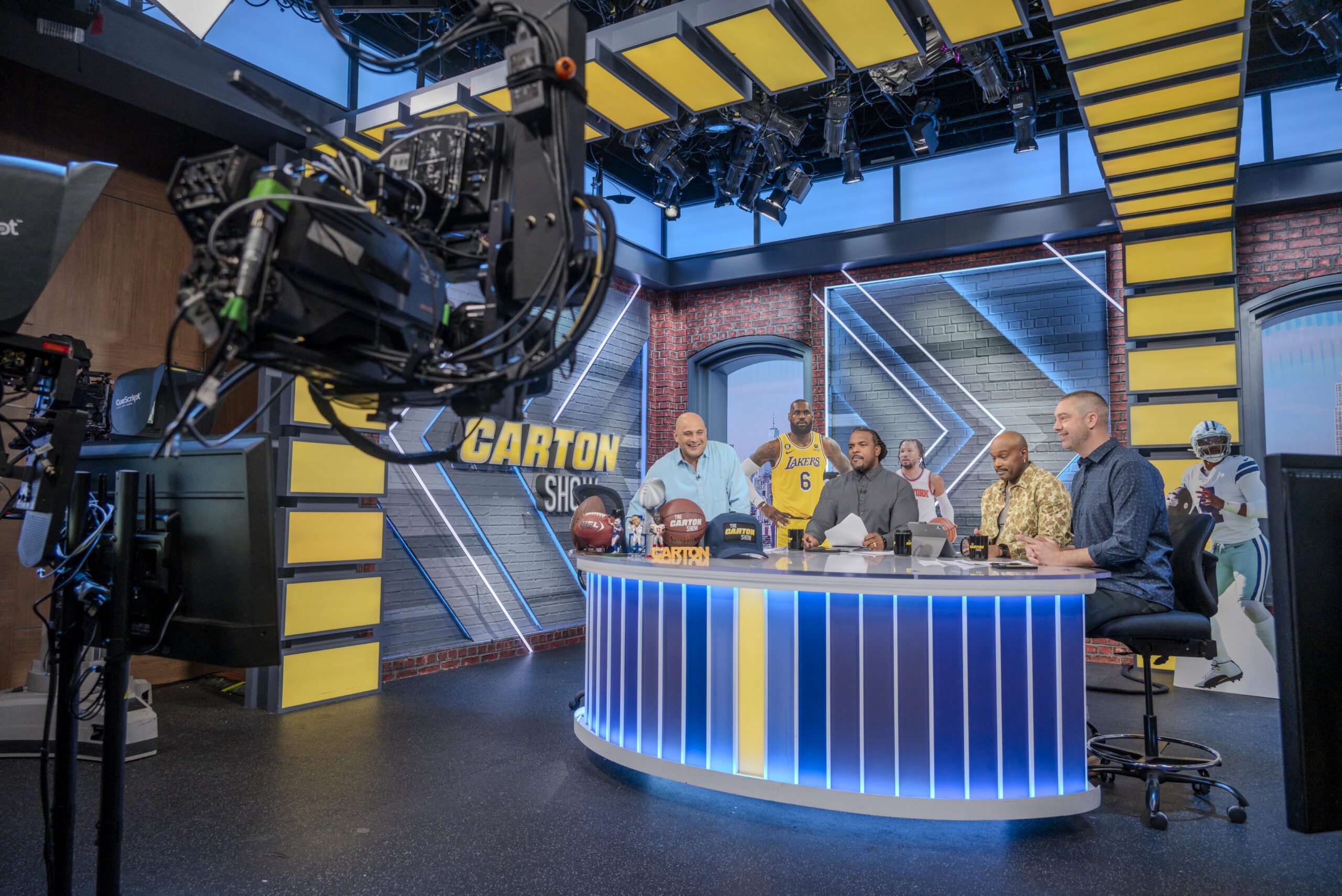
Before the sun rises over the Big Apple, the city is full of people on the move to begin their workdays. During the mass travel time, FOX Sports 1 (FS1) personnel have been in the office for over two hours, holding a morning meeting to prepare for The Carton Show. The morning program utilizes a whiteboard to outline the nine segments that encompass the two-and-a-half hour show, which airs live on FS1 beginning at 7am ET.
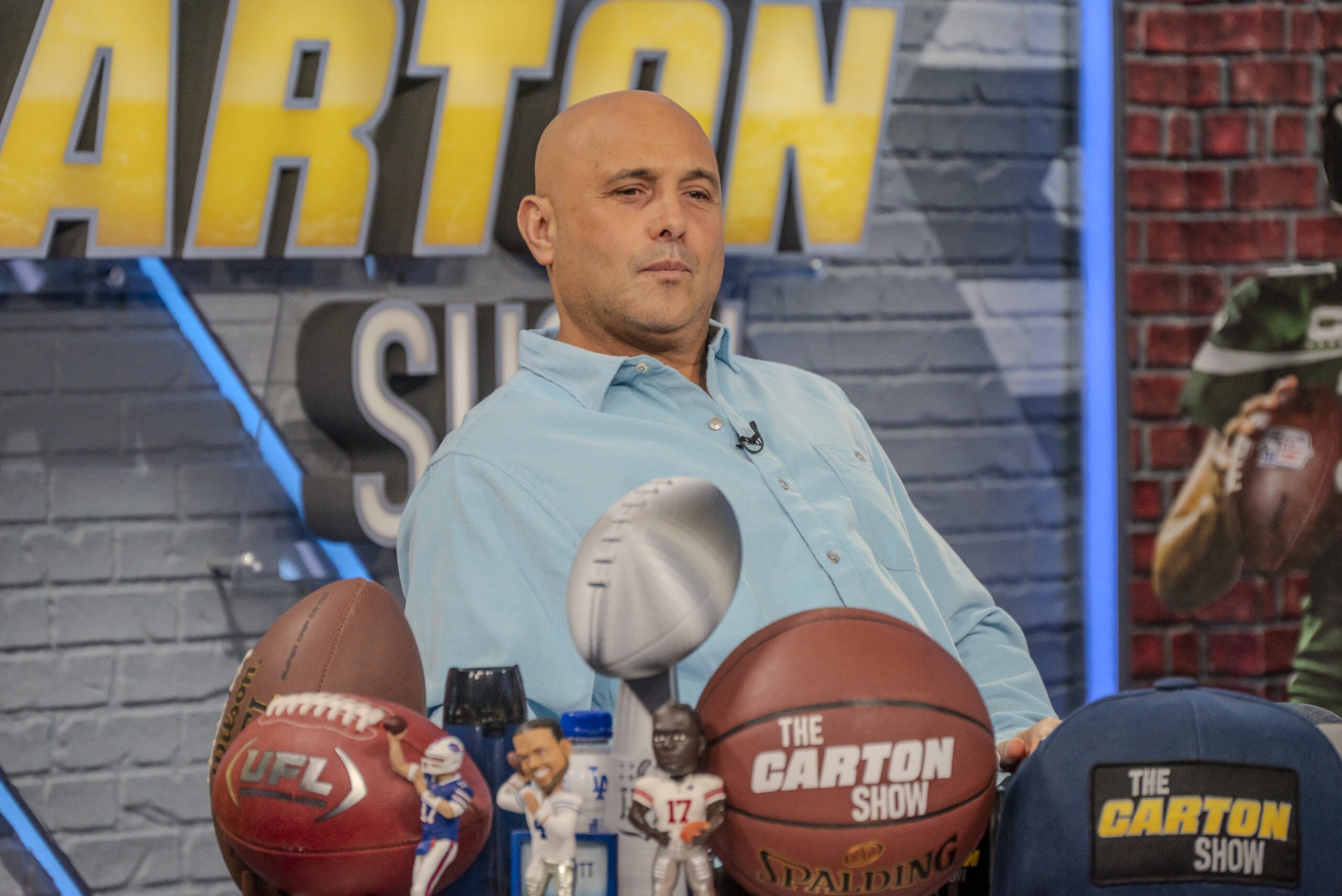
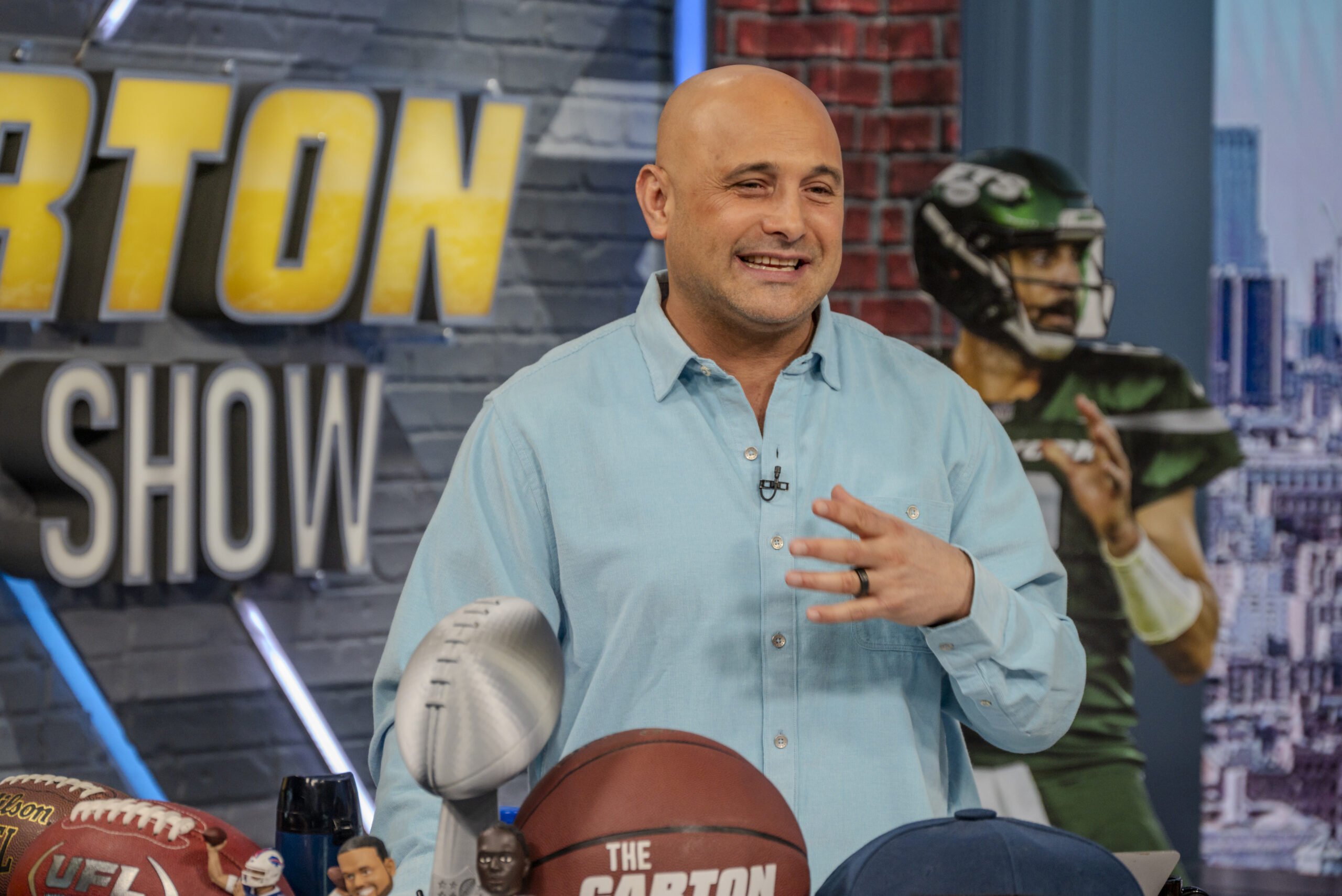
Craig Carton is the eponymous host of the program. The former New York sports radio host frequently enjoyed radio ratings success and has begun settling into his new life as FS1’s morning man. The shift to television has allowed Carton to gain more time with his family, along with the ability to gain more sleep and work out, while still doing what he loves.
“Look, there’s an aspect of radio I’m always going to miss,” Carton said. “It’s also where I’ve been most successful throughout 30 years of a broadcast career, so there’s an aspect of that that I’m trying to capture now on TV, recognizing that it takes time to build that type of following and loyalty amongst an audience, but from a lifestyle standpoint, it’s been great.”
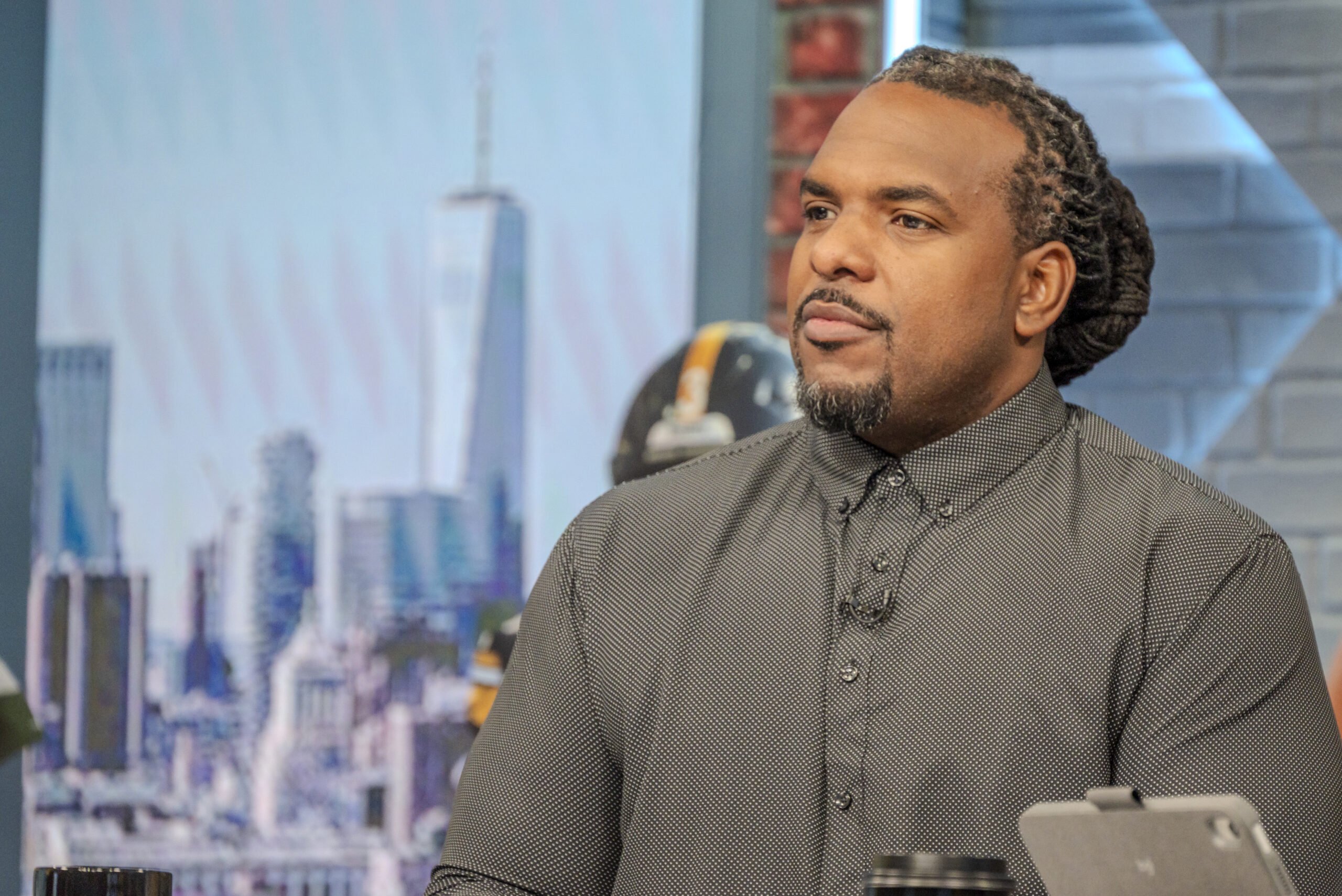
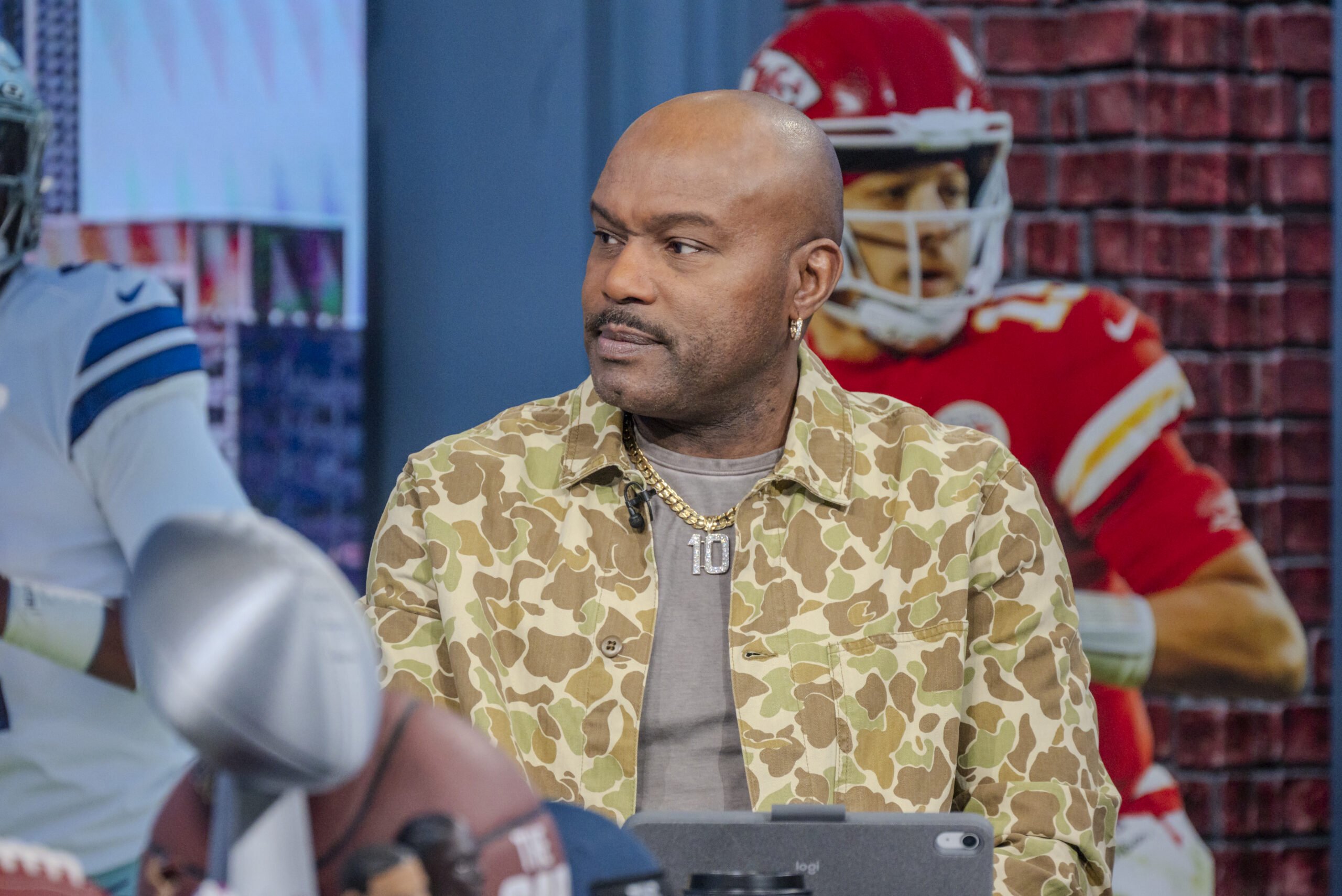
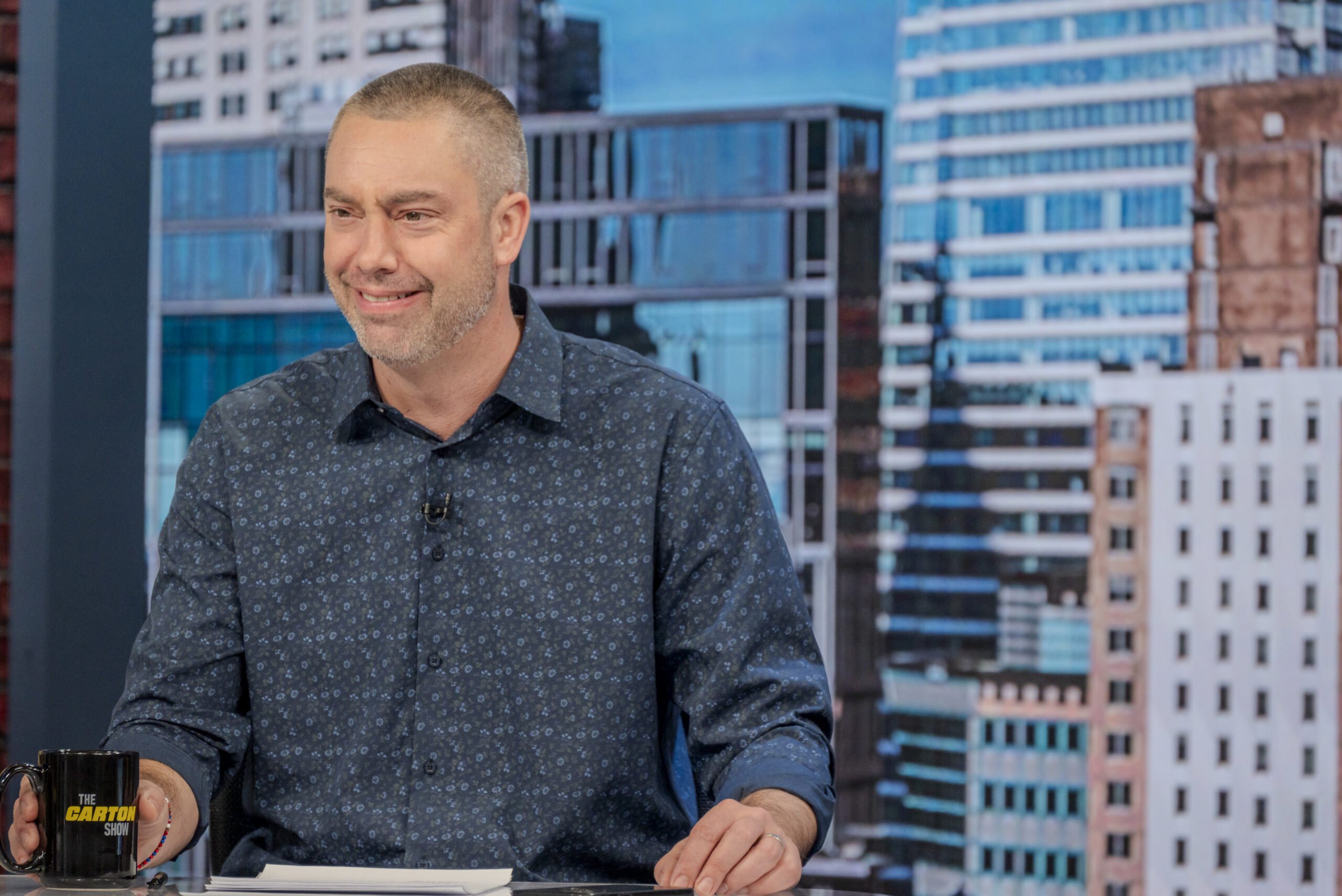
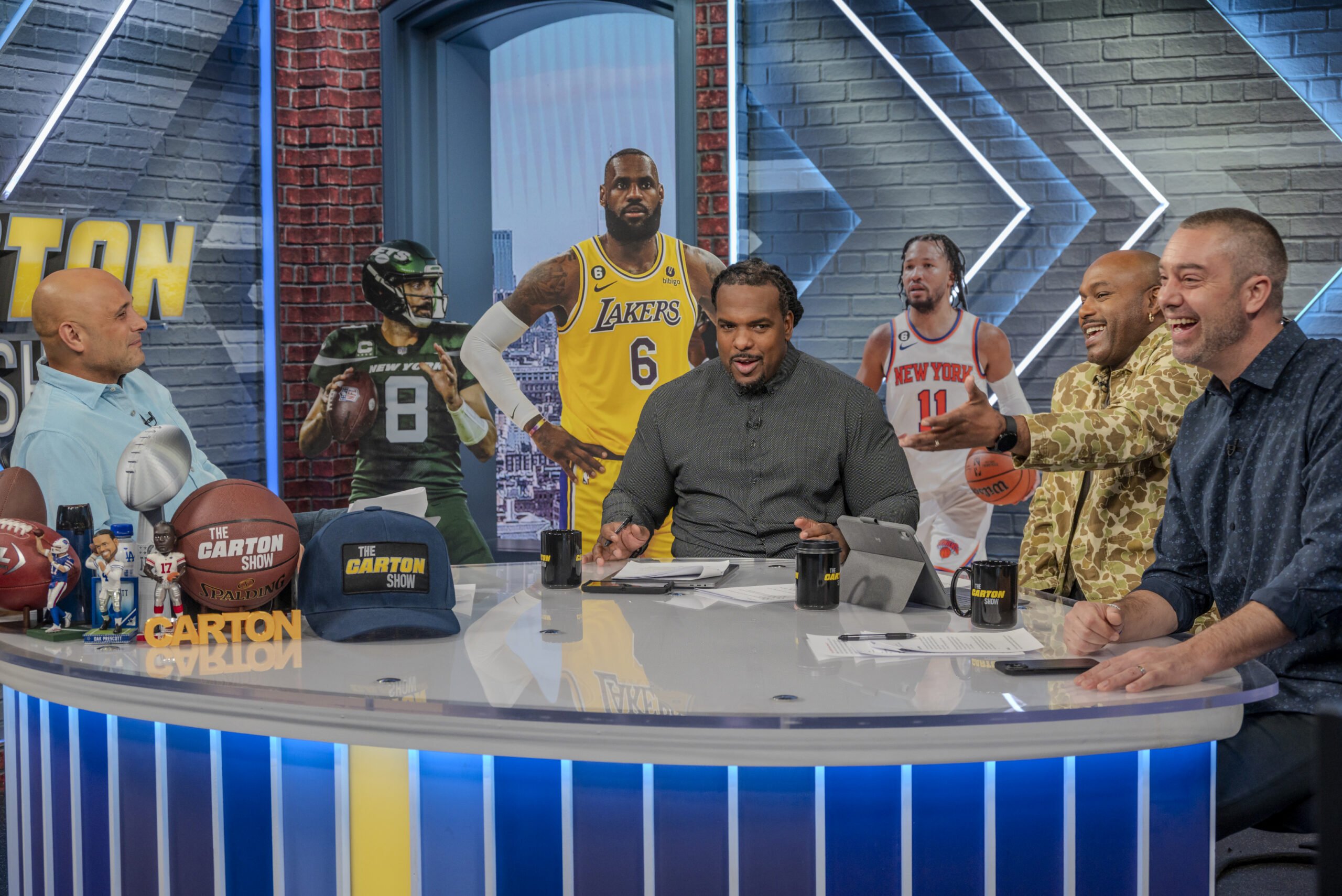
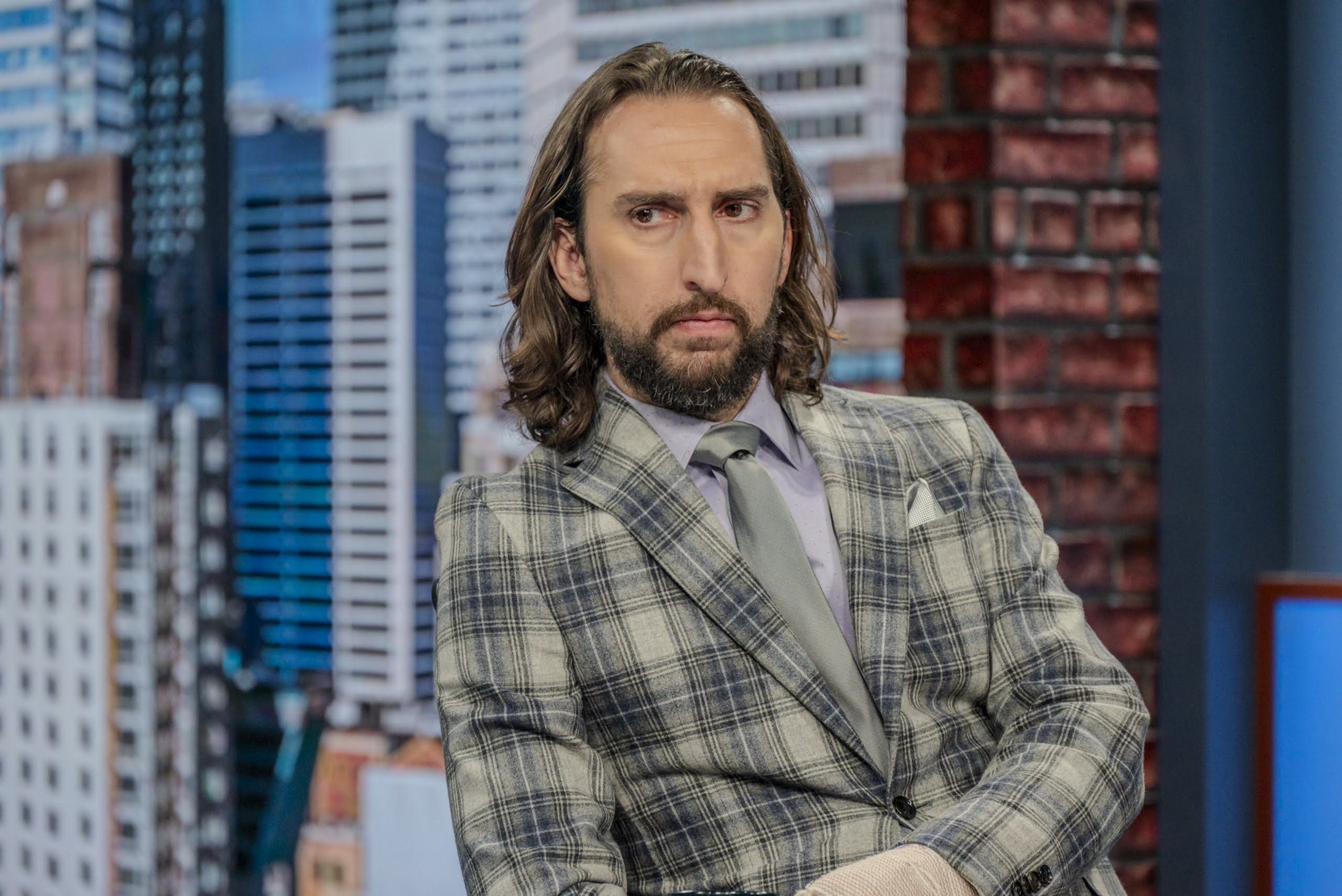
After a morning meeting and pre-show prep, Carton gets into the makeup chair a half-hour before air. He interacts with his colleagues set to catapult into the show with frenetic energy and enthusiasm. Within the confines of the multipurpose studio, he is in control of the playlist of music blasting through the speakers just minutes before the daypart officially commences. Co-hosts David Jacoby, Willie Colon and Tim Hardaway Sr. are conversing with one another, building genuine rapport and candor that translates onto the screen.
Throughout the show, Carton and his colleagues execute the game plan. They floor the gas pedal from the start of the show, this one specifically centered around discussion of the New York Knicks potentially attaining the #2 seed in the Eastern Conference.
“We come on the air [and] half the country’s sleeping,” Carton explained, “so if I’m talking to an audience that’s not watching because they’re in bed, that’s foolish, so I might as well embrace the audience that’s awake and talk about Baltimore, talk about New York, talk about Boston; talk about the East Coast teams who have really passionate fan bases.”
The opening segment lasts nearly five minutes, quickly taking a three-minute commercial break, a strategic maneuver to permit longer segments later on. Even so, there is palpable buzz and anticipation in the studio as they prepare for the second block of the show.
Once those in the control room count them back in, Carton asserts that the New York Jets’ current roster construction encapsulates the best iteration of the team in his lifetime. Carton’s take prompts Colon to disagree and reference different eras in Jets history. Hardaway advances the discussion by proposing a trade that would send the Jets the first-overall pick from the Chicago Bears in exchange for starting quarterback Aaron Rodgers, igniting debate about its feasibility.
“A lot of sports fans are waking up in the morning and sort of [use] our show as a download,” Jacoby explained, “which is something we take into consideration in terms of tone, but also pace because we want to go [at] a pretty quick pace [to be] part of people’s morning routines.”
The program moves into baseball discussion through its “Around the Diamond” segment, showcasing moments from around the sport as MLB gears up for its regular season. A video of former New York Yankees manager Joe Torre attending a spring training game and going to the mound to make a pitching change elicits a maelstrom of laughter, causing Hardaway to question why his presence is a story in the first place. Little did anyone realize that this would become an ongoing discussion for today’s show, something Carton attributes to the style of their production meetings.
“I kind of don’t like hearing those conversations before a show because you don’t want to lose your best material there,” Carton said, “and if I saw Tim go nuts in the meeting before the show, we never would have had the moment on the show.”
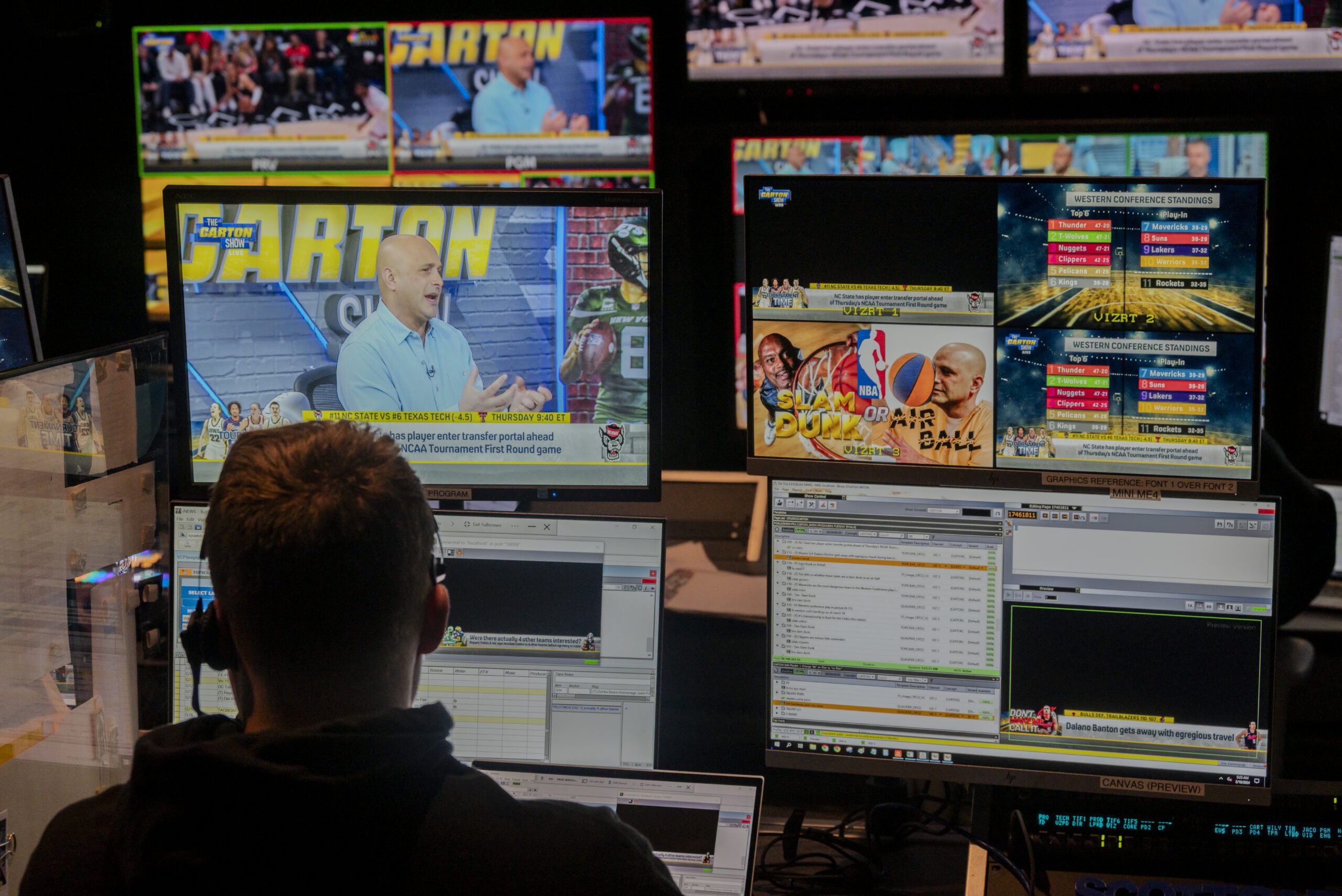
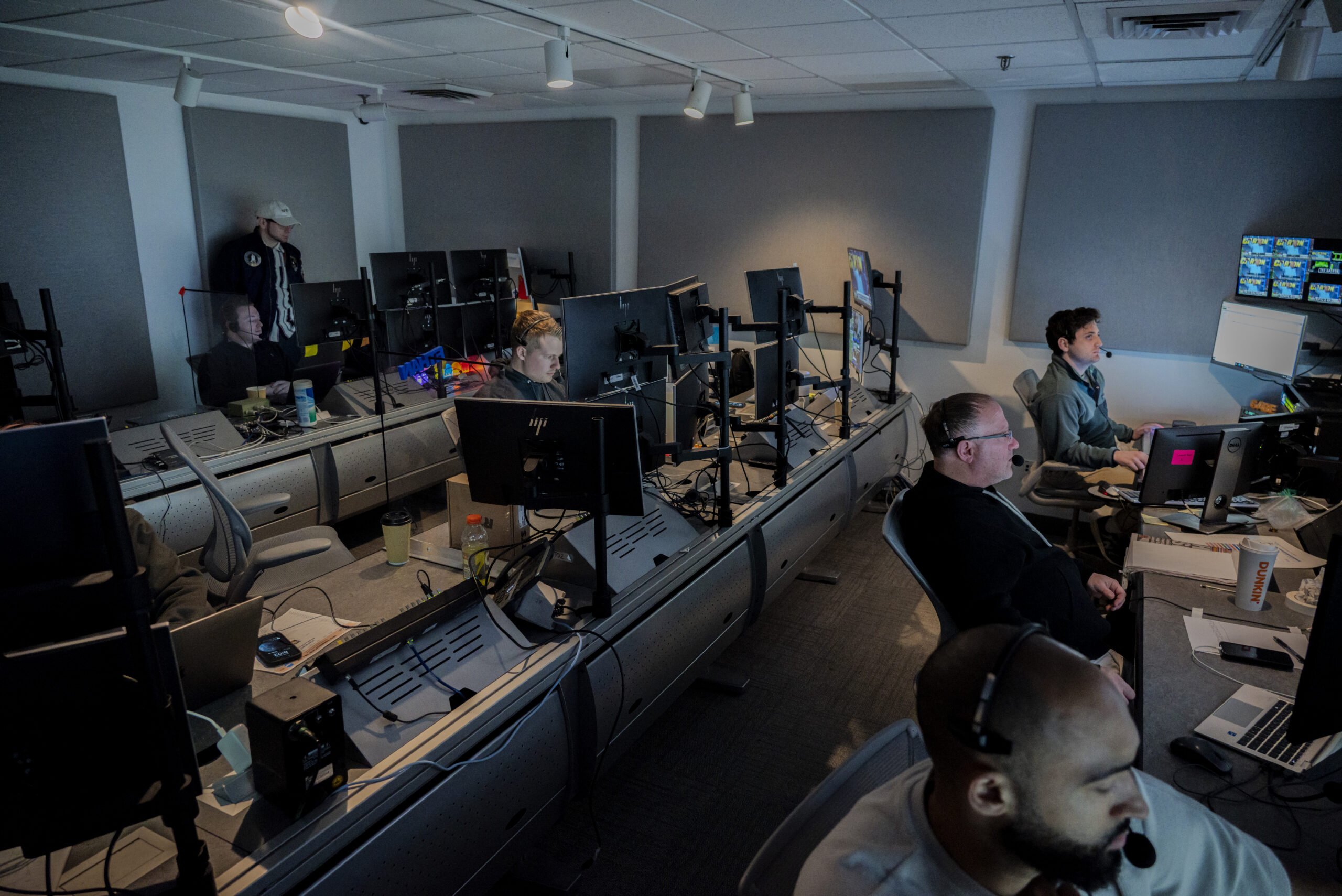
Carton believes that the morning program is the most entertaining show on television across any network, offering self-deprecation and humor through the lens of sports. There are elements of Carton’s radio approach on the FS1 airwaves, but the program is a bonafide television show rather than a radio simulcast. There are graphics, game highlights and other visual elements activated by the control room located two floors above the studio. A team of producers, directors and coordinators are on hand to ensure the program runs smoothly and allows its hosts to be successful.
Staff members in the control room make sure to clip Hardaway discussing Torre to bring back later in the program, along with loading posts into social media using Tagboard. The show rundown and graphics take place in iNews, the latter of which is subsequently played out through Viz Trio.
“We’ve got the roadmap right there, but we just don’t always stick to it, so it’s usually those three-minute breaks between segments [when] I always check in,” Jacoby said. “We always make sure Craig, Willie and I are on the same page, so there’s a lot of communication, but you’d be surprised that sometimes there’s not too much at all because we’re just kind of going.”
Jacoby was not an original on-air cast member of The Carton Show, initially serving as a consultant. Prior to his work with FS1, he was with ESPN for over two decades working as a producer for Grantland and host of Jalen & Jacoby. This past August, FS1 added Jacoby as a co-host to the program.
“I’ve been on daily shows my entire life, and once you get the routine down, you kind of get it, and it was also a little bit of an adjustment just sort of editorially,” Jacoby said. “This is a lot of fun; there’s a lot of focus on laughs, focus on fun, and I really enjoy that about this show.”
As the program reaches its conclusion, Carton and his colleagues address a variety of topics including posterizing NBA dunks, the United Football League and a job posting to work on the Orlando Magic social media team. The clock strikes 9am and the studio lights begin to flash for Carton’s ‘Top 5 at 9’ segment, in which he ranks storylines and briefly discusses them on the program.
Members of the show shout each number as Carton reveals his selection, some of which included the Dallas Cowboys clearing cap space, the start of March Madness and losses on the Baltimore Ravens’ offensive line. The #1 topic pertains to his belief that 2024 will be a year in which New York sports flourish, deeming the Knicks, Rangers and Jets all have a chance to potentially win championships.
“We’ll talk about certain events, teams and players that I would never talk about on WFAN,” Carton said. “That was the learning curve for me for sure – what’s important to the national audience that was never important to me doing local radio, no matter where I’ve worked over the course of my career. Once you figure out what are kind of the hot-button teams and players and topics that’ll attract the biggest audience, you embrace it and do it.”
Over the last six months, The Carton Show has attained double-digit, year-over-year growth. Carton believes that establishing a strong rhythm over the summer and heading into football season will help the show continue to flourish. In reflecting on his time with the show since departing WFAN, he feels content with where the show is but is determined to expand its following.
“You can have all the meetings you want about, ‘You’re this guy; you’re that guy. You do this; you do that,’ and that’s all well and good, but until you actually turn on the camera and say ‘Go’ and it’s real and it’s live, you can’t do it. You can’t figure out what works and what doesn’t work,” Carton said. “We’ve had pretty good growth in that regard, and like any show, there’s some growing pains and things that don’t always work, but I’ve always said I don’t mind failing on the biggest stage, and some bits don’t work and the only way to figure that out is by doing it.”
Part II: 3 – 4:30 p.m. EST: “First Things First”
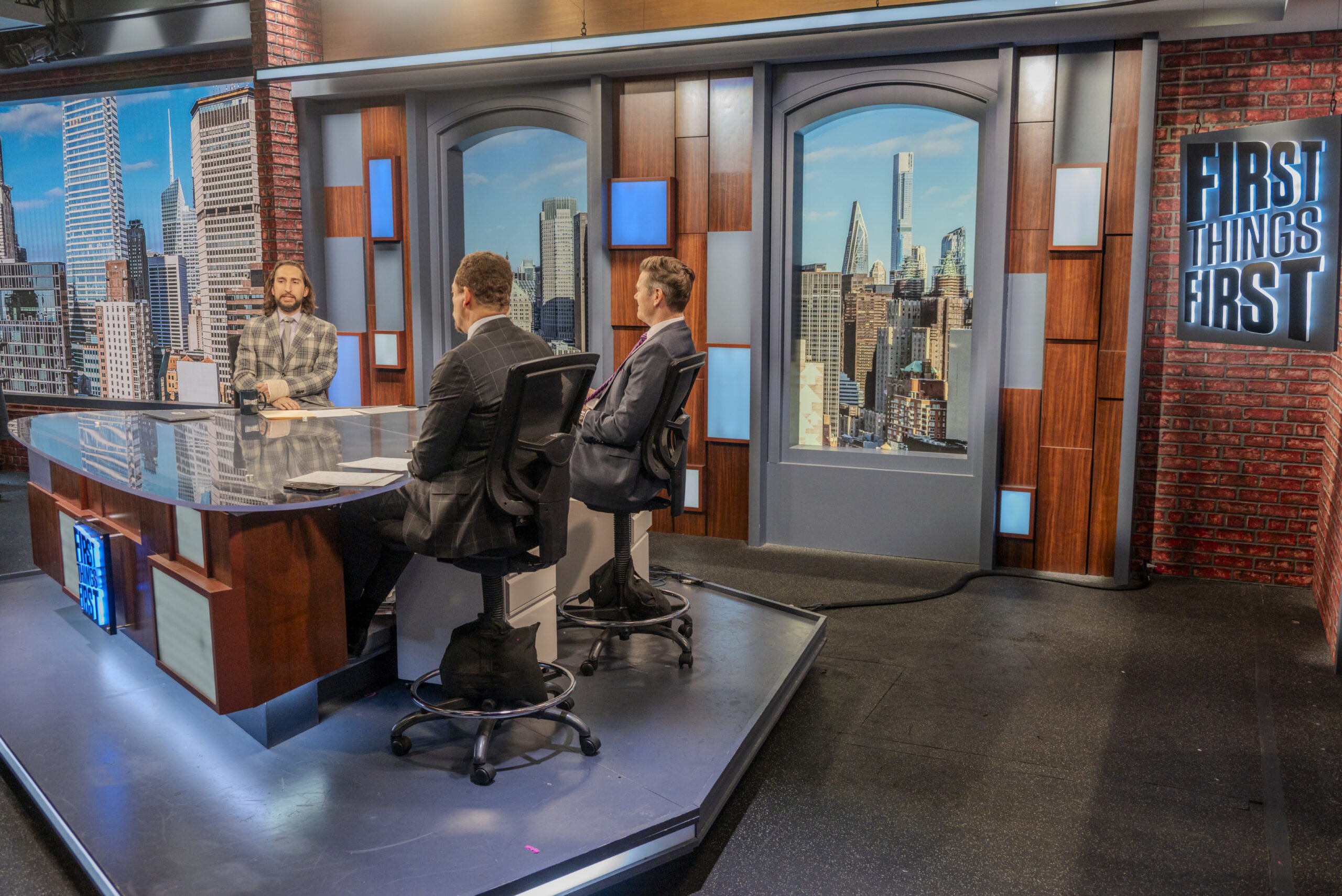
Mere seconds after The Carton Show concludes, the conversion to First Things First is already underway in the main studio. Whereas select production staff work in the studio at the First Things First desk, the layout is essentially reversed for the afternoon program. Airing on FS1 during this studio transformation is Undisputed with Skip Bayless and a rotation of co-hosts, followed by The Herd with Colin Cowherd and Jason McIntyre, both operating out of Los Angeles.
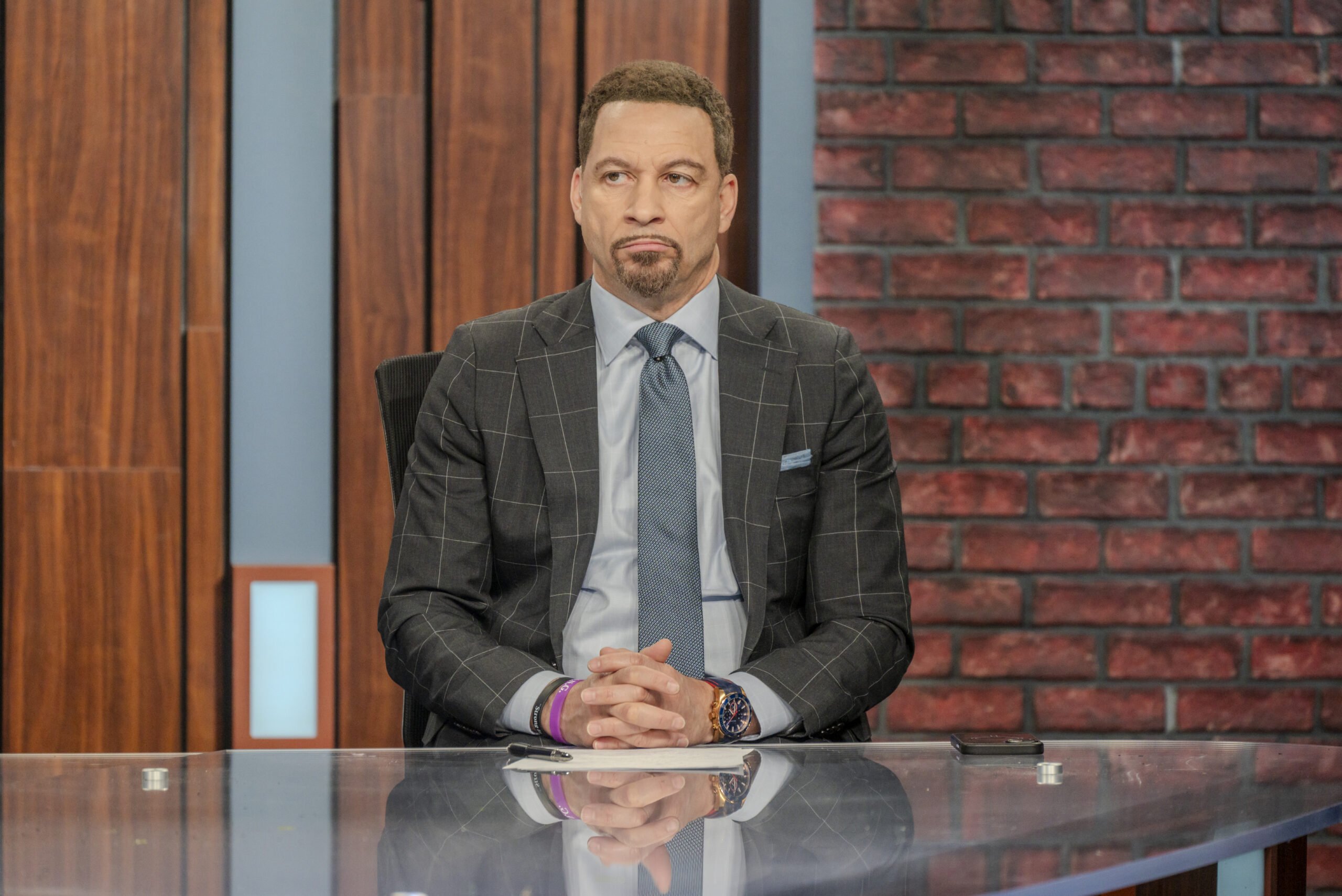
Before The Carton Show was added to FS1, First Things First occupied the morning slot. That resulted in an early wake-up call for hosts Nick Wright, Chris Broussard and Kevin Wildes, along with its production staff. Since the move, the show has attained 18 consecutive months of year-over-year growth amid a record-setting 2023. The past 16 months have represented its 16 most-watched months in the history of First Things First.
“The biggest difference is you don’t get the first bite of everything,” Wright said. “[In] mornings, you’re the first one to talk about everything, so there is a little bit more of an element of telling people what happened. By the time people watch us, everyone knows what happened unless it’s breaking news.”
The pre-show meeting for First Things First occurs on Zoom shortly after the end of The Carton Show. The team formulates an idea of how the show can look based on the dialogue during that call. The hosts and additional staff then arrive at the New York City studios to prepare and engage prior to the 3pm ET start. Unlike the morning show, there’s no music playing in the studio and light discussion before taking the air, a more subdued environment. Few production staff members are situated in the studio itself, with a large majority of the technical duties occurring in the control room.
“The actual mechanics of what goes into making sure, ‘This full screen fires; this video plays,’ I’m lucky enough that I don’t really have to worry about that because it’s just always worked, and so to me it’s pretty seamless,” Wright said. “We have our morning meeting, we know what we’re talking about, we do our research – the stats or graphics we ask for, they do a great job of finding them – and then we put them on the show.”
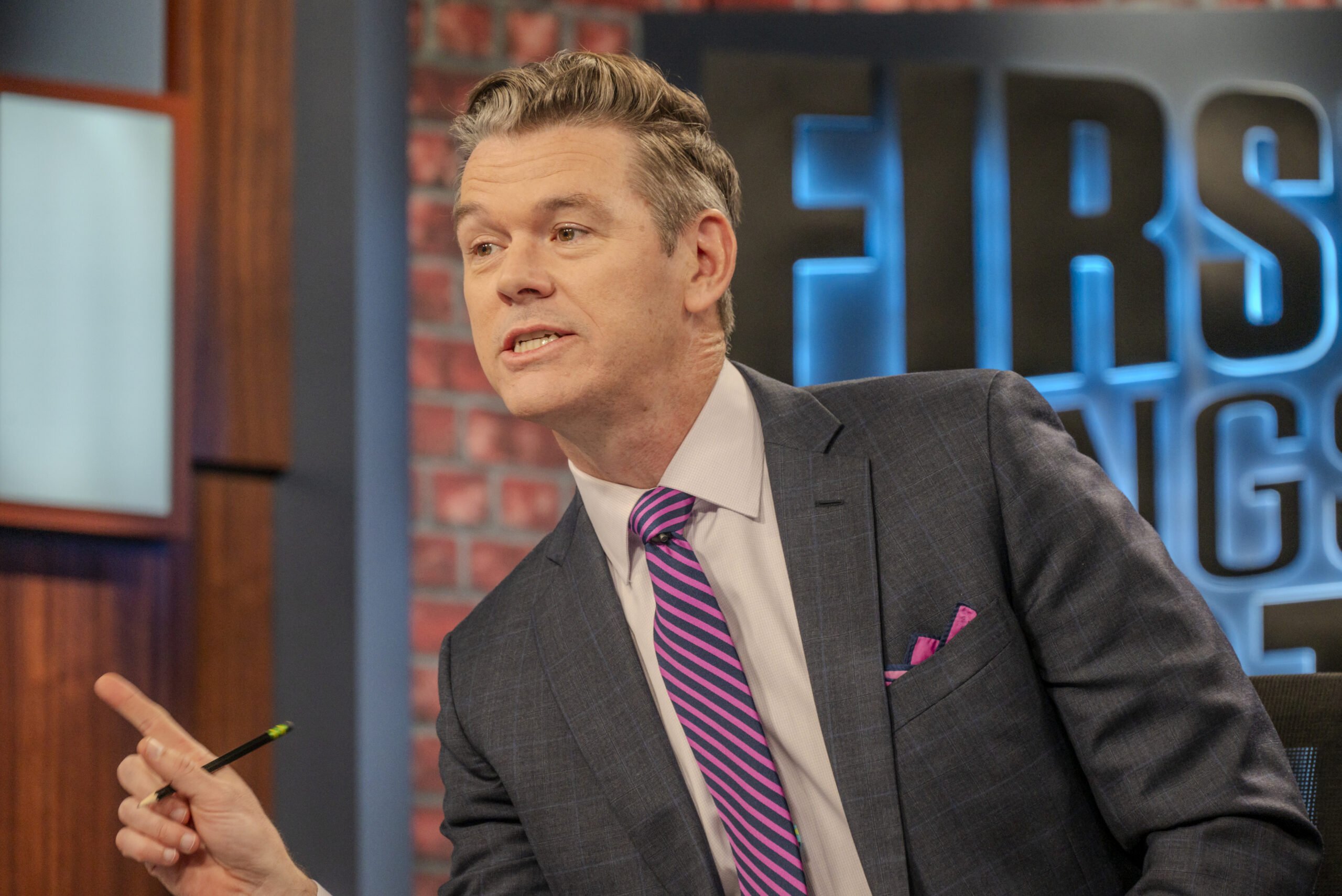
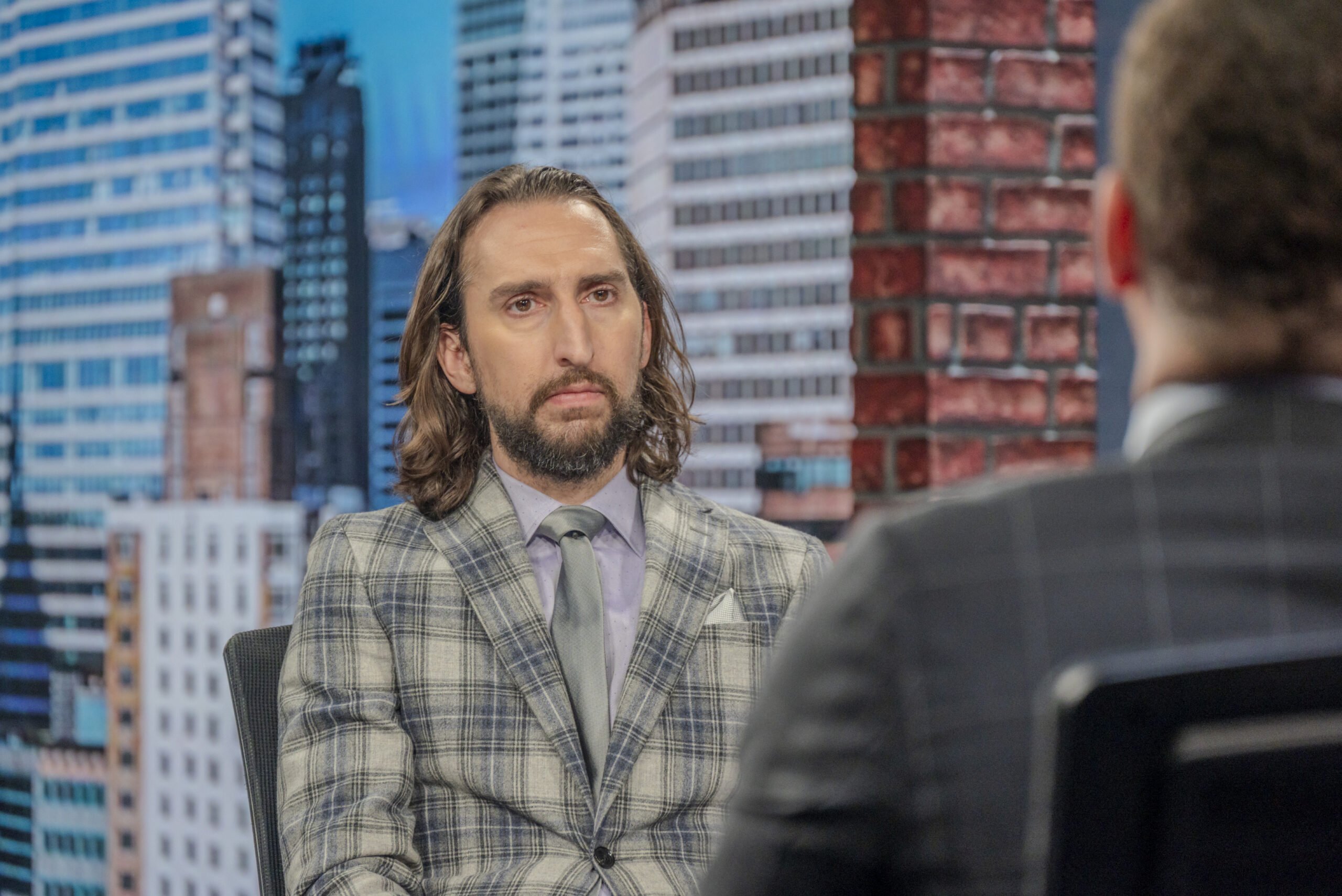
Nick WrightChris BroussardKevin WildesFirst Things First: 3 – 4:30 p.m. EST | FS1
Wildes begins First Things First with a preview of the discussion before immediately transitioning into the A-block topic of highlight-reel dunks in the NBA. A highlight of Minnesota Timberwolves guard Anthony Edwards leaping over Utah Jazz forward John Collins has made the rounds for sports fans, amassing millions of views on various platforms. Wildes then asks Broussard what he thought about the dunk, leading to a debate about how to adjudicate and measure the effectiveness of a dunk. Even though Wildes is a co-host, not a moderator, he has the versatility to contribute to many areas of the show.
“Some segments, I don’t need to say anything and those guys can just cook,” Wildes explained. “Some segments, I should do a little bit more [and] some segments I should do a little bit less, so whatever it takes for me to help the segment, I’m willing to do and will do obviously.”
The second half of the opening segment discussed whether Edwards’ play is similar to six-time NBA champion and Hall of Fame guard Michael Jordan. Broussard, who covered the National Basketball Association for several decades, revealed later in the opening block that he reached out to Jordan himself for his opinion on the perceived correlation. Jordan told him that he sees the similarities in he and Edwards’ games, leaving Wright somewhat nonplussed that his co-host was talking with the superstar guard.
“You gain an insight and perspective and knowledge that I didn’t even know I didn’t have, but I learned so many things over the years,” Broussard said of his time as a beat reporter. “And then obviously the connections – I don’t talk to people like I used to when I was a reporter, but I still talk to guys, and can reach out to get perspectives and different thoughts on what’s going on in the league.”
After First Things First concludes, Broussard drives back to his home and is on the phone with a FOX Sports Radio producer to prepare for his evening show, The Odd Couple, which he co-hosts with Rob Parker. Balancing both roles can be a challenge and leads to busy weekdays. Chris though enjoys both jobs, appreciating the opportunity to talk sports for a combined four-and-a-half hours each day.
“It’s nice because since I’ve been at FOX, which has just been TV and radio for me, I get weekends off, or at least technically off,” Broussard said. “Obviously NFL season – Sunday is wall-to-wall football watching all the games, but for a sportswriter that’s unique. My first [26] years in the business, weekends were not off. The Saturday’s no different than Tuesday, so it’s nice to have that set schedule.”
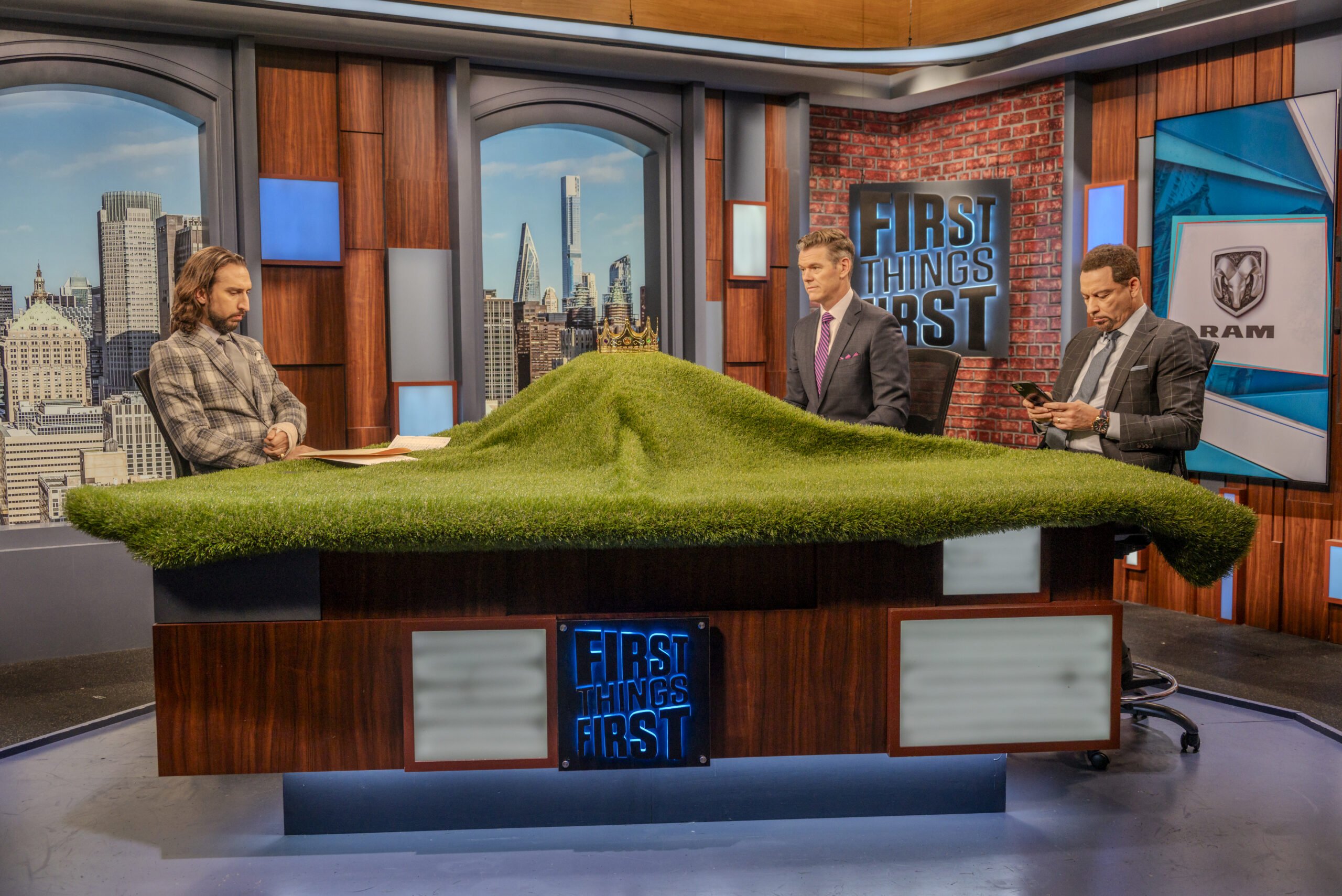
The basketball discussion continues throughout First Things First and culminates with Wright’s ‘King of the Hill’ segment. Members of the production team drape the desk with a customized mound of actual grass to represent the proverbial hill, which has different tiers to rank NBA players. Wright ended up placing Edwards at its summit, explaining why he awarded the 22-year-old phenom with an apogee in the segment thus far.
Since Wildes joined First Things First in 2020, the hosts have built camaraderie and friendship, going out to dinner and attending sporting events together. They all root for one another to succeed and look to enable prosperity rather than serving as a hindrance to that therein. Broussard stated that he has been on shows where people did not talk to each other off the air, and he has also heard stories of hosts being hesitant to give their opinions in pre-show meetings out of fear that it would be stolen. Although Wright, Broussard and Wildes have different idiosyncrasies and areas of expertise, their personalities effectively blend together to create a captivating and enthralling afternoon program.
“The most important part of the show is how we get along and how much we really love each other,” Wright said. “The #1 comment I get is, ‘It feels like friends talking sports,’ and the reason it feels like that is because it is that, so you have that element. You have each of our unique backgrounds, [and] you have, in my opinion, the best staff of producers of any show in sports TV, and it allows for a show that hopefully works.”
The hosts interact with one another during commercial breaks, using the time to communicate as well with the production staff and check social media. Wright looks for breaking news between segments, something he believes may be attributable to his background in sports radio. After all, he worked in the format for 610 Sports in Kansas City and Sports Radio 610 in Houston.
“If you can carry a four-hour solo radio show, then you can talk to yourself, so then you can talk to other people once you learn how to do that,” Wright said. “You can formulate arguments; on those shows, you have to argue with yourself almost – you present the prosecution and then the devil’s advocate defense. So yeah, my radio background was more helpful for my television career than anything could have possibly been.”
With every edition of First Things First, Wildes hopes the cast delivers smarts, smiles and surprise, something that was taught to him earlier in his career. While at ESPN, Wildes served as the vice president of original content for NBA studio production and found a way to make the transition to work on camera. Nonetheless, the managerial and production background has granted him a deeper cognizance of the day-to-day operation and staying focused on the current moment.
“It’s very [New England] Patriots-esque where, ‘Hey, what’s your goal for the postseason? Like, ‘Man, we’re just trying to have good practice,’” Wildes said. “Let’s, tonight, try to put some good stuff in the document; tomorrow, try to prepare a good show; and then try to do a good show. I don’t really look too far down the road, not because I’m not goal-oriented necessarily or not because we don’t want success, but I just think the path there is 10 feet in front of you.”
The day concludes with the First Things First hosts participating in a quasi-press conference that is recorded for social media. Wright, Broussard and Wildes all share their evaluations of the program sitting in front of a step-and-repeat speaking into a microphone adorned with a First Things First mic flag.
The studio’s focus then immediately shifts to the next day with the production day for The Carton Show beginning in approximately 12 hours. Even so, there is incessant brainstorming and communication, safeguarding against unpreparedness while always being set to discuss breaking news should it arise. For now though, everyone gathers their belongings and looks forward to reconvening tomorrow morning well before the sun can greet them anew.
“It’s constant prep in that you’re always staying on top of the news,” Broussard said. “There’s a lot of reading, a lot of watching other sports and obviously all the games, and then you just come up with your own take.”
Pete Harman of Salt Lake City, Utah, sought a way to make his restaurant stand out and improve profits in 1952. Harland Sanders was exhausted from convincing skeptical restaurant owners to serve his special herb and spices fried chicken. Sanders had been rejected 1,009 times. The two men eventually met, and Harman agreed to sample the chicken and see the potential. This handshake agreement birthed the first KFC restaurant, propelling Sanders’ recipe to worldwide success and Harman to owning 300 KFC franchises.
Harman became a wealthy man because he listened to a new idea from a person who had a good concept and could deliver it. Decision-makers are bombarded with daily cold calls, emails, and social media messages. It’s tempting for businesspeople to ignore these invitations altogether. But then what if Pete Harman had blown off Colonel Harland Sanders like the other 1,009 people before him?
Some media salespeople are loaded with valuable insights, research, and perspectives. Some can solve problems and meet clients’ needs. You can tell by their approach and initial offer if they have done their homework and have a Valid Business Reason to consider.
Here’s why decision-makers should give a media salesperson they don’t know a chance:
Get Outside the Box
Media salespeople interact with various clients across different industries, giving them inside tips and ideas. Their exposure to other challenges and unique solutions allows them to have new ideas that business owners and decision-makers may not have considered. Decision-makers don’t have all the answers.
Custom Solutions
Media salespeople are trained to understand their clients’ pain points and offer tailored solutions. They are not trained to sell a size 46 suit to a 48-long customer. When approached with a well-thought-out idea, decision-makers can evaluate whether it fits them and could solve existing problems. Even if the proposal doesn’t fit perfectly, it may spark new ideas or prompt a reevaluation of current strategies.
Stay Informed
Media salespeople are often at the forefront of emerging trends and technologies within their businesses and those they serve. They have firsthand knowledge of market dynamics, customer preferences, and competitors. By listening to salespeople, decision-makers can stay informed about industry trends.
Foster Partnerships
Most media reps are not just sellers; they can also be valuable partners in driving growth. They represent other businesses and thousands of locals who consume their products. By engaging with them and staying open to communication, decision-makers can collaborate and go beyond one-offs. These partnerships can lead to joint ventures or strategic alliances that benefit both parties and other complementary local businesses in the long term.
Seek Feedback
Have a new strategy? Ask your informed rep about what they think. Some of these reps are loaded with Feedback from other clients and can provide valuable validation or constructive criticism. This external perspective can help decision-makers make more informed decisions.
It’s understandable to be cautious of unsolicited sales calls but dismissing them outright could mean overlooking valuable opportunities for innovation and growth. Take the time to listen to well-thought-out ideas from salespeople you have not met. You don’t have to listen to those offering nothing better than “I want to see if you want to buy what I have.” Isn’t it better to be Pete Harman than the other 1,009 people who ignored Col Sanders? To be innovative, you must be open to new ideas. And they could come from unexpected sources – including media salespeople.
News is not sports. But sports can very much be news. I often hear from radio programmers and hosts who insist there needs to be a very clear line between the two formats. Sports talk is talking about sports. News/talk is talking about news. There’s a clear distinction, in the eyes of some.
But like everything in our world in 2024. That’s just not true. And I don’t think it’s ever been true.
In Kansas City, we are heading down the home stretch of a controversial vote on April 2nd regarding a ⅜ cent sales tax extension for the Chiefs and the Royals to help the football team upgrade Arrowhead Stadium and the baseball team move into a new downtown ballpark.
The vote has resulted in millions of dollars flooding our local airwaves from the teams asking voters to vote “Yes” on April 2nd. The notion that this is a slam dunk due to the Chiefs’ recent success is inaccurate. In fact, the teams just dumped another $1 million into their campaign because they are nervous it won’t pass.
This story is not a sports story. It’s what news/talk radio does at its core. It’s about taxes. Big business vs. small business. Eminent domain. Incentives used by municipalities. And yes, it’s about politics.
There’s just no way for sports radio to cover a story like this in as much depth as a quality news/talk show, assuming the latter host is competent and capable, knowing the ins and outs of local government, the power players, and the background information that is more up the alley of a news/talk host, rather than a sports talk host.
The story pits activist, progressive groups against billionaire owners, while anti-tax conservative folks are also expressing their dissatisfaction. In fact, politics makes strange bedfellows, and that’s exactly what we are getting with a liberal, urban core joining forces with a rural, conservative core, to try and stop the tax.Fascinating times.
There is a lesson in this story for news/talk hosts in any market: Don’t think a stadium story, which pops up in markets on a yearly basis around the country, isn’t in your purview. In fact, it’s much more in your lane, it’s just masked as a sports story. But it’s not. It’s local, it’s impactful, and it’s what people in your community are talking about. Not the same old Trump vs. Biden silliness. There will be more time for that.
But there’s also a lesson for sports talk hosts: Grow your brand and your interests beyond sports. Be a more well-rounded host and person. And you’ll just be more interesting as a talk show host, in general, and grow your audience beyond the hardcore P1’s.
I think back to being a kid and listening to Mike and the Mad Dog on WFAN in New York. Some of their most interesting conversations that stand out over their 20-year run were unrelated to sports, such as big news stories like 9/11, or interviews with non-sports figures like former NYC Mayor Rudy Guliani.
They were versatile. They were smart. It wasn’t guy talk, but it was smart talk (with some dumb, yet wildly entertaining, callers). They always had the pulse of what was being talked about in their market.
While there’s no doubt media has become very niche in its approach in super-serving very segmented audiences, local radio can still win by having trusted, informed, and well-versed hosts who can tackle any topic that’s being discussed in your town.
Take off the guardrails of what your station is branded as by your company or Nielsen, and just pop the mic, tackle the topical, local issues, and let it rip. Your audience will thank you with more occasions and listening hours. And you’ll be a more interesting host and person for it.
How’s this year’s general election shaping up for your news and talk radio ratings? It has to be a barn burner, right? At 81, Joe Biden has the dubious distinction of being the oldest sitting president in our nation’s history. A lot of people think he’s goofy and losing his mind. Donald Trump will be 78 on election day and many voters believe he’s a dangerous loose cannon who belongs in prison for treason.
Two of the most polarizing presidents in history are facing off for a second time. Are these our country’s best and brightest? In a proud free nation of one-third of a billion people, these guys are the best we can come up with? Apart from Biden and Trump haters and supporters Americans in the political middle, plus some on both sides, wonder how we got to this point.
We got to this point through insults, by pressing each other’s emotional hot buttons. Pointing a finger at social media is easy, it’s a conveniently anonymous flashpoint that provides fuel for unthinking rage but what fuels social media? Questionable news and hostile broadcast opinions. Social media merely provides a list of trending topics that we in radio take up to fan the flames. And buddies, we have a big, powerful fan.
People are depressed and pissed off. Is talk radio the bad guy? Of course we are, we’re a big part of the festering problem.
Findings from a recent study at the University of Michigan aren’t surprising: political anger and cynicism are created by constant exposure to confrontational attacks on all mass communications platforms.
Another survey reported in October 2023 by the Public Religion Research Institute found that 52% of Americans believe the country’s best days are behind us and nearly 25% agree with the following statement: “True American patriots may have to resort to violence in order to save our country.”
If those findings aren’t shocking enough, buckle up for this one:
A study from the University of Illinois Urbana-Champaign found partisan politics and biased reporting have thoroughly baffled almost half of Americans who now struggle to distinguish fact from opinion.
Digest that for a moment. Half of us admit we can’t even tell the difference between fact and opinion.
Co-author of the Illinois research, Jeffery J. Mondak, professor of political science and the James M. Benson Chair in Public Issues and Civic Leadership explains, “What we’re showing here is that people have trouble distinguishing factual claims from opinion, and if we don’t have this shared sense of reality, then standard journalistic fact-checking – which is more curative than preventative – is not going to be a productive way of defanging misinformation.”
Mondak continues, “How can you have productive discourse about issues if you’re not only disagreeing on a basic set of facts, but also disagreeing on the more fundamental nature of what a fact itself is?”
People are confused, angry, and cynical.
Is it talk radio’s fault? Yes, but not entirely, not by a long shot. Talk radio and other traditional media are constantly exploited by slick professional manipulators of public opinion who operate at every level of political influence from the White House Press Secretary down to your local school district’s media department. Newspaper, TV and radio editors, writers, producers, and talk hosts are flooded with information enticing them to make news by breaking it. So-called experts are quoted and offered as sources. Fighting for daily survival and recognition broadcast media are offered a smorgasbord of tantalizing fake news and biased opinions.
My fellow Americans, we need to talk.
When this election is over, after we’ve inaugurated a president we don’t like and can’t trust, we need to have a long, soul-searching national conversation about our beliefs, dreams, and values because we, The People, have lost control of our personal lives and collective future to those who want them more than we do.
We are the problem.
We’ve fallen asleep at the wheel. We’ve gotten too cynical and lazy to study American history and civics, to understand them, why they matter, and explain it all to our children.
When issues of substance do come up in conversation we’re not armed with enough information to think, much less argue. We stake positions based on memes and likes.
All we can muster is an exchange of childish insults.
We’ve decided that symbolic gestures of support, such as buying a magnetic car ribbon of a particular color equals the personal time investment required for passionate advocacy.
We see our lives as we view the TV shows that mesmerize us and send us to bed each night stressed yet unconcerned with what happens next because we’ll find out when we tune in tomorrow.
The system is fine. It has worked very well for more than 200 years.
We, The People, aren’t doing our part.
We’ve gotten lazy, ignorant, and fearful of big-world stress and disagreement. We’ve gone from believing everything we’re told, which is easy, to believing nothing at all because that’s easier, still.
And now we dare to complain.
Seriously, we need to talk. And the conversation has to start on the air.
From the White House to your house, ABC News Reporter Elizabeth Schulze loves taking apart a story and breaking down what you need to know.
“I’m just incredibly passionate about trying to take things that are complicated, whether that’s here in DC or in the business world, and finding a way to translate those so that people can understand,” Schulze told Barrett News Media over a Zoom call.
Originally from Minnesota, Schulze recalled, “I have wanted to be a journalist for as long as I can remember. I went to Northwestern to journalism school, and I went through boot camp there and quickly learned how to be a good journalist, from pretty much day one in school.”
She added, “What it was is a love of public speaking, a love of writing, a love of communicating. It kind of was the career that combined it all.”
Shortly after college, Elizabeth Schulze got a job at CNBC. She recalled, “My first gig was on the Larry Kudlow Report, which is no longer a show, but I was a news associate doing the teleprompter and making the graphics and just really being in the room.” Schulze added, “I was drawn to business news and the fact that that show also had politics. I was drawn to that show because it combined both politics and business, and I was really interested in finding a way to tell stories that were both kind of the policy side of things, but also involved people.”
She called working at CNBC, “a crash course in business” and where she fell in love covering economics. Schulze added, “Both my parents were traders and it just felt like this great fit to be able to be in that world at CNBC. I learned so much there. I was a producer that was behind the scenes and covering the markets and then the Federal Reserve and the producing side, and it just was I loved it.”
CNBC gave her the opportunity to move to London where she began reporting on camera doing digital videos.
During the pandemic, Elizabeth Schulze joined ABC News.
“No one was in the office. You were sort of just it was the middle of the presidential campaign and it was a crazy news cycle.” She went on to say, “There were so many great stories just sort of right away that touched on both politics and business. So in a way that did feel like a full circle moment to kind of be back and then be able to be reporting for the general news audience.”
Elizabeth Schulze noted a lot of good stories need good visual elements, however. “For a lot of what I cover, [having good visuals] is not the case. If you think about the Federal Reserve, that is not something that looks really great in video. So part of what makes it a good story is obviously finding the people who are affected by it. So if you have something if there is this policy, a lot of it is just picking up the phone and making calls, finding people on social media and going out in the street asking around and like figuring out the people who are directly affected by some of these stories.”
She added, “So the challenge is finding how to always make those accessible because while those are obviously — for financial news, print outlets — that would make sense for TV. It is a little bit more of a challenge sometimes.”
One story that Elizabeth Schulze holds fond memories of is from her producing days at CNBC.
“A while back I was producing an interview with Christine Lagarde, who is the head of the European Central Bank. At the time she was the head of the IMF, and it was before the interview, and there was just a little bit of kind of banter and it felt like we needed to sort of break the ice a little bit.
“So I decided to just start speaking in French to Christine Lagarde, and she so was not expecting this from this Minnesota girl who was producing this interview at the time. We had a whole conversation in French and she loved it. Everyone was laughing by the time the interview started, everyone was more at ease. And I think those are some of the moments you can’t completely prepare for, but you do find yourself just making the most of it when it comes up.”
Her advice for those looking to follow in her footsteps is the old adage, “Hard work pays off.”
“You have to seek [opportunities] out and you have to prove that you are the best person to take that opportunity. And one of the ways that you can prove that is if you have the work to back it up,” Schulze said. “If you put in the time and if you’ve done it with a great attitude, I think that that goes a really long way.”
She went on to say, “A lot of what we do is not humane by a lot of standards. I mean, you wake up at the crack of dawn and you work through the night and you never know when something’s going to bubble up. But being excited about the opportunities [which come your way], having a good attitude I think conveys both in the people you work with behind the scenes, but also on camera.”
Looking toward her future and the future of the industry she sees one thing being clear.
“In our industry, you have to be able to do multiple platforms. It’s not just doing one TV package in a day and moving on to the next. It’s being able to do analysis on streaming. It’s being able to do podcasts. It’s being able to ask questions in briefings. You really have to be multifaceted.
“So for me, it’s making sure that that continues to be the case in my career. And, obviously, ABC’s got all of those options, all of the places to do that. So that’s sort of I think where I’m focused.”
Of her time at ABC News, Elizabeth Schulze said, “It’s been really rewarding to have digital series like we have a digital and we have a series on ABC News Live called Cashing In, where we get to where we explain financial concepts to try to make them more accessible for people on social media. Continuing to do stories like that where you’re teaching. You’re not just doing journalism, but you’re also using that opportunity to teach people. I hope to continue to do that.”
There are a lot of stars in the WWE television galaxy from Raw to Smack Down to NXT and many others, but my favorite entry in this wild world of wrestling is WWE The Bump streaming on Peacock. Hosted by Megan Morant, Sam Roberts, and Ryan Pappolla, it is an all-access, multifaceted look at the immensely popular WWE global landscape.
With interviews, commentary, highlights, and fan interaction, it is a fun blast of WWE news and analysis. I tuned into the March 20 show with Morant providing her usual vibrant opening. She was joined by Roberts and WWE wrestler Johnny Gargano. With just a couple of weeks until WrestleMania, there was a lot of talk and hype about the upcoming jewel in the WWE crown.
Morant tossed to Pappolla to get his take on the social media buzz for WrestleMania and other WWE happenings. Pappolla brings an upbeat and carefree attitude that reflects the contemporary feel of almost every WWE production these days. Wrestling fans run the gamut of age and interest, from young followers to longtime fans, but the production values have certainly skewed younger and more dynamic recently.
Morant is a great representation of this. Her obvious on camera magnetism totally lights up the screen, but it is her dramatic manner of playing up the good versus evil WWE storylines that make her an entertaining watch. She is the next in a long line of great WWE personalities going all the way back to Vince McMahon himself, Bobby Heenan, Gene Okerlund, Jesse Ventura, Jonathan Coachman, JBL, and many more.
WWE The Bump provides wrestling fans with a look back at some of the top moments from the week. In this episode, Morant highlighted Dwayne “The Rock” Johnson singing and then menacingly telling Mama Rhodes what he is going to do to her son, WWE star Cody Rhodes. At WrestleMania XL on April 6, The Rock and Roman Reigns will battle Rhodes and Seth Rollins.
The Rock held a weightlifting belt in his hand, telling Mama Rhodes that he is going to whip Cody Rhodes so badly that the belt will be covered in her son’s blood, and that he is then going to hand the belt to her at ringside. This is pretty graphic stuff for a guy who’s become a billion-dollar box office good guy. Still, it is nice to see The Rock stay true to his WWE roots.
Coming out of the segment, Gargano gave his opinions on this split personality, and Morant threw to a response from Cody Rhodes on Raw. Clearly, the soap operatic nature of the WWE franchise remains vibrant. Morant does a really nice job of capturing this while setting up Gargano and Roberts to give their insights on upcoming matches. She ably controls the tempo of the show and knows when to sit back and let her cohorts do their thing.
With so many WWE productions on various platforms, the strength of WWE The Bump is that it provides one stop shopping to get updated on all the developments and highlights that fans may have missed.
I especially like that the show gives ample time to fans’ views via Pappolla’s social media updates. Through the many decades, the backbone of WWE has been its deep emotional connection to its fans. Highlighting viewer social media posts is a super way to put the fans front and center and give them their own little moments in the sun.
In recognition of March being Women’s History and Empowerment Month, this episode of WWE The Bump featured a lengthy interview with WWE stars Natalya, Shayna Baszler, and Liv Morgan moderated by Jackie Redmond. Redmond, one of the truly bright stars not only at WWE, but across the sports media landscape, asked questions that were equal parts pointed and poignant.
The quartet discussed what it means to be a WWE female superstar, setting an example for young women, breaking barriers, and continuing to blaze a trail. Baszler, who has a background in MMA and kickboxing, staked her claim to history on The Ultimate Fighter series. She provided real talk on the progression of women in combat sports.
Look, I know that a lot of critics look at WWE as the comic book of sports media, but it is solid and slickly produced sports television for fans of the genre. Moreover, personalities like Redmond and Morant bring credibility to the WWE on air roster. They both come from mainstream sports broadcasting, Redmond from both NHL Network and MLB Network, and Morant from stellar work in the tough Boston media market.
Before joining WWE, Morant covered the New England Patriots in a variety of roles most visibly as a Patriots.com talk show host. She followed the team through two Super Bowl titles and appeared weekly on CBS Sports Network’s pregame shows. Morant was also a digital correspondent for the Big East Conference and a broadcaster for the Cape Cod Baseball League.
Both Moran and Redmond have taken their respective experiences to sports entertainment and are thriving. The WWE, in fact, has become a platform for several talented women who deliver news, analysis, and interviews at a high-level including Cathy Kelley and Kayla Braxton. These women are powerful, independent, and fearless.
In the interview, Redmond was both emphatic and empathetic, bolstering the message of power and perseverance while admitting that she was nearly moved to tears by the deeply personal responses. I like that visceral response to an assignment.
WWE uses The Bump as a tool to promote upcoming shows, personalities, and events, and Morant is the ideal host. She combines real enthusiasm with a raised eyebrow sense of humor. She also taps into the ongoing saga of rivalries and grudges. In short, she gets it.
The interaction with Morant, Roberts, Gargano, and Pappolla is excellent. Every one of them is involved, hyped up, and ready to rock. Roberts brings a calming and more analytical approach. He knows the wrestling game and uses this knowledge to ask insightful questions.
This edition featured an in-studio guest, Special Olympics athlete Cody Field who has been named WWE Impact Correspondent. It was really fun to watch Field’s unbridled joy both on the set and in clips of him meeting WWE wrestlers. All of the show’s hosts made him feel welcome and part of the team. Again, that personal connection to fans of wrestling is so key.
WWE The Bump is a bona fide contender and might just be the heavyweight champion of WWE programs. If variety, fun, and pure adrenaline is your thing, check it out and you’ll be figure four leg locked in for sure.
As ESPN prepares to launch its direct-to-consumer product no later than 2025, there have been questions pertaining to its presentation within the overall company environment and how it will tie into its other offerings. The Walt Disney Company, which has 80% ownership in ESPN, recently agreed with FOX Corporation and Warner Bros. Discovery to enter into a joint streaming venture that will combine channels from all three companies to create a direct-to-consumer offering. Nonetheless, ESPN is going ahead with its Flagship direct-to-consumer product, discussions that ESPN Chairman Jimmy Pitaro remembers were taking place in early 2018.
At the time, Pitaro was leading the consumer products and interactive division at The Walt Disney Company and remembers discussions about the future of the dissemination of the ESPN brand. The company introduced ESPN+ in April 2018 as a niche offering, but the leadership knew that it was just the start. From that time, the intent was about expanding the accessibility of its primary channels to a direct-to-consumer platform. Once Flagship is officially introduced, it will encompass the ESPN channel, along with ESPN2, ESPNEWS, college channels and ESPN+.
“We have not yet decided what ESPN+ will look like in a world where we take our flagship channels and make them direct-to-consumer. That is a work in progress,” Pitaro said in an interview with Alex Sherman of CNBC. “Regardless when we do make our channels available direct-to-consumer – our primary channels – whatever ESPN+ is in that environment will be made available to the customer that subscribes to Flagship.”
Pitaro acknowledged that innovation has set ESPN apart from its competition for many years and credited his predecessors and the company’s employees. When Flagship becomes available en masse, Pitaro aspires for there to be evident product enhancements within the experience, including interactive elements such as customization and personalization. He stated that ESPN will lean more into that area as it builds a product within its ESPN app interface.
“When I fire up the ESPN app and if I’m a subscriber to ESPN Flagship direct-to-consumer, then it shouldn’t just be about the guide,” Pitaro said. “It should be about recommendations, and we’re doing a lot of this today, but you can imagine a lot more in terms of recommendation, customization. So there’s personalization where the algorithms kick in, but more customization opportunity for me to let ESPN – as a sports fan – let ESPN know what my interests are in terms of sports, in terms of teams, in terms of players.”
Despite the forthcoming launch of Flagship, ESPN will still keep its linear channels as part of the traditional television bundle. Data from S&P Global Market Audience referenced in the CNBC documentary outlines that ESPN charges $9.42 to cable providers for every one of its subscribers. The Walt Disney Company’s most recent earnings report outlines that ESPN earned $4.07 billion in revenue during the first quarter of fiscal year 2024, equating to $255 million in operating income.
From 2013 to 2023, about 40 million households canceled traditional cable service, according to eMarketer and Insider Intelligence. This has ostensibly presented a quandary for ESPN, with approximately 62% of its revenue in fiscal year 2023 emanating from cable subscription fees. Pitaro expressed that the team at ESPN has been disciplined in a variety of areas such as rights acquisitions, which has negotiated several deals over the last few years.
“We can’t have everything and we know that, and so we’ve been very careful in terms of what deals we renewed and which deals we decided to walk away from,” Pitaro said. “We’ve been very careful in terms of the investments in general that we’ve made.”
ESPN is prioritizing digital media and is in the midst of evaluating potential strategic partners to help catalyze and hasten the adoption of the Flagship direct-to-consumer offering. Pitaro explained that he and The Walt Disney Company Chief Executive Officer Bob Iger met to discuss this point and reached a conclusion that there are partners out there. At the moment, the company considers potential partners through the lens of technology, marketing and content as the big ones with whom they are speaking. It has been reported that these brands could acquire an equity stake in ESPN as part of the deal, which LightShed Partners and Bank of America estimate to have a valuation between $20 billion and $30 billion.
“For us, it’s not about equity; it’s not about these partners taking an ownership interest in ESPN,” Pitaro explained. “That is something, as Bob has said, that we are very much open to. This is about partnership and accelerating the launch or the adoption of the ESPN Flagship.”
When The Walt Disney Company launched Disney+, it partnered with Verizon in a distribution deal. Pitaro feels the deal was beneficial for Verizon because it attracted new subscribers to its portfolio, along with hypothesizing that it reduced overall churn. As ESPN continues to penetrate into the digital age, it is working to appeal to younger consumers through its audience expansion initiative. That is part of the rationale of licensing The Pat McAfee Show in a multi-year deal in addition to employing professionals who solely focus on the brand’s social media presence.
Digital encompasses part of the value proposition ESPN brings to its rights negotiations amid an era where other technology and commerce brands, such as Apple, Google and Amazon, are bidding and/or considering larger investments into live sports rights. Pitaro believes that as a business within The Walt Disney Company, it can leverage the breadth of its portfolio to provide strong propositions to sports leagues in addition to its production abilities.
“We’ve been at this for 44 years,” Pitaro said. “It is not easy to produce events; live events at scale, and we do it incredibly well. A lot of our competition does as well, but when you add all this; when you piece it together, the power of our brand and what the ESPN brand stands for in terms of trust and credibility, I will tell you without any hesitation that we’ve always had competition. We have more competition today than we’ve ever had, but I do really like our hand.”
We may be in the final moments of the former partnership of The Arena Group and Sports Illustrated. The legendary sports magazine’s former publisher will now cease publishing all content under the SI umbrella and any content produced by the tech company will fall under a new banner — Athlon Sports.
NEWS: The Arena Group—which lost the license to publish Sports Illustrated on Monday—just notified SI employees in an email obtained by @FOS that Arena "will stop publishing" SI content "immediately."
Per a source, any Arena sports content outside the SI umbrella will now be…
According to Front Office Sports’ A.J. Perez, Arena officially lost the rights to SI on Monday and, now that Minute Media has picked up the license, the final steps to completely remove Arena’s influence over SI are in motion. Now, the Arena Group logo no longer appears on Sports Illustrated’s website:
And just like that, the Arena logo is no longer on https://t.co/XmLnEKegF0. Left screen grab was taken less than 10 mins ago. On the right is the bottom of the site now. pic.twitter.com/y5Oo18H4BI
Earlier, Perez reported on the whereabouts of Sports Illustrated FanNation, SI’s fan-centric blog center, that was still helmed by Arena contractors. FanNation’s leadership have now met with both Minute Media and Arena Group execs to agree on the writers’ collective futures. Perez says FanNation and Minute will meet again sometime Thursday to push the issue further. He also reported a third entity has entered the equation, as former Arena CEO James Heckman reached out to many FanNation writers to join a new enterprise called Roundtable Inc.
And a third potential landing spot for the FN workers: former Arena CEO James Heckman emailed many of the FanNation editors/writers earlier today seeking them to sign with something called Roundtable Inc., according to multiple sources.
With this, the long, perilous saga of The Arena Group and Sports Illustratedmay finally be at its end. From the ashes comes a new entity, Athlon Sports, which The Arena Group no doubt hopes can be the next great sports site.
Count Bill Simmons among the many who are upset that the beloved NFL Network morning show Good Morning Football is going on a brief hiatus and moving across the country. In the latest edition of The Bill Simmons Podcast, Simmons angrily makes his feelings known about the move and wonders aloud if the move will spell the end of the show — or NFL Network entirely.
Simmons said in the Mar. 20edition of The Bill Simmons Podcast he thinks NFL Network could cease to exist and be sold to Amazon or Apple, hence the move to bring GMFB to California. Simmons credits the show’s individuality in a landscape of cookie-cutter programming as the reason for its success and why he’ll miss it should anything change.
“I don’t know what’s going to happen to that show,” Simmons said. “It’s an excellent show, I think [it’s] a really unique show in the football landscape. It’s not super-nerdy — it’s accessible. They react off the Sunday and Monday games, and it’s just a fun hang.”
“This was the one show that gave the network an identity and they announce, pretty abruptly, that they’re moving the show to Los Angeles — and everyone who works on the show is taken by surprise. I’m not sure if the cast is going to go to LA if they do, the show will start at 5 a.m. (PST) so they’re basically ruining the show.”
While many of the cast and crew of the show haven’t mentioned their future whereabouts, its host has. Jamie Erdahl confirmed yesterday she’s moving with the show to Los Angeles, albeit after she gives birth to her child.
“If you create something that people like and create something that’s a little bit of a brand, that’s the hardest thing to do,” Simmons said. “And they actually did this and they did this on the NFL’s channel in a way that I never felt like those guys were shills for the league. They had real conversations. I thought they were educational, they were fun.”
“The only two NFL TV shows that I think have really succeeded are [GMFB] and NFL Live on ESPN, and ESPN would never get rid of NFL Live. So I don’t know what the f**k the NFL is doing but if this show is going to cease to exist, that is dumbfounding to me.