The Alliance for Women in Media and its foundation have announced the 2024 National Board of Directors and Officers.
“The leadership of our Board of Directors has allowed AWM and our Foundation to advance women in media for more than seventy years of triumphs and trials,” said AWM/F President Becky Brooks. “The past year has underscored the need for steadfast leadership in the face of unforeseen challenges. The mix of diverse and insightful voices on this year’s Boards will continue the important work of prioritizing recognition, connection and education of women across all facets of media.”
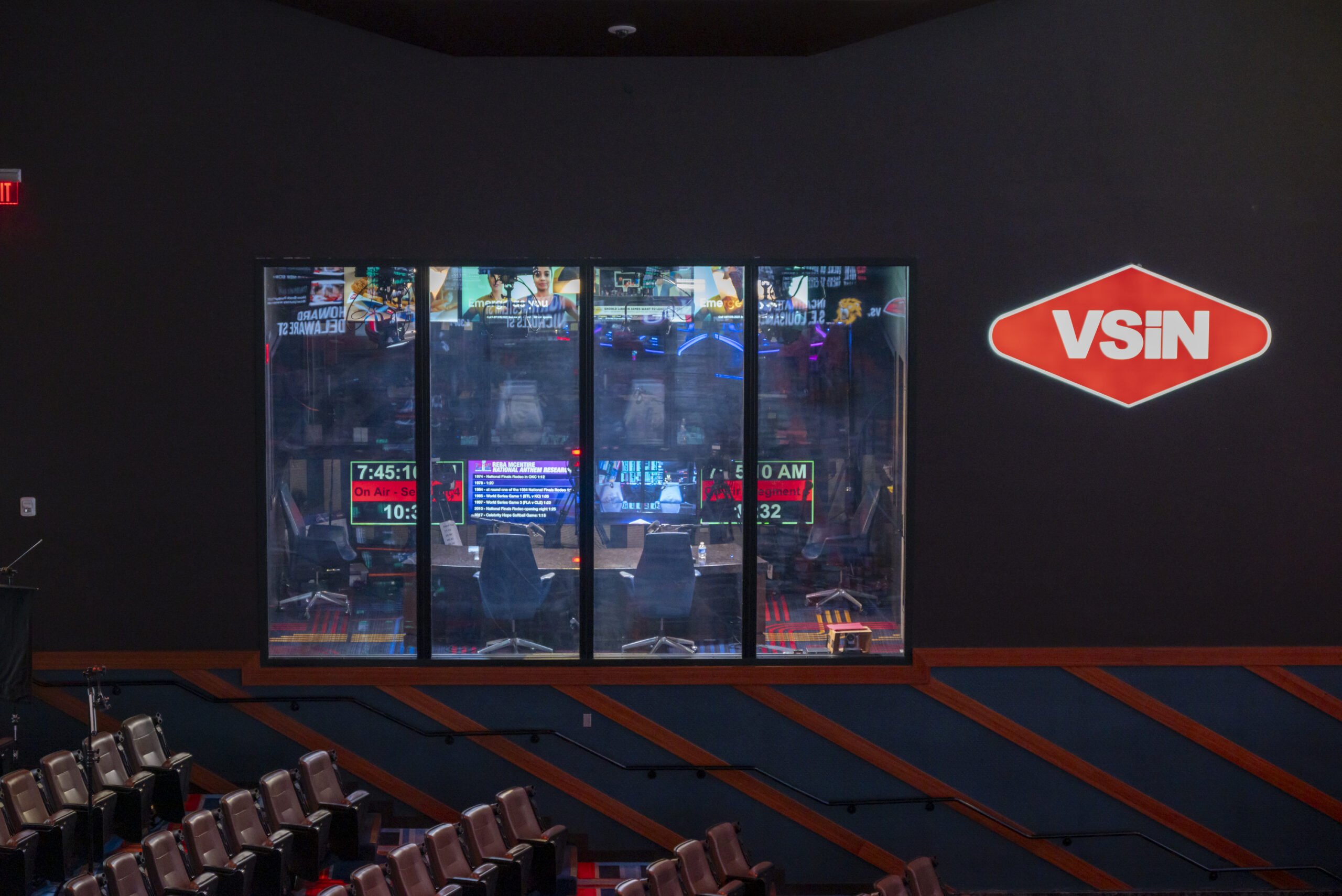
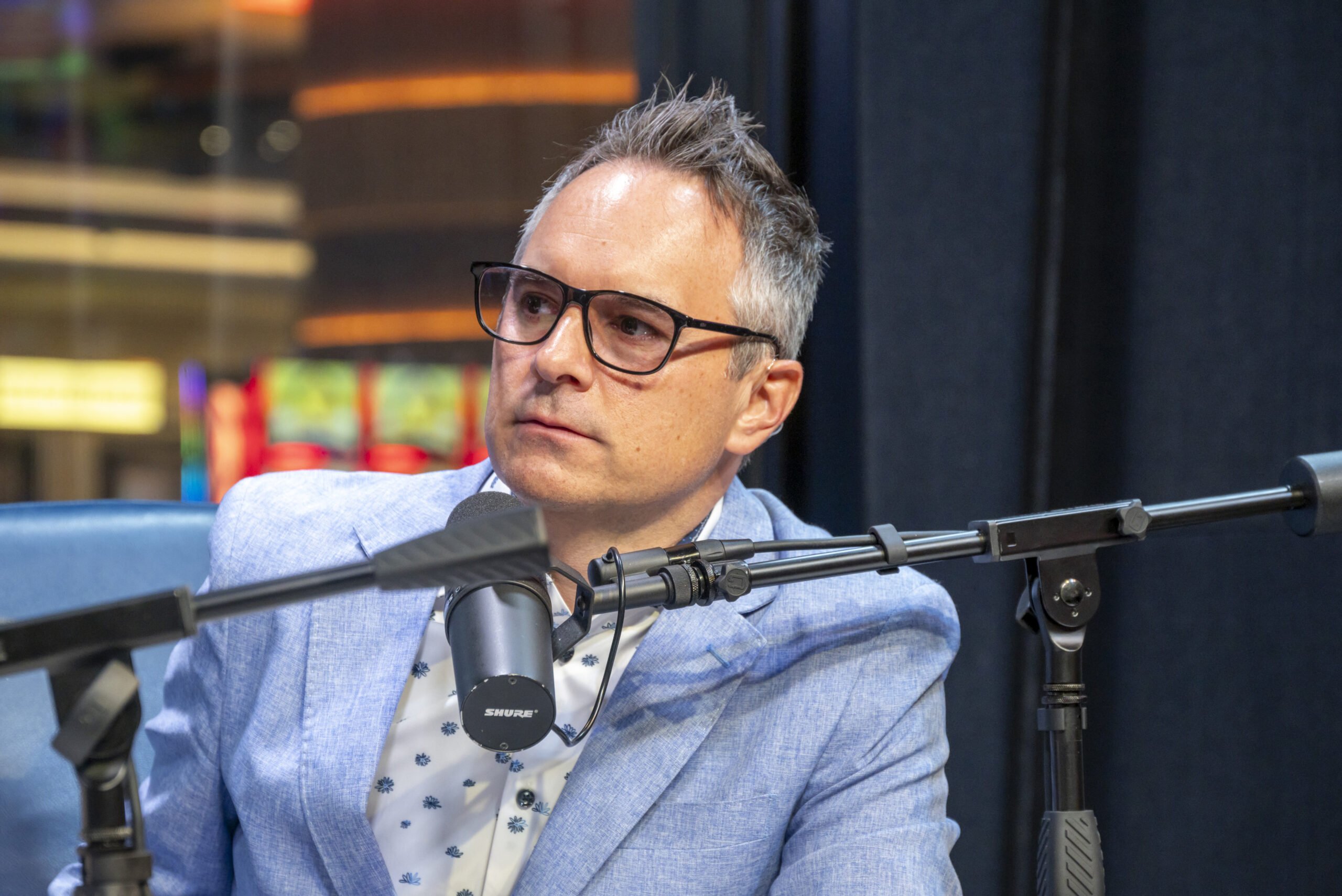
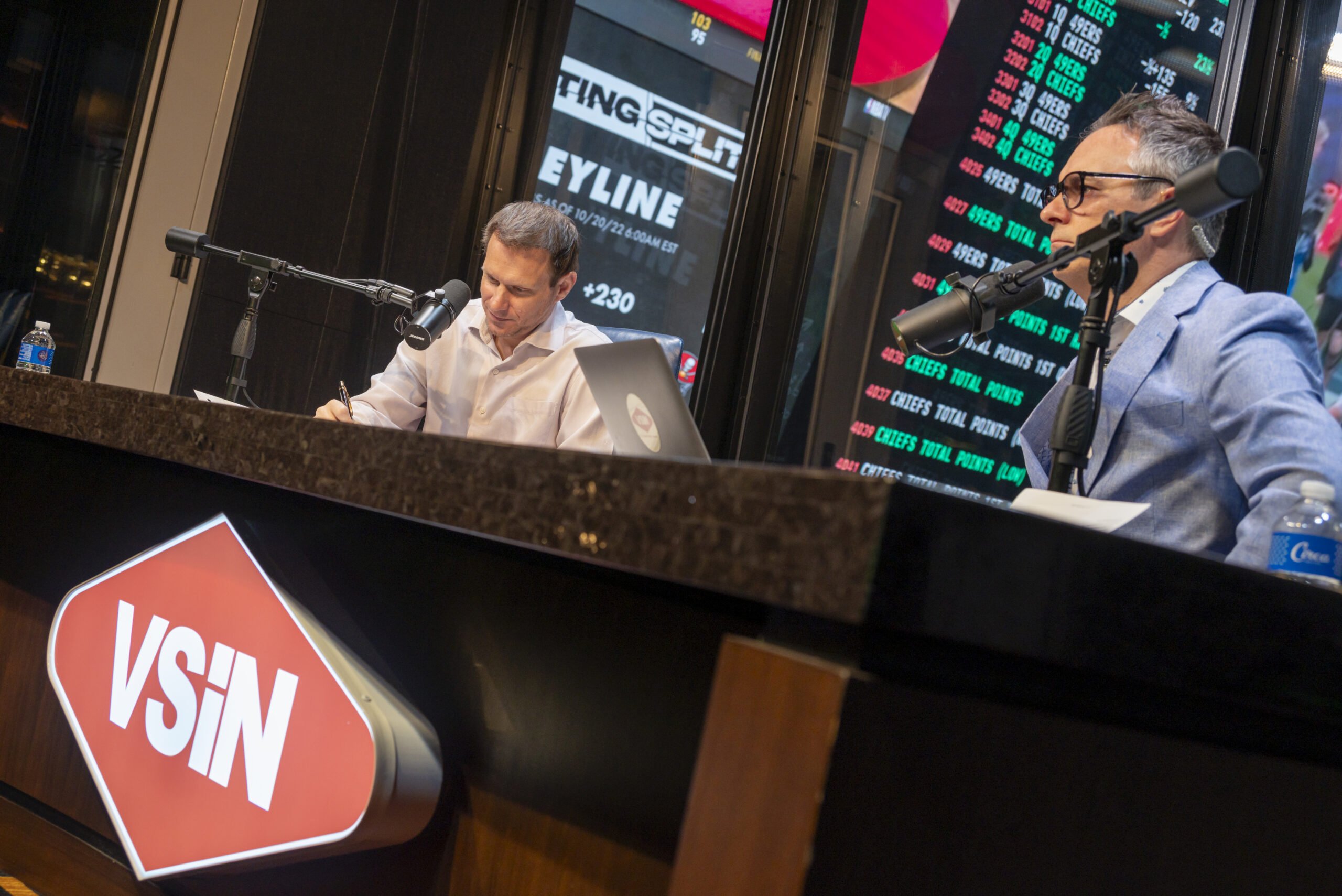
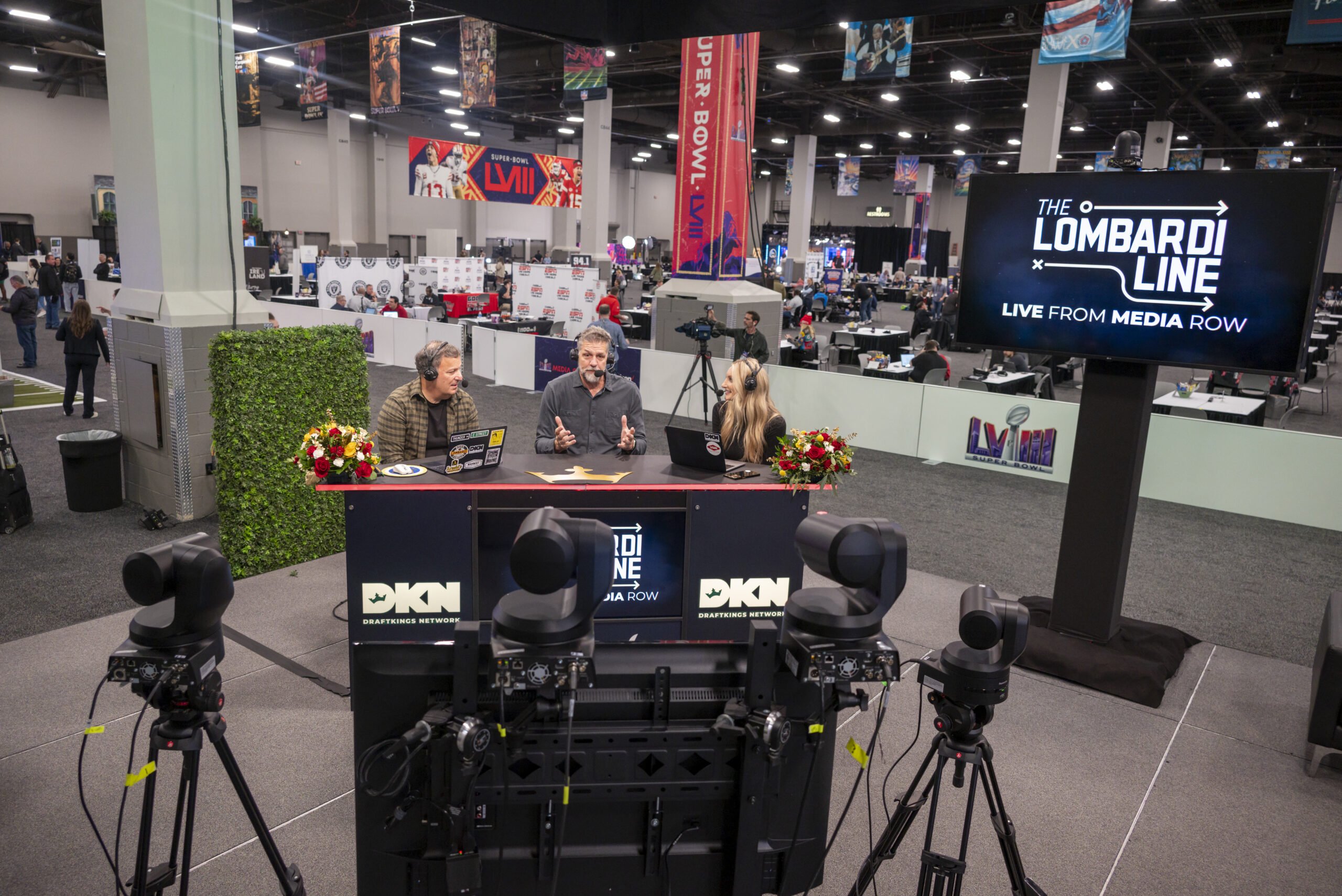
For the third installment of a ‘Day Spent With’ we traveled to Las Vegas to learn what goes into a day of content creation inside of a sports betting network. The fine folks at VSiN welcomed BSM’s Derek Futterman to observe shows both on-site at their regular location inside of Circa Resort & Casino, and on-site at the DraftKings set at media row. If you’ve never been to Circa before, you have no idea what you’re missing. It’s literally heaven on earth for a sports fan. The studio setup for VSiN right next to the Circa sportsbook makes it easy to be excited coming into work each day. The background also makes the on-camera visuals look incredible.
Derek Futterman’s day began at 3:30am with Follow The Money, included time spent with Gill Alexander of A Numbers Game, and then shifted to the Mandalay Bay Convention Center to connect with The Lombardi Line. He also had access to VSiN’s program director Jon Goulet and Circa Resort & Casino owner Derek Stevens.
Building content around the world of sports betting requires different skill and knowledge from a normal sports talk show. The on-air team at VSiN know the space as well as anyone, and what you’ll learn in this piece is how easy they make it despite having to navigate through various situations. My thanks to Derek Stevens and the VSiN team for providing great access and insight.
Next week, we turn our attention to Omaha Productions. Derek Futterman spent a day inside the world of Kevin Clark’s ‘This is Football.’ In future weeks we’ll highlight a day in the life of a program director, market manager, social media manager, and media buyer. We’ve also left one slot open to see which of a few possibilities makes the most sense as we move deeper into the series. If you or your brand wish to be involved, email JBarrett@sportsradiopd.com.
– Jason Barrett
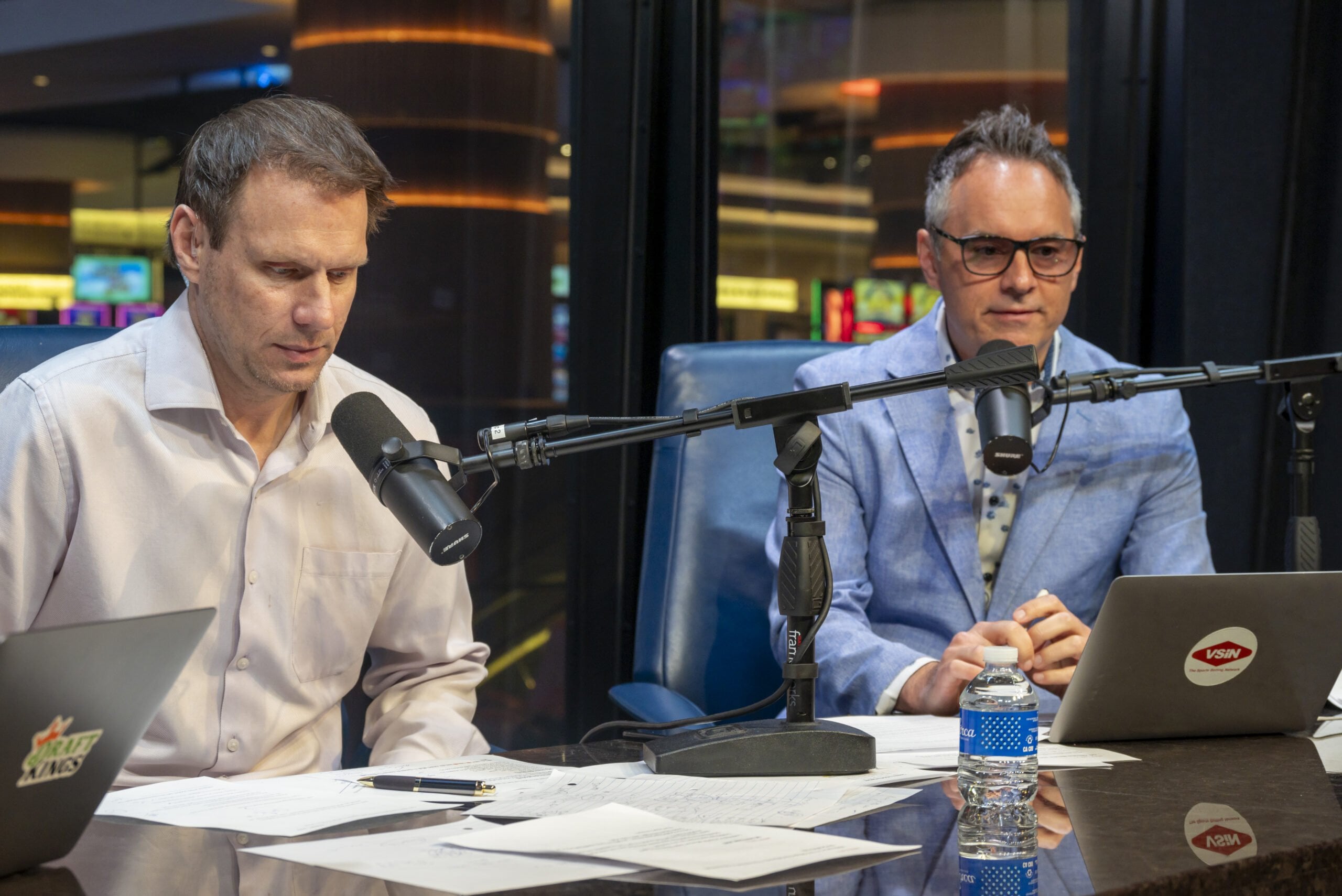
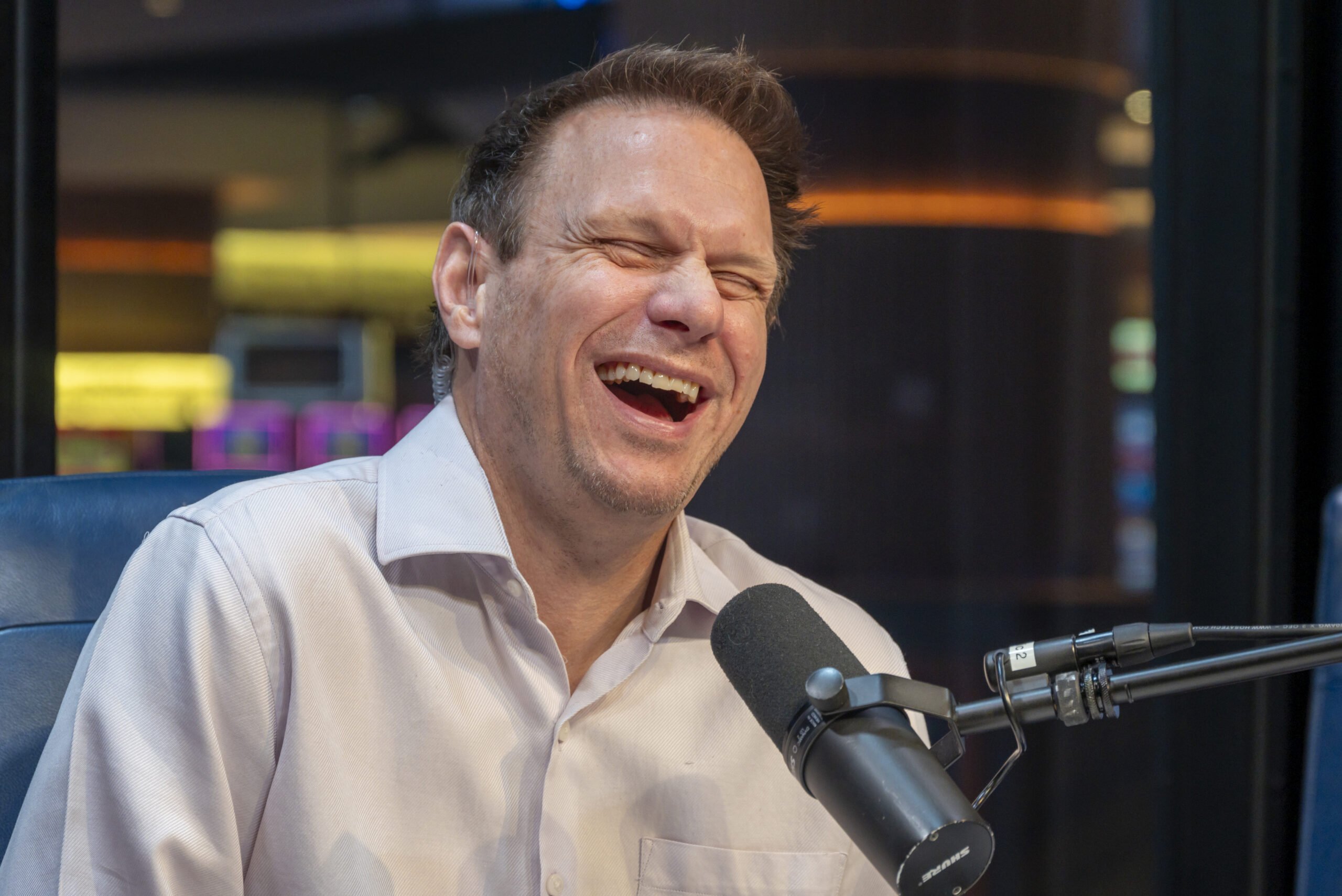
Walking through the Circa Resort & Casino in Las Vegas, there are slot machines, card tables and other staples that present a bright, vibrant appearance. Although the city itself never genuinely rests, the primary floors of the hotel are largely empty at 3:15am outside of a few people wandering the area and continuing to gamble. Conversely, the Vegas Stats & Information Network (VSiN) studio is filled with people arriving to work on the early morning show, Follow the Money. The program is syndicated to various radio stations, regional sports networks and FAST channels around the United States, starting early on west coast time in order to satisfy the east coast morning appetite.
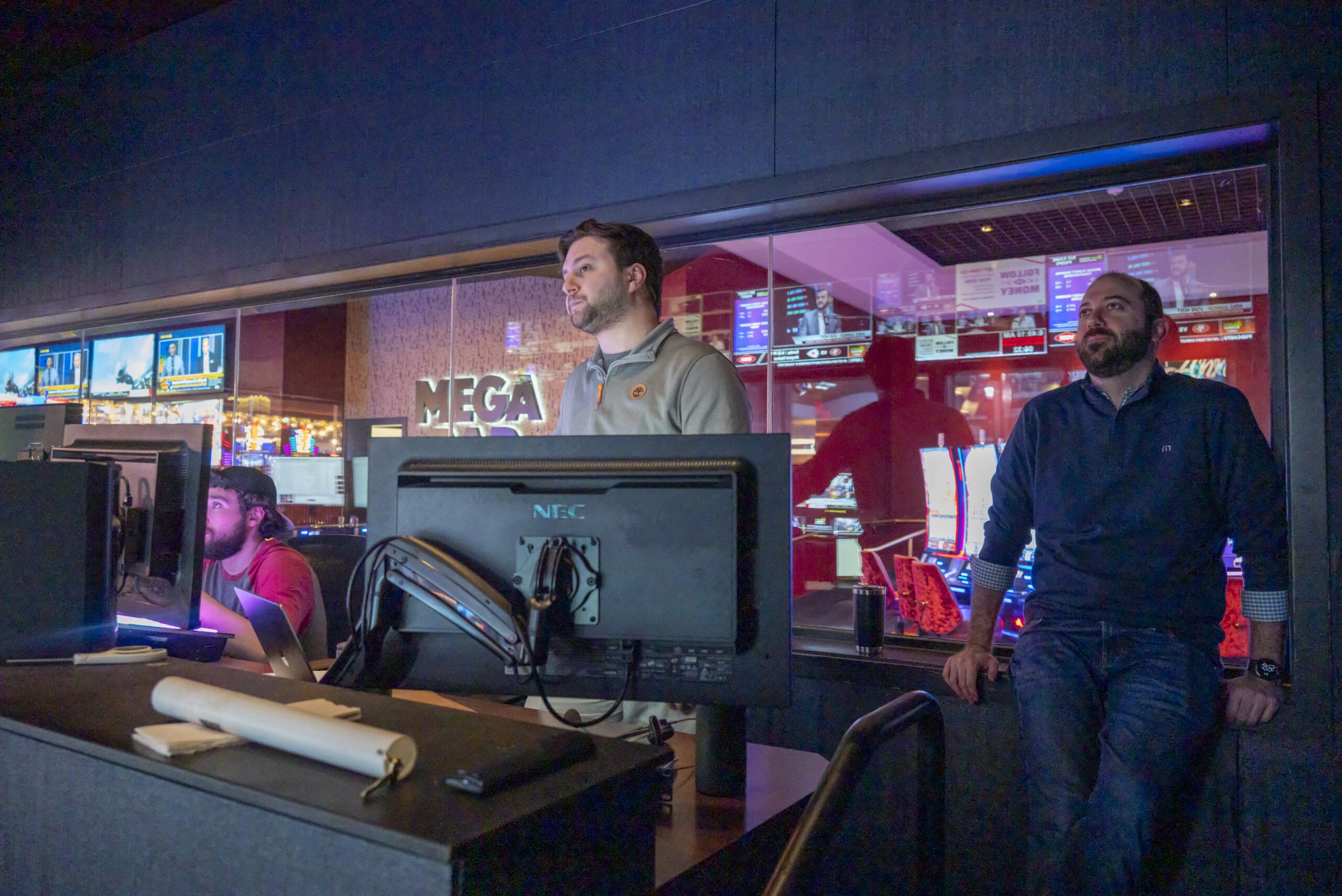
Because of the early arrival time, a preponderance of the show preparation is completed during the preceding day. In the time before the show begins, producer Luke DiVasta is inputting advertising reads into a document for the hosts to review to ensure they are ready by the time the show starts. Additionally, they review the rundown to check that the topics remain pertinent and are able to make changes during the show if necessary.
With 37 states legalizing sports betting in varying capacities after the U.S. Supreme Court overturned the Professional and Amateur Sports Protection Act, there exists considerable interest in the calculus and theory behind the practice. VSiN began operating in 2017 when it was co-founded by Brian and Todd Musburger along with documentary film producer Dave Berg. The network immediately garnered industry attention by adding legendary sports broadcaster Brent Musburger as the host of a three-hour afternoon drive program.
The network currently produces 21 hours a day of live programming on most weekdays and utilizes two studios within casinos in Las Vegas. The Circa-based studio first opened in 2020 and has bolstered the thematic setting of its programming lineup. In fact, its programming occasionally includes guest appearances by Derek Stevens, chief executive officer of Circa Resort & Casino, where he discusses sports betting and its growth.
“It just makes sense because VSiN’s obviously the sports betting network, but it matches up with Circa and our brands,” Stevens said of the complex, which also houses Stadium Swim. “It all just kind of brings things together. We focus on sports more than any other hotel-casino-resort, so I think the placement of [the] VSiN television studio inside of Circa makes a lot of sense for both VSiN and for us.”
The studio utilizes an automated system to make sure it stays on time with its segments and breaks executed by master control. Segments of the program begin with a concise stinger to ease viewers into the show, which is hosted by sports media veterans Mitch Moss and Pauly Howard. With the Super Bowl emanating from Las Vegas for the first time, Moss and Howard discussed the evolution of the relationship between the city and National Football League.
“Already the biggest week of the entire year gets multiplied infinitely because it’s right here in our own backyard,” Moss said. “This is something that I’d never thought that we’d see happen, so it’s huge.”
Moss and Howard both arrive at the studio approximately 30 minutes before the program begins and are immediately ready to take the air. Over time, everyone on the show has adjusted to the irregular schedule, with some staggering their respite to be awake during key moments of the day.
For example, Howard takes a nap after the conclusion of the show before starting to review information that will be used the next morning. He wakes up daily at 1:30am and immediately checks what he missed before compiling information for his ‘Win Some/Lose Some’ segment that has become a hit with viewers. The show reviews the best and worst bets from the previous day, along with showcasing amusing videos discovered on social media.
“A lot of people throw too many numbers at the viewer and so many different trends as well,” Howard said. “I think it’s, ‘Keep it to a minimum;’ two to three things maybe. I think the staff does a great job with that too, but I think some people can be too trend-happy as well and convoluted stuff.”
The program is a genuine multiplatform experience since there are a variety of ways to consume the content. Moss and Howard try to blend their backgrounds in radio with the visual element that equips graphics that outline lines and spreads without every nuanced detail necessarily warranting discussion. Critical in the operation is contextualizing the essence of the metrics and providing analysis that informs bettors and appeals to casual viewers alike.
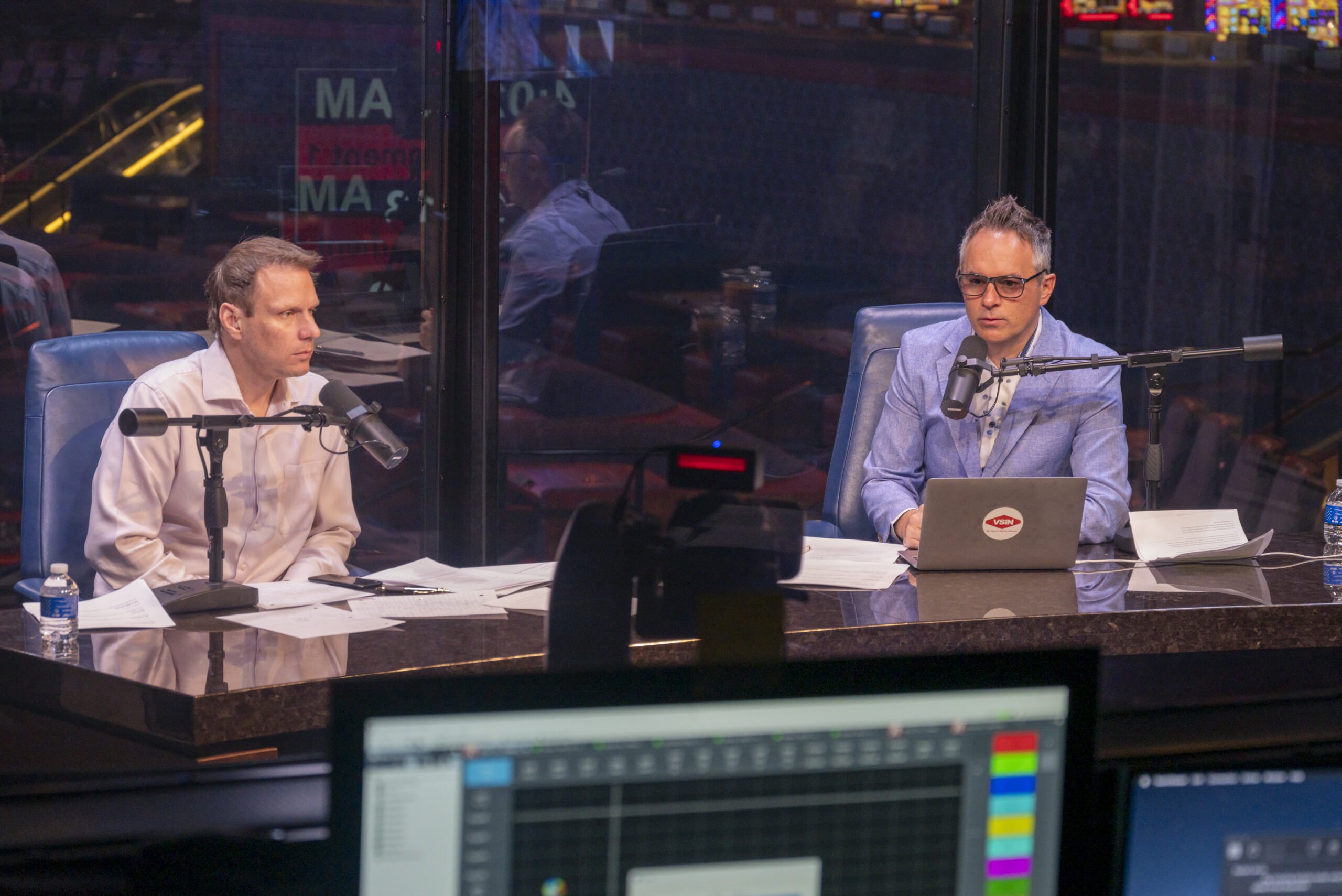
Pauly HowardMitch MossFollow the Money | 7 – 10 a.m. EST | VSiN
On this Monday edition of Follow the Money, the show doesn’t feature guests during the first of its three hours. Securing interviews during the early hours can be a challenge, but the show is usually able to achieve its goal and include a wide array of insider voices. The remaining two hours of the program included four guests, including Jason Appelbaum and Mike Somich appearing live in the studio.
Moss is usually the host managing the ins and outs of each segment with his producing background. For each segment, he positions Howard to effectively deliver his analysis and continue the conversation. The hosts see the clock counting down from 12 minutes at all times, engrossed in conversation but remaining cognizant of the importance to hit the outro without delay. They have known each other for more than two decades and promptly cultivated rapport working together on the weekday morning program.
“They’re at that point almost like a married couple where they know what the other one’s going to say and where they want to go with every conversation,” Goulet said. “They are hard-core gamblers and have been for a long time, [and] they are really entrenched deeply in sports betting.”
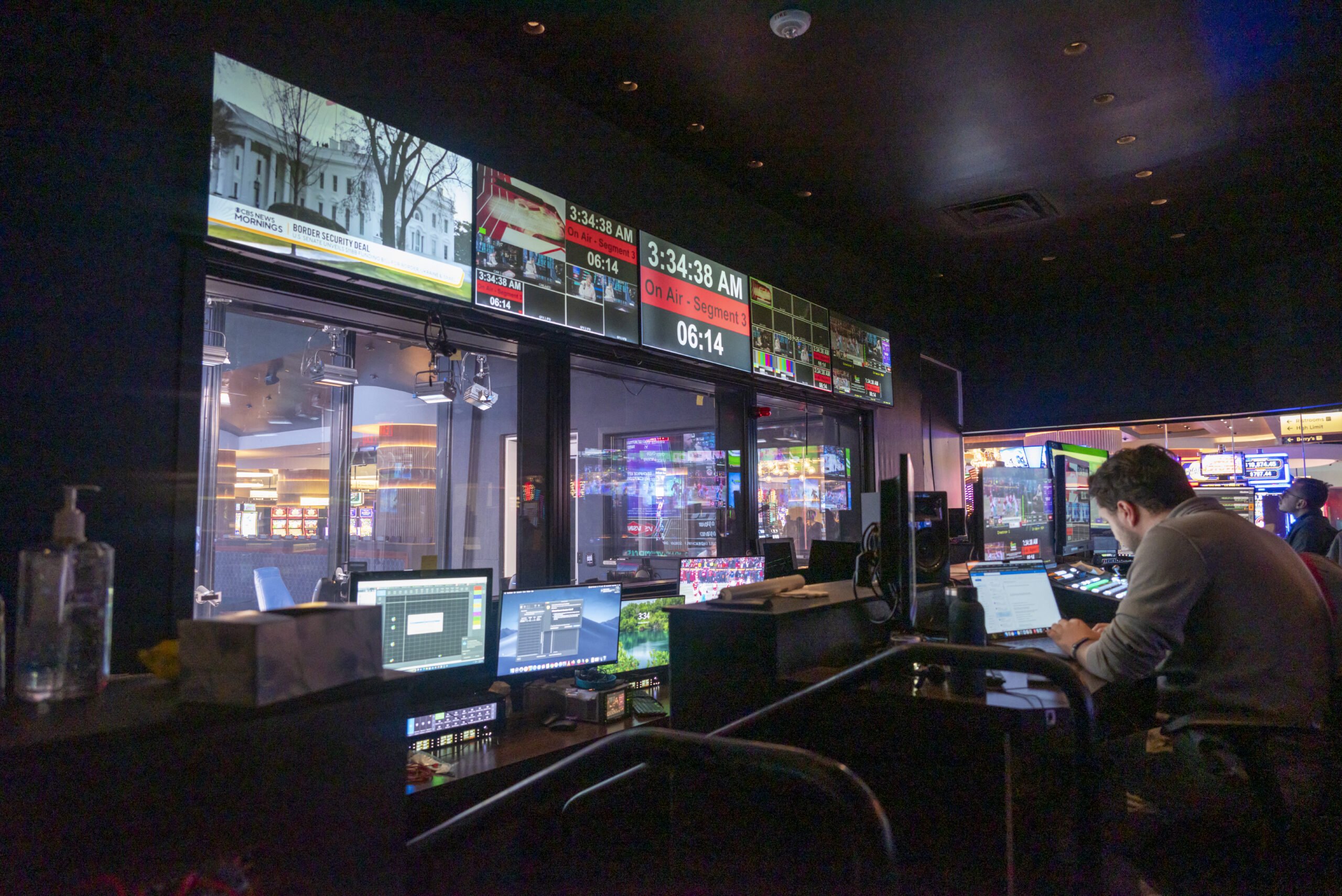
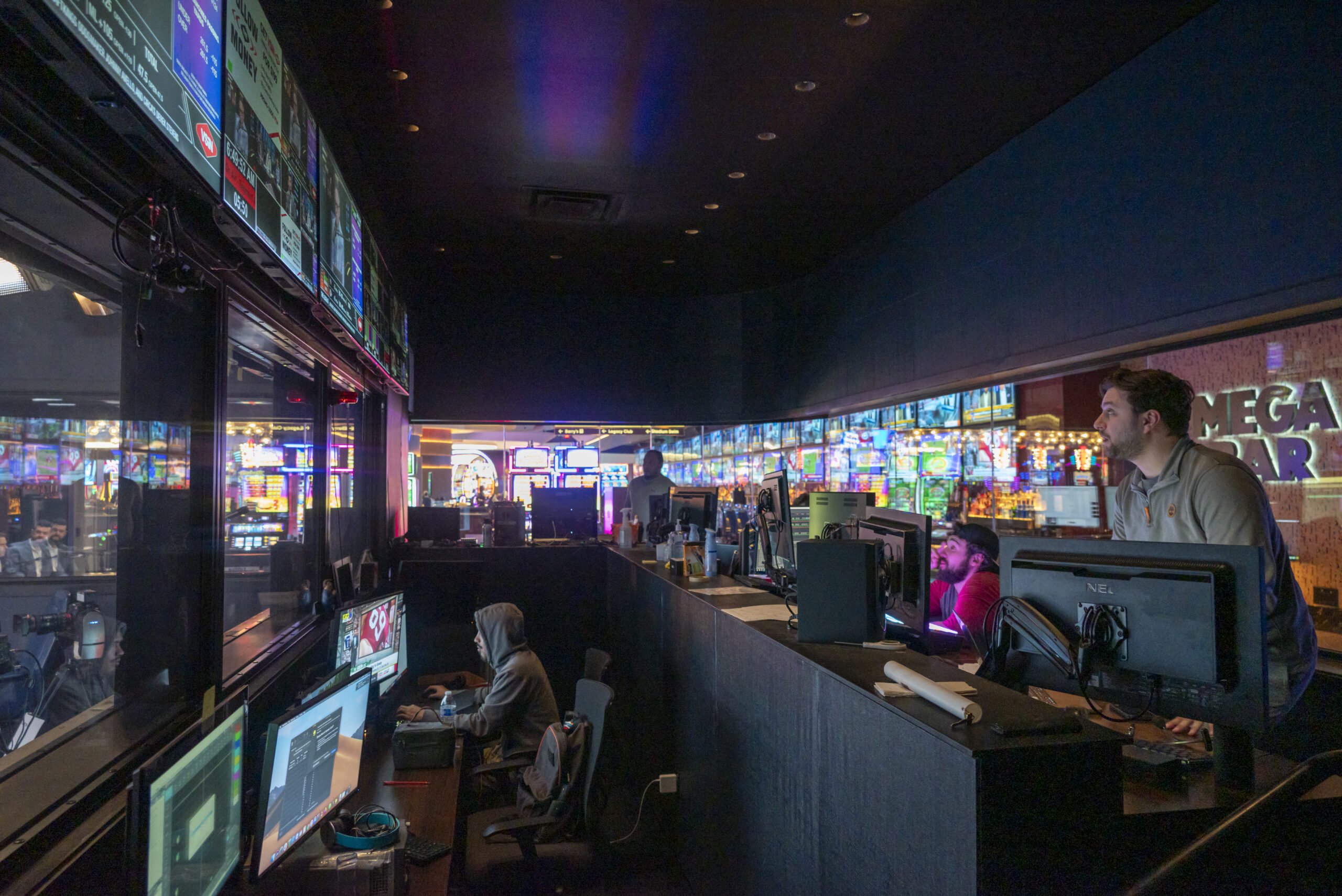
Because of the brands multiplatform focus, production staff are focused on video and audio in the adjacent control room. Behind the glass, a plethora of equipment is used to load graphics, switch cameras and balance audio levels. Viewers are then able to see the customizable Daktronics LED video wall and live odds, further accentuating the technologically advanced studio.
“Anybody could set up a show inside of a studio,” Stevens said. “When you put it in the middle of some action, it becomes a television studio where you can actually have legit programming without the roar of the crowd ruining a shot or a show. I think it’s pretty special.”
The three-hour show concludes with a sentiment of briskness, something the hosts regard as a sign of an effective program. Aside from discussion surrounding the Super Bowl, the hosts also cover the NBA and preview the forthcoming action. When the show ends, they record promos for upcoming episodes before departing for the day and resuming their dialogue digitally.
“I think we’re unique [in] that we love to watch games and we want to know every specific angle about [the] NBA; NHL; whatever it is,” Howard said. “We love to watch games and not just read box scores on the air. We have great recall on that when it’s used from week to week and game to game.”
Most of the odds promoted by VSiN come from DraftKings, which purchased the sports network in March 2021. According to an August 2023 study from Eilers & Krejcik Gaming, the company is responsible for the largest overall market share in sports betting and other online casino games, garnering 31% of overall gross gaming revenue. Although specific figures from each sportsbook were not released, the Nevada Gaming Control Board revealed that sportsbooks in the state took $185.6 million in wagers on Super Bowl LVIII, its highest total ever recorded for the game.
“People want to debate about, ‘Who’s better? Who’s going to win games?,’ and betting is clearly a part of that,” Goulet said. “In different markets and different areas, it’s going to have more of an impact than others, but I always think there’s going to be room for sports betting talk and sports talk.”
Gill Alexander hosts A Numbers Game from the network’s other studio facility at The D Casino & Hotel, which is a short walk from Circa and near historic Fremont Street. Alexander has been on VSiN from its inception in 2017 and witnessed its growth firsthand. The job requires persistence and hard work, and he is dedicated to the craft to help listeners profit and promote responsible gambling.
“You can be the smartest person in the world and you can try to explain something to somebody, but if it’s not particularly engaging, people lose their attention span on it,” Alexander said. “You have to really be creative. I try to keep that in mind at all times, and I think that comes across to the listener.”
Alexander has had nine producers in seven years with VSiN, turnover he attributes to their skill level and how they continue to advance their careers. The current producer of his show, Kelley Bydlon, is someone he cannot envision doing the broadcast without. Bydlon is skilled both on the air and behind the scenes. While the content flow of the current season is made more facile because of football and the Super Bowl, they work through the summer months where there is a scarcity of professional sports outside of baseball off which to bet.
“My goal every day is to say something different than anybody else says, not just to say it; not for the purposes of saying something different, but saying something different and intelligent and insightful,” Alexander explained. “To the extent that I’m able to do that, then I’ve done my job.”
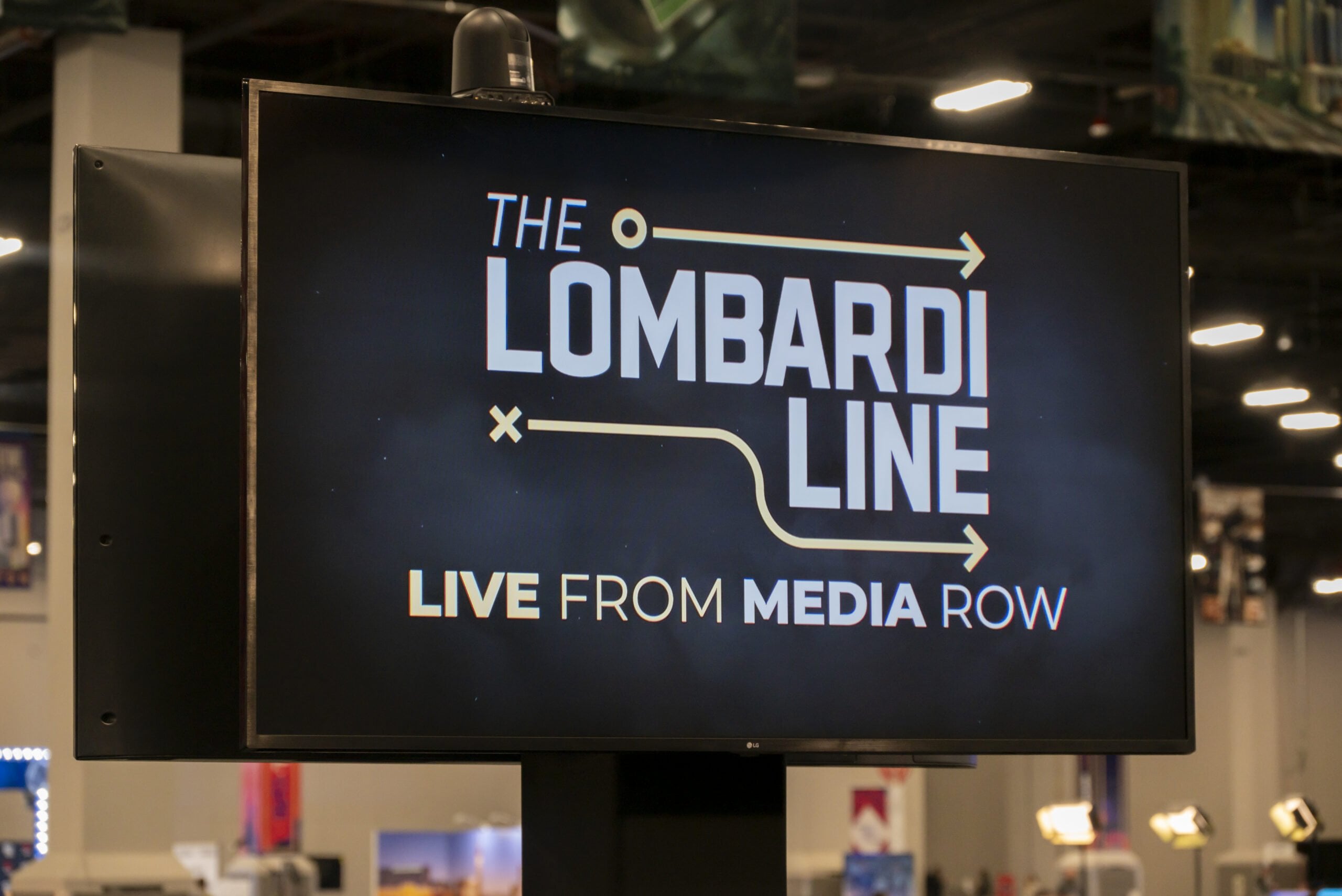
Some of the programming from VSiN airs on DraftKings Network and originated during Super Bowl Week from its setup at Media Row from the Mandalay Bay Convention Center. That was a welcome occurrence for Michael Lombardi and Stormy Buonantony of The Lombardi Line. The afternoon program generally comes from remote locations. At Media Row, Stormy and Mike seamlessly integrated into the setting and led their show by recollecting how the NFL ultimately arrived at Las Vegas as a Super Bowl host city.
“We’ve been able to develop a chemistry amongst ourselves, but it’s better when we’re in person,” Lombardi said. “She’s really, really talented – she’s very talented in the sense that she can listen to your answer and then ask a really good follow-up question, which is important – and then she has opinions that I need to bring out in her because she’s so mart and she’s into all the things that happen.”
Lombardi is a former general manager and three-time Super Bowl champion NFL executive who worked in the league for three decades with the New England Patriots, Oakland Raiders, San Francisco 49ers and Cleveland Browns. While he broadcasts on a sports betting network, Lombardi does not have a background in the space but contributes his esoteric acumen and accrued expertise as part of the larger conversation.
Contrarily, Buonantony learned sports through the avenue of betting but was not permitted to be associated with betting in her previous roles. She renders it surreal that the NFL had the Super Bowl in Las Vegas, along with the fact that the metropolis has two sports teams of its own and potentially more on the way. Buonantony expounded on this viewpoint during the telecast before transitioning into conjecture on parity within the NFL.
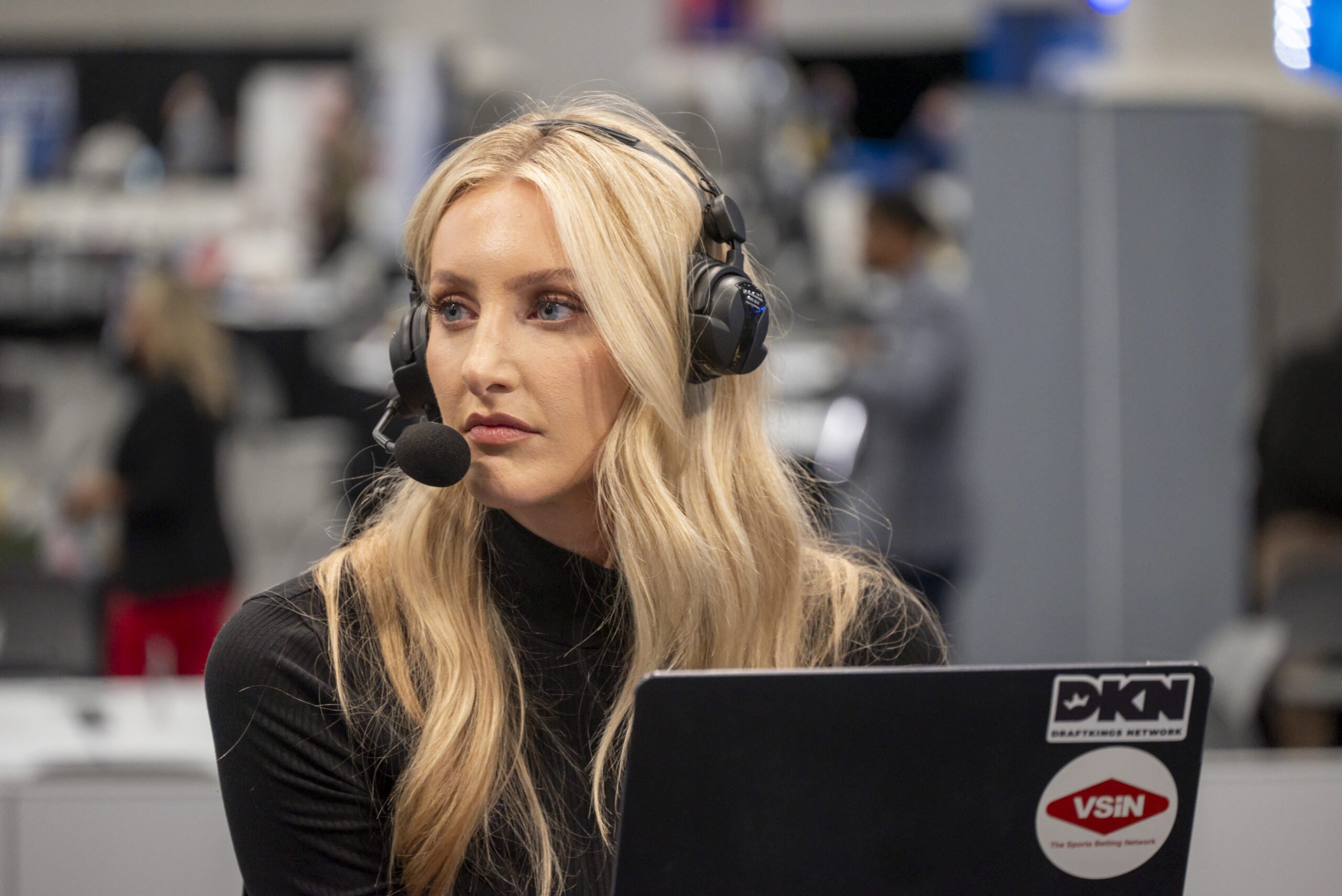
Michael LombardiStormy BuonantonyThe Lombardi Line | 1 – 3 p.m. EST | VSiN
After a scheduled commercial break, the program descibed NFL storylines regarding teams outside of the Super Bowl, refraining from mentioning numbers or lines. Akin to Moss on Follow the Money, Buonantony is often the host anchoring segments thanks to her hosting and reporting background.
“We try to make it a collaborative effort and I really appreciate somebody like Michael including me in that process,” Buonantony said. “We’ll ask him, ‘Hey, what do you want to talk about?,’ because I want to do my best to set him up for success and know what the important topics are for him to hit. There’s so many times where he says right back to me, ‘Whatever you want to talk about – let’s get into what’s interesting to you.’”
Former Tampa Bay Buccaneers head coach Bruce Arians joined the show on this day as a guest by phone. The interview ended early after he gave short answers. The program had pre-written questions in its rundown and a list of his accomplishments and accolades as reminders for the hosts.
This marked the second time in as many interviews that the show needed to adapt since the pre-scheduled appearance by ESPN analyst Herm Edwards was delayed. Edwards appeared on the program later on, allowing the show to make up for the altered time. Presenting the show from NFL Media Row during Super Bowl week requires flexibility because of the numerous media appearances made by guests throughout the week.
“You have to figure out what will play best to the audience and what you can do after you had a guest and how you do that, so we’re used to it,” Lombardi said. “I think ultimately one thing you know for sure is whatever the script says, you’ve got to work around it.”
The show then transitioned into a segment called, “Step Into My Office,” which presented Lombardi with questions about NFL head coaches and scenarios surrounding their teams. Rather than displaying betting lines about job security or team performance, Lombardi is given time to offer his perspectives and grant viewers an inside edge.
“I prepare for a show just like I would prepare during a regular season working in football,” Lombardi said. “Study the game, study the teams and then be ready to analyze the teams based on studying them. My job really hasn’t changed. I don’t bet, so I’m not in the betting world. I give out betting advice, but I’m a football person who studies football, and that’s really how I’ve approached it.”
Once that segment concluded, the hosts were prepared to interview Mike Golic Sr. and Mike Golic Jr., both of whom host a show together on DraftKings Network called GoJo and Golic. A last-minute change substituted Golic Jr. for Jessica Smetana, another DraftKings Network host and contributor to The Dan Le Batard Show with Stugotz, requiring real-time adaptation.
With 40 seconds to go until the show returned on the air, Golic Sr. was the only one to take the stage, leading to on-site staff quickly removing one of the two chairs that had been placed behind the desk. Everyone on site embraced the chaos and made the best of the situation.
“It definitely can be a grind especially during college football season overlap on all the things we’re doing, but I can’t imagine doing anything else,” Buonantony said. “I feel so fortunate that [with] my hobby and something that I’ve always loved that I get a paycheck to talk about it. That’s something that I hope I never take for granted.”
VSiN continues to utilize its two studios at Circa and The D, the former which also has a production area complete with video editing bays, podcasting studios and conference rooms. Even though there can be logistical challenges being situated inside of a casino-resort, the network recognizes the inherent benefits to the spaces.
With the three-level sportsbook in the background and odds adorning the walls, there is an aesthetic appeal to the network that, in turn, also enhances its visual ethos. On Super Bowl Sunday, fans needed a ticket to secure a seat to watch the game on the big screen while VSiN stood ready to broadcast postgame coverage at the conclusion of the event.
“The community really embraced the Super Bowl, and again it’s not just a game; it’s years of work and then it’s a week worth of events and things like that,” Stevens said. “It was pretty awesome to just be involved with some of the events.”
“There is no better spot to be at than a sportsbook that is that large; that has that much energy [and] attracts that many people,” Goulet added. “If you could draft, ‘Where would we want to do shows from?,’ that would be my first pick, and we happen to have a studio already built there.”
As VSiN continues producing stellar sports betting content and trying to maximize its reach and relevance in the space, everyone involved possesses an earnest belief in the product. The network genuinely tries to appeal to all facets of its audience, balancing the exposition of parlays, spreads and wagers with traditional sports talk and debate.
Information and opinions transmitted on the shows are not guaranteed to result in effective outcomes since sports at their core contain unexpected fluctuations. Nonetheless, the staff tries to make every show distinctive and worthwhile to its consumers by taking them beyond the numbers and broadening the overall sports betting experience.
“I just hope that it continues to grow alongside betting growing in sort of the mainstream media offerings,” Alexander expressed. “I think as that becomes more accepted by an American sports public, VSiN can only do one thing but soar.”
He was one of YouTube’s first stars while in High School. Tajh Lewis along with some friends focused on making relevant and relatable comedy for an audience he feels still doesn’t get enough story recognition.
“I was a high school kid at the time, just kind of looking at my surroundings. And I just wanted to make, like, relatable comedy stuff that related to people my age,” Lewis told Barrett News Media over a Zoom call.
Born in Manhattan, Tajh Lewis grew up in Brooklyn until the age of 9 and moved to Rockland County in New York. This experience motivated the then-young teen to develop his YouTube channel. “I started my channel, which is called The Shadow Show, around 2006 and just made funny skits and stuff. From there I started to develop more as a writer,” Lewis said.
He acknowledged the channel changed as he grew older, “It kind of evolved from being a high school kid to being Black in a PWI, which is a predominantly white institution, and then just kept evolving and evolving, evolving from my perspective.” He added his main thread is also his strength, “It was always making some type of relatable comedy. It was kind of a point of confidence for me. I might not be the biggest or the tallest or the strongest, but I can make you laugh.”
Over time, Lewis developed a series on YouTube, educating the public on Black American History. “It’s weird saying this in 2024, but [back then] there wasn’t a lot of representation growing up.” He added, “There’s not a lot of Black history that was told to me outside of slavery, Malcolm X, Martin Luther King, and Rosa Parks. The same culprits, right? So every February, I went out and did my own research.”
Tajh Lewis noted this work was intertwined with his comedic tagline “Real talk that’s real funny,” because he wanted viewers to learn and be entertained. “I was just like, there’s so many, contributions that we’ve done as a people. Not only music and athletics but also invention wise, engineering wise. There’s so many contributions we’ve made,” he said.
Lewis began his own production company in 2016, “Because I was writing, directing, acting in producing everything myself, I had a knack for video editing. So I started taking out more seriously, started doing more clientele work.”
The YouTube star is now taking his efforts to both the silver and streaming screens. He has a short film green-lit for 2025 and is developing a pilot. However, Lewis wanted it to be known what he develops isn’t just another “Black film” saying, “In media right now, I think the message got a little crisscrossed. I think Hollywood kind of was like, ‘Okay, you guys want to see yourselves? So we’re going to put you in everything.’”
While Tajh Lewis appreciates the effort he noted, “They just throw us in a bunch of stuff and they’re just greenlighting a bunch of stuff, but they’re not focusing on the story and making it good.”
He later added, “So then the narrative becomes ‘Why are we giving them the opportunity to do this and all of [these films] bomb in the theaters and nobody watches this stuff on streaming?’ It’s not that because they were Black, it’s because the story is bad.”
Lewis notes his media production company, Radio Digital, does not create and develop stories like Hollywood. Instead, its focus is on stories. “My CEO likes to say that, ‘We are the Black A24.’ We try to make thought-provoking, well-produced, off-the-charts story, off-the-charts cinematography, but from people who are mostly Bipoc. We’re all Black and Hispanic.”
Focusing on scripting, Tajh Lewis’ goal is to better represent minority groups in film.
“I would say, as a people we have different representations and different stories to tell that aren’t just from this disenfranchised, hood perspective. And I think stories can get too caught up in that.” Lewis also added, “On the flip side, we have the racial trauma, true stories that need to be told. But they’re told too much, whereas a Black person, I know what it is to be Black in America. I don’t want to go watch a movie about how hard it is to be me. You know what I mean? I want to have the same escapism as my white and European counterparts.”
His ideas are catching on. His short film Black is Black was received at film festivals around the country and won three awards. Lewis said of his team, “We have two big short films under our belt. One feature with Amazon.”
He added, “We just finished production for, a new short film we’re working on called Break a Leg. And that should hopefully be coming out 2025, but we’re in post for it right now.”
In all this silver screen effort, Lewis won’t be forgetting the platform that made him famous in the first place, YouTube. He will be re-branding The Shadow Show later this year. Like from the very beginning, the channel will continue to develop and grow just as Lewis does. This year will bring him an exceptional amount of new content influence as he is getting married and having a baby.
While preparing for two major life events Lewis is spending his time sharing his influence with young people at the Brownsville Recreation Center. “You’d be surprised how many kids could have direction, if they just have people that look like them, that care about where they are and can give them the tools to get to the next level, give them other variations of what their life can be.”
Tajh Lewis added, “You know, a lot of the kids right now they love music. So cool, you want to be in music, and you want to be a musician. It’s very hard to be in that industry. But you can learn how to be a sound engineer and how you can turn that passion into profit. Right? You can work your way up in that way. So maybe you’re not the talent necessarily, but you can be the songwriter. You can be the sound engineer, you can be the producer.”
If the cast of ESPN’s NBA Today program were still in high school, their favorite class would be chemistry. There may be no better mingling of personalities on the sports airwaves right now. So, let’s start right there.
Reggie Jackson once referred to himself as “the straw that stirs the drink” for the New York Yankees. While NBA Today host Malika Andrews would never be so self-aggrandizing, she is the Reggie of this program. Andrew’s background is impressive. Before debuting as an ESPN sideline reporter in 2019, she was a reporter for the Chicago Tribune and the New York Times covering hard news stories.
This experience has prepared her for her current role and propelled her as one of the top talents in the business. The fast rising star is understated, prepared, thoughtful, and able to match wits and jabs with anyone on her panel. When Malika Andrews opens a show, you are transfixed on what’s about to happen. She is dynamic in a subtle and serene manner and asks tremendous questions both as a host and interviewer.
If there is a second star on the NBA Today crew it is ESPN NBA insider Adrian Wojnarowski. The man they call ‘Woj’ has become the basketball version of Adam Schefter. He is a guts and grit, hard-working reporter with a pristine reputation. This dude is on point, locked in, and singularly connected. His contacts must read like an NBA Hall of Fame. Wojnarowski breaks stories like the late Darryl Dawkins broke backboards.
NBA Today is also home to a true television phenomenon and his name is Kendrick Perkins. Perkins did all of the rebounding, thumping, playing defense and blocking shots on those great Celtics teams from 2007-2011. I covered those teams, and if you asked me which player would be least likely to have a career in television, I would’ve said Perkins. I think the guy said about three words publicly during his 8 seasons in Boston.
This quiet assassin has now become a new wave Charles Barkley combining basketball acumen, flowery language, high level analysis and a mischievous sense of humor that shines brightly on television. Perkins is absolutely fearless and like Barkley, can be equal parts maddening and enthralling. This cat has a gift, and he is sharing it with hoops fans.
NBA Today also features the powerful presence of Chiney Ogwumike, a basketball expert who dominates the screen while offering opinions on all things roundball. Ogwumike also brings a WNBA playing résumé and a real sense of style and glitz.
Probably the most underrated panelist on the program is ex-NBA star Richard Jefferson, who has become the Larry Bird of the program. He makes everyone around him better. Jefferson is really funny and interacts especially well with Andrews and Perkins.
He will go toe-to-toe with anyone on any subject. He even challenged the personalities on ESPN’s First Take to reach his level of excellence in wardrobe. Jefferson is an antagonist. He shakes things up and rocks the world. I love his TV game.
The February 14 edition of NBA Today opened with Andrews and Wojnarowski talking about the Lakers and Warriors discussing a LeBron James trade before the February 8 trade deadline. Brian Windhorst, another tremendous part of the NBA Today team, made a great point saying if the trade was really nothing, why did it take 24 hours for the eventual answer to become no?
I called Perkins a television phenomenon and you can almost put Brian Windhorst in that same category. He is not as omnipresent as Wojnarowski but brings depth and background to happenings in the league, coaching moves, rumors and player movement.
In many conversations on NBA Today, Windhorst is the calming voice of reason. When Perkins and Jefferson go off on emotional tangents, it is Windhorst who brings everything back to sane analysis. He consistently does what every television personality should strive to do – tell the viewers something that they do not know.
Perkins made a great point that if the LeBron James trade did happen, the marquee player that the Warriors probably would have given up is Klay Thompson – once viewed as a guy who would never be traded. Andrews then noted that the Celtics’ 118-110 win over the Nets put them 30 games over .500, the fastest they have reached that mark since Perkins’ 2007-2008 championship Celtics team.
Quick-hitting highlights and tight, defined commentary are hallmarks of NBA Today. Andrews has to be a producer’s dream. She keeps things moving from one subject to the next, allowing a panelist of her choice to give short commentaries on each blurb.
Perkins again was glib and candid in a discussion of the Milwaukee Bucks who at the time were 3-6 in their previous 9 games. He flat out called the Bucks “pretenders.” This motivated Ogwumike to counter with the fact that Milwaukee is going to be pretty much locked into a 2 or 3 playoff seed and their defense has been upgraded since Doc Rivers took over as coach.
The pair had a great back-and-forth prompting Andrews to wisely let the debate percolate. This is the ultimate strength of NBA Today. It is not your typical highlights and analysis show. While the topics for a given episode are clearly planned, there is room for ad-libbing and going off script. In this light, Andrews is the Patrick Mahomes of ESPN. When she senses a better alternate route to take, she swerves right into it making for organic and compelling television.
This particular episode of NBA Today did not include reporter Zach Lowe, another recurring panelist. Lowe is a solid mixture of Wojnarowski and Windhorst – a seasoned reporter who openly challenges the opinions of fellow gabbers, even Perkins, Jefferson, and Ogwumike, all of whom bring that unique player’s perspective. Lowe’s appearances on the show only add to the depth of content.
The same can be said for Ramona Shelburne who always delivers telling information to NBA Today. She appeared on this edition to talk more about the proposed LeBron to Golden State deal. Shelburne is an ESPN senior writer who has been with the network since 2009.
Moreover, she is locked into the LA and West Coast NBA scene. She began her career at ESPN as a columnist for ESPNLosAngeles.com. Prior to that, she spent seven years at the Los Angeles Daily News as a columnist and reporter.
That background has fostered tremendous contacts out west. It is pretty much a given that when Shelburne talks about the Western Conference, you can etch it in stone. Andrews also introduced Bobby Marks, the former Nets’ executive, who appears regularly on ESPN talking about the front office and financial aspects of the game.
Marks provided a deep dive into which teams could pursue LeBron James this summer in his potential free agency. The LeBron speculation continued with Perkins implying that James may not want to finish his career in LA if they don’t have a roster that can win another title.
Perkins closed the show with his regular segment, Big Perk’s Big List. This one had a Valentine’s Day matchmaking theme as he talked about duos he would like to see play together in the NBA.
The Academy Awards are not until next month, but if NBA Today were a movie, the casting director would get an Oscar. Andrews and her ensemble cohorts bring it every day. From breaking stories to humor to straight up analysis, the show is an absolute triple double.
Rush Limbaugh died three years ago, on February 17, 2021. This is the Rush I knew: One particular afternoon he was very excited and nervous. Gingerly stepping into the river’s edge he admitted, “I’ve never been in a natural body of water, just swimming pools.”
Bob and I laughed.
“Isn’t Cape Girardeau on the Mississippi?” Bob asked.
“Yeah, but we just saw it from the car,” Rush explained. We all laughed again.
Summer days in Sacramento are long and hot. My KFBK morning show partner, Bob Nathan, and I spent many of those days in the mid-1980s after our air shift rafting on the American River as it gently meandered from Sunrise Blvd. to Goethe Park. We shared the two-hour ride this day with our 9-Noon colleague and friend, Rush Limbaugh.
We were surprised that Rush agreed to join us on the river. Picnics, backyard barbecues, and such were never his thing. He did attend my outdoor Western-themed wedding wearing a tie and sports coat. That made him stand out like a turd in a punch bowl. Somebody took his tie and slapped a cheap cowboy hat on his head. He wore it proudly. A few months earlier, when I talked him into letting me take him to the Yellow Rose honky tonk, he purchased his first-ever pair of blue jeans and wore them with his Pittsburgh Steelers jersey, which was the only shirt he owned that didn’t have buttons. It was as country as Rush ever got. While everyone else in the Rose was wearing boots, Rush sported tasseled loafers.
As we floated downstream in Bob’s four-man raft the talk turned to our radio careers. It was 1987. Rush Limbaugh was doing 9 to noon, making around $32,000 a year. On the river that day an SPF-slathered, 35-year-old Rush Limbaugh confided to Bob and me his plan to get a raise. He figured he might be worth $50,000 to KFBK. Management didn’t agree, even though he was hauling a ton of billing. Between 5 AM and Noon, the Dave & Bob morning show and Rush, KFBK were outbilling every other station in town.
Five years later he was inducted into the National Radio Hall of Fame and on his way to collecting five Marconi Awards while becoming the wealthiest, most famous radio personality in history.
The raft overturned in a gentle riffle of the stream that didn’t deserve to be called rapids. In that spot, the water was only four feet deep. Bob and I came up laughing, though we had lost our beer cooler. But, tossed into a Class I river, Rush was in a Class VI panic. He truly thought he was going to die. We righted the raft and hauled him back in. The next day Rush spent his entire three hours on the air talking about how Dave and Bob saved his life.
Bob and I got hate mail.
One day in Sacramento when I was the PD at KFBK, I took Rush to lunch and said, “I’m not going to tell you how to do your show. It’s your show. But, if you don’t find something else to talk about than national politics your career will go right down the toilet.”
20 years later he laughed as he thanked me for not derailing his future.
In my defense, it was 1986. Local talk radio was about local issues, events, and movie reviews. Nobody had ever gone on a single radio station to spend every day criticizing international relationships between Washington and Moscow. Rush did and, shockingly, it worked.
After he became the Rush Limbaugh the world came to know, worship, and despise, he often described himself on the air as “a lovable little fuzzball.” Bob and I hung that ironic description on him because we knew and loved the guy his audience would never get to know.
While the rest of the world was learning to deify or hate him, Rush became godfather to Bob Nathan’s daughter. In social settings, Rush was quiet and humble. He was a wallflower, really, often found quietly seated alone in a corner nursing a drink; he happily got to his feet to greet mingling guests who approached him as strangers at a party do. He enjoyed meeting new people and was genuinely interested in them, he just wasn’t good at starting the conversation.
Bob Nathan and I talked a bit about Rush recently on my podcast. I also did an episode with Kitty O’Neal, who was Rush’s producer throughout his years in Sacramento. When WABC in New York signed him, he turned to Kitty for support, inviting her to join him there. She declined but still talks of those early days with Rush lovingly yet honestly.
“In the early years, I would say he was unsure of himself and lacking in self-confidence,” she said. “But as he found his footing, he established himself as a maverick in talk radio and changed the medium as we know it.”
He left and she stayed. Now, 40 years later, Kitty is still the afternoon personality on KFBK. She shared insights into his transformation from the local star to the global phenomenon:
“Working with Rush — in the early days, before his meteoric rise — he came across as an entertainer who enjoyed poking fun at people, societal trends, and politics. I felt like the audience took him more seriously than he took himself. Much of what he said was tongue-in-cheek and he was playing the prankster. But the more political he got, the more the conservative-leaning listeners regarded him as their spokesperson. That’s the role he eventually assumed which catapulted him to fame, but I think the secret to his success was that he played it with humor and irreverence.”
There are still a lot of Rush Limbaugh copycats on talk radio and a few uniquely talented conservative talk stars who were influenced by Rush but developed their own style. Still, today’s focus on national politics, for better or worse, was Limbaugh’s creation.
The difference between Rush and the rest was, as Kitty said, his humor and irreverence. This is what his copycats don’t get: Rush started as a Top-40 disc jockey called Jeff Christie. Top-40 jocks always made the best news and talk hosts. Rush learned the craft of radio performance: timing, delivery, and how to punch a line. He was tight, he was excited; he wasn’t trying to preach to people, he was just trying to entertain them. That’s what radio does. Rush Limbaugh learned and never forgot that.
One question always comes up when people find out that I knew Rush: “Did he really believe the stuff he said or was he just putting on an act?”
My answer goes like this:
Rush was a once-in-a-lifetime radio entertainer. In that respect yes, he was performing. Did he believe the things he said? Absolutely, 100%. Why do we imagine you can’t do both? I guess because nobody else ever has.
There’s one more thing you should know about Rush Limbaugh. As Kitty O’Neal told me, “He was extremely generous and philanthropic with his fortune, but unrelentingly critical with his tongue.”
Rush quietly and often anonymously gave much of his fortune to many worthy causes. He didn’t want that soft side of him to become public – he had an image to maintain. As unbelievable as it seems to most people who only knew him by that image he was also sincerely humble, a side of himself he protected from public scrutiny.
The Rush Limbaugh I knew as a good friend was a good human being. Even his most vocal critics were surprised after meeting him by his decency and respect.
I didn’t agree with everything he said but radio and America are better today for his influence. I miss him.
Businesses today are constantly hanging out hiring signs for employee recruitment. But why is that and what can be done about it? The U.S. Chamber of Commerce 11/2023 survey revealed the five factors contributing to the ongoing labor shortage:
1. Early Retirements and an Aging Workforce: The pandemic caused over 3 million adults to retire early, while the U.S. population’s aging population continues to rise.
2. Lack of Access to Childcare: Childcare closures during the pandemic have not reopened at the same rate. Women with children aren’t working full-time as much or at all. Many working moms left their jobs during the pandemic, and returning to work has been challenging for those needing childcare.
3. No Boss: Nearly 10 million new business applications were filed by people who left their jobs or remained unemployed to start their businesses.
4. Increase in Savings: Thanks to pandemic-fueled unemployment benefits, savings increased, and some individuals earned more while unemployed than they did while working.
5. Movin’ On: More than 34 million Americans quit their jobs in 2023, seeking better opportunities with new employers and in different occupations and industries.
Employers face the reality that finding more employees is a proactive, not reactive, priority. If employers need to hire positions like forklift operators, warehouse workers, office assistants, or customer service reps, get in line. They are amongst the Top 15 most in-demand jobs. Employers are fighting this trend by building their brand through advertising, shaping perceptions, attracting top talent, and showing off a positive image. LinkedIn, Glassdoor and Indeed all advocate employer branding. Read the Harvard Business Review or Forbes Human Resources Council; you will see the same advice. Here is how advertising can contribute to strengthening an employer’s brand:
1. Creating Brand Awareness: By showcasing a company’s values, culture, and mission, employers can differentiate themselves from competitors and attract potential candidates who identify with their brand. Think “Just Do It” by Nike.
2. Highlighting Company Culture: Through advertising, employers can spotlight their culture, workplace environment, and employee benefits. Share stories, testimonials, and behind-the-scenes looks. Search Google’s “Googleplex” videos and watch employees talk about what it’s like to work for Google.
3. Showcase: Advertise job and career opportunities. Highlight the organization’s different jobs, career paths and growth opportunities. Look at Amazon’s recruiting efforts for inspiration.
4. Building Credibility and Trust: Consistent and honest-is-creative advertising builds credibility and trust with applicants. Share success stories, industry awards and testimonials from employees. This will show your commitment to employee satisfaction, career development and professional growth. Apple is great at showing off its industry position, and working there is a point of pride for employees.
5. Engage: Leverage social media, online job boards, career fairs, and industry events. Reach and connect with candidates actively seeking employment or exploring new career opportunities. Microsoft uses LinkedIn and X to communicate with employees looking to relocate.
6. Create Brand Ambassadors: By using current employees in your ads, they just might become your biggest brand ambassadors. Current employees on social media explaining their career moves and recent promotions can attract like-minded candidates and strengthen the employer’s brand. Watch Jordan from Salesforce.
7. Spend Less, Hire More: A strong employer brand reduces recruitment costs. Instead of just advertising salary and benefits, a culture is advertised, and employees want to be a part of something well-known. Job candidates apply more, and employees stay longer. Tesla employees are evaluated on potential and talent and less on education or experience. That word spreads.
Advertising, when done consistently, helps employers build their employer brand. Invest in strategic advertising to enhance your reputation, attract qualified candidates, and be the go-to employer in your industry!
Ahead of the 2024 regular season, the Colorado Rockies have unveiled a new online streaming service where fans will be able to purchase subscriptions to stream games for the team. The games will be produced and disseminated by Major League Baseball, rendering the Rockies the third team to utilize the league’s new local media department that was created in the wake of changes to the regional sports network model. Users can pay either $19.99 a month or $99.99 for the season to stream games on Rockies.tv, and there will also be an option to bundle the package with MLB.tv.
The Rockies have been broadcast by AT&T SportsNet since 1997, but the network signed off the air for good as Warner Bros. Discovery halted its rights payments. In addition to the Rockies, the Houston Astros and Pittsburgh Pirates were affected by the decision, both of whom joined new regional sports networks. Rather than inking a deal with Altitude Sports or another regional sports network, the team has seemingly opted to utilize MLB for its media rights. Games will be available for fans to watch on cable television as well, and the specific accommodations will be announced in the future.
Most of the organization’s announcing team is expected to return for the 2024 campaign, according to a report from The Denver Post. Jenny Cavnar will not be among them though since she was recently named the television play-by-play announcer for the Oakland Athletics. All game broadcasts on Rockies.tv will contain live 15-minute pregame and postgame shows as well. The Rockies will look to qualify for the MLB Postseason for the first time since the 2018 campaign.
Since the Rockies will be offering games through its own proprietary streaming service, the local blackout will be lifted by MLB. This means that those in the primary television territory for the Rockies will be able to livestream all of the team’s games throughout the season.
Along with the Rockies, MLB is expected to produce and disseminate games for the San Diego Padres and Arizona Diamondbacks again in 2024, although it is not known if the revenue sharing provision enacted last season will carry over. When Diamond Sports Group neglected to provide rights payments to both teams while in Ch. 11 bankruptcy, the league provided at least 80% remuneration of the profits the teams would have realized with their RSN deals to maintain competitive balance.
MLS Season Pass, which is operated in collaboration with Apple, Inc. under a 10-year deal with the league worth a reported $2.5 million, has reportedly surpassed 2 million subscribers by the conclusion of the 2023 campaign. The metric includes paid annual subscribers and paid monthly subscribers, along with complimentary MLS club season-ticket holder accounts who utilized promotional offers to sign up for the service. News of the subscription metric was first reported by Alex Silverman of Sports Business Journal, citing two sources with knowledge regarding these numbers.
Prior to Inter Miami CF signing global superstar Lionel Messi to their team, who ended up playing the second half of the regular season, the service reportedly had under 1 million subscribers. As part of his deal to play in MLS, Messi receives a percentage of the revenue from the international subscriptions garnered by Apple. Within the larger contract for the streaming service itself, MLS can earn additional revenue if subscriptions pass a threshold that is publicly unknown. Earlier in the week, MLS Commissioner Don Garber told Sports Business Journal that there is no timetable on when the league will hit that threshold, which would grant the league 50 cents of every dollar in the ensuing subscription-based revenue.
Both MLS and Apple are attempting to renew subscribers for the upcoming MLS season, which commences on Wednesday, Feb. 21. The annual subscription costs $99 for those who are not subscribed to Apple TV+, while Apple TV+ users receive a $20 discount on that price. Apple currently charges 9.99 per month for the service, which also includes a seven-day free trial.
On Thursday, MLS revealed that there will be more than 80 broadcasters and soccer legends contributing to the second year of MLS Season Pass on Apple TV. The service will have its live whiparound show, MLS 360, as part of its coverage with new host Kevin Egan. Pregame and postgame content will be led by Liam McHugh and Andrew Wiebe and contain a variety of former MLS players providing their analysis and expertise. Steve Cangialosi, Jake Zivin, Pablo Ramírez, Taylor Twellman and Diego Valeri are among the personalities returning to the airwaves this year.
New play-by-play announcers consist of Nate Bukaty, Neil Sika and Joe Tolleson in English, along with Jesús Acosta and John Laguna in Spanish. Match analysts joining the platform will include Jalil Anibaba, Warren Barton, Jesús Bracamontes and Daniel Chapela. MLS Season Pass is available through the Apple TV application and can be viewed on the new Apple Vision Pro, which features a virtual environment and spatial audio.
Gresh & Fauria welcomed ‘The Dynasty’ director Matthew Hamachek to the show this morning on WEEI in Boston. The first two episodes of The Dynasty: New England Patriots will drop Friday, Feb. 16 on Apple TV+. In total, it will be a 10-episode series with two episodes dropping each Friday for five weeks.
Hamachek is a documentary filmmaker whose films have been nominated for two Academy Awards and won three Emmy Awards. Most notably to sports fans, he directed Tiger, the two-part documentary on the rise, fall, and epic comeback of Tiger Woods.
The hosts welcomed Hamachek and talked about how much they have enjoyed the series and mentioned how good some reviews have been. They asked him what he has thought about the initial response to early screenings.
“I think the thing that matters to me most is that people feel like we got the story right,” he said. “What I mean by that is not necessarily the fan base, although I am very interestd in that, it’s the people who were in the room and that’s the thing that I’m most interested to hear as this thing starts to come out.”
Hamachek said he was not a Patriots fan and really didn’t know much about the team when he started the project based off the New York Times bestselling book by the same name, written by Jeff Benedict. He thought not being a fan of the team was helpful and allowed him to sit back and “listen to what the people who were in the room…when they were making the decisions that led to the great successes, and also the people that were there in the rooms when this thing started to fall apart towards the end.”
As he familiarized himself with the characters of the story, Hamachek learned what a lot of football media and fans already knew in that the Patriots were not a very open group when it came to talking. He learned about some of the legendary Bill Belichick press conferences where answers beyond the mundane were tough to get. “Part of me wonders if one of the reasons we succeeeded here is that these guys never were able to get a lot of this stuff off their chest and here was an opportunity to finally do so,” Hamachek said.
He went on to talk about the difficulties of getting certain players to talk, including former Patriots kicker Adam Vinatieri. “It’s not that Adam didn’t want to go on,” he said. “I think [he] wanted to make sure that peple like Tom [Brady] and Bill [Belichick] and Robert [Kraft] were going to participate, but also that we were actually going to do this in an unvarnished way.”
Hamachek added, “I don’t think what the Patriots accomplished, to have two separate dynasties over 20 years, will ever be accomplished again…it was an honor for me to get to talk to these people who were there who made it happen. I think for everybody, whether you are a Patriots fan, whether you hate the Patriots or you couldn’t care less about football, it’s a fun thing to sit back and watch. You’ll learn a lot about people and how you create something, how you sustain it and then sometimes the messiness of being a human being with ego…that comes in and how that stuff can sometimes tear it all apart.”
In recent months, the news media industry has seen layoffs and outlets such as The Messenger going under. With the industry constantly changing, The Young Turks co-host Cenk Uygur reflected on the state of digital media.
Uygur noted the “bloodbath” that the news industry is going through as he constantly reads the business side and sees many people losing their jobs as companies make cuts or reach a demise. Nonetheless, Cenk Uygur does state there’s a point of pride in outlasting outlets that had more financial resources than The Young Turks.
“I’m going to keep it real,” Uygur said on The Young Turks. “There’s a little bit point of pride of all these people that had all this money, but they didn’t have you guys.”
He points out that the reason their outlet continues to move forward is due to their philosophy. Uygur wanted to grab hold of the audience first and then focus on the financial side, remarking that other companies focus on the money first and then worry about building an audience.
“My theory was get people first, worry about money later,” Uygur added. “A lot of people hate that theory, okay. And everyone else’s theory is get money and then worry about how you’ll get people with the money. We never got the scale of money that they got. Right. But we got something better. We got you guys.”