MyPillow ads have dominated the Fox News airwaves for years. But that’s about to change. The network has canceled the company’s commercials for not paying its advertising bill.
CEO Mike Lindell shared in a video on X that the network “canceled” MyPillow commercials without reason. He suggested two possible reasons for the decision. The first suggesting his face wasn’t wanted on television leading up to the 2024 election. Choice number two was due to Lindell hiring Lou Dobbs, a former Fox Business host. Dobbs appears on Lindell’s online TV show.
“I believe this is all about stopping me from talking about the election platforms and the elections, and this — just getting rid of my voice,” Lindell said.
According to the Washington Post, Lindell hasn’t paid his advertising bill since August. The MyPillow CEO has been at the center of controversy stemming from prior claims of the 2020 election being stolen. That led to a legal battle with Dominion Voting Systems and Smartmatic, and millions of dollars in legal fees, which Lindell has also not paid yet.
Fox spokesperson Irena Briganti shot down the suggestion of the network looking to silence Lindell or punish him for hiring Dobbs. In a statement to the Associated Press, Briganti said “As soon as their account is paid, we would be happy to accept their advertising.”
Lindell was spending an average of one million dollars per week on Fox News according to the AP. MyPillow’s CEO told the Post that he paid four million dollars for ads in December. A source though informed the Post the payment was for commercials that aired in June and July.
While much of the attention towards NBC surrounds its Peacock-only streaming game, the other game on its docket posted impressive viewership numbers, too. The Saturday afternoon tilt between the Cleveland Browns and Houston Texans averaged 29 million viewers, making it the most-watched Saturday Wild Card game on the network since 2014 and overall since 2020.
The game featured NBC’s Big 10 Saturday Night Football Game crew of Noah Eagle on play-by-play, Todd Blackledge as the analyst and Kathryn Tappen as the sideline reporter.
Unfortuntely the game itself was not much of a contest. A 24-14 lead for Houston at halftime, turned in to a 45-14 route for the Texans.
The game only had one small mention in NBC Sports’ press release, despite averaging 6 million more viewers than its sibling. All the ballyhoo was made about NBC’s Peacock-exclusive game between the Miami Dolphins and Kansas City Chiefs reaching 23 million viewers across digital and linear broadcasts in local markets, making it the most streamed event in U.S. history.
On Saturday night, NBCUniversal and the NFL executed a reported $110 million deal by streaming a playoff game on Peacock. The prime-time AFC Wild Card round matchup between the Miami Dolphins and Kansas City Chiefs made sports media history, garnering an average minute audience (AMA) of 23.0 million viewers on the streaming service, NFL+ and local NBC affiliates in the home marketplaces of the two teams.
The metrics, according to Nielsen Media Research fast-national data, rendered the contest the most-streamed live event in the history of the United States. NBC Sports announced these numbers during halftime of its Sunday Night Football game.
The company also revealed that the contest reached 27.6 million total viewers and peaked at an average of 24.6 million viewers during the second quarter from 9:15 to 9:30 p.m. EST. Data from Nielsen Media Research includes out-of-home viewership, which was integrated into the national TV currency measurements in September 2020. Engagement with the playoff game accounted for the largest internet event in history, according to this data, with 30% of internet traffic prioritizing the game at this time.
A combination of multiplatform preliminary first party and Nielsen data demonstrates that the contest averaged 26.3 million viewers across Peacock, NFL+ and local NBC affiliates in Miami and Kansas City. WTVJ in Miami presented the game and attained a 14.5 rating and 41 share. KSHB in Kansas City collected a 45.1 rating and 74 share of the signature matchup.
These figures add to what was already a record-setting regular season for Sunday Night Football, on pace to finish as prime time television’s No. 1 program in all key metrics for a 13th consecutive year. The property possessed a total audience delivery (TAD) of 21.4 million viewers on the year, accounting for its best viewership since 2015. Data for the property was compiled equipping official national and same-day numbers by Nielsen Media Research, along with digital figures from Adobe Analytics.
For Peacock itself – which recently surpassed 30 million total subscribers – Saturday marked the largest single day of engagement for the streaming service across several key metrics. In the categories of audience usage, engagement and time spent, the platform attained new highs and also had 16.3 million concurrent devices utilizing the service simultaneously. Earlier in the year, Peacock presented its first exclusive NFL regular-season game, averaging 7.33 million viewers according to Sports Media Watch. Moreover, the streaming service realized an average minute audience (AMA) of more than 1.5 million viewers on the season for the first time.
“From NBC Sports and Peacock to the Comcast team, our entire company worked seamlessly to plan for this game and executed flawlessly to deliver a streaming experience with the NFL on a scale that’s never been done before,” Brian Roberts, chairman and chief executive officer of Comcast Corporation, said in a statement. “It’s a very proud moment.”
The NFL has been exploring its capabilities to present live game broadcasts on digital media platforms, evidenced by the experimentations with Peacock. Furthermore, the league entered into an 11-year agreement with Amazon to have Prime Video serve as the exclusive home of Thursday Night Football and launched NFL+, its own proprietary streaming service. NBC Sports President Rick Cordella conveyed that the platform is part of “everything we do” in a recent interview with Barrett Sports Media.
The Peacock exclusive NFL Wild Card game was broadcast by play-by-play announcer Mike Tirico, color commentator Jason Garrett and sideline reporter Kaylee Hartung, all of whom have also appeared on linear-based platforms throughout their careers. Additionally, the game had a lead-in of a linear matchup featuring the Cleveland Browns and Houston Texans that averaged 29.0 million viewers on NBC, Peacock, NBC Sports Digital, NFL Digital and Telemundo.
The statistic renders this as the most-watched Saturday NFL Wild Card game on NBC since 2014. With an average minute audience (AMA) of 3.1 million viewers, the contest was also the largest streaming simulcast of an NFL game for NBC Sports, excluding the broadcast of Super Bowl LVI between the Cincinnati Bengals and Los Angeles Rams.
NFL live game broadcasts accounted for 93 of the top-100 most-watched linear television programs throughout the previous calendar year, setting a new record in this category. The league could look to expand its presence in digital media as more consumers probe streaming services, many of which have additional programming in other genres, such as entertainment, drama and comedy.
“We couldn’t be prouder of our partnership with Peacock and are thrilled with the results of the first-ever exclusively live streamed NFL playoff game,” Roger Goodell, commissioner of the National Football League, said in a statement. “To best serve our fans, we need to ensure games are available to them as their viewing habits change and this includes digital distribution as we continue to help shape the future of the sports and entertainment industry.”
Viewership figures reported by NBCUniversal are based on the custom-fast national live and same day data from Nielsen Media Research. Official data surrounding viewership of the Peacock exclusive broadcast of the AFC Wild Card round game will be available this Friday.
It was billed as “Super Wild Card weekend” for the NFL. And wild it was, with many different game storylines, the weather, changing schedules, Taylor’s coat and much more.
Like a lot of people, I settled in for a big weekend of football, bundled in several blankets on the couch. Also, like a lot of you, I had one hand outside of the blankets. That was so I could look at my phone and follow along on social media as the games went on.
“PEACOCKGATE”
What was really wild, to me, were the silly responses to the NFL and NBC putting the Dolphins-Chiefs game only on Peacock. Now, if you were one of those giggling about NBC and Peacock telling us, continuously, that we were watching “history,” I get it.
If you had trouble with the game, due to buffering or some other technical issue, ok you have the right to complain. For the record, mine worked without fail, however had I had issues with this, you may be reading an entirely different column today.
If you just wanted to complain about having to pay to get the game, I have a news bulletin for you: GET USED TO IT, MORE IS COMING!
First of all, unless you have rabbit ears, I have a secret to share with you – the games you see on linear television – you’re paying for. If you didn’t have Peacock, this was an extra step, but paying for the game this way was no different than paying your cable bill each month to get ESPN. Either way, you paid for it.
I saw the X post below from Clay Travis, letting NFL fans know they should fight for having no ad breaks in streaming games. His reasoning is because you had to pay “directly” for it. What difference does it make if you pay for it directly or indirectly – you’re still paying for it?!
I thought I was losing my mind seeing posts like this, so I went and looked at my cable bill. Yep, lo and behold, I pay for all the channels I get, most of which I have never or will never watch. Boy, do I pay.
If the game is streaming there should be no ad breaks. Zero. You’re already making us directly pay for the game. Zero commercials. Has to be the standard. Fans should fight for this.
The truth is none of what is said really matters. Most are just adding on to a popular topic to look sympathetic. If you don’t like it, don’t buy it. We had streaming-only NFL before this game and we will have more games streamed through more apps in the future. Complain all you want, but a few years from now we will look back on this time and wish one playoff game was all we were asked to pay “directly” for.
BLACKLEDGE, McCOURTY SHINE
On television (and streaming), Saturday saw NBC crews in the booth for both games. The Big 10 Saturday Night team of Noah Eagle, Todd Blackledge and Kathryn Tappen had the Browns-Texans game. The Peacock-only Dolphins-Chiefs game featured Mike Tirico along with Jason Garrett and Kaylee Hartung.
In the studio, Ahmed Fareed (filling in for Maria Taylor who is out on maternity leave) lead the way with analysts Devin McCourty and Chris Simms. You also saw plenty of Jac Collinsworth, Tony Dungy and Rodney Harrision.
The coverage was excellent, overall, with just enough mix of football talk and weather reports. I thought game analyst Todd Blackledge and studio analyst Devin McCourty stood out.
Blackledge, the former Penn State and Chiefs/Steelers quarterback, is best known for his work on college football. Personally, I thought he and Verne Lundquist on CBS were the best pairing we had in college football in the early 2000’s. No matter where we have seen him, he is prepared, he is energized and he does an outstanding job of explaining the game, without one needing a degree in football coaching to understand.
While the studio job is a much different animal, Devin McCourty has taken very well to the position since starting full-time with NBC this season. McCourty, who retired in March after 13 seasons with the New England Patriots, has outstanding chemistry with Chris Simms. The two often sound like twins who can complete each other’s sentences. McCourty’s infectious personality mixed with his passion for and understanding of the game has helped make his post-football career transition a strong one.
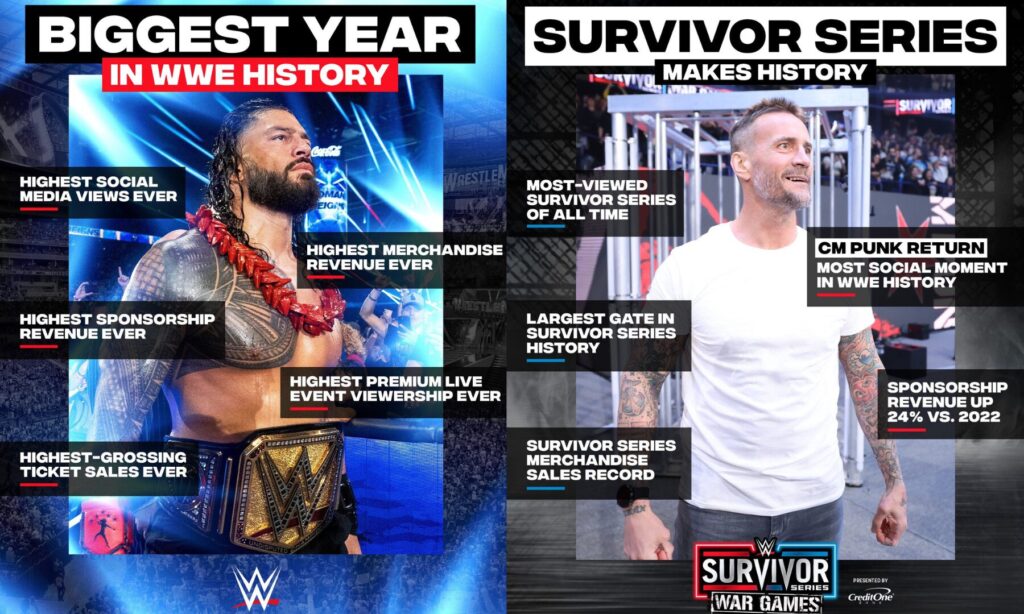
For most of the past four decades, I’ve been a professional wrestling fan. The WWE has been my preferred brand to follow but over the years I’ve watched everything from AWA, NWA, Mid-Atlantic, World Class, Mid-South, Florida and Georgia championship wrestling to WCW, ECW, Ring of Honor, New Japan and AEW. The combination of entertainment, storytelling, passion, community, and character development is what lured me in. It interested me enough to take it on the air, which led to making news, creating buzz, and opening the door to my joining ESPN Radio in 2004. I’ve since welcomed a few guests from the business at our BSM Summit’s.
As my media career advanced and I began to hire people and shape the vision for the stations I managed, I grew a greater appreciation for how these companies excel in business. Mainstream media loves to look down at pro wrestling for its pre-determined results yet have no issue buying a ticket to watch a movie. They turn a blind eye to the quality of storytelling, character development and production value, the innovation done outside the ring, and the various ways talent build lasting bonds with the audience. More importantly, they ignore the digital/social impact, TV ratings, and non-traditional revenue results. Look at the sports media world today and you’ll find many top stars have some type of pro wrestling character in them.
A company like the WWE produces a three-hour TV show on Monday, a two-hour TV show on Tuesday and Friday, monthly pay-per-views (premium live event) and non-televised shows all across the world throughout the week. They do this nearly fifty two weeks per year. The WWE has a website, social media platforms, a YouTube page, and full media library available on the Peacock app. What they don’t have is 24-hours per day of live programming on radio or TV the way many networks and stations do. If sports radio or television functioned with only seven hours of on-air programming per week, how effective would we be?
Today, I’m going to show a few examples of what wrestling brands and talent do to create impact. I’m going to focus on 3 things the WWE and another smaller group has done to create buzz and revenue. I could easily extend this to six or seven categories but I’m trying to avoid turning this into a piece that only Grantland would’ve published.
Creating Connections and Viral Moments
There isn’t a better talent on social media or at live events today than Cody Rhodes. Already a star who could easily disconnect from social and still be in the main event, he instead takes time each day to build personal connections one fan at a time. From giving away his weight belt at shows to staying thirty to forty minutes after the cameras turn off to sign autographs and take selfies, the man appreciates his audience and understands how important they are to his success.
With over one million followers, I’m sure his mentions are flooded. I’m sure many of sports media’s top stars with large followings experience the same. Yet scroll through Cody’s timeline and look at how often he replies to those who support him. How many in sports radio/TV do this? You may see talent engage in a sports debate or respond to a ‘love the show‘ post but how many create unforgettable moments with fans?
Speaking of moments, check these two out. I’m going to start with ‘the best man’ video. Most stars in this situation would’ve said ‘thanks but unfortunately I’m unavailable.’ Knowing a few national hosts as I do, some would’ve run for the hills if they saw this sign.
Instead, Rhodes created a moment which generated massive buzz. This not only made two people fans for life and the coolest couple in their town, but it also sent a message to every fan – come to a show because you never know what might happen.
Or how about this awesome moment. A young boy cuts a video for social media, asking people to make a donation to help make his dream of getting to WrestleMania come true. The video is so genuine and heartwarming that you can’t help but want to support him. Rhodes then does something amazing, which has now been seen over two million times. That leads to a follow up video which has since been viewed over one million times. All of it is the result of paying attention, and doing something nice for a fan.
I could buy a bunch of popcorn or I could just tell ya’ ????
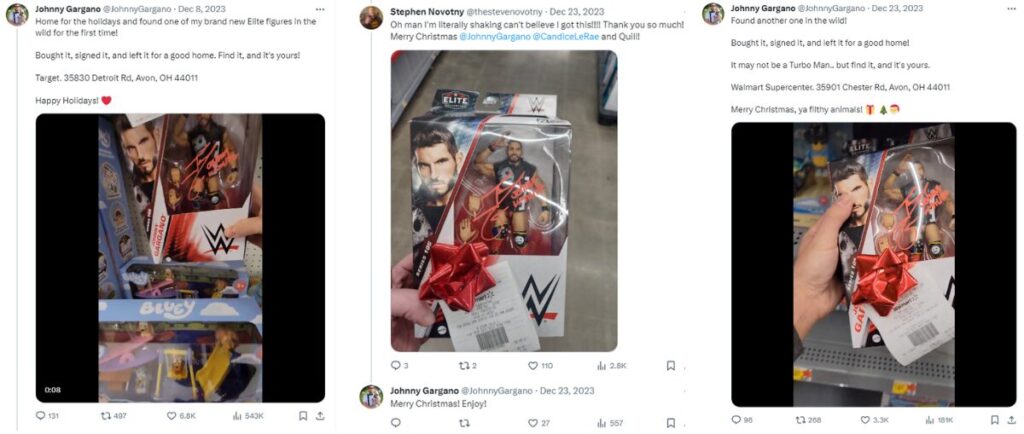
Let me show you another example. This one comes from WWE star Johnny Gargano. He isn’t a main event guy like Rhodes but he’s loved by those who follow him. A simple gesture of buying an action figure, signing the box, hiding it in a store, and tweeting out the location is freaking cool. Take one look through his mentions at how people responded. This is how fans become more connected to a personality or performer. It also makes the company look good and more incentivized to support their own.
When was the last time you saw a star talent at ESPN, Fox Sports or one of the industry’s top sports radio stations offer a fan tickets on social media to the Super Bowl, World Series, NBA Finals or other bucket list sports experience? I saw Danny Parkins at 670 The Score do this a few years ago with White Sox tickets. That was awesome. I’m sure someone else has done it too that I may not be aware of. Too often though talent and programmers focus on the content and less on audience connection. You need both to win.
It doesn’t even have to be that big of a prize. An unplanned meet up with fans when you’re already going to be out somewhere works. So does giving away your personal seats to a regular season game or having a high profile guest sign something in studio and giving it away. If that’s not your style, write your opening monologue on a piece of paper, sign it and give it away. If you’re on TV, maybe it’s a signed copy of your script.
This can also be done by phone. How easy is it on-air or social media to say ‘the show is about to wrap up but I still want to talk sports with my fans….text/tweet your phone # to ___ and I’m going to call one listener right after the program.’ What’s that costing you, fifteen minutes? Do you know what type of message that sends to your listeners and followers? It also allows your digital team to create cool social content. I’ve seen Petros Papadakis and Chad Doing give out their phone numbers on social to build personal connections but few take that approach. These are just a few small ways to take the next step and create a bond with your fans.
Bundling Assets and Monetizing Beyond Traditional Advertising
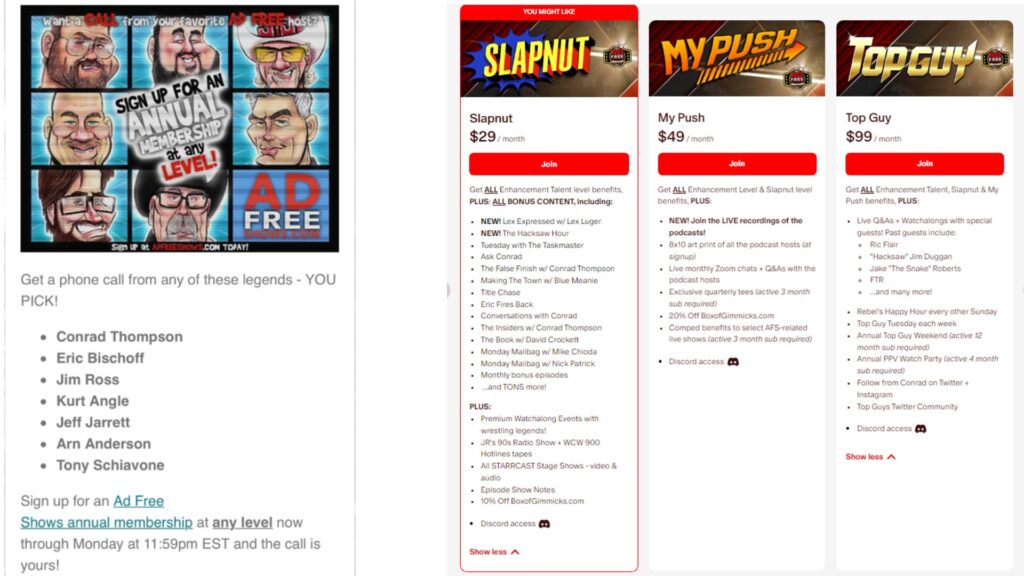
AdFreeShows is a network that features shows with former stars such as Ric Flair, Kurt Angle, Eric Bischoff and others. It’s led by Conrad Thompson and Dave Greene, BM’s Chief Media Officer. If you’re going to ask for subscriptions to grow revenue, you have to offer something unique. I covered this at the 2023 BSM Summit but for those who weren’t in the room, it’s worth revisiting.
Offering content without commercials on-demand is one way to do it. Good Karma Brands has done that in a few markets. But there are other ways too that only require examining your brand, access, talent and history.
What AdFreeShows has done is create four different monthly packages (the website shows the fourth category). Each outlines what’s provided and the brand promotes signups using social media and newsletters. This is not only smart but it leads to fan marketing. People who get a phone call from one of their stars can’t wait to tell the world on social media.
Think about that for a second. People agree to pay you a monthly fee, and then go on a public platform to share how excited they are to give you money. Does it get any better than that?
SPECIAL OFFER!! ???? Now through Jan 2nd upgrade to an annual https://t.co/5v6Q3sv3sk membership & receive 10% OFF, PLUS our BISCHOFF BUNDLE!!
– Signed ”Controversy Creates Cash“ book – Signed NWO 8×10 photo – Personal phone call from Eric! pic.twitter.com/x3NN1hfwxF
If you look into your radio or TV station’s history, you should be able to identify assets that offer value. Would your audience pay for access and original material your brand provides? It’s easy to say yes when talking about national stars like Pat McAfee, Dave Portnoy, Stephen A. Smith, and Charles Barkley, but what about locally? How would you capitalize on this?
One way to do it is with unique original archived content. Take for instance WFAN in New York. If the Mike and the Mad Dog audio library was available, think some might pay to hear it? What if you could hear Boomer and Carton’s first show? Don Imus’ last show or other standout moments from the radio station’s history. Might that create interest?
Other options could include using your talent for thank you calls when people sign up, private zoom calls with talent or the PD, meet ups at station events, giving away new merch or signed memorabilia, an in-person visit to the radio station or play-by-play booth, creating a one-day crash course on becoming a broadcaster, a catered watch party at a fan’s house, recording a listener’s voicemail message or offering tickets or suite access to select games.
You can also create a podcast featuring a host vs. listeners and have fans come in to tape the episode. Some already call your station and know how your hosts think and operate. I’ve even seen First Take feature fans using submitted videos. If you want to go further outside the box, consider a revenue sharing deal between talent and brand. Cameo is a place where people pay for celebrities to record custom videos. Most in sports radio don’t make much here because they can’t promote it. What if that changed and you both shared the profits? If you think there’s no money in it, click here.
The bottom line, all of these things should be on the table. They carry value to your audience. Many will pay more than you think for access and being part of ‘the club‘. How you package it, price it, and determine what is and isn’t doable is for you to decide. If you want to increase revenue though, you’ve got to think different and explore new paths to monetization. Relying on programmatic ads and branded content won’t solve your problems in the digital space.
Developing Unique Events
If WrestleMania is the WWE’s equivalent of your station’s opening day broadcast or live from radio row week, how else are you generating dollars beyond the studio? Sitting in an empty car dealership or appearing at the cell phone store for two-hours to say hi to shoppers may still get sold in a few cities but you’re not going to change your financial fate with that strategy. Creating must-attend revenue generating events has to be part of the plan.
Last year at the BSM Summit (must-attend ticketed event) I asked a few programmers to name a major event in sports radio that delivers large crowds and dollars. Most couldn’t and pointed back to WIP’s Wing Bowl, which ended in 2018. By the way, they weren’t wrong. Signature events and promotion of them across the industry has been bad for years.
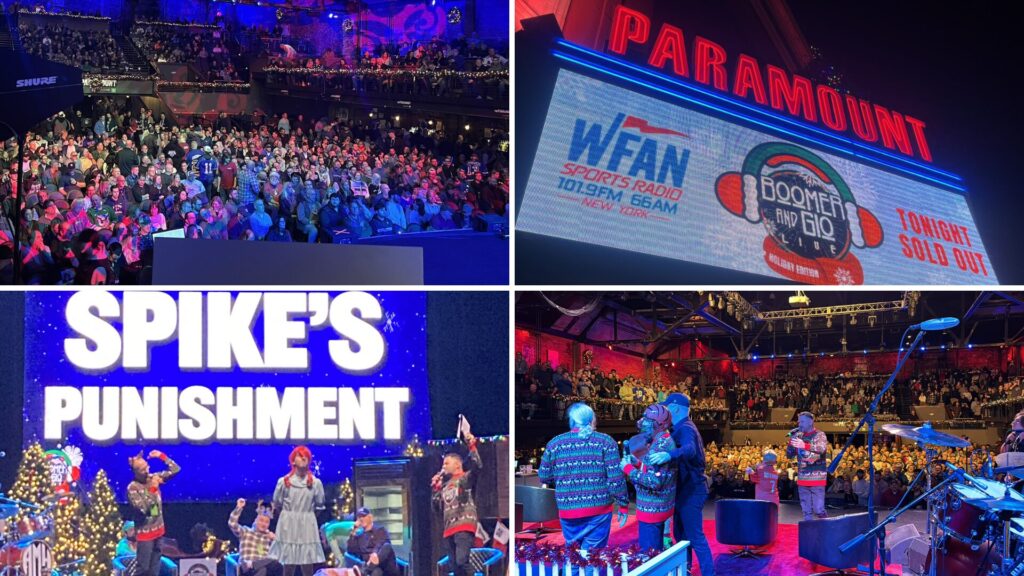
Fortunately, ESPN Los Angeles 710 created a smash hit with the Mandy Awards. The Ticket in Dallas has long held Ticket Stock, another great sports radio staple, and WFAN has built a major event with Boomer and Gio Live featuring the entire morning show cast. The station’s last show at the Paramount in Long Island sold out. Ticket prices ranged from $50 to $150 for VIP. Even more impressive, you can see branded content on display throughout the show. I’m looking forward to chatting with Spike Eskin about that at our upcoming 2024 BSM Summit.
Though there are a few examples, many sports media brands in local markets don’t go big. There is a constant worry about spending money to produce impact. As the old saying goes ‘you have to spend money to make money‘. This is something the WWE and many other groups understand, which is why they excel at it.
Before I give the next example, you’re likely saying ‘WWE has global appeal and millions of dollars‘. I understand that. I want you though to focus on the strategy. Nobody expects you to create WrestleMania, just your own local moneymaking version of a successful signature event.
WrestleMania may be the main attraction for WWE each April but there’s more involved than the two-day wrestling show. The company creates a weeklong celebration and high income generator. They do this by featuring a WWE Hall of Fame ceremony, and live NXT, RAW and Smackdown shows. That’s in addition to Axxess, a fan attended event with general admission and VIP pricing which allows fans to meet their favorite superstars, see custom ring attire and props, and step into the ring, make a stage entrance and enter the broadcast booth.
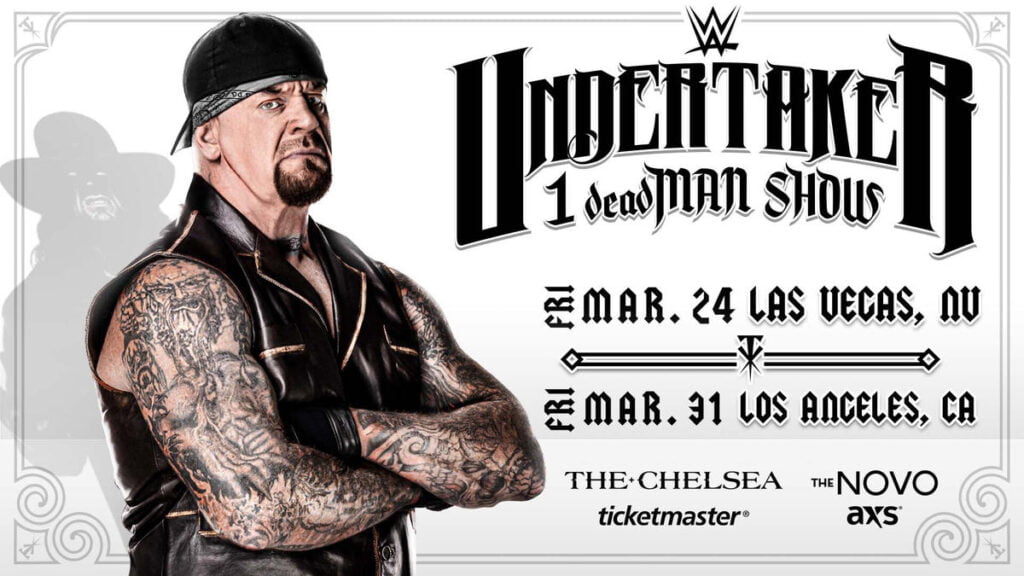
The company also runs extra events too such as The Undertaker’s 1 Deadman Show, which leads to more unique programming and additional impact. WrestleMania’s revenue isn’t just about ticket and merchandise sales, and paid advertising, it’s about the full package rolled out over a six to seven day period. That’s why cities bid to bring the event to their states.
In there is a lesson for sports media brands. Any station can put a show on location for three to four hours but how do you turn it into an all-day or all-week revenue generating spectacle? KFAN and SKOR North do a great job of capitalizing on the annual Minnesota State Fair and there’s likely a few other examples in other markets but how many think beyond one day?
Take a look at what Barstool Sports did this fall with their One Bite Pizzafest. The company went into the event expecting 5,000 people in attendance. They built up buzz for the event for weeks, sold advertising into all of it, produced the event and featured live music, talent on-site interacting with fans, merchandise, pizzamakers from everywhere on site selling food, and they picked an awesome venue, Maimonides Park in Coney Island, NY. The only thing that wasn’t a hit was the weather.
Regardless, Barstool’s fans were so invested in the brand that no amount of rain was going to stop them from showing up. They also spent more than $150 per ticket to attend the 5+ hour event. Would your audience spend $150-$250 to attend a five hour event in the rain produced by your sports radio station or TV network? If the answer is no, what would you need to do to change that?
Sports radio folks love to point to Wing Bowl as an example of a killer promotion. For good reason, it was. But few take the plunge to create those type of events in 2023-2024 the way a brand like Barstool does. Creating Wing Bowl styled events can’t be done today how they were in 2005-2015 but putting on an entertaining, can’t miss out event, still works.
So that raises one final question, why aren’t you? There’s nothing wrong with executing smaller events and promotions. You should do those too. But signature events create buzz, stronger fan loyalty, larger advertising, and most importantly, non-traditional revenue.
Whether you follow the WWE’s example, WFAN’s, ESPN Los Angeles, Barstool Sports or another group, the takeaway is this: Unique, Must-Attend Events Make Money. If you’re not doing them, I hope you do soon because you’re leaving dollars in your local marketplace.
Conclusion
I recently read a piece on Inc which summed up Steve Jobs’ strategy for Apple. Jobs used six bullet points to keep the company focused starting with two important questions; ‘Who Are We‘ and ‘What Do We Do?’
For a brand like the WWE that’s an easy answer. WWE is a sports, entertainment company which aims to put smiles on people’s faces through the introduction of different characters and storytelling. By creating strong fan loyalty and engagement, incredible results are achieved, allowing the company to open doors to numerous revenue opportunities.
I look at sports media brands in 2024 and see a lot of examples of outlets stuck in mud. They can answer the two questions but spew some of the same stuff today that’s been preached the past few decades. There’s one problem with that, media consumption, monetization, and social media reach has drastically changed. Rather than chasing meters and subjectively touting that we have ‘the best content‘ we should be focused on building strong, sustainable, multiplatform businesses.
If you created an excel sheet and itemized your brand’s revenue and audience impact in a number of categories, what would it look like? How much success comes from Radio? Your App? The Website? YouTube? Social Platforms? Events? Merchandise? Podcasts? Newsletters? What are your talent and program director’s responsibilities and incentives for making sure these different layers of your business thrive? How does your performance compare to last year, 3 years ago, 5 years ago or 10 years ago? If it’s not working, what’s the plan to improve it?
Some will say these things are already happening. For some, it might be, but often that’s echoed by folks speaking on behalf of one outlet or company. I look under every rock, and see far too many examples that show the opposite.
Groups like the WWE provide an example of what a dominant multiplatform business looks like. Maybe sports media won’t have the same global success but there isn’t much downside in learning from those who continue to innovate and elevate. The media business has changed and it requires changing our mindset. Those following outdated playbooks and relying on past experience are just setting themselves up for future disappointment.
Stephen A. Smith’s calling out of Jason Whitlock was the talk of sports media at the end of last week, but OutKick’s Dan Dakich feels like Smith was way out of line.
Dakich reacted to Smith’s podcast in a video posted on OutKick’s YouTube and said Smith piled on to an already terrible week for ESPN with everything going on involving Pat McAfee.
“Yesterday was one of the most embarrassing days in ESPN history,” Dakich said.
Dan Dakich continued by saying Smith using profanity and insulting Whitlock’s weight was way beneath one of the top stars on the network. But to Dakich it’s just another example of media members being too thin-skinned.
“It was unprofessional. It was sad, really,” he said. “And this is what I go back to, and I tell you this all the time. Media people cannot stand to be criticized. They cannot stand when they are called out. They cannot stand when somebody has an opinion that differs from theirs, and they are very strong about those opinions.”
Dan Dakich said there was no two bones about it. What Smith did no one else could’ve gotten away with.
“Long story short Stephen A. Smith embarrassed himself, he embarrassed the company, he embarrassed Disney and frankly should be fired for it,” he said. “Now there’s no way they’re going to fire Stephen A. Smith, and it has nothing to do with his drawing power, his ratings, nothing to do with that.”
“He should be fired. You just don’t do that,” Dakich later added.
There have been over 20,000 individuals who have played in Major League Baseball, and each has attained varying results. Some have stood out, being named to the All-Star Game or receiving other accolades. An even smaller number – 270 to be exact – have been elected to the National Baseball Hall of Fame, considered one of the highest honors in the game. On the other hand, some players get to step between the lines just once in their careers, captivated by the allure of the historic pastime.
Former pitcher Rob Dibble is among an exclusive list himself as players who have won at least one MLB World Series championship. In fact, he was an integral member of the Cincinnati Reds during the team’s postseason run in 1990. Before the World Series, he earned the distinction as the co-most valuable player of that year’s National League Championship Series ahead of the team’s four-game sweep of the Oakland Athletics.
Dibble retired from the sport five years later and was pondering his future plans when he ran into ESPN anchor Chris Berman at a Hartford Whalers game. During the game, Berman informed Dibble about ESPN Radio, which had debuted in 1992, and how there was availability to take the air on the weekends.
“He was doing a show with Keith Olbermann at the time, and I sat around and I watched what they were doing,” Dibble said, “and at the time – my dad passed a little bit later on; about a year later – but my dad was like, ‘Listen, sports radio is going to explode. It’s going to be the next thing to do, and so why don’t you just give it a shot?’”
Dibble’s father, Walt, was a respected journalist who worked as the news director and managing editor of WTIC-AM in Hartford, Conn. Additionally, he taught courses at the Connecticut School of Broadcasting as one of its original instructors.
Growing up, Dibble was privy to various radio formats and appeared on ESPN Radio on weekends before landing an overnight job with WLIS in Old Saybrook, Conn. The six-hour shift from midnight to 6 a.m. involved playing music from carts and saying the call letters every 15 minutes. Perceiving himself to be in the bottom echelon of the industry, Dibble became acquainted with the studio and its technology, rendering him more versatile overall.
“I didn’t just go out and pitch in the big leagues,” Dibble explained. “I talked to the hitters, I talked to the coaches [and] I tried to get their perspective. Any way I could gain an edge was going to help me stick around, and so it’s the same thing in this industry.”
One day while Dibble was hosting, an agent happened to be listening alongside an executive from FOX Sports at the Super Bowl. Shortly thereafter, the agent contacted him to suggest he audition for a studio job for FOX Sports News on cable television. Even though Dibble had just moved back to Connecticut and was studying to become a state trooper, he traveled to Los Angeles to try out.
Auditioning with Kevin Frazier, a media anchor whom he had known while in Cincinnati, Dibble earned the role over several other former MLB players. It also represented the first multi-year contract of his career since he had played on one-year deals throughout his entire MLB tenure.
“We were doing three live shows every day on television, and I had to learn how to write my own scripts,” Dibble articulated. “They’d tell you, ‘You’ve got a minute [and] ten [seconds] to talk, and once that red light goes on, your time starts,’ and so you would have to write whatever you were going to say into the teleprompter.”
FOX Sports increased its distribution while Dibble was on the air, a factor he believes led to his being replaced. As the company was growing its MLB on FOX property amid a five-year contract worth a reported $575 million with the league, Dibble was let go three months into his tenure on the air. The haste cessation prompted him to evaluate his self-efficacy and overall performance as he was adjusting to offering commentaries about a game he had once played.
Dibble opted to return to Connecticut where he started hosting with ESPN Radio in Bristol while contributing to the outlet’s television programming. When he was on Baseball Tonight, Dibble continued to deliver observations and analysis about major-league players and teams. Finding a way to balance objectivity and subjectivity without being presumptuous was a fundamental concept he yearned to master over each repetition. Moreover, he needed to consequently defend his rhetoric and demonstrate accountability to the subjects of discussion.
“They want you to be opinionated, so you’ve got your experience as a baseball player, but you don’t really have a lot of experience as a journalist and a broadcaster, and so you pop off a lot,” Dibble said. “You say things that maybe an insider would know and not someone who’s never played. A lot of active players were kind of offended by my mouth and some of my opinions.”
Upon beginning his tenure with the Dan Patrick Show, Dibble learned more about the job from the eponymous host. A valuable lesson imparted to him pertained to never being the first person to get something wrong, oftentimes prevented by ensuring facts are accurate and corroborated. In addition to conducting effective interviews, Patrick also underscored how imperative it is to have supportive colleagues.
“When you want to entertain people, you’re only going to be as good as the people you surround yourself with,” Dibble said. “Look at Howard Stern and how he’s been his whole career. It’s not just about Howard; it’s about all the people he surrounds himself with. If you look at Dan’s show, it’s all the people he surrounds himself with, so that’s something that I learned early on.”
Dibble became friends with Kevin Kennedy when he began hosting various programming on XM satellite radio as one of the early members of its MLB-dedicated channel. Through the company’s merger with competitor Sirius, he continued to appear on the air on programs such as The Show with Jody McDonald. Dibble also made a return to FOX Sports Radio where he co-hosted alongside Mike North, Denny Hocking and Amy Van Dyken. Furthermore, he continued his television pursuits on The Best Damn Sports Show Period with Chris Rose, John Salley and Rodney Peete.
As he continued to explore different niches of the industry, Dibble became involved in live game broadcasts with the Mid-Atlantic Sports Network (MASN) on Washington Nationals games. Working alongside play-by-play announcer Bob Carpenter, he articulated his knowledge of the game and proffered his opinions.
Dibble’s tenure with the team ultimately ended in the midst of his second season after comments about starting pitcher Stephen Strasburg he made that were perceived by some listeners as abusive on his XM radio show. Later on, it was revealed that Strasburg would need to undergo reconstruction of his ulnar collateral ligament (UCL), thus ending his season.
“To me, I look back at it and I [think those] people had it in for me because I wasn’t in the same type of think-tank that they were in,” Dibble said. “Washington is a real huge melting pot of opinions, and certainly being a guy from where I’m from in a small town in Connecticut, I was way out of my league when I was working there.”
Dibble was drawn back to the Hartford marketplace a few years later and began working at 97.9 ESPN in afternoon drive alongside Paul Nanos. Entering the role after hosting a morning program with SiriusXM MLB Network Radio while living in Los Angeles, he needed to approach the craft without indifference while appealing to the audience.
“People are getting out of work, [and] some people are working second shifts so they’re on their way to work,” Dibble said. “They don’t want to hear the same stuff that the morning show did, [and] they don’t want to hear the same stuff that the midday show did. They want to hear some fresh stuff, and so we try to have a fresh take on what we’re doing, and like I said, sprinkle in what the other shows have talked about all day.”
Ben Darnell, the current co-host of The Rob Dibble Show, is also the program director of the radio station and oversees various other radio outlets broadcasting in different formats. Dibble affirmed that Darnell frequently travels between New Haven and Hartford to fulfill his responsibilities. Tim Spence preceded Darnell in the co-host/program director role, and having an executive as part of the program has rendered greater awareness towards the broader cluster of stations and how to engender a seamless flow between formats.
“We try to incorporate a lot of those listeners to our [show] because they might be like, ‘Okay, I’m tired of listening to music today. I’m going to give the sports talk show a chance,’” Dibble explained. “We’ve got to be on our game when that happens. If we want, whether it’s 10 minutes spent listening or 20 or 30, we’ve got to make it the best [time spent] listening that they’ve had recently.”
The station had previously been affiliated with ESPN Radio until earlier this month when it officially started carrying FOX Sports Radio programming. Leading up to Dibble’s local program in afternoon drive is 2 Pros and a Cup of Joe in morning drive and a midday split between the Dan Patrick Show and The Herd featuring hosts Colin Cowherd and Jason McIntyre. The alteration to Fox Sports 97.9 Hartford was part of a larger move by iHeartMedia that also involved the transformation of 970 AM in Pittsburgh.
The outlet is also the flagship station for the University of Connecticut, serving as the broadcast home for a variety of Huskies athletic events. The men’s basketball team won the NCAA Division I title last year and has a 14-2 record to begin the new season as a member of the Big East Conference. Although there is no longer an NHL franchise in Hartford, the station still discusses nearby teams, along with hyperlocal coverage on the college and high school leagues.
“We try to get people out from the New York market [and] the Boston market, so it’s not really backing yourself in a corner with, again, the 24-hour news cycle, but you sprinkle that in nationally to a local show,” Dibble said. “I’ll bring on a lot of national guests who bring the West Coast to us [and] bring the Midwest to us, but I always stay true to Connecticut, my roots and what’s going on locally, and I think that’s why we’ve been successful for 10 years.”
Dibble remains motivated by the listeners and always thanks them for taking time to hear the show, and he always possesses a mentality to improve each and every day. Akin to the work of other respected journalists, including Dibble’s father, he wants to maintain probity and eschew sentiments of bias in his job.
The sports media industry has the potential to take professionals on a ride of astronomical proportions, allowing them to cover marquee events and have a regular spot to express themselves and opine on sports issues. While he values his job, Dibble does not want to regularly travel with a team and cover a wide variety of national events. Instead, he is remaining committed to his local community by staying firmly in orbit and aligned with tasks related to fastidious preparation, diligent execution and genuine self-evaluation.
As he warms up in the bullpen, Dibble strives for excellence and is poised every time he enters the game, concentrating on projecting trust, retaining humility and keeping the fans invested in the contest. While he threw one immaculate inning during his big-league career, he has yet to achieve a “perfect show” in radio, an ambition that he wants to attain to benefit the listeners.
“We all, whether you’re an athlete or whether you’re a broadcaster or whatever industry you’re in – a teacher – you’re trying to get a nice long run in, and I think it’s being likable,” Dibble elucidated. “It’s hard to believe that somebody that had the reputation of being nasty as a baseball player has been able to survive almost 30 years [in sports media], so go figure.”
MLS and Apple are preparing to enter the second year of their $2.5 billion broadcast rights deal, but one thing that stands out from year one has been the lack of availability of viewership numbers.
As part of the deal the league struck with the tech giant, Apple TV+ became the home to nearly all MLS action in the United States.
But according to Jonathan Tannenwald of The Philadelphia Inquirer, the league and Apple continue to keep concrete numbers close to the vest.
“Every metric that we’ve had, we exceeded,” MLS executive vice president of media Seth Bacon said last week at a league media festival. “From a subscription standpoint, we blew by, more than doubled, what we thought would happen. And we met a lot of those goals even before (Lionel) Messi got here.”
But since streaming audiences aren’t measured in the same ways that television audiences, Bacon said MLS is constantly trying to fine tune.
“It’s something that we continue to work with Apple and all of our partners to make sure we understand them,” he said. “But it’s a different language that we have to speak now than when you’re dealing with linear (TV) and Nielsen.”
Apple senior vice president of services Eddy Cue said last November that more than a million viewers tuned in to some of the biggest MLS games last season, including Messi suiting up for Inter Miami later in the season.
Some MLS games did air on TV last season, and those linear broadcasts averaged 340,000 viewers. Last year’s MLS Cup Final averaged 890,000 between FOX and FOX Deportes.
Talks between ESPN and the NFL for a strategic partnership are in advanced stages. If a deal is completed between the two parties, ESPN would take control of NFL Network and NFL Media.
Andrew Marchand of the New York Post broke the news last week. ESPN is reportedly looking to go direct-to-consumer in the next year or so, and adding a strategic partner like the NFL could help the network accomplish those goals.
Last summer, the NFL, NBA and MLB were engaged in early talks about an equity stake in ESPN.
In addition to the NFL Network, ESPN would also take control of NFL Media’s other entities including NFL.com, NFL Films and NFL+.
ESPN would also like a digital partner to help from a distribution perspective. There have also been talks with companies such as Amazon and Verizon.
With an ultimately positive attitude, Rich Valdes is grateful, humbled, and shocked to be awarded the number one Latino radio host by Metropolitan Magazine. “I was a little bit of a late bloomer, you know,” Valdes told Barrett News Media over a Zoom call.
“I was a little bit humorous. I was kind of all over the place, a little rebellious. It was really undiagnosed ADHD, I didn’t know, and it just manifested in different ways.” Of his youth Valdes noted, “I one of the few things I was really good at in school was speaking. So, I gravitated towards, you know, telling jokes and being around people and just being that kind of guy.” His way to the top, however, was quite unconventional.
During high school, Valdes began “drawing designs in people’s hair,” which he later turned into a business. After getting married and having a child he sold his barbershop business and became a corporate sales executive for Verizon.
For Valdes, it wasn’t enough. He then worked for college and post-secondary education schools. Rich Valdes said it combined “my passion for service and helping people with business.” He later added, “I did that for probably about eight years, and it was really cool. And that was how I ended up getting into politics in many ways.”
He worked for Chris Christie’s campaign. Once elected the administration offered him a job, which he said no to. They later came back with a different offer, “The role was director of Faith-Based affairs in the office of the governor. They said, we can give you something that’s a little bit more behind the scenes where, you know, you’re just another cog in government, but you can make a lot more.”
Taking the job, Valdes called it “an interesting time” because he didn’t realize how cutthroat politics is. “People ask me, what was it like working in the state Capitol, and I guess the way I would describe it is imagine walking through an entire city where every single person is holding a knife, ready to get you at any, at any time. They’re ready to like, uh, you know, and you don’t know these people, and you have no idea why they want to stab you, but they will.”
Valdes added, “And it’s just whatever, you know? Are you in their way? Do you have something they want? Whatever it is, you have no clue. And I never really fit into that mold because I didn’t want to hurt anybody. And I didn’t really have that killer instinct that that they did.”
Rich Valdes then began writing a monthly column for the Washington Times until, “I met somebody who said, hey, I know somebody who’s looking for somebody that has a background in politics and media. Maybe you’re a good fit for them. I spoke with them and it was James O’Keefe when he ran Project Veritas. I came on to manage a project, and then eventually he moved me up to being the national field director. So I was in charge of pretty much all of the undercover stories we were doing and hiring people to go undercover in these things. It was was really cool, really fun experience.”
Valdes was part of the team that aided James O’Keefe, dressed as Osama bin Laden, across the Rio Grande. There were no Border Patrol agents in sight.
The stunt caught the attention of Senator John McCain, and in Valdes’ own words, “Senator McCain had asked, I think, the deputy secretary of Homeland Security, ‘Are you aware of an American journalist named James O’Keefe that crossed from Mexico into the United States undetected?’ And they said, ‘No, he was detected. We saw him on our cameras.’ [Sen. McCain asked,] ‘Why don’t you stop him?’ And the guy had no answer, just no answer.”
Shortly after Rich Valdes took a leave of absence to take care of his parents.
“My mom got ill, and then she passed away. And as she was holding my hand, taking her last breath, she said, ‘Take care of your father.’” His father had fallen down months earlier and was living with a traumatic brain injury. Valdes said of the time, “It was very tough,” adding, “I took care of [my father]. I worked, and I would come home and help him, and I moved in with him. I got divorced at that time, so it was all happening at the same time. I got divorced, my mom died, then I became my dad’s official babysitter.”
For two years, Rich Valdes lived with his dad off of savings. “And then he passed away. And then it was like, wow, I have no job. I have no parents. Um, I have kids, uh, that live with me half-time. I’m divorced. What do I do?”
Valdes went through his Rolodex, “I started emailing people. I was like, ‘Hey, man, I want to get into talk radio. Who do you know? What do you know? How can you point me in the right direction?’” Those emails paid off, Valdes saying “Somebody put me in touch with Rich Sementa, [the executive producer of The Mark Levin Show.]”
Valdes recalled their first conversation, “[I was told] We’re looking for somebody who knows politics and can help choose the best callers for the live portion of the show where we take callers because we’ve had a lot of people, but they’re usually young people that are, you know, working for, for not a lot of money and radio and, and they don’t last. And we’re looking for somebody a little bit more stable.
“But the hours are crazy. You know, it’s nighttime afternoon and nighttime work and it doesn’t pay a ton. And I was at this, like, rock bottom place of my life, and I’m like, it sounds great. Tell me more.”
Rich Valdes later added “I looked at it as, you’re going to pay me to teach me the radio business. I’ll take it. Right. Because it, to me, was like the ultimate paid internship. And, uh, and I ended up being there for five years and getting raises throughout and really fitting in.”
A week into working on Levin’s show the Executive Producer pulled Valdes aside, “[Sementa] said, ‘Wow, you really talk a lot.’ And I was like, ‘Ok, thanks? Sorry.’ And he was like, ‘You know, we’re in the control room. Mark is supposed to be doing the talking. The host on the other side of the glass. We’re supposed to be really quiet, paying attention to what [Levin is] saying.’ I was like, ‘Yeah, it’s hard for me not to talk.’
“He’s like, ‘Well, we’re going to have to figure out a way for you to do all your talking before you get in here.’” Valdes added, “he literally, like, a little kid, grabbed me by the wrist and was like, ‘I want to introduce you to somebody down the hall.’ And we went over to a guy named Chris Libertini.”
Valdes recalled their interaction, “Libertini says, ‘Oh, yeah, Rich told me that you’re really, really smart, and you have a lot to say, but, um, you know, you have nowhere to say it.’ And I was like, ‘Ok, sure.’ I had no idea. [and Libertini’s] like, you ever thought of doing a podcast? And I was like, I don’t even know what a podcast is. Um, you know, if you tell me about it, I’ll consider it.” And the rest is history.
Valdes said of his five years working on the Levin show, “I learned a lot working with Mark. He’s a fantastic broadcaster. He’s a brilliant legal mind, an amazing author.” The now 45-year-old said the best advice Levin ever gave him was “Just be yourself. Nobody can be you better than you. And if you’re trying to be somebody else, you’re going to look like and sound like a cheap imitation of that person. But if you’re yourself, you’re golden and it hit in a different way.”
As for what comes next for Rich Valdes he told Barrett News Media, “I’m on contract till 2025 right now, and my expectation, my hope is that we’ll re-sign for another multi-year deal, and hopefully I can have a career that’s as long as (Jim) Bohannon, (Larry) King, and Levin’s and I’ll be a really happy camper.”