Salem Media Group has initiated a cut of around 3% of its total workforce, according to a report from Radio Insight.
Salem Media Group Director of Satellite Operations Jim Barto publicly shared he has departed the company, as has AM 990 The Answer’s Ted Winkler.
In its earnings report earlier this month, Salem projected ad revenues to remain mostly flat in 2023, adding that revenue could drop 2%.
The company reported its operating expense grew 38% in 2022, with total revenue falling slightly from $69.1 million in 2021 to $68.8 million in 2022. However, its broadcast revenue increased by 4.5% in 2022, up to $53.3 million.
The decline last year was attributed to Facebook limiting what political content algorithms allowed before the November mid-term election.
According to the report from Radio Insight, Salem Media group employed 1,436 total employees as of its yearly earnings report, with 1,147 full-time employees.
Salem Radio Network employs conservative radio hosts like Hugh Hewitt, Mike Gallagher, Dennis Prager, Dr. Sebastian Gorka, Charlie Kirk, Eric Metaxas, and Officer Tatum, among others.
The company owns conservative radio stations in Phoenix, Los Angeles, Dallas, San Francisco, Denver, Washington D.C., Atlanta, Chicago, New York, and Philadelphia, among other large and major market cities.
Evan Gershkovich, a Moscow-based reporter for The Wall Street Journal, has been detained by Russia’s Federal Security Service. He is accused of espionage against the country.
According to a report from The New York Times, Russia’s FSB claims Gershkovich — a U.S. citizen — was acting “on the instructions of the United States, he was collecting information about one of the enterprises of the Russian military-industrial complex, which constitute a state secret.”
The Russian security agency arrested Gershkovich in the city of Yekaterinburg on Wednesday.
“The Wall Street Journal vehemently denies the allegations from the FSB and seeks the immediate release of our trusted and dedicated reporter, Evan Gershkovich. We stand in solidarity with Evan and his family.”
Gershkovich is a reporter covering Russia, Ukraine, and other former Soviet Union states. Earlier this week, he co-authored a story with reporter Georgi Kantchev titled “Russia’s Economy is Starting to Come Undone”. The report showcased issues the Russian economy has faced against that of other nations. The ruble is down 20% against the US dollar since November alone, according to the report.
“The illegal activities of the correspondent of the Moscow bureau of the American newspaper The Wall Street Journal, US citizen Evan Gershkovich…suspected of espionage in the interests of the American government, have been suppressed,” a release from the Russian FSB states.
According to CNN, Russian President Vladimir Putin made it a crime last year to report “fake” information about the Russian army and it’s invasion of Ukraine. In response, several news organizations withdrew their reporters from the country.
After announcing a new midday block of news programming earlier this month, CNN has now debuted the premiere dates for its updated daily lineup.
CNN News Central will debut on Monday, April 3rd. John Berman, Kate Bolduan, and Sara Sidner will anchor the program’s New York edition from 9:00 AM-12:00 PM every weekday.
The new program will air from 1:00 PM-4:00 PM every weekday, as well, with Brianna Keilar, Boris Sanchez, and Jim Sciutto anchoring from Washington D.C. However, that portion of the show will not debut until Monday, April 17th.
Inside Politics — anchored by John King — will remain in the noon window.
The network has modeled the new show after its election coverage and will use “similar technology and storytelling tools, and applies them to news well beyond politics”, a news release states.
A new daytime lineup comes at a time when CNN seeks both viewership gains and stability in its offerings. The network averaged a total audience of 474,000 in February. That number represents a 24% drop from February 2022.
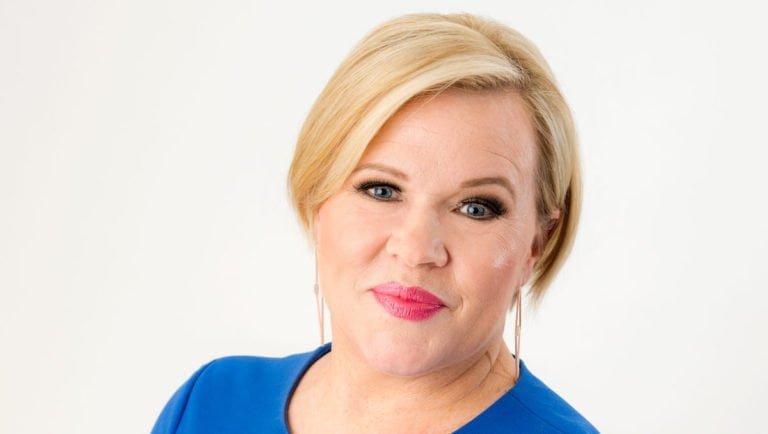
ESPN reporter Holly Rowe has signed a multi-year extension to remain with the company.
Rowe works as a sideline reporter for ESPN/ABC’s coverage of college football — including the College Football Playoffs, the WNBA, women’s college basketball, and the Women’s College World Series, among other high-profile assignments.
“I feel like I am living my best life and I am so grateful to ESPN for letting me keep doing this,” Rowe told The Athletic’s Richard Deitsch.
Earlier this year, Rowe was named the 2023 Curt Gowdy Media Award winner from the Naismith Memorial Basketball Hall of Fame for her electronic media work.
Rowe joined ESPN in 1998, and signed her last contract extension with the network in 2018 shortly before she announced she had undergone her final chemotherapy treatment in August of that year after a melanoma diagnosis in 2016.
According to Deitsch, Rowe’s contract was set to expire next month.
Nielsen has announced it will stop collecting radio ratings in seven diary markets, beginning this spring.
The markets affected are: -Abilene, TX (Market #231) -Elmira/Corning, NY (Market #225) -Florence/Muscle Shoals, AL (Market #240) -Lake Charles, LA (Market #213) -Olean, NY (Market #223) -Rapid City/Spearfish, SD (Market #233) -Wichita Falls, TX (Market #246)
Nielsen claims its decision comes after the ratings in the markets “may contain outdated data” that would be considered “no longer current”.
The decision marks the first time the company has canceled ratings reports for a market since ending collection of data for nine markets — including Battle Creek, MI; Billings, MT; Grand Junction, CO; and Texarkana, TX/AR, among others — in 2020.
After canceling the radio ratings collections for the seven markets, Nielsen says it will continue to ship diaries to the counties for its Nationwide, NRD, RADAR, and Radio County Coverage services.
“Nielsen Audio may also continue measurement of a cancelled Metro’s counties as part of the TSA or DMA of another nearby Metro,” the company said in a press release. “As a result, the release of these audience estimates supersedes the data of the cancelled Radio Metro.”
Fox News CEO Suzanne Scott expressed anger over a reporter fact-checking Donald Trump’s false claims about the 2020 election, saying in a December 2020 email that it was “bad for business.”
According to The Guardian, in the email, Scott complained that Eric Shawn, one of the network’s anchors, had fact-checked Trump’s election claims on air, stating that “this has to stop now.” She added that there was a “lack of understanding” about what was happening on the network’s shows and that the audience was “furious” and being “fed” material that was “bad for business.”
Scott also requested that other Fox employees inform her if the network booked Mike Pompeo, the former secretary of state, or Mike Lindell, a serial promoter of election misinformation, as guests, stating that “they would both get ratings.” A spokesperson for Fox News claimed that Scott’s objection was not about fact-checking but rather about one host calling out another.
The email is part of a collection of internal communications obtained by Dominion Voting Systems in its $1.6 billion defamation lawsuit against Fox News. During a court hearing, Dominion displayed a copy of the message, arguing that Fox knowingly aired false statements about the company because it was concerned about losing viewers to rival conservative networks such as Newsmax and One America News.
Fox News has denied these allegations and claims that it was reporting on newsworthy allegations made by Trump and his lawyers and that its broadcasts about Dominion were not statements of fact.
“These documents once again demonstrate Dominion’s continued reliance on cherry-picked quotes without context to generate headlines in order to distract from the facts of this case,” a Fox News spokesperson tells Barrett News Media. “The foundational right to a free press is at stake and we will continue to fiercely advocate for the First Amendment in protecting the role of news organizations to cover the news.”
The communications also included messages from Fox News host Maria Bartiromo, who appeared to be aware that Sidney Powell, one of Trump’s lawyers, would make deceptive claims about Dominion software switching votes during an appearance on her show. Dominion also revealed an internal fact-check from Fox News’ “brain room” that debunked false claims about Dominion on November 13th, 2020. However, Fox News continued to make false claims about the company after the fact-check.
The documents also showed internal concern about statements made by Jeanine Pirro, another host who aired false Dominion claims. Fact-checkers went over a script for one of Pirro’s shows and highlighted inaccurate statements about Dominion, with one executive writing that it was “rife with conspiracies and BS.”
Jury selection in the trial is due to begin on 13 April in Wilmington, Delaware, with the trial scheduled to start on 17 April and last six weeks.
CNN reportedly offered Charles Barkley a deal to host his own show six months ago, but he declined due to a lack of interest. However, the network presented him with a unique opportunity that the retired NBA player is now contemplating.
In an interview Tuesday on the “Bickley & Marotta” show on Arizona Sports 98.7 FM, Barkley discussed his potential role at CNN and mentioned that he intends to cut back on his TV appearances. He further stated that if he were to take a position at CNN, it would be a weekly commitment.
“I don’t want to be on TV more; CNN is struggling,” he said. “And then they (CNN) said, but what about with Gayle King? Gayle is one of the people I admire and respect; I like her a lot. I’ve known her for years through my relationship with Oprah, and she’s just cool.
Barkley added that the show would start in the fall. King is reportedly finalizing a deal of her own with CNN.
“I told them let me and Gayle spend some time together because she has a real job; she’s on every morning. What makes you guys think she wants to do more? This opportunity happened because the new guy [Chris Licht] was Gayle’s old boss at CNN.”
Licht, who previously worked as an executive producer at CBS, was responsible for bringing King to the “CBS Mornings” show. Licht approached King with his proposal for her role at CNN.
“Me and Gayle got together at the [NBA] all-star game, and she told me she would consider hosting a show with me because we have so much fun together,” added Barkley. “We’re going to spend some time over the summer talking about it, but there’s nothing imminent. It will be like whatever the hell is going on in the world. The funny thing about it is crazy stuff happens every day.”
Barkley expressed disgust with the current state of politics. He also shared sorrow for the mass shooting victims in Nashville, Tennessee.
Oftentimes, personalities around the world of sports media are former athletes themselves – whether or not at the professional level notwithstanding. The lessons one can take away from suiting up on a playing surface and being in a team setting are extensive and can serve as guiding principles in other professions. Having an understanding of this, Julie Stewart-Binks initially pursued working in sports psychology after playing intramural hockey, running varsity track and field and competing in figure skating.
Growing up in Toronto, hockey was naturally imbued into the fabric of her being, and her nascent passion for the game on the ice was evident. At the suggestion of her mother, Georgie Binks, who worked for various radio and television outlets as a reporter and anchor, Stewart-Binks inquired about volunteering at her university’s radio station, but was turned down due to a lack of opportunities. Resolute in trying to foster a career, she took a chance to work in television as a reporter for Queen’s University TV in nearby Kingston and began gaining repetitions in the field.
“I just loved that adrenaline,” Stewart-Binks said. “The preparation to the execution felt a lot like sports. That was sort of the mirroring of my athletic career as well.”
Although Stewart-Binks graduated the university with a dual degree in psychology and drama, she had cultivated opportunities to work in journalism as a student with some of the school’s media outlets. Upon her graduation, she worked as a reporter during summer 2009 at CKWS Newswatch and, with her focus set on building a journalism career, attended graduate school shortly thereafter in London.
“The industry has changed so much from when I first started and I was first in journalism school,” Stewart-Binks said. “We were learning right then what Twitter was. A journalism master’s, if anyone ever still does that, would be completely different from what it would be now.”
From the beginning, much of Stewart-Binks’ career has been predicated on developing and demonstrating widespread versatility across sports media. In her formative years, she worked as a hockey host and reporter on TV Cogeco and a co-host on Sports Night Radio, getting her accustomed with the multiplatform nature of the business. She then worked for TV Cogeco Niagara as a reporter and host on The OHL Tonight, producing and disseminating information about the OHL’s Niagara IceDogs.
Not only was she appearing on the visual medium of television, but she was also working as a sports writer for the Canadian Broadcasting Company’s website and as a program assistant for its signature show: Hockey Night in Canada. Essentially, it was her way of ingratiating herself into the world of hockey, a sport she continues to play recreationally today at Chelsea Piers in New York, N.Y.
“It’s just been in my blood since I was a kid,” Stewart-Binks said. “….Getting to know these guys and watch them grow into NHL stars has been such a cool experience.”
Stewart-Binks had her mother to look to as inspiration in the broadcast industry, and as time went on, she discovered other mentors and role models to supplement her career. Michelle Beadle, who has worked for a variety of outlets in the industry, is someone who in particular stands out to her. In watching her report and simultaneously contend with the misogyny she faces as a woman working in sports media, Stewart-Binks views her as a “guiding light.”
“I think she just is a pillar and a huge role model of being not only authentic,” Stewart-Binks said, “but paving the way for women to straddle so many different avenues of being able to use personality; being able to use analysis; and [to] be serious and be funny, but be professional.”
As a native of Canada, Stewart-Binks moved to the United States and gradually assimilated herself into the culture. On one hand, she worked on losing her Canadian accent by writing words phonetically into teleprompters to ensure she would pronounce them in the American style.
Moreover, she recognized the broad array of sports consumed in the United States, and tailored her reporting to reflect the levels of interest. In exuviating senses of bonafide ethnocentrism, Stewart-Binks found a way to appeal to her audience while covering events both at the local and national level for FOX Sports.
Stewart-Binks regularly reported on regional broadcasts for the Anaheim Ducks, closely following the team throughout its season and reporting on pertinent storylines. Nationally, she contributed to studio and game coverage for baseball, football and soccer, along with being afforded the chance to cover the 2014 Olympic Games in Sochi.
#ENG take on #FRA in the men's World Cup, which reminded me to covering the 2015 @FIFAWWC in Canada. I wasn't doing this hit for @FOXSports without working in "Battle of the Plains of Abraham" for our American viewers. ???????????? #FIFAWorldCuppic.twitter.com/rfDTrJpaJR
The amalgamation of countries and cultural diffusion was exhilarating to her– in addition to having the chance to learn the unique stories about the athletes. She believes those stories work to create a formidable connection between Olympians and spectators, communicated and gathered through deft reporting.
“We can all relate to athletes at the Olympics because they’ve all gone through having a dream and getting to celebrate and have this incredible moment,” Stewart-Binks said. “We’ve all kind of had to go through adversity as people. You hear their stories and [how they] go through adversity and they fail, and it relates to every single person on any level of their life.”
Maintaining persistence and confidence in oneself can seem insurmountable to those in any profession, and it is fundamental to eliminate the stigma around prioritizing mental health. In many ways, Stewart-Binks’ career as a journalist better informs people watching that there are a countless number of others enduring challenges and finding ways to overcome obstacles. “Seeing people train for years and years and years to get to that moment and it doesn’t go the way they expect it [is] real life for a lot of people,” Stewart-Binks remarked.
After several years with FOX Sports, Stewart-Binks signed a deal to work as a sideline reporter for Major League Soccer and on games for the U.S. Men’s and Women’s National Team with ESPN. During her time at FOX Sports, she had always had a hand in its soccer coverage, even making her United States national television debut anchoring FOX Soccer Report.
In 2013, she officially moved to Los Angeles to help launch FOX Sports 1 as host of FOX Soccer Daily, a studio-based show featuring news, opinion and analysis from around the sport. Furthermore, she reported from a multitude of on-site events, including the 2015 FIFA Women’s World Cup, which took place across various Canadian provinces, giving her increased exposure to an international audience.
In being ubiquitous, however, came a strenuous travel schedule resulting in road trips spanning not days, but rather weeks. It was a continuous cycle of preparing, traveling and executing, often juggling various tasks at once, demanding synergy and collaboration while maintaining a level of understanding about the grind of the soccer season. Reflecting on that time period, Stewart-Binks is in disbelief over what she achieved and ascertained that it would be considerably more difficult to do now considering much of her work has been from home over the last several years.
“The biggest thing is learning how to pack efficiently and keeping yourself physically and mentally sound,” Stewart-Binks said. “Mostly eating right and being on the road is the hardest thing. You’re in different time zones or you’re in hotel rooms and you’re not sleeping right…. [It is] important to just maintain your health and to eat right; to bring supplements; [and] to sort of plan ahead.”
Early in her tenure at ESPN, Stewart-Binks participated in an interview course which assidiously explored the craft and gave reporters insight into how to best elicit compendious answers from their subjects.
Whether it is actively listening; following up; or removing one’s ego from the conversation, she worked to develop comfortability and a distinctive style that relaxes guests and renders them interesting to hear from. To this day, she equips the esoteric knowledge gained from that course and applies it to her roles and responsibilities across different forms of media.
“People are always, in any answer, giving you Easter eggs; little nuggets – they’re dropping hints on something,” Stewart-Binks said. “The interviewer has to be able to pick those things up, see that open door and go through it…. Sideline reporting is different because you only have a certain amount of time, but if a coach or a player says something, you have to be willing to abandon whatever question you have next [and adapt].”
Up until this point, Stewart-Binks had been reporting for traditional media outlets and on typical platforms of dissemination, primarily television but also radio. While she was still working with ESPN, Stewart-Binks began hosting morning radio alongside Willie Colon and Francis Ellis on SiriusXM as part of Barstool Breakfast.
The program, which was under the auspices of Barstool Sports, allowed Stewart-Binks to diversify her digital portfolio and cement herself as a regular voice on matters pertaining to all sports. The job demanded having a passion for the work and fastidiously preparing to establish and meet expectations held by listeners and consumers of the brand at large.
Although she was working with two co-hosts, she was cognizant of the importance of being proficient in many different areas to the degree that she could talk about them by herself if need be. Additionally, possessing an understanding of the audience and how to produce content that keeps them informed, engaged and entertained was critical to allow her to stand out.
“Morning radio is one of the hardest things that you could possibly do and I think one of the biggest challenges for anyone, especially morning sports talk radio,” Stewart-Binks expressed. “I enjoyed it. I was able to show a lot of my personality and bring my insight and background from a lot of different sports.”
Upon her exit from Barstool Sports eight months later, her co-hosts loosely addressed the matter on the air, with Colon calling the company “a unique animal” and Ellis suggesting an ostensible initiation process for its employees. The time period also marked the end of her career at ESPN, signifying the start of something new with an increased emphasis on demonstrating her skills and utilizing her foresight. It brought her to the world of standup comedy.
I’ve really enjoyed my time working for Barstool Sports and Sirius XM. Thanks to Erika & Dave for an incredible experience and good luck to all the talented people I had the chance to work with. I have decided to take some time to decide my next career move.
Akin to appearing on camera in some ways, standup comedy is based on one’s ability to connect with and eloquently speak in front of an audience. Her original impetus in pursuing the endeavor was to accentuate her broadcast skills; however, it ended up leading her to find a unique niche in sports media and a chance to reset her career.
“It was horrifying to do,” Stewart-Binks said of taking a standup comedy class, “but I also really enjoyed getting up there on stage and getting instant feedback which you don’t get in broadcasting. I did that, and I was able to transfer that over; I was bit by that type of bug.”
Following a stint with the Upright Citizens’ Brigade comedy group where she performed improvisation and standup comedy routines, Stewart-Binks gained self-confidence and took on a plethora of new jobs – including with SportsNet New York on its daily show The Thread and as an anchor for CBS Sports HQ broadcasts. Her previous experience, combined with getting out of her comfort zone and exploring new approaches to cut through in the industry, allowed her to find her strong suits and emphasize them as a host.
“It’s about bringing my experience and my background and the perspective I’ve gained over the last 12 years in the industry by being Julie Stewart-Binks and remembering who I am,” she said. “That’s how you take your power back in any situation – knowing who you are.”
With a renewed sense of self-identity and aplomb, Stewart-Binks directly utilized the skills she had learned in becoming her own production team for two late-night shows through fuboTV, named Call It a Night and Drinks with Binks, respectively. Both shows were initially filmed in studios in Manhattan, but once the COVID-19 pandemic struck the country, transitioned to a remote production format. It gave Stewart-Binks the ability to book guests outside of the New York-metropolitan area and continue to communicate with her audience amid an abeyance of daily sports contests.
“I got to talk with so many people, really flex my interview skills, learn a lot, break news and kind of get below the levels and layers that we see on a normal, national scale and just get to know the people behind what they do,” Stewart-Binks said. “That’s what I think is the biggest thing. All these people that we see as athletes or entertainers – they’re actually just like all of us… and have their own fascinating stories or quirks; their highs or lows; and I love learning that and showing that to an audience.”
Now being immersed in the industry for over a decade, Stewart-Binks calls upon key figures and executives to give women opportunities to work and grow in sports media. From her standpoint, developing a culture that encourages women rather than acting aloof towards them will ensure entities continue to flourish and relate to changing demographics. The media ecosystem is dynamic in and of itself, and keeping pace with its shifts necessitates exigently adjusting and innovating to emergent technologies and the next generation of talent without prejudice.
“The more women there are in this industry, the less it is about our gender and the more it is about the work we do and the abilities we have and what we can do to be on the same playing field as men,” Stewart-Binks said. “….Because of sports being so masculine and male-dominated, it kind of leads to sports broadcasting itself being that way. I feel it’s kind of a better time for women to get involved right now, and there’s so many young women I watch doing everything.”
When Stewart-Binks sees women being criticized because of their gender, she has no qualms about speaking up and defending others, refusing to be a bystander in these types of situations. Not everyone thinks this way though, instead navigating the space and tolerating injustice displayed towards their colleagues and competitors.
She ponders how women do not always work in solidarity towards their common goal, instead reclusively focusing on their competition and scheming how to bring each other down. A particular phrase that stuck with her and transcended the bounds of her thought stated: “The greatest gift you can do is give something to someone else that you would want.” Displaying selflessness and a sense of altruism keeps her motivated to strive for more in sports media beyond wholly individualistic gains and hopeful to catalyze congeniality.
“We all can’t do this by ourselves,” Stewart-Binks said. “We all have to help one another. We’ve also been conditioned to sort of fight for that one spot at the table because of the world that’s been created for us by men. We [need to] realize, ‘Hey, we can create our own table,’ or ‘We can create more spots.’”
Today, Stewart-Binks is working in a variety of different freelance roles spanning traditional and digital visual media. She has remained with SportsNet New York as a host and reporter, and also carries out roles with Turner Sports and NBC Sports pertaining to hockey and fantasy football, respectively.
She recently inked a deal with BetRivers to evolve Drinks with Binks and also create a travel-based show with the intent of exposing viewers to different locales around the world of sports. Both are still in development and are projects she has been able to lend her voice and knowledge to ensure they are stellar and augment its content offerings.
“I get to bring my passion, my skills, my credibility and my background to a place that is really working, in real-time, as the next step in sports, which is what everyone is trying to be a part of,” Stewart-Binks said. “Especially with how we look at the economy and how we look at so many different industries, sports gambling and betting is just taking off beyond belief, whereas a lot of other places are cutting or aren’t really sure of their future. It’s really interesting to be a part of it.”
Following the ruling by the U.S. Supreme Court that overturned the Professional and Amateur Sports Protection Act, states were given regulatory power regarding the legality of sports betting. Regardless of the speed at which different states moved to legalize the practice, the presence of concomitant programming and content simply is too much to ignore.
#image_title
Various sportsbooks have started to produce their own content rather than outsourcing material, including BetRivers – owned and operated by Rush Street Interactive – which signed Mike Francesa to a multi-year deal to host an exclusive podcast and serve as a brand ambassador. The augmentation of these platforms further impugns traditionalist views of the media, encouraging laggards within the diffusion of innovation to adopt an updated and refined outlook.
“A quote from one of my good friends is, ‘You’re either in or in the way,’” Stewart-Binks said. “You’ve got to be in sports gambling, and if not, you’re kind of going to get left behind. Regardless of where you work right now, that’s where the entire industry is going.”
As her career in the industry continues to evolve, Stewart-Binks looks forward to the challenge of having multiple responsibilities and amassing repetitions on both traditional and digital mediums. She is not afraid to take risks, recognizing that she will be told ‘No’ many more times than ‘Yes’ in her life, but never willing to give up trying and embracing the response of ‘Maybe’ to an inquiry. Sports media is undoubtedly a competitive field, and it genuinely takes an indefatigable, unrelenting work ethic combined with talent and a professional network to build and maintain a formidable career.
No one succeeds in this industry alone, underscoring the importance of developing professional relationships and never burning bridges or slamming doors. From her time as an athlete to this point in her career, Stewart-Binks appreciates the opportunities she has had and will continue to have to express herself on the air to a supportive and engaged audience. As she embarks on the next frontier of her career as a trailblazer, she aims to inspire prospective broadcasters and embolden hopefuls to chase their dreams.
“For you to have success in this industry, you almost have to have a delusional belief in yourself,” Stewart-Binks said. “If you don’t, why would anyone else buy into you if you don’t buy into yourself?’”
According to The Daily Beast, the White House is contemplating more stringent criteria for obtaining “hard passes” for journalists. This may lead many reporters to opt for temporary day passes instead. Simon Ateba, the reporter who serves as the White House correspondent for Today News Africa, and other freelancers and independent journalists, are expected to be impacted by this policy change.
If implemented, the new rules would revert to the credentialing criteria for hard passes that were in place during the Obama administration.
In a tweet earlier this month, Ateba stated that he was denied membership to the White House Correspondents Association because they had no evidence of his employment on the editorial staff of a newspaper, periodical, wire service, radio, TV, or any other organization that reports on White House affairs.
In the Obama era, the White House usually granted passes to journalists with accreditation from a chamber of Congress or the Supreme Court. To obtain such accreditation, applicants were required to primarily work as a journalist, be associated with a credible media organization, have a track record of regularly covering Washington, and fulfill other criteria.
While sources have noted that the White House has been considering this change for a year, reporters like Ateba, who have been disruptive in the briefing room, maybe a reason to tighten the rules.
It’s hard for Grant Hill to escape history. Every time someone sees the former Duke forward in his role as a CBS/Turner analyst for the NCAA Tournament I’ll bet they are thinking about “The Shot.” The 1992 Elite 8 classic between Duke and Kentucky that ended with Christian Laettner’s buzzer-beating game winner in overtime. Hill delivered the pass from under his own basket and Laettner hit the game winner sending the Blue Devils to the Final Four. Now it’s Hill’s job to analyze passes, shots and buzzer beaters on what will be Jim Nantz’s last Final Four broadcasts.
Hill had a decorated career at Duke and in the NBA. He was the 1994 ACC Player of the Year, a two-time NCAA All-American and a two-time National Champion. His number 33 hangs in the rafters at Cameron Indoor Stadium. Upon graduating, Hill was selected by the Pistons with the third overall pick in the NBA Draft. He shared the 1995 NBA Rookie of the Year Award with Jason Kidd. Hill was a 7-time NBA All-Star. He scored just over 17-thousand NBA points and averaged 16.7 points a game during his career.
Injuries probably prevented him from being even better than he was. In 2013 he retired from the NBA after an 18-year career. and in 2018 he was inducted into the Naismith Basketball Hall of Fame. Before his induction, Hill got involved in ownership of an NBA Franchise. Hill and Tony Ressler were a part of a group that bought the Atlanta Hawks in 2015. He is the Vice Chairman of the Board with the Hawks.
ROAD TO THE FINAL FOUR WITH CBS/TURNER
Hill began his broadcasting career in 2013, by co-hosting the relaunch of NBA Inside Stuff on NBA-TV from 2013-18, alongside Kristen Ledlow. Hill was also part of the TNT broadcast of the NCAA Tournament and their coverage of the NBA Playoffs, before his current role. As part of the Turner family, Hill was an NBA-TV studio analyst on NBA Game Time and on TNT’s Inside the NBA.
His rise to the top broadcast team on CBS/Turner’s NCAA Final Four games, came as a big surprise to the Hall of Fame player. He recalled the story about his ascension in an interview with Yahoo Sports in 2017. Hill was a rookie all over again, and was very young in the broadcasting game, when he received a message from his boss, who wanted to see him.
“I’m thinking I have to go to the principal’s office and they’re going to tell me how bad I am,” Hill told Yahoo. “Instead, he’s like, ‘Hey, we want you to do the Final Four with Jim Nantz and Bill Raftery.’”
The stars aligned for him after a series of events gave him the break. Steve Kerr left to coach the Golden State Warriors in May 2014 and Greg Anthony was arrested on a charge of soliciting a prostitute eight months later. CBS/Turner was in a mad scramble to find replacements to put on the broadcast with Jim Nantz. The network decided to use former coach Bill Raftery and Hill because they could come at the games from different perspectives.
All of this was happening in early 2015, just a couple of years after Hill retired from the NBA. He had only called a few NBA games for Turner and had some experience with the NCAA Tournament as a studio analyst. The thing was, Hill wasn’t even sure that broadcasting was something he wanted to pursue as a long-term post NBA career.
“Honestly, full disclosure, I didn’t think I was ready at the time,” Hill told Yahoo in 2017. “I didn’t know what I was doing. I had no clue. But I also was smart enough to realize this opportunity may not come along again when I think I’m ready, so I said, ‘Let’s do it.’”
AS AN ANALYST
He was certainly ‘green’ at the beginning. How could anyone really have expected more? In his early games as part of the trio, Hill seemed very passive. He was only comfortable jumping in after Raftery made a point or when either Raftery or Nantz asked him a question. Hill sometimes sounded more like a guest in the booth. Nantz and Raftery had to incorporate Hill into the broadcast by symbolically pushing him to talk. Hill was the rookie joining a veteran team and was respecting the established players a little too much.
“I think he deferred a lot more at the beginning because he’s a gentleman,” Raftery told Yahoo. “Now he’s really ready to jump in when he has a good thought without feeling like he offended Jim or I. That’s a normal progression for anyone.”
I mean, think about his credentials, he checks all the boxes. NCAA Champion and Hall of Fame NBA Player. Credibility was never an issue. Fitting in was the only challenge.
It didn’t take long for Hill to assimilate himself into that established broadcast. Getting some games with the guys certainly helped and developing a stronger relationship with Nantz and Raftery on and off the air was essential. The progression was pretty quick. The confidence Hill had in himself was on full display in just his second Final Four broadcast. In the Championship Game between Villanova and North Carolina, the game was on the line in the final seconds. Hill had no trouble jumping in when he noticed how the Villanova play was developing in front of him.
Nantz: Villanova trying to go the length of the court, with Arcidiacono. Three seconds at midcourt! Hill: Watch Jenkins. Nantz: Gives it to Jenkins! [time expires] For the championship… YES! Raftery: [overlapping Nantz, voice breaking] OHHHHHHHHHHHHHH! Nantz: Villanova! Phenomenal! The national champions, with Jenkins hitting the winner at the buzzer!
That’s what Hill is there for. He was an intelligent player in both college and the NBA and can see things that not many in the audience can in those instances. He jumped in at the correct moment, not getting in the way of the shot or the final call. That only happens when you feel confident and comfortable within the framework of a network telecast. He’s playing off both Nantz and Raftery from time to time. They now sound like three good friends.
Not only has Hill sounded more authoritative on air, he’s also allowing some of his personality to show. He’s much more at ease on the broadcast and able to just do his thing and he’s doing it quite well.
DID YOU KNOW?
There is a story behind an infamous haircut that was ruined by an alcoholic barber just before the 1991 Final Four would be televised to the nation. Hill recalled the story to basketballnetwork.net in January. Hill and his roommate at the time, Antonio “Tony” Lang, went to get themselves “right” at the barber they regularly visited who happened to have a drinking problem.
“I get in the chair, so the mirror is behind me, so my back is to the mirror while he is cutting me and Lang is sitting in front of me. Lang is trying to give me that look – dude is messing you up! I don’t know what happened. I’m mad now, I am about to go on national TV with this head.”
Before the ‘makeover’ he had a clean high-top hairstyle, and after that he was almost completely bald. The haircut was so bad it was a topic before the game even tipped off. Coach K did not want that incident to disrupt the winning rhythm as the Blue Devils began the Final Four.
“He (Coach K) said before the game, look, I don’t want y’all doing anything crazy, like going bald or do something different than you would normally do. Now I would just cut it down and bald it, but back then, it was 1991, it was a different time.”
Hill listened and didn’t do anything to jeopardize a win. He played 28 minutes and notched 10 points and grabbed 8 rebounds. Hill also made an iconic alley-oop at the beginning of the game. However, to this day, he can’t watch the highlights of those games, thanks to the botched haircut.
“I go out in one of the most historic Final Fours, and have some iconic moments with the worst haircut. I can’t even watch those games, I just think of that story. My head was terrible, man!”