Phone and email activity has increased for sports media agents due to radio and television companies suffering financial losses due to the coronavirus. On this episode, Steve Herz of The Montag Group shares how he’s advised clients to handle short-term setbacks, which specific leadership qualities make a difference in guiding people thru difficult times, how day to day operations at The Montag Group’s New York City offices have been altered, and much more.
Steve has a brand new book coming out in June titled ‘Don’t Take Yes For An Answer’. You can pre-order it on Amazon by clicking here.
Our 6th episode of the ‘Managing The Crisis’ podcast turns the attention towards imaging, writing and managing staffs in NY, California and Germany. With offices in each of those locations, Benztown president Dave ‘Chachi’ Denes has had to have his team adjust to continue providing production to industry partners. Dave weighs in on the current media climate, modifying messaging, sharing ideas, using the airwaves for advertising purposes, and much more.
Hosting a sports radio show with sports on pause and the nation focused on real life issues has put many in an awkward and difficult position. Having hosted shows in Boston during 9/11, the Boston Marathon Bombing, and having dealt with challenges surrounding activism and content mandates, Gerry offers his thoughts on the importance of being able to discuss real world issues on sports radio, what a talent needs from a boss, how prior national events were handled on sports radio, and what advice he’d give to talent who find themselves in uncomfortable content situations.
Programming a sports radio station while the sports world is dark, staff are working remotely, and advertising and listening patterns drastically shift is not fun. On this episode, 95.7 The Game program director Matt Nahigian explains how he’s managing an unfamiliar situation and what it’s forced him to do to make sure his station remains alive and successful.
It’s not just quarterbacks scrambling right now in College Football circles. Athletic Directors across the country are trying to figure out just when the season will start. There have been many ideas thrown around and whichever one becomes the “way to go” there’s likely to be some dissention in the ranks.
One of those possibilities is to have the FBS season start in January or February with the potential of a championship game being played sometime in May. It may be the best way to go for the schools. They have to focus on when their athletes can get back to campus and then think about when they could possibly play games with fans in the stands.
A season after the first of the year can create some issues in the broadcasting department. For the play-by-play announcers, many of which do both basketball and football this can create a pretty busy time. You’ve heard of March Madness? This situation could cause a January Jam or a February Frenzy unless these folks can think of a way to be in two places at one time.
I reached out to one of the busiest guys I know, Dave Eanet. He is not only the Sports Director of WGN Radio, he is also the play-by-play voice of both Northwestern football and basketball. His January and February could be more crazy than normal, but he welcomes that.
“I actually wouldn’t mind an overlap. At least it means both sports are playing and that’s a good thing.”
Eanet is really concerned about the two seasons overlapping. “They already do. Football goes later and basketball starts earlier than when I started,” he says. “Now it seems like the month of November is a blur with basketball squeezing in non-conference games, including those season-opening tournaments.”
While Eanet hasn’t perfected the being in two places at the same time thing, he came close a few years ago.
“In 2018, I went back and forth Chicago to LA twice the same week, coming home Friday to do football and flying back out Saturday night for a Sunday tournament game.”, said Eanet. “I would imagine the games would be slightly more spread out to accommodate the broadcast partners and the athletic department staffs. The key, I’ve found, is just working ahead, getting as much prep done ahead of time, as possible.”
The truth is that if the NCAA starts both football and basketball seasons in January, it’s going to create some opportunity for broadcasters. There is little chance that a school’s play-by-play announcer can be with the football team on the road and get back in time to do a home basketball game the same day. Think also about the people that do college football, the NBA, and the NFL. They could have “worlds colliding” in this scenario too.
Universities are going to have to come up with contingency plans on how to cover those situations. It’s low on their list right now but eventually they will have to make those decisions. It could be a great chance for a broadcaster to help out.
So what do you need to do if you want to be that broadcaster?
Let’s focus on the key words here. “Help out” means you would be looking to simply fill in. Chances are pretty good that the main play-by-play person has been in the position for a number of years. That person has great rapport with the fans and likely the staffs of the two sports and the Athletic Director.
You can’t go into this seeking to take a job away from someone. Your goal should be coming through in the clutch for the school willing to give you an opportunity and making a great impression by doing the best job possible and being professional.
That impression can go a long way. The sports community is tightly knit and if there was to be a full-time opportunity down the road, a recommendation from an AD is not a bad thing to have.
Update your resume and your demos. Make that resume sleek and simple highlighting the things you’ve done in your career to this point. Keep it fairly recent as far as your experience goes. Same thing with the demo. Schools aren’t going to want to hear what you sounded like 5 years ago, they want the “now” version of you and your abilities.
If you don’t have current materials for basketball or football, there is a simple fix. Even with no live sporting events taking place, there are plenty of rebroadcasts of classic games on television. Call one of those into your recorder. Advantage being, you probably already know the players, the situations and of course the outcome. With your DVR you can always record it and call it again if you didn’t like it the first time around. Use the down time to your advantage in that respect.
If you house your demo materials on your own personal website, make sure that is updated as well. Simple usually works best when you design a website. Clearly mark where someone can listen to your work and find your resume. It’s imperative that there be a place for someone to email you directly. Don’t make them fill out a contact form. Let them get to you with a simple click.
Hopefully you’ve been networking with people in the athletic departments of your local colleges and universities. They are likely to look for the help they need in a local talent pool. A quick email to the school’s Sports Information Director or Marketing Director isn’t a bad idea. Just “check in” to let them know you’re available if needed as a back-up. Get your name in front of them so when the time comes to make a decision, they already know who you are.
When you send out a resume and demo to a school, it’s probably not a bad idea to get as familiar with the team as you possibly can. The internet is your friend in these situations. Head to the school’s website or figure out who the beat reporter is for that school. They’ll be helpful tools in case you’re called upon in a pinch. The more ready you are, the more comfortable a school will feel about you when they need someone.
2021 might be an ideal time for you to think about your next move. Networking among your fellow broadcasters to find out about openings is a great way to start. The suspension of sports is leaving a lot of people with nothing to do, so reach out. It’s the best way to find out information about vacancies.
It’s such a crazy time, schools and teams may look to move in another direction once the season starts back up or starts anew. Resources like the job postings and the new member directory here at Barrett Sports Media are invaluable to those looking for a new job or a first job. Pay attention to the things you read here as well. The information from our columnists take you inside the situation and can make it clear whether or not you may be qualified to take the step you have in mind or what next step might be right for you.
These are uncharted times we’re living in right now. The situation with sports in general is evolving weekly, daily and even in some cases by the minute. We don’t know when things will get back to normal. That’s something for someone a lot smarter than me to figure out.
Do yourself a favor. Be ready. Be prepared. Be confident. The last thing you want is to not be ready to go when someone calls with an opportunity.
The advertising business has been reeling lately due to the coronavirus’ impact on the American economy. On the third episode of the Managing The Crisis podcast, Ad Results Media Partner and Chief Revenue Officer Steve Shanks stops by to discuss how he’s advised clients to approach marketing during these uncertain times, which categories should be active and what their messaging focus should be, why podcast advertising has greater appeal than radio, when he expects the business world to return to normal, how the current situation has forced day to day adjustments for his company, and much more.
The second episode of the Managing The Crisis podcast features a discussion with Chief Content Officer of The Action Network Chad Millman. With sports on pause and fans unable to frequent casinos to place bets, how is that lack of activity impacting the sports betting business? Chad lends his thoughts on that issue as well as how he’s approaching content in the short term, why not being reliant on an ad model has been a blessing for Action Network, which sports he expects to generate a surge in activity if they run events soon as expected, whether it’s wise to invest in a casino company, how New York’s refusal to embrace mobile sports betting could hurt the future of the sports betting space, plus much more!
Emmis Communications CEO Jeff Smulyan is the first guest on the Managing The Crisis podcast. Offering an executive point of view, Jeff weighs in on the challenge of running a media business while advertising rapidly declines, when he expects business to return to normal, how to keep employee confidence and performance up while news across the nation is negative, what the focus of a company should be when dealing with an unexpected and unavoidable crisis plus much more.
Last week was a bloodbath for the radio industry. iHeart, Entercom, Townsquare, Beasley, Adams and Gow Media all announced layoffs, furloughs and/or salary reductions. The coronavirus’ crippling effect on the economy has led to a steep decline in advertising revenues and stock prices, forcing media companies to adjust and make difficult choices.
With many across the nation practicing social distancing, operating from home, and American business stuck in neutral, it’s raised many questions about when we’ll return to normal, how quick we’ll recover, and what the new model of our industry might look like. The industry’s most optimistic executives know that this situation is unlike any other. The only positive is knowing that 2021 should make for a heck of a bounce back year.
Given the dark reality of where we are, many are searching for answers to questions they never expected to ask. I’ve been on my phone and computer constantly with clients, trying to help them navigate murky waters. This isn’t a time for content analysis and ratings conversations, it’s about business survival, and doing whatever it takes to weather the storm.
MANAGING THE CRISIS
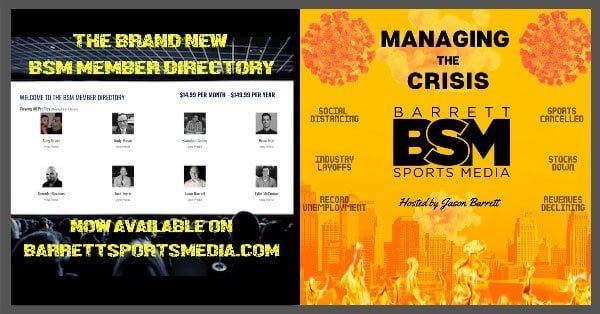
Since there isn’t a playbook for how to run a business as the country deals with a global pandemic, I wanted to do something to help. I had an idea for a new podcast which I felt could explore different areas of the industry, and so I’m proud to announce today the forthcoming launch of, ‘Managing The Crisis‘. This new program will feature conversations with executives from radio and TV groups, sports betting operations, advertising agencies, local business owners, imaging companies, podcast networks, and more. The plan is to release 3-5 episodes per week, and if we can pass along 1 tip, idea or piece of information to help a brand avoid further economic damage, then I’m more than happy to invest my time to assist.
The podcast will launch this week and be available on iTunes, Spotify, Stitcher and the BSM website. I’m taping the first conversation later today with Emmis Communications CEO Jeff Smulyan. The rest of the upcoming schedule includes discussions with the Action Network’s Chief Content Officer Chad Millman, Benztown Branding President and co-founder Dave ‘Chachi’ Denes, Ad Results Partner and Chief Revenue Officer Steve Shanks, 95.7 The Game Program Director Matt Nahigian, and former WEEI morning host turned independent podcaster Gerry Callahan. Others are in the works too. For guest inquiries, email JBarrett@sportsradiopd.com.
THE BSM MEMBERS DIRECTORY HAS ARRIVED
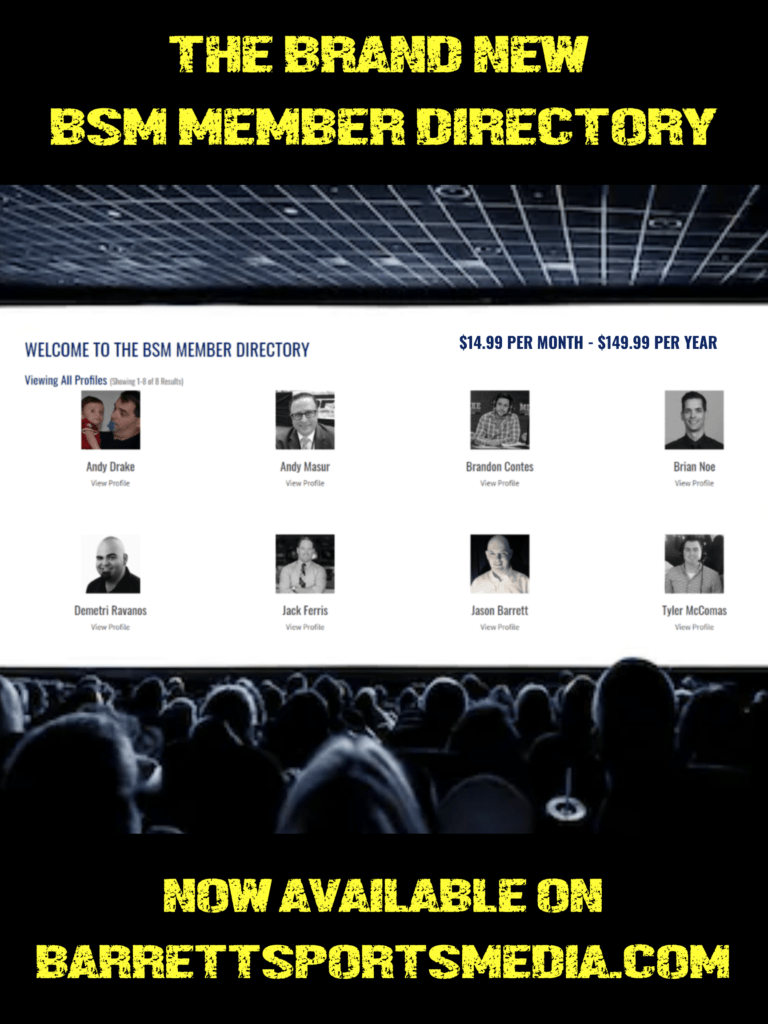
We’ve been working on this project for a year, and planned to launch it in mid March, but had to hit the pause button due to the coronavirus. After seeing the carnage across the radio industry last week, I knew we had to act fast to help people. The next few months won’t be easy for folks who have lost jobs, but the time away will provide an opportunity to recharge your batteries, fine tune your skills, and make more people aware of your talent. To help you take your next step, I’m thrilled to share that the BSM Members Directory is now live on our website.
If you go to our home page, you’ll see a tab on our menu that reads BSM MEMBERS. Click on that tab, and you’ll see an introduction note from yours truly, and a link option inside the tab to see our member profiles. When you click on each profile, you’ll see the person’s name, location, email address, resume, audio files of their work, and in some cases, a video sample. We have 8 listed right now, the members of our staff, and as others sign up, the section will grow.
I’ve had hundreds of broadcasters reach out over the years, wanting to put their work in front of PD’s and executives, but not knowing where to start. Anyone can create videos for YouTube, launch a podcast, conduct a chat on Facebook Live or host a radio or TV show, but getting the right people to see your work isn’t easy. Equally as challenging is keeping expenses low as you try to start or advance your career.
Fortunately, I’ve built a good reputation in this business, and have formed a lot of friendships and relationships across the country. As a former PD turned consultant, I’ve had a hand in hiring people, so I know how to help folks who are going thru the process. That experience is part of the reason why brand leaders read and support the BSM brand, and I know they’ll appreciate being able to dig thru our profiles and learn more about individuals who might be able to help them in the near or distant future.
When I thought about adding a directory, there were a few things I felt were important. First, I wanted to make it affordable and offer incentives. That’s why we went with the low monthly rate of $14.99, and an annual rate of $149.99 which saves folks two months of costs. We’ll also be giving all members a 25% discount on tickets to future BSM events, and any merchandise we produce in the future.
Secondly, being informed about job opportunities is vital. Some can be found online if you’re willing to spend hours digging for them, but others get relayed to BSM in advance. Those you won’t know about until it’s too late. When openings do occur, we don’t want to slow down the process. I think the hiring manager should be able to reach you directly rather than needing to go thru a middle man. Isn’t that partly why you signed up for a membership? A good PD will find you on social media anyway if they think you’ve got something to offer, so we’re eliminating the extra step.
Third, when you land an opportunity, earn a promotion, or launch a new project, we want to help draw attention to your success. BSM has earned a stellar reputation by relentlessly covering the sports media industry, and featuring contributions from accomplished professionals. We’ve generated over 3 million views of our content by reaching PD’s, GM’s, CEO’s, Hosts, Anchors, Reporters, Writers, Producers, Sellers, Ad Agency Reps, Digital and Imaging Directors, Corporate Executives, and folks from sports leagues and franchises on Google, Facebook, Twitter, Linkedin, various podcasting platforms, and email.
Last but not least, in the near future our members will be able to consume original content produced by BSM. For example, we haven’t yet released full video sessions from the 2019 or 2020 BSM Summit. However, those are in the works, and when they’re ready to be released, they’ll be available only to our paid members.
Having said all of that, I want to make sure one thing is crystal clear – I can’t promise you that you’ll land a job by placing your demo and resume here. BSM has helped many people land jobs in the sports media business, but there are many factors that go into being hired. Reputation, talent level, salary, market fit, and the preference of the hiring manager are all important, but none of it matters if they don’t know you exist.
What I can promise if you sign up for a membership on our website is that you’ll be displayed on a platform that reaches the right audience. You’ll also be notified of opportunities that become available, offered a discount to attend our events and network with the right crowd, given access to exclusive content to improve your craft and expand your knowledge, and supported when you earn a break or make news. If that appeals to you, visit our members section by clicking here.
Investing in yourself is a necessity, and it’s never been more important than right now. We look forward to playing a role in your career development, and appreciate the opportunity to learn more about you.
As media groups continue to struggle as a result of a national crisis caused by the coronavirus, it’s forced operators to make hard decisions. iHeart and Townsquare Media took steps to reduce their staffs to offset lost revenue, and now SB Nation Radio is doing the same.
The national sports radio network owned by David Gow has informed employees they’ll be issuing immediate furloughs. Barrett Sports Media can confirm that afternoon co-hosts Cody Stoots and Jake Asman are both off the air. Producer of Pushing the Odds, Brendan Riley, suffered the same fate, as did Alex Lebowitz, who had just relocated from Lowell, Massachusetts to join the network earlier this month.
Unfortunately due to the economic impact of COVID-19, I'm being placed on temporary furlough by @SBNationRadio.
I will no longer host "The Main Event" or fill in host on @ESPN975 for the foreseeable future.
I’m fortunate to be safe and healthy. I hope to be back on air soon.
SB Nation Radio told the employees that the furlough will last 30 days. It’s possible that could be extended though if the current climate of the country remains in rough shape. The network will continue airing select regular shows and add portions of weekend content from Sports Byline USA as it tries to survive the coronavirus and its effects on the economy.