
Home Blog Page 2902

Welcome To The 2015 Sports Radio Draft

0

If you’re like myself and most other sports fans on the planet, you spent last night immersed in NFL Draft coverage. Whether you were glued to ESPN, the NFL Network, Twitter or another media outlet, the draft had your undivided attention and you couldn’t get enough of it. As the process unfolded, you found yourself playing arm chair General Manager as you second guessed a number of decisions. Then, you drifted off to fantasyland where you questioned what you would’ve done had you been given the responsibility of making selections for one of the 32 professional sports franchises.

schneiderWhen it comes to the sports talk radio industry, the role of a Program Director is similar to that of a NFL General Manager. Yes it can be fun to pick the talent that will reflect your brand’s vision but with that responsibility comes a number of different options and pressures. Before any critical decision is made, a myriad of factors must be taken into account and every stone must be unturned. Once the decision is made though, then the PD’s job is to do everything in their power to support the choice and turn it into a winning situation.

Most programmers that I know, go through a hiring process which includes asking a number of questions and talking to a wide variety of different people who can provide additional insight on a potential candidate. Questions are asked such as “Can this person generate ratings? Will they be a good teammate? Will they work with the sales team to help generate revenue? How will they interact with fans and critics? Are they coachable? What’s their work ethic like? How do they relate to the audience? Do they attend games and develop relationships? What are their strengths and weaknesses?

The PD will also analyze past performance, review how a host conducts themselves in the social space, listen to the host’s show numerous times to make sure it’s consistently great and spend time with the individual to see how they conduct themselves outside the work place. Once the process is completed, then it’s time to trust your gut and make a call, knowing that there’s a 50/50 chance of being rewarded or criticized.

decisionsWhile there are many parts of the job that a PD must focus on, nothing is more important than making good hiring decisions. Much like an NFL GM, one false step can cost your team and organization dearly if you misfire. When it comes to professional football I believe a GM and scout have one job to do when it comes to selecting talent – be right! The same rule applies to a PD when hiring talent.

The process can be extensive and at times exhausting but the more information you gather, the better your percentages are at hiring someone who will do a good job for your radio station. While nothing in life is guaranteed and anybody can be fooled, you owe it to yourself and your brand to be as thorough as you can be. Then you have to hope that the person you’ve given your trust and commitment to, returns the favor and performs favorably.

While I was watching the draft last night, I kept wondering, what if the sports talk radio format held an annual draft and every PD in the country had the chance to better their brand by selecting the best talent available. I’ve always enjoyed lists and debates so when media outlets like Radio Ink and Talkers put together their annual “Best Of The Sports Radio Format“, I’ll read them and do what everyone else in our industry does – agree with some and disagree with others. My only issue, is that I never know who’s part of the process or what the criteria is for measuring each show and personality.

spdI decided to try something fun and interesting by tracking down 32 programmers who I respect in this industry, and having them take part in the first ever sports radio draft. Using ground breaking technology (32 names in a hat) and a list of every single sports radio personality working on a local station or national network, I challenged each PD to select a personality who they found to be compelling, informative, entertaining, opinionated and someone they could win with if they had them on their airwaves.

I encouraged the group who took part in this process to avoid choosing someone based on past ratings history, revenue generated, market size, personal friendships, internal jealousies or annual salaries because if we are building a radio station and focused strictly on winning in the present and the future, then it’s all about identifying great talent who we think can make a difference. I also asked each person to identify individuals rather than shows because while some shows are strong as a whole, the best personalities in the format can adapt and thrive in any situation.

I want to thank all 32 programmers who took part in this exercise and put their names behind their selections. I also want to congratulate those on-air personalities who were thought highly enough by some of the best programming minds in the country to make our list of 32. While each programmer has a different perspective on what makes a sports radio personality great and various markets and networks operate differently than others, the process for identifying great talent and developing strong shows is very similar to what you see transpire in the NFL.

jameismarcusCurrently, there are hundreds of people delivering sports talk radio shows all across the country each day and some are very good and some need more seasoning. But just like an NFL Draft, beauty is in the eye of the beholder and selecting great talent is an inexact science. There will be can’t-miss talents who live up to the hype, others who have all the tools but can’t put it all together and hidden gems who weren’t seen as more than adequate role players yet have proven that even the brightest minds in our business miss sometimes. That’s what makes hiring people interesting, challenging, rewarding and devastating.

And on that note, it’s time to unveil the 32 selections in the 2015 Sports Radio Draft! Let the debate begin!

Order

Programmer/Station

Personality/Station

1.

Scott Masteller, WBAL-Baltimore

Colin Cowherd-ESPN Radio

2.

Don Kollins, 590 The Fan-Toronto

Boomer Esiason-WFAN

3.

Rick Scott, Rick Scott & Associates

Damon Bruce-95.7 The Game

4.

Brian Long, XTRA Sports 1360-San Diego

Dan Patrick-Fox Sports Radio

5.

Dave Shore, Detroit Sports 105.1-Detroit

Stephen A. Smith-SiriusXM

6.

Ryan Hatch, Arizona Sports 98.7FM-Phoenix

Mike Valenti-97.1 The Ticket

7.

Chris Kinard, 106.7 The Fan-Washington DC

Craig Carton-WFAN

8.

Kevin Graham, WEEI-Boston

Mike Francesa-WFAN

9.

Matt Nahigian, 97.5 The Fanatic-Philadelphia

Mike Missanelli-97.5 The Fanatic

10.

Dave Tepper, NRG Media-Omaha

Josh Innes-Sports Radio WIP

11.

Tom Parker, 105.7 The Fan-Milwaukee

Steve Czaban-ESPN 980/Yahoo Sports Radio

12.

Nate Lundy, 104.3 The Fan-Denver

Scott Van Pelt-ESPN Radio

13.

Mike Salk, 710 ESPN-Seattle

Fred Toucher-98.5 The Sports Hub

14.

Ryan Maguire, 560 WQAM-Miami

Gregg Giannotti-CBS Sports Radio

15.

Allan Davis, WGR 550-Buffalo

Nick Wright-610 KILT

16.

Brad Lane, ESPN 1500-Minneapolis

Dan Lebatard-104.3 The Ticket/ESPN Radio

17.

John Hanson, 610 Sports-Kansas City

Dan Barreiro-KFAN 100.3

18.

Dan Zampillo, ESPN 980-Washington DC

Terry Boers-670 The Score

19.

Gregg Henson, 970 ESPN-Pittsburgh

Bob Wojnowski-97.1 The Ticket

20.

Dennis Glasgow, 99.9 The Fan-Raleigh

Mitch Levy-950 KJR

21.

Jeff Austin, 1080 The Fan-Portland

Ian Fitzsimmons-ESPN 103.3

22.

Ari Temkin, 1250/94.5 ESPN-San Antonio

Bomani Jones-ESPN Radio

23.

Bob Agnew, 830 KLAA-Los Angeles

Tom Tolbert-KNBR

24.

Brad Carson, 92.9FM ESPN-Memphis

Chris Vernon-92.9 ESPN

25.

Len Weiner, 104.3 The Ticket-Miami

Jon Weiner-104.3 The Ticket/ESPN Radio

26.

Brian Lopez, ESPN 1320-Sacramento

Mike Greenberg-ESPN Radio

27.

Hoss Neupert, 101 ESPN-St. Louis

Kevin Wheeler-101 ESPN

28.

Dave Zaslowski, 97.9 ESPN-Hartford

Freddie Coleman-ESPN Radio

29.

Armen Williams, 104.5 The Team-Albany

Shan Shariff-105.3 The Fan

30.

Amanda Gifford, ESPN Radio-Bristol

Tom Waddle-ESPN 1000

31.

Jeremiah Crowe, 95.7 The Game-San Francisco

Ryan Ruocco-ESPN New York 98.7

32. Bruce Gilbert, Cumulus/Westwood One-Dallas Rich Shertenlieb-98.5 The Sports Hub

Houston Sports Radio Ratings

0

Thanks to a “vacation” week to work on Dave Campbell’s Texas Football magazine, we’re a few days behind in posting the Nielsen Audio ratings for the period Feb. 26-March 25.

As always, we start with 6 a.m. to midnight) among men 25-54, which is the key demographic for sports radio. KILT remains on top, but KBME had a slight bump from February, as did KFNC. All three are up from a year ago. KGOW (1560 AM) did not show up in the March book.

KILT (610 AM) 3.3 (12th) 3.4 (12th) 2.5 (16th)

KBME (790 AM) 2.3 (20th) 2.0 (2nd) 1.6 (22nd)

KFNC (97.5 FM) 1.5 (24th) 1.3 (24th) 0.9 (27th)

No change in the pecking order in morning drive time (6-10 a.m.), but all three stations were up from February.

KBME (610 AM) 4.2 (7th) 3.7 (7th) 3.5 (10th)

KILT (790 AM) 3.1 (13th) 2.8 (16th) 2.6 (T13th)

KFNC (97.5 FM) 1.7 (21st) 1.3 (24th) 1.1 (26th)

Middays (10 a.m.-3 p.m.) continue to be a bright spot for KILT, but KBME and KFNC also improved during the March book.

KILT (610 AM) 4.5 (5th) 4.0 (7th) 3.8 (9th)

KBME (790 AM) 2.3 (16th) 2.0 (19th) 1.4 (21st)

KFNC (97.5 FM) 1.8 (21st) 1.1 (25th) 1.2 (22nd)

Nothing new in afternoon drive (3-7 p.m.).

KILT (610 AM) 4.1 (8th) 4.1 (T9th) 3.0 (15th)

KFNC (97.5 FM) 1.8 (23rd) 2.0 (20th) 1.1 (T25th)

KBME (790 AM) 1.7 (25th) 1.6 (T23rd) 1.1 (T25th)

Year-to-year growth continues to be the most noteworthy element of the 7 p.m. until midnight weekday time slot. Lack of Texans action probably took a bite out of KILT’s number, and the Rockets may have boosted KBME.

KILT (610 AM) 3.1 (14th) 3.9 (T10th) 1.9 (T20th)

KBME (790 AM) 2.6 (18th) 1.9 (20th) 1.9 (T20th)

KFNC (97.5 FM) 1.9 (27th) 1.7 (T21st) 0.7 (29th)

Let’s now turn to show-by-show comparisons. The March numbers are estimates, for the moment, but they’re within a tenth of a point if they’re off the mark at all.

Show hosts/times/station March Feb.

Mike Meltser/Seth Payne/Texans (10 a.m.-2 p.m., KILT) 4.5 4.0

Adam Clanton/Lance Zierlein (6-9 a.m., KBME) 4.3 3.8

Rich Lord/Sean Pendergast/Ted Johnson (2-7 p.m., KILT) 4.2 4.1

Greg Koch/N.D. Kalu (9-11 a.m., KBME) 3.4 3.1

Nick Wright/John Lopez (6-10 a.m., KILT) 3.1 2.8

Paul Gallant/Brien Straw/Texans (7-11 p.m., KILT) 3.1 4.3

Charlie Pallilo (2-6 p.m., KBME) 2.3 2.3

Fred Faour/A.J. Hoffman (4-7 p.m., KFNC) 1.6 1.9

Sean Salisbury/Dave Tepper (Noon-2 p.m., KFNC) 1.6 0.9

Matt Thomas (11 a.m.-2 p.m., KBME) 1.5 1.2

Credit to the Houston Chronicle who originally published this article

Zampillo Named PD of ESPN 980

0

SiriusXM Executive Producer of Sports, Bleacher Report Radio and NBA Radio Director of Programming Dan Zampillo is joining Red Zebra Broadcasting as Dir./Programming for ESPN 980 in Washington DC.

So happy to be joining I feel honored and humbled to program such a great station.

Zampillo fills the PD slot that was vacated by Chuck Sapienza who exited the radio station in the wake of the controversy surrounding the cancellation (and later reinstatement) of the station’s new “Man Cave” morning show.

Zampillo’s radio background includes stints as PD of 97.1 The Ticket in Detroit and APD at WGN in Chicago.

Credit to All Access who originally published this article

3-Way Ratings Race In Dallas

0

Ladies and gentleman we have the tightest grouping of radio sports talk gabbers in the six-plus years of the three-station competition for listeners in Dallas-Fort Worth.

In the hallowed ratings demographic of men between the ages of 25 and 54, sports talk’s target audience, the March ratings book showed it was SportsRadio 1310 The Ticket at 3.0, 105.3FM The Fan at 2.8 and KESN 103.3 FM at 2.6.

Among all stations in the market, the Ticket ranked tied for 12th in men 25-54, The Fan was 14th and KESN, aka ESPN, was 16th.

Let’s compare March 2015 to March 2014. The Ticket dominated the men 25-54 ratings in sports talk a year ago. It was the Ticket 6.9, Fan 3.1, ESPN 2.9.

If you believe all listeners matter and hence prefer a more egalitarian approach, the stations ratings were just as tight. It was the Ticket (1.5), Fan (1.4) and ESPN (1.3).

For the record, the March book was from Feb. 26 to March 25. Among the big topics of sports conversation were DeMarco Murray’s departure to the Philadelphia Eagles, Greg Hardy joining the Cowboys, Yu Darvish’s injury, the Rangers season prospects and the early rounds of the NCAA tournament.

The most competitive block of the day came during 3 p.m. to 7 p.m. afternoon drive. The Fan’s Ben & Skin scored a 3.1, followed by The Ticket’s Hardline at 3.0 and ESPN’s Afternoon Show, anchored by an hour of assorted programming at 6 p.m., at 2.9.

How’s this? Ben & Skin (3.1) was No. 1 in the sports talk universe at 3 p.m.; The Afternoon Show (3.7) was No. 1 at 4 p.m.; The Hardline was No. 1 the final two hours (4.0, 3.8).

The lowest rated show on any of the three stations was Colin Cowherd’s two morning hours of ranting on ESPN. The national show out of Bristol, Conn., scored a 1.5 share at 9 a.m. and a 0.7 at 10 a.m.

On the flip side, the only other national show on the daily schedule, ESPN’s Mike & Mike, turned in the two top-rated hours of the day at the station – 5.4 at 7 a.m. and 4.3 at 8 a.m.

As usual, the Ticket’s Musers turned in the highest rated hour at 8 a.m., scoring an 8.3.

Credit to the Dallas News who originally published this article

Being The Brand At All Times

0

If you follow the sports media industry, you’re likely aware of the drama involving Britt McHenry of ESPN. To make a long story short, Britt had an incident a few weeks ago when her car was towed. As a result of the situation, she said a number of things to a clerk at Advance Towing that I’m sure she wishes she shouldn’t have. Here’s the video if you haven’t seen it.

https://www.youtube.com/watch?v=Mv-O9ZhKX1M

When I heard about the story it saddened me because I think Britt does excellent work for ESPN. I’ve seen these types of incidents happen before and end up crippling people’s careers. I’m not one to pile on nor play judge and jury, because I wasn’t there, and I don’t know all of the other factors that occurred off camera. However, it bothers me to see someone with talent, and a great platform, lose it over a bad decision.

slatenWhen I worked in St. Louis from 2006 to 2011 I saw this occur a number of times. I witnessed Kevin Slaten damage his reputation by getting into issues with fans, coaches and other media colleagues. He even went as far as putting pitching coach Dave Duncan on the air without his permission, a decision which cost him his job at 590 The Fan, KFNS. An example of those issues can be found here.

jackI watched Jack Clark put himself in a vulnerable spot when he accused Albert Pujols of being a steroid user despite having no proof to validate his claims. As a result of attacking Pujols’ character on the radio, Pujols’ camp threatened legal action. Shortly afterwards, CBS Sports 920 parted ways with Clark less than one week into his employment.

I also observed an incident where my own guy, D’Marco Farr, became the center of controversy at a Super Bowl party when it was captured by TMZ’s cameras. This one bothered me a great deal because to the viewer watching at home, they saw D’Marco as a mean spirited jerk who thought he could say and do whatever he wished. If you knew anything about the man, you’d know that he was a first class human being who always tried to do the right thing and treat people well. This particular episode was a set up. D’Marco’s mistake was that he took the bait.

The next day in St. Louis, local TV stations piled on and one website ran a poll question asking “Has your opinion of D’Marco Farr changed as a result of this incident“? I spoke to my boss about the situation, and filled him in on some of the facts surrounding the story (some which weren’t reported), and was then asked by the local newspaper for a comment.

dfarrI remember sharing a hotel room with D’Marco during this trip and we talked about it and he felt terrible that he lost his cool. He was determined to make up for it and learn from it. It was important to him that people in the St. Louis community knew this wasn’t who he was, and without even having to push it, he took to the airwaves the next day to apologize and address it.

I stood up for him when the incident happened because I knew that he was a good person with good values, and he was a talented guy who everyone at the radio station liked. He was great with our clients, a respected teammate and valued member of the community. I felt he would earn back the community’s trust and respect by conducting himself the way he had 99% of the time prior to that moment.

For the sharks in the water though, they wanted more blood. Could I have satisfied their appetite and thrown him out the door? Sure. But is that always the best decision to make? I didn’t think so then, and I’m glad I didn’t cave in to public pressure. If I had, it would have been the wrong move.

stonesThe last time I checked, we’re not all perfect. We make mistakes, and with social media as dominant as it is today, every single decision of ours is under a microscope. Companies react to bad publicity a lot faster than they ever have, and a great 10-15 year career can be forgotten in an instant if you’re not smart.

It doesn’t matter who threw the first punch, what someone said when you’re out in public, or if someone was antagonizing you on Twitter. If you respond poorly, it’s Media Person X of Company Y who responded. Whether that’s fair or not, that’s how it is!

If a regular person working for an insurance company acts out poorly, it doesn’t make news. But you are the news because of your public persona. With your position comes a different set of rules. You’re expected to take the high road, and recognize the danger signs when they appear before you.

good decisionOne bad decision can harm your personal brand, and your employer. If a company loses sponsors, viewers/listeners, and ultimately dollars, good luck getting them to stand by you. This doesn’t mean you can’t disagree with someone, or respond to a negative comment on your social media page, but understand that the world is watching, and sometimes even recording. The material you choose to post in a public space doesn’t get deleted as fast as you think.

We may want to see the good in everyone, but some people have agendas. You’ve got to catch yourself before you do something that permanently ruins your career. An easy way to avoid these situations is to do great work and conduct yourself in a classy manner. That rarely leads to negative headlines.

britt2I don’t know ESPN’s views of Britt McHenry’s work and whether or not she’s a good teammate and person. I’ve had a few limited interactions with her and always found her to be classy. Based on that knowledge, I’m going to assume that she simply had a bad moment. Hopefully for her sake this doesn’t define her career and she learns from it.

If there’s anything to take away from these situations if you’re a broadcaster or public figure, it’s to remember that you are the brand at all times! It says so on your business card, website and social media page. Don’t lose sight of that. One poor decision on your part could be the one that defines your career and prevents you from working in the industry. Don’t make the mistake of letting that happen!

Jim Graci Named PD of 93.7 The Fan

0

CBS Radio Pittsburgh announced today that KDKA-AM Program Director Jim Graci has been assigned to also serve as Program Director for KDKA-FM, Sports Radio 93-7 The Fan. His appointment is effective on Monday, May 4.

Graci takes on the role previously held by Ryan Maguire who is transferring to a similar role at CBS Radio’s Sports Radio 560 WQAM-AM in Miami.

Additionally, PJ Kumanchik, News Director and Executive Producer at KDKA-AM, will also serve as Executive Producer at Sports Radio 93-7 The Fan.

Senior Vice President and CBS RADIO Pittsburgh Market Manager Michael Young said, “Jim and PJ are a strong and very competent managerial team. They have performed very well in developing and executing the programming vision of KDKA-AM. With much synergy already existing between KDKA-AM & KDKA-FM, I believe their expanding programming roles at Sports Radio 93-7 The Fan are a natural progression, and will benefit our various audiences.”

Graci, who has been the Program Director at KDKA-AM since 2012, is a veteran radio executive with over four decades of experience. In additional to his Pittsburgh programming work, Graci spent time in other major markets, including Dallas, Atlanta, and Seattle.

Kumanchik has been a dedicated and loyal KDKA-AM staff member since 1989. He began his career as a producer, and has served in various programming and management roles for more than 25 years. Kumanchik will continue to report to Graci for both radio stations.

Credit to CBS Radio Pittsburgh who originally published this article

Ryan Maguire Named PD at WQAM

0

560 WQAM in Miami has found their next Program Director. Ryan Maguire is taking his talents to South Beach to program the radio station effective May 4th according to his Facebook page.

Maguire has been working for CBS Radio in Pittsburgh as the PD for Sports Radio 93.7 The Fan. Prior to his time in Pittsburgh, he also spent time programming 610 Sports in Kansas City, WSSP in Milwaukee and WKTA in Ann Arbor, Michigan.

This is WQAM’s first major move since the radio station was acquired by CBS Radio from Beasley Broadcasting.

97.5 The Game Hits Top 3 in SF

0

The March ratings have come out in San Francisco and for the first time in the station’s history, 95.7 The Game has climbed into the top 3. The station finished the month with a 4.4 rating M-F 6a-7p in the desired demographic of Men 25-54. Market leader KNBR remained ahead in 2nd place with a 5.2.

In July 2011 when we built 95.7 The Game we talked about becoming a top 5 rated station with Men 25-54….today that day has arrived! So proud of our team who finished Top 3 in March highlighted by Guy Haberman & John Middlekauff who finished #1 in their daypart. Two of our other prime shows were less than .2 away from the top spot in the market! A HUGE day for our team! 


This is the tightest the sports radio battle has been to date in San Francisco. Sports talk radio as a whole has grown in the market, climbing from a 6.9 market share in August 2011 to 9.6 in March 2015!

For the winter book (Jan-Mar) The Game finished 6th overall with a 4.0. It was the highest performance the station has recorded for a quarter since launching in August 2011. KNBR finished the quarter in 2nd place with a 5.6.

One key item of note, The Game won for the first time head to head during the 10a-12p time slot. The Haberman & Middlekauff show ranked #1 beating KNBR during those two hours.

Below is the breakdown for Men 25-54 for all dayparts in March.

Time Slot KNBR 95.7 The Game
6A-10A 6.1 (2nd) 3.7 (9th)
10A-12P 4.2 (7th) 5.0 (1st)
12P-3P 5.0 (1st) 4.7 (2nd)
3P-7P 4.8 (3rd) 4.7 (4th)
7P-12A 5.0 (4th) 3.7 (7th)
6A-7P 5.2 (2nd) 4.4 (3rd)


WFAN Keeps Dominating NY Ratings

0

WFAN remained firmly in control of the local sports talk radio market during the winter ratings book released Monday and covering the period from Jan. 1 through March 25.

All three of the station’s signature programs — morning, midday and afternoon — finished second to music stations among men ages 25 to 54, and all three were well ahead of the competition at ESPN New York.

Boomer Esiason and Craig Carton averaged 7.8 percent of the audience from 6 to 10 a.m. in the key demographic, more than doubling “Mike and Mike” on ESPN at 3.3.

Joe Benigno and Evan Roberts averaged 6.5 percent from 10 a.m. to 1 p.m. compared with ESPN’s 2.1.

Mike Francesa averaged a 6.9 share from 1 to 6:30 p.m., nearly doubling ESPN’s 3.5. ESPN was hurt in that time slot by a lackluster ratings book for Mike Lupica between 1 and 3 p.m.

From 1 to 3, WFAN more than tripled ESPN’s share, 7.0 to 2.3. From 3 to 6:30 p.m., when Michael Kay goes head-to-head against Francesa, the gap was 6.9 to 4.2. During that time slot, Francesa was No. 1 overall.

Kay was asked by a follower on Twitter Monday whether he is considering ending his run at ESPN in September, when his contract apparently expires.

“We are talking,” he wrote back. “I have to eventually make a quality-of-life decision. Going to be a tough call either way.”

Credit to Newsday who originally published this article

Programming For Ghosts

0

I’m a firm believer that anyone who works in the sports radio business is an employee of the listener. They decide whether or not to consume our material, support our advertisers and interact with us and it’s our job to serve them the best content possible and keep them interested. While we all head to an office each day and have someone we report to, our performance is decided by the listeners in each of our respective markets.

customerThe hardest part of creating content is trying to juggle what we passionately care most about, what each listener wants and what the research in our market tells us the majority of people care about. While it’s great to be liked and use our best efforts to please every individual who listens to us, I believe the majority of people in your market will listen to you (even if they dislike you) if you present content with the broadest appeal. If a host delivers strong opinions and solid information on the subjects that matter most, they’ll earn the audience’s time.

This is supposed to matter because if you play the game correctly it should lead to ratings and as everyone knows, ratings dictate whether or not you and your brand are successful and what rates a client will pay to continue investing in your product. Only there’s one small problem to this equation – how do you really know if what you’re doing is right or not?

ghostI’ve been operating stations for 9 years since PPM became the new standard for audience measurement. During those 9 years I’ve programmed in 3 different markets. One was on the East Coast, one in the Midwest and one on the West Coast. During all 3 stops, I’ve never once met or seen a listener with a PPM meter. I’ve not received an email, tweet, facebook message or text into the company’s database from them and as far as I’m concerned, they’re ghosts. Do I believe they exist? Yes. However I don’t lose sleep at night worrying about where they are, who they are or how I’m going to satisfy 20 people who don’t provide me with feedback on how I can make their content experience more enjoyable on the radio station.

I love the radio business as much as anyone but you’d think that for the millions of dollars that numerous broadcasting companies, agencies and advertisers spend, that there would be stronger accountability and performance with audience measurement. It’s ludicrous that we can see the exact number of texts, tweets and facebook messages to our brands, the exact number of downloads our apps get, the number of streaming sessions and length of each person’s listen, yet we can’t show know how many people listen to our radio stations. Instead, less than 1,000 people form the opinions of what millions in a market listen to. And I’m saying this while in the midst of one of my best ratings runs ever.

tv2While it’s easy to be skeptical towards radio’s measurement system, I’m equally amazed at how so many people in radio will look at TV ratings as being a true reflection of the marketplace. A newsflash for my radio friends, TV has the same challenges with sample size, poor participation and inconsistency.  It can be very frustrating to folks in the media business who’s performance and next contract is decided by such a small number of people but rather than complain about it, you can help yourself by playing the game the right way.

First, it’s important to recognize how PPM works when it comes to having ratings success. This means managing your content inside of a clock. If you need 5 minutes of listening time (it doesn’t need to be consecutive) inside of a quarter hour, don’t screw yourself up by breaking late or wasting time with minutia. The hour doesn’t extend and offer you extra minutes and the audience won’t sit through 2-3 minutes of meaningless crap. Dive head first into the content with a focused game plan and make the material mean something.

playthehitsSecond, do some homework on what your market cares about. Too many hosts have the mindset of “If I care, they’ll care“. That may work sometimes, but if you’re playing a game of percentages I believe you’re going to win a lot more by playing to the audience’s needs than your own. Ask yourself this, if you went to see a famous comedian and couldn’t wait to hear them perform the jokes and stories you were familiar with, how would you feel if they didn’t deliver their most popular material? Would you stay? Even if you did, you’d likely remember it as a poor experience. If the audience tells you they want steak, give it to them. If you continue serving fish, don’t be surprised if you’re dealing with unhappy customers.

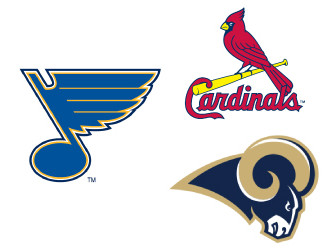
When I worked in St. Louis, a number of our shows were doing a lot of hockey interviews and when I told my crew that it was hurting us they didn’t want to hear it. Some guys loved the sport and the local team (The Blues) and they’d push back by telling me how the Blues had better support than other cities for hockey talk and with us operating on FM it would work out well. I disagreed and decided to do some homework to see if my feeling was correct.

stlIn our next staff meeting, I listed 20 different content items on the left side of a sheet of paper. 10 of them were hockey interviews we did on the station that month and the other 10 were open segments and interviews we conducted during the same month on the Cardinals, Rams and popular national stories. I then put 20 numbers on the right side of the paper and went around the room to see if the group could match up which ratings numbers lined up with each content piece. As it turned out, the 10 lowest rated content items were the hockey interviews.

After I showed them how the audience listening went down when we executed those content choices, they understood and went forward focusing on presenting subjects with broader appeal. Consequently we wound up surging in the ratings. That didn’t mean we never put another hockey guest on the air again. Instead we used better judgment of when it made sense to do so and we didn’t focus 50% of our content on it.

researchThe habits and interests of your audience are critical for you to know and often it’s not hard to figure out. Especially today when you can use social media to further help you. If you look at Facebook, Twitter and Instagram and see how many fans exist on each team’s page and then look at how much engagement takes place on each of their posts, that’s a good start. Then you can look at what the radio ratings in the market are for each team and do the same with TV. If you have a relationship with local newspapers or websites or if you have columnists working at your station, you can also find out which stories generate the most clicks. That type of research helps you in deciding which content to showcase.

In St. Louis for example, the Cardinals are the kings of the content circle. Their flagship station during the day delivers News Talk programming and the other sports stations in the market operate on very poor signals so when we launched 101 ESPN in January 2009 it was easy to see that the team’s fans were underserved during the day. By hiring people who the audience knew and trusted and by giving them a platform where they could be heard and offering the right content, we were able to build a dominant sports station.

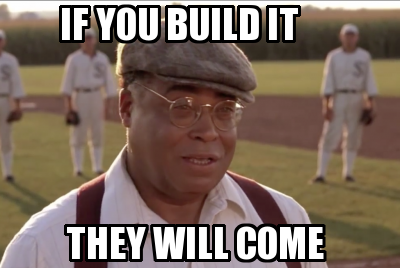
BUILD4It wasn’t rocket science. I simply used the information available to me and recognized that while we couldn’t deliver the games to people due to not having the team’s rights, we could still be the market’s leader for Cardinals coverage throughout the day. By relaying that message to our audience through effective imaging and by getting the talent on board to make it part of their daily focus, we won a lot. In the movie “Field of Dreams“, James Earl Jones says “If you build it, they will come” and it works in radio too except I like to say “If you present the right content, they will listen to it“.

One article I enjoyed was published by the NY Times this past October. It was built around the MLB Playoffs and the neighborly feel that existed due to the involvement of teams who were rivals or inside the same market. By using Facebook data, the article showed which teams had the bigger pull in their regions and where the shift in fan bases occurred in each market. If you were programming or hosting a show in any of these markets in October and used this information to help you in deciding your branding and content execution, smart move.

TomsulaWhile PPM is not perfect, there are times where it works really well. Case in point, regular weekly guests, big games and other important events such as an introductory press conference usually show a change in listening patterns. For example, in January I carried Jim Tomsula’s press conference when he was named the new Head Coach for the 49ers. The presser ran 30-minutes long and was incredibly bizarre and considering that the 49ers had parted ways with popular Head Coach Jim Harbaugh, fans were not happy. The presser that day was carried by my station and my competitor (the home of the 49ers) and during the 30-minute time that we each carried it, we delivered a 6.5 and were 2nd in the market with Men 25-54 and my competitor produced a 4.8 and were 4th.

The presser delivered for both stations which showed that the content mattered to the audience. But why did we perform higher? Well, we are on FM and my competitor is not so maybe that could have been a factor and while that’s certainly possible, I have a different theory. In the San Francisco market, my brand is seen as the station that covers both teams and isn’t afraid to take teams to task when it’s warranted. My competitor meanwhile is the heritage sports station and play by play home for a number of local teams and they present a very positive presentation when discussing local teams. That formula works well when teams are winning but in this case, people were mad at the 49ers and wanted to know the other side of the story. That is why I believe they came to us to hear it.

nflI saw the same thing take place in early March during Day 1 and 2 of NFL Free Agency. At my current radio station we were #1 overall with Men 25-54 both days delivering a 6.7 and 6.3 and our streaming sessions were up 250% over both days. Because we present ourselves as a strong football destination and employ people who have a passion for the sport, we performed well when big NFL news was taking place.

My competitor in the marketplace was 5th during these 2 days which is understandable because they present themselves strongly as a Giants baseball station. If the news for these 2 days was centered around the Giants or Major League Baseball, the positions would’ve likely been reversed. None the less, when big NFL news is happening you should see increased listening to sports radio stations and PPM captured it during both days.

If you’re a programmer or talent, be smart about your content choices and remember who you work for – the audience! Don’t worry about what the meters are doing, worry about what you’re presenting. A metered listener still has two ears to listen, a brain to form an opinion and a finger to push a button to listen to a particular radio station. If you’re a good talent delivering a good show and presenting the content that matters to the majority of the audience, they’ll find you. Just don’t expect to find them. Ghosts and PPM meters are usually undetectable.