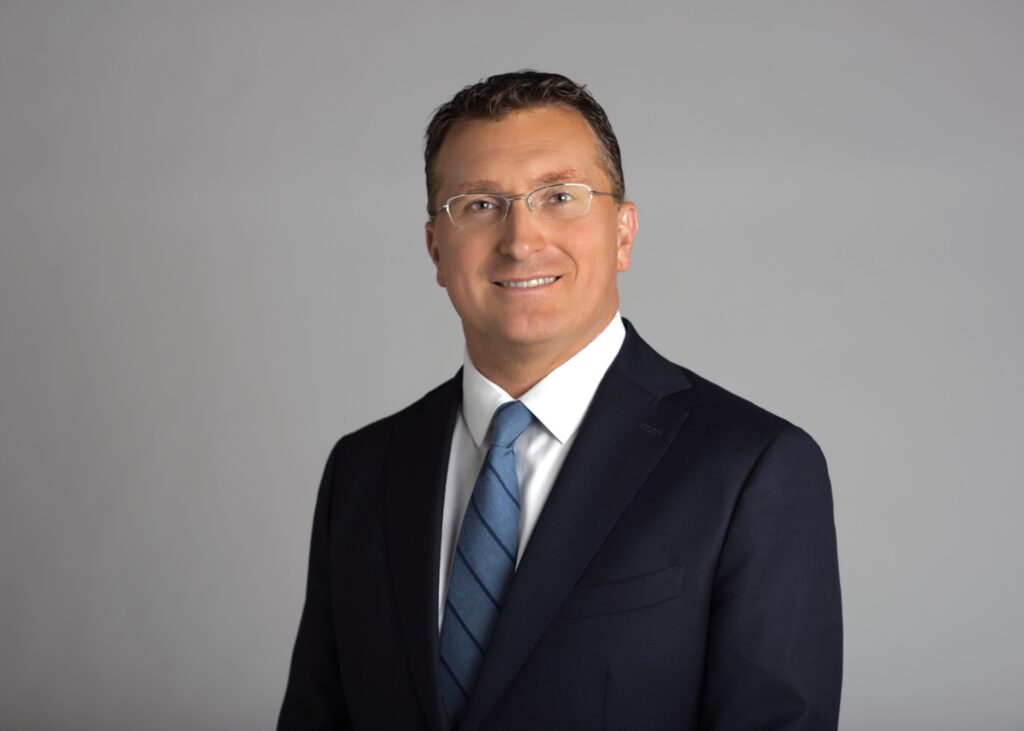
iHeartMedia Tampa Bay’s Mix 100.7 announced that the popular morning program, The Miguel & Holly Show, will return to the airwaves on Monday, January 5, 2026. The show will broadcast weekdays from 6 a.m. to 10 a.m., marking the duo’s homecoming after several years away.
Miguel and Holly were among Tampa Bay’s leading radio personalities from 2015 to 2022, The duo then departed the market for a three-year stint in Charlotte, North Carolina. Their return to the local airwaves is being framed as a reunion with loyal listeners who helped make the show a staple of the market.
“Miguel and Holly bring an energy, authenticity and connection to this community that our listeners love,” said Tommy Chuck, Vice President of Programming for iHeartMedia Tampa Bay. “Welcoming them back feels like bringing old friends home. We’re excited for mornings filled with laughter, real conversation and a great variety of music.”
Miguel, known for his unfiltered personality and ability to make listeners feel included in the conversation, called the return a personal homecoming.
“Tampa Bay made me who I am, and returning with Holly truly feels like coming back home,” he said. “We’re excited to reconnect with our listeners every morning.”
Holly, a devoted mother, mental health advocate, and Gracie Award-winning broadcaster, praised the partnership she shares with Miguel.
“I’m thrilled to be back in Tampa Bay. The place my family calls home, and even more excited to be back in the studio with Miguel,” she said. “We’re ready to share more laughter, fun and meaningful moments with this amazing community.”
Together, the duo delivers a blend of pop culture, local happenings, and real-life stories with humor and honesty. Holly’s thoughtful approach complements Miguel’s high-energy style, creating a balance that has resonated with audiences for years.
Barrett Media produces daily content on the music, news, and sports media industries. To stay updated, sign up for our newsletters and get the latest information delivered straight to your inbox.
FOX Sports is adding one of international soccer’s most recognizable names to its coverage of the 2026 FIFA World Cup. The network announced that former French star and World Cup champion Thierry Henry will serve as one of its lead analysts for next year’s expanded tournament.
The move brings one of the sport’s most decorated strikers to the most-watched soccer event in the world. In a statement, FOX Sports President of Production & Operations and Executive Producer Brad Zager said Henry’s arrival reinforces the network’s ambition to elevate its coverage in a year when the World Cup will be bigger than ever.
“Thierry Henry’s name is synonymous with the best of the beautiful game,” Zager said. “As one of soccer’s elite, we are elated to add Thierry’s distinguished resume to our talent roster for the biggest World Cup ever.”
Henry will make his on-air debut for the network Friday, December 5, during FOX’s 3½-hour live coverage of the FIFA World Cup 2026 Final Draw beginning at 11:30 a.m. ET. It marks his first U.S. World Cup broadcast assignment and his first step into a central role for next summer.
For Henry, the opportunity adds another chapter to a storied career that already includes championships, coaching experience, and widely praised broadcast work in both the U.K. and U.S.
“It’s an honor and privilege to be part of the World Cup coverage for FOX Sports,” Henry said. “For me, the World Cup is the ultimate sporting event and to join the team and still have some involvement in the tournament fills me with a great deal of excitement. The draw in Washington tomorrow means we are close to the start. I can’t wait.”
The former Arsenal legend remains one of the most prolific forwards in global soccer history. Henry scored 51 goals in 123 appearances for France and set the club scoring record at Arsenal with 228 goals. His resume includes back-to-back European Golden Boots and three straight Domestic Golden Boots. He also won two English Player of the Year awards. He earned five French Player of the Year honors as well. All were groundbreaking achievements at the time.
Henry played in four World Cups for France, beginning with the country’s 1998 championship run on home soil. His club career spanned Europe with Arsenal, AS Monaco, FC Barcelona and Juventus. He moved to Major League Soccer in 2010 to join the New York Red Bulls, then retired in 2014. Henry later moved into coaching with AS Monaco and CF Montréal. He also worked with the Belgium National Team and France’s U21 and U23 squads.
FOX Sports has not yet announced its full 2026 broadcast lineup. The network is preparing for its largest World Cup production ever. The tournament runs from June 11 to July 19. All 104 matches will air on FOX and FS1. Every game will also stream on FOX One and the FOX Sports App. The 69 matches scheduled for FOX represent the most ever carried on broadcast television.
The 2026 tournament will be the first hosted by three countries — the United States, Mexico and Canada — and will expand to 48 teams competing in 16 host cities. Eleven of those cities are in the United States, including Atlanta, Dallas, Los Angeles, Miami, Philadelphia, Seattle and the Bay Area.
Magnifique! @FOXSports proudly announces legendary striker and @FIFAWorldCup champion Thierry Henry as the network’s newest analyst for next summer’s tournament.
Henry will make his FOX debut Friday on the Final Draw live starting at 11:30 AM ET.
Barrett Media produces daily content on the music, news, and sports media industries. To stay updated, sign up for our newsletters and get the latest information delivered straight to your inbox.
Former ESPN host Bomani Jones believes the network that once prided itself on building stars internally has shifted into a new era — one where it no longer develops talent from within and increasingly relies on personalities who built their reputations elsewhere. During an appearance on The Main Event with Andrew Marchand, Jones said ESPN’s ability to manufacture its own breakout voices has all but disappeared.
Jones reflected on the ESPN he joined more than a decade ago and the philosophy that guided its talent pipeline at the time. According to him, the company trusted its brand strength enough to cycle through hosts without fear of losing viewers.
“They weren’t paying people a whole lot of money, because they felt like, we make stars,” Jones said. “You want more money, you go ahead, we’ll get somebody else. Think about what happened with Dan Patrick, which I guess is now probably like 15 years ago. We’ll go find another one of you. It’s not that big a deal. They can’t do that anymore.”
Jones said that shift is most evident in how ESPN now values — and retains — its highest-profile figures. He argued that the network no longer sees its top stars as replaceable, a significant departure from the mindset that defined the company for decades.
“The idea that Stephen A. Smith makes $20 million a year would have been ridiculous,” Jones said. “Not that long ago, they would have told him, or anybody else, ‘Oh, we’ll find another of you.’ No, they don’t think they can do that anymore.”
ESPN has since introduced a direct-to-consumer platform and continues to manage long-term rights deals with major leagues, including a potential acquisition of a 10% by the NFL. While that evolution continues, Jones believes the network has become more conservative creatively.
While ESPN once experimented with original programming, he said today’s strategy increasingly relies on importing established voices rather than building new ones.
“It’s all people who already have their own thing somewhere else,” Jones said. “They’re out of ideas. Or at the very least, nobody is in the business of coming up with new ideas.”
Furthermore, Jones argued that the evolution of digital media has changed how talent emerges. Many of today’s most notable personalities build their audiences independently, which makes ESPN less of a career launching pad and more of an amplifying platform for those who already arrive with followings.
He noted the partnerships the network has created in recent years with Pat McAfee, and Bussin’ with the Boys as examples.
Despite his criticism, Jones acknowledged that ESPN remains a dominant brand with significant reach. However, he said the network’s hesitancy to take creative risks has reshaped its identity and diminished its ability to cultivate the next wave of homegrown stars.
Barrett Media produces daily content on the music, news, and sports media industries. To stay updated, sign up for our newsletters and get the latest information delivered straight to your inbox.
Who doesn’t love a good comeback story? The old grizzled veterans looking to recapture the success of their youth in the same barn they once competed in. We see it in professional sports, sports entertainment, and sports radio. When it was announced that Craig Carton was returning to WFAN this January, it wasn’t shocking.
Just over two months ago, I examined the possibility of a return and whether it made sense. I knew Carton’s ties to WFAN and station management, as well as his long run of success with the brand. Once he became a free agent, a reunion felt inevitable. It was always more a matter of when than why.
However, Carton’s return fits a familiar pattern for major market sports radio brands. Instead of building toward the industry’s future, the “ol reliable” still seems to get the upper hand. Have major market stations simply given up on developing depth and nurturing the next generation?
I’ve spoken with enough sports radio talent around the country to know the industry is struggling to define what comes next. Who is the next rising star? The next Mike Francesa or Mike Valenti. Does their name have to be Mike in order to succeed?
Yes, I’ve had fun with that one talking to people around the country.
These are real questions I consider when I watch major market brands chase what once worked rather than adapt to the moment. This isn’t a knock on Carton or any of his contemporaries. Their resumes speak for themselves. But is this a long-term solution or a short-term correction? Is this about getting back in the green next year or remaining relevant in the next decade?
It’s not just New York City.
Carton is getting a third crack at the apple because management clearly doesn’t believe the current lineup is working. Enter Carton. Instant name recognition yesterday, credibility with the aging audience today. It’s a square peg in a square hole—for now.
Reports suggest Carton will be paired with WFAN overnight host Chris McMonigle when he returns in January. Is this the old guard elevating new blood? Possibly. It could be an intentional step forward.
We’ve seen this same formula happen in other major markets too.
We’ve seen this formula in other major markets as well. Mike Missanelli returned to 97.5 The Fanatic in 2024, only to be laid off in 2025. Dan McNeil returned to 670 The Score in Chicago after a falling-out with ESPN Chicago and multiple personal setbacks. Even Mike Francesa came out of retirement for another WFAN run—a comeback he later called “a mistake.”
Apparently it’s a mistake that others have not learned from.
It happens even on the national syndication front. Mike Greenberg returned to host a solo show for the network following a masterful run on Mike & Mike. Greeny lasted from 2020 until this past January. Rich Eisen made his return to ESPN Radio this fall. Clay Travis is toying with the idea of becoming a free agent. Would FOX Sports Radio come calling?
Regarding Carton’s return, his success at WFAN has earned him three shots at one of the biggest brands in the country. Would his persona work in a market like Chicago or Los Angeles? Yes, he can dominate one market on one radio station in New York City. However, national syndicators would more than likely look elsewhere because of that.
You can’t have New York speaking to affiliates in Alabama and Idaho.
Carton was the main fixture on a network looking for star power. He had FOX Sports paying him hand over fist, more than anything WFAN could offer. Not hating the fact he got the money, but where did it get FOX Sports? Carton’s star didn’t raise the network like they had hoped, albeit in a different medium with more room to grow. Plus, with proven sports radio talent surrounding him, his persona still didn’t stand out.
The difference is FOX Sports was thinking outside the box. Try something new, something not done before. Take one of the biggest sports radio talents from a major market and place that talent as the main face of the network’s morning programming.
In the words of Pepper Brooks, “that’s a bold strategy Cotton. Let’s see if it pays off.”
The gamble didn’t pay off, but at least FOX Sports tried.
Would major market sports radio brands take a similar chance? Would the top podcaster in a market get an opportunity to expand reach by signing on as the new morning, midday, or afternoon drive host of a sports radio brand in a major market?
Westwood One Sports announced its new morning show on Wednesday, set to debut on December 29. The hire wasn’t a large name that many long-time industry executives may be familiar with, but the hire is betting on the future and how the audience is shifting. A bold move was made making Drake Toll the morning voice of Westwood One Sports.
A young and aspiring voice for a new generation. Blending his experiences working with the Savannah Bananas and the Locked On Podcast Network to produce a multi-platform sports experience guiding the next generation of sports fans.
This is thinking differently. The hire is intrusive and an attempt to disrupt.
It’s not going back to the well with what worked in the past, because more than likely that’s not going to work in the very near future.
Carton returning to WFAN isn’t the problem. It’s a symptom. A sign that too many major market brands have grown addicted to the past, terrified that daring to develop new voices might cost them a rating or two.
Meanwhile, the next generation isn’t waiting around—they’re already building audiences on platforms these stations barely acknowledge. At some point, major market sports radio will have to stop digging up old playbooks and start drawing new ones.
If it doesn’t, the industry won’t just lose its edge. It’ll lose its future.
Barrett Media produces daily content on the music, news, and sports media industries. To stay updated, sign up for our newsletters and get the latest information delivered straight to your inbox.
What can news/talk radio hosts learn from Joe Rogan and Tucker Carlson? Plenty, if you’re paying attention.
On Spotify — the platform that is either the largest or second-largest podcast service depending on who you ask — both Rogan and Carlson ranked in the top 10 podcasts globally and in the United States in the 2025 Spotify Wrapped.
Their dominance isn’t accidental. It’s the result of understanding a principle that too many hosts ignore: bigger isn’t always better.
Look at their recent guest lists. Carlson has welcomed the likes of John Rich and the son of Nikki Haley. Rogan’s lineup includes people who make you pause and ask, “Who?” more often than it makes you think it’s a who’s who. Not every guest is a home run.
Yet, their audiences don’t really dwindle when a lesser-known guest appears. That’s because the draw isn’t just the person on the other side of the microphone — it’s the host’s ability to turn any conversation into something compelling.
News/talk radio hosts should take note. A high-profile guest might grab an eye-catching headline, but it won’t automatically guarantee an engaged audience. What truly matters is the conversation. Being interesting, being entertaining, and providing genuine value to listeners will always outweigh the notoriety of your guest. Rogan and Carlson demonstrate this principle week after week. They guide discussions with curiosity, ask unexpected questions, and make room for moments that feel authentic rather than scripted.
Here’s the key: you don’t have to abandon your pursuit of heavy-hitter guests. Certainly, booking prominent figures can boost ratings and bring in attention. But if your interviews lack engagement, that spotlight fades fast. Hosts who can craft meaningful, captivating dialogue — regardless of the guest’s fame — will build a loyal following that sticks around long after the trending guest has left the airwaves.
One lesson from Rogan and Carlson is the power of preparation paired with adaptability. They know who their guests are, but they don’t stick to a rigid script. The conversation flows naturally, with moments of surprise, humor, and insight. That spontaneity is something too many hosts overlook. In radio, the illusion of immediacy can make the audience feel like they are part of the conversation. Even when the guest is unknown, the host’s energy and curiosity are enough to hold attention.
News/talk radio doesn’t need to reinvent the wheel, but it does need to remember its strengths. Interviews should educate, entertain, and provoke thought. That formula has propelled podcasts like Rogan’s and Carlson’s to global prominence. Hosts who focus solely on celebrity status, social media clout, or political leverage may find short-term gains, but they rarely cultivate lasting listener loyalty.
The broader lesson is simple: curiosity beats clout. Hosts who bring energy, insight, and a sense of discovery to every interview will resonate with audiences more than those who rely on names alone. Viewers and listeners will forgive a lesser-known guest if the conversation is stimulating. Conversely, a big-name guest won’t rescue an interview that is dull, scripted, or disengaged.
In 2026, news/talk radio leaders have an opportunity to take cues from Rogan and Carlson. Prioritize curiosity, authentic conversations, and make every discussion count. High-profile guests are valuable, but only when paired with hosts who know how to make them matter. Your listeners are not just looking for names — they’re looking for experiences, insights, and moments that make them feel part of something bigger.
Joe Rogan and Tucker Carlson show that success is less about who sits in the chair across from you and more about how you fill the room with energy, curiosity, and engagement. That lesson should guide every news/talk radio host as the medium continues to evolve. If you can master that, your audience will follow — no matter who your guest happens to be.
Barrett Media produces daily content on the music, news, and sports media industries. To stay updated, sign up for our newsletters and get the latest information delivered straight to your inbox.
As other major networks keep their sole focus on what is happening in Washington D.C., NewsNation is taking a different approach. The nearly five-year-old outlet is taking your dinner table topics and putting them on your TV screen, including one inspired by a conversation with Ryan Seacrest.
Just before Thanksgiving, it aired a Killing Cancer special, exposing a breakthrough treatment that could save millions from dying of cancer.
Barrett Media spoke with Nexstar Networks President Sean Compton about how this special came to be and how the outlet will continue to push the story forward.
Krystina Alarcon Carroll: How did the Killing Cancer special come about? Did a producer come to you and say, “Hey, I have this idea,” or was this built from the ground up?
Sean Compton: I’ll give you a little bit of history for some context. Back in the late ’90s, I was in the radio business, and a young Ryan Seacrest — who was doing afternoons at Star 98.7 in Los Angeles — and I were talking a lot about his future. He called me one day — I was Vice President of Programming for Clear Channel — and asked if I could grant him permission to do American Idol, because it meant he’d have to take the show a couple of days a week.
I said, “Yeah, it’s okay.” A few months later, that show took off. Ryan’s ratings were climbing, and we said, “Look, we need a morning show for KISS.” We put him on mornings at KISS FM. When Casey Kasem switched to the Adult Contemporary Countdown, we gave Ryan American Top 40. So I had a long history with Ryan.
Nexstar Networks President Sean Compton’s phone call with Ryan Seacrest helped spark a NewsNation special focused on cancer research. (Photo: Nexstar Media Group)
Well, I hadn’t talked to him in several years, and he called me to tell me that his dad was suffering from cancer — and it was really bad. This was probably back in August or September. I said, “That’s terrible.” He said, “Yeah, I may hook him up with Dr. Soon.” I asked, “Who’s that?” and he explained who Dr. Soon was.
I said, “Well, I’ve actually seen him on NewsNation for other topics.” He said, “Yeah, he’s got this potential … We don’t want to use the word cure, because that’s a little bold, but he has a way to kind of kill cancer, and he thinks this could be the path to a cure.”
I lost three grandparents to cancer, and I lost my mother to cancer when I was a teenager. I said, “OK, well, I’m getting all over this [because] I know how it affects people.” We’ve all touched it, whether personally or through someone close to us. So I called Dr. Soon and said, “Look, I want to do some homework and have Chris Cuomo and his team look into this. But if you’re onto something, we should tell the world. Everyone should know about this.”
We then turned it over to Michael Corn and the producing team. And ta-da — there’s the special. We thought we would air it right before Thanksgiving. If you air it the night before, everyone’s on the road, but a couple of nights before Thanksgiving, people go home and talk about it.
So, yeah, a lot of important public information. We’re not here to promote it or encourage it. We’ve asked, “What’s the other side of this?” We’ve asked around. No doctors or anyone have said there are terrible side effects to what he’s encouraging.
In fact, there are no side effects. The patient stories are real. One patient in the special had been written off — he got into the program because the doctor said he would die. There’s nothing we could do. Now, several years in, they cannot find cancer in his body. You saw his throat in the video. If this is the beginning of an opportunity for many people — especially if caught early — it all started with a call from Ryan Seacrest just to let me know his dad was sick. We were catching up because we hadn’t talked in years.
KC: When it comes to specials like these, is this what NewsNation defines as success?
SC: NewsNation — thank you for writing about it fairly — it’s not all about politics. CNN, Fox, and MSNBC are 100 percent political. We don’t sit around our kitchen table at night in Indiana eating meat and potatoes worrying about Washington, D.C. We worry about our health, wealth, kids, and the economy — eating better, losing weight, exercising. Those are things that matter to a lot of people, but you won’t see these stories on CNN or MSNBC.
While we do have politics — Cuomo and Leland Vittert cover it nightly, we carry congressional hearings — we also cover other things: UFOs, UAPs, cancer research, potential cures. That’s what journalism is.
I was talking to someone who called us a conservative news network. Funny, because two days ago, the President of the United States called us liberal. Conservatives think we’re liberal; liberals think we’re conservative. That probably means we’re doing something right. Half the time you’ll love us, half the time you’ll hate us, because we just cover the facts. Stories like this matter and aren’t being exposed on other cable news networks.
KC: NewsNation is reaching its five-year mark. Are you expecting to grow more in this area of keeping Americans healthy?
SC: We’ll expand additional hours of live programming — not public yet, but you have the scoop. Early 2026, more live hours. For stories like this — UAPs, East Palestine, Ohio, and the aftermath of the train derailment — we go where others have left. Producers are dedicated — they won’t let these stories die. Cancer is a huge, unifying topic. It affects everyone, regardless of age, gender, or race.
KC: Other stations are constantly focused on politics and polarizing topics. Are you hoping more specials like this will attract people looking for a balanced media diet?
SC: Yes, 100%. A radio consultant asked me five years ago what demographic we were targeting. I said, “Heartbeats.” I mean everyone. News for all Americans. Age, gender, demographics — it doesn’t matter. Informing comes first. Entertaining comes second.
Bill O’Reilly has done specials on history or American heroes. Those are entertaining and informative. Specials like this cancer one — there’s nothing entertaining. It’s purely informative, aiming to reach the right people. Millions have seen this special online and on air; that was our goal.
We’ll continue asking questions, exploring positives and negatives, costs, and insurance coverage. Cancer doesn’t discriminate, so everyone should have access if this proves viable. Cuomo did a great job asking tough questions, and our producers verified facts with doctors. This needs to be known.
KC: Many in the industry measure success by awards. Is getting the story out more important than accolades?
SC: I don’t apply for Emmys. I want to reach people with honest truth. NewsNation is not about politics — it’s about reporting. As Lincoln said, “Let the people know the truth and the country will be safe.” We follow that ethos. Ratings will come, but we won’t sacrifice our mission. We’re news for grownups — no gotchas, no shouting matches, just fair questions.
KC: Advice for aspiring journalists trying to bring the country together through facts?
SC: Park your opinions at the door. Charles Kuralt traveled America showing everyday life — 20 years of it. Remember where you come from. The world revolves around more than New York, L.A., or Washington — it’s Dallas, Nashville, St. Louis, Kansas City, Indianapolis. Never forget your roots. Too much elitism exists in this business.
Barrett Media produces daily content on the music, news, and sports media industries. To stay updated, sign up for our newsletters and get the latest information delivered straight to your inbox.
I first met Guy Zapoleon when he was running programming for Nationwide Communications and served as programmer for KHMX in Houston. Guy was the architect of the Hot AC format some 35 years ago. I met Guy to get his insights on the format as we were looking for something to attract an older audience than the Top 40 we were doing.
Guy is known as a musicologist. He writes an annual report on the state of hit music. Not surprising to those who follow hit music, he says we are still in the “doldrums” for the 6th straight year, but transitioning. You can read the details at GuyZapoleon.com.
There were only 18 consensus hits powered by 50% or more of the Top 40 stations for 2025 according to Guy. I asked a few programmers, why so few hits? The most prevalent response was “music sucks”.
Then I asked those who work for labels and promote the music. While wanting to remain nameless, they put the blame on radio. The over arching complaint was that radio relies on callout instead of streaming for hit verification. Some stations say they can’t get a fair read in callout until a song gets 600 spins on their station.
I went to the only source for accurate airplay information, Mediabase, and looked up America’s biggest Top 40 station, Z100. They are playing 3 songs that will cross that 600-spin barrier this week. Those songs are Zara Larsson’s “Crush” which they first played on 8/15, Sabrina Carpenter’s “Tears” which hit their air on 8/29 and “Ophelia” by Taylor Swift which was released and played on 10/3. “Ophelia” is their most played song and #1 on the chart at the moment. Taylor is, well, special.
But if radio doesn’t know if a song is a hit until four months of airplay, it’s easy to see why there were so few hits this year. I should note that 2 of the top 5 most played songs on Z100 by Alex Warren and Benson Boone were added to their playlist LAST winter. Talk about doldrums, it’s December.
Perhaps there is another reason that Top 40 needs as many spins as they do to confirm a hit.
The Hot AC companion format that is also pop based, exposes less current music than ever before. I looked at some of the biggest Hot AC’s in America. I discovered that WNEW in New York is 58% gold. KBIG in LA is 61%, and KDMX in Dallas is at 65%. Only WTMX keeps their gold percentage low at 39%, but due to a heavy recurrent rotation, still only 22% of their playlist is deemed current. Yes, slightly higher than the other stations who stand at 16%, 18% and 17% respectively. None of those stations are doing a lot to make a brand-new song familiar, but being the long tail to make a song a hit with those less passionate about music and be played at weddings in eternity.
These Hot AC gold percentages make sense when a programmer in that format says that there are few hits. When 60% of your playlist is made up of the greatest songs from the 90’s through 2023 it takes a lot to stand out. Would you rather hear the new Goo Goo Dolls song or “Iris”, one of the greatest songs ever recorded? How about when you’re in the mood for Ed Sheeran? I’m a huge fan of his, and I’d love to sing along with “Shape of You” rather than “Camera”.
Let’s go one step further into Mainstream AC. Programmers in this format strive to be relevant with currents, but they’re usually the worst testing songs on their station. I recently sorted a music test with a major market mainstream AC station. We rejected songs from the 80’s with better research scores than some of our best testing recurrents.
Clearly the bar has been raised for the music released today. Not many years ago, if you wanted to hear something from the past you had to wait until your local gold-based station played it. Your other choice was to go buy the album. Today, everyone has every song ever released to listen on demand.
When kids tell me that they would rather hear Led Zepplin than anything on today’s rock playlist I get it. So maybe the doldrums will be here to stay. We have an entirely new scale of comparison.
Barrett Media produces daily content on the music, news, and sports media industries. To stay updated, sign up for our newsletters and get the latest information delivered straight to your inbox.
With rivalry week out of the way and conference championship games upcoming, the fire of college football is red hot. In addition to a slate of games this weekend, college football fans are waiting for the all-important rankings and pairings for the upcoming College Football Playoff (CFP) on ESPN.
Analysts have dominated mainstream sports programs over the last couple of weeks. Discussions surrounding the various teams that are in, out, or on the proverbial bubble. The college coaching carousel is also in full swing, headlined by Lane Kiffin’s jump from Ole Miss to LSU and the accompanying controversy.
Indeed, college football is taking center stage in the sports world right now. To this end, the most recent edition of ESPN’s College Football Playoff: Top 25was both important and timely. The weekly ranking show becomes even more engaging as the playoffs approach.
Before this program, Greg McElroy and Heather Dinich had a strong stint on ESPN’s SportsCenter with Kevin Negandhi and Elle Duncan. They reviewed the possibilities, probabilities, and potential for the various teams as they jockey for position in the national rankings. McElroy and Dinich are two of the best college football analysts in the business, and their expertise shines on College Football Playoff: Top 25.
The show, which aired on ESPN the evening of December 2 began with a lively open featuring highlights of some of the top teams in the nation. With coaches’ soundbites and game action, it served as a tremendous lead-in to in-depth analysis of the college football landscape. Kudos to the production staff for creating a marvelous opening video with quick cuts, vibrant colors, and exciting footage.
Host Rece Davis opened the show with video from that day’s CFP Committee meeting in Grapevine, Texas. It offered a nice behind-the-scenes look at the people who will choose the playoff competitors.
Davis was joined at the anchor desk by Booger McFarland, Joey Galloway, and the aforementioned McElroy. The underlying suspense of the show builds toward the exclusive reveal of the latest Top 25 rankings. McElroy astutely noted that even teams ranked 21 through 25 affect the playoffs, as the higher they are ranked, the more strength-of-schedule credit goes to teams that beat them during the regular season.
One impressive graphic detailed the ins and outs of the 12-team College Football Playoff. This included the background and makeup of participating teams. It clearly explained that the four highest-ranked teams would be seeded 1 to 4 and receive first-round byes.
I appreciated how the panelists engaged in discussion as the graphics revealed the Top 25 teams five at a time in ascending order. Galloway, McFarland, and McElroy offered key insights as the rankings unfolded.
McFarland discussed Vanderbilt’s resume for the playoffs as the 14th-ranked team. The 9-3 Texas Longhorns were ranked 13th, and McElroy highlighted how Steve Sarkisian’s team had improved significantly in the second half of the season. McFarland also examined the Miami Hurricanes’ resume with a 10-2 record. Miami held steady at number 12, while BYU remained at number 11.
College Football Playoff: Top 25 on ESPN combines data and discussion better than almost any sports show on television. The mix of facts and analysis is substantial. A strong feature of the show is its seamless transition from ranking graphics to video of the team being discussed, complete with lower-third data displaying the team’s record and playoff case.
One particularly interesting ranking was Notre Dame dropping to number 10 despite a 10-game winning streak after an 0-2 start. Conversely, Alabama moved up one spot to number 9. Galloway expressed surprise at the Notre Dame/Alabama juxtaposition, as both teams held 10-2 records. Texas A&M dropped four spots to number 7, while Ole Miss rose one spot to number 6. Mississippi’s 11 wins in the regular season set a program record.
Oregon jumped to the number 5 slot, while Texas Tech moved up one to number 4. Georgia also climbed one place to number 3, while Indiana and Ohio State remained at numbers 2 and 1, respectively, both boasting perfect 12-0 records. Once again, the graphics on College Football Playoff: Top 25 were outstanding. This race to the playoffs is all about stats, and the on-air data clearly illustrates potential CFP outcomes.
After the analysts ran through the rankings, Davis explored possible CFP brackets.
With Ohio State, Indiana, Georgia, and Texas Tech earning first-round byes, one intriguing matchup would pit Oklahoma against Alabama. McFarland noted that 12th-ranked Miami could miss the playoffs, while McElroy explained that if Alabama defeats Georgia in the SEC Championship game, they could leap into the top 4 and earn a bye.
Dinich also joined to provide bracket insights, analyzing potential conference champions who could enter the playoff mix. She noted that if BYU beats Texas Tech in the Big 12 Championship, it could push Notre Dame out of the playoffs.
Returning from a break, Davis, McFarland, Galloway, and McElroy spotlighted Ole Miss, which held an 11-1 record and a 12th-ranked FPI. The Rebels had notable wins against number 8 Oklahoma and number 20 Tulane. Their lone loss was to number 3 Georgia.
College Football Playoff Committee Chair Hunter Yurachek joined the show live, discussing some of the committee’s heated debates, including Alabama’s ranking over both Notre Dame and Miami.
“Following the conference championship games, we will rank the top 25 teams and see where they fall."
The interview showcased Davis’s talent. He possesses tremendous on-camera magnetism, captivating viewers with his distinctive voice and tone. His questioning style adds drama and excitement to the interview. Davis attempted to pin Yurachek on whether Miami could still jump over Notre Dame, but Yurachek deftly sidestepped, noting that the committee would re-rank the top 25 after the conference championship games. Davis offered a wry smile at Yurachek’s maneuver.
As College Football Playoff: Top 25 neared its conclusion, Davis briefly reviewed Alabama’s 27-20 win over Auburn, a victory that helped the Crimson Tide climb in the rankings. The team also previewed upcoming conference championship games in the American, Big 12, SEC, Big Ten, and ACC.
With Davis, McFarland, Galloway, and McElroy. College Football Playoff: Top 25 on ESPN provides viewers with premier college football analysis and opinion. No other show on television packs as much information and insight into a fast-moving, half-hour format.
Barrett Media produces daily content on the music, news, and sports media industries. To stay updated, sign up for our newsletters and get the latest information delivered straight to your inbox.
Shawn Tempesta has been a fixture in Las Vegas media for nearly twenty years, but his media journey began far from the Strip. He got his start as a board op at the legendary Kiss 108 in Boston, working part-time at small-market stations across New England before taking his first leap west to join Mix 94.1 in Las Vegas as both a part-time talent and the station’s webmaster. After two years in the desert, he returned to Boston for part-time work at Mix 104.1 and went on to host The Rhode Show on the FOX affiliate in Providence.
Vegas eventually called him back. Tempesta returned to host afternoons at Mix 94.1 while simultaneously becoming a recognizable face as the host of Las Vegas Morning Blend on ABC. Twelve years later, after dominating afternoons, he helped launch 102.7 VGS across the street, an immediate success story that rocketed from 20th to 1st with Women 25–54 in its first year. Now, he’s taken on a challenge of a very different kind: stepping into the morning slot at KKLZ, previously held by the iconic Mike O’Brian.
When Tempesta heard O’Brian was retiring, he was both surprised and not surprised. Mike had been a top-five performer for four straight decades, a rarity by any standard, and had already earned a Lifetime Achievement Award from the Nevada Broadcasters Association. But the industry has changed dramatically in recent years, and Tempesta sensed how those shifts might impact someone who had devoted his entire life to radio. What shocked him wasn’t that O’Brian might retire someday, but that he finally pulled the trigger.
At the time, Tempesta wasn’t planning on stepping into the role himself. His show with Aimee at VGS was strong and generating impressive digital metrics. But word spread quickly in industry circles. People began asking if he’d considered filling O’Brian’s shoes. The idea was flattering, but terrifying.
He’d always been taught one rule: never be the person who follows the person. And Mike O’Brian was undeniably that person. Tempesta found himself wrestling with fears that the audience might resent him, or that he could take the reins of a legendary show and have “nowhere to go but down.” Fortunately, those concerns never materialized. Listeners have so far welcomed him warmly. The real mental shift now, he says, is moving from wanting to build something new to focusing on preserving something treasured. His mission is not to reinvent the wheel — it’s to keep the wheels spinning smoothly.
Tempesta arrived at KKLZ with an immediate appreciation for the station’s deep connection to the community. He jumped into promotions like the Jingle Bell Rock contest and embraced the station’s charity-driven presence, including water drives and the annual Santa Run. He sees his role not as changing the station’s identity but contributing to a long-standing culture built on warmth, humor, and local engagement — a daily four-hour escape from the chaos of modern life.
Working with his new co-host Carla has been a major bright spot. Tempesta has known her for years and already considered her a friend, but partnering with her on air has taken that dynamic to another level. He praises her preparation, hunger, and respect for the show’s legacy. One of the most impactful gestures she made was communicating directly with the audience to let them know she fully supported his arrival. As a heritage host, Carla had the credibility and relationship equity to give him a meaningful endorsement, and she did so without hesitation — something Tempesta deeply appreciates.
As the two look ahead, they both agree on the importance of modernizing the show gradually and thoughtfully. Tempesta describes their approach as the “boil the frog” method. Any changes will be slow, intentional, and made with the existing audience in mind. He’s excited to bring successful benchmarks from VGS, including his popular time-travel trivia game “8 in 88,” while also helping guide KKLZ deeper into the 90s music catalog. With consultant Dom Theodore’s guidance, he feels confident the station can evolve strategically without losing its heart.
Tempesta believes strongly that today’s top-tier talent must be multi-skilled. The days of simply showing up, talking for four hours, and going home are long gone. He has spent years advocating for, and implementing, video integration within radio studios across the country, and plans to produce daily video content from the show. He stresses the importance of understanding music scheduling, ratings mechanics, and, most importantly, revenue. Tempesta regularly goes on sales calls, offers endorsements, and positions himself as a revenue generator. “Ratings aren’t as important as revenue,” he says. “If you’re a net positive for your company, you’re not going anywhere.”
Taking over for someone like Mike O’Brian has required balancing confidence with humility. Tempesta knows he is a skilled talent with a long history in the market, but he also understands that for many listeners, Mike was a part of their morning routine for decades. He has no intention of trying to replace him — nor could he. Instead, he’s approaching the role with soft steps, showing flashes of what he can do, slowly earning trust, and letting the audience come to him. So far, the response has been overwhelmingly positive.
Tempesta also holds firm beliefs about the radio industry’s path forward. In his view, radio needs new heroes — leaders who believe in the medium, are willing to innovate, and aren’t stuck in a doom-and-gloom mindset. He’s discouraged by veteran voices suggesting AI-based jocks or leaning into a “radio is dying” narrative. If you’ve benefited from this industry for decades, he argues, you should be invested in handing it down in a healthy condition, not dismantling it from the inside. He points to companies like Connoisseur Media and Hubbard as examples of operators who still believe in radio’s future and believes that optimism and investment — not fear — will drive the next era.
As for social media, Tempesta and Carla are still experimenting, but they’re experimenting aggressively. They kicked off their partnership with a playful viral trend video, signaling a new direction for the show’s digital presence. Carla has been connecting with listeners through casual Facebook check-ins, and the team is pushing short-form video and YouTube content as essential discovery tools. Tempesta believes that while podcasts are built for loyal listeners, short clips are how you find new ones. “One person’s radio show is another person’s YouTube subscription,” he says. “We’re squeezing every drop of juice out of the content we create.”
He feels the key to attracting younger listeners lies in authenticity and interactivity. Radio can’t compete with the personalized chaos of Spotify, but it can offer connection, personality, and participation. Tempesta believes the industry must stop programming only to satisfy Nielsen and instead focus on creating an experience that listeners actually want. In his mind, radio must be more local, more human, more fun, and more reflective of the people tuning in.
Looking ahead to 2026, Tempesta expects a gradual evolution of the show as it shifts from Mike & Carla to Carla & Shawn. Both he and Carla are open to change, aligned in vision, and committed to making sure that any adjustments are made without disrupting the audience they value so deeply.
You can find Shawn on Instagram at @ShawnTempesta or at ShawnTempesta.com.
Barrett Media produces daily content on the music, news, and sports media industries. To stay updated, sign up for our newsletters and get the latest information delivered straight to your inbox.
This week’s article isn’t a political one. Well, maybe political-ish. But it is important for Urban Radio stations.
I don’t recall when I officially became a political nerd. A lot of people might say it happened for them when Obama was elected. For me, that moment was too emotional to be political. I’m sure African Americans enjoyed baseball, basketball and football long before those sports were integrated. In the same way, I remember having political feelings as far back as when Tip O’Neill was speaker of the House and Reagan was president.
Recently, while watching the news and hearing about immigration efforts and how those efforts were coming into a particular city, I started thinking about what I would do if I were in the PD seat of a station in a city facing the same thing — or next on the list. While I’m confident I can program almost any format, I am unapologetically pro-Black radio, and the community. The audience is always the number one focus. I’ve mentioned before that the perception of being the community station used to be a key factor in deciding whether to launch a new urban brand in a market.
With all of that on my mind, I decided to listen to a market that had been targeted by immigration enforcement and preparations for incoming operations were in progress. Listening during a non-syndicated daypart, I heard no references to the pending ICE or Border Patrol activity. I was happy to hear songs like SOS Band’s “The Finest” and Loose Ends’ “Hangin’ on a String” into Wizkid. That was encouraging. However, I heard plenty about Christmas contests and ticket giveaways, but nothing on this issue. Not even a mention of the passing of the last surviving witness of the Tulsa massacre.
In two hours of listening, there were no mentions of resources, organizations or community efforts related to the issues listeners face every day. There were highlights of Black Friday shopping and the holidays. I wouldn’t necessarily expect a station to mention efforts encouraging people to avoid certain stores on Black Friday. I would though expect at least a nod to Small Business Saturday.
This writing isn’t meant to be a Debbie Downer or to call out any one station or programmer. My hope is to encourage a PD or personality to step into the role of informing and uplifting the community.
Politics or not, what’s happening in this country is the single most important set of issues for every community. Food prices, health care, and immigration are things people are thinking about. I’m not advocating for turning your music station into a talk station. However, you can’t keep your head in the sand and ignore the elephant in the community. The goal is to have a programming philosophy that entertains, informs, uplifts and engages listeners.