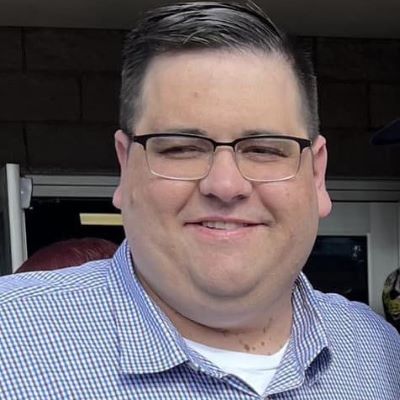
WLS-AM 890 morning host Ray Stevens believes the fastest way to build a loyal audience isn’t through advertising budgets or billboards — it’s by physically showing up. In a wide-ranging conversation, Ray Stevens made the case that community presence isn’t a nice-to-have for a morning show. That’s the entire strategy.
Stevens didn’t always see that approach modeled at WLS-AM 890. When he arrived at the Chicago news/talk station, he noticed a gap compared to what he’d seen elsewhere in radio.
“There wasn’t a lot going on outside of what we did in the studio, which I thought was odd,” said Stevens. “Big country station, lots of events, concerts, charity work, and I do a lot of that on my own anyway — it was kind of a culture shock that there was hardly anything.”
Building Local Roots in a Big Market
Without a marketing budget to lean on, Stevens decided the show itself had to do the promotional work.
“We don’t have billboards, we don’t have advertising, we don’t have any marketing money,” Stevens said. “So the best thing to do is to take our show and our message out on the road. I think it’s paramount to do that. If you want to make noise, you gotta make it yourself.”
That mindset has already reshaped how Chicagoland listeners interact with the show, according to Stevens. He pointed to his upcoming third year at the Carol Stream National Night Out as an example.
“People come out to these events and you become a piece of that event. They feel a connection with you that they can’t get from a national host or maybe a podcast,” the WLS morning host shared. “That’s where you make the connections. And then you really see it the next year when somebody goes, hey, I remember meeting you out at so-and-so.”
That connection, Stevens explained, is rooted in a simple philosophy about scale.
“I think that when you’re a small station, you got to act big. When you’re a big station, you got to act small,” Stevens said. “So I thought, how can we impact a couple communities? How do you make one of these communities in your listening area the biggest story of that community for the week, month, or year?”
That question led directly to WLS-AM 890‘s most ambitious local push yet. This fall, it is launching a high school football broadcast series.
“Now we’re going to do Friday night lights, where we’re actually going into communities,” Stevens said. “We’re gonna run 12 Friday night high school football games on WLS. And we’re gonna be doing color commentary with a broadcaster from each of the towns, so it’s fair.”
Beyond the ratings potential, Stevens sees the series as a chance to give teenage athletes a moment they’ll remember.
“For somebody’s kid to be on WLS broadcast to 40 states on a Friday night in Chicagoland? Their kid’s gonna be a star,” said Stevens. “How cool is that, to be able to super serve your audience on such a local level? It hasn’t been done around here in a long time.”
Turning Engagement Into Loyalty
Community outreach, in Stevens’ view, doesn’t stop at events — it feeds the show’s content directly. Opening the phone lines for local stories, he said, produces an immediate reaction.
“What you do is you open up your phone lines or your text line and say, okay, moms, dads, grandmas, grandpas, you got any kids playing ball, let us know,” Stevens said. “And it just lights up. That’s what you want — activity on your phones and your socials that leads back to engaged listenership.”
Smaller, one-off moments matter just as much to Stevens as the larger initiatives.
“More than anything, it’s the little things, where people say, hey, we’re doing an event for a family that was affected by a tragedy, would you like to come out and host it,” the WLS morning host shared. “And when you throw in the social media component of people sharing that, it does what we were supposed to do — serve the community.”
Stevens also credited his on-air cast, particularly a newsman he described as unpolished but relatable, with making that connection feel authentic rather than manufactured.
“He’s a little rough around the edges, and people buy into that because he is who he is,” Stevens said. “They know that, and they know me, and they know my producer and my technical director, based on the things that we do on the air. You become part of their lives.”
That familiarity, Stevens argued, matters even more given how thin WLS-AM 890’s live local lineup currently is.
“That’s something that’s been missing at WLS for a while, especially given the fact that we only have one live local show,” said Stevens. “But that one live local show is what’s driving a radio station.”
Asked whether the strategy translates to programmers working in similarly large markets, Stevens pointed back to his time at KCMO in Kansas City alongside Pete Mundo.
“The one thing I learned about being over at KCMO with Pete Mundo was that size market doesn’t matter,” Stevens said. “I used to think, man, I gotta work in Chicago, I got to work in the big markets. But I still don’t know if I’ve worked for a radio station as good as that one.”
His closing advice centered on persistence, even as institutional pushback has grown throughout his career.
“You can’t let people tell you no,” Stevens said. “I’ve encountered more no’s in the last 5 years of my career than I have in the first 25 years of it. Find a way around it. Realize and visualize what you want to do, and then do it — the rest of the station will follow once they see the success that you can bring.”