

The Bitcoin price cycle continues to be one of the most referenced notions in long-term market analysis. As interest in BTC changes before and after each halving event, awareness of where Bitcoin is currently positioned within its four-year arc is critical for seasoned and recent traders alike.
With an increasing number of people looking to find out how to buy Bitcoin, cycle analysis is a valuable tool for gauging market direction and uncertainty. This article analyzes the four-year cycle structure of Bitcoin, compares historical data, examines previous cycles, and reviews the current situation, with a look at the next cycle post-2026.
What Is the Bitcoin 4-Year Cycle?
The four-year Bitcoin cycle is a market model that recurs and is consistent with Bitcoin’s supply. At heart, it is the halving event that happens approximately every four years, thus limiting the number of new coins that will circulate in the market. This periodic supply shock is one that, historically, accompanies periods of expansion, rapid growth, and eventual market corrections. Although the cycle is not an accurate prediction framework to look at, phases and their trends also enable traders and investors to forecast how a market will behave in the long run and identify where opportunities lie at the time of accumulation or expansion.
The Halving Phase
The halving phase marks the beginning of a new market cycle. As a result, Bitcoin’s block reward is halved during this event, decreasing the opportunity to create new coins and introducing supply pressure. This has historically helped push changes in market sentiments and launch bullish trends in the long term. Readers who wish to delve deeper into this mechanism should find the Paybis guide on what Bitcoin halving is to be an amazing resource. After every halving, Bitcoin typically goes through some stability followed by expansion.
The Expansion Phase
After halving, Bitcoin generally enters a gradual expansion phase. The demand grows, trading activity rises, sentiment improves, and initial bullish activity develops. It is at this point that institutional interest generally goes up again, and prices tend to rise alongside the overall confidence in the market. The expansion phase is typically seen as the beginning of a bull market.
The Euphoria Phase
The peak of the cycle comes during the euphoria phase, a time when prices accelerate, retail activity is high, and FOMO (fear of missing out) is at a high pitch. The media gives Bitcoin more attention, new investors pour into the market, and prices often hit record highs. But this phase usually doesn’t last that long and tends to be followed by rapid and sharp corrections.
The Correction & Accumulation Phase
Bitcoin tends to undergo a correction once it reaches a peak level and can thus accumulate over a long period of time. During this time, prices decline and consolidate as the market resets again. That’s a time that many long-term investors use to build up BTC at more favorable prices. This stage lays the groundwork for the next four-year cycle.
Historical Overview of Bitcoin Cycles (2012-2024)
Historical data on Bitcoin cycles helps us get insights into existing market trends. A similar rise-peak-correction pattern is observed in all cycles, but macroeconomic environment, regulation, and new inventions also influenced each period. Up to now, we’ve seen four complete Bitcoin cycles, driven by halvings in 2012, 2016, 2020, and 2024, which we will review below.
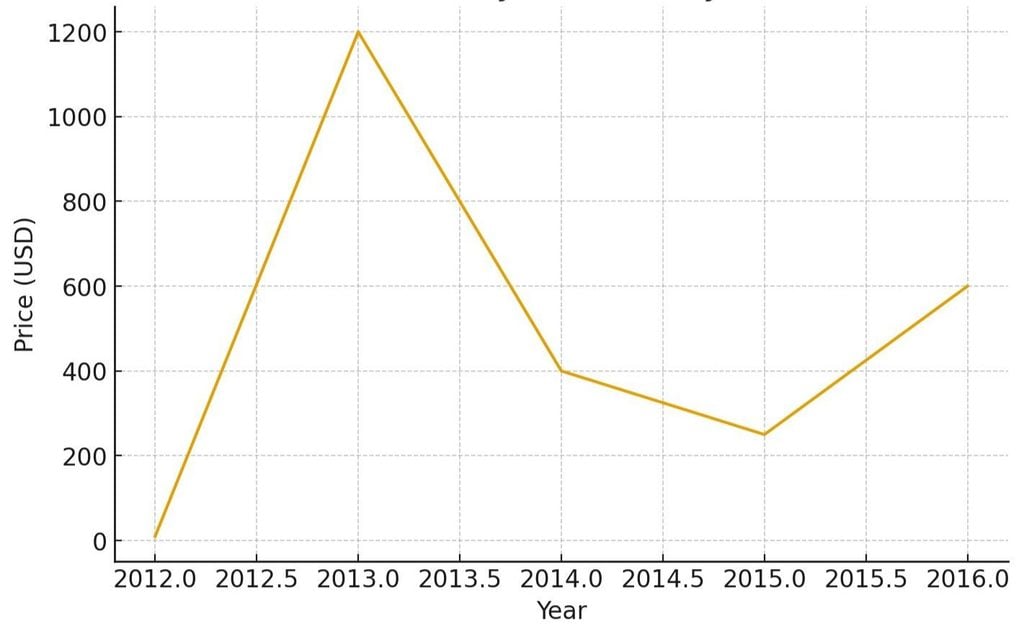
2012 Halving (2021-2016)
The price of Bitcoin soared after the 2012 halving, hitting a new high during 2013 before going through a major correction throughout 2014. That lasted until 2015-2016, when the market started to consolidate in advance of the next halving.
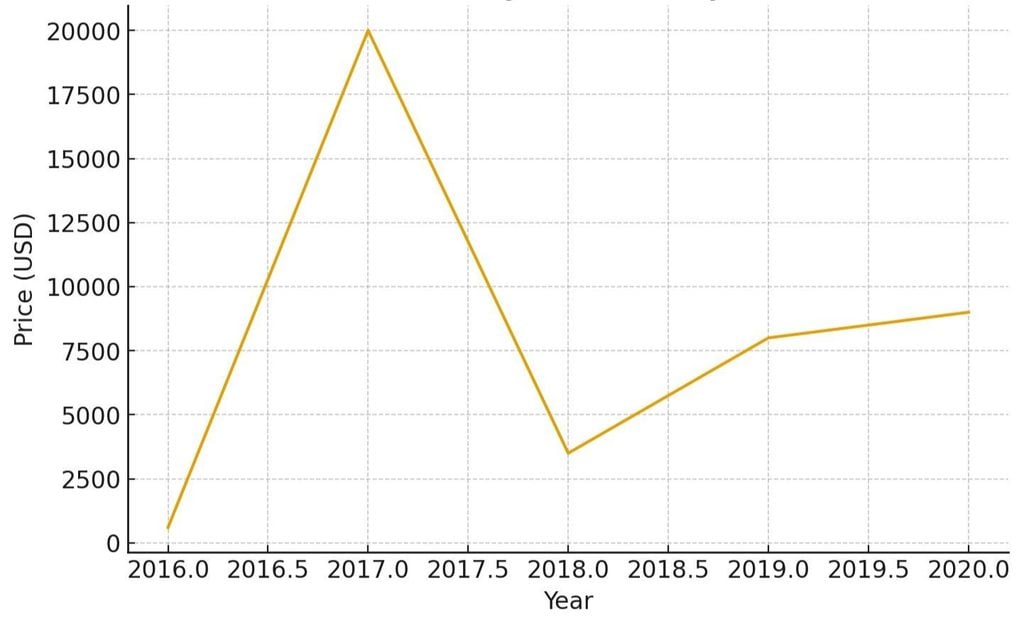
2016 Halving (2016-2020)
This cycle was buoyed by rising retail interest and global media attention. After the 2016 halving, Bitcoin moved into an aggressive period of expansion and reached its best high on record in 2017, peaking at about $20,000. This surge was partially a result of the blockchain’s increasing retail adoption. Then, the market spent much of 2018 and 2019 refining and consolidating.
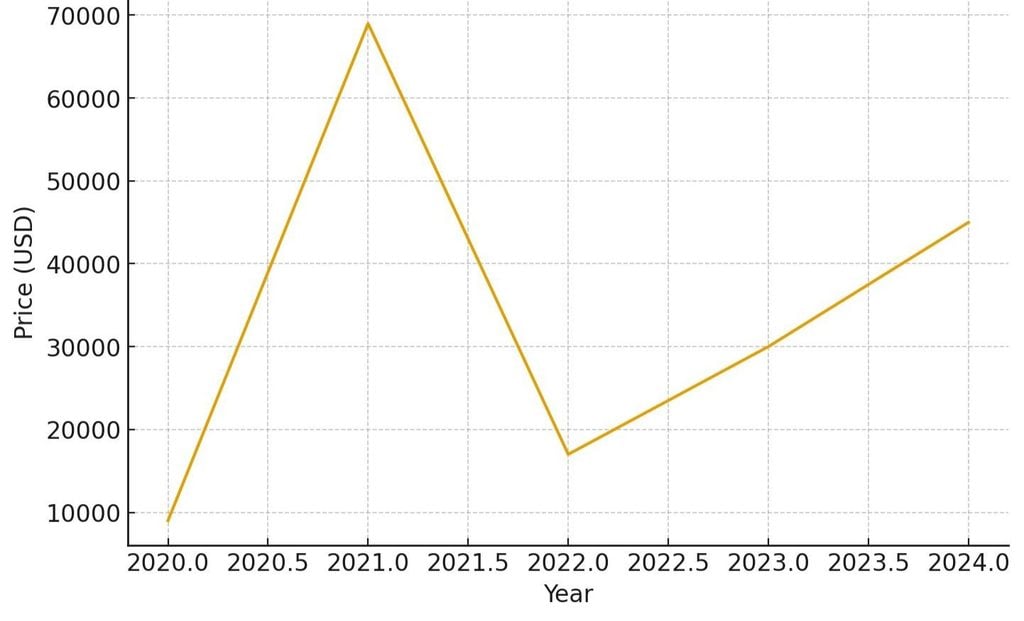
2020 Halving (2020-2024)
The next cycle was shaped by macroeconomic uncertainty, pandemic-related economic policy responses and financial measures, as well as institutional investment. After the 2020 halving, Bitcoin hit the peak (ATH) in 2021 and fell sharply through 2022-2023. Market stability and interest returned in the second half of the cycle.
Where We Are in the Bitcoin Cycle in 2026
In 2026, there are some signals that Bitcoin may be moving from the early expansion phase toward a broader growth stage in the cycle. There is a higher price structure in the lows and strengthening of long-term support. On-chain indicators, accumulation of long-term holders, and declining exchange balances signal diminished selling pressure.
While cautious, market sentiment has gradually risen as institutional activity expands and the international appetite for digital assets continues to grow. Traders’ forecasts of Bitcoin’s future are changing; the traditional cycle in Bitcoin is becoming less reliable with maturity in the market and a greater role for macroeconomic influence. The four-year cycle remains a useful model, but few see it as a rule and more as a guide.
Long-Term Outlook Beyond 2026
Current information suggests that as long as demand for Bitcoin is strong and supply remains constrained, the potential for continued upward momentum is warranted. Long-run growth could also be boosted by institutional participation, regulatory clarity, and broader adoption of blockchain technologies.
On the other hand, policy changes, economic shifts, and risk-off environments might mean lengthy consolidation timelines. Predictions, while not certain, seem to show a tendency for the value of Bitcoin to rise in the long run, even if it is highly fluctuating.
Final Thoughts
For Bitcoin, 2025 has been a period of transition, shaped by historical trends and new dynamics that continue transforming the cryptocurrency ecosystem. Investors can better identify what might influence Bitcoin’s next main market movement by looking at halving events as well as expansion stages, previous ups and downs, and corrections.
Though no model is ideal, the Bitcoin cycle is a valuable resource in analyzing long-term trends and making informed decisions. For readers who are looking to break into the market, Paybis and similar providers offer accessible options for buying Bitcoin while keeping you informed through educational content and transparent pricing.
