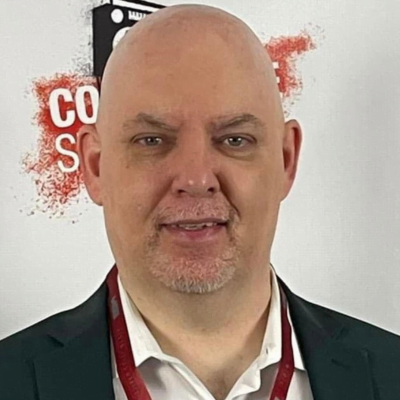
David Roberts never needed the spotlight. That’s exactly what made him effective. The ESPN Executive Vice President and Executive Editor of Sports News and Entertainment confirmed in April that he was retiring at the end of August. Today, marks the end of the professional journey of a lifetime for Roberts.
David’s career started in Detroit in 1978 as a reporter at Black-owned TV station WGPR. Stops followed across the Southeast and Midwest before joining ESPN in 2004. Those seeking deeper insight on the early part of Roberts’ career should read this article.
This piece, though, focuses on his time at ESPN. It includes feedback from those who’ve worked closest with him, and my own perspective based on a decade of interactions.
Extending the Olive Branch
I launched Barrett Media in 2015, and have spoken many times to David. He’s measured, intelligent, curious, and direct. The bass in his voice and the fact that he’s 70 and looks 55 might be more impressive than his five-decade run. He is also an avid reader of our work, so he clearly has good taste.
When you first talk to him, he presents himself as all business, rarely seeking credit for himself, preferring to promote his people and employer. Whether a decision was popular or not, he was accessible, and gave a detailed answer. That’s all I’ve ever asked for when dealing with executives at a brand as big as ESPN.
Early on, I didn’t know what to expect with David. I knew many people at ESPN, but our paths hadn’t crossed beyond one interaction during an ESPN affiliate day in Bristol, CT, when I programmed 101 ESPN in St. Louis. A professional relationship had to be built from scratch.
With Barrett Media covering the industry closely, he had little reason to discuss business with me, but he did. We didn’t talk often, maybe a few times per year, but when we did, it was productive. What I appreciated most is that he’d reach out when there wasn’t a story to discuss. If the only time you hear from people is when they’re complaining, asking for a favor or pitching a story, you become less excited to talk. It’s also hard to have nuanced conversations about key issues if both sides don’t know or understand each other.
Commitment to Diversity
Sports media’s report card with diversity has been especially important to Roberts. In an interview in 2017, he said, “It used to make me sick to my stomach to watch local news operations and network news operations. You’d look around and see the lack of diversity. Then they would wonder why the complaints would flow in about the lack of balance in the programming and news content that they produce.”
David wasn’t afraid to challenge the status quo. He pushed ESPN to lead from the front. Few companies have shown a greater commitment to presenting a diverse roster than ESPN. It’s undeniable that many in front of and behind the camera are in positions today because of his influence.
In a video shared at an NABJ reception this year, Senior Studio Operator Shadeed Sharpe labeled Roberts a trailblazer, thanking him for making sure people who looked like him had a seat at the table. VP of Production James Dunn put it even more directly: “I wouldn’t be where I am today without Dave Roberts.”
When I spoke to Roberts on Friday, he told me why improving diversity was so important to him.
“It was about leveling the playing field and reflecting the communities ESPN served,” said Roberts. “Look at the representation of athletes across the NFL, NBA, College Football, and others. They are made up of people from all walks of life. It’s important for ESPN to present a product that represents everyone. Diversity has proven to be good business.”
My first real conversation with David occurred in 2015. I was writing about sports radio’s diversity issues, and he was guarded during our discussion. Not many were tackling that issue, let alone a middle-aged white guy. But that first article made a difference. David saw that I cared about the issue and was starting an important conversation. I’d write a second column on it in 2017, and tackled it three separate times at the Barrett Media Summit. David even spoke on a panel in 2022 alongside Pablo Torre and Debbie Brown.
Stephen A. Smith saw the balancing act up close over two decades working under Roberts.
“Diversity was incredibly important to him, but not at the expense of success,” Smith said. “He was definitely interested in giving people from different backgrounds a chance, and making sure diversity issues were addressed, but if it wasn’t successful, he’d go in a different direction. He was about winning, first.”
Smith also pointed to the pressure that Roberts endured that others didn’t face or understand.
“The vast majority of his time, he was the only Black person in the room — the only Black executive in the room. There was a tremendous level of pressure on him to be the guy that addressed those needs but he still had to win to stay relevant. He viewed me as his number one soldier, and I took it with pride and wore it as a badge of honor. I tried to help him be the best that he could be because I knew he had done the same for me. Very few people could handle the responsibility, but he did for years.”
Connecting With Talent
David’s partnership with Stephen A. Smith is one of the most significant talent relationships in sports media history. Stephen A. is arguably the biggest star in the business. Roberts understood his value early on, pushing Smith to return to ESPN in 2011 after he was let go in 2009 — offering him a role on radio that paid less than what he deserved. Roberts’ candor and belief in Smith convinced him to say yes and trust the process.
“He was somebody that was a very strong supporter and champion of mine. He resurrected my career,” Smith said. “I trusted him. He believed in me tirelessly. He put me front and center with everything. I’ve never had an executive believe in me as much as he did. It catapulted me to new heights because it compelled the bosses to feel the same, and it all started with him.”
Smith didn’t shy away from what made Roberts a demanding boss, either.
“He was tyrannical about winning. He worked day and night. There was never a time when he wasn’t available. There was never a time where you could safely assume you weren’t going to get a call from him. He wanted to win. He’s definitely an acquired taste. If you’re lazy or looking to cut corners, he’s not for you. If you’re looking to work 9 to 5 and then just go home, he’s not for you. That’s not who he is. This man was going to work, work, work, and do whatever it took to win.”
Roberts’ respect and appreciation for Smith is mutual.
“Stephen A. is a winner. He settles for nothing less. He works hard and he works smart. First Take has been a big success with Stephen A. as the show’s biggest star. It has been an honor to work with him.”
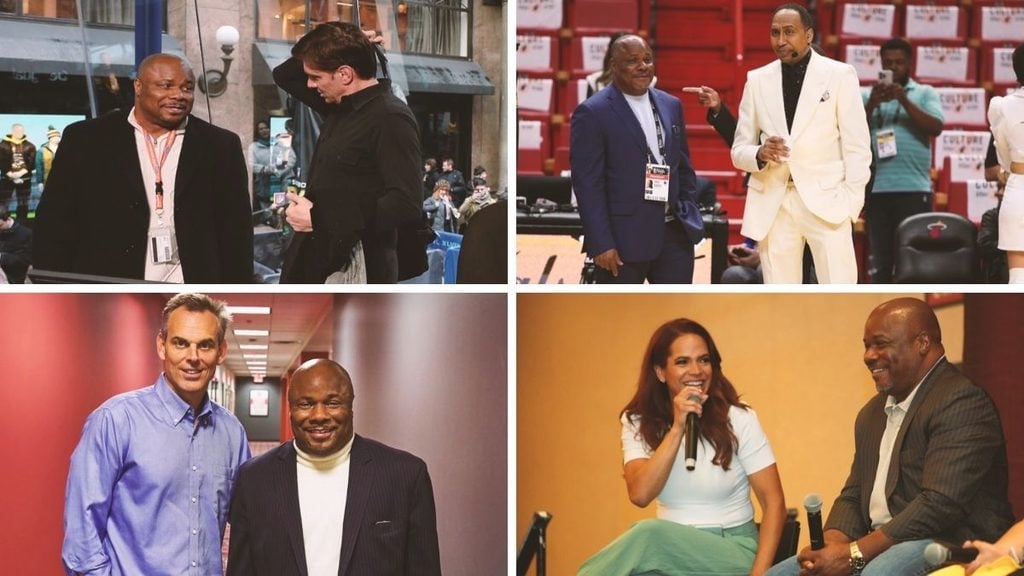
Roberts also believed strongly in Mike Greenberg. In numerous conversations, he praised Greeny’s consistency, professionalism, work ethic, and ability to get the most out of a show, helping to build GetUp! into the morning franchise it is today.
I asked Greenberg about Roberts’ influence. He told me, “Dave is one of the most effective executives I have ever worked with. He knows what makes good TV and is relentless in his pursuit of it. He’s also a kindhearted man, who genuinely wants the best for everyone and asks for nothing in return. I’m going to miss him a lot.”
Roberts’ touch extended to ESPN Radio too. Freddie Coleman spent years working for him.
“Dave was as fearless as they came when it involved finding and taking chances on talent,” said Coleman. “He understood what the audience wanted. Finding the right messengers to deliver it is a skill that not too many people possess in our business. Dave had it. If something wasn’t working, he wasn’t afraid to move on and try something/someone else. I appreciate everything he did for me.”
In that same NABJ video, Monica McNutt and Chiney Ogwumike praised Roberts’ leadership, fierce commitment to different voices, and his demanding of a higher standard of excellence. Treavor Scales added, “Being authentic was important to Dave, and he empowered me to do that.”
But not every talent loved Roberts, who was behind the cancellations of “SC6”, “High Noon”, and “Around the Horn”, among others. He also played a key role in ESPN parting with Jemele Hill, Michael Smith, Bomani Jones, Clinton Yates, “The Dan Le Batard Show,” Sarah Spain, Max Kellerman, and Keith Olbermann.
Three personalities told me off the record that David’s lack of patience and occasional kneejerk decision-making created tension, though all three praised him for going to bat for them even when they wondered where they stood with him. If Roberts believed in your talent and ability to command an audience, he found ways to utilize you, regardless of past experiences.
The Management Perspective
Roberts also earned the respect of many executives — none more than ESPN Chairman Jimmy Pitaro.
“David Roberts spent nearly 50 years shaping editorial coverage in this business — 25 in local news and more than 20 at ESPN,” said Pitaro. “Over that time, he has been recognized for his work on a wide range of programs and content, helping to drive audience engagement. David has also made a mark identifying talent, on air and off, and has guided numerous show launches, expansions, and redesigns. The company is grateful for his contributions within the industry over the years and recognizes the impact that David has had on the many that he championed.”
Pitaro’s predecessor, John Skipper, the former ESPN President and co-Chairman of Disney Networks, elevated him to Senior Coordinating Producer in 2007, VP/GM of ESPN New York 98.7 FM in 2009, and VP of the ESPN Audio network in 2013.
“I always enjoyed working with Dave,” shared Skipper. “He was a man with a big smile, voice, and mind made for radio. Dave had a wonderful collaborative spirit, good heart, and a robust work ethic. Just remembering him warms my soul.”
Another decision-maker with a front-row seat to Roberts’ career is ESPN President of Content, Burke Magnus. When news of Roberts’ retirement became public, Magnus said, “David Roberts has had a long and extremely distinguished career in this industry. We’ve been fortunate to have him as part of the ESPN team for more than two decades. His leadership has made a tremendous difference and he will leave a lasting legacy at ESPN. We wish him all the best in retirement.”
Amanda Gifford, ESPN’s SVP of Production and the head of college football event and studio productions, added, “I learned so much from David. He taught me that sometimes the best decision isn’t the easiest. He also made me think about who we have on the air, what people we have in meetings, and how we’re making sure we’re reflecting our audience, both on the air and behind the scenes.”
A few off-the-record decision-makers felt Roberts’ intensity and frequent changes made it difficult to connect with him and trust his vision. Two did say though that aside from not seeing eye to eye at times, he made the company better.
An Open Mind and Ear
Roberts helped identify and elevate key talent such as Elle Duncan, Malika Andrews, Chiney Ogwumike, Andraya Carter, and Christine Williamson. He also pushed for Will Cain on First Take, giving him a daily show on ESPN Radio. As important as new voices were, he also valued proven stars like Rich Eisen, Michael Wilbon, Brian Windhorst, and Shannon Sharpe. Roberts also appreciated and respected Kevin Negandhi and Nicole Briscoe’s work.
He was also curious, happy to switch roles and become the interviewer rather than the interviewee. Last October, I praised ESPN’s Sunday NFL Countdown after watching a strong two hours. Most people will reach out with “thanks for the kind words” or “this is why you’re the best.” David wanted to know specifically what I liked from the show and why. When I cited the rundown, segment lengths, production use, Greeny’s lead-ins, and specific insights shared by the analysts, he appreciated the detail. He knew I watched the product professionally, and wasn’t just blowing smoke.
Conversely, in 2023, I called out ESPN Radio. David and others up top may not have loved my commentary, but they knew some of the criticism was fair. I said then, and still believe, that ESPN Radio shuffled its lineup too much and made a mistake replacing Jim and Dawn Cutler. Lineup stability matters in radio, and the Cutlers gave the network its signature sound and identity — which is why many local ESPN Radio stations still utilize them today.
Regardless, David never took my difference of opinion personally. He knew my willingness to challenge ESPN’s decisions came from a respectful place. I value the brand and many who work there but I believe in calling balls and strikes. I knew that he was making decisions he felt were in ESPN’s best interests, even when I disagreed. People who operate that way have my respect.
The Long and Winding Road
When news broke that Roberts was retiring in August, I knew this piece had to drop on his final day. I told David on Friday that I appreciated his professionalism over the past decade. I asked him what the past few months have been like, knowing he was inching closer to the finish line. He said, “I’ve enjoyed it because it’s allowed me time for reflection. I’ve had a chance to meet with people and provide mentorship to many who are in roles that I put them in. I am fortunate to have worked for this company, and am proud of what we accomplished.”
Roberts started as a reporter before taking assignment editor and executive producer roles across multiple states. He became news director at WDTN-TV in Dayton, Ohio — the first African American news director in the state’s history — and did it again in Atlanta in 1996. Roberts broke barriers without making the barrier-breaking his identity.
At ESPN, that same approach defined his tenure. He oversaw SportsCenter, First Take, Get Up, PTI, NFL Live, ESPN Audio, and podcasting, and spent time in radio managing ESPN New York 1050. His career highlights include the launch of NBA Today in October 2021, six consecutive years of First Take live shows at HBCU campuses, and Rich Eisen’s return to ESPN. The studio numbers he leaves behind are remarkable: in Q1 2026, the 6 p.m. SportsCenter, SportsCenter with Scott Van Pelt, the Saturday morning SportsCenter, and the 2 p.m. SportsCenter all recorded their highest first-quarter viewership ever.
The Road Ahead
Roberts’ immediate focus is on helping his family — his mother is older and needs regular care. With a residence in both Connecticut and Georgia, he’ll now have time to connect with his siblings and enjoy the world of sports stress-free.
Looking ahead, Roberts believes ESPN is positioned to remain strong. He points to the performance of the network’s studio shows and the wealth of talent across the company to reinforce his opinion. He is sold on Jimmy Pitaro too. During our conversation, Roberts cited Pitaro’s leadership and ability to work with Disney executives on retaining live-events partnerships as reasons he trusts ESPN will retain its lead as the best in the sports content business moving forward.
As he signs off, Roberts appreciates that many will miss him, and understands that some won’t. Talented executives who spend decades leading and making decisions under the nation’s spotlight are going to generate mixed feelings. But you don’t earn giant influence at a company like ESPN without skill, confidence, commitment, and a fearless mentality. Whether you loved his style and decisions or not, Roberts won, and he won a lot.
David Roberts changed the game for the better over twenty-two years with ESPN. He exits overseeing one of the biggest news operations in sports media. Nearly 50 years after first stepping into a newsroom, he’s leaving with a legacy most media executives would envy. Congratulations, David, on a job well done.
Barrett Media produces daily content on the music, news, and sports media industries. Sign up for our newsletters to stay updated and get the latest information right in your inbox.