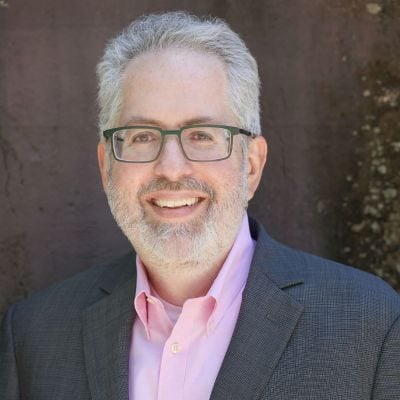
Throughout radio’s history, there have been many impactful on-air talent. Most are known for the way they entertained their audience or embraced their community. However, few have become completely synonymous with a particular style of music the way Richard Blade has.
Currently, the afternoon host on SiriusXM’s 1st Wave channel, Blade’s name is as familiar to fans of that era of music as the bands he plays. In fact, the title of his autobiography, World in My Eyes, is a reference to Depeche Mode. Importantly, while some people might chafe at being tied so closely to a sound, Blade loves it. “I thought I might resent it, but I don’t at all. I embrace it because it was an incredible era of music.”
After coming to America from England, Blade began working in radio in the mid-seventies. Subsequently, he joined the legendary Alternative station KROQ in Los Angeles in 1982. He remained there for eighteen years through the heyday of what’s now referred to as Flashback Alternative or 1st Wave.
The Rise of KROQ
Blade says he was fortunate to work at KROQ early on when the station was programmed by the legendary Rick Carroll, who is certainly the godfather of today’s Alternative stations.
“It was one of the few places I’ve worked where you weren’t just an employee, you were also a fan,” says Blade. “When I got off the air I would race to my car and put the radio on to turn on Jed (The Fish) or Freddie (Snakeskin) because I wanted to hear what they were going to play.”
What kept the station interesting were two spots an hour where the hosts could play whatever they wanted. Additionally, the host’s ability to influence the playlist went even further. “I remember Rick Carroll saying the rest of the hour follow the music key unless you’ve got something better. In that case play it.”
Despite having a weaker signal and small budget, that freedom — along with a desire to be different and tapping into a unique musical movement — helped KROQ become a cultural juggernaut.
“The joke was if you sneezed on the air in the morning, the rest of the day, wherever you went in Los Angeles people would say bless you,” Blade remembers. “It felt like everybody was listening. It was great.”
The music on KROQ went beyond just influencing listeners. For example, after playing a song by Godley and Crème called “Cry,” which at the time was still a rare import, he got a call from a musical consultant for Miami Vice. Blade took the song to the studio and four weeks later it was featured in an episode of the show.
Then Came Grunge
Blade was still at KROQ in the summer of 1991 when everything changed. “I actually say, in World in My Eyes that no one knows exactly when the eighties started. It could have been when the Ramones played at CBGB or when the Sex Pistols swore on live TV or when Duran Duran ran through the jungles of Sri Lanka,” Blade says. “But everyone knows when the eighties ended. It was when Kurt Cobain picked up his guitar and ripped into ‘Smells Like Teen Spirit.'”
Some nineties acts like Nirvana and Pearl Jam resonated with Blade. However, a lot of that era’s music didn’t. “Candlebox and Live and bands like that didn’t talk to me. People love them and that’s terrific. But they weren’t my cup of tea.”
The musical shift at KROQ away from the artists that defined Blade’s career created an opportunity. “I kind of felt my arc at KROQ starting to come down and then I came up with the idea of playing eighties during lunchtime,” Blade says. “And (Program Director) Kevin Wetherly was happy to do that because he figured he could bury the eighties on the Flashback Lunch and not have to play them the rest of the day. Then eventually he’d be able to pull the plug, and it would just disappear.”
Unexpectedly, the Flashback Lunch became incredibly popular. The station had three top-rated shows: Blade in middays with the Flashback Lunch; Kevin and Bean in the morning; and Love Line at night. Despite the success, the Flashback Lunch was eventually pulled from the schedule, and Blade was moved to hosting weekends. Regrettably, the change didn’t go as planned.
According to Blade, “he pulled the plug on a Monday morning and on a Wednesday morning he called me and said, ‘Flashback Lunch is back as of today.'” Blade says the station was inundated with complaints demanding the show be put back. While Blade says he has great respect for Weatherly as a programmer and as a person, he feels the two had an ongoing tension about the eighties music Blade championed.
On to the Satellite
Blade eventually left KROQ in 2000. After a short retirement, he came back to work with VH-1 before joining SiriusXM as afternoon host on 1st Wave. This position impacted his fundamental approach to radio.
On the air from 3pm to 9pm eastern time, a lot of listeners say they turn on his show while eating dinner with their family. “This changed my perspective. I was raised to think that, on the radio, I’m the passenger talking to the listener who is the driver,” Blade explains. “Now I feel like I’m a guest at the dining table. I’m there with Steve Martin, Martin Short, and Jerry Seinfeld and they’ve all told a really good story. Now it’s my turn. How do I live up to that?”
The other difference at SiriusXM is who he’s focused on. “When I first started here they said everything you do on the air is for the subscriber. Whereas terrestrial radio, everything you do on the air is for the advertiser,” Blade says. “The music and everything else is kind of an interruption on terrestrial radio, and it’s a shame it’s gone that way. Whereas SiriusXM, because its subscriber-based, I can make it really listener friendly.”
That allows him to channel some of the early KROQ energy. He credits Chris Muckley who runs the station for being flexible. “I’ll tell Chris, I need to put a couple of songs in because it’s the anniversary of an album release and bam, it’s done.”
He’s also able to react in the moment to events like Dolly Parton’s passing. “I’ll jump on the air and talk about Dolly. Even though we don’t play her music, she was such a gift to everyone who knew her,” he says. “I can talk about it and go into a song like ‘Miss Me Blind’ from Culture Club. Doing that makes listeners feel like we are in touch with what they’re feeling.”
Beyond the Satellite
Blade’s gift for communication has led to numerous projects outside of radio. In addition to his autobiography, he’s also published two books of in-depth interviews with artists. These include The Lockdown Interviews, which took place during COVID, and The Unlocked Interviews which came as bands ramped back up after the pandemic. Additionally, he’s released several novels.
The biggest surprise of his career may have been receiving a star on the Hollywood Walk of Fame. Blade knew he had been nominated but the committee held his name for two years. Consequently, when he got the call it was a shock. “My wife levitated. I think she got like four inches off the ground and spun around. We had no idea it was coming.”
His most recent project has been touring with Howard Jones, which came together in a comical way. “I got a cleverly written email from Howard’s manager, and I knew exactly what he was doing. It asked if I knew any DJs who might want to go on the road with Howard Jones. I was like, yes, I can tell you one.”
But Blade, who has been a DJ since he was eighteen, wanted to do more than just stand behind a console. Instead, he developed a crowd-interactive history of New Wave that included audio and video elements.
“I walked off and Howard was standing at the side of the stage with his arms folded and says, ‘I thought you were going to DJ.'” Blade recalls. But then Jones said how much he loved it and encouraged Blade to do a second tour with him. The partnership is now on its third round with Blade creating new, interactive presentations each time.
Keeping New Wave Fresh
Inventing new ways to entertain crowds on tour with Howard Jones is a reminder of the challenge that comes with being so closely tied to an older genre of music. Keeping audiences engaged requires finding ways to keep the music sounding contemporary.
It helps that so many of the New Wave artists are still active today. Blade points to Billy Idol as the perfect example. Between a documentary, a Las Vegas residency and touring with Devo and Susanna Hoffs, he’s as vital as many current acts.
“The kids who are listening think he’s on the road and so is Ed Sheeran. To listeners they’re both vital and happening right now. We don’t talk about what Billy did back in the day. We talk about how Billy is doing now.”
That leads to younger fans embracing the music Blade loves. “These are the same kids that love Doja Cat and Taylor Swift. They also love The Cure and Depeche Mode,” Blade says proudly. “So many of New Wave bands recorded such great tracks, it makes people fall in love with the music. So, I welcome any link to the eighties.”
Barrett Media produces daily content on the music, news, and sports media industries. Sign up for our newsletters to stay updated and get the latest information right in your inbox.