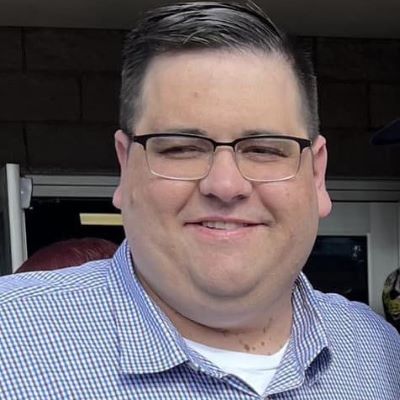
David Santrella spent a decade hearing one question from Salem Media’s founding families: Who comes next?
WaterStone gave them their answer.
Now the Salem Media CEO says the company has new ownership, fresh ideas, and a clearer direction.
“It’s a fairly involved process to take any company from publicly traded to privately held,” said Santrella. “You have to get a fairness opinion done to make sure the stock is being purchased at a fair rate. In this case, the buyer was paying a 250% premium over the current average price of the stock. That’s more than fair. There are a number of regulatory and legal processes. Most of them involve the shareholders themselves.
“A couple of families owned a good number of our shares, so we had to make sure they were all amenable to it,” he continued. “At the end of the day, it was a pretty clean process for Salem. Waterstone was buying at a significant premium, and so much of the stock was owned by just a few people. That can make for a pretty clean transaction.”
Santrella’s explanation shows how the deal came together. However, the price tag tells only part of the story.
A Successor Who Shares the Mission
Santrella views the premium as validation. Consequently, he sees the deal as more than a financial event.
“I think it just shows the real upside value of Salem,” Santrella said. “Most media stocks are pretty depressed these days in terms of their overall value. In this case, Waterstone is an organization with a great vision for our company. It believes in the potential financial success of Salem, and it believes in the real impact our company can make from a mission perspective.
“Salem’s mission is impacting lives and communities by amplifying truth, faith, and self-governance through media. That’s at the heart and soul of WaterStone,” Santrella continued. “Beyond the financial attributes, WaterStone looks at Salem and says, ‘This company is already living out the mission we believe it should live out.’ That’s worth paying a premium for.”
Succession, in fact, had loomed for years. Santrella first raised the topic in an interview with Radio Ink months ago.
“The founding families have always wanted a successor to carry on the company,” the Salem Media CEO shared. “They wanted someone who’d share the same passions they had when they founded it. It’s been a conversation for the last 10 years of my time with Salem. It was always about who will succeed us. Who will have that same level of passion for our formats and our mission? I think it was providential that they found WaterStone. They’re very much in that same camp.”
What Changes Behind the Scenes
Going private trims some costs, but Santrella sees a bigger benefit. Specifically, he points to Waterstone’s fresh approach.
“Certainly, we don’t have as many regulatory issues as we had,” said Santrella. “It saves some money. You just don’t have the same kind of external auditing you needed as a public company. There are other expenses related to being publicly traded, too. More importantly, WaterStone brings new ideas, new sets of eyes, and new thoughts on how we operate.
“They’re changing a bit of the paradigm in how we spend money and what we focus on. I think all of that will lead to a company with more resources and a more defined direction going forward.”
Does private ownership make running Salem easier? Santrella says only slightly.
“A little, but not drastic,” Santrella admitted. “It wasn’t that hard to operate as a publicly traded company, other than the regulatory fees and compliance costs. Even as a privately held company, you still want to adhere to general accounting practices and recognize revenue appropriately. Honestly, it hasn’t been some drastic change in how we operate the business.”
A Year of Loss and Change
The past two years tested Salem far more than any ownership change. On November 12th, 2024, Dennis Prager fell at his California home and has remained paralyzed since.
Salem then moved Prager’s affiliates to The Charlie Kirk Show. Tragically, Kirk was assassinated in September 2025 while speaking at a Turning Point USA event at Utah Valley University.
Meanwhile, the Trump Administration tabbed afternoon host Sebastian Gorka. Morning host Chris Stigall also left Salem to run for Congress in Missouri.
“The Charlie Kirk assassination was emotionally devastating for all of us,” admitted Santrella. “In very many respects, it helped crystallize the fact that what we do is important. Our mission is important, because people don’t try to kill things that aren’t important. When you have something worth fighting for and something worth dying for, it puts it at a new level.”
Santrella acknowledged the string of changes candidly.
“We’ve had our fair share of changes lately,” the Salem Media CEO shared. “I’m honored that people think so highly of some of our hosts that they’ve asked them to either serve in the administration or run for public office.”
Prager’s resilience stands out to him. Santrella praised his longtime host’s attitude.
“Dennis has been so brave and so amazing through this whole thing,” Santrella said. “He keeps a positive attitude and remains very engaged. Even though physically he can’t do nearly the things he used to do, he continues to add value to society every day. He still provides his opinion and his view of the world. It’s wonderful to see that.”
Why AM Radio Still Matters
Santrella also sees a potential legislative win ahead. The AM Radio for Every Vehicle Act passed the House, but the Senate still has to act.
“First off, let’s make sure it gets passed,” said Santrella. “I’m thrilled it passed in the House. But if we go back to our Schoolhouse Rock days, ‘I’m just a bill on Capitol Hill.’ It has to pass in the Senate before it becomes law. Credit goes to the NAB and other organizations that have fought valiantly to make this happen. They’ve done a great job.”
Beyond the politics, Santrella views the bill as a business lifeline. He also ties it to public safety.
“I think ultimately it’s a very wise decision,” the Salem Media CEO shared. “Our emergency alert system is very much tied to and dependent upon AM radio. The ultimate business benefit is that it probably extends the life of AM radio by 20 or 30 years.
“Look at how long car companies have before they must comply,” he added. “Then look at how long they have to keep AM radio in the car before it sunsets. Add in how long people typically own a car, which I think is 11 years now. You’re really talking about adding at least 20 years to the effectiveness of AM radio.”
Barrett Media produces daily content on the music, news, and sports media industries. Sign up for our newsletters to stay updated and get the latest information right in your inbox.