Home Blog Page 1193

Radio Remembers Programmer, Consultant And Format Pioneer Brian Burns

0

Brian Burns, longtime programmer, consultant, and inventor of the Rock 40 format, has passed away at the age of 67.

Bruns also launched the radio trade magazine, “Network 40.”

His three daughters survive him.

Burns was living in Panama at the time of his death.

NewsNation Signs Chris Cuomo to Multi-Year Extension

0

NewsNation has announced it has struck a multi-year contract extension with Chris Cuomo for his primetime program to remain on the upstart cable news channel.

Cuomo originally joined the network in 2022 after his high-profile exit from CNN the previous year.

“Of course I am staying,” said Cuomo of his contract extension. “Where else but NewsNation can you expose the game instead of being forced to play? Let’s get after it!”

Since joining the network, ratings from Cuomo have increased by 54% in the total viewer category during the 8 PM ET timeslot. The show has also seen an uptick in the Adults 25-54 demographic, with 28% growth in that sector.

“Chris is a one-of-a-kind talent whose unrivaled analysis and commentary has helped grow the audience at NewsNation and strengthen our brand,” said Sean Compton, President of Nexstar’s Networks Division. “He believes strongly in NewsNation’s mission of delivering ‘News for All Americans’ and we are extremely pleased that he will remain a staple of the network’s primetime lineup.”

Barrett Media produces daily content on the music, news, and sports media industries. To stay updated, sign up for our newsletters and get the latest information delivered straight to your inbox.

Randy Moss Receives Well Wishes, Support from ESPN ‘Sunday NFL Countdown’

0

Randy Moss, who stepped away from his role at ESPN to focus on a personal health challenge, revealed in an update on Friday that he is recovering after being diagnosed with cancer. The Pro Football Hall of Fame member and Sunday NFL Countdown analyst divulged the news during an Instagram Live video where he stated that he was back home after spending six days at a Charlotte-area hospital.

Moss was admitted after a six-hour surgery to treat cancer that was found “in the bile duct right between the pancreas and the liver.” Although he did not specify his timeline to return to broadcasts, Moss expressed that he hopes to be back with the crew “soon.” Moreover, he launched a campaign to raise awareness and proceeds towards cancer research.

To open the Week 15 edition of Sunday NFL Countdown, host Mike Greenberg informed viewers about the Instagram Live video. Within his discourse, he explained that Moss “described himself as a ‘cancer survivor” and conveyed what he had been through over the past few weeks. Greenberg added that the cast looks forward when he can make his return to the Sunday NFL Countdown desk.

“Absolutely, and [we are] Team Moss,” analyst Rex Ryan responded. “I got your purple tie and all that. Strong side, my friend, left side. I can’t wait to have you parked right here.”

Alex Smith and Teddy Bruschi echoed the sentiments, sending their well wishes to Moss as he is in recovery. Bruschi also shared that viewers can join Team Moss on his fight against cancer by visiting “RandyMoss.com.” All proceeds from merchandise sold through the website are directed to cancer research.

“Please do that,” senior NFL insider Adam Schefter added, “and please get back soon Randy because we cannot have Rex be the handsome man on the set.”

During a November edition of Sunday NFL Countdown, viewers noticed that Moss’ eyes appeared yellow on the set. In the following episode, he addressed the matter and articulated that there was an internal battle taking place. ESPN announced that Moss was stepping away from the network for an extended time earlier in the month. He has received support from his colleagues at the media company, along with NFL teammates and organizations.

The 14-year NFL veteran retired from the league in 2012, currently sitting fourth all time in receiving yards (15,292) and second all time in receiving touchdowns (156). Moss has been a member of the Sunday NFL Countdown studio show since joining ESPN in 2016.

Barrett Media produces daily content on the music, news, and sports media industries. To stay updated, sign up for our newsletters and get the latest information delivered straight to your inbox.

Tom Brady Makes Surprise Appearance on ‘ALL IN Sports’ Podcast Amid New Fanatics Partnership

0

The ALL IN Sports podcast recently taped an episode live from the offices of Fanatics to interview chief executive officer Michael Rubin. Co-hosts Marco Piemonte and Anthony Damato have been working on the podcast since its launch in 2022, and the duo recently announced a new partnership with the sports betting brand.

Ahead of a new episode of the program on Tuesday, it was revealed that the interview with Rubin was interrupted by seven-time Super Bowl champion and FOX Sports NFL analyst Tom Brady. The impromptu occurrence cultivated a new angle of conversation, a topic of which was Brady discussing former Patriots head coach Bill Belichick signing a deal to coach the football team at the University of North Carolina. Furthermore, the episode of All In Sports featuring Rubin and Brady will be available on Tuesday, Dec. 17 across a variety of platforms.

“We all knew interviewing Fanatics CEO Michael Rubin at his office was going to be a lot of fun,” Piemonte said. “But it went to another level when the legendary Tom Brady stopped by to say hello to Michael Rubin and we just happened to be in the middle of our interview. Tom joined us for a few minutes to chat about Belichick and his broadcasting career.”

Piemonte and Damato will be working in partnership with Fanatics as the podcast continues to grow. Throughout the season, fans and celebrity friends help them travel to major sporting events where they create interactive content and convey their thoughts on how to build a sports betting bankroll. Featuring insightful conversations and entertainment value, the ALL IN Sports podcast enter the Fanatics portfolio as the company fosters partnerships with different programs and outlets.

“We created this podcast to help the sports betting community build their bankrolls, but we are expanding the podcast to feature interviews with business leaders like Michael Rubin and sports personalities as we did on the fly with Mr. Brady,” Damato said. “With Fanatics as a new sponsor, we can now go All In on more than just sports betting and have in-depth conversations with newsmakers in the world of sports and never mention sports betting.”

Earlier in the year, Fanatics partnered with The Pivot podcast featuring former NFL players Ryan Clark, Channing Crowder and Fred Taylor. The company also hosted its inaugural Fanatics Fest, a convocation of athletes and fans in New York City with panels, activations and exhibits. This three-day event will be making its return to the Jacob K. Javits Convention Center next June.

Barrett Media produces daily content on the music, news, and sports media industries. To stay updated, sign up for our newsletters and get the latest information delivered straight to your inbox.

ABC News Settles Defamation Lawsuit With Donald Trump For $15 Million

0

After Donald Trump launched a lawsuit against ABC News earlier this year, the network news organization has settled the case out of court.

The case stemmed from comments made on This Week with George Stephanopoulos in March. The Sunday political affairs anchor stated that Trump had been found civilly liable for rape in a case brought forth by writer E. Jean Carroll. The team of lawyers for Trump continually argued that no such findings took place and that Stephanopoulos had defamed the then former President.

The judge in the Carroll case stated that the judgment didn’t mean that she “failed to prove that Mr. Trump ‘raped’ her as many people commonly understand the word ‘rape.’ Indeed … the jury found that Mr. Trump in fact did exactly that.”

On Sunday, the network announced that it had reached a settlement with the Trump team in the case.

“We are pleased that the parties have reached an agreement to dismiss the lawsuit on the terms in the court filing,” ABC News spokesperson Jeannie Kedas said.

The settlement includes a $15 million payment to Donald Trump, in addition to $1 million to cover the legal fees paid to his attorneys. The figure paid out will be transferred to a fund for Trump’s library that is managed by Alejandro Brito, the lead lawyer for the President-elect within the next 10 days.

Barrett Media produces daily content on the music, news, and sports media industries. To stay updated, sign up for our newsletters and get the latest information delivered straight to your inbox.

Lessons Learned From Management Conversations Involving Jimmy Pitaro and Dave Portnoy

0

Jimmy Pitaro spoke last week with Don Yeager on the Corporate Competitor Podcast. The timing of the episode couldn’t have been better for yours truly. I learned a lot. Managing a company as I do, I juggle a lot of things. I have consulting projects to manage, advertising pitches to participate in, conferences to build, and content to oversee and promote daily through our website, newsletters, and social media platforms. There are never enough hours in a day to get things done, but somehow we manage.

For all of those things to run smoothly, a strong team is necessary. But that team has to understand how the company operates, and what’s required to create success. One person or department not doing their part or producing sloppy work hurts the brand and all involved. That then impacts performance and credibility, and potentially, business.

Whether it’s my current operation or my teams during my programming days, I always picture a crew working together to build a car. Everyone has a role to play in getting that car into the showroom, and eventually on to the road. Without the breaks or muffler, the car won’t run right. That leads to a loss of consumer confidence, the brand’s reputation damaged, and business lost.

Pitaro used an even better example, referring it to the huddle in sports. Plays can’t be executed, scores can’t be made, and games can’t be won if the players involved don’t execute their assignments. It’s what separates winning teams from losing teams. You may want your number called, but when you line up, you’re expected to execute the play whether it benefits you or a teammate.

Jimmy says his meetings with ESPN’s management team are the closest he’s gotten since school to a huddle. He brings his team together to discuss plans, ideas, and important decisions, and they’re invited to debate before calls are made. Once a decision is set, alignment and execution are expected. He refers to their process as ‘Discuss, Debate, Decide, Align’. He also wants well rounded executives not programming leaders, sales managers, and digital bosses. I loved hearing that. Too many outlets employ specialists, not executives with a full grasp of the company’s business.

Assuming a team buys into the vision and process, the other part of organizational success is culture and fit. Different talents and personalities exist everywhere. Some fit, and some don’t. If Dave Portnoy was employed at ESPN it’d be a bad marriage. The same would be true if Mike Greenberg worked for Barstool Sports. Knowing who and what you stand for, how a company or brand operates, and how two sides blend is essential to future success and sustainability. If the pairing isn’t right, regardless of talent and intentions, things won’t work.

After absorbing Pitaro’s leadership lessons, I watched a podcast featuring Dave Portnoy, Kirk Minihane, and Ryan Whitney. Portnoy takes a very different approach to running Barstool than Pitaro does at ESPN. Both approaches work because their companies employ people who understand the culture, fit, approach, and vision.

On this particular podcast, Portnoy shared that he fired Minihane for less than five minutes recently before cooler heads prevailed. Kirk and Ryan took Dave to task for making a rushed decision, and Portnoy explained what set him off. Some passionate exchanges followed, and ultimately, everyone landed in a good place.

Some in the corporate world might find it odd to hear two hosts/employees spar with their boss on a podcast, but that’s what makes Barstool unique. Dave has built a brand that’s known for candor, passion, and brutal honesty. Because open communication is provided consistently, the audience feels included in the process, and employees know that everything they say is potential content.

Barstool talent have many passionate exchanges, with and without the boss. There’s an us against the world mentality permeating throughout the brand, which is a reflection of Portnoy’s grind, hustle, and conquer approach. Because the staff understands Dave’s vision, it isn’t a surprise when details come out that Portnoy canned Kirk, and then changed his mind. It’s just another day at the office.

As a leader, your track record on decision making is never going to be perfect. You’ll hire people who make an impact, and make you look smart. Others will come on board who don’t mesh with the team, and require having to change direction. Sometimes you’ll find a great fit, but they make a mistake, leaving you no choice but to move on. The sooner you accept being uncomfortable, and understand that your best intentions may still result in things not working out how you hoped, the easier it gets.

I believe that a leader must have good character and can’t waver on his or her vision. If you don’t stand for something, and have evidence to support a way forward, why would you expect anyone to follow you? Many companies have different expectations and approaches, but speaking for the ones I’ve run, I always sought people who are passionate about their work, respect and trust others, understand and buy into the brand’s mission, consistently perform, and give maximum effort. Expecting to win also matters. If those things don’t exist, results suffer, my blood pressure rises, and internal frustration and dissension follows.

Nobody likes to make moves and have them not work out. But the reality is that sometimes things just don’t click. It isn’t ideal, but if you’ve built a good team, have ongoing discussions with them, deliver a quality product, and possess a good reputation, the business will be fine the next day, even as you begin your process to find the next right fit.

Help Wanted

We’re trying to strengthen our coverage of the industry every day, but to do that we need people with a passion to write, relationships, experience in TV, radio, digital, sales/advertising, and familiarity and interest in our brand. With the holidays approaching, interviews will slow down, but I am planning in January-February to add a Music Writer/Editor, Social Media Assistant, and possibly a sports reporter or site editor. Much of that will depend on what we think gives us the best chance possible to grow our company.

If you know the media business, enjoy our work and telling stories about brands and individuals in the industry, have strong writing and/or creative video/graphics skills, and think you can help us, send your resume and writing samples to Jason@BarrettMedia.com.

Thank You, WWE

I don’t share many personal things in my columns but I’m making an exception this week. I got a phone call Saturday night from my son, Dylan Barrett, who reminded me of how awesome this business can be. Dylan spent the evening shadowing the WWE digital team for Saturday Night’s Main Event at Nassau Coliseum. He learned a ton, and was inspired, excited, and determined to work even harder on his craft after watching WWE’s social team create, edit, and turn around content in timely fashion.

WWE’s digital execution across all platforms generates millions of views and engagements. It’s why they’re among the very best in sports social. My thanks to WWE VP of Digital Steve Braband for allowing Dylan an opportunity to learn.

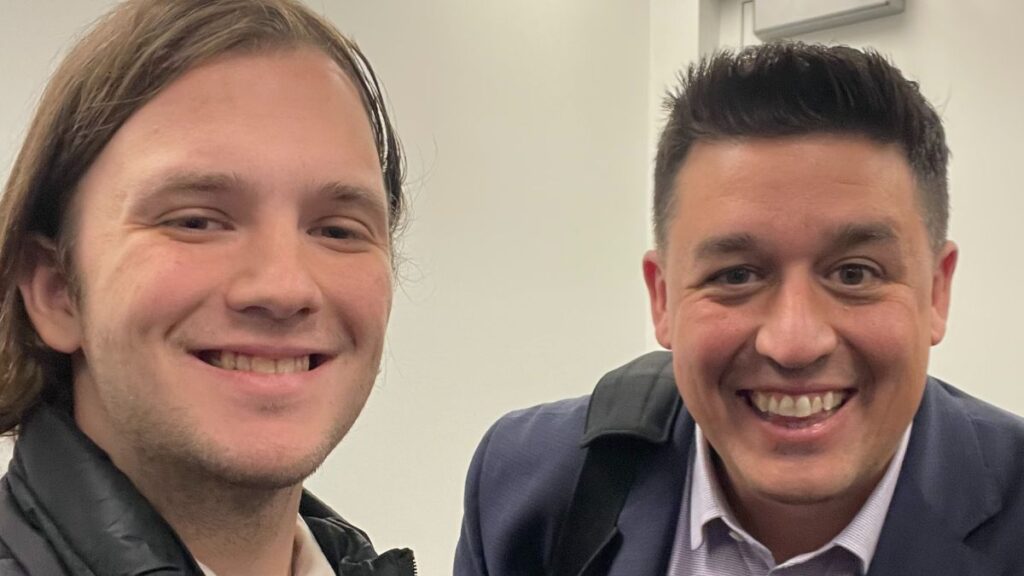
Dylan Barrett with WWE VP of Digital, Steve Braband

By the way, Saturday Night’s Main Event on NBC was excellent. Attention to detail is everything, and WWE’s retro show hit all the right notes. From the promos leading up to the event to the show open, old logo, 80’s music playing in between matches, referees dressed in older attire, Joe Tessitore paying tribute to ‘Mean’ Gene Okerlund with a red bow tie, Cody Rhodes repping the old title, and Jesse Ventura adding commentary for the main event, it was well done. Pat McAfee returning to the broadcast table alongside Michael Cole was another cool surprise.

Brandon Thurston tweeted that 26.6 million people watched the 1988 show featuring Hulk Hogan and Andre The Giant. That was a very different time for television, and the ratings for this past Saturday’s show won’t likely reach that level, but if you look at total reach across TV and social media, I’d bet WWE passes that number.

Quick Hits

  • Congrats to Jim Rome. A big announcement regarding Rome’s show will be made today after 12pm ET. It’s a good move for Jim and all involved in the success of his program. Between the move to X and this next announcement, Jim is showing he’s hungry to add to an already established and successful brand.
  • Kevin ‘KFC’ Clancy is hosting a live stream with Opus AI today at 2pm today to demonstrate how AI can revolutionize content creation and distribution. Those interested in checking out the live stream can click here to register.
  • If you haven’t watched Dan Orlovsky dissect NFL action using Next Gen Stats’ Status Pro Visualizer, watch this. His breakdowns have become some of the best content on television.
  • I’ve really enjoyed Drumeo‘s music video series where drummers are brought in to play songs from other bands that they’ve never heard before. It’s a cool concept that shows how talented musicians think and approach unfamiliar content. I can see a fun spin off of it on sports radio or television. Decision makers, put your thinking caps on.
  • If the reports are accurate, I’m glad to see Amazon Prime Video bringing back Al Michaels next season. Al and Kirk Herbstreit have worked well together, and though I know its fashionable on Thursday night’s to bitch and moan about Al’s play calling, I still think he’s performing at a very high level. It’s good to see that Amazon agrees.
  • Netflix is focused on making a strong first impression on the NFL. 22 broadcasters from 6 networks will be part of the company’s two Christmas games between the Chiefs-Steelers and Ravens-Texans. They’ve lined up some of the best football analysts, reporters, and talkers in the business. Now let’s just hope the actual streaming of the game is better than the Jake Paul-Mike Tyson fight.
  • The Michael Kay Show signed off Friday after 22-years on ESPN New York. The crew told tons of great stories during their last show but one in particular stood out. Michael and Don shared how Michael was nearly arrested while broadcasting live at Shea Stadium. WFAN complained to the Wilpon’s about Kay being on the air at the stadium despite not being contractually allowed to. ESPN New York former PD Mike Thompson dared the police to take action, and once he saw that they might, he got Kay out of there and had Don LaGreca do the rest of the show solo back at the studio. Sports radio drama never disappoints. Neither did Michael, Don, and Peter.
  • The Stephen A. Smith vs. Shaq three point shooting contest was comedy gold. Kenny Smith deserves praise for delivering the line of the event ‘I’ll give 10K to your charity if you hit rim”. If you didn’t see it, click here.

What If Listening To The Radio Was Not Free?

0

Radio is a free medium, and that’s likely the one reason it has survived and thrived for more than 100 years. As more written and audio/video content becomes available behind a paywall, radio, as an industry, should hyper-promote the free benefit. But what if it weren’t free?

Last week, this publication reported on ESPN chairman Jimmy Pitaro discussing direct-to-consumer strategies for his sports content and brands. The story made me think, “What would we do if we had to offer our content behind a paywall?”

It’s hypothetical. Until the FCC finds a way to give every listener their own frequency to program what they want to hear, radio will continue to be a one-to-many medium. You will hear what I hear on those frequencies. The digital space allows radio providers to experiment in the paywall playground. However, nearly every company or talent supports podcasts, videos, and written content through the strategy of advertising.

Let’s continue with the FCC hypothetical storyline. What if the government regulatory division determined there would be no more advertising? Donations and subscriptions only. What would our brands do? The non-commercial providers are speaking back to the screen now and saying, “Hey, we’ve been doing this for years!” Faith-based formats have a sophisticated system of donations and crowdfunding to keep their radio stations, networks, and content providers surviving and thriving every year.

I’m interested in the mainstream music formats. What would your Top40/CHR, Country, Mainstream AC, HipHop, or Classic Rock station offer to make someone pay for the experience?

Scan the dial in your market, and you’ll find duplicate formats. If the format doesn’t have the same Nielsen format descriptor, the Hot AC could likely be considered a Top 40 by the audience. Classic Hits and Adult Hits are format designations for radio providers, not the consumer.

If you don’t own the format in the marketplace, what do you own? Heritage morning shows will top the list. Is there a talent, a team, a bit, or a character exclusive to your brand that would make me want to support you financially?

Is the presentation of the format a non-promotable benefit? This means it falls under the research category of, I don’t know why it sounds better, but I like it. We used to think about audio processing this way. The listener didn’t know, or care, what you were doing to your Orban or Optimod. But emotionally, they felt the difference. The same could be said about tactics like short-setting, clock management, stopset loading, teasing, and contests.

But in an era where the presentation on the radio sounds more similar, what makes a brand unique? Here are three categories to consider when asking your team that question:

Content Differentiation:

What is unique about our product? Is it enough to be the Quad Cities Smooth Jazz station? In today’s environment, that format would be unique, right? But music content is available everywhere, so what is unique about the product that differentiates us from the rest of the dial? What is exclusive? Using the word exclusive doesn’t count anymore. Is it exclusive? It may have owned the category once, but the noisy marketplace made us less unique. Revisit your exclusivity, revive it, and make it more unique.

Value Proposition:

A paywall or direct-to-consumer connection would make the sale easier. We could quantify what the consumer gets for $30 per month, and they would know if we were delivering the value. The broadcasting scenario makes it more challenging but as important. “When you listen to XXXX, you get…” is the exercise. What could we create and promote to make the listener feel like they’re getting something for their donation? 

Marketing and Promotional Strategies:

Free trials and bundling don’t work in a free medium. However, consider the social media and newsletter opportunities to engage with the audience and continually and smartly remind them they get this station and brand because of their donations. The goal is to be a 365-Marketing brand. Every day, we remind the listener of what they get for their donation/subscription.

If there were a fourth item, I would title it Distribution. I didn’t include it for radio because the medium has one of the easiest and most reliable distribution systems in modern times. I’m continually fascinated by how pressing a power button instantly connects me to audio content. 

Let’s celebrate the unique value proposition of radio’s distribution and get our teams together in the new year to discuss what would make these brands more appealing and make someone want to pay for the access.

And You Thought Radio Had It Bad…The SiriusXM Edition

0

In the midst of this season of joy and happiness for those of you in radio who still have jobs, let’s again consider our brethren in other parts of the media world. Last week, we reviewed the problems in the world of cable, except that according to one high level cable person, we should expunge the word “cable” from our vocabulary.

This week let’s be happy that we’re not SiriusXM. In a release last Tuesday, SiriusXM CEO Jennifer Witz said the company was “…taking steps to drive profitability and cash flow as we face marketplace headwinds impacting the company’s growth trajectory.” Have you ever used the term “growth trajectory” when chatting with business colleagues at the water cooler, whether real or virtual? 

In so many words, SiriusXM decided that streaming audio is a tough business if your company is not named Spotify, Apple, or Amazon. The satellite service is still in millions of vehicles although my suspicion is some of the owners of those vehicles don’t realize what they’re paying for the service each month.

My reason for writing about SiriusXM is my personal interactions with the company this year. Many of you who have the service know the drill. If you want it but don’t wish to pay the full monthly price, you call the toll-free number, get in touch with a human (regardless of the continent where they reside), and point out that unless they give you the service for five dollars per month plus the copyright fee and sales tax, you’ll join the ranks of former subscribers. Typically, you’ll get your way. If you end up dropping the service, expect emails expressing SiriusXM’s sadness (“Missing you!”) within a couple of weeks with a similar offer. Depending on your location, you’ll pay around $6 to $6.50 per month, probably for a year and then the process is repeated.

One of the reasons that Donald Trump won the 2024 US presidential election was inflation. While the headline rate has been dropping over the past year or so, the average American could see the price increases in their local stores. However, had the Bureau of Labor Statistics included satellite radio initial offers in the Consumer Price Index, we might be awaiting the inauguration of President-elect Harris next month.

I’ve purchased two vehicles in 2024. One was the “old guy” second car for me. If you’re not familiar, old guys who have some cash are good prospects for sports cars. In my case, it was a 2013 Porsche Boxster S with about 42,000 miles and I love driving it. Meanwhile, we had to replace a car that was totaled in a wreck (thankfully no one was hurt). We now have a 2023 Volvo XC40 Recharge electric SUV in our garage as well. 

Based on those vehicles, we found that SiriusXM has found ways to defeat inflation! I can’t count how many email and direct mail pleas came from SiriusXM with a great offer for the Boxster. It was always three dollars a month plus sales tax (no copyright fee). The deal would last for 36 months with no automatic renewal.

Meanwhile, SiriusXM offered four dollars a month plus copyright fee and sales tax for the Volvo. In other words, the service was now less expensive than it was years ago when five dollars a month was the going “negotiated” rate! I checked an online inflation calculator and the increase over the last ten years is about a third. That “five dollar deal” from 2014 should be pushing seven dollars today. In my case, SiriusXM was dealing with serious deflation rather than inflation!

SiriusXM’s release says the company will “double down” on the automotive subscriber segment. The rest sounds like broadcast radio companies. Streaming will be a “companion” to the core offering. The content is unrivaled (according to SiriusXM), the company will leverage its advertising strength, and of course, they will “increase efficiency”, perhaps in the way that iHeart and Cumulus have been getting more “efficient” of late. Unlike most radio companies, SiriusXM does pay a dividend on their stock (currently 27 cents per share on a quarterly basis) and the company plans to maintain that dividend. 

Back when Sirius and XM started over twenty years ago, broadcast radio was fearful of this new competition in vehicles. Arbitron chose to include satellite radio in the diary service over some serious (no pun intended) objections and continues to do so today. However, SiriusXM is never reported (you can see the mentions in the diaries themselves) and the company does not encode their channels for PPM. 

While SiriusXM is doing its part to prevent inflationary spirals in the US, it’s clear that the company is facing a tough road ahead. Giving up on streaming means a harder push for their place in the vehicle and that means more competition for broadcast radio. As you determine your plans for 2025, expect that SiriusXM is going to beat inflation with offers to take listeners from your stations.

Let’s meet again next week.

Barrett Media produces daily content on the music, news, and sports media industries. To stay updated, sign up for our newsletters and get the latest information delivered straight to your inbox.

Consultant’s Corner: Mike O’Malley, Albright & O’Malley & Brenner

0

Mike O’Malley is a respected Country consultant and best-selling author.

Mike has worked as a PD in Baltimore, Washington, DC, and New York City, where he flipped WYNY to Country in 1987.

Mike and Jaye Albright founded Albright and O’Malley in 1993. Since then, Becky Brenner and Kenny Jay have joined the company. Mike holds a BS from Ohio University and an MS from Florida State.

He is a 2018 inductee into the Country Radio Hall of Fame.

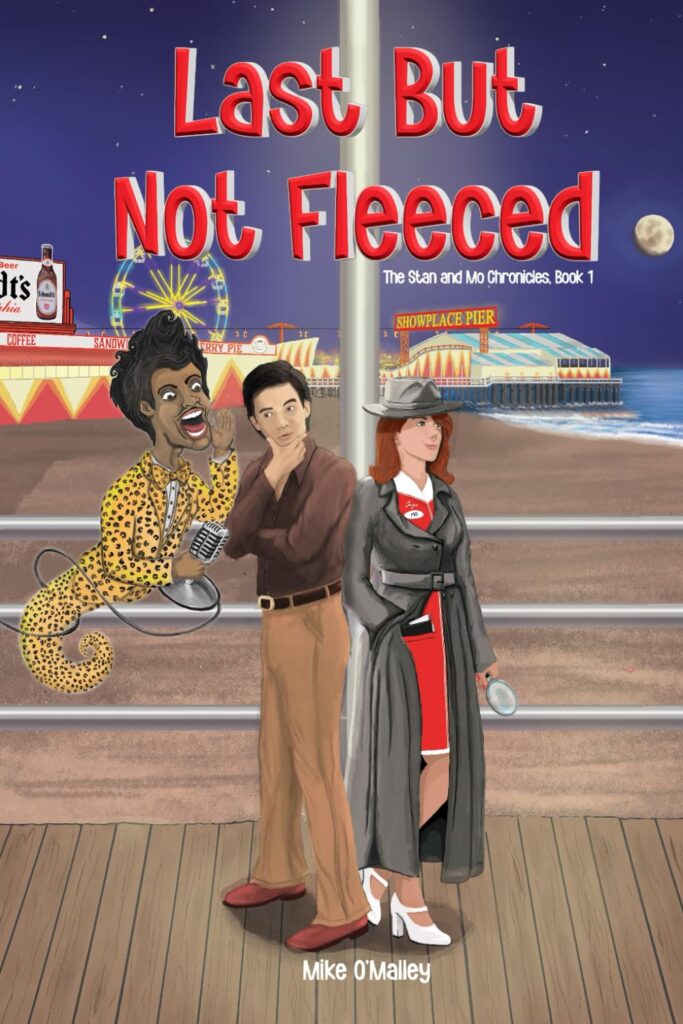
Mike’s also an Amazon #1 Bestselling author of a paranormal-mystery-comedy series called the “Stan and Mo Chronicles” set in Atlantic City in 1972. LAST BUT NOT FLEECED (Book 1) and PIER PRESSURE (Book 2) are available on Amazon and free to read using Kindle Unlimited. DOG AND PHONY SHOW (Book 3) will be released in May 2025.

Mike encourages people in the radio industry to leverage their personal brand while employed in radio and offers solid advice on career paths after leaving the industry.

He is this week’s featured consultant.

Jeff Lynn: I recently spoke with two radio people who are retiring after 49 and 40 years in the business. Those days are over. How do you go about preparing for a potential post-radio career?

Mike O’Malley: If you’re retiring, don’t retire FROM something; retire TO something. Start by thinking or listing things you’ve wanted to do but haven’t had time for. Take the most significant two and make them your “retirement career path.” I suggest picking two in case one, for whatever reason, doesn’t work out.

If retirement is not on your horizon, while you’re still working is the perfect time to take inventory of all you are good at. If you list everything, you might find you possess more skills than you thought you had or skills that can be combined to your advantage. 

Then, while you still have radio’s huge platform to work with, leverage your visibility and marry your best skill or skills to your name. This is one of those “timing is everything” instances. Don’t wait until you lose your platform.

If you’re a talent, volunteer your services as a host, MC, or spokesperson for a charity. Get in front of as many people as you can. Don’t ask for money other than expenses if you must. Exposure is your windfall.

If you have other expertise, give a generous amount away. Your mission is to be thought of as an expert, so parcel out helpful information in a regular stream. 

JL: What industries dovetail with radio experience?

MO’M: Whether on the air, in sales, or in management, we live in an industry powered by storytelling. So, anything related could be an opportunity. A radio person’s skill set could be highly useful for a content and/or marketing strategist, a creative or administrative position at a marketing, advertising, or public relations firm, a promotions and special events manager/coordinator for everything from a retailer to something involving your city, county, or state. Your marketing and promotional background, plus your knowledge of radio, could present an opportunity to work with artists, especially those just emerging.

Your skills will be valuable if you decide to go the coaching route. Mentoring could also open doors to opportunities you might not as yet have considered.

JL: How can you inventory your skills to determine what might be another career path?

MO’M: One of the interview questions I’d always ask of a candidate was, “What was your greatest achievement?” That’s a good place to start. Recall what went into the outcome and break those down into individual skills. For me, one of several proud moments was as a programmer when WYNY became the first Country station to raise $1-million in a single weekend radiothon for St. Jude’s Children’s Research Hospital. A breakout of skills for that could include planning and organization, promotion, logistics, scheduling and coordinating entertainment, storytelling, selling, motivating staff and partners, and being a dual brand ambassador for the station and St. Jude’s.  

You can use a skills matrix to evaluate qualities you believe you will need in the future. This will visually display both your strengths and areas that could use shoring up. For the latter, consider attending workshops or joining groups whose members are all trying to improve themselves in the same area. You could also give yourself challenging assignments to generate ideas that you can then evaluate and improve upon.

JL: What are the first steps to take when you are downsized or laid off?

MO’M: Ideally, you’ve prepared for the possibility, so hit “launch” on your pre-made plans as close to your departure as possible for maximum visibility and leverage. You’ll likely receive some mention in the trade magazines, so you’re smart to have already prepared something positive to accompany the coverage. Try weaving in a positive call to action for yourself as well.

If you haven’t created a plan, here are three ideas to help you start. 

1 – Network for mutual benefit. Initiate regular back-and-forths with others, with each party sharing insights and ideas. Make your network as large as you can manage and still be a valuable contributor.

2 – Have a social media plan ready to launch, including material for at least a couple of weeks. Include your latest projects (you need to have some) and some photos.

3 – Create a visibility plan that keeps you in front of others. Articles, quick weekly newsletter, podcast, a series of free ideas (Freebie Friday?), tips about your hobbies, etc. Whatever you choose, be sure to have a few weeks’ worth of material already prepared. Also, create an appearance calendar allowing you opportunities for in-person visibilities. 

JL: Are there courses or college credits people can take that will help them transition to life after broadcasting?

MO’M: Possibly, but I don’t have a universal suggestion for that. I do recommend, though, to find groups of people who are interested in some of the same things that you are. Those are an opportunity to grow both your network and your skills.

JL: What are the most valuable skills to have or develop for use in another industry?

MO’M: The ability to effectively communicate succinctly is my pick for number one. I’m hard-pressed to think of a situation where this would not be helpful. Many of the greatest and most emotional stories have been told (sung) in less than three minutes. Some of the strongest brands have been built sixty seconds at a time. The best talent can connect with us in 15 seconds. 

Even long-form media becomes stronger with editing. Movies have the proverbial “cutting room floor.” Novels have scenes or even chapters that get sent to the waiting room, so that’s what’s left, is more powerful. My editor has helped me considerably in this with my novels, so don’t be afraid to ask for help.

What you’re after is efficiency without emotional loss. This intensifies the flavor, packing a wallop like a tablespoon of orange juice concentrate before you add water.

I don’t know if empathy qualifies as a skill, but having it is an asset. When you can consider a situation from another’s viewpoint, you have a greater opportunity to communicate effectively. If “empathy” sounds too squishy, substitute “insight.” Either way, you and the people you interact with, will be the better for it.

JL: If people leave the industry in their mid-40s or early 50s, how can they get a potential employer to see their value vs. a younger person who will probably work for less money?

MO’M: A career in radio means we have skills that others may not. Or at least may not have yet had the time to hone.

Any other applicants have to prove themselves to have upwards of a half-million critics daily? Must make their points in less than half-a minute? Are undaunted by public speaking? Possess the self-confidence (and nerve) to reveal inner pieces of themselves to total strangers? Have experience in endorsing clients and products? On the fly, create a story about a company, product, employee, or benefit. Thrive in radio’s “urgency” environment where everything revolves around seconds and minutes, not hours or days?

JL: What was the best piece of career advice you ever received?

MO’M: That’s a tough one. People have been very generous over the years, so it’s hard to single one out. However, one phrase that has stuck with me over the years is “Somebody gave me a chance.” Bill “Dex” Poindexter used it multiple times as he recounted his career in his 2013 Country Radio Hall of Fame acceptance speech. I love that phrase. So many of us are where we are today because someone took a chance on us. Thanks again, Dex, for those words of encouragement to all of us.

Final thought: When you leave, stuff your negatives in hefty bags and old suitcases and leave them at the curb for pickup on trash day. Dragging them along will only slow–and weigh–you down. Instead, pack light. Bring your best skills and only your best memories.  

MikeOMalleyAuthor.com
Mike@MikeOMalleyAuthor.com

Get exclusive content – Sign up for Mike’s free newsletter here.         

Dave Sims is in a New York State of Mind as the Yankees Radio Voice on WFAN

0

The Seattle Mariners organization frequently leads Major League Baseball in total miles traveled every season due to its location in the Pacific Northwest. Dave Sims, the longtime play-by-play voice of the team, understands the lack of proximity to other cities and three-hour time difference having been situated on the West Coast for almost two decades. Although he has an earnest avidity and appreciation for the Emerald City, he tries to make the most of his time in New York City.

While he was in the region this past May, Sims took off for the team’s three games in Baltimore and met with Audacy New York market president Chris Oliviero. One month earlier, longtime New York Yankees radio play-by-play announcer John Sterling had retired from the booth following a 36-year tenure in the position.

Although Sterling eventually returned to call the final six regular-season games and subsequent postseason play, Audacy and the Yankees were in the process of determining who would fill the role for the 2025 season and beyond. As a rotation of announcers filled in throughout the year, Sims was interested in having a chance to serve as the new radio voice for the franchise and documenting its peerless run of sustained success.

“I said just given the situation, and previous encounters I’ve had with people with the Yankee organization [and] with FAN, I said it was the perfect situation for me and a perfect situation for them,” Sims explained. “Suzyn [Waldman] and I are friends. She gave me her full endorsement, and I just took it from there and it all came together, and here I am.”

Sims was officially announced as the new radio voice of the Yankees last month, agreeing to a deal to call games for the 27-time World Series champions. As a preeminent sports franchise within the sports world at large, he is excited to return home and call monumental moments featuring stars such as Gerrit Cole, Aaron Judge and Giancarlo Stanton. Even though some people labeled the decision to depart Seattle as a no-brainer, Sims was not under contract for next season and valued potentially returning to WFAN, where he had hosted at the station during its formative years pioneering the sports talk format.

“I had blessings,” Sims divulged. “The Mariners have been spectacular. Kevin Martinez, the president of baseball ops…. He’s from the area. He says, ‘If they make the right offer, you got to go and with our blessing, and we’re rooting for you. And if the offer’s not any good and you want to [stay] here, you got a spot here.’ I thought we had a very good, frank discussion, and they were very amicable. The people have been fantastic in the organization.”

Sims understands the prestige associated with the position he is assuming and is able to recall the lineage of those who have occupied the distinct responsibility. Sterling, an award-winning broadcaster and beloved figure in Yankees history, was popular with the fans for his encyclopedic baseball knowledge, orotund delivery and inimitable calls for home runs and wins. A few weeks ago, Sims saw Sterling at a dinner where they exchanged pleasantries and discussed their families, first meeting each other while covering the New York Nets of the American Basketball Association in 1967.

In the new role, Sims becomes part of a lineage of radio broadcasters that includes Frank Messer, Phil Rizzuto, Mel Allen and Red Barber. Rather than trying to replicate a particular cadence, Sims is going to bring his own style and mannerisms to the job while honoring tradition. At the same time, he will adopt elements of other broadcasters to his overall approach, including former radio sportscaster Marty Glickman.

“I’m not trying to imitate anybody – that’s not in play,” Sims said. “I have learned things from Marty that I’ve tailored for me and how I do things. There’s some fundamentals you stick to, but you’ll hear me. You’re not going to hear me imitate John – no way – and nobody wants to hear that, and that wouldn’t even be fair to ask somebody to do that.”

This is not the first time Sims is succeeding a distinguished broadcaster closely associated with a professional baseball team. When he first arrived in Seattle ahead of the 2007 season, he worked on radio for three innings as an analyst with Rick Rizzs before moving to television to pair with Dave Niehaus for the remainder of the game.

This arrangement continued for the next four years, but things suddenly changed when Niehaus passed away after suffering a heart attack during the offseason. The news devastated Mariners fans and the baseball community, many of whom had grown up with Niehaus serving as an integral part of the summertime, and longtime listeners gathered at the ballpark that December to commemorate his life.

“It wasn’t like, ‘Dave’s gone, now you get to replace him’ but it was a process where people had to get used to me, and each telecast would have a different vibe,” Sims said. “I just know I’m a lot different from Dave. At that point, he was very avuncular, a grandfather type, old-school guy [who] had great stories, and he was a presence there in Seattle that was amazing because, for the longest time, they did not have a big TV package, so people knew his voice on radio.”

Even though Sims has been a regional broadcaster in Seattle, he has maintained a steady presence in the New York metropolitan area through his national work. No matter the occasion, he treats every matchup with the deference and prestige of the World Series. Amid the 162-game season, he does not engage in overthinking and ultimately focuses on doing the job at the highest level. Harkening on his previous experience as a reporter with the New York Daily News, he is not intimidated by relocating his baseball responsibilities to the No. 1 designated market area.

“I’ve seen moments in every sport – football, baseball, basketball – and you cherish those kind of moments, you deliver and you go back and you get in the car, train or plane, and with a smile on your face, and get ready for the next one,” Sims emphasized. “It’s not a freak-out situation.”

Sims knows how to actualize comprehensive, credible storytelling under deadlines, an implicit connection to his authentic, real-time reactions as a broadcaster. Affirming that he was not born to be a chemist, Sims does not take any days for granted and exudes both professionalism and poise. In fact, his preparation for Opening Day has already commenced through a rigorous offseason program that involves observation, research and inquiry.

“I know most of the guys, but there’s a bunch of guys out of the bullpen that I’m not super familiar with, so I think that’s going to be the biggest thing,” Sims said. “And then go back and get on Baseball Reference and try to commit to memory, certainly, familiarity with a lot of things that happened to the Yankees this past season and not do anything to abuse my voice.”

In making the move to radio, Sims is focused on executing the dichotomy between the two mediums and demonstrating his expertise. Drawing off the philosophy taught by Glickman, he makes consistent references to the time and score in order to keep the audience informed and engaged. Remaining aware of nuances within the traditional paradigm, he will insert sabermetrics and other advanced statistics when appropriate. There will also be moments to weave in stories and engage in conveersation dictated by the flow of the game, building on congeniality fostered with Waldman over time.

“Instead of texting from 3,000 miles away, we’re going to be six feet apart,” Sims explained, “and we’ll be able to look each other in the eye and go back and forth on things, so this is going to be pretty special.”

Sims knows that he is going to bring energy to the Yankees broadcasts, which will include some of his signature calls that have become part of the baseball lexicon. For example, the inspiration for “Hey Now!” came when Frank Sinatra belted out the line to end his re-recording of “I’ve Got the World on a String.” Over the years, he has used the phraseology sparingly as a verbal exclamation point to encapsulate the gravitas of a moment.

“I say ‘Giddy up!’ because I was raised on Westerns on TV back in the ‘50s and ‘60s,” Sims explained. “‘He rings the bell!’ with a two-run homer, that kind of stuff. I don’t come in with a script, [and] I’m not choreographing anything. I just react to what I’m looking at.”

Even though he is no longer calling baseball on television, Sims understands the importance of the local broadcast. There have been instances where he has heard people muting the audio on their televisions and syncing their radio feeds up to the video. While Sims also broadcasts nationally, that gesture and the kind messages he has received validates his position and fosters a sense of belonging.

“The texts and the correspondences I’ve received in the last two weeks – almost three weeks – [have] been tremendous,” Sims said. “You know, ‘I listened to your calls in Seattle, and you’re now a part of our family and welcome,’ that has been extraordinary. It has been unbelievably touching.”

As Sims eagerly anticipates signing on the Yankees Radio Network for the first time, he hopes to refrain from adopting a frenetic pace that will misalign his thoughts and words. Rather than broadcasting at a proverbial New York minute, Sims will become more immersed in the natural flow of the game and seek to accurately depict an image in the mind of the listener. Through it all, he will give credence to the lore and beauty of the game and always remember that the person on the other side of the speaker may be listening for the very first time.

“I want to do my job, be the best I can and wherever the old chips [are] going to fall [is] wherever they’re going to fall,” Sims said. “What I have control over is doing a damn good job. Anything after that, I got no control over.”

Barrett Media produces daily content on the music, news, and sports media industries. To stay updated, sign up for our newsletters and get the latest information delivered straight to your inbox.