Home Blog Page 1529

Barrett Media Convention Coverage: Republican National Convention Day 1 Recap

0

The Republican National Convention began in Milwaukee Monday with thousands packing Fiserv Forum after quite a run of newsworthy events.

After being shot at a campaign rally in Pennsylvania on Saturday, the classified documents case against former President Donald Trump was dismissed Monday morning after a judge ruled that the appointment of special prosecutor Jack Smith was unconstitutional.

Additionally, Trump made headlines Monday by selecting Sen. J.D. Vance (R-OH) as his running mate on the Republican Presidential ticket.

After all of that, Trump made a surprise early appearance at the convention, to much fanfare from attendees. He was joined by his new running mate, who was all smiles as he made his way to the convention floor.

With the appointment of J.D. Vance to the Republican presidential ticket, that could potentially open up a Senate seat should the Trump/Vance campaign win the 2024 election. Former Republican presidential candidate Vivek Ramaswamy, an Ohio native, told KOA 850’s Mandy Connell that he would “strongly consider” filling the seat if asked by Ohio Gov. Mike DeWine.

On the speaker’s front, Sen. Ron Johnson (R-WI) spoke about the “clear and present danger” to the country. He later said that the teleprompter malfunctioned and loaded an old, outdated version of the speech he was prepared to give.

Additional speakers included entertainer Amber Rose and Teamsters President Sean O’Brien. Both were well received by news media members.

Some news media members are big stars at the Republican National Convention. That includes nationally syndicated radio host and Fox News primetime host Sean Hannity, who was seen tossing Fox News merchandise into the crowd from the network’s makeshift studios.

The 2024 BNM Summit Welcomes National Association of Broadcasters President and CEO, Curtis LeGeyt

0

Fifty five days remain until the 2024 BNM Summit takes place in Washington, DC. George Washington University’s Jack Morton Auditorium is our location for this year’s event. Media professionals can attend the conference by purchasing tickets HERE. Hotel rooms are also available if you’re traveling into town. The Arc Hotel is our partner for this year’s event, offering a special discounted rate for attendees. There are other hotels nearby as well, all within walking distance of the venue.

Twenty eight professionals have been announces for this year’s show so far. Included in our schedule are Clay Travs, Chris Plante, Julie Talbott, Daniel Anstandig and more. BNMSummit.com is where you can find the full list of speakers. We will reveal more in the weeks and months ahead, but today, I’m excited to reveal the next big addition to our 2024 show.

I am honored to announce the addition of National Association of Broadcasters president and CEO Curtis LeGeyt. Curtis will join us on Thursday September 5th. He and I will sit down for our keynote conversation from 11:20am-12:00pm. Our conversation will explore critical issues facing our business, among them, AI’s impact on the broadcasting industry, and the AM Radio For Every Vehicle Act.

“I am excited to join the Barrett News Summit to discuss the enormous opportunities, as well as the critical issues broadcasters face today” shared NAB president and CEO Curtis LeGeyt. “As we navigate the ever-evolving media landscape, I look forward to addressing the impact of legislative initiatives like the AM Radio for Every Vehicle Act and the role of AI in media. This summit provides a valuable platform for broadcasters to share insights and strategies on how to thrive amidst the challenges posed by Big Tech. I look forward to meeting with industry leaders as we discuss how to ensure a strong future for broadcasting.”

Curtis LeGeyt speaking with Adrienne Bankert at NAB Las Vegas

Curtis ascended to president and CEO of the NAB in January 2022. He serves as the chief advocate for America’s free, local television and radio stations and their network partners. Prior to assuming the role, he served as chief operating officer of the association. That followed a stint as executive vice president, Government Relations, from 2015-2020.

LeGeyt is a member of the U.S. Chamber of Commerce’s Association Committee of 100. He also serves on the National Action Alliance for Suicide Prevention’s Executive Committee. In addition, Curtis is an alumnus of Leadership Music, a Nashville-based program that fosters community and collaboration among music industry leaders.

If you’ve already heard Curtis speak, then you know how passionate, genuine, and invested he is in our industry. Those who haven’t are in for a treat. We value informed perspectives on our stage, and with Curtis on hand, we will address the opportunities and challenges facing the broadcasting industry. Growth is only possible with strong leadership. I’m excited to give attendees a chance to hear from the man who’s hard at work each day fighting for their futures.

Join us in the nation’s capital if your schedule permits. Everything you need to know about the conference can be learned here.

Bo Matthews Out At Bay Country 94.5/92.1, San Jose.

0

Bo “Matthews” Gutierrez has exited Alpha Media’s Country KBAY (Bay Country 94.5 & 92.1)/San Jose & KKDV/Walnut Creek CA. Matthews had been with the stations since their flips to Country in 2022.

Matthews was previously with Alpha’s cluster in Dayton, OH, where he served as OM, Rhythmic Format Captain, and PD for Country WCLI (101.5 Hank FM).

Other stops included Cleveland, Jacksonville, Ft. Meyers, and Cincinnati.

Reach out here.

Roger Goodell Gets a Black Eye in Sunday Ticket Decision

0

What does it take for Roger Goodell to sustain a real blow? He takes PR hits regularly. The public at large clearly does not trust him to care about or do anything to curtail the domestic violence problem in the NFL. The league and its public face are not monoliths. Their legacies will be multi-faceted, but when it’s time to write the story of the Goodell era of the league, it will be hard to ignore him getting it wrong over and over again when one of his players is accused of hitting a woman or a child.

PR hits are what they are. They are stories that may dominate a news cycle for 48 or 72 hours, but largely, they are blips on the radar. Roger Goodell has avoided a real black eye, something that seriously tarnishes his standing amongst the 32 team owners, which is saying something considering he’s the one that signed off on the movie Draft Day!

That changed last week. The arrogance and short-sightedness required to let the class action lawsuit brought against the league by subscribers to NFL Sunday Ticket get to a jury is astounding. Appeal or not, there is now public record that at least one judge believes the league happily price-gouged its most dedicated fans for years. 

Bad PR and fans grumbling is one thing. All of the scrutiny around player discipline has not once stopped Roger Goodell from getting a new, more lucrative deal when it comes time to renew his contract. The way the league handled the Sunday Ticket lawsuit is the first time the guy showed true incompetence. That’s something that will be hard for Jerry Jones, Robert Kraft, and the rest of the gang to ignore.

Goodell’s position has always been that everything the NFL puts on a screen is a premium product. He’s confident that media rights are distributed to reflect as much and access to every game the league plays in a given week should be priced in that way. The ratings reflect that the NFL truly is the most valuable property on television. It’s why even the tiniest packages fetch nine figure price tags. 

Now, make no mistake, the NFL is grateful that you watch, but the team owners do not care about you. They sure as hell aren’t going to do you any favors. Revenue will always come before people, and to be fair, the NFL is a business. Being shocked when team owners behave as such says more about you than it does them.

However, the league, and Goodell particularly, bend over backward to keep that reality out of your mind. Look at the way the NFL disguises marketing efforts like Salute to Service and Crucial Catch as support for military veterans and cancer research, things that any decent person would support. Maybe I’m just too cynical when it comes to big business in this country, but I can’t believe team owners are as concerned about raising money for these worthy causes as they are about selling new hat and t-shirt designs.

Disguising naked capitalism as fan and community engagement may not be as valuable as securing eleven-figure media rights deals, but it counts. The NFL has been really, really good at it under Roger Goodell’s leadership. That’s what makes failing to negotiate with the plaintiffs in this class action lawsuit so shocking. 

The initial ruling may not hit the NFL as hard as some industries, but no one can ignore a $4.7 billion judgement against them, especially when the final bill could actually end up being triple that amount. At least one person who gets to be in the room where the biggest decisions are made at the league owners’ meetings has had that thought. I’d bet they have also thought that there is no reason the lawsuit had to get that far.

NFL Sunday Ticket is a premium product. I don’t think anyone that is a sports fan would say otherwise, but it’s the only product of its type that is sold in a monopolistic way. It’s offered one way from one provider. 

Compare that to NBA League Pass or NHL Center Ice. It’s fair to say that demand for the NFL is on a different plain than those two leagues, but they have both proven that it’s possible to make their all-access products available in a variety of places and in a variety of ways and still turn a serious profit. The only reason the NFL hasn’t made the same options available is they wanted to deprive their fans of any option other than the most expensive one. That’s the textbook definition of monopolistic behavior.

We’re all in the media business and we know the deal. The day we stop making our employers money, our jobs are less secure. The day we cost them money is usually the day we are asked to gather our belongings and follow security out of the building. 

NFL owners still have plenty of reasons to stand behind Goodell, but he should be in the doghouse, at least temporarily. He just lost a bet that could cost his bosses $14 billion. Even if they forgive his error, I don’t expect they will forget it.

What is News and Who Decides It?

0

At the dawn of civilization some 300,000 years ago hunters and gatherers returned to their clans with stories of great deeds performed in the daily hunt. This is also when fake news was invented.

Many thousands of years passed bringing us town criers and the invention of newspapers. Here we are today working in high-tech radio newsrooms that inhale information through multiple digital sources and spew it to our listeners almost immediately. (Except when news happens at night or on weekends or holidays, of course. That’s another column or six.)

One thing about news hasn’t changed over the hundreds of millennia since Fred Flintstone brought home the Bronto burgers: the news purveyor still decides what you’ll be told.

What is news? Who decides what your listeners want to know? It’s a head-scratcher. Always has been.

Some years ago, I was in a meeting with my morning all-news co-host and our program and news directors. The ND wondered why we hadn’t mentioned a particular international story that morning. My partner and I both replied that it was boring, and nobody cared. The news boss argued that though it might be of limited interest to most of our listeners at the moment we should do it because “It’s important.”

I don’t remember what that particular story was about but it’s a great example of conversations I’ve had in newsroom meetings and off-air in the studio countless times. I’ve never known who’s right in these value judgments. In this case, the PD ruled that we, the “talent”, had a better sense of listener interest though it could grow with more attention from other outlets. And that’s the crux of the issue, isn’t it? Should you report a world or national story because the networks are doing it? Should something be reported simply because it’s a local story?

The obvious answer is no, but they’re difficult temptations to resist for one very good reason: in every case, we can only guess at the answer. I suppose saying our judgments are valid because we’re experienced professionals would be better than saying we guess, but is it really?

Years ago, radio news was presented in defined blocks: world, national, state, and local. Then individual stations began paying for serious research. (The radio world would be a much better place if that was still true. Another future column.) The research professionals did their thing and then flew into town and told us, “Look at this pie chart; world news is killing you. And, by the way, people are also tuning out when you do stock market reports.”

(I think we were also told we were overdoing the Milli Vanilli story at the time. That was true.)

This was all vital information, but it resulted in an overcorrection away from world news, including what my ND would call “important” stories, to a hyper-focus on local news. It took a while but when the research experts returned, we learned that maybe we had gone too far when we started reporting convenience store heists and overnight apartment fires.

Who decides what is news?

The ultimate answer should be the consumer. But which one?

With all our handwringing over the future of AI, a lot of people seem inclined to throw the baby out with the bath water. If that’s you, stop it. AI is a tool, not a creator. It doesn’t think, it computes and can be combined with algorithmic technology to do exactly what you already do every day with your personal music selection: choose the songs and styles you want to hear and reject the ones you don’t. It learns you. Isn’t that a good thing?

Let’s imagine that (fictional) station ALL NEWS 97.2 gives you an online menu that allows you to select the types of news stories you want to hear. It will take into account your location and any others you’d like to follow. Get as specific or general as you wish with every category of news you can imagine: world, regional, local, sports, weather, business, entertainment, lifestyle, people stories, etc. The online audio feed will give you exactly what you ask for, constantly updated news written and delivered by real people. The flow of the show will be tied together by an AI voice, but the stories will be gleaned, written, and delivered by honest-to-God humans in his and her voice and conversational style.

Yes, I did say “the online feed.” What happens on the broadcast channel? Hard to say but I imagine it will, at first anyway, be the best option for people who want to hear it all. That will continue to be formatted by living programmers who understand audience tendencies.

Look, I’m just making this up as I go. As I’ve said before I’m not the smartest guy in any room, but it doesn’t take a lot of foresight to guess this is where we’re going. For all I know it’s already being done and much better than I’m dreaming it.

Back to the original question: what is news and who decides it?

The program and news directors I’ve spoken with agree that the answer is the listener should decide.

Robin Bertolucci, PD of KFI, Los Angeles:

“Our job isn’t to make anybody interested in anything. Our job is to talk to them about things they’re interested in. If we’re doing our jobs right, we’re talking with them about the things they’re already curious about that they want to know more about. If they’re not interested in (the fighting in) Gaza we probably shouldn’t cover it any more than just a few headlines in the news.”

It’s a great answer but it still begs the question, who decides what listeners want to hear?

Again, Robin Bertolucci:

“I think the more you can know your local audience the more you can know what interests them and really try to hone in on who they are and what lives they’re living, what kind of experiences are they going through, what kind of challenges are they having in their personal lives, whether it’s traffic or crime in their community or fear about their children’s schools and what is going on with them and digging into that. And I think part of that just comes from being a part of the community and really knowing what’s going on. I try to hire people that get that.”

You can’t argue with success. KFI knows its audience. Many stations do, of course. But when you come right down to it the answers to the question are always subjective.

What is news and who decides it?

The only answer is you, the radio news professional, decide. It’s as perfectly imperfect as humans can ever hope to be.

But modern technology, algorithms, and AI can improve on imperfection. The best of both worlds is achievable if we simply embrace the possibilities.

If you love radio news you’re living in the greatest time in history.

Landry Locker Seeks YouTube Success Just Like He Had at SportsRadio 610

0

There’s a saying in life that if nothing changes, nothing changes. In the case of Houston sports radio personality Landry Locker, he needed a change and last month announced his departure from Audacy Houston and the midday show at SportsRadio 610 in order to focus on his YouTube channel “The Locker Room.”

Why was it time for a change?

“I think there’s just a shelf life on every show,” said Locker.  “Sometimes decisions have to be made for a number of reasons.”

According to the terms of his contract, Locker was able to retain his personal digital property and that is allowing him to grow the YouTube channel.  The midday show was number one in Houston last year, but even with all of that success, Locker felt it was time to focus on his channel and provide his audience with great content.

“I’ve given my life to (sports radio) and I grew up on it so it’s always something I’ve taken joy in,” said Locker.  “But I think eventually especially where the business is and how a lot of companies are openly talking about being digital.  I think there’s just a balance to it and change is not the worst thing.”

Locker was committed to growing his digital content while doing the midday show, but he never once let the YouTube channel take away from preparing and hosting the radio show. 

He was able to find a balance and provide great content on-air and on-line.

“The one thing I take pride in is my radio routine never changed,” said Locker.  “Some people get side hustles and they kind of push the radio back as a second, third or fourth priority.”

It’s important to know the timing of Locker’s departure from the midday show. It is June which can be a slow time of the year for sports radio. Had this been during football season, Locker may have felt differently about his decision. He now has some time to get things ramped up before the Houston Texans hit the field for training camp.

“A lot of times when you’re hosting a radio show in June, it’s like God what are we going to get into?” said Locker.  “You still try to get the content going but it’s important to know that June is still June.”

When it comes to radio, especially in sports, there are some slow times during the course of the year. There are those who paint a gloom and doom picture for the future of radio, but he still believes that radio, especially from a local standpoint, is still a viable product.

“I think that sports radio right now is in a good place in a lot of the typical areas where fans are conditioned to talk sports radio,” said Locker.  “I’m not one of these people who thinks local radio is going to die.  I think it’s going to live on for a while.”

As far as working in Houston is concerned and providing content for his listeners and viewers, Locker feels he is in a good place, especially focusing on the digital side and getting ready for the 2024 NFL season.

“I love Houston,” said Locker.  “I love covering the teams. I don’t know if it’s underrated but it’s really unique.   They were really hurt by the Oilers leaving. That gap of not having an NFL team hurt them.” 

While Landry has stepped away from sports radio, for now, he does have an open mind to one day returning to an industry that he is very fond of. 

So, what’s next for Landry Locker?

“I would be dumb to completely dismiss any possibility of doing sports radio,” said Locker.  “I’m in a good position where I’m not just going to do radio just to do radio.  Right now, I just want to grow the channel.  I want to expand as much as I can digitally.  It’s been a pretty good start the first couple of years.  I just want to see how things go and see which direction things fall.”

Locker was part of a very successful midday show at SportsRadio 610.  There’s no reason to think that he won’t also make his YouTube show a smashing success.

“Staying Local,” André Gardner Stands by One Fundamental of Good Radio

0

André Gardner has been enthusiastically ushering Philadelphia’s music fans to classic rock’s door for a little over 22 years at 102.9 WMGK, a milestone that’s only the latest in a storied broadcasting career. From his beginnings as a teenage on-air personality in New Jersey to spending entire days with his finger hovering over the “dump” button for Howard Stern, Gardner’s experiences have given him unique insight into the value of music radio that hasn’t lost its local charm.

Many in longtime careers are inclined to say they discovered their passions early on, but for Gardner, this rings particularly true. He explains that his love of radio began while he was growing up in the Pine Barrens of New Jersey, recounting, “I had fallen in love with the business at age 9 – my brother took me to WIBG [currently serving classic hits to South Jersey] on a Saturday in 1970, and that was the day I decided, ‘that’s it…this is what I’m gonna do for the rest of my life.’”

Gardner managed to test the broadcasting waters by creating a makeshift radio station of his own with the help of his family. “My brother being in radio and my dad being a TV engineer at [Philadelphia’s] KYW for many years, they built me this pirate radio station that actually broadcast around the neighborhood,” Gardner shares.

Gardner’s pilot run with a stopgap on-air gig put his favorite tunes at the forefront as he looked towards a career in broadcasting: “My pirate station was a Top 40/AOR hybrid – that would’ve been my dream. As it turns out, that was the exact format of the first station where I worked, which was WPST in Trenton, NJ.”

Dream formats aside, Gardner’s priority was (and continues to be) bringing a knowledge of any music genre to the listeners who trust him. He explains that his excitement just to be on air meant that he “would have worked in virtually any format” as long as he “had some modicum of knowledge.”

Despite landing his first on-air role at just 16 years old (and having an abundance of stories to show for it), what was perhaps Gardner’s favorite career moment happened just two days into his MGK tenure.

“The highlight for me was my second day on WMGK, April 16, 2002, when I sat down face-to-face with Paul McCartney, my hero. I couldn’t believe I got to interview my man, the guy who has shaped my musical DNA for my entire life. There I am with a microphone asking this guy questions…literally, a little kid’s dream come true,” he shares, adding, “I barely remember the interview. Thank goodness I recorded it.”

It’s no secret that Gardner is a McCartney devotee, as he created over 1000 unique installments of his Breakfast with the Beatles show, which delighted fellow Beatles lovers with crowd pleasers, lesser-known tracks, and everything in between – some of which had never been played on the radio before Gardner got his hands on them.

With nearly 50 years of experience spanning states, stations, roles, and formats, Gardner believes there is a distinct challenge plaguing the industry: “Staying local.”

“We’re losing so many staff members left and right,” he says. “More and more air shifts on radio stations across the country are pre-recorded and tracked in, either from another market or pre-recorded at a previous time. There’s starting to be a decline in local outreach to the audience you’re trying to serve, and that’s the intrinsic point of good radio – your ability to reach out to the community whether it’s through events, whether it’s through charity, whether it’s finding out someone’s in need…and you help them…that’s all disappearing because we’re not serving the community with live [local] DJs.”

With large-scale syndication and broadcasting giants in mind, Gardner adds, “The vibe and the personalities of the radio stations are going away.”

Still, Gardner hones his craft by focusing on local wins through Beasley Media Group without being shy to admit the struggles that the entire industry faces. Of WMGK, Gardner says, “We can interact with the community, and we can give back to the community, and we can really talk and have fun with our listeners.”

Gardner goes on to note that this focus on community is what he believes will bring in and retain a younger audience of listeners going forward. Currently, “DJs mean nothing to [young people] – there’s no local outreach,” he explains, pointing out a key point of connection in radio listening that sets the experience apart from streaming services.

With the future of radio top of mind, what does the future hold for André Gardner? “Who the hell knows? My plan is to come to work, put my key card to the door, and when it beeps green, I’ll smile and walk in. When it beeps red… I’ll turn in my stuff,” he quips.

The larger goals are clear for Gardner. He says of his next chapter, “I want to stay healthy. I want to spend more time with my wife and my daughter and travel.” But Gardner doesn’t have any plans of dropping the mic just yet.

“I love what I do so very much,” he continues. “I still get jazzed every day. I get that rush of adrenaline when I’m driving in. I’m coming up on what will be 47 years in the business, and every single day when I walk in, I get excited.”

Gardner’s contagious adoration for music radio highlights the value of a community-centric, music-passionate approach to the industry, made apparent by his base of devoted listeners. He hopes that stations of all formats can continue to create those spaces for its local music lovers.

“I’m hoping that radio continues to be local, continues to be entertaining, continues to be hosted by music lovers who live and breathe the music that they play and can talk about it with passion and love, like I try to do every single day. That would make me very, very happy.”

Building Trust Leads to Better Talent Coaching

0

It’s an honor to be invited to the Barret Media team. Jason is a long-time friend going back a decade and a half when – down the hall from my office – he built a St. Louis sports juggernaut from scratch. 

Over the last few years, Jason has forged a robust new, fresh content portal, an event unprecedented in our business. When the climate winds are blowing south, Jason and his crew are rowing uphill and are now the leading content provider in our business! Bravo!

When you click this weekly newsletter, you’ll get my 40 years of learning from mentors, decades of learning from mistake making, and lessons from team success.

The intent is to provide you with a three-minute read with thoughts that you can quickly put into practice while keeping you informed and inspired! We’ll share trending news and ideation and use history to reflect on where we are today.

Let’s GO!

The Summer Olympics are ten short days away. For two weeks every four summers, the world’s attention is on the world’s most elite athletes.

We’ll see and hear the superstars from each field flash across the screen daily. Their stories will be aspirational, and witnessing the talent they’ve developed will leave us in awe.

Names we won’t hear (or hear occasionally) during the games include Anthony Nesty – Cecile Landi – Randy Smith. 

Here’s why.

They are—in order—the coaches behind Katie Ledecky, Simone Biles, and Scotty Scheffler’s raging success. They are the mentors who tooled the ‘wow’ we’ll see on the medal podium.

In media – from my experience:

  • 70% of talent receive zero coaching
  • 20% of talent receive bad coaching
  • 10% of talent receive rock-solid coaching

Most of us are in a situation where we are time-starved for daily available hours.

You’re managing several brands, hosting a show (likely time-shifted), developing outside events, and working with clients through sellers to generate revenue.

I get it.

Couple this with built-in anxiety with both parties. The talent hears ‘coaching session’ and intuitively gets their heels in a defensive posture while the coach may have Imposter Syndrome with internal thoughts of “I’m not equipped to do this.”

Again – I get it. 

Quoting Nike – “Just Do It”.

Any leader who makes time to scroll social media collectively for a few hours a week has time for talent coaching.

This is true for any leader – in any field.

With talent, get started by building trust. Trust knocks down the walls of anxiety.

Initially, meet off-campus one-on-one (or with a show team) in a mentally safe setting. Coffee shop – walk in a park – scenic drive.  Know their life story – background – hobbies – kids – life goals. 

Do THIS before reviewing any audio or video material.

When you eventually get to reviewing, go slow—one opportunity for improvement at a time. Growth happens at a slow, repetitive pace.

If you throw too many corrections at any talent, they often are overwhelmed, and nothing gets corrected.

A quick, simple best-practice process here:

  • Get to KNOW the talent – as stated, this builds vital trust
  • You – not the talent – choose the audio (dar.fm is a great platform)
  • Send recorded audio for review ahead of the session
  • Prepared notes for the session, identifying one improvement opportunity
  • Review audio together and first LISTEN to the talent for their opinion – then your observation follows
  • Schedule NEXT session – be consistent with your sessions
  • Send notes – and audio – after the session so talent has it all in one file.
  • Have THOSE notes ready at the next session to review progress

Content delivery tactics certainly have changed in the last millennium. Advancements in tech allow MOST shows to be prerecorded hours – days – weeks in advance.

For perspective, emerging talent that has come to me for coaching in the last half-decade will rarely—if ever—perform a show live. Talent does not know the flexibility of working nights, weekends, and holidays. 

However, coaching basics have not changed. Using consistent best practices is a great way to begin.

Now, a word on GROUP coaching. The practice of gathering several personalities who are performing in various formats and on differing growth curves with their craft.

Large radio groups and consulting peers have normalized group coaching, usually for financial efficiencies.

“At least they’re getting SOME coaching, right”?

If avoidable – avoid.

Here’s why.

When you conduct a GROUP session, you expose your talent to the characteristics and liabilities of others who are not branding like you. Other personalities create content custom to their market—not yours.

Harvey Penick, legendary University of Texas golf coach, had a distinct perspective on group coaching.

Penick wrote in his Little Red Book (great life and coaching reading even if you’re not a golfer) that while group lessons could be beneficial early in a young golfer’s development, individual instruction was crucial for addressing the unique needs of each golfer. His philosophy centered on understanding and working with each player’s natural abilities, best achieved through one-on-one coaching.

Katie Ledecky, Simone Biles and Scotty Scheffler.  Zero group coaching.

Investment in our people is the number one priority for growing our brands. Talent is the only thing that cannot be duplicated across platforms.

The biggest differentiator to make your brand unique and sticky to the listener – is talent!

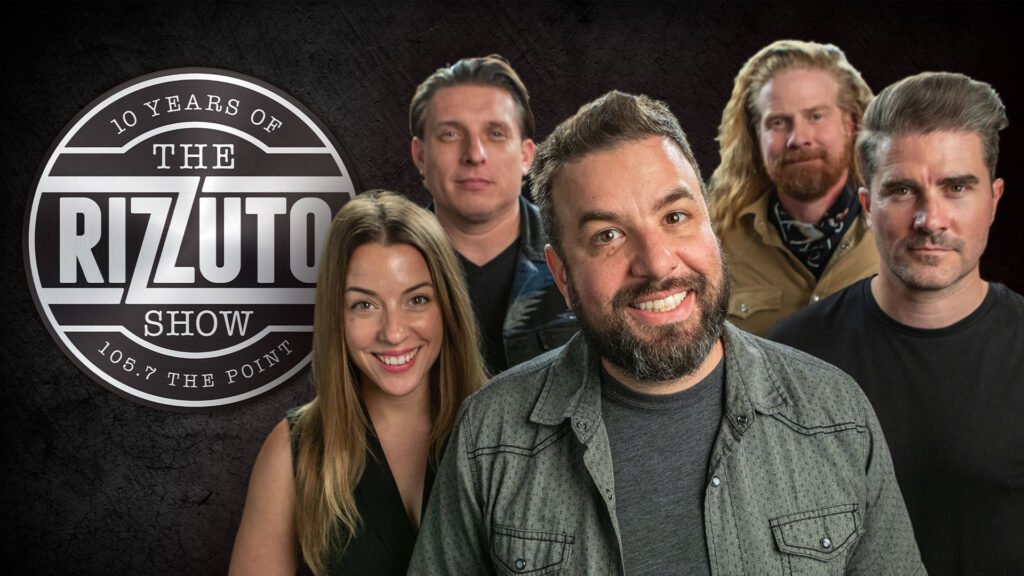
20 Brands in 20 Days: Tommy Mattern, 105.7 The Point, St. Louis

To support the launch of the new Barrett Media, we’ve created a special series titled “20 Brands In 20 Days”. We are highlighting successful stations across the country in various formats by conducting conversations with their brand leaders. Today, the spotlight shines on Hubbard’s Alternative KPNT (105.7 The Point)/St. Louis.

Tommy Mattern is the cluster Operations Manager and Brand Content Director for 105.7 The Point. He is in his 24th year of programming the station. Tommy discussed his passion for Alternative Radio and the keys to The Point’s success.

Jeff Lynn: I found Alternative the most challenging format in my programming career. How do you approach the format, knowing that the audience is constantly looking at new things? TikTok, YouTube, all the social media—it’s a moving target.

Tommy Mattern: We look to find music in all the different places, whether it’s the labels or streaming, any of the new music discovery platforms out there. We look at everything. The thing that sets us apart is we’ve got a group of people here at the station that have been together for a good 15-plus years, and I would say that the biggest thing is to know the market and the taste of the market and then consistently serving that. I think that is why we’ve been so successful. Also, we’ve never pigeonholed ourselves into being one type of station.

The reason that we went with the “Everything Alternative” moniker decades ago was because we truly wanted to play every different style that was out there. The Point, which was started in 1993, really signed on with that attitude, and I think over the years, we’ve done a really good job staying true to that.

We’re not afraid to play the guitar-driven side of the format, and we’re also not afraid to play the Billie Eilish-type pop side of the format. I think it’s about finding good music that connects with the audience and making sure you play it.

JL: You talked about the discovery platforms. If you find something consuming in St. Louis that is not on a chart, can you and will you play it?

TM: I will tell you that I might look at the Alternative Chart maybe once a month. I don’t care. I’ve got a great Music Director that’s been with me a long time and I rely on him for a lot of discovery. I don’t care if a record is charting or not. If it’s good, we play it. I think that is one thing the labels love about The Point is we’re going to play something that’s not on the radar, something that a lot of people might not know about, but if we think it’s good, we are going to take that chance and play it.

On the other hand, there could be some high charting records in the top 20 on the Alternative Chart that we are probably not going to play just because we feel like it doesn’t fit St. Louis for whatever reason. On one hand, the labels love us; on the other, they get a little aggravated with us.

I’m looking at the Alternative Chart right now, and I’m not playing the number one song, Hozier. I’m not playing four, five, six, eight, twelve, thirteen. I’m not playing a lot of this stuff because I don’t feel like it fits St. Louis or it doesn’t fit the expectation of what listeners want to hear on The Point. Not that those songs aren’t great songs from great artists, but just not for our audience, what they’ve come to know about The Point, and what they expect to hear when they tune in. I feel like we do a great job of nailing it. That means not playing a lot of these songs that are on the chart.

I think a lot of stations have gone to that streaming philosophy, and they’re going to play the big artists that stream. It’s a lot of one-hit wonders and artists that stream and artist development. We’ve stayed true to bands that we have started playing over the years, whether it’s been Breaking Benjamin, which we broke, or Shinedown, which we were early on, Cage The Elephant, which we were one of the first. We stay with those bands. We made those hits, and we’re along for the artist’s development with the labels.

JL: I think radio overall is missing out on an appetite for music discovery, and you prove that at The Point.

BM: For sure. We do “New At Nine” Monday through Friday which is an hour of new music, we’ve done “New Music Sunday,” on the station since its inception and Donnie does a great job with it. Those things are important, and I think people still listen to radio for that new music discovery. We know we make hits because I play these songs, I play these bands, and I see them grow in venues and selling concert tickets, and we know that it works.

JL: On the other side of the coin, you’re doing the “Wayback Weekend Feature.”

TM: We do. I think the 90s are so important. It is the glue for this radio station. We do “Way Back Weekends,” and we do the “Wayback At 6,” which is an hour of the 90s Monday through Friday. I’ve turned that into “Wayback Pointfests,” where we’ve done shows with 90s artists. It’s a big brand for us under The Point umbrella for sure.

JL: Let’s talk about mornings and “The Rizzuto Show.”

TM: The Point has always had a big personality morning shows, even before I took over in 2000. We had Howard Stern syndicated and enjoyed many years of Howard, which was great. Then we had Woody, who is now in LA at ALT. We had “Woody and Rizzuto” in the morning drive, and it was a great show: high ratings and high revenue. Woody left us in 2014, and we had to start from scratch.

We had his number two, which was great in Rizzuto, who is fantastic, and we built a team around him and have not looked back. The station has been number one, I believe, every quarter since 2014. It’s just a monster morning show. It has evolved over the years. Some people have left the show, and most recently, we’ve added two new people, and it just keeps on going. I’m very thankful. These guys work so hard, and they put in the effort daily. We play no music in morning drive it’s really a stream of conscience type show with a lot of great benchmarks and a lot of fun.

JL: I’ve worked with big morning shows that have had the attitude we’ve paid our dues, we’re big, and we’re done going out anymore. Send the intern or a cast member out to events, etc. Your guys are very active, so that appears not to be an issue.

TM: It starts with Rizzuto. I think that the way that he has always thought about this is that he really understands how to cultivate an audience and those relationships. He knows that part of the deal with that is not just being on the air; it’s going out and meeting these people. He has never shied away from a remote, an appearance, or an event.

These are the guys at Pointfest who do a meet-and-greet every year. The line is hundreds of people who shake hands and take pictures with them. When the leader of the show has that attitude, it is really easy for the rest of the people on the show to fall in line with that. They look at what he has done, how successful he is, and how he has gotten there.

He treats the audience and our advertisers well. He personally calls anyone he endorses to see how it is going and how he can help. I look at him and see him out doing a remote at night. Does he really want to be out eight to ten or nine to 11 and then get up and do a morning show the next day? No, but he does it. The effort they put in is tremendous.

JL: For listeners, what is The Point’s FOMO, Fear Of Missing Out?

TM: I think it starts with “The Rizzuto Show.” It is a must-listen to the morning show. If you listen to the radio in St. Louis, it is a must-listen. We see that not only in the ratings but also in the Social Media engagement.

JL: Speaking of Social Media. Is Facebook still relevant to your audience?

TM: We look at the Jacobs Survey each year, and Facebook and Instagram are still numbers one and two. YouTube and TikTok are growing but still haven’t got to that level yet. It’s smaller, but it is still number one. We’re very active on all the platforms with both the station and “The Rizzuto Show.”

JL: Last thought?

TM: We love success. We enjoy success, but I think the biggest thing is to be constantly innovating and not getting complacent. That is the biggest thing, and it has worked so far.

Listen to 105.7 The Point here. Find them on Facebook, Instagram, and X. Connect with Tommy Mattern by email here.


Bill O’Reilly Doesn’t Like What He Sees Around the Media Landscape

0

Bill O’Reilly is undeniably a cable news legend. During his time at Fox News hosting The O’Reilly Factor, millions tuned into his 8 PM ET program which was later held by hosts like Tucker Carlson and protege Jesse Watters after his high-profile exit from the company in 2017.

All of that means that Bill O’Reilly knows a thing or two about cable news. And when he looks at the landscape today, he doesn’t have a glowing endorsement.

“There was a huge change in cable news. And unfortunately, it’s not for the better,” posited O’Reilly. “The reason that it rose to prominence was that it gave the American viewers something that network news would not. And that is strong opinion in prime time. Well, you still have that opinion, but you don’t have debate. So on all of these outlets, what they do is bring in people who agree with them. And it’s boring. That’s why the numbers are going down, and they’re going down fast.

“Then you have a huge political component in some of the operations, where the management basically tells the talent — like MSNBC — ‘You’re going to be left-wing and that’s it. That’s what you’re gonna be because that’s our audience, that’s how we make money, and you better do it or we’ll look somebody else. Once you get into that realm, you’re not a news operation anymore. And to portray yourself as one is fraud.”

O’Reilly pointed to his weekly appearances on NewsNation with Chris Cuomo as what other cable news outlets should be mimicking.

“It’s a shootout. You don’t see that anymore … If you don’t have robust debate, then what do you have? Propaganda. That’s where the trend has been in cable news. Now, the reason that Fox News maintains the number one position is its talent is so much better than the others. I mean, it’s not even in the same ballpark. A lot of those people were trained by me. They are very good at what they do, presenting whatever they want to present over there. But Fox News is not what it used to be. And everybody knows that. There’s nobody that. It’s totally different.”

When asked if he thought there was a way to return to more debates on cable news outlets, O’Reilly said it’s simply not an option in today’s day and age.

“It’s never gonna happen,” he said, bluntly. “It’s far too difficult to prepare for a debate and management does not respect that. And the talent knows they can get in trouble if they say certain things. As long as you have management — they just want to make money. That’s it. So the less trouble, the better for them. And that’s where we are across the board. Not only in cable but in network news as well. I mean, you saw what happened to George Stephanopoulos. I mean, they hung him at ABC. He has a right to his opinion. Somebody asked him his opinion and he gave it and you get punished for that? That’s ridiculous.”

The development of risk-averse managers isn’t necessarily a new phenomenon in news media. However, those unwilling to take risks or allow Bill O’Reilly the freedom to say and do as he pleases on the air are why his future includes working for himself instead of a corporate entity.

“I’m not gonna work for a corporation anymore. They would have to hire my corporation. I run three corporations and that’s how we do it. So if somebody wants my presence, whether it be radio or television, they have to hire my corporation and pay me through that so that they don’t have sway over me,” O’Reilly said. He added that Tucker Carlson — who has shared similar sentiments since leaving Fox News, made a wise choice in structuring his company similarly. “Carlson was very smart in what he did. Because a guy like that, his success is based on being a contrarian. And corporate America, that’s as far away from corporate philosophy as you can get. He was lucky to get a guy like Elon Musk, who’s a contrarian himself. So that relationship seems to be, on paper, simpatico … Carlson is a contrarian and corporations don’t want that. So he’s smart to develop his own operation.”

Late last month, O’Reilly labeled conservative firebrand Dan Bongino a “fanatic” for his approach to former President Donald Trump and the intense nature in which he hosts his show. In response, Bongino lobbed various insults at the former Fox News host, many of which we are unable to publish at Barrett News Media. While criticizing Bill O’Reilly, Bongino shared that he’s “not here to make friends.” O’Reilly had similar response when asked about the situation.

“We call it as we see it. If I’m going to do a story about people devoted to a certain point of view, I’m going to do liberals, independents, libertarians, and conservatives. And if people take offense to that, they take offense to it,” he shared. “I don’t care.”

That calling-balls-and-strikes-attitude has worked for O’Reilly since founding his own digital media company after leaving Fox News in 2017 amid sexual harassment allegations. In the latest data from Chartable.com, O’Reilly’s No Spin News program ranks as one of the top news podcasts in not only the United States but also in Canada and the United Kingdom. His YouTube channel, which features more than 615,000 subscribers, routinely sees hundreds of thousands of views on his daily content. O’Reilly also has a nationally syndicated radio show through Key Networks that originates from 77 WABC in New York.

And despite the changing platforms during the late stages of his career, Bill O’Reilly shares that his mindset and approach to covering the news has never changed.

“My priority is looking out for you,” said O’Reilly. “I wrote a book on it. That’s one of my slogans: ‘We’re looking out for you.’ So it basically populist news. We don’t do the pinhead stuff. We’re not gonna do macroeconomics, we’re not going to do what happens in Latvia. We’re not going to do any of that. What we do is take the emotion of the day, the story of the day that has an effect on the working-class American, and we’re going to present it in an honest way. And we’re going to tell people what we think about it. But we are going to bring in voices that disagree, which we do all the time. We are going to basically say, ‘Look, this is how we see it. And if you disagree, fine, write me a letter. I’ll read it on air.’ It’s a populist presentation of news that directly affects Americans.”