Colorado talk radio host Randy Corporon is addressing the potential impact that social media sites GETTR and TRUTH Social may have on the 2022 midterm elections.
Truth Social, part of the Trump Media & Technology Group (TMTG), purports to combat censorship and the “self-righteous scolds and self-appointed arbiters”
During his show on News/Talk 710 KNUS in Denver, Corporon spoke to U.S. Rep. Lauren Boebert (R-CO) about how Twitter and Facebook have suspended accounts of high-profile conservative media figures and politicians.
“The left-wing media machine, especially the social media giants, are so terrified of messages like yours, I’m surprised you haven’t been silenced in, for instance, on Twitter,” he said to Boebert.
“We know — as I said on Newsmax this morning — we know that the so-called fact-checkers are third-party opinion-based, and the red flags for so-called misinformation only go one way,” Boebert responded.
Corporon said Truth Social will be functioning within two months and may act as an “equalizer” in the 2022 midterm campaigns.
“They’re terrified,” Corporon said about Big Tech. “And the great thing is, we now have, you know, GETTR adding — what — 250,000, 500,000 people a day.”
CNN’s Jim Acosta took aim at Fox News star Tucker Carlson for broadcasting what he deemed was misleading information about COVID-19.
On Sunday, Acosta said the Surgeon General should issue a warning to Carlson’s viewers. “Tucker Carlson’s show should come with a warning about COVID disinformation.”
Acosta’s rant comes on the heels of Carlson reporting about a fully vaccinated nurse in the UK who contracted the coronavirus and was placed on a respirator for 28 days.
According to the New York Post, Monica Almeida, 37, a fully vaccinated nurse in the UK, spent 28 days in a coma after contracting the virus and was just 72 hours from having her ventilator turned off when she was saved by a “large dose of Viagra,”
“I suppose some people will justify those prescriptions with just about anything,” Acosta said. “Here’s a challenge to Tucker Carlson. Tell the American people if you have been double vaccinated and boosted.”
Acosta was joined by CNN medical analyst Dr. Jonathan Reiner
“That show has propagated myth and fallacy, and the phrase that you’ve sometimes used on this show, which I won’t use, which starts with bull, repeatedly,” said Reiner, referring to Acosta’s past comments calling Carlson’s program a “bullsh*t factory.”
Former National Public Radio (NPR) host Audie Cornish has been hired by CNN as an anchor and correspondent for the network’s new streaming service, CNN+.
In a release, the network said Cornish would host a weekly CNN+ show and contribute to CNN+’s slate of live programming. Cornish joins the network following a nearly 20-year run as the host of NPR’s “All Things Considered.”
“I am very excited to join CNN and the CNN+ team. There are fresh stories to be told and new ways to tell them,” said Cornish. “CNN has a dynamic system of reporters and storytelling channels. I am thrilled to be a part of it.”
Cornish joined NPR’s National Desk in 2005, reporting from Nashville. She later joined the Washington bureau to cover the 2008 presidential race and the historic election of former President Barack Obama.
“We are thrilled to welcome Audie to CNN+ and CNN Audio,” said Andrew Morse, EVP & Chief Digital Officer of CNN Worldwide and Head of CNN+.
Cornish will be based in CNN’s Washington, DC bureau and starts in February.
After a stable first quarter of the season in terms of cases of COVID-19, the rapid spread of the Omicron variant and subsequent proliferation in total cases coerced the National Hockey League to start its holiday break early, pausing the season on December 22. Following the announcement, the NHL and NHLPA also revealed that they would not be sending players to the 2022 Beijing Olympics out of an abundance of caution and the protection of competitive integrity within the 2021-22 NHL regular season. While this pause only lasted six days, it was a stark reminder of the looming threat the pandemic has played in everyday life, and the uncertainty surrounding the remainder of the NHL season.
The landscape of professional sports, as it has been for the last two years, is unprecedented and always subject to change. The NHL has sought to bring some level of stability to its players, staff and personnel by modifying its protocols as the world learns more about COVID-19 every day. With the NHL on the precipice of 100% vaccination (all but one player), infected players, staff and personnel have largely shown mild symptoms, if any at all. Yet the league continues to take protocols to ensure the health and safety of all parties involved, including its broadcast teams.
Over the last two years, the terms “health and safety protocols,” “taxi squad” and “quarantine” have become an integral part of the vernacular in the sports world, and are undeniably part of the reason the NHL has been able to play most of its scheduled games amidst a pandemic.
For broadcasters, having to take precautions and adjust the way they call games has changed the way sports media is being viewed in today’s world. At this time, broadcasters can be taken off-the-air at a moment’s notice because of a positive or inconclusive COVID-19 test; a broadcast crew has the ability to call games remotely from studios or their own homes to avoid travel; and media availability has been and may continue to be exclusive to video conferencing platforms.
I recently spoke with three NHL play-by-play broadcasters, and gathered their thoughts on the season thus far, and what they anticipate going forward as the world seeks to mitigate a raging wildfire of the pathogenic coronavirus and its variants.
——-
Prior to the NHL taking a pause of its season, there were many clustered COVID-19 outbreaks among teams fueled by the rapid spread of the Omicron variant. What was it like as a broadcaster to prepare for games you were not entirely sure were going to happen?
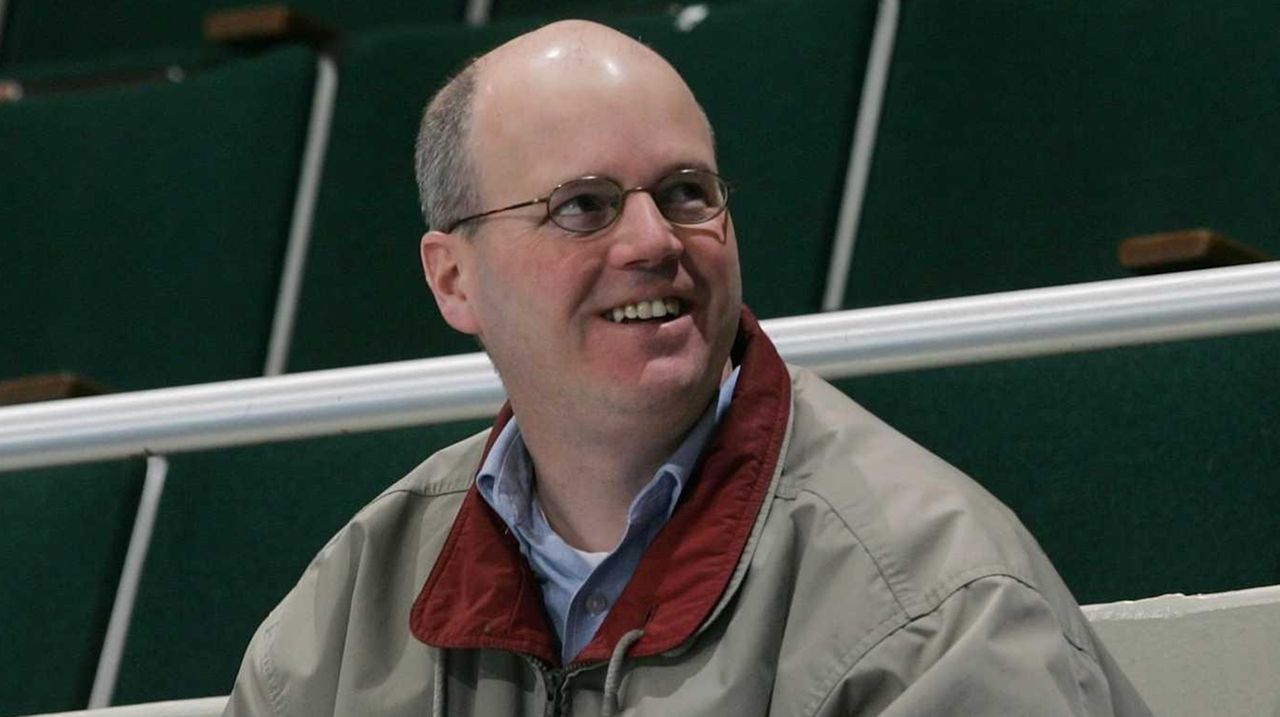
Chris King (Broadcaster, New York Islanders): I’m very used to that in my baseball broadcast career because games often get rained out. I had not experienced that in hockey ever until this pandemic began.
From a personal broadcasting standpoint, it’s incredibly frustrating because I could do 10 hours of prep-work on a game and find out the day before it’s not happening, and I’d say 80% of that you have to throw away. [It’s] just frustrating personally.
Courtesy: Newsday
On the baseball side of it, you can check the weather forecast and get an idea that something like that may happen. With something like this, it came out of the blue. I would use the word frustrating just because of all the preparation.”
Mike Maniscalco (Broadcaster, Carolina Hurricanes): Nothing changed for me, honestly, because you have to go about it with the same preparation that there’s going to be a game. You know that there’s a chance that players you did some research on, or information that you’re looking up will be useless if a player tests positive or you find out that somebody’s not going to be in the game or they’re going to call somebody up a few hours before. But honestly, nothing really changed for me as far as preparation for those games that – will they or won’t they be played.
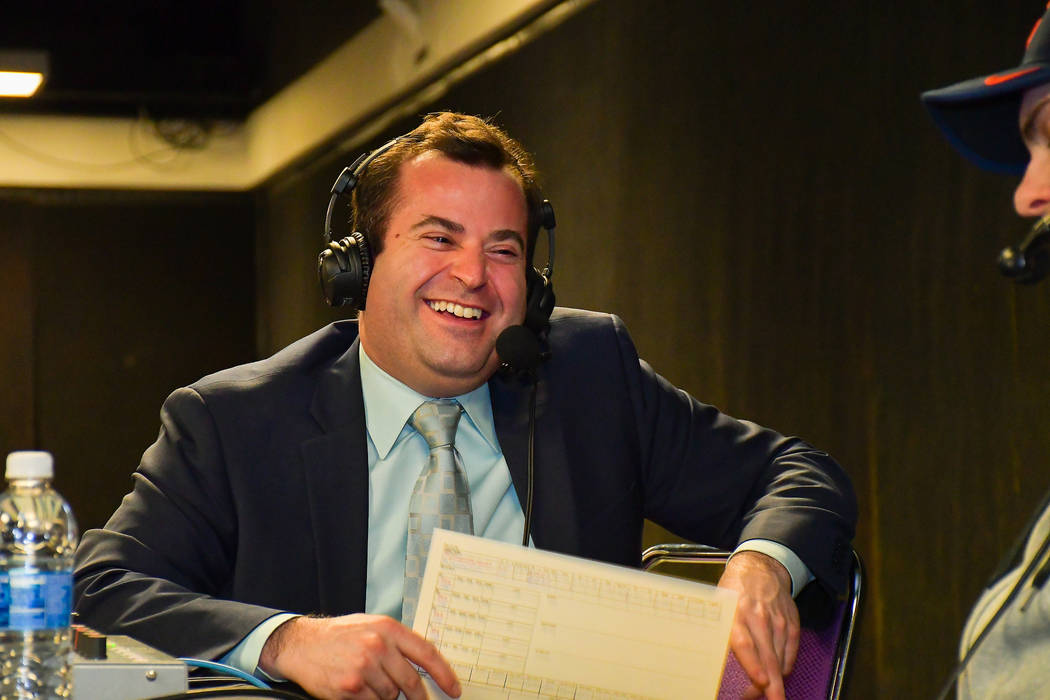
Dan D’Uva (Broadcaster, Vegas Golden Knights): We prepare for games that are on the schedule; I’m always preparing. The fact that there was one game before Christmas that was postponed in the case of the Golden Knights against Colorado. I know the Avalanche pretty well, so there was the diligence for each game putting together scorecards and lineup sheets. I watch and read about a lot of hockey, and watch the Avs quite a bit. Preparation for me is very much about the aggregate over time. I would have been ready had there been a game against Colorado on that Thursday before Christmas.
Was it the right decision to pause the season? How did the pause affect you and your work?
Chris King: I think it was. When it got to the point right around the Christmas break, what they eventually did is add one day on the front side of Christmas and two on the backside. At that point, you’re trying to get everybody healthy and off the COVID list. The separation of players from each other is probably the best thing for it. The league-wide pause put everyone on a level playing field. Up until Dec. 1, the only cancellations were [games of] the Senators and the Islanders.
Once we got into December, you really started to see these monster numbers where teams had double-digit numbers on the list. I like the fact that they added a little bit to the Christmas break to shut it down with the hopes to get people back. Obviously, it hasn’t worked out entirely as planned.
Mike Maniscalco: [It was] the right decision. Especially with the holidays and the travel schedule, there were people who were in Canada [and it] would have been difficult to get them across the border and home for the holidays.
I have no issue with the league hitting the pause button in the way that they did, especially in those situations because we were in Canada before that, and trust me that was one of the things we were talking about. I got to be home and spend Christmas with my wife, so we had a very quiet Christmas and nothing really out-of-the-ordinary for me [except] that it gave me more time to catch up on reading.
Dan D’Uva: I don’t have an answer for that because it’s a different case for every team. The Golden Knights would have very much been suited to play that game against Colorado, and the game that was postponed against L.A. after the break. They did not have such a high COVID rate where they couldn’t have played the game.
The reason for a lot of the postponements, especially now, has to do with not just COVID problems, but attendance problems. In Canada, they have had so many games that have been postponed because the teams can’t take the financial hit playing the games without fans. Given the number of restrictions in Canada, they just can’t stomach that financial burden because they had to swallow that last year. It was not as though they had a decision like March 2020; this has been more of a case-by-case thing.
What differences were there between the NHL’s pauses in 2020, 2021 and 2022?
Chris King: There’s 2020, which [became] the bubble playoffs. There’s last year, where no fans were in the arenas and then [it transitioned] back to normal in the second half. I would just say the biggest difference in the last two years was obviously last season had no fans in the building at all and built to near capacity, and they got through a truncated season of 56 games. Now we’ve had those long breaks; it’s certainly very different than anything we’ve experienced in the seasons before. Once we got fans back in the building, it felt like normal.
Now you’re looking at an Islanders team playing two games in 24 nights. That’s a ten-day break at the holidays, and an eleven-day break out of their New Year’s win against Edmonton. When they come out of the break, they are playing four times in six nights. It is very different from a year ago. Once it did get started, it went all the way through without these major disruptions, whereas this year, every team has dealt with some kind of disruption.”
Mike Maniscalco: The big thing for me is we didn’t come out of this going “We’ve got to go into a bubble.” Also, we had an abridged season last year where you were only playing seven teams because they broke up the NHL by the divisions, and then of course Canada was its own separate entity.
[This year], we know [the Canes] are going to still see other teams. You’re going to try to keep it as close to normal [as you can] with what’s going on. I don’t think that we’re going into something that we haven’t seen before. If the NHL does need to say there has to be a bubble or put a limit on fans, it’s something that we’ve seen before… At least we have an idea of what it will look like if there are changes that need to be made, whereas the first two lockdowns and pause, we had no idea what was coming next. At least there’s a bit of an idea of what things can look like to move forward depending on how the situation grows.
Dan D’Uva: I would not characterize what just happened as a pause. There’s always a break for Christmas. Were they a couple of additional games postponed? Yes. There were other games postponed as well.
What happened in March 2020 [was under] extraordinarily different circumstances. At that time, we, meaning the public, had no idea this was going to turn into a months-long delay. It was thought to be a matter of days or weeks, and then we would return. We had no idea it would turn into the pandemic it became and didn’t know how to handle that as a society.
Now, it’s totally different. We have vaccines; we have booster shots; we have a lot of ways to combat the medical challenges, and the reality is that the NHL has been through this before; [it knows] how to reschedule games given what happened last year.
It seems to be an entirely different circumstance and trying to shut things down because of the unknown, they are shutting things down on a case-by-case basis given the obstacles of either individual teams without enough healthy bodies, the risk of an outbreak, or, in Canada, the financial burden.”
What are some of the precautions you and your broadcast team have taken to ensure you stay healthy and safe?
Chris King: UBS Arena has done a great job. It requires that you’re vaccinated. If you get a chance to come up in the press box, everybody wears their mask — even when we are in our radio booth. That mask stays on pretty much until a minute before [we go on-the-air]. Obviously, you choose not to wear it while you’re broadcasting because it would not sound the same. We have separation between each of us in our brand new booth in the building. I see everybody in the press box completely masked up.
Mike Maniscalco: We’ve got to mask up at all times except for being on the broadcast [and] keep as much social distancing between us and the crew that we work with. Basically all of the protocols that we put in place last year, minus the plexiglass between me and Trip Tracy – the analyst who I work with – because Trip and I have been vaccinated; I’ve been boosted. At least we have that going into this year and knowing that’s where we’re at.
Basically, the same protocols are in place for what we had last year, especially now that things have really escalated with what’s going on with Omicron going around there. It’s still keep your distance, straight-line to the press box, straight-line to my car to get back home, and that’s about it.
Dan D’Uva: The precautions are — first of all, being vaccinated and receiving booster shots. The others would be — wearing masks when inside arenas as much as any other person in society would do. That has been part of the routine for those of us in the NHL’s traveling party.
For myself included, when you are traveling with the team there are protocols you adhere to, and it has been, for the most part, reasonable and in-line with the guidance you might receive from the [Centers for Disease Control and Prevention] or the Canadian government. For me, the most important thing was to be vaccinated and to receive a booster shot; that was the obvious, most significant thing. Aside from our professional needs and duties, the most important thing is to be healthy as a person — forget about it as a career. God forbid someone should have a serious illness — you would hope that the vaccines and the booster would minimize the health effects of the virus.
Do you believe the NHL will be able to complete its season as scheduled, or do you foresee there being additional delays and/or postponements?
Chris King: I know they’re going to do their best to make up most of these postponements during the Olympic break. For the Islanders, it’s 11 postponements with only two rescheduled [thus far]. I’m sure [NHL Deputy Commissioner] Bill Daly has said they are going to try to get a majority of those games in February, but right now, you’re looking at the end of April as the last scheduled game.
I think they might end up using a couple of days at the start of May just to finish off anything that hasn’t been able to be shoehorned into the schedule. If they have to play a week or two into May, it pushes it out to a week or two to the very end.
Mike Maniscalco: I think that with the way that February has opened up with the NHL and the players not going to Beijing, we will get everything in. They will find a way to get everything in.
Dan D’Uva: I can see that games will be postponed, but I do not foresee a delay in the season itself or the conclusion of the season. That three-week period in February provides a nice buffer for these games to be rescheduled. At some point, the need to get games in will supersede the need to play games in front of fans.
Courtesy: Las Vegas Review-Journal
Right now, they have a buffer, and they have become very good at rescheduling games given the last couple years. My hope would be that any additional postponements would not affect the conclusion of the regular season and the Stanley Cup Playoffs.
AM 970 The Answer has made an addition to its weekday lineup.
The New York talk station, which is owned and operated by Salem Communications, has added attorney Arthur Aidala’s “The Arthur Aidala Power Hour: Making The Case For The City He Loves” to its 6p-7p timeslot. The show will follow ‘Cats At Night’, featuring John Catsimatidis. That program airs weeknights from 5p-6p ET.
Aidala’s professional resume includes serving previously as Senior District Attorney in Brooklyn. He is a managing partner of the law firm Aidala, Bertuna & Kamins, P.C.. Among his clients include former New York City mayor turned WABC talk show host Rudy Giuliani, law professor Alan Dershowitz, and convicted sexual offender Harvey Weinstein.
“I am honored and excited to join the talk radio lineup at AM 970 The Answer” shared Aidala. “With the Power Hour, we will be sitting down with the key New Yorkers to get to the heart of what makes this city tick.”
AM 970’s Operations Manager Matthew Sambolin followed up by adding, “Arthur Aidala puts on a show in the courtroom, and now he gets to do it in front of the biggest judge of all — the New York City tri-state region. Can’t wait to hear what he brings to afternoon drive, with no objections!”
To learn more about the show and AM 970’s full schedule, click here.
The 2021 college football season is nearly over. If you are reading this on the day it comes out, then it is the night of the College Football Playoff National Championship Game. ESPN will again pull out all of the bells and whistles in hopes that it can manufacture greater interest for a game that doesn’t offer any geographic diversity and has already been played once this season.
No network, business or individual holds as big of a stake in this sport as ESPN does. Thanks to the package of linear cable networks and a slew of streams on both the ESPN app and ESPN+, we are so far removed from the days of maybe getting to see your favorite team on television twice or three times per year. It has never been easier to find the game you want to watch.
But ESPN and corporate parent Disney have a problem, and it is one they don’t have any real control over. The Southeast has a stranglehold on the sport and it is choking the life out of fandom on a national level.
You could argue that Disney’s investment in the SEC has at least a little bit to do with that. You can argue that College GameDay’s desire to be the Dabo Swinney Variety Hour is at least partially to blame. The reality is that there isn’t much Mickey Mouse or Jimmy Pitaro can do about Michigan being the number 2 team in the country and still not being very good. There is no time slot ESPN could put Notre Dame games on in that would convince Brian Kelly that the Irish were capable of competing with the Southern juggernauts that have run them over every time the Irish are in a position to win or play for a national championship.
ESPN can only control what it can control, and it isn’t even really doing a great job of that at the moment. Its presentation of college football has become stale and that is leading to some very loud accusations from other media outlets that the networkand some of its marquee personalities are totally out of touch with the game in the modern day.
On Tuesday morning, in addition to headlines celebrating whichever coach walks away with a title, we will see a lot of looking ahead. The front page of ESPN.com’s college football section will feature a “Way Too Early Top 25” and lists of players and coaches to know before the 2022 season kicks off.
Maybe it is time ESPN does some looking ahead of its own. The transfer portal, NIL deals and conference realignment have turned college football into an entirely different sport than it was even just three years ago. So why is the Worldwide Leader still covering college football the same way it did in 2015?
The easiest change the network can make is to update the soundtrack of College GameDay. Every song the pregame show uses is around a decade old. I did some tracking. Here are some of the go-to songs with the year of their release:
Big & Rich’s “Comin’ To Your City” from 2005
Kid Rock’s “God Bless Saturday” from 2010
Instrumental track my Shazaam identifies as “Silver Scrapes” from 2012
Florida Georgia Line’s “This is How We Roll” from 2013
Zac Brown Band’s “Homegrown” from 2015
Also, it’s not just old. It’s like 65 to 70% country. That list above is 80% country. If ESPN is concerned about where college football’s audience is coming from in the future, maybe it should try not exclusively packaging the game in music targeted for 40 and 50-year-old white women from Murfreesboro, Tennessee.
Next, ESPN needs to look at how Colin Cowherd and The Volume approach the game and then look at their own product. As soon as players were eligible to receive payment for the use of their name, image, and likeness, Cowherd and his team secured deals with members of Notre Dame’s football team and eventual Heisman Trophy winner Bryce Young to host original podcasts on the network.
Now, are the podcasts good? No, both of them are REALLY boring. But The Volume sensed a sea change in what it could offer college football fans and the network jumped on it.
ESPN, and College GameDay, in particular, have done just the opposite. Just look at the conversation that drew so much attention on New Year’s Eve, where Kirk Herbstreit and Desmond Howard took turns telling you how disappointed they are in today’s players. It was like two people, who each have an outsized influence on the sport, were taking time on national TV to tell you that you shouldn’t like it.
The Volume saw players being empowered and being given new opportunities and said “we should see what we can do with this.” It sure seems like College GameDay saw the same thing and decided to ask a veritable who’s who of coaches that aren’t as good as they used to be what they should be saying on air.
Fans, like the players Herbstreit and Howard have contempt for, are considerably smarter now and have access to so much more information about the sport. Fans have a connection to all of these players in a way they didn’t when Herbstreit and Howard were playing. The players, the great ones anyway, recognize they have more value than anyone else in the sport.
Nick Saban’s name may resonate, but if you were watching Alabama in 2021, it was because you wanted to see Will Anderson and Bryce Young. Either Lee Fitting and his crew don’t recognize that or are actively trying to fight against it. Both possibilities should be concerning.
Speaking of “outsized influence on the sport,” ESPN would be so much better served by embracing it rather than pretending it doesn’t exist. The network owns most of the postseason bowl games. It owns a chunk of the college football playoff. It has exclusive rights deals with two of the five power conferences and some sort of carriage agreement with every conference.
FLEX THAT INFLUENCE MUSCLE OCCASIONALLY!
If ESPN is hurt by players opting out of the meaningless bowl games, expand the playoff and make fewer bowl games meaningless. Build stars out of players outside of the SEC through NIL deals and preferential scheduling for their teams. Make their faces, stories, and talent inescapable. Take the bull by the horns and along with EA Sports, get the video game out there in a way that inspires the cult following it had a decade ago. That was as important a part of the nationalization of college football fandom as any star player or coach or any television deal.
Courtesy: EA Sports
College football isn’t a lost cause and ESPN isn’t actively killing it. I know the network and the people that cover the sport for it really do love the game. ESPN has the seat of power at the college football table. That has made it very easy to acquire and not necessary to innovate. But college football is evolving.
It is time for coverage of the sport to evolve too. Maybe NIL deals and the transfer portal are a little out of control right now, but that isn’t changing for the foreseeable future. The sport’s most powerful stakeholder should be smarter about the way it reacts because right now, it is sending the message that college football isn’t worth loving anymore.
LeGeyt wrote that local stations provide an important service to communities which includes factual news and emergency information.
“This has never been more evident than over the past two years as our industry proved indispensable in guiding local communities through the pandemic despite facing our own enormous challenges,” said LeGeyt.
LeGeyt said that Big Tech companies are dominating online advertising marketplaces with “opaque use of algorithms” in turn “threatening Americans ” access to quality local journalism.
“Broadcasters need a level playing field both to fairly compete for audience and advertising dollars with these tech behemoths, and to ensure we are fairly compensated when our locally focused content is accessed through their platforms.”
LeGeyt blamed social media for rampant dissemination of misinformation. He also said one of the NAB’s top priorities is to educate Congress and the Federal Communications Commision (FCC) on broadcasters’ local impact.
“We also continue to fight outdated but burdensome regulations that impede our ability to innovate,” said LeGeyt, adding, “We will continue to work with both sides of the aisle, as broadcasting is neither Democrat nor Republican, but local and trusted.”
The calendar changed from 2021 to 2022, and cable’s No. 1 non-sports destination for New Year’s Eve celebrations, CNN, remained so. Once again at New York’s Times Square were hosts Anderson Cooper and Andy Cohen. Some of the guests featured were actor Leslie Jordan, performer Katy Perry, Academy Award winner Regina King and King’s former “227” co-star Jackee Harry.
For the 90-minute period of 11 p.m. to 12:30 a.m. Eastern, it drew 3.3 million total viewers, according to Nielsen Media Research, matching CNN’s second-best ever total audience (with New Year’s Eve 2017) of that date’s time slot. It was during that time frame when the night’s most viral moment took place. Shortly after the clock struck midnight, a ticked-off (and tipsy) Cohen criticized the “victory lap dance” by “horrible” New York City mayor Bill de Blasio.
CNN’s full 4.5-hour telecast averaged 2.12 million total viewers including 746,000 within the key 25-54 demographic (from 8 p.m. to 12:30 a.m.). This marked a 35 percent decline in each key figure from their record-setting New Year’s Eve 2020. Still, it delivered cable’s best adults 25-54 performance of the week (ending Jan. 2) outside of ESPN’s football coverage, Paramount’s “Yellowstone” and TLC’s “90 Day Fiancé: Before the 90 Days.”
Cable news’ runner-up telecast for the week among adults 25-54 was CNN’s continued New Year’s Eve celebrations from New Orleans, Louisiana. It was hosted by a visibly-inebriated Don Lemon alongside fellow CNN anchor Alisyn Camerota and “Daily Show” comedienne Dulce Sloan. The special, which began at 12:30 a.m. Eastern, averaged 1.455 million total viewers including 614,000 in the 25-54 age range. While it dipped to its lowest total audience amount since 2014, the telecast ran until 1:30 a.m. Eastern, meaning the figure included the steep drop in viewership after 1 a.m. Eastern/midnight Central. Prior to Dec. 31, 2019, CNN had concluded Lemon’s portion at 1:05 a.m. Eastern. This was the first year Lemon spent New Year’s without Brooke Baldwin, his longtime fellow co-host on the occasion; Baldwin had departed CNN back in April.
In the overnight on CNN, a rerun of “New Year’s Live with Anderson Cooper and Andy Cohen” from 1:30-3:30 a.m. drew 755,000 viewers (with 252,000 adults 25-54); at 3:30-4:30 a.m., a re-airing of “New Year’s Live” with Don Lemon (remaining uncensored) posted 369,000 viewers and a still-above-CNN’s-total-day-average of 124,000 adults 25-54.
Over at Fox News on Dec. 31, their one-hour 2021 retrospective “Who Can Forget” at 8 p.m. drew 1.35 million viewers (172 adults 25-54), followed by the 1.85 million (including 242,000 adults 25-54) who tuned in to Greg Gutfeld’s one-hour New Year’s special at 9 p.m. “All-American New Year 2022” from 10 p.m. to 1:30 a.m. averaged 1.85 million total viewers and 359,000 adults 25-54 — approximately twice more than last New Year’s Eve.
Also during the week, from federal court in New York City, British socialite Ghislaine Maxwell was convicted on federal charges of luring underage teenage girls to engage in sex acts with American millionaire Jeffrey Epstein. The jury had deliberated for five days before they found her guilty of five of the six counts charged against her. The verdict occurred on Dec. 29 at 5:10 p.m. Eastern. Fox News Channel was the top cable news outlet in breaking news coverage with 2.9 million viewers and 386,000 adults 25-54. Although no labels from Nielsen indicated the news event on CNN and MSNBC, the 5-6 p.m. hour of CNN’s “The Lead with Jake Tapper” drew 822,000 total viewers and 173,000 adults 25-54; MSNBC’s “Deadline: White House” from 4-6 p.m. delivered 1.12 million viewers and 134,000 adults 25-54.
On upstart NewsNation, their “Rush Hour” program on Dec. 29 from 5-6 p.m. posted 119,000 viewers. Oddly enough, it was the least-watched weeknight edition from Dec. 27-31; overall, “Rush Hour” averaged 156,000 viewers for the week.
Cable news averages for December 27, 2021-January 2, 2022:
Total Day (December 27-January 2 @ 6 a.m.-5:59 a.m.)
Fox News Channel: 1.225 million viewers; 187,000 adults 25-54
MSNBC: 0.531 million viewers; 58,000 adults 25-54
CNN: 0.529 million viewers; 110,000 adults 25-54
HLN: 0.224 million viewers; 74,000 adults 25-54
CNBC: 0.164 million viewers; 38,000 adults 25-54
The Weather Channel: 0.154 million viewers; 28,000 adults 25-54
Fox Business Network: 0.094 million viewers; 12,000 adults 25-54
Newsmax: 0.093 million viewers; 12,000 adults 25-54
Prime Time (December 27-January 1 @ 8-11 p.m.; January 2 @ 7-11 p.m.)
Fox News Channel: 1.749 million viewers; 232,000 adults 25-54
MSNBC: 0.774 million viewers; 75,000 adults 25-54
CNN: 0.743 million viewers; 170,000 adults 25-54
HLN: 0.245 million viewers; 82,000 adults 25-54
CNBC: 0.191 million viewers; 60,000 adults 25-54
The Weather Channel: 0.156 million viewers; 34,000 adults 25-54
Newsmax: 0.111 million viewers; 14,000 adults 25-54
Fox Business Network: 0.063 million viewers; 13,000 adults 25-54
Top 10 most-watched cable news programs (and the top CNN and MSNBC programs with their respective associated ranks) in total viewers:
1. The Five (FOXNC, Mon. 12/27/2021 5:00 PM, 60 min.) 3.128 million viewers
2. The Five (FOXNC, Wed. 12/29/2021 5:00 PM, 10 min.) 3.015 million viewers
3. The Five (FOXNC, Tue. 12/28/2021 5:00 PM, 60 min.) 2.940 million viewers
4. Special Report: Maxwell Verdict (FOXNC, Wed. 12/29/2021 5:10 PM, 50 min.) 2.897 million viewers
5. The Five (FOXNC, Thu. 12/30/2021 5:00 PM, 60 min.) 2.762 million viewers
Newsmax is coming after Massachusetts-based Atlantic Broadband, who dropped the conservative news network on Dec. 31, prompting censorship claims against the company.
“Despite our high ratings… it is clear that Atlantic doesn’t like Newsmax’s point of view,” Newsmax said in a statement posted on its website.
Newsmax attacked Atlantic’s cable lineup, which reportedly includes 11 left-leaning networks.
“And most of these channels have less viewership than Newsmax!” The statement read.
Newsmax sought to dispel rumors of bad-faith bargaining with the telecommunications company.
Newsmax said they had just agreed to an extension with Atlantic’s representatives. The network denied that its proposal required Atlantic to pay Newsmax while the channel remained accessible on the internet.
“Atlantic pays dozens of channels much more money than Newsmax was asking, though most of these channels have less viewership!” Newsmax said.
Newsmax asks its viewers to call Atlantic and ask for a live operator rather than being directed to a recording.
“With so many liberal channels on Atlantic like CNN and MSNBC, you have a right to fair and unbiased news that Newsmax offers! Let your voice be heard today!”
When it comes to sports viewing, the NFL continues to be in a league of its own when it comes to the US audience. Indeed, even when compared against non-sporting viewing, the NFL can’t be beaten, such is the pull of the American Football league across the country.
After the first six weeks of the season, the NFL was averaging 16.6 million viewers, that’s an increase of 11% from last season, which is probably due to the fact that games are now more exciting for watching viewers as the stadiums are now full of fans.
Similarly, sports betting in the NFL is also up, again showing how interest in the market is broad. If you want to stay ahead of the game, you can make the most of this sports betting odds comparison service, which helps you increase your likely payouts.
Interestingly, two of the four most-watched NFL games of the first half of the season both involved veteran legend Tom Brady. 26.7 million watched as he returned to face his former team, the New England Patriots, and 23.2 million watched as his Tampa Bay team lost to the Dallas Cowboys in overtime. Such is the star power of the seven-time Super Bowl winner.
Those high numbers have continued throughout the regular season; in week 15, 22 million watched the Green Bay Packers vs. the Baltimore Ravens, and the additional week of fixtures will have done just as the league’s money men would have wanted, drawing in even more revenue.
Some had predicted that the NFL market would continue to drop, as it did in the first year of the coronavirus, but that hasn’t proven the case and as Patrick Crakes, former Fox Sports executive who is now a media consultant, puts it;
“It’s defied every trend inside the media for a decade. Why wouldn’t it continue to?”
And perhaps this is part and parcel of the enduring nature of the NFL, both in the US and overseas, where the market has grown year over year for some time now.
The lack of fans in stadiums was clearly a factor last year, but it’s not the case this time around, and that is hugely important, as Jay Rosenstein, one time VP of CBS Sports programing, sees it;
“As television executives, we always talk about where’s the best scene? What venue provides the most enthusiasm and excitement and passion and all of that,”
“And that’s what you get from stands being full again.”
“It gives directors a place to go to capture the emotion of the game,” he said. “And obviously the sound. The volume brings it across to the people at home that this is something breathtaking.”
This is a key point. The absence of a genuine atmosphere translates poorly to screen, and now with the NFL vibrant and alive once again, you can expect the numbers of viewers eagerly glued to their screens and devices to continue to improve, and this is sure to lead to a real spike in viewing figures for the postseason action.


/cdn.vox-cdn.com/uploads/chorus_image/image/51314581/2015-09-20_173.0.jpg)


![EA Sports cancels 2014 college football game, is evaluating series' future [Update: EA settles lawsuit] | Engadget](https://o.aolcdn.com/images/dar/5845cadfecd996e0372f/8c8029f4f89e04c206d7d23fa33322016f7cab3e/aHR0cDovL3d3dy5ibG9nY2RuLmNvbS93d3cuam95c3RpcS5jb20vbWVkaWEvMjAxMy8wNC9uY2FhLWZvb3RiYWxsLTE0LmpwZw==)
