

After a stable first quarter of the season in terms of cases of COVID-19, the rapid spread of the Omicron variant and subsequent proliferation in total cases coerced the National Hockey League to start its holiday break early, pausing the season on December 22. Following the announcement, the NHL and NHLPA also revealed that they would not be sending players to the 2022 Beijing Olympics out of an abundance of caution and the protection of competitive integrity within the 2021-22 NHL regular season. While this pause only lasted six days, it was a stark reminder of the looming threat the pandemic has played in everyday life, and the uncertainty surrounding the remainder of the NHL season.
The landscape of professional sports, as it has been for the last two years, is unprecedented and always subject to change. The NHL has sought to bring some level of stability to its players, staff and personnel by modifying its protocols as the world learns more about COVID-19 every day. With the NHL on the precipice of 100% vaccination (all but one player), infected players, staff and personnel have largely shown mild symptoms, if any at all. Yet the league continues to take protocols to ensure the health and safety of all parties involved, including its broadcast teams.
Over the last two years, the terms “health and safety protocols,” “taxi squad” and “quarantine” have become an integral part of the vernacular in the sports world, and are undeniably part of the reason the NHL has been able to play most of its scheduled games amidst a pandemic.
For broadcasters, having to take precautions and adjust the way they call games has changed the way sports media is being viewed in today’s world. At this time, broadcasters can be taken off-the-air at a moment’s notice because of a positive or inconclusive COVID-19 test; a broadcast crew has the ability to call games remotely from studios or their own homes to avoid travel; and media availability has been and may continue to be exclusive to video conferencing platforms.
I recently spoke with three NHL play-by-play broadcasters, and gathered their thoughts on the season thus far, and what they anticipate going forward as the world seeks to mitigate a raging wildfire of the pathogenic coronavirus and its variants.
——-
Prior to the NHL taking a pause of its season, there were many clustered COVID-19 outbreaks among teams fueled by the rapid spread of the Omicron variant. What was it like as a broadcaster to prepare for games you were not entirely sure were going to happen?
Chris King (Broadcaster, New York Islanders): I’m very used to that in my baseball broadcast career because games often get rained out. I had not experienced that in hockey ever until this pandemic began.
From a personal broadcasting standpoint, it’s incredibly frustrating because I could do 10 hours of prep-work on a game and find out the day before it’s not happening, and I’d say 80% of that you have to throw away. [It’s] just frustrating personally.
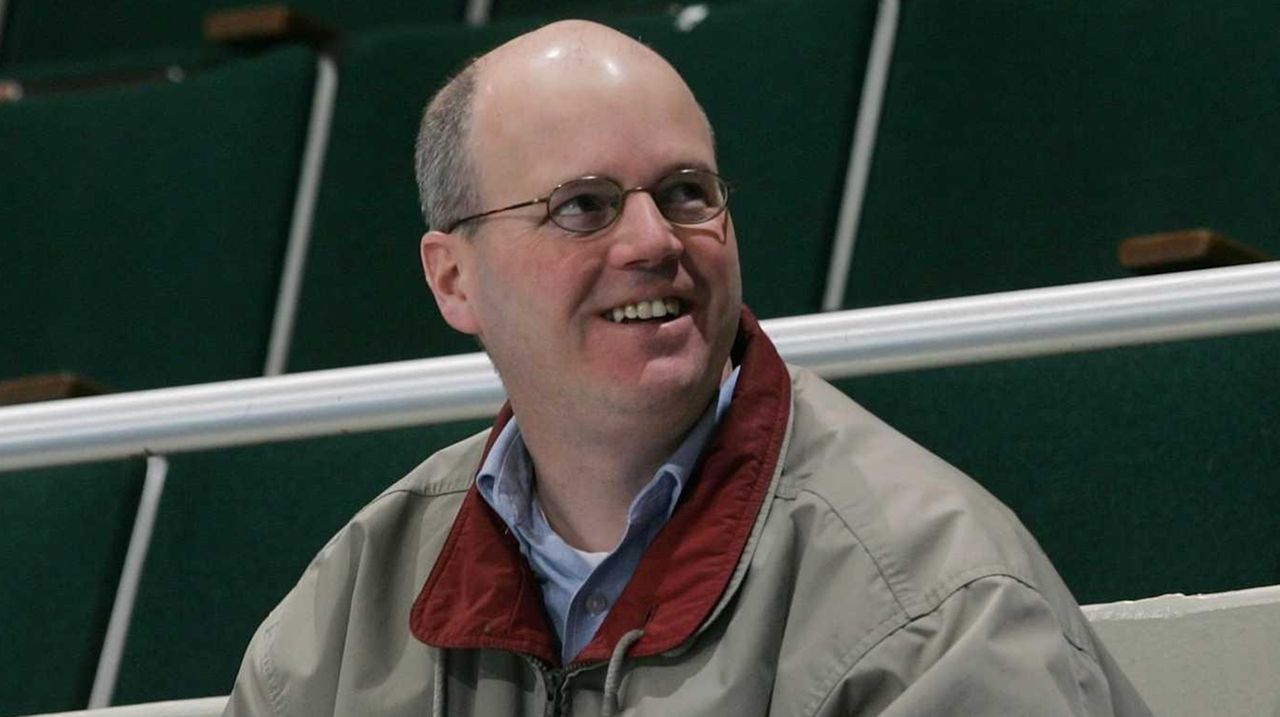
On the baseball side of it, you can check the weather forecast and get an idea that something like that may happen. With something like this, it came out of the blue. I would use the word frustrating just because of all the preparation.”
Mike Maniscalco (Broadcaster, Carolina Hurricanes): Nothing changed for me, honestly, because you have to go about it with the same preparation that there’s going to be a game. You know that there’s a chance that players you did some research on, or information that you’re looking up will be useless if a player tests positive or you find out that somebody’s not going to be in the game or they’re going to call somebody up a few hours before. But honestly, nothing really changed for me as far as preparation for those games that – will they or won’t they be played.
Dan D’Uva (Broadcaster, Vegas Golden Knights): We prepare for games that are on the schedule; I’m always preparing. The fact that there was one game before Christmas that was postponed in the case of the Golden Knights against Colorado. I know the Avalanche pretty well, so there was the diligence for each game putting together scorecards and lineup sheets. I watch and read about a lot of hockey, and watch the Avs quite a bit. Preparation for me is very much about the aggregate over time. I would have been ready had there been a game against Colorado on that Thursday before Christmas.
Was it the right decision to pause the season? How did the pause affect you and your work?
Chris King: I think it was. When it got to the point right around the Christmas break, what they eventually did is add one day on the front side of Christmas and two on the backside. At that point, you’re trying to get everybody healthy and off the COVID list. The separation of players from each other is probably the best thing for it. The league-wide pause put everyone on a level playing field. Up until Dec. 1, the only cancellations were [games of] the Senators and the Islanders.
Once we got into December, you really started to see these monster numbers where teams had double-digit numbers on the list. I like the fact that they added a little bit to the Christmas break to shut it down with the hopes to get people back. Obviously, it hasn’t worked out entirely as planned.
Mike Maniscalco: [It was] the right decision. Especially with the holidays and the travel schedule, there were people who were in Canada [and it] would have been difficult to get them across the border and home for the holidays.
I have no issue with the league hitting the pause button in the way that they did, especially in those situations because we were in Canada before that, and trust me that was one of the things we were talking about. I got to be home and spend Christmas with my wife, so we had a very quiet Christmas and nothing really out-of-the-ordinary for me [except] that it gave me more time to catch up on reading.
Dan D’Uva: I don’t have an answer for that because it’s a different case for every team. The Golden Knights would have very much been suited to play that game against Colorado, and the game that was postponed against L.A. after the break. They did not have such a high COVID rate where they couldn’t have played the game.
The reason for a lot of the postponements, especially now, has to do with not just COVID problems, but attendance problems. In Canada, they have had so many games that have been postponed because the teams can’t take the financial hit playing the games without fans. Given the number of restrictions in Canada, they just can’t stomach that financial burden because they had to swallow that last year. It was not as though they had a decision like March 2020; this has been more of a case-by-case thing.
What differences were there between the NHL’s pauses in 2020, 2021 and 2022?
Chris King: There’s 2020, which [became] the bubble playoffs. There’s last year, where no fans were in the arenas and then [it transitioned] back to normal in the second half. I would just say the biggest difference in the last two years was obviously last season had no fans in the building at all and built to near capacity, and they got through a truncated season of 56 games. Now we’ve had those long breaks; it’s certainly very different than anything we’ve experienced in the seasons before. Once we got fans back in the building, it felt like normal.
Now you’re looking at an Islanders team playing two games in 24 nights. That’s a ten-day break at the holidays, and an eleven-day break out of their New Year’s win against Edmonton. When they come out of the break, they are playing four times in six nights. It is very different from a year ago. Once it did get started, it went all the way through without these major disruptions, whereas this year, every team has dealt with some kind of disruption.”
Mike Maniscalco: The big thing for me is we didn’t come out of this going “We’ve got to go into a bubble.” Also, we had an abridged season last year where you were only playing seven teams because they broke up the NHL by the divisions, and then of course Canada was its own separate entity.
[This year], we know [the Canes] are going to still see other teams. You’re going to try to keep it as close to normal [as you can] with what’s going on. I don’t think that we’re going into something that we haven’t seen before. If the NHL does need to say there has to be a bubble or put a limit on fans, it’s something that we’ve seen before… At least we have an idea of what it will look like if there are changes that need to be made, whereas the first two lockdowns and pause, we had no idea what was coming next. At least there’s a bit of an idea of what things can look like to move forward depending on how the situation grows.
/cdn.vox-cdn.com/uploads/chorus_image/image/51314581/2015-09-20_173.0.jpg)
Dan D’Uva: I would not characterize what just happened as a pause. There’s always a break for Christmas. Were they a couple of additional games postponed? Yes. There were other games postponed as well.
What happened in March 2020 [was under] extraordinarily different circumstances. At that time, we, meaning the public, had no idea this was going to turn into a months-long delay. It was thought to be a matter of days or weeks, and then we would return. We had no idea it would turn into the pandemic it became and didn’t know how to handle that as a society.
Now, it’s totally different. We have vaccines; we have booster shots; we have a lot of ways to combat the medical challenges, and the reality is that the NHL has been through this before; [it knows] how to reschedule games given what happened last year.
It seems to be an entirely different circumstance and trying to shut things down because of the unknown, they are shutting things down on a case-by-case basis given the obstacles of either individual teams without enough healthy bodies, the risk of an outbreak, or, in Canada, the financial burden.”
What are some of the precautions you and your broadcast team have taken to ensure you stay healthy and safe?
Chris King: UBS Arena has done a great job. It requires that you’re vaccinated. If you get a chance to come up in the press box, everybody wears their mask — even when we are in our radio booth. That mask stays on pretty much until a minute before [we go on-the-air]. Obviously, you choose not to wear it while you’re broadcasting because it would not sound the same. We have separation between each of us in our brand new booth in the building. I see everybody in the press box completely masked up.
Mike Maniscalco: We’ve got to mask up at all times except for being on the broadcast [and] keep as much social distancing between us and the crew that we work with. Basically all of the protocols that we put in place last year, minus the plexiglass between me and Trip Tracy – the analyst who I work with – because Trip and I have been vaccinated; I’ve been boosted. At least we have that going into this year and knowing that’s where we’re at.
Basically, the same protocols are in place for what we had last year, especially now that things have really escalated with what’s going on with Omicron going around there. It’s still keep your distance, straight-line to the press box, straight-line to my car to get back home, and that’s about it.
Dan D’Uva: The precautions are — first of all, being vaccinated and receiving booster shots. The others would be — wearing masks when inside arenas as much as any other person in society would do. That has been part of the routine for those of us in the NHL’s traveling party.
For myself included, when you are traveling with the team there are protocols you adhere to, and it has been, for the most part, reasonable and in-line with the guidance you might receive from the [Centers for Disease Control and Prevention] or the Canadian government. For me, the most important thing was to be vaccinated and to receive a booster shot; that was the obvious, most significant thing. Aside from our professional needs and duties, the most important thing is to be healthy as a person — forget about it as a career. God forbid someone should have a serious illness — you would hope that the vaccines and the booster would minimize the health effects of the virus.
Do you believe the NHL will be able to complete its season as scheduled, or do you foresee there being additional delays and/or postponements?
Chris King: I know they’re going to do their best to make up most of these postponements during the Olympic break. For the Islanders, it’s 11 postponements with only two rescheduled [thus far]. I’m sure [NHL Deputy Commissioner] Bill Daly has said they are going to try to get a majority of those games in February, but right now, you’re looking at the end of April as the last scheduled game.
I think they might end up using a couple of days at the start of May just to finish off anything that hasn’t been able to be shoehorned into the schedule. If they have to play a week or two into May, it pushes it out to a week or two to the very end.
Mike Maniscalco: I think that with the way that February has opened up with the NHL and the players not going to Beijing, we will get everything in. They will find a way to get everything in.
Dan D’Uva: I can see that games will be postponed, but I do not foresee a delay in the season itself or the conclusion of the season. That three-week period in February provides a nice buffer for these games to be rescheduled. At some point, the need to get games in will supersede the need to play games in front of fans.
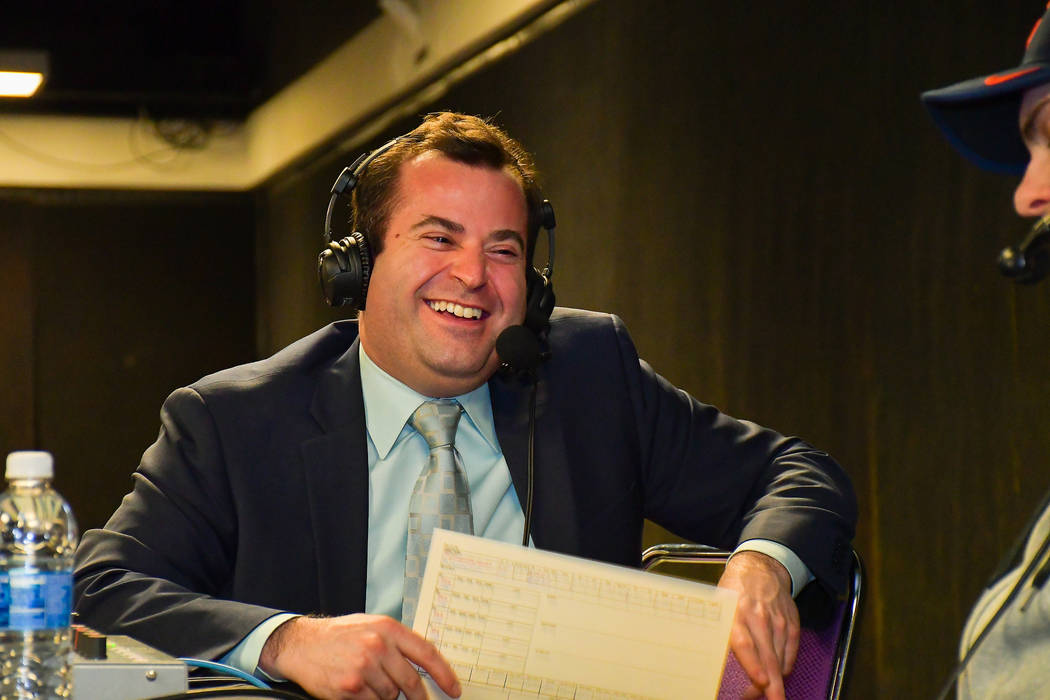
Right now, they have a buffer, and they have become very good at rescheduling games given the last couple years. My hope would be that any additional postponements would not affect the conclusion of the regular season and the Stanley Cup Playoffs.
