Benjamin Franklin once said there are two things certain in life: death and taxes. I’d like to modify that quote by adding a third – a fascination with lists.
Since launching BSM, we’ve written thousands of pieces on personalities, news, strategy, ratings, and career advice. They’ve been well received, but pale in comparison to anything we’ve created involving lists. For four years straight our number one most read piece of content has been the BSM Top 20 in Sports Radio. The annual BSM Sports Radio Draft has also received strong support.
As proud as we are of those sports radio content specials and their ability to fuel discussion among sports media types, the amount of creative projects we’ve built around sports television has left much to be desired. So with an NBA Draft on the horizon, we began tossing ideas at the wall last month, and came up with an outline for a Sports TV Draft.
Since the NBA Draft features 30 picks per round, we thought it made sense to select the Top 30 shows of all-time. We focused on studio/live/produced shows because sitcoms, reality shows, and documentaries are different type of programs. We then created a document with 65 programs to choose from, figuring that some folks would likely want to add to it.
Next we had to decide who to include in the voting process. I thought it’d be fun to involve the nation’s top sports media writers and critics, media researchers, former TV executives, bloggers, and a few popular social media accounts, but wasn’t sure if we’d be able to drum up enough support to pull it off. To my surprise, most of the people I asked jumped in.
And that brings us to the actual draft.
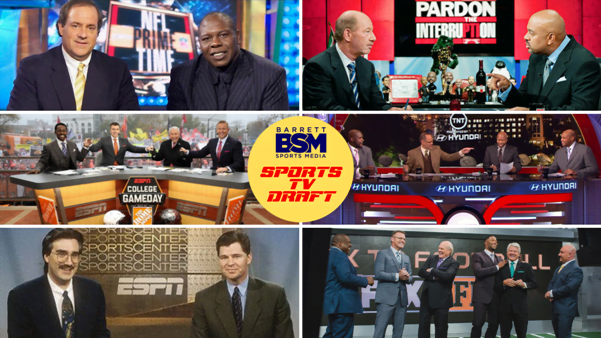
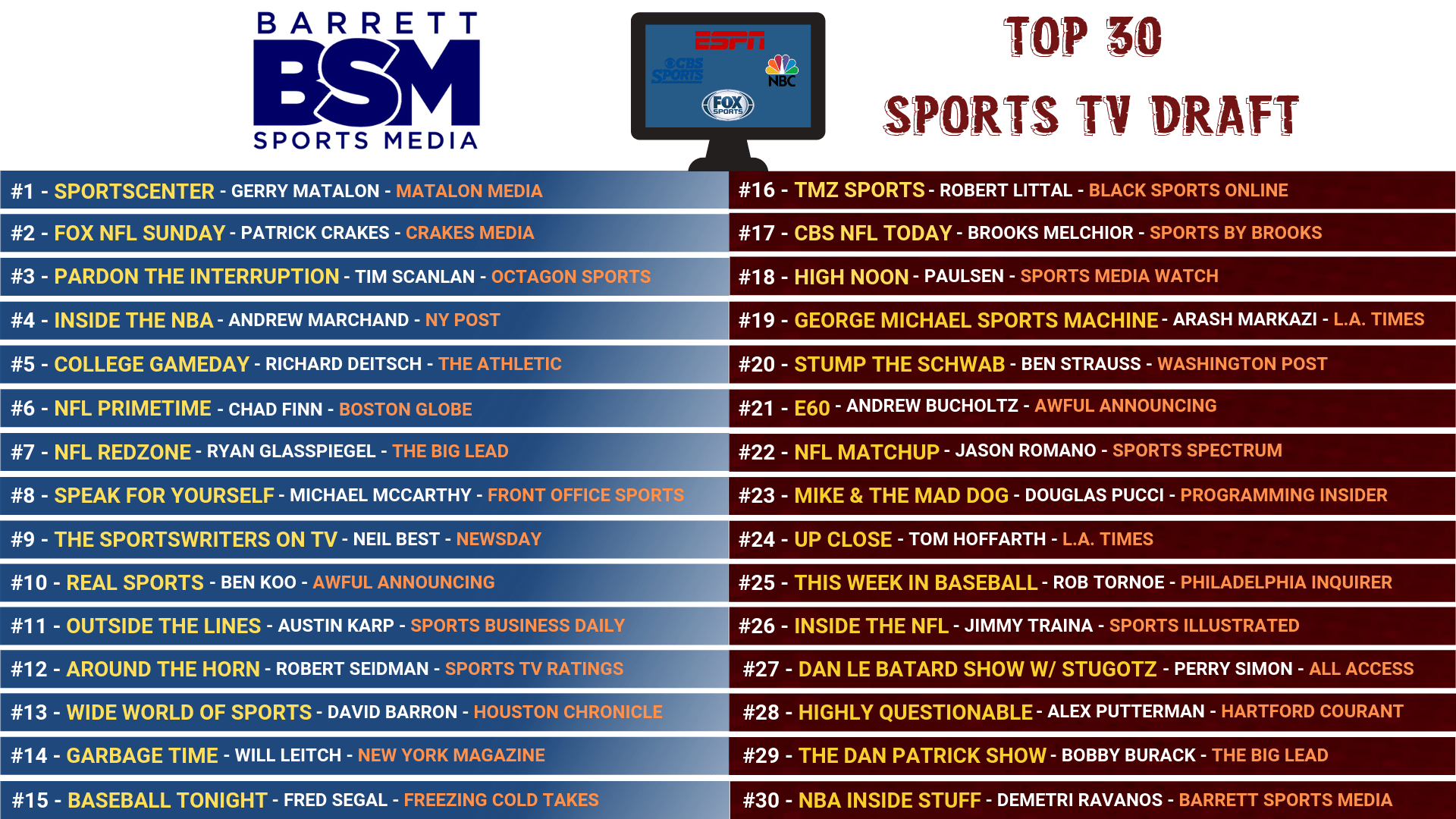
Below you will see an image featuring our list of the Top 30 Sports TV Shows of All-Time as decided on by our voters. Underneath that image you’ll find a detailed explanation from each voter on what they liked about the show they selected. If you want to learn more about the shows, our voters or the companies they work for, we’ve made it easy for you. All you have to do is click the show name, company name or individual’s name and a new page will open up.
I want to extend my sincere thanks to everyone who participated in this project. Although lists are very subjective and determined by the order in which people select, this was fun to assemble, and we hope you enjoy reading it. With that in mind, here are the results of the 2019 BSM Sports TV Draft.
#1 – SportsCenter – Gerry Matalon, Matalon Media
For the sports fan, SportsCenter was the equivalent of the advent of the internet. The fan had access to information and video like never before. It was THE must-watch studio show of generation X, and a sports fan’s dream come true.
NEVER before were fans able to get all the highlights, significant national news, analysis and discussion in an engaging manner, multiple times a day from hosts who would become icons in their own right. Every on-screen sports program since September of 1979 is a branch on the SportsCenter tree. Though the show might not have the significance it once had, SportsCenter has often been replicated, though never duplicated.
#2 – FOX NFL Sunday – Patrick Crakes, Crakes Media
FOX NFL Sunday showed America that FOX would keep its promise – to present the NFL in a modern, fun, but reverent way. Under David Hill, Ed Goren and Scott Ackerson’s vision and guidance the credibility, chemistry and flow of the show opened a new era in live sports commentary and became the flagship of the FOX Sports Brand. The show was a paradigm shift operating on the assumption that most viewers were looking for something more than just information as they gathered to watch NFL games on Sunday.
The amazing collection of unique personalities at the desk added something unique for mainstream NFL fans thirsty for a show that could “sugarcoat the information pill” with a modern sensibility. JB, Terry, Howie and Jimmy were the “Guys you wanted to have a beer with at the bar and watch a game” and America embraced them. It was the beginning of a new era – one that saw FOX evolve on the back of FOX NFL Sunday into one the most important sports media brands in the world. Impressively, FOX NFL Sunday remains as relevant, entertaining and fun today as it was in 1994, and it’s endurance, legacy and continued impact make the case for its place as one of the important live studio shows in sports TV history.
#3 – Pardon The Interruption – Tim Scanlan, Octagon Sports
PTI revolutionized
the sports studio program with the Topic Sidebar, the running clock, the simple
props, and the PA announcer with corrections. The personalities of Tony and
Michael were non-traditional and irreverent and the program looked ahead as
much as it reacted to stories in sports.
#4 – Inside The NBA – Andrew Marchand, New York Post
The show featuring probably the greatest studio analyst of all-time, Charles Barkley, at 4? Thank you very much. I considered ESPN’s College GameDay and, at its peak, NFL Primetime, with this pick, but Inside The NBA is so enjoyable for the basketball and non-basketball fan.
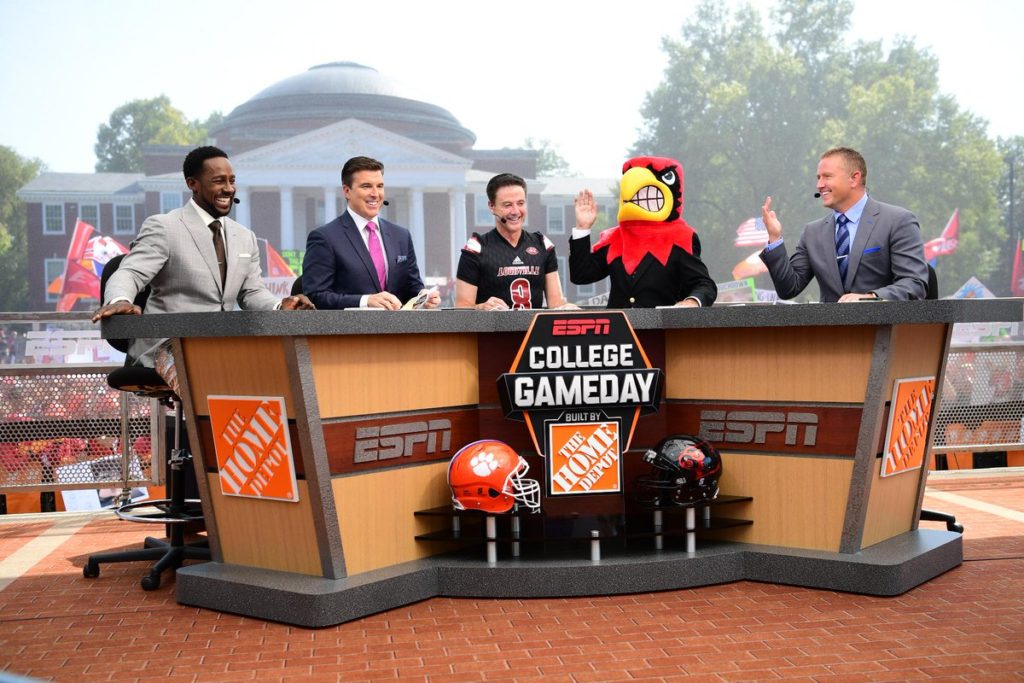
#5 – College Gameday – Richard Deitsch, The Athletic
I’ve written many times over the years that I consider Inside The NBA the greatest sports studio show in history. If I had the No. 1 overall pick for this draft, it would have been an easy selection. But I am delighted to see that College GameDay remains on the board. This whole exercise is subjective but GameDay slots right behind Inside for me among all-time sports studio shows.
College football is best experienced in person, and GameDay has brought that experience into our homes for decades. As someone who lived for many years in New York City, GameDay allowed me to experience what it was like to be part of LSU football in Baton Rouge, Alabama in Tuscaloosa, and other places that were foreign yet fascinating to me. The on-air talent has always had intellect and chemistry; the show’s feature producers are the best in class. GameDay was also early among mainstream sports shows to highlight sports gambling info and has maintained a journalistic bent. It’s one of the best enterprises ESPN has done and I feel like I just got one of the steals of this draft.
#6 – NFL Primetime – Chad Finn, Boston Globe
I thought about picking a relic of a wholly different age in sports television here, but choosing This Week In Baseball would have been an overdraft based on nostalgia. So instead I made a sentimental pick with more recent relevance.
From 1987 to 2005, Chris Berman and Tom Jackson made ESPN’s NFL Primetime an entertaining and, in a time before our phones gave us every highlight in real time, a practically essential way to see every meaningful nightlight from the day’s NFL action. Primetime was marginalized when NBC got the Sunday night package in 2006. But it won’t be forgotten.
#7 – NFL RedZone – Ryan Glasspiegel, The Big Lead
It’s almost unfair to pick this considering it encompasses live events, but the eight greatest words in the English language are when Scott Hanson says, “Seven hours of commercial-free football begin now.” Imagine reverting back to a world without it. If they ever try to put the genie back in that bottle, there will be torches and pitchforks in the streets.
#8 – Speak For Yourself – Michael McCarthy, Front Office Sports
“Speak for Yourself” with Jason Whitlock and Marcellus Wiley is my choice at #8. They’re both ex-football players, and have some of the best, if not the best, NFL debates in the business with a constant stream of current and former players weighing in. Among the show’s most interesting guests in my opinion are James Harrison, Terry Bradshaw and Michael Vick.
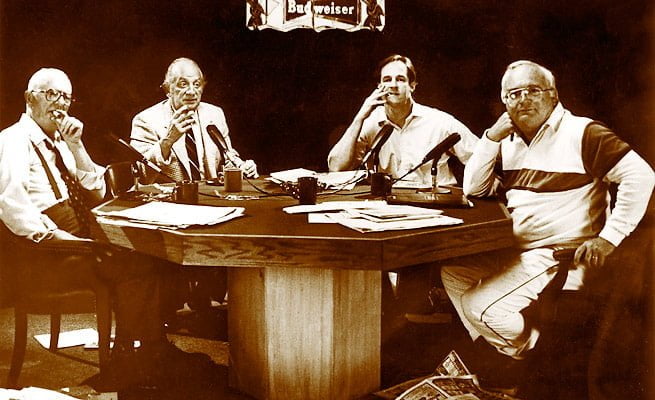
#9 – The SportsWriters on TV – Neil Best, Newsday
Long before it was commonplace for sportswriters to kibitz on camera, this groundbreaking syndicated show out of Chicago was a revelation in the mid-1980s, and begat several decades worth of copycats that have filled endless hours of cable TV time. Unlike their polished, better-dressed modern counterparts – who work on polished, better-appointed sets – these guys were rumpled, cigar-smoking throwbacks, offering among the first takes of countless ones to come.
#10 – REAL Sports – Ben Koo, Awful Announcing
I’m very happy with my selection of HBO Real Sports at #10. The standard bearer in sports journalism is closing in on 25 years of distinguished and culturally relevant work. Correspondents have come and gone and the show has undergone a few changes over the years but the quality and significance of their work continues to be must watch television for intellectually curious and thoughtful sports fans.
I haven’t missed an episode in more than a decade as the quality has never wavered nor has my interest in expanding my knowledge as a sports fan. Sure it often veers into serious and uncomfortable topics and controversy, but Real Sports has always had a rich and eclectic mix of topics, personalities, and stories which has always been appointment viewing for me every month. I’m delighted to use my pick on a show as impactful and unique as Real Sports.
#11 – Outside The Lines – Austin Karp, Sports Business Daily
Among the smartest sports programming on TV. It doesn’t matter whether Bob Ley or Jeremy Schaap or Kate Fagan hosts. The topics are timely, and the show has stood the test of time.
#12 – Around The Horn – Robert Seidman, SportsTV Ratings
After SportsCenter, Outside the Lines and PTI it’s the longest-running daily show. As PTI’s lead-in it has consistently been one of ESPN’s best-performing studio shows. It’s also been a great vehicle for ESPN to showcase new talent from Michael Smith & Jemele Hill, Mina Kimes, Sarah Spain, and Ramona Shelburne to Bomani Jones & Pablo Torre. As far as I know it’s also the only sports studio show ever parodied on NBC’s “30 Rock” — I tip my hat to Aaron Solomon, Tony Reali & everyone involved with the show.
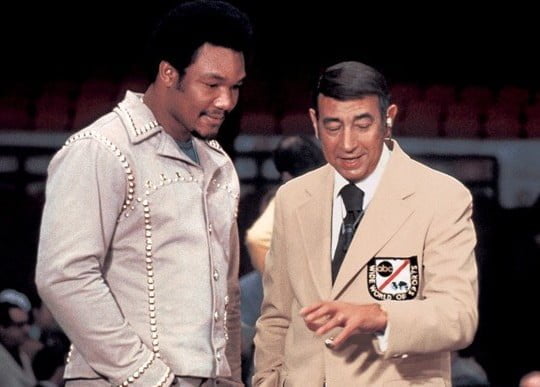
#13 – Wide World of Sports – David Barron, Houston Chronicle
I don’t think it’s possible to overestimate the significance of what this show delivered during an era of black and white cathode ray tube TVs, 6 a.m. to midnight telecast schedules and filmed highlights that had to be delivered by airplanes rather than by satellite. It was like having an Olympics every Saturday, and it set the standard and the expectations for generations of broadcasters and viewers.
#14 – Garbage Time – Will Leitch, New York Magazine
My pick was between “Garbage Time” and “The Dan Patrick Show” — either is a steal with the 14th selection. It is EXTREMELY rare in the relentlessly repetitive, failing-up world of sports television to find an actual new, unique voice. Katie Nolan was (and is) different than everyone else working in sports TV, something that was obvious from her very first show. Plus, it’s impossible not to admire any show this good that was essentially filmed in a closet.
#15 – Baseball Tonight – Fred Segal, Freezing Cold Takes
As with NFL Primetime, Baseball Tonight used to be an absolute must watch for me. Much like many other highlight-centric shows it has lost significant value nowadays as highlights and updates are instantly available on social media. However, back when I was growing up in the 90s, it was absolutely an essential watch for any baseball junkie.
Most of the time, watching the show was my first exposure to any of the highlights from the day’s games. The show also holds personal sentimental value for me as I used to watch it every night with my dad as he would track his fantasy baseball players. We used to sing the lead in song together, which in my opinion, is as iconic as the SportsCenter lead in song ???? Da…Da Da Da…Da DA ????.
#16 – TMZ Sports – Robert Littal, Black Sports Online
The fact of the matter in 2019 is that people care more about the drama and viral news than what is going on, on the court or on the field. While many shows try to sprinkle in TMZish type of stuff, only TMZ does it full time.
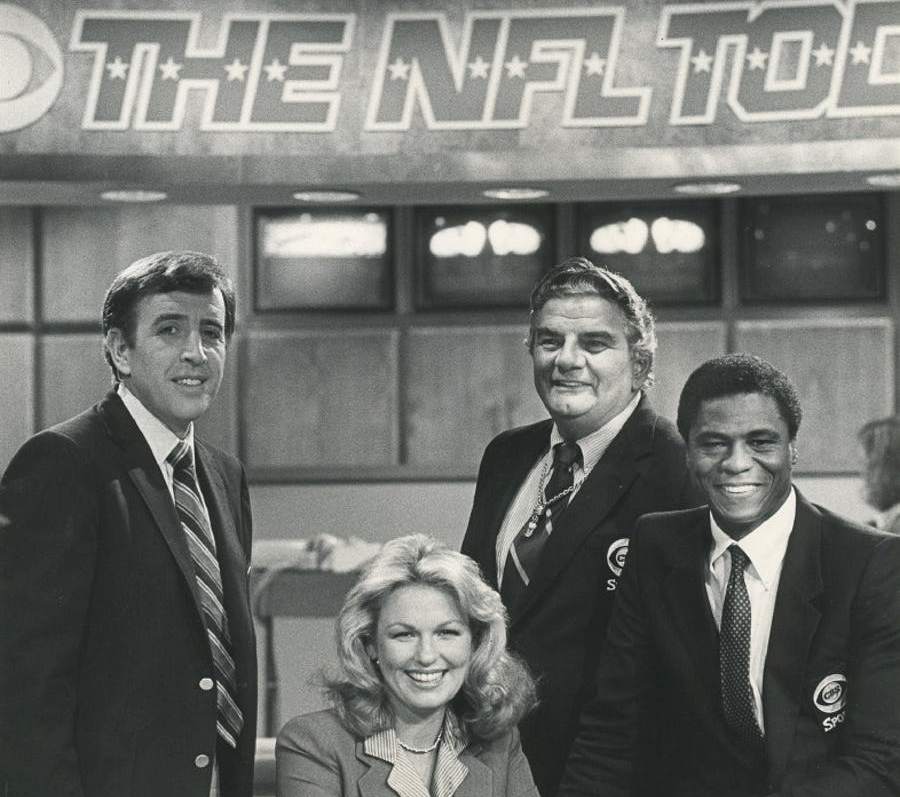
#17 – The NFL Today – Brooks Melchior, Sports By Brooks
The NFL Today is arguably the most important studio show in sports television history. “In 1975 it introduced Americans to one of the most influential TV sports personalities in history, Brent Musburger. It was the first network studio show in history to include a woman, Phyllis George, an African-American, Irv Cross, and a professional handicapper, Jimmy “The Greek” Snyder, as fulltime on-air contributors.
It also played an early, pivotal role in popularizing the format which all NFL studio shows use today. In lieu of the NFL’s now-ubiquitous presence in the daily lives of Americans, it isn’t too much to say that the debut of The NFL Today with Musburger, George, Cross and Snyder represents a seminal moment in television history.
#18 – High Noon – Paulsen, Sports Media Watch
While it’s too early to call it one of the best sports TV shows of all-time, I’ll still go with High Noon here. Sports talk is dominated by fake debates and overheated opinions, but High Noon is an exception. Nothing seems staged or done for the sake of clicks and pageviews. Plus Jones and Torre have excellent chemistry.
#19 – The George Michael Sports Machine – Arash Markazi, Los Angeles Times
Before every household in America had cable or satellite and you could see every sports highlight within seconds of it happening live on your phone, tablet or computer, there was only one way for someone like me, without cable, to see sports highlights every Sunday and that was on The George Michael Sports Machine. I recorded it every week on our VCR and I’d watch it again and again throughout the week. It was a show ahead of its time and the first sports show I religiously watched as a young sports fan.
#20 – Stump The Schwab – Ben Strauss, Washington Post
The fact that ESPN was, at a certain point in time, willing to build a show around a chubby career researcher is all you need to know about why this show deserves a spot on this list. And even if Schwab never quite carried the show, his array of throwback jerseys and Stuart Scott’s attempts to inject energy and cachet into what today would be considered a live action version of Sporcle is forever endearing.
#21 – E60 – Andrew Bucholtz, Awful Announcing
Since its 2007 launch, E:60 has been one of ESPN’s more impressive commitments to journalism and storytelling. The news-magazine show has had a number of timeslot and network moves, including the 2017 shift to its current Sunday morning slot, but its pieces have always managed to make an impact. The show has won 16 Sports Emmys, including “Outstanding Sports News/Feature Anthology” and “Outstanding Short Sports Documentary” (for “Identity : Deland McCullough’s Journey,” which is a very worthy winner) this year, plus nine Edward R. Murrow Awards, a Robert F. Kennedy Journalism Award and much more.
E:60 has also shown a great ability to tell all sorts of stories, from pieces on kids facing incredible challenges (Josiah Viera, Owen Hawkins) to deep investigations of deaths of migrant workers building World Cup stadiums in Qatar. It continues to be one of the best things ESPN does.
#22 – NFL Matchup – Jason Romano, Sports Spectrum
This was the show where I truly learned something new about the game of football in a way that no other show could provide. The downfall was that ESPN never gave it a great timeslot but man if you watched it, you walked away more knowledgeable about the NFL than you were 30 minutes earlier. The way they broke down film and showed you the intricacies of the game was always unique and special. Ron Jaworski, Merril Hoge and Sal Palantonio were fantastic.
#23 – Mike and the Mad Dog – Douglas Pucci, Programming Insider
“Aaaaaaaaand good afternoon everybody! How are you today!” yelled the Mad Dog. It’s the New York radio show that kicked off the sports talk genre in our country starting in the 90’s. It was the show I grew up listening to on WFAN as they discussed the legendary sports moments of the 90’s and 00’s like the Yankees world championship runs (especially the memorable Freeway of Love 1996 playoff run), the Rangers in ‘94, the Knicks playoff runs in the 90’s and Chris’ hilarious rants against the SF Giants.
Mike and the Mad Dog were also there for the big events of our world like the OJ trial and verdict and 9/11. Each host has succeeded in their own separate ventures – Mike still popular in the afternoon in NY radio, Chris on SiriusXM and MLB Network – but there was special magic when the two joined together to talk sports in front of the YES Network cameras.
#24 – Up Close – Tom Hoffarth, Los Angeles Times
I figured Roy Firestone’s “Up Close” would be long gone before my 24th pick so I was pleasantly surprised to find it still available. My Plan B was to snag the Jim Rome franchise of shows – from “Talk2” in the early 90’s all the way to “The Jim Rome Show” today, spanning ESPN2, ESPN, Fox Sports, ESPN again, CBS Sports Net and a stop in there on Showtime.
Some quick history: “SportsLook” is the original title of the show that started in 1980 on the USA Network, then moved to ESPN as “Up Close,” with Firestone, a former sportscaster at the local CBS affiliate in L.A., as the host for 13 years. It was taped in L.A. so he had access to everyone coming and going. It was a simple premise: Firestone sits on the right, the guest is on the left, and they talk about all sorts of things about their sporting life. It relied on Firestone’s curiosity and research and what buttons to push.
Many tried to replicate the template to other shows with other hosts – there’s maybe no Bob Costas’ “On the Record” or even a version Rome was asked to launch with ESPN2 in the early 90’s. It all connects to the importance of Firestone creating a trustworthy space to show emotions – important especially with strong male athletes – knowing Firestone would calmly talk you through it and expose a side of yourself that wasn’t readily available in pre-social media times.
#25 – This Week in Baseball – Rob Tornoe, Philadelphia Inquirer
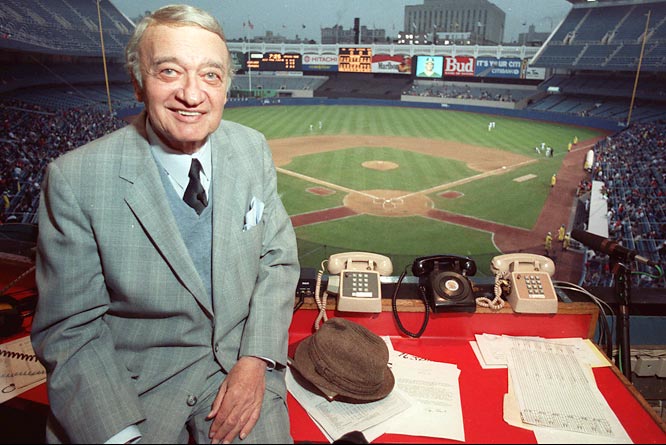
Growing up, I kept to a pretty strict schedule on Saturday mornings: eat a bowl of Rice Chex, watch some cartoons and tune into “This Week in Baseball.” Hosted by famed Yankees broadcaster Mel Allen, the mix of storytelling, music and crazy plays fueled my dreams of being the MVP of our neighborhood baseball game. And the show’s iconic theme song played like a soundtrack to summer. As Bill Simmons once put it, “My goosebumps just got goosebumps.”
#26 – Inside The NFL – Jimmy Traina, Sports Illustrated
In a world without DirecTV, Sunday Ticket and Red Zone, there were two shows every NFL fan had to watch for highlights and cool features: NFL PrimeTime on ESPN and Inside the NFL on HBO. Each week, Len Dawson and Nick Buoniconti (and later Cris Collinsworth) would recap the games from the week before and make picks for the upcoming week. One thing Inside the NFL had that NFL PrimeTime did not, since the show aired during the week and not immediately following games on Sunday, was footage of players and coaches mic’d up. These days, that doesn’t seem like a huge thing, but in the ‘80s, when the show was at its peak, it was must-see TV for football fans.
#27 – The Dan Le Batard Show with Stugotz – Perry Simon, All Access
I’m taking The Dan LeBatard Show with Stugotz, because it a) treats sports with the reverence it deserves, meaning very little, and b) the show has a rhythm and internal logic that’s its own. It’s an acquired taste, it has the feel of a club to which not everyone’s invited, and hard core sports fanatics must hate it because they’ll blow off the obvious big sports story of the day to talk about something Dan finds more interesting (and complaints are met with “You don’t get the show!”), but it’s about as entertaining as a radio show with cameras in the studio can be.
Once you get the running gags (the Hard Network Out, “How ‘bout THAT?,” the Kentucky Fraud Chickens, etc.), you’re hooked whether you want to be or not. And the hot take machine that is Stugotz works as a neat parody of all the other hit takers out there. I think this and Highly Questionable (a sports show that isn’t really about sports at all) should be a tandem since they, in combination, are a sports talk universe separate and apart from the rest of ESPN and sports media in general. Since I can only pick one, I’ll go with the radio show, but it’s a coin flip.
#28 – Highly Questionable – Alex Putterman, Hartford Courant
Obviously HQ isn’t for everyone. If you want serious sports talk, from people whose veins nearly burst every time an NBA player asks for a trade, you’ll be better served elsewhere. But for those who believe sports are inherently fun (and, in a sense, inherently absurd), it’s hard to beat Dan Le Batard, a rotating cast of amusing guest hosts and, most importantly, Papi – in all his rapping, wise-cracking, fake-hand shaking glory.
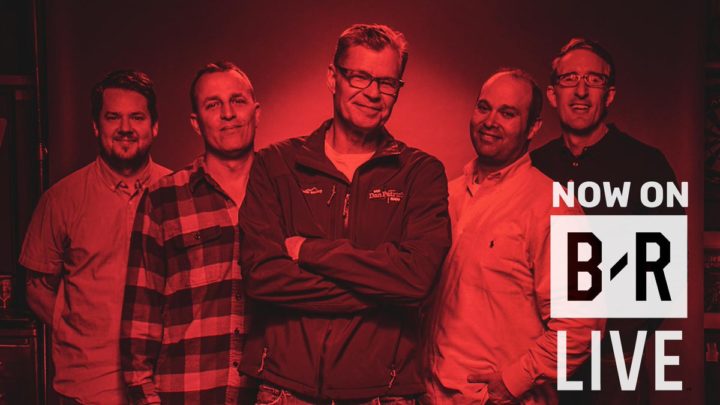
#29 – The Dan Patrick Show – Bobby Burack, The Big Lead
Dan Patrick has had one of the best sports radio shows in the country for years now. His show not only lands the most intriguing guests, but as the best interviewer in the business, Dan is able to get people to open up and create talking points around the industry. The show is fun and loose but can also get serious when needed.
Unlike most radio shows, the DP Show is actually better on television. The Man Cave leaves little doubt that Dan and the Danette’s are just five sports fans that we all want to hang and have a beer with.
#30 – NBA Inside Stuff – Demetri Ravanos, Barrett Sports Media
With apologies to SportsCenter and Inside the NBA, if you are a 90’s kid, NBA Inside Stuff is the sports show of record. Honestly, this show should have been everyone’s first sign that they were just thinking differently at the NBA offices in New York. They created an all-access style show with interesting and fun content and rather than offer it in syndication or as part of their Sunday NBC package, they pair it with Saturday morning cartoons and market it to kids. It was a brilliant exercise in how to create lifelong fans!