Let’s talk about one of the hardest things to do in our line of work: walking away.
Yes, believe it or not, there are reasons why it makes sense to NOT take the business.In fact, some of the time you actually need to fire the account forever.
I hired a seller once who was the proverbial “ball of fire.”He had no fears whatsoever and would call on or walk in on anyone you would throw his way.He hated being in the office and much preferred being out on calls, so he would map out his day and go on appointment after appointment while stopping in other places to make an introduction.He loved the station he was selling and usually came up with pretty good ideas to pitch instead of the “package du jour.”He was also someone who would never take no for an answer.
Sounds like the perfect salesperson, doesn’t it?Well, the problem was…he wouldn’t take no for an answer. You hear that, and you initially think of a person who pitches something and believes in it so much that they won’t let you say no.
In this case, the bad habit was every time he tried to close the deal, the price went down.He might’ve started with a $5,000 or $10,000 per month package, but by the time he was done, he had sold a small starter package for little money that had very little chance of working.I even recall a time he came back and was so dejected he couldn’t close a guy, he wanted to know if he could go back and offer him a free trial with a promise to buy if it worked (because what client would ever do that and then lie?!?).He had to have the win and he was never willing to walk away.
A bad habit we also see in a lot of sellers is not being able to judge whether or not the client is a “maybe yes” or a “maybe no,” and they end up spending way too much time on an account that probably wasn’t qualified in the first place.
In my experience, female sellers usually deal with this more than male sellers.I can recall an auto dealer once who would have one of our reps get in her car and drive 45 minutes to his dealership so he could “learn more about what she was presenting,” over and over and over again.The potential was certainly there as this dealer had been known to spend a lot of money in the market, but after a few times of the same story, it became clear he just wanted her attention and had no intentions of buying, he was most definitely a “maybe no.”
Time is money.When you’re selling sports radio for a living, one of the challenges is knowing how much time to spend on certain accounts.Everyone should have minimum criteria for the accounts they want to go after, and if that hasn’t been set for you, set it for yourself.Make sure it’s going to be a number where your commission is going to equal a number that will make you happy based on the effort you’ll put in.I get it, sometimes it’s hard to pass it up, and a lot of times we think it will be a “quick deal” only to end up chasing them down for copy the day before it starts while the business office is telling you the credit card declined.
What could you have done with that time?Could you have prospected a more qualified opportunity?Could you be working to get in front of a restaurant group instead of the corner bar or the dealer group instead of the one location used car lot?
It’s your valuable time at stake, so use it wisely.If the payoff isn’t there, don’t be afraid to walk away.
In my office hangs a small sign that (in part) reads: “You are not in the sales business, you are a marketing consultant who sells ideas and solutions.”Regular readers will know I quote sales guru Dave Gifford a lot, and this is another one from “Giff.”
I believe, in order to be “a marketing consultant who sells ideas and solutions,” you must first sell your prospects on two things – one is a partnership and the other is YOU.
We hear this all the time, the concept of selling ourselves, but I often wonder if people are aware what that means.I heard one person say recently, “you first sell the trust in you,” and I asked him if that’s really possible.It sounds good, but do you ever really build trust in someone quickly?To me, trust is something that builds over time.Some things you can show someone quickly is demeanor, a passion for what you’re selling, professionalism (were you on time and prepared?) and the ability to listen.
I often advise sports media sellers to step back and turn the tables around.If you’re the business owner, thinking about your business and what you want out of a “marketing consultant,” what types of things would you look for?I’d want someone to ask me good questions that make me think about my business, someone who did some homework and made themselves at least dangerous enough to hold a conversation about the business or industry that I’m in and I’d want someone who I can learn something from without them being a know-it-all.
Nobody goes in to a sale thinking about earning a short-term, one-time advertiser.We think, or are supposed to be thinking about, long term clients willing to make long term investments in their business.So, if that’s the case and this is to be someone you’ll have a working relationship with for a long time, there needs to be compatibility, the personalities need to mesh.My best clients over the years became great friends, and I’m certain that has been the case for many of you.Did that happen because they really liked the radio station I represented?More likely, it was because we had common interests and/or personalities and liked to hang out together.
One of my favorite words to use in our business is “partnership.”If I have met with 5,000 clients in my days, then I have said 5,000 times that I am interested in “a mutually beneficial partnership” and that I am “not interested in a short term opportunity, I am most interested in bringing you measurable results for your business as I know if I do that, we will be long time partners.”
It’s quite the powerful word, “partnership.”One of the actual definitions is “joint interest.” You have an interest in learning about the prospective client’s business and sharing marketing ideas and solutions and they have interest in investing in their company and your marketing expertise with the joint interest of growing the revenue of the business.
Selling the idea of this being a partnership and not just a sale or the package of the week is a point I try and drive home throughout the presentation to a client once I have all of the information needed to put it together.This even works as a close, being able to reiterate what each of you is bringing to the table while gaining their confidence, “With your expertise in your field and my expertise in mine, along with our mutual interest in growing your business, how can we lose?Are you ready to move forward?”
Sell the partnership and never forget they’re buying you.Make it so that whatever the investment is, they know your services being included has tremendous value, because now you are THEIR marketing consultant who sells ideas and solutions.
Beasley Media is getting into the eSports business. CEO Caroline Beasley announced today at the 2018 eSports Business Summit in Las Vegas that the company is launching BEASLEY XP, a new eSports initiative. To give the new division the boost it needs, Beasley has acquired CheckPoint Radio, the only internationally syndicated Esports gaming lifestyle radio show.
Since launching in February 2017, CheckPoint Radio has delivered a weekly two-hour show to 60 markets across the United States and Canada on Westwood One. Beasley’s top two sports stations, 98.5 The Sports Hub in Boston, and 97.5 The Fanatic in Philadelphia are among the stations to carry the show. The program which features co-hosts Nathan Bender, Norris Howard, Robbie Landis and Joe Sloan is also found on the Twitch platform.
“Beasley Media Group is committed to great content creation and content acquisition,” said Executive EVP of Strategy & Innovation Buzz Knight. “Adding CheckPoint to our roster brings us into the innovative world of Esports.”
Each year I attend the NAB Radio Show, and after a few days of meetings, attending sessions, and celebrating individual and brand achievements, I’m re-energized. The amount of wisdom shared in each room to help fellow broadcasters, and the private conversations conducted throughout each hotel, serve as a reminder that we’re working in an incredible business, one which remains important and exciting to those earning a living in it.
There is this public perception often presented that radio is lagging behind, failing to adapt, and not built for the future. I’ve called out the industry myself a few times because it sometimes can be its own worst enemy, and stand in the way of progress. Though there are issues to be solved, and competitive challenges have increased, rapid innovation continues, and each time we set our feet it feels like we’re forced to pivot, it’s also an exciting time because the demand for our content and personalities is as high as its ever been.
The majority of people I’ve spent time with in 2018 continue to believe in the present and future of the radio business. They see fields of opportunities rather than landfills of misery. During my conversations in Orlando, I heard similar feedback. The difficulties facing brands aren’t ignored, but most are optimistic, open to new ideas, eager to find solutions, and recognize the limitless options that exist to reach audiences thru multiple platforms.
A great example of this was last Thursday’s session on smart speakers featuring Fred Jacobs of Jacobs Media, Jeremy Sinon of Hubbard Radio, and Charles Steinhauer of Westwood One. All three gentlemen talked about the surge of smart speakers, the challenges they provide, and their importance to the radio industry’s future. Sinon in particular did an excellent job of playing some examples where Alexa created headaches for a few stations, and then showed how to develop skills to overcome those challenges. The message for the room was to understand the opportunity this new technology provides and not forget that it still requires investing time and resources to develop skills so your brand can perform its best.
As I sat there listening and processing the information Fred, Jeremy, and Charlie supplied, I thought about how it relates to the big picture of the radio business. Every brand, personality, and executive has problems to deal with, but solutions are available if you’re willing to invest the time to identify them, and take action.
Another session I attended that peaked my curiosity was on artificial intelligence. Traug Keller of ESPN, and Hartley Adkins of iHeartmedia were featured along with a few other broadcasters, and one of the best parts of the session was when an ESPN sample video was shown featuring Scott Van Pelt as a voice assistant. It gave the room a peak into the future. Keller delivered one of the best lines of the conference when he said “here we are talking about artificial intelligence and I don’t think any of us really know what it even means.”
He was right. Too many times in radio we hear of the potential of new technology, and immediately rush into it because we’re hoping it’s the magic bullet. Maybe AI will be a powerful tool to assist our business. But what if it isn’t? I’ve been to a number of shows since launching my company in 2015 where VR was touted as the future of TV watching, Nielsen was in danger of being replaced by other forms of measurement, and radio was read its last rites, and here we are in 2018 and all seem to be doing fine.
Don’t get me wrong, I see the projections. Radio is viewed as a flat to down business, while mobile and social media are seen as golden tickets to greater fortunes. Not only are both a huge part of each person’s daily routine, but they also offer better metrics to judge audience interest and advertising results. Meanwhile, radio lingers with an antiquated measurement system that doesn’t capture the true impact of each brand.
There’s also the reality that smart speakers are now owned by nearly 25% of Americans, and that number is expected to increase in the next few years. Larry Rosin of Edison Research did a stellar job of highlighting this during his session. I especially agreed with his data to support why music and sports brands would be wise to eliminate traffic. I did that as PD of 101 ESPN and 95.7 The Game and both stations turned out fine. The most important message though is an obvious one that can’t be stressed enough. As voice-enabled technology takes over the inside of our vehicles, brands lacking strong recall, local content, and recognizable talent will be in for greater challenges.
We also heard a bunch about the unstoppable force known as podcasting. That seemed to be a heavy focus of this year’s conference. Norm Pattiz, Darren Davis, and Suzanne Grimes offered their insights and optimistic views of the space during an action packed session which included Jewel, Mario Lopez, Elaina D. Smith, and Kaitlyn Bristoe, and I share their enthusiasm for it. It allows talent to showcase creativity, brands to introduce original content and new voices, and the biggest winners are the listeners since most content options are ad free or significantly lower than what they’re exposed to on terrestrial airwaves.
However, until radio operators share an equal confidence of earning income in the space similar to their terrestrial properties, I think it’s going to be an uphill climb. Should we be selling podcast subscriptions? Video shows? Will people continue to listen if we include more ads in our podcasts? There’s no shortage of content or promotion for podcasting, but monetizing it is the largest issue. Measuring it in a way that satisfies advertisers is another big challenge.
Last but not least, I attended the Snacks, Suds, and Stories session which included Mike McVay, Mike Golic Jr. and Chris Oliviero. McVay always does a great job hosting these sessions because his personality, humor, and passion grab your attention, but what really stood out this time was something Oliviero said.
When Chris was asked to describe the best moment of his broadcasting career, he said he’d answer by sharing his best and worst. The worst he said was the day he learned Howard Stern was leaving terrestrial radio, He said it felt like a piece of the industry died that day. His best moment, was his final day with Entercom.
Now before you read into that last response, Chris’ explanation was that it meant he had written the final chapter on a successful 20+ year career. He was proud to represent CBS as an executive, and when the company sold, he stayed on to help Entercom navigate thru the merger. He felt he did what he set ought to do, the job was complete, and it was time to walk away.
I knew exactly what he meant. When I left San Francisco in 2015, I did so with zero regrets. I knew the station was built for future success, the same way I left 101 ESPN in St. Louis in 2011. I wasn’t interested in moving to NY and doing the same thing. I proved to myself and my bosses that I was a strong PD, and I was ready for a new challenge. I didn’t know it’d become BSM, but had I not left SF, I’d never have realized how much I love this.
After three days of meetings and attending sessions, I left Orlando with the understanding that not all is rosy in radioland. There are many mountains to climb, and it seems that just when we reach the top of one, another pops up. Challenges are to be expected though, which is why I don’t see the industry as laying in a hospital bed on life support as some others do. When I add it all up it comes down to this, some see challenges as problems, others as opportunities. The way you view it will determine how you respond, adapt, and ultimately perform.
Ask a few different people what the word ‘digital’ means to them. After you do, take note of the variety of responses that you receive back. What you’re likely to discover is that the definition changes from person to person. This makes it challenging when trying to articulate vision and focus to advertisers, account executives, program directors, and talent.
Yet for many media folks, digital has been presented as the elixir for future growth opportunities. But what exactly is it? Is it podcasting? Is it streaming? Is it your brand’s mobile app or website business? Maybe it’s social media. Or smart speakers. Perhaps it’s video. More than likely, it’s all of the above.
When you combine each of these areas, and consider how they factor into your business model, ask yourself how well versed and prepared your people are to take full advantage of opportunities in each space. As you think about that, I want you to remember how much easier things were in years past.
Previously, the radio, television and newspaper businesses were easy to define. Advertisers knew what each provided, and made their decisions on how they’d divide their advertising dollars to reach each audience. But in 2018, the lines are blurred. Radio, TV and print are all present in the same arenas. Some may perform better than others in specific areas, but most brands now have an audio, video and written strategy, and talent capable of performing across multiple platforms.
And there’s a good reason for it.
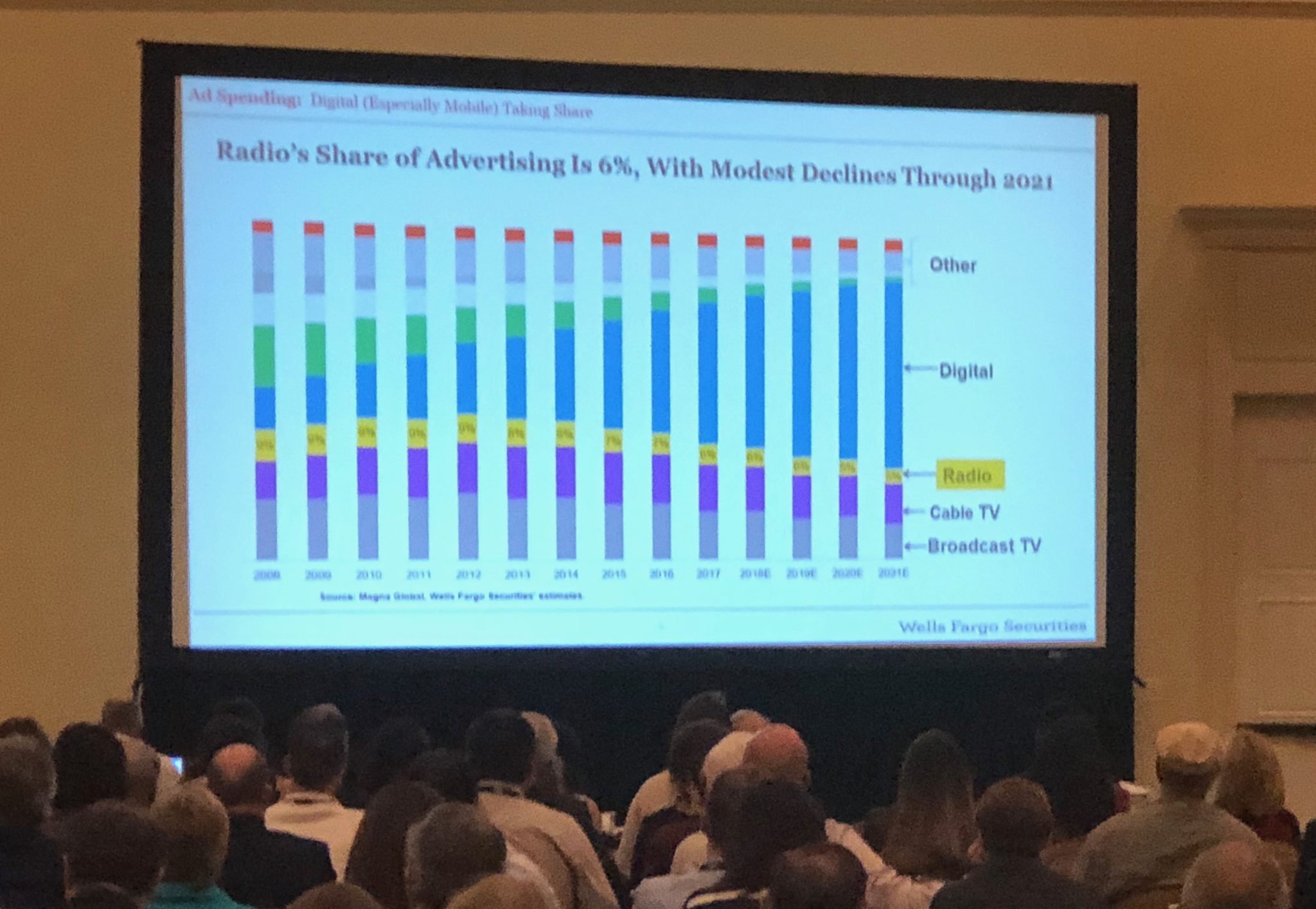
Every revenue projection I’ve seen over the past two year’s points to increased opportunities for digital, and either flat or declining revenue for radio, television, and print. This has led media groups to place a higher premium on digital content creation and distribution, while challenging their teams to find ways to further monetize it. But if those we trust to create and sell content in these space aren’t given a clear focus of what matters most to audiences and advertisers, can we fully take advantage of all of these wonderful brand extensions?
As I’ve spent time this week at the NAB Radio Show, I’ve been thinking long and hard about this. By definition, digital means available in electronicform;readableandmanipulable by computer. But does that truly capture everything it stands for to folks on the programming and sales end of sports media operations? I’m not sure it does.
I’ve listened the past few days to sessions about the explosion of podcasting, the future of artificial intelligence, and the financial climate for radio, and all of it connects back to the word ‘digital’. That’s both exciting and confusing. It’s easy to embrace lines such as ‘this is where the future growth of our industry lies’ but the ability to offer a clear description, provide a picture of what deserves focus, teach staffs and clients how to maximize digital opportunities, and explain what success should look like is a very different story.
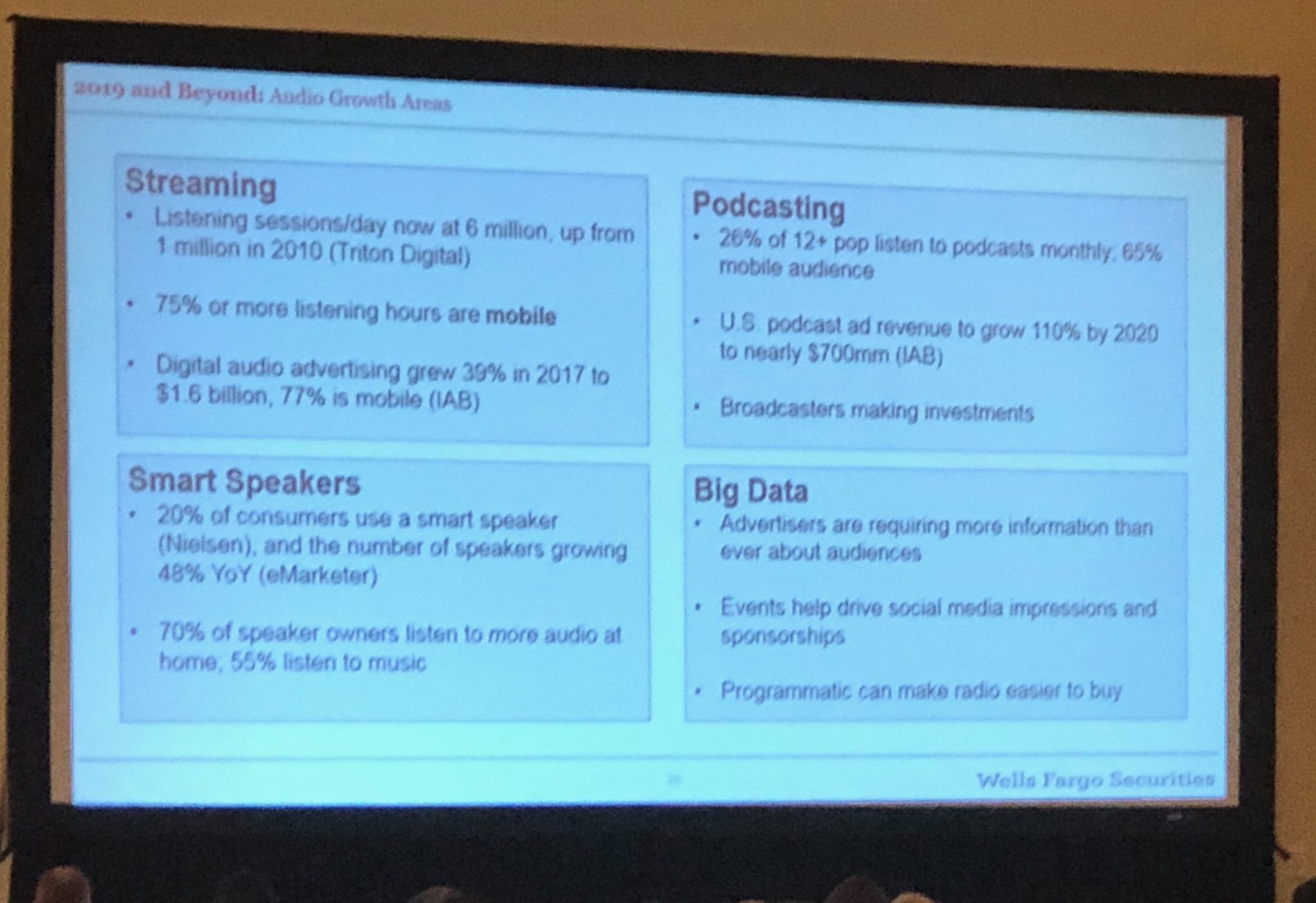
If you go by industry perceptions, podcasting and social media are vital to our success. Yet revenue in those spaces remains challenged. Mobile advertising has reportedly improved, and a robust future is expected, but that too is an area that has yet to be fully maximized. Streaming, and smart speakers offer hope for expanding the reach of our brands, but monetizing them is still difficult, and many who rely on radio ratings to generate business remain unsatisfied with the current standard of measurement.
There’s no question that brands have more ways than ever to connect with people. That means there are ample opportunities to deliver results for clients. However, maximizing all of these layers of digital media is very difficult. Between mobile, social, web, smart speakers, podcasting, and of course, radio, we’ve got numerous platforms to produce solutions to our client’s problems, except let’s be honest, we’re not going to break records in each space.
What we should be able to agree on is that our future path to prosperity depends on excelling in the digital realm. The likelihood of our content and sponsor associations owning space inside the consumer’s head thru terrestrial radio is going to be less. The only question is when, not if. That doesn’t mean audiences won’t continue receiving our content, they’ll just do so thru multiple channels.
Inside each building, it’d benefit every market manager and programmer to ask their staffs how they define digital media. Once all of the feedback is received, you’ll have a better idea of how to define it, and present it, internally and externally.
If we can reach a consensus of how to define digital, and show our teams where the biggest opportunities are, how to create impact for clients, and which areas to focus their efforts in, we could end up becoming a bigger part of that digital growth story that everyone’s buzzing about. And the last time I checked, success was a word that required little explanation. Certainly a lot less than digital.
On Thursday night, I did what most football fans did, I tuned in for the Jets-Browns game. The first half was sloppy, boring, and uneventful until Isiah Crowell wiped his ass with a football, and Tyrod Taylor left the game, paving the way for the Browns to introduce Baker Mayfield to a national audience.
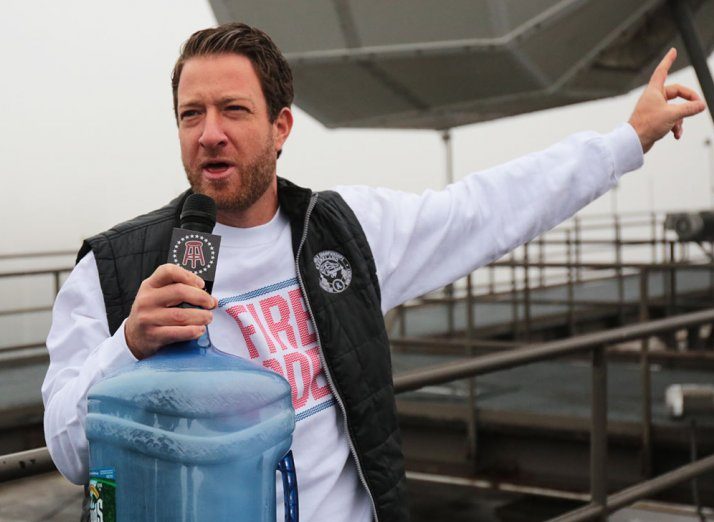
As I sat there asking myself “why am I still watching this garbage” before Mayfield entered the game, I had a chance to catch up on some reading. I scrolled thru Twitter, and discovered a story from Wednesday written by Barstool Sports founder Dave Portnoy. The headline of the article read “It’s Come to My Attention That Some Nobody Robert Silverman of The Daily Beast is Writing a Hit Piece on Me 5 Years in the Making.”
I admit, I wasn’t familiar with The Daily Beast, but Portnoy’s headline made me curious. As I started to read the article, which showcases Portnoy’s brash style which some will love, and others won’t, I began to think about a bigger issue – how brands decide on assigning reporters to specific stories.
If you read Portnoy’s piece, you’ll discover that Silverman is not a fan of Barstool Sports. His feelings about the company’ and its cast of characters are visible on social media, and that barrage of negativity calls into question his ability to report on the brand in a fair way. Silverman may have legitimate examples to share about Barstool conducting themselves poorly, but the problem is his biased opinions on the brand make it difficult to convince anyone who’s in the middle or Pro-Barstool that he’s presenting facts from a neutral position.
The distrust towards reporters and media outlets has grown because we now have greater access to these kind of details. Last week you may recall the video of the weatherman showing how powerful the winds of Hurricane Florence were, only to look silly a few seconds later when two local people calmly walked in the background. You also likely heard about the back and forth between Anderson Cooper of CNN and Donald Trump Jr., and the list goes on and on, especially when it comes to political coverage where both sides often fuel their base without reaching anyone new.
On the other hand, social media has become a battlefield by which media members fight back. After learning of Silverman’s quest to paint Barstool in a poor light, Portnoy went on offense. Not only did he fire back with some choice words in his blog, but he also posted the reporter’s phone number (later taking it down), giving his fan base the opportunity to harass Silverman.
I don’t think that’s right either. It goes against what many media executives tell their people “steer clear of getting personal.” Portnoy has a right to respond to Silverman thru video, audio, and his blog. He can even do what he did on Twitter, and challenge him to a publicly recorded debate. But putting someone’s private number out is a minor league move. Given that Dave has led Barstool from Single A to the major leagues, he’s better than that.
One thing I’ve noticed about each of those situations is that each personality and brand has adopted this “us against them” approach. That resonates with people. It’s not how corporate media outlets operate, and that’s an advantage for guys like Portnoy, Travis, and Trump. Their approach has only strengthened their position with their fan base. On the other hand it’s fair to question why they feel the need to get personal when faced with criticism or not given the answers they want. If you’re going to be in a position of power, it comes with the territory.
As it relates to covering teams, athletes, executives, and media types, we’ve got to think long and hard about who we have reporting on specific beats and stories. Do you have a reporter covering a subject or individual that they’re familiar with? Can they foster respectful relationships with people, and tell stories objectively even if at times it creates friction? Are they so desperate to be liked and accepted that they’re easily influenced and likely to shield those they report on? Have you given someone a platform who’s goal is to advance their own agenda, and harm those who don’t subscribe to their point of view?
It may sound complicated, but these are all questions that have to be answered by a brand manager before deciding who to assign to report on a story. If a reporter’s bias influences the coverage, their credibility is compromised. You can’t put someone on a beat who’s intentions are doubted by the audience. Eventually the content will be dismissed.
In this particular case, Mr. Silverman’s disgust towards Barstool and Mr. Portnoy, raises concerns about his ability to be fair and accurate when reporting on the company. Agenda driven reporting doesn’t changes minds, it just fuels those who already feel a certain way. It’d be like Richard Deitsch doing a story on Skip Bayless, Sean Hannity reporting on Barack Obama, or Keith Olbermann providing a piece on Donald Trump. They’re all talented and capable of doing great reporting, but it’s unlikely they’d separate their personal dislike, and convince an audience of their objectivity towards the individuals in question.
If The Daily Beast wanted to tell a story about Barstool, and open eyes to the company having legitimate issues, they should’ve assigned someone to the story who wasn’t emotionally attached to it. It doesn’t help that Silverman has contributed to Deadspin, a brand known for publicly feuding with Barstool.
This doesn’t mean Barstool hasn’t done something foul. For all we know, Silverman could have uncovered something powerful. However, if the information gathered by a brand is delivered by someone who’s connection to the story raises doubts about their ability to present it fairly, then the quality of that work is not going to produce the result that it should. And that will leave most brand managers feeling like they missed their shot on a wide open net.
As I write this, I have a baseball game on a television, in a different city, that is being “cast” from my phone, which is getting the broadcast off my satellite dish at home.That blows my mind.And, for the most part, technology has done some great things for us in media sales.
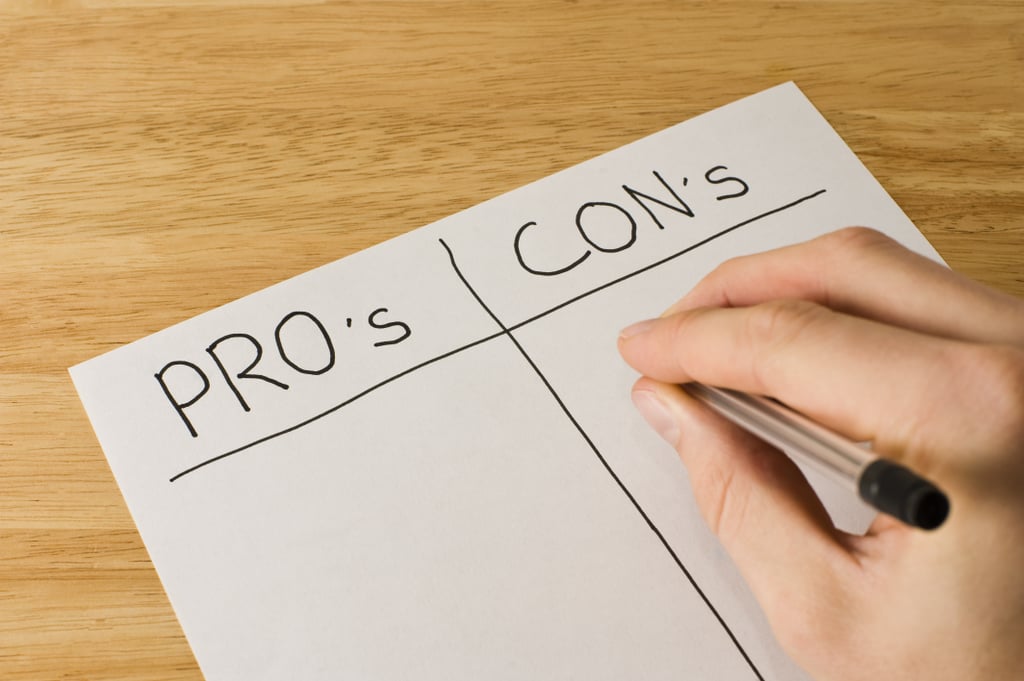
This column, however, isn’t meant to be about technology.It’s really about something that is the exact opposite, which is what I still like to do with good ole’ pen and paper.Sometimes I just like to write out and see a good list on paper.When I have things written down on a piece of paper, that I can feel in my hands, make changes to or cross items off, it helps me dissect things and figure out next steps. I often make this suggestion to reps when they are struggling or in a slump.
I had a situation once with a rep who was very upset during an annual review of her business.She was aware of the dollars that had not returned from the previous year, but in the review, we disagreed greatly on the reasons and why the year, taken as a whole, hadn’t been great.
I realized throughout the conversation that she was using a lot of generalizations such as, “every account went the wrong way for me,” “ratings just killed my agency business,” and “nothing I did seemed to work.”So, I stopped the meeting and asked her to look over her list of billing and clients and write down the problems.I wanted to know which accounts went the wrong way, which agency business walked because of the ratings and what, exactly, she had done that didn’t work.
When she finished, the point I had been trying to make during the initial parts of the conversation, had been made but was now on paper, in black and white. First, we went through each account and eliminated the ones which we had no control over or didn’t really have a lot of impact. Secondly, there were two less agency accounts on the overall list from year to year. Lastly, there wasn’t much of anything in the “nothing I did seemed to work” column, and that was the root of everything.
Only a few really strong ideas were pitched, no noticeable change in prospecting or selling habits, and most of the successes came from growth of current clients (which is fantastic, but can’t be the only source of growth).Having the list in front of us, while discussing, proved to be one of the main factors of this particular seller seeing a little different picture than they had originally perceived.
I’m also a big believer in writing out a list when you’re feeling overwhelmed with too many things to get done.For me, the process of having that list with me wherever I go and being able to cross things off or make changes, by hand, is a big part of keeping me focused on it.I do have the habit of emailing myself lists from time to time, and to be honest, I often find myself never looking at them again because they aren’t right in front of my face.
In the end, whatever works for you to step back and take a good glimpse at the whole picture when things aren’t going your way.Really think about what isn’t going well and what might be a common theme in your answers or pay attention to what might be missing.The goal is to identify the problem so you can come up with the solution, no matter if it came from writing an old fashioned hand note or voice-texting an email.
Hubbard Radio in St. Louis is hoping to capitalize on the first year success of its Buds & Bourbon promotion by bringing it back a second time. The company has announced plans to host the event on Thursday, November 8, 2018 at RYSE Nightclub at Ameristar Casino Resort Spa in St. Charles, Missouri.
As part of the event, attendees will have an opportunity to sample the finest bourbons from distilleries such as McKenna Henry, Rittenhouse Rye, Bernheim, and more. Heavy hor d’ourves will also be featured, as well as a variety of interactive experiences, meet and greets with the on-air talent from 101 ESPN, and LIVE music from The Tommy Halloran Trio.
Tickets are $35, and provide attendees with access to bourbon samples, a complimentary cigar, and a commemorative glass. A special “Higher Standard” ticket can be purchased for $50, which includes early access to the event and a special bourbon tasting.
For more information and to purchase tickets, please visit www.101sports.com.
How much would you pay to attend your weekly sales meetings or your one on one with your manager?
At first glance you may be wondering if I’ve gone crazy.You may be thinking that I just asked you if you would pay money to do something you generally despise.C’mon, admit it, the days you wake up and realize you have your sales meeting or your one on one are not your favorite days.I’m guessing this is the case for most of you.
While many of you probably think that managers sit around and think to themselves “how can I waste more of my team’s time today,” the truth is that these meetings can and should be very helpful to you and some of the secret in making that so is YOUR participation and preparedness. If you work for someone who is really good at what they do, yes, you should absolutely be willing to pay to attend those meetings, because the return on investment should be high.
Our customers often judge us, or the campaign they purchased from us, by return on investment, or ROI, so why shouldn’t you do the same with your meetings.Even if you don’t pay cash money to attend those meetings, you do pay with your time and time is money, right?So, are you getting a return on that investment of time?
The relationship between a good sales manager and a good account executive should be a solid give and take.In a weekly sales meeting, it is reasonable for you to expect that your manager is going to provide information, materials and training that will help you become a better sales person and it is reasonable of your manager to expect you will participate in the conversation and not just sit and nod (or play on your phone!).
In a one on one, it’s commonplace for the manager to be prepared by having looked over your business on the books, understand your prospect list or funnel and be able to help with any challenges you might be facing.However, these meetings can get off track fast if the account executive is not prepared with the right information or is unable to answer certain questions about their accounts.
As someone who has done thousands of one on one meetings as a Market Manager or Sales Manager, it is always amazing to me how some sellers know very little about their business, which is how you should always be looking at things, your list is your very own small business.To be a great small business owner, you need to be intimately aware of everything about your business and the same goes for the account executive in charge of a book of business.
Ask yourself right now, do you know how much revenue you have accounted for this year?Is that more or less than what you did last year?Do you know your closing ratio?Do you know your attrition rate?If you are a typical veteran salesperson and have twenty to thirty accounts on the air, isn’t it reasonable to expect you know a lot of this information about your own book of business?
I have mentioned this before but it bears repeating:you have to worry about you and your manager has to worry about the group, so in the give-and-take world of the manager-rep relationship it is very helpful when you not only participate in discussions and know what’s expected of you, but also that whenever you bring a problem up, you offer what you think can be a solution.
“I have a problem and need you to help me fix it” is not nearly as appreciated as “I have a problem, here is what I think might be a good solution, what do you think?”Same goes for ideas for a client.“I have a new client I want to pitch, this is what I learned about them in the CNA, and this is what I was thinking” is so much better than “I have a new client I want to pitch, do you have any ideas for me?”
We are in sports so we all know about expectations.As an on-air host I used to always say that’s what keeps the phone ringing (yes, I was on the air before texting when we took phone calls), are expectations.If we didn’t expect our teams to win we wouldn’t be disappointed when they lose and therefore would have nothing to call in and complain about.
Same goes for our sales careers.It is reasonable to expect as managers that our reps know their business and will be prepared to discuss when needed.As the account executive, it is more than reasonable to expect that when your time is taken up by a sales meeting or a one on one that you’re going to get valuable information that will help you sell more and make more money.It should be so valuable, you’d even be willing to pay for it.
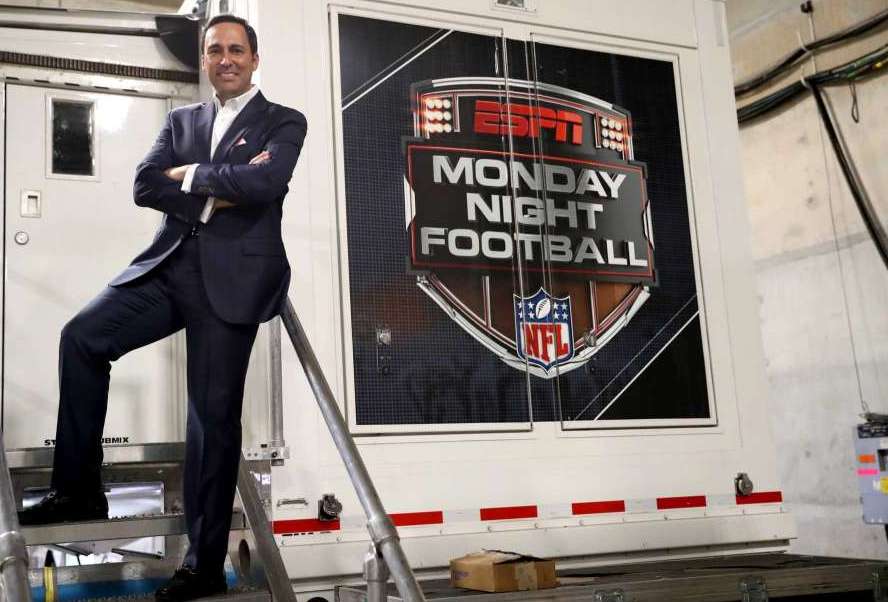
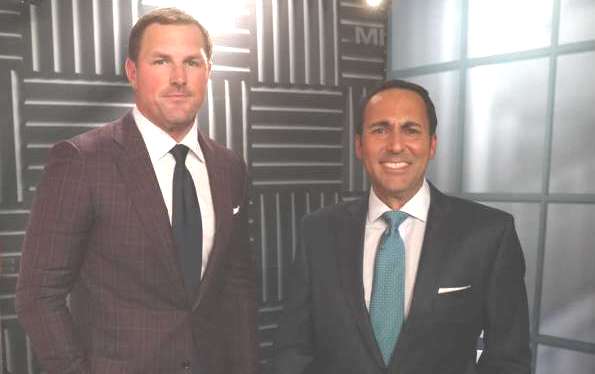
It’s only week one, but if you were less than impressed by ESPN’s new Monday Night Football broadcast crew, you’re not alone. Joe Tessitore, Jason Witten, and Anthony “Booger” McFarland made their regular season debut during Monday night’s Oakland Raiders-Los Angeles Rams game, and the results were less than spectacular. Granted, it’s a long season, and developing a rhythm and chemistry between three new teammates takes time. However, when you’re on a national broadcast as big as this one, patience is thin.
What surprised me the most was the trio’s lack of flow, fun, and passion. I read an article on Yahoo on Monday afternoon where Tessitore was quoted saying “people want access, they want unfiltered, they want non-corporate, they want raw” and I was encouraged. I agree with his assessment. But if you watched the game, where was the unfiltered? The non-corporate? Better yet, where was the fun and the raw powerful connection to what was transpiring on the field?
From a technical standpoint, Tessitore was fine. It wasn’t like he didn’t see or understand the game. But his calls of big game moments lacked punch, and the inconsistent flow between the broadcast’s three key voices often gets placed on the conductor’s shoulders. Joe certainly has a great voice, and has done excellent play by play work for a long time. I root for people who work their way up the ladder from Schenectady, NY to the NFL’s main stage. But whether I want them to do well or not, I still have to call it like I see it.
Prior to his NFL arrival, Joe was a college football voice who you could count on to consistently deliver a quality broadcast. He didn’t earn the MNF opportunity by accident. But those college broadcasts don’t receive the same scrutiny that a Monday Night Football broadcast does. If you’re going to serve as the play by play announcer for ESPN’s flagship NFL property, then you have to be exceptional. Unfortunately on Monday Night, Joe was solid, not spectacular.
For example, when Marshawn Lynch powered past the Rams defense from the four yard line to the end zone, backed by an incredible effort from the Raiders O-Line, Tessitore said “Lynch, testing the middle, and getting a push, right thru. Effort play. Raiders score it.” If you watched that play as a fan you were likely much more moved by what you saw than what you heard. The play by play description didn’t match the passion felt by the viewer.
I heard the same thing when Cooper Kupp scored in the 3rd quarter to give the Rams the lead. But perhaps the most glaring omission was in the 4th quarter with the game winding down when Marcus Peters intercepted Derek Carr, and proceeded to grab his crotch while jumping into the end zone to mimic Marshawn Lynch as he scored. Tessitore failed to call that out, and point out the connection to Lynch. Instead the call was “Picked off. Marcus Peters. Strutting his stuff, and back splashing in. Pick six, Rams.”
Can you imagine Al Michaels, Jim Nantz or Joe Buck skimming past that? I can’t. The Rams twitter account was even on top of it. Before you counter with “but that’s unfair to compare him to those guys” let me remind you that this is Monday Night Football. This is ESPN’s most important NFL relationship. The announce team themselves acknowledged how different this night is from the others. If you’re going to call the elite game on the elite sports network, then you’ve got to deliver an elite performance.
Although I think Tessitore has to provide more flavor, take more control, and capture better what the audience is seeing and feeling, he wasn’t bad. In fact, I enjoyed him more than I had Sean McDonough who just didn’t mesh with Jon Gruden. I think Joe is going to be just fine. I’m not sure I can say the same for Jason Witten who simply wasn’t ready for this stage last night.
There were times during Monday Night’s game when Witten was vacant from conversation for minutes at a time. His analysis for the most part was generic, his humor was absent, and as a viewer you were confused whether he was the #2 or #3. Fans grew frustrated on social media as the game continued and Booger McFarland’s activity increased, but ask yourself this “if Booger didn’t jump in, what exactly were you going to get out of Witten?” He was a deer in headlights far too often.
Where I was most disappointed with Witten is that he seemed to lack personality and passion. Maybe he was holding back. Maybe Tessitore didn’t set him up right. Maybe Booger’s involvement threw him off. Or maybe he just froze.
Even when Witten took a chance to say something strong (EX: Jon Gruden hasn’t had a franchise QB with the Raiders – except Witten ignored that Rich Gannon went to the Pro-Bowl during each of Gruden’s final 3 seasons in Oakland, threw for 11,000+ yards and 75 TD’s 34 INT’s during that 3-year stretch and won the MVP award after Gruden departed for Tampa), he missed the mark.
Nobody can force Jason to be someone he’s not, but he has to let the nation know who he is. Whether you’re known for being colorful, critical, the smart guy, the loud guy, the jokester or something else, personality is a vital part of an NFL broadcast. For all of the criticisms directed at Jon Gruden as an analyst for loving every player, we knew that trait about him. Grudenisms were understood because his personality allowed us to get a feel for who he was. There was none of that with Witten.
It’s no secret that the Dallas Cowboys have a stellar track record of former players ascending to broadcast roles. Many felt Witten would make a smooth transition because of Tony Romo’s instant success as an NFL analyst on CBS. Couple that with Witten and Romo’s friendship, and the two men reportedly having superior knowledge and exceptional work habits, and you can see why so many were high on him becoming a great analyst.
But what isn’t known is how someone will perform when the lights are brightest. Witten may still turn out to be great, but his Game 1 performance left many questions. It’s up to ESPN now to find those answers.
For Booger McFarland, I thought his energy and passion were stronger than Witten’s. His perspective on the sidelines was solid, and he wasn’t afraid to offer an opinion especially on the Khalil Mack trade which was a storyline surrounding the first Raiders game. He became too involved at times, but was that due to the crew sensing Witten wasn’t adding much? The viewing audience seemed to come away with the opinion that they heard too much from Booger and not enough from Witten. I don’t disagree.
I think Booger can do a better job of shortening his commentaries, because at times they went long. There were times where he also came across too serious. Some on social media even described him as angry. I’ve heard Booger’s personality before on radio, and seen it on TV, so as the season plays out I think he’ll find more ways to lighten up. The man doesn’t lack personality.
One part of the broadcast which stood out in positive fashion, and further highlighted the difference in skill was the halftime performance. When Louis Riddick and Steve Young talk football, it’s so damn good. Young previously declined pursuing the MNF analyst job, but Riddick openly acknowledged having interest in it. If he was bypassed because of concerns of being hired in the future as an NFL GM, I get it. If it’s for any other reason, I’d love to hear it. Few at ESPN ooze the passion, insight, and knowledge for the game of football that he does. As I listened to him on the pre, post, and halftime shows, I kept asking myself “how is this guy not in the booth?”
When it comes to the NFL we all tend to overreact. It’s common to put a team in the Super Bowl and another at the top of the draft after Week 1, so in a way I feel like I’m doing that with a new broadcast team which is trying to find itself. If the worst thing we have to say at the end of the season about this crew is that their 1st week performance was subpar, that would indicate they made progress. That’s what I’m hoping for. But the way they settle into their roles, connect to the audience, and respond to a rough start will determine how supportive ESPN remains in the future.