Home Blog Page 2747

The 2019 Barrett Sports Media Summit Is Coming To…

0

There’s a great quote by Henry Kissinger which I’ve used for many years. It says “Each success only buys an admission ticket to a more difficult problem.” Simply put, every time you achieve a goal, be prepared to face and conquer an even bigger challenge.

In 2018 I took that advice when I introduced the Barrett Sports Media Summit in Chicago. Mitch Rosen and his team at 670 The Score gave us access to a great staff and venue, and the attendance by many of sports radio’s best programming minds helped us create a successful first event.
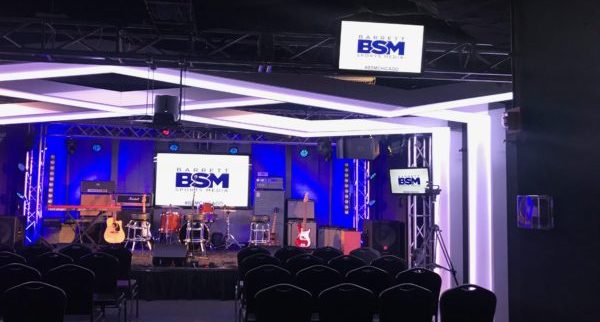
To execute this type of event, required countless hours of preparation, creation, and networking to secure top notch speakers. It’s a ton to tackle in a short period of time, especially with other business demanding my focus, but I welcomed the challenge because I believe events like this are important to help industry folks who have limited opportunities to share ideas and stories, network, and learn new ways to grow their business.

Sports radio programming is heard on roughly 800 stations, but we operate now in a multi-platform world against fierce competition. We’re no longer just creating audio and competing against other radio groups for dollars and ears. The opportunities, challenges, and threats are endless which is why it’s more important than ever to learn new things, meet new people, embrace new platforms, and consider alternative methods to future success. By the way, that’s not just a message for programming people. It applies to sales, marketing, social, and digital folks too.

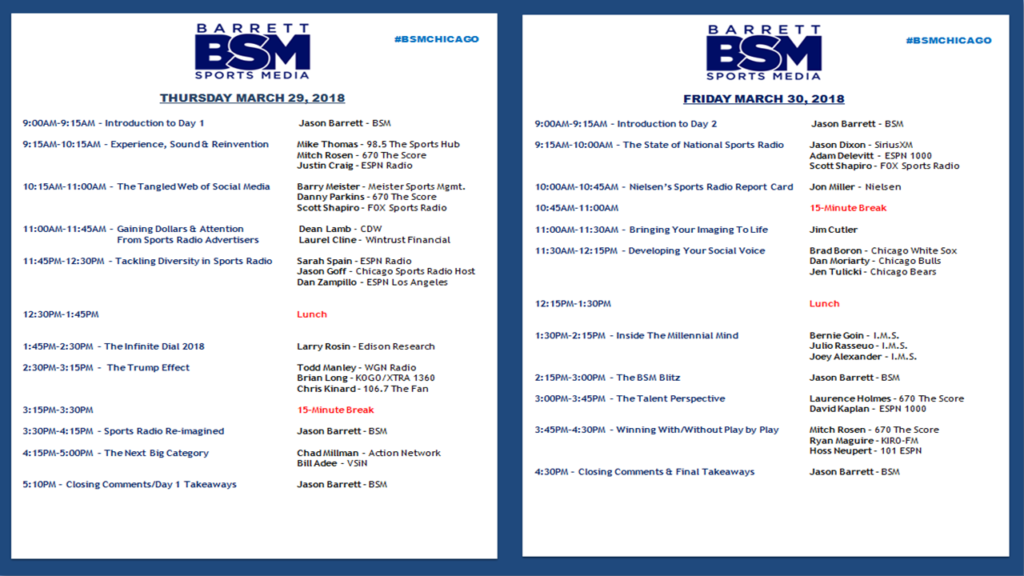
At our Chicago event, we explored many critical areas of our business from podcasting to social media to diversity, merchandising, measurement, imaging, and the intersection of sports and politics. We also welcomed leaders from VSiN and the Action Network to discuss the expected growth for sports betting. In fact, a number of the sports radio PD’s who were in the room that day have since teamed up with VSiN, and the Action Network has since joined forces with ESPN. You can see our full agenda from the last show by clicking here.

Though we may not solve every problem known to mankind, I have no doubt that those who attend our summit will leave the room wiser and better prepared to help their brands maximize ratings and revenue. I’m also confident that attendees will gain new ideas and insights, a deeper appreciation for the business, and a stronger understanding of what missed opportunities and what’s on the horizon.

With that in mind, it gives me great pleasure to announce that the 2019 Barrett Sports Media Summit will be held February 21-22, 2019 in Los Angeles, CA at the beautiful Clive Davis Theater inside the Grammy Museum. The venue is located at 800 W. Olympic Blvd. inside of the L.A. Live complex. Be advised that this event is strictly for sports media professionals.

I considered a number of cities for our next event. New York is my home, San Francisco has special meaning, and Boston, Miami and Houston are other fantastic cities that were given strong consideration. In the end, L.A. made the most sense because it offered a great mix of a spectacular venue, tremendous weather, major brands, and quality talent. The city of Angels has no shortage of sports teams or influential people, and when we open the doors on February 21st, and kick off the first day of our event, we plan to showcase what makes it unique.

A few things will be different at our next event compared to the one we hosted in Chicago. For starters, the Clive Davis Theater offers 200 seats and we intend to fill them all. There will be a ticket fee to attend, which is necessary to offset the costs associated with creating the event. The earlier you purchase your seat, the lower the cost. We will also have a few sponsorship opportunities available for companies who are interested in reaching our online and on-site audiences.

For those of you who will be flying into Los Angeles to join us, we are partnering with the fabulous Luxe City Center which is directly across the street from the Grammy Museum. The hotel is within walking distance of ESPN and the Staples Center (if the Lakers could schedule a home game on one of our evenings that’d be greatly appreciated). BSM has also secured a special discounted rate for rooms which includes a complimentary breakfast. More details will be passed along shortly.

If you’re planning to attend and are interested in speaking at the event, inquiries can be sent via email to JBarrett@hvy.tcp.mybluehost.me. I can’t promise stage time to all interested parties, but if an opening exists and a fit is there I’ll be in touch.

Additionally, I am thrilled to share that we will be introducing four awards at our next summit. Each of these awards are being named in honor of someone who has made a significant contribution to the sports media business. The names of those four individuals and the inaugural recipients of these awards will be revealed at a later date.

I want to be clear that the purpose behind creating these awards isn’t to fill time on our schedule or pat my clients on the back. It’s to recognize and celebrate the impact that a select few have made to our business. It’s bothered me for quite some time that many who do special work in the sports format aren’t remembered beyond a few articles and internal thank you’s. Some of these folks have given their lives to the business, taken big risks, shared their wisdom, and used their talents to create special connections with audiences and advertisers. If their work has been good enough to live inside the minds of the people who consume it for decades, then the least we can do is make time to show our appreciation for what they’ve accomplished, and elevate the stature of those who continue to do meaningful work and blaze new trails for our industry.

By now you’re likely asking, “how do I buy a ticket and book my hotel room?” Since this is an industry only event, the information will not be featured on this site. A second site has been created specifically for this event, and that link will soon be sent to industry members by email.

If you ever needed an excuse to get away from the cold three weeks after the Super Bowl, when the sports schedule is extremely light, then this should do the trick. This is going to be an action packed event that benefits those in attendance, and I’m excited to share additional details with you about what we have planned in the weeks and months ahead. I look forward to seeing you all in Los Angeles this February!


Time is Money

0

Time is money.

You’ve probably heard or even said this phrase, which may or may not have first been used by Thomas Edison in an essay in 1748, hundreds of times.  Just three simple words, very easy to understand the meaning.  Especially when you do what we do.

I remember first being told we should always look to sell early in the day and early in the week.  The best time to make a sale, the theory held, was in the morning, on Monday, when the client was refreshed from the weekend and the week’s problems were only just beginning.  The later in the week, the more stressed the client is and therefore, less likely to be able to focus on meeting with you, talking about their business and, ultimately, buying something.

Since then, I’ve also worked for and with others who believe almost the exact opposite.  They believe that as the pain from the week reaches its boiling point, that light at the end of the tunnel, that is the weekend, puts people in the best possible mood, so later in the day on a Friday is actually best.

If you read my stuff, you may be able to guess what my thoughts are – great ideas sell and will sell on Monday, on Wednesday, in the morning or at night.  If you feel one of the above theories is on the mark, go with it.  I’m never one to have dictates or one way of doing things, to me it’s about what works best for you to hit and exceed your revenue budget.  What is important, however, is having a plan for all of your time.

An old boss would ask me, “what’s your time plan?” and it really took me awhile to figure out what they meant.  My first thought was, “who has time to put together a plan about time?!” As time went on, I became much more aware of how I was spending my time and making sure that I didn’t end one day without a plan for the next.  I truly believe that if you start thinking about what you’re going to do for that day, the morning of that day, you’re already way behind.  

There’s no perfect time plan.  We’ve all probably worked for or with sales managers who had the “don’t be in this office during the day, go out in the morning and don’t come back until the day is over,” plan, which probably accounts for 75% of all revenues at area Starbucks and Panera’s.  I worked with a manager once who had a “sign out board.”  You were either in the office on the phone, or you marked on the board where you were and what time you expected to be back.

In training sessions, my theory on time management for sellers is fairly simple: between 10 AM and 3 PM be selling or setting appointments.  Other than lunch, which should include a client or prospect at least a couple times per week, do nothing else during those hours.  Do not write copy, do not put in an order, do not do a proposal, do not fill out the paperwork for your one on one, if you can possibly avoid it, do not do anything except sell or set appointments during those hours.  There’s time before ten and after three to take care of all those things. 

If you mentally program yourself that the time you have to accomplish a lot of tasks is only the morning and late afternoon when selling time ends, then you’re more likely to not let distractions take you off your plan and you’ll get things done much quicker.  If you’re spending your days either planning your day or trying to figure out who to call, you’re dead in the water.

Time is so valuable to us in sales. It’s crucial that you have a time plan and you stick to it.  Time is money isn’t just a saying in media sales, it’s reality.

Work Like You Just Lost Your Biggest Client

0

You just lost your biggest client.

Totally out of the blue, and worse yet all you got was an email with no explanation.  You panic, of course, you forward the email to your Sales Manager and run in to the office, freaking out.

After strategizing, you get in your car and drive over to see the client in person and try and figure out what’s happening.  You make an offer to try and save the deal, but the client tells you there’s nothing you can do, they have to cancel.

I say, you should’ve been planning for this.

I believe sales people should have the mindset that their biggest client is cancelling tomorrow.  Think about it, if this scenario happened to you (to most of us it has at one time or another), you lost your biggest account, what would happen?  After the anger and the second guessing and more anger and more second guessing, there comes a point when you’d have to think about how you’re going to replace the income you just lost.  Something tells me that most of us, would eventually respond by kicking it in to a higher gear.  

So, I believe we should always work in that gear and if that fear of this happening is what gets you there, then so be it.

Quick side story.  I was a Market Manager once in a market that, prior to my arrival, had lost its largest billing client (by far), a multi-location auto company, that had decided to stop spending on radio altogether.  All the major radio clusters in town were hurt, but we were hurt the worst.   

Each month we had a prior year “comp” of around $30,000 from one client that was non-returning, for the first eight or nine months of my “reign.”  When I started reporting to a different Regional Vice President he had some great advice on how to view this: “Don’t look at it as needing to find one account to replace the thirty-thousand per month, rather think of it as needing to find six, five-thousand-dollar clients.”

That must’ve been why he was paid the big bucks as an RVP.  Without his input, I would’ve never realized that in a city where the average client was spending $3,500 per month, I wasn’t going to be able to find another single client to spend almost ten times that, but I digress.  

The point here is that the money eventually has to be replaced – that’s the only choice you have.  If it’s one client, three clients, ten clients or thirty clients, you’ll eventually need to replace (and grow) your income/revenue.

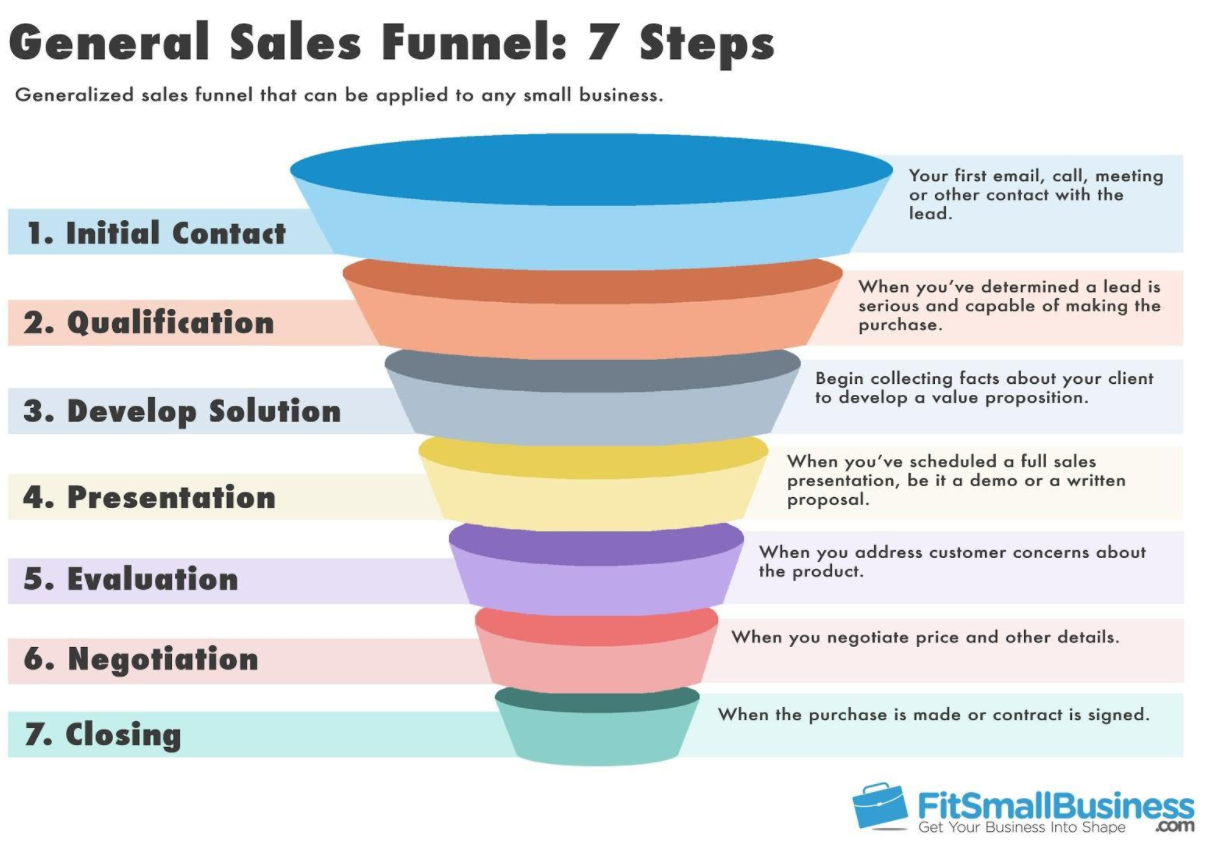
This is where the F word comes in to play:  funnel.  What’s in your funnel to replace the lost dollars?  We all know that when the client cancels, if that’s the first time you start working on a replacement account or two or three, you’re dead.  It’ll take you at least three to six months to replace that money in most cases.

However, if you have several pieces of business in that funnel you’ve been working on, in anticipation of your largest client cancelling, you’re way ahead of the game.

Try it.  In the coming days, work like you just lost your largest client, because one day, you will.

WFNZ Adds Nick Wilson and Josh Parcell to Middays

0

After spending the past few months scouring the nation to find the right fit for middays, WFNZ’s  search is over.

Charlotte’s top rated sports station is adding Nick Wilson and Josh Parcell to its weekday lineup. The new show will make its debut on Monday August 6. The official announcement was made this morning on the station during The Mac Attack with Chris McClain and Travis ‘T-Bone’ Hancock.

Wilson, joins WFNZ after spending the past seven years with 92.3 The Fan in Cleveland. He worked his way up the ladder at the station, taking over the evening show in 2015 when Ken Carman moved into mornings.

Parcell, is no stranger to WFNZ’s audience. He’s filled in on the station previously, and has also worked as a producer for ESPN. He also hosts a college football podcast.

The duo are taking over the WFNZ Twitter account on Thursday to answer any questions about their new show, which they revealed during the visit with The Mac Attack still does not have a name.

The midday slot became available when Chris Kroeger left the station to become the new radio play by play voice of the Charlotte Hornets.

Lauren Rew Moves to Jacksonville to Join 1010XL

0

For the past two months, Lauren Rew has patiently waited on the sidelines to announce her next move. On Monday, the wait was finally over.

The former midday host and program director of 107.9 The Franchise in Tulsa has moved to the sunshine state to join 1010XL/92.5 FM in Jacksonville. Yesterday was her first day with her new radio station.

As part of Rew’s new role, she’ll co-host Midday Chalk with Rick Ballou and Tony “T-Wigg” Wiggins, weekdays from Noon to 3pm ET. Rew will also serve as the station’s assistant program director, co-host the Tuesday evening show Helmets and Heels, and contribute to the station’s Jacksonville Jaguars pre-game show.

Under The Radar – July 30, 2018

0

With a mini-vacation on the horizon later this week, I didn’t expect to release a new UTR until next week. But given the slate of activity in sports media circles, a new installment needed to be produced.

From the department of regurgitated messaging, if you or your brand have news to share and would like to be included in a future edition of this column, please send your details via email to JBarrett@hvy.tcp.mybluehost.me.

Now on to the news.

WINZ-940 in Miami has parted ways with afternoon host Andy Slater. The Miami sports media veteran has proven he has a nose for news, breaking numerous stories over the years in South Florida. Slater has declined comment on why he’s no longer with the station or what his future plans are, but with football season about to start, the timing of the move was surprising. No word yet on what WINZ’s permanent plans are for afternoons.

A little further north in the sunshine state, changes are being made to part of the Orlando Magic radio broadcast. Popular local host Scott Anez will no longer host pre-game, halftime or post-game shows due to the team’s games moving to 96.9 The Game. Brandon Kravitz takes over as the host of all three programs. Anez had been part of Magic broadcasts for 27 years.

Congratulations to Colin Cowherd and his team. The FOX Sports Radio host announced via social media that for the month of May and June, podcast listening reached its highest point at nearly ten million listens each month.

On the subject of podcasts, check out 670 The Score host Laurence Holmes‘ new episode with ESPN LA 710 Operations Manager Dan Zampillo. The former colleagues reflected on their time working together and shared some quality insights on the good, bad and ugly of working in the sports broadcasting business. You can hear the episode by clicking here.

Continuing with The Score, as was expected, Chicago Tribune sports columnist David Haugh has replaced Brian Hanley on the morning show with Mike Mulligan. The program is now referred to as Mully and Haugh.

Nick Wilson has signed off as the evening host at 92.3 The Fan in Cleveland. Wilson spent seven years with the radio station, working his way up the ladder. He’s landed a new opportunity which should be announced soon. No word yet on how PD Andy Roth will fill the evening slot but it should be an attractive opening internally and externally given how it’s advanced the careers of Wilson, and 92.3 The Fan’s morning host Ken Carman. To apply for the position visit our Jobs section by clicking here.

VSiN has added a new racing program to its weekday schedule. Gone Racing airs Thursday’s from 5p-6p ET and is hosted by Ron Flatter and Brendan Gaughan. You can hear the show on SiriusXM channel 204 or on VSiN.com. The company has also signed on 102.9/750 The Game in Portland as a carrier of its Action Updates.

A tip of the cap to one of the Bay Area’s best sports broadcasters Greg Papa. The weekday host on 95.7 The Game and former radio play by play voice of the Oakland Raiders has been chosen to enter the Bay Area Sports Hall of Fame. Also gaining entry is longtime marketing director Jude Heller who was part of The Game’s initial launch in 2011. For more information click here.

Washington DC sports radio host Nick Ashooh is taking over as host of the Locked on Redskins podcast. The added responsibility doesn’t affect his role hosting evenings and weekends on 106.7 The Fan, or my TV and digital work with NBC Sports Washington. You can learn more about Nick by clicking here.

Manny Chang received some great news recently. The producer of Miami Hurricanes football and the Florida Panthers on WQAM in Miami was named the new producer for Miami Dolphins radio broadcasts.

After 10 years in St. Louis radio, Travis Green has decided its time for a new journey. Green has left his position as Bernie Miklasz’ and Michelle Smallmon‘s producer on 101 ESPN‘s morning show for an opportunity outside of the radio industry. During his career, Green also worked for KMOX and 1380 AM. Although he’s leaving the day to day grind of radio, Green says he will still contribute written articles and a podcast for the station on a part time basis.

In the television world, former ESPN sideline reporter Britt McHenry is officially joining FOX News as a full time contributor. McHenry began her transformation to delivering political commentary after being let go during ESPN’s last round of layoffs. In addition to appearing on FOX’s programs, McHenry also has a local show in Washington DC on Friday evenings.

The Dallas Stars have confirmed that Josh Bogorad will serve as the play by play announcer for the team’s television and radio broadcasts this season. Daryl Reaugh returns to his role as color analyst.

Continuing in Texas, the San Antonio Spurs have added Dan Weiss to their television broadcast. Weiss replaces Andrew Monaco as a studio co-host on the Spurs Live pregame and postgame shows on FOX Sports Southwest, KENS-TV (CBS 5) and KMYS-TV (CW35).

Atlanta sports radio host Matt Chernoff has confirmed he’s returning to FOX 5 for another football season. The afternoon host on 680 The Fan will contribute to FOX 5’s live pregame show on Thursday night’s and make post-game appearances on Sunday’s following Falcons afternoon games.

ESPN has made a few changes to its NFL Nation reporting assignments. Cameron Wolfe has left the Tennessee Titans beat to move to South Beach to cover the Miami Dolphins. Turron Davenport fills the void left behind by Wolfe covering the Titans in Nashville.

Having a Great Product Isn’t Enough to Survive

0

“I’m as mad as hell and I’m not going to take this anymore!”

Remember that line? It was uttered in the movie “Network” by Howard Beale and went on to become a popular movie drop used on many radio stations in their imaging. It also describes the feeling many in our business have when they see reports surface of another mass layoff by a large media company.

Last week, the New York Daily News lost its heartbeat when it pulled the plug on forty five of its best and brightest people. One section which was especially hit hard was the sports section which had become part of the fabric of New York sports coverage for decades.

When I heard the news, I was irate. Seeing talented individuals lose their jobs due to the incompetence of ownership is frustrating. Frank Isola, John Harper, and Peter Botte, to name a few, showed up every day for decades, excelling at their craft. They were exceptional sports writers who provided superb content, and were one of the few reasons I still read my hometown newspaper. But now due to executive ignorance, and bad business decisions, their efforts and loyalty have been rewarded with a pink slip and a mention in a corporate press release thanking them for their years of service.

After the Daily News gutted their newsroom, many personalities took to Twitter to voice their displeasure with the situation. Everyone from Michael Kay to Tony Reali to New York Governor Andrew Cuomo fired shots at Tronc, the parent company of the News, demanding answers for the exodus. Though I share their hostility for the recent turn of events, and will no longer invest one single second reading the Daily News’ content, I can’t help but wonder if this is the new normal for the media business.

Think about it, the New York Daily News, a staple of consistency, has now been torn apart from the inside out. ESPN, a company which seemed safeguarded from any kind of bloodletting, endured mass layoffs twice in the past few years. Rogers Communications and Bell Media, two successful companies in Canada, both eliminated hundreds of jobs in the past few years. Vox Media, BuzzFeed, and Meredith Corp., the company which bought Time, Sports Illustrated, Fortune, and Money, also reduced their work forces.

It leaves you with a sour taste in your mouth, but also makes you realize that operating in today’s world is very different. If a company doesn’t stay ahead of the curve, and find ways to reinvent its business model, they soon pay the price for falling behind, regardless of how successful or important they’ve been to their customer’s lives.

As I began writing this piece, I started reflecting on brands that were once important to me but have since decreased in value. Coincidentally, a number of those companies have either gone out of business or been severely altered. In some ways, I and those of you reading this who think like me, share in the blame for their demise. If we don’t continue supporting businesses, they lose money. When they lose money, jobs are lost. If expenses continue to outweigh profitability, larger decisions about a company’s future are explored.

I grew up on Toys R Us. It was my favorite store in the world as a kid. After I became an adult, the store had less value. That connection was restored when I became a father, but even then, the amount of business I did with the store compared to what I and my father did when I was a kid was drastically less.

When I was younger, the option to order merchandise on my phone and have it arrive at my door the next day didn’t exist. Had it been a possibility, I might never have discovered the charm of going into a Toys R Us. I was disappointed when I heard the store was shutting its doors in late June, but I then recalled how many times I had ordered toys for my son online, and quickly understood why.

In my teenage and early adult years, I practically lived at Blockbuster Video. I loved going into that store, buying a bucket of popcorn, and finding the latest movie rentals. It was a great family experience. But once television began offering On-Demand video, and groups like Netflix launched with superior offerings, those trips to Blockbuster stopped. The video rental chain was even given a chance to survive when Netflix offered to sell to them for $50 million dollars, but they botched that too. Netflix is now worth nearly $150 billion dollars.

Throughout my life, music has been a big part of my enjoyment. I’ve consistently supported artists by purchasing hundreds of singles and albums, and because I did, stores like FYE, Tower Records, Sam Goody, and Strawberries earned a lot from my paychecks. Once Napster launched and made file sharing possible, many started buying less records. Then as Apple, Spotify and Amazon made larger investments in offering music, the need to go buy a CD became minimal.

If you drive to most towns in America today, most of these stores barely exist. WalMart, Target, and a handful of others still sell music, but the selections are thin. The majority of music purchasing now takes place online, and although I still like to buy a CD at the store every now and then, I do it far less than I used to.

Having things appear on our phones, television screens, and doorsteps, has changed the consumer experience for the better. We still have interest in many of the same products, but our needs are different. We want things quickly, conveniently, and affordably. The idea of driving to stores, standing in lines, and paying higher prices is a thing of the past. It may sadden us to see some places exit the retail world that were once important to us, but when brand’s fail to adapt to a rapidly changing business environment, that can happen.

Which brings me to the radio business.

What Toys R Us, Blockbuster Video, and the NY Daily News have experienced is what could also face the radio industry in the future if it doesn’t evolve. The content will of course remain vital regardless of which era it’s offered in, but what about the way radio features advertising? Do you honestly think businesses are going to occupy fifteen minutes per hour on radio stations in between songs or talk content down the line?

Take a look around the world. TV networks have begun reducing their inventory. Why? They know people won’t sit thru long stretches of commercials. Advertisers know it too and don’t want to spend money just to be tuned out. That’s especially the case when viewers watch on-demand programming. They take their DVR, and immediately fast forward past the commercials to continue watching their favorite shows thus making it extremely difficult for the advertiser to reach them.

Check out YouTube. Their audience sizes are huge, and they realize that ads running 15 seconds or less are their only chance to keep people on the platform. Once longer commercials are pushed towards the viewer, they vanish. If offered in small doses though, fans of the content will sit thru it. The company has especially seen great results pushing six second ads.

Since I became a YouTube TV and Roku subscriber, I’ve learned how their approach works. The programming options are endless, and the video quality is exceptional, but if there’s a downside, it’s that when recorded shows air, the viewer is forced to sit thru a commercial break. The breaks are still shorter than what you receive on normal television, but even a one-minute spot break feels like an eternity when you’re watching a recorded show and trying to skip ahead to the next part of the content. At some point I’d expect that to change, but even if the breaks remained :30-:60 seconds, I think most people would accept it if it meant keeping costs low and content quality high.

So where does that leave radio? How exactly do you replace 15-20 minutes of spots per hour, and various inclusions in content (sports updates, traffic reports, weather updates, stock reports, etc.), and still remain profitable?

You could try to charge the audience to listen, but that’s a tall order. You could raise your rates for the limited amount of ad time inside your programming, and that’ll work with some clients, but not with all. It’s easy to suggest reducing ad times on stations because of audience demand, but how exactly do you replenish all that lost income?

We could investigate the possibility of further monetizing social media, podcasts, apps, and smart speakers, and although they’re all important to our business growth, if we’re not excelling in these spaces now, why would you expect them to be areas we’d dominate in down the line? Other opportunities will revolve around some of the things we do now such as creating events, and producing branded content. We’ll also have to become retailers, using our platforms to sell custom merchandise and products created by partners who we share revenue with.

Remember, most of the areas that we play in, belong to someone else. Facebook, Twitter, Apple, and Google own the property, we just rent it. 5 years ago Facebook began limiting the ability of a brand to reach its entire audience. Think they won’t do that again? As soon as they see you reaping the rewards from utilizing their platform, they’re going to put up more roadblocks to take more money out of your pocket.

Keep that in mind as you’re falling deeper in love with the Amazon Alexa and Google Home. Those devices are great, and give our fans a chance to hear our content without interruptions. But do you think Amazon and Google won’t eliminate your ads in the future and serve their own up to your audience? Do you honestly believe they wouldn’t do to your brand what Facebook did, and force you to spend money to reach your listeners? As they gain more momentum, do you think they’re going to make it easy on you to access and use your data however you see fit?

A few other things you need to ask yourself, if the business model is going to change that drastically, how will that help with attracting future sellers? Is a new seller going to want to sell audio instead of Facebook, Google, Twitter or Amazon? Will a new salesperson see a better financial path to success selling audio or video? What about our current sellers who rely on selling radio ad time to make a living? If they see limited potential right now earning a living selling apps, podcasts, social media, and your brand’s website, why would they put their focus in that space when it doesn’t pay the bills?

What’s really going to be important is the measurement of our performance in these other locations, and our ability to educate advertisers on the way our programming can help them generate results. If our brands are well established, and the talent we employ possess the skill to mentally own space inside the listener’s mind, then we’ll still have a chance to gain support and trust from local and national business partners.

Perhaps the bigger challenge is going to be for programmers and content creators, because there might come a time when shows aren’t taking commercial breaks. Picture HBO programming where the movie never ends. Your breaks would come in the form of vignettes, liners, airing of soundbites, taped interviews, etc. In other words, following the content model of podcasts, and SiriusXM which reward the user and limit the interruptions.

That could also lead to shows being shorter in length too. If the average metered listener consumes your programming for 30-45 minutes per occasion, are you better served with one 4-hour show or two 2-hour shows? Some could even make a case for four 1-hour shows.

If breaks were someday to be done away with, advertisers would have to be further woven into the content without it seeming forced. If we hope to compete with other media for dollars and listeners, we’re going to need a less is more mindset, and give clients an opportunity to be more intertwined into specific programming. Movies and TV shows have done a great job of including brands into their content, and it’s a space where radio can step its game up. Barstool Sports and Bleacher Report, two relatively newer brands (under 20 years in operation), have figured out how to excel at it. Radio with its rich history should be able to do the same.

Change is inevitable in every business. Whether it’s complicated or not, technology creates it, audiences demand it, and dollars follow it. If we want to avoid future dark days where our best people lose opportunities and serve as reminders of our failure to read the signs and modify the way we approach our business, then we’ve got to get out in front of these issues rather than waiting them to arrive on our doorstep. When habits change, you either adapt, or get rendered obsolete. The winds of change wait for no one.

Good Karma Makes Big Acquisition in Milwaukee

0

Good Karma Brands has won the competitive battle to acquire E.W. Scripps’ Milwaukee brands, News/Talk WTMJ (620 AM and 103.3 FM) and Country WKTI (94.5 FM). The Milwaukee based company has agreed to purchase both brands for the sum of $16 million dollars.

Scripps had previously announced intentions to sell their radio group. That process started last month when the company unloaded some of their brands in Tulsa, Oklahoma.

“Good Karma Brands’ focus on Milwaukee makes the company an ideal home for these important local radio stations,” said Scripps President/CEO Adam Symon. “The company’s expertise in connecting audiences and advertisers, particularly with sports marketing, means these stations will be well positioned for the future.”

One of the crown jewels of Scripps’ properties is WTMJ which serves as the flagship station for the Green Bay Packers, Milwaukee Brewers, and Milwaukee Bucks. By adding the radio station to its portfolio, Good Karma opens up numerous cross promotional opportunities across their local sports stations, 540 ESPN in Milwaukee, and 100.5 ESPN in Madison. The company also owns another news talk (1430 WBEV-AM) and country music station (95.3 WXRO-FM).

“We’re thrilled to welcome WTMJ and WKTI to the GKB family,” said Craig Karmazin, Good Karma Brands founder and chief executive officer. “The heritage, prestige, and team at the stations, in addition to their incredible sports partnerships, fit our commitment to provide best-in class opportunities for our teammates, content for our fans, and solutions for our marketing partners.”

Remember to Say Thank You

0

Thank you.

Two simple words that, according to a New York Daily News article in 2016, Americans say, on average, five times per day.  The same article notes that according to research, we may not even mean it more than half the time, it’s just being said out of habit.

I once had a boss who sent an email out to his large team that said, “please stop replying to my emails with ‘thank you,’ as it clogs up my inbox, your thanks is understood.”  Instinctively, I started to write back, “Got it, thank you!”  Perhaps I was raised right after all, otherwise I’m not sure why I feel the need to be polite, but to me the phrase “Thank you” can’t be used enough and is, most certainly not, just understood.

In our Sports Media Sales World, I think saying “Thank you” (and meaning it) is one of the most important things we can do.  And we should be doing it often.

In fact, I believe it is one of the very first things you should say upon meeting a client for the first time. “Thank you for taking the time to meet with us.”  Translation – we know you are busy and we know your time is very valuable.

When the CNA is concluded, I will often thank the client “for giving us the information we needed, in order to really identify your needs and your target audience to customize a marketing program for you.”  For some business owners, talking to others and opening up about their business challenges, is not something they enjoy, so it’s good to let them know you appreciate all the information they gave you.

Of course, at the end of the meeting, we’re going to thank the client again for their time, after we’ve recapped what we heard and our assignment, as well as secured a follow up visit for the presentation.

Later in the day, or the next morning, you will have the opportunity to send a thank you note, recapping the biggest needs you uncovered during your meeting, the task in front of you and letting them know that you’re looking forward to seeing them at the day and time of the next scheduled meeting.

At that next meeting, guess what?  You got it, you’re going to thank them for giving you the opportunity to present a comprehensive marketing plan that will help them solve some of their challenges and grow their business.  

Because the world is perfect, when they’re so blown away by your presentation of ideas and solutions and they agree to purchase the largest option, right on the spot, you are once again going to say, “Thank you,” this time for allowing you the privilege of partnering with them and their company.

As a manager, when I’m introduced to someone doing business with us, it is always my practice to say, “Thank you for your partnership, we appreciate the opportunity to work with you.”  I believe this says that I not only value their business, but that I view it not as a one-way street, but something where we both contribute in order to make it a success.  All of that, from simply thanking them.

Managers should also be aware of the power of a thanks to an employee and how it can go a long way.  People want to be appreciated and acknowledged.  

It goes beyond just business relationships, of course.  It’s common courtesy that should be extended to everyone you encounter, and most of all, it’s simple, one of the easiest things to do to show appreciation.

Thank you for reading.

Is Your Brand Ready For The Next Disruption?

0

When change happens, the way you respond is everything. You can try to hang on to the status quo, but the longer you do, eventually you get trampled. Disruption waits for nobody including the radio industry. If your customers and advertisers seek more of something, you either provide it or they find someone else who can.

I spent time last week in Minneapolis at The Conclave, a great event which highlighted the radio industry. Lori Lewis and her team did an excellent job of providing a great mix of speakers and topics. All who attended left with plenty to think about. I enjoyed hearing insights and stories from Bobby Bones, Michelle Tafoya, Jsi-Chavez, Kim Reis and Traug Keller, but there was one session in particular which hasn’t escaped my brain for the past few days. I’ll get to that in a moment.

To set up the point, let me start first by taking you down memory lane.

Remember when the internet exploded in the 1990’s? Websites began popping up everywhere. Overnight it seemed we became fixated on researching and discovering brands, and sharing our lives online. As the business world took notice of where things were shifting, many industries struggled to adapt. Radio was one of them.

I recall logging on to numerous radio station websites and the user experiences were pretty bad. Unfortunately that remained the case for over a decade. Stations relied on poorly built website shells, and assumed that a “Listen Live” button and profile page of their talent was enough to satisfy an audience. Sites were cluttered with banner ads, useless information, and repurposed content from national platforms, exposing the fact that radio wasn’t ready to handle the internet boom.

Then came podcasting, which began to gain steam in the mid 2000’s. Audio on-demand seemed like a niche thing to many when it first started but those who were doing it recall early signs of success. I used to host a wrestling show in upstate NY in the early 2000’s and was blown away by the interest in my website/content. I’d upload the two-hour weekend show, and the online traffic would be triple to quadruple what my former radio station normally generated.

Fast forward a few years later, and Bill Simmons and Adam Carolla began to dabble in the podcast space. By 2009, Simmons was receiving over 25 million downloads per year at ESPN for his audio show. Carolla was named iTunes’ best audio podcast of 2009, and began to lay the foundation for a move from terrestrial radio to digital audio.

Once again, radio adapted slowly. Solid growth was seen between 2007 and 2015, but in the past three years, interest has reached new levels. Revenue projections for podcasting have soared from 90 million in 2014 to 395 million in 2020. The big challenge now is cutting thru the clutter, and delivering a return on investment for clients.

Next came the smart speaker. Amazon’s leap into the space produced immediate interest. Google soon followed, and Apple has taken the plunge too. Between 2016-2020 smart speaker users are expected to increase from 16 million to 76 million, adding billions in revenue as well. As of today, nearly 28% of all Americans use a smart speaker according to eMarketer.

That’s great news for the audio industry right? It is. Except there’s one issue. Have you tried discovering some of your favorite brands on these devices? There are stations which don’t come up by their name, others which transfer to TuneIn, and with Entercom’s recent announcement of moving their stations off TuneIn to Radio.com, Google Home users won’t be able to hear those brands until further adjustments are made since Radio.com isn’t available on the platform yet.

Strategic company moves are a whole other animal, so let’s instead focus on the user experience. Imagine if your station’s name includes The Fan, ESPN or FOX Sports. You’ve pounded this message into your audience’s brain for years, and now when your audience calls for you on a smart speaker, they’re directed somewhere else.

I’ve spent hours calling for brand names on Amazon Alexa and finding them is not exactly a walk in the park. Some require adding a decimal point, some don’t. Some have to be spelled out “One Hundred and Five” instead of saying “105”. Others send their audiences to national partners, and some have done a good job securing specific words and/or terms to make them easy to locate.

Since our industry was slow to respond in each of these cases, are you confident that we’ll be ready when the next big thing comes along? Well, if you were at The Conclave, then you know what that is.

Fred and Paul Jacobs did a brilliant job taking attendees thru their recap of CES (Consumer Electronics Show), the annual industry show in Las Vegas which highlights thousands of inventors and brands, all with an eye on future technology. There were many interesting points made during the session, but the one which I have spent the past few days thinking about is where the world will be in 10 years.

According to the Jacobs brothers, autonomous vehicles are just around the corner. So too are Smart Cities. Electric charging stations will be popping up across the nation in the future, as automobile makers begin transforming the way we operate on the roadways.

Whether you like the idea of giving up control of your vehicle to a computer or not, and whether it’s ten years from now or fifteen, it’s safe to say that things are going to be different. When that happens, how will it affect your listener? How will it change the way you consume content inside your vehicle? What are you doing in the next decade to make sure your brand is ready unlike previous times?

Think about what you do when you’re on an airplane or a train. If you’re similar to me, you might rest for a bit, read a book, and turn on your phone, tap into the wifi, and either browse the internet, watch video or listen to audio. When it comes time to consume content, you gravitate to the brands and personalities you know and trust. There is no button to scan radio stations, and ad consumption is drastically reduced.

Given the way smart speakers are taking over the world, they’ll soon have a dominant presence inside your vehicle. When you want to hear a specific brand, personality or content, you’ll call for it by name, and it’ll appear in your ears. If the steering wheel is removed from your hands, and you can focus solely on your listening or viewing experience, you’ll become more engaged in the content selection process.

One thing that audio hasn’t had to battle inside the vehicle is video. The car has been our safe haven because drivers are forced to focus on the road. Video is a distraction for drivers, whereas audio serves as a companion, allowing the operator to mentally engage with content without losing sight of the road. Even then, distracted driving remains a huge problem.

But what if that driver suddenly had their hands free? Would they continue to listen to audio or use their phone or in-car video screen to watch video? How would that change the way a radio brand measures its audience impact? What happens to the traditional model of advertising when fourteen to sixteen minutes of ads per hour can’t be forced on the consumer?

Just thinking about this requires two Advil’s. If you’re a radio owner, market manager, account executive, or Nielsen representative, I’m guessing it gives you even more cause for concern.

It makes perfect sense though for the auto industry to explore this transformation, even if it creates a threat to the way the radio business operates. If automakers can reduce accidents while assuring a smooth ride, and offer individuals inside the vehicle more time to relax and enjoy their in-car experience, it’s a no-brainer. The cherry on top of the sundae is that it also gives automakers more information on their drivers, and better access to reach them with advertising messages inside the car.

All of these possibilities seem light years away, but so too did the internet, podcasting, and smart speakers. Yet here we are in 2018 and they’re a huge part of our lives. You can try to push things aside, but if you’re not embracing changes, and doing your homework to be ready for them, you’re setting yourself up to be disrupted.

It’s critical for radio stations to brand themselves well, and make sure they’re easily discovered on smart speakers. Similar to looking for results on Google, nobody is going to waste time looking for you on page 5. If you’re not on Page 1, maybe Page 2, you’re not going to be heard.

Brands must also have content strategies for audio, video and print, and different methods for highlighting that content across different platforms. Twitter is not Instagram. Instagram is not Facebook, and Facebook is not SnapChat. More than likely something else will become part of our social media mix in the next few years, and when that next platform pops up, we’ve got to be ready and willing to adjust quickly.

We’re heading towards a future where the automobile experience is going to turn into the equivalent of a flight or train ride. It’s not a question of IF, it’s a question of WHEN. Auto navigation is going to become a computer’s problem. That’ll open the door for us to enjoy more content with lesser distractions, even if the idea of giving up the wheel seems like a foreign concept.

When that day arrives, is your brand tattooed on the listener’s brain? Can you be easily found on all devices? Do you have a visual component to match your audio presentation? Are your personalities larger than life and important enough to be sought out? How are you planning to retain and grow your business while facing the reality of ad times being rapidly decreased?

The work we’re doing today and tomorrow to be ready for this next wave is important. We can standby and wait for the future to arrive at our doorstep, but maybe it’s time we head outside, observe the landscape, and make sure we’re well prepared to handle it, and thrive off of it. The only thing at stake is the future.