The race for afternoon ratings supremacy in New York City tightened in 2017 between Mike Francesa and The Michael Kay Show. But despite a few close calls, Francesa stayed in front until signing off for the final time this past December.
Fast forward to 2018, and the picture has certainly changed. The Fan now finds itself in unfamiliar territory, looking up at its competitor in the afternoon drive ratings.
For the first time ever since moving into afternoons 13 years ago, The Michael Kay Show on 98.7 FM ESPN NY defeated The Fan head to head in afternoons. Michael Kay, Don LaGreca and Peter Rosenberg delivered a 4.4, which was two tenths higher than The Fan’s “CMB” which features Chris Carlin, Maggie Gray and Bart Scott. The news was first reported by Neil Best of Newsday.
The feat is a major accomplishment for Kay and his partners. The show has improved on the air and gained strong momentum since adding Rosenberg to the mix, and although critics will point out that the show didn’t defeat Francesa and narrowly slipped past CMB, a win is a win anyway you slice it.
Victory aside, both stations were down compared to the fall book. Kay’s show finished tied for 8th, six tenths of a point behind its fall performance. The Fan was 10th and a stunning 2.2 points lower than its fall showing.
The one saving grace for The Fan’s afternoon trio was that they won the head to head battle for their full show. “CMB” was 9th with a 4.3 between the hours of 2p-6:30p. 98.7 FM ESPN NY was 11th with a 3.9 during that four and a half hour period.
ESPN New York Senior VP and General Manager Tim McCarthy told Newsday, “I’m really happy for Michael, Don and Peter. They’ve been doing this for a long time, and the good news is the ratings over the last year have continued to grow in the right direction.”
Mark Chernoff, WFAN’s Vice President of Programming told Best he was pleased with how the ratings were trending in March and is very optimistic about more growth in the spring.
A few items worth pointing out regarding the New York race.
Michael Kay’s show doesn’t receive the local boost from morning drive that The Fan does.
98.7 FM ESPN NY operates on one signal. The Fan broadcasts on both FM and a powerful AM signal.
The Michael Kay Show receives additional exposure due to a TV simulcast on the YES Network.
WFAN is the flagship station for the New York Yankees. With the Bronx Bombers back in action, their presence on the radio station should provide an added cume boost for The Fan in the spring/summer/fall books. That should help lift the station’s numbers, but won’t necessarily tell us whether New York sports radio fans have flocked to the station’s new afternoon show. ESPN NY meanwhile doesn’t have the benefit of carrying local baseball play by play.
“CMB” are only 4 months into their program. Shows usually need time to hit their stride and develop a loyal following.
The Fan remained ahead in mornings with Boomer Esiason and Gregg Giannotti placing 7th with a 5.1 compared to ESPN New York’s airing of the national show “Wingo and Golic” which was 14th with a 3.0. “Boomer and Gio” though were down significantly from the fall when the station came in 1st with a 7.7.
Not to be forgotten, The Fan’s midday show led by Joe Beningo and Evan Roberts produced a 6th place finish. The show delivered a 4.8, down from the fall when they turned in a 5.5. During the 10a-2p hours they were comfortably ahead of 98.7 ESPN NY which was far back in 16th with a 2.4.
The #1 rated station with Men 25-54 in New York for the fall book according to Nielsen Audio was 106.7 Lite FM which reeled in an impressive 8.2 share.
An old newspaper reporter and I used to have arguments about what success was defined as when it comes to radio. He believed success in radio had multiple factors while I believed it had one – profitability.
I said to him and have said many times that the programming can be the best programming ever heard, but if you can’t sell it, it doesn’t matter. Undoubtedly, the better the programming, the more beneficial it is to sales, however, everything will ultimately come down to the dollars and cents. So, a well programmed station that isn’t making money versus an OK programmed station that makes money, which one is more successful? Which one is “winning?”
The fact is, success means different things to different people in most instances. In media sales, the success has everything to do with the numbers – the revenue brought in and the profit after expenses. This makes success in our business easy to define, and sellers should know that hitting and exceeding budgets is the one and only true measure of success.
If you’re in sales and don’t know what success looks like, chances are you aren’t being given, or setting for yourself, quantifiable goals. Everything we do comes down to math and the equation should start from the end by answering the simple question, “How much money do you want to make this year?”
Let’s say that number is $100,000. Let’s also make the assumption that when it’s all said and done, you will make 10% of what you sell, therefore you need to sell $1,000,000 in advertising or a rough average of $84,000 per month, to hit your stated financial goal.
If you track everything, and you should, you should be able to use your closing ratio to go further with the math. For the sake of this exercise, I’m going to assume you’re a solid seller and you can close 4 out of every 10 deals you legitimately pitch to a decision maker after a strong CNA, so a 40% closing ratio. This means you need to pitch about $50,000 each week or $2,600,000 per year. Now you have a measurable figure to point at each week and you can grade yourself against that number.
To take it to another level, if you know what your average ask is, now you can bring the number down to exactly how many face to face appointments you need to average on a weekly basis to ask for that amount or money. Now you have a second number that you can use to track progress on a weekly basis.
If you’re really looking to track progress, work on calculating how many dials it takes you to get that number of appointments you need on a weekly basis (always accounting for the inevitable no-shows and reschedules!). You have now taken it down to the bare bones and have a measurable number for just about every step to track your progress towards your financial goal.
With this information, on a weekly basis, you can determine if the week was a success. Did I make the right number of dials to get the right number of appointments to pitch the right number of asks at the right dollar amount to achieve my goals? If not, which part of the plan got in the way?
The black and white of our business makes a hard job easy to measure for achievement. Know your numbers and your goals so that success is always easy for you to define.
Andy Bloom is heading home. The veteran programmer who last oversaw operations for CBS Philadelphia, including Sports Radio WIP, has agreed to join Entercom Minneapolis where he’ll oversee the company’s Country and Adult Hits brands, and popular News/Talk station WCCO.
“Andy has a successful track record programming radio stations and we are looking forward to having him join our Twin Cities team,” said SVP/Market Manager Shannon Knoepke. “He has a clear understanding of our operational vision and is skilled at implementing winning business strategies.”
“Paul Bunyan, Purple People Eaters, Prince, the ‘87 & ‘91 Twins, and WCCO Radio. These are the Minnesota legends I grew up with,” said Bloom. “I am excited to go home to the Twin Cities and honored by the opportunity Shannon Knoepke, Chris Oliviero, and David Field have given me to lead WCCO, Buz’N-FM and Jack-FM.”
With the goal of turning Thursday Night Football into a must watch event, plan A for FOX included Troy Aikman hosting its pregame show. With Aikman most likely unavailable, FOX has turned to Michael Strahan for the role.
After failed attempts to lure Peyton Manning into the broadcast booth, FOX now hopes their No. 1 team of Joe Buck and Troy Aikman will do the game, according to a report by Andrew Marchand. Aikman providing color analysis for TNF means the pregame show still has a void.
According to SI.com, FOX is working to put together a version of its Sunday NFL pregame show which will not include Curt Menefee and will instead feature Michael Strahan as host. Howie Long and Terry Bradshaw will join Strahan for TNF, Menefee and Jimmy Johnson will continue as part of the group’s Sunday show.
The Fox NFL Sunday show broadcasts from the network’s L.A. studio, the TNF pregame show will take place in New York. Strahan’s Good Morning America responsibilities from New York Monday through Friday would make it impossible for him to take part in the TNF telecast if Fox chose to keep the pregame show in Los Angeles.
Brandon Contes is a freelance writer for BSM. He can be found on Twitter @BrandonContes. To reach him by email click here.
ESPN announced its premiere plans for Kobe Bryant’s Detail, an exclusive series on ESPN+. Detail will debut on the network’s new direct to consumer streaming platform, with its first episode on Thursday, April 12th.
Written, produced and hosted by Kobe Bryant, Detail will the let the viewer experience how the future Hall-of-Famer analyzes, observes and studies game film. Detail will be a 15 episode series, with the premiere featuring game 6 of the 2009 Western Conference Finals between the Lakers and Nuggets.
“Studying game film is how the best get better. It’s the university for a master’s degree in basketball,” Bryant said. “I learned how to study film from the best coaches of all time—Phil Jackson and Tex Winter. Detail provides an opportunity to teach that skill to the next generation on large platform with ESPN.”
In addition to offering over 10,000 live sporting events, the new ESPN streaming service will also offer original produced content. Detail is the first original docuseries to be released by ESPN+. Other plans include an eight episode docuseries following NBA rookies from last year’s draft class, as well as the recently announced30 for 30 film detailing Bob Knight’s departure from IU.
Brandon Contes is a freelance writer for BSM. He can be found on Twitter @BrandonContes. To reach him by email click here.
Bonneville Phoenix has announced that acclaimed local sports columnist Dan Bickley has agreed to a deal to bring his columns and all written content to ArizonaSports.com starting April 23rd. Bickley has covered the local sports scene for 20 years as the lead sports columnist at the Arizona Republic and AZCentral Sports.
In addition, the award winning columnist will also expand his highly rated radio program with Vince Marotta to four hours per day. “Bickley and Marotta” have aired on 98.7 FM Arizona’s Sports Station weekdays from 12p-3p, but will soon move to 10a-2p.
“I’m ecstatic to join a team as talented and powerful as Arizona Sports,” said Bickley. “It’s a blessing to have an on-air partner like Vince Marotta; to work alongside the most engaging personalities in Arizona; and to bring my column to one of the fastest growing platforms in the country.”
“This is a win-win for sports fans in the Valley,” said Scott Sutherland, Bonneville Phoenix Vice-President/Market Manager. “Dan’s readers will now be able to access his content in a clean, easy to use, subscription free format on ArizonaSports.com. And his radio audience will have twice as much time to listen to Dan’s unique and entertaining perspective on radio.”
The only downside of making the move to expand Bickley’s presence is that it meant having to make additional changes to the radio station’s lineup. VP of Content and Operations Ryan Hatch confirmed that the station has parted ways with midday hosts Bertrand Berry and Mike Jurecki, adding they’ve been great teammates and he wishes them the absolute best moving forward.
If you work in a sports radio programming department, chances are you haven’t heard of Borrell Associates. They’re a local media research outfit fronted by Gordon Borrell. Gordon’s resume includes VP of new media for Landmark Communications, helping to establish the first TV, newspaper, cable and network TV websites which he later split up and sold to Earthlink and the Gannett Company, and being a sought-after speaker and media industry analyst, often quoted in The Wall Street Journal, New York Times, Ad Age, Forbes, etc.
I’ve never met Gordon but have read a number of his thoughts on our industry and find them fascinating. Many are similar to my own. If you haven’t had a chance to read his interview with Forbes, I strongly urge you to do so. It hit many of the notes that I just touched on in Chicago when speaking to a room full of sports radio programmers.
Among the highlights that grabbed my attention were his comments on the industry needing to find a clear vision for the “new” industry that it’s looking to create. Borrell says that vision should involve being part of a bigger business than terrestrial radio and creating a marketing powerhouse.
Included in that analysis was radio’s inability to sell the right products. He said the industry is heavily reliant on website banner ads and spots in their streaming, neither of which is in high demand by advertisers. To produce solid digital revenue the radio industry must offer other digital services that more directly complement radio campaigns.
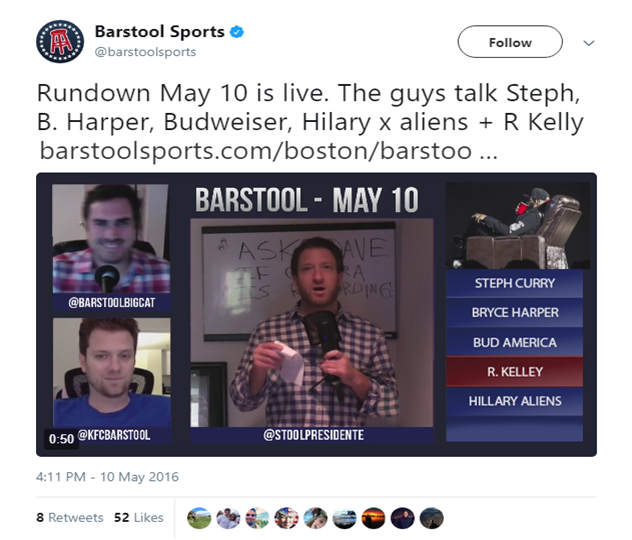
What I love about those comments is that I just stood before some of the brightest minds in the format and when I asked which brands were selling merchandise, none were doing so. I informed the group that Clay Travis, Craig Carton, and Crossing Broad were all selling products on their websites. The WWE makes merchandising a critical part of their business strategy. Bleacher Report partners with StubHub to sell tickets. Barstool Sports CEO Erika Nardini says merchandise represents a third of their business, and if sports gambling gets legalized, it’s likely that sports betting brands will accept bets thru their apps, websites and phone lines.
Speaking of Barstool, they provided my favorite example. If a New York sports radio fan wants to show off their admiration for Mike Francesa, guess where they purchase a ‘Numbah One’ or ‘Can’t Spell Francesa without FAN’ t-shirt? Barstool’s website. WFAN? Sorry, they’re not available.
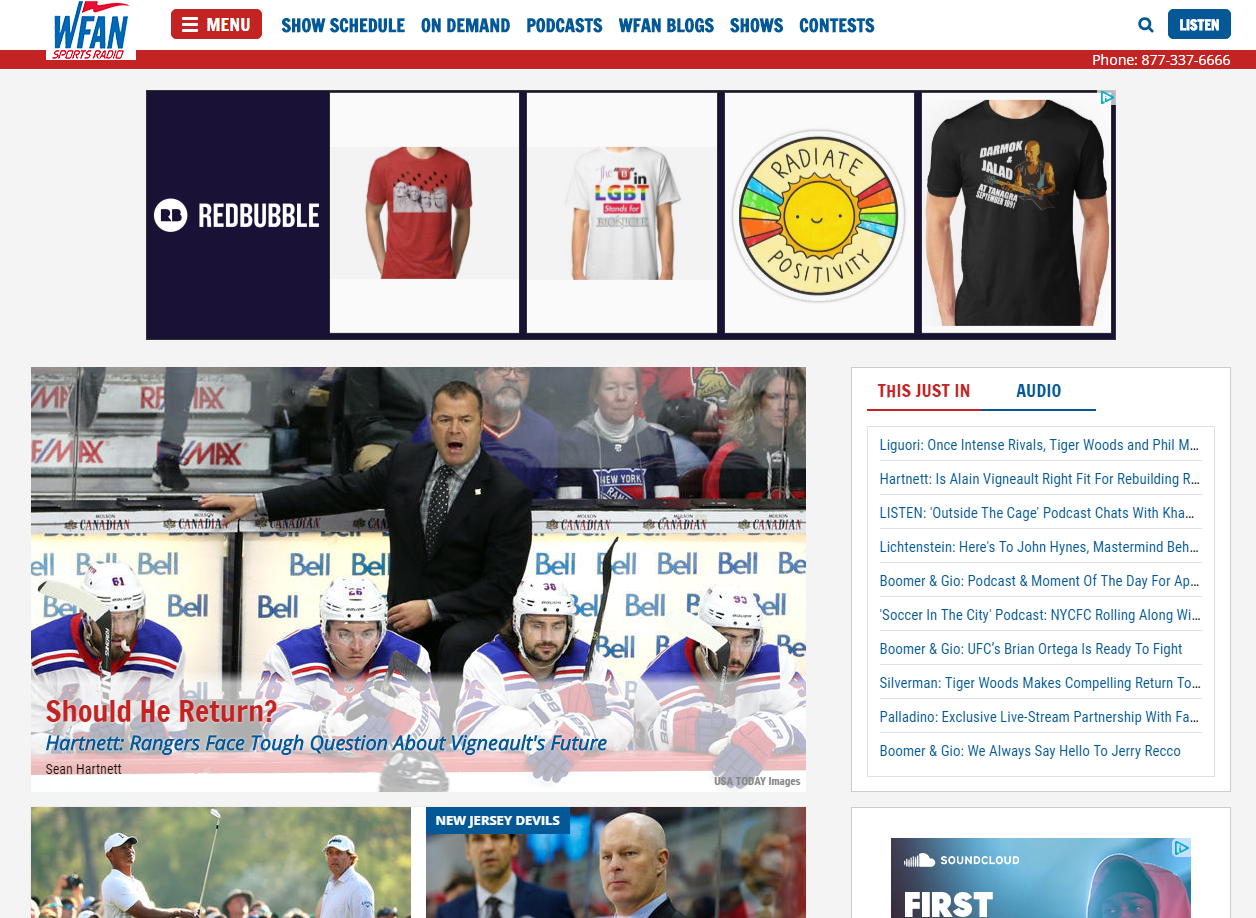
RedBubble also sells a Francesa ‘Mount Rushmore’ shirt. In fact, I went on The Fan’s website last night and guess which ad showed up at the top of their page? RedBubble’s did. The company is promoting the Francesa shirt and reaching its most likely customer (The WFAN listener) by buying banner ads which appear on The Fan’s website. That’s a smart move by RedBubble, but it also highlights a missed opportunity for The Fan.
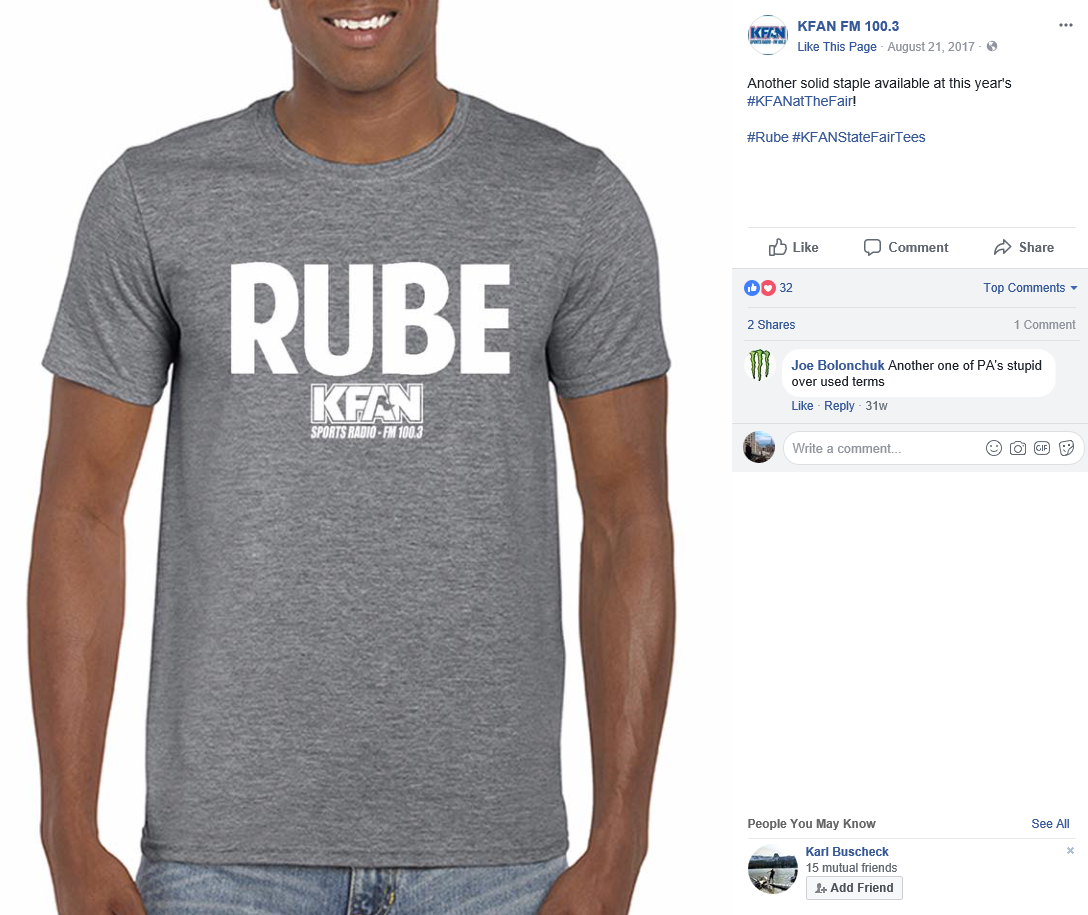
One brand I observed recently which did a nice job and was on the right track but still missed out on larger opportunities was KFAN in Minneapolis. The Minnesota sports station sold custom t-shirts at the Minneapolis State Fair and from all indications they were popular. KFAN has sold shirts at the state fair for a number of years now. Except when the fair was over, they didn’t continue making those products available for purchase on their website.
What’s the downside to allowing people who didn’t attend the fair to continue purchasing your product? If the demand is strong, why not sell them all the time? In addition to generating additional revenue, the brand also receives free marketing. Isn’t that the point?
Ask yourself this, why are your radio station’s airwaves valuable enough for advertisers to purchase time on to sell products but not good enough to sell your own? You sell content every time your hosts speak. You sell podcasts, social media pages, events, games, etc. All of these items are given promotional time because they’re seen as a benefit to the audience. Why we wouldn’t capitalize on merchandise too is beyond my level of comprehension.
And before you get defensive and tell me “it costs money to create shirts, cups, hats, etc.” let me remind you that there are local and national services available where you only pay for products once they’re ordered. You also have digital and marketing people inside your buildings creating website and social media images and powerpoint presentations to help your sellers look good on client pitches. There’s no reason logos, slogans, catchphrases and on-air incidents can’t be turned into slick looking products sold on your platforms.
It’s pretty simple, if there’s no demand, you don’t place an order. But having them readily available and promoting them across your brand’s platforms should be a no-brainer. The last time I checked, radio was looking behind every door to find new money. Whether you make 25K or 250K thru merchandising, I don’t think we can afford to not take advantage of it.
Borrell also mentioned digital advertising and that’s a hot button issue for me. I see stations bombard their websites with banner ads, creating bad user experiences and nothing productive for the client. It’s happening on social media too. Scroll thru a station’s Facebook or Twitter page and look at how they promote a sponsor. It’s often an image of the client, a few sentences of text talking about something that has zero value to the person following the brand, and do you know what it produces? Minimal likes, shares and engagement.
Now put yourself in the advertiser’s shoes. The rep walks in touting their ratings, personalities and social media following, looking for you to renew. Except when you review the five social posts that went up promoting your company, you discover that the audience didn’t like you enough to respond, share or even press the thumbs up button. That not only makes you question the page’s value, but it can be embarrassing too. I’d be asking “is my brand that big of a turnoff to your listeners?”
What should you be doing? Creating branded content. Involving your talent in unique ways to make the client look good. Check out this example of Patrick “Seton” O’Connor of the Dan Patrick Show. Or this one from Barstool Sports. There’s also this one by Cricket Wireless which was a massive hit.
The bottom line, if you think recording a video endorsement or putting an ad on a social page is going to entice people, good luck. You’ve got to be creative. Try that approach with a tire dealer who’s looking to offer a discount on a new set of tires and nobody will care. Involve your talent in a video where they’re changing tires, competing against one another and having fun busting the chops of the mechanics inside of the garage and people remain interested. That interest becomes conversation which inspires the client to continue buying your brand.
The next piece of feedback that Borrell offered was radio needing to understand that its role isn’t to sell spots but to leverage all the marketing tools at its disposal–spots, events, digital advertising, and marketing services — to help its customers sell products and services. If the industry doesn’t adjust Borrell warns that it won’t be able to grow and thrive.
I don’t disagree one bit. One of my biggest concerns is radio’s failure to adapt in a rapidly changing environment. This is often due to the industry’s ‘proceeding with caution’ mentality and fear of not hitting the bottom line.
Think about it, how long did it take before your operation started hiring digital and social media content creators? Some of you may still have only one person trying to tackle the work for 3-4 brands. If you talk to sports teams, digital businesses or other media operators, there are groups dedicating 5-10 people just on the social/digital experience alone. That’s what it takes to excel and position yourself for future success.
When was the last time you created and monetized a huge ticketed event? Wing Bowl and Ticket Stock are two great examples of stations spending money to make money, but most brands don’t roll the dice that way. Do you think ESPN barters everything to execute the ESPYS? If you want to create impact and non-traditional revenue from buzzworthy events then you have to invest dollars in making those events worthy of buzz.
The final part of Borrell’s interview which I want to weigh in on were his points on radio’s biggest threat being myopic leadership. He said the business is in a period of remarkable growth and opportunity, yet so many leaders believe their job is to defend “radio.” Rather than investing time worrying about the industry’s defense, a better approach would be to spend more time and energy pursuing growth opportunities.
Those opportunities include dashboards, podcasts, and smart speakers, which some industry folks have considered to be threats. Borrell doesn’t believe they are. He continued by noting that industry leaders spend too much energy trying to hold onto their hairy-eared listeners and not enough time trying to figure out how to reach the pink-eared ones.
From where I sit, there’s never been a better time to be in the audio business. People are listening to millions of pieces of content each day. Whether it’s consumed live or on-demand thru a phone, computer, tablet, smart speaker or car stereo is besides the point. It’s the industry’s problem to figure out how to measure it but the enthusiasm for the content is there. I’d much rather walk into a client’s office with a huge splintered audience across multiple platforms than without one.
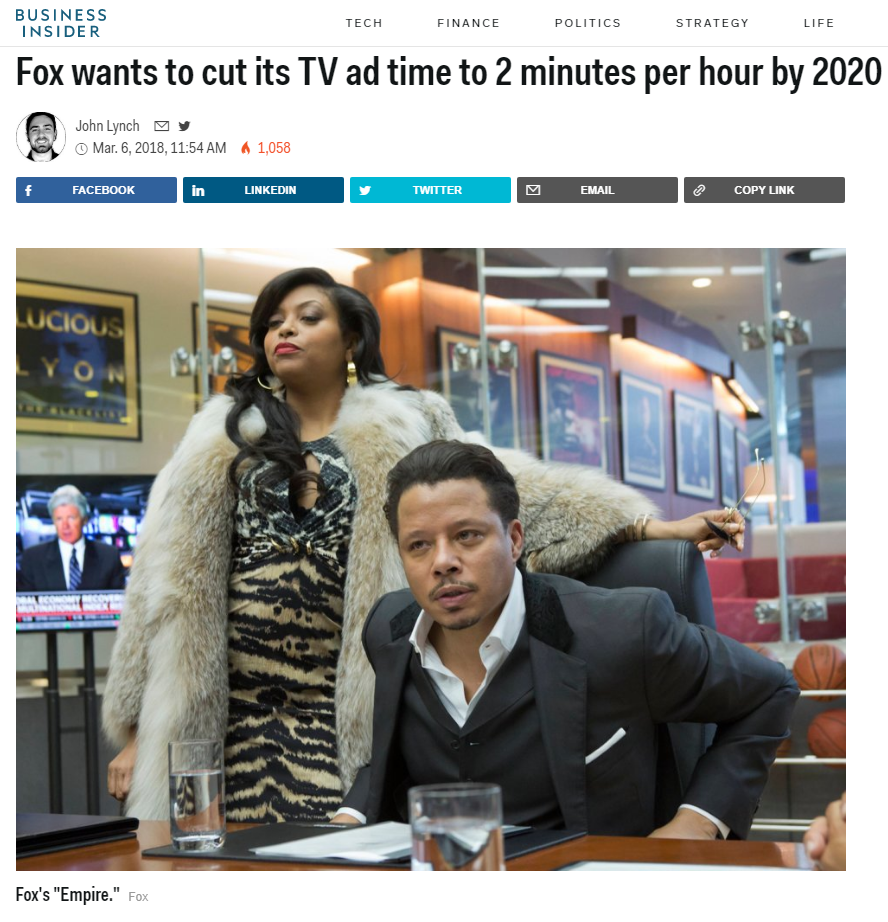
However, Borrell is exactly right about smart speakers, podcasts and digital dashboards being opportunities, not threats. The reason they’re not warmly embraced is because we tend to ease into things rather than leading the charge. I’m sure NBC, FOX, the NFL and YouTube would’ve preferred sticking to their prior ad models but when audience consumption patterns change, brands must respond.
That requires more training, recruiting, experimenting, and strategic adjusting. It can also mean a financial setback in the short-term to maximize long-term growth. You can get upset by the way the world’s changing, but if you want to avoid becoming Blockbuster Video, a Taxi company, the Newspaper or the next “going out of business” retail outlet, you better read the signs and take action or you’ll pay for it.
Here’s a good lesson. Take a few minutes today and use your smart speaker to listen to a few sports stations. Ask for the host/show names, specific content or even the brand name itself. You’d be surprised by how many stations don’t even come up by their actual name. I’ve been using a smart speaker for the past year and you’d be stunned by how how hard it is to even locate some brands, not to mention, the amount of times where I’m led to listen to stations via TuneIn or iHeartradio instead of the station’s app.
What if your brand uses the moniker The Fan, The Game, ESPN Radio or FOX Sports Radio in its branding. Do you know how many stations exist with those names? What do you think is going to happen when the listener says “Alexa, play The Fan”? They’re going to be sent to whichever station Alexa recognizes first. It’s no different than a Google search. You don’t want to appear on Page 3. The more complicated it becomes (trying to find stations by call letters, cities, website addresses, etc.) to find you, the quicker the audience moves on to something else.
As far as myopic leadership is concerned, I think it’s unfair to place all managers and companies under one umbrella because they’re not all the same. I’ve been fortunate to work with some outstanding leaders and groups, and I’ve encountered a few bad apples too, especially since launching BSM two and a half years ago.
I do become puzzled when I interact with an executive or market manager and they ask for a favor or information, and I reach out afterwards and they can’t even take a few minutes to respond to an email or call. That’s even more likely to occur if the mere mention of doing business together comes up. In this small world of radio where relationships matter, people talk, and your reputation is everything, I think that’s a bad way of operating. Guess what happens when they reach out again asking me for another favor? I stop helping.
One of our industry’s biggest challenges is failing to adjust our viewpoints. Many are consumed by numbers, set in their ways, and see the world thru the inside of their hallways rather than from the outside looking in. They reject the social space because it’s a tougher sell, even though it’s where their audience lives. They turn a blind eye towards diversity and youth development because it requires doing things differently. Mention the idea of charging for digital content and you’re hit with the old school response “people expect radio to be free.”
Because of that logic, 13% of M-F hosting roles in top 20 markets are occupied by minority voices. We ignore the fact that 38% of those cities are populated by minority people, and when you look at the makeup of listening (92% ‘Other’/White and 8% Black/Hispanic) you can see where the growth opportunities lie.
Let me share one of my favorite examples. If you ask an executive what I do, they’ll say “he’s a consultant.” Ask them what that entails and they’ll list off the same description of what consultants did 10-20 years ago. Their impression is that I sit in my office, listen to the radio, analyze the ratings and give advice on content and how to increase numbers.
That’s certainly part of the job, but there’s much more to it than that. I’m a mentor, influencer, connector, teacher, analyst, creator and researcher. If you asked the room of people who spent time with me last week in Chicago, they’d tell you I explored a lot more than just clocks, content and ratings. I traveled to visit with a client this past September for 2-3 days and that entire trip had zero to do with their brand’s on-air execution and everything to do with digital/social analysis and strategy.
My point is that it’s a different world and it requires expanding your horizons.
Along those lines, the idea of charging for digital content may feel awkward because we’re so conditioned to giving it all away, but that shouldn’t deter you from considering it, especially if the audience demand is high for your programming. Good Karma in Cleveland wasn’t afraid to take the risk. Neither was The Athletic. Or ESPN. Or Barstool. Or Bleacher Report. Or the multiple TV and print outlets calling on their fans to help fund their efforts.
I don’t know about you, but I pay $10 per month for the WWE Network and never have buyer’s remorse. I feel the same way about subscribing to The Athletic and Radio Ink. My fiance pays for Netflix and Amazon Prime and is more than satisfied with what she receives each month.
When you add up the amount of hours and resources put into creating digital content and the return on investment associated with it, most brands struggle to turn a profit. It’s why we’re living with an antiquated system of airing 14-20 minutes of commercials per hour on our stations. We’d rather have 100,000 listeners paying zero instead of 10,000 listeners paying $5-$10 per month.
But is that audience truly valuable if it isn’t monetized? We can blame the sales team for not selling it but if demand for your content is high, why wouldn’t you charge for it? What’s better, 10,000 paying supporters or 100,000 free ones that provide no financial impact?
The world is constantly evolving. The user is in control and willing to pay for premium content and experiences. They’ll buy your podcast if it’s unique. They’ll purchase your merchandise and market your brand without needing to be asked. They’ll buy tickets to your events if you make them worthwhile. They’ll also reject your attempts to push things at them in an intrusive way.
Between Gordon Borrell and myself, you’ve been given plenty to think about. I should be taking my own advice and charging you just for reading this. But since I’m a nice guy, I’ll just wait for that follow up call or email that I’m sure you’ve been working on. Since the likelihood of that happening though isn’t very high, I’ll just settle for a free t-shirt or podcast subscription.
A question for the managers out there – are you a pusher or a puller?
You’ve most likely heard the saying, “managers push from behind, while leaders pull from the front.” As it relates to media sales management in today’s world, all of us should be pulling from the front.
If being in management has taught me anything, it’s that the team takes all its cues from you. The atmosphere and vibe of your direct reports is generally a strong reflection of your management style and tone. If you sit back and push the others from behind, without setting the example of being out front and willing to do whatever it takes, it shouldn’t surprise you when you eventually get resentment and low work ethic.
Pulling from the front also means remaining positive. You’re the leader, a position which is challenging enough, being “Negative Nancy” around co-workers can rub off quickly. We all know there’s plenty of people out there who are always looking for an opportunity to be negative. Our responsibility is to minimize those opportunities and we should never be the ones to feed that beast.
Prioritization comes in to play for the leader who is going to be active and pull from the front. The to-do lists can be long, and some days we start with a lot of items on that list and by the end of the day it has only grown. But, our priority is to help develop business and relationships and to help develop people. Those items have to always come first. The manager who pushes from behind has plenty of time to handle the bottom third of the list, but the out front, in-the-trenches leader must really keep a handle on time management to both make the time to do the leading as well as handle other responsibilities that may not directly impact revenue, but still have to get done.
As a young manager, I was taught a valuable lesson of always taking a little time at the end of the day to ask myself questions. Did I lead out front today? What did I do to develop business or to develop people today? Did I take care of the most important items today – the ones that directly reflect revenue?
Another characteristic of a true leader is a willingness to be flexible. New managers can sometimes struggle with the concept that people can’t all be managed the same way. There has to be some flexibility in the way different people are treated or managed based on several factors. One of those, is obviously based on performance. I heard a great story once about an NFL coach who threw an undrafted rookie off the team, on the spot, for falling asleep in a meeting. Later, the same coach saw a star player sleeping in a meeting and he went up and put a pillow under his head. This is a results oriented business and those that consistently get the results deserve special treatment.
A lot of us struggle sometimes with the idea that there are people out there who have good ideas, besides ourselves. Leaders take input from the team and every now and then, they get to be the smartest person in the room. Part of what we do as managers is getting “buy-in” and if those around us feel they were a part of how something came together, they are much more likely to go the extra mile to help execute.
Being in management is hard work. It’s even harder to be successful if you are trying to push the group forward from all the way in the back.
After being discussed for over two years, ESPN+, not to be written as “ESPN Plus,” finally has a launch date. The new direct to consumer subscription streaming service, built by the former MLB owned company BAMTech, will be available to customers on April 12th.
“With ESPN+, fans have access to thousands more live games, world class original programs and on-demand sports content, all at a great price. They will get all of that as a part of a completely re-imagined, increasingly personalized ESPN App that provides easy, one-stop access to everything ESPN offers,” said new ESPN President James Pitaro in a press release.
For $4.99 per month ESPN subscribers will have access to ESPN+, with the option of purchasing the MLB.TV and NHL.TV out-of-market packages for an additional charge. The streaming service will offer thousands of live sporting events, many of them college games covering nearly two dozen conferences and a variety of sports including football, basketball, baseball, softball, soccer, track & field, gymnastics, swimming & diving, lacrosse, wrestling, volleyball, golf and more.
One daily game from both Major League Baseball and the NHL will be available during their regular seasons through the service. No NBA or NFL games will be offered as of now.
ESPN+ will debut less than a week after Turner’s new sports streaming service, Bleacher Report Live, which launches April 7th with Johnny Manziel’s debut in The Spring League as its first event. Bleacher Report Live will be free to use during its beginning months.
The future pay structure for B/R Live has not been announced, but the service will offer “flexible pricing options” including pay-per-game and even the option to purchase an in-progress event at a reduced rate.
Brandon Contes is a freelance writer for BSM. He can be found on Twitter @BrandonContes. To reach him by email click here.
When I’m in the moment it can be difficult to enjoy and appreciate the wins. My mind is always thinking about the next challenge or the previous one and what I could have done differently to be more effective. But this week, I’ve allowed myself a little bit of time to reflect back on the BSM Chicago programming summit because this was a brand new experience.
The idea first entered my mind two and a half years ago when I traveled to Chicago for the Podcast Movement Conference. Anytime I’m on the road, I try to find a few local sports radio people to connect with in person. I believe that’s an important part of keeping relationships strong.
During that trip, I dropped by to see Mitch Rosen and Adam Delevitt at each of their offices. When Mitch showed off the Blue Cross Blue Shield Performance Stage area and said “if you do a future conference, keep Chicago in mind” my mind started racing.
I liked Chicago because it’s not only an incredible city, but it’s centrally located. I felt that would make it easier for all who were traveling. I also knew Mitch and Adam were friends despite competing for local ratings bragging rights, and that’s a positive because when you’re considering putting on an event, you want both local brands to be part of it. The event may occur in one company’s building, but having local balance is important.
What stood out most from last week’s summit was how many smart, talented and passionate radio programmers made the trip to share thoughts and ideas on how to evolve our format. We had 20-30 brand leaders in the room, along with a number of exceptional speakers with experiences in a variety of areas related to our business. I wasn’t sure going into the summit if the room would welcome straight-talk on real issues facing our business, but much of the pre-conference feedback suggested that another rah-rah speech on the radio business wasn’t necessary and having honest discussions about ways to improve was important.
I could feel the passion and candor for the topics we explored. That energy grew from session to session. Given that the room consisted of executives from Entercom, Bonneville, Hubbard, iHeart, Cumulus, Beasley, Emmis, Tribune, NRG Media, ESPN Radio, Fox Sports Radio, SiriusXM, VSiN, and the Chernin Group, it allowed us to spread our wings and have more meaningful conversations rather than just echoing one point of view.
If you follow me on Twitter or Facebook, you can see some of the videos that were recorded during the two-day summit, but I also want to pass along a few things that stood out while listening and conducting on-stage conversations.
Sarah Spain and Jason Goff (along with Dan Zampillo) were tremendous on the subject of diversity in sports radio. It’s not easy to be open and honest on a topic like this, especially in front of a number of people who could potentially impact a future paycheck, but they were. I’ve written about this subject before, and have called on our format leaders to step up their efforts to expand the audience and showcase more personalities from various backgrounds. The US population is nearly 50% female and 40% minority yet the representation on sports radio stations is far below that. 13% of M-F hosting jobs belong to minorities and only 12 women are installed as M-F show hosts. Making that even more perplexing is that the overall listening audience is 92% “Other” (white) and 8% minority. One may say “if it’s 92% then you have to superserve them” but I submit that the ceiling has been reached doing it that way, and the real growth is in bringing more minority and female listeners into the sports radio tent.
Jon Miller of Nielsen and Larry Rosin of Edison Research provided deep dives into the sports radio ratings picture, and growth opportunities in podcasting and smart speakers. PD’s know that digital/social content is a vital part of their present and future, but challenges remain for getting full ratings credit for it. Nielsen is trying to find permanent solutions to satisfy their clients and although that may frustrate programmers in the short-term, a long-term mindset is needed when connecting with an audience. Seeing the data of how podcasting and smart speaker consumption has grown, it makes business sense to continue creating content in those spaces. The questions every programmer should be asking are “How is my brand standing out in those spaces” and “How easy is it to find my station and on-air content on smart speakers and podcasting platforms?”
I loved the spirited discussion on social media benefits and pitfalls with Danny Parkins, Scott Shapiro and sports agent Barry Meister. I showed a few social media examples involving sports media members, some which may have raised an eyebrow or two in the room. Given that the panel included perspectives from a host, agent and executive, it allowed everyone to better understand how each person thinks and operates when grey areas are reached. Between debating which examples warranted punishment and whether or not social media provided enough of a financial reward for the amount of risks it involves, we couldn’t have had three better people weighing in on an important yet imperfect subject.
If there was a moment which made every PD stop in their tracks, it was when Laurel Cline of Wintrust Financial said “Until today I don’t think I’ve ever met a sports radio program director.” Unfortunately that’s pretty common in our format. It served as a great reminder that account executives and market managers must do a better job of involving their PD’s in bigger sales discussions. Not to be excused, programmers must also make it a higher priority to help their sales teams. I showed examples in one of my sessions of how certain brands miss the mark with branded content. It’s because social platforms are used as a dumping ground for ads and PD’s turn a blind eye because they’re focused on the radio airwaves. When you look at the lack of reach and engagement on those sales posts, put yourself in the client’s shoes and ask, “Why would I spend more money with a brand when the evidence shows that they can’t deliver one like or share for my business?” Look at how Barstool, Bleacher Report, Vice, Whistle Sports, etc. produce branded content. They weave clients seamlessly into programming, and that’s something we must do better too. It starts by getting reps, clients and PD’s into the room together and thinking beyond the speaker.
Hearing Tim Spence of KHOW and Orange & Blue 760 moderate a discussion with Todd Manley of WGN, Brian Long of XTRA 1360/Newsradio 600 KOGO and Chris Kinard of 106.7 The Fan on The Trump Effect and sports radio’s challenges with choosing whether to embrace or ignore topics involving the President and life/social issues was really interesting. I thought John Hanson of 610 Sports summed it up best at the conclusion of the summit when he said “No matter how experienced you are in this business, you’re not experienced in this. I’ve made mistakes. My talent have called me out on them, and they were right. It’s something we’re all trying to figure out together.”
Anytime David Kaplan and Laurence Holmes share a stage together you’re in for a real treat. Hearing them share their insights with Jeff Rickard on the business, how they prepare and use social media, what they need most/least from a program director, etc. was excellent. The passion these Chicago hosts have for our format was evident, and if you have 50-minutes to spare, watch their session. It was very entertaining.
Sports stations struggle to give their brands a social media voice. Personalities are popular on their own accounts, but future ad dollars in the social space will be reduced if you can’t create impact. I thought Dan Moriarty of the Chicago Bulls, Jen Tulicki of the Chicago Bears and Brad Boron of the Chicago White Sox gave great insight on the way teams operate. They face the same challenges, except they’ve done a better job of using personality and strategy with their approach. Jen pointed out that any post made by the Bears takes into account the words “tough and humble.” Dan’s mention of the Bulls six pillars (Human, Iconic, Timely, Thumb Stopping, Inclusive and Differentiating) and how no piece of content should be published unless it checks at least three of those boxes and never wanders beyond those areas was eye opening. He also noted that the Bulls employ 2-3 FT digital content creators and 2-3 seasonal employees, and their challenge is to take one piece of content and find 10-12 ways to promote that material across multiple platforms in different ways. Jen’s insights on being comfortable with infrequent activity on Snapchat and placing a larger emphasis on Facebook, Twitter and Instagram made a ton of sense given that the audience size is smaller. Perhaps the biggest takeaway for radio folks though was when the subject of sports stations posting 50x per day on Facebook came up. Jen said it best “Nobody likes that annoying friend who won’t shut up.” Dan followed with “That sounds like a disaster waiting to happen….posting that much only makes sense if you’re using video where the numbers are huge. Otherwise, it’ll cost you followers.”
Jim Cutler‘s speech on ways to image your radio station successfully was inspiring. He showed samples of ways to help or hurt your brand, and his airing of thirty seconds of “Blah, Blah, Blah, Blah, Blah” reinforced the point of just how long that amount of time is and why it’s critical to make good use of it or risk losing your audience. I also thought his input on not boasting you’re great but letting your audience say it for you was smart. Perhaps his most memorable quote during the session was “a line draws a line” and that’s something every programmer should take into account when trying to reinforce the position of being a dominant performer in their local markets.
We were also fortunate to hear from Mitch Rosen, Ryan Maguire and Chris “Hoss” Neupert on winning with/without play by play. Justin Craig offered valuable insights on satisfying the fan experience and across multiple platforms. Mike Thomas shared his wisdom on how to make your sports radio station rock thru imaging. Chad Millman of the Action Network and Bill Adee of VSiN chatted with Joe Ostrowski about the future of sports betting and why it’s a huge category for sports radio folks. Dave Zaslowsky conducted an engaging conversation with three millennials, Bernie Goin, Julio Rausseo and Joey Alexander about the way they use and view sports media brands. And I scared the heck out of a few folks by offering some input on the future of the PD role, the missed opportunity with merchandising and other areas of the business we should be looking at in my Sports Radio Re-imagined and BSM Blitz sessions.
Altogether the event was a great success. I owe a huge debt of gratitude to Entercom Chicago for providing a great room and a professional staff which helped us deliver a positive experience for all in attendance. Now that the summit is in the rear view mirror, I’ve got a few things in mind that I’d tweak if I chose to hold a second one. For those who weren’t there but have kept up via the website or social media, should this be done again in the future? I’ll take your feedback at JBarrett@hvy.tcp.mybluehost.me.
I do believe that independent conferences like this are important. Many companies do a great job of bringing their employees together for annual learning, but that just reinforces your internal beliefs and opinions. It doesn’t expose you to different ideas, strategies and people, and there are certainly many other ways to grow ratings and revenue.
It took months of hard work to make this a reality. I didn’t charge a dime for it even though many said I should. In fact, I spent money doing it, but I believe it’s a worthwhile investment. I don’t go into things like this with my hands out or an expectation that it’ll lead to follow up business. I obviously hope it does, but I trust that if I produce good content, bring people together, and teach the business to those in positions to grow it, then companies will find ways to utilize me to help them. That doesn’t always happen, and sometimes it can be frustrating and make me question if industry people value outside support, but I quickly get past those moments of doubt, and return my focus and energy to doing what I love, trying to make our business better.
One thing I’d like to see improve down the road should we do this again is the attendance from market managers. I realize sales are vital and getting out of the building isn’t always easy, but the reason every brand holds a significant place in the hearts and minds of the audience is because of the programming. We have some incredible station managers in this format, and when big decisions have to be made to a programming lineup or an adjustment is needed for a brand’s digital, social or on-air strategy, it helps to be as informed as one can be. Given that there are people involved in the two-day affair beyond the terrestrial radio space, there’s no shortage of information or ideas to help people grow.
Think of it like this, if the PD of your radio station is Steven Spielberg, and your talent are Tom Hanks or Al Pacino, the more you know about the creation, execution and promotion of the film, the better it will perform at the box office. And in that case, you’ll still be helping the bottom line!