Home Blog Page 2761

The Top 20 Major Market Morning Shows of 2017 Are…

0

The wait is over. It’s time to reveal the sports radio format’s Top 20 Major Market morning shows of 2017. Before we get started though, here are a few things to be aware of.

The voting for these awards is done by a large panel comprised of radio executives. They make their choices by using the following criteria below. Many have different insights and preferences, and some may or may not favor members of their own company or programs they’re more familiar with. We try to keep things fair and balanced by including people from multiple companies and different cities, but beauty is in the eye of the beholder.

BSM does not vote in this process. We simply add up the votes, design the graphics, and present a collective snapshot for people inside and outside of the industry to gain a better understanding of how sports radio’s top decision makers view the format’s best programs.

  • Strong local ratings in 2017
  • An established track record in the format
  • Quality content delivered on a consistent basis
  • Spent more than six months hosting on a Major Market sports radio station
  • Points are given for each ranking (EX: 20 points for 1st place, 1 point for 20th place)

Moving on to the rankings, “Boomer & Carton” of WFAN in New York won this award each of the past two years. However, Carton and The Fan parted ways in September, leaving Esiason to go thru a morning show host search for the final few months of the year before deciding on Gregg Giannotti to be his new radio partner in 2018. Those changes left the door open for another program to break thru and the executive panel found that show in Boston’s “Kirk & Callahan.”

The WEEI morning duo thrived in 2017, turning in double digit ratings, and finishing 1st with Men 25-54 during the spring, summer and fall books. They were 2nd in the winter book too. Boston has been a hotbed for sports radio for decades and Kirk and Gerry’s unconventional approach to delivering must-listen programming for Boston sports radio fans has served them well and gained the attention and respect of our voters.

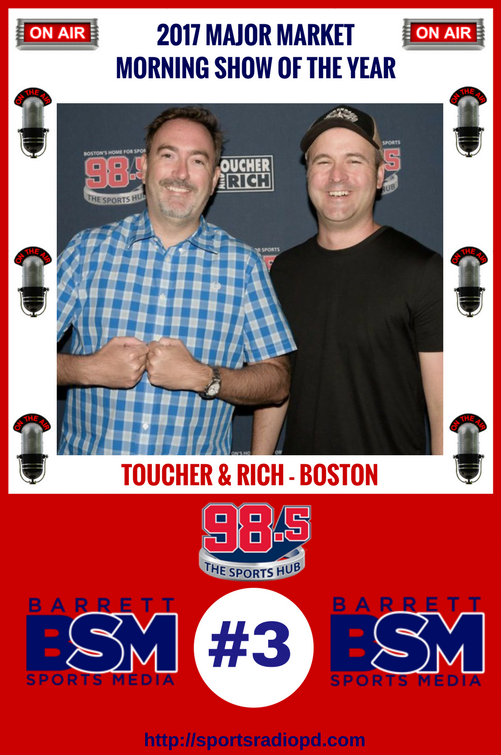
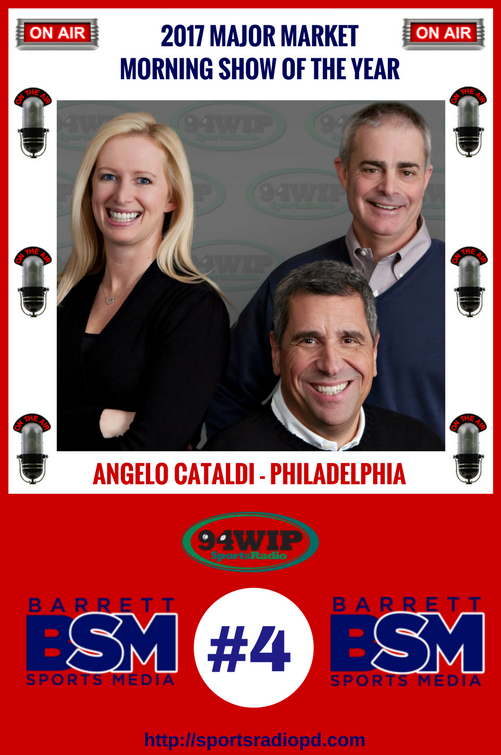
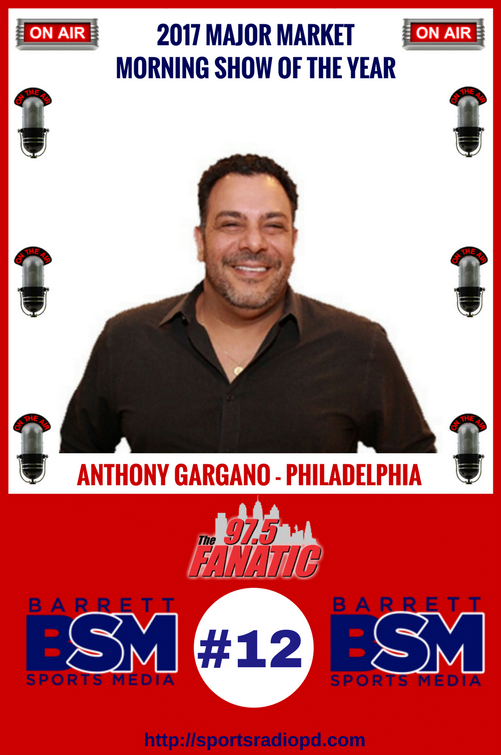
We salute Kirk & Gerry on earning this year’s top honor, as well as each of the other morning shows who were recognized. Now, here are the full results of “BSM’s Top 20 Major Market Morning Shows of 2017”!

Additional Notes:

  • Kirk & Callahan had the most 1st place votes (17); The Musers were second (9)
  • Hardwick & Richards finished 21st, 8 points behind Cooley & Kevin
  • 22-25 belonged to Joe/Lo/Dibs, Nick & Chris, Ronnie & TKras and Fricke & Douglas
  • 9 of the 28 morning shows eligible for consideration received a 1st place vote
  • This is Josh Innes’ first appearance on the list in mornings
  • Dan Sileo is no longer hosting mornings on the Mighty 1090
  • WFAN has since added Gregg Giannotti to mornings with Boomer Esiason

Jemele Hill is Leaving SC6 and Moving to The Undefeated

0

As first reported by Richard Deitsch of Sports Illustrated, Jemele Hill is leaving the 6pm ET SC6 edition of SportsCenter on ESPN. Hill will leave the show February 2nd to take on a role with The Undefeated, ESPN’s website dedicated to the intersection of sports, race and culture, and as an on-air commentator on programs such as SportsCenter, Outside the Lines, Around the Horn, Highly Questionable, Pardon the Interruption, E:60 and various radio programs and podcasts produced by ESPN Audio.

“There is an old adage that says, the heart wants what it wants,” said Hill. “I started at ESPN 11 years ago as a columnist and while I have worn many hats in the time since, my true love always has been writing, reporting and commentary. While I have grown in every way imaginable this last year on the 6 p.m. SportsCenter, deep down I knew it wasn’t my calling. I approached (ESPN Executive Vice President, Content) Connor Schell recently and asked if they would consider re-thinking my role. And as has been the case throughout my 11 years at this company, ESPN graciously worked with me to determine the best way for me to continue to do meaningful work.

“My first choice was to work with The Undefeated, a site that covers the intersection of race, African-American culture and sports in creative and compelling ways,” she added. “I admire, trust and have unconditional respect for (ESPN Senior Vice President & Editor-in-Chief) Kevin Merida and The Undefeated staff. I have no doubt we will create amazing content together. I’m also thankful to Connor for not only hearing my request, but being immensely supportive throughout this process. I have longed for some time to return to my roots, so to speak. I’m ecstatic to be in such a supportive environment to explore the next phase in my career.

“I’d also like to thank my co-host Michael Smith for his encouragement, generosity and support,” she said. “I will be cheering him on as the 6 p.m. SportsCenter evolves with him as lead anchor. The SC6 staff also has my utmost gratitude and affection. Thank you for your hard work and contributions.”

Although the narrative being pushed by ESPN suggests Hill requested the role change, others aren’t buying it. FOX Sports Radio host Clay Travis, who’s broken numerous stories on ESPN, has been saying on the air for weeks that Hill would be gone from SC6 after the Super Bowl because the show’s ratings were abysmal.

It’s well documented that Hill put a massive bullseye on ESPN’s reputation when she took President Trump to task on Twitter, labeling him a white supremacist. That was followed up by encouraging Dallas Cowboys fans to boycott sponsors of America’s team, an act which earned her a suspension.

Complicating matters even more was that Hill and Smith’s former program, His and Hers, was drastically different than SportsCenter. When the network attempted to mesh the two together and develop SC6, it left a bad taste in the mouth’s of many traditional viewers, leading them to reject the program. That approach also placed Smith and Hill in a box to deliver a stylistically different version of their show, rather than the one which they were most comfortable executing.

The decline of the program’s ratings, coupled with the dissatisfaction of the show from many involved, led to internal role changes for ESPN managers Rob King, Dave Roberts and Norby Williamson. The Big Lead pointed out that turmoil had existed behind the scenes for quite some time, but there was a possibility of Hill and Smith returning to the daytime lineup to reprise their His & Hers program. Once Smith parted ways though with the duo’s mutual agent, Evan Dick of CAA, it became clear that the pair would soon be heading in different directions.

While Hill may be pursuing a new challenge, the network is counting on Smith to become the lead anchor of the 6pm ET SportsCenter.

“The telecast continues to evolve as our primary mission is serving sports fans no matter the time of day,” Williamson said. “We have clearly learned that viewers expect the most comprehensive news coverage and compelling analysis during the 6 p.m. hour. Michael Smith is an experienced journalist and seasoned commentator and I’m confident that his talents can help us achieve our objectives as we move forward.”

What will be interesting to follow is how Hill adjusts to her new role and if it’s enough to satisfy her long term. It’s certainly possible she could become a permanent fixture on The Undefeated, but her passion for discussing topics beyond sports, and the growth of her profile are likely to earn her future attention from outlets such as CNN or MSNBC. Her current employer could also pursue utilizing her on ABC if they feel a fit makes sense.

The XFL’s Return is About Strategy and Second Chances

0

Imagine for a minute what it would be like if we didn’t allow people to learn from their mistakes and earn second opportunities. Bill Belichick wouldn’t be leading the Patriots into another Super Bowl. Nick Foles wouldn’t be starting against him. Steve Jobs wouldn’t have saved Apple and turned it into a global success. Oprah Winfrey wouldn’t have become a revered TV personality. Jay-Z and Lady Gaga wouldn’t have become international music stars.

I could list example after example, but you get the point.

Failure owns real estate on the highway to success. You can try to avoid it, but at some point in your life, it’s going to suck you in. What’s important to remember when you face it is that it’s there to teach you a lesson. It may bruise your ego and make you question if you’re good enough or on the right track, but nobody reaps a lifetime of rewards without having their convictions challenged and their confidence rattled.

I bring this to light because on Thursday, Vince McMahon announced he was ready to gamble a second time on the XFL. The league is scheduled to begin play in 2020 and McMahon is hoping this time to learn from his past mistakes and see his dream of running a successful football league finally become a reality.

When the XFL folded in 2001, it was in bad shape. Sponsors fled. So too did the league’s television partner, NBC. Most importantly though, the audience had rejected the brand because the on the field product was inferior to what they were accustomed to watching.

McMahon at that time tried to introduce sex, violence and sideshow antics to give people a reason to tune in, coupled with appearances by WWE personalities. The problem with that formula was that although Americans can’t turn away from observing a car crash, once they see what’s taken place, they drive away. Which is exactly what they did every time an XFL game appeared on their TV schedule.

As bad as the original XFL on the field product was, some of the league’s ideas were good. Players were mic’d up. Unique camera angles were introduced. Player introductions were featured before the first series of play. They were innovative at the time, and wound up becoming a bigger part of the NFL’s television experience.

Upon announcing the news, social media was flooded with people declaring the league dead upon arrival. I ran a poll question on Twitter asking folks what percentage chance do they give the league of being successful the second time around. 58% said 0-25%, 23% went with 26-50%, 13% voted for 51-75% and 6% gave it a 76-100% chance of succeeding.

What I find interesting about that is that we haven’t learned our lesson. We’ve allowed our memories of the old XFL to shape what we think the second version will be. We’ve also read into comments made in a press conference and decided from them whether or not this league will work. We haven’t seen one player signed, one game played, one media partner added or one football executive hired to help McMahon make the most of his second chance.

I point this out because when the XFL held its introductory press conference nearly two decades ago, they promised an aggressive style of play and a whole lot of male focused entertainment. They also fired a few shots at the NFL. The public ate it up, and once the league began airing their edgy promos, mainstream interest grew. It spread so fast that the league’s first game was watched by an estimated 14 million people, helping it deliver an incredible 9.5 rating. The problem was that after football fans tuned in, just like a car crash, they observed the scene and drove away.

None of us know whether or not the XFL will work in 2020. But what I love about this story is how it involves strategy and the pursuit of redemption.

One thing to know about Vince McMahon, when he sees an opening, he seizes it. It’s why the WWE Network has become a success, WCW is no longer in business, and why brands like YouTube, Facebook, E and others have invested millions in doing business with him.

It’s no secret that the NFL has turned off a lot of fans with their willingness to allow players to speak their minds on social and political issues. The decision to give players a choice of either standing, sitting or kneeling during the national anthem is another which has troubled people and generated a lot of negative national media attention.

But that’s not all.

NFL TV ratings have declined each of the past two seasons. Booth reviews and over-analyzing the rules have led to debates over what is and isn’t a catch, QB’s have been treated like they operate behind a force field, pass interference often affects the outcome of games, and kickoffs have been changed to discourage collisions between players running at maximum speed.

Add to the conversation CTE issues, frequent stories of players being arrested (does Ray Rice ring a bell?), and a seven month period where the most popular sport in our country goes on hiatus, leaving fans starving for something to sink their teeth into. That’s especially noticeable during the months of February and March.

When you take all of that into consideration and combine it with the rise of social media and brands such as Amazon, Twitter and Facebook expressing interest in paying for content, sports betting being on the brink of legalization, and the WWE’s television deal with USA expiring in September 2019, you can see why McMahon is rolling the dice.

So how do you take advantage of those opportunities? You do what McMahon is doing.

For starters, the XFL will play a ten game season starting in late January or early February. That’s right when the NFL ends their season and interest is at its peak. The rule book will be simplified to keep the pace of the game fast, commercial breaks will be shorter to retain interest, and traditional things like a halftime break will be eliminated to make games shorter. McMahon also plans to incorporate fan participation and online activities into the XFL experience.

The biggest noise was made though when McMahon announced that any player who competes in the XFL will be required to stand for the national anthem, and players with prior arrests will not be invited to participate. The WWE Chairman and CEO said he’s looking to provide family friendly entertainment and place the focus on the game of football, not on issues beyond the gridiron.

Given his lifelong connection to the world of professional wrestling and the XFL’s prior use of WWE stars, many wondered if McMahon would align the two brands again. Recognizing how that could affect the perception of the league, McMahon said the WWE’s talent will have zero involvement with the XFL nor will any members of its broadcast team. He also made it clear that he was looking to stay out of the spotlight himself and hire smart football people to help him create a high quality football product.

McMahon’s strategic approach is smart and one that each broadcasting executive would pursue if faced with trying to launch a product opposite a dominant competitor. Whether it’ll work or not will depend on what the product looks like in 2020 and what the football fan’s appetite is for more football right after the NFL season expires.

But not to be forgotten in this story is the lesson of learning from failure and taking second chances.

Vince McMahon is an entertainment industry hall of famer. He built the WWE into an iconic brand by taking risks, among them creating WrestleMania, which had it failed, would have likely bankrupted the company. He didn’t need to invest his money and gamble again on the XFL, but it’s a project he loves and is passionate about it. As a result, he’s taking a second chance to try and get it right.

Maybe this will turn out bad and Vince’s legacy takes a hit. But ask yourself this question, if you were 72, highly successful, and had the stain of the XFL on your professional record, would you have the guts to try again to erase that mistake or would you just let it linger and take it with you to the grave one day?

The reality is that most people in McMahon’s shoes would’ve worried too much about their reputation being tarnished to risk pursuing the same dream that became their worst nightmare. It’s easy to operate safe and avoid publicly being ridiculed but learning from mistakes and bouncing back is what makes many of the things we do in life important.

As I think about this story, I’m reminded of a scene in the movie “Pursuit of Happiness” where Christopher Gardner (Will Smith) tells his son, “You got a dream? You got to protect it. People can’t do something themselves so they want to tell you that you can’t do it. If you want something, go get it.”

Well, Vince, you deserve credit for crafting a good strategy and having the courage to try again. But this time, you’ll need more than that to make this work. Football fans are going to expect a quality product. If they don’t get it, they’ll once again have two words for you, “You’re Fired.”

How Much Value Do Hosts Place on Radio Row Broadcasts?

0

It was one year ago when I wrote a lengthy piece on the challenges associated with broadcasting live on radio row during the week of the Super Bowl. I tapped into a few program directors and top salespeople to gain their perspectives on why the week on the road for their brands does/doesn’t matter.

As insightful as last year’s column was, I realized that one key part was missing from the conversation. The viewpoint of the people who it matters most to – the on-air talent.

It’s easy to sit in a conference room and debate the merits of sending your shows on the road or crunch numbers in an office during budgeting sessions and eliminate travel and remote broadcast expenses because it’ll make your bottom line look better but there are certain things in business that you do because it’s important to your people, your brand image and your audience.

For example, how would your perception of a NewsTalk brand change if their key programs weren’t live at the Republican and Democrat national conventions? To make those events work, extra dollars must be spent and sometimes sponsors don’t want to get involved because they don’t want to be branded as supporting one side over the other. If the NewsTalk outlet you receive your information and opinion from though wasn’t there, your perception of the brand and its shows would be altered.

Imagine if a massive rock concert like Lollapalooza was recreated and your favorite rock station wasn’t involved in it. Or if a rap festival was produced and your hometown hip hop station didn’t have a connection to it. You’d wonder why those brands were detached from something significant to the audience and their image would take a hit as a result of it.

Well, the same applies in sports talk radio.

There is no greater event from an audience attention standpoint than the Super Bowl. The NFL is king and responsible for stealing the majority of our free time during the fall. The final game represents the last chapter of the season, and the week leading up to it is when fans become consumed by the storylines surrounding the NFL’s season finale.

From a talk show host’s perspective, this is the nail in the coffin on a year’s worth of conversations. Hours upon hours are dedicated to analyzing, debating and reporting on the NFL each season, and the most hosts view the week of the Super Bowl as one of the most important to their annual schedule. It’s an opportunity to get access to high profile people, uncover interesting stories, receive exclusive access to events they’d otherwise not experience, and it affords them the chance to spend time on the road with their peers and colleagues. That alone leads to strengthening bonds, increasing contacts, gathering information, and enjoying time away from the normal grind. The audience is invited to live vicariously thru the eyes and ears of the talent during the NFL’s biggest week, and in doing so, a deeper bond is developed between the brand and each listener.

What makes topics like this fun to discuss is that there really is no right answer. If your business is hemorrhaging money and lacks interest from sponsors, it’s understandable why you’d pass on sending your hosts and shows on the road. But if every decision you make is tied to whether or not you generate an immediate return on investment, be prepared to be disappointed.

It’s ironic that the radio industry depends on selling advertising to clients, stressing to them the importance of branding. We encourage sponsors to implement a long term strategy and remind them of the need to spend money to make money. We preach how vital it is to stand out from a crowded field and why presenting a powerful image and influencing perception are key in reaching people when it’s time to make a purchase.

What we don’t do is walk in the door with pixie dust promising to sprinkle it on their ads and double their business. That’d be ridiculous. Effective marketing requires consistency and building a strong brand image. If done properly, brands will absolutely benefit from it.

Yet when the shoe is on the other foot, do we follow our own advice? To borrow Hertz’s slogan, not exactly!

There are a myriad of factors that need to be considered when deciding whether or not to send your radio station and staff on the road to the Super Bowl. From the ratings impact, to the perception of the brand, to the economic affect on your company’s balance sheet, everything must be examined. However, just don’t lose sight during that process of how those decisions register with two of the most important components of your business – your staff – and your audience.

To provide a little more perspective I called upon six talented hosts from different parts of the country who have experienced the good and bad of radio row. Making the conversation even more interesting is the fact that they collectively represent five different companies.

For those of you who are scheduled to broadcast next week on radio row in Minneapolis, I recommend checking out this list of restaurant/bar suggestions from 1500 ESPN Twin Cities midday host Phil Mackey. You can thank him in person next week for steering you to the right locations.

Why is broadcasting live from radio row during the week of the Super Bowl important to you?

McKee: I have been to 14 Super Bowls. So, I’ve had plenty of radio row experience. In the mid 90’s it seemed like a pretty exciting deal. We would get a cool collection of guests that we wouldn’t get any other way. However, as the years move along, the quality of guests seems to have leveled off. Also, getting interesting guests is complicated because there is such a strict schedule. Then of course there is the question of whether listeners even care about hearing from any of these people. In addition, we haven’t seen a specific spike in ratings during that week. BUT – if you are a sports station in America and you aren’t there how serious are you? The trick is to use radio row as a home base and actually go out and do the work which means getting off your ass and going to the pressers and the other available sessions. The access to players, coaches and other folks in the sports world is off the charts. If you stay anchored on radio row, you better hope you have a world class producer who can do some pretty extraordinary things or you’re going to be talking to Bill Romanowski about his neuro lean 1 pills. So broadcasting from radio row means almost nothing to me, but being at the Super Bowl feels like it’s very important!

Kaplan: This is my 22nd radio row which is crazy! I look forward to the week of the Super Bowl because I like to be in the middle of the action. If I didn’t go, I would be watching on TV wishing I was there. It’s the sports radio convention, like the Senior Bowl of sports radio. It’s something I feel is important to be in the middle of.

Dawson: It’s important primarily because we are the home of the Cowboys. The NFL is the most significant sports entity in our market and not being there would feel off brand in a big way. Our competition will be there and to my knowledge, I’m not aware of a regular weekday 6a-7p show in my market that hasn’t gone.

Innes: It’s not. I thought it was important to broadcast from radio row when it was in Houston. I host a morning show, so I won’t be getting a ton of guests, and the building will be largely empty. I don’t believe it adds a ton to my actual show. Hosts love to say that they can get more out of guests and that it’s all about the questions. Trust me, when Adam Sandler is on station #20 and has been up for 25 hours, he’s not gonna be excited.

Dougherty: Broadcasting live from radio row is important to me because we want to provide Zone listeners with the best content possible, every day. Radio row at the Super Bowl allows us to do that by gaining access to compelling guests who we normally wouldn’t have an opportunity to connect with. Being there helps us deliver a stream of interesting content all week.

Tierney: Very early in my career, it was probably good for the ego, a self-validation of my place in the business. However, as my platforms have grown, it’s become much more of a bridge…a tool…a continuation of the coverage and insight we’ve provided throughout the season. Although I don’t believe in being guest-heavy day to day, we take great pride in being able to secure “A” list guests throughout the season. This is not only a continuation of that, but in essence, a culmination of a season/sport that we dedicate a lot of time, energy and resources to. I want to be there, I expect to be there.

If you didn’t do shows on radio row during SB week, how would it impact your show?

McKee: If I wasn’t there we would still have a table and a set up to put a guest on headphones but that’s pretty weak. I suppose I’d feel left out. It’s an interesting question though and I’m not sure I have the answer because this will be my 9th straight radio row. I have 6 others sprinkled in over the years. What makes this year particularly interesting is that I pushed hard for our station to go to the Senior Bowl. We have great ownership and management and they made an extremely quick pivot so we could be in Mobile, Alabama this week! The reasoning was simple. The Broncos need a QB, and Mayfield, Allen, Falk and Rudolph will all be there along with the Broncos coaching staff which includes a bunch of new guys who are coaching the north team. The STORY for us is clearly in Mobile not Minneapolis. That always should come first. So I’m proud of my station that we’re doing what’s best for our listeners. We were ready to give up going to the Super Bowl but because Minnesota is such an awful place to go to in February, the hotel costs have plummeted! At the end of the day, we can do both and stay under budget. So, I’m going to both! Guys often bitch about having to spend the time and effort away from home but that couldn’t possibly match how much they’d complain about NOT going! We are a messed up crew of individuals.

Kaplan: I’m not sure broadcasting from the Super Bowl is a ratings winner per se, but from a perception standpoint, listeners believe their favorite show is big time by being on radio row. They enjoy hearing the show talk to people that they wouldn’t normally have face to face access to. It leads to good content and it’s where new relationships are formed!

Dawson: I’m not sure what the impact would be since we do make the trip each year. Listeners would question though why we weren’t there.

Innes: We may miss out on the opportunity to do a few memorable bits, but all in all I don’t think the show would suffer greatly. The idea of going to radio row is so much greater than actually going to radio row. I mean, how many times can I interview a member of the 70’s Steelers?

Dougherty: If we didn’t do live shows from radio row, we would do our normal daily show. The difference would be that we’d have less coverage dedicated to the Super Bowl.

Tierney: No interesting/successful show should lean solely on the backdrop of the SB to create a compelling show. That’s lazy, especially when each interview is going to contain a minute or so of the guest pushing product that quite frankly, our audience doesn’t care much about. It’s still about strong content, diverse and interesting topics and having fun and I have confidence that we would deliver that from our studio. However, there’s an energy that is tough to replicate that comes with being in the middle of the mayhem for a week. The ambiance creates a different urgency and makes it feel bigger, because it is. Also, personally, the week is a great avenue to collect off-the-record information from friends and colleagues around the league. I always look forward to that aspect.

How important do you think the week of shows on radio row are to your audience? 

McKee: We’ve been lucky because the Broncos have actually played in a couple of recent Super Bowls and won one of them. Our ratings during that time period went through the roof. However, when the Broncos lost in dramatic fashion to the Ravens a few years ago and we still went to New Orleans AND then the Ravens WON the Super Bowl, we had our lowest ratings dip in years! Our listeners just didn’t want to hear anything because the loss stung so much. We probably would’ve been better off not going that year! I think the audience wants to live vicariously through you but they don’t want you to rub it in their face. It’s a weird balance. At this point, our audience just expects us to be there so being there isn’t really a big deal but not being there would raise questions. It’s a bit of a no win situation. That being said, your team going to and winning the super bowl is ratings gold for a long long time! You better be there because those stories and that experience lasts forever.

Kaplan: When I listen, I love the background noise, the buzz, it sounds so alive! As a listener, I want to be there! If you track engagement on social platforms, we provide so much more content and create so much more activity by being live on radio row. That’s how I measure it.

Dawson: I don’t think it’s important to them in a conscious way. I think we benefit from a credibility standpoint of the audience knowing that we’re on top of things and committing resources to make sure they’re informed and entertained. I think what they value most are the words being said by particular people when they tune in. Our being there doesn’t provide much of an advantage in creating compelling content. Factor in the disruption to the clock, unpredictably mediocre guests, and general chaos, and there are pros and cons to the conversation.

Innes: My audience only cares about being entertained. I can do a good show whether I’m on radio row or Mars.

Dougherty: We get tremendous feedback from our listeners through social media channels when we broadcast from special event settings like radio row at the Super Bowl. We see the same engagement when USAA brings us on the road to broadcast prior to the Army-Navy game.

Tierney: I’m sure on some level we tend to overrate that aspect of it, but it is a core belief of mine that if you have a successful show, the expectation from listeners is that during the biggest week of the year, you will be right in the middle of it.

What do you do to make sure your program stays consistent and doesn’t get overtaken by guests/advertiser pitches?

McKee: There is almost no escape from that! You do your best but it’s almost unavoidable. One thing you can do is record segments ahead of time. Other than that, you are a bit screwed. It’s a good rule of thumb to do every show on the road the same way you would do it in the studio but that’s easier said than done. Try and treat the day on the road schedule wise same as at home.

Kaplan: We don’t obsess over the guests any longer. I used to consider the best guests the metric for success. Now I think more about all forms of media at my disposal. So it’s not just what A-list guests I can get on the air but rather how can I engage my audience on and off the air?

Dawson: We do our best to keep a similar show going but here’s the funny thing. In order to get an A-list guest you have to take others from their stable quite often. We have 3 segments an hour and scheduling into that without disruption is not possible.

Innes: It’s difficult because you are at the mercy of the celebrities. They may show up a minute before break time. What do you do? In that case, you blow up the clock. Then you end up with 5 minutes of Franco Harris peddling an insurance company with his handler starting a countdown 2 minutes in.

Dougherty: We make it a point to re-set our show at the top of the hour with the day’s top headlines and keep a watchful eye on what is happening in our local market. As much fun as the week on radio row is, local comes first.

Tierney: We don’t allow that to happen. It’s our show and Tiki and I both recognize that while good guests can enhance our show, we will not change the DNA of what we do. You still need time to let things breathe, to react to stories outside of the NFL, to react to interviews we just conducted, and to deliver built-in sponsored segments just as we would if we were back in studio. We also have great synergy with our producer, so we’re all on the same page. As far as advertiser pitches are concerned, you have to maintain control of the car. I’m driving the show, not the guest. If you’re not alert, it’s very easy for a 7-8 minute spot to be overtaken by product push, which equates to a painfully boring interview. Trust your internal clock, like a QB. If you’re getting bored, the audience has either left or is on the brink of leaving. If you allow that to happen, as a host, that’s on you. Be better at your job.

What’s one thing that you do during the week that’s unique from the other 50-100 stations on radio row?

McKee: I participate in the actual press opportunities! I always try and get a question in to the commissioner. I ask questions of the coaches. I go to stuff and ask questions. Mostly that’s the realm of the print media. I have been amazed over the years of the laziness of most talk show hosts. Get out there. Participate. It’s great to say on the air, “ I asked Goodell this question”. “ I asked Bill Belichick this” stuff like that. I promise you I’ve done more stuff like that than ANY talk show host in America over the years. It has been a huge separator and gives us unique content.

Kaplan: My approach is to deliver a show which matters to my market. I look for local ties. For example, we have enlisted a player from the Patriots and the Eagles, both from San Diego, to be our weekly reporters. The goal is to talk to our home market, from an international event. That helps us form a stronger local connection.

Dawson: One fun thing that we do is create a compliment contest throughout the week that our guests are not aware of. It’s awesome because it butters them up and gets the positive energy flowing. It may even deliver a few horizontal tune ins. We produce an audio compli-montage at the end of the week along with a King of Compliments for the year and this adds to the fun.

Innes: We have a wireless mic and roam around. We had my producer dressed as Mike Ditka and he would sit down with random radio shows, while they were on air. He would then talk back to me via wireless. One guy wanted to fight him. My producer wore an “Assweiler” garbage can around the Houston radio row. That made national news. I think the wireless mic adds a lot. It allows for constant content during slow times.

Dougherty: Our focus is on doing the best job we can to put our audience in the room. We do that on air and through the use of our social media platforms. It isn’t about being unique as much as it is delivering quality content that satisfies our listeners.

Tierney: The most obvious difference is that we deliver a TV presence with a national simulcast. We bring you a visual. You get to see what we see. There’s great value in that.

If you owned your radio station or a local business and a team from your city was not playing in the game, would you spend the $ to be part of this week of shows?

McKee: My advice would be to send as many people as makes sense for your budget. Don’t stretch but don’t be cheap. Keep in mind that the more people you send from the station the more crazy stories that can come from it. Hopefully you have a good crew that likes hanging out. Bonding wise it’s fantastic. Great memories for years and years. Monday night is now media night. Tuesday is the media party. We have established Wednesday as our staff dinner. It’s been my favorite tradition year after year. Whatever you do if you send a group don’t skimp on the staff dinner. It’s what connects you with one another. Thursday night, all of our ex NFL guys have Super Bowl rings. Mark Schlereth, Brandon Stokely and Alfred Williams, which means they wear their suits and rings and go to parties that the rest of us nerds can’t get into! Friday night we basically leave open. If you do Super Bowl week the right way it will translate to the audience. But know this, if you don’t make an effort at all, you aren’t a real sports talk station.

Kaplan: Well, we are no longer an NFL market in San Diego, but our signal reaches LA and many LA sports fans have found us over the course of the three year relocation drama. I think radio row can be a very sell-able product to sponsors if packaged creatively.

Dawson: Absolutely. I believe there’s great value in it.

Innes: Well, there are some factors at play. Is my competition going? What market am I in? Does my audience back home really care? I’ve seen plenty of data to show that my competition doesn’t see any tangible bump from being there. Basically, it’s a way to get a sponsor to pump a few bucks into the station. If a sponsor wants to add to the bottom line, that’s hard to say no to. I’d refrain from sending morning shows. Middays and afternoons have the best chance of excelling. I do think there is an opportunity to create web content that can be sold. Gavin Spittle did and has done a great job of monetizing the digital aspect of the week.

Dougherty: We’re fortunate to have a great sales staff which sells sponsorship’s to off-set the costs of taking two shows on the road to the Super Bowl city. That provides us with a great opportunity to deliver good content for our audience and attach our clients to the station’s Super Bowl coverage. There’s a lot of value in being associated with the week.

Tierney: In all likelihood, yes, but it would hinge somewhat on the financial climate of the industry and our own ability to monetize the week. If we were able to offset some of the costs, perceptually, I believe it is worth it. It also tends to galvanize talent and is a nice way to put the finishing touch on a 5 month grind. I find that it boosts morale, and it’s fun! Who the hell doesn’t like to have fun? If it’s done right, it can be GREAT.

TV and Radio Are Heading in Opposite Directions

0

Remember newspapers?

For those that are too young to remember, we used to get these rolled up bundles of information delivered to our homes or offices. The product was filled with new information and a bunch of advertisements from a lot of the top spenders in town – especially those auto dealers (after all, Grandpa advertised in the newspaper, so dad surely did as well!).

Some of us would, religiously, read it first thing in the morning before leaving the house. Most of us had our favorite parts we would go right to and read first, and I remember on more than once occasion getting yelled at for leaving the whole paper on the kitchen table, except for the sports section which could be found in my room.

Last week, I saw something on a driveway that resembled a newspaper, although it looked more like a leaflet, and there were actual rocks in the rolled-up bag, presumably from keeping it from blowing away in the wind. After all, it was much too thin to stay in place by itself. When I opened it up, I still saw some information, most of which I had read about the day before, but hardly any advertising was present, except for the large color ad for a hearing loss center on the back of the sports “section.”

I bring this up because I am wanting those in our industry to go back to the time when advertising still went on in newspapers, but everyone under the age of 65 knew that it was headed in the wrong direction. We all knew that print would soon no longer be a viable advertising option.

If you think back to that time, you will remember an all-out assault from every different direction –  television, cable, radio, and any other form of advertising all went after the newspaper. If you talked to someone who sold any form of advertising besides print, the subject of the decline of newspaper was likely to come up. The advertisers heard it from every angle possible and it wasn’t long before print advertisers started running for the hills.

Now, fast forward to today. While not quite as dramatic as the decline of newspaper advertising, a new reality is happening – television and cable aren’t reaching anywhere near the same amounts of people and the cost of running ads is going up. Report after report is coming out on the decline of the television audience while the reach of radio remains consistent and strong.

The question to me is, why isn’t the message getting to the advertisers as fast as it did with the decline of print? The answer seems to be that radio is now left out on its own island. Whereas radio had its counterparts in television and cable to help tell the newspaper decline story, radio is now left alone to tell the story of televisions great decline.

So, it’s our job to tell the story. It’s our job to make sure that no matter if we are going directly after television dollars or not, the advertiser hears about the decline of television and the continued success of radio. Radio is providing a significantly better return on investment (more than double television), and this is something every advertiser and every ad agency needs to hear over and over again.

We have to be committed to making sure that the facts that are out there are repeated – radio is America’s number one reach medium, 93% of America is listening to the radio (that’s 271 million people weekly), and adults are listening to more than thirteen hours of radio each week.

Those of us in radio need to be the ones telling the story and we should be shouting it from the mountain tops. If we don’t tell the story, who will? It certainly isn’t something that you’ll read about in the newspaper, if in fact yours hasn’t already blown away.

Barstool Sports Now Valued at $100 Million

0

Barstool Sports may not be everyone’s cup of tea but that’s just fine with their majority owner Chernin Group. The investment firm led by former News Corp. executive Peter Chernin has pledged another $15 million dollars to the company in order to help it pursue new business opportunities. Among the possibilities include branded alcohol, its own bar and expanding the recently acquired Rough N Rowdy boxing promotion.

In recent years, a number of media brands have been negatively affected by failing stock prices, staff reductions, and bankruptcies. Despite a challenging business climate, Barstool is going the opposite direction, making further investments in itself and its people. The company plans to double its staff to 160, with a focus on adding more writers, video producers and podcast hosts. Barstool CEO Erika Nardini says the company will also tap into the subscription business further by offering fans exclusive content tied to their podcasts or online Q&As with talent and personalities.

According to Bloomberg, the latest funding increases Barstool Sports’ value to roughly $100 million dollars. Although that number is tremendous for an upstart company, it pales in comparison to other groups like Vice Media (5.7 billion) and BuzzFeed (1.7 billion).

“The company has far exceeded our plans and all our models,” Mike Kerns, president of digital at the Chernin Group told Bloomberg. “There are a lot more areas we need to invest in.”

Barstool president Dave Portnoy says the latest funding provided by Chernin Group allows the brand the freedom to continue following its instincts. Over the next three to five years, Portnoy hopes to increase the brand’s value to $250 million. To celebrate the news, Portnoy is reposting a few of his earlier Barstool State of the Unions. You can check them out by clicking here.

A-Rod and Vasgergian Join Sunday Night Baseball on ESPN

0

Invoke whichever sports phrase you wish but since this is baseball related news we’re going to keep it simple – ESPN hit a home run! The network has reached an agreement with FOX Sports which will allow them to feature Alex Rodriguez on Sunday Night Baseball. Michael McCarthy of the Sporting News first reported the possibility on January 6th.

Ironically, A-Rod takes over the position previously held by Aaron Boone who left to go manage the New York Yankees, Rodriguez’s former team. A-Rod previously replaced Boone as the Yankees third baseman in 2004 after Boone injured himself in a pickup basketball game.

The arrangement between ESPN and FOX will allow A-Rod to work “Sunday Night Baseball” during the regular season and remain involved on Fox Sports as a playoff analyst during the postseason. Fox Sports and TBS hold the TV rights for postseason play.

Joining Rodriguez on the Sunday Night broadcast to call the action will be Matt Vasgergian. The network chose the Fox and MLB Network play by play announcer to fill Dan Shulman’s vacant seat over internal candidates Jon “Boog” Sciambi and Karl Ravech. Ryan Glasspiegel of The Big Lead first reported ESPN’s interest in him. Despite Vasgergian’s addition to the Sunday Night crew, he’s expected to remain involved as an announcer and studio host on the MLB Network.

The two holdovers to the broadcast team are analyst Jessica Mendoza and reporter Buster Olney.

According to a Fox source which spoke to the Sporting News, the talent-sharing relationship became a possibility after Disney agreed to pay $60 billion for the majority of 21st Century Fox’s assets. Part of that transaction included taking control of Fox’s regional sports networks. ESPN sources though say the Disney-Fox business deal didn’t factor into adding A-Rod.

Regardless of who’s telling the truth or how it happened, Sunday Night Baseball on ESPN just became a lot more interesting with A-Rod involved in the telecast.

Previewing The Annual BSM Top 20 in Sports Radio

0

Next week, Barrett Sports Media will introduce its third annual Top 20 in sports radio. The six day series highlights the top morning, midday, afternoon and national sports radio shows, the best stations, and the format’s top program directors. This project takes nearly two months to complete because it involves gathering feedback from a large number of sports radio executives. In fact, this year a total of 47 people have contributed to the final results.

Making the process more difficult is the challenge of balancing it out. This means making sure the majority of input isn’t coming from one specific region or company. For example, if I utilized forty executives from CBS/Entercom and none from Cumulus/iHeart, you’d expect the results to shift in the direction of most CBS/Entercom brands. That same situation would arise if I included people who worked on the east coast and none from the Midwest or west coast.

As you may recall, one significant change was made last year. Major markets (1-20) were separated from mid-markets (21 and up). That same approach will be used this year. The reason for it was simple. The industry’s attention (and in many cases advertising buys) often goes towards bigger cities. And for good reason, they face the most pressure and operate under a wider lens.

However, there are brands, shows, and people dominating in their markets which are worthy of being recognized but would otherwise be ignored simply for the fact that they excel in a smaller city. Since no show/station can convince a few million people to relocate to their city and change their market ranking this was a logical way to involve everyone, even if it meant having to increase my workload.

As I stress to folks who ask about these results, there is no perfect way to measure every show, station and individual. So don’t forget that when they’re revealed next week. Each executive values things differently, and audiences in some cities are more attached to a station and their personalities than they are in others. A talent’s value shouldn’t increase by being ranked high on this list nor should it be decreased if they’re not included. It’s a subjective series aimed at recognizing great performers as seen thru the collective eyes of industry leaders. The scorecard that matters most is delivering ratings and revenue for the company which employs you.

Given how the BSM brand has grown over the past few years, I want to remind you that I DO NOT vote in this process. I stress this because it’s often assumed that these are my selections. I may provide the platform where they’re presented and design the images and promote the results via social media but the feedback is a culmination of 47 individuals’ opinions. Those voters represent radio companies such as Entercom/CBS, iHeart, Cumulus, Bonneville, Beasley, ESPN Radio, Premiere/FOX Sports Radio, SiriusXM, and a few smaller groups.

Another item I want to address is the line I walk with clients. Many have asked me about this privately so let me clear the air publicly.

Those who I do business with know that I’m a man of integrity. I pride myself on being a straight shooter and my personal standards are not for sale. My focus when I work with brands is to help them improve their on-air/online/on social product, grow their people, recruit, offer ideas, and provide information to help them gain a competitive advantage. Providing favoritism on the BSM website, podcast or social media channels is not part of the partnership.

I have run this process for two years. During that time, I’ve had clients listed behind competitors when the final rankings came out. Trust me when I tell you, that’s a very uneasy feeling. In some cases it was justified. In others I thought they deserved better.

Although it bothered me, I didn’t see the point of asking executives who I know, trust and respect to offer their input if I was just going to dismiss it and favor someone I do business with. If I was going to do that, I’d either present the awards as my own without contributions from others or stop doing them altogether.

What that taught me is that my approach to consulting is different than what some folks have been used to. More times than not in our industry, people operate in the shadows. It’s the same mindset that exists with sharing information about a brand’s ratings. I think that’s one of radio’s biggest problems. We’re so protective and afraid of what’s said publicly about our brands that we try to hide and limit conversation rather than getting out in front of it. If you can’t share your news in an honest way, listen to an informed opinion, and soak in the feedback provided by executives in your industry who are making decisions on behalf of the top broadcast companies then what exactly are we doing here?

Some may see my approach as a positive. Others may not. I have to do what I think is right and trust that those who know me and work with me understand the difference between a list and the value I bring to them on a regular basis. No answer that I supply is going to please everyone. If a client I work with gets ranked ahead of the competitor the immediate response is, “he’s just looking out for those he does business with.” If I put the competitor higher then I run the risk of pissing off a client. If I stop doing the project altogether then there’s less attention given to the format.

In some ways that’s a compliment because it means the brand has credibility and many look forward to the lists and respect the outcome. My belief is that if a brand or person is doing good work consistently, it’ll be recognized by the voters. Nobody with a 1 share, bad work ethic and poor sounding show is going to fake their way into a high ranking. All I can do is my best to run a fair process and present the industry’s collective viewpoints. Some results will be applauded. Others will be questioned and debated. That’s just the way lists work.

Looking ahead to next week, when you analyze the results I hope you’ll take into account a few key things.

#1 – The goal is to recognize the Top 20 programs/stations/people who performed best in 2017, not which hosts or shows we’d hire tomorrow if we were launching a new sports station. Most voters understand this when making their decisions, but it’s impossible to be inside each executives head and see how much value they place on it.

#2 – If a show or host was on the air for at least six months in 2017 and performed well, they usually are included on the list supplied to industry executives. They DID NOT have to finish the calendar year with the station as that was a bone of contention the past two years and we made an adjustment.

For example, Mike and Mike on ESPN Radio and Mike Francesa on WFAN are on the list because they were on the air for the majority of 2017. Their replacements, Wingo and Golic, and Carlin, Maggie and Bart will be eligible for consideration next year should we do this project again and they anchor their current shows for at least six months and deliver positive results.

#3 – If a show kept its foundation in place, but experienced some change in 2017, they ARE eligible. A few examples would be WFAN Mornings with Boomer Esiason which lost Craig Carton, Mike Valenti on 97.1 The Ticket who lost former partner Terry Foster to retirement, Gio and Jones who previously hosted mornings on CBS Sports Radio, and Stephen A. Smith who hosted a local show on ESPN NY/LA. There were a few local shows which made changes and didn’t make the initial cut because they didn’t have as strong of an impact in their local market as others had in their markets.

Before I wrap this up, I want to explain how the voting works.

Each executive is tasked with ranking their top 20 in each category in exact order. A 1st place vote is worth the most points. A 20th place vote is worth the least. The forty seven executives review each category, make their selections and then send them in. I add up the totals for each show/station/individual and from there it comes down to who earned the most votes. It’s similar to how players are voted on for an MVP award.

I hope you’re looking forward to seeing who earned the sports radio industry’s respect in 2017. The full schedule can be seen by clicking here. The process starts Monday January 29th and ends Monday February 5th.

Also, if you’re going to be on radio row in Minneapolis, send me an email or a message on Twitter. I’ll be arriving in the Twin cities on Tuesday afternoon, and making the rounds on radio row Wednesday and Thursday before returning to NY on Friday. I may even tape a few conversations for the third season of the BSM Podcast while I’m out there.

Let the debates begin!

FOX Steps Up Its Pursuit of Thursday Night Football

0

The NFL’s ratings may be down, but that isn’t stopping FOX from aggressively pursuing the rights to Thursday Night Football. According to Sports Business Daily, three networks submitted bids for TNF – CBS, NBC and FOX.

Although NBC and CBS expressed a desire to air TNF, both networks offered lower rights fees than the reported $450 million they spent combined on the package in 2017. FOX was the only network to submit an offer with an increase in rights fees. The amount proposed though remains unclear.

What’ll be interesting to monitor is whether the proposal includes a combination of games being made available on FOX and FS1/FS2 or if the network will be receptive to games also being made available on the NFL Network as they have in the past. The NFL also stands to benefit by once again making their digital rights to Thursday Night games available. Amazon and Twitter are both interested in the package. Facebook has elected not to bid according to SBD.

Michelle Smallmon Returns to 101 ESPN

0

Michelle Smallmon is heading home. After recently announcing her departure from ESPN Radio, the former producer for Ryen Russillo, Danny Kanell, Will Cain and Jorge Sedano has been hired by her former employer 101 ESPN in St. Louis to become Bernie Miklasz’s partner in morning drive.

“I’m so thrilled to be reunited with Bernie Miklasz and my 101 ESPN family in this new role” said Smallmon. “Getting the opportunity to work at ESPN in Bristol was a dream come true, and I’m so grateful for my time there and to all the amazing people I met at the network. But St. Louis is my home, and it feels great to be back in the community that means so much to me.”

Prior to moving to Bristol, CT to produce for ESPN Radio, Smallmon spent time producing and contributing to Miklasz’s show. Now after gaining more experience and honing her skills, she’s ready to head back to where it all started and take on a bigger on-air role working with one of St. Louis’ best on-air radio personalities.

“I gave Michelle her first full-time gig in sports-talk radio” noted Miklasz. “I chose her as my producer even though there were more experienced candidates under consideration. But I sincerely believed she had a chance to be special, and she was worthy of the chance. I am so proud of her, watching her develop into a budding star. She is an exceptional talent and person who will only continue to grow and shine. And she will make my show better in so many ways. It really is the perfect fit.”

The radio station confirmed that Miklasz and Smallmon will start working together on a full time basis Monday January 29th. She’s also expected to contribute to 101 ESPN’s digital platforms.

“It’s great to have Michelle come home to 101 ESPN” added PD Chris “Hoss” Neupert. “She will be a great addition to ‘The Bernie Miklasz Show” and we are excited to continue improving our great sports radio station! We are also looking forward to her contributions on www.101sports.com.”

In conjunction with the announcement of Smallmon’s addition, Hubbard St. Louis VP John Kijowski acknowledged that the radio station had also agreed to terms on a lengthy contract extension with Miklasz.

“With all of his accomplishments, awards and honors from his on-the-air show hosting and sports writing- we’re thrilled to extend Bernie’s deal with 101 ESPN” Kijowski commented. “And we could not be more pleased to welcome back Michelle to the 101 ESPN airwaves. She’s proven herself as a sports radio professional on the national level, and we’re excited to have her expertise and skills working with Bernie on ‘The Bernie Miklasz Show” in her new capacity.”