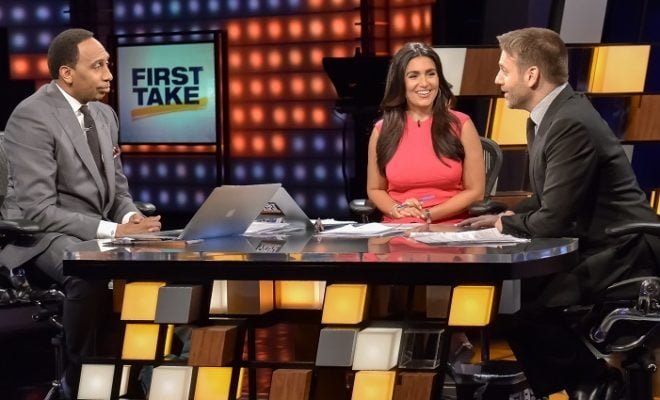
On the 4th episode of Season 2 Jason kicks things off with The 5 in 5. This week’s stories include ESPN’s search for a co-host to work with Mike Greenberg after Charissa Thompson decided to stay at FOX Sports, why ESPN made a great move offering 24-hours of ESPN8: The Ocho, how radio people can learn something from a great message courtesy of FX network boss John Landgraf, the arrival of Stephen A. Smith and Max Kellerman in video game form, and the exit of Don Kollins as PD of 95.7 The Game.
This week’s featured conversation involves 680 The Fan, Podcast One and CBS Sports Radio host John Kincade. During the discussion John explains how he got started in Philadelphia, moved to Atlanta, arrived on the national stage, and offers a bunch of great advice, opinions and truths on a variety of sports radio industry subjects.
TOPICS COVERED WITH JOHN KINCADE
Growing up on Philadelphia sports talk and interning for WIP
Learning from Angelo Cataldi, Tony Bruno and Howard Eskin
What goes into Angelo’s morning show and why he’s successful
Relocating to Atlanta and getting a shot thanks to Mike Thompson
Being part of a 17-year partnership and the ups and downs of it
The keys to sustaining a long-term partnership with a co-host
The benefits of teaming with someone with a different skillset
The differences between the 680-790 rivalry and 680-92.9 competition
WIP and The Fanatic’s battle for Philadelphia sports radio supremacy
Why he’s never gone back to Philadelphia to do a sports radio show
Working for ESPN Radio and CBS Sports Radio and how they’re different
Talking politics and why he’s comfortable sharing his views with listeners
Hosting a podcast with Shaq and how the opportunity came about
Why he continues taking on extra work when he no longer needs to do it
Quick Hits – Best ATL host, 2 Live Stews, Eagles or Falcons, Preparation
95.7 The Game in San Francisco has parted ways with program director Don Kollins. The official decision was made on Thursday.
Kollins joined the radio station in June 2015. Prior to moving to Northern California, he worked in Toronto for Rogers Media overseeing programming operations for Sportsnet 590 The Fan.
A nationwide search for the station’s next PD is expected to follow. In the interim, OM and KOIT PD Brian Figula will oversee the station’s day to day operations.
Given The Game’s location, on-air talent, play by play assets, and corporate support, interest in the opening should be high. The company could choose to explore internal options, including CBS programmers once Entercom’s merger with CBS is finalized. Which direction they’ll choose to go though is still to be determined.
Meanwhile for Kollins, he’s looking for his next opportunity. Interested parties can reach him by clicking here.
As first reported by The Tennessean, changes are on the horizon for one of the sports talk radio format’s most successful brands. 104.5 The Zone in Nashville is undergoing lineup adjustments in both morning and afternoon drive.
At the center of the story is morning co-host Fran Wycheck. The 11-year NFL veteran recently announced he was taking the year off from Titans radio broadcasts. Now Wycheck is also vacating his spot on the morning show, The Wake Up Zone. The station plans to feature Wycheck in a utility role, having him appear on all three shows.
To fill Wycheck’s vacancy in mornings, The Zone will shift 3HL co-host and former NFL safety Blaine Bishop into morning drive. Bishop has been a member of the station’s afternoon show since its inception. He’ll now have the opportunity to wake up Nashville sports radio listeners alongside Kevin Ingram and Mark Howard.
With Bishop moving into mornings, that opens a hole in afternoons. The Zone is filling the opening by adding Dawn Davenport to 3HL. Davenport spent the past five years working as a sports reporter for WKRN, including contributing to Titans broadcasts. She is leaving WKRN to join Brent Dougherty and Mickey Ryan in afternoons, and contribute to the SEC Network’s Saturday game day coverage.
Inspiration can be hard to find at times. Especially if you’re an on-air talent and working with less than spectacular material during a slower period of the sports calendar. But regardless of your empty basket of content options, an audience still expects you to hit the airwaves and put on an entertaining show to allow them a distraction from life’s challenges.
But what do you do when the ideas don’t flow and the sports world offers trash instead of treasure?
The first place to start is inside your soul. It’s understandable that you’re going to have less joy for certain topics than others, but being honest, transparent, and intimate with your audience goes a long way in earning trust, respect and appreciation. People can detect when someone isn’t invested in the content and it’s your job to make sure they never feel that way about you.
On a daily basis, you’re going to sift thru stories from tons of websites, searching for a headline, paragraph, audio bite or video clip that is worth stopping in your tracks for. Sometimes you’ll find them. Other times you won’t. How you proceed when you locate gold is pretty obvious, but it’s when you uncover the equivalent of a dirty wet napkin that you discover what you’re truly made of.
Each talent is different in the way they think, operate and prepare. Some turn coal into diamonds. Others panic at the first sign of danger. But whether you’re confident and gifted or rattled and creatively challenged, an Oscar worthy performance is expected and excuses are best left at home.
What takes place before you speak into a microphone is irrelevant to the audience. To put it mildly, they don’t care about your problems or how much time you dedicated to create the content, only what comes thru the speakers. If it takes four hours of your time instead of two to satisfy their expectations, so be it. When the red light goes on, they expect you to seize the moment, or they tune you out. It’s that simple.
In thinking about the days when nothing stands out and the fear of filling two to four hours of air time with sub par material consumes you, I want you to step back and examine why you’re in that particular position.
The first issue often involves confidence and insecurity. To grab an audience’s attention, and operate to the best of your abilities, you’ve got to believe in what you’re selling. You are the salesperson of your content. If you can’t convince yourself that a topic is worth buying, then don’t expect it from your listeners.
Secondly, many hosts blame the subject matter rather than their own creativity and preparation. The beauty of the world of sports is that each day provides new content. There are days and weeks when bigger stories develop and our natural passion and interest increases, but there are no off-days in sports, let alone the sports media industry. It’s what you do with the material in front of you that determines if your programming is viewed as superior or a poor use of air time.
Rather than complaining about the lulls in the calendar, consider how you’re preparing during those tougher days. If you normally invest one to two hours of prep time into your show, slower periods day may require three or four hours. Is it a pain in the ass? Yes. But if you’re an exceptional talent with an ability to create compelling content, you’ve got to be willing to invest the time in your craft to deliver your best stuff.
Ask yourself this, if the phone lines were shut off and the audience participation on Twitter and the text line disappeared, would you still have an entertaining show? If the answer is no, reconsider your approach.
Nothing is more important than your pre-show creative process. This is your opportunity to discuss, debate, and test possible content ideas, and the final conclusion you arrive at determines if material makes it to the air or gets tossed aside. Whatever you do, don’t let that time get wasted with small talk, coffee breaks, and personal phone calls. As the old saying goes, Proper Preparation Prevents Piss Poor Performance!
When big stories don’t land in our lap, we have a tendency to assess blame. That may allow you to get a few things off your chest but it doesn’t solve anything. A great storyteller and entertainer understands that to win over a crowd, you sometimes need to take small items and make them feel bigger. They leave no stone unturned when searching for content, and equally as vital, they recognize the difference between making news and creating interest versus reacting to news and relying on interest.
What serves as a great indicator of a show forming a powerful connection with an audience is when people tune in for the host rather than the subject matter. That’s the goal you should be striving for. It’s similar to purchasing tickets to see a top notch comedian. We trust in their ability to make us laugh and deliver stories and punchlines in a unique and memorable way, that we disregard the subject matter.
If you’ve ever listened to Howard Stern, he’s a master at creating internal show drama and content. He uses it like bait to lure in the fish. What makes Stern’s show fascinating is that it doesn’t rely on what’s topical. It creates its own material, which then becomes content for others to talk about.
Leading up to a big interview, few are better at building suspense and anticipation than Stern. He also captivates the audience by involving his cast and exposing their various dilemmas in real life situations, which in turn makes it easier for listeners to think, play along and connect to the personalities. That makes the program easy to digest.
One show that is doing this particularly well right now is Kirk and Callahan on WEEI in Boston. Each day is unpredictable, interesting, funny, upsetting or emotional, and whether listeners love or hate Kirk, Gerry and their rotating co-hosts, they have either strong opinions or an emotional connection to the program. Because Kirk and Callahan are authentic, creating their own content, and not reliant on the day’s top sports stories, they’ve been able to generate a ton of interest, and keep listeners tuning in to see what’ll happen next. The personalities have become the point of entry for the audience. The material comes second.
If you scan the country, you’ll find a large number of shows promoting themselves each day by touting their guest lists and giveaways, but rarely is anything mentioned about the host. It may not feel as big or unique, but the on-air talent’s observations, jokes, personal stories, and unfiltered commentaries strike a chord with people much more than a daily guest list.
Don’t get me wrong, A-list guests are worth promoting, especially if an on-air talent can pull exceptional answers out of them, but it doesn’t mean the other areas of the show aren’t also a destination or capable of becoming the larger focus of a day’s presentation. I also don’t want you to think that by becoming the focal point of a program it means that you can deliver less valuable content to people. Just like going to a concert, the crowd will sit thru a new tune or B-side song that you have a passion for, but if you feed them too many unfamiliar songs, they’ll quickly head for the exits.
If a host is capable of relaying a personal connection to a piece of topical content or offering an interesting way of understanding and viewing a specific subject, that has a better shot at staying in a listener’s head. The on-air talent are seen as the listener’s “friend on the radio” who keeps them company each day, and they go thru your ups, downs and in-betweens with you. It’s what makes radio a powerful platform.
A host doesn’t have the benefit of knowing who’s paying attention or how their comments are being consumed. The best ones though attack the air with a purpose, and welcome the challenge of stealing the audience’s attention when they appear less interested.
Anyone can hit the air the day after Jay Cutler signs with the Dolphins and question if it’s a good or bad move. Stating that Colin Kaepernick deserves to be on a roster when players with lesser skill occupy NFL roster spots requires little thought. Taking issue with LaVar Ball after he boasts about getting a referee removed from a summer game is easy. Each of those examples are things that your audience can create themselves, but as a sports media personality you’re expected to get more mileage out of the content than those who listen to you.
Over the span of a three or four hour show, some basic points are likely to be raised. That’s fine, but relying on audience reaction and simplistic headlines won’t be enough to keep people tuning in for an extended period of time.
What it boils down to are three simple things; being curious, investing prep time, and taking chances.
Are you stating the obvious or peeling back the layers of the onion to find what’s in the middle? Can you take a basic topic, relate it to a bigger local issue, and make it sound more important? Or are you regurgitating facts and information and distancing yourself from the emotional opportunities inside of a story?
To keep a topic hot for hours, and maintain mental interest and energy in a story requires developing four to five angles and having the patience and understanding to avoid unloading all at once. If you can exhaust ten to fifteen minutes of content potential from each angle, and include an interesting twist during the conversation, the audience will eat out of your hand and be back for seconds.
Reading, watching and listening to different things is a wise practice because it keeps you mentally engaged. It’s especially helpful to research how a local team, player, or story is being covered in another city, because it’s fresh and removed from everything we’re accustomed to hearing or seeing on a regular basis.
In our business it’s common to develop habits and rely on the same three or four local websites to create a rundown, but finding gems often requires searching in foreign places. When you fail to do it, especially during slower periods, you can find yourself gassed on a particular subject, and praying for a flood of phone calls or guests to bail you out.
No one said creating content and connecting with an audience was easy. It’s extremely hard. It’s why some hosts have reservations for the broadcasting hall of fame and others have futures waiting on tables or selling insurance. It doesn’t require a ton of skill to engage an audience when hot button topics are available, but you find out who’s truly worth their salt when the sports world feeds you a handful of crackers and you’re clamoring for steak.
On the third episode of Season 2, Jason starts with The 5 in 5. This week’s topics include Jim Rome’s Smackoff, Jay Bilas’ issue with LaVar Ball, Denver Sports 760’s decision to offer non-stop Broncos and NFL conversation, shrinking coverage of MLB insight and breaking news, and the constant scrutiny and criticism of former ESPN reporter Britt McHenry.
This week’s featured guest is Bob Fescoe of 610 Sports in Kansas City. Over the course of nearly 40 minutes, Bob takes Jason through the various stops of his sports radio career and explains how his maturation, outreach, and second time around in Kansas City has changed him personally and professionally for the better.
AREAS OF CONVERSATION EXPLORED WITH BOB FESCOE
Growing up on WFAN and its influence on his sports radio interests
Getting started in Seguin, TX and being grateful to work for under 20K
Opportunity knocks in Kansas City and Bob answers the door
WHB enters the picture and Bob makes the decision to join them
Earning a morning drive opportunity in KC while still in his mid-20’s
The positives and negatives of his experience working for WHB
Auditioning in Philadelphia with Ray Lucas and what he gained from it
Landing an opportunity in St. Louis and being naive to what awaited him
The importance of receiving feedback from a program director
What he learned from an impossible situation at KFNS in St. Louis
Utilizing his producer as an on-air character and the chaos it produced
How to approach a situation when out of work and trying to get back in
Being contacted for a return to KC and what fueled his desire to go back
How Ryan Maguire coached him and why he appreciated his approach
The evolution of the morning show since returning to Kansas City
Developing a bond with John Hanson and how he’s helped him improve
Why he has unwavering confidence and trust in his producer Steven Spector
Growing personally and professionally by getting involved in charitable causes
What it takes to have success in a market that you’re not originally from
Why he feels KC is a place for the long-term, not a stepping stone city
Quick Hits – KC or NY, Best former 610 host, WHB, Kansas, Sports radio changes
Well, that didn’t take long! After exiting the Las Vegas airwaves on Friday to pursue opportunities in the Mile High city, Mike Pritchard has found employment.
The former Colorado star and NFL wide receiver has been hired by Sports Radio 104.3 The Fan as co-host of the station’s new midday program “Pritchard and Cecil”. The show will air weekdays from 9a-10a MT starting August 16th.
“We’re thrilled to have Mike back on the air in the same place where his illustrious football career began,” said Armen Williams, program director for Sports Radio 104.3 The Fan. “This addition serves to solidify our mission to provide the best knowledge and inside information regarding the NFL and football in general.”
Said Pritchard: “I’m beyond excited to become a member of the Sports Radio 104.3 The Fan family and be a contributor to one of the strongest lineups in all of sports talk radio. It’s an honor to work side by side with The Fan’s great talent, and I am ready for this remarkable opportunity. In 1987, I forged some lifelong friendships at CU. I’m thrilled to be back to build new relationships in the great state of Colorado.”
The most valuable player of Colorado’s 1990 national championship team, Prichard played for the Buffaloes from 1987 to 1990. He was drafted 13th overall in the 1991 NFL Draft by the Atlanta Falcons, and went on to enjoy nine seasons in the league, spending time as a member of the Falcons, Denver Broncos, and Seattle Seahawks.
Upon returning home to his native Las Vegas, Pritchard began a career in sports media. He served as co-host of the “Mitch & Pritch Show” on ESPN Las Vegas 1100 AM/100.9 FM, and became the color commentator for UNLV football.
Growing up in Brooklyn, sports were a huge part of my childhood. My first memory involved the New York Yankees winning the World Series in 1977, when my entire house erupted after Reggie Jackson crushed three home runs in Game 6 against the Los Angeles Dodgers. I wasn’t old enough to vividly recall any particular part of that series, but the jubilation inside my home, told me something good was happening.
Soon thereafter I became fascinated with Reggie, Willie Randolph, Ron Guidry, Goose Gossage and my personal favorite, Thurman Munson. The Yankees were atop the baseball mountain and their success produced great benefits for an adolescent including new shirts, baseball caps and trips to The House That Ruth Built.
But in the summer of 1979 I experienced my first taste of sadness. My five year old heart was crushed as I sat in the living room watching television with my grandfather and learned that Munson, the Yankees captain, had been killed in a plane crash. Reggie may have been the straw that stirred the drink, but it was Munson who was the team’s heartbeat. Needless to say, tears flowed like a waterfall that night.
At the age of five, I was given my first baseball glove. I would head outside to toss my blue rubber ball off of the wall of the auto body shop across the street, and let my imagination run wild thinking of different scenarios involving my beloved Yankees. As my passion for exerting energy outside grew, so did my interest in participating. I convinced my father to sign me up for little league, and for the next eight years I’d play every season, winning two MVP’s and being voted an All-Star six times.
The passion I developed for baseball stretched beyond playing too. I discovered the joy of collecting baseball cards, and each week would hit up my father for a quarter to run up the street and buy a new pack. Over the next thirteen years, I purchased every single Topps set, and that was followed by gaining interest in meeting players and acquiring autographs, many of which remain in my personal collection today.
When I reached my teenage years, the passion to play subsided but watching games still consumed me. Much like many teenage New York Yankees fans, I had Don Mattingly’s “Hit Man” poster on my wall. I experienced every joyless moment watching the New York Knicks get their collective throats stepped on by Michael Jordan, and I suffered thru every New York Rangers season, hearing the chants grow louder about the franchise not winning a Stanley Cup since 1940. The only saving grace were the New York Giants who produced multiple Super Bowl championships.
It was during my teenage years that I began to dabble in listening to sports radio. The format was new and unproven, and AM radio wasn’t appealing to listen to beyond the games, but because I loved the New York teams, I took a liking to hearing other people talk about it. My listening early on was very sporadic, but as the years passed by it became a bigger part of my life, especially once I started driving.
After completing high school, and entering the real world, I found myself in the car quite often. That increased my connection to my local sports radio station WFAN, particularly the Mike and the Mad Dog program. Mike Francesa had built a reputation on being smart and forceful with his opinions, but it was Chris Russo’s energy and passion which I connected to most. That was odd for me because Mike loved the Yankees, and Chris carried a huge disdain for them.
As I performed dead end jobs to pay bills, the fan in me remained alive and well. I continued to watch Yankees, Knicks, Rangers and Giants games, suffering thru a number of heartbreaks, when the tide finally turned in 1994. That year I witnessed the Rangers end a fifty four year drought, eliminating the Vancouver Canucks to bring the Stanley Cup back to New York. It’s why Mark Messier will go down in my book as the most important player in franchise history. If you wish to debate it, save your energy, you’re not going to change my mind.
Even more important to me were the Yankees championship teams of the late 1990’s. Derek Jeter’s arrival pumped new blood into an organization which had desperately needed it. After being named the team’s opening day starting shortstop in 1996, the fortunes of the Bronx Bombers began to change, and the euphoria surrounding the team became so contagious it was impossible not to get caught up in it.
In fact, when the Yankees knocked off the Texas Rangers to advance to the 1996 World Series, I was working a 10p-6a part-time job as a security guard at a local infirmary. I relied on my radio that night to hear the game. When the final out was recorded, and John Sterling announced tickets for the World Series would go on sale the following morning, I made a decision to abandon my post, and get into the car and drive to the Bronx. I had suffered thru enough bad seasons that I wasn’t going to miss out on an opportunity to be in the building when something special was taking place.
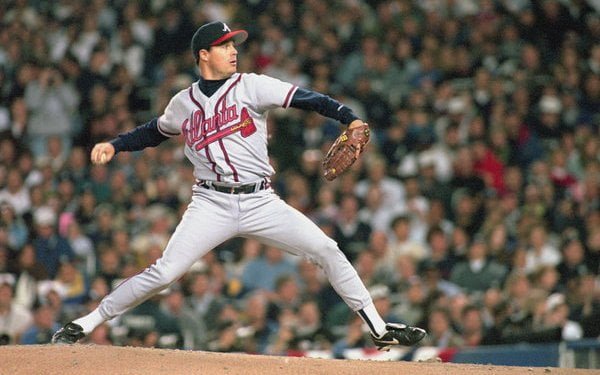
Imagine my surprise when I arrived in the Bronx a little after 1am and discovered thousands of people already in line. I was ready to give up hope and drive back home, but a fight broke out on the line, leaving a big hole in the middle. Myself and two others who were sitting on a patch of grass quickly took advantage of the situation, and eased our way in. The reward the next morning was purchasing 4 tickets to Game 2 of the fall classic, a game which left every Yankee fan miserable thanks to an October gem from Braves pitcher Greg Maddux.
As we left the stadium and made our sixty mile trek home, WFAN provided much needed noise. My father bitched and moaned the entire time about how pathetic the team had played, and wrote off any possibility of the Yankees battling back to win the series. It was hard to argue, given that they had been outscored 16-1 in the first two games, but the optimist in me held out hope that David Cone could save the season in Game 3.
Luck was on the Yankees side in Game 3, giving fans a renewed energy and confidence, but the euphoria started to dissipate when Kenny Rogers laid an egg in Game 4. The Yankees trailed 6-0 at the end of five innings, and every New York baseball fan was mentally preparing to hear the fat lady sing later that night.
But then the baseball gods decided to intervene.
Jim Leyritz, who had been a hero in the 1995 playoffs against the Seattle Mariners, stepped to the plate and delivered one of the most clutch home runs in franchise history, sending a Mark Wohlers slider over the left field wall, just beyond the reach of Braves left fielder Andruw Jones. That tied things up at 6-6. Quickly the momentum had shifted, and when Wade Boggs battled Steve Avery to earn a bases loaded walk in the 10th inning, Yankees fans lost their minds, and began to believe that destiny was on their side.
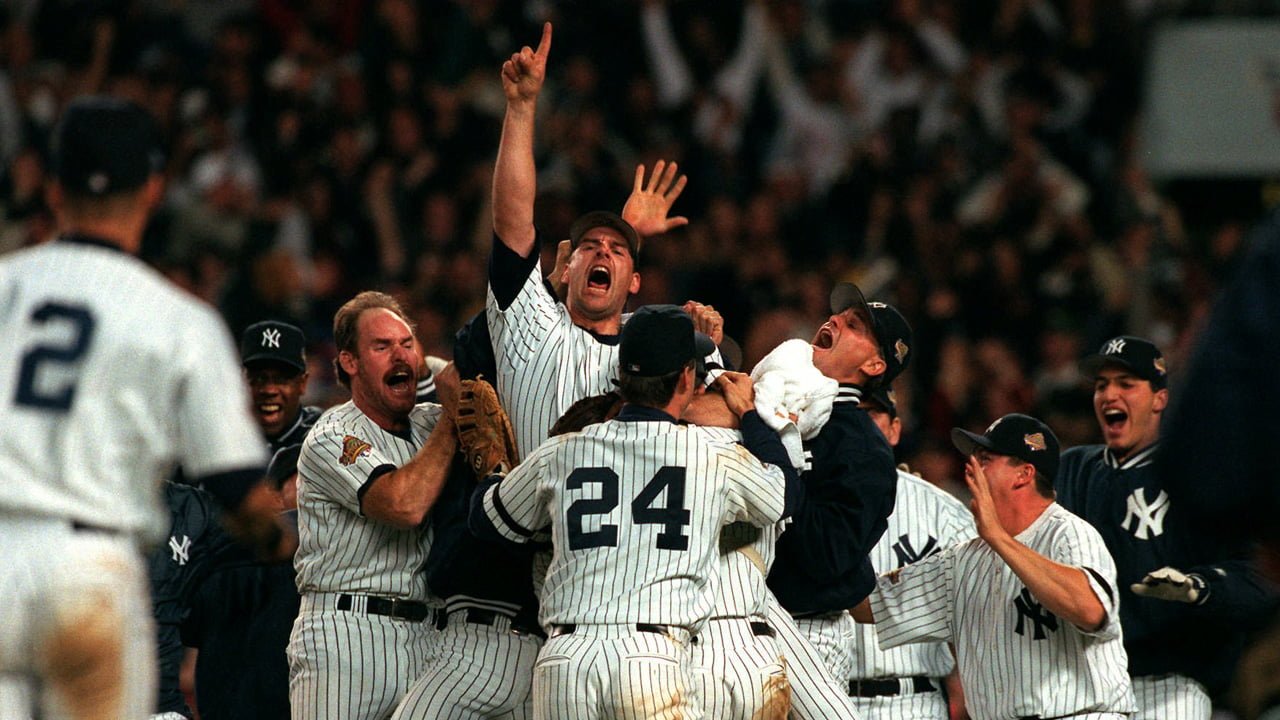
The next two games would be close and intense, but fortunately the Yankees prevailed. Their 4-2 series win brought a world championship back to the Bronx for the first time since 1978, and a ticker tape parade down the canyon of heroes, one which I was in attendance for.
By now you’re either asking yourself, what exactly does Jason’s recollection of New York sports moments have to do with this article? Or you’re screaming at your computer or phone, “I don’t give a damn about the Yankees or any other New York team.”
Allow me to explain why I took you down my personal memory lane.
Each of us have these kind of sports memories stained in our minds. They evoke emotions that run thru us and are part of what makes sports special. For many of us who choose to pursue sports media work professionally, these celebratory and devastating moments fuel our desire to tell stories, connect with fans, and experience excitement in each venue.
But as you distance yourself from high school and college, and settle into a career, joy and fandom start to wane. The pressures of paying bills, raising families, battling everyday issues, and tackling work responsibilities become your priority and the time you spend in front of a television or radio decreases. Suddenly the little kid in you who lived each day to throw a ball outside or open up a new pack of baseball cards is pushed aside, and the new adult version of yourself takes over.
Many in our audience work a full-time job that they don’t enjoy. They do it to put a roof over their families heads and food on the table. They’d prefer to make a living like us playing in the toy department of life, but being broke, living longer at home with mom and dad, and feasting on ramen noodles and peanut butter and jelly sandwiches doesn’t have great appeal.
For those of us in the sports media business who have paid our dues and been fortunate to escape low paying jobs and earn opportunities on larger stages, what’s our excuse? We’re not digging ditches, operating on patients, selling insurance or welding metal. We are talking sports, on radio, on television, on social media, and in print, and part of our job description includes watching games, reading stories, and conveying our honest thoughts to form a deeper bond with an audience. That should elicit excitement, passion, curiosity and fun in each of us.
But sadly when you look around the industry that isn’t always felt or presented on the air.
It’d be unfair of me to suggest that every sports media personality has silenced their inner fan. There are exceptions. Play by play announcers would be one of them. But, I don’t think it’s unreasonable to point out that a large majority of talk show personalities have distanced themselves from the teams and players they once loved.
In many cities and buildings, show units work together to identify topics and angles, and line up callers and guests who can fuel conversation and provide additional entertainment value. The host opinions are delivered from a neutral or antagonistic position, and the thought of being labeled a professional fan with access and a microphone is quickly rejected.
And the teams don’t make it any easier.
Inside every press box, media members are encouraged to cut the chord to their teams. If a player makes a great play or the team you’re covering rallies to win an important game, you’re reminded to avoid cheering or expressing yourself in a positive manner.
It’s easy to see why many in the media become jaded. After spending years developing a deep love and passion for sports and those who cover them, you’re immediately met by neutrality and negativity once you start covering them. It was OK to root, love, and support players and teams when you were younger and not a working professional, but once you earn a paycheck from a media outlet and enter an arena or stadium, a burial for your fandom is scheduled.
Another problem which causes broadcasters to disconnect is the way they’re treated by those they cover. Many players are cynical of the media, and at times, even disrespectful. They view writers, reporters and personalities as potential enemies, and although the good ones may squeeze out solid information from time to time, the willingness of players, coaches, and executives to be candid, conversational, and unguarded is rare at best.
It’s no excuse, but when you’re treated poorly or disrespected, it’s going to show up at some point in your work. Rather than giving a player or coach the benefit of the doubt after a tough game or offering praise for a particular feat, the media gravitate to pointing out flaws, selling concern, and pouring gasoline on the fire. It becomes the one way they can fight back against individuals who play the game and think they’re invincible. It also reminds those players, coaches and executives just how powerful the media can be in shaping public opinion.
If you read a sports website, listen to sports radio, or watch sports television, you may notice that the majority of content is supplied by media members who are over 35 years old. Coincidentally, the content appeals better to the older part of the audience (35-64) than it does the younger demo (18-34). If a media member is mature, experienced, and able to reduce their fandom and handle egotistical, sensitive and guarded sports personalities, then it allows the outlet they’re working for to maintain a more neutral position.
But is that really what drew us to wanting to work in sports? Didn’t we become interested in doing this line of work because we appreciated great players with unmatched skill and larger than life personalities? Weren’t we enamored watching two teams or individuals compete to find out who was better? If they failed to execute or made bad decisions, we held them accountable, but we attached ourselves to teams and players and emotionally invested in their success.
That connection enabled us to invite conversation with others who shared similar interests. It allowed us to be kids again, and forget about life’s responsibilities and pressures for a while.
Which is why I wonder if the sports media business is hurting itself by becoming too serious. I see a lot of parallels today between the presentation of sports/talk and news/talk, and I’m not sure if that’s a good thing.
News is about reality. It’s our wake up call. It’s serious conversation, and what we need to hear, even when we don’t necessarily want to hear it. It’s often negative in tone, but helps to put life and its day to day challenges into perspective.
Sports is supposed to pull us away from that reality and negativity. We rely on it to make us feel good. It becomes a conversation starter, and the link between childhood and adulthood. Whether we’re with our families or complete strangers, it brings us together and gives us hope, joy, and something positive to look forward to.
But we don’t always hear, see or feel that from those who lead the sports conversation across the airwaves. Instead, there’s a strong journalistic approach, and the intent is often to dissect stories, provoke thought, and generate emotional responses, rather than share any genuine semblance of joy, passion, love or appreciation.
Are audiences really clamoring for neutrality and cynicism? Have they demanded broadcasters possess black hearts and icy veins and shun the idea of expressing their true passions and love for the teams that inspired them to want to earn a living in sports media?
The last time I checked, they had not.
Didn’t America’s best broadcasters grow up watching sports, loving them, playing them, and wanting to be around them? Then why have we silenced that part of our personalities now that we’ve become adults?
It’s OK to be excited to talk to a guest who you once cheered for and display that vulnerability to the audience. Expressing joy when your favorite team wins makes you human and more relatable. Sharing your personal memories and feelings, opens the door for further discussion and deeper attachments with your listeners or viewers. If we can’t take these qualities with us to the air, then we’re robbing the audience of half of who we are.
Many in sports media have become so disenchanted with the organizations and people they cover, that it’s rubbed off on areas of their presentation. Maybe the travel, long work hours, and interactions with delusional listeners and arrogant players can be a drain, but talking about sports and watching them for a living should lift us up, not bring us down.
A question we should all be asking ourselves is, how does being jaded, angry, detached and emotionless help us? Certainly there are times when tough conversations and negative stances are warranted, but is it to much to ask that our best on-air voices also display a little bit of love, joy, excitement and vulnerability?
It’s been said before that the sports media cares more about what takes place outside the lines than what occurs inside of them. I think that’s true. If you watched or listened to 60-minutes of any show last week, you heard much more discussion about Kyrie Irving demanding a trade, Colin Kaepernick not being signed, Tim Tebow deserving a call up from the Mets and the selling of hate between Floyd Mayweather and Conor McGregor, then you heard about athletic performances or any team’s progress.
But is that really good for our business? Does sports programming need to continue being served in a similar way to news?
If one of the few joys we share in life (sports) is presented in a neutral or negative fashion, and the personalities discussing them aren’t personally excited or invested in a team or individual’s success, it becomes harder to connect with the audience. I don’t think the airwaves need to be full of cheerleaders and apologists, but having fun, showing you care, and experiencing the same euphoria and agony with an audience shouldn’t require a sales pitch.
In life, people turn to sports because it makes them happy. They believe in its power to unite. I just wonder if the direction we’ve headed in is doing more to divide.
The news is official. Former college and NFL wide receiver Mike Pritchard has left ESPN 1100/100.9FM in Las Vegas.
One of the stars of Colorado’s 1990 national championship football team, has given up his midday hosting role and analyst position on UNLV football broadcasts to move to Denver and pursue opportunities as an NFL and Power 5 conference analyst.
“One thing I’ve always been interested in over the years is challenging myself, and just seeing how far I can go,” Pritchard told his audience on Friday. “Vegas is home and it always will be home. But for me, it’s just how far can I go with this.”
Pritchard spent the past few years in Las Vegas sports radio working in middays withe Mitch Moss on the “Mitch and Pritch” show. Moss though left the station in April to join Brent Musburger’s VSIN network, leaving Pritchard to team with Las Vegas Review-Journal sports writer Ed Graney.
No word yet on what ESPN Las Vegas has planned for middays. To hear Pritchard’s final hour on the station click here.
After the opening pleasantries on episode 2 of Season 2, Jason dives into The 5 in 5. This week’s stories focus on Vice Sports dropping written content in favor of video, The Athletic and Boston Sports Journal doubling down on print while others run away from it, the lack of interest in the O.J. Simpson parole hearing on sports television, ESPN’s interest in Charissa Thompson to work alongside Mike Greenberg on his new TV show, and Jeremiah Crowe’s promotion to Program Director of KNBR in San Francisco.
This week’s guest is Joe Fortenbaugh of 95.7 The Game in San Francisco. During the course of 43 minutes, Joe takes listeners through his unique journey into sports radio and shares tips on how to succeed as a personality and capitalize against a strong local competitor.
SUBJECTS COVERED WITH JOE FORTENBAUGH
Chasing a law degree and an opportunity in sports as an agent
Getting his start with the National Football Post and what the job entailed
Calling into other market programs and what his strategy is when doing it
How doing a good deed led to a change of luck and life changing message
Going thru a challenging audition process and how he prepared for it
Settling into the #2 role on a morning show and finding his groove
Undergoing adversity and how to approach it during challenging times
Adjusting to the lead host position and what he did to get ready for it
Trying to grow a show while competing against a dominant competitor
The mindset of Bay Area listeners and why he reduces his aggression
Measuring self-improvement and seeking honest outside feedback
The challenge of pleasing the audience while satisfying your own interests
Why sports handicapping will become a bigger conversation in sports media
Growing up a Philly sports fan and if he desires talking sports in Philadelphia
Quick Hits – Raiders in Vegas, Best host, Donald Trump, Best sports media bet
What if I told you, that another sports media show or personality would be given a future 30 for 30 documentary. Who would you nominate to earn that honor?
On Thursday evening July 13th, ESPN premiered the 30 for 30 film on WFAN’s longtime afternoon show, Mike and the Mad Dog. The story revolved around Mike Francesa and Chris “Mad Dog” Russo, and the New York sports radio duo’s rise to prominence in the big apple. Mike and Chris enjoyed nineteen successful years on the air together, and in the process, influenced the growth of the entire sports radio format, and many of the broadcasters who operate in it today.
By the end of the episode, Twitter was exploding with conversation about the film, making it one of the evening’s top trending topics. The film ran sixty minutes in length, which I felt was short, but the episode brought back many great memories for those who were familiar with Mike and Chris and their importance to the sports radio format.
After learning about the ratings, I began thinking to myself, which other sports media shows, hosts, stations or stories would be worthy of a similar honor? 30 for 30 films aren’t handed out to just anyone. To earn that type of respect and recognition as a media personality or show, a significant contribution to the industry must be made for a lengthy period of time.
I began jotting down ideas and contemplating who had blazed a large enough trail in the sports media business to warrant consideration. I don’t claim for this list to be bulletproof. But maybe it spurs additional ideas, and reminds us to appreciate the style, skill and special qualities that many great broadcasters have brought to the airwaves, and the life lasting connections they’ve formed with the audience.
There are many giants in our industry. Some have retired after decades of excellence. Some continue to steal the spotlight on television and radio, adding to the legacies they’ve already established. And others have joined the guy in the sky after owning space in the hearts and minds of sports fans during the length of their broadcasting careers.
It’s easy to make a case for Chris Berman, Mike and Mike, Jim Rome, Stephen A. Smith, Pardon The Interruption, Bob Costas and Al Michaels. The same can be said for Stuart Scott, John Saunders, Harry Caray and Craig Sager. And there are many others that belong in the conversation as well.
I don’t expect ESPN to create future 30 for 30 documentaries on these individuals, let alone the ones that I’m making a case for in this article, but since this is the land of make believe, and we’re all allowed to dream, I’ve laid out a few thoughts on who I think is worthy of having their story told. Each of these candidates have left an indelible mark on the sports broadcasting profession, and their ability to resonate with fans on a national level would create greater public interest in their documentaries.
If 30 for 30’s writers, filmmakers, and producers choose down the line to develop a film from one of these ideas, a simple thank you to Barrett Sports Media in the final credits will suffice. Unless of course you’re paying seven figures. In that case, call me!
But while I spend my time sitting around waiting for their call, use your next few minutes to review the three candidates that I’ve chosen, and the reasons why they deserve consideration to be featured in a future 30 for 30 documentary.
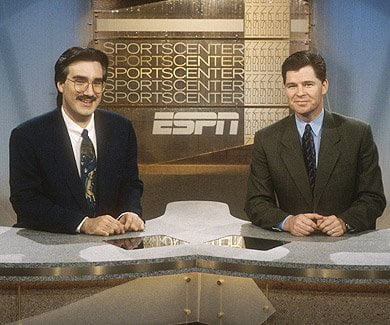
Dan Patrick and Keith Olbermann – Before the landscape of sports television exploded with tons of options and channels, Dan Patrick and Keith Olbermann owned the attention of every sports fan across America for a five year period. The times may have been simpler, the competition less formidable, and the production quality and studio display less appealing, but when Dan and Keith took the air to host The Big Show, viewers adjusted their schedules to make sure they were in front of a television to watch them perform.
From their signature catchphrases to their on-camera chemistry and the sheer joy in which they informed you about the best moments each night from the world of sports, Dan and Keith became television rock stars. They were your friends on SportsCenter and the guys who both fans and athletes each wanted to spend time hanging out and having a beer with. Their style was contagious, their laughs were natural and they inspired many to want to stand in front of camera and develop a career calling sports highlights.
The only downside to Dan and Keith’s tenure is that it didn’t last long enough. Patrick stayed at ESPN until 2006, but Olbermann was long gone, departing in 1997. Upon his exit from Bristol, a town in which Keith was not fond of and had publicly been critical of, sources said there was a better chance of hell freezing over before Olbermann would be welcomed back.
When the network celebrated 25 years of its history, Keith was the one marquee name who wasn’t present. The two sides did though finally turn the page and work together in 2013 when KO signed on to host his own self-titled nightly program. He also returned for ESPN Radio’s 25th anniversary. Patrick cut ties with the network too for a few years, but finally returned in 2015 as Scott Van Pelt’s first guest on SportsCenter.
The emergence of The Big Show gave SportsCenter the jolt of energy it needed during an important time in the show’s history. Although the program had gained ground prior to Dan and Keith’s arrival, once the two teamed up to own the 11pm ET time slot, patterns changed, allegiances were formed, and late night sports television became must-watch and must-discuss.
Since departing from the four letter network, the two broadcasters have taken different roads, enjoying varying levels of success. Olbermann expanded his profile by tossing his hat into the political arena. Patrick stayed true to his sports roots, developing a nationally syndicated radio/television show, and becoming the studio host of NBC’s Sunday Night Football. He’s also continued to make appearances in Adam Sandler films.
They say the true measure of impact is what you accomplish during the time that you’re doing it. Well, for five years Dan Patrick and Keith Olbermann owned the attention of every American sports fan, athlete, coach and executive. If 30 for 30 shined the spotlight on their influence on SportsCenter and sports television, they’d earn the nation’s attention again, even if only for an hour or two.
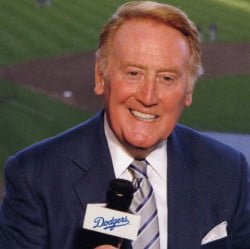
Vin Scully – Like a cup of hot chocolate on a cold winter’s day, Vin Scully warmed the sports fan’s soul for over six decades. The graceful voice of the Los Angeles Dodgers was the epitome of class. He made sports fans feel like they were at the ballpark enjoying the sound of the crowd, the taste of the hot dogs and beer, and the smell of the grass, even as they relied on his magical voice to convey the excitement over their radio airwaves. You couldn’t think of the L.A. Dodgers without thinking of Vin Scully.
One of the more interesting sagas of his career occurred at CBS where the network chose Pat Summerall over him to work opposite John Madden. The network felt Summerall blended better with Madden, which ultimately proved to be a good decision. The sting from that situation led Scully to NBC.
The list of awards and accomplishments that Scully racked up over his broadcast career is impressive as well. He was given the Ford Frick Award from the National Baseball Hall of Fame in 1982, honored with a Lifetime Achievement Emmy Award for sportscasting along with induction into the National Radio Hall of Fame in 1995, and was named the California sportscaster of the year 32 times. He has his own star on the Hollywood Walk of Fame, and was honored with the Icon Award at the 2017 ESPYS awards show.
Scully was America’s friend on the radio, a master at painting pictures with words, and his excellence continued until his final sentence was uttered in 2016.
The only challenge with producing a Vin Scully documentary is that it’s missing a lot of negativity and friction. Maybe I’m naive to think that respect, decency, and greatness would be enough to make people care, but I’d roll the dice on telling the story of one of America’s finest broadcasters. A story about Vin would not only capture a few eyeballs, but it’d also leave them wet.
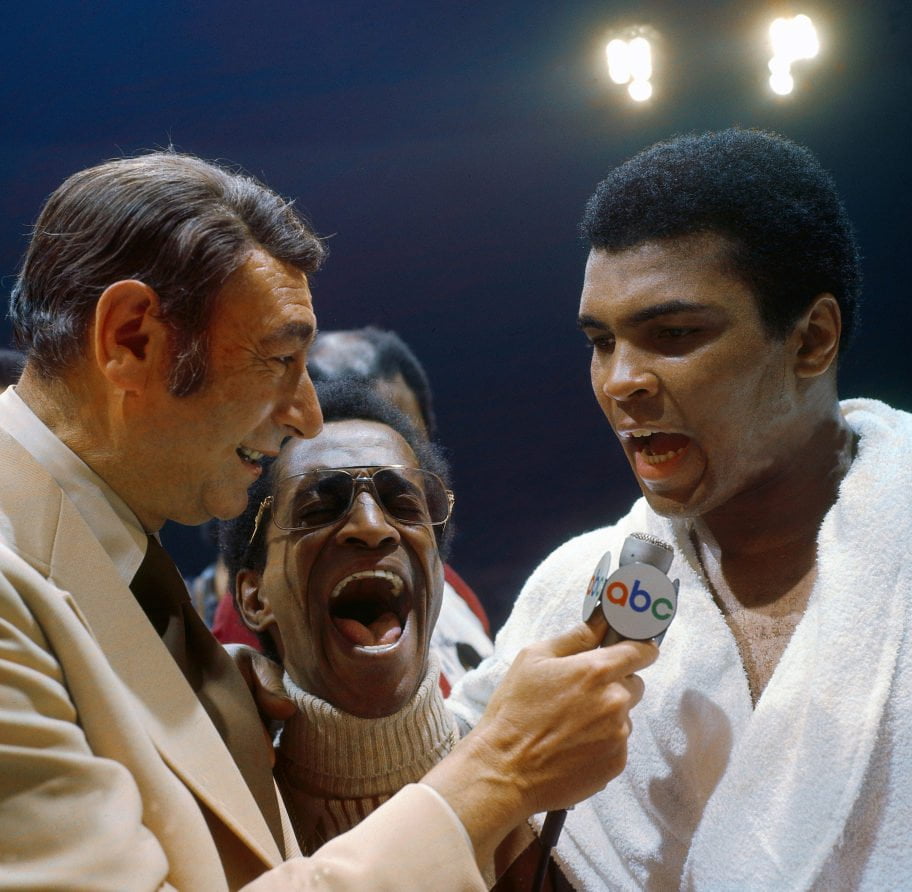
Howard Cosell – Few sportscasters were as successful, influential, controversial and colorful as Howard Cosell. Many loved him. Others hated him. But all paid attention to him.
What made Cosell a trailblazer was his uncomfortable and unapologetic approach which often ruffled the feathers of many he spoke with. He was a bombastic personality with a huge ego who referred to himself as arrogant, obnoxious, vain, verbose and a little bit of a showoff. He stood firmly behind his convictions, often using the line “I’m just telling it like it is”.
Perhaps the New York Times described him best when they wrote his obituary in 19995. The newspaper said that Cosell entered sports broadcasting in the mid-1950s, when the predominant style was unabashed adulation. Cosell provided a brassy counterpoint which was first ridiculed, and then copied until it became the dominant note of sports broadcasting.
All of those character traits became part of Cosell’s magic. After carving out a solid niche on New York radio and television, he became a national figure thanks to his interactions with Muhammad Ali. Despite their differences as people, the two discovered an instant chemistry. They were able to cover territory in their conversations that others simply didn’t. The various twists and turns and occasional sparks, made their interviews worth the price of admission.
Cosell was one of the first sportscasters to support Ali when he refused to be inducted into the military. He also publicly supported John Carlos and Tommie Smyth after they raised their fists in a “black power” salute during the 1968 medal ceremony. Most broadcasters sought to steer clear of social and racial issues, but Cosell embraced them, enhancing his public profile, but creating mixed reactions along the way.
It was Cosell who was behind the microphone for one of the most memorable moments in professional boxing history. The brash broadcaster screamed “Down Goes Frazier. Down Goes Frazier. Down Goes Frazier” after George Foreman rattled Smokin’ Joe Frazier in round 1 of their 1973 heavyweight title fight. Foreman would go on to knock out the champion in round 2. The call remains one of the most popular in sports broadcasting history.
To have one of those moments is special enough, but another on-air moment is equally as important to Cosell’s legacy as any other. During a Monday Night Football game between the Miami Dolphins and New England Patriots on December 8, 1980, Cosell stunned the audience by revealing that John Lennon of The Beatles had been shot and killed outside of his apartment in New York City. At first, Cosell was hesitant to announce the news of Lennon’s death, but after being pressed by Frank Gifford, he eventually relayed the information, making it one of the most defining on-air moments in sports television history.
There are many other acts, moments, controversies and contributions that make up the Howard Cosell story. From his introduction of the line “The Bronx Is Burning”, to his controversial remarks about Redskins wide receiver Alvin Garrett, to his best selling memoir “I Never Played The Game” which created tension at ABC and led to his dismissal, Cosell was a colorful and complicated individual. That’s usually what makes for compelling and entertaining programming. If 30 for 30 chose to tell his story, I don’t think they’d struggle to find an audience for it.The beauty of sports media is that it never stops producing interesting personalities and stories. The growing amount of networks and platforms, and interest among viewers, readers and listeners, means we’ll have plenty to choose from when determining which trendsetters and game changers warrant a documentary worthy of the world’s attention, and which ones have built a nice niche but are best remembered in their local backyards.
Maybe one day we’ll profile the digital empire Bill Simmons built. Or Barstool Sports’ influence on sports fans. Or the impact of the Woj bomb after a decade of NBA news breaking dominance. Heck, maybe another sports radio program will have a larger impact on an audience than Mike and the Mad Dog, although I have a difficult time picturing it.
Imagine the uproar if ESPN announced a 30 for 30 was in development to profile the Embrace Debate model and how it changed sports television? The social media insanity would be worth the price of admission alone. As much as people knock it and complain about it, a case could be made that it’s not only produced ratings and big media stars for ESPN, but it’s influenced the way other television networks present their own programming. And I’m not just talking about FS1.
For many in the sports media industry this is a fun topic to debate and discuss. Selfishly we love to hear about members of our business and the stories behind their careers, even if the overall interest in the subject is less when compared to the world of sports and all that it creates. That isn’t to suggest that what we do doesn’t matter or that it’s not worthy of recognition, but choosing the right story is critically important to generating success for a film.
Let me end this column by leaving you with the question that I presented in the opening paragraph. If you were in charge of developing a 30 for 30 documentary, and tasked with creating the next big hit around a sports media personality, show or story, which one would you choose?
But let’s raise the stakes. If you choose right, you earn a lifetime contract to produce films for ESPN. If you make the wrong call, you can never film anyone or anything again.
That shouldn’t be too difficult right? After all, it’s only your career that’s on the line. Choose wisely my friends.