
Home Blog Page 2908

The Pros and Cons of Booking Guests

0

Booking guests is an exhausting process which can often challenge and frustrate sports radio producers. Some people love the thrill of the chase and some do not but most agree that when a high profile name appears on a talk show and provides good content, it can make a huge difference. It has also shown to pay dividends for radio stations when it comes to delivering ratings.

During my career I’ve been fortunate to be strong in this department and what I’ve learned is that persistence pays off and thinking big and planning ahead are critical to your success. While at ESPN Radio, I’d sometimes book 48 guests over the span of three six-hour shows and it was intense. Booking 48 guests didn’t mean we had a good show, it just simply meant we booked a lot of people.

wilsongottliebNow for that particular show (GameNight), the format was built around capturing quick post-game conversations and interviews with people all over the country on the biggest sports stories of the day and that’s a lot different than a weekday talk show where the focus is on topic building, connecting with listeners and conducting conversations with people who fit the stories we care most about.

The reason I was able to handle the workload of guest booking on GameNight had a lot to do with my mindset. I spent my first  years in this business working in a smaller market where I had to scratch and claw for every guest I got and I learned fast that if you want big things to happen you better be prepared to out-work and out-think people. Nobody cares about the challenges you have in front of you, only the results you deliver.

Jason On The MicBack then I hosted my own daily talk show about an hour north of NYC and I knew that I would be measured against every station in NYC so if I didn’t have big things in place then I stood no chance. I’d drive to Yankees, Mets, Giants, Jets, Nets, Knicks and Rangers games and personally talk to people before and after games to build relationships. I’d also call team hotels, team PR people, agents, family members, memorabilia dealers, other media members throughout the country and anyone else who I thought could help me with landing people on my talk show.

When you’re in the producers chair, your host is looking to you each day to help them with enhancing the content experience for the audience. Telling a host that they should talk about the local baseball game from the night before is the equivalent of telling them that you know the sun is yellow. It means nothing and is going to be filed away in the filing cabinet of useless bullshit.

danpatrickcharliesheenHowever, I’ve yet to see a host walk in and hear that a well recognized athlete/coach/media personality has been booked for the show and they’re not excited. From local personalities to a high profile talent such as Dan Patrick, they all get excited when they walk in and know you’ve lined something up they perceive to be strong and it makes them feel even more confident in you as a producer.

Instantly their wheels start spinning with what questions they should ask, what subjects will generate the biggest reaction out of the audience and what possible material from the conversation will lead to further promotion for the show after it’s over.

If you’re really good at looking ahead, you can come up with tons of possible guest ideas to advance a story and help your show. Case in point, 8 years ago when I first worked in St. Louis I created The Guests Bible. This was a 16-page document with a list of current St. Louis athletes, former St. Louis athletes and analysts from all sports in different cities throughout the country.

I’d tell my producers to use the information in a timely fashion but to always be looking at it and thinking of when it could come into play and benefit them. If anyone on the list was booked and not good on-air I’d encourage them to alert one another so we don’t make the mistake of booking them again.

ithinkicanI believe so much of what gets accomplished with booking guests starts and ends with your attitude and ability to strategically game plan for success. Anyone can have a ton of numbers but they only matter if you know your contact list and if you’ve got the ability to think fast and use them when they matter.

Being persistent and recognizing the benefit a great guest can provide your show also plays a vital role. Too many people are beaten before they start because they view the responsibility as annoying or frustrating and they hate to have to chase people but whether you enjoy it or not, it gets your hosts and your audience excited and it’s up to you to come thru.

preachingRather than listen to me preach about it though, I’ve reached out to three people I know in the industry to pick their brains on how they view guests and their importance in talk shows and what they’ve done to help land them on their respective program.

What I think is interesting is that all three of these guys have worked in different markets and they each have a different approach and philosophy on why guests do/don’t matter. I hope you’ll find their responses as helpful and informative as I did.

Today’s featured experts are as follows:

  • Ben Boyd – Executive Producer – KMOX in St. Louis
  • Jonathan Libbey – Producer – 95.7 The Game in San Francisco
  • Bernard Bokenyi – Former PD/Producer – 750 The Game/1080 The Fan in Portland; WKNR in Cleveland; Sporting News Radio

prod-libvernonHow much do you love booking guests for your shows? Why or why not?

Libbey: When it works out, I love it! Especially when you land a big fish and you know how much time and effort went into it. The frustration comes when you hit a dry spell, or nothing seems to being going your way. But those periods ebb and flow and you can learn how to mitigate the tougher times as much as possible.

Boyd: Booking guests can be very rewarding but also very distressing. There is nothing better than landing a huge guest, but it is a what have you done for me lately business. You can’t sit back and enjoy your work for long because you have to book your next show. 

Bokenyi: For me personally there is WAY too much of an emphasis put on booking “BIG NAME” guests on shows. There was no enjoyment for me efforting the big names as very rarely did you have results on them. Too often guests are viewed as a necessity to make great radio and that is not the case. You have to put way too much time into it and even when you book some athletes, the interview is awful as they don’t care to be spending the time. I would rather spend time developing unique content and focus on guests that will be good on air, no matter what walk of life they come from.

prod-boydmayweatherHow many calls, e-mails and texts do you send out on a daily/weekly basis in order to land great guests for your shows?

Boyd: I prefer to email and text people whenever possible instead of calling so they can read my pitch about coming on instead of just saying no or hanging up before hearing why they should join us. Whether I call or email though really depends on how far in advance I reach out to them. It’s hard to quantify how many times I reach out to people per day/week because it’s really a non-stop process because there is always another show coming up the next day/week.

Libbey: Depending how many guests I need for the upcoming week and how much I am able to look further down the road, I know I’ll roughly need to get out at least 7-8 requests per 1 guest spot I need to fill. More if I am aiming for guests I have no contact info on / haven’t had on before.

Bokenyi: I would send out well over 100 messages a week between emails, phone calls and other methods. You have to find multiple ways to connect to people. Twitter had yet to take off when I was booking guests but now that is another method of reaching out to people. You can’t just leave it at a phone call or two for a specific guest. Do they have a family member you can track down? Can you connect with that family member? Does the athlete have a charitable organization or foundation? There are so many ways you can make connections.

prod-bernardcalineodWhen pursuing A-List guests for your show, what are some of the avenues you explore to try and book someone?

Bokenyi: For current players/coaches, the first route will always be PR or the SID. As noted above, finding foundations is a great way to get an interview. You can go the agent route but from my experience, the results there are scarce. If you can’t get anywhere with PR, I would look at personal web pages, foundations, charities and social media. Something as simples as “Kobe Bryant Charity” as a Google search can get you plenty of options to look at. Find out what they’ve been involved with. For retired players/coaches, things are much easier. You can follow a lot of the same methods. Another route to look at is books. A-List guests will do media tours for books and that can be a great route to pursue. Get on mailing lists, the more the merrier. Any sports agency, publishing house, PR firm and beyond.

Libbey: Look for outlets who have interviewed the guest I want, and see if they can offer me insight into how they got them. i.e. is there another producer out there who has already done the leg work who I can get in contact with to help me? Look at the guest’s personal twitter, facebook, website, business, foundation, or charity for contact info or for something they might want to promote. Look for business / endorsement  partnerships the guest has that they could be persuaded to come on to promote. Any other reasons they may be interested in publicity? (upcoming events, charities, autograph signings, products)

Boyd: Publicists, Team PR people, Agents, previous coaches, media in the local market

prod-libreddickWhat are the biggest benefits of landing top flight guests on your show? 

Libbey: It energizes everyone associated with the show. It can drive excitement and energy for an entire day or even more, among producer, hosts, audience, execs, and others. It can deliver more of an impact than almost anything else the show can do. It can drive tune-ins, but also create buzz that makes people want to tune in. It also builds a lasting sense of importance, relevance, and cache for the show.

Boyd: One of the biggest benefits is the reputation your show can get — listeners who want to hear big guests will tune into your show. It also helps your relationship with your host because of how much pride your host has in his/her show. You are helping them to put out the best product they can, and they know you are working hard and want to be the best. Big time guests can boost the reputation of your station and yourself, and obviously can increase your ratings if you are able to publicize the appearance.

Bokenyi: I always wanted to challenge talent to be engaging and have fun and landing a quality interview can do that very effectively. In this day and age of digital media, the on-air interview is just the first step. That audio now lives forever through podcasting and social media. Get legs out of the interview. Make sure that it’s available for download as soon as possible. First of all you can encode audio to have PPM available for a window of time which can help with ratings. Second, you want people to know what they missed and to keep seeking it out. If somebody is not able to listen to your show live but can through podcast, what’s the difference? Yes you want to promote content, but keep in mind people have jobs, lives, commitments and your schedule does not always fit in to their lives. Allow them to fit your content into their lives and you will find success. 

prod-boydriceOnce a guest is booked, what else do you do as a Producer to take advantage of the opportunity?

Boyd: I like to promote guests on Facebook, Twitter, online message boards, etc. It is great if you can get a pro team to tweet out the appearance by their player, and it is always nice when a guest retweets your tweet to their followers.

Libbey: Publicize it as much as possible via on-air mentions, twitter, facebook, text alerts, etc. Try to generate as much buzz going into it as possible. Make sure hosts and producer are on the same page with what we want the spot to sound like and what we want it to deliver. Publicize and re-purpose any relevant clips from the interview on twitter, facebook, on-air, or via distribution to other pertinent persons / outlets.

Bokenyi: The bottom line with guest booking is to know your hosts. Some are good at handling the young athlete that doesn’t really want to talk. Others have different strengths. To me, any interview you book must add something of depth to the show. There are plenty of A-list guests that won’t add depth if the interview itself is not engaging. The only time you should ever send out a press release on an interview is when it is regarding a hot topic that is current and will truly get people to say “WOW”. Test it out around the office. Grab a sales rep, intern, production person, traffic or promotions staffer. See if they give the reaction to something you want ESPN to get. You have to pick and choose however because you don’t want to overdo it. 

prod-bernardhulkHow often do you work in advance on guest booking? What’s your strategy when it comes to booking ahead?

Bokenyi: You have to always look at the upcoming opponents and games. For athletes and coaches, that is the only way to go, especially in season. You always however want to have a stable of interviews you are working on that are not necessarily time sensitive so you can have things to supplement what you are doing on a daily/weekly basis. During football season, you have to work at least a month ahead for your planning purposes. Depending on the guest, you may have to work even farther out. For example, if you want Richard Sherman during the 49ers/Seahawks week, you sure as heck better have been working on it for six months to make it happen during the week of the game.

Libbey: The day-to-day grind of short-term guest booking takes up the majority of the time, but I always want to have at least some long-term ideas / requests in the works. Always have some targets that are “evergreen” because they are relevant no matter what time of year. And also look ahead to upcoming games / series and target guests that are very difficult to get but would deliver a huge impact. When free(er) time presents itself, working ahead usually pays off, though it may take a long time for benefits to materialize.

Boyd: I always try to book ahead. I think most guests like when they are booked in advance instead of feeling like last minute additions. I always see what events are coming up on the calendar and try to reach out to people a few days to a week in advance. 

prod-libharrisonWhat is the biggest misconception of having a big rolodex or e-mail distribution list?

Libbey: That having a phone number or contact info for a guest means you can easily book that guest. The farther up the guest ladder you go, the less people want to be contacted directly. It’s a great feeling to get the direct number for a big fish, but it doesn’t necessarily mean they will ever let you book them directly. You will still probably have to go through proper channels to get them to agree to come on. )But in a push-comes-to-shove or breaking news situation, it can come in extremely handy.)

Boyd: People think if you have everyone’s number, you will have no problem getting great guests, but it doesn’t matter what numbers you have if you can’t get people to respond. The biggest benefit to having a big rolodex is for breaking news. Big name guests are typically easier to get on when there is breaking news or when there is a big event like Hall of Fame inductions. 

Bokenyi: The term rolodex is a joke. In 2001, I worked at Sporting News Radio when we had Barry Bonds on. He originally called on his agent’s cell phone but the connection dropped. We had caller ID and I grabbed the first phone number. When the call cut off he called back from a different number, his personal cell phone. So as a good producer I grabbed that number. I now had Barry Bonds’ cell phone as a part of my “rolodex”. I gave the number to all of the guest booking crew so I could boost my ego and get a few “that a boys” from everyone. A few months later, a fellow producer tried to call Bobby Bonds and of course made the mistake of calling Barry. Needless to say he was a little unpleasant. The phone was on speaker and I heard the exact result of having Barry Bonds’ cell phone in your rolodex. Bonds managed to get about ten F-Bombs in during 20 seconds or so. Needless to say that phone number was changed within minutes. Point of the story – having a rolodex is silly antiquated thinking from years gone by. What you NEED is the ability to get the guest booked. Many current players, not even A-listers will tell PR that they got called directly so if you’re going to call someone directly, you better be sure it won’t jeopardize relationships that your station has.  

prod-boydjamesWhat advice do you want to pass along on guest booking to fellow producers who struggle at it or to someone who’s breaking into the industry and looking to learn it?

Boyd: There are many different avenues of tracking someone down. I see too many interns/producers give up too easily when trying to find someone. Keep reaching out to other people who can help you connect. You can find out so much information online about friends/family members/high school or college coaches, and those people are usually willing to help set something up.

Libbey: Persistence is huge, don’t let yourself get discouraged, working ahead is your best friend, and creativity is massively beneficial. Creativity with guest ideas and also in terms of abstract / unconventional ways to contact people. Save the contact info of every person you ever have on or who helps you in any way. Don’t get lazy, always stay in the mindset of challenging yourself to keep expanding your rolodex and getting on people you’ve never had before. Build contacts with other producers and always be open to trading info with them, and in that way you can essentially double / triple your rolodex.

Bokenyi: Learn patience quickly! While you are working hard on big name guests, you have to find other content on a daily basis that will enhance your show. Being a producer is SO MUCH more than booking guests. That is just one part of the equation. You will have days when you land two great interviews in a day because it just works that way sometimes. You then may go weeks before your next A-list interview. To me, booking guests should be about 10% or so of what makes a good show. Now I know there will be plenty that disagree with me on that, but I speak from experience. As a young producer, find out more about your talent than the audience knows and find ways to get that out of them on the air. Push their buttons and be confident. Always do it with a smile and you will succeed.

The Key Takeaways:

  • Be persistent and be patient
  • Be active with a ton of requests and follow up
  • Know your contact list and use it in a timely fashion
  • Podcast and promote the interview even after it’s over
  • Know your hosts and what type of guests fit them best
  • Whether it’s annoying or frustrating, recognize its value to helping your show
  • Explore various avenues to book guests; there are tons of ways to book people
  • Don’t book people who just fill up segments, make the segment opportunities count

You can correspond with our three featured experts by reaching out to them on Twitter. Make sure to add @BenjaminHBoyd @BernardBokenyi and @Jlib21.

Sitcoms Not Movies

0

Anyone who has worked with me over the past 10 years has either heard me utter the term “Sitcoms Not Movies” or they’ve seen something like this displayed inside the air studio. There’s a big reason for that, it’s an approach I believe in. Simply put, it means your audience spends thirty to sixty minutes with you on their commute and it’s your job to provide the content that has the largest local appeal and present it in an entertain way during the two to four segments when they’re with you.trafficjam

If you’re really good as an air talent or you’re fortunate due to a traffic jam, maybe the listener sticks around for an extra 15-30 minutes. If everything though goes the way it normally does, you’ve got two to four segments to connect and entertain them and then they’re gone.

Sometimes broadcasters have an internal feeling that they’ve done something earlier in the show and don’t want to repeat it or they worry that someone listening is going to say “you already discussed that topic earlier” and what needs to be remembered here is that this is the ultimate compliment. If they’re listening that long, that’s not the norm. Those are the types of listeners who we label as P1’s and we want to hug them and take them out for a beer because they are loyal and invested in us.

The majority though aren’t doing that and they instead use your radio station in smaller doses. I can’t stress enough how important it is to resist the “we already covered that” mentality because the reality is that the majority of your audience doesn’t know you did it.man late looking to his watch

As years have passed by and we’ve seen the ratings system shift from a diary world to the game of PPM, we’ve learned that people listen more frequently to radio but they spend less time per occasion. We broadcast in a “what have you done for me lately” world and if your content isn’t crisp and on the right subject matter when the listener puts the dial on, good luck getting them to come back.

When I hear a producer or a host tell me “we’ll bury this smaller story in the back part of the hour, it’s only 5 minutes” it makes me crazy. First of all, is it really that important for the audience? Secondly, if it’s worth 5 minutes of talk time, then shouldn’t it be good enough to be placed anywhere in the show? Third, what are you telling the listener who’s only opportunity to listen is now and you’re displaying your C-D list material?

bullriderI once had a situation in St. Louis when a producer booked a bull rider for a show. I was driving and knew it had little value to the audience so I called up and asked “why did we book this?“. The producer said “bull riding is coming this weekend to the Scott Trade Center and they’re going to have twenty thousand people at the show so I figured it would be good to get in on it now while it’s hot“.

It would have been one thing if our personality was involved in the event riding the bull and we were going to include the audience in the bit, but that unfortunately wasn’t the way we approached it.

As a result my response was less than calm and went something like this “If we’re going to do this type of radio and base our content on what sells tickets at the Scott Trade Center, then I want the director for The Wiggles on Ice on Monday’s show since they’re coming to town and the tickets are selling out fast…..then on Tuesday I want the director for the Sponge Bob Square Pants show since that’s selling fast too, and then on Wednesday, we should find out if we can get a clown from the circus on the air because they’re in town for 3 days and all 3 shows are expected to be sold out”.

The point of that tirade wasn’t to show who was boss or to beat someone down for a mistake, instead it was to remind my host and producer that we can’t give away quarter hours of air time. Listeners don’t have to listen to us, they choose to listen to us. That stops though if we give them less than stellar content.carradio

This example is 7-8 years old and the competition for people’s time has only increased since then. Today we’re fighting tooth and nail as an industry to keep audience’s listening to what we do while every other outlet pops up with a new offering and less clutter so the response to competition can’t be to provide a less than outstanding listening experience on material that has little to no value.

While the content selection is subjective to PD, Host and Producer, we’ve seen enough data come in to get a better understanding of what works in our markets. The PPM system is far from perfect (I’ll save that for a future column) but it does allow PD’s to see what content is consumed best. All one has to do is track a show and look at the quarter hour performances for that material and you can see if it moves the needle or not. That’s one thing I like a lot about this system.encoclock

That said, the one thing that blows me away is how so many people in our industry still don’t understand the ratings system and what they have to do to receive ratings credit. This system has been in place for roughly eight years and if we’re in the business of generating ratings and revenue then I don’t understand how someone who’s livelihood is attached to the results of the game doesn’t know how it works.

Fair or unfair, this is our report card, and not delivering results can lead to unemployment. If my future was at risk or heck, if I was having great success, I’d certainly want to know what was going on. Since the details are fuzzy to many, let me lay out for you what the rules are:

  • #1 – Ratings measurement is captured each hour in 4 quarter-hours – :00-:15, :15-:30, :30-:45, :45-60
  • #2 – You must receive 5 minutes of listening inside one of those quarter hours in order to obtain ratings credit
  • #3 – The 5 minutes of listening does not have to be consecutive (EX: they can listen to you for 3 minutes, leave for 10 minutes and then come back for 2 and you still get credit)
  • #4 – If the listener listens for 4 minutes during the quarter hour, you receive zero credit – if they listen for 5 or more minutes, you get credit for the full quarter hour
  • #5 – If a listener listens to you from :12-:15 and :15-:17 which is a total of 5 minutes, you get ZERO credit for both quarter hours – remember you must get 5 minutes in the quarter hours listed above

If you work in the industry and you look at the way your station’s clocks lay out, you should see segments that play inside these windows and give you the most amount of talk time possible to allow you to gain credit. Keep in mind, some quarter hours in your market may have less audience or less listening time than others and we do still have to air commercials and take care of the bottom line so there’s always a strategic game being played in the background. Regardless, you always need to deliver 5 minutes of listening inside of those quarter hour windows.

stopSo if people listen for short periods of time and we know that the challenge to obtain credit comes down to capturing 5 minutes of listening in a quarter hour, then you should think about how that approach is implemented in your show.

Most hosts and producers go into a planning session feeling like they have to create 10-12 topics and have something brand new all the time to keep themselves and the audience entertained and that’s not true. The only people in the market who know the show plan each day are the producer and host and sometimes the PD and Board Operator.

Your audience comes to you looking to hear your opinion on the content items that appeal most in your market. They want to be updated on what took place today and they want to know what you think of the information. They don’t care about history lessons, they don’t care about what you did during the first hour of the show and they don’t care about what you’re going to do next hour – they care about what you’re doing right now and whether or not it’s important to them!

lbj623Let’s take a look for example at one of the most popular stories in our format over the past 2 weeks – LeBron James’ decision to leave the Miami Heat and return home to Cleveland. If I stopped by your radio station on Monday after the news came out, I’d expect to know what you thought about the story. If you weren’t serving me your opinion on this story, good luck getting me to stick around for 5 minutes.

You can tell me you’re in a non-NBA market, you can tell me you talked about it earlier and you can tell me the story doesn’t interest you and I’d tell you the majority of your audience cares about larger than life personalities, greatness, drama, conflict, egos and compelling stories and if you can’t make something work with those opportunities in front of you than maybe you should take the day off.

In order to play the “Sitcoms Not Movies” game and keep yourself and an audience engaged on a day like this, let’s look at some creative ways to make the angles work for 4 straight hours.

  • LeBron’s letter in SI – how do you feel about the way he broke the news? How does it compare to the approach of “The Decision”? What does it say about everyone reporting on the NBA that they got beat out by SI? What in the letter did you like most and least? How would you feel if you were in Dan Gilbert or Pat Riley’s shoes reading this? How much did Nike know since they had billboards ready right after the news came out?
  • LeBron’s departure – What does it mean for Miami’s future? Has Pat Riley lost his magic touch? If you’re Dwayne Wade do you feel betrayed? How does this impact Chris Bosh’s future? How does this impact Miami’s standing in the Eastern Conference?
  • LeBron’s return home to Cleveland – what does it mean for the Cavs future? If you’re a Cavs fan do you now feel bad for how you responded to him leaving? With LeBron not mentioning Andrew Wiggins in the letter does this mean he’s on his way out? Did Kyrie Irving know this was coming? What other pieces do the Cavs need in order to win a title? How does this impact Cleveland’s position in the East?
  • LeBron’s Legacy – does the Miami stint help or hurt his overall legacy? What if he never wins in Cleveland? How is the Miami 4-year run viewed historically (2 titles/4 NBA Finals visits or didn’t deliver what they said they would)

patrileyIf you had been on the air on this Monday, I’ve just laid out an angle for each hour that you should have no problem spending 10-15 minutes speaking passionately about. This isn’t taking into account the addition of audience participation, guests who can add additional insight, opinion and new information to the story and using audio to further enhance the presentation. Case in point, that Pat Riley soundbyte where he challenged LeBron to stay should absolutely be on your cut sheet.

If I am driving into work in my car on this day and I put on my favorite station, I expect the morning show will tell me what they think about this story. Remember that my drive is going to be somewhere between 30-60 minutes and during the next hour you’re going to have an entirely different audience and they are going to seek out your thoughts on the day’s biggest stories with the same enthusiasm that I just did.

Your job as a personality is to keep the A+ topic fresh, relevant and entertaining because the audience is going to seek it out each hour and if you don’t have it, the audience will go elsewhere to get it.

starbucks_coffee_Look at what a company like Starbucks does. They make sure the inside of their location is always clean. The people who work there are usually very friendly, courteous and focused on taking care of your needs despite having to endure long lines. And while they have plenty of pastries and breakfast options you can choose from, they nearly start every conversation by asking you “what kind of coffee can we get for you this morning“. They know what they do best and why you came to them and they make sure every day to be great at it.  The same thing applies to sports talk radio and quarter hour presentations and connecting with listeners.

Whether you like it or not, your audience has two powerful weapons to work with – time and choice. They don’t have to use us, they choose to use us. If we fail to appreciate that commitment by providing them with content that matters to ourselves and no one else, they’ll spend their time with another media source.

In every market there is a team and player that has mass appeal to the audience plus sports news happens every day and we can see which items register better than others so it’s our job to feature those hot button subjects and deliver them with regularity. It may be tiresome to those of us on the inside of the building but to those on the outside, every segment is new, fresh and full of promise.

rhcpIf you want to put yourself in position to win, remember that we’re in the business of selling out arenas and stadiums. The people in attendance expect to see a headline act deliver the material they’re familiar with. If we give the audience the hit songs they seek, they’ll be fans of ours for life. If we fail to do so, eventually we could be sitting with them!

Personality Profile: Rob Ellis

0

In the city of brotherly love, sports and passion go hand in hand. Having worked a short time there back in 2006, I learned how much sports talk radio means to people and how important of a role it can play in the lives of the listening audience.

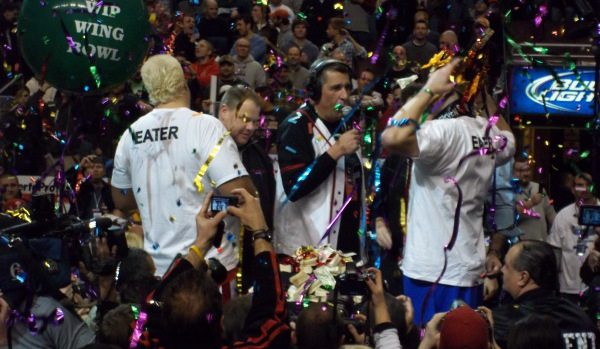
wingbowlWhile the Eagles, Flyers, Sixers, Phillies and Big 5 colleges certainly matter to local people, what stood out even more during my short stay in Philly was how invested the audience was in the on-air personalities and local sports talk radio stations. Hosts were seen as larger than life celebrity figures and when public events were held such as WIP’s Wing Bowl, the response was as strong as any I’ve seen in local markets.

As the years have gone by, the interest in Philadelphia sports radio has only increased and it remains to this day one of the top performing markets in the entire country. One of those reasons is due to great programming from two top-notch stations, WIP and 97.5 The Fanatic. I am a firm believer that competition makes everyone better and there’s no doubt that both stations have had a tremendous impact on raising the bar in the Philadelphia market.

robellisThis week I have the opportunity to chat with someone who’s experienced both sides of the Philadelphia sports radio battle, WIP afternoon drive-time host Rob Ellis who works weekdays from 1p-6p opposite Anthony Gargano. Rob has been with WIP since May, 2007 and prior to his move to afternoons, he hosted nights and weekends. Rob is from Upper Darby, PA and a proud alum of Temple University and holds the distinction of being a four-time winner of WIP’s Great Birds Debate.

What makes this week’s chat a little different is that I’m chatting with someone who started his radio career under my watch. It was March 2006 when I received a call from Rob who at the time was working as a television producer for CSN Philadelphia and upon our chat I could tell quickly that he was smart, passionate, knowledgeable and hungry. I was in the market looking for talent to help the radio station and while his radio experience was non-existent, something about him stood out.

I took a chance and threw him into a 3-man show one night and as luck would have it, he came to the table with strong opinions, great information and an ability to click and form great chemistry with his partners. When you listen to Rob today, you’ll see those same ingredients still on display!

robellis5Since then Rob’s star has only grown brighter and much of that in my opinion is due to his commitment to continue working at his craft while taking advantage of every opportunity that’s come his way. I think it’s also important to point out the great job that’s been done by WIP Operations Manager Andy Bloom in helping Rob’s development. Every great talent needs a good leader who believes in them and by moving Rob to prime time opposite Anthony Gargano, Andy showed his confidence in Rob’s ability to make a difference.

I exchanged some notes back and forth with Rob on the challenge of doing a 5-hour show, working solo vs. on a team show and what he believes matters each day to his audience and below are the results of our conversation.

Q: Who did you listen to growing up that influenced you to want to pursue a career in this business?

A: I listened to a lot of national and local radio. Nationally I was influenced by Dan Patrick, Bob Costas, John Barr. Locally, Howard Eskin, Jody McDonald, Angelo Cataldi.

Q: What’s your prep process for each day’s show (what do you read, watch, listen to, who do you meet with, when do you get in, etc)?

A: I typically spend 2-3 hours minimum before each show. I read espn.com, philly.com, csnphilly.com, profootballtalk.com, deadpsin, aol.com, tmz.com to name a few. I watch ESPN’s SportsCenter, as well as local CSN, and Fox Sports1. I also will touch base with my contacts/sources with the teams depending on what is happening. And I speak to and or e-mail with my co-host and producer.

Q: You’ve worked solo shows, two-man shows and even three-man shows – what are the biggest challenges and benefits of each?

robellis8A: The biggest challenge of a solo show is you better be prepared. It is all on you, you cannot take a segment off. You could have a game plan that you think will work for a show and it goes no where, so you better have a “Plan B”. Conversely, you may stumble upon something that touches a nerve, if so, roll with it.

The challenge of a two-man is, if you are not driving to a certain extent you are at the mercy of your partner, which can limit what you want to do or how you’d steer the show. It can also be tricky if you agree too much. That can be boring. You need a balance. You cannot be afraid to voice your opinion to your partner if you want  to take things in another direction. Happy medium’s can be a challenge at times.

Three-man shows are tricky because you need to maximize your voice without stifling your co-horts. You must try not to talk over one another which is not an easy task if your are aggressive.

wingbowl2Q: WIP is known for venturing into lifestyle/entertainment subjects in addition to every day sports topics – why do you believe this concept works in your market?

A: I think mixing things up with lifestyle/entertainment is good because it simply breaks things up. Going at the same one or two subjects when doing a local show can become tedious which leads to changing the dial. If you can mix in something about your wife or kids that connects with your audience is a great tool to have. It’s relatable. It can’t be your driving force but it’s a nice change-up.

Q: You’ve climbed the ladder & landed in PM drive opposite Anthony Gargano. In making that jump to prime time, what have been the biggest challenges you’ve faced?

A: My biggest challenge in moving into afternoon drive from being behind the scenes in TV was making myself and my name a brand and a house-hold recognizable commodity. Establishing what my personality is and who I am. I made it a point when we had station debate with other on-air talent such as Angelo Cataldi and Howard Eskin, to go after them and not be afraid to mix it up. Respect but not reverential. I also had to prove myself in the toughest of time slots. 5 hour solo’s during Christmas, late night, delivering when given the shot in day parts from morning to afternoons.

Q: You’re on the air every day for 5 hours – what do you do to stay mentally focused and engaged in every segment?

robellis7A: The biggest key for me is pacing, if the show stays fresh for me by moving it along, it will stay fresh for the audience. I need variety, Topic branches, guests and different takes keep me engaged. Don’t get me wrong, 5 hours is a grind. But if you keep it moving it keeps you as the host mentally in it.

Q: Looking at the layout of a 5-hour program, how many guests do you like to have on during the course of a full show? What’s the reasoning behind your strategy?

A: This one really depends on the day. With 5 hours, I typically like to have at least 2 guests usually spread about two hours apart. But there are days when that varies due to guest availability and breaking news. It really is a feel thing. But with five hours I like to break up host banter and calls with some guests.

Q: How often do you recycle topics during the course of your show? How do you keep those stories/angles fresh?

A: I’m a fan of re-visiting subject matter if it warrants. If we do an interview in our first hour or two (non-drive time) I think it is vital to re-play it in say the five o’clock hour. That is one way. There are also plenty of twists you can put on a story. “How does the LeBron signing impact the 76ers”? As opposed to just five hours of LeBron talk tie it in locally. Pose a question you threw out there in hour two for folks who didn’t hear it or have a chance to react to it via a phone call.

robellis4Q: When it comes to interaction with your audience, why do you believe callers are so critical to the presentation in your market?

A: Calls are a great way to foster and further conversation but they cannot be a crutch. Anyone can be a call jockey. I want calls who give a new take or disagree or agree in an intelligent way. Calls aren’t a right they are a privilege. I do think they are necessary because folks want to have a voice and they want to feel like they are a part of what we are doing. Overall I think interaction is great.

Q: How important do you believe it is for an on-air personality to be accessible and engaged with the audience regularly on social media?

A: It is very important to be accessible but you have to be careful with social media. Always remember you represent your employer. Engaging in a pissing match with a knucklehead on Twitter or Facebook is a losing battle. And your paid to give your opinion on the radio so don’t give a ton out for free. But I think it is very important from a promotional standpoint to use those tools to your advantage.

The Anthony & Rob show featuring Anthony Gargano and Rob Ellis airs weekdays from 1p-6p on SportsRadio 94WIP. To stream the show or catch up on previous audio clips from the show click here.

Growing Sports Radio’s Bottom Line!

0

For the past 19 years I’ve made my living in the radio industry. Most of that time has been spent in the sports talk radio format, a format which I love and believe strongly in. I’ve been fortunate to be trusted by various companies to manage their brands, create the vision of their radio stations and make personnel decisions to elevate the brand’s ratings so I have a high opinion of what type of connection can be built in this format between talk show host’s and listening audiences.

Nielsen Pic 1I equally believe that advertisers who invest in this format gain significant advantages by being associated with it.

For years I’ve listened to critics label this format as niche and take shots at whether or not sports talk radio could deliver real results for clients and it’s been frustrating to hear at times because I’ve personally witnessed many success stories. Conversely, sports television rarely has received the same venom or disrespect yet they target much of the same audience. While the numbers are certainly higher for television, the traits of the targeted consumer are no different.Nielsen Pic 4

I can personally recall running a promotion in San Francisco titled “Lucky Break” where we rewarded one undiscovered talent with a contract to work for the radio station for 1 year and while doing auditions, some contestants would weave in the words “reach us on the McDonald’s Text Line” without even being prompted to. That’s the type of connection this format delivers for advertisers better than any other.

When you look at the entertainment options available to people today, radio’s best chance to remain a priority is to offer content that is unique, people who stand out and brand associations that make your product cool. Fortunately for those of us who work in the format, sports talk radio possesses many of those ingredients.

sportsradioprofileThis format also targets an attractive demographic (Men 25-54) and that’s important to advertisers because this audience has something they want – money! The bottom line is that we’re all in business to grow business while additionally looking to raise the profile of our brands in a positive light so when a company forms an association with a sports radio station, there is an unspoken value and image benefit that comes with it.

When you look at how radio has evolved, in many markets now, the personalities on sports radio stations are seen by the audience as local rock stars, much like the local music DJ’s were viewed on radio and television in the 1980’s.newspaper

While 20 years ago the local newspaper was your source for information and opinion, today you get your information from social media and popular websites and you learn what that information means by tuning into your local sports talk radio personalities. It’s the exact reason why newspapers started creating podcasts, video commentaries and even full-time sports talk on their websites.

In 2013 BIA/Kelsey conducted their annual study on which station’s delivered the highest revenue in the nation and of the top 10 performers, 4 had some form of sports marketing involved with their product. WFAN in NY was the lone full-time sports talker in in the group and the other 3 (WBBM, WGN and WCBS) carried the Yankees, Cubs and Bears respectively.money

While one could suggest that the information in that study shows that the format has made progress, I could equally question why only 1 of the top 10 billing stations in the country was an all-sports station and why play-by-play is seen as attractive to clients yet the content created by personalities during the work week with audiences who are engaged in it isn’t viewed as important.

I was curious to get some insight on the challenges sports radio sellers face today and what they perceive as the format’s biggest advantages so I reached out to 5 different people who I respect in this industry to obtain their expertise.

In assembling this piece, I wanted to target 5 different markets and folks who have been involved in different organizations in order to illustrate some of the differences and similarities that exist in our industry. I think you’ll find the feedback provided by some of these great business leaders to be extremely helpful especially if you work on the programming side of the business.

PicMonkey CollageThe 5 featured panelists in today’s conversation are listed below. You can find out more about each of them by clicking the link on their names to be redirected to their LinkedIn profiles.

  • Paul Blake – Philadelphia – VP of Sales for Greater Media
  • Jessica Webb – Phoenix – VP of Sales for Bonneville Arizona
  • John Goforth – Chicago – Sports Sales Manager for 670 The Score
  • Payton Raymond – San Francisco – Director of National Sales for Entercom
  • Jim Heilman – Atlanta – Former Director of National Sales for 790 The Zone & GSM of WKNR Cleveland

misconceptionsWhat is the biggest misconception of the sports talk radio format in the advertising community?

Raymond: I believe the biggest misconception is how valuable the audience is. If you’re not a sports fan or listener to sports radio then there’s a big chance that you don’t see the marketing benefits of being associated with it. Sports fans are passionate and loyal supporters of the format. They always have an opinion and want to discuss the good and bad of their favorite teams. Listeners of sports talk also tend to have great qualitative profiles like employed full time, home ownership and college degrees. I believe that sports programming is not being measured properly by Nielsen and that puts us in a bad situation on paper when being evaluated by the agencies.

Webb: That it is super niche – all X’s and O’s. We refer to it as highly targeted, totally engaging (mostly) guy talk.

Blake: Agencies require ratings yet this format delivers results without needing to be a “top rated” station in the market.

Goforth: That our listeners are our callers. Agencies, and to a lesser degree, clients sometimes think of the sports talk listener as a 35 year old meatball who still lives at home and spends his disposable income on cheap beer and replica jerseys. The reality is that sports talk radio has the most affluent and most educated listener of any format in radio (according to Nielsen).

Heilman: That it’s limited to a very small audience. There are two places that people come to each week in mass regardless of the economy/weather/mood etc…Church and Sporting events. Everyone is a sports fan and the incomplete nature of the current audience measurement tools that exist today misconstrue the power of sports radio. While it is no doubt predominately a male audience, there are many female listeners. Also, I would argue that the audience is much larger and much more engaged than what is currently reflected in the ratings. Sports talk and play by play are the last remaining segment that people want to listen to or watch live, not record or DVR or passively participate with. A very underrated medium for sure!ratings2

How much do the ratings of your radio station impact your ability to continue driving rates and increasing your revenue?

Raymond: On a national level, ratings make or break a stations ability to drive revenue. In national sales there’s really no personal emotion unlike working with a local business who may love the format and its personalities and listen to it every day. Everything nationally must be justified with ratings and cost per points. There’s less focus on that locally.

Webb: This question fires me up like no other. I don’t believe that Nielsen gives fair and accurate credit to spoken word formats, not just Sports. That being said, our lives would definitely be easier with ratings. In spite of the lack of ratings, we will still post top 2 local and digital revenue in the market. But it’s a constant grind. There’s no easy money.

Blake: It can depend on competition. If you’re competing against another sports station then you need to be ahead of or within striking distance of that station. However, the ratings are not compared as much to music-based stations. It’s a great local direct results format.

Goforth: Minimally – rarely do you see a M25-54 avail come down from agencies, so as long as our ratings keep us in the agency fight, we’ll be fine. The direct conversation rarely involves ratings…it’s about results.

Heilman: Again it’s an old way to value and position. Create value propositions based on goals and objectives of the client and their target audience. Ratings to me are irrelevant. If a campaign meets my objectives (sales goals/drives in store/brand awareness) who gives a shit about the ratings…it works!scully

What type of importance do you place on having play by play on your station? 

Raymond: Play by play (pxp) is all upside for national sales. It gives you an asset to incorporate into media sales pitches that no one else can offer. Would you like to be the sports station with no play-by-play going into a client meeting following your local competitor and their pitch of being associated with a popular local team? PXP brings more audience to the station and also gives an exclusive product offering to clients.

Webb: Very important. We love the brand association and our team partnerships. We carry MLB, NFL, NBA, NHL and NCAA football and basketball. It’s nice having that feather in your cap but it’s tough keeping sales people focused on selling all of it.

Blake: It’s great for branding but it also has to be a profitable venture.

Goforth: In my opinion, it’s the number one marketing tool we have. People tune in for the game on a Monday night and on Tuesday morning they’re listening to the station. Also, it’s great for credibility in the marketplace and client entertainment. From a revenue standpoint it helps with ancillary programming such as sponsorships of team-centric shows, play by play host appearances, and access to players, not to mention merchandising.

Heilman: Play by Play can be a major driver but again it varies by team, market and local audience interest.localnational

In your market, what is the split between local and national advertising? Do you see that split continuing in the future?

Raymond: National spot advertising is about 38% of the revenue in San Francisco which has remained consistent over the years.

Webb: National accounts for less than 10% of the billing in our building. I see it flat to down in the future.

Blake: 15% national and I don’t see that changing. It’s different by market though. For us we’re very close in proximity to NYC which is a factor.

Goforth: That’s an extremely tough question to answer as every company defines “national” differently. However, I think it’s fair to say that if “national” were an AE – they’d have the highest billing. As far as the future is concerned – I don’t know that I see it changing a ton (towards more national). Many clients enjoy the ideation and creativity that is spurred by having local reps.

Heilman: During my time selling sports radio in Atlanta, the split was roughly 40% national 60% local but every market is different.Value

How do you decide what your assets are worth? What do you do to make sure you’re receiving fair market value for them?

Raymond: Based on feedback and demand from advertisers. Our sales manager’s set the pricing for our assets.

Webb: All depends on the asset. Each situation is unique.

Blake: We continue to assess supply and demand of our assets and price accordingly per the needs of our clients.

Goforth: No matter where I’ve worked, the answer to this question doesn’t change. Assets are worth every penny a client will spend and nothing more. If something isn’t selling or gaining traction for whatever reason, the price either needs to lower or go away (this is assuming it’s being pitched enough and the value is being correctly demonstrated). Sometimes it’s best to punt on an idea so you don’t devalue the station. We sell a quickly expiring commodity and, like a hotel, once the day is gone…it’s gone. So sell it or move on.

Heilman: It’s driven by perceived value. It is what you make it. Often times stations and radio groups get too caught up in the numbers. It’s up to the station to create the hype and sizzle and position and develop the right program to make it valuable to the customer. If the customer does not value the idea or the station they will not pay for it.results

When talking to advertisers what is the #1 thing they seek more of from your brand? 

Raymond: Brand integration and ROI (return on investment). Advertisers not only want commercials but they want some sort of special integration into programming and play by play that will help drive ROI. Endorsements, features, ownership of assets are hot areas of ownership that can help accelerate sales and launches of brands. Digital programs would be a close 2nd.

Webb: Higher level association with our brand and on-air talent.

Blake: Engagement, custom ideas, great results.

Goforth: Passion – the passion of our listening audience helps sell their good or service. This comes from not only the passion for the teams, but for the hosts and the station as well. We’re originators of content. People can hear the latest Foster the People song anywhere – they can’t get their local guys’ reaction to the big win (or loss) ANYWHERE else.

Heilman: Results, partnership and perceived value would make up my top 3.future

Where do you see the sports radio format having its best opportunity to grow its business in the future?

Raymond: Unique programming, digital engagement and endorsements.

Webb: Continue to deliver amazing unique local content, hire sales people that are marketers not just sales people, and give them the internal support to succeed.

Blake: Much more of the same great things we already provide. This is an incredible results format.

Goforth: Digital – The digital space will account for 25% of all paid media spending this year and will be up another 15% from last year.  The buzz words you hear in the digital space all relate to brand integration and content origination.  We already do that!  Sports radio just needs to continue to evolve and expand the conversation digitally – opening up opportunity and different revenue streams as we do so.

Heilman: Embracing technology and getting out of the 1970’s. The last ones to the web and the last ones to integrated programming. Be proactive and not reactive. There needs to be cooperation and coordination at the agency and client level as well. Create the demand don’t react to it!

To learn more information about some of the great brands that our 5 featured panelists are associated with, visit their stations websites below.

The Face of Your Audience: Why Perception Isn’t Always Reality

0

In 2013, Arbitron conducted a study on radio listening which showed that over 92% of American’s over the age of twelve listen to the radio each week. Over 10,000 stations were tested as part of this project, with 1274 of them being listed as sports talk operators.

What really stood out on a positive note in the research was how the format itself was responsible for delivering the best educated and the highest income earning listeners among the top 22 formats. Given that we’re all in business to make money, this is certainly not a bad thing. Where it is however an issue is when it comes to the perception of your audience among the people in your building.

“Humans see what they want to see” 
― Rick Riordan, The Lightning Thief

In most cases, sales folks are treated to some advanced information and the good ones use it to their benefit when dealing with local advertisers and national agencies.

That said, even the work horses in your building who are fighting each day to generate revenue don’t have a visual perception of who the target audience is because most of the time they’re creating presentations, making phone calls to secure dollars or dealing with their sales manager and a pain in the ass Program Director who they’re convinced is only in the building to make their lives more difficult.

Sellers are typically working off of data and selling points from managers, not the feedback that comes from your audience through social media, text lines, callers and on-site appearances. They don’t see, hear and experience your audience as often as those on the programming end do but then again, that isn’t necessarily a bad thing and here’s why.

If you venture down to the programming end, you get a completely opposite picture painted for who your listeners are. While sellers may see data which shows a smarter and more sophisticated listener, in the mind of most hosts, producers and programmers, your listener is sitting in his basement, playing fantasy football, has a low paying job and he listens to your station for 8-10 hours a day.

Ok maybe that sounds brash and isn’t a reflection of how every programming person thinks but trust me, many do see it that way and it’s not accurate.

Let’s face it, today you can see people and who they are and what they do via their Twitter and Facebook profiles so instantly a perception is created in the mind of the personality once they receive some form of feedback. Secondly, if the studio receives ten texts from the same phone number during the course of a talk show then the immediate thinking is “he can’t have much of a life or a job if he’s bugging us this much“.

The need of a talk show host (and those who work on a program) is to feel that the audience is invested in the content that’s been created so when real people provide some type of engagement to the show, it confirms that the path that’s been taken is the right one for the show. That validation courtesy of a response provides fuel to keep moving the show forward except we often lose sight that those who we see, hear and connect with are not the majority of the audience who are consuming our product.

In various markets the numbers are different so feel free to adjust accordingly with where you’re based but in most cases, 85-95% of the audience DOES NOT call into the radio station. With social media exploding the way it has over the past 10 years I expect the numbers for engagement are up but even if they blossomed to 25% of people talking back to the radio station, that would still mean that 75% of your audience doesn’t speak to you.

We operate in a world where instant validation of our opinion is necessary for our own ego so it’s hard to fathom that 3/4 of the listening audience wouldn’t think to connect with us. Yet they do and that’s where the misconception lies. People who listen to you buy tickets to support your local teams, they buy products they’ve heard about during commercial breaks on your radio station and they have conversations each day with their friends, family and co-workers about things you talked about – they’re just not telling you about it.

Think about it for a minute. How could the sports talk radio format be measured and come back with results that show it to deliver the best educated and highest earning listeners if the sample of evidence was the irrational caller in your market who calls up each week to suggest trading three reserves for Mike Trout or that one lunatic on social media who’s only mission in life is to tell you how every hour of every day how bad you are?

The reason why the intelligence and income levels are higher are because the lawyer who’s listening for 45 minutes while on his way into the office isn’t telling you he does. Neither is the Fed Ex driver who considers you his companion while making deliveries throughout your region. Nor is the local police officers who are driving around listening while trying to keep your streets safe. And it’s certainly not going to be conveyed to you from the high ranking executives in your backyard, including the power players inside of your local professional sports teams.

In all of the professions above (and there are many more), the consumer is focused simply on listening and enjoying the experience, not feeling obligated to participate. Sure it’s a great feeling when we form a connection with a listener because it means our content presentation moved them enough to want to respond but not hearing from them doesn’t mean they don’t exist and aren’t engaged in what we do.

Think about yourself for a second. Most of you have some type of TV show you watch on a regular basis and when it’s over you discuss it with your family, friends or co-workers or you post about it on a social page for your followers to respond to. How many times though did you call, email, tweet or facebook a response to NBC, FOX, ESPN, ABC, etc?

Heck, the Super Bowl is the most watched sporting event of the year and the next day every single radio and TV outlet spends considerable time discussing which commercials worked and which one’s didn’t however we don’t go to work that next day and tell ourselves that we better alert Budweiser, Go Daddy or Geico of what we thought of their new creative campaigns.

Once again, consumption, awareness, mental connection and emotional investment in the product may exist even if the public communication does not.

The reality in this line of work is that you will always be relevant to many more people then you ever thought possible so don’t make the mistake of assuming that the reflection of your audience is what you see and hear through public reaction.

Most people will not consume every segment of your show and in most cases they’re not even listening to you every day. When they put on their radio, they’re hoping to mentally escape into your content and be entertained. As Billy Joel once sang in the hit song “Piano Man”, “He knows it’s me they’ve been coming to see to forget about life for a while“.

In a nutshell, that’s our job at the end of the day. We’re the voice on the radio that’s supposed to take people through a mixture of emotions on their journey to and from work. Whether it’s joy, anger, comfort, confusion or something else is to be decided upon by each individual. We become a part of their world and the only bad part is that we may never know it. Then again judging by our own perceptions, maybe that’s not so bad!

Lesson:

  • Identify the age of your target listener in your key demographic
  • Use your data to better understand what type of income level they’re at
  • Make a list of things that appeal to most men in this age/income bracket
  • Position your content/imaging/engagement strategy in line with your target listener
  • Give this listener a face & name & put it on display in your office/studio for all to see

Ticket Leads Dallas Ratings

0

There was a dead heat for second place in sports talk radio ratings in June.

KESN 103.3. FM and 105.3 FM The Fan averaged 3.0 shares in the demographic that matters above all others – men 25-54.

SportsRadio 1310 AM and 96.7 FM The Ticket, as custom, remained the leader of the bunched-up pack at 4.5.

Down deeper in the numbers – in men 25-54 when the high-profile local talent works weekdays from 6 a.m. to 7 p.m. – the score was: Ticket 6.1; Fan 4.7; KESN 3.0.

While the Ticket won each of the 13 hours in the weekday window, The Fan finished second in nine, leaving KESN in second for two hours of Mike & Mike in the morning drive and two hours of The Afternoon Show in the commute home.

Thanks to the Dallas News who originally published this story

Scott Kaplan – Mighty 1090

0

When it comes to the sports media business, few people stay as busy as Scott Kaplan. Since 2001 Kaplan has been a steady presence on San Diego radio airwaves where he’s worked opposite former San Diego Charger Billy Ray Smith. The show “Scott & BR” has been a smashing success with local listeners and it’s opened up doors for Kaplan to branch out into other ventures.

Among those projects are a reality television show based on his experience as a horse racing stable manager at the Del Mar Thoroughbred Club, working as an NFL sideline reporter during Westwood One radio broadcasts and hosting his own television show “Kaplan at Night” on the start up television channel, U-T TV which was associated with the San Diego based newspaper U-T San Diego.

kaplan3A former place kicker at the University of Pittsburgh from 1988-1992, Kaplan has a passion for competition which was on full display in 2010, when he raced in, and completed, the ‘toughest endurance race in the world’, the Ironman World Championship in Kona, Hawaii.

When I first heard Scott on the radio, he was working with Sid Rosenberg on 102.7 WNEW in New York City. While the “Sports Guys” as they were called back then didn’t last, what jumped out to me immediately was how much fun Scott & Sid had on the air together.

I can recall one particular day in 2000 where they had a guest in studio playing a guitar and jamming on a song he had wrote for the Subway Series and as the guy belted out lyric after lyric connected to a Yankees-Mets showdown, Scott & Sid were clapping and singing along and making it impossible to ignore the passion and fun that was about to unfold with the series. I became instantly engaged in the content, more excited about the game later that night and already looking forward to the next day’s show to hear what each of them had to say about it.

kaplanFast forward to the present and whenever I’ve listened to Scott since he’s moved to San Diego, one of the first few things that jumps out is how authentic he is on the air. He doesn’t try to be someone he’s not and he puts his real life feelings and experiences on the air which I believe is a great trait that listeners can connect with.

He can certainly agitate the audience and present passionate opinions plus he has a good sense of what the hot topics of the day are but more important than all of that, he comes across as the guy at the bar that you want to hang out with because he sounds like he truly has fun and loves what he does.

Case in point, watch this video clip of Scott sharing a rather personal story which undoubtedly will have you laughing your ass off.

I recently caught up with the Mighty 1090 talk show host to pick his brain on how he ascended to where he is today, how he’s handled some of the challenges that have come his way throughout the years and what he believes is important in trying to create a successful show each day and I think you’ll enjoy the discussion.

Q: First things first, how did you get started in sports talk radio?

A: I was cut by the Chicago Bears in 1994 early in training camp. I went home to South Florida and all my friends were buzzing about 560 WQAM. I called the radio station and arranged a meeting with the PD and that was literally my start.

Q: Who are your mentors and biggest influences?

A: When I arrived at WQAM, Andrew Ashwood was the PD. It turns out, way back when, Andrew and I shared an agent, Bruce Allen, who is now the GM of the Washington NFL football team. I don’t want to take the chance of being fired, so I won’t call them by their insulting name. Andrew became my mentor and close friend and he guided me and protected me from myself, particularly as a young broadcaster.

sternAs for on air influences, there is no doubt that Howard Stern was the model for me. I wanted to be funny talking about sports. The way Howard was funny talking about whatever. In 1997 I went to the Super Bowl in Phoenix to work as a producer for Hank Goldberg who was the afternoon drive host at WQAM and no matter who I brought to Hank, he had plenty to talk to them about. Robert Kraft, Junior Seau, Marcus Allen, Bill Bidwell and the list went on and on of diverse interviews. This was way before anyone had laptops or the internet and Hank sat there and always had something to talk to them about. I said at that moment, that’s what I have to be able to do!

Q: When getting ready for each day’s show, what’s your routine? (what do you read, watch, listen to, who do you meet with, etc)

A: I start with my local paper, the UT San Diego. Then I read the LA Times. ESPN.com and CBSsports.com are my go to national sites and I like to hold a USA Today. I’ll watch the early SportsCenter and about an hour of CNN.

Then, as I am in my office, I’ll flip around between news and sports, and I listen to my colleague who leads us in, Darren Smith. I will have notes pre-written about topics that are not sports related, but rather, things I expect will connect with the audience, like fatherhood, being a husband, business, real life experiences, etc.

Q: How different is your job today vs. 10 years ago? What makes it different?

kaplan2A: I would say that my job is different in that we have been on in the same market for 13 years and our audience knows us now so we don’t have to feel compelled to stay ‘on topic’ at all times. In this PPM world we get overwhelmed with research that says talk about topics A, B and C, but I still believe our audience likes it when we are just flowing and talking about nonsense.

Q: Having done sports talk on the East and West Coast, what are the biggest differences in your opinion?

A: Rather obvious but the east coast has no patience and the west coast is much more forgiving. In San Diego when you say a coach should be fired, people are aghast! Whereas in NY, the fans expect you to lead the charge!

Q: Having been fired before, what’s the biggest thing you learned from the experience? How did it help or hurt you when receiving a second chance?

A: I have been fired several times, some legit, and others total bullshit. Ultimately what I have learned is, the media loves to feed on the media. For the most part, people in the media business can be lazy, rather than looking for the real story. It’s just easier to report what is on the surface.

Most recently, two years ago, I was fired, I sued the company, won, got my job back, and was able to push out the GM and CEO who unilaterally fired me. That said, in my new contract, language was very specific about GUARANTEES. Once I had a guaranteed contract, I was not going to apologize, I was going to just let it fly. Two years later I have chilled quite a bit, but I definitely came back with no fear of failure.

kaplan10Q: How do you balance doing a show that’s important to you vs. what’s important to your audience?

A: Well, here’s an example. I am involved in the horse racing industry, but I realize not everyone listening cares about horse racing.  So I try not to go overboard with horse racing talk all summer. On the other hand, when I was training to do Ironman, I realized most people aren’t into triathlon but many found my willingness to share my story and ultimately complete the toughest endurance race in all of sports, inspiring! So I talked about it and took the audience on my journey. Years later people still tell me how inspired they were, and they changed their lives with the attitude, if he can do it so can I.

Q: As someone who hosts a show opposite a former NFL player, what are the advantages and disadvantages to working with someone who’s played the game at the highest level? Why do you believe so many sports stations across the country have adopted the model of pairing a radio broadcaster with an ex-athlete?

A: My partner, Billy Ray Smith, played for the Chargers for 10 years. He is an institution in San Diego. I love having a former superstar player as a partner because he doesn’t know anything about sports! I hope he reads this.

scottbrWhat I mean is, all of his opinions are based on being on the inside, they are never based on being an observer. But the truth is, we balance each other. BR is always pro team and when I am calling for a coach to be fired, or saying a season is over, he is the ultimate optimist! The combination of obnoxious/opinionated host, with former star athlete just works, assuming the team can get along and not take things personally.

We have been working together for so long, we just do a dance, and we both know where to go. Sometimes the local teams get pissed at us because they think I am over the top and he is not apologetic enough but what they don’t see is the pre-show choreography that happens and that the dance is already planned because we represent both halves of the audience. Some fans will support things no matter what and that is Billy Ray. Some want people to pay for failure and that’s my side.

Q: With your partner being an instantly recognizable name and face in the market, how do you balance injecting your own opinion and asserting yourself vs. laying back and letting him or a member of the cast shine?

A: Our cast is a bit more diverse. Besides Billy Ray the former NFL star, we have the mom to our show, Linda Welby, who does sports updates, but so much more. She is supposed to keep me from stepping over the line but she usually leads me right to the edge. To answer the question, the truth is, listening and being a good listener is 80% of the game. You have to be able to think fast, talk fast, but listen well and know when to slow down.

kaplan8Q: When people listen to a sports radio show you’re hosting, what do you want them to take away from it?

A: I want people to laugh, think, at times be moved, be pissed, agree, disagree, but in the end, I want people to have a strong opinion whether it’s “I love BR”, “I hate Scott” or whatever. The bottom line, I just don’t want to be vanilla!

Q: How often do you aircheck your show and analyze the ups and downs? Who’s involved in the feedback process?

A: We don’t aircheck that often any longer. But we talk to our PD, GM and CEO quite frequently to get their feedback.

Q: As someone who has a steady presence with multiple media outlets, how important do you think it is for a personality to build their brand in different spaces vs. focusing on just one platform?

A: In my opinion, the way the media business is today I think you have to do as much as you can, in the finite time you have. What I DO NOT want to be is a 65 year old unemployed radio host with no savings and no ability to get on the air. So I have branched out in a variety of different directions, hosting TV shows, writing for the local paper, producing my own TV series, etc.

kaplan9Q: Having worked in this industry for nearly 20 years, how do you stay energized, excited and interested vs. becoming fatigued and complacent?

A: First, I know how fortunate I am to have a gig like this. I get to live in what I think is the greatest city in America, make a good living, and my radio presence and local notoriety drives my off air business interests so I am highly motivated not to fuck this up! Plus, I LOVE the stage of radio. For me the beauty is, every day is different, so I never have to fake it, because everyday I love it.

Q: As you move forward in your career, what else are you looking to accomplish?

A: Good question. Last year I produced my first reality series, Stable Wars, about my business and rivalries in the horse racing industry. Season 2 is currently in production. I want to do other unscripted series, not so much about things in my life, but stories and personalities that I think have mass appeal.

cubanOff air, I have lots of things I want to accomplish in business. I am driven by a quote I heard Mark Cuban mention during an interview on CNN and I am paraphrasing but he said, “I was chasing wealth not simply because I wanted money, I wanted freedom”. I couldn’t agree more!

Ultimately I would like to own a radio station and I am looking and waiting for the right opportunity to present itself.

Q: What advice would you offer to someone today who’s looking to enter this industry and become a sports talk radio personality?

A: Get your foot in the door and be humble and respectful to the people that have been working long and hard to get where they are. Do everything you are asked and a whole bunch more. No job or request can be beneath you! If you want your shot, prove it, don’t expect it!

The Scott & BR show featuring Scott Kaplan & Billy Ray Smith airs weekdays from 3pm-6pm in San Diego on The Mighty 1090. To hear the show, check out their podcast page by clicking here.

Sports Hub Leads Boston Ratings

0

For the seventh straight three-month ratings period, 98.5 The Sports Hub finished as the top-rated station in Boston according to Nielsen Audio data.

The Sports Hub earned a 7.9 share in the men 25-54 demographic for the spring period of March 27-June 18, edging classic rock station WZLX (7.8), which like the Sports Hub is owned by CBS Radio.

WEEI (93.7) tied for fifth with fellow Entercom-owned station WAAF with a 5.6 share.

The Sports Hub’s numbers are down from the winter (9.3 share) and last spring (10.2). Last spring’s ratings were bolstered even more by the Bruins’ run to the Stanley Cup Final. The Sports Hub is the flagship station of the Bruins, who lost in the Eastern Conference semifinals this year.

WEEI, the radio home of the Red Sox, saw its ratings tick upward from a 4.6 in the winter and a 5.5 last spring.

In morning drive (6-10 a.m), The Sports Hub’s “Toucher and Rich” program was first for the eighth straight three-month period with a 10.0. T&R had a 11.1 in the winter and a massive 13.4 last spring during the Bruins’ run.

WEEI’s “Dennis and Callahan” program was second for the third straight period, earning a strong 8.2. That was a significant improvement over last spring’s 6.0 share for the show, which also features Kirk Minihane. D&C had a 7.1 in the winter.

For midday (10 a.m.-2 p.m.), the Sports Hub’s “Gresh and Zo” program finished fourth (6.2), down from a second-place 8.9 in the winter. WEEI’s midday programming — which was revamped with the late-May reassignment of Mike Mutnansky and the hiring of Christian Fauria and Tim Benz to join holdover Lou Merloni — finished eighth with a 4.5, up from its 3.5 share in the winter.

In afternoon drive (2-6 p.m.), “Felger and Massarotti” was first for the eighth straight ratings period with a 10.0 share. WEEI’s “Dale and Holley” program, in its first full three-month period since Dale Arnold and Michael Holley were reunited in March, was third with a 5.8. WEEI was fifth with a 5.4 in the time slot during the winter.

From 6-7 p.m., The Sports Hub’s “Baseball Reporters” program hosted by Tony Massarotti was first with an 8.6 share. In the same window, WEEI was tied for fifth (5.2).

In the 7 p.m.-midnight period, The Sports Hub was first with a 9.1 share. “The Adam Jones Show” and Bruins games aired in that day part. WEEI’s “Planet Mikey Show” was tied for 11th (3.9). WEEI, which features Red Sox broadcasts and the Planet Mikey Show, was third with a 7.4.

For more information on the Boston media scene make sure to check out Chad Finn’s column where this story was originally published

WFAN Dominates NY Radio Ratings

0

WFAN’s morning and afternoon drive time shows both finished second among New York-area stations in the spring ratings quarter, with substantial leads over their sports talk competition at ESPN New York.

In the key demographic of men ages 25-54, Boomer Esiason and Craig Carton averaged 7.4 percent of the audience in the period March 27 through June 28, behind only the music station Z-100 at 8.3.

ESPN’s national morning show with Mike Greenberg and Mike Golic finished 11th with a 3.5 share in New York.

Mike Francesa’s afternoon program averaged a 6.8 share from 1 to 6:30 p.m., behind only Spanish-language music station WSKQ-FM at 8.2.

During the hours in which Francesa competes head-to-head with ESPN’s Michael Kay — 3 to 6:30 p.m. — Francesa tied for first place overall in the demographic with WSKQ at 7.0. Kay was 10th at 4.3.

Kay usually trailed Francesa by more than a 2-to-1 ratio during ESPN’s years on 1050-AM, but his ratings and ranking have improved since the station switched to a better signal at 98.7-FM in the spring of 2012.

WFAN’s ratings include both its AM and FM outlets.

For more on this story visit Newsday where it was originally published

Selling Drama The TNT Way!

0

For the past 10 years, if you’ve watched TNT television you likely heard the channel’s slogan “We Know Drama“. It’s a tagline in my opinion which was simply brilliant, because it reflected the channel’s programming choices. If you turned on TNT, you’d find either a movie, game or original program, and when you analyzed the content of that particular show, you’d find that it often included some form of drama which helped it fit perfectly into the channel’s strategy.

The slogan was introduced in June 2001, and at that time, former TNT General Manager Steve Koonin said “TNT’s promise is to engage the hearts and minds of our viewers with dramatic programming that offers a powerful combination of compelling stories and interesting characters, mixed with excitement, action, suspense, romance and humor. TNT’s slate of original movies and series, theatrical product, acquired series, championship sports and live event specials will deliver on this consumer proposition.”

Judging from what the channel featured during the past 13 years, they not only lived up to their promise, but viewership increased, and today it remains a strong presence in cable television. Clearly the interest in dramatic content was there, and TNT didn’t try to reinvent the wheel, they simply satisfied the appetite of those who were hungry.

Take a look back at this classic TV commercial created around the 2003 NBA Playoffs. TNT featured Spike Lee to sell the message and the result was a very identifiable spot which was easy for viewers to relate to.

When it comes to sports talk radio, I’ve heard numerous executives over the years refer to the format as the ultimate “soap opera for men“. In some ways, it’s hard for me to fathom that the world of sports could be mentioned in the same sentence with “One Life To Live” and “General Hospital” but when you step back and think about what the world of sports has to offer on a daily basis, it makes perfect sense. The presentation has shifted from x’s and o’s discussions and box score breakdowns to sports-bar conversations centered around personalities and teams. Coincidentally the ratings, platform distribution, and advertising dollars are all experiencing some of the highest performance levels in the format’s history.

lbj2So why is it that people keep seeking out sports media content?

The answer is simple, they love drama!

Case in point, look at these headlines below which were posted within the past week on different media websites. All 5 are written about one of the most popular and polarizing basketball players on the planet, LeBron James.

As you look at these 5 examples, one word should stand out in defining what each story is about – Drama!

  • LeBron James, Pat Riley to meet
  • LeBron James has a Dwayne Wade problem
  • Cavs working to clear max space to land LeBron
  • Cavs explain why they took down Dan Gilbert’s letter to LeBron James
  • LeBron’s inner circle, including his wife, want him to sign with Cavaliers

Regardless of where you go to get your sports news, you go there because you’re curious, and emotionally engaged in the content. Whether you realize it or not, you’re lured in by the drama of the story. LeBron James right now is the NBA’s real life version of the Truman Show, and we’re all sitting back watching, listening, reading, and reacting to every piece of news, and deciding what’s best for him, his family, his future, and each team that wants him. It’s a classic case of media outlets feeding us drama, and each of us devouring it, and asking for seconds.

Your-Opinion-MattersWhen you finish your show today, I want you to step back and reflect on what you presented to the audience. Look at each of your segments and what the conversation was built around. In most cases I bet you presented a question based off of a certain subject, and with that question you provided your opinion/answer to it. That my friends is called selling the drama!

If you weren’t doing that then I’d ask you to reassess your content, and figure out what you want your audience to sink their teeth into. If you have no hook and no drama in your presentation, than chances are you’re filling air time with no true purpose. By doing that you’re asking your listeners to standby while you figure it out, and they don’t have time for it. Your audience wants to show up and have you distract them from the everyday pressures they face by providing them with compelling and entertaining content. If you can’t do that, they’ll find someone who can.

Remember this, your audience isn’t turning to you because they want to know who won last night’s game, what Player X’s batting average is or how many of the next 10 games their favorite team plays at home vs. on the road. They can get that stuff by clicking on any sports website. They’re also not coming to you to hear how many phone calls you can take during the course of a 3-4 hour show. The only person keeping count of your caller totals is you and your producer.

They will though listen to a passionate discussion between a host and a caller provided there’s a question or angle being discussed, and they do appreciate information as long as it’s used to advance the angle you’re presenting. In a nutshell, information and filling content time doesn’t earn you an emotional investment from your audience – your ability to deliver a compelling discussion and unique opinion on the story that matters to your audience does.

manzielWhether we like it or not, people today care more about Johnny Manziel’s off the field behavior than any of his studying habits or practice throws. They know Carmelo Anthony’s free agent suitors better than the NY Knicks roster that he played on last season. They focus more on who got snubbed from the All-Star game, and how playing in the game could impact a player’s second half performance, more than they focus on the actual game itself. Every listener fancies themselves as a GM with solid knowledge of what each player makes, what each team spends, the length of each player’s contract, and how it will help/hurt their favorite team in the future.

Why do all of these items above matter to people? Because they’re dramatic, and they create thoughts and emotions inside of every one of us. These are feelings that can’t be turned off or brushed aside. Whether it’s joy, frustration, love, hate, passion, confusion or something else, the more people hear about it, the more interested they become, and the more they seek resolution and additional facts to our conversations, the more we invade their minds and cause them to think and feel. The more we do that, the better our chances of keeping them listening.

feelingsFor an on-air talent, you are constantly selling drama to your audience because it’s the one ingredient that makes your show special each day. Nowhere on the planet can your show be duplicated. While the same stories may be discussed everywhere else, your personality, perspective, creative elements and delivery of the information keeps you unique.

However, your audience has distractions being thrown their way every day, so the only way to cut through the clutter and permanently rent space in their head is by using drama to your advantage. They want to take the roller coaster ride with you, and experience your ups, downs and in-between’s. It’s your job to keep them hanging on every word and sentence.

A colleague of mine (Jeff Schmidt) sent this to me months ago and it instantly connected with me. Take a look at these two stories below and look at the headlines. The story on the left is presented by Deadspin.com and the story on the right is presented by ESPN.com. When you look at the headline of each story, which one contains more passion and suspense?

Kluwe Stories

In my opinion, Deadspin used words to stir an emotion with the reader while ESPN focused on the facts and delivered a neutral headline. While the approach for both brands may be different, they both make sense. However if this were a sports radio segment, you’d hook a lot more people with the drama of the Deadspin headline than you would with the ESPN presentation.

Think for a second of how this relates to you. Your listener is either in a car or listening on a computer or mobile device and on each of these platforms have multiple choices. In most people’s phones there are 25-50 apps readily available to take them elsewhere, or if they’re in a car they have the option of FM/AM radio, a CD player, possibly satellite radio, or some other electronic device that they can connect to their dashboard and listen to. In either case, you’re already battling for an individual’s attention before you even get started.

If you’re lucky, you’re one of the first places the listener turns to because your brand/station has built trust and loyalty with them, or they’ve formed a connection with you or another on-air personality. From there, it comes down to picking the right content and manufacturing the drama in the most unique and entertaining way to keep them engaged.

Right_Vs._WrongPick the wrong content, and they’re gone. Pick the right content, and present it in a safe and predictable way, and they’re gone. Select the right content, and construct enough angles and unique viewpoints to keep the listener wanting to take an emotional journey with you, and you’ve got a fighting chance.

Try it out when LeBron James finally signs with a team. I guarantee you’ll hear every station discuss the story, but the place where you’ll spend the majority of your time listening to it, will be with the outlet and personality that advances the story, and best captures and sells the drama and suspense and drama.

There is no better example of capturing drama than when you go to the movies, and spend 15-20 minutes waiting for your featured movie to start. Once those previews hit you know you’re immediately sucked in. For example, watch this trailer of the upcoming film “When The Game Stands Tall“. By the time the trailer is done playing you’ll know the focus of the story, the drama that occurs, and the question being asked that must be answered. The result, you’ve given Sony Pictures 2:44 of your time, and soon enough you’ll be spending your money to go watch it because the story drew you in.

Whether it’s a movie, a sporting event, an argument between co-workers or a sports talk radio show, people have a passion for drama. They seek it out and remain consumed by it, and that’s not going to change anytime soon. Don’t believe me? Check your Facebook feed or Twitter timeline. It’s happening every second of every hour.

Sometimes a slogan doesn’t make any sense for a brand, but in the case of TNT they created something which fit like a glove, and they delivered on that promise to perfection. That’s an example of effective research, smart strategy, and consistent execution. When you do those things right, you win consistently and grow continuously.

101 PartyTo wrap this up, I’ll leave you with one shred of evidence that’ll make you re-think whether or not you can afford for drama to not be a central part of your content focus each day. Currently when you look at the best performing sports radio stations across the country, the average amount of time spent listening is usually between 3-4 hours per week M-F 6A-7P. These stations also deliver somewhere between 5-10% of listening among Men 25-54, and that by industry standards is considered a pretty strong success.

One though could look at it the other way, and argue that your core programming which you pay top dollar for and promote heavily, is consumed for only 36-48 minutes per day out of a 780 minute window, and in your market, 90-95% of Men 25-54 don’t listen to you.

Now how’s that for drama!

Yes we can talk about the issues with PPM, we can blame things beyond our control such as signal issues, play by play events, lack of marketing, etc. but in every one of those scenarios, we’re emotionally invested in the subject and we’re ready to defend, explain and engage in the conversation. That my friends is what drama does.

TNT figured out how to capture the mind and eyes of the viewer,nand there’s no reason why sports radio can’t do the same, and capture the mind and ears of its audience. If ever there was a business built to understand and sell drama, it’s sports talk radio. If it can be done right, who knows, maybe one day we’ll present a brand new slogan – “We Own Drama“.