93.9 The Eagle — the Zimmer Communications news/talk station in Columbia, Missouri — has announced changes to its daily lineup to include a new afternoon show hosted by Mike Murphy.
Eagle Eye Drive at 5 with Mike Murphy will debut on Monday, August 25th. The program will be heard from 5-6 PM and be focused on local news and issues in the Missouri city.
The new program on 93.9 The Eagle will be an expansion of local shows heard on the station. It joins Wake Up Missouri — hosted by Dr. Randy Tobler, Stephanie Bell, and John Marsh — which is heard from 6-9 AM, as well as The Gary Nolan Show, airing from 9 AM to Noon.
The entire afternoon/evening lineup for 93.9 The Eagle now consists of:
Barrett Media produces daily content on the music, news, and sports media industries. To stay updated, sign up for our newsletters and get the latest information delivered straight to your inbox.
ESPN officially entered a new era. The network has unveiled a direct-to-consumer streaming service that provides fans full access to its suite of 12 networks and services for the first time. The rollout coincides with a redesigned ESPN App designed to deliver a more personalized and interactive experience, further positioning ESPN at the center of the evolving sports media landscape.
Originally announced earlier this month, the launch comes ahead of a critical stretch in the sports calendar, with the start of the college football and NFL seasons, U.S. Open tennis, international soccer, and the WNBA playoffs. ESPN executives called the moment a “monumental day” for the company and its parent, The Walt Disney Company, while emphasizing that the project will continue to evolve over time.
“This is a monumental day for all of us at ESPN, for The Walt Disney Company and, most importantly, for our fans,” ESPN Chairman Jimmy Pitaro said in a statement. “ESPN DTC and the ESPN App are a powerful combination marking a major turning point in how we serve sports fans – anytime, anywhere – for years to come. The best part is, we’re just getting started. What we’re launching today will evolve with regular enhancements over time.”
Disney Entertainment & ESPN Chief Product & Technology Officer Adam Smith added that the launch is not a final product but the beginning of a new digital era. “This new era kicks off at a time of incredible momentum at ESPN, and across Disney’s streaming business and products, that’s driven by an amazing partnership between storytelling and technology and a central focus on the fans,” Smith said.
The new ESPN App is designed to be a one-stop destination for sports fans, offering enhanced personalization and interactive tools. Features include SC For You, a daily, AI-assisted version of the network’s flagship program; a new vertical video feed called ESPN Verts; Also ESPN StreamCenter features a synchronized second-screen experience for live games; multiview options on connected TVs; and real-time integrations with ESPN Fantasy and ESPN BET.
Fans can also use new Catch Up To Live highlights to rejoin games in progress, browse Fanatics merchandise tied to live events, and access ESPN programming directly through Disney+. For bundle subscribers, ESPN now joins Hulu and Disney+ in a fully integrated streaming hub.
At the core of the offering is ESPN DTC Unlimited, priced at $29.99 per month. The subscription includes access to ESPN’s full suite of linear channels—ESPN, ESPN2, ESPNU, SEC Network, ACC Network, ESPNEWS, and ESPN Deportes—alongside ESPN on ABC, ESPN+, ESPN3, and digital extensions like SEC Network+ and ACC Network Extra. The service will feature more than 47,000 live events annually across the NFL, NBA, NHL, MLB, UFC, college sports, global soccer, tennis, golf, lacrosse, and more.
ESPN’s studio shows and original programming are also included. From SportsCenter, First Take, and College GameDay to The Pat McAfee Show, NFL Live, NBA Today, and the network’s 30 for 30 documentary library.
Bundling is central to ESPN’s strategy. A launch promotion offers the ESPN DTC Unlimited plan with Disney+ and Hulu for $29.99 per month for the first year. Meanwhile, ESPN is preparing additional packages with partners, including a Fox One bundle on October 2 and an NFL+ Premium bundle beginning September 3 that includes NFL RedZone.
The launch underscores how ESPN is adapting to the shifting media landscape. As cord-cutting accelerates and younger audiences gravitate toward streaming, ESPN is betting that direct-to-consumer access and deeper personalization will strengthen its connection with fans while extending Disney’s broader streaming ecosystem.
Barrett Media produces daily content on the music, news, and sports media industries. To stay updated, sign up for our newsletters and get the latest information delivered straight to your inbox.
In the fast-paced world of technology, a successful career is no longer just about coding prowess or technical expertise. As projects become more complex and cross-functional, the ability to effectively plan, execute, and lead has become a premium skill. For IT professionals aiming to transition into leadership or simply enhance their value, a project management certification is a powerful and strategic move. This credential signals a mastery of a structured approach to project delivery, opening doors to new opportunities and career growth.
The Growing Importance of Project Management in Tech
The IT industry is experiencing explosive growth, from cloud computing and cybersecurity to AI development and enterprise software deployment. Each of these areas is driven by projects that require meticulous planning and oversight. According to the Project Management Institute (PMI), the global economy will need to fill nearly 2.2 million new project-oriented roles annually through 2027. This demand is particularly acute in the tech sector, where project managers are the linchpins that keep complex development cycles and product rollouts on track. For a developer, systems analyst, or data specialist, a PM certification can be the key to moving from a technical role into a high-impact management position.
What Project Management Training Entails
Project management training provides a structured framework for managing projects from initiation to completion. It moves beyond on-the-job learning to instill a disciplined approach to every project phase. The curriculum typically covers critical areas that are highly relevant to IT:
Project Planning: Developing detailed project plans that outline tasks, timelines, resources, and budgets. This is crucial for managing agile sprints and complex technical roadmaps.
Risk Management: Identifying potential technical or operational risks and implementing strategies to mitigate them, such as a security vulnerability or a potential integration failure.
Team Leadership: Managing and motivating a project team to ensure a cohesive and efficient workflow, which often involves diverse skill sets from developers and QA engineers to marketing specialists.
Quality Control: Ensuring that project deliverables meet the required standards and specifications, from a bug-free software release to a flawless network infrastructure rollout.
Stakeholder Communication: Effectively communicating with all stakeholders—including clients, executives, and technical teams—to keep them informed and engaged.
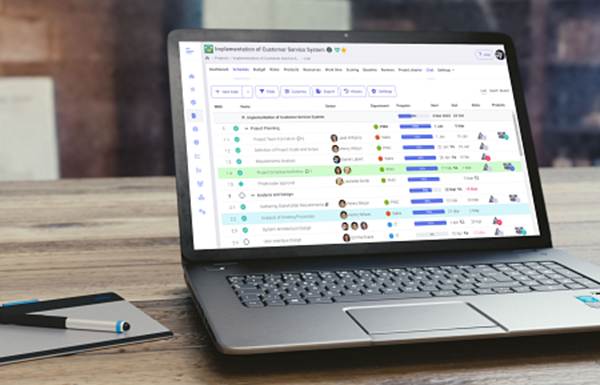
A key part of this training is familiarizing oneself with the tools of the trade. Modern project managers rely on sophisticated software to manage complex tasks and teams. For an example of a tool that facilitates comprehensive project oversight, visit Flexi-project.com.
Key Benefits for an IT Career
Enhanced Knowledge and Skills: A PM certification provides a deep understanding of methodologies like Agile and Scrum, which are standard in the IT world. It equips you with the skills to effectively use project management software, manage complex dependencies, and navigate the unique challenges of tech projects.
Increased Employability and Salary: Holding a project management certification makes you a more attractive candidate to tech companies. It demonstrates a commitment to professional development and a proven ability to lead projects to a successful conclusion. Certified project managers in the IT sector often command significantly higher salaries, reflecting their enhanced value to an organization.
Career Advancement: The certification acts as a testament to your expertise, making you a prime candidate for promotions. Whether you’re a senior engineer looking to move into a team lead role or a product owner aiming for a PMO position, this credential validates your ability to handle increased responsibilities.
Networking Opportunities: Enrolling in a project management program connects you with a network of fellow professionals and industry leaders. These connections can lead to new job opportunities, collaborations, and valuable insights into the latest tech trends and best practices.
Global Recognition: Many PM certifications, such as the PMP, are recognized globally. In an industry defined by remote work and international collaboration, a globally recognized certification can open up career opportunities around the world.
Choosing the Right Certification
There are various project management certifications available, each with its own focus area. The best choice depends on your career goals and current experience level.
Project Management Professional (PMP): Offered by PMI, the PMP is arguably the most recognized and respected credential globally. It is ideal for experienced project managers.
Certified Associate in Project Management (CAPM): Also from PMI, this certification is perfect for those who are new to project management and are looking to build a foundation.
Agile and Scrum Certifications: In the tech industry, certifications like Certified ScrumMaster (CSM) or PMI Agile Certified Practitioner (PMI-ACP) are highly sought after and complement traditional PM credentials.
Conclusion
In a competitive IT landscape, a project management certification is a strategic investment in your future. It provides the structured knowledge and practical skills needed to thrive in a leadership role, enhances your professional credibility, and expands your career prospects. As the tech world continues to rely on skilled project management to deliver innovation, a certification is not just a resume booster—it is a pathway to a more impactful and rewarding career.
Recognizing those who make a significant impact in the news/talk radio business is a fun part of the BNM Summit. On Tuesday, we announced Red Apple Media and 77WABC Owner and CEO John Catsimatidis was selected to receive our Gold Standard in Leadership Award. Then on Wednesday, Premiere Networks President Julie Talbott was chosen as the Gold Standard in Business honoree. Today, we shift our attention to the programming department.
Looking across the country this year, WTOP in Washington D.C. has been on quite a run. The brand has consistently produced double-digit ratings, distancing itself from local competitors. It has also produced strong returns digitally through podcasts, written content, streaming, YouTube videos, and social media promotion. Combined with its revenue impact in the nation’s capital, the brand consistently delivers wins, and best-in-class content and journalism.
Leading WTOP’s programming charge since 2019 is Julia Ziegeler. Today, I am thrilled to share that she has been named our 2025 recipient of the Gold Standard in Programming Award. Julia will receive the honor on Thursday September 4th during the Premiere Networks awards ceremony.
Julia Ziegler has been with WTOP since 2002, starting with the radio station as an intern. She has held many roles over her twenty plus year career, including serving as executive producer of Talk Radio 3WT and Washington Post Radio, managing editor of FederalNewsRadio.com, and WTOP Digital News Director. Born and raised in Pennsylvania, she’s a graduate of Penn State University with a degree in journalism. She also has her M.A. in News Media Studies from American University.
A recipient of the Radio Hall of Fame’s 2022 “One to Watch” award, Ziegler will soon add another piece of hardware to her collection, when she takes the stage in New York City at the BNM Summit.
To join us for news media’s premier industry conference, visit BNMSummit.com for tickets.
My career began on the air and then shifted to virtually every position in the industry, including my own business, working on the corporate level, and back again to local management, but it all started with a desire and ability to create content.
Even as a young on-air personality, the key was creating unique and compelling content for listeners. With all the industry changes, I have been researching what successful content creators do each day to remain relevant for their listeners, viewers, and readers. Here is what I believe are the top 10 habits of great content creators.
Stockpile Material
Great ideas just don’t appear on a shelf. I remember writing a novel about fifteen years ago, and I discovered that there is a definite formula for coming up with storylines and character development.
Top creators collect gems and sparks and pore through screenshots, overheard comments, odd stats, and questions. They keep a detailed and organized system of notes, voice memos, reels, videos, photos and screenshots. Inspiration never relies on memory – especially one like mine. Even when developing ideas for my articles each week, I look at what’s happening on many various fronts in the industry. Stockpiling allows you to sift through the pile later for patterns and trends that might create a terrific idea.
Show up every day
Even if you work for yourself as a content creator, you need to show up and do the work. And you need to show up on time and on schedule! Creativity is often free-spirited and spontaneous, but it mostly loves (and requires) routine more than your lightning bolt ideas.
My own example I offer is that my articles are due at Barrett Media no later than Wednesday for publication on Thursday. If I were to follow that schedule, my ideas would feel pressured and stilted. I often write them a couple of weeks in advance to be sure they are on schedule and still timely. You must also consider other people’s responsibilities after your content arrives. Being on time respects everyone else’s roles. This consistency lowers the pressure on any single piece and builds audience trust through the rhythm you have created.
Change things up and “Think Different”
Steve Jobs used this all the time. Great content creators design ways to change things up. While blank pages can be scary, boxes may be liberating. Many creators pick specific formats such as three ideas in 90 seconds, one insight per story, and one video per day, all of which enable them to focus on the choices they created. This reduces fatigue, speeds processes, and can make content unique and recognizable. This could mean recurring series, fixed segments, or signature styles and hooks.
Protect your hard work
This allows creators to embrace boredom. The best material created often requires true “quiet time.” It can stimulate the most creative concepts. Creativity needs you to carve out distraction-free blocks for drafting and editing. Only then can you intentionally step away and get away from podcasts and phone-free activities. Mindless dishwashing does wonders for a wandering mind. Idleness without distractions often lets the subconscious connect the dots that are floating inside your head.
Chase curiosity, not only trends
I personally love this one. While content creation requires an understanding of what’s hot, we should all start with questions: “What am I stuck on? What would surprise my fans?” When riding a trend, add a twist using data and stories crafted as only you can provide. Remember that much of the original content has already made it to your audience’s eyes. The blend of personal interest and public relevance keeps your work fresh and sustainable..
Publish imperfection
It’s ok for top creators to avoid overworking drafts. They make a quick version, check it for spelling and grammar and then ship it and watch for results and feedback. Content that resonates gets expanded, while your inevitable misses should be viewed as lessons. Momentum beats meticulousness, and iteration turns “good” into “signature.”
Read outside of your own lane
Breakthroughs can often come from crossing lines and comfort zones. The key is to read more about totally unrelated industries. By importing topics and people from other fields, your own thinking, systems, design patterns, and interest levels will expand and eventually supply more concepts and ideas. Find angles you own niche would rarely even see.
Collaborate and credit
Collaborate and credit everything and everyone that goes into your ideas. Here is one I just don’t see enough of. If you count on yourself for every idea, there will never be a way to stay ahead of it and scale your creativity. Community is empowering. Pros swap ideas, drafts and ideas. They often trade interview experts and count on others for sharp, honest feedback. Be sure to credit people generously with salutations, links and shout-outs. Building goodwill widens idea networks. This type of thinking attracts other collaborators, which elevates everyone’s work.
Keep Progress Organized
Keep your processes neat and well-organized. Save your templates, checklists, libraries, and storylines. One single idea might become a thread, a reel, a newsletter, or a slide. You will find that operational and “process clarity” will actually free up bandwidth for the part only you can do. Making meaningful content.
You Matter
You matter – a lot. This may be the one thing no one does very well. I know I am remiss here, as well. Take care of yourself. Sleep, exercise and eat properly. I read that this shouldn’t be viewed as “occasional and is truly the power grid.” Perhaps I would be more prolific if I treated energy management like my craft. I do believe that a true shutdown ritual ensures that tomorrow’s brain arrives ready and in better condition.
The most important part of these habits can be encapsulated by reminding any content creator to capture endlessly, publish consistently, embrace boredom, and feed yourself and your brain with healthy eating and rest.
Barrett Media produces daily content on the music, news, and sports media industries. To stay updated, sign up for our newsletters and get the latest information delivered straight to your inbox.
Fantasy football continues to be one of the more popular ways for the average American to follow the National Football League. Over 60 million people play fantasy sports in the United States with three-quarters of those playing fantasy football specifically. Where the average fan could turn into the best virtual general manager. Fantasy football is also big business. The billion-dollar industry is projected to reach $20 billion by the year 2030 in the United States alone. It’s a bullet train. Rolling on all gas, no brakes, with Andy Holloway and The Fantasy Footballers Podcast along for every step of the ride.
“When we started this podcast, we were in real estate school,” said Holloway. “We thought we were going to be realtors, but we were refreshing our download numbers in the middle of class. None of us really thought it would be viable enough to support three families.”
Just over a decade ago, Holloway, along with his friends Jason Moore and Mike Wright, launched The Fantasy Footballers Podcast. Three like-minded friends with backgrounds in tech and entrepreneurship took the chance on creating content from a passion for playing fantasy football. Rooted in a confluence of circumstance after working together at a video game company in Scottsdale, Arizona. The Fantasy Footballers Podcast has grown into the number-one podcast in the niche category of fantasy sports.
“We went all in right away and treated it like a business, not just a hobby. We put everything that we had known and learned in other industries into it,” explained Holloway. “The only chance it was going to have was to give everything for a period of time. We knew with the traction of the download numbers. It was on its way, and kind of went from there. It wasn’t that long in terms of having to do that grind-out phase for us.”
Crafting an Ultimate Draft Board for Success
With fantasy football season about to begin in a couple of weeks, drafts are happening across the country and the globe. Young and old. Men and women. All walks of life signing in on their phones or computers to track the latest trends on who to draft and when to draft. Holloway first began his obsession with fantasy sports through basketball when he was in high school. Over time, he saw his uncle become an avid fantasy football player and grew into the space.
From there, a passion for the sport began. Today, nearly 20 years later, Holloway, Moore, and Wright find themselves at the pinnacle of sports podcasting.
“The biggest thing for us is connection and community,” said Holloway. “We were very committed from day one to being a year-round show. No other fantasy show was doing year-round. We were fans, and we were hungry for that content. It didn’t exist. We thought maybe there are some other fanatics like us out there. It turned out there were.”
The Fantasy Footballers Podcast aims to treat the audience as a fourth member at the table, creating connection and community through the love of fantasy football. It builds a family feel that can bring an already intimate medium like podcasting to a new level.
“I’ve been a part of businesses where the leadership at the top have different worldviews. They have different directions they want to go. It’s really challenging,” said Holloway describing the benefits of working alongside his friends Moore and Wright. “We really respect one another. That goes a long way in how we run the business. I’m thankful to have two like-minded folks to run the company with.”
Bringing Their Talents to SiriusXM
With over 40 podcasting awards to their brand, the spotlight has never been brighter on the success of The Fantasy Footballers Podcast. This past January, Holloway and his team signed a new, exclusive podcast agreement with SiriusXM, which showcased the podcast on the network’s Fantasy Football Radio channel 87. The agreement provided the podcast with exclusive advertising assistance plus distribution, bringing the product to a whole new audience.
“The fact that they [SiriusXM] were so familiar with our brand really made the transition super smooth. It’s been great so far,” noted Holloway. “Just being with a partner that really understands us. They’re creative and find really good brands for us.”
Holloway says that the podcast worked with the Midroll network previously, which was acquired by SiriusXM in July 2020. After signing with SiriusXM, they found that a lot of the people who had worked with The Fantasy Footballers Podcast at Midroll were still with SiriusXM. This made the transition even easier, leading to more effective collaborations on the podcast.
“Our philosophy with the show is always audience first. We don’t want anything we do with ad sales or agreements to infringe on what makes the show great,” said Holloway. “We’re on the phone with them [SiriusXM] all the time, coming up with ideas, approving or changing language to be conducive to the show. It’s been a very collaborative and creative process. It’s been the smoothest of any transition we’ve ever had.”
The agreement with SiriusXM airs The Fantasy Footballers Podcast daily, with daily tips in other programming and guest appearances on other SiriusXM programs. Holloway explained the importance, with any partnership, of allowing for the widest distribution possible without insulating the audience from the content.
An extremely important point for a very crowded podcasting landscape, according to Holloway.
“It is oversaturated. You must bring something unique to the table,” explained Holloway. “If you are one more of a bunch of the same thing, you’re certainly not going to get to the business success side of things, even if you produce a good show.”
Staying Fresh Year Round
While every new season brings excitement for a new year, The Fantasy Footballers Podcast is a year-round venture. There is no offseason for Holloway, Moore, and Wright. This provides a unique challenge to not only bring fresh material when no games are going on but also remain mentally in the game as well.
“It’s a challenging thing when you are having success. You want to maintain that and give your fans of ten years what they’ve come to know and expect. But you don’t want to stagnate and do the same old thing,” said Holloway.
With media consumption shifting to more short-form content, Holloway noted that the podcast is investing more assets into mid-form content on YouTube while paying attention to trends on social media. He admitted that none of the hosts are TikTokers. They all “know their lane,” but the luxury of being on top is the ability to hire people to assist on those platforms.
“We are very much like a news organization in the sense that a lot of our content expires very quickly,” explained Holloway. “Nobody’s looking up a Week Two waiver wire show from last year. We’re paying attention to the way that modern news media-type content gathers eyeballs and trying to apply it while still focused on connecting with the listeners.”
Holloway explained that the joy of the business he has created with his friends is that the content never gets old. Over time, you learn lessons from your experience. Especially when working with your best friends. While the season is long, and the offseason seems longer, there are times when diving into fantasy rosters and rankings tends to weigh on the mind.
“It can be a grind, but we’ve been very fortunate. If we were producing the show in the exact same fashion that we were in year one, I think we’d be dead,” said Holloway. “If we can get back to here and love this game, I can’t wait for there to be games. If that passion is still there, then we’ll keep rocking.”
Barrett Media produces daily content on the music, news, and sports media industries. To stay updated, sign up for our newsletters and get the latest information delivered straight to your inbox.
Spinal Tap II will be in theaters soon, and it’s back to NFL and school season. Life is good.
While reminders about Fall’s listener behavioral and commute changes are helpful, today we’re going to a different class:
Nielsen 101: Everything you should know about the ratings but were afraid to ask.
As you gather your RockTernative troops to motivate them for Fall domination, bring this. Many in the room won’t know all of this.
The Panel:
Everyone 6+ within a household must participate.
As of a new change this week, Panelists can now stay in the panel for approximately three years, but can opt out at any time.
Panelists are compensated at varying levels depending upon household makeup.
Panelists carry weights based on several demo/socio factors (ex: one may be weighted to equal 5,000 people, while another may be 1,900).
How it Works:
There are four quarter-hours per hour (00:00-14:59, 15:00-29:59, etc.).
Five minutes of listening in Diary, and three in PPM (which can be nonconsecutive), inside a quarter-hour = credit for one quarter-hour.
30 seconds of listening (in PPM) is the threshold for one full minute of credit.
There are over a dozen different metrics that can be reviewed — they all play roles in the big picture — AQH Persons, Cume, TSL/ATE, etc., but I’m going to focus on two.
Programmers and Sellers often speak different languages.
Programmersspeak AQHShare.
SalesPros speak AQH Rating.
What’s the difference?
One drives revenue, the other is more ego.
AQH Share is your listener % vs. all listeners.The number of people who were listening to your station in an average quarter-hour over the number of people listening to radio at the same time (demo/daypart). Bragging rights! “High-five, we hit a 4-share!”
AQH Rating is your listeners vs. market population (everyone from kids to Sydney Sweeney). The number of people who were listening to your station in an average quarter-hour (demo/daypart) over the market population (demo). This is measured in tenths and directly affects revenue. You’ve heard of cost per point. “Woo hoo! Our rates are going UP — our Rating went from .3 to .4!”
Even 20 years from now, there will always be 100 Shares up for grabs.
However, the number of Rating Points can change monthly based on PUMM (a PPM term = People Using Measured Media). For today’s purposes, think of it as the number of people who actuallylisten to Radio.
These Programming and Sales languages collide at times — they don’t necessarily move in tandem or mean the same thing.
The morning show is pouring Jameson shots after seeing their 4.1 Share jump to 4.9, but Sales is sticking with Diet Coke because the 4.9 may still be a .3 Rating. That’s a separate column on math.
Two more notes of confusing clarity:
Shares can go up while the actual number of radio listeners goes down. It’s all based on usage and the size of the pie.
Not all Rating Points are created equal — they’re rounded up or down to the nearest tenth.
For example: A .2 AQH Rating — .249 and .150 are both rounded to .2, but both have different Share numbers.
Most clients place ad-buys using AQH Rating — it’s better for them than Share:
A station at .249 (just shy of a .3) and one at .150 (barely a .2) are usually sold at the same rate (.2). The power — and the flaw — of the Average Rating Point.
For more context, Shares of 5.3 and 4.3 could both be a .3 Rating.
With shrinking PUMM (fewer Ratings Points due to fewer radio users), it becomes harder for brands to maintain their historical Rating Point Averages and, therefore, their spot rates and revenue budgets suffer.
Buying on Rating also helps advertisers flatten or steady rates vs. numerous price points based on small ups or downs in Share.
Some of the smartest in Radio, but certainly not all, like to look at AQH Persons when making their sales pitches — when two stations have a .2 Rating, the higher AQH Persons number can be used for strength.
In any case, when you hear about Radio revenue being in decline, it’s largely a reflection of PUMM and the Rating Point metric, not Nielsen’s measurement of Share that programmers flex over.
And while the Radio industry is smart to remind everyone the medium’s reach is still above 90%, that’s a collective national number, not your station’s local number, and the truth is spots are being valued and priced lower.
Imagine if fast food worked this way — fewer customers this month means my burger gets cheaper next month. What a dream.
It’s important for our RockTernative soldiers to know this so everyone understands the real fight our sales teams are up against. It also helps explain to your #1 morning show why the brand isn’t printing money like it did years ago.
We can complain all day about Nielsen — I’ve been on those front lines — but they’re doing the best they can with a moving target, and we’re all at the same party.
I love Share like most programmers, but Average Quarter-Hour Rating is a more “accurate” measure of Radio out in the wild, especially for advertisers who are buying across media.
*Thanks to Dr. Ed Cohen for double-checking my facts to make sure I didn’t drive you into a ditch.
Barrett Media produces daily content on the music, news, and sports media industries. To stay updated, sign up for our newsletters and get the latest information delivered straight to your inbox.
National Radio Day is a nice moment. It lets us remind listeners, advertisers, and ourselves that this industry still matters, that the medium is powerful, and that radio has a story worth telling. But if we’re honest, we dust off that message once a year, put it out there, and then set it back on the shelf until the next August 20th rolls around. That approach doesn’t do radio any favors.
The things that make radio worth celebrating on National Radio Day are the same things that make it worth celebrating on any given Tuesday in March. The reach is still massive. The connection is still intimate. The role in communities is still unmatched. Yet we act like it’s a seasonal sale, only bringing out the talking points when the calendar forces us. That’s not sustainable if the goal is to keep the industry strong and relevant for decades to come.
Listeners who hear us rave about radio once a year aren’t going to suddenly view the medium differently. Advertisers who see a flood of posts on social media in late August aren’t going to change their annual budget strategy. But when we consistently hammer home radio’s value, tell its success stories, and highlight its unique advantages, we create a drumbeat that’s impossible to ignore. Frequency matters in sales, marketing, and branding — and it matters when we talk about radio itself.
Think about what radio professionals are always trying to sell. Local connection. Trust. Habit. A sense of companionship that digital competitors simply don’t replicate. Those aren’t qualities that shine one day a year; they shine every single time someone turns on the radio. If we truly believe that, then we need to make that case every chance we get. The most powerful industry in the world can’t live off of one holiday, no matter how many hashtags get attached to it.
Here’s the other thing: the story is good. Radio is still the most consumed audio platform. Millions of people rely on it daily for news, entertainment, and music. When disasters strike, radio is often the first line of communication for communities. Sports fans rely on play-by-play broadcasts when they can’t be in front of a TV. Those are compelling, real-world proof points that other industries would love to have, and we let them gather dust until National Radio Day makes us drag them out again.
Radio’s story doesn’t have to be only about nostalgia, either. We’re not talking about a fading relic that needs to be remembered once a year like an old class photo. We’re talking about a medium that continues to reach more people than podcasts, streaming platforms, or satellite radio. Personalities who still create massive loyalty. We’re talking about stations that still bring communities together. That’s an ongoing story, and it needs to be told in real time, not just in anniversary posts.
If you want people to see radio differently, you have to show them every single day why it deserves attention. That means pointing out successes on the air. That means telling advertisers not just what you can offer, but what the medium as a whole continues to deliver. That means being intentional about the way we talk about radio outside of our echo chamber. It’s not enough for insiders to swap stories about how special the medium is — the public and our partners need to hear it, too.
Imagine if a station treated its programming like we treat National Radio Day. Once a year, it put its best effort forward, promoted itself aggressively, and acted like it was a major player. The rest of the time, it coasted, hoping people would remember the big splash. That station wouldn’t last long. The same principle applies here. Radio’s success story can’t be a holiday stunt; it has to be a constant reminder of what makes this medium irreplaceable.
So yes, National Radio Day is worth recognizing. It sparks nostalgia, it encourages pride, and it lets us celebrate the work we do. But if the celebration stops there, we’re wasting a chance to keep radio top of mind in the conversations that matter. The power of radio is not confined to August 20th. It’s present every single day, in every community, in every market, in every format. If we embody that, if we tell that story more often than once a year, then the industry’s future will be much stronger than its past.
Barrett Media produces daily content on the music, news, and sports media industries. To stay updated, sign up for our newsletters and get the latest information delivered straight to your inbox.
In a couple of weeks, MLB and commissioner Rob Manfred will likely announce plans for their soon-to-be-vacant broadcasting rights agreements, which ESPN currently holds. ESPN currently has agreements with not only MLB, but also the NFL, NHL, and the NBA. With ESPN and MLB mutually announcing their opt-out of the current deal, this leaves the future of Sunday Night Baseball, the Home Run Derby, and the Wild Card round of the postseason in limbo.
According to a report on Tuesday from Yahoo Sports, Major League Baseball may soon find a solution to its short-term rights conundrum. The players involved for ESPN’s rights are NBC/Peacock, Netflix, and ESPN, with Apple reportedly losing the rights to Friday Night Baseball in the process.
On the surface, baseball fans may be asked to pay more while watching less. A trend that could accelerate once MLB finalizes new rights agreements for a higher dollar amount after the 2028 season. Streaming services are increasingly becoming the vessel for live sports, rather than traditional over-the-air networks. That raises a big question: could the NFL eventually follow suit?
Looking at the report surrounding MLB, the plan is to shift its Friday Night Baseball package from Apple to NBC and Peacock, while also adding Sunday Night Baseball and the Wild Card round of the playoffs. Netflix is interested in the Home Run Derby, while ESPN is reportedly interested in taking over the MLB.tv product. Which will open doors for the network to be involved in distribution for local markets.
If you bought AppleTV for Friday Night Baseball, you will move to Peacock. You enjoy dingers? Make the move from ESPN to Netflix. If you have an MLB.TV subscription, it may now have to be an ESPN direct-to-consumer package.
Remember when watching sports on television was simple? That’s what the NFL does best, for now.
Could the NFL Shift Their Stance
The NFL has an advantage that the NBA, NHL, and MLB simply don’t have: fewer games. Every NFL game is available on network television on over-the-air affiliates in local markets. FOX, CBS, and NBC have become a staple for weekly NFL action. ESPN and ABC put a majority of the Monday Night Football product on ABC for the season. The only outlier is Netflix with the Christmas Day package and Amazon Prime’s presentation of Thursday Night Football. However, the NFL ensures that local markets for the teams involved will have an over-the-air option to watch the game.
That’s important. With the NFL, you don’t have to pay to watch your local team—playoffs included.
The networks producing NFL broadcasts do a great job. They are not the issue; the problem is local television stations are facing a huge challenge with staying alive.
It’s no secret that streaming video has damaged the reach of local broadcast television stations. More than likely, that local television station has an affiliation with one of the networks that produce NFL broadcasts. If the local broadcast television station can no longer afford to stay on air, local markets could potentially lose the ability to watch their favorite NFL team.
Ask yourself: will a local CBS affiliate air FOX Sports games if the local FOX station closes? Could smaller stations afford the cost with reduced inventory to sell?
This is the quiet part out loud: the days of watching your local NFL franchise the way you always have will likely be changing. The NFL may tout its commitment to remain being seen on traditional over-the-air television, but they’re not blind to the times. The shifts in how products are viewed are changing, and the vessels in which they can be viewed are growing—but only online.
Times Are Changing, Will Goodell?
Local television affiliates are losing money and could potentially shut down. Networks will lose affiliation with those markets because of this. Streamers like Amazon, Netflix, and Paramount have the revenue streams due to shifts in audience habits and advertiser spending. They can bid the highest dollar for the most-watched product in America today—and probably by a larger margin compared to networks as each year passes.
Could the NFL cash in like the NBA did with its most recent rights deals? Could the NFL become home to Netflix, Prime Video, Peacock, and Paramount instead of FOX Sports, CBS Sports, and NBC Sports? Sure. Netflix is using CBS Sports’ production crew to produce the games on Christmas Day. Do you think Netflix will shy away from building its own infrastructure to put the NFL on the global map?
Roger Goodell runs a multi-billion-dollar company. He said he’s not competing against the NBA or MLB; he’s competing against Google and Apple. Those are digital companies with no reach in traditional over-the-air television. Goodell focuses on the future. He’s investing in ESPN and Paramount because they have positioned themselves to be players in the streaming future of the NFL. Could we see Netflix and Apple become more of a player with the NFL in the very near future along with NFL acquired properties?
The NFL is the last cash cow for local broadcast television stations. The amount of revenue your local television station makes on NFL broadcasts could be what’s keeping these stations alive in the first place. The NFL has interest in reach and influence. The more the NFL plays into investing in its future with streaming content companies, the less likely those broadcast television stations are to survive.
The NFL is in no position to lose here. They will continue to make money like they’re printing it, and people will flock to watch it wherever it may go.
The fan is the only one that loses. When everything around seems to become more expensive, sports are supposed to be the escape.
Barrett Media produces daily content on the music, news, and sports media industries. To stay updated, sign up for our newsletters and get the latest information delivered straight to your inbox.
Longtime Kansas City radio voice Codie Allen was most recently known as the morning co-host on Country 106.5 The Wolf. Additionally, she was the station’s Assistant Program Director and Music Director.
Allen, along with her co-host Zeke and afternoon host Jeff “Shotgun” Jaxson, was let go on earlier this month. (BMM 8/14)
A Shift in the Music—and in the Room
For Allen, the first sign that something was wrong at 106.5 The Wolf didn’t come from the ratings or from her listeners. It came from the music.
“As a music director, months ago, probably six months ago, I went to my boss, JR, and I said, I feel like the music is off,” Allen recalled. “We’re hearing the same songs at the same exact time. I’ve had to delete a lot of songs, which might be throwing off the logs, but things are just not right with the music.”
She was told not to delete anything, to “play everything straight through.” Soon after, the station underwent what Audacy calls a “swarm,” where programmers from other markets critique the music and shows.
“I’ve been doing this a long time, 26 years in Kansas City, and especially over the last several years as music director. I know we’ve had solid success with the Country shares in our market. We have three Country stations in Kansas City, all very successful. Well, over the last few months, that hasn’t been the case. But it wasn’t just with our radio station; all the Country stations went down.”
One moment stood out as a clear warning sign that things might not be going well.
“What made me think I may not have a job is when our morning show won the Kansas Association of Broadcasting Award. No one recognized us for that in our building. Not one person. When that happened, I had the feeling things weren’t looking good.”
The Joy of Connecting
Despite industry pressures and shifting ratings, Allen says her main focus was always the listeners.
“I tried to keep a positive attitude, and I tried to just focus on Kansas City. I wanted to make somebody smile every single morning. It warms my heart to hear people say, ‘You didn’t know this, but you got me through a morning I didn’t think I was going to get through.’ Of course, I didn’t know that. I was just trying to make people laugh or relate to some of the crap I’m going through in my own life.”
That human connection, she says, is what separates live personalities from syndication and AI.
“My personal opinion on this is that I want everyone to have TMI about my life. I want to make a connection so they don’t ever feel alone. Whether it’s a funny story, a feel-good story, or a winning story, that’s important.”
She compared it to the way Garth Brooks connects with a crowd.
“I remember sitting somewhere in the middle at a Garth concert, and I swear with everything I have that he was singing right to me. That’s how I want to be on the airwaves in any city. I want to make sure that you know I’m talking to you.”
Codie Allen Photo Facebook
Preparing for Change
Knowing radio was evolving, Allen made her moves to adapt.
“I love what I do as far as broadcasting. I love to tell stories, talk about music, and bring listeners backstage. Even if it’s just through pictures or stories,” she said. “So, I built a studio in my house because I also know that radio is changing. If radio’s changing, I’m going to change with it.”
“I would recommend anybody who just loves to broadcast to start thinking about that and start making contacts with other program directors out there or smaller markets that really need a human touch but can’t afford to bring somebody in. That has kept me afloat.”
What’s Next
For now, Allen plans to stay in Kansas City at least until her children finish high school. After that, she’s open to new markets and new opportunities.
“I would love to do more voiceover work. The community around me has been so great, and they’ve got me in touch with some of the best people who have voice-over studios and businesses. So I’m going to try to do a lot of voiceover work and see how many stations I can get under my belt. My goal is to just keep going.”
Networking, she believes, is the most important tool for anyone navigating the uncertain radio landscape.
“If you know anybody, even if it’s your competitor across the street. If they can give you a name, reach out. Don’t be afraid to call people. That’s what I’ve done. Networking has kept me going.”
Saying Goodbye to The Wolf
Leaving 106.5 The Wolf behind has been tough.
“I built that station. I love everything. I’m going to miss everything about it,” Allen said. “I’m going to miss the wolf howl that’s going to be in my head. And I’m going to miss the listeners. I’m going to miss, believe it or not, waking up at 4 o’clock in the morning and going into the studios. I’m going to miss the memories.”
“It’s going to be okay. I know at the end of the day, it wasn’t all for nothing. I made a lot of people smile, and they can’t take that away from me ever. And it’s just radio. It’s just a little, small speck of life because family is what’s important. God is the most important. Turn to faith, turn to your family and friends, and start living a life. Don’t give up on that. Just go have some fun.”
Barrett Media produces daily content on the music, news, and sports media industries. To stay updated, sign up for our newsletters and get the latest information delivered straight to your inbox.