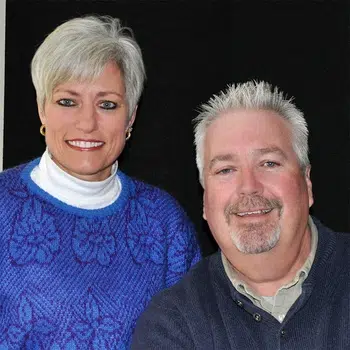
Gordo, aka Gordon Hultengren, is moving down the hall to take on mornings at Classic Hits Rewind 103.5/104.3 Columbus, OH. He moves over from Hot AC Mix 107.9 in the same Saga Communications cluster.
Posting on Instagram, Gordo wrote, “After an amazing run on Mix 107.9, I’m making a small move literally just down the hall and joining the team at Rewind 103.5/104.3 as your new morning show host! Still bringing you the same show, same ridiculous energy, still based right here in Columbus. If you’ve been with me at Mix, let’s Rewind and press play on this next chapter together!”
Gordo joined the cluster in May of last year, arriving from Top 40 U93 in South Bend, IN. Brian Phillips has hosted the Rewind morning show for the past year.
Barrett Media produces daily content on the music, news, and sports media industries. To stay updated, sign up for our newsletters and get the latest information delivered straight to your inbox.
Longtime ESPN play-by-play announcer Mike Breen is in the midst of calling the NBA Finals for the 20th time in his career. With the Oklahoma City Thunder one win away from securing a league championship for the first time in franchise history, there has been a blend of compliments and criticism surrounding the game broadcast itself, which also features analysts Doris Burke and Richard Jefferson along with reporter Lisa Salters. Ken Carman and Anthony Lima broached the topic on the Tuesday morning edition of their show on 92.3 The Fan, starting by examining why games within the championship series feel somewhat ordinary.
Carman acknowledged that the NBA Finals is the highlight of any television package and seemed ostensibly confounded as to why it was being made into “a regular old game.” ESPN on ABC aired the in-arena introductions of the starting lineups on Monday night for the first time since 2013, bringing audio from Thunder public address announcer Mario Nanni and the Paycom Center crowd into the presentation. From there, Lima catalyzed a debate pertaining to delivering calls of the action in real time.
“What if I told you that the NBA is the only sport where the clear best play-by-play guys are not doing the biggest games, meaning Kevin Harlan [and] Ian Eagle are the best,” Lima said. “I don’t even think there’s a big debate. Right now, they are the best in basketball, yet can’t sniff an NBA Finals.”
As the NBA prepares to begin new 11-year media rights deals with The Walt Disney Company (ESPN/ABC), Comcast Corporation (NBC/Peacock) and Amazon (Prime Video), the NBA Finals will be remaining on ABC for the foreseeable future. Disney is reportedly paying the league $2.62 billion a year for its rights package, which also includes playoff games, regular-season contests and select matchups within both the WNBA and NBA G League. Carman acknowledged that Harlan and Eagle do not work for the right company, and both broadcasters are reportedly expected to join Amazon’s NBA coverage beginning next year.
“I know,” Lima replied. “I’m just saying, ‘When does that happen?’ The NFL, it rotates so we get everybody. Now baseball, people would argue that Joe Buck, but I would say Joe Buck over time has become the voice of big-game baseball.”
Upon questioning who is the best play-by-play announcer in baseball at the moment, Carman referenced Brian Anderson and Matt Vasgersian as potential options. Los Angeles Dodgers play-by-play announcer Joe Davis is currently the lead voice for MLB on FOX coverage, which includes the World Series, and the show mentioned him in the conversation as well. Lima then reflected on the legacy of Toronto Blue Jays play-by-play announcer Dan Shulman, who used to be the voice of Sunday Night Baseball on ESPN and currently calls college basketball games for the network.
“If we really want to make it the biggest event, you got to have the best guys,” Lima said. “Breen is really good, really good. Nobody has a bad thing to say about Breen. He’s not the best though.”
Barrett Media produces daily content on the music, news, and sports media industries. To stay updated, sign up for our newsletters and get the latest information delivered straight to your inbox.
Social media has become a large part of billions of lives around the globe. It is also now the preferred method for news consumption, new data shows.
The 2025 Digital News Report from Oxford’s Reuters Institute for the Study of Journalism revealed that 54% of respondents said that they utilize social media apps to consume news. That — for the first time — topped television, which 50% of those surveyed said they used for news. In 2013, 72% of those surveyed said they used television for news purposes. Also in 2013, only 27% said social media was an avenue they used for news.
48% said they use online news websites for their news consumption. That represents a dramatic drop since the 2013 survey showed that 69% used news websites.
News podcasts (15%) topped AM/FM radio (13%), while print news dropped to 14%, down from 47% in 2013.
Additionally, those using AI for news hit the charts for the first time. 7% of respondents said they had utilized AI to gather news in 2025.
The study also broke down which social media apps were most used for news consumption. Six separate apps saw double-digit usage rates, up from only two we saw a decade ago. Facebook is still the top app for news at 26%, while YouTube was close behind at 21%. Instagram has risen from 3% in 2015 to 16% in 2025. Meanwhile, WhatsApp (15%), X (11%), and TikTok (10%) also reached double-digit usage rates.
One of the biggest takeaways from the study was that an overwhelming majority of audiences have no interest in paying for online news.
“Over the last ten years, ongoing subscription levels across our basket of 20 countries have more than doubled but they now look to have hit a ceiling,” the study says. “Publishers have already signed up many of those prepared to pay and in a tight economic climate it has been hard to persuade others to do the same. In most countries, we continue to see a “winner takes most” market, with upmarket national newspapers scooping up a big proportion of users. In the United States, for example, The New York Times has extended its lead over The Washington Post partly off the back of its highly successful all-access subscription that includes games, recipes, audio sport, and product reviews.”
Only 20% of U.S. respondents said they had paid for any online news in the past year. Meanwhile, 77% said they would not consider paying for news online in any capacity.
Barrett Media produces daily content on the music, news, and sports media industries. To stay updated, sign up for our newsletters and get the latest information delivered straight to your inbox.
The PGA TOURannounced that Brian Rolapp, a longtime executive with the National Football League, has been named Chief Executive Officer. Rolapp will assume his new role later this summer, bringing more than two decades of experience in reshaping how fans consume live sports.
Rolapp most recently served as the NFL’s Chief Media and Business Officer, which he stepped down from late last week. In that capacity, he oversaw the league’s commercial operations and played a key role in striking landmark deals with Amazon, Netflix, YouTube and major broadcast networks, while also launching the league’s streaming platform, NFL+.
“I’m honored to join the PGA TOUR at such a pivotal time,” Rolapp said in a statement. “The PGA TOUR represents the highest level of competition, integrity and global opportunity in the game of golf, and I believe deeply in the TOUR’s mission and its potential to grow even stronger.”
The decision follows an extensive search led by the PGA TOUR CEO Search Committee, which included prominent figures such as Arthur M. Blank, Tiger Woods, Adam Scott, Commissioner Jay Monahan, Joe Gorder and Sam Kennedy. The committee unanimously recommended Rolapp, citing his deep expertise in scaling sports media businesses and his appreciation for the TOUR’s core values and potential for future growth.
As part of the transition, Monahan—who announced last year that he would step down as commissioner at the end of 2026—will begin shifting his day-to-day responsibilities to Rolapp. He will remain involved in a governance role as a member of the PGA TOUR Policy Board and PGA TOUR Enterprises Board.
“We’ve found exactly the right leader in Brian Rolapp,” Monahan said. “His arrival strengthens our leadership team and reflects our shared commitment to the TOUR’s continued evolution. With Brian’s expertise and vision, and the trust we’ve established with our players and fans, I’m more confident than ever in the future we’re building.”
Rolapp will oversee both PGA TOUR, Inc. and PGA TOUR Enterprises. Upon his official start, the TOUR’s management team will report directly to him. In turn, he will report to both boards of directors.
Gorder, Chairman of both the Policy and Enterprises Boards, praised the appointment as a sign of alignment across the TOUR’s governance structure. “Brian’s leadership will help us move forward with clarity, purpose and momentum,” Gorder said.
The appointment comes amid a period of notable change and innovation for the PGA TOUR. Over the last two years, the TOUR has restructured its competitive schedule, secured a $1.5 billion investment, introduced equity opportunities for players and launched its Fan Forward initiative aimed at better understanding fan behavior.
Rolapp, a graduate of Brigham Young University and Harvard Business School, joined the NFL in 2003 and quickly rose through the ranks. He served as COO of NFL Media and CEO of NFL Network before taking over the league’s media and business operations. His work has earned him induction into the Sports Business Journal’s Forty Under 40 Hall of Fame.
Blank, who led the PGA TOUR’s search effort, said Rolapp’s track record in sports business made him the standout choice. “Having worked with Brian during our time in the NFL, I’ve seen firsthand his ability to lead with vision and collaboration, and to deliver results,” he said. “He understands what it takes to elevate a global sports brand—and I’m confident he’ll bring that same energy and excellence to the PGA TOUR.”
Players also welcomed the news. “Brian’s appointment is a win for players and fans,” Woods said. “He brings a fresh perspective and a deep respect for the game.”
Rolapp expressed gratitude for Monahan’s support during the transition. “Commissioner Monahan is an incredible leader,” Rolapp said. “It has been a pleasure getting to know him throughout the interview process, and I look forward to working with him in partnership during this important transition.”
Barrett Media produces daily content on the music, news, and sports media industries. To stay updated, sign up for our newsletters and get the latest information delivered straight to your inbox.
You’ve probably seen the scene from Mad Men where Peggy Olsen fights back tears as she tells Don Draper that he has never thanked her when she gives him an idea that turns into a successful ad campaign for one of their clients. Don shouts back “that’s what the money is for!”. I never watched Mad Men and I have seen that clip a million times.
Remember that scene. We’ll come back to it later.
The song I am thinking of is Tom Petty’s “Into the Great Wide Open.” It’s not a hard lyric to find. It’s the chorus.
Into the great wide open Under the sky so blue Into the the great wide open A rebel without a clue
Pat McAfee built a brand. He’s the rebel…or at least he was the rebel. He did things his way and succeeded outside of the typical sports media ecosystem. But now, he has the ESPN logo in the corner of the screen whenever he’s on.
Anyone crowing about being an outsider with the ESPN branding slapped all around them looks silly. Maybe Pat McAfee is still a rebel, but if he can’t see that circumstances have changed the way he’s perceived, then he’s a rebel without a clue.
All of ESPN’s zeros may have made Pat McAfee rich and put him in front of a lot more people, but they also kind of ruined what he had built. He wants to be an outsider, but how can you call yourself an outsider when you’re in business with Mickey Mouse? I think Pat McAfee would be happier without ESPN in his life.
Things Changed Even if McAfee Didn’t
Pat McAfee will tell you that he and his crew are still fully independent. The show is not a Disney product. It’s just licensed by Disney to air on ESPN platforms. It’s the same kind of deal as the ones that made headlines for Inside the NBA and Rich Eisen.
McAfee still exaggerates his Yinzer accent when he cusses like a sailor on television. He’s still surrounded by a couple of nondescript schmucks and a cowboy wearing eyeliner. AJ Hawk still pops on to agree with everything Pat has to say. It all still happens inside his Indianapolis studio.
When McAfee looks around him, I get why he may struggle to accept that there’s a new reality at hand here. But the fact is that Pat McAfee is viewed differently now than he was three years ago. He still has his ride-or-die fans, but he also has a whole new audience that views him not as a rebel or even as an individual.
That audience sees just another ESPN personality, another cog in the most powerful machine in the sports world. They don’t see anything that can be construed as an underdog. That’s a problem for Pat McAfee, because he has defined himself as an underdog for his entire career.
Enemies Everywhere
Pat McAfee is a diva. I don’t say that as an insult. It’s a conclusion based on a whole lot of evidence.
I don’t know anyone who works on The Pat McAfee Show, but I bet they feel valued. There is plenty of evidence that Pat treats those guys very well and is genuinely devoted to them.
The people that work outside of that Indianapolis studio are different, though. They aren’t allowed to criticize or question anything he does without feeling his wrath. Just ask Norby Williamson.
Forget criticism. McAfee sees enemies in other people simply not praising him. He loves to throw the word “rat” around for those people, which is kinda nuts. The “if you aren’t with me, you’re against me” attitude should be reserved for war and superhero movies. I honestly can’t believe McAfee’s fans think it’s cool, but then again, I’m a Xennial, and we mock first and learn to love later.
That’s What the Money Is For
What happened to rich people that they all now want to be relatable? We see it regularly at the very high end with Elon Musk copying every meme he sees on the internet and with Mark Zuckerberg constantly dressing like a twelve-year-old.
But it’s happening on the more conceivable end of the income spectrum too. Just look at McAfee’s ESPN colleague Stephen A. Smith calling into another SiriusXM show to make sure the audience knows he is not the bad guy that got Michelle Beadle and Cody Decker fired.
Personally, I don’t get it. You’re rich. Why do you care if you’re liked?
All of these people seem to really, really care, though. The same goes for McAfee. He clearly hates people reporting on anything he does. It doesn’t matter if the reporting is true or not. McAfee is offended that he didn’t give Andrew Marchand or anyone else permission to say it out loud.
Take the report that he paid Aaron Rodgers and Nick Saban for their appearances on his show. McAfee never gave any indication that what he was doing was wrong. He defended it at every turn, and that’s okay. I don’t think most people in this industry thought McAfee was breaking any rules. At most, it was talked about as exploiting a gray area.
Pat McAfee’s objection was that Marchand would report anything about him or his show at all. He didn’t give Marchand permission to do that. In McAfee’s mind, you only get to write about him or his show if he gives you permission.
Remember when I said that Mad Men scene was going to come back? Well, Pat, buddy, you took ESPN’s money. That creates more interest in you and what you do, and that means reporters are going to write about how your show works. You’re not always going to like that, but that’s what the money’s for.
It’s a lot of money, and that’s hard to walk away from. And I have no right to say that is what Pat McAfee should or shouldn’t do anyway. I have worked at Barrett Media for a long time, and so I have been covering and paying attention to Pat McAfee for a long time. I can honestly say that he seemed a lot happier before going into business with ESPN.
Barrett Media produces daily content on the music, news, and sports media industries. To stay updated, sign up for our newsletters and get the latest information delivered straight to your inbox.
For many in sports broadcasting, the ability to pivot through change is a necessary character trait one must possess. The first job will certainly not be your last, as the path of a career in broadcasting has many twists and turns. KNBR host Greg Papa has lived a broadcasting story that has spanned four decades, filled with many chapters of pivoting through change.
Papa began his career in 1984 calling Indiana Pacers basketball, leading to his eventual landing spot in San Francisco in 1986. He has been the signature voice of the Bay Area sports fan for generations. Most recently, Papa is about to celebrate his six-year anniversary hosting middays at KNBR following a stint at crosstown rival 95.7 The Game, balancing play-by-play duties with hosting a sports talk radio show five days a week since 2012.
“I never thought I would do talk radio this long,” said Papa. “It just fit where I could have another job in the middle of the day and then do everything around it. Frankly, doing talk radio got me fired from three play-by-play jobs directly. It was things I said on those shows that got me fired from the Warriors, the A’s, and got me fired from the Raiders.”
Navigating Several Changes In Play-By-Play
A graduate of Syracuse University’s Newhouse School of Public Communications, Papa was recently honored by NBC Sports play-by-play voice Mike Tirico as the latest inductee into the WAER Hall of Fame in Syracuse. Over the years, his voice has become synonymous with Bay Area sports. Papa has called play-by-play for the Golden State Warriors (1986–1997), Oakland Athletics (1990–2003), San Francisco Giants (2004–2008), Oakland Raiders (1997–2017), and currently with the San Francisco 49ers since 2019. He aspired to be the next Marv Albert and is the only person in sports media to work for all five Bay Area professional franchises.
However, while the doors on each opportunity eventually closed to open another, each door closed he considers no badge of honor.
“That all hurt me. The Warriors’ firing hurt me greatly. The A’s firing hurt me greatly, and the Raiders’ firing ultimately crushed me,” said Papa. “I make a joke about it. You’re better to laugh than cry, but those hurt me.”
He explained how his work ethic was passed down from his father. Papa called himself overly ambitious, but that ambition led to disputes with the franchises he worked with—the Athletics and Warriors—because of his work with the Oakland Raiders. Papa cherished his personal relationship with former Raiders owner Al Davis and felt he’d rather be calling football over any other sport—until a day when he wasn’t.
“The Raiders, after 21 years, that was like a family to me when they said no,” explained Papa. “I know I make light of it, and I was able to bounce back because the Bay Area has all these teams. How many broadcasters locally work for multiple teams in the market? It’s just not done.”
Pivoting Through Changes At KNBR
Like any other broadcaster, Papa mastered the ability to pivot through change—a delicate task that takes experience to earn, and one which has continued to fuel his passion for broadcasting during his six years at KNBR. The station has dealt with its own share of change in the last 18 months, with upper management shifts and layoffs removing top talent such as Tom Tolbert, F.P. Santangelo, Lee Hammer, Paul McCaffrey, and Papa’s longtime co-host John Lund.
“The bottom line is the revenue that KNBR generated—and radio in general—it’s just not there anymore,” explained Papa. “To lose John Lund and Tom Tolbert, it’s hard. The main reason I did this sports talk radio for so long was my respect, affinity, love, and our chemistry with John (Lund). When that happened, I was like, whoa!”
Like nearly all radio stations, KNBR has been no stranger to budget cuts. Papa explained he found out about Tolbert’s dismissal minutes before his own program—in a text message from his son Derek, who ultimately replaced Tolbert in afternoon drive with co-host Adam Copeland. Having to navigate the challenges that come with change, Papa understands his role with the brand, realizing that even for a person of his experience, his day may come.
Hump day questions today on the show: Greg Papa impressions?
“It is what it is, and one day it’ll be me. There’s no doubt,” noted Papa. “I think that day would’ve been me. They probably would’ve gotten rid of me, because you know they fire the top wage earners, and that’s me. With my association with the 49ers, they wouldn’t allow it to happen, but one day it will happen.”
Papa’s son, Derek, has since followed in his father’s footsteps, joining KNBR in 2022 and now finding his voice on air in afternoon drive. Recalling the day when Tolbert was part of the recent layoffs, Papa said his son seriously contemplated not taking the role of being Tolbert’s replacement because of how hurt he was by the dismissal. In a moment where a son may lean on his father’s counsel, Greg Papa knew his son would find his path on his own to doing what he wanted and being successful at it.
“I don’t give him a lot of advice,” said Papa. “I listen, and I’m here for him on certain things. We get together every now and then, and I’ll tell him what I hear, but he’s doing fine. After a while, you just have to be yourself, and he’s his own person… There’s only one Derek Papa.”
Since November, Papa pivoted yet again when he teamed up with Greg Silver, who he notes is a very different person than his previous co-host in Lund. Despite their 35-year age difference, Papa says the age gap has no bearing on the quality of the program they put out. He notes that the show now is more sports-driven and has a different tenor, because Silver brings a solid presence to the air despite his age.
“Greg’s a great talent. He’s a really good broadcaster,” said Papa. “Greg and Walter Icabalceta, they co-produce the show. They line up the guests for the show. I just kind of show up and talk. I have a vague idea of what we want to talk about, but not really, and I just go.”
A Legacy Honored By Syracuse University
Silver and Icabalceta were both part of the announcement last month when Mike Tirico called into Papa & Silver and informed Papa that he would be inducted into the WAER Hall of Fame in Syracuse this coming November with fellow Syracuse grad Andrew Siciliano.
“I had no idea. We’ve had Mike (Tirico) on many times. He’s a friend, obviously, and at the end he said he wanted to break news. I had no idea,” said Papa. “To go into the WAER Hall of Fame means so much to me. It’s going to be special. WAER meant so much to me. I had no idea when I went to Syracuse initially what that university would do for me.”
During his time at Syracuse, Papa recalled working on the building blocks of his legendary career—calling college football, basketball, soccer, and lacrosse—which led to Triple-A baseball opportunities while still in college. The work ethic he learned from his father drove his energy to always be thinking about doing more.
Over 40 years later, after traveling the world and being the voice for so many moments in Bay Area sports history, Papa is unsure what the future has in store—but is ready to pivot again if needed.
“I do it because I love it,” said Papa. “If I wasn’t doing games, I’d be watching games. If I wasn’t talking about sports on the radio, I’d be talking to people in bars about it. I really have no plan. For most of my life, I was always looking to what’s next. The ascend. I’m at the stage now where I’m just trying to enjoy my life.”
Barrett Media produces daily content on the music, news, and sports media industries. To stay updated, sign up for our newsletters and get the latest information delivered straight to your inbox.
It’s a fact in today’s radio landscape, or any competitive environment, you have to do exactly what Brad Pitt uttered as Billy Beane in the movie Moneyball, “ADAPT, OR DIE!”
So, how are HOT AC radio stations adapting to the On-Demand Culture
In today’s fast-paced digital age, the rise of streaming platforms, satellite radio, and on-demand media consumption has changed how audiences engage with content.
Traditional radio, once the centerpiece of audio entertainment, has had to evolve to remain relevant. HOT AC radio, known for mixing current pop hits, well-researched recurrents and gold, has long appealed to adults aged 25–54. But with listeners increasingly choosing when, how, and what they hear, stations are rethinking their strategies to stay connected with their audience.
Embrace Digital Platforms – Don’t Run Away!
One of the most prominent shifts has been HOT AC stations expanding beyond terrestrial radio into the digital realm. Many now offer live streaming via apps and websites, allowing listeners to tune in from anywhere, not just their car radios. These apps often include on-demand features such as previously aired shows and curated playlists. Some stations have partnered with iHeartRadio, Audacy, or TuneIn, enabling them to reach a wider audience through aggregated streaming services.
Podcasting
Recognizing that modern listeners value flexibility, HOT AC stations are investing in podcasting. Morning shows and popular segments are repackaged as downloadable or streamable episodes, allowing fans to listen at their convenience. Talent podcasts on different topics, appealing to their traditional audiences, is another avenue to explore. This shift doesn’t just serve existing fans; it opens the door to new listeners who might stumble across a show through a podcast app rather than over the air radio.
Real-Time Personalization
While on-demand culture is built around personalization, radio is experimenting with ways to offer similar experiences. Some stations now use listener data—gleaned from app usage, social media engagement, and interactive features—to tailor music programming. Variety-driven playlists, targeted ads, and customizable push notifications are helping HOT-AC stations simulate a more individualized listening experience while maintaining the communal feel of radio.
Social Media Integration
Social media is a vital tool for Hot AC stations to interact with their audience in real-time, from live Q&As with on-air talent to song polls on Instagram Stories. Stations are utilizing platforms like TikTok, Facebook, and Twitter to expand their reach and increase their relevance. DJs are now influencers as much as broadcasters. Offering behind-the-scenes content and personal commentary that complements on-air programming. These interactions foster loyalty and further help create and cement brands.
Cross-Platform Brand Building
Quite a few HOT AC stations are evolving into multi-platform entertainment brands. Live events, merchandise, video content, and collaborations with artists or influencers help them engage audiences across more than just audio. Virtual concerts, sponsored pop culture roundups, and exclusive interviews are often shared via YouTube, Instagram Live, or branded station apps, catering to audiences who expect multimedia, on-demand experiences.
Music Discovery and Curated Content
In the Spotify era, where algorithmic playlists dominate, it is important that HOT AC stations emphasize human curation and discovery. DJs and music directors offer context, commentary, and storytelling with human emotion that other platforms can’t replicate, positioning themselves as trusted tastemakers. “Throwback Thursdays,” artist spotlight segments, or new music showcases are promoted as value-added experiences that blend live radio’s spontaneity with the personalization listeners crave.
Having Flexibility in Programming
Many stations are also adjusting their programming to align with on-demand consumption habits. That might mean fewer commercials, more music blocks, or shorter talk segments (outside popular content-driven morning shows). The goal is to maintain the flow and convenience that streaming listeners are used to. While still bringing the local flavor and real-time connection that radio uniquely offers.
Conclusion
HOT AC radio cannot stand still in the face of an on-demand culture. They are and need to be if not already adapting through digital expansion, podcasting, interactive features, and brand building. By blending traditional strengths—like community engagement and curated music—with modern delivery methods, HOT AC will find new ways to thrive in today’s media landscape, which is defined by choice, convenience, and customization.
Barrett Media produces daily content on the music, news, and sports media industries. To stay updated, sign up for our newsletters and get the latest information delivered straight to your inbox.
There is no doubt that commercial radio in the United States has been hurting financially. Furthermore, NPR is about to, conceivably, lose some funding from the federal government.
The three biggest groups have been through bankruptcy proceedings, and one is likely to do so again. Connoisseur just bought Alpha Media for what was essentially their debt; in other words, the business had no equity.
You can see that revenue peaked in 2019 at nearly $17.8 billion, and 2024 revenue was projected at $15 billion and is still declining, even with digital included.
The decline from 2019 to 2024 was just over 15%. Add in inflation which means those 2019 dollars were worth 82 cents in 2024 and the decline in real terms was greater than 30%. That’s why many people who were employed in our business in 2019 are doing something else today.
My reason for citing the commercial revenue statistics is the furor over federal funding cuts to public radio and NPR. As I was writing this column, Congress voted to rescind federal funding for public broadcasting and the final decision now rests with the Senate, as President Trump will sign the rescission bill if it gets to his desk.
A recent article by Paul Farhi for the Local News Initiative brought the question home for me. Farhi’s article highlighted the less wealthy operations in the public radio and NPR sphere with Blue Ridge Public Radio (BPR) based in Asheville, North Carolina, and public radio stations that serve small communities in Alaska, as well as native tribes in the Southwest.
The story said that “On average, federal sources account for about 14% of a typical public radio station’s annual budget”, yet the same article cited a former NPR manager who has researched public media finances who suggested that “one out of ten public radio stations could go dark if federal money goes dries up.”
Commercial radio revenue was down 15% over five years (and that includes surviving COVID, which was a 23% revenue decline in just one year) and over 30% in real terms. Sure, a few operations have gone silent, and a number of AM licenses, along with a handful of FM licenses, have been handed in to the FCC. But by and large, commercial radio is still going, just with fewer people. Yet for public radio, a 14% revenue decline is considered existential.
Farhi’s story started with Hurricane Helene that devastated large areas of Western North Carolina last fall and stated, “For days…BPR was the only source of lifesaving news, weather updates, road closures, potable water locations”.
But didn’t we read about how 570 WWNC in Asheville was on the air the entire time doing the same thing? Give BPR credit for keeping their two signals on air during the storms and the aftermath and serving their communities in a time of dire need, but don’t forget the commercial operations that were doing the same thing.
Farhi also mentions Alaska, which has a public radio network that serves a number of small communities and specifically mentions KTSK in Wrangell. KSUT, which was started by the Southern Ute Tribe in Colorado, is also cited and was one of the three public broadcasters that initially sued the Trump administration over the federal subsidy.
I’ve not worked in public radio, but beyond sending money back to NPR and other operations for programming costs as well as overhead (personnel, operating costs, etc.), doing local news is a major expense. Whether it’s a one-person operation or a multi-person newsroom, that can cost serious money. And as Farhi’s article mentions, some of the smaller public broadcasters are the only local news operations in their area, thanks to the decline or demise of local newspapers, and some stations are in areas that are far from cities with local TV newsrooms.
I won’t take sides on the federal support for public broadcasting question, but perhaps public radio needs to consider some new approaches. Is it time to look at other methods of covering the fiscal hole that may be about to happen?
It appears that about 10% of public radio listeners actually donate. Not everyone can afford to send money, but my guess is that many more can. It’s well-known that the public radio audience skews old and the Boomer cohort has the cash. If you use public radio and support it, send some money their way. Give up eating out once a month or make coffee at home a few days a month rather than going to Starbucks, Dunkin’, or your local shop and send the savings to your local station.
Public radio needs to innovate as well. The pledge drives, better known as “begathons” aren’t new. Are there new ideas out there to generate interest and dollars? Is anything working that makes money for public broadcasters?
Private foundations have often supported public media. Rather than supporting the national efforts, why not direct some cash to the stations that Farhi cites? Rather than lawsuits, can’t a foundation or two support KSUT or Alaska Public Radio that can’t easily find more local donors and play an important local role?
Finally, what about revenue sharing? Admittedly, that’s what NPR and CPB are supposed to be about. And even very successful big market public stations have been laying off people lately. Still, is public radio a major source of local news in places like New York, Washington, or San Francisco, markets that have local newspapers, all-news radio, and multiple television local news operations? Do their listeners come to them for local news or for national programming? Revenue sharing works for the National Football League so why not public radio?
Sorry to use tired cliches, but “it’s always darkest before the dawn” applies here. The cutoff of federal funds should not be existential for public radio, but should be a reckoning to consider how the service fits in the 2025 media landscape. My column of April 8 cited a recent Pew study that showed 42% of the US hadn’t heard of NPR, despite a half century of broadcasting.
If commercial radio can survive the loss of 30% of revenue in real terms, an average 14% cut for public radio should not be existential. But it will require new ideas, new strategies, and new tactics to get the system back on a solid foundation. Good luck!
Let’s meet again next week.
Barrett Media produces daily content on the music, news, and sports media industries. To stay updated, sign up for our newsletters and get the latest information delivered straight to your inbox.
We all had our radio heroes before we entered the business. I’m certain you’re thinking about those who shaped your love for radio years back. You might even find them on the list below:
Cousin Brucie – Dick Biondi – Casey Kasem – Wolfman Jack – Murray The K – Larry Lujack – Art Laboe – John Record Landecker – The Real Don Steele – Clark Webber – Buster Bodine – The Greaseman – Hy Lit – Robert W. Morgan – Rick Dees – Ron Britain – Alan Freed – Bob Hale.
These personalities were more than announcers. They were culture trendsetters and wildly popular celebrities.
While in Chicago, I had the honor to work alongside a handful of these legends. Many are no longer with us.
This week, let’s catch up with one of those legends who still brings incredible talent and boxcar ratings to his Adult Contemporary brand.
Dennis Jon Bailey. Or as most of us call him – DJB.
A 51-year radio veteran, DJB co-hosts the #1 rated Adult Contemporary brand 104.1 WIKY (say – Whickie) Morning Show in Evansville, Indiana. Before arriving in Evansville 21 years back, DJB’s deep vocals could be heard in Indianapolis, Cincinnati, Dayton, Boston and globally on The Satellite Network.
Along with his long-time partner, Diane Douglas, his trophy case includes a 2011 Marconi Award, and in 2024, DJB was inducted into the Indiana Broadcast Pioneers Hall of Fame.
It was in Indianapolis that I first heard DJB on the history-making 93.1 WNAP (The Buzzard). It was a rebel brand, led by the late Adult Contemporary genius George Johns, that made new rules for radio and also broke a few during its decade-long reign.
You know – this kind of stuff that makes you say “I wanna be in radio!”.
93.1 WNAP held a massive home-made Raft Race on The White River, hand-drawn, edgy graphics for their billboards and a vast Secret Sticker Patrol that’s been duplicated for decades.
Their free-styling jocks had what seemed like limitless creativity and energy – all encouraged from station leadership.
We were in conversation with DJB this week
Kevin Robinson – How did YOU catch The Radio Bug?
Dennis Jon Bailey – I’m an Army Brat, so every year, a different city. I was born at Fort Knox and moved all the time. When we were in Fort Hood, I saw a disc jockey in the window of a radio station. I made a request, and he played it. I thought, “I wish I could do that!”
In High School, I was recruited to do the school announcements. So, I made a huge radio-like production out of it. I wrote parts for the school principal, had a member of the marching band play, and the school cheerleaders cheering throughout!
Also, as journalism students, we were able to come into the local station and voice 15-minute Public Service programs on Sunday morning. I stayed around and watched the guy on the air, and thought, “I could do that!” So, I did! I got my first paycheck in January 1974, running God Squad and ‘riding the board’ before automation in Hattiesburg.
Indianapolis was the first time I was on FM, and I HATED my voice. It took a LONG time before I could comfortably listen to myself. You know, on AM, the compression and echo were fantastic, and I worked for some great engineered radio stations. Like WRKO in Boston. An unbelievably great-sounding station.
I’ve been in Evansville for 21 years and have been with Diane for the better part of it. She came across the hall working for our sister station, HOT 96 WSTO, with Brad Booker.
Photo WIKY Website
Never lived anywhere as long as I have in Evansville – came here for the job. It’s a great job, my kids loved it, and my wife became a teacher here.
KROB – What’s your very best day in radio and why?
DJB – Whew, boy. That’s a tough one. I have memorable days, and here are a few of them.
I was on the air in Dayton the day AFTER 9-11. Early in the show, a couple from Ohio called the radio station to say they had gone to New York City for a vacation. The day before, they had taken the first ferry out to Liberty Island at 8:30 that morning.
From Liberty Island, they had witnessed the entire event. They could not get off the island until later that night. They were stuck the entire time, all day long. When they finally got back to their hotel, they drove all night back to Dayton. One of the most remarkable calls in my broadcast career. They just wanted to talk to someone about it.
When I was in Indianapolis, the new owners of WNAP decided to change format. The station, after WNAP, became WKLR– Indy’s first Oldies station. A lady called me and told me she was in the audience of The Ed Sullivan Show in 1964 when The Beatles first played.
Her uncle, a cameraman who worked for CBS, got her a ticket. She was like 12 or 13 at the time. They had just released their appearance on VHS, and she was so excited.
And of course, I’ve talked to a bunch of people claiming to be at Woodstock. And by the way. They ALL say it was a miserable experience. So much mud, you couldn’t hear the music, and nobody had a good time (chuckles).
It’s really the calls and interaction with the audience that I remember most. They are the reason we are here.
KROB – What would you say – or advise – emerging talent who want to make radio their career today?
DJB – Thad’s a tough one. So much has changed in radio. It’s still a great job. You’re not going to make a ton of money. We have a kid around here who just loves radio. You have to love it to make it a career. Be prepared to do about anything.
I would also tell them to make every show great. Every show is an audition for your next show. Is this show going to be my best show? You have to have that mindset.
When you show up for your show today, was yesterday your BEST show? I wake up at 3:30 every weekday morning and ask myself those questions.
KROB – If you could host a show with any guest, living or dead, who would it be?
DJB – That’s a great question.
I would love – absolutely LOVE – to have been on the radio with Jay Thomas. Jay was absolutely one of the greats. One of the very best air checks ever was with Jay Thomas and The Greaseman together years ago on WAPE in Jacksonville. Just a great talent.
Also, don’t forget all the greats in Chicago. I absolutely loved Chicago radio growing up. You know, Larry Lujack, Fred Winston and all those guys. And Ron Britain. I worked with Ron on The Satellite Music Network for three and ½ years. I would have loved to work in Chicago, but I never did. Chicago radio in the ‘60s and ’70s was a great influence on me.
Fun Facts about DJB:
DJB has been heard on Satellite Radio since 1983 and remains the signature voice for Westwood One’s Mainstream Country.
As the child of an active Army father, DJB attended 12 schools in 12 years.
DJB hosts Evansville’s West Side Nut Club Fall Festival every fall (the second largest street festival in America, behind New Orleans’s Mardi Gras) and one year tasted food from all 125 booths.
As a high schooler, he sold women’s shoes and claims – by far – the worst job he’s ever had.
I know that we all have things that get in our heads on a seemingly daily basis. Focusing on your daily radio show can sometimes be easier said than done.
You must be ready for your show. There is no excuse. You are judged daily and sometimes word for word. It is a difficult job. There are game-time rules for an individual who is in the middle of an on-air shift.
How to Handle Relationship Issues
Your romantic partner needs to be clued in on your job and focus. I get it. Your spouse, partner, or fling may be mad at you or you at them. Life is a little messy sometimes. There is a reason that radio people seem to get divorced more than the average person. We cannot be interrupted in the middle of a broadcast. Your partner needs to understand this. You may have to set rules if you have not done this before.
Your on-air performance is like being the pilot of a fighter jet. Your show should be your sole purpose during your air shift. Any romantic partnership is a give and take. Both of you need to make compromises. One of those compromises is that your “better” half does not text you like a raging bull during a radio show.
I have a morning show host friend of mine who had his ticked off girlfriend rage text him 30 times in an hour one morning. This guy eventually turned off his cell phone. I am guessing that you have seen this occurrence or had it happen yourself. You must make some clear ground rules. Your romantic partner is not the focus of 100% of your attention while hosting a show.
You really like or perhaps love that romantic interest in your life. You want to please that person. But this is a two-way street. You must never be interrupted unless it is an actual emergency. Don’t have this discussion when your romantic interest is mad at you over something innocuous.
Technical Issues in the Radio Studio
I have been there. The on-air computer crashes with all your soundbites in the middle of the show. The computer is not working even after a reboot. Your show prep is on that computer. It’s awful. We have all felt this. It is frustrating and unsettling. There is nothing worse than this. Your radio station engineer may be unavailable at that moment, and the host should pay attention to one thing: the show.
I always print my show prep. It is a hard copy of the subjects that you were planning on covering for that show. Always be prepared. How are the computers in your studio? How often are the computers maintained? Is it the host’s job to update the software or engineering? I have seen things work both ways. If your studio computer’s functionality is hampered by not updating software, too many tabs open, or other things, you may be the one responsible. Ask your program director and/or engineer. If your company has one engineer in charge of 4 markets and 15 stations, you may need to be proactive. We are all doing more with less these days.
If there is a fundamental problem with a piece of equipment, you may need to be the person getting this done. If you work for one of the big companies, cap-ex money may be needed for the equipment upgrade. You will need to be the person pushing that through. Most of us hate asking for money. But your job is to guarantee that your on-air staff can execute their duties.
Many radio station engineers are always asking for big-ticket expense money and just hate the process of asking for “non-essential” equipment. I once had an engineer rebuild a computer for the news department five times in 24 months. It was a nightmare. I got sick of it and called the Operations Vice President and told him the situation. I was asked if it could be fixed and my response was no. Within 24 hours, I had approval for a new computer.
Show Prep
Your show prep schedule is not a suggestion. You must have time to freely commit show prep. These times cannot be interrupted. The absolute top performers in our industry look at their show prep time as sacred space. I think that it is a great rule of thumb to have two hours of prep for every one hour on the air as a news/talk radio host.
If you are married with kids, good luck. But if you are going to perform the best show possible, you must dedicate the appropriate time. You are collecting that check to have an amazing show. Dedication to show prep is essential. Set ground rules with the people in your life.
Relationships
Build relationships outside of your personal bubble. Creating real-life interactions will make your show better. I know that you are insanely busy. You must be well-rounded. Many of us who work in radio are somewhat shy and withdrawn in social situations. I just want you to focus on making a great radio show.
Personal interruptions and technical obstacles are a part of living a real life. Nothing is perfect, except for me. Figure out strategies to deal with these challenges. Many radio hosts live in the moment, which can lead to amazing broadcasts. The challenges will present themselves constantly, but your job is to be an overcomer.
Barrett Media produces daily content on the music, news, and sports media industries. To stay updated, sign up for our newsletters and get the latest information delivered straight to your inbox.