The ESPN broadcast of the WNBA Draft was the second most-viewed iteration of the event in its history, averaging 1.25 million viewers on the night, according to data from Nielsen Media Research. Several star players were selected amid the proceedings, including a top three of guard Paige Bueckers, center Dominique Malonga and guard Sonia Citron.
Although the event was down 49% from the previous year featuring Caitlin Clark and Angel Reese, it finished more than 600,000 average viewers above the 2004 edition of the Draft, which was indicative of the previous record until last year. Diana Taurasi was selected with the No. 1 overall pick in that year by the Phoenix Mercury, proceeding to become the all-time leading scorer in WNBA history and retiring this past February.
Compared to the 2023 version of the event, the WNBA Draft was up 119% on Monday night and finished as the most-viewed program across broadcast and cable television among Men 18-34, Men 18-49 and Persons 18-34. Furthermore, the WNBA Draft was the most-viewed cable program within the Men 25-54, Persons 18-49 and Persons 25-54 demographics. Coverage of the event featured members of the WNBA on ESPN such as Ryan Ruocco, Rebecca Lobo and Holly Rowe. Andraya Carter took part in live event coverage and WNBA Countdown preceding the show with Elle Duncan and Chiney Ogwumike, which averaged 647,000 viewers on the night.
The WNBA Draft on ESPN peaked with 1.46 million viewers, officially becoming the 33rd WNBA telecast over the last year to average at least 1 million viewers, according to Jon Lewis of Sports Media Watch. In addition, Lewis added that it was the eighth such instance in events without Indiana Fever guard Caitlin Clark. Before last season, which ended with an average of 1.2 million viewers on ESPN platforms, no WNBA game had averaged more than 1 million viewers since 2008.
As the start of the WNBA season draws closer, ABC will televise a doubleheader on Saturday, May 17 featuring Breanna Stewart and the defending league champion New York Liberty hosting A’ja Wilson and the Las Vegas Aces. The second half of the night will include Reese and the Chicago Sky facing Clark and the Indiana Fever. Clark and Bueckers, the two No. 1 overall picks from the past two drafts, will face one another on Sunday, July 13 at 1 p.m. EST on ABC and Tuesday, Aug. 12 at 8 p.m. EST on ESPN.
Barrett Media produces daily content on the music, news, and sports media industries. To stay updated, sign up for our newsletters and get the latest information delivered straight to your inbox.
For business reporters and anchors at outlets like Fox Business Network and CNBC, the past week has been nothing short of explosive, the biggest story they’ve covered since the 2008 fiscal crisis after President Donald Trump imposed trade tariffs on 90 countries, sending the markets into a freefall.
The Dow plunged 2,200 points. The S&P 500 fell 6%, wiping out trillions of dollars in wealth. Other international markets followed suit, making it a wild ride on Wall Street and rattling investors.
But one of the biggest surprises was the reaction of business anchors on the two most powerful business networks, Fox Business and CNBC. Even some conservative on-air MAGA broadcasters criticized the trade policies he announced. The President softened his stance on tariffs a few days later, calling for a 90-day delay. But he increased China’s tariffs to 145%, and Beijing retaliated. Market volatility continues under trade tensions, making it a boon for ratings.
During the day of Trump’s tariff announcement, Fox Business saw increased ratings of 25% compared to the week before. CNBC’s viewership last Monday increased a whopping 75% compared to its weekday audience from late last year.
It’s refreshing in this polarized media landscape that many otherwise fiercely conservative journalists questioned the president’s decision-making ability. The MAGA media crowd is almost always in lockstep with Trump, which can diminish its credibility to report the news accurately. Media liberals were, predictably, all too happy to pile on against their favorite target. And all of this unfolded as tens of millions of Americans, including journalists, were watching their retirement accounts suddenly shrink.
Both channels share the partisan tilt of their sister networks, MSNBC and Fox News. On Monday morning, Maria Bartiromo — on her Fox Business show Mornings with Maria — interviewed former Republican governor Mike Huckabee, now Trump’s ambassador to Israel. She aired a banner headline: “Trump Gets Standing Ovation at Miami UFC Event.” And she welcomed panelist Liz Peek, who describes herself as having “a strong conservative view.”
On CNBC’s Squawk Box, the hosts interviewed Janet Yellen, President Biden’s Treasury secretary (who has called the tariffs a “self-inflicted policy wound”), and Lina Khan, Biden’s FTC chairman. Jim “Mad Money” Cramer, co-host of Squawk on the Street, is a major Democrat who recently called tariff rollout by Donald Trump “bush league.”
Despite Bartiromo’s conservative bent, she played a significant role in helping the president reverse course on tariffs. She can be seen next to President Donald Trump at events and has his ear. She also has a Sunday show on Fox News featuring a parade of pro-Trump guests and the president himself. The “Money Honey,” as she was once nicknamed, spent twenty years at CNBC before jumping to Fox ten years ago.
Her Fox Business interview with JPMorgan Chase CEO, Jamie Dimon, caught the attention of the president. Dimon said that a recession was a likely outcome of the tariffs. The Wall Street Journal reported that Trump called Bartiromo about the interview, and he said that “Jamie made some good points.” It proved that journalism is one of the biggest power centers that influences Donald Trump, who often calls the media the “enemy of the people.”
Business executives had been trying to get through to Trump about a potential economic meltdown and it seemed Dimon scored. The president quoted Dimon in public comments and social media posts and quickly reversed course calling for the 90-day pause.
Also, according to The Wall Street Journal, Bartiromo’s ratings were up 14% from the same period in 2024.
Fox Business anchor Larry Kudlow consistently has the highest-rated business program on cable. He also backs President Donald Trump. As far back as January, he blamed liberal journalists for pushing a “tariffs are a disaster narrative,” saying there would be a recession and predicting high inflation. He’s been a strong supporter of Trump’s reciprocal trade policies, but said the 25% increase in global tariffs for automobiles was “confusing.”
One conservative anchor on CNBC criticized the tariffs. Joe Kernen, who hosts the morning show Squawk Box with Andrew Ross Sorkin, almost always defends Trump. Sorkin, who is also a financial columnist for The New York Times, exploded at Kernan last year saying, “You are in the tank for Trump.” As if there was no room for dissenting opinions. Kernen has also mocked the mainstream media for “hyperventilating” about the chaos in the markets.
But last week, Kernen slightly altered his viewpoint by going after the administration. He confronted senior Trump trade advisor Peter Navarro over the trade war, saying they have been “universally derided as being non-serious.” Navarro fired back, saying, “What I’m seeing Joe, is a beautiful situation where we will hit 50,000 on the Dow.”
The Wall Street Journal’s editorial board piled on after Trump lifted the tariffs for 90 days, asking in a headline, “Does Trump Even Know What He is Doing?” The paper — owned by Rupert Murdoch, who has had a long-time relationship with Donald Trump — comes up with scoops that tarnish both sides.
It is not plainly conservative in its news coverage, but the opinion editors are. They said earlier this year that “Maybe Mr. Trump will claim some victory and pull back if he wins some token concessions. But if a North American trade war persists, it will qualify as one of the dumbest in history.” Recently the board called Trump’s approach “reckless” and said, “He needs a policy reversal, not a pause.”
And other pro-Trump, non-TV outlets launched criticism as well. The conservative National Review mused that many believe that the chaotic tariff announcement is part of some grand plan. Jim Geraghty said, “I regret to inform you that there is no plan.”
Ben Domenech, Editor-at-Large at the Spectator, said on Fox News’ Special Report that he hates tariffs and thinks they are “stupid.”
Even conservative icon Ben Shapiro, who hosts a daily video podcast, and has supported and fundraised for the president, slammed Trump over tariffs. “The president’s vision of international trade is, I’m sorry to say, mistaken.”
It’s no secret that President Trump hates negative coverage and counters it by attacking the media. But the anti-tariff bellringing, especially from some of his supporters, proved too much. Reversing course seemed the only option to quell the plunging markets.
And in part, it was thanks to the media’s negative coverage to push him into doing so. A welcome change from the status quo and one that is healthy for the nation and freedom of the press.
Barrett Media produces daily content on the music, news, and sports media industries. To stay updated, sign up for our newsletters and get the latest information delivered straight to your inbox.
It was a cold and dreary March afternoon in 2023 as I was an attendee of the annual Barrett Sports Media Summit in Los Angeles. The second day of the two-day affair featured a panel discussing the best creative promotions that sports radio has to offer, and I can honestly remember Jason Barrett getting up before the panel began, asking a very simple question.
The question surrounded what those in the room felt was a great annual sports radio promotional event from around the country. It didn’t take long for several people to speak up and say, “The Wing Bowl,” which, unknowingly to me, was last held five years prior, in 2018. The reason for the question was to solidify the point that big events, features, and moments—done right—leave a lasting impression for years following their finale.
Last weekend was Masters Week, and only one item came to mind that didn’t involve Augusta, azaleas, or even Jim Nantz. The Chris Vernon Masters updates are a collective mash-up of mascots, beats, rhymes, and a golf leaderboard that has left a lasting impression on sports media, social media, and golf fans around the world. So, what else does sports radio have to offer?
Where’d You Go? I Miss You So! Seems Like It’s Been Forever
It wasn’t long ago that sports radio was filled with creative talent, eager to break through and make memorable moments using sound, drops, music beds, and social media to create lasting memories for the listening audience. I remember sitting in production rooms hours before the program, scouring the web for the right drop or the right music bed to fit the discussions of the day. There were endless meetings and text chains about concepts for creative ways to tell stories or entertain the audience using current events—aiming to leave the audience with a smile, a laugh, or a memory.
Where have the creative juices that once flourished in sports radio gone?
I used to ponder parody songs in my sleep and creative montages between shifts. I remember a day when there were competitions between programs as to who could make the most creative and memorable moment of the programming week when big news was happening in town.
It’s what drove the young and hungry to feast, placing your flag in the ground as to what made your show and station unique.
Now, after twenty-one years in the industry, the fear I have is that sports radio has lost its confidence for creativity.
What once used to be a format full of memorable characters eager to create memorable moments has now been dulled through a combination of cuts and cancel culture—ending in a sense that there is no advancement to be had by taking risks or attempting to be creative.
How can a format stand out when there’s no one to stand up?
Making Pimento Cheese Into Sports Radio Gold
Welcome in Chris Vernon, who took the archaic model of updating a sports radio audience with the latest from the leaderboard and put a twist on it. While the beat remains the same every year and the green jacket still fits, Vernon incorporates a new way to insert new bars to his freestyle every year.
The idea is to do the same thing that Tiger Woods did: change the game in how people consume golf content.
What better way to counter-program the soft piano of the CBS Sports Masters theme than with a hard and heavy beat from Flocka Flame that anyone can bob their head to?
There’s no more creative way to escape the soft elegance of Jim Nantz updating the leaderboard than Vernon spitting his last-name rhymes with how far under par they are—complete with an air horn sound effect.
Oh, there are mascots too! A dog, frog, bear, and monkey! Sometimes Spiderman makes a cameo as well.
The Masters Updates are nothing new for Vernon. He’s been doing the Masters Updates for years on radio before moving to a television studio, where cameras really brought it to life. Just because TV was now in play didn’t hamper the creativity of the feature—in fact, it broadcast it to the masses.
Every year, it generates buzz and interest from media, athletes, and fans, while earning tens of millions of views—bringing the Chris Vernon Show to be known worldwide by an audience it typically wouldn’t reach on a normal Thursday afternoon talking about the Memphis Grizzlies.
It begs the question: with more radio stations than ever embracing video streaming to distribute their product, where’s the creativity? Now, not only can you entertain an audience with a memorable moment, but it can also now be shown to the masses, cut into short-form videos, and drive engagement on social to tie followers to your show and your brand.
Where is the next Jim Rome Smack Off?
Who is next to try Weekend Observations like Stugotz?
If Top 40 stations around the country still make money and create memorable moments on pre-taped and produced bits like War of the Roses, then sports radio can surely come up with something! Anything?
Sports Radio Will Get Creative Without People If It Has To
Scanning the country, it’s hard to find something as memorable or creative as Chris Vernon’s Masters Updates on sports radio stations. The lack of creativity in sports radio rings louder than any over-modulated microphone on a remote at your local car dealer while you’re handing out koozies with a station logo on it.
If sports radio doesn’t wake up from its creative slumber, let this serve as a warning shot.
Just this week, Variety magazine wrote an article following last week’s NAB conference in Las Vegas that included this quote from a high-level CEO of an artificial intelligence company:
“The other thing we are seeing is it’s putting a spotlight back on the creative vision,” said Eric Shamlin, CEO of AI-driven production studio Secret Level when speaking about how AI is currently in use. “People can now create space operas in their bedroom. I think we are about to see a massive unlocking of human creativity…To be a creative, previously, was a very limited group. This blows that apart.”
If human beings are leaning on artificial intelligence to boost their creative vision, then why do we need human beings in the first place if all the creativity lives in AI? That quote should scare more people than satisfy. Not because I’m looking to create a great space opera in my bedroom, but because it’s another sign that creative human beings are becoming dependent on tech for that creativity to come out.
Who Will Rise Up For The Good Of The Sports Radio Format?
Taking a page from what Dave Greene wrote back in February—and he’s one hundred percent correct:
“Being ‘talent’ doesn’t just mean showing up and talking. It means engaging your audience, developing fresh content, and constantly pushing the boundaries of what your show can be. Somewhere along the way, sports radio talent became complacent, focusing only on content while leaving creativity to others.”
If you’ve read this far, you’re as passionate about this industry as I am. You remember that sports radio is the lone format that can bring people together through games, celebrity, fun, and laughs—and create creative memories for a lifetime.
Creativity is seeing what others see and thinking what no one else ever thought.
If the possibilities are endless, and capabilities are present, then it’s long past time for sports radio to return to what it does best.
Get creative with it!
Barrett Media produces daily content on the music, news, and sports media industries. To stay updated, sign up for our newsletters and get the latest information delivered straight to your inbox.
On Tuesday, WJR 760 morning host Guy Gordon revealed he was exiting the Cumulus Media Detroit news/talk radio station.
While the move was somewhat of a surprise, the details were even more surprising. Being fully aware that there are three sides to every story — one side, the other, and the truth — it certainly appears Gordon believes he was asked to accept a 60% pay cut, which he obliged. But when the station — perhaps more accurately, the company — asked him to move from mornings to the 2-4 PM timeslot, he balked, threw in the towel, and walked away.
Just sit there and stew on that for a second. Someone was willing to — allegedly — take a 60% pay cut to keep their job. How many people, even if they’re making six or seven figures, do you know that are willing to take the slash to their salary?
But that wasn’t enough, apparently.
Not only was the expectation that Guy Gordon needed to more than half his salary, he needed to move out of his dream job, too.
Reading between the lines, that sort of offer would lead me to believe that Cumulus Media didn’t want Guy Gordon on its morning show at WJR any longer. They absolutely have that prerogative to make those decisions. It is their company. They get to run it how they see fit.
But, if that’s how you want to program your station, don’t be surprised if employees don’t want to bend to your every will.
I find a somewhat repetitive pattern with radio leaders — especially those who have spent decades at the top of the industry — who fail to recognize this fact: It isn’t 1985 anymore. Hell, it isn’t 1995, 2005, or 2015 anymore.
The message, if you haven’t heard it yet, should be loud and clear: you no longer have the upper hand. The “there are only a finite number of these jobs available, and you should be grateful that we’ve allowed you the opportunity to occupy one” attitude should have gone the way of the dodo about 10 years ago.
Never has it been easier for a media member — whether you work in the audio, video, or written word spaces — to work for themselves. To monetize their own efforts. To be their own boss. Just look around the industry and see all of the self-owned, self-started media endeavors that have grown into profitable outlets.
If you act in an obtuse manner — and I think, should Gordon be believed verbatim, that asking someone to move out of a timeslot they don’t want to leave and cut their pay by 60% is obtuse — you should expect people to call your bluff.
Radio companies should want to attract top talents. They should want those hosts, anchors, reporters, producers, programmers, salespeople, or anyone else involved in the operation of the brand to be with their companies for decades.
This isn’t rocket science, but how do you attract top talent? You treat them better than other companies or industries do. You equip them for greatness. Maybe most importantly, you pay them what they’re worth.
If you’re not attracting and keeping top talent, how can you expect your business — and the medium as a whole — to thrive? Furthermore, if you’re so blatantly treating top talent as if they should simply be thankful that they still have a job, what does it say about the state of the industry and your company? If confronting the answer to that question feels uncomfortable, perhaps change your strategy and thought process.
There are a bevy of available options in 2025 for audio consumers. Which means, in turn, there are a bevy of available options for audio talent to create content for audio consumers. The radio company is a middleman. And in a world that increasingly is cutting out the middleman at every turn, I think it’s time that leading radio companies recognize that landscape change.
Accepting that landscape change doesn’t mean the acceptance that the business is swirling the drain. It does mean, however, stepping up to the plate and finding new, exciting, creative ways for advertisers to spend their marketing dollars on our stations and with our brands. If the status quo is no longer working, change the status quo.
Also, so many in the industry care so much about how we’re perceived. But I don’t understand how a company could view the Guy Gordon situation and think that it’s good for anyone. If the hope is to ever claim that the top media talents and personalities are still found in radio, how can you legitimately make that case in good faith?
The onus is on the leaders of major radio companies — like iHeartMedia, Audacy, and Cumulus — to lead the charge. You have to be the ones to not only attract and retain top talents, but to also reinvigorate the sales approach to monetizing those talents. Because the entire industry looks bad if those same people are able to embark on their own endeavors and find profitability.
Be leaders. Change the course of the future of the industry. Set a plan, make it your North Star, and follow it.
Take up that challenge. I just can’t imagine that you’ll regret it.
Barrett Media produces daily content on the music, news, and sports media industries. To stay updated, sign up for our newsletters and get the latest information delivered straight to your inbox.
Radio is an interesting career; in years past, it was a specific career choice. It’s one that’s of the moment—and by that, I mean there’s a lot of passion for it. It’s exciting and fun, but the future in it is unclear.
Looking at the radio business from the outside can seduce you. Even today, in the age of social media, there are people on the outside who still want in. However, jobs like management, programming, promotions, or general manager aren’t goals until after some time in the business. Being on-air is still the prize.
The radio business isn’t like working for Ford or GM back in the day. To bring it closer to today, it’s not like working for Microsoft or Apple. There were no safeguards for retirement in radio like companies today provide employees. One benefit of the corporate takeover of radio is they brought the benefit of a 401(k) that individual owners didn’t provide.
While the Living Legends Foundation isn’t a retirement fund, when record and radio industry members find themselves in a tight spot financially for specific needs, they can be there to help. Full disclosure: I’ve been a board member of LLF for some time now, so I know firsthand the assistance they’ve given to people in the industry over the years.
But for this article, I connected with the leadership of the organization representing records and radio—current president Azim Rashid and Skip Dillard, current vice president.
Ken Johnson: Azim and then Skip, give me a little bit about your background and what you’re doing now.
Azim: I’m a lifer in the music business. I started out as a DJ and a rapper. I was a recording artist in high school and college. When I graduated from college, I started a marketing street team company that led to my first full-time job at Motown. And from Motown, I went to MCA Records. MCA, I went to Atlantic Records. From Atlantic to Capitol. Capitol, Roc Nation. Roc Nation at Columbia.
Currently, I have my own marketing company called the Alchemy Group. We specialize in helping do-it-yourselfers and entrepreneurs do on the outside what I was doing on the inside. Promotion, marketing, tour services, ad buys, you name it.
Skip: For me, just here at Audacy. I’ve been here since late 2021. Started out as brand manager for the Classic R&B and Hip-Hop station 94.7 The Block and now, format vice president overseeing Rhythmic Adult Contemporary, Throwbacks, and Adult R&B. Radio—that’s my thing. Outside of 2003, when I wrote for Billboard’s Airplay Monitor, Top 40 and Urban for a year, I’ve always been passionate and still passionate about the business and very passionate about the Living Legends Foundation.
Ken: Could you guys tell the folks who are unaware of the Living Legends Foundation and what it does?
Azim: The Living Legends Foundation was started in 1992 by four executives, Ray Harris, who was actually the forefather of the Black executives—the first Black executive at a major record company at Warner Bros.
Ray Harris, Barbara Lewis, the pioneer in female promotion, CeCe Evans, our treasurer, and the late Dr. Jerry Boulding, a radio guru, started the organization primarily to give flowers to their fellow executives—you know, executives don’t get Grammys and Emmys and that kind of stuff. They started it as a way to pay homage to their fellow executives in radio and records.
At some point, the organization flipped to where it started to handle the needs of some of these same executives who had fallen on hard times. That has morphed into what we now call the three pillars: service, scholarship, and preservation of the legacy of Black executives.
The scholarship- We provide scholarships to students who want to work behind the scenes. A lot of people getting into entertainment want to be in front of the camera. One of my personal mantras: there are five jobs in front of the mic, and there are 500 behind the mic. Our scholarship component is meant to help those 500 become executives and give them mentorship and financial assistance through college.
The preservation of legacy Black executives have an annual gala where we have anywhere from five to eight honorees that we give excellence awards.
Ken: What are some of the things that you guys have done to help people?
Skip: The biggest offering we provide is financial assistance. For many, it can help make a mortgage, rent, and medical payments. We’ve helped people keep from losing their things in storage.
We don’t talk about who we help outside of our small board team. Our board at large has no idea who requested help because we don’t promote names. We try to keep people from possible embarrassment.
Ken: How does the foundation sustain itself?
Azim: Back in the Ray Harris days, when we had entire Black divisions, we could just pick up the phone and call the 20 chairmen, presidents, heads of promotion and say, “We’re putting on a gala. We need assistance.”
The foundation is a 501(c)(3) nonprofit. All the work is done by the board and officers for free. No paid staff. The money comes from corporate donations and individual donors.
As corporations got smaller, probably 50% of our funding is from the major labels. The rest comes from entrepreneurs, people we’ve helped, and individual donors.
Skip: We have our golf tournament on April 19. And we’re moving our gala to Atlanta for the first time on October 3.
We’re pulling from Georgia, Alabama, Tennessee, the South, and up the Mid-Atlantic. A large artist community lives in Atlanta. It’s a historic city for Black music and culture.
The gala and golf tournament help us maintain support for the radio and record community.
Ken: Radio and records are challenged today. How does that affect the LLF?
Skip: There are a lot of challenges. Employment and pay have changed. Artists do their own promotion or have in-house teams. Fewer artists make money.
We’ve had to expand—people in publishing and entertainment law. I see future participants from these areas.
Ken: Do you think there’s one thing that changed the course of radio and records?
Azim: Streaming affects both radio and records. Streaming is now retail. As a recording artist, my publishing checks look very different now. Streaming is subjective. You don’t know who’s consuming the music.
I tell my kids, “You used to pay $10.99 for one CD. Now, for $20/month, you have every piece of music ever made.” That changed everything.
Skip: In radio, the Telecommunications Act of 1996 changed everything. Small companies disappeared. They went from twenty five companies to eight major broadcasters. You had to win at one or risk being shut out completely.
Ken: I know we’ve got a golf tournament on April 19th and the gala on October 3rd in Atlanta. Anything else you want to leave our readers with?
Azim: Just a reminder: this is your organization. It doesn’t work without volunteers, donors, and members. We don’t want people to only reach out when they need help, we want them to be part of this community long before that.
Skip: Amen.
If you’re interested in the Living Legends Foundation—for the golf tournament, annual fundraising dinner, scholarships, or becoming a member—visit livinglegendsfoundation.com or follow them on social media @livinglegendsfoundation.
Barrett Media produces daily content on the music, news, and sports media industries. To stay updated, sign up for our newsletters and get the latest information delivered straight to your inbox.
Sean Copeland is the morning host at Radio One’s B105.7 in Indianapolis. Copeland also serves as the station’s Program Director and guides 97.1 Hank-FM. He is a certified Mental Health Therapist as well.
“The Sean Show” and the station consistently sit at or near the top of Indianapolis ratings with double-digit shares.
However, the AC format has a reputation as challenging to program given that there are not many artists the format can own or has what Copeland calls a “passion point.”
“We’ve had the challenge. I’ve been doing mornings here now for almost 15 years and programming for the last six. We’ve had to decide a couple of times in those 15 years what we will do. Do we age with the audience?”
“Do we kind of tweak and young ourselves up again? And that’s what we have done every few years. You have to shift. When I started here 15 years ago, we played Neil Young and James Taylor songs in rotation. And now we’ve got one Nirvana song in regular rotation. I’ve got a Tupac song in rotation.”
“I do think that this station is a little bit different. I mean, it’s sort of a hybrid AC with a little adult hits flair to it. That’s maybe the challenge on the music side.”
Copeland says another challenge for the AC format is a lack of passion points for event revenue.
“One of the biggest challenges for AC stations is NTR or event revenue. When I look at every other station in our cluster, there is this built-in passion point that you can build events around. Like with our sports station, it’s obvious. With our conservative talk station, it’s obvious. With our country station, it’s obvious. Just the passion point for the format and the music and Country concert season all summer long. And the accessibility of the artists that we can build events around.”
Copeland believes that this is where personalities can make a difference.
”It’s unclear what that passion point is for AC because I don’t necessarily think it exists. It’s discouraging to me when I hear not all, but I hear a lot of AC stations with what I would consider to be pretty wallpaper personalities. And I’m like, well, what else do you have? We’ve got to build around our personalities and how our personalities intersect with event business opportunities.”
Positioning also plays a large part, and dropping soft rock for variety was the move made by B105.7.
“That is a much more favorable identifier. We did what many of the iHeart stations have done over the years, and we became Indy’s best variety of the 80s, 90s, and today. My brain sometimes can be pretty literal. I was like, this is nonsense because we’re negating 25 years of music by saying 90s and today. And so last summer, we stripped it down. I think The Arch in St. Louis uses the same positioner, but our positioner is just 105.7. It’s all about the variety.”
“The Sean Show” leans into lifestyle and authenticity.
“When they hired me to do this show, the thought was there were two kinds of morning shows. There is real talk, heavy bit driven morning shows, and music intensive.”
“I thought, well, why can’t we create a hybrid show that is doing meaningful content that connects but also plays a good amount of music? I’ll be real honest. I think I did a really poor job at it for the first however many years. I think I was afraid to mess up, and talk too much, maybe.”
Copeland’s willingness to be authentic with the audience interacts well with “Midwest Nice.”
“I had an opportunity, an offer a couple of years ago, to work at a station in another city. And I was like, I don’t know if I would work in another city as a personality or at least in my current version of a personality because I sort of have this frumpy Midwestern-ness about me.”
“In 2019, I came out on the air, and that was something that I think I was even more nervous about than station management. We’d had a consultant say, don’t do it. There’s too much risk. And station ownership and management here were like, you know what? We think that people are compelled by authenticity.”
“I think the show has been more consistently successful, and I think it’s deepened my connection with the audience because I have chosen to be vulnerable, and you reveal something that in Mike Pence’s Indiana could have ended my career, and it hasn’t.”
Copeland is optimistic about radio despite what he sees as a messaging problem.
“Deon Levingston, one of the leaders here in our company, says, I think this is a borrowed quote from him, that we have more of a perception problem than we have a consumption problem. I see that just in the local direct advertising that we do.”
“The local direct clients that I’ve been able to be an endorser or an ambassador for, like radio, it still has a place. We can talk about the pitfalls of Nielsen, or we can talk about the pressures that we have from our shareholders or whatever.”
“You can go down that whole list, but where the rubber meets the road is that we’re still getting results for local businesses. As long as we can do that, I still think there is a place for this business.”
I ask my normal do you have anything that you want to add a question.
“I know this is an AC profile, but I also am the Program Director of our Country station here, Hank FM. That’s been something that I’ve only been doing for almost four years now.”
“That has really been just a delightful chapter in my career. I know that you share some of this. Part of it is because my paths have crossed with people like you. I started working with Hank in September 21, and I met you in December 21.”
“I’ve had an opportunity to meet all kinds of other great radio folks. In Country and record folks, many of whom have become lifelong friends. That is another, maybe not an external weakness, but an internal weakness in the AC radio side. You don’t have this sense of community, or at least I don’t in that format. Country really does. And it’s cool to be a part of it.
Barrett Media produces daily content on the music, news, and sports media industries. To stay updated, sign up for our newsletters and get the latest information delivered straight to your inbox.
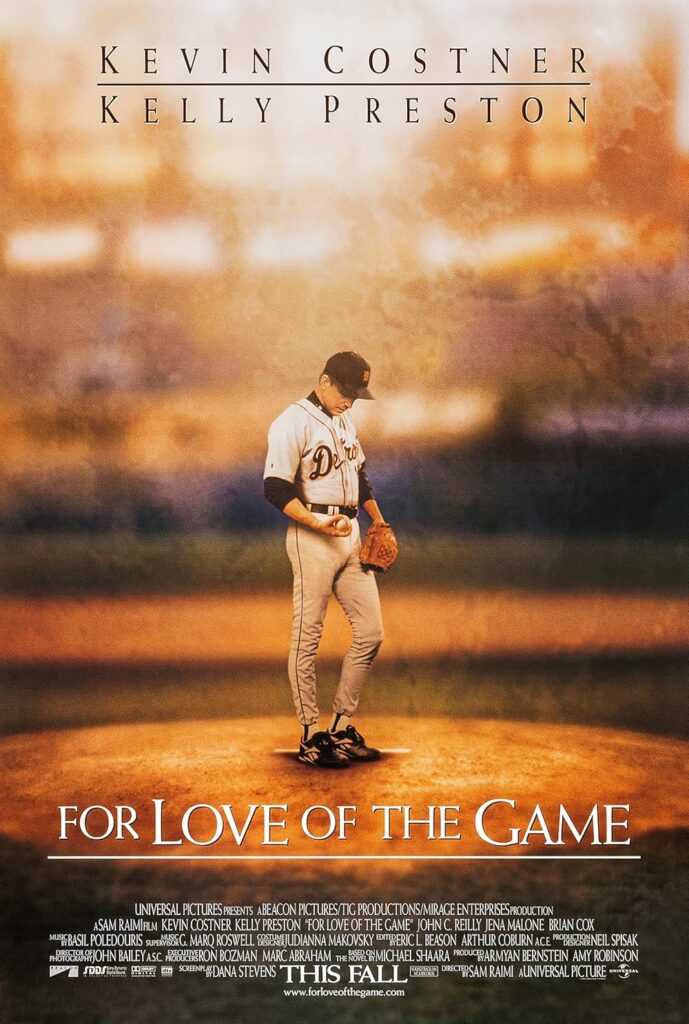
I had never seen the movie “For Love of the Game” with Kevin Costner and Kelly Preston prior to this past weekend. It’s on Netflix, and I just came across it early Saturday morning. My wife and I watched it, and as we usually do, we stopped it at various times to discuss the story, acting, or something of interest.
In one scene, “Chappel” (Costner’s character) cuts his hand pretty badly on a table saw. At the time, he’s one of the top baseball pitchers in the game and his girlfriend “Jane” (Preston’s character) rushes him to the hospital in her car, nearly sliding off the snow-covered roads just to get him there quickly.
When they arrive at the busy, crowded hospital, there’s no one available to help, and because she isn’t family, she’s told to sit in the waiting room. Her frustration grows intensely, and to get the attention of ANY doctor, she angrily screams, “Is this not America? Is baseball not America’s favorite pastime?”
They all stop and look at her, and a doctor finally goes in to see Chappel. They end up airlifting him to a hospital that can better deal with his serious injury. While they’re rushing him on the gurney to the helicopter, Chappel tells Jane to “Call Mike, The Tigers trainer!” She asks, “What?” He repeats, “Call Mike – He’s the most important person to me now!” Jane appeared totally hurt and deflated.
I paused the film at this point, and my wife looked at me inquisitively, at which time I said, “What a putz! She just basically saved him, and he tells her that Mike is the most important person? What an ass!” Risa replied, “Why? I don’t get it? The trainer is the one who can really help him. What’s the problem?”
For the next 10 minutes, I tried to explain why he should’ve been more sensitive to her feelings,” and Risa was more about, “He’s lying there bleeding with a serious wound, and you want him to worry about her being a big baby and getting her feelings all hurt?”
Image IMDb
Now, I have been married for almost fifteen years, so I gave up pretty early in the conversation, knowing that my wife is always right! My point, of course, is that words are so very powerful, and the same words can impact people in very different ways.
Words really are powerful tools that shape our reality, influence emotions, and inspire actions. Their impact is huge, whether spoken, written, or even internalized. They can encourage, diminish, build trust, or destroy it.
Our words play pivotal roles in shaping society. Just think about speeches that led to significant political change. Even today, regardless of your political affiliation, words have the power to challenge the status quo, inspire movement, bring us together, or tear us apart. Look at the manner in which we use words on social media, with little regard for the feelings of others. Many hide behind our screens and keyboards without concern for others – sometimes just for effect.
The words we use have a profound psychological impact. Positive affirmations, encouraging words, and kind expressions can boost our self-esteem and motivate us. On the other hand, negative words can create feelings of inadequacy, anxiety, and fear. The words you choose have inherent power and can either nurture or undermine.
The words we use in our medium can move people. Words are the true indicator of great advertising and marketing – for great branding does not only change minds, they capture the heart! Words are the cornerstone of relationships. They express love, empathy, or frustration and can either strengthen or weaken our connections.
Loving words can create deep bonds, while a careless remark may foster lasting hurt. Our tone and intention behind words are equally as important as the words themselves. Active listening, combined with thoughtful responses, fosters understanding and trust. In conflict, our words either escalate tension or bring resolution. In this way, the power of words extends beyond their meaning to include tone, delivery, and timing.
We each must select our words carefully, based on their relative ability to not only convey thoughts but to shape perceptions, influence behavior, and foster connections. Whether spoken or written, the words we use impact the world around us.
That requires us to be mindful of the words we choose and recognize and respect their potential to inspire positive change or contribute to negativity. Ultimately, we all have the power to harness words that create a more compassionate, understanding, and thoughtful world. I recently began starting my days with a prayer I read… “Lord, allow me to see others through your eyes and likewise, see myself as you see me.”
Barrett Media produces daily content on the music, news, and sports media industries. To stay updated, sign up for our newsletters and get the latest information delivered straight to your inbox.
As the countdown towards the 2025 NFL Draft nears its expiration, there is significant interest in how the Tennessee Titans will decide to utilize the #1 overall draft selection. While the common presumption is that the team will select Miami quarterback Cam Ward, there could always be unforeseen developments or surprises that alter the round. Although it remains unknown which scenario will play out, Kayla Anderson and her colleagues on 104.5 The Zone have kept the subject matter embedded in their regular conversations with considerable intrigue in the team and National Football League at large.
Anderson, who has been a member of the Ramon, Kayla and Will morning drive program since 2022, is a prominent voice on the airwaves as the Titans hold the first draft selection for the first time in almost five decades. In addition to her observations, Anderson has collected insights and opinions through interviews with coaches that she has been able to incorporate into the radio program. Through leveraging her reporting background to gather and disseminate information, she has created buzz regarding the subject and maintained its appeal in the content ether.
“We are never going to complain in this market about the Titans not having some sort of topic to talk about in the offseason,” Anderson said. “We joke all the time in break on [the show] how we never feel like the NFL season ends here in Tennessee, but we’re happy with it because it obviously keeps us in business and keeps the business good.”
Finding avenues to advance the discussion is essential surrounding the NFL Draft trying to cultivate steady interest amid a litany of competition. Operating alongside other sports media outlets on traditional and digital media platforms, 104.5 The Zone works to innovate, remain accessible and resonate with the listeners. With music embedded at the core of Nashville’s cultural identity, the station is helping to facilitate the proliferation of sports content and aims to cut through with its audience. For example, the station live streams the morning show on YouTube and implements members of the audience expressing their thoughts on digital outlets as well.
“Not only now do you have people that are loyal listeners, but you have people who love to watch us on TV now and interact that way,” Anderson said. “It has really, I think, moved our station forward, and I think we’re ahead of the trend in that way, combining those two things, and that’s, in a way, how we’ve kind of held together our own here when we do have country music and we do have political shows even on our own station, but we have kind of been innovative and ahead of the curve when it comes to how we’re going to go about it.”
Catering to the Sports Radio Shuffle in Music City USA
Nashville has gained prominence as a cultural hub wherein several traditions and customs coexist to form a distinctive medley. While vocational pursuits such as music recording, performing arts and live event production are generally reputed to be part of its zeitgeist, Anderson contends that the locale possesses a strong liking for sports. Anderson contends that Nashville is on a growth trajectory, a claim that can be sustained by the construction of a new football stadium and reported conversations about some leagues expanding and/or relocating to the market.
“Entertainment is what you might think of Nashville, but if you’re really here in the sports landscape, people care about sports here,” Anderson said. “People love sports talk radio here. It’s bigger than any local TV job that I’ve had. It’s really a thing, and I think that adding a team here, whatever that might be, it’s a perfect city for that.”
Anderson is in her third year hosting morning drive with colleagues Ramon Foster and Will Boling, forming a three-person team of skilled industry professionals who stay balanced and accentuate different strengths. Rather than adopting a fabricated persona on the airwaves, she is committed to staying true to herself. Anderson conveys instances where she is more animated based on conversations or takes an opposing viewpoint, but her approach is all derived through intense authenticity.
“I think the best thing in my position here is I work so closely with the Titans on an everyday basis in that locker room, and then I can come on the show and I can truly just give those thoughts and opinions,” Anderson said. “The viewer feels like, ‘Okay, we kind of know the team a little more, that player a little more because Kayla is giving us that truthful information and just doing it with being her genuine self.’”
Even though Anderson takes part in lighthearted fun and entertainment during the show, she values her journalistic background and takes the profession seriously. Anderson has been able to remain objective in her journalistic pursuits while also expressing her own thoughts, distinguishing an ideal balance and always remaining cognizant of the audience. Identifying and understanding the proverbial line between reporting and editorializing can be somewhat challenging, but she has been able to thrive while becoming more acclimatized to radio.
“You also have to be bringing in that entertainment aspect too,” Anderson said. “Not everything that we do on that show we agree on, and honestly, I think a show is better when you can have those disagreements, and then when the button goes off the air, you’re all cool still.”
The Challenges of a Three-Person Program
Anderson explained that it is less common to find shows with three-person hosting configurations but that refraining from the arrangement can limit genuine conversations. With two out of the four local programs on 104.5 The Zone containing three hosts, the station offers the outlooks and convictions of numerous professionals who contribute to enthralling and riveting dialogue.
“I know there’s a place for opinionated radio, and some people do an excellent job at that,” Anderson said, “but I don’t want it to go away from the format either where it’s just three people who have different opinions, come from different backgrounds, and are having a true conversation that involves the listeners. I hope that doesn’t go away just because we’re always trying to save money in every business.”
Anderson considers herself to be candid and occasionally loud, but she goes about her job with tact and consideration for others. Learning the dispositions and interests of her contemporaries took time, and as the process continued, she became more confident in being herself and jumping into certain conversations. Viewing the role without fear of defending the opinions she conveys and being animated, Anderson has been part of the show progressing amid alterations in listener patronage and measurement. In fact, the show has recently worked on diminishing the length of breaks amid Nielsen reducing its quarter-hour threshold to three minutes.
“We also try to keep in mind at every start of the hour, we kind of reset a little bit of the headlines because you never know what new person has jumped in on the 7:00 hour compared to the 6:00 hour,” Anderson said. “We keep it fresh though in the way that we do that, so it is interesting, and again, I’m still learning the radio side of things and how we’re adjusting every year to do things a little bit differently.”
From the beginning of her tenure at 104.5 The Zone, Anderson has viewed program director Paul Mason as someone who is encouraging and has revealed how he is always accessible to provide advice or constructive criticism. The team meets with Mason once per month to go over formatics and other aspects of the program in addition to having daily conversations of their own after episodes about their performance. Just as she did reporting sports on news television, Anderson reviews footage of the show to refine phrasing, eliminate any vocal fillers and remain conversational, and she also mentors aspiring professionals looking to work in the business.
“I like to teach, I like to listen, and using now this platform, it’s even bigger because radio isn’t the biggest platform for females still, but no one should think that they can’t do it and people should think more about doing it,” Anderson said. “Just because it’s not on TV, it gives you still a platform to share your knowledge, so I am out there all the time giving clips of the show and talking with young women about, ‘Don’t forget about radio. There’s still opportunities when it comes to radio as well.’”
A No-Fear Approach to Connecting With the Audience
Anderson is one of two women who are part of the weekday hosting lineup at the station, the other of which is Dawn Davenport of the 3HL afternoon program. Over the years, Anderson has received misogynistic messages from listeners, something that she feels could be compounded through broadcasting for four consecutive hours and utilizing digital platforms. Yet she is not afraid to articulate her immense credibility and executes her responsibilities with professionalism and poise.
“I don’t have to prove myself, but I do like to make sure people know I’m not just ignoring that,” said Anderson. “I understand it happens, but those people also need to be told, ‘It’s not okay,’ and sure enough, a lot of those people never respond back.”
Having spent the entirety of her career in television, Anderson decided to accept an offer to join 104.5 The Zone starting in October 2022 and sees how the personalities of the station help set it apart. With a versatile blend of former athletes, veteran hosts and in-the-know analysts, the sports talk radio outlet is highly regarded in the market and has kept people listening through discussion of professional and collegiate sports.
Through her work on the air, she has found more time to share stories without stringent time restraints and appeal to the audience while also working in other roles. Anderson tangentially contributes to television on SEC Network+ as a sideline reporter for Vanderbilt baseball games and also appears on high school basketball state championships, but she simultaneously aspires to continue developing her broadcast skills on radio.
“I’ve been around so many sports, I feel comfortable doing pretty much whatever, so I always want to kind of multitask, but my priority is it’s always radio,” Anderson said. “That’s my job, and then whatever I can dabble in on the side. I think it benefits the radio as much as it just benefits you.”
Anderson surmises that she was born with a gene that has caused her persistence and tenacity to continue moving forward despite facing setbacks and hardships. Beginning every day with an earnest avidity to discover what will take place in sports and yearning to enhance her craft, she comes prepared to tackle new challenges and learn no matter the result. Combined with her aspirations to potentially add another sideline reporting job with a local team and further strengthen her portfolio, Anderson is committed to the craft and ready to start covering the newest members of the Titans organization.
“I’m a very passionate person, and I just hope people see that in the way that I present sports, whether it be on the radio or the sideline or TV,” Anderson said. “I just want them to know that I’m truly passionate and dedicated to my work.”
Barrett Media produces daily content on the music, news, and sports media industries. To stay updated, sign up for our newsletters and get the latest information delivered straight to your inbox.
CNN has made some lineup shuffles in recent months, including moving The Situation Room with Wolf Blitzer to 10 AM ET and adding Pamela Brown to the program.
Truth be told, I haven’t tuned into the program since the timeslot change and the addition of Brown, so I thought now would be the perfect time to scope out the show and see how Blitzer is handling having a person added to what was previously a solo show. I’ve continually said that shows deserve some time to find their footing — which I why I didn’t especially love another CNN show, The Arena with Kacie Hunt, when it debuted — before it should be judged.
With that in mind, I watched the Tuesday episode of the show helmed by Blitzer and Brown to get a feel for how things are going since the January debut.
The program began — like several other cable news shows did — by focusing on the situation between the United States, El Salvador, the Donald Trump administration, the Supreme Court, and Kilmar Abrego Garcia. Quite the story when you have that many moving parts.
In the first hour of the show, the program featured an interview with retired U.S. District Court Judge for the Southern District of New York Shira Scheindlin to talk about the situation.
Before asking the first question to Scheindlin, Blitzer played a clip of President Trump saying that if the Supreme Court ruled he would need to bring Abrego Garcia back from El Salvador after he was wrongly sent to the Central American country. However, the Supreme Court did rule that, in a 9-0 decision, no less, and…Trump did not follow through on his statement.
When the clip ended, Blitzer stated “President Trump is now saying something very, very different,” before bluntly asking “Is he now defying a court order?”
Short. Sweet. To the point. Unbiased. Not a leading question. One-sentence question with the expectation of a clear, definitive answer without space for wiggle room. Cable news perfection, from my eyes.
After the answer from the retired judge, Brown jumped in by reiterating the nuances of the decision by the Supreme Court, laying out what a possible defense from the Trump administration could be should they be challenged again on the topic.
She then questioned the situation by pointing out that the official stance has become that the Trump administration believes that the El Salvadorian president is the only person who has the power to release Abrego Garcia. But, the El Salvadorian president says he doesn’t have that ability. Which led Brown to question “Who determines this man’s fate?”
I think that’s a fantastic question. And it’s one that I would love to hear someone from the Trump administration answer. But Pamela Brown didn’t ask that of a Trump administration official. She asked it of a retired U.S. District judge. So, while it’s a phenomenal question, I think it’s better as a rhetorical question as a way to make a point about the absurdity of the situation more than it is an effective one in this setting.
Blitzer later posited that it appeared the Trump administration was using the vague language in the Supreme Court ruling as a workaround to avoid having to bring the Maryland resident back to the United States. Again, he asked a succinct question: “Do you think that argument will hold up?”
In this segment, I thought you saw both the journalistic props of Blitzer on display, and how powerful getting out of the way can be for a cable news host. When you’re bringing in a guest, the expectation is they’re the expert and should allowed to be the star. Blitzer did exactly that. And in her final question of the interview, Brown did as well, asking if a recent statement by President Trump about his belief that Harvard should lose its tax-exempt status for failing to comply with his efforts to root out DEI initiatives was constitutional or not.
Brown following the lead of Blitzer led me to another revelation: It feels clear that Blitzer is being used as an on-the-job mentor to Brown to be one of the next faces of what CNN hopes is a renaissance.
Pamela Brown is everything CNN should want in one of its next stars. She’s young, 41, interesting, a relatively polished and smooth operator of a fast-paced news show while simultaneously showing the ability to ask tough but firm questions that her viewers want the answers to.
From my seat, Brown is a female version of Anderson Cooper, except the 2025 version and not the 2001 version. She has an insanely interesting backstory, the daughter of former Kentucky Governor John Brown (D) — who helped Colonel Harlan Sanders launch a small restaurant called Kentucky Fried Chicken — and former sports broadcasting pioneer Phyllis George. Brown was also named after her aunt who died attempting to cross the Atlantic Ocean in what was essentially an elaborate hot-air balloon. Origin stories don’t really get much wilder than that.
And on the flip side of the show, you have Wolf Blitzer, who is in my view the consummate cable news journalist. Cable news has — justifiably so, in my opinion — been viewed in a negative light due to its primetime programming pandering to the lowest common denominator on each side of the political aisle. But before roughly 6 PM ET, there is still some high-quality journalism being done. Not just on CNN, but on other outlets, too.
But Wolf Blitzer, to me, embodies what a cable news host should be. He’s unassuming and unafraid. He’ll ask the question that needs asking without fear of the pushback from the guest or interview subject. Furthermore, Wolf Blitzer doesn’t seem to put much emphasis on making sure his hair is finely coiffed and that his tie is positioned perfectly so. The longtime CNN host focuses on the questions, the content, the format, and getting answers from those being interviewed.
It has become a common practice for conservatives — whether it be on Fox News, Newsmax, or news/talk radio — to blister CNN at any opportunity. But rarely, and I mean rarely, is Wolf Blitzer the subject of that scorn. So, I think by being paired with Blitzer, CNN is signaling the heights it expects Pamela Brown to reach in the not-so-distant future.
And I couldn’t imagine a better person for Brown to emulate. I was impressed by what I saw from 10 AM to Noon ET on Tuesday. I’ll be a regular viewer going forward.
Barrett Media produces daily content on the music, news, and sports media industries. To stay updated, sign up for our newsletters and get the latest information delivered straight to your inbox.
The world has experienced a dramatic shift in sports betting because it evolved from its previous small-scale nature to become an international spectator favorite. As time goes by, sports wagering has become more and more popular around the world.
According to statistics, the sports betting market is projected to reach US$77.21bn in 2025. Fans currently show greater involvement than ever before. This is because legal betting markets allow them to follow both sporting events and wagering trends. Broadcast media outlets have swiftly integrated betting information into their sports news reporting sites through various platforms like TV, Radio, digital platforms, and so on. The expansion of betting coverage has a direct effect on three areas of sports spectator engagement and active participation.
How Media Coverage Has Changed?
Media organizations maintained a strict silence toward betting until recently. Such restrictions have mostly disappeared from modern sports publications. The open discussion of point spreads together with over/unders and parlay bets can be found in every modern mainstream sports broadcast on television, radio, and digital media. Betting updates that show shifting odds become part of live sports broadcasts, which present viewers an opportunity to witness how stats transform during gameplay. Multiple digital platforms update betting information promptly while delivering betting insights together with social media discussions that boost fan interaction. The modern sports culture has fully incorporated wagering because of this advancement in acceptance.
Increased Fan Involvement Thanks to Betting Content
Betting content distributed through the media strongly boosts fan engagement. People who gamble through viewing sports tend to develop stronger emotional ties to games, together with teams and final results. When viewers put personal stakes on the line, their passive participation turns into committed involvement during events.
The reporting of bets coupled with odds in media extends viewer engagement through the development of continuous storylines about gambling aspects. Some fans from Canada and other places even extend their engagement by exploring Dolly Casino and similar gambling platforms, where sports betting is paired with a wide range of online casino games. Here gamblers can not only have fun by betting on their favorite teams but can also entertain themselves with the playing of dozens of popular, modern, and traditional casino games. What’s important is that casino brands’ deposit and no-deposit bonuses are the cherry on top for those who are in the mood to test their luck.
Here are three ways betting content boosts fan engagement:
1. Interactive Betting Segments – Fans engage in live predictions and polls based on expert odds during broadcasts.
2. Fantasy and Betting Communities – Forums and chats let fans bond over wagering strategies and celebrate wins together.
3. Second-Screen Engagement – Mobile apps and websites allow fans to bet and receive updates while watching the game live.
Expert commentary and data analysis are now essential components of sports media, especially when wagering is involved. Fans rely on professionals to explain odds, offer wagering tips, and decode complex betting markets.
This kind of content strengthens audience trust and encourages loyalty, as fans feel they’re getting insider knowledge that might improve their success. Many outlets invest heavily in providing data-driven analysis that keeps viewers returning for fresh insights.
Three types of expert insights offered by media outlets include:
1. Betting Odds Breakdowns – Explanations of how odds are calculated and what they mean.
2. Historical Trends and Stats – Insights into team performance history, head-to-head matchups, and key player data.
3. Pro Betting Strategies – Tutorials or segments featuring tips from seasoned bettors and analysts.
The Impact on Media Revenue and Sponsorships
Sports wagering integration with mainstream media created two major impacts by changing both audience participation levels and sports company earning streams. Sportsbooks and wagering platforms use their vast resources to obtain sponsorship contracts with broadcasters and digital platforms, as well as individual influencers to boost their visibility.
Betting advertisements frequently appear during live sports broadcasts. These ads go beyond standard promotion by also providing practical content, such as odds previews and time-sensitive offers. The content combines advertising elements with informational components, which makes the messaging more pleasing for viewers.
Potential Downsides to Watch
All the advantages of wagering-related content cannot overshadow the risks one should keep in mind. The main priority among all stakeholders remains the encouragement of responsible gambling practices. Wagering functions as an entertainment enhancer, yet it occasionally turns into compulsive misconduct for several bettors. According to experts and statistics, the number of active sports bettors is going to reach 214.1m by 2029.
The younger sports audience specifically falls into risk through their use of online platforms that include YouTube, Twitch, and social media. Because of how algorithms work, viewers are often shown more wagering content – even if they didn’t seek it out. To prevent all of this it’s important:
Media organizations should encourage and actively promote several best practices to decrease these risks.
Every betting segment or advertisement must contain clear warning labels that display required age restrictions together with information about gambling risks.
Media outlets should actively collaborate with responsible gambling programs to provide clear warnings and accessibility to support those who need it, whether through partnerships or by implementing age-gating technology.
Age-gated technology, along with specific content policies, enables the exclusion of betting content from minor-oriented content feeds.
Conclusion
Media and sports betting relationships continue their development, which transforms fan participation in games. Fan involvement beyond ever before exists through expert analysis combined with interactive content and amplified emotional stakes. This new sports betting period requires vigilant monitoring systems to guarantee both ethical messages and responsible presentation methods. Sports wagering and media will expand together while sports fans need continued assurance of both engaging content and ethical sports coverage and system integrity.