ESPN’s Adam Schefter has been with the network since 2009 and has been dubbed “the most prolific NFL Insider ever” by Andrew Marchand of The Athletic. His 16 years of breaking the biggest NFL news stories has led him to a massive social following and reach on all of ESPN’s platforms, in which he’s featured from television to digital to social media.
Recently, Schefter was a guest of CNBC’s Alex Sherman onCNBC Sport and discussed a range of topics including his path at the network. In addition, he spoke about how he could potentially branch out into other sports by utilizing his skill set as an insider.
“It never came up with ESPN beyond a peripheral conversation or two, so it never really gained any traction there, but I think it would have been really cool to just be an insider for all sports,” said Schefter.
The ESPN insider said that his concept revolves around someone solely focused on big moments in the sports calendar, and not so much the week to week what he termed “mundane” stuff.
“Maybe you’re just doing NBA free agency, NFL free agency and the NFL draft and the NBA draft,” noted Schefter. “So you’re focusing on the big, important news cycles with each. I thought about this.”
Furthermore, when Adrian Wojnarowski stepped down from his post with ESPN as their lead NBA insider to take a job with St. Bonaventure, his alma mater, there was some speculation that Schefter might fill the role his former colleague left. Schefter noted that his and Wojnarowski’s contracts were aligned to end at the same time. However, because the NBA insider left earlier than expected, there was no formal discussion about filling his role.
“I actually think it’s very doable, very doable,” Schefter said of doing NBA and NFL beats together. “Woj and I talked. If Woj had waited until our contracts were up together, which we did our deals together, I would have been interested in that. He went early, so it’s not feasible.”
Moreover, with the rise in current ESPN talent and personalities branching out into their own ventures for digital media—such as Stephen A. Smith’s creation of Stright Shooter Media—Schefter was asked whether he’d be interested in doing something similar when his deal comes up with the network.
“These kinds of things come up all the time,” noted Schefter. “They’re assessed every time a deal is up. I love working at ESPN. It’s been a tremendous home for 16 years. We’ll see what happens in the future. Hopefully they’ll want me back, and hopefully the relationship will continue. But you always are assessing all those things.”
In conclusion, Schefter said he’s looking forward to continuing the work he’s doing for the network while also exploring new avenues in which his information can serve ESPN best.
Barrett Media produces daily content on the music, news, and sports media industries. To stay updated, sign up for our newsletters and get the latest information delivered straight to your inbox.
A defamation lawsuit brought forth by Georiga Dr. Mahendra Amin against NBC News has been settled with the network dishing out $30 million in the process.
The case stemmed from allegations made on MSNBC that the doctor had performed unnecessary procedures on female immigrants without their consent while they were in the custody of the United States government.
While there is evidence that Amin performed hysterectomies on illegal immigrants, which a judge U.S. District judge called “unnecessary and unauthorized”, she added that there was not evidence of “mass hysterectomies” that NBC News claimed. Dr. Amin’s other point of contention was being labeled “the uterus collector” by the network.
The evidence showed that patients signed consent forms for their procedures. NBC News, however, reported that the women failed to understand the ramifications of signing the documents.
“A jury could conclude that [Amin] performed unnecessary and unauthorized gynecological procedures, including the two hysterectomies,” U.S. District Judge Lisa Dobey Wood wrote. “A jury could also conclude that these accusations were materially false.”
The trial was scheduled to begin later this month. However, attorneys for both NBC News and Dr. Amin told the court they had reached a settlement and were finalizing an agreement. Court documents show the case was dismissed by the plaintiff last Friday.
Barrett Media produces daily content on the music, news, and sports media industries. To stay updated, sign up for our newsletters and get the latest information delivered straight to your inbox.
An announced crowd of 12,582 packed into the PPG Paints Arena in Pittsburgh, PA to attend last night’s Big Night Aht, produced and presented by Pat McAfee and his Pat McAfee Show. What was billed as a night of fun, entertainment, and massive giveaways for the attending audience delivered, as the former Indianapolis Colts punter turned media star held court with his dedicated audience—all awaiting what was next in the first-of-its-kind variety show featuring celebrities, athletes, and impromptu concerts.
Additionally, the event was live streamed on several social media platforms, including YouTube and X, and watched by hundreds of thousands of viewers live. Although it kicked off a half hour later than scheduled, McAfee took the stage and used the first half hour to tell his story. He also addressed current issues surrounding the show, including a rumor involving Ole Miss student Mary Kate Cornett, which had previously been discussed on McAfee’s show in February.
“I didn’t want to add any more negativity as it was taking place as I did,” McAfee said, addressing the student albeit not saying Cornett’s name. “We will try to figure that out and make some sort of silver lining in a very terrible situation.”
Moreover, McAfee opened the night by informing all those watching that Aaron Rodgers would not be attending the show, despite circulating reports suggesting he could be playing football for the Pittsburgh Steelers next season.
Throughout the evening, the night was filled with concerts—both professionally performed and impromptu karaoke sessions—by acts such as Jelly Roll, Snoop Dogg, Wiz Khalifa, and Parker McCollum. In addition, the WWE contributed to the production and set design of the event and provided appearances by WWE superstar Jey Uso and announcer Michael Cole, who teams with McAfee on Monday Night Raw on Netflix.
Later in the night, a live sumo wrestling match entertained the audience as Cole and McAfee called the action live from the stage, while comedian Shane Gillis served as guest referee.
However, the highlight of the night for the local Pittsburgh crowd was the combination of three Pittsburgh sports figures sharing the stage at the same time. Former Steelers quarterback Ben Roethlisberger was joined on stage by Pittsburgh Penguins captain Sidney Crosby and Pittsburgh Pirates ace starter Paul Skenes. The three shared a lighthearted conversation while throwing footballs through hoops, racking up what would be the final giveaway of the evening for the viewing audience in the arena—which landed at two million dollars.
Furthermore, throughout the evening, pledges were made to several local organizations, including Special Olympics Pittsburgh and Pittsburgh Public Schools. Several fans in the arena walked away with cash prizes ranging from $20,000 to the grand prize of $2 million dollars, totaling nearly $2.5 million for the night.
“All of you have been so amazing tonight, I can’t thank you enough,” stated McAfee at the end of the event.
Barrett Media produces daily content on the music, news, and sports media industries. To stay updated, sign up for our newsletters and get the latest information delivered straight to your inbox.
Chris Thomas has revealed that he will be hosting nighttime programming on 92.9 The Game, beginning an eponymous show on Monday, April 14. The program will air on the weekdays from 6 to 10 p.m., which happens to coincide with the final hour of Dukes & Bell as the show is currently scheduled. Thomas also revealed that he will be hosting The Atlanta Baseball Postgame Show following home games from 10 to 11 p.m. Within his Facebook post detailing the news, Thomas prefaced it by explaining that it was a “true career dream come true.”
“Beyond excited to share that I will become the new full-time night host on 92.9 The Game!,” Thomas wrote. “Chris Thomas Tonight begins this Monday, April 14th! The show airs 6-10 PM M-F. I will also be hosting “The Atlanta Baseball Postgame Show” from 10-11PM for home games. The only live reaction call-in show for Atlanta Baseball!”
Thomas joins the lineup at 92.9 The Game that consists of various local programs, such as The Morning Shift, The Steakhouse and the Andy & Randy show. The station also serves as the flagship home of the Atlanta Falcons, Atlanta Hawks and Atlanta United FC, and the outlet also carries select shows from the Infinity Sports Network. Thomas has filled in as a host amid the programming lineup in the past, but he has been on the proverbial other side of the glass for much of his tenure with the outlet.
Thomas started working at 92.9 The Game in November 2020 as the technical engineer and associate producer for Dukes & Bell, the five-hour afternoon program featuring Carl Dukes and Mike Bell. Prior to that time, he was the executive producer for After Hours with Amy Lawrence airing on CBS Sports Radio, responsible for booking guests and social media management while also serving as an on-air contributor. Thomas has also been a live broadcast logger for games airing on ESPN+ and a Pittsburgh Pirates fantasy correspondent for FantasyPros. Following his graduation from the Connecticut School of Broadcasting, he originally started working in the business at WGHT Radio 1500 AM as a midday news anchor.
Barrett Media produces daily content on the music, news, and sports media industries. To stay updated, sign up for our newsletters and get the latest information delivered straight to your inbox.
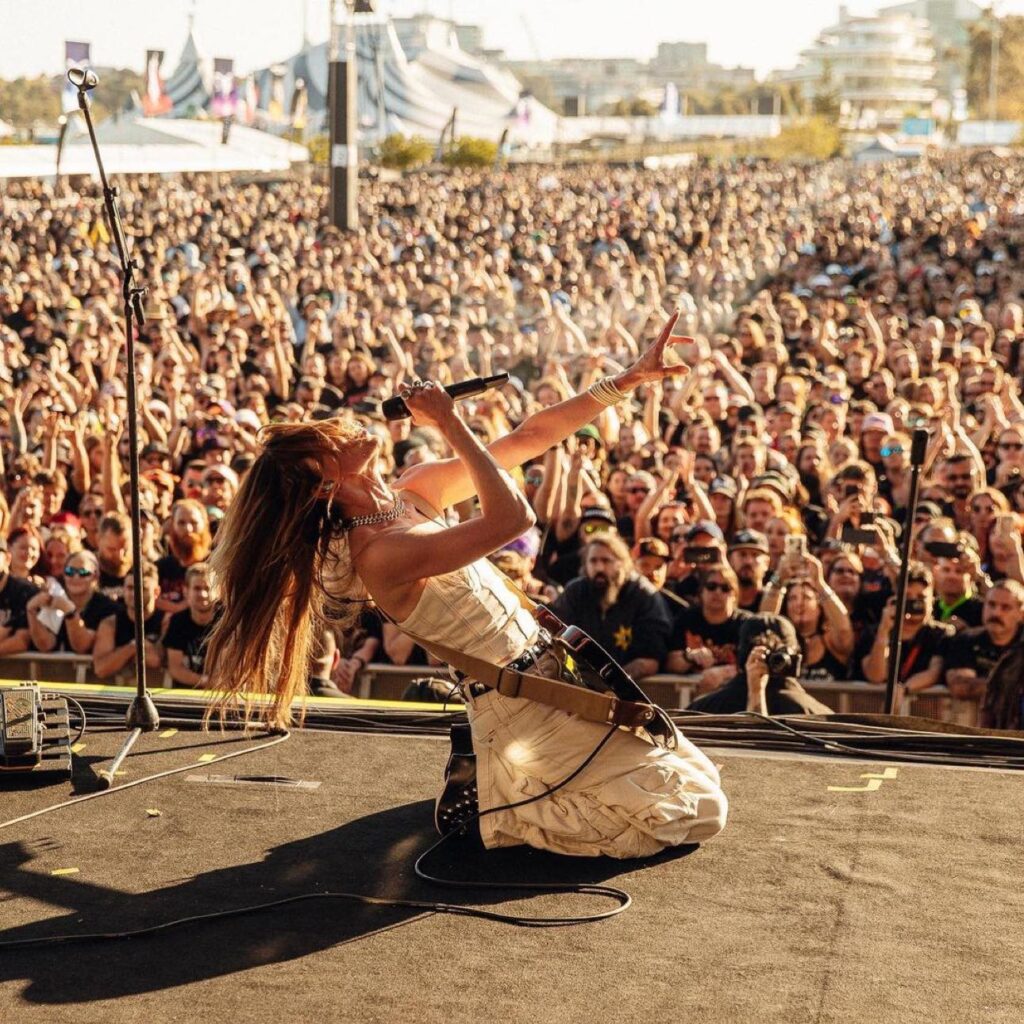
I’ve heard many in Rock spaces over the years say this about concert attendance, especially smaller-venue shows, “If you want the guys to show up, you better have some girls there” – or – “It’s not a party until the girls show up.”
Those theories are understandable, even to cavemen. But we’re not talking about wanting to see Sydney Sweeney in a video washing cars in a bikini. There was a time and place in Rock history when such imagery was common, but what I’m getting at is this:
In a broad genre historically dominated by male musicians, it’s clear the ladies have not only arrived at the party; they’re doing shots, tipping over tables they were once asked to dance upon, and they don’t expect dudes to buy their drinks or drive them home – they’re perfectly capable on their own.
The wide Rock and Alternative landscapes haven’t been completely devoid of female talent. Some amazing Hall of Fame women have graced the stages and left lasting marks on our musical brains, but there’s more of a female presence today than there has been in history.
One factor that stands out so positively in the Rock genre is that the ladies are truly legit; they always have been, and they must be. You can’t get away with faking talent – they’re not DEI card carriers. Rock fans of all types are respectfully unforgiving.
You’ve either got it or you don’t.
You can’t auto-tune your way into opening for Foo Fighters or headlining a tour. A set full of sampled tracks isn’t going to last. One can’t just put on a barely-nothing outfit and dance their way into selling records or a chart hit (it may get YouTube views, but it won’t fill a Rock arena).
There’s something about Rock music that is so genuine, so authentic, so real. The talent is immense, and you remember artists by first name: Janis, Ann & Nancy, Dolores, Siouxie, Courtney, Blondie (I know that’s not her first name), Joan & Pat, Stevie, Gwen, Meg, Shirley, Orianthi, Amy, Haley, Karen O.
There are certainly more, but the list of female giants is quite small when compared to males over the past 50-60 years. We could argue over, and cite several reasons for that, but the pendulum is swinging.
We hear them on Radio or Spotify playlists and see them on festival stages or platforms like TikTok. The number of girls exhibiting multi-octave vocal acrobatics, shredding insane EVH solos, beating you-know-what out of Ludwigs, or funkifying a bass like Flea is their dad, has never been higher.
Not all these double-XX chromosome holders will be household names. Some naturally fit in less-mass circles like Nu Metal or as instrumentalists. Not all will land in the R&R HOF, win Grammys, be chart-toppers, or have their names tattooed on the arms of millions, but they don’t need that.
It’s just nice, and it’s about time, to have more female rockers at a party that has historically been referred to as a fencing tournament. And while I’m not here to review records, predict hits, or tell you how many notes per second are being shredded, I can spot a real trend when I see it. This one has been brewing for several years.
I’ll leave the ocean of TikTokers and Metal slayers for another column and close with a salute to a few of the ladies who have hit the scene this century and are making the Rock party a much better party.
Barrett Media produces daily content on the music, news, and sports media industries. To stay updated, sign up for our newsletters and get the latest information delivered straight to your inbox.
Meet The Podcasters is a special 9-week series created in partnership with Point to Point Marketing. Our sixth feature is on Director of Network Programming, Podcasts for Sinclair Broadcast Group, Peter Gianesini. Follow along with the series, and revisit former conversations by checking out the entire category.
Peter Gianesini joined Sinclair Broadcast Group in April of 2024, following a near 26-year career run with ESPN. A proud graduate of Syracuse University, he is considered an audio and video content leader with a history of creating successful franchises in the podcasting space from both an audience and revenue standpoint.
With Sinclair, Peter is using his quarter century expertise from ESPN to recruit, build, and maintain a network of podcasts ranging from sports and news to true crime. Leveraging the talent roster of Sinclair’s 185 owned and operated television station has allowed Gianesini a massive opportunity for a company with wide range and scale to begin building a dominant podcast network serving audiences in the 86 markets Sinclair calls home and beyond.
In this edition of our ‘Meet The Podcasters’ series, we explore Gianesini’s role with Sinclair, the differences in his day-to-day just a full year into his role, and the excitement of what’s to come in a very unique and growing arm of the Sinclair Broadcasting portfolio.
Peter Gianesini spoke with Barrett Media from his hotel room on the road in California.
*Editor’s Note: Answers have been edited for clarity and length.*
John Mamola:You’re almost a year into your new role with Sinclair Broadcasting. What’s the day to day like for you with Sinclair Broadcasting compared to your day to day when you were working with ESPN?
Peter Gianesini:For what it’s worth I work remotely dealing with people in many different places in the country and many different markets. What’s the same is no day is like any other day. Every day is completely unique, and what you do on a Wednesday compared to a Thursday might not be the same.
The biggest thing that’s different for me is the genres of content that I deal with. While sports is still an incredibly big part of my role, one of the things that really excited me in coming here was to get involved in the true crime space. Politics, families, we also have a weather show I’m proud of. To be able to engage some of these different areas was exciting for me.
The other thing that’s different was in my podcast role with ESPN, video wasn’t a piece of that at the beginning and eventually became a huge piece of it. Actually the primary piece of it. The way we were structured is I was the “audio guy” and someone else was in charge of the video side of the shows. That was sort of the dynamic.
In this case, if we have a show and we’re producing it for audio platforms and for YouTube and potentially repurposed on television, I’m overseeing the show. I’m responsible for making sure that the show works on all of those platforms. It’s been a wonderful learning opportunity, but just like anything else it’s relationships and building trust with people.
It’s coaching, feedback, and listening to ideas. Understanding that as we go along, I don’t know everything, and I have a lot to learn as well. That’s been a great experience.
John Mamola: Sinclair Broadcasting owns and operates a little over 180 television stations in 86 markets. Looking at the podcast roster, specifically to sports category. There are ten sports related podcasts, but I know there are a number of true crime and news podcasts as well.
I noticed though that the podcasts are utilizing a lot of the talent on the local level working within the walls of the television stations themselves. That’s who is producing that type of podcast content.
As somebody walking into this role, how do you identify the right talent in the right market, utilizing the talent that are already part of the Sinclair family?
Peter Gianesini: Some of those shows were already in place and I inherited them. The good news is these are people that know their market better than I ever will.
Probably the strongest sports show that was in the portfolio when I arrived, and still is the case to this day is in Rochester, New York. The three anchors do a Buffalo Bills show called Buffalo Plus. They’ve got it down. It’s a really good show and it’s information, insight, analysis, personality, and chemistry. I’m not even a Bills fan, I’m a Giants fan, and I don’t miss an episode.
Even lately with free agency and they picked up Joey Bosa and they re-signed Josh Allen. I found myself wanting to hear what these guys have to say about it as that goes down. They’ve built a Buffalo Plus brand independent of the television station and the call letters. Understanding that, yes, the show might originate from Western New York. Of course, it’s a “local show” because it’s about the Bills, but the audience opportunity is national if not global.
We’ve tried to replicate that approach.
In Syracuse, New York, they launched a podcast that you might expect that I was a listener to before I ever got the job with Sinclair. The Orange Zone, which is a podcast about Syracuse University sports. It’s where I went to school and I get up there a lot. It was a great place to start in the new role with a city I’m well acquainted with content. It was the first station I visited after I got the job.
They also launched a second show covering the New York Mets. The two sports anchors there who were incredibly talented, both grew up passionate Mets fans and it was something that they wanted to do. It also helped that the Mets AAA team is in Syracuse, so they had a through line to the franchise locally as well. It didn’t take long after they started producing that show, you’d look at some of the audience data.
Sure, they’re getting audience from the Syracuse area, but New York City, like right away, found the show. We were getting a very high percentage of the audience from all the places you’d expect. Brooklyn, Queens, you go into the platforms and look at all the data.
Then YouTube went crazy with it.
In October, when the Mets went on their playoff run, they went from doing the show essentially weekly to just about every night. The next thing you know, fan bases of their opponents were in the comments and were following the show. Now this “little Mets podcast out of Syracuse, New York” was building a following in New York, Los Angeles, Philadelphia, and all points in between around the world.
That was my first real insight into podcasting on YouTube’s a whole different ballgame. I kind of knew that. Enough people have written about it, and experts presenting at some of these conferences knew this backwards and forwards. We did a lot of that at ESPN. Of course, YouTube is a big part of what they do.
To take something that was a local show, and you do it right at the right time in the right place and suddenly it just explodes. I’ve never seen anything like that in the more traditional audio platforms. It’s like, we need to do more of that and we’ll have a lot of happy people in my company.
John Mamola: Talking about metrics. With different formats of podcasts ranging from sports, to news and true crime. I would imagine that the metrics may differ as far as determining what success is for each of those formats.
Or is it pretty uniform for goals to hit when it comes to certain metrics for everything altogether? Looking at Sinclair’s sports podcasts, you have one that includes former USC quarterback Matt Leinart. You have Landon Donovan and Tim Howard doing a soccer podcasts. The roster does have some pretty large names doing their own podcasts on the Sinclair network. I would imagine the metrics that you’re aiming to hit with each of the different formats, or even each individual podcast may be a little bit different.
Peter Gianesini:Then you layer in social where each of these shows are really aggressive. They have their own YouTube channels; they have their own social handles. We don’t have where everything’s rolling up into one central Sinclair podcast YouTube page. These shows are their own entities and their own identities. So we’re looking at audio listens, video views, social engagement, YouTube shorts, all those pieces. There’s an aggregate number.
It’s not like I’m losing a lot of sleep saying a certain show did a huge number on YouTube, but the number is a lot smaller on the audio side. Something’s wrong. It’s just the nature of how audience evolves, I’ll take them wherever you can get them.
One of the things I’ve always done, as you’re looking at industry tread trends and talking to colleagues and reading studies that are done. I’m also analyzing my own usage.
I mentioned how I’m watching this Buffalo Plus show. I’m not even a Bills fan, I’m a Giants fan but I just enjoy the show. The primary way I consume that show is I get on my treadmill, and I use the YouTube app on my television. I’m consuming a podcast on a 55-inch television. So am I listening to a podcast? Am I watching a podcast? Am I watching TV?
Who cares, I’m just consuming the show.
Talking with the people at our stations when we’re producing these things, it’s no different that when I was producing Mike and Mike back in the old days. This was new at the time, right? Are you producing a radio show on television, or are you producing a television show on the radio? My answer at the time was we don’t get to decide. If you’re in your living room watching ESPN2, you’re watching a television show.
If you’re in a car listening on the AM or FM radio station in your town, you’re listening to a radio show. If you download it and listen after the fact, I probably at the time said on your iPod. You’re listening to a podcast. We don’t choose in advance what it is, you just produce the best show you can. Put it as many places as you can for the audience to decide what it is. That’s been the biggest evolution.
John Mamola:I would imagine it’s a big advantage working for a television company, and have the video set up easily for the talent to use for creation. That’s the one item that I feel makes Sinclair stand out from other podcast networks.
A lot of the other podcasts platforms are figuring it out how to use YouTube to get it on video. Whereas Sinclair already has that advantage with professional television studios. Everyone’s wearing suits on your podcasts!
Talk about that advantage and how that also helps you with discovery in the video sphere when the audio sphere works the other way around with a lot of other brands.
Peter Gianesini: I’m so glad you brought that up because it is a little bit of case by case. They have, in many cases, wonderful infrastructure, resources. High quality cameras and microphones, they’re all good on all that stuff. We’re not really producing a television show. The vibe of a lot of these shows is not meant to be that.
You mentioned doing shows in suits. I’ve had conversations with some of our talent saying, I wish you wouldn’t do that. Can you also bring a quarter zip to work? I used to say this to talent at ESPN. I want you doing this podcast in a hoodie. Whether you do it literally or figuratively, I don’t want the vibe to be you’re sitting at a desk or on the set.
In this role, I have some places where they’ll show me what their set looks like. It’s the set they use for the five o’clock news, and I’ll ask what else do you have? Whether it’s the Mets podcast in Syracuse so on and so forth, they have a separate little place with memorabilia on the wall, making it look like a more what your basement might look like where you watch your games.
It’s a completely different vibe than sitting on the set.
Sometimes, for practical purposes, we’re catching talent literally right after they get off the air and they’re recording the podcast. So they’re wearing whatever they’re wearing. The idea is the vibe, and the approach is looser and different than producing your traditional newscast, and they know that. It’s just a matter of you’re using different muscles. You’re riding a bike instead of running, so it’s slightly different.
John Mamola: I’ve discussed this a lot with several people in the podcasting industry. Discussing the size of the podcast industry, and if it’s potentially oversaturated.
Sinclair already has a highly successful television wing and they’re been aiming to get into podcasting over the last four or five years, I would say. It has to be a massive challenge for a company entering into the space just over the past couple of years.
Explain how you utilize the television product to promote the podcast wing if it’s that much of a focus for the company?
Peter Gianesini: If I were starting a podcast company today, sports or otherwise, and they would say to me, here’s the infrastructure we’re going to give you. We’re going to give you a building full of people in over 80 cities around the country who already have studios, already know their market, and already have advertiser relationships.
You’d be like, well, this is a wonderful place to start.
While they may not have the background in where to set the ad markers in, and publishing an audio podcast. That part you can teach.
You tap into these buildings full of incredibly talented individuals. Whether it’s a fastball down the middle and they’re doing a politics show in a state capitol like Albany, New York. OK, that’s what you would expect them to do, and they would do it well.
They do a Syracuse University show in Syracuse, New York. That’s sort of what you would expect them to do, and they do it well. What’s exciting is when you could tap into the personalities of the people in the building and say, oh, you’re Mets fans? You want to do a Mets show? Great!
You’ve been in the weather business for a number of years, made great relationships, and can tell a story about how the weather patterns surround the opening week of baseball season? Tell how it impacts the scheduling, and do it in a way that, ‘hey, this is a person I’d like to hang out with and spend time with.’ It’s not all that different than previous roles.
Some of it is loosen up a little bit in some of the audio platforms. What your presentation on television is not what the consumer’s expecting in the podcast space. There are slight adjustments along the way.
All these stations already have robust YouTube channels, and a strong website audience that they bring in. It’s certainly not like they were nowhere in the digital space. They were incredibly engaged in the digital space, maybe not as much specifically in the podcast space, but there’s tremendous infrastructure to be able to quickly leverage to take some of our concepts to the next level.
John Mamola: Let’s discuss the integration of these podcasts with the television networks. You record them in the television studio using the talent from the local market. I would imagine that there’s a focus on trying to get that podcast content on the television channel itself to help promote that podcast and grow it with the viewership that the network already has.
Peter Gianesini: That’s part of the conversation with each market. When we’re launching a show, you’re talking to the leadership of the station in addition to the talent and say, what are your goals here?
In Seattle at KOMO, we launched a sports and business podcast together, a sort of business of sports in Seattle. One of their talented news reporters, Chris Daniels, he was the person who broke the story that the Seattle Supersonics were leaving Seattle. He’s been chasing and chronicling the hopeful return of basketball to Seattle. He’s partnered with their sports anchor Niko Tamurian, and they have a really great studio set up.
They’re producing that show or podcast for YouTube, and it just so happens they also be able to edit it to a perfect 30 minutes so that they can run it on their CW station.
Some of these markets have more than one television station, so there’s lots of places to put fresh timely local content. Some places it’s a tougher nut to crack, right? Your network affiliation is so strong, and you really don’t have a place to put it. They’re fully comfortable keeping it on digital platforms.
Other places are running a whole show on television or a segment on television, they do that. Quickly the reverse is true. They’ll take a segment of a television show that’s an interesting concept, a good five minutes on TV and expand on that and make it into a complementary podcast. So we’ve done both.
We’ve taken a podcast concept and brought it to television, and we’ve taken a television concept and brought it to podcast.
John Mamola: From a revenue perspective, I would think that also gives you a leg up as well. You have both spaces that you could sell a title sponsorship for each of these individual podcasts on the individual platforms. Also potentially sell into other sponsorships of segments in both spaces.
Does the availability of having both the video space, on demand, and the television channel, along with the audio piece, help in generating revenue streams for the podcasts?
Peter Gianesini: Yes, all of that and social. The sponsors are buying the television impressions, audio impressions, YouTube impressions, webpage, and social. You can get to a sizable impression number quickly when you do that.
You have a good story to tell an advertiser when you can package all those things together.
John Mamola: You have been in this business for a long time. What is one thing that you wish you knew a little bit earlier in your career about the podcasting space that you know now?
Peter Gianesini: That’s a good one.
It’s funny. I waded into the shallow end of the pool when I entered podcasting because I was already in the radio business. The way we were structured at ESPN podcasting was sort of a subset of the radio division. We were able to experiment at the beginning
I would have gotten more proficient with YouTube much earlier on. You’re also protective of the platform you know, and we see this a ton in radio.
I remember when I was first working on Mike and Mike. That show was on four radio stations and then it became a hundred or more and then let’s add television to it. The first thing I did, which was the wrong thing, was protective of radio. It was like they’re going to come in and they’re going to ruin this. They’re there’s going to be all these gags on TV and it’s going to ruin the radio show.
By the way, all the radio people were feeling the same way at all our stations around the country. Of course we saw what happened, it took it to the next level.
For some reason at a smaller scale, I did that again with podcasts. We have these audio podcasts., well we’re going to add video. Well that’s going to mess it all up now. Now everybody’s got to get dressed, and they’re going to be more worried about the video.
Of course, it exploded all of it, right? It took it all to the next level.
So, I wish I learned those things quicker.
Now I can take a concept at the beginning before we ever do our first demo or come up with a title for a show. We’d ask how would this idea live in audio? How would it live on YouTube? How would it live on television? How would it live on social? You build it out for all these platforms instead of retrofitting things after the fact.
I wish I had done known that more quickly.
I’m happy to be playing catchup now very quickly, leveraging some of these new learnings just about a year into a new role.
To learn more about Point-To-Point Marketing’s Podcast and Broadcast Audience Development Marketing strategies, contact Tim Bronsil at tim@ptpmarketing.com or 513-702-5072.
The Associated Press did the White House press corp, journalism, and the American pubic a great service when it successfully stood up to an attempt by the Donald Trump Administration to control access to the President in small settings, such as the Oval Office and Air Force One.
After being banned from these small groups for having the audacity to ignore President Trump’s unofficial and without legal basis declaration that the Gulf of Mexico be called the Gulf of America, the AP went to court and won, a federal judge ruling the President overstepped.
The example of the Associated Press should now be followed by the White House Correspondents Association which, by tradition, controls the seating chart for the Brady Press room, where the daily press briefings are held and occasionally a Presidential news conference.
Having been a member of the WHCA who occupied a seat in the front row because of my position as White House Correspondent for ABC News, I can tell you how the seats have been traditionally assigned.
The coveted front row was reserved for the news outlets with the largest reach. The Associated Press has the center front row and, by tradition, gets the first question from the press secretary or the President. The AP represents a multitude of smaller clients and has huge reach.
Next came the three major broadcast networks, the cables — including Fox News and CNN, and Reuters, another wire service, filled the row. Behind me in the second row came large newspapers such as The Wall Street Journal and The New York Times. The middle and back rows were filled with foreign press and smaller outlets such as regional papers. Because of their smaller viewer or reader numbers, many of the right-wing outlets were seated farther back or standing on the sides of the room.
Now that President Donald Trump is in power, those partisan outlets have been clamoring for front-row space. The WHCA should resist. Assigning seats by who you think will not ask tough questions defeats the purpose of the room. Presidents have always been challenged here, and Trump is no different.
I served as White House Correspondent during the Obama administration. Several times, the President did not like our questions. I remember one time in particular, when President Obama had promised consequences for Syria if they crossed the “red line” of using chemical weapons on its people. When evidence emerged that Syria had, in fact, killed its rebel citizens with chlorine gas, the U.S. did nothing. And the press corps called the president on it. He and his staff did not like the questions and complained in private that we had overdone it with repeated follow-ups.
Here is the difference: Obama recognized, while sometimes not appreciating, our role to challenge the President and his team to explain their actions or statements to the American people. His staff complained to us, but there were no threats, no public complaints about being “the enemy of the people.” Some have said that Donald Trump gets more tough questions than past presidents, perhaps because he has more to explain, such as his current tariff plan.
ABC News set a bad precedent by meeting privately with the Trump administration and then agreeing to settle a lawsuit for millions because George Stephanapolous characterized Trump’s conduct in a department store dressing room as “rape” and not “sexual assault.” Even though the judge called Trump’s assault rape in later comments.
CBS is now under attack by lawyers for Donald Trump after shortening a Kamala Harris soundbite during a 60 Minutes profile. Longer transcripts show it did not change the meaning of her statement and all TV journalists know that editing for time is a common practice. CBS, to its credit, continues to fight the suit and most First Amendment lawyers agree the case should be thrown out.
These attacks on the media are not alone. Since his first term, President Trump has attempted to weaken other institutions in order to make the Presidency dominant among the three branches of government. And the fourth estate has been under attack with some success. Trump has encouraged partisan media, making Fox News his voice, second only to Truth Social, where he “tweets” attacks on his enemies.
The result is a damaged press corps, less trusted than ever before.
This is why others must emulate the Associated Press and fight back. Defend journalism at every level. We are not the enemy of the people, we are the people’s eyes, ears, and voice. And it cannot be silenced.
Barrett Media produces daily content on the music, news, and sports media industries. To stay updated, sign up for our newsletters and get the latest information delivered straight to your inbox.
Last week, President Donald Trump declared a new set of tariffs imposed on foreign countries in an effort to combat trade deficits and when labeled as unfair practices. While it was bad news for millions of 401ks, the timing of the news couldn’t have been better for CNBC, as the business news network launched its direct-to-consumer streaming service — CNBC+ — to platforms like Roku and Apple TV.
Debuting on Wednesday, CNBC+ made its debut with little fanfare or promotion. Priced at $15 per month, the streaming service features the on-demand library of the network’s weekday programming — shows like Squawk Box, Squawk on the Street, Money Movers, Halftime Report, The Exchange, Power Lunch, Closing Bell, and Fast Money — for up to seven days after its original airing.
It also encompasses the network’s live television channel for those viewers looking to shrink the cable television bundle.
CNBC Senior Vice President and General Manager of Direct-to-Consumer Margaret de Luna shared with Barrett Media the genesis behind how the streaming platform got off the ground and made its debut last week.
The network has previously utilized its CNBC Pro — its flagship direct-to-consumer subscription product tailored to retail investors and market professionals that includes expert research and analysis, as well as investing tools coupled with premium video content — as an all-encompassing platform for its subscription content. That included a streaming access to the network’s live television programming.
“When I joined in August of ’21, it was important to me that we started looking at pairing, bundling, whatever term you want to use for it, because I believe that was a way to expand our audience,” de Luna said. “We could develop tiers or lower price products that appeal to our audience, lower barrier to entry, without devaluing our flagship product. It was also a way to give people choices if they had to make the decision to not subscribe at renewal.
“So to kind of figure out where that was, we started really digging into our user data, looking at what was driving subscriptions to Pro, looking at engagement of our Pro subscribers, and talking to them when they did cancel. What were they seeing that was most valuable. And we had really seen a pattern that there were people who subscribed specifically for the live stream. There were people who the bulk of their engagement with Pro was the live stream. We could even see people who might end up canceling CNBC Pro, but we could see that they were actively engaged with the live stream. So it’s not like they weren’t using the product. It was just the price point didn’t make sense, if they were only using one part of the product.”
de Luna added that there were also some CNBC Pro subscribers on tvOS from Apple TV and also on Roku as far back as when she joined the network in 2021. She shared that those users were “definitely the most engaged” when it came to the streaming component of the television network.
With that data in hand, CNBC began the process of looking at building a standalone subscription service that strictly included the video aspect of the network’s content, which grew to become CNBC+. Ideas included using the streaming component as a “win-back”, a way to keep users inside the network’s ecosystem if they deemed the price point of CNBC Pro — which costs $300 per year or $35.99 per month — too high.
Ultimately, the business network decided to quietly test out a streaming product on its own at the end of 2024.
“We were like, ‘Ok, let’s test this out. Let’s go really quietly, let’s just put out a stream product as its own, take what we have from Pro, make its own thing, not going to make a big deal about it, and let’s see what happens in the wild.’ So we had no heavy marketing,” admitted de Luna. “It was very much kind of a beta. We were testing the hypothesis that people would take it. We were testing price point as well, and overwhelmingly, we were seeing a conversion rate on that acquisition page way higher than it had been when they had to subscribe to Pro for it.
“So we knew we were getting people, more people than we would have if it had been Pro. We were starting to bring new subscribers into our ecosystem. They weren’t just Pro subscribers who are now coming back. In fact, the bulk of the CNBC+ subscribers are brand new to our ecosystem. So we proved that hypothesis. There are people who wanted it, the price point wasn’t right, they didn’t want the entire Pro — much bulkier — product … They wanted CNBC TV.”
As the subdued rollout of the subscription service continued, subscribers continually asked for an app to watch CNBC programming on their smart and connected televisions. But the over-the-top options already existed in one way with the tvOS and Roku features. So, the network combined them after knowing the data showed that users able to watch the network on those platforms showed significantly more engagement.
That led to one question.
“So how quickly can we get that?” said de Luna. “How can we meet that need and respond to that? And so that then led to ‘We’re on our web and our mobile app, and how quickly can we get this up onto at least tvOS and Roku first. We were already there, and that was really what we went out with. We took our current experience, added Plus to it, and that was what went out.”
Some observers might not understand why a network like CNBC couldn’t simply decide it would put its channel on a streaming app and immediately launch it. Margaret de Luna shared that going from concept to implementation on something like this “is a long process.”
“It was lots of moving parts,” she shared. “Because we are a live TV network. When you talk about streaming, most of it is primarily on-demand … we are live. So there is a difference. We had to take our live programming — that’s happening and it’s not just happening in the US. We got it happening in Europe, in Asia, as well so we essentially have three live broadcast feeds. And we need to merge those into one global feed so that we truly are covering the market wherever they are open.”
“So, how do you do that? You get the TV people making sure that those feeds are working. And then you gotta get streaming people who figure out how to make those TV feeds into one feed,” de Luna continued. “Then we also have the data feed, which is that combined global feed that we’ve added a lot more market data around it. Those are the true market fanatics. And now you gotta build a second feed and figure out how you start to feed in more market data. That, again, is very involved from a design standpoint.
“Now you got these two feeds, it’s ready to go for streaming. How does that look on our website? How does that look in our mobile app? Which is a different set of engineers, a different skillset who has to then take and build the whole new streaming UI. Now, how do you sell that? It was a very involved process with a lot of different groups within the org. I just can’t say that I’ve ever built a streaming product before for an on-demand world, but I think that our live component adds a complexity to it. So it was quite involved.”
The response from the CNBC audience has been overwhelmingly positive, de Luna shared. Over 75% of CNBC+ customers were new to the company’s direct-to-consumer offerings. With minimal promotion, the network is already more than 50% of its current goal fro the website and mobile app launch of the product.
During the month of April, direct-to-consumer viewing has grown 58% compared to weekday norms. The debut of the offering coincided with CNBC’s most-watched day since January 2022 after Trump revealed his plans to impose sweeping tariffs. Ratings jumped by 49% versus what the network averages during the business day and market hour categories. For the week, CNBC was the sixth most-watched cable network in the daytime ratings within the Adults 25-54 demographics.
Additionally, CNBC.com has seen a 49% increase in digital metrics last week.
Those gains lead to optimism that the growth will continue.
“You could only find Plus if you saw a live stream on our website or you saw ‘Watch live’ in our mobile app. So when someone clicked or tapped on those, all of a sudden they hit the screen that says you can subscribe to CNBC+. No marketing. We didn’t tell anybody about that and we started seeing new subscribers come in at a rate that we hadn’t been expecting,” de Luna said.
“People have been thankful that now they have a week’s worth of on-demand of all of our US business day programming … It’s just been a week and we haven’t started a really heavy campaign of that yet, either. But with the way the markets have been in the past week, the timing was very serendipitous.”
Barrett Media produces daily content on the music, news, and sports media industries. To stay updated, sign up for our newsletters and get the latest information delivered straight to your inbox.
CBS’s coverage of the 2025 NCAA Men’s Basketball Tournament, aka March Madness, had its usual share of exciting moments, tremendous plays, awesome announcing, and thrills aplenty. In the aftermath of the tournament which saw Florida win the National Championship, there have been varied views on this year‘s coverage and the games themselves.
Florida defeated Houston in a nailbiter victory 65-63 this past Monday, and with that close final score, one would think that this game would immediately be raised to the pantheon of all-time college basketball finals. However, on his program Breakfast Ball, FS1’s Danny Parkins took a different view, essentially saying that the game was ugly and should not be considered an all-timer. Parkins pointed to mistakes and sloppy play as his reasoning.
He wasn’t wrong, but in the end, classic games are not judged by perfect performances. They are judged by back-and-forth action, pulsating competition, striving for excellence, and ultimately, the final score.
The NIL Effect In College Basketball
Another much debated issue throughout March Madness was the overall specter and effect of NIL. The fact that college players can now profit from their names, images, and likenesses has changed the game as much as any shot clock or three point line.
Has it taken away the purity of the game and March Madness? Has it put the collegiate game on the same level of greed as the professional ranks? Has it signaled the death knell of the simple amateurism so many fans have come to cherish? On ESPN’s First Take, Ryan Clark offered a unique response. Clark actually applauded NIL because, in his opinion, it has improved the quality of play. I agree. NIL, while certainly up for debate, has essentially killed a much worse foe of the game, namely, the one and done philosophy that permeated college hoops for years.
NIL has helped to keep college basketball players in college. Athletes are staying in school longer because they are able to use their prowess and notoriety to gain income. Clark also said that NIL has helped put the ‘men’ back in men’s college basketball. I would much rather watch an experienced junior or senior play his craft as opposed to an immature freshman who has not yet harnessed his game. It makes for a better brand of ball.
The one and done era saw gifted freshmen essentially using college basketball as a one-season minor league – a mere means to the end of NBA riches. It was much more of a threat to the game’s purity than players making a few bucks on an autograph or soda ad. From a TV standpoint, the teenage one-and-dones could throw down a cool dunk every now and then, but I’d rather watch team basketball with players who have been together for two or three years.
The Transfer Portal Effect In College Basketball
If any recent development in the game is a threat to integrity, look no further than the revolving door that the transfer portal has become. On the women’s side of things, TCU’s Hailey Van Lith not only played for the Horned Frogs, but also laced them up for UCLA and LSU. She is not alone. If NIL is the college version of endorsements, the portal is the scholastic brethren of free agency. This year’s college hoops season has given viewers a major dose of reality. College basketball stars are just that, stars. If they can use their fame and talents to play where they want and make bank doing it, so be it.
I’ll go back to Clark’s opinions. Players staying in school create a more mature and schooled form of basketball. The play is tighter, the pace is better, and the players are more experienced and developed physically and mentally. They have learned the game by getting solid coaching for a longer period of time. It makes them better pros as well for those who do go on to the NBA.
Searching For Cinderella
Another issue that surfaced with the media during and after this year’s March Madness is the paucity of upsets. This was most notably evidenced by Duke and Auburn joining Houston and Florida as number 1 seeds in the men’s Final Four. The lack of Cinderella stories is connected with NIL. Players aiming to increase income by staying in school know that they can more effectively do this by going to established and historically successful programs. In this light, teams like this year’s Final Four as well as North Carolina, UCLA, Kentucky, Arizona, and other powerful programs are attracting players both in recruiting and from the transfer portal.
There are a lot of factors in players choosing a school in today’s college basketball landscape – high profile coaches, playing time, geographic location, NBA alums, and roster makeup just to name a few, but what we are really talking about here is winning. If you build a winning program, you get on TV, and if you get on TV, players will gravitate to you. We did not see the 16 vs. 1 unreal upset in this year’s NCAA tournament, but we did see great teams and formidable programs.
CBS Sports Cut Through The Noise And Delivered
We also saw tremendous coverage by CBS and its sister networks. The top broadcast team of Ian Eagle, Bill Raftery, Grant Hill, and Tracy Wolfson were on point and on their games. Eagle’s bespectacled and bookish looks should have him teaching an accounting course at some exclusive Prep school, but it is his last name that truly defines him. Like an eagle, he has soared into that rarefied air as one of the best contemporary sportscasters. For years, March Madness was indelibly tinged with the voice of Jim Nantz. This was his domain, but Eagle has been a more than capable successor to Nantz’s collegiate crown. He brings the right levels of drama and dignity to his broadcasts.
CBS really crafted a nice team for March Madness. Raftery is old school cool – a hard-edged and weathered Big East coach turned broadcaster. Grant Hill brings a refined and multifaceted knowledge of the game from his playing days at Duke and the NBA, as well as his involvement in international competition. Wolfson seamlessly transitions from the NFL sidelines to college hoops reporting. She remains one of the best in the business.
This year’s March Madness was about the growing pains and maturation of the game itself, not just the players. Is it a business? Yes, and so what? The players are more focused, staying in school longer, raising the quality of play, and making for terrific television.
CBS’s post title game One Shining Moment video montage was no less lustrous, and Parkins’ critique of the final game between the Gators and Cougars was little picture accurate, but big picture shortsighted. College basketball, even at the highest level, is not always a thing of beauty to watch. There are turnovers, mental mistakes, and missed shots, or in the case of Houston’s final possession, no shots. Still, watching these driven players go all out, fighting for loose balls, and just plain hustling was quite scintillating. That, despite any outside changes, is the true purity of the game.
Barrett Media produces daily content on the music, news, and sports media industries. To stay updated, sign up for our newsletters and get the latest information delivered straight to your inbox.
Jonathan Suttin is the long-time morning co-host at AAA Triple M Madison, Wisconsin. Suttin joined the then Entercom Madison in March of 1999. He has hosted the Triple M morning show the entire time alongside Kitty Dunn.
In April 2023, Suttin was promoted to Operations Manager, taking over for Chase Daniels, who transferred to Audacy’s Cleveland cluster.
Full disclosure: I worked in the building in 1999 when Suttin was hired, and we were looking to replace a popular morning host. Now, 26 years later, it was unquestionably a good hire.
“Sometimes it seems like it was just yesterday that you and I were talking. Twenty-six years go by in the blink of an eye in some respects. In other ways, I feel like I’ve seen so much since I’ve been here. I remember you and I talking about our love for radio.”
Growing up, Suttin was inspired by Chicago radio legends.
“I grew up in Chicago listening to Larry Lujack, and I knew when I was about nine years old that what I wanted to do was radio and was always fascinated by it. Then I came here to school and got a journalism degree because I thought, well, if I’m going to be on the radio, I should maybe have a little background, a little responsibility. Not just be a crazy on-air jock, and that that would give me a good foundation.”
Suttin and Dunn think that storytelling has helped with their longevity.
“I think one of the things that’s helped us stay on so long is that Kitty also had that journalistic background. So we’re both good storytellers. We both try to be really personal with the audience. We also know to keep our boundaries and make sure that when we’re delivering information, it’s accurate.”
Jonathan and Kitty Photo WMMM Website
Given that there are not many stations in the AAA format, one of the things that makes Triple M stand out is that music is the star.
“Well, it’s so true when you say it’s about the music, and that was our slogan for quite a long time. Literally, it’s about the music now. We say we’re the “Sound of Madison,” which I think still gives you the importance of the music but also doesn’t forget the city. Our goal has always been for the people who listen to Triple M to be in a special club. These are people who respect old music and love new music.”
“So you’re kind of in that exclusive club, and I’ve been passionate about that the 26 years I’ve been here. One of the things that I’ve loved most is our “Live From Studio M” sessions, which have grown over the years. When it started, I remember they had, before my time, Dave Matthews. Nobody knew who Dave Matthews was. When they came in, we had the band introduce themselves so we could know which one was Dave.”
Suttin’s path to management sprung from his curiosity and desire to know and do more.
“It’s funny because throughout the years, even when you were doing it, or Tom Teuber or any of these guys were programming, I was always curious about it but stayed in my lane. As time went on, I thought it was fun to drive the race car, but it would be cool to understand what was working under the hood. When David Moore became Operations Manager, I hung out in his office more and would ask more questions.”
“Then, when Chase Daniels came in here, we were just two peas in a pod. I started hanging out with him more and more, asking more questions and seeing how things worked. I said maybe I should start taking the music calls for Triple M. Do you mind?”
“Time went on, and I liked it. It was fun to do the behind-the-scenes and deal with other air staff. It became more exciting to do that stuff. Don’t get me wrong. I love the mornings, but it was I was kind of ready for another challenge.”
Shortly after his promotion, Suttin had to deal with an unexpended management challenge that is hard to prepare for.
“Our morning guy on WOLX, Jim McGaw, who had been in the market for 40 years and been at our station for 10, died suddenly on a Sunday. I mean, he just literally had a heart attack and died.”
“Jim was a friend of mine and a good guy, so it was devastating. I remember the GM calling me and saying, ‘I have horrible news: Jim died this morning.’ At first, I was sad about it, but then I was like, “What are we doing on the air? “
“That next morning, I went and did his show. I just came on and said hey, maybe you know my voice, maybe you don’t. I’m on a sister station, and I’m the Ops manager. That was a pretty emotional day.”
“A lot of people called. Past employees and listeners. Guiding our way through that and keeping WOLX going was, I would say, one of the biggest challenges.”
Former Triple M Program Director Tom Teuber passed away in July of 2023. Teuber had an enormous, lasting impact on the station and Suttin.
“Tom had such a love for radio and music. He was always so passionate about it, and it’s funny now as Operations Manager, some of the things that he would do that I would get annoyed with, I get it now.”
“I get why he was doing that. Why, sometimes, he would hound me about something I did on the air. I’d be like, loosen up, man. Now I get it: radio is sacred, and the airwaves are sacred, and he was good at teaching me that even though, at the time, I didn’t fully realize it.”
Suttin also credits Chase Daniels, calling him a mentor and a true friend.
“I have to say too that I appreciate how much Chase Daniels did because even though he’s younger than me, he was kind of a mentor and someone to bounce ideas off of.”
“He was able to give me confidence like you know more than you think. I think you’d be a great Ops Manager. Throw your hat in the ring for that. He encouraged me. So I’m grateful.”
“We still check in with each other, and it’s nice to have that radio brotherhood. He bounces ideas off of me. I bounce ideas off of him. It’s just nice to have somebody in there as a true friend in the business.”
Barrett Media produces daily content on the music, news, and sports media industries. To stay updated, sign up for our newsletters and get the latest information delivered straight to your inbox.