

Home Blog Page 988

Is the Future of Evening Newscasts at ABC News, CBS News, and NBC News A Rosy Picture?

2

Correspondents for the major television networks like ABC News, CBS News, and NBC News have sat in the first two rows of the White House briefing room for so long that they have come to view it as a birthright.

It is not just a matter of prestige to see NBC’s Peter Alexander or CNN’s Kaitlan Collins occupy that prime real estate in the 49-seat room. They are much more likely to be called upon by the press secretary.

So when President Trump’s team said last week they were shaking up the seating — with some of the big names to be shifted to rows farther back — the reporters were offended and worried about their shrinking influence.

The White House Correspondents Association, which currently handles seat assignments and has for decades, said the administration “should abandon this wrongheaded effort and show the American people they’re not afraid to explain their policies and field questions from an independent media free from government control.”

MAGA faithful cheered the seating rearrangement. Former Trump press secretary Sean Spicer said,  “Yes to this, keep it going.”

Given everything else that’s going on — stock markets crashing, mass government layoffs, controversial deportations — this seems, on its own, like small potatoes.

But it is part of a power struggle that will impact the three network evening newscasts and how Americans get their news. 

Inside the James Brady Briefing Room, the seating assignments — marked by brass name plates — have stayed the same with a few additions of new networks or print outlets. But that is changing in the second Trump term, given the mutual hostility between the president and most of those who cover him. When an NBC News reporter questioned Trump recently at the Kennedy Center, he deflected, saying, “Who are you with?”

“NBC News,” the reporter replied. “I don’t want to talk to NBC anymore,” said Trump. “I think you’re so discredited.”

The White House has already taken over the press pool assignments and has barred the Associated Press from participating over its refusal to refer to the Gulf of America.

Press Secretary Karoline Leavitt says the shakeup will create more room for digital outlets, smaller networks, and online influencers, and is more reflective of how media are consumed today. She already has a rotating “new media” seat, which often, but not always, is occupied by a conservative journalist or podcaster.

What’s more, the seating shift is more likely to favor those on the right, but perhaps not exclusively.

Does it really matter where top-of-the-heap journalists sit? With all of the other attacks on the media, the real issue is who is called upon to ask questions and who isn’t.

These developments aren’t the only bad news for network news organizations. Viewers — especially younger ones like Gen Z —  are moving toward streaming and social media. Advertising revenue has generally declined for ABC News, CBS News, and NBC News programming since 2020, in both the morning and evening time slots.

Still, they’re not vanishing any time soon. First-quarter 2025 ratings for the evening news programs show ABC News maintained its lead, averaging 8.13 million total viewers. CBS News and NBC News, however, showed declines. NBC averaged 6.6 million total viewers, and last-place CBS had 4.59 million total viewers. ABC’s evening news ratings are about as much as the network’s show, The Rookie, as streamed on Hulu.  

In the hallowed days of yore, perhaps typified by the famously straight-arrow Edward R. Murrow, the nightly broadcasts were just 15 minutes before eventually doubling in length with sponsorships baked into the news.

The evening news anchors were national celebrities in the era of Tom Brokaw, Peter Jennings, and Dan Rather. The next generation featured such bold-faced names as Diane Sawyer, Brian Williams, and Katie Couric, who was famously paid $15 million a year.

Now, in an age of austerity, some of the anchors can walk through airports unrecognized. Networks are laying off staff and cutting big-name salaries — hiring Jeff Glor in 2017 at CBS, and Tom Llamas, who was just tapped to succeed Lester Holt at NBC.

The other night when I watched the CBS Evening News, the nationally obscure Maurice DuBois — who joined the program in January — has been paired with the well-known John Dickerson. It’s an awkward team, rarely talking to each other but literally trading off lines even within the same story, creating a stilted effect.

Trump, who popularized the term fake news, has sued the likes of CBS and NBC, and collected $16 million when ABC settled a lawsuit based on inaccurate remarks by George Stephanopoulos.

Trump has branded major news outlets the “enemy of the people,” and in fairness, there is little argument that the coverage he draws is overwhelmingly negative.

The merging of television and everything else is blurring the lines. Each day on The New York Times‘ home page, a reporter appears on video and narrates a package on a top story. Podcasters like Joe Rogan perform in front of cameras and clips appear on social media. Anyone with an idea can post a video on TikTok or Instagram. 

Many TV executives believe streaming is the answer. But that, especially for the old-fashioned evening news, means they’re competing for mindshare with Netflix, Amazon Prime, Apple TV, and so on. Average viewers will only fork over so much for subscriptions.

While the network anchor desk is designed to focus undivided attention on one or two anchors by training cameras straight on their faces, it’s a maneuver that Donald Trump, who became a national TV figure with The Apprentice, now quietly employs.

When he’s talking to the pool in the Oval Office, there’s only one camera on him and him alone, not reporters. When he calls on reporters, he doesn’t mention their names. They’re just faceless voices off-stage. There’s only one star of the show.

Does all this mean that network news will disappear anytime soon? No. But the erosion of its viewership and advertising dollars is leading them down a slippery slope to irrelevance. They need to be saved before it’s too late. 

Barrett Media produces daily content on the music, news, and sports media industries. To stay updated, sign up for our newsletters and get the latest information delivered straight to your inbox.

It’s Time For Your Hot AC Spring Cleaning

0

Here we are, Hot AC programmers. Spring has sprung! Is your station ready to improve on its success? This week, let’s review some of the key points to ensure your ship has all its engines in tune!

Music

Let’s approach this from the standpoint of a pyramid. First and foremost is your MUSIC. Are you maximizing your rotations? Exposing your new music in meaningful rotations to get them familiar? If you have research, do you have a spin threshold for when it’s time to move on from stiffs? 

Another great exercise is to rework your clocks. On that note, consider more than one or two clocks for each daypart. Most Hot ACs with high-profile morning shows that play a limited number of songs per hour can get away with one or two clocks. All other dayparts should be adjusted at least twice yearly with two to four clocks.  

Changing them is like changing the oil in your car, a necessity! Are your recurrents and gold on point? If something goes viral as far as a recurrent or gold, capture the moment because your listeners do. Remember a few years ago, when Kate Bush / Running Up That Hill, a song from the 80s, became more massive than when it was released because of a popular TV show? Do not miss those moments.

Talent

Next up on the pyramid, I put TALENT. Most Programmers are now dealing with reduced staff. In many situations, you may have only one or two hosts live in the house. Reset with them to focus on LOCAL, LOCAL. LOCAL is a must-do in today’s landscape. Make local references, be in the community as much as possible, and utilize social media to their advantage with things your audience cares about.

Give them the freedom to be themselves, and you play goalie, keeping them in play and focused. If you are lucky enough to still have two to three dayparts live, have the talent do crossover breaks. Make your station sound like a cohesive machine where the show does not end; it’s just a new host to continue the show!

Imaging

Imaging is next on the hit list. This is more than just a review and refresh a couple of times a year. The imaging to position your station needs constant refreshing. Especially any fun or humorous pieces that will burn after 200 plays or possibly less. Your workhorse station IDs can go longer, but even those should be refreshed a few times a year with new production elements. Effective, entertaining imaging comes down to writing, refining, and rewriting. I never found it effective for me to sit down and say,…ok, now I’ll write 10 new imaging pieces and two promos. 

I would make a weekly appointment with myself to take 30 minutes or so to think up a few ideas and jot them down. Then, I would often use my phone’s “Notes” feature when ideas would hit at whatever time of day they did, which was often on my commute to the office or the weekend. Whatever process works for you, it just needs to be done because, YES, imaging can burn just like the songs you play.

Promotions

Next on the hit list is Promotions.  I know all of my fellow Hot AC programmers who once had big promotion budgets for every book, but that, for the most part, is not a reality any longer. But reduced budgets just mean having to be more creative. What is it that would really engage your listeners? All expenses paid getaways, free cash, exclusive artists access, or experiences with those artists if you can make it happen.

They all work, but I would also suggest making local establishments the defining prize for your audience. There are probably several local destinations or activities that you can entice your audience with! Remember, even when you find a promotion that works, you should see if there is a way to give it a fresh coat of paint with some added twist. Do your best to balance sales and programming promotions, and be aware that too many at one time just come off as clutter.

Speciality Programming

Last on my list would be the top of the pyramid but still important. Specialty Programming. Hopefully, you have something, whether it’s an artist-hosted feature or acoustic performances with artists that you invite listeners to. If there is little budget, you can still make unique programming features that are music-driven. You Say It/ We Play It!  All Request 2K weekend. Listeners voting for themed countdowns. There are many things you can do, and having the goal of one weekend a month for a music-driven feature gives you time to really do it well.  Anytime you can put the listener in charge of the music selection, it is usually a winner!

The bottom line is that, just like any machine, your stations need tune-ups and maintenance to stay operating at a high level. Radio is supposed to be fun and entertaining. This is show business, so treat it that way!

Barrett Media produces daily content on the music, news, and sports media industries. To stay updated, sign up for our newsletters and get the latest information delivered straight to your inbox.

The Podcast: Competition or Urban Radio’s Play Cousin

0

I’ve always believed that radio has taken a back seat to television. I wasn’t around when the country transitioned from listening to radio weekly to watching TV, but television has long been the shiny penny that captures all the attention. However, TV has earned that attention by continuously using creativity to develop programming and maintain relevance.

Think about the evolution of morning television shows. The hosts have changed over the years, though some personalities—like Robin Roberts and George Stephanopoulos—have remained household names for quite some time. But I’m old enough to remember when they first ascended to their roles on Good Morning America. Before them, there were names like David Hartman and Joan Lunden.

The same applies to NBC, where we once saw Tom Brokaw, Jane Pauley, Greg Gumbel, and Katie Couric leading the charge. And let’s not forget CBS, where viewers tuned in to see Paula Zahn and Harry Smith. That doesn’t even account for the many meteorologists who have graced our screens.

Television has taken its share of misses in the digital age, but it still manages to hit home runs now and then. Just look at Survivor, Grey’s Anatomy, Scandal, and The Walking Dead—a show so successful it became an entire universe of content.

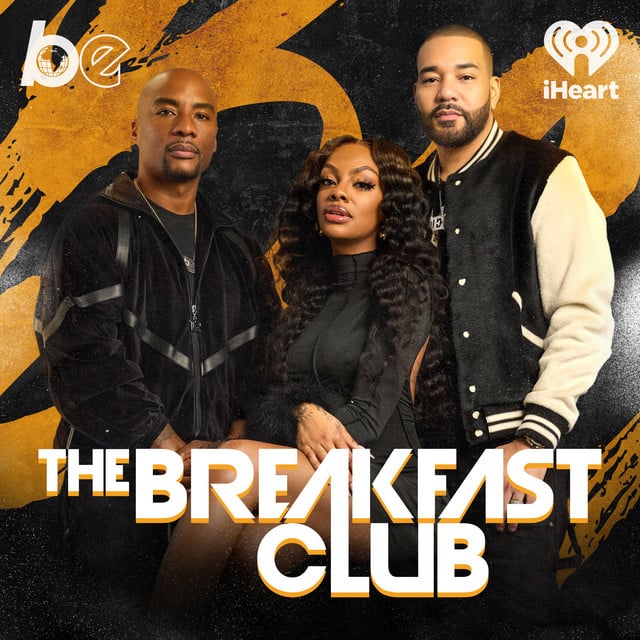
Over the last twenty years, urban radio has had three major hits: The Tom Joyner Morning Show, The Steve Harvey Morning Show, and The Breakfast Club.

As a consultant, researcher, and corporate programmer, I’ve seen how these shows have been a rising tide that lifted all boats—“boats,” in this case, being dayparts outside of morning drive. However, I’ve also seen many instances where ratings drop after these shows sign off at 10 a.m.

One key difference between local radio and local television is how they’ve embraced network programming. TV stations didn’t just air network shows; they enhanced them with local relevance and used their popularity to promote what happens outside morning drive on the station. Some radio stations have done this well.

A sound marketing strategy is about meeting your audience where they are. That’s why nearly every TV network has ventured into streaming. CBS has Paramount+, ABC and Fox have Hulu, Disney has Disney+, and NBC has Peacock. Whether these moves were forced by Netflix’s success or not, the networks are all in.

Here is where I could insert dialogue on the countless conversations, meetings, presentations, and formats I’ve been a part of for HD Radio, but that could take us to a dark place. For radio, the next step is podcasting. Urban radio, in particular, needs to embrace the medium.

What better way to super-serve the community? Podcasts give stations the opportunity to extend their reach—whether by covering high school sports, or showcasing local music and artists and potentially compelling community issues that have been relegated to 4 a.m. Sunday slots. News reports and personalities used to be a key part of radio, especially Urban radio. Just like television networks promote their streaming platforms on-air, radio stations should feature their podcasts prominently within their broadcasts.

Embracing podcasts isn’t just about community service; it’s also smart business. Podcasts provide valuable content for social media, opening the door for additional revenue opportunities through sponsorships and added-value promotions.

This could also mean the ability to extend hosting fees to personalities, offering them new incentives which may help you attract and hold onto quality personnel. The additional exposure could also strengthen their connection with the audience. A well-planned podcast strategy allows for audience recycling and growth—something radio desperately needs to remain competitive.

I’d love to hear and share how your station is utilizing podcasting. Feel free to email me with details on what you’re doing, your thoughts on this article, and any topics you’d like to see covered in the future.

Barrett Media produces daily content on the music, news, and sports media industries. To stay updated, sign up for our newsletters and get the latest information delivered straight to your inbox.
The Basic Truths Of Marketing: It’s Not Set It And Forget It

0

If you’re a fan of Shark Tank, as I am, then you’ve likely seen the basics of Venture Capital strategy and tactics. Each week, you can watch the Sharks grill those looking for a deal. Are you strictly D2C (Direct-to-Consumer), strictly eCommerce, or via multiple platforms?

They’ll ask, “What’s your monthly burn?” or “How much was your seed funding?” “What are your Customer Acquisition Costs (CAC)?” and “How much cash do you have on hand?” and so on. You hear things like, “I want 10% equity and then another 5% in advisory shares.”  

These are all great for getting a look under the financial hood of any company, but you’ll also hear questions about marketing strategy. “How are you marketing, and what’s your spend?” They invariably ask about digital and Facebook marketing.

They simply want to know if this entrepreneur is savvy enough when it comes to marketing and how much work they’ll need to do just to help achieve their goals. We all know there are certain marketing “dos and don’ts,” and while they may be modified, the basic truths remain.  

The foundational rule—the one on which all else is built—is to understand your target demographics. No amount of clever creative or branding will work if you don’t know to whom you’re talking. Understanding your target demographics must always be the first step in creating a meaningful connection with potential customers. It’s not only defining age, gender, location, interests, and income level; it goes deeper into determining their needs and pain points.  

It’s uber-important to remember that no one thinks of you until they need you! That’s why building a strong brand identity that helps you stand out in a crowded marketplace and gain that memorable space in the consumer’s mind is imperative.

The brand represents the personality of your product and sets the tone for all marketing efforts. I have mentioned this in previous articles, but the brand is “A promise, based on a relationship, wrapped inside an addictive customer experience.” When this is expressed through your creative logo, color schemes, messaging, and tone of all you do, you are on the right track for success.

When customers can easily identify and connect with your brand because it stands for something in their minds, they are more likely to choose your products or services over competitors when they need you. This is the beauty of radio—it is a tremendous and most effective brand builder!

Customers are also looking for value. Whether it’s in the form of quality, affordability, customer service, or innovation, your marketing should always emphasize clear and definable value. Keep in mind that value does not have to be price-driven! 

Value-driven strategies position your brand as a solution to your audience’s problems, making it more appealing. Whatever messages you create must clearly communicate how your product or service improves the customer’s life or solves a specific problem or need.

These days, digital marketing is not optional – it has become a necessity to be delivered in tandem with radio and other audio platforms.  Digital marketing is more transactional. Increasingly, consumers are turning to online platforms to inform their purchasing decisions when they need a product or service, and businesses must invest in effective digital marketing strategies.

This is why branding strategies and campaigns are so very important. We need to make that point to our own customers. Broadcast and audio platforms do a superlative job of branding and focusing on the brand – every day, every week, every month, throughout the year.

To reinforce that impact, when the consumer goes online and an SEO campaign has that same recalled brand on the top of the Google list, the consumer remembers, “I know them. I hear them all the time! That’s who I will call.” This is a proven strategy time and time again.  

We all know that content is king in marketing. Content marketing builds authority and trust, positioning a brand as an expert in the field. It fosters strong relationships by offering solutions without immediately pushing for a sale. GREAT content drives engagement and increases brand awareness.

Over the years, we have learned that no marketing plan employs a “set it and forget it” tactic. To be effective, you must continuously measure and analyze the performance of your campaigns. KPIs help track ROIs and provide insight into what’s working and what’s not. This allows for informed decisions, adjustment strategies, and optimized campaigns for better results.

The business landscape and consumer behavior are constantly evolving. Technology, trends, and market demands change rapidly; every business must be flexible. If we have learned anything from our collective experience, it’s that adaptation is key to long-term success. Adjusting marketing strategies that align with changes keeps a business relevant and competitive.

By understanding the audience, offering value, leveraging digital tools, and continuously analyzing and optimizing efforts, a brand can build strong connections and stand out in an increasingly competitive market. Marketing is a dynamic field, but these core principles help achieve long-term success.

Barrett Media produces daily content on the music, news, and sports media industries. To stay updated, sign up for our newsletters and get the latest information delivered straight to your inbox.

Jane Slater is Shining a Spotlight the Dallas Cowboys Command on NFL Network

0

Rather than being assigned a specific story or compelled to explore new developments, Jane Slater is usually on task well ahead of time and retains a journalistic mindset. Working as a reporter for NFL Network, she follows teams within the National Football League and is oftentimes on the phone with sources hearing different insights and perspectives while trying to corroborate information. Throughout a preponderance of her time with the league-owned media entity, which will reach a decade next year, she has largely focused on covering the Dallas Cowboys at the national level and is proactive in her endeavors to provide value to studio shows and broadcasts.

While the league is currently in its offseason, Slater does not believe the perceived respite to exist around the team. Amid a typical workday, she is gathering intel and maintaining her professional network of agents, team executives and players. There are also instances when she participates in an array of television programs and showcases her versatility with an ability to provide analysis and anchor shows.

“The lines have really gotten blurred if I’m being honest,” Slater said. “I come on as a reporter, but at times, I’m sort of in an analyst role, and I think it’s easy for me to be an analyst of the Cowboys given the depth of coverage, the knowledge, the relationships over the years. I think it’s a little harder and a little bit more disingenuous to say, ‘I’m an analyst of some other team.’”

Although the Cowboys have not appeared in an NFC Championship Game in three decades, the team often merits veritable interest from around the country. Widely reputed as one of the most valuable sports franchises in the world, the team has a roster replete with stars such as Dak Prescott, Micah Parsons and CeeDee Lamb but fallen short of reaching its Super Bowl championship aspirations. Even so, sports fans remain intrigued about the franchise dubbed as “America’s Team,” which operates under the direction of team owner, president and general manager Jerry Jones.

“I find him to be very transparent, sometimes to a fault, but he’s also not someone that shies away from talking about his own failures, and I think for a lot of us that don’t look in the mirror and see ourselves as perfect, we appreciate that,” Slater said. “I always tell people that have an issue with Jerry for whatever reason that might be – I always challenge them, ‘Spend 30 minutes with Jerry Jones, and tell me if you don’t walk away impressed and charmed.’”

Slater is not under any proverbial spell, but she does find Jones’ passion for football and acumen at growing the game to be impressive. In fact, Jones previously served on the league media committee that oversaw the lucrative long-term media distribution agreements reportedly worth over $12 billion per season. Some consumers may posit that working for NFL Network prohibits what Slater can report, but it is a sentiment towards which she dissents.

“I’ve never gotten called to the carpet for my reporting, but that’s because as a journalist, if you are a fair reporter and you can back up with facts, it’s journalism,” Slater articulated, “and so that’s where I sometimes get really, really frustrated with that whole narrative that somehow, ‘Oh, you couldn’t cover this.’”

The Future of the NFL Network

Over the last several years, there have been reports of discussions taking place through which The Walt Disney Company would potentially acquire NFL Media, the division of the league that includes NFL Network, the NFL RedZone channel and NFL Films among other assets. While Slater affirmed that she does not have inside knowledge of the situation, she would not be surprised to see NFL Network have a broadcasting partner one day. Regardless of the outcome, Slater is aiming to continue demonstrating her worth and staying committed to journalistic tenets.

“Earlier in my career when I was younger, I would freak out about these things that are getting leaked in the news, etc., but this will now be the third consecutive year we’ve been rumored to have been bought, and it hasn’t happened yet,” Slater said, “but if it does, I feel confident that whoever hires us is looking for journalists, and I think as long as you’re a journalist who creates value, I think that they’ll be a place for you.”

Instead of utilizing backchannels to garner and subsequently disseminate information, Slater tries to communicate directly with those involved and extrapolate their viewpoints. Demonstrating respect and attempting to glean various sides of a situation augments her ethos in the media ecosystem, especially as more conglomerates and content creators battle for shares of attention. Amid an era premised on instant gratification and other synergies, Slater pauses to evaluate the motivation behind being afforded information and prioritizes accuracy rather than immediacy in her dispatches.

“You’ll see agents tell you that teams are all in or they’re interested, and that’s just to drive up interest from another team, and I’m not interested in that sort of reporting,” Slater explained, “and I think you can’t always 100% protect yourself from that, but I think you can go out of your way to talk to as many people as possible, and when I don’t feel like the truth is lining up based on multiple sources I’m talking to, I just don’t report it.”

Over the years with NFL Network, Slater has reported on studio shows such as Good Morning Football, The Insiders and NFL GameDay Live both from a remote setup and live from stadiums around the league. Recognizing the different timbres and personalities within these programs, she tries not to force things and stay true to herself. Some of that involves lighthearted repartee with other personalities while also conveying the information in a clear and concise manner.

“It’s in journalism school when you do TV, it’s to tell it to a friend,” Slater said. “I, just always, no different than if you and I, we all have different friend groups, I don’t show up differently, but my energy might be based on which group I’m hanging out with, and that’s sort of how I look at each one of those shows.”

Earning Your Stripes Locally in Radio & Television

Slater studied journalism and government as an undergraduate student attending the University of Texas at Austin and faced a decision about her career path. With a familiarity towards news media coverage in her youth, she sent VHS tapes of reels to stations across the country for seven months but did not land a job. As a result, she started working in sales for NewsRadio 1080 KRLD but discovered that the craft did not feel authentic to her, prompting a move to producing for CBS19 in Tyler, Texas.

“I can’t tell you how many times in a newsroom where one news director thought I was trash and then the next one thought I was his treasure, and so I do believe it is subjective,” Slater said. “Again, I just had this relentless spirit that I wanted to be a journalist, and I think that even now in my own career, I really try to distinguish myself as such. This is not a knock on influencers or things along those lines. I’m not in it for the entertainment aspect of it. I truly love finding nuggets and reporting news.”

Slater had become accustomed to rejection early in her career, but she remained persistent and cultivated sources from around the country working for several local news outlets. After time spent in Denver, she made it back to Dallas with CBS 11 and also hosted a midday sports talk radio show with Mark Elfenbein on 105.3 The Fan. While Slater contends that she was likely hired in an attempt to diversify the programming lineup, she was grateful for the position and became more resilient through the experience.

“I wasn’t what I would call an ‘avid sports fan’ or a ‘sports historian’ outside of the Dallas-Fort Worth area, and when you’ve got to talk sports five days a week, four hours a day – there’s no teleprompter, it’s all off-the-cuff ad lib – it was probably the scariest jump into a deep end of the pool that I’ve done in my career,” Slater said. “It was a real gamble, and there was some audacity involved in it.”

Welcome to The Worldwide Leader

Slater was hired by ESPN to work as a studio host and reporter for the Longhorn Network, a venture created as part of a 20-year contract with her alma mater. Being an alumna of the university, Slater evinces that there was a disconnect covering schools across the Big 12 Conference and thinks forming the television entity was the wrong approach. As ESPN was growing the SEC Network a few years later, Slater found herself out of a job and was looking for roles in medical sales or real estate. Upon interviewing with NFL Network though, she felt the outlet would not find anyone better than her for the position.

“I saw it really as not just a job, but a privilege to be able to go back home and cover this team that I actually did know the history on, that I could give in-depth analysis,” Slater said. “And I’ll never forget the boss that hired me – he said, ‘How long do you think it’ll be before you start breaking stories?,’ and I conservatively said six months and it was three.”

Slater considers being hired by NFL Network to have changed her life, but she also had to decline a reporting role with the Golf Channel in the process before knowing the outcome. At the same time, she has witnessed gender disparities and finds herself frustrated by how women can be branded in asking questions and covering sports. Slater feels that the younger generation is more accustomed to seeing women in sports media, and she finds it important to possess friendships with other women in the business.

“I feel like I’m really, really blessed with a lot of those meaningful relationships in the business because my girlfriends right now that have jobs in sales or real estate or you name it, they can’t really ascertain what my day-to-day looks like,” Slater said. “They can understand what it’s like to be a woman in certain professions, but not sort of the uniqueness that comes with covering sports, and specifically football.”

Conversations Always Lead to Connections

Whereas Slater previously worked in newsrooms around the country during her formative years in the business, she now works remotely and sometimes feels submerged in a recurring pattern. In having friends around the business, she continues to talk with them about taking personal inventory and how to consistently improve, and these conversations have helped her feel rejuvenated. Moreover, attending signature events throughout the year also assists in keeping things in perspective and forging more connections.

“I remember sitting at the University of Texas and wanting to be a sports journalist, and not only am I at these events, but I have a seat at the table,” Slater said, “and I think I would be really disappointed in myself as a younger version of me that has the opportunity now if I ever got complacent or thought I was better than this job.”

With the NFL offseason continuing throughout the spring, Slater has maintained her league coverage while also watching documentaries in her free time. Even though she loves covering sports, she misses working in news and aspires to explore different niche subjects, such as UFO disclosure and CIA intelligence. Slater could see herself spending time on passion projects and trying to fund investigative storytelling in the future, satisfying her ambitions to lean further into certain issues. Yet she remains motivated to perform her reporting role based on overall curiosity and interest, although it may not be limited to sports for the remainder of her career.

“I find myself really missing news a lot,” Slater said. “I miss being able to have an opinion on politics and our government, and I think we learned a couple of years ago that people don’t necessarily want sports reporters to do that, and so sometimes I struggle with that because I have a lot of opinions. So I could see myself transitioning back to news, but I think I’ll always be curious, I’ll always be asking questions and I’ll always want to be telling stories. I just don’t know in what capacity that’ll be.”

Barrett Media produces daily content on the music, news, and sports media industries. To stay updated, sign up for our newsletters and get the latest information delivered straight to your inbox.

700 WLW Host Thom Brennaman is the Latest Example of Time Healing All Wounds

0

I was a sports talk radio host in Ohio when new 700 WLW host Thom Brennaman made his famous hot mic slip up in 2020.

If you’re uninitiated, Brennaman was caught using a homophobic slur when he thought he was in a commercial break while broadcasting a Cincinnati Reds game against the Kansas City Royals.

The situation went mega-viral — if there is such a thing — but it was especially pertinent to my audience. The majority of sports listeners at my station would identify themselves as Cincinnati Reds fans, and Thom Brennaman, along with his father, Marty, were Reds royalty.

I wasn’t kind to Thom Brennaman in my criticism of him. In his defense, he said that using the word that he said “I can’t begin to tell you how deeply sorry I am. That is not who I am. It never has been.” My argument was that we absolutely got to see who Thom Brennaman was behind the scenes. And if that’s how he acted when he thought no one was looking, that told me all I needed to know about the man’s character.

I was wrong. And many other people who were intensely critical of him were, too.

Earlier this week, my phone rang. It was Thom Brennaman. He wanted to talk about taking over mornings from Mike McConnell at 700 WLW, the venerable Cincinnati news/talk station where Brennaman is inextricably linked.

To be truthfully, I don’t always love talking to people with a checkered past, were the subject of controversy, or had a viral moment for all the wrong reasons. You have to ask about it, even when it is uncomfortable.

But with Thom Brennaman, I didn’t have to ask about it. He freely brought it up. The self-awareness on display was staggering. He was chiefly aware of how he was perceived after his viral moment in 2020 led him to losing some lucrative opportunities in the sports broadcasting world.

It would have been insanely easy for the disgraced broadcaster to go into the media version of the witness protection program. He could have gone into hiding, finding a home in some backwoods town to never be heard from again, accepting his fate. But he didn’t.

Instead of being bitter — which, if you’re asking me, would have been the easiest emotion to feel — Thom Brennaman accepted responsibility for his actions. He took into account how what he did affected other people. By many accounts, he’s done plenty of work with members of the LGBTQIA+ community both inside and outside the sports arena. He’s adamant that he’s not the man that he was when his comments were picked up in 2020.

Now, I’m not a member of the gay community. So I can’t speak on how offensive the comments from Brennaman were. So, I’ll default to the opinions of those most affected by the situation. And they say that the new WLW host has done the work. He’s learned how hurtful his comments were, what they mean, and how they cut to the core.

I saw a letter to the editor of The Enquirer in Cincinnati that said “While Brennaman has said that he is sorry for his homophobic slur on an open mic while doing a Reds game broadcast in 2020, I believe he is only sorry that he was caught … When someone shows you who they are, believe them the first time.”

Truthfully, I’ve been known to use that final phrase, too. But that discounts another fact: People can change. People do change. And maybe most importantly, sometimes, people deserve a second chance. I think in the case of the new 700 WLW host, he’s earned a second chance.

The person I spoke with on the phone earlier this week was introspective, self-aware, and sorry. Not just sorry because they lost a premiere job and the status they worked so hard and sacrificed for. But someone who said something ignorant while trying to quote a classic movie and ended up offending and hurting members of the community in which he also lived.

And that, to me, is a much better judge of someone’s character than perhaps an insanely short clip of someone being caught saying the worst thing they might have ever muttered, and we just happened to catch them in the act.

Broadcasters, just like everyone else on the planet, are imperfect. It’s my view that if we don’t ever extend grace, there’s no reason for someone who’s done something wrong to ever work toward being better. I was highly critical of Thom Brennaman in 2020. And I was wrong. I judged a man from a 10-second clip, which I don’t think is ever, and ever should be, fair.

I think it’s just another example that time heals all wounds. It is easy to be caught up in the moment of thinking emotionally — or sometimes, irrationally — when you see someone caught doing something wrong. It’s easy to be sanctimonious, holier than thou, and call for someone’s head when the mob mentality gets rolling. Would I have ever come to this conclusion in 2020? No. 2021? Not likely. 2022? Who can be sure?

But in 2025, it feels borderline ridiculous to hold something against someone from so long ago, especially when they took full responsibility for their actions and did what they could to mend fences and change minds. Especially when that person has never shied about from the topic, and continues to be so self-aware that so many people will immediately identify him with the situation.

But he’s never let the moment define him. If I ever made a similar mistake, I could only hope in my wildest dreams that I would handle it with the grace, class, and accountability that he has.

So I applaud Thom Brennaman for taking the time to recognize his mistake, doing what he could to rectify it, and waiting things out. Instead of being bitter about the situation, he became a better person because of it. And I think that deserves high praise.

I also applaud those at iHeartMedia Cincinnati and 700 WLW. Instead of treating Brennaman like he was radioactive, they treated him like someone with high familiarity with the audience, and that that audience was capable of looking past something that happened nearly a half decade ago.

Barrett Media produces daily content on the music, news, and sports media industries. To stay updated, sign up for our newsletters and get the latest information delivered straight to your inbox.

The Watch: ‘Kudlow’ with Larry Kudlow on Fox Business Network

If you’re paying more attention to the markets these days, you’re not alone. Last week, both CNBC and Fox Business Network — including the show hosted by Larry Kudlow, which routinely finishes as the most-watched business news program in cable news — saw ratings gains as announcements of major tariffs from President Donald Trump were unveiled.

Since beginning this series, I’ve shied away from reviewing shows on CNBC and Fox Business Network because I’m just genuinely not all that in tune with the financial markets and the business sector.

But with some of the top stories in the news media world this past week being directly tied to the financial markets, I thought what better time than now to take a look at Kudlow, and find out why the program has continually earned the top spot in the business news realm.

To begin his show on Monday, Larry Kudlow welcomed Art Laffer, a former economist who worked for the Reagan administration and the mind behind the Laffer Curve (maybe I know more than I think?) to the program.

Before asking his first question to Laffer, Kudlow laid out his belief that reciprocal tariffs aren’t something he’s against. However, it appears that the formula used by the Trump administration doesn’t accomplish a reciprocal tariff situation. Instead, in Kudlow’s terms, it is basically a 25% tax on the world’s economy.

Larry Kudlow added that he believes that the trade policy enacted by America in the past has been a negative for the heartland. But he said he thinks Trump is well-intentioned, but “I’m not sure about the ways and means.”

Which is an interesting stance from Kudlow. This is a man who worked for the previous Trump administration as the Director of the Economic Council. So what he says matters, not just for the fact that he’s a well-placed, knowledgeable figure on the subject, but also because he has intricate insight into the President’s thought process.

So, for Larry Kudlow to essentially say “I think this is the incorrect way to attempt to accomplish your goals,” is an insanely interesting development, in my view.

While watching the conversation between the two economic experts, I was struck by Kudlow’s demeanor. It was, frankly, endearing. He’s not a polished television host. He operates the program with a scowl similar to that of someone who just found out their plane had been delayed for the third time.

Larry Kudlow helmed, at least the Monday version, of his show as if he would rather be anywhere else in the world. I wholly recognize that that sounds like an insult, but I actually enjoyed it. Because it showed that he wasn’t really into the dog and pony show that often encompasses a cable news program.

The Kudlow host is focused on two things: content and conversation. He didn’t seem all that preoccupied with things like smiling into the camera — or even looking at the camera, truthfully — or making sure he spoke with a bright, cheery disposition.

He wanted to talk about the things that mattered most to him. And as a viewer, the credibility of someone acting as if they don’t care as much about the presentation but with the content is a refreshing way to consume news television.

Despite Kudlow beginning his conversation with Laffer by being hesitant to criticize the Trump administration, he did heap praise on the President for his stance on attempting to rectify what he viewed as a problem. However, at the end of his conversation, he reiterated his stance that he simply believes this is the wrong way to accomplish what the President wants to achieve.

“I support the thrust of the policy,” Kudlow said in the closing stages of his conversation with Laffer. “I just don’t think, though, that the cold reciprocity — I agree with (Laffer). It isn’t so much reciprocity now. It has become a trade deficit thing. And we’re not going to wipe out trade deficits, even if that were desirable. We’re never gonna wipe them out.”

I enjoyed hearing the unfiltered thoughts from the Fox Business Network host. In today’s hyperpartisan media world, it’s easy to expect someone to just toe the party line at all times, no matter what.

But I didn’t see that from Larry Kudlow. He continually discussed his unfiltered thoughts on the topic, unconcerned about what the repercussions might be should Trump see the segment, disagree, and sic his legion of followers on the Fox Business Network host.

And that, to me, was encouraging to see. I enjoy it when people say what they think and mean what they say. There are few qualities that can propel a personality in 2025 like unbridled authenticity. Larry Kudlow did that on Monday. It’s easy to see why his show would be a popular one in the business news sector.

Barrett Media produces daily content on the music, news, and sports media industries. To stay updated, sign up for our newsletters and get the latest information delivered straight to your inbox.

Florida-Houston NCAA National Championship Game Averages 18.1 Million Viewers on CBS

0

The National Championship Game between the Florida Gators and Houston Cougars within the NCAA Division I Men’s Basketball Tournament averaged 18.1 million viewers on CBS, it was revealed on Tuesday afternoon. The Monday night contest peaked with 21.1 million viewers as Florida completed a comeback in the final minute of the game, securing the victory in thrilling fashion by a final score of 65-63.

As a whole, the National Championship Game was up 22% year-over-year and represents the most-watched iteration of the event since 2019. Last year’s game between the UConn Huskies and Purdue Boilermakers averaged 14.8 million viewers, which was a slight improvement over the record-low viewership from the year before. Ian Eagle completed his second year as the play-by-play announcer on the game broadcasts for the Final Four and National Championship Game, and he was joined by analysts Bill Raftery and Grant Hill, and sideline reporter Tracy Wolfson.

Tournament broadcasts across Final Four weekend averaged 16.4 million viewers for the three games, indicative of a 21% year-over-year rise and the best finish in eight years. Games within the Final Four round on CBS averaged 15.3 million viewers, which was up 19% from the previous year on TBS. The game between Houston and Duke averaged 16 million viewers, representative of a 13% year-over-year proliferation. Furthermore, the lead-in game featuring Florida and Auburn garnered a 27% increase with an average of 14.6 million viewers.

Tournament viewership as a whole across CBS, TNT, TBS and truTV averaged 10.2 million viewers, an increase of 3% from the previous year. Both companies are currently operating under an eight-year media rights extension that grants them rights to broadcast the tournament through 2032, reportedly worth a total of $8 billion.

Barrett Media produces daily content on the music, news, and sports media industries. To stay updated, sign up for our newsletters and get the latest information delivered straight to your inbox.

Sasquatch 92.1 Reimagined As ‘Real Rock For The Northland’

0

Sasquatch 92.1 Duluth, MN, has reimagined the station as “Real Rock For The Northland.”

David Drew, Director Of Music / Brand Manager of Sasquatch 92.1, said, “The Sasquatch brand has always had an aggressive approach, and while we won’t forget to play epic rockers from the past, now is the perfect time to evolve to play new rock and a lot more of the great songs from the 2000s and the 90s because fans of newer rock deserve a radio station to call their own and Sasquatch 92.1 is proud to fill that void.”

The new music blend launched with a full day of commercial-free music.

The station lineup features:

6 AM – 9 AM: Danger In The Morning, locally hosted by Joe Danger

9 AM – Noon: Fox David – Featuring The 2-Hour Commercial-Free Rock Block

Noon – 3 PM: KC – a new addition to the Sasquatch 92.1 team.

3 PM – 7 PM: The Ace Rawkolla Show – Featuring Commercial-Free REAL ROCK at 3

7 PM – Midnight: Loudwire Nights with Chuck Armstrong

“For years, we’ve heard from listeners about the need for a real rock station in the Twin Ports. We’re confident this will open the door for more rock concerts, experiences, and a new era of rock in the Northland,” says Ken Hayes, Director of Content at Townsquare Media Duluth.


Barrett Media produces daily content on the music, news, and sports media industries. To stay updated, sign up for our newsletters and get the latest information delivered straight to your inbox.

NAB Show 2025 Takeaway: Radio Is Pulling Together

0

This week, the center of the radio universe is Las Vegas and the 2025 NAB Show.

Not surprisingly, AI sits at or near the top for discussion with the message that AI is no longer an emerging trend.

Aside from AI, I wondered what takeaways industry experts see as emerging topics or trends.

Greg Strassell, Executive Vice President/Programming for Hubbard Radio, said, “Radio is pulling together, thanks to a lot of work from Westwood’s Pierre Bouvard and the RAB’s Mike Hulvey regarding the strength of radio.” 

“With so many choices for audio advertising, radio has needed more sophisticated and up-to-date thinking to position itself.  As the industry pulls together, movement is afoot on that front.

Mike McVay, President of McVay Media, agrees that the industry seems to be working together. “There is an enthusiastic feeling here at the NAB show around Radio as one part of a greater platform of audio. No matter where the content is delivered, be it over the air, online, on an app, or as a podcast, communication is growing.”

Strassell noted an improvement in podcast advertising tools, “The sophistication of podcast advertising tools continues to increase as well. With a lot of data generated on the digital front, it is a positive for radio companies that are also embracing podcasting. So, effectiveness of our audio messaging and the attribution has strong momentum.”

Not surprisingly, the Nielsen 3-minute qualifier has been a hot topic. Consultant Buzz Knight of Buzz Knight Media told me, “From my perspective, there is a lot of conversation at NAB this year about the 3-minute qualifier Nielsen initiative. Whether one is in the camp of being in favor of this or not is somewhat irrelevant as the initiative is moving forward. Nice to see the RAB’s advocacy as well as a means of educating and unifying.”

Strassell added, “The session about the 3-minute quarter-hour with updates from Nielsen and capturing more listening for radio was strong, and it will be interesting to see the first quarterly result in a few weeks. Beasley’s Tina Murley and Mike Hulvey were on that panel, and it was very positive for the industry.”

McVay notes the positives of content delivery: “Information and Entertainment being delivered in new ways, the positive use of AI, the fact that great content continues to be in demand, and new ways to use our medium for marketing advertisers are all things creating this positive atmosphere.

So, what are the biggest issues facing the industry?

“I’m glad that the NAB and FCC have floated possible review of deregulation for radio.  I believe this needs to be addressed and help companies better compete against new digital media platforms, said Strassell.

Knight added, “As far as the biggest issue, looming debt issues are not disappearing in a backdrop of difficult economic challenges.”

NAB continues through Wednesday at The Las Vegas Convention Center.

Barrett Media produces daily content on the music, news, and sports media industries. To stay updated, sign up for our newsletters and get the latest information delivered straight to your inbox.

Photo: Jeff Lynn