

When news broke yesterday that Dolly Parton had died at 80, programmers somewhere were likely wondering whether “Jolene” fit the format. That’s the wrong question.
Here’s what really matters: How should we own this moment? Great radio stations understand there are days when normal rules don’t apply. The clock can wait. The research can wait. The format can even bend a little. Something happened that the audience cares about deeply. For a few hours, a radio station has an opportunity to become something more than songs, commercials, and sweepers…Dolly Parton’s death was exactly that kind of moment.
Country Radio’s Natural Advantage
Country radio obviously had the strongest connection. Dolly was part of the format’s foundation. There was music to play, stories to tell, and archival audio to find. Additionally, listeners shared their memories, and reactions poured in from generations of country artists.
But some stations went even further. In the hours after the news broke yesterday, certain stations went wall-to-wall with Dolly Parton. Those are the stations that truly understood the moment.
Consider Audacy Country’s immediate response — Katie Neal opened her Superstar Power Hour with a full tribute. Holly Hutton hosted a special Dolly Parton Top 7 hit countdown at 7pm on the Rob & Holly show across America. Most of Audacy’s local markets followed suit, programming all-Dolly hours throughout the day. For example, KSON in San Diego had its morning show, John and Tammy, stay on through 3pm. They tracked down former employees and artists who shared stories about working with Dolly. They also opened the phone lines to their audience.
Moreover, production teams across Audacy’s network created special imaging and tribute pieces that made the coverage feel intentional and reverential. Meanwhile, social media teams activated on all their pages simultaneously. The stations threw out the normal log. They played obvious songs and deeper cuts. Additionally, they pulled old interviews, shared stories, and gave listeners a place to collectively remember Dolly.
They may not still be doing it today — but that’s not the point. For those few hours, they stopped worrying about normal programming. Instead, they recognized what belonged on the station right then. That’s owning the moment.
Beyond Genre Boundaries
And it wasn’t just country radio. Dolly Parton became bigger than a single format long ago. AC, Classic Hits, Adult Hits, and many other formats have audiences who knew her music. Furthermore, even people who weren’t Dolly Parton fans understood what she represented in American culture.
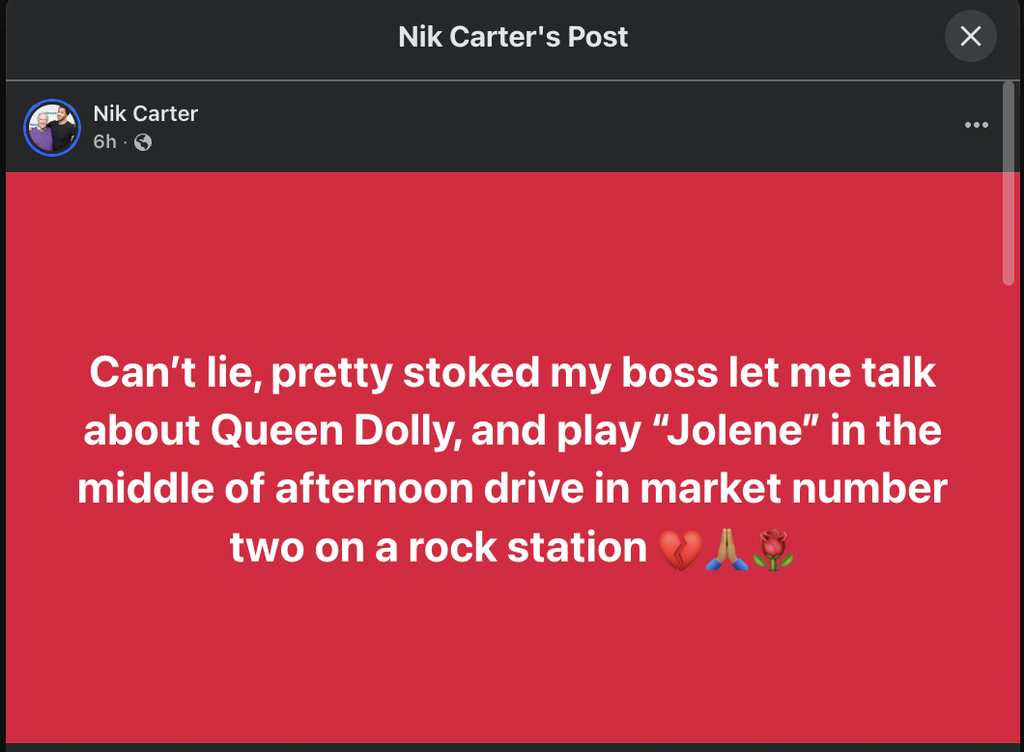
KLOS — a rock station in Los Angeles — made room for Dolly. Think about that. Nobody listening suddenly wondered whether KLOS had flipped to country. Nobody needed an explanation for why a Dolly Parton song played on a rock station. They understood the moment. That’s what owning it looks like. It doesn’t require abandoning your brand. Instead, it requires having confidence in your brand. Recognize when something in the world matters more than protecting every line of the music log.
Radio’s Unique Advantage
Spotify can build a Dolly Parton playlist in seconds. YouTube can serve up decades of performances. Social media was immediately filled with clips, tributes, and memories. However, radio went deeper — Audacy created an exclusive 24/7 Dolly Tribute channel on the Audacy app that’s still running around the clock. Broadcast radio cannot beat those platforms at being libraries. However, it can beat them at being human.
A personality saying, “I know we don’t normally play this song, but today we’re going to,” means something. So does a listener calling and explaining that “Coat of Many Colors” reminds her of her mother. Similarly, someone remembering seeing Dolly at a local venue thirty years ago carries weight. Perhaps somebody on your staff interviewed her years ago and has a story nobody else in town can tell. That content belongs to your station and your community. That’s radio’s advantage. Consider Holly Hutto, co-host of the nationally syndicated Rob + Holly Show alongside ACM and CMA Award-winning personality Rob Stone, hosting a special Dolly Parton Top 7 hit countdown at 7pm. That broadcast reached across America and created a shared moment where millions of listeners experienced the same tribute simultaneously. A personal connection that only radio can deliver.
Bringing the Story to the Community
Radio’s reach extends far beyond the airwaves. On-air personalities became the voice of the community’s grief and celebration. Country Radio Hall of Fame Inductee Heather Froglear represented country radio across local news affiliates, radio, and television outlets alike. Similarly, US99 Chicago’s Marci Braun shared Dolly’s story on WCCO and local Chicago television. Additionally, personalities appeared on Fox 2 Detroit and other regional news outlets. Furthermore, Hubbard’s myTalk 107.1 seized the moment immediately by getting a billboard up that displayed across the Twin Cities.
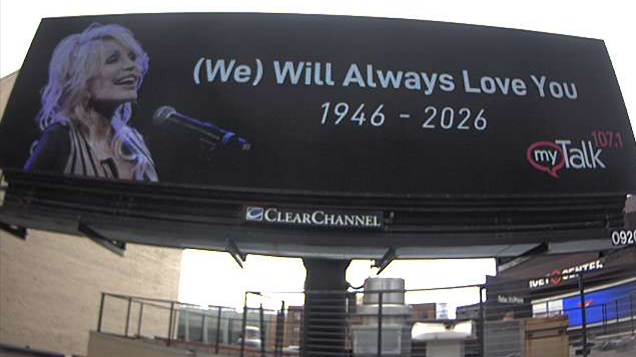
The local appearances and promotion brought Dolly’s legacy into broader conversations — not just among country fans, but throughout entire communities. By placing talent on news outlets and paying tribute to a legend through billboard activations, radio became the trusted source for how people should feel about the moment. That’s the intersection of being live, local, and human.
This Sunday at 8am across all of Audacy’s Country stations, Heather Froglear will host Forever Dolly: A 90’s Country with Heather Tribute Show. The two-hour special will spotlight Dolly’s BIGGEST hits and stories of inspiration from the pop culture icon! This is a great example of proving that owning the moment doesn’t end when the initial news cycle fades.
The Path Forward
We spend enormous time talking about how radio competes with Spotify, podcasts, YouTube, TikTok, and every other platform fighting for attention. Sometimes I think we make the answer more complicated than it needs to be. You don’t build a memorable radio station by making every Tuesday sound exactly like the Tuesday before. Nobody remembers that you missed a scheduled song yesterday. However, they will remember that when Dolly Parton died, their radio station was there for them — truly, comprehensively, and authentically.
The Bigger Picture
And this isn’t really just about Dolly Parton. The next moment could be another artist’s death. It could be the local team winning a championship. Additionally, a massive concert announcement could break news. A hometown tragedy, a snowstorm, or something completely unexpected might suddenly have everybody in town talking.
Those are the moments when radio needs to be alive. The worst mistake isn’t playing the wrong song. Instead, it’s sounding like nothing happened. If everyone at work, on television, on social media, and around the dinner table is talking about something — but your radio station sounds exactly like it did the day before — we should probably stop bragging about being live and local. Great radio understands when the moment becomes bigger than the format. And when those moments arrive, great radio owns them.
Barrett Media produces daily content on the music, news, and sports media industries. Sign up for our newsletters to stay updated and get the latest information right in your inbox.

Yes, it shows radio’s power. And makes us wonder why broadcasters refuse to use it more often.