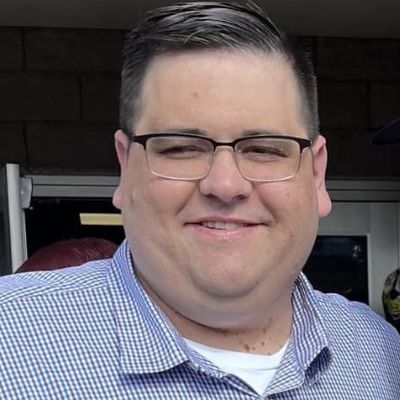
John McConnell, the Executive Vice President of Workhouse Media, has spent decades in newsrooms and on the air. Still, one Saturday morning in 2005 changed how he views the industry.
His résumé reads like a radio history lesson. He worked at 710 WOR and 810 KGO, two of the most storied news/talk stations in the country. He also worked at NBC and ABC News Radio before helping launch ESPN Radio.
Yet McConnell’s most important story has little to do with ratings. It starts with a bike ride, a pair of running shoes, and a broken neck. Now he’s urging media companies to give back.
A Saturday Morning Gone Wrong
McConnell was running late that morning in early November. Then a simple shortcut turned dangerous.
“It was a Saturday morning in early November 2005, and I had overslept the alarm clock,” McConnell said. “I was going to meet my buddies for a bike ride and then a run. Because I couldn’t find the bag where I keep my running shoes, I tied them together by the shoelaces and hung them over the crossbar. As I got close to meeting a friend, I saw the shoes getting close to the front wheel, and I reached down to pull them back. I pushed one of the shoes into the fork of the front tire. The bike stopped completely, and I flew off the handlebars.”
The crash left him conscious but unable to move. Meanwhile, a car approached.
“I hit the right side of my head,” said McConnell. “I cracked the helmet in four places. I was conscious the whole time, and I could see behind me that there was a car coming up, but I couldn’t move. I had no movement other than a little bit of feeling in my right pinky. In that moment, I thought, ‘This is it. I’m going to die, and this is how I’m going to go out.’”
Fortunately, the driver turned out to be a friend of a friend. His humor helped, too.
“The guy got out and walked toward me,” the longtime media executive stated. “He said, ‘Are you okay?’ I said, ‘No, I need you to call an ambulance.’ Then he said, ‘John McConnell?’ It was Alan, Bob’s friend. I said, ‘Hey, Alan, how you doing?’ And he goes, ‘Better than you.’ That was actually the best thing he could have said, because it helped take the edge off a devastating situation.”
‘The Luckiest Patient’
At the hospital, doctors feared the worst. They warned his wife, Marie, that he might not survive.
“They immediately began to slice away my clothes,” McConnell said. “Another doctor told Marie to be prepared that I may not make it. If I did, I would probably never walk again. Later, the doctor came back and said, ‘You’ve fractured the top two vertebrae in your neck. There’s something about your fractures that says we may be able to avoid surgery.’ And then he said, ‘You just may be the luckiest patient I have ever met.’”
Ultimately, surgery wasn’t necessary. Feeling returned over the next several hours.
“My body was in shock,” the Workhouse Media EVP shared. “I was not paralyzed. They released me a number of days later, and a week later, I was actually up and walking. I realized I was the luckiest person alive.”
Running for the Reeve Foundation
Five months later, McConnell read a story about the late Dana Reeve. The article also mentioned that the Christopher & Dana Reeve Foundation needed runners for the 2006 New York City Marathon.
“I looked at the date and thought, ‘Oh my God, that’s a year after I had the accident,’” said McConnell. “That’s going to be my goal. I’m going to do the New York City Marathon. I called my friends and said, ‘This is a sign.’ That week, I got in touch with the Christopher Reeve Foundation. I said, ‘Guy breaks neck, runs marathon. The five of us will raise money on your behalf.’ We trained, and the original idea was that I would walk it, but I ended up running the whole thing.”
That first race raised $50,000. Then the foundation invited him to join its board. He raised another $100,000 the following year.
Where the Giving Began
McConnell’s passion for philanthropy started long before that race. Specifically, it began at 810 KGO in 1991.
“I got interested in philanthropy and fundraising at KGO radio in 1991,” McConnell said. “I don’t think anyone who knows radio can argue that it was the most successful news/talk radio station in history. It was led by Mickey Luckoff, and Mickey, the general manager, was thoroughly committed to community focus.”
Luckoff soon handed McConnell a new assignment on the board of the San Francisco Council on Homelessness. As a result, McConnell saw how a station’s reach could change lives.
“Helping others who are in need, paying it forward, making a difference in someone else’s life, is exhilarating,” the longtime media executive stated. “It was really through Mickey’s leadership, and seeing how it was connected to a radio station with powerful messaging and big audiences, that I saw how rewarding and important this kind of work is.”
Why Media Should Follow
Many stations still carry that torch. However, McConnell sees fewer of them doing it.
“WSB has its annual Care-a-thon that has raised tens of millions of dollars,” said McConnell. “WJR has the Bed and Bread Club. iHeart in Atlanta races for Saint Jude. Unfortunately, as the business has changed, fewer stations are doing that, and yet I would say it’s one of the most important dynamics of a radio station. It’s good karma, it’s good business, and it’s helpful for the community.”
Moreover, he says giving pays off financially. At KGO, a homeless reporter named Harry Sweats helped drive that point home.
“When you do it right, it can also bring revenue from the support of sponsors, and ratings,” McConnell said. “I hired Harry Sweats, a homeless person, to become an advocate-type reporter and open a window into what homelessness really means. When people died on the street, the community reaction was phenomenal. We partnered with Safeway, and our telephones were overwhelmed.”
One Step at a Time
Finally, McConnell offers advice for anyone facing a hard stretch, whether personal or professional.
“It always sounds simple, but it’s always one step at a time,” said McConnell. “No matter how bad things are for you, know that there is somebody next to you who is also having a tough time and also needs help. What will make you feel even better is when you actually do something to help someone else and make a difference for that person.”
Barrett Media produces daily content on the music, news, and sports media industries. Sign up for our newsletters to stay updated and get the latest information right in your inbox.