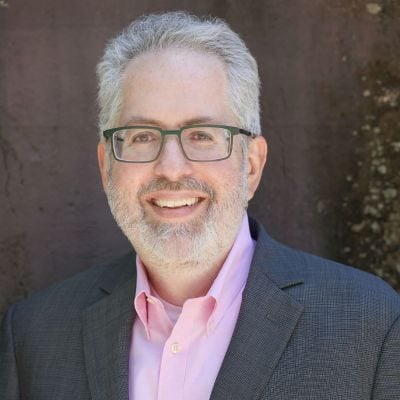
Typically, when you hear someone say they are “living the dream,” it is the height of sarcasm. Most people saying this are likely doing anything but actually living out their childhood dreams. That’s why when you come across someone like Chuck Armstrong who is actually, honestly living his dream, it’s a story worth telling.
Armstrong is currently serving in a dual role for Townsquare Media as VP, Content Operations and the host and Show Runner for the syndicated nighttime Rock show Loudwire Nights. These two roles fit him perfectly because he is fueled by two somewhat separate but certainly equal passions: the radio industry and Rock music.
Both passions began at an early age. Growing up in what he describes as middle-of-nowhere Kansas, he was heavily influenced by his father’s lifetime love of music. “I grew up surrounded by music and records and hearing stories about my dad seeing Black Sabbath in Kansas City in 1972.”
Moreover, he could pick up KQRC, known as 98.9 The Rock, out of Kansas City where he discovered a love for the medium. “Listening to The Rock led to me developing this massive passion for Rock Radio. I remember listening to Johnny Dare every morning driving to school and frequently being late because I didn’t want to turn the radio off.”
Yet it took a while for Armstrong to realize his passion could also be his career. “It wasn’t until I got to college at Kansas State that I even realized radio or music was a job that you could have,” Armstrong says. In the commons at Kansas State, he saw the college station 91.9 KSDB-FM recruiting students. This became his epiphany. “The guy behind the table said, ‘hey, you want to DJ?’ And it just clicked. Then I realized that of course, people have this job because I grew up listening to it. That changed my life.”
From there, a fairly familiar progression followed. He became Program Director of the college station. Subsequently, he interned at several places including Entercom in Kansas City, which he parlayed into a first job working for the cluster that included the station he grew up on, KQRC. “It was like a dream I never even knew I had. I just love the medium of radio. And it wasn’t just wanting to be on air. It was just wanting to be part of it in whatever way.”
Representing the Website
That desire to be in the business in any way possible eventually led to Townsquare. There, he has worked at the corporate level in a number of different capacities and taken over both host and show runner duties for their syndicated nighttime Rock show Loudwire Nights.
The show was launched in 2014, and Armstrong was part of the team that built out the initial concept. This included working with Kevin Vargas, Program Director at KLAQ/El Paso, and original host Full Metal Jackie.
The goal of Loudwire Nights is to be an audio extension of the website with the same name. “Loudwire.com was not very old when we launched the show, but it had already grown to be a go-to site for Rock fans,” Armstrong says. “That’s a huge part of what we want the show to be as well. The source of information about rock.”
So, while he plays a lot of music each hour, Armstrong wants what comes between the records to be what sets the show apart. “We’re always trying to make sure we’re delivering on what Loudwire has been known for, but in a unique way that connects with the listener and makes them bigger fans of the music, the artists, and the whole genre.”
However, the website does tend to lean toward covering the heavier end of music in the Rock spectrum. Much of this music doesn’t fit well on the radio, a disconnect Armstrong is well aware of. “No one is reading every story on Loudwire.com, or any website for that matter. So, the challenge is how do we give listeners the best of the best on the radio show and leave room to dive deeper on the website. The answer, I think, is coming at it from a fan’s perspective.”
Representing The Fans
If anyone can host the show and represent the fans, it’s Armstrong. Even now, several years into being named the host of the show, he’s still traveling to events and attending an endless number of shows. “I love going to the machine shop in Flint and hanging out with the WWBN-FM family. I love going to the Upheaval Festival in Grand Rapids and hanging out with the WGRD family. I love going to Sturgis and hanging out with the KSKY family,” Armstrong says. “Having the connection of a local show on a national level is nearly impossible. But you can try. And getting to talk to the audience and hearing them say that they listen — that’s the personal outreach that reminds me why I love what I do.”
Another important part of both being a fan and representing the fans is the opportunity to interview artists. Armstrong appreciates having the opportunity to talk with the musicians he loves. Yet the focus remains on delivering for the audience. “I remember growing up being a listener hearing artist interviews, and how cool that was. Now we have access to bring the artists to the listeners, so I want to continue making that connection.”
He takes great pride in presenting interviews on the show. Moreover, he has modeled his approach after the person he grew up listening to, Johnny Dare. “He could have an engaging conversation, and make it relevant, make it funny, make it personal, make it emotional with anybody, whether it was a huge rock star or an actress in a movie that I’ll never watch. I think about that all the time. Especially because it was one of the reasons I was often late for school.”
Representing the Format
As the Rock format lead for Townsquare, Armstrong is responsible for working with all the company’s Mainstream Rock stations. This gives him a broad perspective on the state of the format. And when many others, including MTV who for the first time ever will not have a Video Music Award for Rock, are skeptical, he’s bullish on the music.
“I think the Rock format is healthy. I’m always listening to Townsquare stations and other stations and I’m excited about the music that’s playing and the health of the stations,” says Armstrong. “Specifically in the last couple of years it feels strong and legitimate. There is a good handful of bands that may not be staples yet but have become known quantities for radio stations.”
Typical of his fan-level approach, that opinion is formed by being at shows and seeing how people react. “At so many of the shows I go to for newer bands, like the ones we’re talking about, the crowds are packed in and singing every word,” recounts Armstrong. “Does that translate directly to radio? No, of course not. I understand that. But I do think there’s an appetite for this new music and I do think it can work.”
The difference between Rock and other genres of new music that may be struggling more to build fanbases are the artists’ stories. “I understand all the data that we have access to but I, more than anything, want to hear a good song. Then I want to know the story of the band or the singer. Where they’ve been, what they’ve done,” he says. “It’s cool to have a gazillion streams and I would never discredit that. But listeners care about connection. I think that’s pretty foundational to Rock and you don’t necessarily get that just because an artist has a gazillion streams.”
And that’s where hopefully Armstrong, and other hosts in the format, come into play. “Introducing a band is more than just adding a song. It’s interviewing the artist or having them in the studio,” he says. Additionally, that’s a strength of the format he loves. “I think the hosts on rock stations in general are some of the truest music-loving DJs. And I think that’s always been a very special part of the format.”
Representing the Classics
Don’t take all of that to mean Armstrong only believes in new Rock. “I do think new music is great right now. I think we’re in a healthier place than we’ve been. And I’m excited about that,” he says. “But that doesn’t detract from the incredible and critical importance of playing the artists who got us here, who brought us to the party. Elevating core artists and making them a part of that station.”
He points to how the format celebrated Ozzy Osbourne after his passing a little over a year ago. “There wouldn’t be what we have today without Ozzy. You can easily see how there wouldn’t be this band without Metallica or that band without Soundgarden or whoever. I personally love the connection of what we would call Classic Rock to new music. I think it’s something almost all fans and listeners connect with.”
And with the mention of Metallica, it becomes necessary to address Armstrong’s biggest fandom — his near obsession with the band. “Growing up with a dad and older brother who loved music there was just something about Metallica and pulling out the Master of Puppets CD or And Justice for All or listening to Load with my brother when it came out.”
That has led to a lifetime of fandom including launching his own weekly Metallica radio show. He has attended every special event Metallica has been part of over the years. “Watching this band tour after tour, year after year, just continue to grow and never get complacent or get tired is inspiring.”
Beyond the music, he loves how the band gives back. “Even if I didn’t love Metallica and wasn’t obsessed with them I would think that creating a foundation to just be at the ready to help communities is cool. Who doesn’t love a story about when an artist steps up and helps people in need?” Armstrong says. “That’s just one of the many reasons I think they are the greatest band in the history of the world.”
Barrett Media produces daily content on the music, news, and sports media industries. Sign up for our newsletters to stay updated and get the latest information right in your inbox.