Today is a little different. We’re joined by Fred Jacobs. One week ago, Fred announced he will be stepping back from his day-to-day role as President of Jacobs Media after 43 years. Fred will become Chairman and remain involved with Techsurvey and select projects. Paul Jacobs rises to President and will guide the company with a renewed focus on digital transformation and revenue.
I could spend several paragraphs noting Fred’s accomplishments. He invented the Classic Rock format, developed The Edge, launched Jacobs Media’s annual Techsurvey (now in its 22nd year), co-founded jacapps, brought broadcasters to CES, and helped force radio to confront the changing automobile dashboard before much of the industry recognized the threat.
Fred is a member of the Radio Hall of Fame and, alongside his brother Paul, received the NAB National Radio Award. Very few have ever had such an important and lasting impact on the radio industry.
For me, it’s also personal.
I spent more than six years working at Jacobs Media. Fred was my boss, mentor and, in many ways, my radio father. He taught me an enormous amount about strategy, research, talent, formats and how to look beyond the radio industry for answers.
This isn’t a farewell interview or a career retrospective. As Fred steps back, I invited him to share his view of how radio can look in the mirror and boldly step forward into the future.
So, let’s dive in.
*Editor’s Note: Answers have been edited for clarity and length.*
4M Miles at 30,000 Feet
Keith: Delta is going to miss you. One of the advantages you’ve always had is the 30,000-foot view. What do you still see more clearly about radio that people consumed by the daily grind may be missing?
Fred: When you’re exposed to as much of the industry as we are — from the air studio to the corporate boardroom — you can’t help but have an expansive vision. Add to that the research we’re exposed to and conduct, including our Techsurveys and scores of focus groups. We get to hear a lot from audiences — in and out of radio. We are working with commercial, public, and Christian radio, so we see the industry from multiple vantage points, too.
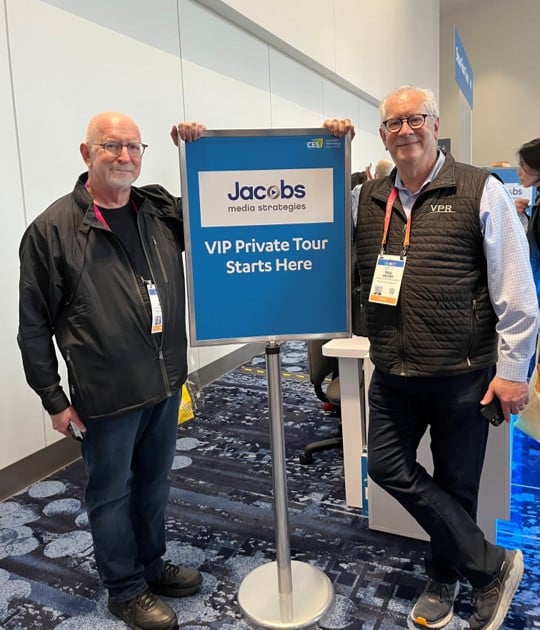
Finally, we have invested heavily in what I call “lifelong learning.” We’ve shown up for the Consumer Electronics Show every year since 2009 (except for 2021, when the event in Vegas was cancelled due to COVID). That effort has helped in our ability to understand where tech is going and how and where radio broadcasters can participate.
Given this incredible exposure, you’d have to be pretty dense not to have a solid perspective. We are very fortunate in that regard.
All that is a nice preamble to what we’re seeing and hearing from audiences. It may sound vague, but many are missing a sense of connection to the media they consume. Many want more “eye contact” with hometown personalities. If I was programming a radio station in 2026, I would be doubling down on local.
The Honest State of the State
Keith: You’ve spent decades challenging radio while remaining one of its most vocal and influential cheerleaders. Put both the advocacy and the funerals aside: Is the industry healthy, managing a slow decline, or facing a more serious reckoning?
Fred: Somewhere in the middle. The industry may be past its prime, along with other legacy media like print, over-the-air TV and cable. But it’s not on death row either.
Like all media platforms these days — and I’m including 21st-century outlets like podcasting, social media, and video and audio streaming — nothing comes easy, nor are any companies entitled. Disruption is constantly in the air, and the last few years of AI affirm that.
Survivor companies require investment, the best brains available, and some luck.
Words vs. Actions
Keith: Radio continually says its future depends on personality, local connections, innovation and digital growth — but then frequently cuts back on talent, local resources, research and experimentation. Which disconnect concerns you most, and what does it reveal about the industry’s real priorities?
Fred: It’s disturbing, as I frequently write about this dichotomy in our blog. Budget cuts are inevitable — virtually every industry and company participates at one time or another. But how and where expenses are slashed is a key indicator of whether companies and organizations are true to their missions.
If you believe that personality and local engagement are part of a station’s raison d’être — and in most cases, it should be — then executive teams need to be more strategic and surgical with their cuts. When you take out a morning show with a following and proven client results, everyone’s going to notice.
Don’t tell me you only got a handful of emails when you blew out the afternoon host who had been on the air for three decades. Each of those complaints represents hundreds, if not thousands, of your listeners, many of whom aren’t going to inform you they’re no longer listening. When you remove what I call an “audience facing expense” like a key personality, everyone knows about it in a social media minute. Bad news travels fast in the Digital Age.
Same with your local presence. If cost cutting means you’re selling the station van and terminating the street team, your ability to have community visibility is highly compromised.
We Saw It Coming
Keith: Jacobs Media’s Techsurveys have been like early-warning radar — identifying behavioral and tech changes involving smartphones, streaming, social, smart speakers, connected cars and even the effect of earbuds on ratings before many of them showed up in radio’s front yard. What’s the next warning in the data that the industry isn’t taking seriously enough?
Fred: There are a number of areas that contribute to radio’s challenges, but I’ll focus on the changing nature of automotive and its relationship to media and technology. While the AM/FM radio was the focal point of the center of the dashboard for decades (excepting the presence of a cassette, 8-track, or CD player), in today’s vehicles, it may be buried or missing altogether.
Techsurvey clearly shows the presence and impact of connectivity in vehicles — and every new car, SUV, or truck falls into this category — amount to less time spent with AM and/or FM radio. We’re not losing audience in torrents, but it’s like a slow leak. We see it every year in our data.
Add to that, lots of people are still working from home, lessening commute times.
There’s no to-do list here, except to produce great, sticky, habit-forming radio. Easy to say, much harder to pull off in this environment.
Self-Inflicted Wounds
Keith: Let’s ignore Spotify, podcasts, satellite and every other competitor for a moment. What collective industry decision or pattern of decisions has caused radio the most lasting damage?
Fred: The financial realities — huge debt and less demand for radio advertising — are eroding radio’s competitive ability. Too many commercials crammed into two stopsets, fewer local personalities, poor marketing resources, and less money for research all conspire to put even more pressure on the medium.
2027 Research
Keith: You’ve been a part of thousands of research studies from all sides and with different methodologies. Compare how radio conducts research today with everything now technologically possible. Has the industry’s approach kept pace? What should it be doing differently — or does the standard online or phone survey with its familiar battery of questions still provide the most reliable answers?
Fred: Sadly, perceptual studies today look remarkably similar to the way they did in 1985. We’re still talking to radio listeners and asking them, “Who plays too many bad songs along with the good ones?” It’s like we’re still doing radio but with blinders on. And as mentioned earlier, research is almost always focused only on listeners that fall into the 25-to-54 bucket.
We’re not using research to better understand the bigger picture, including how the audience is entertaining and informing themselves in the expanding media ecosystem. It’s a real miss.
The Digital Future 3.0
Keith: Nearly 20 years ago, Jacobs Media handed out WTDA (“What’s the Digital Application?”) bracelets as a reminder for broadcasters to make digital part of every strategy and discussion. Back then, many thought digital strategy meant having a strong Facebook page. Jacobs Media’s next chapter will emphasize digital transformation and profitable digital revenue. What does digital transformation actually mean now — and after nearly two decades of discussion, why is radio still transforming?
Fred: By and large, radio has been late to this party. And now, resources and budgets are greatly diminished. While broadcasters may finally be more focused on digital opportunities, most have found it’s not an easy lift to produce killer podcasts, captivating vertical videos, or interesting newsletters that are relevant and habit-forming.
Plus, the realities of the digital world now pit radio broadcasters up against everybody, instead of the simpler battle between radio companies and their stations.
CES
Keith: You and Paul have taken hundreds of broadcasters through CES so they can see innovation, real disruption and what new experiences are on the horizon for consumers. Then everyone flies home and often returns to the same old playbook. Is radio’s innovation problem a shortage of ideas, money, courage — or is leadership protecting short-term revenue at the expense of long-term evolution?
Fred: CES can provide a better perspective on innovation in today’s world, but it doesn’t provide a recipe for how technology could be employed to modernize the broadcasting industry.
Radio struggles to innovate due to all the problems mentioned in your question. And many companies don’t know where to begin. Strategic planning is a rarity in radio circles, but it’s a key first step in determining how technology can transform a legacy media company.
Consolidation
Keith: Nearly 30 years after the Telecommunications Act accelerated radio consolidation, what’s the verdict? Did consolidation make radio a stronger business for a period of time — or ultimately strip away too much of what made individual stations valuable and contribute to today’s dramatic decline in station values?
Fred: The owners might tell you consolidation has been essential to their financial survival — and another round is necessary before 2030. But I would submit that radio sounded better, served local communities more effectively, and was actually more innovative pre-1996.
Killing all those jobs may have started out as “right-sizing” companies and clusters, but many don’t have the people power and the expertise necessary to fight in today’s media environment.
The Youth
Keith: Is it still realistic for radio to make a 20-year-old actively choose the medium rather than merely encounter it in small doses? If so, what could move the needle, short of radical changes most broadcasters seem unwilling to make?
Fred: I honestly don’t think anyone really knows, because no one (to my knowledge) has truly talked to 20-somethings to hear what they want.
I can envision content that could be created that would be of relevance to young people, but it requires a multi-year commitment and lots of money to even explore the possibilities. And like every other medium, I’d start with personality.
Did Consultants Make Radio Too Safe?
Keith: Consultants are either credited with making radio smarter or dragged for making it more boring. I’ve seen you recommend boldness and risk-taking, but after a long career on that side of the desk, have consultants and research made radio safer and more mistake-proof at the expense of valuable passion? With the benefit of hindsight, would you advise consultants in the industry to do anything differently?
Fred: I wish we had that much power! Radio that plays it safe worked for many broadcasters when radio was the only audio game in town. It contributed to higher ratings and, subsequently, more sales.
But the script flipped when audiences discovered exciting options — streams, podcasting, satellite radio, YouTube. And yet, many of today’s radio stations are still playing the top 250 best-testing songs according to their last gold test from 2024.
Safe radio also has a lower degree of difficulty. It takes a visionary programmer and interesting and knowledgeable personalities to cook up a radio station that attracts today’s audiences and their loyalty.
Radio at Its Best
Keith: You love radio. What does radio still do BEST that it needs to lean on most as it evolves and continues to battle a slew of new competitors into the future?
Fred: As the old slogan says, “live & local.” Plus personalities. Easy to say but so much harder to actually do and stay committed to doing. Radio’s patriarchs and matriarchs intuitively knew what to do. They were connected and committed to their local communities. I can think of no other medium that is better suited to doing this, except for radio.
The Blank Slate
Keith: After 43 years doing this — blank slate. Say anything you want to any sector of the industry. What do you want them to hear?
Fred: I’ve tried very hard to walk that line between cheerleading and rabble-rousing. Some people think I’m a “homer” for radio, unwilling to admit it may be over. Others see me as hypercritical of the industry. In fact, I’m straddling them both, but wishing radio could do a better job than it’s currently doing. I’m an advocate but also realistic about what we’re up against in this media maelstrom.
I appreciate all the people who put their trust in me and my company over the last 4+ decades. I’ve tried hard to create a service that could not only advance radio in local markets, but also the industry as a whole.
I always wanted to do more than conduct research and provide consultation for radio broadcasters. I wanted to have a positive impact on the medium that I love. Having my own company and a lot of people who believe in me gave us the running room to do it. And for that, I have much gratitude.
Barrett Media produces daily content on the music, news, and sports media industries. Sign up for our newsletters to stay updated and get the latest information right in your inbox.