Home Blog Page 1022

Dan Bernstein Losing His Job Should Make On-Air Talent Reconsider Social Media

0

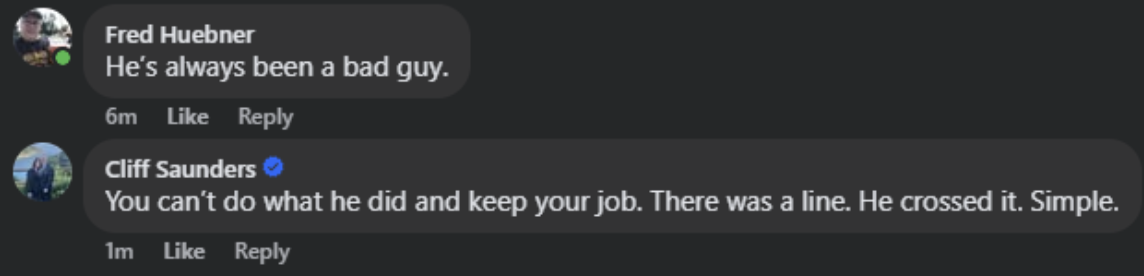
Dan Bernstein saw his thirty year career go up in smoke last week at 670 The Score in Chicago. One of the market’s most successful personalities, got into an exchange on X (Twitter), which ultimately led to his demise. Had it been the first occurrence, maybe Bernstein gets warned or suspended, but because he’d had issues before, The Score felt they had to turn the page.

Knowing Mitch Rosen, The Score’s program director, I’m sure he hated this. Mitch had worked closely with Dan for decades, and he stands by his guys even amid controversy. He did so just a few months ago when Bernstein got into a spat with Barstool Sports, after Dave Portnoy took aim at the Score midday host over his treatment of Barstool Chicago personality, Barstool Eddie.

But talent have a responsibility when they take to social media. If lines get crossed, and reputations get damaged, leaders are put in position where they have to make calls, even if they hate to do so.

Which raises a bigger question, what exactly do top performers gain from being active on X?

Before you tell me it’s on the individual to control themselves and tweet responsibly, which I’ll agree with, I’ll still ask you ‘where is the win for the individual or brand?’ Who is more valuable to who, X to Adam Schefter or Adam Schefter to X? Stephen A. Smith, Clay Travis, Pat McAfee or Joe Rogan to X or X to those talens? If public figures are not being paid to offer their insights and opinions throughout the day on the platform, then why are they so compelled to share an endless stream of thoughts and reactions, spending more time on X than they do on their own outlets?

In 2012, Mike Francesa was the king of afternoon drive on WFAN. He ranted at that time that Twitter was dangerous, and an eventual threat to the media business. He cautioned that players would cut out the middle man, and people would start offering random thoughts 4,000x a day, something the world didn’t need. Mike stated that he’d not be active on the platform, and many in the media considered his response a case of an old school talent being out of touch. If this is where the audience was hanging out, then media people were supposed to be where they were.

But was that smart? Was it a good business decision? Why was Mike’s prioritizing of the radio station and dismissal of social media seen as wrong? How many successful personalities have we now seen in the past decade lose work not over a drop in ratings or revenue, but over mindless tweets? Too many!

Francesa felt his responsibility was first and foremost to WFAN. He wanted people to listen to him from 1p-630p each day, and felt they’d do less of it if he was on Twitter tweeting all day. He prioritized his paycheck, radio platform, employer relationship, and shared how he felt Twitter was becoming seen as a source for news despite being incorrect often. Mike felt there was a lot to lose and not much to gain.

Fast forward to today, and Mike does have an account, which he uses to promote his podcast for BetRivers. Never though do you see him on X getting into exchanges with people. He knows there is promotional value to gain from social media, which is especially helpful if you’re no longer on radio 5 days per week, but if ratings, downloads, and revenue can’t be proven to come from a platform, then how important and valuable is it?

If Dan Bernstein wasn’t on X, he wouldn’t have gotten into an exchange that embarrassed himself and The Score, and led to losing his job. Bernstein had performed well in his timeslot with multiple partners, and was a trusted name with listeners, advertisers, and local teams. Whether you liked him or didn’t, you knew he was a skilled host. To see that end after decades over a senseless exchange on X should have every talent reconsidering why they’re on social media. What are you sharing that’s essential? Why do you need to weigh in on everything you see on the platform when you have 3-4 hours per day to talk to an audience?

I’ve been a fan of social media for a long time. I think it has many positives, but if I’m a strong six figure earner for a high profile outlet with a ton to lose, I might consider signing off. The downside is higher than the upside. However, companies and brands have to support that too. Insisting they participate even if it affects their mental health, and leaves them susceptible to exchanges that can create problems isn’t smart.

Too many managers in recent years have pushed employees to be on social media without thinking of the consequences. Being accessible to an audience sounds great, but when high profile people are accessible anytime of the day by the entire world, they’re going to hear a lot of noise. Sometimes those tweets are designed to generate a negative reaction, and our industry’s most passionate people can’t always look away. We love and support them when it occurs on the air, but on social, if the world sees it, it often ends badly.

I am not excusing what Dan Bernstein did. He screwed up, and deserved to lose his job over this. I’m simply pointing out that sending fiery people into a public space, and expecting them to handle all situations smoothly isn’t wise. Why exactly does a high profile media professional NEED to be on social media? Do the pros outweigh the cons? Is it worth the risk to your business?

Most successful, high profile people handle conflict well on the air. But they offer their opinions and responses to issues in a controlled environment. On social, there are no guardrails. All it takes is catching a host on the wrong day at the wrong time with the wrong tweet, and the next thing you know, you’re doing damage control on behalf of the brand or having to part ways with an important employee.

Take a look around the sports radio business today. Two of the format’s most dominant shows are Felger and Mazz on 98.5 The Sports Hub, and The Mike Valenti Show with Rico on 97.1 The Ticket. Guess what they have in common besides featuring highly opinionated hosts? Mike Felger and Mike Valenti are not on X. They prioritize their shows, and save their responses and opinions for a controlled environment. Each is well respected and compensated, and has enjoyed a long relationship with their respective companies. They understand that there’s more to gain and lose on the radio than there is on X.

Dan Bernstein had a great situation in Chicago except he welcomed in the outside noise. Being accessible on social media rather than just between the hours of 10a-2p cost him everything. After dodging bullets in the past over prior issues on X, Bernstein should have realized he was a step away from losing it all. Had he pulled the plug on X or minimized his time and focus on the platform, he’d be hosting middays today on 670 The Score. Instead, he’s kicking himself for losing a great opportunity.

Maybe Mike Francesa was on the right track after all.

Audacy Leadership Changes

I try to to be fair when writing about media brands and people. Not everyone is going to like what I say all the time, friends included. It’d be much easier to blow kisses in everyone’s direction, but I’m not bought and paid for, and I don’t think you make an industry better by praising the good news, and ignoring the bad.

I’ve been critical of some decisions made by Audacy leadership before, so it’s only fair to provide credit when they do something well. Elevating Chris Oliviero to a larger role in the company is smart. Few people are more respected, liked, and appreciated for what they do than Chris. Given Audacy’s poor image in recent years, having someone out there who business people know, trust, like, and respect is important. I’m glad to see the company putting its trust in a proven performer.

Bob Phillips, Kelli Turner, and Chris Oliviero of Audacy

Additionally, I’m glad to see Kelli Turner has been named the company’s permanent CEO. I don’t know Kelli but I think a clean slate is needed for Audacy. Some industry folks are concerned about Turner’s lack of radio experience, and though I’d love to hear that she lives and breathes the business, I don’t think that’s as important as understanding business, the industry, the people inside the company, repairing the company’s reputation, and creating a culture that makes people want to perform and improve results. Nobody cared if Steve Jobs had a passion for music or telephones when Apple created iPod’s and iPhone’s.

Will the exits of Susan Larkin, J.D. Crowley, Paul Suchman, and Andrew Sutor after the resignation of David Field turn out to hurt the company? Maybe, but you can’t fault new ownership for wanting to start fresh. Turner knows what the investors want, Oliviero knows what the people need, and Bob Phillips’ role is to help them become more profitable. I’m hoping all involved are able to make a positive difference to move the company forward.

Rest in Peace, Brian McKenna

St. Louis lost a good personality, but an even better human being over the weekend. Brian McKenna lost his life at the age of 61, being struck by a car while trying to cross the street at 1am CT. McKenna overcame cancer in recent years, and loved being a broadcaster, and helping his community. His passion to help people and local organizations is what made him truly special. A strong sense of humor and ability to deliver entertaining radio was a close second.

I worked with Brian from 2006-2008 at 590 The Fan, KFNS. From the second we met, we hit it off. He loved sports radio, wanted to be good at it, worked hard, and welcomed being coached. Regardless of what role he held, Brian poured his heart and soul into it. He was an easy guy to root for.

My favorite McKenna story dates back to when he and Joe DeNiro hosted mornings at KFNS. The show used Disturbed’s ‘Down With The Sickness’ as its theme, replaying at the top of each hour. I asked the guys to work in the line ‘thanks for being down with the sickness‘ when callers checked in, which would be followed by a drop of David Draiman’s ‘Oh-wah-ah-ah-ah‘. Soon enough, listeners would call in, say the line, and try to give their own renditions of the scream.

Brian McKenna courtesy of The Brighter Side of Blue

One day after his show, Brian asked if we could chat. He was concerned about the bit. When I asked why, he said it was getting out of hand. I was confused and asked for an example, to which he informed me that he was in a grocery store, when all of a sudden, a large woman started running down the aisle in his direction at full speed. She blurted out ‘Hey McKenna’, and when he turned around, she came within a few feet of him, belting out ‘Oh-wah-ah-ah-ah!’.

I started to laugh, he did too, and I asked ‘if the goal of a bit is to make sure it lands with the audience, isn’t that proof of it working?’ He then asked, ‘have you ever had a large woman run at you full speed in a grocery store and scream ‘Ooh-wah-ah-ah-ah!’ in your face? I replied, ‘I can’t say I have, but I didn’t sign up to be a host, you did.’ He digested the response, smiled, and said ‘fair point, let’s stick with it, but if next week I’m at the store and a little person runs in my direction and does the same thing, it’s got to go.’ We both laughed, and went about our day.

Heaven has no idea how many laughs its in for, and how many souls are going to be happier having Brian McKenna around.

Quick Hits

  • More names will be announced soon for the 2025 BSM Summit. We’re up to 27 speakers already, and tickets and hotel rooms can be secured by clicking here. We’ll also announce our winners of our college contest in next Monday’s column. The deadline to apply for students is Friday March 28th.
  • Speaking of announcements, next week’s column will have details of a few new additions to our music radio writing team. I’d also like to publicly thank the Bob & Tom Show and Rowdy Yates for signing on as new marketing partners of ours. Look for them in our newsletters starting in April.
  • A great moment on Saturday night prior to the New York Rangers-Vancouver Canucks game. Longtime Rangers broadcaster Sam Rosen was honored, and gave a great speech. Rosen is retiring at the end of the season after 40-years with the franchise. This suggestion below by a fan and shared on social media by Howie Rose is something the team has to consider starting next year!
  • Jeremy Boreing exiting as CEO of The Daily Wire is surprising. Ben Shapiro and Boreing founded the company in 2015 and were considered by many to be joined at the hip. The company parted with Candace Owens, ended its relationship with Westwood One, and spoke about being open to an acquisition offer from FOX. I’m curious to know why this decision was made now, and what the driving force was behind it.
  • I loved seeing Robert Dawson of KOA in Denver highlight VCU student broadcasters Ben Rekosh and Marcus Leary. The two college students and roommates were in town working the NCAA Tournament for VCU.
  • Nice job last week by 96.9 The Kat program director Ashley Wilson. Playing and promoting Eric Church’s new single ‘Hands of Time‘ on the air is one thing. Creating a nice image and promoting it across social media to drive tune ins is another. Sometimes the most simple and smart steps are the most effective. Well done.
  • According to Edison Research‘s Infinite Dial study, YouTube has passed Spotify and Apple Podcasts as the most-used platform among those surveyed for podcast listening. What’s become crystal clear, podcasts are no longer just considered digital audio shows. They’re digital video shows too. Digest some of the key findings from the study here.
  • A great moment captured on video and shared on social media by the New York Yankees. Backup catcher JC Escarra learned he had made the team in a private meeting with Aaron Boone. Just 3 years ago Escarra was driving for Uber. The Yankees recorded Escarra’s call home to his parents to let them know he was going to the show. Very cool behind the scenes digital content.
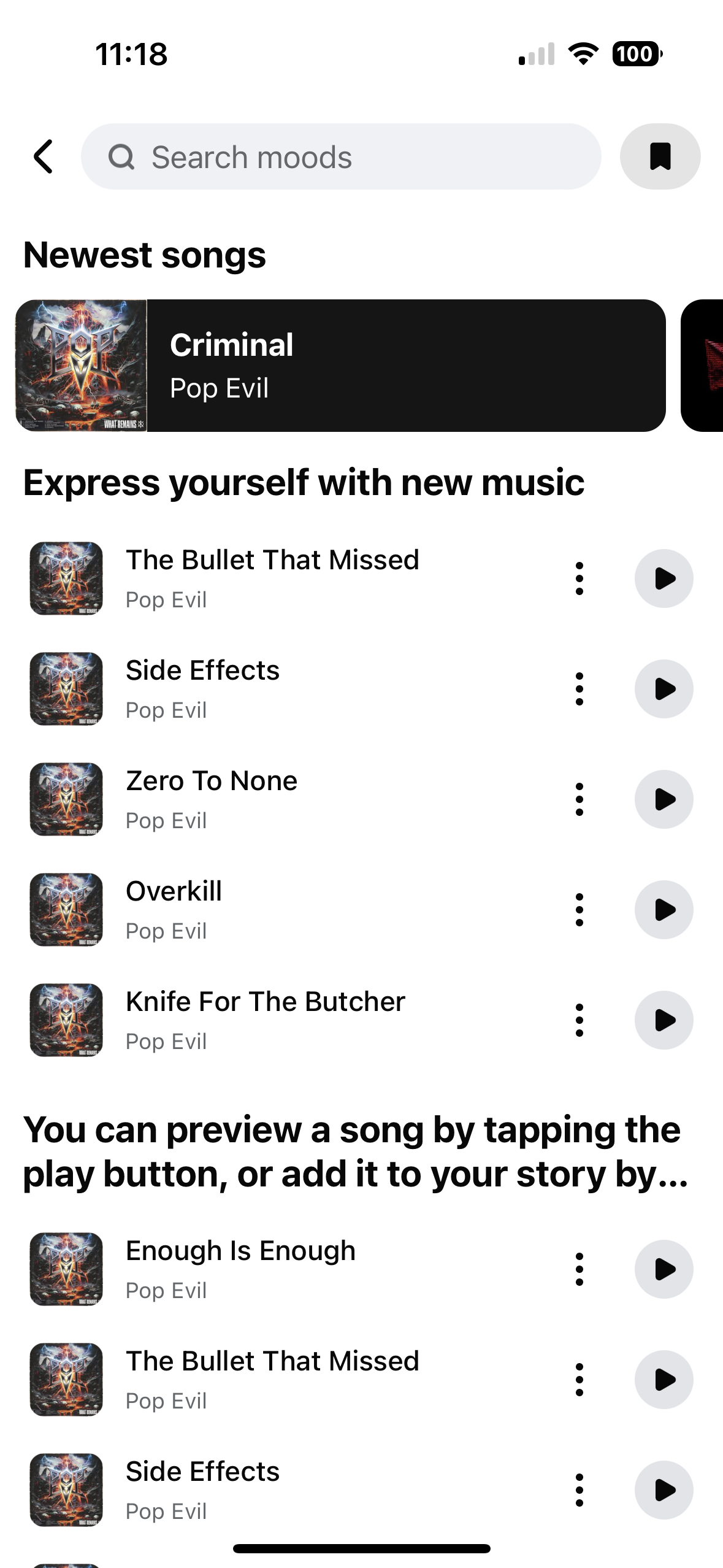
  • Facebook has a new tool which allows you to preview songs from new albums. Though it’s cool, I still prefer going on YouTube to watch videos when listening to new songs. I listened last week to two new albums, one from Pop Evil and another from A Day to Remember. All My Friends by A Day to Remember, and Knife For The Butcher by Pop Evil were my favorites from the two records.
  • If you missed CRS 2025, head to YouTube to watch the sessions and highlights. There were some valuable takeaways for radio professionals at the show.

Barrett Media produces daily content on the music, news, and sports media industries. To stay updated, sign up for our newsletters and get the latest information delivered straight to your inbox.


What Is Your Brand’s Bracket?

0

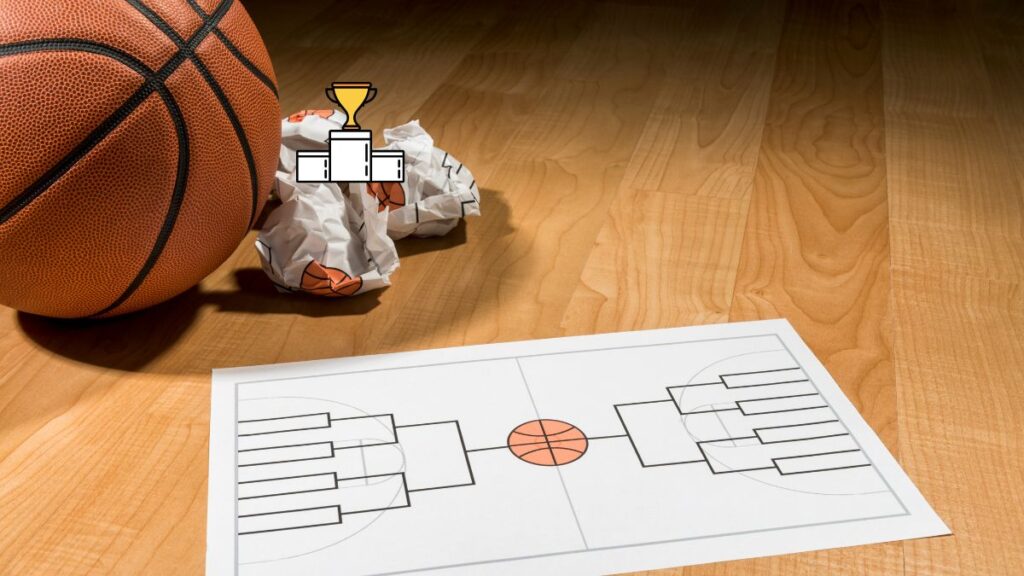
“Good luck with your bracket!” As I reviewed last week’s sent email file, I realized March Madness bracket success was a consistent theme in closing most of my emails to business-related recipients.

It falls under the category of an in-the-moment reference to show I’m paying attention to life beyond the standard request for an audience email message. Typically, it’s a weather reference. That’s safe territory, and it’s easy to look up the Quad Cities weather conditions before hitting send.

Sidebar: Quad Cities (Davenport-Bettendorf-Rock Island-Moline) is my favorite generic city reference. It goes back to the days of listening to jingle demos. At the end of the Top of Hour jingle, I would sing “Quad Cities!” If it fit comfortably, I knew it might work for my multi-syllabic or dual-city market.

Disclosure: I lived in Illinois as a child for a moment. I’ve never been to the Quad Cities. When you research the Iowa/Illinois towns, you’ll discover they’ve added East Moline as a qualifying city. Now, it’s five neighboring markets. However, the nickname hasn’t changed to Penta Cities. That would change the jingle-sing because Penta is at least one-and-a-half syllables—maybe two, depending on how close you live to the Gulf of America.

A deep background on the March Madness bracket is necessary. The NCAA Tournament is my favorite TV event of the last few decades. I’ll spend more time checking scores on my sports app, watching the games on a device while I’m working on a project, listening to a game on the local radio station or the satellite while I’m driving than all of my TV/Video viewing in the combined first quarter of 2025.

Yet, I don’t fill out a bracket. But wait, I’m a fan, right? True. Maybe I avoid the bracket because there’s a “chance” even if money isn’t involved. I grew up in a home where we weren’t allowed to have face cards in the house. Do you know those kids who were told to go outside, play with the sticks, ride their bikes for eight hours, and be home at dinner? Yeah, that was us—more disclosure: I bought my first Powerball ticket of 2025 last Friday. Clearly, I didn’t win, and that’s why I’m writing this column.

Maybe I avoid the bracket because my competitive nature doesn’t like to lose. Nope. That’s the power of competition. You believe you can win, no matter how much the odds are stacked against you. Maybe it’s as simple as not wanting to devote the time to an activity with no real payoff to me. These are analyses I’ll save for a therapist.

However, I love the idea of the tournament bracket every year. When someone in the office coordinates the bracket, it creates a connection among people who otherwise would have no reason to communicate except through cordial greetings in the break room, conference room, or Zoom/Teams setting.

Image Canva

Bracketology creates on-air, web-based, or social media promotions and events. It gives people like me a reason to incubate quirky and meaningful themes like these to help create ear candy and sales opportunities.  

What’s Your Brand’s Bracket? 

People: This is obvious. The recent industry RIFs are disturbing for the sake of those who lost their jobs. But we know radio was different when every air shift was hosted by a live DJ/Announcer in the studio. I didn’t say better, but it was different, and different is what the industry needs right now. 

We know this one isn’t going back to what it used to be. So, how do we make the reduced-personnel reality better for the audience? AI? Maybe. Or, how about we upgrade positions with people who move faster and handle more responsibility but pay them more because they provide a better product for the audience? That’s a good place to start, but it needs a visionary to explain the needs of the revolution.

This is getting too deep. Let’s get more practical.

On-Air Assets: I like to write down everything I hear in an hour. Everything. Do this and ask yourself, “What would they miss?” The listener isn’t going to call you about programming elements. You would have to get their response in a focus group by asking questions and following their clues to find answers. However, those items create a character and comfort about your product. Are there too many or not enough? “Why does that Rejoin matter? I don’t care about it.” (Think bracket). However, maybe that piece of audio is or should be an emotional connector for the listener.

Off-Air Assets: If you don’t know why your listeners come to your website or social media channels, request the answer from your digital manager. I can tell you right now. The #1 reason is to listen to your radio station. The other reasons provide usage insight. Would the #4 and #5 most visited sections of the website increase in activity if #8 and #9 were not dragging it down? Possibly. Before you remove the noise, ask your team if these items complement the character of the site or just junk it up.

It could be as simple as the advice from the declutter expert Marie Kondo: “Keep only the things that spark joy.” We wish it were that easy. In the one-to-many reality of radio broadcasting, we’re creating joy, excitement, anger, fulfillment, or hope for a large group of people.

Look for the brackets. The people and programming features and assets that create character and connection beyond a spreadsheet or scheduling program.

Jim Rome is Constructing a New Path for ‘The Jungle’ of Tomorrow

0

The national radio landscape experienced an influential change in early January when Westwood One and Infinity Sports Network chose to alter their afternoon drive offerings. Rich Eisen, whose program is distributed by Westwood One as part of a partnership with Audacy, moved earlier in the day, while Jim Rome shifted to afternoons for the first time in the history of his show. Rather than jeopardize becoming stale in the new time slot, Rome has decided to reinvent himself amid shifting industry paradigms and fluctuating consumer tendencies. Expanding his relationship with Westwood One was part of this process, granting the platform the rights to syndicate and distribute the award-winning program on affiliates across the country.

Throughout this process though, Rome wanted to acquire the intellectual property of his show as well. Having worked for media conglomerates throughout his career, he aspired to become an entrepreneur and subsequently reached an agreement with Westwood One to make it a reality. Although the company continues to sell and market the program, Rome is the person keeping the lights on, paying his staff and making key business judgments as industry turbulence renders an uncertain path forward diverging from common practice.

“I feel I need to win for everybody more than ever before,” Rome said. “You see so many good, talented people who are losing their jobs, and are out of work because the business is changing so dramatically. I am more focused than ever before in staying on the air and winning and being successful.”

Instead of staying in middays on Infinity Sports Network and remaining entrenched in his daily routine, Rome has willingly decided to embark on a more arduous trek. Despite the show starting three hours later, he still arrives at his office before sunrise and stays late into the day, working to prepare for the afternoon and further develop the overarching brand. Concurrent with the full-time move to Westwood One as a standalone program and new start time, Rome is aiming to build his radio network back up and serve affiliates, partners and listeners.

“I’m all about delivering a quality product every day so all of these business people are happy, and to do a good show,” Rome said. “If I take care of the show, the show will take care of me and the people who work for me, but it’s not about me. I check that bleeping ego at the door every single day and make sure the people who matter most are happy with me and the show.”

As Rome looks to provide a return on investment for the stakeholders in his radio program, he is committed to reinventing himself and works to manage a plethora of distribution platforms. Over the last year, he has introduced a variety of new elements surrounding the show and granted patrons broadened autonomy over when and how they wish to consume the content. Possessing an audience full with zealous devotees, known as “clones,” Rome recognized the seismic nature of these modifications and the potential of engendering confusion. Nonetheless, he went ahead with the metamorphosis with an unwavering commitment to excellence.

“I thought it was way more risky not to put myself out there, and I thought if they love me that they will find me,” Rome said. “They will find the show and they will find me and they will support me as long as I don’t break my vow to them that I’m giving them good s**t every single day.”

Rome Expanding the Digital Footprint

The transformation started last year when Rome announced that he was leaving CBS Sports Network and working with the X platform, formerly known as Twitter, under a video programming partnership. Utilizing a state-of-the-art production studio in Southern California, he started live-streaming his weekday program for X users as the company continued its foray into sports content. Rome had been on linear television throughout his entire career but saw the hastened rate of cord cutting and shifting business models. The genesis itself emanated from Range Media Partners, which recognized the push from X to move into longform programming and had a successful track record through previous work with Netflix.

“I still thought the show was very compelling and competitive, and I wanted to put it in front of [as] many people as I possibly could and I wanted to establish new platforms, and we had never streamed anything,” Rome expressed. “I had never been a streamer before, so my agency had a relationship with X and we decided that we would put the show on X, that way it was free – it was free to anybody who just downloaded the app – and I had direct access to people who were already using the app.”

Rome had already established a footprint on X before his show started airing live on the platform, and he viewed the wide-ranging exposure, access and immediate reaction as positive factors. At the same time though, he recognizes that the venue can be polarizing and does not resonate with everyone. In the quest to further diversify his media portfolio, Rome revealed last fall that he was launching a free ad-supported streaming television (FAST) channel through a partnership with Range Media Partners and A+E Networks.

“It’s another super competitive space, but we found that the radio show is good visually,” Rome said. “It’s a show more than a radio show, but a radio show, and then all of a sudden now, we have eight other platforms in addition to the X platform.”

In addition to the flagship program and podcasts, Rome also unveiled an exclusive fourth hour that initially debuted with former NFL cornerback Will Blackmon. T-Bob Hebert, a radio personality at 104.5 ESPN Baton Rouge, started co-hosting The After Hour with Rome last month as the FAST channel continues to progress. Audience members are able to watch this additional content through various television providers, such as Samsung TV Plus, Amazon’s Prime Video and Sling Freestream.

“Some of my Clones are like, ‘Dude, you guys sound like you’ve been working together for 10 or 15 years,’ which is pretty amazing since I’ve never worked with anybody as a co-host, so I wanted to shake it up,” Rome said. “I wanted to get a little younger, I wanted a different point of view, I wanted something from a different part of the country and I wanted to talk to somebody about different things, and it’s been an absolute home run. I love the guy.”

Consumer participation has always been part of ‘The Jungle’ domain and contributes to building the culture around the show, presenting takes through social media posts, messages and calls. Drawing a clear distinction between a caller and a listener, Rome recognized early on that many people seeking to articulate their thoughts and perspectives were merely offering derivatives of his discourse. Establishing the Smackoff competition has allowed him to be selective in calls, but he also incessantly endeavors to garner interest in the show through creating compelling and riveting content.

“It would be very easy for me to come in, put my feet up with a couple of thoughts and let the callers carry the show, but I knew that I could never have the career that I wanted to have if I entrusted somebody else to do my job for me,” Rome said. “So in short, it’s not a caller-driven show, but if I think a caller’s going to make the show better or elevate the conversation, absolutely, they go to the front of the line.”

Winners of the competition and other steadfast callers have built formidable sports talk radio careers, some of whom include Sean Pendergast of SportsRadio 610 and John Tournour of Raider Nation Radio 920AM. Rome is also proud of the lineage of producers who have come through his show and gone on to have continued success, such as NFL Network host Kyle Brandt and ESPN LA 710 personality Travis Rodgers. At the moment, he is in the process of bolstering the FAST channel, and it is entirely plausible that longtime callers could end up hosting their own shows on the platform as part of its overall strategy.

“I would love to find emerging talent, mentor them and create other programming on the Rome FAST channel, not to do the work that I’m already doing, but just to create other content so it’s not just four hours on a wheel but we have other shows,” Rome said. “That’s the ultimate goal with that FAST channel.”

Evolution in The Jungle

Early in his career following a bad experience in broadcasting, Rome gave up on his dream and started working for the family business before later being fired by his father. After a stint selling telephone systems that ended in him being thrown out of an office building, he called John Palminteri at KTMS-AM and poignantly averred his failure in life and asked if he had any job openings.

A few days later, he was working as a traffic reporter filling in for a student on Christmas vacation earning $5 per hour without benefits.

“I packed up the car, went up there, did good enough work for 30 hours that the kid didn’t get his job back, but my point was I literally did burn the boats,” Rome said. “I had no Plan B, I didn’t know how it was going to work – I just knew that I had to go all in.”

As Rome continued in this war of attrition, he started giving sports updates and eventually started a one-hour talk show in the format. Upon landing a job with XTRA Sports 690 in San Diego, Noble Broadcasting Group owner John Lynch Sr. recognized that Rome’s style of sports talk could work outside of California and started syndicating the show. Brian Purdy was part of the grassroots effort in discovering outlets interested in carrying the programming, and the show continued to grow to the point where Premiere Networks purchased Rome’s contract one year later. Kraig Kitchin, a recent inductee into the Radio Hall of Fame who currently serves as Rome’s manager, was the president of the conglomerate at the time and proliferated the impact of the program.

“I’ve always been surrounded by super-high achievers, starting with Kraig Kitchin,” Rome said. “I would never have had the career I’ve had without Kraig Kitchin, so he is one of my dear friends, but also one of the most important people in my business life. I mean, who can say they’ve got a world-class executive as their manager? It’s amazing.”

Balancing Tradition and Innovation

Rome always took it as a compliment that listeners thought he was from New York, but he has never tried to conceal the fact that he broadcasts from Southern California. Even so, he did not want to turn on the cameras and instead sought to cater to the imaginative depictions and sensibilities cultivated through the medium. Although Rome has endured during changing times, he still retains his trenchant, forthright approach no matter the destination.

“I thought objectivity was the most important thing about the job, but however, I was a die-hard sports fan as a kid growing up, but when I started to pull a paycheck, I no longer rooted for anything other than something to talk about because I had a four- and five-hour show every night,” Rome said. “So my favorite team was not the Dodgers – it was Team Content. Whoever gave something to talk about was my favorite team, so I had to fill it.”

Since enacting the move to afternoon drive, Rome has gradually become more accustomed to his new schedule, although he admits it was not as facile a change as he expected. Finding time to ride his Peloton bike and engage in cardio has been difficult due to the copious studying and planning that occurs before a new episode premieres live the next day.

“When the show is off the air, I’m not done,” Rome said. “Games happen at night, I run into people at night. I do my prep at night, so I’m still trying to figure out, ‘[What] is my sleep pattern, my workout pattern, my eating pattern?’ When we book guests – that changes now – when we do our podcast. We’re still trying to figure it all out.”

Once Rome started hosting in the new timeslot, executive producer Tom Di Benedetto started fielding deluges of daily phone calls inquiring about difficulty finding the show on SiriusXM. Even though Rome always knew having that presence was important, he discerned the gravity of the situation over the two months off the satellite channels. Earlier in the month, Rome resumed his broadcasts on the platforms and is thrilled to be back, implementing another means of consumption for the fervent audience.

“I try and manage all of it by doing the best possible show every single day and creating the best content, and again, if I take care of the show, the show will take care of itself,” Rome said. “The other challenge that I have [is] I still really want to be in that reinvention space, that inspirational space, that motivational space, so I’m trying to work that in there too.”

With The Jim Rome Show now available on the X platform, Rome FAST channel, Westwood One affiliates and SiriusXM, Rome understands the various forums and hopes to continue accumulating the benefits associated with several initiatives. Having evolved from terrestrial radio, he is still bullish about the medium and affirms that none of these innovations would be possible without its imprimatur.

With knowledge of these different spaces, Rome is aiming to stay embedded in the cultural zeitgeist by solving an intricate labyrinth commensurate with cross-platform integration and industry consolidation. In order to effectuate sustained success in these ventures, he needs programmers, clients, sponsors and listeners to all see the value in doing business with the show. In the end, he hopes to prove that his best years are in front of him and combating impediments with aplomb sans regrets.

“If you write an article right now today saying, ‘You know what? Old Rome’s had a pretty good run, but man, he does not have anything new to say, nobody gives a damn. It’s about that time that old man just hung it up,’ I’d be like, ‘You know, I don’t agree with you, but I’ve had a hell of a run and I know I gave it everything I had,’” Rome explained. “But what I’m here to tell you is I’m doing everything I possibly can to stay as relevant and competitive for as long as I possibly can because I still love doing it, man. I love the grind, and I love the challenge.”

Barrett Media produces daily content on the music, news, and sports media industries. To stay updated, sign up for our newsletters and get the latest information delivered straight to your inbox.
99.5 The Wolf’s Nick & Kristen Navigate Marriage And Mornings

0

Nick & Kristen are morning hosts at 99.5 Wolf in Portland, Oregon. The married duo also spearhead “Nick and Kristen’s Medical Debt Payoff,” which has paid off $16 million in medical debt for people in the Pacific Northwest to date.

For Nick & Kristen, the crusade to help with medical debt began in a very personal place.

When we decided to have a family, I got pregnant and immediately started having complications and was admitted to the hospital on medical bedrest for three months. We built a little radio station, and I worked out of there,” said Kristen. “I had something to do every day, so that was kind of nice.”

“After our daughter was born because she was in the NICU, we got a bill for over two hundred and seventy-five thousand dollars, and we both had insurance at the time. So we were super confused by that. We were able to get it down to 70 grand after negotiation. At that point, we’re like, this is going to destroy our lives.”

“Those are the stories that we hear every year, so we teamed up with our charity partner who buys medical debt for pennies on the dollar, and then we crowdfund, and 16 million dollars later, a bunch of people get letters in the mail almost always around Christmas time every year saying that because of the people that donate to us that they don’t have medical debt anymore,” said Kristen

Nick added, “We wanted something that stood out. Then, after the Pregnancy and how difficult it was, that was something that really stood out to us. People are going through life barely surviving because they had to take an ambulance to the hospital, through no fault of their own. They were having chest pains; what else were they supposed to do?

“Just seeing that. We’re not a political show, but I think we can all agree, no matter what side of the aisle you’re on, that medical debt and medical costs are outrageous. They cripple families, and if we can try to eliminate some of that, especially around Christmastime, what a gift to be able to do that,” said Kristen.

Nick and Kristen met in radio when she was a news anchor on 840 KXNT, and he was the overnight weekend at 98.5 KLUC Las Vegas.

So how does the husband-and-wife morning show dynamic work when you are together nearly 24 hours a day?

“I think it really works out well for us, also considering the fact that we broadcast out of our house. So if we have a brilliant idea while our daughter’s at school, we can come up and we can record it on our phone. We can plot it out. We can write it together. It’s made things tremendously helpful because, at any moment, we can strategize, Which is something that we love to do, like we love to go out to lunch and talk about the show. Okay, what can we do, said Kristen.

So, in a case like this, how do you turn it off or step away from it for a while?

Nick said, “One of the hard parts is disconnecting and not having everything be for the show. But we have to. We’ve learned to enjoy the moment and then just remember the details. So if we go to a hockey game, we’ll have fun, and then as we’re driving home, we go. All right. What can we talk about on the show tomorrow?”

“What happened that stood out, that made us laugh or something interesting, and then we’ll just have that conversation afterward.  A lot of the time, it’s hard not to talk about work, too. So we have to find a way to not just talk about work. We have date nights and stuff like that, and we do stuff that we don’t talk about on the air.  We just kind of enjoy family life and pick moments from it.”

Is there anything off-limits? Keeping in mind that their goal is to be a family-friendly show.

“Big ones like religion, politics, things like that that we just don’t discuss with our audience. We’re not here to educate; we’re here to entertain and make people have fun. That kind of discussion that we have off the air doesn’t make it on the air just because we feel like it wouldn’t be entertaining for our audience. Just like any other married couple, you have conversations that aren’t really great content, Not great for the audience or for the listener. I think those get filtered through, but I can’t think of, well, maybe in-laws. It’s so relatable.

Nick added, “Maybe we’ll tweak something, and we’ll maybe make it not so personal, but we’ll bring it to the table as is a topic, if anything.”

Kristen said, “We just want to be positive influences on the world. I think we know the kids are listening in the car, And we have our daughter, so we don’t take it to an extreme. We never go blue.”

Being positive and uplifting fits into their individual personalities.

“Both Nick and I have been doing this for 20 years. We’ve heard from different program directors that if you’re not getting complaint emails, you’re not connecting. You’re not creating a passionate fan base, and while I think that’s true to some point, there’s also a flip side of being that steady rock. That show that is always going to be there. That’s always going to be positive and energetic.”

“Our biggest complaint from people was that we’re too nice. We’re too happy. In Washington and Oregon right here on the border. There’s a divide between the states, and everyone’s like, you got to do the Washington versus Oregon thing. You have to turn them against each other. We live in Washington, and we broadcast to Oregon. No five years trying to bridge the gap and just bringing everybody together,” said Nick

Kristen added, “Why divide when you can unite?”

And to that end, the show is very local based with content.

“We’re trying to be the local morning show. We don’t talk a lot about other steady cities or states, even Nashville. We try to keep it all locally based, said Nick.” “We’re trying to elevate locally.”

The show also believes strongly in getting out into the community.

Nick said, “I think a part of that is being out where people can see us, and we get the whole you guys are normal compliment all the time, which I don’t know how to take.”

Kristen added, “More people recognize our daughter then than us.”

Photo: Facebook

“We did the Nick & Kristen name campaign, which we started a couple of years ago.  Local businesses, if they named something after us, we would come down there, and Nick would shoot a video and make them a full commercial that they could use for whatever they wanted. We had so much fun doing that; it connected us to all these local business owners. That got their name out there. We always ask them to name something really stupid after us, Like we have a sledgehammer in a rage room.”

“We have a smoothie at a yogurt place,” said Nick. “Who knows if it’s still named that on the menu, but it was when we went in, and it was just fun. It’s a way of talking about it on the air. Hey, that yogurt shop that you go to, you could now get the Nick & Kristen. Or when you go bowling, use the special gold Nick and Kristen ball. It’s just another way of connecting.”

“We got a garden center named after us. It’s the Nick & Kristen Ace Hardware Garden Center. They made a whole beautiful sign, and it’s still hanging up there. We were shocked when we came in because we normally would slap a sticker on something. They’ve kept it for years. We were like, that’s amazing.”

Follow Nick & Kristen on Facebook. 

 Stream the show live here.         

The One Thing News Media Outlets Constantly Forget and Why It Needs to Change Immediately

Reporting or just talking about the news? Great, but don’t stop at the headline. Just as important as the basic details is getting answers to the questions people will have when they hear about the story.

Let’s take a fairly minor news story as an example, though it wasn’t minor to some folks. Down here in South Florida, we’re about to have another television network affiliation switch, with the current longtime ABC affiliate turning down the network’s compensation demands and going independent, while ABC will air on the .2 channel of the rival Fox affiliate. Got that? Channel 10 dropping ABC, channel 7 adding it on 7.2. On cable, it’ll just be a matter of finding where Xfinity will put the ABC channel. The articles and reporting I saw covered that, but on social media, there was one question being repeated over and over, with some degree of urgency:

Will I still be able to watch General Hospital?

I did not know that General Hospital was still on the air, but it is and it has an intensely loyal audience. All this “channel 10 this, and channel 7 that,” had them confused, as were Jeopardy! and Wheel of Fortune fans. This could have been covered in the original reporting, or even the press release. Just say “Channel 10 will keep the local news and Jeopardy! and Wheel; ABC Miami will pick up all network programming, including, yes, General Hospital, Good Morning America, etc.”

Instead, the fans had to ask those questions on social media, where other fans gave them the answers and reassured them that they don’t have to subscribe to Hulu just to keep up with the goings-on in Port Charles. Gotta anticipate what people are going to want to know, and dig for the answers if you don’t have them right away (this one didn’t require a whole lot of digging).

It’s the same for more important stories. President Trump’s executive orders are being reported daily, but the questions they raise are really not being answered. Is what he’s doing legal? If it is, will my Social Security/Disability/VA Benefits be there next month? Do the lawsuits challenging the orders have a chance? If the Supreme Court says it’s all legal, what recourse does the public have? Who is standing up to this? (Okay, there are a lot of stories about how the Democratic leadership is not putting up a fight while they figure out what they actually stand for and how to do that.) The reporting should anticipate what a reader or listener is going to want to know and serve that up in the initial reporting.

This might take time, which flies in the face of the obsession with being first on a story. We’ve always told ourselves, however, that it’s better to be right than first, and, anyway, nobody gets attribution right, and nobody in the audience cares, because they’re getting the initial report from social media. For all they know, their cousin broke the news, because that’s who posted the report to Facebook. Good job, cousin.

So, tell your audience what they want or need to know. Tell Grandma where she’ll find her “stories.” Tell seniors what chance there is that the new Social Security rules and field office closings will actually happen. Tell veterans whether their benefits are really in danger and when it’ll hit the fan. For every story, there needs to be an explainer: What does this mean for you and me, and what can we do about it?

By the way, The Young and the Restless is still on, too. You’d better be ready if CBS changes channels in your area.

Barrett Media produces daily content on the music, news, and sports media industries. To stay updated, sign up for our newsletters and get the latest information delivered straight to your inbox.

The Interview: Hammer & Nigel, 93 WIBC

Last weekend, a video went viral on social media as a woman claimed she was kicked out of a bar for being a supporter of Donald Trump. 93 WIBC afternoon hosts Hammer & Nigel booked her for an interview to talk about the situation.

At the Chatterbox Jazz Club in Indianapolis, a video purported to show a woman — named Elise — being told by the bartender she needed to leave because of her Make America Great Again hat. When asked why they were being asked to leave, the bartender said “Because you’re a Trump supporter.” The bartender then grabbed what appeared to be a baseball bat and insisted that the person filming the argument leave.

As of this publication, the video has received more than 13 million views on TikTok.

On Monday, Hammer & Nigel — Jason Hammer and Nigel Laskowski, the afternoon hosts on the Indianapolis news/talk station — were able to book Elise and “Mr. Holistic”, whose account published the interaction, for an interview to discuss the situation.

I’ve never really encountered one of these situations before — where a local station was able to so quickly book the subject of a viral video that happened in that market and made nationwide news — in this space. First of all, I think it’s a credit to what Hammer & Nigel has built in the marketplace. Many times, the figures in these viral videos are either seeking out fame (and we should pay those people no attention, for the record) or they’re looking to distance themselves from the spotlight. So, for the 93 WIBC hosts to make the subject feel comfortable enough to agree to the interview is worth a pat on the back.

Secondly, to have the connections and name recognition for the subjects to say yes to the conversation also shows the power of the brand, the station, and the show. So kudos. I’m certain I wasn’t the only person whose interest was piqued by this interview.

The conversation began by the hosts setting the scene of what happened for their audience. Which is always a good thing. Just because it has millions of views doesn’t mean everyone knows about the story or why they should care about this conversation.

Additionally, the words “appeared to show” in regard to the video was used right off the bat. Which, frankly, surprised me. Hammer & Nigel are conservative radio hosts. And in a situation where a person wearing a MAGA hat was allegedly kicked out of an establishment due to their political beliefs — or maybe better put, their political attire — it wasn’t out of the realm of possibility that they would be incredibly sympathetic to the interview subject. But right off the rip, they were using fair language, which — showing my bias — genuinely surprised me.

Also worth noting, it was an in-studio interview, not over the phone. It changes the dynamics just slightly.

Jason Hammer asked the first question, by asking the now-viral subject to set the scene on what happened, where it happened, and when it happened. He followed up by asking what the intentions were by wearing the MAGA hat into the establishment, and if Elise knew that the club had a reputation for being unfriendly to conservatives.

Hammer then followed up by asking for specifics on the timeline of events from walking into the establishment to uploading the video to social media. Elise claimed that she was asked to leave without being in the bar for more than a few seconds. She argued that she never left and came back, which is what some onlookers had suggested.

Now, this is just me, but Elise said something in her answer that was insanely contradictory. She said “You’re offended by my hat. I get it, it’s private property. You have every right to (kick me out).” Except, during the video uploaded to TikTok, she can be heard arguing that she’s being “You know this is like discrimination, right?” which led several patrons to laugh out loud.

In the grand scheme of things, it’s not a big miss to not point out the walk back or whatever else you’d like to call it, but one of the key reasons the video went viral was the disagreement from each side of the political aisle of whether or not this person had been subject of discrimination in the situation. So, I would have loved to see Hammer or Laskowski bring up the new feelings of the subject.

Instead, Hammer brought up his belief that while a business has a right to refuse service to anyone, the issues — in his eyes — was with the bartender grabbing the baseball bat. In my view, that feels like interjecting in an interview to share your opinion. Which you have four hours to do. You only have — in this case — 12 minutes or so with an interview subject. Let them be the star during the segment and then you can react or share your opinion on the situation later. It would be different if the idea was for the host to say something and then get the reaction of the viral subject, but that wasn’t what was accomplished here.

Laskowski’s first question was to Mr. Holistic, asking what he was doing during the situation. Which isn’t something I would have thought to ask, but it’s an illuminating question. Because when the focus is someone causing a scene in public, you’re not automatically drawn to “Boy, I wonder what the people with them were thinking?” But it’s a good, insightful question that adds layers and context to the story.

During the answer, Laskowksi asked another good question: “Did you feel in danger?”

Is that technically a closed question? Yes. But very few people are going to answer it that way. And in the midst of using an interview as a storytelling mechanism, that question is going to elicit a response from the interview subject — and the listener! — one way or the other.

Hammer noted that he’s seen plenty of reactions on social media but wanted to know what the fallout has been from Elise’s eyes. When she said she had sent her son to live with her mother due to fears of retaliation and online threats, Laskowski jumped in and asked for clarification because the jazz bar had put out a statement that the video was recorded after the duo were harassing and misgendering patrons. It was a good job of sort of steering the conversation back to the topic at hand, and also allowed for more context and perspective.

Hammer & Nigel then made a quick pivot, one that I think was truly brilliant. They essentially played a game with the guest called “Fact or Fiction” and utilized a rapid-fire approach to get more information on the topic as quickly as possible. Some of the quick questions included

  • Most Ridiculous Lie You’ve Read About the Situation?
  • Do you think the guy was trying to be Johnny Toughguy to you?
  • Are you a Trump supporter? Did you vote for Donald Trump?

After the rapid fire questions, Hammer revisited the comments I made before about the “They have every right” to ask her to leave comments. But when she said she understood that they have the right to ask her to leave and she said yes, he didn’t really follow up on that. Because, clearly, she either didn’t believe that in the moment or she was trying to antagonize the bartender. That feels like really the only two options in my estimation. So, again, I would have really liked a follow-up question along the lines of “Did you know that on Friday night?” or something similar.

Jason Hammer then went back to the baseball bat being his central issue in the situation. Again, we get it. You don’t think the bartender should have pulled out the baseball bat. But if you haven’t seen the video, it isn’t like the bartender pulled out the baseball bat and grabbed in a “I’m gonna wallop you upside the head” fashion. It was an accompaniment to the statement that they were “dead serious” about asking the patron to leave. I realize this is editorializing, but it wasn’t nearly as threatening as Elise — or Hammer — made it out to be.

His final question in the conversation was the logical place to conclude the conversation: “Take me to what’s next in the story.”

That’s what everyone listening wants to know. Where does this story go from here? If there’s one question I want asked during this conversation, it’s likely that one. Because, as a listener, once I’ve been invested in this conversation, I want to know the next step. What’s next on the journey? If I’m locked into this conversation, that means I’m likely interested in the conclusion.

I know this isn’t a hard-news interview. I know this wasn’t slated to be a “let’s get to the bottom of your motives”, trying to figure out if this person caused a scene hoping to go viral type of interview. But it was more fair than I originally thought it might be. There were some questions that I’m guessing the subject wasn’t over the moon excited to answer. But they didn’t really push her, either. Was it a sympathetic interview? Ultimately, yeah. And that doesn’t really matter to me, at the end of the day.

What matters is that this was a really good example of using an interview as a storytelling mechanism. It’s easy to simply recap the video, or even play the audio of the video on the air, share a reaction, and then ask a question of the audience that piggybacked off the topic. But the 93 WIBC hosts did some art here.

They used an in-studio guest to tell a story, paint a picture, and put their audience inside an Indianapolis jazz bar during a now-viral moment. Even if I didn’t love every aspect of the conversation, I can appreciate when hosts use the medium the right way. The talent of Hammer & Nigel was on display in this conversation. It’s easy to see why the duo is as successful as they are.

Barrett Media produces daily content on the music, news, and sports media industries. To stay updated, sign up for our newsletters and get the latest information delivered straight to your inbox.

John Skipper: CBS, TNT Did Not Offer More Money Than ESPN for NCAA Tournament

0

The NCAA Division I Men’s Basketball Tournament is underway with a field of 68 teams selected to compete for ultimate glory in college basketball. As the first-round slate of games airs across Paramount Global (CBS, Paramount+) and Warner Bros. Discovery (TNT, TBS, truTV, Max), the companies are working in tandem under an existing media rights deal that runs through 2032. John Skipper, the former president of ESPN, divulged that the company was trying to land the rights to the March Madness tournament and stated that the network was willing to put every game on the airwaves.

During the latest edition of The Sporting Class podcast, Skipper admitted that not possessing tournament rights made him jealous and made him angry at the time because the network had made a strong push. Skipper remembered that he had met with Greg Shaheen, the former executive vice president of the NCAA, in a park outside of Indianapolis where he presented him with an offer to purchase rights to the tournament.

“We proposed immediately taking the tournament to 96 teams,” Skipper said. “We also proposed televising every game, and before we made that offer, remember in the days before that, they actually regionalized the early-round games because CBS could not show one game, so we thought we had an extraordinarily compelling proposition.”

David Samson, former president of the Miami Marlins and co-host of the podcast, asked Skipper if the company had offered games on ABC. Although Skipper could not remember, he conjectured that agreeing to put the semifinals and finals on ABC was likely a part of the offer. On top of that, Skipper remembers articulating in the meeting that if anyone else offered more money for the package to come back to him and proceeded to recall how the committee approached the decision.

“They were quite loyal to CBS, and CBS has done a great job, got no problem with that,” Skipper said. “I usually found that money trumped loyalty, and by the way, doing a better tournament, more teams, more exposure, and that is the time that TNT saved CBS because they went and said, ‘Why don’t we do it together? We can put all the games on.’ They did not offer more money.”

In the end, the NCAA agreed to a deal with CBS and Turner Broadcasting reportedly worth $10.8 billion over 13 years. The media rights contract was subsequently expanded through 2032 for a reported $8.8 billion over the additional eight years. Skipper stated his belief that ESPN could have done a better tournament and also was the proverbial home of college basketball to that point with 1500 regular season games.

“They had the discussion of where they should go, there was loyalty to CBS and there also, and I do know this, that part of the conversation was, ‘ESPN’s got too much, and we don’t want ESPN to have everything,’” Skipper recalled. “We insisted on going to 96, and they did the great thing that the NCAA always does, which is they do something dumb which is, ‘Let’s go to 68.’ It’s like why would that be the response to, ‘Let’s go from 64 to 96, and 32 teams will get a first-round bye, and it’ll be great – there will be more games.’”

Later in the segment, Skipper explained that ESPN being asked to join would not have been out of the question, presumably referring to negotiations surrounding the tournament. Yet he remembered that CBS was trying to cut expenses under chief executive officer Les Moonves, who had skepticism surrounding the company deciding to enter an expensive media rights deal.

“I must give Sean McManus and David Levy credit,” Skipper said. “They banded together to keep the evil empire from taking the tournament, and TNT took the lion’s share of the money too and got a final, I think in year four or something. So CBS didn’t want to give up the semis and the finals, but they ended up doing it.”

Barrett Media produces daily content on the music, news, and sports media industries. To stay updated, sign up for our newsletters and get the latest information delivered straight to your inbox.

Barstool Sports’ Dave Portnoy Pops Champagne Following Dan Bernstein Exit

0

Barstool Sports founder Dave Portnoy was in a celebratory mood after the news of 670 The Score parting ways with longtime host Dan Bernstein today following an incident that took place last weekend on social media. Bernstein had posted a picture of himself catching a large fish, writing that it was “a helluva fight.” However, a follower claimed that the fish was a pregnant northern pike. As criticism mounted over killing the fish, Bernstein engaged in a heated exchange with the follower, ultimately threatening them to a fight and potentially doxxing the individual.

Looking back, this is not the first time Bernstein has drawn attention for his actions. In 2024, he caught the eye of Barstool Sports founder Dave Portnoy after Barstool Chicago host Eddie Farrer co-hosted a show on the station alongside Matt Spiegel. During the transition segment, Bernstein ostensibly took umbrage at being addressed by his last name. This moment led to Portnoy publicly admonishing Bernstein on social media and later revealing that he had won a charity auction to produce Bernstein’s radio show.

Fast forward to today, Portnoy wasted no time celebrating Bernstein’s departure from 670 The Score.

“Dan Bernstein, that guy that works for the Chicago radio station that got mad at Eddie for calling him Bernstein,” explained Portnoy via X. “I tweeted out in real time that guess what, Bernstein, you got a champagne bottle. When that happens, it’s only a matter of time.”

As a follow-up to his remarks, the Barstool Sports founder dramatically popped the bottle of champagne he had stored in Bernstein’s honor, serving it to the Barstool Sports crew during a live stream while watching the NCAA March Madness tournament.

“He got fired just a couple of minutes ago,” said Portnoy. “Took me about two months to pop the champagne for you in the office.”

Meanwhile, 670 The Score’s vice president and brand manager, Mitch Rosen, made the official announcement during the station’s midday show on Friday, confirming Bernstein’s exit.

“We want to share some important news with our Score listeners, partners, and teammates,” Rosen said over the airwaves. “We are announcing today that Dan Bernstein no longer works at The Score. We wish him nothing but the best and thank him for his time and service. Thank you.”

In the wake of Bernstein’s departure, the station has already updated its website, listing “Score Middays” with current host Marshall Harris as the sole name attached to the time slot. However, it remains unclear how 670 The Score plans to approach finding a co-host for Harris, as all weekday shows traditionally feature multiple hosts.

Barrett Media produces daily content on the music, news, and sports media industries. To stay updated, sign up for our newsletters and get the latest information delivered straight to your inbox.

Dan Bernstein Out at 670 The Score

7

670 The Score in Chicago has parted ways with longtime host Dan Bernstein. The decision comes following a recent incident between Bernstein and a follower on X. Bernstein has been with 670 The Score since 1995, holding down several time slots on the station with a number of co-hosts including Terry Boers, Laurence Holmes and his most-recent show featuring Marshall Harris. Mitch Rosen, the vice president and brand manager of 670 The Score, made the announcement during the midday show on Friday.

“We want to share some important news with our Score listeners, partners and teammates,” Rosen said over the airwaves. “We are announcing today that Dan Bernstein no longer works at The Score. “We wish him nothing but the best, and thank him for his time and service. Thank you.”

Earlier in the week, 670 The Score had announced that Bernstein was not going to be on the airwaves of the midday show. Bernstein had posted a picture of himself on social media catching a large fish and writing that it was “a helluva fight,” leading to a follower to claim that the fish was a pregnant northern pike.

Upon being criticized about killing the fish, Bernstein got into an exchange with the follower, threatened them to a fight and potentially doxxed the individual. Camp One Step, a charity that provides camp experiences for children battling cancer, announced on Monday that Bernstein had been removed from its board of directors following his comments.

“Camp One Step brings happiness, support, strength and hope to hundreds of children each year who have been diagnosed with cancer,” the organization said in a statement. “This is all possible thanks to our community of campers, families, volunteers and generous donors. Together, we live our mission in everything we say and do. Recently, Dan Bernstein made comments on social media that don’t reflect our shared commitment to supporting children and their families. As a result, we’ve removed him from our board of directors.”

Last year, Bernstein drew the attention of Barstool Sports founder Dave Portnoy when Barstool Chicago host Eddie Farrer was co-hosting a show on the station with Matt Spiegel. During the transition segment, Bernstein ostensibly took umbrage towards being called by his last name. This resulted in Portnoy admonishing Bernstein via social media and later revealing that he won a charity auction to produce his radio show.

During a live stream of Barstool personalities watching the NCAA Division I Men’s Basketball Tournament, Dan “Big Cat” Katz reacted to the announcement that Bernstein was departing the radio station.

“It’s always one of those situations where I don’t like the guy and he hated Barstool,” Katz said. “I don’t care who gets fired, I don’t like seeing people lose their job. He is a dick. He had like ten strikes in the last decade.”

Bernstein had been hosting with Holmes in middays for the last several years, but he has been paired with Harris in the daypart since last September following lineup changes at the station. Prior to that time, he had worked with Boers for nearly 17 years in afternoon drive upon becoming a full-time host at the outlet in 1999. Bernstein first joined the station as an anchor and reporter in 1995 and covered the three straight championships attained by the Chicago Bulls.

The afternoon team on 670 The Score expressed their thoughts on Bernstein and the legacy he has left on Chicago sports talk radio.

“The Score has said goodbye to one of its most famous, influential and impactful hosts, Dan Bernstein,” Matt Spiegel, afternoon drive co-host at the station, said to begin the Friday edition of the program. “Dan Bernstein is gone, and we won’t shy away from discussing him. We’ve been advised not to talk about the events of the last week for lots of reasons as those events play out and things continue to play out, but we won’t shy away from talking about Bernsie.”

“He’s one of the greatest Chicago sports talk show hosts, sports or non sports, that this city has ever seen,” added Mark Grote, who was filling in for Laurence Holmes on Friday. “He could compete on a national level with other hosts. There’s no way to deny the talent that Dan Bernstein has. The fact that speaks so much of what Dan Bernstein has done over his career lives in the deep, for better or for worse, lives in the DNA of Chicago sports talk radio. Not just at the score, but everywhere in terms of the way he stylized it.”

Various sports media professionals took to social media to share their thoughts on Bernstein’s departure from 670 The Score on Friday afternoon:

Bernstein Comments – Facebook

Barrett Media produces daily content on the music, news, and sports media industries. To stay updated, sign up for our newsletters and get the latest information delivered straight to your inbox.

‘Classic Rock Live’ With Pierre Robert Marks 3000th Episode

0

“Classic Rock Live,” hosted by 93.3 WMMR Philadelphia longtime midday host Pierre Robert, is set to mark its 3,000th episode. Additionally, 97.7 KZYR Vail, Co, is picking up the show, joining 101 WRIF, Detroit.

Produced by Michigan radio veteran Steve Black, the show plays hits from a variety of classical rock artists in a two-hour weekly show. Listeners hear live songs that evoke concert experiences.

Black has producer credits with other syndicated shows, including “The Chop Shop” and “Classic Rock Live.”

Rich O’Brien, Chief Development Officer at Radio Resources, spoke of Black, saying, “It’s great to be working with a producer like Steve who has so much passion for the music, his show, and especially the listener.”

“Wish You Were There” is a show feature in which Robert details the song’s backstory while including personal concert experiences.

 Barrett Media produces daily content on the music, news, and sports media industries. To stay updated, sign up for our newsletters and get the latest information delivered straight to your inbox.