

Home Blog Page 1030

The Future of Radio is At Stake

1

Barrett Media welcomes guest columns from members of the radio, television, advertising, and digital industries. Submissions can be sent via email to Jason@BarrettMedia.com. Today’s piece is provided by a popular follow among music radio broadcasters on Instagram, @ShittyRadioJock. Barrett Media has agreed to publish the piece but does not endorse content provided by guest contributors. Read at your own risk.

While humor and the “Oh Shit” factor certainly have their place on platforms like the one I run on Instagram, @ShittyRadioJock. I’ve recently found myself reflecting on the need to approach certain topics with a more professional and thoughtful tone. In our industry, it often feels like we’re inundated with articles that are heavy on flattery and corporate rhetoric, yet light on substance. Rarely do industry publications critically examine or challenge the narratives being presented. Instead, we’re met with surface-level announcements that lack depth or meaningful analysis.

What’s missing are honest, thought-provoking discussions about the decisions being made by corporations and their potential impact on our careers and livelihoods. It’s time to move beyond the status quo of glossy, sycophantic reporting and embrace a more transparent and candid approach. I believe there’s value in occasionally sharing opinion pieces that prioritize honesty and insight over sensationalism or corporate appeasement—no hidden agendas, no unnecessary jabs, just genuine perspectives that cut through the industry’s usual polish. Let’s start a conversation that truly matters.

Audacy Leadership Changes

Kelli Turner was recently appointed as the permanent President and CEO of Audacy. As many of you are likely aware, Kelli’s promotion was officially announced, and she expressed her commitment to the organization, stating:

“I’ve come to deeply appreciate and believe in this company, its brands, and its people. While the industry goes through its ongoing transition, I am confident we are building a great future together.”

While these sentiments are encouraging, I hope they reflect genuine intent rather than echoing the familiar corporate rhetoric often associated with former leadership, such as David Field. As I wrote this article on Monday, March 17th, at 5pm, Audacy’s stock price stood at $0.16 per share—a figure that raises significant concerns about the company’s current trajectory.

In her email to staff, Kelli emphasized, “We have incredible brands and talent.” While this is a commendable acknowledgment, it prompts an important question: Will this recognition translate into tangible actions to preserve these brands and retain the talented jocks ad programmers who drive them, rather than continuing the pattern of downsizing and layoffs?

On a related note, it is worth considering whether Susan Larkin anticipated this leadership transition. Kelli also took a moment to acknowledge departing executives Paul Suchman and J.D. Crowley, stating:

“I also want to acknowledge the contributions of Paul Suchman and J.D. Crowley, who are also leaving Audacy with our deep gratitude. Along with Susan and Andrew, the work that these executives did was foundational to positioning our business for the future.”

While it is customary to express gratitude to departing leaders, such statements risk being perceived as overly diplomatic, particularly when many view these executives as having played a role in the challenges Audacy currently faces. This type of corporate messaging, while well-intentioned, often feels disconnected from the realities experienced by employees and stakeholders. Too many Audacy jocks and programmers have endured significant financial and emotional strain due to the prolonged instability and mismanagement under David J. Field’s leadership. The last thing they need is to read more corporate platitudes praising executives who have consistently received substantial bonuses while the frontline employees—those who truly keep the company running—have borne the brunt of years of poor decision-making and organizational missteps.

The most disheartening aspect of this situation is that the challenges we face are not the result of external competition or market forces alone, but rather the consequences of internal leadership failures. It is a bitter irony that the very individuals entrusted with guiding the company have, in many ways, contributed to its current struggles. This cycle of mismanagement needs to end.

Kelli appears to focus on streamlining operations and reducing perceived inefficiencies within the organization. However, her lack of familiarity with the radio industry could pose significant challenges, particularly when combined with a corporate leadership team that may not fully appreciate the critical role of jocks and programmers. We are on the front lines, driving the company’s success through dedication to content quality and audience engagement. 

The Value of Radio Employees

Many in corporate leadership lack firsthand experience in creating compelling on-air content. There seems to be a growing misconception that A.I. can fully replace the creativity, authenticity, and connection that live talent brings to the table. That is lunacy. While I believe A.I. has a place in radio it most definitely is not by replacing the on-air talent.  This perspective is not only misguided but also risks undermining the very elements that make radio unique and impactful. If Kelli and her team view jocks and programmers as expendable costs rather than essential assets, the company’s long-term viability she proudly toted on Monday in her press release could be jeopardized.

The question then becomes: How can Audacy expect its already overburdened staff to outperform competitors under these conditions? How can the company foster innovation and inspire its jocks and programmers alike to embrace the transformative changes necessary to stay ahead in a rapidly evolving industry? The reality is that this can’t be achieved through a cost-cutting mindset alone. Without a genuine appreciation for the value of its jocks and programmers, Audacy risks alienating the very individuals who drove CBS and Entercom to their success. 

Leadership sets the tone for an organization. Employees are not motivated by your words or directives alone; they are inspired by actions that demonstrate respect, vision, and a commitment to their contributions. 

Unfortunately, these are all areas that David Field’s leadership seemed to overlook or downright disregard. For Audacy to thrive, its leadership must recognize and empower the talent that forms the foundation of its business. 

The critical question is how long Audacy’s employees will continue to endure the repercussions of poor management decisions that have led to repeated company-wide layoffs. This pattern has persisted for years, raising concerns about whether meaningful change will occur under Kelli Turner’s leadership. Only time will tell. 
Radio Layoffs

Unionization

Perhaps it is time to consider unionization as a viable solution. Consistently flawed business strategies year after year should not result in jocks and programmers bearing the brunt of job losses; rather, such failures should prompt accountability at the management level. Could a union help protect our jobs? The evidence suggests it could. 

While corporate leadership at Audacy may resist such a move, it is imperative for every radio professional, whether on-air or a PD, to prioritize their own interests, much like executives do for themselves. Unionization is a serious consideration for 2025 and 2026, and one that warrants thoughtful discussion and action. It may be the key to ensuring stability and fairness in an industry that has long placed undue burdens on its workforce.

Absolutely, it is time for us to prioritize our own interests, just as corporate radio executives have long done for themselves. For too long, those of us on the front lines—jocks, programmers, and other essential staff—have been overlooked and treated as expendable, despite being the very foundation of this industry. Without us, there would be no business to run. Yet our contributions are often undervalued, and our job security remains precarious.

The question now is: when do we say enough is enough? For many of us, unionization represents a clear and actionable path toward reclaiming our value and ensuring greater stability in our careers. But change doesn’t happen on its own—it requires leadership and collective action. Who will step up to lead this movement? Could it be you? 

The reality is that meaningful change in this industry will only come when we demand it. Unionizing is not just a possibility; it may be a necessary step toward securing the respect, protection, and job security we deserve.

The urgency for unionization has never been more pressing. Unfortunately, for us jocks and programmers, the fear of retaliatory actions from corporate executives has deterred us from stepping forward to lead this crucial effort. As a result, we remain trapped in an unending cycle of layoffs and workplace challenges, while corporate executives continue to reap multimillion-dollar bonuses. This imbalance will persist unless someone steps up to champion the cause of unionization—or, as I prefer to call it, CHANGE. We, the jocks and programmers, are integral to this industry, and it is long past time for corporate radio executives to recognize and respect our value.

Conclusion

The path forward for our industry is one of hope, resilience, and collective empowerment. While the challenges we face—ranging from corporate mismanagement to the undervaluation of on-air talent and every person working behind the scenes —are significant, they are not insurmountable. By saying “no more” to the status quo and embracing a future defined by unity, transparency, and respect, we can reshape the landscape of radio for the better. 

The conversation around unionization is not just about protecting jobs; it’s about reclaiming the dignity and value of the individuals who breathe life into this industry. It is about fostering an environment where creativity, authenticity, and connection are celebrated, not sidelined. It’s about ensuring that the voices of jocks, programmers, and all those who contribute to the magic of radio are heard and honored. 

As we look to 2025 and beyond, we should be channeling our passion for this medium into actionable change. Let us be bold in our pursuit of fairness, stability, and innovation. Let us inspire one another to lead with courage and conviction, knowing that our collective efforts can transform not only our careers but the future of radio itself. 

The time for waiting is over. The time for action is now. Together, we can build an industry that thrives on collaboration, respects its talent, and embraces the boundless possibilities of the future. Let’s step forward with hope, determination, and an unwavering belief in the power of our voices—both on and off the air. The best is yet to come.

Barrett Media produces daily content on the music, news, and sports media industries. To stay updated, sign up for our newsletters and get the latest information delivered straight to your inbox.

Tim Brando is Ready for the Call in a Changing Media Landscape

0

As the St. John’s Red Storm cut down the nets from Madison Square Garden victorious as champions of the Big East Conference, Tim Brando found himself on the proverbial sidelines. For the first time in 42 years, Brando was not broadcasting an NCAA basketball conference tournament and instead watching the action unfold from afar. Over the years working for FOX Sports, he has been behind the microphone throughout the college basketball season documenting moments with March Madness around the corner. Yet Brando has recognized the brief respite, deviating from his usual schedule as other announcers contribute to championship tournament action.

Throughout his time behind the microphone, Brando has observed the inexorable pace of change amid the industry. While he considers the craft to be a joy and voices that calling games is among the most enjoyable things in his life, he contends that the business itself is difficult. Brando has come to realize that his love for the business does not guarantee that the business will always love him back, and he has focused on executing his responsibilities with aplomb. 

“I’m not a No. 1 guy, I’m not a signature voice,” Brando said. “I’ve never called a Super Bowl, never will. Never called a Final Four, never will. I’ve never called the biggest event for any network, but I have the chops to call some of the biggest events, and if one of those big boys can’t go, then I think I can give a No. 1 performance, even if I’m not the No. 1 guy.”

Environmental circumstances within sports media had diminished Brando’s assignments surrounding the NCAA Tournament in preceding years, especially once CBS Sports and Turner Sports agreed to a 15-year joint contract to broadcast the proceedings. In fact, he surmised that he would always call the NCAA regional finals but then realized the differing business interests and was subsequently affected. This time around, NBC Sports acquired media rights for five early-round and quarterfinal Big East Conference tournament games, which ultimately left Brando without an assignment.

“I think the conference tournaments are a lot more emotional and a lot more enjoyable because you’re in the same city at the same location, you’re with the teams that you’ve covered all year,” Brando said. “You know those teams. It’s not like you have to go and do a hell of a lot of homework and watch a lot of tape on teams that you’ve seen during the course of the year, and it’s not as hard of a job.”

Brando recently surpassed four decades of calling national television, a remarkable display of longevity and consistency despite a maelstrom of modifications and fluctuating consumer proclivities. When Brando was initially in conversations to join FOX Sports in 2014, he made it clear that he could fill a void on the staff in having a veteran college sports announcer. On top of that, he expressed that he was not looking to do anything but deliver for the company and felt he could assist younger talent.

“Without question, I sometimes could get caught up in the chase and forget to enjoy the present,” Brando said, “and I think probably in the time that I’ve been at FOX, the one aspect of my persona that I think has changed is that I don’t worry now anymore about where I’m going or what I’m not doing, and I think a lot of times, broadcasters in such a competitive business can get caught up in that.”

When Sean McManus became the president of CBS Sports in 1996, the company opted to hire one announcing team per location, setting up Brando to call four games in one day. Although it took a few years to master, he worked to maintain his stamina and poise by always preparing for the last game first and remaining immersed in the present moment. Brando even recommended to his producer that the team follow a similar paradigm to prevent potential oversights.

“I probably couldn’t tell you what just happened 20 minutes earlier during the live call, but my mind now has moved right to what’s next, and because I did that homework first, it’s going to come roaring back to me,” Brando explained, “and I know that, ‘Yeah, this is going to sound like I didn’t even do a game earlier today,’ or, ‘I didn’t do a football game yesterday or the day before yesterday.”

As team rosters continue to endure changes due to the transfer portal, NIL deals and fluctuating media rights, broadcasters are presented with more challenges in keeping up with all of the rosters. Rather than stressing over changes around the sport, he stays concentrated on the teams he is slated to call and properly explain pertinent moments. From listening to young play-by-play announcers, he detects occurrences when they diverge from this principle and articulate what viewers could perceive to be pablum.

“I’m thinking, ‘How many people do you think he’s really making happy with this conversation taking place while a team is trying to win a basketball game?,’ the fans watching the game,” Brando conveyed. “They’re watching the game because they either have money on it or because they’re truly big-time fans of that school, and I don’t think you’re doing a service for either one.”

Brando maintains a cadence through which he keeps listeners informed about rudimentary elements such as time and score, but he also protects against sounding mundane or banal. While he communicates his sports proficiencies to the audience, part of the approach also sets up color commentators to provide their esoteric perspectives and expertise to further supplement the game product. Having worked with several analysts over the years, he feels that they are appreciative of when he states the obvious so it can position their discourse to advance the conversations. In addition, he offers aspects of his personality without equivocation while safeguarding against drawing out his colleagues.

“I don’t give as many opinions when I’m calling the game – I’m not supposed to,” Brando said. “It’s not part of my job, but if I am, in my own subtle way, interjecting some in my call, then I think it’s going to make the broadcast team flourish.”

Brando previously worked with Spencer Tillman on college football broadcasts at CBS Sports and developed palpable chemistry evident on the airwaves. The duo ended up reuniting at FOX Sports for nine more seasons before the company reshuffled its broadcast teams last year. Whereas Brando may have taken umbrage to the change earlier in his career, he instead opted to lean into it and assist former Michigan quarterback Devin Gardner become comfortable in the position.

“My career may have always been on a fast track, but I was a slow learner, and maybe after a long period of time, I finally figured out that when business decisions like that are made, it can be for your betterment too,” Brando said. “It can be for not just the good of the young talent, but in a lot of ways, the kind of move that will force me to be better at what I do.”

Brando travels the country every fall to call college football matchups, but he regards his job title as somewhat of a misnomer. With the visual aid accompanying the game call on television, he aims to reduce the verbiage while effectively aligning his analyst to penetrate beyond the superficial and decipher what is taking place. College basketball presents a similar theorem at an expeditious pace, and despite there being fewer players to remember, it is critical to have a strong understanding of the storylines.

“I do think the relationship with the analyst in basketball is huge because if two guys had the same rhythm calling the game, it’s almost like a pilot taking an airplane to 30,000 feet and getting at the cruise control and just the joy for the next two hours,” Brando said. “The game goes by so quickly, so when you’re working with someone and it’s almost like he knows where you are and you know where he is all the time, it’s just fantastic.”

Brando has a strong rapport with Donny Marshall on college basketball broadcasts, and the duo has developed synergy to the point where they can almost read each other’s minds. Marshall played five seasons in the NBA, part of which included Brando serving as a national voice for the NBA on TNT. Calling NBA games proved to be an invaluable learning experience to refine his craft, and he also garnered chances to further promote the sports on studio programs in their inceptions.

“I specialized in doing studio shows before they became iconic,” Brando said. “I was the original host of College GameDay when it was an hour long and we didn’t have quite the budget that they have today, and I did the original Inside the NBA before Charles, before Shaq. Every time I made a move, I grew from it. Every move I made, I felt like I grew from it.”

Brando is in the midst of working on a book reflecting on the triumphs and tribulations of his career, and he points to a seminal moment towards the end of his tenure at CBS Sports that he will examine in the work. Although he continued to call Sunday night college basketball games for Raycom Sports, he endured a nine-month stretch between broadcast network jobs following an abrupt exit from the company. Brando thought he would work on regional games at the SEC Network, but FOX Sports came in and gave him another chance. Even though he does not look to the immediate future, he knows that there will be another decision to make next year when his contract expires.

“I’ve never felt better, and I don’t think I’ve ever been better at what I do,” Brando said. “I just feel like I’m doing it for the right reasons and I’m enjoying it more, and as a result, I think I’m making the people around me better.”

Bringing energy and opinion to the broadcast with self-described “controlled enthusiasm,” Brando regards himself as being at a stage in his life where he wants to be the next Verne Lundquist. As one of the people he admired most working in network television, he is looking to continue exhibiting versatility calling various sports and blending information and entertainment into the equation. Despite the fact that Brando was not on the broadcast for the conference championships, he is thankful for his experiences around the game and hopes the tournament retains its current structure amid talks of potential expansion.

“This is, to some extent, a prejudicial point of view, but solely from a play-by-play man’s perspective, the excitement value in a conference tournament where the rabid fans of those schools and the fans that are generally hardcore basketball fans – if you’re going to travel with your team, you’re a hardcore college basketball fan,” Brando said. “I don’t care what league we’re talking about, and so the environment you have is just tremendous at all these conference tournaments, but none is better than the Big East.”

Thinking back on his career, Brando acknowledges that he has never had a job that did not involve a microphone and sports, a fortuitous outcome for which he considers himself genuinely blessed. Whenever fans ask him for an autograph, he implores them to keep their dreams alive and attributes his success in the business to manifesting such through an unwavering work ethic and dedication to excellence. Through it all, he is living in the present and navigating the media landscape with profound gratitude and excitement.

“I’ve never felt better, and I don’t think I’ve ever been better at what I do,” Brando said. “I just feel like I’m doing it for the right reasons and I’m enjoying it more, and as a result, I think I’m making the people around me better.”

Barrett Media produces daily content on the music, news, and sports media industries. To stay updated, sign up for our newsletters and get the latest information delivered straight to your inbox.

Decisions With Good Intentions Can Have Unintended Consequences

0

We all make decisions every single day. We decide what takes priority and how and when we choose to perform those tasks. We decide what bills get paid and when. We decide on the clothes we wear, where we shop, and who our true friends are.

The list of decisions we constantly make is endless. In the business world, those in the C-Suites make decisions every day that not only impact their companies but also affect those employees on the front lines.  

But what process do we all use to make our decisions? Do we measure more than just the obvious desired effect and consider the waves of unintended consequences that may result? While often a natural part of decision-making, consequences often have profound and even dangerous effects, especially when those decisions do not fully consider the potential ripple effects. This is a common issue. which often makes it a critical area of consideration for anyone involved in decision-making, whether personal, business, or government-related.

There is no question that the deregulation of radio, going back to the Telecommunications Act of 1996, opened the door to media consolidation and ownership rules that led to where the industry is today.

This translated to greater investment from media companies who were able to scale their business and even enlarge the footprint of radio into multimedia areas that would not have been previously possible. In truth, most of us saw immediate, positive results of deregulation, and many of those still exist today. However, there have been undeniable, unintended consequences which I will not and do not need to enumerate. Most of us have lived through those as well.  

My point is more about the everyday decisions we make as managers that impact our listeners, clients, and team members. Well-renowned worldwide consultant Mike McVay authored a terrific article this week on changing a station voice and the impact it could have.

Mike said, “All too often, a new Program Director, Content/Brand Manager, or a member of Corporate Leadership decides a station or show ‘needs a new coat of paint.’ This is fine, but when you change a voice or launch with a new jingle sound that is markedly different than the audio signature you are currently using, you are not painting the walls. You are knocking them down and remodeling them.” THAT is the unintended consequence of an action you think makes perfect sense.

Mike McVay

I have often mentioned to team members “We should aim to make one thing better every day!” Imagine if we did that. We would have 250 improvements over a year. The flip side to that is we could have more than 250 unintended ripples throughout the stations if we do not first take the time needed to consider the possible side effects.

It is like taking the medication your doctor prescribed. If he is not aware of other medications you take, you may have some serious side effects.  

The dangers of unintended consequences lie in the fact that they often unfold gradually or in ways that are difficult to predict. They have been known to create a domino effect, where one outcome triggers further negative results. This is why careful consideration, thorough analysis, and the anticipation of possible side effects are crucial when making decisions. Unfortunately, we tend to focus on short-term goals and immediate benefits and fail to consider the potential long-term harm.

Ultimately, recognizing unintended consequences should cause pause within us all. And force us to be cautious and thoughtful in our decision-making process. We must all be aware that good intentions do not always lead to positive outcomes.

Embracing and understanding “cause and effect,” as well as the law of physics, which states, “For every action, there is an equal and opposite reaction” is key to preventing the swells and waves of unintended consequences. Remember that classic adage, “The road to hell is paved with good intentions.”

Barrett Media produces daily content on the music, news, and sports media industries. To stay updated, sign up for our newsletters and get the latest information delivered straight to your inbox.
How Sports Radio Salespeople Can Overcome the ‘Does Anyone Still Listen to Radio?’ Objection

Good Wednesday morning to you, and welcome to the weekly sales meeting. Hopefully, you had a great weekend filled with sitting around and watching plenty of college basketball. This week, we’re going to talk about an objection I recently heard from a client. Interestingly, this wasn’t during a pitch for sports radio advertising—it came up in casual conversation.

As critical as I can sometimes be about the radio industry, I’m still not going to let people get away with crazy misconceptions like, “Nobody listens to the radio anymore.” That’s exactly what someone casually said to me recently.

Look, we all get it—or at least, we should. We live in a digital-heavy world where streaming, podcasts, and on-demand content dominate conversations about media. Advertisers are shifting budgets toward digital, and radio often gets dismissed as “old media.”

But the truth is, radio is far from dead. In fact, it remains one of the most effective, trusted, and consistent advertising platforms—especially in sports media.

I’ve written about this before, but our real challenge is reframing the conversation. We need to educate advertisers, agencies, and anyone else willing to listen. We must demonstrate why sports radio is not only alive and well but also an essential part of the marketing mix.

And let’s be honest. If someone were to say that fewer people listen to the radio today, that would be correct. After all, in 2023, Nielsen reported that 93% of U.S. adults listened to the radio weekly. According to the latest study, that number has plummeted—all the way down to 92%. Facts are facts.

Now, consider this: Over 85% of 18-34-year-olds still tune in to the radio weekly. Radio accounts for 41% of total listening time among U.S. adults—23% higher than the second-place medium, streaming audio. These numbers paint a clear picture: Perception does not match reality. And yet, as an industry, we are allowing perception to win.

So, what should we say when someone brings up this objection? Try something like this:

“That’s a common misconception, but the numbers tell a different story. In fact, sports radio audiences are some of the most engaged in media. Our listeners tune in for multiple hours per day, actively interacting with hosts, sponsors, and content across digital and social platforms. You want to reach sports fans, right? Well, our audience isn’t just listening—they’re responding. They’re the ones calling in, texting, tweeting, and showing up at events. That’s engagement you can’t buy with a Facebook ad.”

These days, advertisers and agencies often focus too much on the platform—radio, digital, TV, print—when they should be focusing on the audience. Media isn’t about where the content lives; it’s about who is consuming it.

Additionally, we must highlight the unique advantages of radio—things digital media simply cannot replicate. A digital ad is often ignored or scrolled past in seconds. A 30-second pre-roll video? Skipped. A banner ad? Blocked. But a sports radio endorsement from a trusted host—especially one integrated seamlessly into the content and conversation? You can’t beat that.

The real question isn’t whether people listen to the radio—it’s whether we can connect a business with the right audience. Sports radio listeners are passionate, engaged, and—most importantly—they take action when a trusted host recommends a business. That’s what sets sports radio apart.

And whenever possible, back up your points with real-world examples. If you’re speaking with a potential client, share a success story from a business in a similar industry or of comparable size.

To sell radio, you have to sell the story—and the best way to do that is by proving it with real results.

For example, let’s say you’ve worked with sports bars before. Instead of starting from scratch every time, use a success story to make your point. It might sound like this:

“We worked with a local sports bar that was struggling to bring in fans on game days. They ran a six-week campaign on our station, including live mentions from our hosts and a ‘Football Friday’ segment promoting specials. By the end of the campaign, their weekend sales were up 30%, and they had to hire extra staff to handle the rush. That’s the power of sports radio.”

At the end of the day, it’s all about selling the story. First, understand what that story is. Then, refine your pitch and present it over and over again so this objection eventually stops coming up altogether.

Barrett Media produces daily content on the music, news, and sports media industries. To stay updated, sign up for our newsletters and get the latest information delivered straight to your inbox.

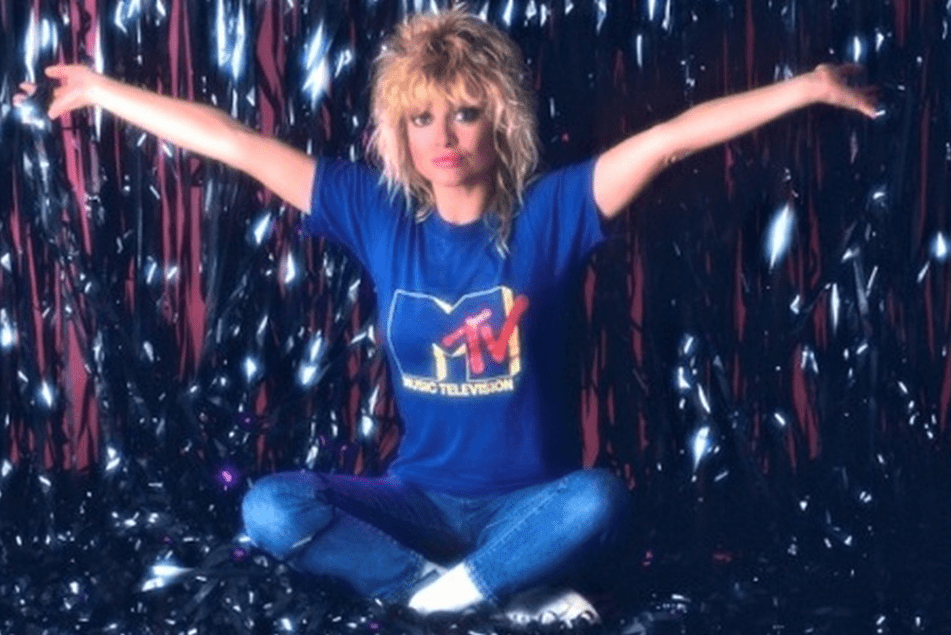
Nina Blackwood Reflects on the Days of MTV And If Video Killed The Radio Star

0

Nina Blackwood needs no introduction. From 1981 to 1986, Blackwood and the late J.J. Jackson, Martha Quinn, Alan Hunter, and Mark Goodman, the original MTV VJs, changed how a generation consumed music.

I caught up with Blackwood to discuss the early days of MTV, the continued popularity of 80s music, and whether “Video Killed The Radio Star?

So, what was the vibe at the start of MTV?

“Well, first off, when I got the job, I was living in LA. And the whole thing was I had to move to New York, which I didn’t expect. I had just moved to LA. I had only lived there for a couple of years. And so here I was, moving to New York. I remember my agent saying what is this? Cable was in its infancy. A lot of my friends were saying, oh, she just went to some cable show in New York.”

To say MTV broke the mold would be a misstatement because it was pioneering, and there was no mold to break.

“Because there was nothing that MTV could look at to copy or emulate. It was breaking new ground. And I think all my fellow VJs will agree that the early years at the beginning were the best part for us,” Blackwood said.

“It was like a free-for-all; the crew would be on camera. It was just so much fun, but it was really long, long hours because we were experimenting. I was always the first one up, which was good because I was a morning person. J.J. was the opposite, so he was always the last one to get in.”

As the channel grew, things got a little more serious.

“When we moved to the second studio on 57th, it got more serious, and unfortunately, we had to leave most of our crew. The reins were pulled in a little bit more, and we weren’t even in New York yet.”

Since it was still in the early stages of cable, MTV wasn’t initially on everywhere, including in New York. Leading the memorable campaigns like “I Want My MTV.”

“Like I said, we weren’t in New York yet, and all of us would be sent around to different places in the country, and a lot of times, it was to the owner-operators of the cable channels or the cable companies to have them pick up MTV. You probably remember that whole promotional thing, “I Want My MTV,” with Mick Jagger and Pete Townshend. And so, we were kind of sent out as little salespeople.” 

“Then also, personal appearances at record stores, and that kind of thing. And I remember going to San Antonio, and I was with our minder; we would each have a minder. And we’re in the limousine, going to this shopping center, and there’s a line all around it, all these people. And I said to the driver, I said, who’s here? And he said, you.”

When MTV hit the New York cable systems, it took it all up a notch.

“When it hit New York, we were basically at the epicenter of everything. I mean, going to shows, everything we had basically carte blanche. We were getting invited to everything, seeing all the concerts everywhere. And I have two fun little stories of when it hit New York.”

“One was, I was out on 6th Avenue and walking. And a fire truck goes by with all these firemen, and they’re going, hey, Nina, yo, yo, which was really fun. Then another time, I was on 6th Avenue, and I was trying to flag a cab, and this cop car pulls over, and I’m going, oh, no. What did they think? I’m like a hooker or something? And they go, hey, Nina, where are you going? And I’m like a doctor’s appointment. They said hop in. They gave me a ride, and I’m slinking down in the backseat. I hope nobody sees me. I mean, now, with everybody and their cameras, forget it.”

I suggested that might have landed her on Page Six today.

“Thank God it wasn’t like that then because my temperament would not have been able to handle that. I would’ve had a nervous breakdown with all that scrutiny.” 

“So, all in all, it was just great. It was just an amazing time. And my fellow VJs, God bless JJ, who’s not with us, but we’re still a family.”

I asked Blackwood why she thinks 80s music from the MTV era is still so popular.

“I think there are two reasons. And I have to say, a lot of it had to do with the videos because people grew up watching MTV. Some people said MTV was their babysitter. Since it was so innovative, it holds a very precious part in people’s memories. You know, it’s a good time. Plus, the music, for the most part, was very positive.”

“The mainstream of 80s music is very positive. And then when you get into the 90s, I’m not saying that one is better than the other, but the 90s is almost the opposite of what the 80s were about. As far as music, it has a much more positive sound and good memories.”

Getting into a bit of gossip, there has long been a rumor that John Waite’s 1984 hit song, “Missing You,” was written with Blackwood in mind. So?

“John and I were friends. We were good friends and got along, and I remember him calling me from the studio, the recording studio, called me at home and said, I want you to hear this song that I was thinking about you when I wrote.”

“We met at somebody’s apartment in this high rise, and he played the song and said, I was thinking about you and my wife when I wrote this song. I was very touched. It’s a great song.”

So, did “Video Kill The Radio Star?”

“No, it did not. I think it (video) enhanced the radio star. Yes, in one way, it ruined imaginations. Before, you just heard a song on the radio, and you thought what you wanted about the song. And even when you’d see the artist perform it on the “Midnight Special” or “Don Kirshner’s Rock Concert,” you still had your own idea and interpretation of the song. What video did is it kind of told you what to think about the song.”

“Some of the videos were bad. But I think it expanded playlists. Kids in Iowa, where you grew up, radio stations weren’t playing Duran Duran until the videos came on. And then the kids are going to the record stores saying ‘I want Duran Duran. Do you have Duran Duran?’ So, radio had to follow suit because of what was happening. So no, I definitely don’t think it did. I think corporations killed the radio star.

Photo: USRN

Blackwood has been on SiriusXM for 20 years and can be heard on “The Big ’80s Top 40 Countdown” and “New Wave Nation” on SiriusXM’s “80s on 8” channel. Three syndicated radio shows, “Absolutely 80s,” “Absolutely 80s – Spotlights,” and “New Wave Nation,” all available through United States Radio Networks.

Barrett Media produces daily content on the music, news, and sports media industries. To stay updated, sign up for our newsletters and get the latest information delivered straight to your inbox.

How Can News/Talk Radio and Cable News Close the Disconnect Between Liberal and Conservative Media Members?

The term “Going into the lion’s den” has been a popular one with news/talk radio and cable news hosts when speaking about one side of the political aisle going into “hostile” territory for an interview or discussion.

For instance, Donald Trump “went into the lion’s den”, in the eyes of conservative commentators, when he did a town hall with CNN’s Kaitlan Collins. Or when he did a Presidential Debate with CNN’s Jake Tapper and Dana Bash moderating. Or when he did a Presidential Debate with ABC’s David Muir and Linsey Davis moderating.

And on the other side, Kamala Harris “went into the lion’s den” when she did a sit-down interview with Fox News’ Bret Baier.

Less frequently, it seems, are media members crossing those lines. You rarely hear an MSNBC or CNN host on a conservative radio station, just like you rarely see a conservative radio host on a cable news network that does align with their beliefs.

Plenty of media industry professionals will tell you that both political sides need to do a better job of reaching out across the aisle to make that happen. So, we asked some on-air talents just how they would accomplish that.

The first question was directed to Buck Sexton of The Clay Travis & Buck Sexton Show from Premiere Networks. Last year, Sexton appeared on Real Time with Bill Maher as the token conservative panelist. After the appearance, he shared his opinion that — like many — it should happen more frequently. He said he enjoyed the experience, noting it was his third time overall doing the show.

“This was told me by Bill’s staff, and by Bill himself: (other conservative guests) get into the room of people who don’t agree with them, and they want to try to play to the home crowd a little bit,” said Sexton. “I go in there, and if the people in that audience aren’t getting ready to throw tomatoes at me, I haven’t done my job on that show. And I know that, and that’s great.

“I’m willing to go in there and take the swings and arrows, because I want them to hear my version of conservatism and hear it expressed from somebody like me who lives it, who believes it, who is all about it. It’s absolutely fun to go into the lion’s den.”

Another news/talk radio host, who wished to remain unidentified in order to speak more freely on the subject, disagreed with Sexton’s sentiments. They do not enjoy the experience of wading into the waters the other side swims in.

“It has just never been worth it to me, because the conservative hosts don’t listen and aren’t interested in hearing the other side. They just want to argue,” the liberal media member said. “Sparring with someone from our side isn’t about learning for them; it’s about playing a part and looking correct to their audience.”

Sexton added a qualifier, stating that he isn’t looking to go on any and every show offering to host him.

“It’s got to be worthwhile, because otherwise you feel like you’re getting harangued for no reason,” said Sexton. “It’s not worth going on a show that has 50 people that are downloading it to have someone call you a Trumper, a fascist, or something crazy.”

He continued by noting that Bill Maher’s audience included millions who would be exposed to his “conservative ideas” that “grated additional exposure” to he and Travis’ Premiere Networks program. “If there are other programs like that, I’d be happy to go on with them,” he added, “but there really are very few these days in the marketplace.”

When asked how liberal media and conservative media can bridge the gap to allow for more open conversations, the liberal radio host said the attitude of the political right needs to change before anything will get better between the two sides.

“Conservatives are smug. That is a generalization but one that is true,” they argued. “I don’t have any interest in bringing them on my show because I don’t like the attitude, I don’t like the stances, and I don’t like the conversations that come up. Because more often than not, it turns into mudslinging. I’m not interested in mudslinging. They are. When that attitude ends, I’d think about it.”

The liberal radio host added that they felt as if they would never be welcomed to appear on a network like Fox News or Newsmax because the concern would be they would “embarrass” the host in the conversation, leading to a loss in credibility with viewers.

Another problem in bridging that gap is what medium works best to start to mend the fences. Buck Sexton told Barrett Media that while he’s interested in having more of those conversations, he believes his radio show isn’t the perfect outlet to do so.

“It’s tough in the radio format, I think, because without physical presence and without the video visual, cross talk is just the death of good radio. So if you’re going to have people who are going to disagree, you have to trust that there will be that respect for space and time. I’ve seen that work very rarely,” he argued. “Radio, I think, is a tough place. TV lends itself a little bit more to those real debates, to those real exchanges between people who strongly disagree. Not who see variations of aside on the same issue, but I mean, are fired up and passionate about their cause.

“I’m not sure that talk radio is ever going to be the place for disagreement. I think expansive ideas? Yes. Conversations from different areas? Sure. But debate turns into shouting on radio and crosstalking.”

Sexton concluded by stating that he’s more than willing to join any MSNBC primetime program to debate the issues. In fact, he believes it is foundational to the medium.

“I do think in the general media marketplace there should be a lot more of a willingness for people to engage with the other side. I mean, I think a lot of folks owe it to their audience. If they would have me on MSNBC tomorrow to have a real debate segment with one of their prime-time hosts, I would do it. I would do it because that’s worth my time … But they’re unwilling to do it.

“I would love to see more debate, and I think that the foundation of the format of political commentary, you go back to William F. Buckley and Gore Vidal. It’s supposed to be the exchange of ideas, much more so than I think it’s turned into, which is a lot of silos and preaching to the choir.”

While some view the issue as unsolvable, others are attempting to bridge the gap. In recent weeks, Gov. Gavin Newsom (D-CA) has launched a podcast in conjunction with iHeartMedia that has seem him sit down with conservative radio hosts Charlie Kirk and Michael Savage for wide-ranging conversations.

Additionally, NewsNation host Chris Cuomo recently spent more than two hours in discussion with conservative media titan Tucker Carlson discussing a variety of topics.

But, the feeling I got from both sides of the media ecosystem was similar to that of a junior high dance. The other side is waiting for the other side to make the first move and signal their interest. And if that’s the case, this issue might not be solved anytime soon.

Barrett Media produces daily content on the music, news, and sports media industries. To stay updated, sign up for our newsletters and get the latest information delivered straight to your inbox.
The Watch: Gutfeld! with Greg Gutfeld on Fox News

Fox News host Greg Gutfeld is the self-professed “King of Late Night.” Except, it’s hard to argue that it’s self-professed these days, as Gutfeld! has more than doubled the viewership seen by competitors Stephen Colbert, Jimmy Kimmel, and Jimmy Fallon.

Gutfeld’s show is, obviously, wildly popular. It does feel important to note that his “late-night” show begins at 10 PM ET, while the competition begins at 11:30 or 11:35 PM ET, so he has an advantage by beginning sooner.

But he also has an advantage of being on Fox News. The network is as popular as it has ever been and is besting network television in primetime.

Truth be told, I haven’t always found Greg Gutfeld to be the comedian many on the right think he is. Can he be witty? Yes. He’s obviously quick on his toes. On The Five, he often plays the role of the curmudgeon who doesn’t care what anyone else on the panel — especially the liberal voice — has to say. Conservatism often struggles in the comedy realm because if it feels like you’re punching down at your subjects, that’s not exactly a recipe for comedy gold. Furthermore, when observational comedy is paired with a political ideology, rather than an unexpected conclusion, it’s a frequent turn-off.

Pair all of that together, and it leads one to question: Is Greg Gutfeld’s late-night show popular because it’s laugh-out-loud funny, or because it’s on Fox News and anything you put on the network that appeals to old, conservative viewers is going to be a hit?

Let’s find out.

The St. Patrick’s Day episode of the show began with text above the title screen that read “The world’s only non-Irish leprechaun,” poking fun at Gutfeld’s diminutive stature. Which is a good start. Because if you can’t laugh at yourself, having the audience find you funny becomes an even greater challenge.

One of the first jokes right off the top of the show was how former President Bill Clinton was at the parade, and wore a “Kiss Me I’m Irish” button, but it was on his pants zipper. The premise of the joke is obviously funny, but what year is it? Clinton has, largely, been out of the public eye for literally 25 years. And he wasn’t even at the parade! If that aspect of the joke were true, it’s at least relevant. But making a “Bill Clinton is a horndog” joke in 2025 feels like the equivalent of saying your favorite TV commercial right now is the Taco Bell chihuahua.

The very next joke was about how President Trump was hit in the face by a boom microphone on Saturday, with Greg Gutfeld saying “Now he knows what Stormy Daniels felt.” That’s funny. Fox News is often criticized — fairly, from my perspective — for failing to share even the slightest criticism of President Trump. Now, this isn’t exactly a criticism, but it doesn’t follow the usual playbook for how the network talks about him, either. Gutfeld let out a “That’s a great joke,” after some audience members groaned at the quip.

The next topic was about the wildly viral story that a Peruvian fisherman who was found 95 days after disappearing from his fishing vessel. The New York Post story claimed he survived by living off insects, turtles, and birds. Gutfeld’s punchline was the story proved “He’s a horrible fisherman.” Again, that’s outstandingly funny. Fantastic observational comedy. This joke literally made me laugh out loud. Because it’s true!

Going back to the punching down, the monologue continued with the Gutfeld! host sharing that a college professor is suing his school after a 380 million-year-old fossil went missing. The punchline? I’ve been wondering where Geraldo (Rivera) went.” That’s punching down. Fox News can deny it all it wants, but Geraldo Rivera left the network because he and Gutfeld couldn’t get along, and they had to choose one of them. Now, was it dumb for Rivera to pick that fight? 100%. Self-awareness goes along way, and when your opponent is the guy who serves as the de-facto lead of the most-watched show on cable news and also hosts the late-night show that is dwarfing legacy programs like The Tonight Show, that’s not a battle you’re going to win.

Instead of dissecting joke by joke, I’ll wrap up my thoughts on Gutfeld’s opening monologue by encapsulating what I saw. Some jokes worked, some didn’t. It wasn’t a 50/50 split. I thought, probably, 70% of the jokes were a hit. But when they missed, they missed.

I also didn’t always love Gutfeld’s delivery. At times, he waits for the audience’s reaction. Which is fine when the reaction is uproarious laughter. But when it’s a small chuckle, there’s an awkward silence, as if he’s waiting on them to actually get the joke. But…they got the joke, they just didn’t think it was as funny as he did. But he didn’t pull from the Norm Macdonald bag of tricks and make the situation more awkward by staring into the camera until the laughs came, he just would make a face as if he was smarter than the Fox News in-studio audience, which wasn’t exactly endearing.

The cadence with which he spoke differs from the traditional opening monologue of a late-night show. What I did like about it was he didn’t then go on to explain the joke like Jimmy Fallon is wont to do. If you have to explain your joke, it wasn’t funny in the first place. Greg Gutfeld never had that issue in the episode I watched. He gave the audience the benefit of the doubt. Did it always lead to the reaction he was expecting? No, but he wasn’t insulting of their intelligence, either.

Overall, I think Gutfeld’s success is probably right down the middle: he’s both funny and he’s on Fox News. Would his content be as popular if he wasn’t on the giant megaphone that Fox News provides? Probably not. But is a guarantee that if the network wanted to do a different show of the same variety in the window it would have the same success? Not likely.

That makes Greg Gutfeld and Fox News a match made in heaven. And when something works like that, you just have to sit back and admire the success, regardless of whether or not you think every joke does or doesn’t work.

Barrett Media produces daily content on the music, news, and sports media industries. To stay updated, sign up for our newsletters and get the latest information delivered straight to your inbox.

News/Talk Radio Hosts Need to Grab the Future By the Horns

0

We recently have watched many of our friends in the radio industry get laid off. It is a painful reminder of the state of our industry. Most of the job losses were in the music end of the business, which is struggling with unlimited audience pressures. It is imperative to face the facts: it is all about the money.

For half a century, it was a frequent selling point on music stations that there was less talk. Well, the great personality music DJs have been rooted out a long time ago. If the DJ doesn’t mean anything, why are they being paid huge salaries? When company honchos look at return on investment, music people are an easy target.

What is your return on investment? The bean counters are focused on this. Music people, we know about your competitive pressures. Amazon Music, Spotify, SiriusXM, YouTube, and social media. In fact, radio people are promoting their rivals for advertising and audience. Every social media post is an advertisement and a source of revenue for a company that is not paying your salary.

Talk show sosts also have big competitive headwinds. Podcasts, YouTube, social media, SiriusXM, websites, and other alternatives are eating into our advertising and audience. We must adapt. The wonderful headline for the local talk radio show host is this simple fact: There is nothing more impactful than an endorsement. You have an audience and you are trusted by your listeners. It is an advantage that our brothers and sisters in music radio do not have.

Your words sell people ideas and products. You have juice. But your influence doesn’t count if your endorsements are not sold-out. I understand you are not in the sales department. That is an excuse.

When was the last time that you addressed a sales meeting? Do you have a laundry list of what you won’t endorse? I had a host on my team that would not endorse anything having to do with alcohol, even restaurants. This host also declared that he would not endorse gambling, jiggle joints, and companies that differ from his world view. Ok, I get not endorsing vices and strip clubs. But starting the list of what you won’t endorse is a non-starter.

I personally would never endorse a jiggle joint. I would endorse anything else. Gambling is a legal activity. I have a sports gambling account with one of the well-known platforms. I even deposited $100. I have yet to use them. Why? Sports gambling is not my thing. If I was hosting a show, I would certainly endorse sports gaming. It’s good for the company. Turning down business is a non-starter. We are in this business to make money. It is not a charity case. If you are not creating income and value for your employer, you need to reassess. Why do you need to reassess? Because they are.

When is the last time that you asked a local business that you personally use to be an advertiser? When Premiere Radio’s Sean Hannity and Salem’s Mike Gallagher were local hosts, they were always hunting for endorsement opportunities. I know this from personal knowledge. I would wager that both Gallagher and Hannity are still doing this. So, what are you doing? If you are a talk radio show host, DJ, morning host or co-host on a music station, are you doing this?

When is the last time that you went on a sales call? Don’t blame the salespeople. Blame yourself. Be the squeaky wheel. I can’t tell you how many air personalities have complained about their lack of endorsement deals. My follow up is: Do you make yourself available for the sales team? When is the last time that you spoke to a sales meeting? Market Presidents and Sales Managers are all the same. They want to make money. I have this feeling you like making money, too.

So, where is the disconnect? Your account executives are 200 steps away. When did you harass them last? Do you make yourself available? Do you speak with account executives about deals about to close? Did you stop by the business and introduce yourself to the business owner? You are a star. You are important. Make that happen.

This is especially true for morning hosts. Do you look like a meth head? Did you shower and actually comb your hair this morning? If you think that I am a hater, I hosted morning shows for 14 years. I didn’t come into the office looking like a male model at New York Fashion Week. But I was showered, put on deodorant, aftershave, and combed my diminishing amount of hair.

Your future is truly in your hands. You can either complain about the current realities or face them. The Philadelphia Eagles were underdogs to win the Super Bowl in 2025. The Kansas City Chiefs were thought to be a lock. But the Eagles just dominated the Chiefs.

So, it is with our business. Radio may be the underdog at the moment. Radio is the only media outlet of the big three that actually has a large market share of usage. Network Television? Viewers are disappearing. Newspapers are dead. The radio industry is still here with a large market share. The advertising works.

You are a big deal. The data proves that fact. You are a winner. You deserve amazing success. Go get it!

Barrett Media produces daily content on the music, news, and sports media industries. To stay updated, sign up for our newsletters and get the latest information delivered straight to your inbox.

Texas Rangers, Fubo Announce Agreement to Stream Rangers Sports Network Programming

0

Texas Rangers live play-by-play this season has an additional home for fans to watch the action. Today, the franchise announced that FuboTV will stream Rangers Sports Network’s coverage of every available Texas Rangers game to subscribers of its English-language paid channel plans within the Rangers Sports Network territory.

The Texas Rangers broadcast network extends from its home base in Arlington, TX, to Louisiana, New Mexico, and Oklahoma. Furthermore, the coverage will include full pregame and postgame analysis, ensuring fans stay connected to all the action. Additionally, Fubo will launch Rangers Sports Network as a standalone subscription, which can be added to the Fubo Free plan or Latino plan in the territories listed above.

The partnership officially begins with the Rangers’ Opening Day game against the Boston Red Sox on Thursday, March 27.

“As the streaming leader in Major League Baseball coverage, we cannot be more thrilled to add Rangers Sports Network to Fubo,” said Todd Mathers, executive vice president, content strategy & acquisition, Fubo. “Our robust carriage and sponsorship agreement means Fubo subscribers can watch Texas Rangers baseball all season long while engaging with the team through multiple fan opportunities.”

As part of the partnership, Fubo will be prominently featured in branding at Globe Life Field, including signage behind home plate, along with a number of fan engagement opportunities throughout the stadium.

“Since the launch of Rangers Sports Network was announced in January, we have continued to work on additional agreements to provide options to watch our games,” said Neil Leibman, chairman, Rangers Sports Media and Entertainment Company. “Fubo’s carriage of RSN gives fans another tremendous avenue to watch Rangers baseball this season. We are grateful for the opportunity to partner with Fubo and hope that fans will take advantage of this new opportunity.”

Moreover, Fubo’s addition of the Texas Rangers Sports Network further strengthens its already impressive lineup of live sports content. With more than 55,000 live sporting events annually, Fubo continues to expand its reach. The platform already has partnerships with 35 regional sports networks, including agreements with MLB.TV, MLB Network, MLB Strike Zone, and other regional sports and broadcast networks such as ESPN and FS1.

Barrett Media produces daily content on the music, news, and sports media industries. To stay updated, sign up for our newsletters and get the latest information delivered straight to your inbox.

iHeartRadio Music Awards Recognize Music Radio’s Best

0

The iHeartMedia Music Awards were held last night in Los Angeles.

The 12th annual iHeartRadio Music Awards recognized the most-played artists and songs on iHeartRadio platforms in 2024, while also previewing the anticipated hits of 2025.

Hosted by LL COOL J the show featured performances by Bad Bunny, Billie Eilish, GloRilla, Gracie Abrams, Kenny Chesney, Muni Long, Nelly, Tori Kelly and more.

The awards show celebrated the industry’s top talent. Viewers were treated to live performances by chart-topping musicians, surprise celebrity appearances, and unique collaborations. The program also highlighted the inspiring journeys of the award recipients on their path to #1

 iHeartRadio’s “Tour of the Century Award” honored Taylor Swift | The Eras Tour, which launched two years ago to the day of this year’s telecast.

Lady Gaga was honored with the 2025 iHeartRadio Innovator Award. Mariah Carey, was honored with the 2025 iHeartRadio Icon Award and Nelly received the 2025 iHeartRadio Landmark Award. Gracie Abrams received the 2025 iHeartRadio Breakthrough Artist of the Year Award.

Mariah Carey, winner of the iHeartRadio Icon Award (Photo by Jon Kopaloff/Getty Images for iHeartRadio)

The complete list of winners is available here.

Barrett Media produces daily content on the music, news, and sports media industries. To stay updated, sign up for our newsletters and get the latest information delivered straight to your inbox.