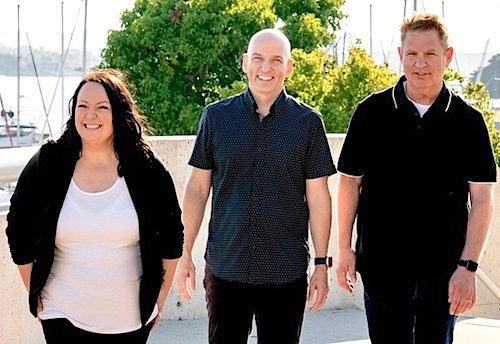
The Miami Marlins and FanDuel Sports Network Florida have announced that Kyle Sielaff has been named the lead play-by-play announcer for Marlins regional television broadcasts in 2025. Sielaff has worked with the Marlins organization in its radio network since 2013 where he hosted Marlins Inside Corner and team podcasts. Starting in the 2023 season, he was named the play-by-play announcer and has worked with a rotation of analysts including Rod Allen, Jeff Nelson, Gaby Sánchez and Kelly Saco. Paul Severino previously held the television role for the last seven seasons, but he was not offered a new deal following the season.
Sielaff becomes the seventh television play-by-play announcer in Marlins history and will make his debut as the baseball season commences this spring. The University of Miami alumnus previously worked as a play-by-play announcer for sports broadcasts on WVUM, the student-run radio station, and graduated in 2012 with double majors in broadcast journalism and sports administration.
“A sincere thank you to everyone that has reached out,” Sielaff said in a series of posts on X. “It’s extremely humbling to get this opportunity. I’m just so appreciative and excited to continue to share Marlins baseball with everyone on [FanDuel Sports Network Florida]. I’m going to be me, because, well, that’s all I know! The broadcasters that have come before me are amazing. Every one of them. I’m not sure they’re shoes I can fill, but I’m going to slip a pair on and hope to take a stroll with you all for a long time! Cheers.”
Sielaff will be working alongside longtime analyst Tommy Hutton, who is set to begin his 27th season on Marlins broadcasts in the upcoming season. Hutton formerly played 12 seasons as an infielder and outfielder in the major leagues with stints on the Los Angeles Dodgers, Philadelphia Phillies, Toronto Blue Jays and Montréal Expos. Before his work with the Marlins, he previously called games with the Expos, Blue Jays and New York Yankees, along with appearing on national broadcasts for ESPN, ABC and NBC.
Marlins broadcasts will be available on FanDuel Sports Network Florida, which was previously branded under the Bally Sports banner, as the team continues to do business with Main Street Sports Group. The media conglomerate, formerly known as Diamond Sports Group, emerged from Ch. 11 bankruptcy earlier this month with a “significantly deleveraged balance sheet.” The company has nine MLB teams within its portfolio and recently hired Norby Williamson to serve as its president of production and programming.
Barrett Media produces daily content on the music, news, and sports media industries. To stay updated, sign up for our newsletters and get the latest information delivered straight to your inbox.
After suffering a fall at home, Dick Vitale’s return to the broadcast booth has been delayed indefinitely. Vitale was originally slated to come back to ESPN college basketball broadcasts on Saturday, Jan. 25 for a matchup between Duke and Wake Forest, which would have marked his first time on air since 2023. Over the last three-and-a-half years, Vitale has battled four different iterations of cancer, but he was recently declared free of the disease. The longtime sports broadcaster, who has been a member of ESPN throughout its 45-year history, divulged the news on social media and stated that neurosurgeons have said that he has made great strides. Moreover, Vitale added that surgery was not necessary.
“I’m sorry to have to share the disappointing news that I won’t be able to call the Duke-Wake Forest game next weekend,” Vitale said in a statement. “Unrelated to any of my cancer scares, I had an accident at my home in Florida, and that has created some new health challenges and near-term physical limitations for me. I’m devastated that I won’t be courtside with my ESPN buddy Dave O’Brien and with all the players and fans, especially because of the overwhelming response I received when news of my planned return was announced. I was anxiously awaiting the chance to feel the excitement and energy of a college basketball environment for the first time in nearly two years.
“Now, I’m just going to have to wait some more. I’m not exactly when that will be, yet I’m expected to make a full recovery and will provide updates when I have more information. Despite this latest setback, I feel blessed to have the support of my family, friends, and ESPN teammates. I’m a lucky guy and as I’ve said before, I will continue to do whatever it takes to get back to calling the sport I love. In the meantime, I have to say ‘Go Irish’ on Monday night! Love to all.”
Vitale updated his social media followers on Sunday evening when he stated that he had been released from the hospital. Additionally, he thanked the medical staff, nurses and everyone else who played a role in helping him recover from the ailment he had suffered on Friday.
During Vitale’s career with ESPN, he has called over 1,000 college basketball games and been the recipient of several industry honors, including a spot in the Naismith Memorial Basketball Hall of Fame. In addition to his analysis work, he also serves as a voice for the V Foundation for Cancer Research and has raised more than $93 million for the Dick Vitale Pediatric Cancer Research Fund through his annual gala.
Barrett Media produces daily content on the music, news, and sports media industries. To stay updated, sign up for our newsletters and get the latest information delivered straight to your inbox.
It’s Inauguration Day, and one thing is sure: Americans will be listening to the radio, either to hear the speeches and festivities or to escape those words and be taken away with music and non-election talk.
I started thinking about our beloved medium and its role in past election days. This took me down a rabbit hole of research and analysis, looking for news stories about the radio industry and the music Americans have enjoyed coming out of the speakers and audio devices since Kennedy’s inauguration in 1961.
We’ll start with bullet points of radio news and changes from each decade. Then, for each Inauguration Day, I’ve included the top three Billboard Hot 100 songs to give us an idea of what we were listening to on those monumental days. The source for all music entries is the Billboard Hot 100.
Radio in the 1960s:
Pepsi-Cola continues its position as the number one network advertiser in 1960.
KNX, Los Angeles, grew local sales by 18% in 1960, according to Gordon Mason, sales manager. (Source U.S. Radio, January 1961)
Radio Caroline, the pirate radio station in England.
FCC adopts the FM Non-Duplication Rule. This prohibits AM stations in markets with a population of more than 100,000 from simulcasting 100% of the AM content onto a sister FM signal.
The Non-Dup Rule forces owners to find something cheap and easy for their FM stations. FM “freeform” radio has its beginnings.
ABC debuted four new networks, replacing the single feed. The new networks focused on News, Talk, Music, and FM.
What were Americans listening to on the three Inauguration Days in the 1960s?
(Source for all music entries: Billboard Hot 100 charts)
January 20, 1961, (John F. Kennedy)
Wonderland By Night: Bert Kaemfert and His Orchestra
Exodus: Ferranti & Teicher
Calcutta: Lawrence Welk and His Orchestra
January 20, 1965 (Lyndon B. Johnson)
Downtown: Petula Clark
You’ve Lost That Lovin’ Feelin’: The Righteous Brothers
Love Potion Number Nine: The Searchers
January 20, 1969 (Richard M. Nixon)
I Heard It Through The Grapevine: Marvin Gaye
Crimson And Clover: Tommy James And The Shondells
I’m Gonna Make You Love Me: Diana Ross And The Supremes & The Temptations
Radio in the 1970s:
American Top 40 with Casey Kasem debuts.
NPR debuts.
FM increases in popularity because of better sound quality and direct signal.
FM creates more music genre fragmentation.
AM moves more formats to News and Talk programming.
What were Americans listening to on the three Inauguration Days in the 1970s?
January 20, 1972 (Nixon’s second term)
American Pie: Don McLean
Brand New Key: Melanie
Let’s Stay Together: Al Green
August 9, 1974 (Gerald R. Ford, after Nixon’s resignation)
Feel Like Makin’ Love: Roberta Flack
The Night Chicago Died: Paper Lace
Annie’s Song: John Denver
January 20, 1977 (Jimmy E. Carter)
I Wish: Stevie Wonder
Car Wash: Rose Royce
You Make Me Feel Like Dancing: Leo Sayer
The 80s in Radio:
AM Stereo
The FCC eliminates the anti-trafficking rule, which requires an owner to keep a station for three years before selling it. The ownership cap increases from 14 to 24 stations.
FCC Docket 80-90. It changes the FM band spacing and allows more FMs in suburban markets.
Group W buys eight radio stations from Legacy/Metropolitan for $385m.
“Because of price tags being paid, all of a sudden there’s enormous pressure to really get the business to pay off all these debt services, so now it’s not as friendly as it used to be,” said Bill Sommers, KLOS-FM’s general manager. “Radio is strictly a business, it’s not fun anymore.” (source, LA Times, December 27, 1989)
What were Americans listening to on the three Inauguration Days in the 1980s?
January 20, 1981 (Ronald W. Reagan)
(Just Like Starting Over): John Lennon
Love One The Rocks: Neil Diamond
The Tide Is High: Blondie
January 20, 1985 (Reagan’s second term)
Like A Virgin: Madonna
I Want To Know What Love Is: Foreigner
You’re The Inspiration: Chicago
January 20, 1989 (George H.W. Bush)
Two Hearts: Phil Collins
Don’t Rush Me: Taylor Dayne
Armageddon It: Def Leppard
Radio in the 1990s:
The Telecommunications Act of 1996 allows companies to own multiple stations in a marketplace based on the market size and the percentage of audience controlled by the cluster of stations.
Revenue explodes in the late ‘90s.
During the 1990s, ratings and ad revenue rose rapidly. Industry revenues grew from around $11 billion per year to nearly $20 billion between 1994 and 2000, according to the Radio Advertising Bureau. After 1996, revenues grew by double-digit percentages every year until 2001. (Source, PBS, March 4, 2005)
What were Americans listening to on the two Inauguration Days in the 1990s?
January 20, 1993 (William J. Clinton)
I Will Always Love You: Whitney Houston
If I Ever Fall In Love: Shai
In The Still Of The Night: Boyz II Men
January 20, 1997 (Clinton 2nd term)
Un-Break My Heart: Toni Braxton
Don’t Let Go (Love): En Vogue
I Believe I Can Fly: R. Kelly
Radio in the 2000s:
The fallout of the dotcom bubble.
The FCC creates Low Power FM (LPFM) in 2000 to provide local, non-commercial broadcasts.
The FCC approves digital operations (HD).
ABC/Disney sells its radio O&Os and network.
Smartphones and apps create opportunities for radio brands to go beyond M/FM.
What were Americans listening to on the three Inauguration Days in the 2000s?
January 20, 2001 (W)
Independent Women: Destiny’s Child
It Wasn’t Me: Shaggy
He Loves U Not: Dream
January 20, 2005 (Bush’s second term)
Let Me Love You: Mario
1,2 Step: Ciara featuring Missy Elliott
Lovers And Friends: Lil John & The East Side Boys Featuring Usher and Ludacris
January 20, 2009 (Barack H. Obama)
Just Dance: Lady Gaga
Single Ladies: Beyonce
Heartless: Kanye West
Radio in the 2010s and ‘20s:
FCC allows AM to rebroadcast on FM translators.
FCC eliminates the main studio rule.
The COVID pandemic challenges radio’s audiences and revenue.
Debt-loaded companies struggle with the “B” word and employee RIFs.
Christian music and spoken word stations continue growing as non-profit operators use low-cost radio stations.
Digital advertising goals dominate radio’s revenue focus.
What were Americans listening to on the four Inauguration Days in the 2010s/20s?
January 20, 2013 (Obama’s Second Term)
Locked Out Of Heaven: Bruno Mars
Thrift Shop: Macklemore & Ryan Lewis
Ho Hey: The Lumineers
January 20, 2017 (Donald Trump)
Bad And Boujee: Migos Featuring Lil Uzi Vert
Black Beatles: Rae Stremmurd Featuring Gucci Mane
Closer: The Chainsmokers Featuring Halsey
January 20, 2021 (Joe Biden)
Drivers License: Olivia Rodrigo
Mood: 24k Goldn Featuring iann dior
Positions: Ariana Grande
January 20, 2025 (Donald Trump’s Second Term)
Die With A Smile: Lady Gaga & Bruno Mars
A Bar Song (Tipsy): Shaboozey
Birds Of A Feather: Billie Eilish
I hope you enjoyed this trip. Radio has been servicing listeners with information and entertainment since those three instrumental songs topped the charts on the day John F. Kennedy was sworn in as president of the United States.
It continues its impact today with more ways to share the hits and the passion than ever before.
As operators and performers, continue to be proud of the service you offer to Americans looking for connection.
Barrett Media produces daily content on the music, news, and sports media industries. To stay updated, sign up for our newsletters and get the latest information delivered straight to your inbox.
Donald Trump is set to return to the White House on Monday after 1,461 days as the world’s most public private citizen. Despite having been in the role of President of the United States and leader of the free world once before, it will still be a time of transition for the incoming President. And in that time of transition, it lends the question: how do news/talk radio leaders handle transition and their first 100 days when they step into a new role or situation?
To find the answer to some of our questions, we approached three news/talk radio Program Directors or Brand Managers — 95.5 WSB’s Ken Charles, 830 WCCO’s Brad Lane, and 1080 KRLD’s Drew Anderssen — for their insight into stepping into new roles. Each has taken over heritage brands more than once, as Charles has led stations like KNX News in Los Angeles, Lane helmed 620 WTMJ in Milwaukee, and Anderssen piloted WSB before taking over at KRLD in Dallas, among many other stops for each of them.
When asked for their philosophies on stepping into a leadership position at a legacy brand, each had similar, but slightly differing, strategies.
“A new perspective is good,” said Charles. “An outside view of a brand that has been static or doing it the same way for a long time is good. What’s bad, though, is when you come in with preconceived notions of ‘I’ve got to make changes because I’m the new guy.’ Then you’re going to break it. So, for me, I may come in with ideas, but I need to really learn the staff. I need to learn their strengths, their weaknesses, and I need to learn some of the history of the radio station. Because you can think a brand represents one thing, but find out very, very quickly it’s another, and all of a sudden you’re breaking it.”
“The nature of any PD is going to be to tinker, and to adjust and make, make changes,” said Anderssen. “And I think the really good ones stop and say, ‘Let me make a good assessment’ … For me, personally, I try to make my own decisions about what I observe rather than paying attention to what other people have told me about the brand, or, ‘well, we’ve done it this way for that long.’ That’s the one thing that you hear everywhere you go into a new situation.”
“You have to know what you’re stepping into and the situation that is presented in front of you,” Lane added. “But I would say first and foremost, if there is something that you have to do — and this would happen if you were going into a legacy or heritage platform or broadcast outlet or not — is you have to earn the trust and the buy-in of the talent and the programming staff that’s there. Without that, you can’t do anything because they’ve heard it all. They’ve seen it all.
“It’s not like I come in and it’s ‘Oh my gosh, it’s Brad Lane.’ I mean, they need to see who I am, learn what I’m about, and experience a culture shift,” he continued. “And as I’ve told people before, in many of these instances, you can’t come in with a bulldozer to what’s already been here. You want to make subtle, yet substantive, changes without alienating the hardcore loyalists who have been listening for 50 years.”
Building trust was a common theme addressed by the three news/talk radio leaders. They all admitted the only surefire way to build trust with their new employees is to show that they have their best interests at heart.
“That’s the most important thing,” Charles said. “Management is achieving your goals through other people. So if they don’t feel confident in me, if they don’t trust me, newsrooms and talk show hosts, they’re tough audiences. They spend all of their time asking hard questions, they have strong personalities, and they have strong beliefs. You need to, very quickly, get them to believe in you and trust you, because they’re not an easy audience. But once they do, they’re great partners.
“And so it is, by far, absolutely the most important thing you can do. I can come in and share my vision, but they’ve got to trust me before they help execute my vision,” he concluded.
“It’s not a one-size-fits-all thing,” admitted Lane. “I can tell you that even being here at WCCO different shows and hosts have their own timetable for how long it took for them to really trust that I had their best interest at heart. Sometimes it’s just the case of of sitting down with them and saying, ‘If you believe that I want you to succeed, then things that I tell you in terms of coaching and the direction that the station is going are going to be met with a far better outlook and attitude than if you think I’m here to disrupt what you do and change you into something that you’re not.'”
1080 KRLD Brand Manager and Audacy News/Talk Format Vice President Drew Anderssen shared his belief that the early days of any news/talk radio leader’s new role should include learning about the intricate details of the new market, as much as you’re learning about the new station and the way it operates.
“I just think what works in one market doesn’t necessarily work in another market,” he said. “A lot of times, I’ll see brand managers that say, ‘Hey, this worked where I came from, in such and such place. We’re going to implement that here.’ And it doesn’t mean it’s going to work. Markets are different.
“It’s interesting, sitting in my chair in a couple of different companies now, one of the things that kind of makes me pay close attention is when a brand manager says this — and by the way, every brand manager says this — it’s, ‘Well, my market is so unique because dot, dot, dot.’ I think that’s the local knowledge that somebody needs, and you can’t discount that, but you also have to look across the strategy to make sure whether that strategy is in that market or in the format as a whole, to say, ‘Do we have the right plan in place here?’
“I don’t know that the best thing to do for a new brand manager would be to walk in and fire your morning guy because you don’t like the way that he sounds, or fire the noon guy because you don’t like something that he said. What he said might be totally in alignment with the market. What he said could be totally off of alignment of the market.”
Anderssen added that, despite growing up in the Dallas/Fort Worth market, he still learns things about it after working his role for the past two years.
“The market is a different market now than what it was when I grew up here. I’m still learning the market, and I think every brand manager that’s worth their weight is going to probably say, ‘I learn something new about my market, month by month, year by year.’ If you think about how our industry has changed, and you think about how audience measurement has changed, and you think about how consumption for news and talk, anybody who says that the market is the same today as what it was last year or two years ago is probably not correct,” he shared.
One of the largest challenges facing anyone stepping into a new role is the adverse reaction to change so many hold. However, the news/talk radio leaders Barrett Media spoke with said that that obstacle can easily be overcome when you’ve earned the trust of your new team.
“There’s a saying that I use: ‘If you don’t like change, you’re really going to hate extinction,'” said Anderssen. “And that, to me, is foundational in nature, in the sense that you have to constantly evolve. You have to constantly change and do things differently to hit that target. It doesn’t mean you’re not consistent in what you’re doing. It means the approach that you take might need to be different.”
“It always depends on where the station is, what the changes need to be, and the strategic position of the radio station,” added Charles. “I’ve moved around a lot … I had to come in and refocus some of the imaging, the positioning, the strategy and tactics of what we were doing, but the people were incredibly talented and in many cases, in the right position and doing a great job, it would be other things, and that does make it a whole heck of a lot easier.”
“I think once you give hosts and shows the latitude, once you say ‘Ok, what we want to do, here’s who want to be, here’s where want to go,’ people are instinctive. I try to do that and give them an incredible amount of freedom. And they appreciate that. It gives them the latitude to try new things and fail. It’s ok to fail if we all admit we failed and we all come back together and carve out a new path and a new way. I think letting them know that we’re all in this together … I think it certainly helps.”
Barrett Media produces daily content on the music, news, and sports media industries. To stay updated, sign up for our newsletters and get the latest information delivered straight to your inbox.
John Middlekauff did not have your traditional route into broadcasting. His was more like the route athletes, specifically football players, would take. Spend time in the game and then later on, use that experience to jump into your next career.
Before media, Middlekauff started out as a graduate assistant at Fresno State and was eventually hired to work in the scouting department of the Philadelphia Eagles. It was Chip Kelly who changed the course of Middlekauff’s life, but not in the way you would think. He saw the type of passion Kelly had for the game and what it really took to do that job well as far as the amount of time you had to put in to be great at it and realized, in the end, the life was not for him.
Eventually, that led him to try his hand at media as he started out in radio with 95.7 The Game in San Francisco. He then found his way into the world of podcasting and his show, 3 and Out with John Middlekauff, which I eavesdropped in on this week, was picked up by Colin Cowherd’s The Volume. Today, Middlekauff’s YouTube channel has nearly 60,000 subscribers.
As the January 17 episode got going, Middlekauff launched right into the main topics at hand which of course consisted of the NFL playoff games coming up that weekend and the CFP Championship game on Monday.
“The reason I love sports, is because I like watching the best,” Middlekauff said excited about the games ahead. “When I was a kid, I loved watching the 49ers play the Cowboys…I loved watching Michael Jordan, I loved when Tiger Woods came on the scene. And I think ratings and interest would show you, so do most people.
“And I think [that is] what has made the NFL so special…and it has gone to popularities that most people probably thought were never possible and have created the most popular sport in America by a country mile. It’s so big that it has taken college football and has made it by far the No. 2 sport in America, it’s not even close.”
You can tell the passion Middlekauff has for football is off the charts, even if it isn’t quite to the level of Chip Kelly. As he talks about the young quarterbacks the league has who will be featured in the playoff games, he centers in on the two who are playing in what most consider the biggest game of the weekend, Josh Allen of the Buffalo Bills and Lamar Jackson of the Baltimore Ravens. He made a great point saying the two could earn a combined billion dollars and even if they never get to a Super Bowl, it really won’t change anything.
“When it comes to the ability to earn and change the course of your family’s life…it’s not about the playoffs,” he said. “But what I think is awesome about the playoffs, is that Josh Allen will make the same amount as the 43rd guy on the roster dressing. The playoffs are not about money, the playoffs are truly about your legacy.”
Middlekauff knows his stuff, but it’s his style and delivery that set him apart. He is a great talker and has excellent recall of games and the history of the sport. He is also not afraid to make bold statements.
“Not a soul in America is expecting Houston to win,” he says when talking about the Houston Texans-Kansas City Chiefs matchup. “Mahomes has never missed the AFC Championship game, that’s fu–ing insane,” he says later.
With that said, he doesn’t just throw out gratuitous hot takes. He adds depth to what he says, such as when he adds about Mahomes, “It’s going to be very difficult for anyone to ever do what he’s doing again, just rattle off that many AFC Championship games in a row, where only once during that run he had to go on the road.”
After some really insightful discussion about the quarterbacks, the next topic was all the head coaching vacancies and the latest news. The information was followed by strong thoughts on the whole interview process and the disadvantage the assistant coaches on the top teams have.
Middlekauff says the NFL can’t seem to figure out the interview process. “It’s just very janky,” he said. “…I don’t have a great solution. A lot of the people you want to talk to are in the playoffs and it makes it difficult.”
Middlekauff points out that for most assistant coaches it really isn’t a big deal for them to do an interview or make a trip during game week. For the coordinators, however, it’s a much bigger deal. He adds that the only way it works is if your team has the No. 1 seed and you have the bye week to talk with teams. Middlekauff thought Philadelphia Eagles offensive coordinator Kellen Moore talking with the Dallas Cowboys during game week in the playoffs, “seems fu–ed up.” He offers a suggestion where all teams would have to wait to start doing interviews until either the bye week between the championship games and the Super Bowl or after the Super Bowl.
Middlekauff has a lot of inside information to offer, but you never sense during the show that he is trying to make it about him being the expert. It is a conversation between him and the audience even though he is the only one talking most of the time.
Later, a sponsored segment called ‘Hottest Coach and Player of the Week’, appropriately presented by Louisiana Hot Sauce, was both informative and entertaining. Middlekauff starts it out asking, “Has a player ever had one catch for ten yards, looked more angry on the sideline, yet had a more impactful week?” He then goes on to talk about Philadelphia Eagles wide receiver A.J. Brown who has gone super viral for being shown reading a book while on the sidelines during a game. Middlekauff informs us that Brown’s attempt to calm himself had the book go from outside the top 500,000 books on Amazon to No. 1 overall. “That is an amazing accomplishment,” he says.
The coach he chooses is the Los Angeles Rams’ Sean McVay. Middlekauff presents the information that McVay has 8 playoff wins and he’s not yet 40 years old. “He has a Super Bowl and 8 playoff victories…If he goes on the road to Philly and upsets the Eagles, it would be one of the most impressive stretches… [McVay is an] awesome football coach,” he said.
Up next in the show was something else where I both learned and laughed. ‘Fugazzi Friday’ was the name of the segment and the winner overall was college football’s NIL and specifically some of the reporting that is out there about what certain deals are really worth.
Middlekauff points to a report he saw which said former Texas quarterback Quinn Ewers was offered $8 million from a school to transfer instead of going in the NFL Draft. “I don’t buy that for a second,” Middlekauff said. “One, if you watched him play this year or really the last couple years, he’s not a first-round player, I would argue, he’s not even a second day player.” He then compared what was reported to some NFL contracts, one of which was Sam Darnold getting a 1 year, $10 million deal with, as Middlekauff put it, “the Minnesota fu–ing Vikings!”
He would later add, “This NIL is becoming the biggest Fugazzi we have ever seen when it comes to some of these numbers being thrown around.” He also said Ohio State reportedly had an overall NIL budget for football of $20 million, which is one of the highest he had heard of. Using that as an example (not suggesting OSU was who offered Ewers), he then hilariously said, “You’re going to spend 40% of your budget on … Quinn Ewers?”
To put a bow on the topic, he suggested, “If I were you and I see these headlines, I would just assume most of them are fake.”
The rest of the episode featured Stuckey from The Action Network on to talk about the gambling angle of the football weekend. “For my money, it’s the best weekend of the NFL season,” Stuckey said.
While the energy level of the show took a drop, the conversation between the two was filled with great information. Right off the bat Stuckey had said, “We haven’t had multiple favorites cover 7 or more points on Divisional Weekend since 2001.” He said 16 times there have been multiple favorites of more than 7 points and all 16 times, at least one of the underdogs covered.
Washington’s win over Detroit the next evening would keep that streak alive.
Later, it was Middlekauff who said he liked the prop bet of Travis Kelce scoring a touchdown in the Chiefs-Texans game, saying, “I think it’s an auto-hammer if you can get plus money odds on Travis Kelce scoring a TD in any playoff game the Chiefs play.” Stuckey would add, “Kelce props are free money, no matter where the books put the line, historically. It’s insane.” They would turn out to be correct.
They covered it all as far as the games and it was never a situation where Middlekauff was just throwing games to Stuckey to get his opinion. They went back and forth and talked through why they liked or did not like certain bets.
They wrapped the episode looking at the college football championship game coming up between Notre Dame and Ohio State. Neither gave Notre Dame much of a chance, although they did lay out how it would happen if an upset did occur. Stuckey said, “It’s hard for me to see Notre Dame moving the ball here at all.”
Overall, listening to 3 and Out with John Middlekauff was not only like moving the ball, it was like moving it across the goal line and into the endzone.
Barrett Media produces daily content on the music, news, and sports media industries. To stay updated, sign up for our newsletters and get the latest information delivered straight to your inbox.
Although Bruce Gilbert has been a steady presence at Cumulus Media and its Westwood One radio network for more than a decade, the last year has brought forth a series of seminal triumphs and tribulations for the company. The longtime media executive, with 40 overall years in the business, has helped fuel innovation in audio content. The company has a blend of sports and talk radio programming, including a relationship with the NFL to broadcast prime time and playoff games, along with a broadening distribution strategy.
Cumulus Media, through its owned and operated stations, subsidiaries and affiliates, offers patrons choices in the audio format and subsequently tries to generate a strong return on investment. Yet as media faces trends tailored towards greater individual autonomy and diminishing attention spans, it is essential for programming to resonate with the ear and prevent the listener from flipping the proverbial dial.
“We have to be where consumers consume content, so I believe strongly in being platform agnostic,” Gilbert said. “I believe in having your content in as many places as possible because you don’t know where you’re going to get discovered or how you’re going to get discovered, and discoverability is vital in today’s crowded media landscape.”
Gilbert has had a successful career in the business, and measures his own performance based on the fortunes of others while he remains dedicated to serving listeners and advertisers. Seeking to move beyond societal animosity and vitriol, he does not take his occupation for granted and values the many responsibilities it entails at the local and national levels.
“I feel very lucky to get up and do [my job] every day because we have a chance to reach people in so many different ways, and we have a lot of talented people that do that in creative ways each day,” Gilbert said, “and it’s really exciting to be part of that as it continues to evolve and change.”
A recent topic in the industry has been the reduction of the credit threshold to a three-minute qualifier for audio measurement from portable people meters by Nielsen Media Research. Whereas Nielsen had previously set the metric to five total minutes since the launch of Arbitron in the 1960s, the new standard for stations to receive credit in the quarter-hour could presumably boost total U.S. listening levels by 10% this year, according to the Cumulus Media and Westwood One Audio Active Group.
“We all believe we know what it’s going to mean,” Gilbert said. “I think we’re all confident it’s definitely going to raise average quarter-hour shares and persons, but at the end of the day, we’re here again to captivate and engage and provide interesting content for an audience, and if you do that, you better be good enough to do it for three minutes, five minutes, 30 minutes, 60 minutes.”
Among an expansive group of radio stations in the country, SportsRadio 96.7 and 1310 The Ticket was selected as the recipient of the NAB Marconi Radio Award for “Major Market Radio Station of the Year,” an honor that had not been bestowed within the sports talk format for nearly three decades. Cumulus Media has owned the station since 2006, and under the leadership of market manager Dan Bennett and program director Jeff Catlin, Gilbert is confident in its direction as it celebrates 30 years on air.
“Radio stations don’t do what The Ticket has done in 30 years’ time,” Gilbert said. “Radio stations don’t have a morning show that’s been on the air for 30 years. It’s phenomenal; it’s a great story. Someone wrote a book on The Ticket probably 10 or 15 years ago, and there should be a whole new book. That book is completely worthless at this point because the book continues to be written. It’s a remarkable property that we are all extremely proud of.”
Congratulations and THANK YOU P1s! For helping us win a Marconi Award for Major Market Station of the Year! The little Ticket is, officially, America’s favorite radio station!! pic.twitter.com/uDcJ4M8Foc
Regardless of their desired platform, Gilbert evaluates talent based on their ability to forge connections with the audience. Recognizing that most people consume audio individually, he deems it essential to cultivate individual relationships with listeners and turn them into loyal fans. Through ingenious storytelling, provoking thought and lighthearted repartee, personalities have been able to strike a chord and keep people invested. This can make it difficult for listeners to accept outcomes of industry headwinds, such as KNBR laying off beloved personalities Paul McCaffrey, Tom Tolbert and John Lund in the last two years.
“The secular decline of advertising revenue means that we have to operate on smaller, tighter budgets, and we have to recalibrate as the business recalibrates, and I feel like we’ve done that in San Francisco in a very effective way, not without some pain and some very difficult decisions,” Gilbert said, “but we did everything in our power to maintain that ‘Sports Leader’ mentality of being there for fans of the Niners and the Giants and in other Bay Area sports, and we hope to continue to serve those fans loyally in 2025 and beyond.”
There has been purported instability and turmoil at the San Francisco-based radio station beyond the aforementioned layoffs, such as moving the studios to Levi’s Stadium in Santa Clara and ratings adversity. Nonetheless, Gilbert regards the staff of KNBR as good people who are placing the outlet in positions to succeed. Moreover, he applauds the work of market manager Larry Blumhagen, who he affirms has been a steady presence to guide the outlet through difficult times.
“When you’re willing to take chances and you’re an agent of change, some of those things aren’t going to work out and you’re going to have to go back to the drawing board and start over,” Gilbert said, “and none of them failed miserably, and none of them failed because people weren’t doing their very best to make it work. Some of them were just circumstantial and a victim of timing and other things that you can’t control.”
Since the departure of program director Jeremiah Crowe in July 2021, KNBR has appointed three different people to work in the role in less than four years, most recently promoting Mike Hohler to the position in July. The situation surrounding afternoon host Adam Copeland, who stepped down as program director last May after approximately seven months, generated significant headlines. Gilbert takes full responsibility for what happened with Copeland, acknowledging that the company “put him in a horrible position” and pushed him to do things for which he was not ready.
“We are completely to blame for however things went down in San Francisco, but one thing has been consistent when it comes to Adam specifically, and that is that on air, he is a wildly entertaining, funny, imaginative and opinionated guy, and we are so lucky to still have him as a host in afternoon drive,” Gilbert said.
“And the fact that we didn’t lose him as part of our on-air lineup over some stupid decisions that we made and some positions that we put him in that we should not have put him in, and I’ll be the first one to raise my hand when I’m part of the problem, and thankfully, we have people that were smart enough to help us rectify that.”
Gilbert previously served as the general manager of ESPN Radio while the national network featured hosts such as Dan Patrick, Colin Cowherd and Mike Greenberg among various others. Making the transition from managing programming and operations at Susquehanna Radio to joining a multiplatform media company was an imposing move, but he considers himself lucky to have been chosen for the opportunity. Gilbert worked alongside Traug Keller, the senior vice president of ESPN Radio and the ESPN Talent Office, along with a litany of people he regards as smart and prudent.
“All of us in the radio division at ESPN benefitted from him being this incredible campaign manager for ESPN Audio because you can imagine inside this massive television company is this little audio division, and Traug was always our advocate and always waving the flag of audio and how important it was to the constituents of ESPN and to the advertisers of ESPN,” Gilbert said. “So I learned a ton from Traug and will always treasure that time and consider him a dear friend today.”
While working at ESPN, Gilbert compiled a list of deadly sins for radio to ensure hosts and listeners would be able to maximize every segment. Two years ago, at the BSM Summit, he presented a revitalized version of the list featuring 20 ass-kicking attributes, some of which consisted of ubiquity, clock discipline and the tease-plot-payoff strata. Reflecting on the current state of media, Gilbert would place an asterisk by the properties that compel hosts to be more unique and connect to listeners. Garnering interest, he contends, attracts listeners more than conveying information, but the C-suite evaluates performance beyond individual dayparts and traditional ratings.
“Our live endorsements, getting responses [such as], ‘What are the real-time numbers of people listening to our stream? How many people are listening to our podcasts in time-shifted ways?’” Gilbert remarked. “We’re looking at all those things to see what’s trending, what’s growing, what’s going up, what’s going down and, ‘How can we adjust and make those things better and stronger in all areas and not just rely on ratings alone?’ because they can be fickle, and they can provide some false narratives if you’re not careful.”
Mike Eaby is within his first year working as the vice president and executive producer of Westwood One Sports, succeeding Howard Deneroff after the company did not renew his contract. Gilbert understands the difficulty Eaby faced stepping into the position but commends the professional approach he has taken. Eaby had previously teamed with Deneroff for over two decades and was surprised with his departure, but he has continued working with Gilbert and adjusted to the new responsibilities.
“He’s put his own ideas into action, he’s challenged his team to look at things differently, and for me, he’s been such a great executive,” Gilbert said. “I don’t have to worry about anything when it comes to the quality of the Westwood One product because Mike is never going to let that suffer, and he takes great pride in producing an incredible broadcast.”
Westwood One has been syndicating and distributing The Jim Rome Show in afternoon drive since early January, a lineup change that involved Rich Eisen broadcasting earlier in the day on the Infinity Sports Network. Eisen’s show is distributed by Westwood One as part of a partnership with Audacy, but he and Rome’s programs were airing simultaneously under the previous arrangement. Gilbert reputes the arrangement to be a win-win situation for Westwood One being able to represent both award-winning hosts and feature their programming.
“I give Jim Rome an amazing amount of credit for, after all these years, being willing to make a massive change like that and move his show three hours later and continue to do what he does in a new daypart, and the fact that he put his trust in us to be the network that represents him speaks to what a loyal guy he is, and he’s such a hard worker, and we’re excited to continue to have Jim,” Gilbert conveyed. “And we already know from working with Rich all these years that [he] is going to be such a natural fit on the Infinity Sports Network – his style and his natural delivery and the incredible guests he gets.”
As Gilbert looks forward to the future with Cumulus Media and Westwood One, he views himself as an in-house consultant who is accessible, inquisitive and understanding. Observing that sports functions as a currency that unifies the population, he remains exhilarated about the function it serves in the lives of consumers. Gilbert views the partnership with the NFL as critical and recognizes the captivation its events, teams and personnel procure. Furthermore, he values the balance with other sports and cherishes the opportunity to collaborate with radio operators and stations around the country.
“I just want my key card to keep working so they’ll let me into the building,” Gilbert said. “Again, I think this is a privilege to get to work with this group of stations, and I hope they’ll let me stick around to continue to be part of it for many years to come because I’m really enjoying it.”
Barrett Media produces daily content on the music, news, and sports media industries. To stay updated, sign up for our newsletters and get the latest information delivered straight to your inbox.
Last week, Tim Richards, Jimmy Steal, and Heidi McIvor-Allen announced the launch of Collective Heads, a new consulting venture. Collective Heads will offer consulting services for on-air influencers, podcast curating and coaching, creative talent coaching, and digital advertising.
“Collectively,” they answered a series of questions for this week’s Consultant’s Corner.
Jeff Lynn: How do you view the current state of radio?
CH: Great talent, great branding, and being more entrenched in your community has never been more important, and that is incredibly exciting.
JL: What role(s) are you looking to fill with your new venture?
CH: Delivering insights from our deep and varied experience that help teams focus most of their time on the critical few things that positively impact ratings and revenue. For PPM Markets, we have some tools that are unique to our team and may help.
JL: What are a couple of the most significant issues Music Radio is facing right now?
CH: Discovering, coaching, and optimizing breakthrough talent and getting as many occasions as possible from your pre-existing audience while finding ways to attract those who may love your product but are unaware of your brand.
JL: Can you share a couple of tips for coaching talent?
CH: In the mornings, talent must first understand who they are in the context of the show, what they are trying to communicate, and especially in the case of mornings, the plot of their show.
JL: What advice do you have for stations and talent to rise to the top in the competition for the ear with all the audio sources available?
CH: Be purposeful about everything. What are you offering in the way of original content that cannot be duplicated elsewhere? Why would anyone be interested in becoming a member of your club?
Photo Courtesy of CollectiveHeads.io
JL: How do you coach on-air talents to extend their brands through video and podcasting?
CH: First, they must know exactly what their brand is; then, the messaging should never vary across platforms; ideally, your content container echoes who you are and the value you bring no matter what the specific content is.
JL: When working with on-air talent, what tips do you give for ceasing a moment and making the show local?
CH: EVERYTHING can have a local aspect; if you can’t find one, you’re likely not thinking hard enough about the subject. Anyone can cover a local story; how do your personalities make themselves part of the story? There is a huge difference between the two.
JL: Why do you think radio stations consistently play it so safely and no longer take chances with things like new music or innovative programming and features?
CH: Unfortunately, we have become an industry that’s fearful instead of fearless. While nothing replaces the stickiness of a new idea whose time has come, many cling to the “tried and true” thinking of the past. I maintain it is actually more risky to try to recreate the past than to build off of it.
JL: How do you see AI impacting the industry, both good and bad?
CH: AI is a tool, like any tool it depends whose hands it’s in. If we use it as a tool to spur creativity and free up time to allow us to be more creative, great. If it’s viewed entirely as a cost cutting tool and it further limits us from what we do best as a medium, then not so good.
JL: How can programmers balance the need for programming integrity with the need to get every revenue dollar in the door?
CH: Good question. This is another test of our creativity. Sponsors are not necessarily a tuneout by themselves, the world is now used to everything having a sponsorship component. How we present the sponsor in terms of a fun aspect and in respecting brevity are two very important presentational aspects on whether a sponsorship is perceived negatively, or not, and we do have control over that!
JL: What was the best piece of career advice you ever received?
CH: What are you creating that someone can’t get anywhere else? It forces you to judge your career/brand/talent in the hard, cold light of day.
Barrett Media produces daily content on the music, news, and sports media industries. To stay updated, sign up for our newsletters and get the latest information delivered straight to your inbox.
Radio has always responded in times of crisis. Recently, I had the opportunity to look inside Audacy Los Angeles to see how it is responding and coping with the Los Angeles wildfires and how things look moving forward.
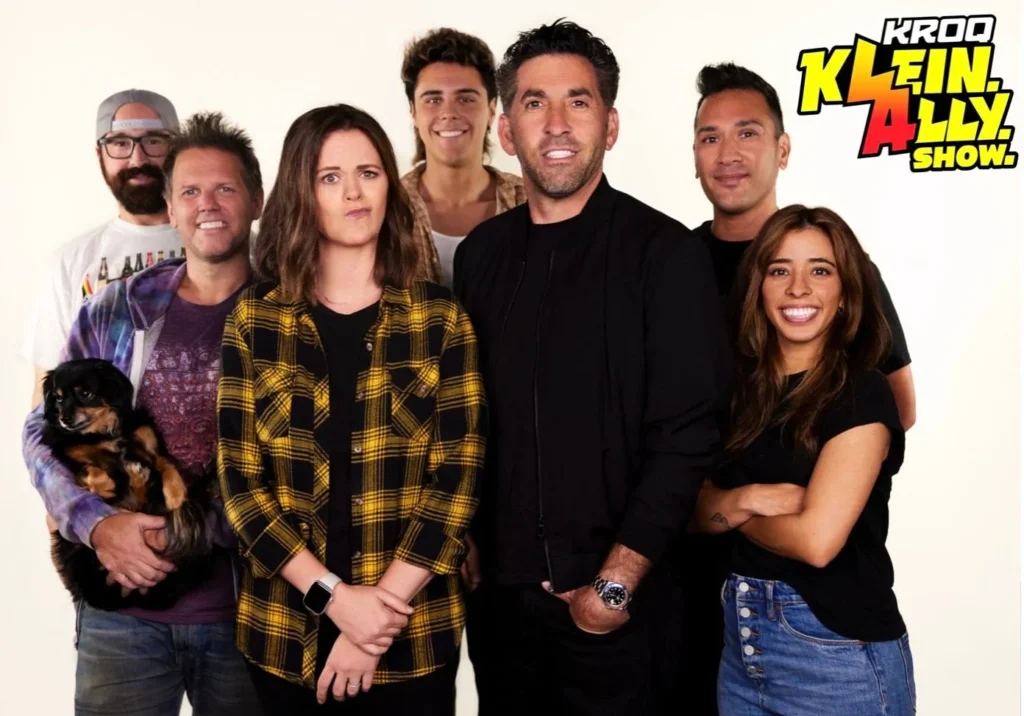
I spoke with Jeff Federman, Regional President / Market Manager, Chris Ebbott, SVP/Programming, and Klein and Ally, the KROQ morning show.
What I found was a surprisingly upbeat attitude.
I admitted to Federman that I had never sat in the Market Manager seat and that if I had, I would likely have thought at this time that my budget was blown for the entire year and maybe years to come, but that was not at all the case with him.
“The way we view the sales organization and our sales team is the same way that we view programming, where we’re a community service. Quite frankly, knowing that I can get a discount or I can get dollars off on products that I need today because I just lost them all yesterday in a fire is extremely important,” said Federman.
“Or that I can get some legal advice or some tax advice or insurance advice or my phone’s not working because I left it behind. Where’s the best place to go get a new one? It’s almost counterintuitive to what most people think.”
Federman gave me an example of how he had personally been impacted.
“I will give you a great example for myself. So, unfortunately, my son, who is 18, has been in a group chat with all of his, what he calls his boys, since third grade when they got their first phones. Fourteen lost their homes, so I have a bunch staying at my house.”
“I had to go out and buy mattresses. I know our biggest mattress guy here. I’ve known him for years, so I called and bought them from him. I said to them you got to be on the air; you need to change your message and let people know because it’s not just the people that lost their place; it’s the people who are taking them in that need.”
When it comes to on-air messaging, I asked Ebbott how he manages the tone and content. While the wildfires are somewhat unprecedented in scope, Ebbott said this is far from the first time the city has faced difficulty.
“Unfortunately, we’ve been through a lot in the last half of a decade. It really started pre-COVID, even here for us in Los Angeles, when Kobe (Bryant) died. That was a moment that affected the world, but so affected Los Angeles and our city. And so, unfortunately, I feel like we have some ways to deal with this,” Ebbott said.
“I think it’s always about reflecting the mood of your town, being a resource for your town and for the people who are your listeners. Our coverage here in Los Angeles was really led by KNX. I’m in awe of the job that they did, and they continue to do it in terms of keeping the community informed and up to date.”
Ebbott continued, “Radio still has that place in a society where nobody can do what we’re doing in real-time and over a medium that is so accessible to people at every moment in time.”
For the Klein/Ally Show on KROQ, it wasn’t their first time navigating rough waters.
“Unfortunately, this was not the first time we’ve been on the air when there’s been tragedy unfolding. This one, though, felt different because of the geography and everything else. It felt like we were in the middle of a literal firestorm,” said Klein.
“We don’t fool ourselves into believing that anyone is going to go let’s find out what KRock thinks about what’s happening. However, there is always the balance of providing information that’s useful to the public. But the reality is that we are people, we are real people, and we are reacting to each other and reacting to stuff as it’s happening in a very real and emotional way.”
“And sometimes that is through humor, not that the situation is funny, but that is how both of us cope in our own way with dealing with terrible times.”
Ally added, “What we can offer that’s different than a news station is our own personal experience and perspective. While some people might go to a news station to get updated on how things are happening in real-time, with us, they can also process their feelings in real-time with people with whom they feel they can relate. And having a little bit of a lightness as well, so that it doesn’t feel like it’s just total death, destruction, doom, and to feel that you’re listening to the morning show that you know and love.”
Federman’s responsibilities go beyond just sales and programming. Like many Los Angeles broadcasters, the cluster has transmission sites on Mt. Wilson.
“The firefighters and the first responders have been unbelievable. They ended up saving Mt. Wilson, and we were able to get gas up there. We powered down and went to our auxiliary in the overnights and saved it just to make sure. It turned out we got to gas up that next day, but all those things you just don’t think about are happening in real-time while the fires are still going,” said Federman.
Ebbott says now is the time for personalities to be genuine and authentic.
“I think it’s about genuineness. I think our stations here do a really exceptional job of having people on. You can’t tell somebody everything will be okay when you don’t know that it will be okay. That’s toxic behavior. We’re never going to do that.”
For Klein and Ally, the tone is important, as is knowing when to be a little more lighthearted.
“The situation is doom and gloom enough. Let’s be the escape that people could use. And we did get calls from first responders who were appreciative that we gave them something to actually laugh at,” said Klein. “But then you don’t want to come across as being cavalier. We’re human. And as the show’s going on, I’m getting texts from my wife, and she’s going, ‘I think we need to go,’ or ‘I think we need to pack up.’ And so it’s all, trying to do the most and really just be in the moment of that kind of emotion.
Ally added, “We did have to make game time decisions with what we felt was right at the moment. There were times when we did want to pivot away and just do a general conversation, a personal story that was unrelated, that could just lighten the mood, and then go back to it. We didn’t move away from things for too long, but we also wanted to provide people with a sense of normalcy from a listening perspective.”
“It is a delicate balance, and finding that right balance can be stressful. But what’s nice and what I love about radio is that you can hear from people immediately. The other part of that is what sets us apart from a news station: People can call us and talk to us, have real conversations about it in real-time, and literally process it together live.
Federman is grateful to his team both on the local and corporate level.
I appreciate the community and our team for everything they’ve done, and that’s all aspects of the team. It’s been all hands-in for everyone. Everybody on our corporate team, Susan (Larkin), David (Field), and Jeff Sottolano, all are like, what do you guys need? Yes, whatever you need, and that’s been incredible. We got support from everybody across the country .”
Barrett Media produces daily content on the music, news, and sports media industries. To stay updated, sign up for our newsletters and get the latest information delivered straight to your inbox.
This year, I didn’t go to the Consumer Electronics Show (CES) in Las Vegas, which took place earlier this month. I didn’t go last year, either, after years and years of dutifully heading to the convention right after New Year’s Day. Granted, nobody’s paying for me to cover the convention anymore, but I wouldn’t have wanted to cover it anyway.
Everybody in the media has been told that CES is a must-see, that the very future of everything (including communications) appears first at the event, and that if you want to know radio and TV’s future, you have to be there. Years ago, maybe, that was the case. Now, not so much. No, radio operators, you really don’t have to go to CES to divine radio’s future. You know what the future of radio is. Wandering around an exhibit hall filled with this year’s iteration of a flying car won’t change that.
There is a lesson to be learned for radio, and for other media and, really, for any business. Every year, CES has a “next big thing” on which attendees are urged to jump, and it’s implied that you’re seeing the future and if you wait to latch on, you’ll be left behind. The problem is, most of what you see and hear at CES isn’t at all what the future will be like, or it’s an overblown, overstated version of what’s coming next.
Remember 3D TV, the crown jewel of CES for at least three years straight? Or how smart speakers were going to take over the world? That’s the kind of thing CES has promoted since it morphed from a primarily TV-oriented show to an anything-goes event. And, let’s be honest, most of what’s shown and discussed at CES is either dead on arrival or going to be implemented in such a minor way that it won’t be critical to your business, or the general public.
Smart speakers weren’t the real story, it turned out; voice control has shown up everywhere, but being able to change channels on your TV by speaking into the remote or changing audio in the car with a voice command are really just making what we can already do a tiny bit easier. Nice, but not revolutionary, and when was the last time you downloaded a new skill to your Alexa device? (I’m not even going to ask how many of you bought 3D TVs.) The self-driving car, an annual CES favorite, is still too buggy to be consumer-grade, and the smart city – delivery drones, futuristic public transit, 5G everywhere to connect everything – is still a concept of a plan.
But, as I saw every year at the conference, your refrigerator and dishwasher now have WiFi, not that you asked for it.
And there it is. You didn’t ask for your appliances to connect to the internet. Not too many people trust their cars to drive themselves, and the stories of Teslas in “this is not intended for self-driving (wink wink)” mode crashing don’t inspire confidence. You didn’t buy a 3D TV because a) the 3D effect needed glasses to work and caused headaches, and b) there wasn’t any content in 3D. You can say that the wearable tech category is an exception, but most of that energy has been sucked up by the Apple Watch, which wasn’t unveiled at CES.
The bottom line is that CES is a festival of stuff nobody asked for and nobody really wants, other than the medical devices that really are significant advances and get ignored by the media coverage, which tends to really love robotic dogs and drones.
Nobody seems to pay much mind to what consumers want. It’s a race to create things because you can. Engineers and techies don’t know what the consumer wants, because they’re all racing to grab that sweet, sweet private equity cash. Who wants a WiFi-connected toaster or a Bluetooth recliner? What consumer need does that fill that isn’t already filled by boring analog methods? Does everything have to be digital?
Not really, and that’s a lesson for radio and the media in general. When you create content intended for maximum commercial impact, you need to find out if your audience wants it. Research helps, but it’s more than music tests; you need to be researching what the audience wants from you that it’s not getting now.
Otherwise, you get technology in search of a market, and radio stations that underperform, and an industry struggling as people vote with their credit cards — no, we don’t need more of the same old commercial-burdened music radio and stereotypical talk radio when Spotify and podcasts exist (both of which CES utterly missed).
The critical thing you need to know about consumer electronics that affect what you do is something you already know: the smartphone is the everything device. Your content is going to end up streaming on people’s iPhones, competing with a practically infinite array of content. That means you have to provide something better that people want.
You don’t need a convention to figure that out. Besides, we still haven’t gotten flying cars or jetpacks.
Barrett Media produces daily content on the music, news, and sports media industries. To stay updated, sign up for our newsletters and get the latest information delivered straight to your inbox.
Last Wednesday, Garrett Searight wrote a piece in Barrett Media about broadcaster concerns regarding the Nielsen PPM sample in Los Angeles due to the fires. The radio people Garrett interviewed questioned whether the Los Angeles PPM sample will reflect “accurate” listening to LA radio stations due to a lack of compliance by some of the sample.
I’m using the Nielsen term “compliance” in a tongue-in-cheek way because when you’re packing an emergency kit and realizing that you may return to ashes and embers rather than your family home, bringing along PPM watches is probably not a priority.
Per CalFire, the Palisades fire started on January 7, during the last week of the Holiday survey period. You’ve likely noticed that the Holiday measurement period is five weeks this year as every so often, Nielsen must extend it by a week so that the monthlies somewhat reflect their names. The January survey started on the 9th and as the entire radio industry seems to be aware, that date is also the start of the three-minute quarter-hour rule.
I could speculate about the potential effect of the fires and evacuations on the estimates for Holiday Week 5, January Week 1, and beyond. But speculation is just that and not worth my time to write about it nor your time to read it. I’ve been through some of these events during my rating service tenures and the better option is to suggest ways that you can evaluate the results after Nielsen releases them.
First, I think it’s incumbent on Nielsen to do some work on their own. The company should put together an industry presentation with broad results on Los Angeles audio usage and a comprehensive release with specific information. Sure, not everyone will like what Nielsen will report, but do we have any other options?
While I’ve written about the competition in the video space in the past, no true competition exists for Nielsen Audio today or in the immediate future. If you don’t like Nielsen, you don’t have many other options.
Here’s what I would expect from a Nielsen presentation:
Sample status by day and if households are out of the sample due to fires or evacuation, how many and where? How those homes will be replaced is not relevant now.
How did radio/audio do? And please don’t use the bogus “news/talk” format category that combines commercial and non-commercial radio stations. For example, KNX is in the “all news” category while KFI is “news/talk/information”. KPCC/LAist (public radio) is also “news/talk/information”, but KBLA is “talk/personality”. I don’t have specific information, but no doubt many music stations veered away from their standard formats as well.
Was more radio consumed at home than the norm? PPM is also used for out-of-home measurement for local television. Since radio is paying the bill as well, what did Nielsen see in the out-of-home TV data compared to radio usage?
Whatever Nielsen does, it won’t be presented as quickly as you’d prefer. This column has shown you the flexibility of the PPM Analysis Tool on a number of occasions and this is the time for you to take advantage of some of those features. Here’s where I would start if I were analyzing Los Angeles radio data to see the effect of the fire coverage on radio listening:
Use the “day by day” option in Analysis Tool. If you go to the “Trends” option, you’ll find a drop-down box next to the option for “Survey”. The menu defaults to “block”, but click on it and choose the “day” option. This gives you the estimates for each day of the survey. Note: if you choose less than the full week for the daypart, i.e. M-F 6A-7P, AT will not show estimates for the missing days, for this example Saturday and Sunday.
When you do this run, include “AVG Daily In-Tab” as one of your choices for “Estimates”. Now you’ll see how many panelists were in the sample on each day. If you compare the numbers for each day prior to the fires to the sample during the fires, you’ll get an idea of the effect on the sample.
In the Nielsen Audio Portal, you should have an option for the Nielsen Audio Analyzer, perhaps the company’s most poorly named tool. The Audio Analyzer doesn’t analyze any audio at all, but it does give you the option to find out your market definition. Once in it, click on the tab “Find Zips by Market” and using the drop-down menu under “Nielsen Radio Metro”, choose Los Angeles. The output will be a list of all the zip codes in the LA Metro.
Here’s where it gets interesting: if you export and save the output as a text file (not Excel format), you can paste it back into the Analyzer using the tab “Zip Code Detail” and then choose “Load Zip List”. Plug the list in and you should get the “city name” for the zip code as the initial list will only tell you the Nielsen geography name, for example, “Los Angeles CS Bal”. If you want to see the zips for Pacific Palisades, Malibu, or Altadena, you can find them this way.
Now go back to AT. If you choose “Geography”, a box will pop up and one option is Zip Codes. Click on it and you can choose the zips you wish to review from the list, but keep in mind that the sample size must be 30 or more. This can be interesting if you run a set of zips pre-fire and get results, but the system says “no” to your request once the fires started, people left, and the sample dropped off.
The fires are a tragedy for some and a huge story for those who live in the Los Angeles area not to mention something of interest for the rest of the country. Do your own analysis and Nielsen should be getting their presentations and releases ready now; the sooner we know how our medium was used, the better.