Last month, The Sports Animal in Tulsa Assistant PD and midday host Erik Gee announced he was leaving the station. He would later reveal he was headed to be Program Director at 92.1 The Ticket in Fayetteville, Arkansas and to work on their morning show. Now we know who will take his place on the air in Tulsa as the station has announced Cayden McFarland will now work with Pat Jones in middays.
McFadden is the Sports Director for KJRH Channel 2 in Tulsa and will now co-host The Pat Jones Show.
“So excited to join the Sports Animal and contribute to a show that’s become a mainstay in the Tulsa sports landscape,” McFarland posted on X. “Working with Pat is gonna be great fun. Looking forward to connecting with the listeners, too!”
Jones is a Hall of Fame member at Oklahoma, Arkansas and the Gator Bowl, he is a former Oklahoma State University head football coach and 11-year NFL coach with Miami and Oakland.
McFarland spent a year in news media before starting in sports in Abilene, TX in 2003. He spent four-and-a-half years in West Texas, the last four years, as Sports Director at KRBC-TV.
Join me in welcoming KJRH Channel 2 Sports Director, Cayden McFarland to The Sports Animal! Cayden will be hosting The Pat Jones Show from noon to 2pm each weekeday STARTING TODAY! @caydenmcpic.twitter.com/Spe5X90mlK
The Kansas City Chiefs honored KKFI’s Lisa Lopez-Galvan with a moment of silence last night (9/6) before their season opener against the Baltimore Ravens.
Lopez-Galven was killed in a mass shooting at the Chief’s Super Bowl victory celebration in February. The tribute included Lisa’s siblings, husband, children, and father.
She had hosted “Taste of Tejano” on KKFI since 2022.
The Chiefs said a moment of silence will not only be a chance to honor Lopez-Galven but all those impacted by the shooting. More than 30 people were injured in the incident at Union Station.
KFAN in Minneapolis has long enjoyed big ratings, serving as one of iHeartMedia’s best local sports radio stories. The Power Trip morning show in particular has had a ton to do with the station’s dominance.
But on Tuesday, Chris Hawkey, Cory Cove, and Paul ‘Meatsauce’ Lambert didn’t mince words. Minneapolis listeners learned, the trio are not happy with recent decisions by their corporate bosses.
As first reported by Bring Me The News, the morning team suggested corporate executives are trying to kill their show. A later start time, increased commercials during podcasts, and changes to the station’s music didn’t sit well with the show.
“It’s the beginning of the end,” said Chris Hawkey. “I’ll tell you why. They took away our music, and they’re playing 700,000 commercials during each podcast.”
Hawkey continued by delivering his strongest commentary: “I think they’re trying to kill us so they don’t have to pay us anymore. And I mean that. I’m airing my dirty laundry on the air. I think that’s what’s happening. I’ve been puzzled about this since they talked to us about it. I think they’re trying to fire us without having to fire us because if they fire us they have to give us severance pay, but if they just drive our ratings into the ground then they don’t have to fire us.”
The trio expressed frustration with a later start time of 6am, suggesting that it was financially motivated. Cory Cove though said of the decision that they had a choice and when a 6am start time was offered he voted in favor of it. Lambert and Hawkey didn’t sound convinced that they had a lot of say in the matter. On Wednesday though, the show was back on at 5:30am CT. Program Director Chad Abbott was credited for making it happen.
“We’re back on the air at 5:30, look at us, here we are,” said Hawkey. “We had some discussions and it worked out just fine, right? Did you guys have any discussions or was it just me?” Cove confirmed he spoke with management too, leading Hawkey to follow up: “Props to [KFAN Program Director Chad Abbott] for coming to our defense yesterday. Thank you, Chad, for being our guy. He’s always our guy. I like Chad.”
Another area of contention for the show were increased commercials inside the station’s podcasts. Cove said, “There are indiscriminate breaks. It’s not like the commercial breaks for the podcasts happen when we throw it to break. It’s just thrown indiscriminately anywhere. People are going ‘it’s hard to listen to initials when halfway through the question you go on a :60 commercial break. By the time you come back I forget what the clues were. We have nothing to do with that.”
KFAN’s VP of Digital Sales AJ Mansour weighed in on the issue on X. He told the station’s followers he was aware of the issue, and working to fix it.
Still working on the increased quantity, but they should at least be "orderly" now, at the proper break points. Please let me know if you're still getting interrupted, mid sentence ads popping up. https://t.co/b2GZzoq7PA
Hawkey made it clear he’s not satisfied with the company’s approach, stating emphatically “I would rather burn this building to the ground and stand in the middle of it as it burns than have that happen. I hate it. They’re trying to kill my baby.”
I was on LinkedIn the other day and saw where a Market Manager for a large radio company announced they had gotten a ‘promotion.’ As I read further into the details, it appears this person was celebrating as the company they worked for made them not just a local Market Manager but a Regional Market Manager.
Below the note announcing the new role, many colleagues weighed in offering congratulations and telling them how excited they were that they had been recognized by the company for all their hard work and effort.
I laughed.
C’mon. If you have been around this business for any length of time, you know what really happened here.
Somebody else who was in that position and lived in the market lost their job. Rather than spending the money to replace the person in the market, the company simply bumped someone else up with a small raise and ‘promoted’ them to being a Regional Market Manager.
I see this happen with morning shows a lot as well. Not that long ago, a show that really doesn’t do that great in its home market, was added to not one but two other markets.
The hosts made a video and celebrated their unbelievable accomplishment of being asked by their company to do a show in other markets. They are no longer just a local show, they’re now a syndicated show.
I just wish it wasn’t obviously being done so they didn’t have to pay a show in the other market and the large media company can say they have a ‘local’ show in the market.
Look, this is the business these days and we all understand that things are being done to cut corners and costs wherever possible.
The issue here is fairly obvious. The Market Manager who took on the extra responsibilities will now be less of a manager to the home market and will eventually only travel to the new market when they have to. If you have ever been in that position, you know to truly do the job the right way, you can’t focus on more than one market at a time.
I have been in this position before and while it was nice the company recognized I was willing to take on more responsibilities, I know that I didn’t treat the markets equally. I didn’t set out to do it that way, it just is what happens, it’s only natural.
The non-local morning or afternoon show is usually good until the first time one of the hosts mispronounces a word that nobody in that market would ever pronounce incorrectly or talks about a subject they think is important but really is not something that market cares about.
I once had a company require my station in St. Louis to use a traffic reporter from Salt Lake City, Utah. The reporter was great, very professional, always on time, had a great personality on the air, everything you would want from someone working on your station. With the one slight exception that she would mispronounce a street or city name at least once every report. When someone is doing a report that is supposed to be a service to the listener calls Belleville not by its correct pronunciation of ‘BELL-ville’, but instead says ‘BELLY-ville’ you can no longer hide that this person isn’t local to the market.
Another ‘trick’ radio companies like to do is localize a national show. iHeartMedia is famous for this and I often wonder if there are people out there who really think Bobby Bones or another national host is really broadcasting from their market because of one bumper per hour that has them saying the station call letters.
I can understand if this stuff is done in a smaller market where a company may not be able to find anyone who can entertain the audience and do endorsement ads that need to be done for advertisers. Frankly, it just shouldn’t happen in bigger markets if the company is planning on having real success. My fear is these companies own so many stations they can’t figure out what to do with that the fact of the matter is, they don’t have a plan for real success.
Look, not every promotion in radio is this way, but it is hard to argue that most of them these days are designed more to change the bottom line than they are to reward someone. Leadership is crucial to the success of our industry. Faking it by having someone hundreds of miles away getting a ‘promotion’ simply to save money isn’t doing anyone any favors.
At the BNM News Summit in Washington, D.C. this week, there were several really strong sessions, but one in particular I found fascinating was Futuri CEO Daniel Anstandig’s keynote presentation on AI. It was eye-opening to really think about how much people are using AI without knowing they are using it.
Anstandig talked about all of the various ways Futuri is helping broadcasters with AI in the newsrooms, in sales and in programming. He played a clip from Mark Cuban which, in summary, said there are two kinds of businesses, the ones that are using and embracing AI and ones that are being left in the dust.
Watch for the videos to be released from the BNM Summit and make sure to check out Daniel Anstandig’s presentation. AI already blows people’s minds, just wait to see what happens from here.
Last Friday, Derek Futterman posted his feature on NFL analyst Greg Olsen. Whatever you think about him as a broadcaster, he has handled the Tom Brady/Dropped Down to the Second Team deal about as well as anyone can handle it. He understands it, but that doesn’t mean he has to like it or want it to continue for very long. He has been very consistent in his sentiments in that he will still go out there and do the best job that he can because he wants that seat back whether it’s at FOX Sports or somewhere else.
Olsen said to Derek, “I want to call the games that everybody’s tuning in to watch and all eyes are on the game and you’re the voice that weaves them in and out of super complex situations, super interesting, high-stress, kind of all-in environments and situations. I love that. Last year calling that run of playoff games that we had was awesome. I didn’t want it to end. I wish we could have done another week.”
We have hit the 60-day countdown to the “Most Important Election of our Lives!”
Too cliche? Of course. Every election is billed that way. But we are now in crunch time. Labor Day Weekend is in the rearview mirror; any remaining summer vacations are over, the kids are back in school, and people are looking for information and analysis on the upcoming Presidential election between Donald Trump, who everyone knows everything about, and Kamala Harris, who most people don’t know anything about.
That, in and of itself, makes this election cycle unique because one of the major candidates is a relative unknown to the American voting public.
As a News Talk Radio host, remember that there will be a new audience sampling your show, possibly for the first time, over the next two months. There will be topics and stories you’ve been covering for months, and while your P1’s will be fully aware of what you’re discussing, remember there will be a growing percentage of your audience that will need a reset on the topic.
Oh, and that’s another thing. Reset. Reset. And reset some more.
If you’re talking to a local candidate, don’t just reset their name every 3-4 minutes; reset what they’re running for and, if needed, what part of your listening audience that’s relevant to. “Bob Smith, running for Congress in District 3, which covers the Such-and-Such valley for those East of Highway 75.”
It takes all of 5 seconds, and it makes the audience much more engaged, rather than just hearing a candidate drone on, not knowing if this person is relevant to them in any meaningful way.
Now, as for the candidates themselves, never overdo it. There’s a fine line between being informational and being a car wash for candidates to get free air time and deliver their same old, tired talking points.
Be strategic in who you book and when you book them. And as always with most (not all) candidates, less is more. Most are inherently uninteresting. If you’re looking at candidates as just a chance to “kill 10 minutes” or “book a guest”, you’re doing it wrong.
They need to bring something of value to the audience, and then it’s your job to engage them and bring out the best in them as guests. In many ways, these can be your most challenging interviews, even though they are plentiful during the election season.
And never feel like you need to give them your entire segment. The mindset of, “I’ll keep this guest to the break” is confounding. Why? If they’ve said what you feel is informative, mildly entertaining and insightful, why go any further with the conversation?
If you start a conversation with someone in a restaurant or bar, and they start to bore you, do you keep it going? I don’t. I’m out. So why make our audience suffer because we have some radio clock in our heads or staring us in the face that, by the way, our audience doesn’t give a rip about? They just want to be informed and entertained.
But then, when you do get compelling candidates, highlight them. Run promos on your station with their sound bites. Promote your conversation with them digitally with podcast promotions, clips from the interview, and more. Make it all work and weave together.
These next 60 days are your opportunity to shine in your market and make an impact on radio in your community that may not come around for another couple of years. Embrace it, have fun with it, keep it moving, and, yes, reset.
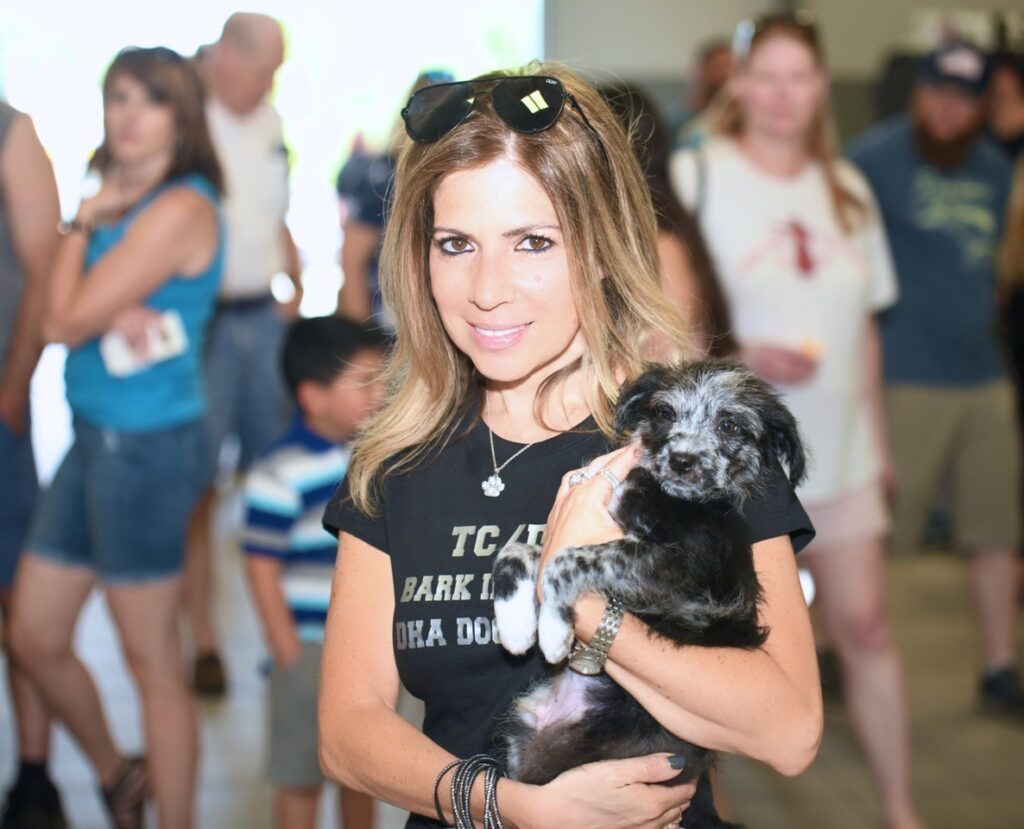
Terrie Carr loves dogs. For many years, TC has integrated her enthusiasm for canines into her actual work as PD/MD/midday talent at Beasley Rocker WDHA/Morristown, NJ, via her “Rock ‘n’ Ruff” initiative, which has become a big part of her on-air brand.
At its core, “Rock ‘n’ Ruff” is a straight-up campaign to get shelter dogs adopted, but it’s grown to become so much more. Carr started it during her first go-around at WDHA, mentioning briefly that she is in her second term at the station, having left for five years in between. “I got involved with a local shelter called Barkfest, but when I heard about the number of dogs being euthanized locally, that’s what sparked the realization that I needed to figure out a way to use my voice to help out,” she says.
While “Rock ‘n’ Ruff” started before the advent of social media, Carr recognized she had a way to literally broadcast her needs to the masses. “I was contacting local shelters myself, but then I started getting the station involved in doing events with them,” says Carr. “It wasn’t difficult to get shelters – I just went on the air and asked them to contact me, and I’d get ten calls on the request line immediately.”
“Rock ‘n’ Ruff” has morphed into a three-pronged approach: First, highlight a shelter on the air and get a sponsor to validate the airtime; second, get listeners to a website so they can actually see shelter dogs in need of adoption; and, finally, third, get listeners involved in this “hyper-brand” so they physically go out to an adoption event or some other R’n’R-affiliated gathering.
“It’s grown into so much more than my initial work,” says Carr, who outlines the current weekly process of having a shelter bring dogs to the station, where she talks about it on-air and then has them film a video with some of the dogs to post online.
Photo Credit: Joe Frazz Photography
“Sponsors love to be associated with it, and we’ve benefited from the growth in the pet industry to be able to get sponsors like companies that make pet clothes or offer pet insurance,” she says. Beyond that, non-pet-oriented companies also like being associated with the brand. “We do ‘Yappy Hours’ with major distributors, liquor companies, and breweries,” Terrie says. “A lot of restaurants and bars are dog-friendly – I did a National Dog Day event at an upscale place with a patio that offered a full dog menu that day and invited listeners to come out and dine with their dogs.”
One thing Carr loves about “Rock ‘n’ Ruff” is how rewarding it is to establish, strengthen, and expand the community around shelters – and her station. “How do people remember your station – PPM? Diary?” she asks. “There’s no better way than to have people look at their animal and remember every time how they got it. One guy won Staind tickets from us, but his biggest comment to us when he won was how he adopted his dog from “Rock ‘n’ Ruff.” I don’t think I’ve ever gotten a comment about the station where they don’t mention “Rock ‘n’ Ruff.’”
While the campaign centers around dogs, other animals can get involved. Carr mentions that cats, bunnies, rats, chinchillas, and other adoptable pets have appeared at events. “The program really is about helping our local community and seeing what we can do for the people who are giving so much of themselves to working in these animal shelters,” she says. It also helps bond people to pets… and also to WDHA.
Terrie also wants to dispel the myths around shelter animals. “Just because a dog is from a shelter, it doesn’t mean something’s wrong with him,” she adamantly states. “Dogs end up in shelters through no fault of their own – people get a new baby, get divorced, have to give up the animal because of a move…. These dogs don’t have behavioral issues and aren’t sick, and older dogs can live for a long time. You can always find someone in your local shelter,” she says, calling out that people looking for particular dogs can find them at breed-specific shelters and rescues.
“There are so many win-wins for any brand who does something like this,” says Carr, calling back to her comment about the attachment to the station and the initiative when people look at their R’n’R-adopted dog and remember how they got it. “I’ve had people who never thought of adopting a dog, but they heard our Rock ‘n’ Ruff program and found out about our dogs, so they got one.”
Next week: Carr talks about the multiple sub-brands WDHA has built on “Rock ‘n’ Ruff” and gives advice on how to set up a program like it at other stations.
This week, Barrett Media is all about the BNM Summit. While excellent information was presented on how to hunt for political dollars and growing revenue in news/talk, there are some basic client categories we must go vertical in to maximize revenue. And these clients are not going to tell you they only want 18–34-year-olds or 25-54! They want what you have! If you sell for a news or news/talk radio station, then you are selling access to 55-74+ year olds. Here are the TOP 10 ideal advertising categories that cater to the lifestyle, needs, and preferences of your listeners:
Healthcare Providers and Services
Hospitals, clinics, Medicare plans, pharmaceutical companies, hearing aids, vision care, dental services, cancer specialists, knee and hip replacement orthopedics, and senior living facilities.
Why: Health is a top concern for this demo, and they are often looking for reliable or expert medical information and services. Caregivers in the age range may also be looking for help.
Financial Services
Retirement planners, wealth management firms, life insurance, reverse mortgages, bank trust departments, and tax advisors.
Why: Many in this age range are either retired or planning for retirement, making them prime candidates for financial services related to savings, investments, and managing retirement income.
Travel and Leisure
Cruises, vacation tours, RV dealerships, golf courses, senior travel packages, local theatre, and arts and cultural special events.
Why: This age group often has more free time and disposable income to spend on travel and leisure, making it a prime target for vacation and recreational experiences.
Automotive
Car dealerships (with an emphasis on comfort, safety, and luxury), repair services, and aftermarket providers who specialize in mobility solutions (like car modifications for seniors). Also, ride share and mass transit.
Why: Older adults often buy vehicles that are known for reliability, spaciousness, and safety records. They may also invest in maintenance contracts for cars and use mass transit to get around.
Home Improvement and Security
Home security systems, solar energy companies, roofing, remodeling services, and home maintenance companies.
Why: Many 55–74+ year-olds are homeowners looking to upgrade or make their homes safer, economical, and more comfortable, especially as they age.
Pharmaceutical and Over-the-Counter Health Products
Medications for chronic conditions (e.g., heart health, arthritis), supplements, pain relief products, and mobility aids.
Why: This age group tends to spend more on health-related products, especially over-the-counter solutions for age-related conditions.
Legal Services
Estate planning, wills and trusts, elder law, and Medicare/Medicaid advice.
Why: Legal services related to estate planning, long-term care, and retirement legalities are crucial for this demographic.
Hobbies and Entertainment
Sports equipment (golf, fishing), gardening, arts and crafts, theater and concerts, books, and online education.
Why: As retirees or individuals nearing retirement, many in this age group focus on hobbies and personal enrichment.
Home Healthcare and Personal Services
In-home care providers, meal delivery services, health monitoring devices, and mobility aids.
Why: Older adults may require assistance with day-to-day tasks or health needs, making these services highly relevant. Caregivers may also be seeking alternative options.
Local Businesses
Restaurants (especially fine dining, casual, or those with senior specials), grocery stores, retail, and community services.
Why: This demographic often prefers to support local businesses, not chains, that offer convenience, quality, and familiarity. If a local business slogan focuses on longevity, odds are the 55-74+ year old knows the business and will go out of their way to support it.
Master these Top 10 categories to effectively tap into the lucrative 55-74+ year-old market, ensuring your station remains relevant!
Country Radio is alive and doing very well in Des Moines, Iowa, with Cumulus Country KHKI (Nash 97.3) enjoying ratings success that consistently finds it at or near the top of the market. I caught up with OM Chad Taylor and PD Andrew “Danger” Vonahnen to pick their brains on the keys to success.
KHKI has been in the format since 1993. It was originally known as “The Hawk 97.3,” a reference to the University of Iowa Hawkeyes, before landing on “Nash 97.3” in 2013.
Danger attributes a huge part of the success to the stations on air crew, which have, in most cases, been with the station a long time. “We come on the air with a positive attitude,” Danger said. “We have a lot of talent on the station that goes back several years.”
Danger and his partner Lindsay host mornings, “We’ve been doing that show 14 years, Kim Chase (middays) has been on the station 25 years, and Tim White, who does afternoons, has been on the station several years and even longer in the market, said Danger.
“We have a team of seasoned veterans that really do enjoy getting out in the market and meeting people.”
Taylor added, “Danger sweats the small stuff. He is very meticulous about everything. He’s in the building at 5 am and sometimes doesn’t leave until 6 pm. I think that plays a big role in his success, too.”
Country music can be cyclical, and most agree that it is now in a good place. KHKI doesn’t shy away from leading on new music. Taylor said, “Danger is not afraid to step out on new music or artists that he believes in. A great example would be Jelly Roll, who Nash was early on.”
Being right in the middle of the Midwest, I asked how Nash listeners react to pop crossovers like Post Malone. “It depends on the band, but the majority of the fans are positive, and they enjoy it. They do not seem to mind the crossover,” said Danger.
Speaking specifically of Post Malone, Danger added, “It seems like Post Malone and his attitude, the music, all of it has really seemed to stick. It seems like he wants to be a part of Country music. Country music fans have welcomed him in return.”
Taylor has a juggling act with heritage Country KJJY (Iowa’s Country Station) down the hall. Crediting Danger with making sure that the two don’t “cross-pollinate.” “We make sure that the meat and potatoes of KJJY is the 90s Country and the early 2000s Country. We don’t venture into the new space much, if at all, so there is a great separation there.
Danger added, “We really wanted to play off the heritage of KJJY by positioning as ‘Iowa’s Country Station.’ Reminding listeners the first time you heard Garth Brooks was on the station. When you went to see George Strait at an arena that isn’t here anymore, you won your tickets from KJJY. We want people who fell in love with a song you heard on KJJY to know that it is still on the same station.”
Taylor credits people like recently retired Cumulus Head of Country Programming Charlie Cook and Bruce Gilbert for a team effort in giving both stations a lane to succeed.
Taylor added, “They are there when you need them, but there is not a lot of push down. They really let you get in there and make this a central Iowa radio station. They leave the creative control in your hands because you know the market better than anyone.”
Taylor says that the “overall vibe” in the building contributes to the success. “When you sit in a promotion meeting, and you mention an appearance, maybe just to go out and hand out some t-shirts and shake some hands, and everybody in the room raises their hand to say how can I help.”
“Our people were born and raised here and are very protective of the brands.” Taylor added, “They want to do right by the brands and the listeners.
Taylor credits Danger with coaching and bringing out the best in his talent, “I don’t think there is a better talent coach. In fact, he is so good I will call him into my (sister) KGGO aircheck sessions. With Danger, talent actually looks forward to their aircheck. He does them weekly, and they are very collaborative.”
“The station is special. For me, as an OM, Danger makes me look good. I’ll get texts when the ratings come out saying great job with the Country stations, and I tell them it’s really Danger.
Listen to KHKI here. Reach out to Danger here and Taylor here.
The Lex & Terry Radio Network serves markets in Springfield, Missouri; Fargo, North Dakota; Monroe, Louisiana; Jacksonville, Florida; Tallahassee, Florida; Walhalla, North Dakota; Sioux Falls, South Dakota; Pensacola, Florida; Panama City Beach, Florida; Mobile, Alabama; and the Huntington, West Virginia-Ashland, Kentucky-Ironton, Ohio area, as well as Lawton/Duncan, Oklahoma.
In addition to their traditional radio show, Lex and Terry also do a show podcast. Terry does two individual podcasts, and both have their own side hustles. Additional members of the show include Dee Reed, who is both on-air and Executive Producer of the show, Sara D. Morgan, and Tyler “Taint” Baker, their on-the-street guy. Both Sara and Dee also have their own individual podcasts.
“It’s a lot to keep track of and maintain focus. It continues to amaze me how seamlessly everyone’s thought patterns align when we engage with a certain piece of content; it seems like we all instinctively know what to do with it,” explains Lex. “The show has always stood out for being uninhibited and different from others due to its fearless approach while still trying to respect the boundaries of good taste that the FCC enforces. However, our subscription-based after show, ‘Sudden Death,’ knows no boundaries as we prepare to enter year 15. We were among the first to have such a platform, or to podcast, for that matter. Collectively (as a team), we handle all aspects of the show because we are our own business, so, between us all, it gets done, from show production, podcasting, streaming, content creation, affiliate relations, etc. I’m in between podcasts for the moment,” says Lex. “Terry has two great podcasts going right now. Sarah and Dee have their own, with Sarah having a thriving ‘Only Fans’ and Dee manning his own DJ company.”
Lex and Terry came together by accident, according to Terry. “Lex and I met at a party in Los Angeles. Lex was some bigwig at Album Network, and I had recently got out of radio to do standup and some acting. My old Program Director from my KTYD Santa Barbara days (Roger Mayer) thought Lex and I should meet. We hit it off at the party and stayed in touch. Lex left Album Network to get back into programming in Jacksonville. It turns out I was a horrible comedian/actor, and Lex was looking for a new morning host, so why not me? I took the job, and Lex filled in as co-host while we searched for one. The GM at WFYV in Jacksonville hated me and, after the first show, threatened to send me back to Los Angeles. Needless to say, the search for my co-host was off. While I was waiting to get fired, we started to get ratings, and here we are today.”
How did the additional characters on the show come about and develop? “Our theory has been to never force anything,” says Terry. “We know if we’re patient enough, each character of the show will develop over time. Only then will we exploit their vulnerabilities for financial gain. We have a much smaller crew now, but we feel that this is our best yet. Dee Reed does everything and has a huge on-air role. Sarah B. Morgan won a job as our phone screener and has turned that into a big on-air role, and Taint is our go-to guy for street segments.”
“As far as music goes on the show, most of our longtime affiliates, some of which have been around for over 20 years, are prominent rock music heritage stations that have chosen to continue airing all ‘Lex & Terry’ content in the morning,” says Lex. “With the people meter, we developed a music clock that programmers who want music can use with the show to customize to their preferences.”
“When it comes to politics, we made the decision many years ago to stay away from it,” adds Terry. “We’ve never been interested in that toxic world. Our show is all about our relationship with our audience, and we like them too much to watch them fight.”
“The fans of our show are truly a large part of it,” explains Lex. “They have complete access to us, including our new 24-hour hotline, where they can call in and express their thoughts on anything, even if it’s personal. We’ve never shied away from that. They resonate with the show’s content because they come from all walks of life, from society’s outcasts to doctors, lawyers, and those with master’s degrees and PhDs. Regardless of their backgrounds, they share a strong connection to what we do. What’s the secret behind that connection, you ask? We couldn’t tell you; it’s just always been there.”
“As far prepping for a national show, we’ve all prepared in different ways over the years, but it turns out that a 20-hour soft prep before the next show is what really makes a difference,” says Lex. “There’s a lot of texting among us to formulate the daily plan, and we move forward with it. I would say we’ve conditioned our audience over the years to accept a slightly rougher brand of radio than most provide during the morning drive. However, we’ve never seen it as rough—just real. We’ve never viewed our audience as national, just ours, and they appreciate the way we deliver content.”
“One of the things that move the needle for us the most is when we send Taint and Dee out for street shenanigans like ‘Spread My Mom,’ where Taint pretends to have the ashes from his recently deceased mother and asks to spread them at her favorite donut shop, car dealership, etc. Dee does the ‘Paging Game,’ where we do our best to get dirty-sounding names paged over the intercom. We also generate a lot of passion from our listeners with our everyday topics and our conflicting opinions on them.”
“One of our big passion projects for the show is happening in a month in Springfield, Missouri, where Q102 is hosting the eighth annual ‘Lex & Terry Subpar Golf Classic,’” says Lex. “It has just sold out for the eighth consecutive year, and it’s essentially a giant golf party. It’s one of those events where everyone wants to win, but at the end of the day, nobody really cares who won because we all enjoy a fantastic time together. Later this year, we’ll be in Pensacola with friends at TK 101, and we have a new soirée planned with Chef Panini Pete, who owns several restaurants in the area, one of which has been featured on the Food Channel with Guy Fieri. And in early 2025, we’ll be heading off to Punta Cana in the Dominican Republic with friends and listeners for a party that was spearheaded by our producer, Dee Reed.”
“When it comes to staying relevant and engaging a younger audience, I believe we have been able to by just being ourselves,” says Terry. “Age doesn’t matter when you’re talking about embarrassing things that happened to you. Our relationship with our audience is something I’ve never experienced in this industry, and it will be the thing I miss the most when we decide we no longer want to do it. It’s very special, and we’ve earned their love and trust over the years. We are constantly getting calls from new listeners of all ages who buy-in for that very reason.” Terry adds, “We LOVE radio and the immediacy and the ability to connect with people in real-time. Yes, the industry changes so quickly now, but the most important parts are still the same.”
When the topic of AI use in the industry comes up, Lex and Terry have no issues with it. “We have what we call the fifth Beatle on the show,” explains Lex. “His name is Tyler Baker, but everyone who listens to the show knows him as Taint. He is musically talented and has been using his skills along with AI to create some pretty cool musical intros for segments that are done in an awesome way. AI definitely enhances his abilities, but he also enhances the AI, if that makes sense. Other than that, we believe AI would only polish up our show, which could ultimately lead to its downfall.”
It’s hard to imagine at this point that any topic from one of the team members completely blows everyone’s mind and changes the course of the show, but it happens. “What a great topic,” says Terry. “I say this because this is something we strive for every day. We all lead such different lives and are at different stages of life, so our daily experiences lead to so much humor on the show. Lately, it’s Sarah’s sex life. She’s newly single, and she’s out there in the streets enjoying her newfound freedom. The stories make Lex and I happy we’re not her father.”
As far as listening to other shows and talent, other than occasionally checking in on Howard, they really don’t, explains Lex. “Everything else is corporate and homogenized. I spend most of the day listening back to our Free App on iPhone and Google Play (shameless plug) but it’s true. I like to hear what we sound like compared to others. After all of these years, I still choose us.”
And the one song that completely describes the ‘Lex and Terry’ show, “It’s the same song I want played at my funeral,” says Terry. “The Pretender by Jackson Browne.”
Lex chimes in, “One other thing. I can’t tell you how much we appreciate our audience, our fine employees, Program Directors, Sales execs, and GMs that go out and sell this show with pride. We know we are something you have to sell with passion, and they do. In turn, we do anything they ask in the form of voicing promos, ads, and personal touch with clients. All of the aforementioned make this job extremely gratifying.”
Ahead of the NBC Sports prime-time broadcast of Sunday Night Football during the NFL season, Maria Taylor is situated within the network studios for the preceding slate of games. As the host of Football Night in America, the most-watched weekly studio show in sports since its debut in 2006, she has a distinct responsibility to keep viewers invested and aware of occurrences around the league leading into the signature matchup. The program has a large cast that is dispersed at the studio and live from the site of the game but nonetheless remains collectively rooted on the gridiron.
NBC’s Football Night in America analyzes completed games while previewing the prime-time showdown about to ensue. Throughout the day, Taylor makes observations and listens to what her colleagues have to say in order to align them for success on the studio show.
“It’s the production meeting, it’s everyone being in the same room,” Taylor said. “We’re eating meals together, we’re talking together [and] we’re feeling each other out. That is a huge part of [it] so that when we get into the studio and the game’s ending suddenly, we can remember what a guy was hyped about or excited about or was talking about during the game.”
Taylor has an array of colleagues with varying experience, all of whom bring different viewpoints and contribute to insightful, salient conversations. Devin McCourty, Chris Simms and Jason Garrett all bring tangible NFL experience and are able to simplify things for the audience. Taylor describes herself as being akin to a point guard in her role, a characterization encompassing her placing metaphorical building blocks to enable engaging discussion.
“The setups are definitely when you know that a person is head-over-heels in love with one aspect of the game, I don’t shy away from making sure that I’m giving them a shot at talking about that thing that they love,” Taylor said. “That’s very important, and then even sometimes they feed off of each other, great.”
Within their conversations on Football Night in America, Taylor tries to ensure that she can candidly express her personality and intersperses her opinions as well. Demonstrating such is something she does not force, instead trying to convey a natural, welcoming milieu to the viewers as if they were conversing in their living room.
“I always have viewed television as just like it might be a slightly more amped up version of me, but it is me,” Taylor said. “I do believe that the audience can tell when you’re faking, and that’s the last thing you want to do.”
Taylor is entering her third season as the host of Football Night in America after initially joining NBC Sports in 2021. The show is an entity she feels is distinctive and precedes a sports property that has rendered itself appointment viewing. In fact, Sunday Night Football averaged 21.4 million viewers last season, indicative of an 8% year-over-year increase, and also finished as the No. 1 show in prime-time television in all key metrics for a 13th consecutive year. Taylor recognizes the privilege and responsibility preceding the broadcast and feels that the program consistently delivers stellar information, analysis and storytelling.
“We’re the only show that really does get to comment on every single game that happens on Sunday and preview the one game that nobody has seen yet,” Taylor said. “I think that’s a unique space to operate in, but it’s the first time that you’re getting analysts to dive into a game, and it is a split-second reaction, so it’s like instant reaction that you’re seeing and all the highlights that are on Twitter and everything like that, so I think that that’s unique.”
NBCUniversal acquired broadcasting rights to the Big Ten Conference under a seven-year deal with the entity and started presenting prime time coverage on Saturday nights last season. Preceding the call of the game featuring the lead Big Ten Saturday Night broadcast team, Taylor is in the NBC Sports studios hosting Big Ten College Countdown.
“It’s like extracurricular fun for me – I love talking about college as well, and I’ve watched every game, I would say, even before we got the Big Ten back, so I was ready when it was time,” Taylor explained, “and obviously the only thing that’s really changed is now the playoff format and the idea of transfers, so you got to spend a little bit more time getting to know rosters as the season starts because a lot of things have changed.”
Taylor attended the University of Georgia under an athletic scholarship for her abilities in volleyball and basketball, balancing both while studying broadcast news. Damon Evans, former Georgia athletic director, served as a mentor and helped her land a job as a production assistant for International Sports Properties. Shortly after her time on the local level, which coincided with earning a master’s degree in business, Taylor was hired by ESPN as a college analyst and reporter in 2014. Upon joining the company full time, she continued sideline reporting for games on SEC Network and was named to the role for Saturday Night Football on ABC three years later.
“You’re kind of like the first line of defense,” Taylor said of sideline reporting. “I always say you’re in the trenches when you’re a reporter, and it’s not the most glamorous job and people don’t always give sideline reporters the credit that they probably deserve, but that’s where I kind of earned my broadcasting chops.”
While Taylor appeared on ESPN, she also worked across studio programming in reporting and hosting roles, some of which included College GameDay and NBA Countdown. Prior to the expiration of Taylor’s contract at ESPN, NBA Countdown had been slated to serve as the pregame show for the 2020 NBA Finals instead of The Jump, which was hosted by Rachel Nichols.
Shortly thereafter, a conversation took place in which Nichols suggested that ESPN should “go for it” if it wanted to give Taylor more things to do because of what she called a “crappy longtime record on diversity.” Within the conversation, Nichols stated that ESPN would not find those purported ventures for Taylor from her or in “taking my thing away.” A recording of the discussion, which took place with Adam Mendelsohn, an advisor for LeBron James and Rich Paul, was leaked one year later, captured by a video camera that was on in Nichols’ hotel room and connected to ESPN servers.
Taylor and ESPN were unable to reach a contract extension later in the month, leading to her departure from the company. Following the resolution, she subsequently agreed to a deal with NBC Sports and made her debut from the Olympic Games in Tokyo, Japan, which were played one year later due to the global pandemic.
One reason Taylor decided to join the NBCUniversal division was to continue appearing on marquee events while also having time off. Up until that point, she estimated working for about a decade without any time to rest, and she was seeking to reestablish balance in her life. The respite allowed Taylor to go through IVF and pregnancy to have her son earlier in the year, after which she was on maternity leave.
“I remember having a conversation with Molly Solomon and Fred Gaudelli at the time, and they were like, ‘We want that for you. We want you to have a family,’” Taylor recalled. “It was a conversation about the whole person. It wasn’t just about broadcasting. ‘Hey, you’re a great fit here and [so on].’ I could tell that NBC cared about me as a person and who I wanted to be as a wife and a mother, and they have supported it every step of the way.”
Taylor returned from maternity leave this summer to work as the late-night host during the Olympic Games Paris 2024, representing her third time being assigned to NBCUniversal coverage. Broadcasting in the shadow of the Eiffel Tower, she had the chance to converse with athletes, coaches and families. Taylor was part of the Opening Ceremony, which featured a boat parade down the River Seine with athletes representing 206 countries, an inimitable display leading into the two-week event.
“I know it was raining, but to be on the bottom of the boat, and you could just see like a Joel Embiid and LeBron James and literally everyone’s sitting down because no one can stand because they’re 7 feet tall and the boat’s not big enough for everyone,” Taylor recalled, “but it’s like these stories you couldn’t even imagine in your wildest dreams and you’re watching them play out in front of you – and that was the first day.”
Before the start of the Olympic Games, NBCUniversal announced that it had agreed to an 11-year media rights deal with the NBA to broadcast games starting in the 2025-26 season. The company will bring back the NBA on NBC property with exclusive doubleheaders, the NBA All-Star Game, six Conference Finals series and broadcasts of the WNBA and select USA Basketball men’s and women’s action.
“Everything that’s happening with sports expanding at NBC is like a beautiful thing,” Taylor said. “It was amazing to hear that Big Ten was coming into the NBC fold and to take part in that, and I think, yeah, if my company calls on me to work in the NBA space, sign me up.”
Across her hosting obligations, Taylor feels that she takes an approach of going with the flow and brings shrewd intellect imbued with comedic elements. There is a comfort level she has in making jokes and responding to some of the analysis, even if her colleagues do not foresee it coming. Through it all, she ensures not to forsake her authentic personality and conveys informed opinions and insights while also retaining the flow of the program and adapting to last-minute adjustments.
“I want to be a leader that kind of makes sure that everyone feels good about the product that they put out there,” Taylor said, “and I’m doing everything in my power to make sure that we leave feeling that way.”
In thinking about the future, Taylor hopes to leave a legacy in the business that her son, niece and nephew are able to look back on with pride. Coming off an invigorating assignment from Paris at the Olympics and assimilating into the college football and NFL seasons, she remains focused on showing up with positive energy and subsequently doing her best to impart such affectations to her colleagues and the audience.
Taylor believes she is where she’s supposed to be and that her steps are ordered, evinced through an unwavering composure embedded within her hosting acumen and vast skillset in sports media. At the same time, she also hopes to inspire the next generation of women looking to work in the sports media business, rejecting stereotypes and prejudice as she continues to shatter glass ceilings.
“I might be the first person in the seat that’s a woman for Football Night in America, but I’m not the first one that deserves to sit there,” Taylor said, “so I need to make sure that I’m occupying the space that so many other women deserve before me with the utmost respect and using it as an opportunity to further it for the next person or open up the gate for the next person.”