Cleveland Cavaliers fans on Wednesday night couldn’t access the Bally Sports Ohio broadcast from Madison Square Garden on Bally Sports+. That meant fans essentially missed the team’s 95-89 victory in its entirety. The app was down for users in several regions earlier in the week as well, leaving fans frustrated. On The Ken Carman Show with Anthony Lima Thursday, Carman said on the one hand it’s certainly reasonable for fans who pay $19.99 a month for the right to stream Cavs games to be outraged.
“When you don’t feel like you’re getting your money’s worth, you’re gonna be very upset,” he said on 92.3 The Fan in Cleveland. “So people were very upset with that.”
Ken Carman pointed out that February 29 is an important date for fans to keep an eye on, as it could be the finishing point for parent company Diamond Sports Group’s ongoing Chapter 11 bankruptcy proceedings. Many fans who expressed displeasure in not accessing broadcasts theorized the potential for Bally Sports closing down in the near future as a result.
“It could be lights out by the time February 29 comes around,” Carman said. “So it was one thing that I think a lot of fans know about this and know about the uneasiness.”
“This is concerning for any fan out there, and when you hear about this, I think it goes, ‘Well how’s it affect my team?'” he added. “And when you can’t get on the app because the app’s having problems, I think people start freaking out about the future when they see that going, ‘Well you’ve taken my 20 dollars, the service need to be rendered regardless.'”
As Disney continues to consider bringing in potential equity partners for ESPN, the perceived estimate of the network is rising.
Front Office Sports on Thursday reported that Bank of America Global Research valued The Worldwide Leader in Sports at $24 billion.
It was noted that as the network’s estimated worth continues to increase, so will the interest from potential partners like major sports leagues and tech giants like Apple.
Disney reported to the U.S. Securities & Exchange Commission last month that ESPN generated $11.49 billion in revenue for the first nine months of fiscal year 2023 and $1.89 billion in operating income.
After a shuffling of the programming at The Horn in Austin, Texas this summer forced host Mike Hardge to transition into the streaming space, he’s going to soon be heard once again on the airwaves in Texas’s capitol city.
iHeart-owned AM 1300 The Zone announced Thursday morning that Hardge Knocks Life would be debuting November 13 at 6 AM. His show will be daily from 6-8 AM.
In the video posted to the station’s Twitter/X, Hardge walks into the shot and just has two words for the camera.
“I’m back!” he says.
Mike Hardge has been hosting a daily sports talk show on the Texas Sports Unfiltered YouTube channel called Hangin with Hardge.
AM 1300 The Zone earlier this summer also reacquired the broadcast rights to University of Texas athletics from The Horn.
CNN has taken a strong stance against Fox News host Mark Levin for his controversial remarks about prominent anchors Wolf Blitzer and Jake Tapper. These comments were made during Levin’s radio show, where he incorrectly claimed that Wolf Blitzer’s parents were not Holocaust survivors and went on to make disparaging remarks about Jake Tapper.
CNN’s response to these statements was unequivocal, describing Levin’s remarks as both “antisemitic” and “inappropriate.” The network emphasized that Wolf Blitzer is the child of Holocaust survivors, and all four of his grandparents were Holocaust victims. Blitzer has been actively involved in raising awareness about the Holocaust through various means, such as producing a documentary, visiting Auschwitz, and delivering public speeches on Holocaust education.
Despite these facts, Mark Levin continued to make false statements during his live broadcast, also targeting other media figures like Jake Tapper and MSNBC’s Andrea Mitchell. His comments, including the claim that CNN is filled with “self-hating Jews,” have generated significant controversy and condemnation.
In response to the ensuing backlash, Levin attempted to backtrack on his statements, suggesting that he did not assert that Wolf Blitzer’s parents were not Holocaust survivors, even though there is audio evidence to the contrary. This incident highlights the importance of responsible and informed commentary, especially on sensitive topics like the Holocaust and antisemitism.
After a remarkable 25-year run as the voice of Milwaukee’s daily radio talk show, 620 WTMJ host Jeff Wagner is now bidding farewell. With deep gratitude, he extends his heartfelt thanks to Good Karma Brands, dedicated colleagues, steadfast partners, and his unwavering fans.
Wagner’s radio career started during the “Golden Age of Talk Radio.” It was a time when stories flowed like a torrent, from the Clinton-Lewinsky scandal to the seismic shock of 9/11, where global events and local issues converged. This extraordinary period allowed him to connect with his audience, and he considers himself fortunate that they’ve stood by his side.
Jeff Wagner is optimistic about the future of spoken word radio, which he considers a durable and powerful medium. While the prospects for music radio and other alternatives are uncertain, one constant is that people look for different perspectives during pivotal events. Local spoken word radio remains an essential component, and WTMJ’s unwavering commitment to delivering local content for the past 25 years sets them apart from others.
Jeff Wagner firmly believes there’s still a treasure trove waiting to be unlocked in well-executed spoken word radio. However, he’s concerned about the next generation of talk show hosts. Is the industry nurturing the talent needed to take the reins when the time comes?
In an interview with Barrett News Media, Jeff Wagner reflects on his 25-year career at 620 WTMJ during the “Golden Age of Talk Radio”. He discusses how his legal background helped him simplify complex concepts and his firsthand experiences during historic events.
Additionally, he voices concern over the increasing tribalism within the industry and emphasizes the importance of local spoken-word radio. Lastly, he highlights the need to nurture the next generation of talk show hosts in the face of consolidation.
Ryan Hedrick: You have had a remarkable career at 620 WTMJ. Could you describe what the last 25 years have been like for you?
Jeff Wagner: It’s gone by in the blink of an eye. I’m a lawyer by trade. When I took the full-time job, I thought that I was going to do it for a year or two while I figured out what I wanted to do with my life; the next thing that I knew, it was 25 years later. It’s been a whirlwind, and it’s been incredible. There are not too many people around who have the chance to do this in their hometown, in essentially the same time slot for 25 years. I feel very blessed, and I mean that sincerely.
RH: Do you have one memory in your radio career that stands out?
JW: I started doing this in what I describe as the ‘Golden age of talk radio’ in 1998. We were coming out of the Clinton/Lewinsky (scandal), then you went into the Bush/Gore election. Then there was 9/11. It was an amazing period where we had all of that stuff going on in the world. We had some big local issues.
All this happened in a couple of years, and I got to be at the epicenter of this. Candidly, it’s one of the things that helped me find an audience, and thankfully, that audience has stayed with me for a couple of decades.
RH: Does your legal background help you simplify complex concepts for your audience in on-air segments?
JW: There’s no question about it. I was a federal prosecutor, and one of the things that I pride myself on, even in the world of talk radio, there’s not a right or a wrong; there’s a better or a worse. If you’re going to be any good at being a lawyer, you always have to be able to see the other side, and you have to be able to respond to issues that is going to come up with. .
There’s no question that analytical thinking helps me when I’m looking at a particular topic and saying, ‘Okay, well, what’s the position?’ ‘What do I feel?’ At the same time, what do I want to say? I can’t think of a better training ground to be a talk show host than a lawyer.
RH: As a former federal prosecutor, what competitive edge do you have over other talk show hosts?
JW: I lived that life; I was in the courtroom. That’s one of the things early on that helped me get established. I’m not talking about stuff from the perspective of a journalist, for example, who’s covering it; I am covering it from the perspective of here is what it’s like. It’s just a different perspective.
To use a sports analogy, it’s why you have former Major Baseball players doing sports commentary. I am a baseball fan, but I have never lived that life. I don’t know what it’s like to go on the road with a baseball team, and most people don’t know what it’s like to be in a courtroom or in a room sitting, running wiretaps, and listening, and what it takes to get search warrants. There is no substitute for having done it.
RH: How has the landscape of talk radio evolved since you first entered the industry 25 years ago?
JW: We’ve become more tribal. We’ve lost the ability for nuance. I don’t believe there’s always a right or a wrong. Most times, there’s a better or a worse, but nowadays, we don’t see things like that. It’s either all or nothing. I consider myself to be a conservative center-right talk show host.
If I say anything critical of Donald Trump, a portion of the audience will thankfully still listen, but they will say, ‘How dare you say anything bad about Donald Trump.’ On the other, if I defend Trump or some of his policies, I hear from everyone else. There’s just no nuance anymore. I appeal to the people willing to think through issues, and maybe that’s cost me some listeners through the years. It’s easier to toe party lines, but to me, that’s boring, and that’s not real.
My philosophy over the years has been, I am going to tell people what I think, I’m going to explain why that is, defend my positions, and if you don’t like it, fine, and if they don’t listen, I’ll live with it.
RH: How is 620 WTMJ managed differently under Good Karma ownership compared to E.W. Scripps?
JW: When I started, it was Journal Broadcast Group, which was employee-owned, and it was wonderful. It was a great place to work. What ultimately happened is we ended up going public, and that was a different experience because once you went public, there were a lot of short-term concerns.
So, I loved being employee-owned. When Scripps took us over, Scripps was a wonderful company to work for and treated us very well; Scripps was a TV company. Scripps bought Journal Communications because they wanted the TV properties; they had gotten out of radio a number of years before.
With Scripps, we were always at the kid’s table. We were profitable, but we were a TV company. It was inevitable to do what they did and sell off the properties.
Good Karma is committed to local radio; it’s a wonderful place to work. I don’t have to say this because I am leaving, but I always tell people if you’re interested in the industry and you have a chance to work for Good Karma, do it because it’s the most employee-friendly place that I have ever worked at. They do care very much about their employees, and they show that in many ways.
RH: How will you feel next summer when the Republican National Convention comes to Milwaukee, and you’re not on air?
JW: When I was trying to come up with a decision [to retire], I was thinking, do I want to hang around for another year through the election and stuff? What is the sense of stalling? I’m ready to get on and do other stuff in my life because there’s always going to be another election; that’s the great thing about news/talk; there’s always something else. I’m going to miss it.
At the same time, there might be opportunities out there. Even though I am stepping back from full-time, I’m looking into whether there are a few places across the country that need someone like me to fill in. I’m not sure if I am completely walking away from the microphone; we’ll see how that all works out.
RH: What is your one biggest concern for the industry moving forward?
JW: Consolidation. I am a huge fan of spoken word radio. Spoken-word radio will be viable. I don’t know where music radio is going, and things like that with all of these alternatives, but people are always going to, when events happen, want to go to places where they can hear perspective.
To me, local spoken word radio is the key. WTMJ has always committed over the last 25 years to be local. Would it have been cheaper to bring in some syndicated show? Absolutely. They have always made that commitment to being local. I would hate to see us lose that. From a business perspective, there’s still a lot of money to be made by spoken word radio for people who do it right.
I’m also worried about where the next generation of talk show hosts is going to come from. The industry has not done a very good job of developing who is going to replace us when we start pulling back.
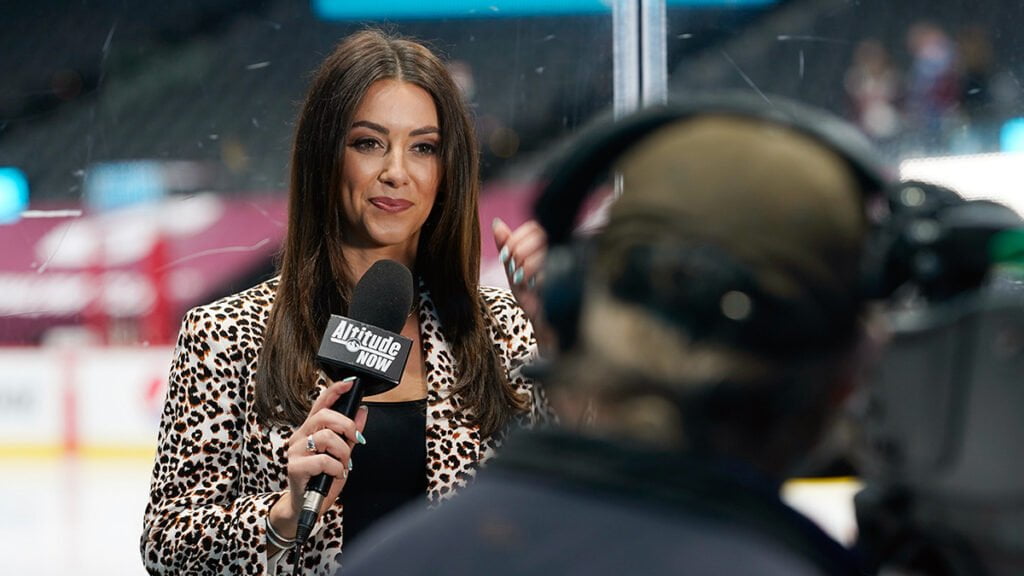
When Lauren Jbara packed her bags to join Bally Sports South in Atlanta, she knew the transition would be more difficult than any other. Although she valued her job in Denver, with Altitude Sports and Entertainment, relocating to a larger market situated her in a position where she could eventually make the jump to the national stage.
In thinking about the locale during her move, Jbara realized that it is where Warner Bros. Discovery is headquartered, opening a chance for discussions with the company. Following her stint in Denver though, she needed to get acclimated to the area and demonstrate her aptitude for reporting on the regional level.
At the time, the NBA was operating under health and safety precautions as a result of the global pandemic, limiting how Jbara could effectively gather and disseminate stories to the audience. Despite the challenges associated with the career move, she quickly proved to be an invaluable asset to regional broadcasts of Atlanta Hawks games and grew accustomed to being around the team each day.
While she remained focused on her job with the Hawks, she remained cognizant of national opportunities and had several conversations with people at the network ahead of landing a freelance, fill-in opportunity on NBA TV.
“It worked out that it was a day in-between two Hawks games and I went in and did it,” Jbara said. “It was so much fun, and then [for the] postseason, they asked me to come back again, and I filled in four more times on their GameTime shows.”
As Jbara went to the studios to fulfill her assignments, she was impressed with the crew and familial feel that the environment engendered. Over the summer, Jbara’s two-year contract with Bally Sports expired, leading her to look for her next opportunity. Upon receiving an offer from Warner Bros. Discovery that she would get to be a studio host for NBA TV and report for the NBA on TNT, Jbara felt it was virtually impossible for her to decline.
“I’m excited to grow and learn in a different way,” Jbara said. “It’s going to be weird because I feel like all of my experience right now in the regional space obviously has been with the teams, so you lock into a team and learn so much about that team. It’s going to be different and fun and a new challenge.”
One of Jbara’s first assignments in her new role was to travel to Sacramento and report live from Sacramento Kings media day. Following a 48-win season and disappointing first-round exit after a seven-game battle with the Golden State Warriors, she was there to interview players, personnel, and other key figures to discover the expectations and goals for the new year. Throughout the season, Jbara will cover a variety of franchises, supplementing live game broadcasts with insightful reporting and anchoring studio programming surrounding all of the action.
“It’s cool building those relationships with a different team,” Jbara said. “I’m like, ‘Wow, this is fun. This is really fun.’ I’m just excited for a new challenge to work with an incredible group of people that they have at Warner Bros. Discovery to build my skillsets in similar ways, but also different ways at the same time.”
Jbara fostered her inherent versatility within sports media at a young age, in part through her participation in various leagues as a multi-sport athlete. Even though she always had a natural affinity for sports, she instead chose to major in neuroscience at the University of Michigan. One day when she was taking an organic chemistry class, she came to the realization that she was not happy and decided to switch her major to communications.
“The transition actually was easy because I was having a really hard time in a lot of those classes,” Jbara said. “Just in terms of switching classes, it ended up being a lot better, and truly, I was so much happier.”
In making the changeover as a junior in college, Jbara recognized the importance of expeditiously working to land internships and got her start with WDIV-TV in Detroit. Being able to make it there, however, was facilitated by working at WOLV-TV, the student-run television station at the university. Jbara had plenty of opportunities to gain experience and make mistakes in an effort to hone her craft and discover her niche, but doing so required persistence and patience.
“I had my first on-camera thing and they threw to me and I was in a studio, and I literally just stared there live at the camera because I forgot my name and I did not speak for a solid 15 seconds,” Jbara said. “Then we had to restart it all over again and I’m like, ‘Oh my gosh, that was my debut on camera. This might not be the right path for me too.’”
When Jbara started at WXYZ-TV to work as an intern at a station closer to her school, she learned under sports director and anchor Tom Leyden. While there, she was afforded chances to assist with broadcasts for the Detroit Lions and continued becoming more proficient on both sides of the camera. In addition to this behind-the-scenes role, Jbara took the initiative to reach out and earn a position as the in-arena host for the Grand Rapids Drive, then an NBA D-League team in its inaugural season.
“I would drive there a couple times a week all the way from Ann Arbor to Grand Rapids – about two-and-a-half hours – do a game and then drive back,” Jbara said. “I was doing that [in] my senior year, [which] is when I really started getting those job opportunities.”
Upon graduating college, Jbara continued broadcasting to a captive audience as an in-arena host with the Detroit Red Wings at Joe Louis Arena, along with the Detroit Pistons from The Palace at Auburn Hills. With the Pistons, she had the opportunity to file digital reports as well, including a weekly segment on news surrounding the team and arena.
Even though she was connected to professional sports organizations, Jbara continued to pursue opportunities and ended up working as a sideline reporter for Oakland University Golden Grizzlies basketball broadcasts on ESPN3. In order to make ends meet, she waitressed at Kona Grill and eventually met people associated with a country music radio station owned by Audacy, then Entercom. Through initiating conversations, Jbara started hosting a Sunday music show on 99.5 WYCD where she worked on her intonation and vocal delivery.
Because she worked in a deluge of roles, Jbara balanced her seemingly interminable responsibilities with other activities pertaining to the maintenance of a healthy lifestyle. Outside of occasionally taking a run though, she did not engage in regular workouts and decided to accept an invite from a friend to go to a workout class at The Barre Code. After one session, she ended up becoming enamored with the practice. As a result, she purchased a membership and found herself attending one to two classes per day and always felt refreshed immediately thereafter.
A couple of months later, she saw that they were auditioning new instructors and felt compelled to try out for the role. Upon landing the job, she trained to become certified in barre and kickboxing and eventually started leading sessions while continuing her broadcast work. Although the field is not directly related to sports media, Jbara believes that the skills she fostered through her experience both as a student and instructor have proved invaluable in her work as a reporter and host.
“It was cool to kind of learn a bunch of people’s different walks of life and their career paths, etc., but I also think it kind of helped me with the broadcast space too because you need to learn how to keep your energy up all the time,” Jbara said. “I think that was really helpful to me as well, so it’s funny because I feel like even though it’s doing a different thing, it kind of still builds on what I do for my career.”
While Jbara enjoyed working in her home marketplace, she eventually felt compelled to move to join a regional sports network and started emailing executive producers all around the United States. Altitude Sports and Entertainment ultimately hired her as a host and reporter, where she contributed across Colorado Avalanche and Colorado Rapids coverage on Altitude TV. Through the support of her friends and family, along with the professionalism of her colleagues, Jbara did not struggle with the transition to a new city. In fact, she continued to teach fitness classes at another location for The Barre Code, retaining what had become a safe haven for her in Detroit.
“It was more excitement rather than being sad for leaving the Detroit sports market,” Jbara explained, “because I felt like I capitalized on everything I could do back in Detroit.”
Courtesy: Lauren Jbara
When she first arrived in Denver, Jbara was instructed by her boss, Kenny Miller, to sit in the television truck and see how everything worked. As time went on, she became more comfortable at the network level and viewed her colleagues as an extension of her family. The feeling of inclusivity and acceptance is something she valued as she took constructive criticism and simultaneously dealt with the ramifications of impugnment on social media.
“At first, I would get a mean comment on Twitter and I’d be like, ‘Oh my gosh, they hate me,’” Jbara said, “but now I’m just kind of pretty secure in who I am and just try to do the best that I can do every single day and hope that shows to the fans.”
An instance where Jbara demonstrated her personality on the air came over the summer while she was working as a sideline reporter for Bally Sports South with the Atlanta Braves. During a historic 104-win season for the team, Jbara was at Truist Park on a blazing summer afternoon demonstrating a neck fan to the viewing audience. She also recited the axiomatic statement, “The heat is hot,” creating a moment that went viral on social media and resonated with the audience.
“Even though it was hot, like really hot outside here in Atlanta, it was really fun to be outside at a ballpark,” Jbara said. “When I grew up in Detroit, I grew up with the Tigers and that was my team. Being able to go with the Braves back to Detroit [and] cover [Miguel Cabrera’s] final series against the Braves; it was just cool to be able to have that full-circle moment as well, but it was really fun.”
Jbara was a new addition to the broadcast crew this past season along with play-by-play announcer Brandon Gaudin, and she felt that the team was a friendly and cohesive unit. As a multifaceted on-air personality with the Braves and Hawks, she was able to further develop her broadcast style to appeal to the audience.
When Jbara takes the air, she is focused on conveying the necessary information in a concise, casual manner rather than emitting a sense of incongruity. In describing her approach, she referenced Inside the NBA award-winning host Ernie Johnson and how he views his role as a privilege, referring to it as a “get-to job.”
“I get to do this and it’s so much fun,” Jbara said, “so I like being able to provide great information to fans, but also do it in a way where it just feels like we’re hanging out.”
Early in the season, Jbara has hosted NBA GameTime, a program that recaps the slate of action across the Association and will continue to host studio programming throughout the season. Over the last several seasons, Jbara hosted series for the Braves but was more involved in the niche when working in Denver. She is looking forward to becoming immersed in the occupation once again, delineating and interpreting the action to elicit discussion about topics ranging from conspicuous to recondite.
“I’m excited to have an experience to do that a little bit more and show my knowledge and work with a bunch of different incredible analysts that they have at NBA and on TNT obviously as well too,” Jbara said. “It’s a new challenge, but I’ve done it before, and so [I am] just bringing that same broadcast mentality of being yourself and all that.”
When Jbara begins working games as a sideline reporter this season, she will engage in extensive preparation to ensure she is ready to conduct interviews and tell the story of the game. There are different ways to think about the structure of the interview depending on the setting or circumstances, but catalyzing the subject to expatiate on a topic is an invariable shared characteristic nonetheless. For the postgame interviews in particular, the key is in obtaining genuine reaction, practically concurrent and in the moment.
“If someone makes a buzzer-beater at the end, you know you’re asking about that,” Jbara said. “Walk me through that play; ask a lot about their team and how their team is pushing them, etc.”
Aside from conducting interviews, it is also Jbara’s job to gather intel and communicate it to her producers, directors, and other commentators. Being privy to sensitive information carries a sense of responsibility and requires an understanding of bedrock principles of journalism rooted in promulgating the truth.
“It’s basically just reading a room,” Jbara explained. “You know what you’re allowed to share; you know what you’re not allowed to share, and just kind of being smart with that information.”
Through her background working for professional sports teams and regional sports networks, Jbara is cognizant of how fundamental it is to remain objective on the air. In not being associated with any one particular organization with Warner Bros. Discovery, comprehensively covering all angles of a story will help further effectuate that intention.
“I think that when you’re doing a regional broadcast, you’re really only covering one side; the storylines for the one side,” Jbara said. “So I think learning stories of players from both sides will help me stay objective as a reporter because you have the ability to cover a lot of stories on both sides, and that’s kind of your role.”
Staying sharp and possessing a keen, prompt mental acumen with a sense of alacrity requires professionals to keep their energy levels up. From previously teaching fitness classes, Jbara has the wherewithal to maintain her stamina and tries to build endurance through the gradual elongation of each season. Even though she drinks a substantial amount of coffee each morning and takes micro-naps throughout the day, she seems to thrive on a minimal amount of sleep. Jbara presumes everything will catch up to her down the road, but even so, she is committed to retaining a work-life balance to attain longevity.
“I think before, success to me was everything in my career [and] getting to the top of the career,” Jbara said. “I think as I’ve gotten a little bit older, it’s having the career, but also being happy at the same time.”
Jbara views sports as a means of unification, and she considers herself fortunate to be part of the process of bringing people together. On a daily basis, she tries not to lose sight of the auspicious fortune she has been afforded in divulging stories and engaging in different types of reporting. Everything she does is geared towards establishing a feeling of relatability and keeping people compelled and invested in the game itself.
Through her years traversing the country in a variety of different roles both in and out of media, Jbara has found her voice and is continuing to use it to serve as a conduit between the fans and the game on the hardwood. For many years, her goal was to report for a regional sports network, and after achieving that, she is working to thrive on the national stage. Wherever the spotlight may lie, Jbara intends to embrace the pressure of live television and be distinct in the dynamic media ecosystem.
“A lot of people told me when I first got into the broadcasting space, ‘What makes you different?,’” Jbara articulated. “I think for me, it’s just being myself on camera and being able to excite people when I’m talking. I truly am a fan of all the teams in the leagues that I cover, so I try to bring that excitement on camera and just make fans excited too because that’s our job.”
Taking our eyes off of news/talk for a moment, over in the sports talk world this week, one of the top stories was the back-and-forth between WFAN hosts Brandon Tierney and Sal Licata and their weekly guest Carl Banks. Following a heated debate last week, the former Giants linebacker and current radio color commentator resigned from his weekly guest appearance with the midday show.
On Thursday morning, Boomer & Gio co-host Gregg Giannotti chimed in on the situation, saying, “And for anybody that’s sitting there going, ‘Man, what a loss for WFAN’, stop! No one really liked that spot. It was only still on because there was a sales play attached to it. That’s it. Nobody wanted it! The hosts? They didn’t want it. Management didn’t want it. Nobody wanted it.”
Giannotti hit on something far more important than whether or not Carl Banks was wronged by Tierney and Licata, and that’s the fact that when sales is running programming, a problem is inevitable.
If true that the Banks spot was still only a sales play that nobody on the programming side actually wanted, then it was only a matter of time before it exploded with two strong personalities co-hosting and conducting the interview. As someone who used to work at the station years ago, Giannotti is right to note that the spot has been underwhelming for years.
All that being said, everyone in radio understands the current economic climate that exists across media. It’s tough. And I’m not suggesting programming shouldn’t work hand-in-hand with sales to try and hit budgets and land clients. However, there’s always that fine line between helping the bottom line and doing what’s in the best interests of the station, and ultimately the listener.
To flip this over to the news/talk format, we are even more susceptible than sports talk to this balancing act. That’s because we often find ourselves with brokered programming during the weekends. Those clients may have an interest in other appearances on the station. You may be subject to sales selling people into your show in prime dayparts since news/talk can cover a broader range of issues and topics that sales may use to their advantage for clients. Remotes can be done that may include interviews that aren’t always a fit. Any of these and more are possible.
That being said, while every station and situation is different, I’ve always been of the belief that working with sales as teammates, while also always communicating, will result in the best possible situation. As markets get smaller, this becomes easier as there are fewer layers of corporate bureaucracy. But it’s doable at any level.
Like a marriage or any relationship, there has to be give and take, within reason. But rather than saying “no” to sales on any of these types of ideas that may not ultimately be the best programming, finding ways to help everyone win, to some degree, is usually the best solution.
Can you keep any news/talk sales-driven interviews to a finite amount of time? Can you limit their frequency? Can you spread the frequency between shows to not have a potential show-stopper in the same show every time?
Also, if the client/guest isn’t compelling, we should work to coach them up. Especially when we are talking about clients who are not broadcasting for a living. They don’t know what they are doing wrong. But we can make them better, and I guarantee they want to get better, just like we try to do with our talent every day.
We coach up our hosts, we coach up our callers (ideally) before letting them on the air, so why wouldn’t we do this with our guests? Especially if they are already clients who have a relationship with the station.
The best-case scenario for news/talk is when you get clients who turn out to be great guests with personalities and information. And oftentimes that doesn’t happen overnight. Just like a host it takes time to develop that level of comfort and insight to reach that point. And if we can expedite the process, we should. Then you get a potentially frequent guest who the audience learns to like, while also making the station money.
The 2023 World Series is history with the Texas Rangers winning the franchise’s first-ever World Championship defeating the Arizona Diamondbacks in five games. This year’s Fall Classic was carried by FOX Sports featuring an unprecedented triumvirate of baseball talent and superstar cache on the pregame show.
Alex Rodriguez is one of the most recognizable and polarizing figures in baseball history. He’s a guy with ridiculously amazing stats who would be a shoo-in Hall of Famer if not for the cloud of performance-enhancing drug use that hovers above him.
David Ortiz, a Hall of Famer, absolute Red Sox legend, and arguably the greatest clutch hitter in MLB playoff history, is also joined by Derek Jeter, the legendary Hall of Fame captain of the New York Yankees with five World Series titles on his resume.
You would think that this trio, along with host Kevin Burkhardt, would provide some insightful TV moments, and at times they did, but overall, their collective performances were uneven at best.
I focused the FOX Sports pregame coverage of Game 3. The Series was tied 1-1 at that point. It ended up being the post-competitive point of the Series and a good spot to highlight the pregame coverage.
My expectations for Rodriguez, Ortiz, and Jeter were high, but all too often, the dialogue was reduced to the obvious. Rodriguez opened the show by saying that the Diamondbacks have the advantage. Well, the Series was tied 1-1 and Arizona was playing at home, so yes, we get that.
Ortiz offered a similarly bland tidbit saying that he loves Rangers’ pitcher Max Scherzer when he has his stuff going. Jeter joined the Obviouspalooza stating that neither team had the advantage, but one would after Game 3.
Not to be left out, Burkhardt reached new heights (or lows) in a discussion about opening or closing the roof at Arizona’s Chase Field. He stated that it’s very hot in the summer in Arizona. Really?
Despite this ill-fated foray into meteorology, Burkhardt served as an excellent host for the pregame proceedings. In the vein of Bob Costas, Burkhardt provided an informative and welcoming demeanor and was adroit in stimulating the flow of conversation in an entertaining manner.
Unfortunately, Burkhardt could not put words into his analysts’ mouths. Jeter offered that the reason Game 3 was important was because the teams were playing three games in a row. OK, but the real reason it was a big game is because it’s the World Series and both teams had split the first two games.
Too many times, the trio relied on cliches. Rodriguez said that the Diamondbacks are constructed like “old-school baseball,” but provided no explanation for his definition of “old-school baseball”. What did he mean by that? These are comments that require clarification.
Jeter continued the low-hanging fruit analysis saying that the Rangers rely on scoring runs. I mean, what team doesn’t? Meanwhile, Ortiz reiterated far too many times that Arizona puts the ball in play and has the ability to manufacture runs.
I know this may seem like nitpicking, but I have a lot of respect for Rodriguez, Ortiz, and Jeter. All three are baseball savants. Their commentary should be at a higher level.
A bright spot for FOX Sports was reporter Ken Rosenthal. He provided a fine pregame interview with Texas Manager Bruce Bochy. Rosenthal asked excellent questions about the Rangers’ lineup changes for Game 3 and the expectations for Scherzer who was still rehabbing from an injury.
Speaking of interviews, John Smoltz provided an informative feature on the Pitchcom push-button communication system talking with Diamondbacks’ pitcher Zac Gallen and catcher Jose Herrera.
This feature also provided the best moment for the pregame analysts. Coming out of Smoltz’s segment, Rodriguez, Ortiz, and Jeter gave a demonstration of how Pitchcom actually works. Jeter revealed that when he and Rodriguez were Yankee infield teammates before such technology existed, he used to whistle to Rodriguez signaling the catcher’s sign for an off-speed pitch.
FOX Sports also used graphics to the viewer’s advantage. One bump from a break showed Scherzer’s career stats against the Diamondbacks – a 9-0 record, 2.65 ERA. .174 opponents’ average, and 12.8 strikeouts per nine innings. The graphic also showed the ironic fact that Scherzer was drafted 11th overall by Arizona in 2006.
However, the surface analysis continued. Jeter wondered if Texas would be patient or aggressive against Arizona’s young pitcher Brandon Pfaadt. I get the question, but when have the power-laden 2023 Rangers ever been patient against a young pitcher, or any pitcher for that matter? It just seemed like a query that didn’t need to be asked.
Rodriguez also made a point that Ranger second baseman Marcus Semien needs to get going at the plate. Again, tell us something we don’t already know.
The most disappointing of the three pregame analysts was Ortiz, who has fantastic enthusiasm but offered little in-depth insight. Similarly, Rodriguez and Jeter are superstars in every way – charismatic and unforgettable ballplayers known by both hardcore and casual baseball fans, and millions more outside the baseball stratosphere. Big names and sparkling resumes are awesome, but they do not guarantee greatness as an analyst or broadcaster.
Still, there were some good moments. Ortiz’s analysis of the speed differential between Scherzer’s fastball and his off-speed stuff was enlightening. Rodriguez was on point talking about the freshness of the Texas bullpen after a blowout loss in Game 2, and Jeter offered some great commentary on Arizona’s speed and baserunning acumen.
Ortiz had another solid moment comparing Pfaadt to the late Hall of Fame pitcher Roy Halladay. Both hurlers struggled early in their careers, went to the minors, and came back as better pitchers.
Jeter’s high point of the broadcast came in an excellent feature with Diamondbacks’ rookie star Corbin Carroll. The pair walked side-by-side at Chase Field with Jeter asking some really excellent questions. The former Yankee drew on his own experience as a young phenom and the pressure of playing in a World Series.
There was a calm and captivating chemistry between the two of them and Jeter offered a very relaxed and comfortable approach to the interview. It was really great. He asked Carroll about being the catalyst of the D-Backs and what it meant for him to be in the World Series as a rookie.
I really like Jeter as an interviewer. He has a great tone and unmistakable presence. It’s a broadcasting path he should follow. Coming back from the feature, Rodriguez drew a nice parallel between Carol and ex-MLB star Johnny Damon whom all three analysts played with during their careers.
Rodriguez expounded on Damon‘s winning attitude saying that he was the key ingredient in New York’s 2009 World Championship. He went on to reveal that when Damon left after that 2009 season, the team’s championship feeling also departed. Rodriguez, Ortiz, and Jeter are A-list baseball personalities. Here’s hoping they remain motivated to move their broadcast talents on FOX Sports into that lofty stratosphere.
When getting a boost to win over potential advertisers, you don’t need to look any further than what you or your radio station has already done. It all comes down to data, proof, and testimonials to help you secure more contracts.
Here is the recipe for success in approaching new advertisers with confidence:
Data: Why Your Sports Radio Station Appeals to Ideal Prospects
Data is king. And it’s time you update your data bank. You need to collect data that showcases why your station is an ideal advertising platform for specific types of businesses. Ensure you fully understand your station’s demo, TSL, and the types of content that resonate with your audience. Then, you align this data with the ideal prospects of your potential clients.
Audience Demographics: Put the data of your listeners’ age, gender, location, interests, and listening habits in a concise profile. Then, make sure you know your prospects’ customers that match that. Demonstrate how your station’s audience matches the profile of your prospect’s customers. It’s simple. You should be in the conversation to help them reach their target market.
Listening Patterns: Share insights into when and where your audience tunes in; what daypart do they spend the most TSL? Highlight how this presents opportunities to capture the attention of potential customers at the right moments. For example, I hope you have convenience stores and drive-through restaurants dominating afternoon drive.
Content Relevance: Showcase how your station’s content -online, on-air, and social media- complements the interests and values of your prospects. Showcase that you understand what makes your station the ideal choice for reaching its target audience.
Just prove it.
Back up your claims with proof and client testimonials to build trust and credibility with prospects. Show that your station’s advertising works by providing evidence of successful campaigns.
Renewals and Success Stories: Ask your sales assistant to put a slide showing the renewal rates of existing ad clients. Illustrate how businesses that previously advertised with your station experienced tangible benefits, such as increased brand visibility, website traffic, or sales through reviews or testimonial quotes and shorts. Try any of these social proof strategies for radio ad sales.
Client Testimonials: Share testimonials from business owners who have seen tangible results from their radio ad campaigns. They can attest to your station’s positive impact on their brand, sales, and customer engagement. Use audio or video shorts and put them on LinkedIn.
ROI Data: Provide clients with return on investment (ROI) data, demonstrating how businesses have profited from their partnership with your station. We all have those clients that hold onto that info; ask them if you can use it.
Ready, Fire, Aim for new clients.
One of the most critical steps in this system is identifying and targeting businesses that align with your station’s strengths.
Here’s how to do it effectively:
Ideal Prospect Profile: Collaborate with veteran sellers to create a profile of your station’s ideal prospects. These clients will be based on past success and future promise. Consider their industry, target audience, marketing goals, and past advertising experiences.
Research and Analysis: Leverage this prospect profile to identify Your Top 10 businesses that closely match your station’s strengths. Gather as much intel as possible on each business, including their current advertising strategies, pain points, and trusted advisors you may have inroads with.
Personalized Outreach: Customize your approach for each prospect. Ensure you have an idea of their biggest objection and have that answer! Use data, social proof, and client testimonials. Show them how your station is a natural partner aligned with their desired audience.
The power of data, proof, and testimonials is a potent cocktail. Down it for better-targeted outreach. Know your station’s audience and strength. Show off the results you have gotten for others and watch how much more confident you will be getting results and approaching prospects with a personalized, data-backed strategy.
Longtime Tampa sports radio veteran Jerry Petuck has been named Program Director of 95.3 The Score and News/Talk 590 KUGN in Eugene.
In a social media post Wednesday, Petuck said he left Tampa a month ago to take on the new opportunity. He thanked a number of key people with Cumulus Media for having faith in him to do the job. He added that he’s been working on trying to change the culture of the station during his short time in Oregon.
Previously, Petuck worked as the Associate Program Director of Sports Radio 98.7 The Fan in Tampa. He also spent time at 620 WDAE, Sports Radio 1010 The Team, all in Tampa. He also worked as a freelance producer for Westwood One before joining the Cumulus-owned stations in Eugene.
In addition to his work in sports radio, Petuck also co-founded RadioInfluence, a digital media company primarily focused on podcasting in Tampa Bay.
95.3 The Score and News/Talk 590 KUGN are the flagship radio homes of the Oregon Ducks.