Singer/songwriter Neil Young’s ultimatum to Spotify backfired after he posted an open letter to the streaming service asking them to get rid of Joe Rogan for promoting “fake information about vaccines.”
He then published a follow-up letter Wednesday, expressing regret that the catalog was being removed while doubling down saying he “could not continue to support Spotify’s life-threatening misinformation to the music-loving public.”
Spotify confirmed the removal of Young’s catalog to the website.
“We have detailed content policies in place, and we’ve removed over 20,000 podcast episodes related to COVID since the start of the pandemic,” a spokesperson said. “We regret Neil’s decision to remove his music from Spotify but hope to welcome him back soon.”
Young said that Spotify represented 60 percent of his streaming revenue globally, which amounted to “a huge loss for [his] record company to absorb.
Rogan signed a massive deal with Spotify to host an exclusive podcast last year. “The Joe Rogan Experience” has drawn sharp criticism from vaccine and mask advocates.
Last month, a group of 270 doctors and other medical professionals wrote a letter calling on Spotify to “mitigate the spread of misinformation on its platform.”
Versatility is always a key in sports. General managers talk about it as a way to have more flexibility on their rosters all the time these days. Versatility is also a key in sports broadcasting. In this case, the ability to call multiple sports, sometimes in the same week, at a high level. No drop off between sports, and no indication of fatigue based on scheduling.
To me, that tells the story of Dave Pasch. He’s been in the game a long time and continues to be at the top of his game whether he’s broadcasting the NBA, college football, or the NFL. It’s a skill that only a very few own.
I might add, he gets the job done on both television and radio. The balancing act of going back and forth between the two media forms isn’t all that easy, either. Descriptive to the max on one and letting the pictures tell the story on the other. Mastering that craft is not something everyone can do.
THE ROAD TO ESPN/ARIZONA CARDINALS
Pasch went to Syracuse and got started at the student station WAER-FM, where he worked from 1990-94. A year later, he went to work for the West Virginia Radio Corporation from 1994-1995 as a news and sports anchor, and he called high school football play-by-play.
Pasch also worked for WMAQ-AM in Chicago, the signal that now is home to WSCR, one of the sports radio stations in the city. At ‘MAQ, he hosted a talk show (The Sports Huddle) and the Chicago Blackhawks’ pre-game show, as well as calling play-by-play on select Blackhawks broadcasts.
From Chicago, it was on to Detroit. Pasch worked for WDFN-AM there, serving as a sports anchor, talk show host, and play-by-play commentator for International Hockey League Detroit Vipers broadcasts.
He then went back to his alma mater, Syracuse, where from 1999-2002, he was the radio voice for Syracuse football and basketball. Pasch also called select NFL and NFL Europe games for Fox Sports in 2002 and 2003, and did the Buffalo Bills preseason telecasts in 2001.
In 2002, he became the radio voice of the Arizona Cardinals. He has been balancing that job with several others, mainly for ESPN, where he’s been since 2003. For the network he calls NBA games, college basketball games and college football as well. Pasch occasionally pops up on Westwood One radio to broadcast the NFL and the radio network’s coverage of the NCAA Men’s Basketball Tournament. He just called the Rams-Buccaneers NFL playoff game on Westwood.
Pasch has worked with a who’s who of analysts in each sport he calls. Chris Spielman, Bob Griese, Urban Meyer and Andre Ware in college football. His partners on his NBA and college basketball telecasts include Jeff Van Gundy, Mark Jackson, Hubie Brown, Doug Collins, Jay Bilas, Dick Vitale, Bill Raftery, Doris Burke and, of course, Bill Walton. More on his relationship with Walton later.
Also at ESPN, he’s handled Major League Baseball broadcasts and women’s college hoops as well.
WHY IS HE SO GOOD?
I already mentioned Pasch’s versatility, and his ability to handle the array of sports he does. As a play-by-play announcer, he is rock solid and always brings an energetic and informative broadcast to the viewer/listener. There’s no flash, but it’s not needed when you have what it takes to deliver games the way he does.
For broadcasters that do multiple sports in the same week, preparation can be an issue. Where do you find time to get ready for each team and each sport in a manner that they deserve? If a broadcaster isn’t sufficiently ready for that game, there’s no fooling the audience. It becomes pretty clear. For Pasch, the preparation is there, the knowledge of the teams is there, and that’s why he’s a pro’s pro.
I also appreciate his sense of humor. There is a way in which he can laugh at himself and his partner without making it too much. In other words, Pasch allows for a little fun when needed and called for within a telecast or broadcast. I’m good with that if it isn’t at the sacrifice of key moments in a game. He has that style down to an art form. This makes a game between two teams that maybe the viewer doesn’t have a rooting interest in fun to watch.
He has the ability to play the “straight man” in the context of his partner getting a little outside the broadcast. Pasch has had plenty of experience being a good partner, especially when it comes to working with Bill Walton.
BILL WALTON
Pasch was paired with Walton on college basketball for ESPN’s Pac-12 coverage starting in 2013. The two work together often and just did a game the other night between Oregon and UCLA. Pasch never knows what might happen during a broadcast.
For example, in this game, Walton went off the rails as usual and also as usual, Pasch played off it, questioned the big man’s thoughts, and offered some well-placed sarcasm. Pasch also kept the viewer up to date on the game while the nonsense was going on.
In the second half of the game, Walton casually mentioned how the “Tinder portal” has worked out very well for the Pac-12. After the UCLA legend kept talking for another few moments, Pasch had to jump in to point out that Walton referred to the NCAA’s transfer portal as the Tinder portal.
Dave Pasch: "You mean the Transfer Portal? You called it the Tinder Portal."
Bill Walton: "Tinder portal, yeah. That's what it is."
Pasch: "You're saying the Transfer Portal is like Tinder? You swipe right or left to get a player?" ???????????????? pic.twitter.com/o2vnOfWp8R
This is television gold, showing exactly why Pasch is the perfect foil to Walton’s outlandish commentary.
Pasch though told The Oregonian that he appreciates working with Walton and that the former UCLA star wants to be good at what he does on television.
“I emailed Bill after the game this past weekend and his response was, ‘I’m sorry I let you down,’” Pasch told John Canzano. “He’s so hard on himself. I don’t know what he’s talking about. It’s Bill. He’s hard on himself. That’s what made him a great player.”
The broadcaster was also willing to point out that his broadcasts with Walton doesn’t serve all audiences.
“Not everybody finds what we’re doing entertaining. There are plenty of people, probably including several coaches in the conference who don’t enjoy it,” said Pasch.
“The biggest thing is to document the game. When your goal is to document the game and celebrate the players, you can still have fun and allow Bill to be Bill. I do think there’s a fine line there. I’m sure we’ve crossed it where you’re trying to be funny or you’re trying to have a gag work and it doesn’t work because you tried… there is a complete spontaneity to the broadcast.”
COMMUNITY/FAITH
Pasch is a man of faith and put that on display at the beginning of the pandemic. He and his family offered assistance to those struggling to pay their bills. He tweeted the following on March 14, 2020:
If there is a family in the Phoenix area who will have lost income because of the Coronavirus, and cannot pay a bill, please DM me. The Pasch family would love to hear your story and try to help. Acts 20:35
“If there is a family in the Phoenix area who will have lost income because of the Coronavirus, and cannot pay a bill, please DM me. The Pasch family would love to hear your story and try to help. Acts 20:35.”
“I just felt this is an opportunity for me as a Christian to live out my faith in a way that’s real and kind of where the rubber meets the road,” said Pasch. “Here’s an opportunity to step up when you’ve got a lot of people that are hurting and suffering and unsure of the future, scared, nervous, anxious.”
He asked those within sports to set the right example. Such a fine message shows how a sportscaster for a local team can become instantly involved in his/her community. It’s so important to have that relationship with the fans on a deeper level.
CONCLUSION
I’m a big fan of Pasch’s work and enjoy pretty much everything he calls on ESPN. Glad to see that solid, no-flash broadcasters are still prospering in the industry. I’ve said it before and I’ll say it again, I appreciate when the announcer excels at making the game the star.
SUMMARY
Dave Pasch has risen through the ranks of top play-by-play announcers in the game. Hard work and a tremendous work ethic and style have helped him along the way. Pasch handles a busy schedule like a pro and excels at all the various sports for which he calls games.
Soccer players aren’t angels. They can do miracles on the court, but they can also party and behave like all of us do in bars, restaurants, and casinos. A lot of soccer stars are known for their gambling habits, so we decided to make the top five list.
After days of research, we came up with the most notable names. Keep reading to see the five most famous soccer players who like to gamble!
1. Cristiano Ronaldo
The Portuguese player is one of the most decorated footballers ever. He is a winner of five Ballon d’Or, the highest individual trophy from FIFA, and several Club World Cup trophies. That would be enough to make Ronaldo a legend, but his gambling habits make his career even more impressive.
There were quite a few casinos employees who claim that Cristiano is one of their best customers. Ronaldo reportedly loves to play games with the best deposit bonuses, according to rumors, Ronaldo finds online casinos particularly interesting because a large number of games and bonuses give him the opportunity to win extra money and cheer up.
2. Paul ‘Gazza’ Gascoigne
Paul “Gazza” Gascoigne is one of the most talented English players to ever live. He was a member of Newcastle United, Tottenham Hotspur, Italian team Lazio and Rangers F.C. His career was plagued by injuries, but Gazza continued to talk tough on-field and enjoy a lavish lifestyle off it.
In 2004, Paul was admitted to rehab for drug addiction. Days after he left the facility, Gascoigne was caught drink-driving with just under three times the legal limit of alcohol in his blood. But most people don’t know that Gazza was a passionate gambler.
His ex-wife Sheryl Gascoigne said in an interview that “he’ll gamble on anything – cards, horses… He’s always at it.” The media never really reported about Paul’s gambling habits, but we definitely believe his former wife.
3. Neymar
We could say that Neymar is one of the luckiest men on Earth. The Brazilian player started playing professional soccer when he was only 17. He soon moved to Barcelona F.C., where he collected trophies like they were toys. He then signed with PSG for a record-breaking $263 million.
But Neymar’s gambling habits are even more interesting than his salary. Neymar used to post images of him playing poker with friends on social media accounts. His passion for gambling even earned him a place in the 2015 European Poker Tour.
4. David Beckham
Do you remember David Beckham? We’re just kidding – everybody does! Beckham is known for being one of the prettiest soccer players of all time, but that didn’t earn him a place in Manchester United. On the contrary, David earned his position as one of the best midfielders the game has ever seen.
But he is also a casino lover who often visits gambling outlets in Las Vegas. A lot of journalists claim that Beckham enjoys playing slot machines, but he made sure to turn it into a business. Namely, David is the brand manager of multiple casino businesses in Singapore and Macau.
Beckham is a very clever guy, and he obviously knows how to combine his gambling passion with business. Good job, David!
5. Gigi Buffon
Gigi Buffon is one of the best goalkeepers in history. He has won almost everything this sport can offer, and he still plays for his maiden club Parma. A lot of fans know that Gigi made a fortune playing soccer, but not too many know that the Italian player likes to gamble.
Gigi Buffon loves poker. He is a regular at the Casino di Campione in Lombardy, where he often plays poker with his friends. Gigi Buffon’s love for gambling became so famous that Italian journalists asked him to comment on it before the 2014 World Cup.
In an interview, Buffon stated that he was going to start up his own private club where he can watch soccer and play poker. We are not sure whether Gigi really did it, but we definitely like the idea.
Conclusion
The list of footballers who love gambling is long and distinguished. We should also mention Diego Maradona, Wayne Rooney, Joey Barton, and Dominic Matteo, but there simply wasn’t enough room for everyone on our list.
That’s why we picked the five most popular soccer players who like to gamble. Who do you believe is the greatest casino gambler among these famous players?
Leslie Alexander is an online gambler and a content lead at Gamblizard. Leslie is interested in all types of casino games, so she gladly shares her vast gambling knowledge with online followers. When not working, Leslie is probably reading or running long distances.
Joe Rogan has received support from an unlikely source. The hosts of ‘The View’, Joy Behar, Whoopi Goldberg, Sunny Hostin and Sara Hines were in agreement, Rogan’s podcast should not be removed by Spotify.
The discussion about Rogan’s future on Spotify’s platform has come into focus again after rock musician Neil Young demanded that his music catalog be removed by Spotify. Young is upset with what he believes is vaccine misinformation being spread by Rogan on his podcast. The rock legend issued a statement the other day, which has since been deleted: “They can have Rogan or Young. Not Both.”
Behar acknowledged she thinks Rogan is a ‘horror’ but removing his podcast isn’t the way to solve the problem. Behar said the way to counter Rogan’s type of speech is by adding more speech or by boycotting the program.
The conversation came up during the show’s ‘Hot Topics’ segment when the hosts reacted to Howard Stern’s defense of Rogan. Though he admitted he’s not friendly with the podcast host, Stern said he doesn’t want to see Rogan cancelled.
https://www.youtube.com/watch?v=O0jXpnOuBL0
Behar applauded Young for taking a stand, and wondered if other musicians would adopt similar positions, calling the situation ‘consequence culture, not cancel culture’. Part of the consequence she said would be to punish Spotify by not using their platform as a result for allowing Rogan to operate as he sees fit.
“I’m not saying that Joe Rogan should be removed from Spotify,” added host Sunny Hostin. “He’s got 11 million listeners, he’s got a $100 million contract, as of 2020, but I do think, as the podcast platform, you have to have some sort of guidelines. How about a disclaimer on his podcast, that says ‘This is misinformation.’ How about removing some of the podcasts that disseminate this misinformation?”
Fellow host Sara Haines then pointed out to her colleagues that Spotify has in fact done that. Last April the company removed over 40 episodes of Rogan’s podcast from its platform.
Haines continued by adding “People are hungry for conversations. He has a 3-hour conversation with his guests, and he does bring on opposing views. He doesn’t see that as ‘platforming them’. I think people are hungry to have open conversations, disagreements, debates, and they don’t want to be told how to feel about it.”
Hostin followed up by pointing out that the hosts of ‘The View’ are held to an ABC News standard because of who they work for, and after citing examples of Rogan’s speech being uncomfortable, she challenged Spotify to do a better job of policing its people and platform.
The segment ended with Behar asking “when it’s hateful speech, is that equivalent to yelling fire in a crowded theater?” She explained that doing so is dangerous, people aren’t supposed to do it, to which Goldberg added “but there isn’t any law against it.” The group wrapped up the discussion by agreeing that Rogan should be allowed to speak freely but Spotify needs to do a better job of making sure those listening are aware that not everything mentioned is factual.
All on-air talent at 104.3 the Fan in Denver now reports to Parker Hillis. He has been promoted to become the assistant program director of that station and ESPN Denver 1600.
“Parker has been critical to the success of our Bonneville Denver sports properties,” 104.3 The Fan and ESPN Denver 1600 Program Director Raj Sharan said in a press release. “He’s absolutely earned this opportunity to take on increased responsibilities managing our sports stations on a daily basis.”
Hillis has been at The Fan since April of 2019. He came from Dallas, where he worked for Audacy’s 105.3 The Fan.
With the promotion, the station is now looking for a new executive producer. Parker Hillis will oversee that search.
“I’m excited to work with our hosts in a greater capacity on a day-to-day basis,” Hillis said. “The opportunity to lead collaborative efforts among our amazingly talented team is truly an honor.”
CNN’s Brianna Keilar referred to Fox News host Tucker Carlson as a “propagandist” for his stance on a potential Russia – Ukraine conflict.
“Why is it disloyal to side with Russia but loyal to side with Ukraine?” Carlson asked during a recent monologue. “They’re both foreign countries that don’t care anything about the United States. kind of strange.”
Keilar responded to Carlson’s assertion by saying, “one is a democracy, the other is a brutal autocracy.”
“As tensions are ratcheting up between Russia and Ukraine, one Democratic congressman says his office is getting phone calls, repeatedly getting these phone calls, and they’re from fans of Fox’s chief propagandist Tucker Carlson, saying that the U.S. should be siding with Russia over Ukraine,” Keilar said.
Keilar spoke to Congressman Tom Malinowski (D-NJ) who said his office has received calls regarding Carlson’s comments on the situation.
“My district director told me that they spent hours on the phone with people telling me that they watched Tucker Carlson last night and why are we going to be going to war with Ukraine?” said Malinowski.
“The real question is why is Rupert Murdoch allowing this anti-democratic BS on the air?” Said Keilar.
Ohio based Futuri Media, a company specializing in cloud-based audience engagement has announced the creation of a new leadership team Tuesday. Futuri named Tracy Gilliam its Chief Strategy Officer and Todd Storch its Chief Revenue Officer.
Gilliam is one of the founding members of Futuri, previously serving as General Sales Manager for CBS Radio in Los Angeles, and VP/Market Manager for the company now known as iHeartMedia.
“Given the astounding pace of change with today’s audiences and advertisers, there’s never been a more crucial time for brands to leverage the right technology to create and monetize their content — and that’s exactly what Futuri delivers,” Gilliam said in a statement.
In Storch’s new role as CRO, he will be responsible for all revenue generation processes at Futuri.
“A culture of innovation and delivering solution-based software is at the core of Futuri’s mission,” Storch said in a statement. “We believe that this is an opportune time for media companies with a growth mindset, and we’re here to help generate content and increase audience and revenue for new customers, partners, and markets.”
Futuri bills itself as the leading provider of AI-driven audience engagement and sales intelligence solutions for broadcasters and digital publishers.
Al-driven audience engagement is the practice where brand marketers assess a target audience, build personas, create campaign strategies, and develop multiple creative campaigns.
“With Tracy Gilliam and Todd Storch in these important new roles, Futuri is well-positioned to continue our record of continuous profitable growth and grow the company through organic and inorganic measures,” said Futuri CEO Daniel Anstandig.
Is there really such a thing as a ‘risk free’ bet?
Sports are as popular now as they have ever been, regardless of the form they take. This can be seen in the vibrant nature of sports broadcasting on TV and radio for example. Of course, sports themselves are also in a great place right now. From football to soccer, basketball, hockey, baseball and beyond, people seem to have a growing appetite for catching the latest games or learning about the latest news.
Recent years have also led to sports betting take off in many countries. This is certainly true throughout the US, where many states have chosen to fully legalize wagering on sports after the 2018 US Supreme Court ruling on PASPA. But why has sports betting become so popular? Many people simply enjoy it and gain great satisfaction from betting. Placing wagers can also add more excitement to games which helps you to feel more involved in the action.
There is no doubt that the increasing number of secure online sportsbooks to bet at has also helped make it more accessible. As this review of the BetMGM sportsbook shows, modern sports betting sites are not only easy to use but are safe to bet at and offer lots of markets to choose from. If you like to wager on sports at platforms like these, you might have heard people talk about ‘risk free’ bets.
But do they actually exist?
Sure things in sports betting – are they ‘risk free’?
The truth is that ‘risk free’ bets DO exist in sports betting – but maybe not in the way most people imagine. The first thing to understand is that ‘risk free’ bets do not have anything to do with backing heavy favorites who are ‘sure’ to win. While this might sound sensible and risk free, it is not.
Sports betting can often have unexpected results and shocking outcomes –Wimbledon’s victory in the 1988 soccer FA Cup Final is a case in point. With this in mind, there is just no such thing as a ‘sure’ bet which has no risk attached at all.
But what are the real no-risk bets? With more people than ever beginning to bet on sports — asNew York’s growing sports betting market shows, this is worth clarifying.
Betting bonuses are the real deal
The main takeaway is that betting bonuses offered by online sportsbooks are the route to true, ‘risk free’ bets.
But how does this work? To begin with, you have to look at the welcome bonus offers most online sportsbooks provide to new customers. Some sportsbooks will offer ‘risk free’ promotions which essentially refund your first bet if it loses (up to a certain amount). Once you create an account, deposit cash and place a bet, this offer is activated should you lose. As your losing stake is refunded, there is literally no risk attached. One thing to remember though is that many online sportsbooks will refund your stake as free bets, rather than actual money.
How else do online sportsbooks make ‘risk free’ bets reality?
Promotions for new customers often include a deposit bonus, which is also a ticket to betting without any risk as well. This is especially true if you can find a promo code which enables you to access a no deposit bonus offer. With this type of offer the sportsbook gives you free money to bet with — without putting any of your own down first, so you can bet without any risk to your own finances at all.
In addition to this, you can also access ‘risk free’ bets with a standard matched deposit bonus offer for new players. Although you do have to put some of your own money down first with this offer, the sportsbook will then match this amount from their own pocket. This means you get extra free money to bet with and can enjoy using this for wagering without any risk.
‘Risk free’ bets are available in sports betting
As the above shows, ‘risk free’ bets are a reality in sports betting and are not hard to find. A quick search online will provide a listing of numerous sportsbooks running offers for new players which enable you to do this. In addition, many online bookies will also run regular promotions for current customers, which can provide you with continued exposure to betting with no risk. This might be in the form of refunding losing bets on certain events or just giving you a free bet to use on special occasions. As sports betting becomes more popular around the world, knowing the finer details of it is wise if you plan to get involved. Hopefully the above will help you understand how ‘risk free’ bets work and how you can use them.
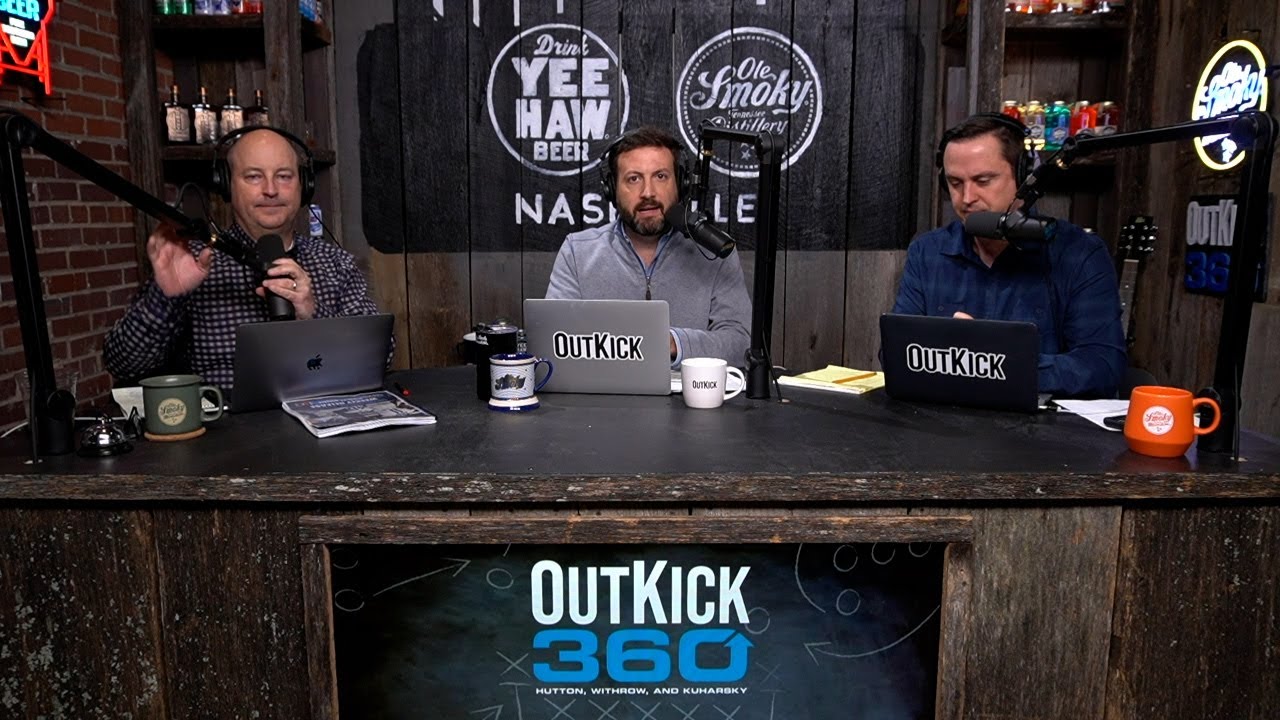
When Jonathan Hutton, Paul Kuharsky and Chad Withrow announced they were leaving 104.5 The Zone in January of last year, no one doubted where they would end up. The show, formerly known as The Midday 180, was clearly bound for OutKick. After all, the three hosts had been friends with Clay Travis for years.
The only real question was how would it be delivered to the audience? OutKick wouldn’t be the first company to re-launch what was once a radio show on a digital platform. That wasn’t enough for the trio though.
At The Zone, Hutton, Kuharsky, and Withrow had built a loyal following. It showed in the podcast and streaming numbers, something they didn’t think was valued properly, and it showed in the ratings. This show had a future on terrestrial radio. It was just a matter of introducing it to other stations in the geographic footprint that made the most sense.
“The root of the tree for us is Nashville, Tennessee, the southeast, and it kind of spreads from there,” Kuharsky says. “Based on where we did the show for 10 years, where our initial expertise is, where we have the deepest roots and all of that, it just makes sense.”
OutKick isn’t a little mom-and-pop business. Even before FOX bought the site, it had significant backing behind it. It’s not like the crew, now re-branded as OutKick 360, was flying completely solo.
When you are trying to syndicate a sports radio show though, you may as well be on your own if you do not have the backing of ESPN, FOX Sports, or CBS Sports Radio. Hutton said he was going to rely on that regional expertise as the sales pitch. These are guys that know what sports fans in the Southeast want. He was going to make sure Southern programmers knew that.
“On a Monday morning in April, if you wake up, chances are, if you’re listening to the coast to coast radio, they’re leading off with something New York Knicks or Lakers or they’re going to talk Yankees or they’re going to be discussing the New York Giants or whatever it might be,” Hutton pointed out. “But you can talk now, SEC football, coast to coast and people will tune in as well. NFL sells. Ratings prove that. And that’s what we were going to bring. We’re going to play the hits and speak to an audience in the heartland of America that wants to talk football 365!”
Hutton, Kuharsky, and Withrow have adopted a tag line for their show that makes their priority clear: “bringing sports back to sports talk.” Sure, there may be distractions. FOX Sports suits really got a kick out of Kuharsky talking about how much he spends on Christmas decorations for instance. At their hearts though, these three are sports fans.
That is assumed of all sports radio hosts. When you put the OutKick brand on a show though, people make other kinds of assumptions. After all, the site’s founder Clay Travis has made a hard swerve into the political realm and has made it clear that when he sold the site to FOX, his vision was that it could be “a bridge between FOX Sports and FOX News.”
Hutton says he has a simple message for people that approach the show with preconceived notions: just listen first.
“I would hope they would listen to the show and judge us based on the product. We are the sports branch wherever we have been or will go. And, you know, being agenda-free can be what our show is about when it comes to sports. I don’t care what channel you turn on, there is an agenda there. So our goal is to be agenda-free, and to be authentic in what we’re doing instead of laying down a preconceived line of thinking one way or the other.”
It doesn’t mean that the show is nothing but Xs and Os. Withrow admits that sometimes, the conversation may make you uncomfortable, but just because it might go that direction doesn’t mean it is a political statement.
“If we were to come on and say, you know, ‘this race-baiting episode by ESPN is pathetic,’ well, 95% of sports fans feel that way, but 95% of sports media won’t say it. So when we say it, someone’s going to say, ‘Oh, well, they’re just being political, they’re falling in line’ and I don’t see it that way. I see it as no, this is how sports fans who want sports think.”
Withrow continued, “They think it in black and white, not race. They think in wins and losses, and who’s the better quarterback? So stop infesting everything with some political leaning or just whichever way the wind is blowing. To me, that’s what OutKick was founded on, being fearless and saying what you think, regardless, if it’s going to be popular or not. Certainly what Clay has done has gone into the world of politics, but what we’re doing, if you listen to our show, we really don’t get into politics at all.”
When FOX completed its purchase of OutKick, plenty in the industry wondered what it meant for Hutton, Kuharsky and Withrow. Would FOX want to be in the broadcast radio network business?
Not only was the answer yes, but Withrow says one of the first notes the company had for the OutKick 360 hosts was “think bigger”.
“As Hutton said, we started with a very localized plan with radio stations and we told FOX that’s what we’re going to do. They looked at us like, ‘why the hell not Ohio? Why not Joplin, Missouri? Why not everywhere? You guys are thinking too small’. We came in with an understanding of Nashville, North Alabama, Southern Kentucky, East Tennessee, West Tennessee and they’d email us saying, ‘let’s go for everywhere and see how this thing can grow’.”
So there was the growth plan. OutKick 360 was going to live and die with football, the country’s most popular sport, it was going to be agenda-free in how it talked about the storylines on and off the field, and the hosts were going to be authentic in how they presented themselves to the audience.
There was actually one more ingredient that Hutton wanted to stress. The show was going to sound good.
Back when Covid began and radio shows everywhere had to learn to broadcast from home, it stood out to Hutton just how bad everything on his station sounded. The three asked around and got recommendations for what the right microphone to have was. A friend told them it was the Blue Yeti microphone, so they each went out and got one.
Now, OutKick 360 is broadcast from a state of the art studio and the equipment is upgraded from a $75 podcast microphone. In fact, BSM President Jason Barrett paid a visit to the trio’s 6th & Peabody location during a November business trip, and raved about the setup. He said it was private enough to allow the crew to focus on what was needed for the airwaves, yet also accessible for the hosts to interact with fans and host client events on-site.
Withrow says the location has been a hit and the upgraded technology is important, but in a time when even the biggest shows and networks are getting away with terrible audio quality, the real asset is the people dedicated to upholding a particular standard.
“The advantage that we have is David Reed, our producer, who’s great with audio quality and is a stickler for it. Hutton and David Reed came up in the same school with Titans Radio on audio and quality of the broadcast being paramount to everything. He really carries that with this show.”
OutKick 360 is distributed by Skyview Networks. Just because FOX owns their platform doesn’t mean the show can only do business with FOX Sports Radio affiliates. In fact, Hutton says Skyview has helped “take the show to a completely different level and scope.”
“They provide the horsepower for the OutKick 360 engine, and that allows us to bring advertisers and listeners together with our sports brand. We had several partners and stations already on board, and they were thrilled to learn Skyview was handling the daily distribution for us.”
The trio may have a little more muscle behind them now and the bosses may want them thinking bigger, but Kuharsky says they still have the same attitude when it comes to growing their network.
“It’s certainly open to whatever may come our way or wherever we can get our foot in the door.”
Radio stations interested in adding OutKick 360 can learn more by reaching out to Skyview Networks by clicking here.
Fox News host Shannon Bream recently revealed how she shares motivation when addressing the next generation of journalists.
Bream appeared on “The Trey Gowdy Podcast” and said she often uses the inspiring story of Michael Jordan’s career to talk to interns at Fox News.
Michael Jordan was cut from his high school team in North Carolina, and he was told he was never going to play professional basketball.
“I always tell that story to our interns or when I speak at colleges or high schools because I want people to know, you know, listen, not everybody is going to get you,” Bream said. “Not everybody’s going to see your potential.”
Bream told Gowdy that she is honest with students and that they may face rejection on their way to the top. “You’re going to get a lot of no’s. You’ll get many more no’s than you’ll get yes’s. But it’s okay,” she said.
“There’s purpose in being humbled. There’s purpose in feeling like you’re treading water — like you’re learning from all of those things, and it will only make you more sure about your dream and what you’re trying to pursue,” Bream added.