The Atlanta winter ratings book has been released, and once again 92.9 The Game sits atop the sports radio leaderboard. The Game maintained its position as the market destination for sports talk, finishing 3rd overall with Men 25-54 with a 6.0 share. The Game was 2nd last year at this time.
Among the station’s weekday shows, the afternoon team of Carl Dukes and Mike Bell produced the best performance. The popular duo generated a 7.3 share, good enough for 3rd place. Also in 3rd were the midday team of Andy Bunker and Randy McMichael. They recorded a 6.7 share during their timeslot. The Game’s morning show with John Fricke and Hugh Douglas was lower at a 4.5 share. They finished in 6th place. All numbers are among Men 25-54.
Across town, 680 The Fan experienced some growth after shaking things up last year. The Fan received a 4.3 share from its midday slot to place 7th. Middays features a combination of Brandon ‘Hometown’ Leak and Joe Hamilton, Nick Cellini and Chris Dimino, and Buck Belue and Hutson Matson. The afternoon team of Chuck Oliver and Matt Chernoff were also healthy with a 3.4 share, good enough for an 8th place tie. Mornings were lighter at a 2.5 share,which put The Front Row with John Michaels and Brian Finneran in 11th. Sandra Golden who was previously part of the morning show was with Michaels and Finneran for part of the book. She left the show on February 19th.
Year over year, The Game did experience a little bit of a dip. That said, most brands would sign up for three Top 3 finishes in a winter book. News/Talk station WSB maintained its lead over the entire market, occupying the top slot for full week, mornings, middays, and afternoons. They did the same thing at this time last year. One thing’s for certain, whether it’s news/talk or sports/talk, Atlanta listeners have an appetite for spoken word programming.
Another quarter, another dominant showing by 97.1 The Ticket. In the 2021 winter book, the Detroit sports radio station did what it usually does, finishing either 1st or 2nd in each category.
Starting with the full week (M-SU 6a-Mid), The Ticket finished 1st with Men 25-54 with an 11.4 share. The station was 2nd for the full week with Adults 25-54 with a 7.0 share. In weekday prime (M-F 6a-7p), The Ticket placed 1st with Men 25-54 with a 13.6 share. They popped a 2nd place finish with Adults 25-54 with an 8.6 share.
Moving to the weekday shows, Stoney & Jansen with Heather were 2nd in morning drive with a 13.6 share with Men 25-54. They were 2nd with Adults with a 9.2 share. Middays saw Karsch & Anderson secure a 1st place finish with Men 25-54 with a 13.1, and another top spot victory with Adults 25-54 with an 8.4 share. Wrapping things up in afternoons, Mike Valenti and Rico Beard produced a 15.6 share to finish 1st with Men 25-54. The popular duo were also 1st with Adults 25-54 with a station best 9.4 share.
The Ticket did lose two points with Men 25-54 year to year in weekday prime and the full week. Given their command over the local market though, they can afford it. The ratings above don’t include streaming numbers, which when added to the equation are likely to boost the station even higher. Overall, an outstanding job by Jimmy Powers and his team.
With a strong lineup in place, Tigers baseball back on the air, Lions football just around the corner, and local sports radio competition non-existent, expect The Ticket to continue dominating the market for the foreseeable future.
A tight race one year ago, has become a little more comfortable for 670 The Score. The Chicago sports station won the 2021 winter book, leading in both weekday prime (M-F 6a-7p) and full week (M-SU 6a-Mid). 670 produced a 4.6 (stream included) to place 5th in prime. Full week was slightly lower at a 4.2, but their ranking was better, tied for 4th.
Among The Score’s daytime shows, which includes their streaming number, Mully & Haugh tied for 9th in mornings with a 3.7 share. Dan Bernstein and Leila Rahimi started strong in middays with a 4th place 5.8 share. Laurence Holmes followed them with an impressive 5.7 share, 3rd place finish. In afternoons, Danny Parkins and Matt Spiegel came in 8th with a 4.0 share. Spiegel though didn’t officially join the show until February 8th so the first month of the book includes Parkins working with different hosts. Finishing at night, The Score produced a 4.1, good enough for a tie for 5th.
On the flipside, ESPN 1000 finished the full week with a 1.7 share, and weekday prime with a 1.9 share. That placed them 22nd for the full week, and 19th in prime. That was a lower than usual finish for the brand.
Among ESPN 1000’s weekday shows, ESPN Radio’s ‘Keyshawn, J-Will and Zubin’, which airs on 1000 between 5a-7a finished 11th with a 3.2 share. David Kaplan and Jonathan Hood grabbed a 14th place finish with a 2.2 share between 7a-10a. Carmen and Jurko were 20th from 10a-12p with a 1.6 share. Mike Greenberg’s national show, ‘Greeny’, came in 11th from Noon to 2 with a 3.2 share. Waddle & Silvy were surprisingly low in afternoons, registering a 24th place finish and 1.5 share. Wrapping up at night, ESPN 1000 produced a 1.1, placing them 25th in the 7p-12a timeslot.
Overall, The Score has to feel great about the quarter. The station won each daypart among local sports radio competitors, and though listening levels aren’t where they were a few years ago, there’s plenty to build on. Middays were a big strength this book, proving the Bernstein-Rahimi pairing and Laurence Holmes are a hit with local listeners. The area where improvement can be made is in the drive times. With Spiegel now alongside Parkins permanently, and Cubs games about to deliver more cume at night and later in the day, that should help.
For 1000, this is an odd book. Both ESPN Radio national shows delivered the best numbers for the station this quarter which was abnormal. Waddle and Silvy are also usually in the thick of a race, not in 24th place. With Silvy back in studio, the Sox debuting on the station, and a more than capable air staff still in place, look for 1000 to be much more competitive in future months.
You may have recently noticed some research that has been released studying radio listening habits and COVID 19’s influence on it. Nielsen, Edison, Moody’s, and others are studying how listeners have returned to listening to the radio, where they are listening, miles commuted or hours spent working at home, etc.
As you can imagine, this research is flattering to the radio story. Why would those companies release bad news? For 37 years, I have seen studies done by radio related research companies about how radio is everywhere. It’s reaching everybody all the time. The other popular narrative is that radio is on the upswing, more effective than any other medium and most efficient.
I have no doubt the research presented is accurate. I just don’t always feel it is presented in the right context by salespeople.
The radio industry is underrated as a reach medium and many other things, but I have always thought we should temper our use of such one-sided research. Imagine if you were a buyer and were getting pitched by every group in town. Everybody would be #1 somewhere, sometime, or somehow. From looking at the recent barrage of research, I do see some very useful observations though that, if nothing else, would educate us when we do talk about “how things are going” with our clients.
We should lead with the optimistic trends we see to put a client in at least a neutral mood if they tend to be negative. It is great to discuss that more people work away from home that we think. We should all know that most of the US workforce have to get to the stores, factories, hospitals, restaurants, warehouses and construction sites or they don’t get paid. It is also reasonable to assume that now more people are willing to get in their cars and go places. Those types of people have a better attitude towards doing things outside the home and would be listening to the radio in that car. So, yes, they take kids to school, shop, eat and go to events more than others.
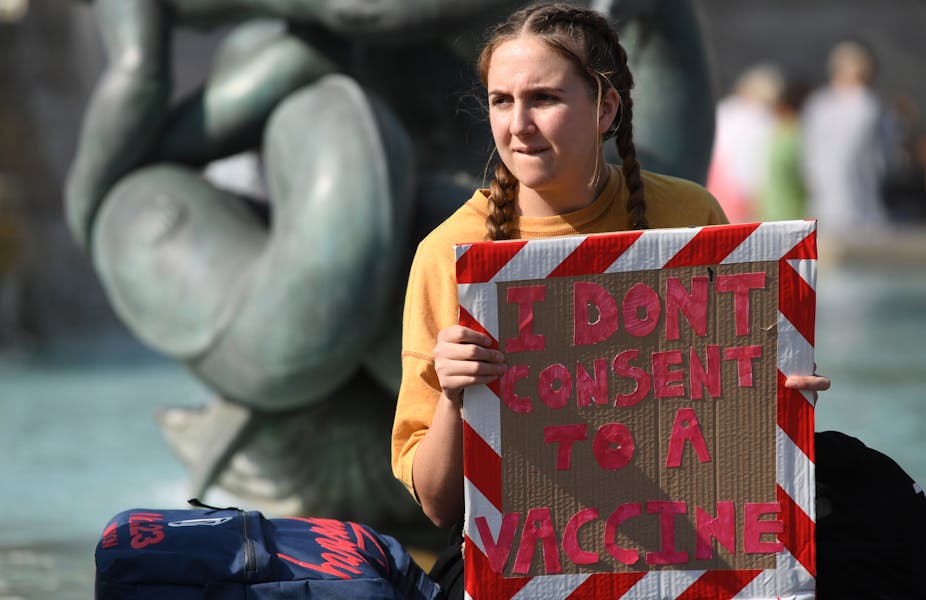
I had not known though that younger, ethnic or females are more hesitant about getting vaccinated and the country might be lucky to see a 50% vaccination rate. That’s too bad because lots of jobs require vaccination for participating in certain activities like radio shows working together in the same studio.
At least the research out right now is beyond the 9 out of 10 Adults 18+ listen to the radio. I can see that being important if I was a client who could afford to buy ads on 15,500 radio stations. So, as many a sales manager told me, pay attention to the research that serves you best and ignore the rest!
Covid-19 has presented a ton of challenges in terms of the way we live, the way we consume media, and the way radio stations and their shows operate. Despite chaos caused by a global pandemic, one thing has remained consistent in Philadelphia – sports radio listeners remain loyal to Sports Radio WIP.
In the 2021 Winter Book, Philadelphia’s sports radio ratings king remained on top for the full week (M-SU 6a-Mid) among Men 25-54, producing an 11.7 share (2.1 on the stream), which was enough to secure a 2nd place ranking. 97.5 The Fanatic closed out the quarter for the full week with a respectable 6.6, 3rd place finish. The separation between the two brands was greater among Adults 25-54 and Persons 6+. WIP was 3rd with P25-54 and 4th with 6+. The Fanatic was 9th with P25-54 and 15th with 6+.
Turning our attention to the shows, WIP’s Angelo Cataldi and the WIP Morning Show did what they usually do, lead the entire market. Cataldi’s program delivered a massive 13.3 share (2.9 on the stream), which placed him 2nd with Men 25-54. The show was also 2nd with Adults 25-54 and 3rd with Persons 6+. On the other hand, the first book for 97.5 The Fanatic’s John Kincade was solid. John generated a 6.9, strong enough for 3rd place.
In middays, WIP’s team of Joe DeCamara and John Ritchie also produced double digit shares. The duo recorded a 10.0 (1.7 on the stream) with Men 25-54, strong enough to lock up 2nd place. The Fanatic’s Anthony Gargano produced the same share as Kincade, a 6.7 with Men 25-54, which put him in 5th.
Shifting to afternoons, the team of Jon Marks and Ike Reese gained bragging rights for the quarter by becoming one of two sports radio shows in the market to deliver a 1st place finish. Marks & Reese’s 12.7 share (2.3 on the stream) with Men 25-54 elevated them to the top spot and in front of The Fanatic’s Mike Missanelli, who was strong as well, once again popping the best number on 97.5 with an 8.6, good enough for 3rd place.
Closing things out at night, WIP’s Joe Giglio joined Marks & Reese as the other local sports talk show to gain a 1st place finish for the quarter during his 6p-10p timeslot. Giglio generated an 11.3 share (2.4 on the stream) with Men 25-54, which was 5 points higher than The Fanatic’s 6.3 which helped them secure a 6th place finish.
WIP’s quarter was outstanding and deserves to be celebrated. Every single show produced double digit shares, two programs earned 1st place finishes, and Cataldi despite being ranked 2nd had the best share of any sports talk show in the market. There isn’t much you can do but tip your cap to Spike Eskin and his crew on a job well done. Props to Audacy as a company as well, as they took the steps necessary to make sure WIP’s digital performance was being officially monitored by Nielsen. Based on the early returns, it appears to be a smart business decision.
Although WIP is the king for the quarter, and we’re all competitive and like to highlight who won and lost, I think it’s important to put a few things into perspective. Someone is always going to finish ahead and behind. That’s just how it goes when you measure competitions. But if you’re looking at The Fanatic’s performance and thinking they should turn out the lights, you’re missing the point. People inside their building should remain driven, competitive, and eager to turn the tide, but feeling bad about an overall good quarter makes little sense.
First, if you ran 97.5 and I told you at the start of the year that your brand new morning show was going to line up against the market’s most influential talent (Cataldi) and finish 3rd in its first book, you’d sign up for it immediately. If that same share performance was then carried over to your midday show, that’d be seen as a positive too. Then to cap it off with Missanelli lifting the brand nearly 2 full points in afternoons, those are strong performances. Ranking 3rd, 5th, and 3rd in three prime dayparts is excellent, and money can be made if they perform that way consistently.
In closing, the gap between WIP and The Fanatic is wide right now. A 3-4 point advantage isn’t something a station usually reduces in one or two books. However, given the fragile nature of ratings measurement, anything can happen at anytime, so nothing is guaranteed. That said, WIP is clicking on all cylinders, and they’re in the driver’s seat until further notice. For now, let’s just appreciate that we have two great brands in the format battling in a passionate sports city to create sports radio worth listening to.
Mark Chernoff’s final run as program director of WFAN may be coming to an end in the near future, but the longtime PD of New York’s dominant sports radio station is making sure that when he passes the baton, he’s turning over a well oiled machine with strong ratings success to whoever follows him.
The Winter Book results were released today in the big apple, and the headline that will generate the most attention throughout the industry was Craig Carton and Evan Roberts unseating The Michael Kay Show for the top spot in afternoon drive according to the Nielsen Audio ratings. ‘Carton & Roberts’ finished 3rd overall with Men 25-54 with a 5.3 share, holding off Kay’s program, which finished 4th with a 4.8. Those numbers take into account both the over the air, and streaming numbers (combined audience) for both brands. The winter book reflects the ratings generated by both stations between January 7th and March 31st.
The win was an important one for the WFAN afternoon duo. It was their first full book together and it reversed a trend that saw Kay enjoy previous success against Roberts and his former partner Joe Benigno. Carton and Roberts did team up for part of the Fall 2020 book, but because they started their show on November 9th, they weren’t responsible for most of the quarter’s performance.
One additional point worth sharing, Kay’s program, which previously started at 3pm ET, has since moved up an hour to 2pm ET. That means during the spring book, we’ll see the two shows battling for audience during similar time periods. The reason that’s important, 98.7 ESPN NY got crushed during the 2pm hour in this book. Carton & Roberts smoked Max Kellerman’s national show 9.0 to 2.1, leaving Kay with ground to make up. Regardless, Carton & Roberts did what they had to do, they put WFAN back in the win column in PM drive.
In middays, WFAN had to be satisfied with the performance turned in by Marc Malusis and Maggie Gray. The midday team placed 2nd overall with a 5.9 share from 10a-2p ET. During that same period, 98.7 ESPN NY received a 2.4, 16th place finish from Mike Greenberg, and a 2.9, 12th place showing from Bart Scott & Alan Hahn.
Closing things out in mornings, the WFAN powerhouse team of ‘Boomer & Gio’ led the market once again, finishing 1st overall with a 7.6. Their performance was the best of WFAN’s weekday programs for the quarter. The mixture of ESPN Radio’s ‘Keyshawn, J-Will & Zubin’, and 98.7 ESPN NY’s trio of Rick DiPietro, Chris Canty, and Dave Rothenberg came in 17th between 6a-10a with a 2.6 share.
For WFAN, this has to feel good, because it’s what the station expected when it brought Carton back. Craig’s ability to create interest, entertainment, and conversation is unquestioned. The buzz around WFAN’s afternoon show has been very different because there’s a daily question of what Carton might do next. Craig’s skill combined with Evan’s insight and ability to adjust to the #2 chair, and show another side of himself that hadn’t been heard as much previously, has allowed the show to perform well, and the station to generate new momentum. With the lineup strong and in a consistent place, New York’s sports radio king is positioned to enjoy future wins.
On the other hand, 98.7 ESPN NY is paying a price for shaking up its lineup. The Michael Kay Show is still a force and has nothing to feel bad about or apologize for. Moving up an hour earlier should help them in trying to reverse the latest results, and given the show’s dynamic, they’re good enough to bounce right back next book. The bigger question is the rest of the lineup. Kay’s show is drastically outperforming everything else on 98.7’s airwaves. It does take time for new shows to connect with an audience, but national programs have always faced an uphill climb in New York City. Making matters worse, Carton & Roberts started in November and six months later they’re riding high. If ESPN New York can get their national shows to finish in the Top 10, they’d probably feel good about it because there’s money to be made if you’re ranking that high in market #1. If they continue to hover around 16th-20th though, that might create more discussions inside their Bristol and NYC offices.
Ben Franklin was a writer, printer, political philosopher, politician, Freemason, postmaster, scientist, inventor, humorist, civic activist, statesman and diplomat. And, a great quote for radio account executives as well.
At some point in your radio sales career, you will have to deal with the bargain hunter: Low Ball Lenny. Ad buyers who say station KCHP is selling their spots for $50, why should I pay you, KBST, $75 for yours?
There are several approaches to how to deal with these buyers and not one is right or wrong, just maybe one is right for THAT buyer and situation. One answer is to explain that “we here at KBST price our inventory based on supply and demand. And right now, we have a lot of demand for our spots.”
HUH?
Low Ball Lenny could be thinking, “I don’t care what other people do. And how do I know you didn’t let your inventory go for too little with cheap annual deals or 1st quarter sales promotions? “Also, some price motivated buyers are stuck on efficiencies. They will hold you to a cost per point or thousand price that doesn’t allow for differences in format or qualitative measurements.
Its frustrating. But if we plan and rehearse our solution at least we can offer some alternatives to the price motivated buyer. Ben Franklin said “the bitterness of poor quality remains long after the sweetness of low price is forgotten.”
Well Ben, I think that is only true if you are the only station being bought. If the buyer is purchasing stations from different groups, how will they know your $75 ads were higher quality? So, I think you must read the situation and react accordingly. In general, be sure to have some of these items ready to show the price-controlled buyer:
Offer them a long-term deal. The longer term they can commit, the more aggressive you can price.
Build in discounted spots the first 10 days of a month when demand is lower, and inventory is plentiful. Great time to run branding commercials.
Take advantage of other non-peak times like the week between Xmas and new year’s, weekends Sat-Sun 10-5p, and play by play that runs 7pm-12mid.
Run ads from M-F 5am-6am and 7pm-8pm during early/late drive time.
If they are only about rate, sell them a 75% ROS schedule M-S 6am-12m and 25% M-F 6am-7pm. Average the rate i.e. 3 x $25 1 x $75= 4 ads for $150 or $37.50 per ad and lets face it those Monday-Tuesday ads have a decent show of falling into 6am-7pm.
Remember, even Low-Ball Lenny deserves love. And remember what Ben also said about radio sales. If you fail to plan, you are planning to fail. Start planning for the Low Ball Lennys.
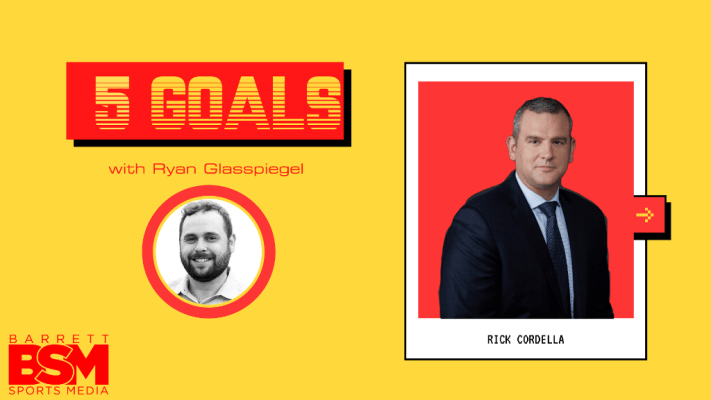
Rick Cordella is the EVP and Chief Revenue Officer at Peacock, the NBCUniversal streaming service which just successfully completed its maiden voyage with WWE with WrestleMania this past weekend. Coming off this accomplishment, we thought he would be the perfect choice for this month’s installment of 5 Goals! Here are his goals, in his own words.
1) Be the best Uber-driving dad I can be.
Work/Life balance is never really a balance as much as it is a constant panic that I’ve misaligned my priorities for the day. My wife and I have five children ranging from high school to preschool, four girls and a boy. It’s a handful.
Working from home these past 13 months has forced me to be around more. Seeing the kids before they go off to school, or family dinner time has been great. But I think some of the best one-on-one conversations I have with my kids are when I’m driving them around to various activities in the early evening and to school in the morning. They can’t skirt away to their bedrooms and avoid my probing questions. And I learn more about what is going on in their lives than I ever did before. “How are your grades? How are your friends doing? What else is going on?”
Moving forward after the world returns to normal and I’m back in the office, I want make it a priority to be there to drive them around town.
2) Appreciate being the kid in the candy store.
I grew up in Foxboro, MA, as a die-hard Boston sports fan, rooting for the Red Sox, Patriots, Celtics and Bruins. I spent the vast majority of my time playing sports, watching sports and thinking about sports. And so when I was lucky enough to come to NBC Sports through a small acquisition of a fantasy sports company, Rotoworld.com, back in Aug 2006, I had to pinch myself. I was so proud to be a small part of Sunday Night Football, the Olympics and all the various sports we had rights to air.
I specifically remember during the 2012 Olympics, walking the Olympic Park in London and taking it all in. And then standing on the sidelines during the pregame of Super Bowl XLIX in Phoenix and then seeing my hometown Patriots beat the Seattle Seahawks a few hours later in one of the most exciting Super Bowls of all-time. As a lifelong sports fan, how am I possibly getting paid to be here?
I think it’s easy to get lost on the day-to-day grind of managing a business, but I try to take a step back every now and again and appreciate how lucky I am to be involved in these sports properties that I grew up idolizing.
3) Get across the finish line.
I was a college athlete many years ago but now need a goal or fear of humiliation to motivate me to do something about my dad bod. This fall I plan to run the Boston Marathon. I’ve run three marathons in the past, but this will be my first one in my 40s, and I’m much more firmly in the Clydesdale division than ever before.
Finishing with a good time is nice, but just meeting the challenge and getting across the finish line is the goal.
4) Make appointment viewing in an on-demand world.
Many streaming platforms focus their content investment on original and library movies and shows. At Peacock, we have all of that as well and can further differentiate our catalog with programming from across NBCUniversal that plays to our strengths – like sports and live events – that have existing fanbases who follow their favorite team, sport, and athletes everywhere. When a Manchester United/Liverpool game streams on Peacock, those fans show up. When we recently streamed one of the biggest live events of the year — WrestleMania – WWE fans migrated to Peacock.
When the fans come to Peacock, they are watching other entertainment programming we offer. We can drive them to our platform with the content they are most passionate about, and then anchor them in our service by delivering our massive library of entertainment, news, sports, and more. For example, we have seen this happen with Premier League fans, where more than 90% are watching non-Premier League content on Peacock.
Peacock has been nationally available for just over nine months, and sports and live events have been foundational to our service. And we’re very much looking forward to the Olympics and the NFL coming later this year on Peacock.
5) Try something new and keep learning.
I’m not all that musically inclined, but about two years ago, my 10-year-old daughter took up playing the guitar. She has gotten impressively good at it. I’ve always wanted to try it, and I figured it was also a cool way to connect with my daughter, so during the pandemic, I signed up for weekly guitar lessons. I had never picked up a guitar before in my life. So now, at 44 years old, I can play the opening riff of Nirvana’s Come as You Are and a handful of other 90’s alternative rock songs (not entire songs, of course). But I’m really enjoying it, and it’s been fantastic to jam out with my daughter.
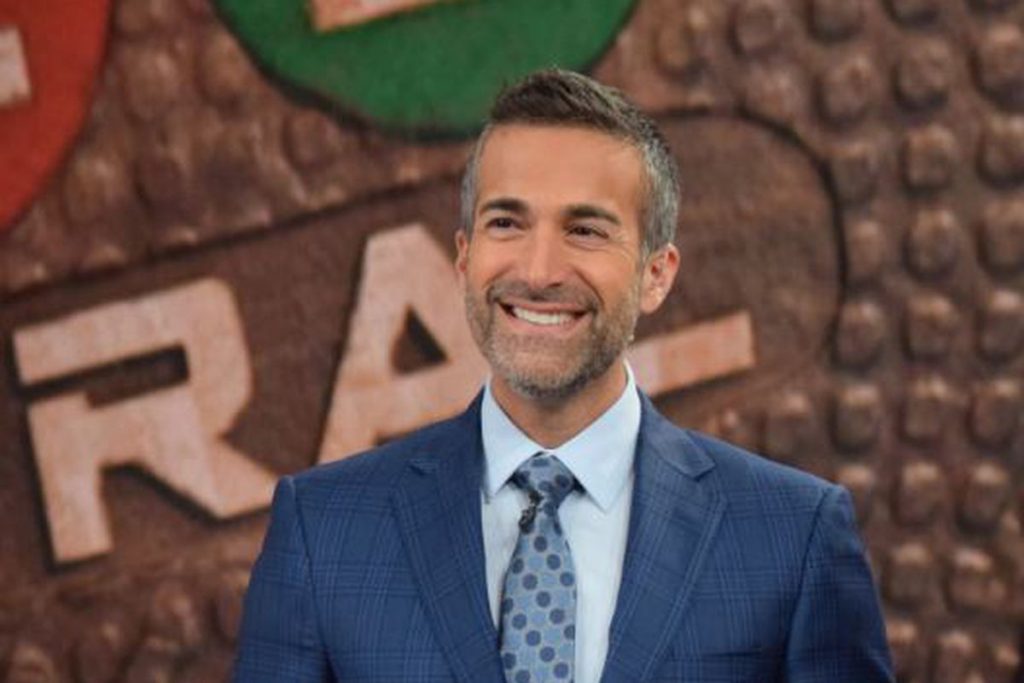
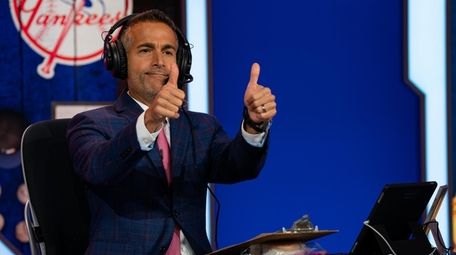
“Santa Maria!”, when you hear it, you know you’re tuned into an MLB game with Matt Vasgersian on the mic. More on the catchphrase in a moment. Vasgersian is one of those guys that you seemingly see everywhere. Why? Because he’s pretty much everywhere. Turn on MLB Network, there he is. Tune into Sunday Night Baseball on ESPN, yep, he’s there. Now, catch an Angels baseball game on TV and he’ll be there too.
Vasgersian has been around the baseball block since the early 90’s. He spent six-seasons as a Minor League broadcaster before being hired for his first MLB gig. Vasgersian was only 29 when he became the play-by-play voice of the Milwaukee Brewers. He worked in that booth from 1997-2001. Matt then took his skills to San Diego, being named the TV voice of the Padres in 2002. He stayed in America’s Finest City until 2008, leaving for the MLB Network after the season.
Along the way, the very busy Vasgersian held down several other positions in prominent broadcast locations. He joined Fox Sports in 2006, working NFL telecasts, MLB Game of the Week games and playoffs and some College Football BCS games. He joined ESPN in 2018 to take over the Sunday Night Baseball lead role, while continuing his role at MLB Network.
Did I mention he was a busy guy?
This year he took on more of a workload and became the new play-by-play man for the Los Angeles Angels’ telecasts succeeding Victor Rojas. Vasgersian will work remotely and will do as many Angels games as his national schedule allows.
He told the Angels media via Zoom the reasoning for taking on this job. “I kind of missed getting my skin in the game with a team,” Vasgersian said. “There’s a fine line between a national presentation of a product, when you’re doing a game for a fan base that knows more about their teams than you do, and doing a game as a team broadcaster where you are much more intimately informed as to what happened last night, and the night before and the personalities behind the game. I kind of missed that and kind of missed being involved with a team and rooting a little bit. The hope is that you appeal to the fan base as a friendly voice.”
When will this guy sleep?
BEST KNOWN FOR
Vasgersian first burst onto the national scene doing play-by-play for the original version of the XFL back in 2001. The league was new and Vince McMahon was in charge and wanted things done a certain way. Vasgersian’s time with the league was tenuous; during the first broadcast he said, “I feel uncomfortable” after a suggestive shot of the cheerleaders. McMahon didn’t like that very much and immediately demoted Vasgersian from the top telecast. NBC wanted Vasgersian back on the first team broadcast and he returned about halfway through the season.
He made a good impression on the higher ups at NBC which ultimately led to five Olympic assignments. Vasgersian called baseball and softball from the 2004 Summer Games in Athens, ski jumping from the 2006 and 2010 Winter Games and freestyle skiing from the 2014 games in Sochi, Russia.
Now, about that catchphrase, “Santa Maria!”. It’s not a copy, it’s an original. Oh, and it has nothing to do with one of the ships that sailed to find America in 1492. Vasgersian explained the origin to MLB.com in 2018.
“Man, I wish there was a better story to this. [Laughing]. My family — and my sister, in particular, has one of her oldest friends — [from an] Italian family. My sister’s friend’s mother is a wonderfully animated Italian woman, who says “Santa Maria!” at a drop of a hat. For example, she goes to the grocery store and sees tomatoes are on sale. She will say, “Santa Maria, what a deal!” he explained. “I spent enough time around this wonderful lady for her to rub off on me a little bit. And I started saying “Santa Maria!” when there would be some kind of superlative moment on a baseball field. When I was in the Minors, you never want to sound gimmicky, but I try to keep it in my pocket for the right time. It’s kind of a sanctioned way of saying “Holy Blank.”
So, there you go, the explanation right from Vasgersian himself.
WHY IS HE SO GOOD?
Vasgersian has a way about him. Not too many broadcasters are able to showcase immense talent in describing action and adding personality, wit and a sense of humor in with it. He can do it. The style isn’t for everyone, but to me in watching a baseball game, I want to be entertained, I want to laugh a little too. All of this of course shouldn’t interfere with the game itself and for Vasgersian he makes that a priority.
He’s been known to get excitable on a broadcast, but not to the point where it’s out of bounds in a broadcast sense. Big plays happen and Vasgersian’s voice goes to a different level. He’s excited and you can sense it pretty easily. There’s a “smile” in his vocal range during a big moment, key homer, or great defensive play. In some announcers it seems forced, that’s not the case with Vasgersian at all.
Vasgersian clearly enjoys what he does for a living. It’s pretty obvious by the way he comes across in each broadcast. You could forgive a guy with as busy a schedule as his to sometimes sound less than interested, but that isn’t the case for Vasgersian. The more games, the merrier to him.
Along those lines, it can’t be easy to prep for so many games in a week. He does have the advantage of being very dialed into the baseball scene with his work on MLB Network. But still, its impressive the amount of information he’s able to work into a game without a ton of time to prepare.
It seems that everyone he works with enjoys being on a broadcast with him. Vasgersian keeps an analyst on his/her toes. He seemingly is able to work with anyone they throw at him. He works with Alex Rodriguez and that isn’t easy to do. Still, he’s able to navigate Baseball Road when A-Rod continuously wants to take him down A-Rod Avenue.
DID YOU KNOW?
Vasgersian started his career as a child actor? I didn’t know that and I worked with him for a couple of years in San Diego. Vasgersian appeared in an episode of “The Streets of San Francisco” and the movie “The Candidate” starring Robert Redford.
CONCLUSION
Vasgersian is a very talented guy, they just don’t give out high profile jobs to anyone. His success has been earned because he’s a hard-working person that constantly is honing his craft. His combination of pop culture, humor, sarcasm and wit are well balanced within his broadcasts, making them not only entertaining but informative. Isn’t that what it’s supposed to be all about anyway?
When we decided a few months ago to create a Meet The Market Managers series, I told Demetri Ravanos that John Kijowski needed to be a part of it, and I’d run point on writing the piece. It’s not everyday that I get to flip the script and ask questions of someone who once hired me, and peppered me constantly with questions related to 101 ESPN’s programming challenges and opportunities. John is so used to asking the questions that it was fun to hear his answers to my questions and see his visible reactions to a couple of curveballs I tossed in his direction during our Zoom chat.
Aside from my personal connection to John, and he’ll hate me for saying this, but he’s one of the best market managers in the business. Period. You may not know that if you follow the trades and see most of the larger markets earning all of the attention, but anyone who’s worked with or for John already knows this to be true. He prefers flying under the radar. He’d rather his team get the credit for their results. If his family is healthy, his employees are happy, his clients are served, his partners are pleased, and his bosses approve of the work he’s doing, that’s more than enough for John.
What I appreciate about John is that he never had to do a lot of yelling or pounding his fist on a table to make his point and get people to perform. He’ll ask questions to test your conviction on specific issues, he’ll challenge his team to raise the bar, and he’ll seek out new ideas from anywhere in the office, and ask how he can help make your job easier. He’s also accessible and interested in helping all of his managers whether they’re in sales, digital, promotions, engineering or programming. It’s why so many who work for him respect his input and trust his decision making.
As important as John’s professional skills may be, his ability to create a family like atmosphere matters even more. When you work at a John Kijowski led operation, you realize quickly that you’re part of a special kind of culture that others want to be a part of. I was a young programmer in 2008, convinced my better days were ahead of me, but still struggling to find the right leader and company to trust me, believe in me, and allow me to put my vision into action. John and I met to discuss the possibility of creating sports on the FM dial in St. Louis, and at first I thought he was doing what a lot of radio people do, seeking me out for information. I learned though that John was serious about hiring me, the outside noise mattered little to him, and as long as I assembled a great staff, worked well with multiple departments, provided sound reasoning for the decisions I was making, and managed my team to success, he’d have my back every step of the way. It’s why leaving St. Louis for San Francisco was incredibly difficult in 2011. I’ve been fortunate to reconnect with John and the 101 crew over the past few years in my current role.
Having shared all of that, I’d be doing this column a disservice if I didn’t point out one well known Kijowski specialty that those around him know all too well. Working for John requires being smart, strategic, giving maximum effort, and delivering results, but you also better have a good sense of humor. The second you turn around to tackle the day’s agenda, you may find a chair on your desk, a fork in your pocket or a ladder blocking your entrance into the office. It doesn’t matter if you’re the host of afternoon drive, the program director of one of his radio stations, the receptionist at the front desk or a part time member of the street team. If John sees an opportunity to create laughter, he’s going to take it. Those innocent pranks keep the office loose and remind people that it’s ok to work hard and play hard.
Our conversation covered a lot of ground including John’s entry into management, the future of sports betting, what he believes is most important when going thru a merger, the quality he values most in a program director, and what the process was like leading up to the decision to pursue sports on FM in St. Louis. I could easily write another 5,000 words on why John Kijowski is one of the best in this business, but the following interview will allow you to see that for yourself. Enjoy!
Jason Barrett: I was looking at LinkedIn prior to this conversation and it has you stepping into the GM world in 1995. Is that right?
John Kijowski: That’s correct.
JB: So when you were making a pitch for the first time to become a GM, what do you remember from that process?
JK: It’s interesting because before Sinclair, I was with Gannett as a DOS going for the GM position. I’ll never forget the president of Gannett broadcasting asking me to tell him about the different areas of the radio station and rank them in order of importance. I was a DOS so what do you think I said?
JB: Sales.
JK: Sales department, of course. Nothing happens unless we sell something. He just nodded, and said ‘what else’? I said, ‘well, you need a great signal, and programming’ and he said ‘OK, put them in order’. I said ‘sales, programming, signal’. He told me ‘John, you’re not ready for this position yet’. He said ‘unless there’s great programming, even the best sales staff won’t be able to sell it at a high premium consistently unless the programming is right’. That was the first great lesson of many that I learned.
JB: So that was your first taste of being close to running the show. The next time around, you did get the opportunity. When did you know you had the job?
JK: Barry Drake was the one who hired me as a GM from a DOS position at Sinclair. I can’t tell you I knew I had it until he said ‘this is yours’. I felt like I did the interview very well. Barry is an incredibly bright man. I thought I did a good job with him but I really didn’t know I had it until he said it was mine.
JB: So you begin your venture into management with Sinclair, who then transferred ownership to Bonneville, a great company that you spent over 11 years with. Bonneville then sold to Hubbard, another amazing group which you’ve had the pleasure of spending another decade with. You lucked out the past twenty years working for two great broadcasting groups. Having been thru a few mergers, as a GM, what’s that first month or two like when new owners are coming in? You have to think about your own future, your staff’s future, if they’ll tinker with the products you’ve helped build, and possibly change the strategy or even a format. Where does your focus go?
JK: I think of me last. You have to think of your team first. Our job is to acquire the best talent around us, and put them in the right seat on the bus. But you also have to retain them. When there’s a potential merger, you want to retain a great team. Whether the company retains you or not, obviously it’s critically important, but the team comes first. You want to make sure that what we’ve built is preserved for growth. I always looked at the team first, and communicated with the buying company on the aspects of what they’re going to be looking at, which are the obvious metrics of cash flow, net operating expenses, and net revenue. Where’s your growth come from? How do you look when the ratings aren’t so good? How is the cash flow? If you have good cash flow years while the ratings aren’t good, how do you do it? It’s mainly about protecting the team, and showing what the mission’s been.
JB: As you know some may be more focused on their own futures especially during a time when there’s a lot of uncertainty. Your answer explains why you’ve come thru it in great shape each time.
JK: You said before that I’ve been lucky, and I have been. I’m very fortunate to have worked with some great broadcasters. Bonneville under Bruce Reese and Drew Horowitz, and then coming over to a family owned business with Hubbard led by Ginny Morris, these are just amazing companies with great people. What the two have in common is shared vision, and leadership. You know exactly what they want you to do. Everybody is a part of the process and they want to show you where they’re going but they certainly want strong opinion from the market manager. Do you agree with the plan or should we avoid this? Do you see other options for growth? I’ve been lucky to work for two great companies.
JB: You mentioned how they seek your input when dealing with important business matters, so when you’re reporting to your bosses and having to either relay bad news about a talent or a quarterly sales performance, ask for additional funds that might not have budgeted or offer a point of view that differs from something they want to do, what do you think is important to communicate so they remain confident that they have great leadership in place overseeing their markets and know you’re looking out for the best interests of the company rather than just offering lip service to give them what they might want to hear but may not necessarily be what’s best for the long term interest in growing the brands under your watch?
JK: It’s all a process. I believe confidence comes from competence. You have to be competent over years. Then it’s the ability to communicate tough decisions honestly and transparently and say that you’ve looked at it from all angles and you didn’t do it by yourself. You include your Operations Manager, Director of Sales, Chief Engineer, Business Manager, the Marketing and Promotions team. You’ve brought everyone into the conversation who’s part of that small circle and said ‘what could we get tripped up on? This looks too good to be true, what’s wrong here? If I were the opponent, how would I attack it? And remember the opponent may not be another radio station or radio group. Maybe it’s how consumers are engaging with media in general right now. If you’re not doing it for them, the end user, and you’re only doing it for yourself, you’ll fail. How you communicate that takes confidence, but you have to some competence too.
JB: You hired me to help build 101 ESPN in September 2008. The station launched a few months later in January 2009. Before we even talked though, you had to have a number of conversations internally about the benefits of flipping to sports and the concerns associated with making a move into the format. Those same types of conversations take place all the time whether it involves talent, program directors, play by play partnerships or other business challenges and opportunities. When you’re considering a major move such as a format flip, what is it that you have to see to convince you that it’s worth pursuing and changing your current direction?
JK: You take that team that I just described, those critically important department heads, particularly on the programming side, and you ask ‘where is there an underserved part of the audience in our market?’ Even if you see a direct competitor, is the space itself under served? You certainly are aware of what we did putting 101 ESPN on in 2009. There was no FM outlet for robust and strong sports talk. There was guy talk on the AM dial, and we looked at the situation over and over again and said ‘do we need another rock station in town?’ There was no Triple A station so that area was open, but it looked like it was covered well between the classic rock and alternative stations in the market. We asked ‘is there easy listening?’ Yep. We’ve got that. Was Urban available. Nope, there were three of those stations. So we kept looking and asking ‘where are their holes to fill’ and we did our logistics and hired Coleman to do what was called a format finder. We made the investment to see if the research supported what our gut was telling us. Decisions made on science and gut are usually pretty good. Then you gather that team and ask ‘what will the ratings look like’, and you take that number down. ‘What will the revenue be’, and you take that number down too.
JB: Since you brought up asking for projections, I always wondered why you’d even ask me to project the radio station’s results for the following year. I’d be thinking ‘I’m not a fortune teller, so do you want me to just write something down and make an uneducated guess on where the audience might be in twelve months?.’ Case in point, nobody could’ve predicted going into 2020 that a pandemic would hit and do a number on the media industry. So what good are those actual projections?
JK: (laughs) But you still have to do it. You have to do the work and study where you think things might go. Our owner Stanley Hubbard, and Ginny Morris who runs the radio division, already had us doing a ‘what if’ plan before the pandemic hit. What if the market all of a sudden shrunk by 25%. Go five years out, what does that look like? We had just done that plan the year earlier. It was extremely helpful because as soon as you think you can predict things, the unexpected happens.
JB: I want to ask you about radio play by play partnerships. When the station launched in 2009, it went on the air with the St. Louis Rams. I remember Drew Horowitz not exactly loving that deal (laughs). Obviously the state of play by play today is much different than it was 12 years ago. Streaming is now a bigger part of the picture. Some teams now want to sell their own inventory or they’ll give up more commercial time in a broadcast to try and retain their rights fees. You work with the St. Louis Blues who are well received by your audience and clients. There are a lot of positives to being in business with teams but there can be some challenges too. What does a good partnership between a team and sports radio station look like to you?
JK: You asked earlier about selling up ideas to ownership. The process isn’t much different when it comes to creating a partnership with teams. Isn’t that why we’re here? We’re trying to create partnerships with our listeners, our colleagues inside the building, and with our advertisers. So what is the shared goal? I knew what the Rams goal was and how they measured it, and I know what the Blues expect. They’re both very different. When you ask the question ‘what does a good partnership look like?’ I think it’s important to describe it as if you were telling a story. Five years from now, I will evaluate this partnership by looking at how we hit this, this and this. Is that revenue? Non-spot revenue? Ratings? How can we help the club? We have tremendous access to players. That was important to us. Before we had the Blues, we had access to players with the Rams, but it’s not like what we have now. Why that’s important to us is because the listening audience, and the people who view us and engage with us on social, they want to hear from them. They want to hear from hosts on our airwaves who’ve played the game such as Jamie Rivers and Brad Thompson from The Fast Lane who played for the Blues and Cardinals respectively. They want to hear the stories of what took place behind the dressing room doors. What’s important to the club, and what’s important to the radio station, and how can we find common ground together to help each other. Yes it always comes down to money, but there’s a lot of different ways to do the deal then to just pay a ridiculous rights fee, that you’ll probably never get back, unless you’re in a Top 5 market. It’s incredibly difficult.
JB: Another partnership I want to ask you about is ESPN Radio. Your station has worked with the network for over a decade. When you say the four letters to most sports fans, they instantly carry weight. People know what brand you’re talking about. On the other hand, the radio network is different today than it has been in the past. Some are good with the changes, others aren’t. When you analyze your relationship with your national radio network partner, how do you evaluate it? What do you think they do a great job helping your brand with, and where can they improve?
JK: The brand of ESPN still matters. It hasn’t suffered a lot since we started the partnership, in fact I think it’s as big as ever. The ESPN brand is spectacular and the association with it is important to us. As an affiliate, I think there are a lot of ways to do a deal. I’d like to see them provide a little more flexibility on the barter. The gentleman I work with is flexible and reviewing our arrangement right now. Our brand though is live and local from 7a to 6p and then we go into games whether it be the Blues or the ESPN offerings from the NBA, MLB, college games, etc.. So that covers a lot of our main programming windows. I think the lead in to our morning show is really important. We launched with Mike & Mike and they did a spectacular show. It performed well here. That then morphed into Golic and Wingo which featured Trey Wingo, a guy with a well known national profile who spent a number of years here in St. Louis, and that too did well. Now they’re going thru an additional evolution with their new morning show. I think the jury is out but they are talented guys. We carry that show from 5a-7a and it’s important because it launches into our first local show of the day. So we’ll be monitoring that situation closely but the brand itself is super strong, if we’re able to get a little flexibility with the barter that’d help, but I’m proud to partner with them and appreciate the way they’ve treated us over the years.
JB: An area that a lot of industry people are hot on and see huge upside for the future in is sports betting. Missouri hasn’t been declared a legal state yet.
JK: Not yet but it could go thru in 2022. I think it will. It’ll be big.
JB: Knowing that it’s coming soon and the advertising dollars could be bigger and the appetite from the audience may continue getting stronger for that type of content, how do you expect sports betting to change the way sports radio is presented? For instance, the growth of gambling will be received differently by on-air talent. Some are going to be into discussions that revolve around looking at lines, prop bets and changes in betting behavior on a specific game, others might not want any part of those conversations. Taking all of that into account, what excites you and concerns you about the space and how do you see it changing the format?
JK: The part that excites me most is the revenue potential obviously. We know it’s coming so having a plan is important. We have a team that is meeting and reviewing what it might look like and developing it so we have it ready for execution this year even if we don’t start it until next year. Yes there may be some hosts that aren’t into it right now but this is going to continue gaining steam so more hosts are going to have to be into it because it’s where things are headed. Most of our talent have either a FanDuel or DraftKings account. Some have both. They have responded well to it. I think there’s going to be a lot of future opportunities for sports radio stations and talent for live events and on-air endorsements around sports betting. We’ve already started hiring street team to start in the 4th quarter because we expect big events around Busch Stadium and ScottTrade Center and we have soccer coming soon. I think the combination of events, endorsements, hosts being into the content, and special programming being available thru our brand is going to be part of it. I know a lot of people haven’t embraced HD2 to this point, however, I think there could be a dedicated HD2 channel for this that people go to for alternate broadcasts around the Cardinals or Blues that focus heavily on the sports gambling discussion around the game. You might hear ‘It’s 3 and 2 on the batter, is he going to get on or make an out? The odds say it’s 60% likely that he won’t succeed.’ I don’t rule out that possibility of HD2 being utilized in a bigger way.
JB: The last two things I want to pick your brain on are podcasting and social media. Each are important for branding and connecting with an audience but from a revenue standpoint they’re not on the same playing field yet with radio dollars. I see and hear a lot of noise out there about running away from the word ‘radio’ but radio is still driving the revenue bus. I love podcasting and social media as much as the next person but I don’t understand the fascination with distancing ourselves from the one word that has represented us for decades and still helps us generate dollars and interest. That said, younger people have different ways of consuming radio than you and I did. I understand why the industry is planning now for where we might be in 10-20 years. When you look at podcasting and social media, what do you feel needs to happen for both to become a bigger source of revenue for radio brands?
JK: It is called dual tracks. We have to keep doing what we’re doing on the radio side because that continues to be the big megaphone. People that are branding need radio. Definitely. No question. Advertisers definitely need radio, especially sports radio because it works for the client. Podcasting is an area we are involved in. It’s critically important to where we think growth is. We have to be able to create and innovate by introducing new podcasting content. For instance, we have a Blues podcast that takes one member of 101 ESPN, and two members of 105.7 The Point, our alternative station. It’s not something you’re going to hear on either radio station so that helps draw people in. We also want to create the best Cardinals podcast in St. Louis. We have the talent to do it but the right idea and personnel for it is important. We are always looking at ways to get more eyeballs and ears on our podcasts and video content and it comes from delivering original entertainment around the teams and people they care about most. If we produce material that people value, regardless of where it’s distributed, we’ll be able to monetize it.
JB: Before we wrap up, I’ve got to ask you a question about choosing a program director because you hired me to start 101 ESPN, Kent Sterling to succeed me when I left for San Francisco, Hoss Neupert to step in after Kent, and Tommy Mattern after Hoss. All four of us are different people, each with a different programming style and philosophy. When you’re looking for a candidate to run a brand, what sets someone apart from others when you’re going thru a process and trying to determine who to trust with programming one of your stations?
JK: One word – leadership. It all comes down to leadership. I don’t need a program director or a manager of things. I need a leader of people. That’s not just all about motivation. Motivation is a small part of it. A leader recognizes what everybody’s role is, puts them in the right positions, and is constantly self-directing it when they get off the road or cross the line a little bit. The leader also has to understand sales and content. I used to say ‘ratings = revenue’. Not anymore. Ratings are very important but it’s all about content generation now. We need on-air talent that are content machines and put it out on multiple platforms and have that entertaining way to make it sticky. A leader has to find those people and have a great relationship with the DOS and understand their strategy and tactics to help them monetize the content.
JB: I’m going to end with this, when you think about the present and future of the business, what’s the one thing that keeps you up at night and don’t tell me it’s your retirement because you have some time before that happens.
JK: I hope Ginny and Dave Bestler read this because I do have time. The one thing that keeps me up at night is figuring out where to look and find unique talent. And I’m not just talking about on-air. I’m talking about sales talent. Cost per point sellers are over. It’s been over for a while. We need people who need to think client first or listener first and what are their goals and how can we help them because it’s not about a one-time sale or a one-time great rating month. It’s about consistent success. The only people that can do that in my opinion are the people that, and I keep saying this, the content mavens. Those who listen more than talk and understand what the client or listener is looking for and finding a way to deliver it to them in a very creative way. These are entertainers. You can be funny in this format. Look, the pandemic should’ve taught everybody that we have to be entertaining even when there are no games being played. We’re in the entertainment business. We’re in the acquisition business. Our job is to acquire new customers and new listeners, and how we keep them engaging with us and supporting us depends on having great unique talented people representing our brands.