Welcome to the second annual sports radio draft. I created this project last year to introduce sports radio fans, and industry people to some of the sports format’s top program directors, and offer a small snapshot of the way they view the nation’s top personalities and talk shows.
If you love sports the way many of us in the sports talk format do, then you recognize that an event like the NFL draft is a crapshoot. Proclaiming victory or defeat after selecting a player without seeing them suit up and make plays on the field is pretty silly. But, most of us can’t resist the temptation to do it anyway.
What fun would the draft be if we couldn’t second guess the general manager, head coach, and owner of every single NFL franchise for the moves they make?
Well, in sports radio it’s not much different. Any time a personnel decision is made, there’s instant reaction from the audience. New shows are written off before they hit the air. The program director is met with a barrage of insults, and threats through email and social media, and the thought of waiting twelve to eighteen months to evaluate a program is considered absurd. It’s even worse if a radio station brings in a host or show from another city.
Although it may not be sexy or what people want to hear sometimes, it takes time to gauge whether or not a show is going to work. It’s no different than a football team using a high draft pick on a prospect, and giving them multiple opportunities to prove that they can be a difference maker on the professional level.
If a franchise is going to invest a high draft pick, and big dollars on someone who they believe can make their team better, they’re not going to bail on that individual after their first or second game or play. Fans may not like it, but teams need to employ a long-term strategy rather than overreact to short-term problems. In radio, the same holds true.
Are there exceptions? Yes of course. A great programmer can tell when they have a bad combination on their airwaves, or a person’s work ethic or attitude isn’t where it needs to be for the station to experience success. Those are tough calls that have to be made on occasion. Once a decision is made to pull the plug and move on, it isn’t usually until all options have been exhausted. There are only so many times when a programmer can call the head of the company and say “I screwed up”.
As I watched the NFL Draft unfold last night, I was reminded of how inexact the entire process is. It’s important to study your information, exhaust your resources, and listen to your inner circle, but when the time comes to make a choice, the best thing you can do is trust your gut.
We applaud some organizations for being ballsy, and criticize others for being timid, when in reality we have less information, and skill to make the selection than the individuals who are paid to run each war room. Do terrible general managers, and organizations exist? Yes. But that doesn’t mean that they’re not more advanced in their scouting of talent than we are. I stress this point because the same situation presents itself often in radio.
The audience likes who they like, and want what they want, and anything less is considered awful – until they get used to it. Most people are creatures of habit, and resist anything new. Once it becomes comfortable, they adapt.
Many listeners aren’t privy to the information that the programmer has at their disposal. They just want to hear the hosts in a setting that they prefer. But more goes into it decision making than that.
There are economics, relationships, schedules, creative styles, ratings track records, and a myriad of other factors to consider when putting a show on the air. Even smaller things such as “is the show better suited for morning or afternoon”, “should we feature a solo program or team show”, “do the hosts sound too much alike”, “are they too far apart as people to develop a consistent flow”, “are they coachable”, all come into play when deciding if a show fits what the programmer wants on their radio station.
I decided to put thirty two of the nation’s best sports radio minds on the clock, and give them an opportunity to select one show each. Unlike last year where we focused on individuals, the goal this year was to select full shows. That meant they could draft a solo hosted program, or a show with two, three or four personalities.
To create the draft order I stuck with what worked last year – pulling thirty two names out of hat (if it ain’t broke don’t fix it). However, I did make two key changes.
First, I changed up some of the programmers to give other station leaders an opportunity to participate who weren’t involved last year. There are some familiar names and faces still in the mix, but altogether I included sixteen new people.
Secondly, I prohibited each programmer from picking one of their own local talk shows. It’s natural to want to appease our own people, but if everyone had a blank canvas tomorrow, and could hire one dynamic show to grow their station’s ratings, and revenue, we may or may not stick with what we have. This put the entire crew in a position to be a little more neutral.
I want to thank each of these programmers for not only taking part in the exercise, but also putting their names behind each selection. I also want to congratulate the shows that made the list of 32. Keep in mind that each programmer has a different perspective on what makes a great sports radio show, and the results are often determined by where an individual picks. Just because someone chooses a particular show, doesn’t mean they wouldn’t take a different one if they had a higher draft choice.
The sports radio industry has hundreds of people hosting programs all across the country each day, and many are doing it well. But talent isn’t the only thing that matters. It’s often about fit, style, sound, work ethic, attitude, connection, and ratings and revenue potential. Certain shows may deliver big numbers for one programmer, but fire blanks for another. They may dominate in one market yet crash and burn in another.
As you watch the NFL Draft, I hope you’ll take some of these things into account. One team’s trash can be another one’s treasure, and sure-thing prospects, and no-chance free agents, often succeed or fail depending on who they play for, and which system they perform in. The radio business is eerily similar. Which is why hiring people and/or shows can be challenging, rewarding, and occasionally catastrophic.
Now without further delay, it’s time to unveil the 32 sports radio talk show selections in the 2016 Sports Radio Draft! Let the debates begin!
Order
Programmer/Station
Show/Station
1.
Matt Nahigian, 97.5 The Fanatic-Philadelphia
Dan Lebatard w/ Stugotz-ESPN Radio
2.
Mike Thomas, 98.5 The Sports Hub-Boston
Valenti & Foster-97.1 The Ticket
3.
Chad Abbott, KFAN-Minneapolis
Dave “Softy” Mahler-950 KJR
4.
Justin Craig, 98.7 ESPN-New York City
Stephen A. Smith-Mad Dog Sports Radio
5.
Ryan Maguire, 560 WQAM-Miami
Josh Innes-Sports Radio WIP
6.
Brad Willis, 104.5 The Zone-Nashville
The Dan Patrick Show-Fox Sports Radio
7.
Gavin Spittle, 105.3 The Fan-Dallas
Mike Meltser & Seth Payne-Sports Radio 610
8.
Adam Delevitt, ESPN 1000-Chicago
Mike and Mike-ESPN Radio
9.
Armen Williams, 104.3 The Fan-Denver
Boomer and Carton-WFAN
10.
Bruce Gilbert, Cumulus Media-Dallas
Colin Cowherd-Fox Sports Radio
11.
Steve Torre, Mad Dog Sports Radio-New York City
NBA Today w/ Justin Termine & Eddie Johnson-SiriusXM
The anticipated new rights agreement between Entercom, and the Boston Red Sox has been confirmed. WEEI announced today that they’ve reached agreement with the club to continue as the flagship radio station for Red Sox baseball through the 2023 season. Red Sox broadcasts have been heard on WEEI since 1995.
Entercom CEO, David Field, praised the new deal as a win for both organizations and Red Sox fans everywhere. “WEEI and Entercom are delighted to be extending our outstanding relationship with the Boston Red Sox well into the future. It is a true privilege to be partnered with this extraordinary, iconic organization and their world-class team of professionals, both on and off the field,” Field commented.
Field added, “Red Sox fans across the country will continue to hear outstanding Sox play-by-play broadcasts and 24/7 team coverage on WEEI and WEEI.com, the home of Red Sox baseball.”
“We are pleased to extend our partnership with WEEI for another seven seasons,” said Red Sox President, Sam Kennedy. “For more than a decade, the broadcast has been part of our most historic moments with the voice of Joe Castiglione echoing the triumph that we all felt during three championship seasons. We look forward to this new phase of our partnership and sharing more winning baseball through the airwaves with our fans across New England.”
The Red Sox Radio Network is currently heard throughout New England on 55 AM and FM radio affiliates. Red Sox Hall of Fame announcer, Joe Castiglione, and New England native and former Pittsburgh Pirates voice, Tim Neverett serve as the team’s radio announcers. Financial terms of the deal were not disclosed.
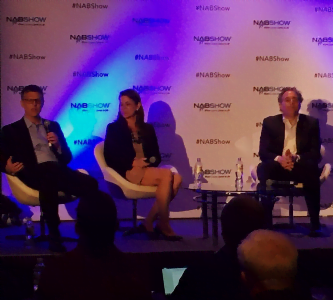
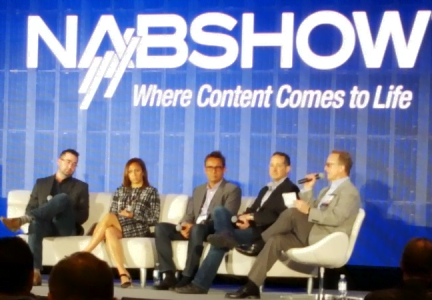
Sin City was electric last week, thanks to its usual festivities, and the arrival of the 2016 NAB Show. Over one hundred thousand people invaded the region to get a closer look at the future of broadcasting, and it didn’t disappoint.
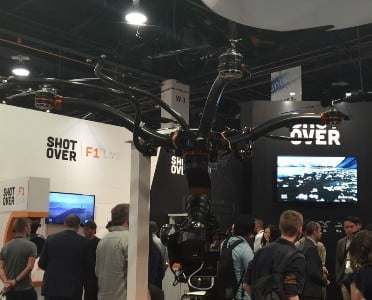
Although radio had its moments, and fair share of quality sessions, it was hidden in the background. Crowds gathered for drones exhibits, video conferences, discussions on digital and social media, virtual reality sampling, and conversations with the world’s top media minds.
It was inspiring to see thousands of people gather in one area to appreciate the media industry. It restored my faith that many still value innovation and creating quality programming. Radio may lag behind in these categories at times, but other industries see it being essential to their future success. That’s refreshing.
Because I had four days with minimal distractions, I was able to observe a lot. I enjoyed eavesdropping on various radio sessions, and am still trying to comprehend how I managed to survive an entire trip in Vegas without emptying my wallet on casino slot machines. I spent less than five minutes playing, and didn’t participate until the final day of my stay. After six spins, I hit for $250 dollars, and proceeded to cash out. Not a bad way to end a great trip.
Leisure gambling has its pluses and minuses, but I’m not here to discuss that. Instead I want to share with you, what I took away from the NAB Show last week.
It was a solid experience, that I recommend checking out if you haven’t done so before. If the only thing you care to learn about is the radio business, then it might not be your cup of tea. Instead you may want to attend the NAB Radio Show this September in Nashville.
However, there’s a lot happening in this world. While my focus may be on the radio industry, I also enjoy taking advantage of opportunities to learn something new. If the world’s leading experts are going to gather in one city, and share secrets on how they’ve succeeded, then I’m going to soak up every ounce of knowledge they’ve got to offer because you never know when an idea or trend from one industry might become valuable to the one you make your living in. Plus, who doesn’t enjoy seeing drones perform up close?
Now on to the observations.
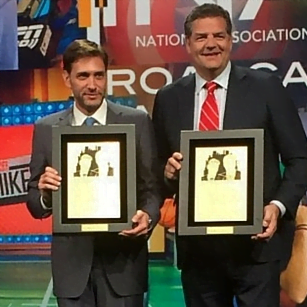
Mike and Mike – The ESPN Radio duo were inducted into the NAB Hall of Fame, the result of a successful seventeen year partnership on the nation’s largest sports radio network. Greeny and Golic not only deserved to be honored for what they’ve accomplished on the air, but the way they’ve conducted themselves as individuals during the course of their careers also speaks to their integrity and character as people.
Prior to the induction ceremony, CAA sponsored a pre-show gathering which was jam packed. Whether that was due to the Mike’s being present or free booze being available is up for debate. Mike and Mike gave an impromptu speech, and thanked everyone for being part of their special day. The room had its fair share of heavy hitters in it. Most of ESPN Radio’s management figures (Traug Keller, Dave Roberts) were in attendance, as were other broadcast leaders such as Dan Mason, Bill Hedrich, Jeff Smulyan, Greg Solk, and Bob Profitt.
When it was time to be recognized, the duo were introduced following a great video which captured the essence of their show during its seventeen year run. They expressed their gratitude to the NAB for recognizing the show and what it had accomplished, and offered a few doses of their humor during a short but effective speech.
One thing about Mike and Mike that many in our business overlook is how seamless they make everything look. For seventeen years they’ve woken up five days per week at three or four AM to go perform on radio. In 2004 they added a television simulcast which only further exposed the program. Now imagine having every one of your opinions, jokes, questions, or comedic bits under the world’s microscope every day. Anything they say or do can appear in print or be used against them by agents, players, teams, or their own company.
They have to serve multiple masters with different agendas while being socially active and responsible. Add in working with sponsors, and creating content that will fuel the radio department’s success online, and satisfy affiliates, plus traveling for road shows where they’ll be expected to interact with fans and local teams/clients during each day of the trip. I didn’t even mention yet the actual work of preparing, watching games, and trying to maintain some semblance of a family life.
How many shows could handle all of that? Many say they can, but it’s harder than you think.
It’s all of those reasons above why Mike and Mike are now members of the NAB Hall of Fame. Their induction ceremony was classy, and one of the highlights of the entire week.
Failing To Read The Room – During the course of one hour, Kim Komando managed to reel in an audience, only to lose them. Her command of the stage was strong. Her knowledge and passion for her brand, and the industry was sharp. But over preparation, and an inability to adjust sucked the air out of the room. Not exactly the way you want to setup a Hall of Fame induction for two popular personalities.
I felt bad for Kim because if this were a normal conference, she’d have passed with flying colors. But many in this room were there to see Mike and Mike enter the Hall of Fame. Picking this day to present an hour long infomercial on the Kim Komando show reflected poor judgment. I witnessed multiple CEO’s and executives switch from being invested in her commentary to getting annoyed. A few even left the room. I could be wrong but I don’t recall her saying a word at the end about Mike and Mike. I asked multiple people and they didn’t hear it either.
Because Kim’s speech dragged, it caused the session to run past its scheduled time, and reduced Mike and Mike’s time on stage. Kim is very talented, and has an excellent story to share, but if there’s a lesson to be learned, less is more. Be ready to abandon the script. If you don’t, you’ll lose the crowd, and your message will fall on deaf ears.
The Las Vegas Sports Radio Scene – I had an opportunity to run into two old friends during my visit. Mitch Moss, who produced for me at 95.7 The Game in San Francisco, now hosts middays on ESPN 1100. Matt Perrault, who I’ve known for a over a decade and auditioned for me once in St. Louis at 101 ESPN, hosts evenings on Yahoo Sports Radio.
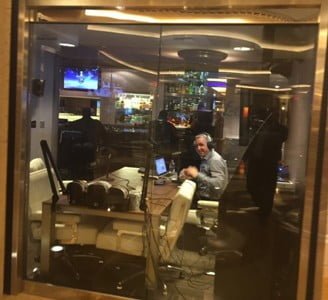
Each broadcast their shows from different locations. Moss operates out of a radio studio off of the strip, and Perrault from a created studio inside the Palazzo casino.
What I didn’t realize before my journey to Las Vegas was how many sports stations operate in the city. There are seven stations listed as operators of the format. Granted, most of them are national brands, but that is still too many for a market which has under 2 million people residing in it.
If there’s one benefit, it’s that the city receives some of the best tourism support anywhere in the country. That makes it easier to create effective promotions and remotes for local stations. It also further provides evidence to the NFL and NHL that the city could be financially productive if either league elects to move one of its teams there in the future.
Networking – If there’s one major benefit of heading to a show like the NAB, it’s the opportunity to meet and mingle with numerous people in the industry who you might not normally run into. That’s one of the real joys of the experience for yours truly. Spending time with Kraig Kitchin, making small talk with Fred Jacobs, Dan Mason, and Michael Fiorile, catching up with old ESPN teammates Ray Necci, Amanda Gifford, Pete Gianesini, Liam Chapman, and Justin Craig are all part of what made the trip memorable.
I was surprised though by how many broadcast executives I ran into seemed to be in a rush to get out of each room. I realize that not every conversation is going to be fruitful but if you’re going to take the flight, stay in a hotel room, and engage in hour long sessions discussing the future of radio and why it’s a business people should want to be involved in, you should probably allow for some time to indulge the audience afterwards. This is their opportunity to meet you, compliment your work, and ask a question or two. There’s no harm in that right?
Guys like Erik Hellum of Townsquare, and Jeff Smulyan of Emmis were gracious with their time, so I don’t want to paint a picture that lumps everyone in as being distant. That wouldn’t be fair. I’ve been in this industry for twenty years, and fortunate enough to foster enough relationships that I don’t need the extra face time, but for those who don’t travel much, and are new to the business or considering entering it, the way they’re treated during face to face discussions can impact whether or not they pursue a career in our industry.
It’s silly to take the stage and express concern about a lack of interest in the industry from younger people, but then hightail out of the building when they ask for a few minutes of your time. Maybe I’m making a bigger deal out of this then I should, but I bet people will take notice when the next Steve Jobs chooses a different line of work because he or she was turned off by the way radio people responded to their request for time.
Joe DiMaggio used to say “you never know who’s watching you for the first time, so always give your best”. That’s some great free advice for some of our people to consider.
Appreciating Innovation – Fred Jacobs moderated a session on innovation which featured Emmis CEO Jeff Smulyan, NPR COO Loren Mayor, and National Radio Talent System CEO Dan Vallie. While each participant spoke on behalf of their organizations and the numerous things they were doing, the one who connected most with me was Smulyan. That’s probably because he was the one person with enough guts to launch an all-sports format in New York when everyone told him it was a stupid idea which had no chance to succeed.
He used that same mentality to launch the first hip-hop station Power 106 in Los Angeles, which was also thought to be another one of his terrible ideas. Now, he’s facing similar backlash for his belief in the Next Radio app.
Truth be told, I don’t know if his latest project will or won’t pass the sniff test. Many have poked holes in the project, and some of the criticisms are valid. However, I can appreciate that Smulyan is taking a risk to try and make industry measurement better.
Often we complain about radio not receiving its full share of listening, and sales people and market manager’s everywhere cling to old articles which tout radio’s massive 93% reach. The reality though is that the ratings system is tremendously flawed. I refuse to accept that what we have provided to us from Nielsen is the best that we can do.
If Spotify, Facebook, YouTube, Google, Twitter, and iTunes can figure out how to measure their audio and video offerings, and provide excellent analytics for clients, than radio should be able to do the same. We see advanced data with our mobile and digital sessions, so why can’t the quality of measurement for over the air listening be the same?
The Next Radio App might be the solution radio needs, or it might not. That Smulyan is willing to bet on it, and invest his time and resources to make it work speaks to his confidence in the product. Many people talk about innovation, but few have the scars to prove they’re trying. Jeff not only sets the example for his company, but he does so for many in the industry. That alone gets my respect and appreciation.
Millennials – I apologize in advance if this comes across as negative, but it’s time for radio to take a good hard look in the mirror when it comes to talking about how to reach the younger generation. For starters, work needs to be done on the arrangement of some of these panels. Rather than rolling out the same industry people again and again, how about including some members who actually live, breathe, and speak the lingo of the audience that the industry claims it wants to reach?
No disrespect, but how many sessions on reaching millennials must be staffed by members who are above fifty and sixty years old? Do we honestly believe that younger people are going to take their cues from people that don’t live their lives the same way? It’s no different than telling someone older to take their cues on investments, and retirement from a twenty year old.
I’ve spent the past six to eight years attending multiple conferences, and every single time I go, I’m left befuddled by the image crisis that plagues radio. We talk about the future, and being ahead of the curve, yet those who think that way, and are likely to create the next big thing that helps our industry are left back in their studios.
There’s something to gain from every single person who speaks on a panel, so I want to be clear that this isn’t only about age. I believe that including an older perspective in the conversation is important. But, when variety isn’t provided, and a mixture of opinions, ages, genders and races isn’t offered, you miss the whole point.
For radio to succeed, it has to reach everyone. You can’t do that when the chosen mouthpieces come from the same neighborhood and fail to relate to those living in other locations. There are enough people in this business to create thought provoking discussion. I’d like to see the organizers of these conferences work harder to produce original sessions that provide a variety of personalities and opinions and leave everyone in the room thinking.
Right now there’s a lot of butt kissing, rah-rah speeches, and solutions coming from one side of the street. If radio really wants to move forward, and reach young people, it has to be open to hearing their perspectives, and involving others who actively shape our brands each day. I’ve heard many industry folks complain about these issues at each conference I’ve attended. It’s time something was done to make these sessions balanced and valuable rather than using them to reward our industry friends.
What About The Product? – The final issue that stood out during this conference was one that people at the higher levels may not even realize is happening. CEOs, Corporate Executives, and Market Managers focus their discussions on sales, investments, expenses, radio’s increased listening percentages, and the importance of growing digital and mobile revenue.
But, do you know which one area isn’t mentioned? Their products!
It’s the brand, and the programming it provides that leads a person to listen, and grow from being a casual fan to a station advocate. Without highlighting the reason why we matter to audiences, we’re shooting ourselves in the foot.
The majority of people who attend these conferences want to learn why your brands matter, what you do to make them unique, how you’re positioning yourself in the digital space, and where you see the future. They want to absorb your passion for radio, not be treated to a sermon on business acquisitions, and why you’re debt-free or considering bankruptcy.
So why does this happen?
The honest answer is that most radio executives are removed from the product development portion of their organizations. They are focused on big picture growth, finding ways to monetize their investments, and networking with various industry people to help advance the company. They perk up and offer more opinion when digital is raised as a topic, but that’s because they see the majority of business heading in that direction, and they know they have to play in that space to warrant a larger piece of the revenue pie.
Look around the industry today and you’ll find numerous operations run by people with strong sales backgrounds. There’s nothing wrong with that. As a matter of fact, understanding business and how to make money is an important aspect of the job.
But so is recognizing what makes your brand’s special, and the reasons why they succeed. If an organization’s leader doesn’t have a passion and understanding about the brand’s they’re responsible for, and why they matter, they’re missing out on the most important sale of all. It’s easy to toss around catchphrases like “content is king”, and maybe you’ll hide out in the weeds for a while and trick people, but at some point, listeners and advertisers start to vacate and results begin to dip if they sense you’re unattached to your products.
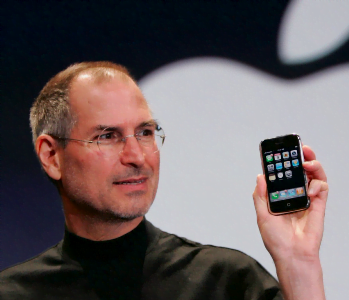
Can you imagine if Facebook didn’t have Mark Zuckerberg or Apple never had Steve Jobs? The reason why companies like Apple, and Facebook (two of the best of all-time) have been a giant success is because they were run by people who understood business but had a deep passion and connection to the product.
If you look at the annual keynote addresses provided by both groups, they’re well attended, and covered by various national media outlets because people genuinely want to hear what they have planned for the future. It’s easy to buy in and see the vision because the discussion revolves around the product, the future, and how each brand will work to further satisfy its consumer’s growing wants and needs. They focus on innovation, and pleasing their fans, not their investors. It’s the old adage “if you build it, they will come”.
Because they deliver fascinating products, it leads to results. Yes the business does matter, and each are in business to turn profits, but make no mistake about it, they succeed because of a vision for their brands, and an ability to passionately communicate it to those who pay attention.
Now imagine Tim Cook (Jobs’ successor) or Zuckerberg leading one of these radio conferences. They’d be given a stack of papers to explain ratings growth, stock price activity, company debt, and how to generate more sales. When the subject of programming and product improvements are raised, they’d defer to someone else, because they don’t have the answers.
As I listened to numerous sessions where questions were asked to panel members about finding new talent, creating exclusive digital content, incorporating video into radio, and fighting off competition from Pandora, Spotify, and Satellite Radio, I heard a lot of generic replies, and a whole lot of insufficient details. That’s not a good look.
There are certain sessions during a media conference that will pass with flying colors (Fred Jacobs’ innovation session). There are other ones which will appeal to your personal interests (Mike and Mike enter the HOF). Unfortunately though I find myself leaving many of these trips with more questions than answers. I just hope the younger generation who are considering a career in our industry aren’t doing the same.
The city of Omaha may not have a professional sports team to call its own, but that doesn’t mean its passion for sports doesn’t run deep. It’s because of that desire that the market’s two top local sports radio brands are producing healthy ratings.
In the latest winter book, 1620 The Zone reaped the benefits by leading in all Men 25-54 categories. AM 590 ESPN turned in a respectable finish, but was the clear runner up. However, with 590 adding the rights to the Nebraska Cornhuskers last February, that momentum can change quickly.
What’s undeniable at this point in time is that local listeners have two great options to listen to and each provide a different style of programming. To get a better idea of how each brand stacks up, here’s a look at the individual show performances, and a couple of the traditional timeslots.
1620 THE ZONE (KOZN):
M-SU 6A-MID = 6.6 (3rd)
M-F 6A-7P = 8.1 (3rd)
M-F 7A-11A (Sharp & Benning) = 8.8 (2nd)
M-F 11A-2P (Game Time with Nick Bahe) = 8.8 (2nd)
M-F 2P-6P (Unsportsmanlike Conduct with John Bishop and Josh Peterson) = 8.9 (1st)
*** A big month for The Zone headlined by the afternoon show hitting #1. Overall the radio station won the head to head matchups in every timeslot which is huge, but even more importantly was the fact that they finished in the Top 3 in every category. That speaks to the station’s consistency and content/personality appeal.
AM 590 ESPN (KXSP):
M-SU 6A-MID = 3.8 (8th)
M-F 6A-7P = 4.4 (8th)
M-F 5A-9A (Mike and Mike) = 7.1 (3rd)
M-F 9A-12P (Dan Le Batard) = 2.4 (12th)
M-F 12P-2P (Russillo and Kanell) = 4.0 (8th)
M-F 2P-6P (The Drive with Joe Quinn and Nick Handley) = 4.3 (8th)
*** 590 is getting a GREAT performance from Mike and Mike. Russillo and Kanell and the afternoon show each turn in Top 10 finishes which is respectable. Le Batard right now is the one program which isn’t popping. We’ll have to see if that’s seasonal or a regular trend. Overall the station is in the Top 10 and during the Fall it’ll likely perform much higher with Huskers football on the station’s airwaves. The key is holding that audience over during the week.
TRADITIONAL DAYPART HEAD TO HEAD COMPARISONS:
M-F 6A-10A:
1620 The Zone = 7.5 (2nd)
AM 590 ESPN = 5.4 (5th)
M-F 10A-3P:
1620 The Zone = 9.6 (2nd)
AM 590 ESPN = 3.4 (10th)
M-F 3P-7P:
1620 The Zone = 7.8 (2nd)
AM 590 ESPN = 4.3 (7th)
One other item I was able to examine was the Men 18-49 category. Although this isn’t the focus for determining success, it is an area to keep an eye on because as older listeners age and exit the desired demo, younger listeners enter it for the first time, and judging by what I’ve seen, both brands are in good shape.
Similar to the Men 25-54 story, The Zone is in a stronger position with younger listeners. They gain an extra point on many of their key shows. For example, Sharp and Benning delivered a 9.8, Nick Bahe had a 9.9, and Unsportsmanlike Conduct turned in a 9.5. For AM 590 they lost a point on Mike and Mike, and two tenths with Le Batard. However, they gain three tenths with Russillo and Kanell, and one tenth with The Drive.
The interesting book to look at will be the Fall when 590 can leverage the power of Cornhuskers football, and use the increased attention to help drive additional tune ins to its weekday programs. At this point in time though, the market belongs to The Zone. The talent are consistent and providing exceptional programming, and based on the latest numbers, the audience agrees.
ESPN Radio has developed a footprint in New York over the course of the past fifteen years, one which has seen the radio station add the play by play rights for the New York Jets, New York Knicks, and New York Rangers, and a television simulcast of its afternoon program “The Michael Kay Show”. The station also recently added a television highlights show of its midday program “Hahn and Humpty” which features Alan Hahn and former Islanders goaltender Rick DPietro.
During its history, a number of talented high profile personalities have called ESPN New York home. Notable personalities such as Stephen A. Smith, Max Kellerman, Mike Missanelli, Brian Kenny, Brandon Tierney, Jody MacDonald, Mike Lupica, and Ryan Ruocco have worked for the brand, so a lack of talent has never been the issue.
However, despite a ton of talent, none of the moves have propelled the radio station past New York’s ratings leader WFAN.
The recent Winter book was released, and according to the New York Daily News, in the key demographic of Men 25-54, the Fan cruised to victory in all key dayparts.
In mornings (6a-10a), “Boomer and Carton” were 2nd in the market with a 6.5. ESPN New York’s “Mike and Mike” placed 15th with a 2.7.
In middays (10a-1p), WFAN’s “Benigno & Roberts” delivered a 7 share to finish 2nd. ESPN New York’s combo of “The Dan Le Batard Show” (10a-12p) and “Hahn & Humpty” (12p-1p) produced a 2.1 share and came in 15th.
In afternoons on WFAN (1p-6:30p) Mike Francesa recorded a 6.9 and was in 2nd place, while ESPN New York’s combo of “Hahn & Humpty” (1p-3p) and “The Michael Kay Show” (3p-6:30p) generated a 3.6 to place 10th.
If you dive deeper into afternoons, and look at the traditional daypart (3p-7p), Francesa was 2nd with a 6.2, and Michael Kay had a 4.2 which put him in 8th. Kay’s performance was easily the best on the radio station once again.
Right now WFAN continues to lead by employing a live and local strategy. The radio station also is the home for the New York Yankees, New York Giants, Brooklyn Nets, and New Jersey Devils. They also are carrying some New York Islanders playoff games.
ESPN New York meanwhile pays the price for its national offerings. When they feature a high profile talent like Kay, they provide strong local competition. The challenge going forward is to find a way to provide more of it.
Tom Tolbert will continue hosting afternoons on KNBR in San Francisco for the foreseeable future. The former NBA player, and host at KNBR since 1996 has inked a new multi-year contract with the radio station’s parent company Cumulus. The news was first reported by All Access.
KNBR Operations Manager Lee Hammer said, “Tom has been a mainstay at KNBR 680, holding down the key afternoon drive slot for the past 20 years. I’m excited to announce that with this new deal, he will continue to entertain Bay Area sports fans for many years to come. As a former NBA player, Tom is a member of a small club of former athletes who have enjoyed tremendous success as a sports radio talk show host.”
Tolbert added, ” I’m incredibly fortunate to do what I do where I do it… Signing with KNBR for multiple years was a no-brainer.”
In addition to hosting afternoons, Tolbert also provides radio analysis on Golden State Warriors home games.
ESPN Media Zone reports that Bill Barnwell has signed a new multi-year extension to remain with ESPN. As part of his new deal, Barnwell will continue writing his popular NFL column for ESPN.com. On Monday, he launched a new flagship ESPN Audio podcast, The Bill Barnwell Show (episode one). He will also contribute to ESPN Radio and television and have the opportunity to expand into other sports.
Barnwell joined Grantland in 2011 and has been with ESPN since November. His ESPN.com NFL columns, which combine quantitative and qualitative analysis to dig deeper into how teams win games and how players impact them, rank among the site’s most popular features.
“During his time with both Grantland and ESPN, Bill has proven to be a thoughtful and creative signature voice with an ever-increasing following. His work makes fans smarter about football, and we are committed to finding even more opportunities for Bill to elevate our coverage of the NFL and other sports,” said Chad Millman, Vice President & Editorial Director, Domestic Digital Content, ESPN.
Added Barnwell: “I’m thankful for the opportunity to continue working with the editorial staff at ESPN, and excited to launch a new sports podcast in the months to come.”
Curt Schilling has been terminated by ESPN, the network announced Wednesday night. The MLB Analyst and former pitcher was let go after posting a meme on his Facebook page Tuesday that many considered to be anti-transgender.
“ESPN is an inclusive company. Curt Schilling has been advised that his conduct was unacceptable and his employment with ESPN has been terminated,” the network said in a statement.
Schilling has yet to respond. Expect more to come on this story.
Mike Greenberg and Mike Golic, were inducted Tueday into the Broadcasting Hall of Fame by the National Association of Broadcasters (NAB) in Las Vegas. The hosts of ESPN’s popular “Mike and Mike” program, join Bob Uecker, Vin Scully, Harry Caray, Orson Welles and Paul Harvey, among other radio notables who have also been inducted.
“It is certainly the greatest honor of my professional life,” said Greenberg of the recognition. “When I see the list of people who have been inducted it is impossible to imagine being included. But I’m thrilled and very grateful to everyone who supported us.”
Golic stated, “I’m stunned. When you look at the list of people in this Hall of Fame and think that my name is next to these names, I thought one of two things. We’re in a separate category not associated with these great names or it’s a down year and they had to name somebody. I certainly don’t feel I belong with these great names.”
“Mike and Mike” have been together since 2000. , Their show airs weekday mornings on hundreds of ESPN Radio affiliates, and on television on ESPN 2. They celebrated their 15th anniversary in March.
Additionally, Greeny and Golic have appeared in two motion pictures (“Valentine’s Day” and “Just Wright”), served as guest emcees at the White House’s Tee Ball on the South Lawn, and received a Sports Emmy for Achievement in Content for Non-Traditional Delivery for their “Off Mikes” animated comedy series. In April 2010, the duo released “Mike & Mike’s Rules for Sports and Life,” which reached number three on the New York Times best-sellers list.
KNBR in San Francisco has adjusted its programming schedule, which coincides with the radio station resigning its morning show “Murph and Mac”, hosted by Brian Murphy and Paul McCaffrey. The show which has been a staple in the Bay Area for the past 10 years will shift from its previous time slot of 5a-9a PT to a new time of 6a-10a PT.
With “Murph and Mac” airing one hour later, Patrick Connor will take over from 5a-6a PT. “P-Con” as he’s known to Bay Area listeners has been the producer and on-air sidekick for the morning show, and a weekend talk show host.
Additionally, “Gary and Larry” which features Larry Krueger and Gary Radnich will drop back an hour and host their program from 10a-1p PT. They had previously been on from 9a-12p PT.
The one show to be impacted the most as a result of the changes are the midday program “Fitz and Brooks” which is hosted by Bob Fitzgerald and Rod Brooks. They lose an hour and shift from 12p-3p PT to a new broadcast time of 1p-3p PT.