“It’s the same old story, same old song and dance, my friend”
– Aerosmith
It’s ironic that a couple of lyrics written by a rock band (Aerosmith) which relied heavily on radio for the past four decades would perfectly describe the radio business and some of its biggest problems in 2016.
Yes there are plenty of reasons to celebrate. The talent pool is stronger than ever, stations have migrated from AM to FM, apps and streaming sessions are now available, and content is provided on demand. The ability to reach people during and outside of the show is enormous thanks to the invention and evolution of social media.
But that doesn’t eliminate the industry’s biggest problems – our inability to get out of our own way, a lack of focus on the talent and content creation process, and a willingness to settle for mediocrity and do the same things over and over again.
It’s assumed that our industry is innovative. One which is led by creative people who work thirteen to fourteen hour days because they possess an endless passion to produce content and connect with communities. It’s supposed to be the cool business to work in, guided by leaders who crave teaching, motivating, and introducing new ideas to excite an audience and their own programming teams.
But somewhere along the way, that changed.
Programmers started becoming saddled with sales, digital, promotions, and payroll duties. In some cases, engineering, and production responsibilities were added too. Suddenly, the head of a programming department who was uniquely qualified to identify key talent, and create great programming, became handcuffed. No longer did the content or talent development process matter as much as finding ways to make the radio station more profitable.
Can you imagine if the movie industry pulled Steven Spielberg, Quentin Tarantino, and Martin Scorsese away from writing, directing, and producing films? We’d have a whole lot of suck on the screen.
 Radio Is Under Attack:
If you’re not aware of this by now, where have you been? Audio content today is available in more locations than ever before. But, there’s still a difference between quality and quantity. One issue that we have to solve is finding a way for our best people to spend more of their time on things that matter most to the audience – the talent and content.
This is the part where you tell me “relax JB, radio has been tested before, it always works out”.
Maybe it has because of our dominance on the dashboard, but advertising revenues for the radio business are in a much different universe than digital and television. The last time I looked, digital was diving deeper into the audio waters. They’re doing the same with video.
It seems like every month I’m reading a story about ESPN losing television subscribers, and just yesterday, Twitter secured a deal with the NFL to stream its Thursday night games. CBS and NBC spent a fortune to offer the NFL on television, yet here comes the social media giant right behind them to take out their legs and put the same programming on digital devices. If you’re running CBS or NBC that has to make your blood boil.
Let’s examine some recent history for a minute.
 Ten years ago, Sirius was thought to be a neat idea that wouldn’t last. Many felt consumers wouldn’t pay for radio content. But then Sirius forged a deeper relationship with the auto industry. Now the product is available in millions of vehicles, and since they struck that deal, the satellite company has grown its consumer base to nearly thirty million people. Suddenly, paying $10-$15 per month for quality content with minimal interruptions isn’t such an outrageous idea.
Then came the podcasting business, or as it was labeled by radio people at the time, “niche programming with limited appeal”. But here we are years later, and brands like Serial, Bill Simmons, Adam Carolla, and many others are dominating each week on iTunes, and becoming attractive platforms for advertisers. Consumers also love the programming because it’s shorter, unique, available on demand, and presented without a heavy barrage of ads.
Next we have the newspaper business, which once thought the internet stood no chance. Now, the majority of their business exists because of it.
That same print industry which for decades employed columnists and reporters who ridiculed sports radio personalities for a lack of journalistic integrity and common sense, now have a large portion of their most talented writers shifting to audio and video content providers to make a living.
 And that same desperate print business which turned its nose at sports radio, is now making heavier investments to be bigger players in the audio space. The Pittsburgh Tribune and Boston Herald for example, offer full service sports talk channels on their websites. Others such as the New York Times are starting to follow suit.
Whether it’s the podcasting business, the newspaper business, or satellite radio, each are committed to creating sports audio content. Make no mistake about it, any brand that delivers sports spoken word content on an audio platform is a competitor. If they can creep into the mind of your audience and pull them away from your product, that makes them a threat.
As more businesses enter the sports audio world, you’ll find them placing their time, energy, and resources into creating special content. Case in point, when Facebook bid for the NFL streaming rights, they never objected to paying for the content. It was when the NFL insisted that heavy advertising be part of the digital package that they developed a sour taste in their mouth. After the NFL refused to reverse their stance, Facebook walked away from the deal.
Can you imagine a radio station doing that? Fat chance.
 Investing Time In Your People:
So with competition increasing, and content creators becoming vital to a brand’s success, what is radio doing about it? The usual. It ignores the signs, and worries only about today’s results.
I recognize that leading an operation is extremely difficult, but I’m beyond stunned by the amount of feedback I get from on-air people who receive little to no support or feedback. When they do receive it, it’s usually the result of a company policy change, a request to do something that helps sales or a business partner, or it’s to highlight a mistake the individual made. Rarely do they receive positive reinforcement or guidance on how to execute better.
I had one personality reach out recently and mention that they hadn’t received a critique from their boss in over a year. One other host shared his frustration over receiving mixed messages during content evaluations, and another expressed concern over his boss’ ability to coach and offer specifics to help him grow.
I’m not present in each of their locations, so there could be other reasons for why those situations exist, but to use an example from the world of sports, a player and manager will have disagreements over the course of a long season. The manager can never stop coaching, and the player has to keep playing and looking for ways to improve their game.
If you’re going to lead a team, my one piece of advice is to never lose sight of what your title says you are – “Program Director”. If the last thing you care about is your on-air programming, and the talent creating it, it’ll come back to bite you in the ass.
 Embracing Technology:
There shouldn’t be a disconnect between radio and digital, but unfortunately there are still some folks who see digital as a threat to radio’s existence. Unless you’ve been living under a rock, you should be aware that Facebook has introduced its video service, Facebook Live. It’s a major attraction to users and television broadcast companies, so it should be a big draw for radio groups too right?
Not exactly.
In the United States, Fox Sports and ESPN are using it to compliment their sports television coverage. In the UK, the BBC and Sky were two of the first sports broadcast groups to embrace Facebook’s Live video potential. All use the platform to feature special content and behind the scenes opportunities, and the response from each of their audiences has been strong.
For example, the BBC’s first two uses of Facebook Live for a Match of the Day with Gary Lineker, and a showcasing of Everton fans celebrating their team’s FA Cup quarter final victory over Chelsea, were viewed over 1.7 million times.
Sky on the other hand used Facebook Live to feature exclusive content such as a Soccer discussion on the England squad with Adam Smith and Alex Scott, and that led to 150,000 views during the course of an hour.
 During the past week, I talked to four Program Directors and Producers who told me they were instructed by their companies not to use the video service. All had been using the platform and were generating thousands of views for their shows and radio stations.
One programmer was told not to use it because the video couldn’t be counted towards the station’s ratings. A producer was told by his boss to turn off the service because it could distract the host and cause the station to receive less phone calls. My personal favorite was the programmer who told me that his Sales Manager wanted the service turned off because they were going to bring Facebook and Periscope executives to the table, and have them bid to be the station’s sole video provider.
That sounds great, but the day that happens, they’ll have Instagram and Apple bidding to be the station’s exclusive photo provider, and birds paying for the right to fly in the same sky as airplanes.
When I hear these examples, I can’t help but think about how many times people have criticized the radio industry for being late to respond to changes in the world. It’s confusing, and disappointing. The audience lives on social media. They’re not leaving these platforms, and neither are advertisers. In fact, the numbers are growing for both.
 If thousands are watching your talent on Facebook Live, is that really a bad thing? Isn’t it the station’s job to figure out how to monetize it? Do we not podcast audio because it may take away from the radio station’s ratings? Do we not promote things on Twitter because the audience will know the answer and not want to put the dial on?
Rather than putting our blinders on, we need to step back and look at the big picture. Do you really think Facebook Live video isn’t going to last? Do you think your audience isn’t going to use it? Not everything can be measured by ratings or sales. Sometimes you make decisions because it’s the right thing to do for your audience. If you can show that the personality or brand will be damaged by being available on this platform then that’s a different story, but I think that’ll be a hard case to make.
It reminds me of a chat I had a few years ago with an executive about Twitter. They urged me not to follow the audience back on one of my station accounts. When I asked “Why not?” the response I received was “if you do it for one, you have to do it for all”, and “it will clutter up your Twitter feed”.
Nowhere in the response did they take into account how it made the listener feel. I believed then and still do to this day, that if someone loves a brand enough to follow it, and you provide them with the same courtesy, you’ll gain more word of mouth advertising, brand promotion through retweets, and heavier listening.
 I also believe that there are PPM users in every market who have social media accounts, and are following their favorite brands. If you can remind them of the quality content you have available, and make them feel good by following them back, I’m confident it’ll help your station’s performance.
If a show on your radio station is able to bring in thousands of viewers through a platform like Facebook Video, then you should be all over it. The same applies to using Periscope, Twitter, Facebook, Instagram, YouTube, or any platform where you’re able to generate mass audience.
Do you know for a fact that the viewer you’re reaching doesn’t have the radio on where they’re at? Have you considered that by seeing you through the video service they could want to click on your stream or turn on the radio to hear the rest of the presentation?
Rather than doing what radio usually does and saying “we’ll do this when everyone else does it”, how about doing the opposite and taking an initiative to provide a benefit to the audience? The only conversations you should be having are “how do we make this better” and “how can we utilize the service and the results we’re producing to generate more ratings and revenue”?
 In-Game Interaction:
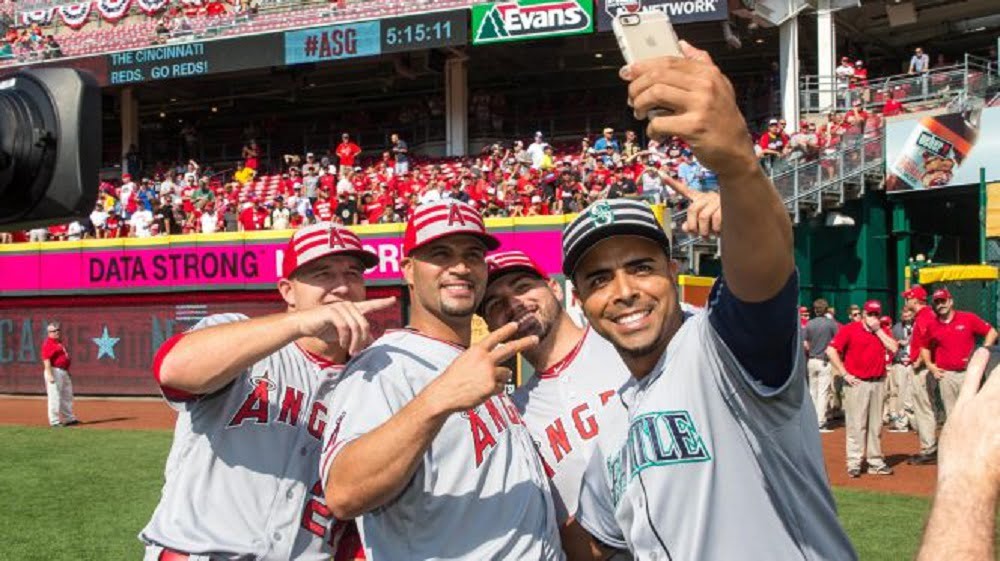
The final portion of this article that I want to examine involves interaction during live play by play broadcasts. In the current environment, broadcasters describe and explain to people what’s happening on the field during a sporting event. The listener is then expected to consume and process the message.
But, if you’re watching or listening to a game in 2016, chances are you’re also using your phone, tablet, or computer to interact with others. Take a look at the amount of tweets that were sent out on Monday night during the NCAA College Basketball Championship game, and on Sunday night during WWE’s WrestleMania 32. It’s a very powerful story for Twitter and Facebook.
Radio and television broadcasts may introduce a handful of tweets during a game but it doesn’t take Nostradamus to figure out what’s coming next. If you’re the voice of a local team’s games, or the face of a broadcast on local or national television channels, start preparing for a world where you’re calling the action over the air, and interacting on social platforms during it. No longer will it be enough to present a message, without also being accessible.
 The quick response from many play by play announcers will be “That’s not possible. I do a ton already, and can’t take away from my focus on the air”. They do have a point, but I’ve also spent enough time inside of broadcast booths to know that announcers still find time to text their buddies, read the internet, and browse social media. To suggest that they can’t respond during a game is ludicrous. If players can use Snapchat during a game, Periscope during pre-game, and reporters can be locked into Twitter during an NFL and NBA Draft, then announcers and analysts can find time to respond to the audience.
I’m not saying it’s easy, or ideal, but if you think that the future isn’t going to include play by play hosts and analysts being accessible on social media, and promoted on-air to attract listener/viewer responses, you’re sadly mistaken. I expect national television groups to make it a heavier part of their presentation because they’re always looking for ways to innovate the broadcast. Even when they do things that drive us nuts, I appreciate that they take risks to try and make things better. For example, we now have in-game reporter’s next to the dugout, in-game interviews with managers, a graphic to show if a pitch was in the strike zone or not, etc.
The one challenge I see will be the cooperation from local teams and professional sports leagues. Some will embrace the future and want to tap into the passion of the audience during their game broadcasts, and others will reject it because they’re either set in their ways or unwilling to give on-air exposure to a social media platform for free.
There will also be issues to navigate with advertisers once they enter the mix, but rest assured, radio stations and local teams will make it a bigger part of their programming strategy in the future. I already hear some announcers responding to tweets, others working out of town stringer reports into their broadcasts, and I suspect video streaming will find its way into radio booths in the near future.
 Prior to leaving San Francisco in 2015, I approached the Oakland Athletics about adding our Pre/Post host Chris Townsend into the game broadcast. I knew the play by play crew of Ken Korach and Vince Cotroneo would be open minded to the idea because they had a great relationship with Chris, plus let’s be honest, during a three hour broadcast, there’s plenty of time to fill. Tossing it downstairs a few times for a handful of minutes would not compromise the broadcast, especially when that exact situation occurs frequently during a TV broadcast.
The idea was to use Chris as an in-game reporter and social media correspondent. If a major injury or key moment in the game took place and required further explanation, Chris would have access to provide an update for the audience. He’d also be active on Twitter interacting with fans throughout the game using a special hashtag which we’d promote during the broadcast.
By doing this, it would give fans an opportunity to interact with Chris during the game, and potentially have their messages appear on-air during the broadcast. It was an easy way to use social media to bring fans and the broadcast together, and take them further inside. There was also the possibility of introducing behind the scenes video with Chris through Periscope.
Unfortunately, I was leaving town two months later, and the team felt there were a number of hurdles that would need to be cleared to make it work. There were also union restrictions, and MLB approvals that needed to be met, so it unfortunately never materialized.
Maybe it wasn’t meant to be with the A’s broadcast, but I guarantee you that it will become a part of game broadcasts in the future. If teams and leagues want broadcast companies to keep paying premium dollars for their rights, they’re going to have to allow more access and unique opportunities to generate revenue. If not, those rights deals will decrease.
We may all agree that the team’s games have value to a radio station’s airwaves, but not if they’re going to cause the company to lose large sums of money. With digital consumption and interaction rapidly growing, and advertiser interest following suit, it’s going to be an area where both sides allow for flexibility. Without it, they both lose.
 The Conclusion:
I recognize that some of my views may produce a difference of opinion. If you disagree with any of it, that’s ok. Nobody is 100% right. But I will leave you with a few points to ponder.
- Is there any platform on the planet where more of your audience exists besides Facebook?
- If thousands are clicking your video stream to watch your talent, is it really hurting your business?
- How are you adjusting your schedule to make sure your people receive feedback, support and understand your expectations?
- Do you think the audience isn’t going to demand more access to your play by play broadcast and members of their local teams?
This is where the world is headed. Rather than rejecting ideas because they’re different than what you’re used to, think about the long-term ramifications of the decisions you make. They could have a big effect on whether your company and audience see you as an innovator, or an obstacle standing in the way of progress.