Building a bond with an audience takes a lot of hard work. Listeners tune into sports talk shows for different reasons, but anytime I’ve done research on an audience’s tastes, and the personalities I’ve managed, one thing has shown up in the results time and time again – listeners want to know everything they can about the individual they spend time listening to.
That means, they want to know what beer you drink, where you hang out, which movie you went to see this weekend, what your favorite restaurant is, who your family is and how you interact with them, and of course, what you think of the local teams and its best players.
Sports is the common denominator that brings a host and an audience together, but when real life gets sprinkled on top of it, that helps make a relationship special.
 One line often used by my good friend Rick Scott is “you want to be a guy on the radio talking sports, not a sports talk radio guy”. Simply put, sports may be the conversation starter and the focus of the show, but you’ve got to be willing to venture into other areas and share the life you live with those who listen to you.
If you’ve ever had the chance to tune in to a show like The Musers in Dallas, Toucher and Rich in Boston, the Sports Junkies in Washington D.C, or Papa and Lund in San Francisco, they all do that. When it’s time to talk sports, they can do it, but they also have no fear of sharing the intimate details of their lives. Those real life stories help the audience get to know them on a much deeper level, and when you can go beyond the box score and the latest news involving your local teams, it makes a bigger impact.
 To add another perspective on this topic, I turned to Demetri Ravanos who is a part of the morning show with Mike Maniscalco and Lauren Brownlow on The Buzz in Raleigh, North Carolina. Demetri has worked in multiple formats, and taken notice of sports radio’s transformation from being a format led by X’s and O’s conversation, to personality driven stories and hard hitting opinions.
If you turn back twenty years ago, morning zoo shows on music stations were the big personality players in most local markets. Sports talk was a niche format with hosts who showcased their knowledge, and screamed about bad on the field decisions. Many of these programs talked at the audience not with them.
Fast forward to today, and while loud opinions are still a big focus, content often revolves around the lives of the on-air talent, and the stories in sports that occur outside the lines rather than inside of them. Demetri now explains why that’s a good thing for the audience, and those who are hosting sports talk radio shows today.
Creating Personal Connections Through Life and Sports
Every good host – no matter the format – thinks of himself as an entertainer. You’re not there to talk at people. You’re in front of that microphone to lead a conversation. The days of lecture based sports radio are, for the most part, over and it happens to coincide with an interesting time in rock radio.
 Stations in male-skewing music demos are cutting back on talk time for their talented hosts in favor of getting in one more track from AC/DC or The Rolling Stones or Pearl Jam that we have all heard a million times. In my rock radio days, I had a PD that used to tell us “tell people the station sounds like their iPod” to which I would always answer “except with songs they hate too!”
Let’s face it. When it comes to music alone, radio will never be able to compete with an MP3 player or a streaming music service that offers the user total control.
That attitude and approach has created an opportunity for local sports talk hosts. Are you capable of replacing the local morning zoo show for men in their 30s and 40s? There is a balance you have to find between being funny and not losing credibility, between staying on the biggest news of the day and letting people into your personal life. The opportunity is definitely there for the host or team that understands their market.
 The goal of any show is to develop a relationship with your audience. If your show is just “what I listen to on the way to work” for the audience, you’re not doing enough. Social media and podcasting make it possible to become an integral part of the listener’s day. That’s what Howard Stern did. It’s what Kevin and Bean did. They did it before tools like Twitter and Facebook were available to them, so Lord knows it should be easier for you.
The Howard Stern’s and Kevin and Bean’s of the world are harder and harder to find in local radio. The initial overreaction to PPM technology resulted in ten to twelve minutes of talk time spread across three or four breaks an hour for most shows. Sure, a skilled broadcaster only needs about four minutes to tell a complete story, but it will never feel like a hang.
And that is where talk radio has the advantage. You have to hit hard outs for stop sets and at the top of the hour, but a talk radio host isn’t constrained by hitting the post on Def Leppard’s “Armageddon It.”
So what separates a sports talk host from other talk radio hosts?
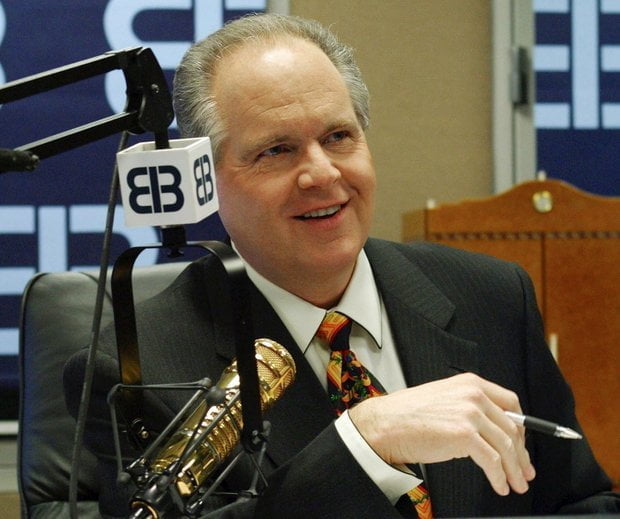 Listeners go to Rush Limbaugh (or the literally thousands of impersonators he has spawned) to talk politics. They want their political views reinforced or opposing views mocked.
Sports radio has the advantage of being friendlier in nature. A good segment should sound like a conversation at a bar or around a buddy’s grill. If you’re a host or a listener, you like sports. That’s safe to assume. Otherwise you wouldn’t be here.
So where do you go next?
The next step is to make them comfortable with you. Let them into your personal life. It doesn’t have to be intrusive. Mention what kind of beer you drink when you watch a game. If the listener shares your appreciation for that beer or despises it, you’ve caused an emotional reaction. Complain about the idiot buddy that texted you during halftime with what he thought was the perfect play to break the game wide open. That guy exists in your listener’s life too.
Using sports to create the small personal connections opens the door for the bigger ones. Opening up your life in a way that doesn’t burden the listener, but instead “invites them into your home” is how you go from “what I listen to on the way to work” to “a part of my daily routine.”
 How much “other stuff” can a sports show get away with? Well, I always tell my hosts that you have to remember people don’t just watch a game anymore. They watch a game while checking out movie reviews on Rotten Tomatoes, reading jokes on Twitter or reading relatives’ views on Donald Trump on Facebook. Clearly there’s room for you to talk about this stuff.
Now just figure out how much of that stuff is too much.
Easy right?
There are plenty of examples of hosts who have found a balance of sports and “other stuff” that works for them. Dan Le Batard, Petros and Money, and Toucher and Rich are the first shows that spring to mind. It not only fits, but has become a part of their brand. Others sound a little more awkward working in pop culture and personal stories. The key is knowing the boundaries of your element.
 For instance, a visit with a TMZ staffer may work for a show on the West Coast, but won’t play the same in the South or the Midwest. A movie review segment may work the week Batman vs. Superman is released but have no impact at all the week Zootopia leads the new releases at the box office.
Follow the trends of pop culture in the market and never fake it. If you aren’t a drinker (and no one is paying you to do it), there is no reason to ever have a beer guy on the air. Listeners may not always know what a good radio show sounds like, but they can spot a phony from a mile away.
Howard Stern didn’t become Howard Stern by faking it. He didn’t gain legions of fans by pretending to be an expert on subjects he wasn’t interested in. That’s not how any sports talk host has made their name either.
On his first day on ESPN Radio Colin Cowherd told listeners “If you like football, you’re gonna love the show. If you like baseball, you may like the show a little less.” Honesty matters. Here was a guy taking his first steps onto a national stage and he laid out where his interests lie and how they would guide his show.
“Guys” are the listener’s friends. They have relationships with guys. “Sports guys” are just who they listen to talk about the game on the way to work. Think about your interests outside of the sports world. Talk openly and honestly about them when appropriate and listeners will start to think of you as a guy.