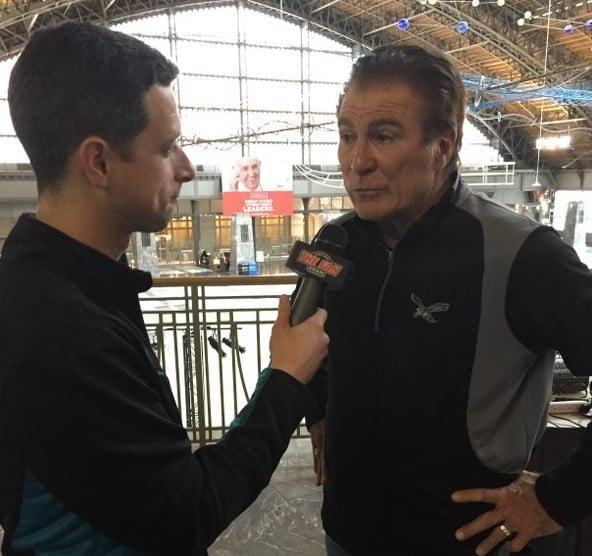
The current ratings for Fox Sports 1 may not be great, but that isn’t stopping Fox Sports National Networks president Jamie Horowitz from taking aim at his former employer, ESPN. Yesterday at the Sports Business Journal World Sports Congress, the architect of FS1 went after the worldwide leader for its declining ratings on its flagship program SportsCenter.
“ESPN has lost 30% of SportsCenter audience during the past 5 years, 40% of it from the younger demo” said Horowitz. “I’d be a little worried if I were them.”
Although Horowitz may have a point, the bigger issue is whether or not Fox Sports 1 can be the solution. The sports channel has lagged in the ratings, despite adding some high profile talent, play by play, and gaining promotional support from Fox’s main channel.
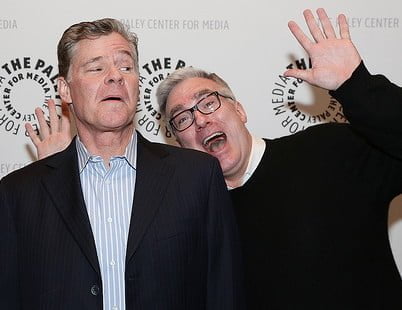
To FS1’s credit, they did add Colin Cowherd, Kristine Leahy and Jason Whitlock. Homegrown star Katie Nolan has continued to blossom, especially in the digital space, and the late night “Fox Sports Live” program was rebranded to offer more opinion and humor and play to the strengths of Jay Onrait and Dan O’Toole.
“Fox News positioned itself as provocative and opinion oriented,” said Horowitz. “I believe Fox Sports 1 can take a similar tack. Opinion costs less than news and documentaries, and is likely to stand out more in the busy sports media world.”
Although it may not be popular to members of the sports media who long for the days of quality sports journalism and less debate style programming, it’s undeniable that opinion based content has struck a chord. ‘Opinionists’ (a term Horowitz uses to describe certain personalities) like Stephen A. Smith, and Bayless, have produced big ratings for “First Take”, and others like Bill Simmons, Michael Wilbon, and Tony Kornheiser have produced similar results.
Given Fox News’ position as the ratings leader in News/Talk television, Horowitz’s plan to steer FS1 in that direction makes a lot of sense. But to produce the same type of success, he’ll need a lot more high profile talent, additional original programming, and the most important thing – time and patience from ownership.
ESPN Media Zone reports that the worldwide leader in sports will televise a two-hour SportsCenter Special: NFL Schedule Release show tonight coinciding with the National Football League’s announcement of the 2016 regular season schedule. The special will start at 8pm ET on ESPN and switch over to ESPN2 at 9pm.
Trey Wingo will host the program alongside Herm Edwards, Ryan Clark and Brian Dawkins. The crew will focus on team-by-team schedules, Monday Night Football games and other primetime matchups. Some NFL Head Coaches and Players are expected to appear on the program as well.
The ratings are in for the first quarter in Boston, and for 98.5 The Sports Hub it was a good one. As first reported by Chad Finn of the Boston Globe, from December 31st to March 23rd, the radio station finished first in every single daypart and was up a half a point year to year. Equally impressive was the fact that every weekday timeslot turned in a double digit ratings performance.
The news wasn’t all bad for their main competitor WEEI. The radio station finished third overall, and continues to gain double digit numbers out of their morning show. An expected new radio rights agreement with the Boston Red Sox should help provide bigger momentum in the spring, summer, and possibly the fall, depending on how the Sox play this year.
Here’s the head to head comparisons for the first quarter.
M-F 6a-10a:
98.5 The Sports Hub = Toucher & Rich – 14.1
WEEI = Dennis & Callahan featuring Kirk Minihane – 10.1
M-F 10a-2p:
98.5 The Sports Hub = Scott Zolak & Marc Bertrand – 11.7
The March ratings are in for Philadelphia, and once again we have a tight race. Both WIP and 97.5 The Fanatic were strong, and they both have a solid story to share. Their level of success in the eyes of the audience and advertisers though will depend on which data they find more valuable.
Here’s the breakdown.
M-F 6a-10a:
WIP = Angelo Cataldi – 9.1 (increases to a 9.5 when you add in digital listening)
97.5 The Fanatic = Anthony Gargano – 6.8 (increases to 7.2 when you add in digital listening)
M-F 10a-2p:
WIP = Mike and Ike – 6.4 (increases to 6.6 when you add in digital listening)
97.5 The Fanatic = Ellis and Mayes – 6.2 (increases to 9.0 when you add in digital listening)
M-F 2p-6p:
97.5 The Fanatic = Mike Missanelli – 8.7 (increases to 11.6 when you add in digital listening)
WIP = Josh Innes – 7.4 (increases to 7.5 when you add in digital listening)
M-F 6p-7p:
97.5 The Fanatic = Joe DeCamara/Flyers-76ers Pre-Game – 8.7 (increases to 9.5 when you add in digital listening)
WIP = Brian Haddad – 6.8 (increases to 6.9 when you add in digital listening)
M-F 6a-7p:
WIP = 7.6 (increases to 7.8 when you add in digital listening)
97.5 The Fanatic = 7.4 (increases to 9.4 when you add in digital listening)
M-SU 6a-Mid
WIP = 6.9 (increases to 7.2 when you add in digital listening)
97.5 The Fanatic = 6.3 (increases to 7.8 when you add in digital listening)
Takeaways:
When digital enters the equation, the Fanatic is seeing a bump of nearly three points during their middays and afternoons. WIP meanwhile has a major digital challenge, given that they’re receiving less than a half of a point increase. I’m sure that CBS Philadelphia is taking this issue seriously, and The Fanatic are making sure that story gets told to everyone they explore business relationships with.
If there’s a silver lining for WIP, it’s that they have the slight edge in over the air ratings measurement. They won both M-F 6a-7p and M-SU 6a-Mid in that category. They can also lay claim to winning mornings and middays using that methodology.
Right now, WIP’s Angelo Cataldi has a stranglehold on morning drive, and The Fanatic’s Mike Missanelli owns afternoons. Whether that will change next month when baseball enters the mix is unknown.
For this month, there’s momentum on the side of the Fanatic. If WIP can figure out their digital dilemma, that can turn the tide quickly in their favor.
Now, to steal a lyric from Jay-Z, “on to the next one”.
It’s true that most on-air personalities believe the content they create is exceptional. They’re prideful, stubborn, confident, smart, and more times than not, have a good grasp on what the audience expects from them.
They also know what fuels their own personal interests. A programmer may offer specifics of what the audience is looking for, and they’ll nod in agreement and provide lip service to satisfy the request. But, when the light goes on, and the microphone is in front of them, many ignore the facts, and gravitate to what they enjoy talking about most.
If you’re in a building where ratings don’t matter, that might not be a bad thing. Having an on-air personality provide passion through the speakers, and treat the audience to something they’re personally invested in usually works out ok. One can argue that a talk show host who’s emotionally connected to a st ory, offers more value than a talk show host who delivers content that benefits the listener, but not themselves.
However, if you’re in a situation where ratings DO matter, or pleasing your audience is a priority, then you may want to go beyond the surface to get your questions answered.
A host can be a big baseball fan, but if the market doesn’t have a strong desire for that content, you’re bringing a knife to a gunfight. Some on-air talent use social media to gauge interest in topics, and it can be helpful, but they forget that the feedback isn’t always coming from their audience.
What I’m a believer in is studying the trends.
In my previous stops, I’d have producer’s track the content of every segment, and send it to me at the conclusion of their program. I wanted as detailed of a report as possible, and I’d often go back to the audio on-demand platform on my station’s websites to make sure the content checked out in accordance with the report. If it didn’t, the producer was likely to hear from me.
The reason that’s important, is because if I’m going to sit in front of an on-air talent, and tell them I need more of one thing, and less of another, I’ve got to have a good solid reason for my position. Telling them “I feel something” or “I prefer something” isn’t going to win them over, and gain their trust. Showing them how the content is being received, and how it can put more money in their pockets, does.
In professional sports, scouts, coaches, and team executives spend a large chunk of their time analyzing data. They examine how a hitter responds to different pitches, counts, what their approach is when their team is leading or trailing, and they’ll use the information to create an informed opinion. They then share that feedback with the player to try and help them improve. Assuming they respond to the input and it shows up in their performance, it’s often reflected in the team’s long term commitment.
Now let’s think about that from a radio standpoint.
How many personalities and programmers spend time looking at the data from their shows? I’m not talking about an aircheck session where a programmer plays a piece of audio, offers an opinion on it, and the two sides discuss it. That’s a subjective analysis. Depending on the relationship between the PD and Host, it can either be beneficial, or a waste of time.
What I’m talking about is detailed analysis and coaching. This brings the programmer and on-air team together and puts everyone in position to better understand the vision, what’s working, what isn’t, and what matters most to the audience.
Sometimes talk shows get into a rut. They may follow the same daily routine and not even be aware of it. If there’s little suspense, and the pattern doesn’t take advantage of when people listen or satisfy the audience’s content desires, it can stunt the show’s growth.
When was the last time you looked at the number of guests you include on your program each day? How about the length of those conversations, and the times of when they appeared? Maybe they’re a big part of the show’s success, but then again, maybe they’re getting in the way of it.
Have you ever looked at where you field phone calls in a show? How long they’re on the air with you? What topics they respond to most? Do the ratings suffer or increase when you invite the audience into the program?
What about the content you choose to feature each day and the segments where you provide opinions on it? How does the audience respond when you talk football, baseball, basketball, lifestyle, or other subjects? Do you do a specific feature daily or weekly on a set day and time? Is it working or slowing you down? Is it strategically smart to offer a variety of content to your audience, or would they prefer a heavier focus on 1-2 key subjects?
Every programmer and personality should be aware of these things. If a host wants to connect with an audience, and a programmer wants to win, content evaluations should be done frequently. The information is available. All you have to do is invest the time to study it, understand it, and relay it to your people.
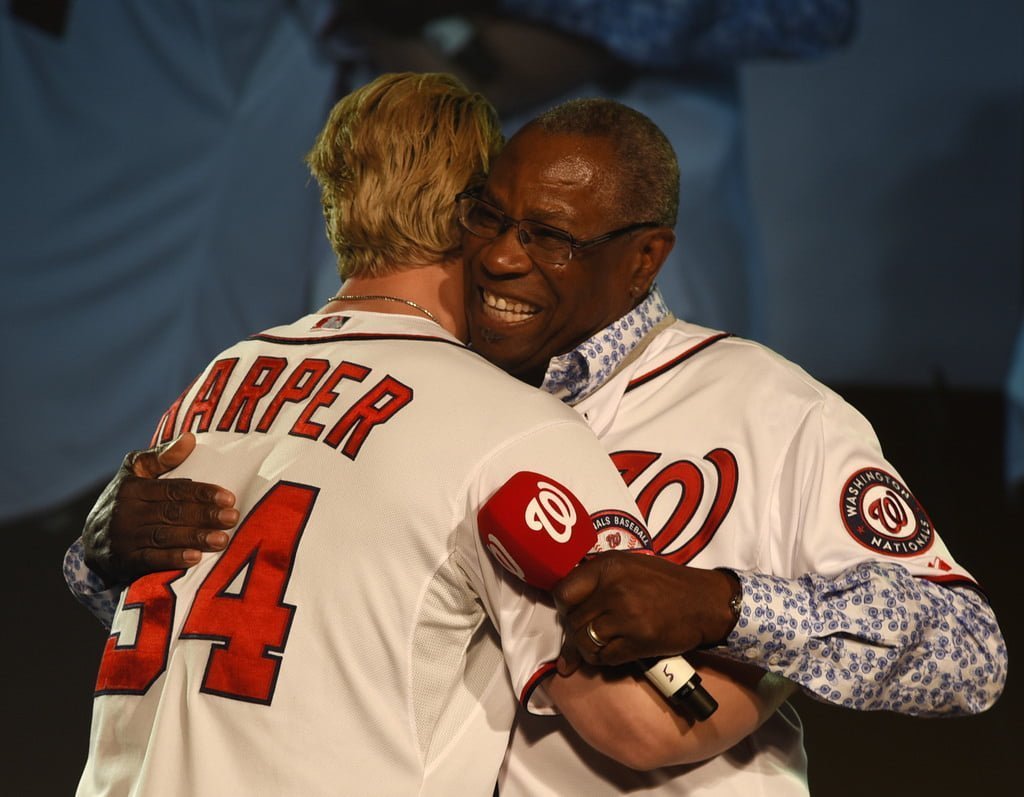
It’s no different than Dusty Baker telling Bryce Harper to look for a fastball on the inside part of the plate on a 2-1 count, because the data says it’ll happen 8 out of 10 times. That research matters. One little tidbit gives the player an edge, and increases their confidence. When they receive knowledge that can help them do their jobs better, they appreciate it. In turn, it makes them more likely to respond to future feedback. They may even notice something you didn’t, which can benefit the entire team.
A few years ago in San Francisco, I tried to push my staff to take more chances talking NFL. There was an internal opinion that Bay Area listeners only followed the 49ers and Raiders, and while the local teams were a priority, the market had a bigger appetite for football than the staff was giving them credit for. Our competitor was also known for leaning heavy on baseball, so this was an opportunity to establish our position as a strong football focused brand.
I went to work to make my case. I pulled ratings of all of our shows talking about NFL subjects that weren’t 49ers or Raiders driven. I looked at the performance of our NFL Play by Play from Westwood One, which included at the time, the highest rated single event ever on the station – a Patriots-Texans playoff game. I highlighted the local market’s interest on television to national football games, the NFL Draft, and talked about the crowds I witnessed on Sunday’s at local bars when a 49ers or Raiders game wasn’t on the air.
To cap it off, I went around the room and asked each staff member to name their favorite football team. Much to my surprise, 90% of the room pledged their allegiance to teams not named the Raiders or 49ers.
After going through that exercise, it was easier for the staff to understand why it should be a bigger part of the radio station’s content strategy. The data and visual evidence supported it, and that made it easier for the group to accept.
Sometimes, we get in our own way. We’ll tell ourselves that we know what the audience wants because we want them to like what we personally care about. If they differ in their opinion, we try to sway them towards our way of thinking, rather than making the adjustments ourselves.
But if the content evaluation process doesn’t take place regularly, and you’re not treated to the information that makes your audience tick, then you’re allowing opportunities to pass you by.
I believe that most on-air talent care about the opinion of their Program Director. They want to please the person they work for, even if they don’t show it. They respond quicker to negative feedback than positive, but deep down, they crave the attention and dialogue. They want to know the PD is listening, invested in the show, supportive of their decision making, and has something of value to add. If they don’t, they shut down quickly.
No matter how many things appear on a programmer’s ‘To Do List’ each day, when they meet with one of their hosts, the talent wants to feel like the only thing that matters is their show. The way the PD guides the meeting and responds to the talent’s questions will determine whether they stay interested or reject further dialogue.
Hosts don’t want to be told to deliver a show the way the programmer would. That’s a remedy for creating a giant divide between the two. But, if a coaching session occurs and specific examples, detailed analysis, and audio evidence is provided to help the talent see something they might be missing, they’ll respond more favorably.
Any person on this planet can tell another “I like that, do more of it” or “That doesn’t work, do less of it”. Explaining and showing why, makes all the difference.
If you’re going to hire a highly opinionated person, and ask them to not follow their natural instincts, it won’t work. The only way the feedback takes shape is if they buy into it. When they see the details, and hear your thoughts, it opens their mind. Once they do it, and gain results, it becomes easier to gain future buy-in.
Once a host trusts your ear, respects your point of view, and knows that you’ve put the time into helping them find a way to connect bigger with the audience, that helps the relationship ascend to a higher level. It affords you an opportunity to create and enjoy future success together. That alone makes doing the research worth it.
For the sake of this piece, I thought I’d provide a content evaluation I did for an on-air talent. I’ve removed the individual’s name, and changed the market, and only included two segments worth of analysis from their show.
When a talent receives something like this either from their Program Director or Producer, it tells them you care about their show and have a grasp on what they’re doing. It’s important to provide positives, as well as constructive criticism because the only way someone improves is when they hear both.
The one thing I’d suggest is to send this to the host after the show. That allows them to keep their on-air focus, and discuss it with you once they’ve had time to disconnect from the program and process the critique. They may not agree with every part of your assessment, but they’ll respond to your analysis, and appreciate you for doing it.
OPENING SEGMENT:
Red hot out of the gate by proclaiming “The Minnesota Wild are done” – this instantly grabs the audience’s attention on the day when the Wild are facing an elimination game in the Stanley Cup Playoffs.
You dive right in on hating to be the bearer of bad news, but you believe in being honest, and you see no evidence that supports a way for the Wild to avoid elimination.
After setting the scene for the game, you give out the # (you’re more than welcome to try and change my mind) and use a good boxing analogy to further establish the point – “the Wild are that fighter that’s getting worn down round after round, and you’re not sure if they’re going to get knocked out early, or hang on to lose by decision, but you know they’re not leaving the ring victorious“.
GREAT one-liner “The 40 Year Old Virgin is scoring more than the Wild” to emphasize the team’s biggest problems (Let that line hang out there for a second – being in a rush to hit the next point can take away from the impact).
Nice job using some key stats to paint the picture and support your case (0 goals in 175 of 180 minutes this series – the Wild went 20 mins without a shot last game, and they’re 2 of 26 on the Power Play) – clever line used “stats are like bikinis, they show some things but not all“, and followed up with a dose of truth “even if you want to believe in this team tonight, every key piece of information goes against them – this is why I’m struggling to see a way for them to win.”
Halfway through you tease NFL Draft/#1 Pick selection in 5 minutes – you’re going to tell the audience what the biggest mistake the Bucs could make with the 1st overall pick – good suspense and topical.
Back to the Wild elimination game talk, and another quick one liner about Zach Parise being on a milk carton and missing – please alert the authorities if you see him – (these one liners are quick and memorable, just be careful of not overdoing it).
You offer up the other side of the topic to provide some hope – one thing, be careful about playing both sides of the fence – it’s ok to explain it but reaffirm where you stand. Let the audience offer the other side to counter your position.
Mid-segment, you offer more analysis on why the Wild are unlikely to prevail and toss to audio of Wild Head Coach Mike Yeo which brings the momentum to a screeching halt (there’s no emotion, opinion, or drama in what he’s saying. If the audio doesn’t fire you up or add something new to the content, skip it – don’t use audio just for the sake of incorporating it).
Text line response from a listener who’s pissed at you for painting a negative picture in advance of tonight’s playoff game (Bleep You Dude) – funny, and offers you an opportunity to reset and remind people why you don’t see the game turning out well.
– The content now switches to the NFL Draft (reset here, give your name and remind the audience you’re subbing for the afternoon host) – nice job of setting the scene by sharing how you struggle in life with over-analyzing things, and explaining why the Bucs can’t operate the way you do with this year’s #1 pick.
GREAT opinion and explanation on why Tampa can’t trade the pick – “if you look at the last 10 teams to win a SB, they all had Top 10 QB’s when they won. 50% of all 1st round picks turn out to be busts. Jameis Winston will be a Top 10 QB. That’s what you need to win. You can offer 4 first round picks & my answer is NO. He’s the best QB prospect the past 10 years not named Andrew Luck. His arrival takes the Bucs to 6-8 wins” – Great confidence & insight, and a relatable subject. Really good content.
Teasing to break – At 3:30, former Minnesota hockey player Brian Bellows drops by, has his opinion of Zach Parise changed? But coming up next, nobody in Minneapolis realizes how special this could be (good suspense).
*Try not to tease 2 things heading into a break – people rarely remember both – stick with what’s next. Overall this was an excellent start to the show…..great attention grabber with the opening statement – The Wild Are Done! On the day of a playoff game, you have their attention, even if they dislike the opinion…..you laid out your case for why you feel the way you do, and used facts and color to do so. A lot of it makes sense. Now it’s the audience’s job to poke holes in your theory and try to change your mind.
Midway through I liked the switch to the NFL Draft and the commentary on why the Bucs can’t consider trading the #1 pick. It was strong. When an audience hears a host say “you can offer 4 1st round picks for the #1 overall pick and the answer is NO, the pick is not for sale” their ears perk up…..that’s gutsy, interesting, and offers room for a strong pro/con discussion on the topic. Given that we’re 1 week away from the NFL Draft and you’re in a football rich market, this will be well received. We can debate if Winston is a Top 10 QB, on the same level with Andrew Luck as a prospect, etc. but that’s what makes it fun. Really interesting topic, laid out well.
SEGMENT #2:
You start off giving the station call letters and your name and dive right into a tweet that criticizes your opinion on the Wild – nice response explaining why you don’t believe they can win tonight (Be sure to reset the topic first before the tweet since people who missed the opening segment know what you’re talking about and can play along.)
The transition is made to resetting the NFL Draft talk – “the biggest mistake the Bucs can make next week is trading the #1 pick” – no price is high enough to deal it, Jameis Winston is going to be a Top 10 QB, a Ben Roethlisberger clone, and if the Bucs don’t take him, it’ll hurt their franchise for years to come“. One suggestion, although NFL fans follow the entire league, local people care most about the team in their own backyard. Consider how to make this relatable to Vikings fans by pointing out a previous draft blunder they made, and how it impacted them. Then relay how the Bucs passing up Winston would compare. That’s just another way to add an extra layer to the topic.
Quick Text – what round are the Bucs drafting Jameis’ babysitter? Clever response from the audience, good job responding to it.
You then take a call from Hugh who adds “you took off your fan cap and put on your radio hat to fire up the audience and get them to call in about the Wild” – After explaining that you don’t do shock jock content, Hugh asks about the top 2 QB’s entering the draft & asks about the hockey spirit and why the Wild are allowing fundamental mistakes to hurt them.
*** The caller placement in this segment stunted the Jameis topic which could have been gold – the previous tease was about something being special in Tampa – was that about the Bucs/Jameis or something else? Make sure you’re clear so the audience gets a payoff for what they were promised. Don’t leave them to guess, make it easy to play along.
Good move mentioning that the opinion may be harsh and it might have required some massaging, especially on the day of an elimination game, but maybe I can make it up to you by offering you this – the Minnesota Twins are going to the post-season this year – book it! ***This is a strong opinion, sure to fire up local baseball fans, and it shows that you’re not against the local team’s and their success. Your proclamation gives every local baseball fan the one thing they all crave – hope! I’m guessing this is what the tease was about right?
That leads you to explaining that people outside of Minneapolis have no idea how good the Twins are. You point out how good their youth is and how they’ve won 6 of 8 despite injuries, and have one of the better young rotations in baseball, and run scoring is a half point higher. Those are all good reasons for explaining why you’re optimistic about them. You then set the scene on the wildcard picture and explain how you believe the Astros will come back to earth, and the other spot up for grabs is a complete crapshoot.
* If the Twins need to secure 1 of the 2 wildcard spots, tell me how they measure up against the teams that are going to be in contention. How do they going to stack up to the teams in their division and to some of the more formidable teams in the race – Astros, Yankees, Angels, Rangers, Blue Jays, etc. Explain the obstacles in their way, and why they’ll pass those other clubs and prove the experts wrong!
Tease – Brian Bellows next, is his perception of Zach Parise changing? He tells us next (Very good – one focused item, with a question that leaves the audience thinking).
FOUR KEY TAKEAWAYS:
Let your bold statements, strongest opinions, and one-liners hang out there for a second – it allows people to process things and ask “What? Did he just say that?” For example, “the 40-year Old Virgin scores more than the Wild”, “If you offer me 4 1st round picks for this #1 pick, I’m not interested”. Both were great, but didn’t have a chance to settle. Let it bake for a second.
Pay off your teases – they’re excellent going to break, but when you come back they’re not always provided or made clear – it’s not only about teasing content, it’s important to deliver on what you promised too. Not doing it will frustrate your audience. I love what you’re doing to keep them curious. Just make it easier when you return.
Using Audio – GREAT audio can make a segment, BAD audio can break one. If it doesn’t provide emotion, drama, suspense, humor, or an ounce of information to support or counter your opinion, don’t feel obligated to use it. Think of the soundbite as being a prop in your show. It’s supposed to enhance the overall content experience. If it’s getting in the way of your best material, leave it out.
Segment 1 vs. 2 – The first one flowed nicely, and offered a mixture of strong opinion, quality information, and humor. You went 7-8 minutes on the lead story, before switching to a secondary topic, which also provided many of the same qualities. It was an excellent start to the program and easy to follow…..now contrast that with your second segment, which started without letting folks know what you were hot on, and then switched into a quick discussion on the #1 pick, a text on that subject, a caller on the NHL playoff game, and conversation on the Twins…..It’s ok to change topics, but make the direction easy for the audience to follow…..if in segment #1 you were on a highway and got off to take a side road to reach your destination, segment #2 you were on a side road, headed back to the highway, got off the next exit, hoped to find an alternate road, stumbled onto one which wound up working out but added time to your trip…..lots of good material, all a matter of connecting the dots to make it easy to process.
ESPN has signed a new multi-year agreement with Todd McShay. The NFL Draft and college football analyst will continue as a prominent year-round voice, offering analysis on ESPN television, ESPN Radio, ESPN.com and ESPN The Magazine.
McShay is expected to appear regularly on NFL Insiders, NFL Live, and SportsCenter leading up to the 2016 NFL Draft (April 28-30). During the NFL Draft, he’ll deliver analysis on SportsCenter before and after Round 1, and team up with Mel Kiper Jr. on ESPN for Rounds 2-7.
As part of the new deal, Todd will remain on ESPN and ABC college football telecasts in the fall. He will also contribute to ESPN’s on-site coverage of top football events throughout the year, including the College Football Playoff National Championship, Senior Bowl, NFLPA Collegiate Bowl, NFL Scouting Combine, NFL Pro Days and more.
“This was the right decision for a number of reasons,” McShay said. “ESPN has always been the driving force behind the NFL Draft and it’s the home of the College Football Playoff. Plus, working at ESPN is like being part of the ultimate team, and I’ve been fortunate to develop many strong friendships here. I’m excited about the draft and my future at ESPN.”
Added ESPN senior coordinating producer of NFL studio shows Seth Markman: “Todd has an incredible skillset and work ethic, and his analysis has been an invaluable asset to ESPN’s NFL and college football presentation. We look forward to him being a big part of our draft coverage for many more years to come.”
Bomani Jones isn’t afraid to take a stand. Even if it ruffles a few feathers in the process.
The opinionated ESPN Radio talk show host filled in on “Mike and Mike” Thursday, but it wasn’t his candid commentaries this time that had people talking. Instead, it was his shirt, which featured the word “Caucasians” across the front.
While talking with Molly Qerim, he said the point he was trying to make was obvious. The shirt was a spoof on the Cleveland Indians’ team logo, which, until this month, featured “Chief Wahoo”, an image that many in the Native American community find offensive and racist.
Although he was able to make his point, Jones was asked to cover up his attire by an ESPN executive according to TMZ. He eventually complied and zipped up the front of his hoodie, covering the main part of the image.
ESPN sent a statement to The Huffington Post which said: “As the show progressed, we felt Bomani made his point and had openly discussed why he was wearing the shirt, and we wanted to keep the focus to the topics of the day.”
The controversial Indians logo has been mentioned frequently in the news lately. Cleveland owner Paul Dolan said last week that “Chief Wahoo” had been downgraded to secondary status with the team. The franchise previously nixed the pictogram from its road baseball cap and batting helmet in 2011 and 2013.
The remaining issue stems from the club’s refusal to sever all ties with the image. Dolan says “it’s part of the team’s history and legacy,” which is why it continues to be featured on the sleeves of the club’s jerseys. Jones is advocating for change, and his decision to wear the “Caucasians” t-shirt this morning, much to the chagrin of his bosses, has once again put Dolan’s decision back in focus.
Sean McDonough, one of sports media’s most versatile talents, recently signed an extension with ESPN to continue his second stint at the network which dates back to 2000. (He was with the network from 1989 through 1995, as well.) McDonough will continue to be one of the network’s most prominent play-by-play voices on top properties including: college football, college basketball, Major League Baseball and more.
“I’m very excited to stay with ESPN at this point in my life,” said McDonough, 53. “The things most important to me are the people in my life and the relationships you have. Yes, ESPN is a great place to work, but it’s also home to some of my closest friends.”
“Sean McDonough has been a signature voice on ESPN and one of the premier play-by-play voices in the industry,” said ESPN Senior Vice President, Production and Remote Events,Mark Gross. “His versatility and range – from college football and basketball to baseball, lacrosse and golf – make him recognizable and beloved by sports fans.”
Credit to ESPN Front Row who originally provided this information
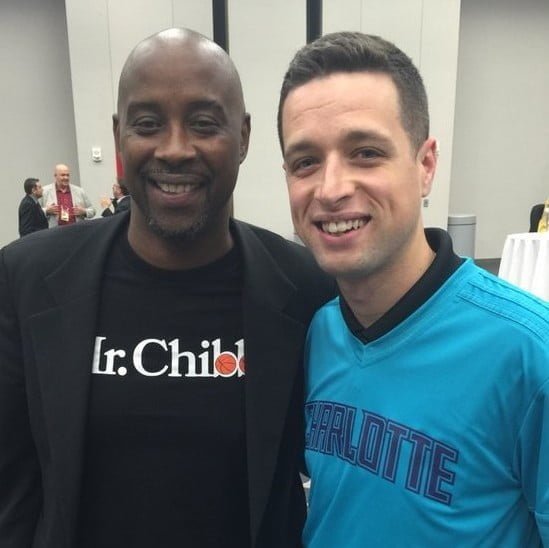
When you listen to Chris Kroeger, you’re instantly drawn in by his passion, enthusiasm, and the high energy of James Brown’s “Living in America” which kicks off each hour of the show. The use of audio highlights gives you a sense of what’s topical each day, and once Kroeger’s voice penetrates the airwaves following the production open, it’s easy to detect how much he enjoys his job.
What makes “Primetime with Chris Kroeger” unique, is that Chris plays point guard every afternoon on the Charlotte airwaves of 610 The Fan while sharing the backcourt with a different shooting guard.
The program’s design comes from the brain of Program Director DJ Stout. It includes featuring rotating co-hosts to give the show an opportunity to feature different voices/specialists during different time periods that play to each individual’s strengths. On any given day a Charlotte sports radio listener who tunes in may be treated to the insights and opinions of former Panthers Wide Receiver Muhsin Muhammad, former NFL Linebacker and Charlotte native Omar Gaither, former Panthers and Hornets beat reporter Stan Olson, John Kilgo, and others.
I originally wrote about Chris this past October, where I identified him as one of 15 talents who people may not know but should. What I was impressed by then and now, is how much fun he has on the air, and how open he is about his fandom for his local market teams. He’s wise beyond his years and in a business where there’s debate constantly over whether you need to introduce lifestyle and entertainment subjects into a sports show to have success, Chris proves that a passion, love, and knowledge of sports, can be enough to win with.
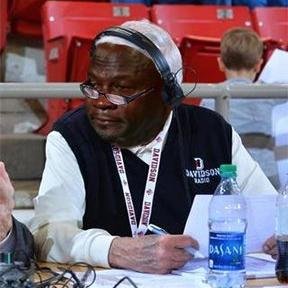
The other aspect of his work that stands out is his activity and interaction with fans on social media. He takes the audience inside the show by letting them see the playlist of songs that will be used for bumper music each day. He takes a negative local story such as the Tar Heels losing the national championship game to Villanova, and has fun with it by switching his Twitter profile to the “Crying Jordan” photo.
That type of self-deprecation, and a willingness to provide an invitation to the audience into his program and life, is a big reason why he’s hitting all the rights notes with Charlotte sports radio fans.
I recently caught up with Chris to pick his brain on a number of subjects pertaining to the broadcasting business. I also wanted to get a better sense of his upbringing, and a deeper understanding of what fuels him as a sports talk radio performer. I think you’ll enjoy this conversation and I encourage you to check out 610 The Fan’s Audio On-Demand section and give his show a listen.
Q: Which broadcasters did you listen to growing up that influenced your decision to pursue a career in the sports radio business?
A: I was always a big fan of Dan Patrick, Keith Olbermann, Kenny Mayne, Stu Scott and Steve Levy on ESPN growing up. Back then, it was appointment viewing to watch SportsCenter and either catch up on the highlights of the day or see how those guys would put a spin on something, even though you knew the result.
Q: Where did you get your start and how did you end up at 610 The Fan?
A: I actually started at another sports talk station in town (they shall remain nameless) and actually flipped formats from music to sports. I was 23, fresh out of college and willing to do anything and everything. I booked guests, produced the show, handled all production for the station, cut spots, handled co-hosting duties occasionally and worked a lot of 12-14 hour days for about 10 months while making next-to-nothing (thanks to mom and dad letting me crash at their place rent-free).
I also did some part-time work with IMG College which led to becoming a full-time producer, host and utility PxP guy. I did that for about 3 years in Winston-Salem, working with all the Pac-12 properties (Arizona, ASU, Cal, Oregon, UCLA, UW, WSU and Texas) on their radio broadcasts.
Being from Charlotte, once I saw the afternoon slot open up a few years ago, I sent in my resume and aircheck and got a phone call back, an opportunity to try out and as they say, the rest is history.
Q: What do you consider the toughest part of hosting a 4-hour afternoon show?
A: Since we rotate different co-hosts, the hardest part is bringing the energy every single day. While I know the personalities we have coming in, I have to be the consistent one. That also means bending my desires and interests in show topics to what fits their strengths and desires. I always have to be trying to pull the best out of them while handling myself too.
Q: How do prepare, and who else is involved in your program’s creative process?
A: It’s usually myself and Producer Tony. Tony has produced this format for years, so he’s got a great feel for what a co-host can offer every day and how to take advantage of it. We’ll bat ideas back and forth and often gauge other talent around the station on what they think will play that given day.
Q: What importance do you place on the show’s ratings, and how often do you and your Program Director (DJ Stout) work on the show together?
A: Honestly, and this might sound bad, I don’t put a ton of weight into that stuff. That’s not to say that I don’t care or am not interested in the ratings and what they say, but I’m more of a macro guy. Especially since I’m still young and learning in the industry.
I try to take care of a lot of the day-to-day things on and off the air that I think are important to putting on a great show, and I trust that everything else will fall in line because of it. My Program Director (DJ Stout) and I meet every few weeks to make tweaks and discuss what’s working and what’s not.
Q: What’s the best piece of advice DJ’s given to you?
A: Have fun. I’m a high-energy guy in the first place so it comes naturally, but if we’re having fun, the listener most likely is too.
Q: On a daily basis, how many topics do you try to introduce to the audience?
A: It depends on the season. During the slower times of the year (post-NFL and summer months), I try to throw a lot the listener’s way to keep them engaged, and keep the show moving. Being caller-driven, once football season rolls around, we can roll with less topics, and allow the show to take off.
Q: Which subjects do you focus on most? Are there areas you try to stay away from, and if so, why?
A: I’ve grown up in an era where Charlotte has shifted from being a college sports town to a pro sports town, specifically a Panthers town. Panthers, Hornets, college football and college basketball drive the ship and approximately in that order.
I enjoy the larger issues in sports: contracts, feuds, coaching/player dynamics, team building, etc. Anyone can break down a box score, but I enjoy the deeper discussions that exist in the sports world. I don’t mind some controversial topics when they pop up, whether it’s race, cultural, crime, etc. It’s not everyone’s cup of tea, but I think the larger social topics that exist in sports are fascinating.
Q: How much value do you place on callers being a part of the show? Why do/don’t they matter to you?
A: We are a caller-driven show and station. Callers are a big part what we do for two reasons: 1) good, consistent callers build a community around the show 2) awful callers generate more show content and fodder, which can generate more calls.
Q: When it comes to guests, how many do you try to secure for each day’s program? How do you decide who gets booked? And what is it you’re looking to gain out of each conversation?
A: When it comes to guests, there’s no magic number. Mondays/Fridays during the NFL season are often pretty wide open, most times just one per show maximum. During the middle of the week, 2-3 is a normal number.
I think interviewing is my greatest strength, so I love having great guests, but they need to be just that, great. I want perspective from guests. They need to offer something to our audience that either I or my co-hosts can’t provide. Otherwise, what’s the point?
A sound bite isn’t what we’re after from a guest. We want stories, expertise, and a way to put into context the things we’re discussing on the show. For booking, my producer often comes to me with what he’s thinking and I’ll often shoot back with who I think would be great on a given topic. We work together.
Q: Looking at the world of sports radio today, what’s one area that you feel is getting worse and how can it be improved?
A: I think things are stale. I firmly believe Dan Le Batard has the best show going and it’s a perfect example of not being afraid to try things and fail miserably live on the air. And it’s that failure and embracing it that I think makes the show. If they screw up, don’t sweep it under the rug. Throw it into the massive stew that is the show.
They’ve found a way to take the intrinsic hate that exists around sports talk and media in general to become part of the show itself. They talk about music, TV, life, movies, things real people care about. At the end of the day, our demo is men. We all care about things outside of sports, so why not bring that stuff into the conversation every day?
I think this format is saturated with complacency and impatience. Try some things out, see if it takes root. I don’t think there are enough PD’s and talent out there willing to do that.
Q: For someone who’s considering this career path, what advice can you pass along to help them avoid mistakes and be successful?
A: The best advice I could give someone is be willing to say “yes” and then know when the time comes to say “no.” I did anything and everything I could to get my foot in the door, gain experience and build a resume. With today’s media landscape, being diversified is as important as ever. I think that was a huge part of getting to where I am and hopefully where I’m still going.
On the other side, you do have to know and trust when you’ve earned your shot. I reached that point a few years ago and was determined to not settle with my career. I think it’s vital for people in the industry to know when they are ready and to not listen to the doubters or the things holding them back. Taking a job or gig isn’t as important as taking the right one.
Chris Kroeger can be heard weekdays from 3p-7p on 610 The Fan in Charlotte. To follow him on Twitter click here.
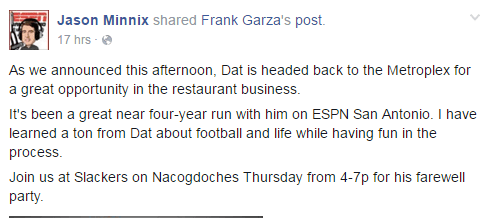
Dat Nguyen has been a mainstay on ESPN San Antonio’s afternoon show with Jason Minnix for the past four years. That followed a great career playing football for the Dallas Cowboys, and at Texas A&M University.
Now, Nguyen is ready for a brand new challenge.
It was announced yesterday on ESPN San Antonio, that the former linebacker and popular radio personality is heading back to the Metroplex for an opportunity in the restaurant business. The station is hosting a farewell party for him this Thursday. Minnix confirmed the news on Facebook.
Whether Nguyen will be replaced on the show or not remains to be seen. The afternoon program has featured a three man crew starring Minnix, Nguyen, and Rob Thompson. Once we have further details to share we’ll pass them along.