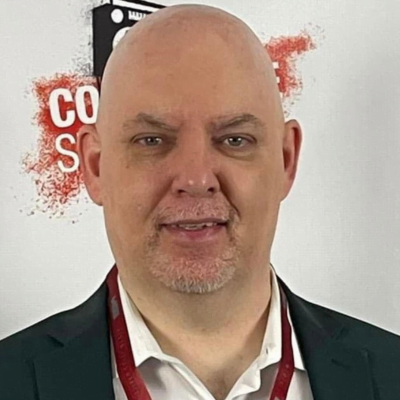
When you listen to Chris Kroeger, you’re instantly drawn in by his passion, enthusiasm, and the high energy of James Brown’s “Living in America” which kicks off each hour of the show. The use of audio highlights gives you a sense of what’s topical each day, and once Kroeger’s voice penetrates the airwaves following the production open, it’s easy to detect how much he enjoys his job.
What makes “Primetime with Chris Kroeger” unique, is that Chris plays point guard every afternoon on the Charlotte airwaves of 610 The Fan while sharing the backcourt with a different shooting guard.
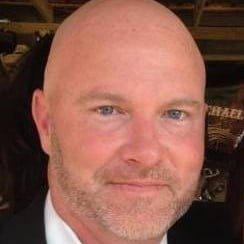 The program’s design comes from the brain of Program Director DJ Stout. It includes featuring rotating co-hosts to give the show an opportunity to feature different voices/specialists during different time periods that play to each individual’s strengths. On any given day a Charlotte sports radio listener who tunes in may be treated to the insights and opinions of former Panthers Wide Receiver Muhsin Muhammad, former NFL Linebacker and Charlotte native Omar Gaither, former Panthers and Hornets beat reporter Stan Olson, John Kilgo, and others.
I originally wrote about Chris this past October, where I identified him as one of 15 talents who people may not know but should. What I was impressed by then and now, is how much fun he has on the air, and how open he is about his fandom for his local market teams. He’s wise beyond his years and in a business where there’s debate constantly over whether you need to introduce lifestyle and entertainment subjects into a sports show to have success, Chris proves that a passion, love, and knowledge of sports, can be enough to win with.
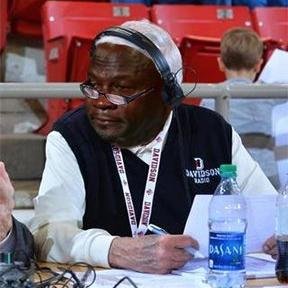 The other aspect of his work that stands out is his activity and interaction with fans on social media. He takes the audience inside the show by letting them see the playlist of songs that will be used for bumper music each day. He takes a negative local story such as the Tar Heels losing the national championship game to Villanova, and has fun with it by switching his Twitter profile to the “Crying Jordan” photo.
That type of self-deprecation, and a willingness to provide an invitation to the audience into his program and life, is a big reason why he’s hitting all the rights notes with Charlotte sports radio fans.
I recently caught up with Chris to pick his brain on a number of subjects pertaining to the broadcasting business. I also wanted to get a better sense of his upbringing, and a deeper understanding of what fuels him as a sports talk radio performer. I think you’ll enjoy this conversation and I encourage you to check out 610 The Fan’s Audio On-Demand section and give his show a listen.
Q: Which broadcasters did you listen to growing up that influenced your decision to pursue a career in the sports radio business?
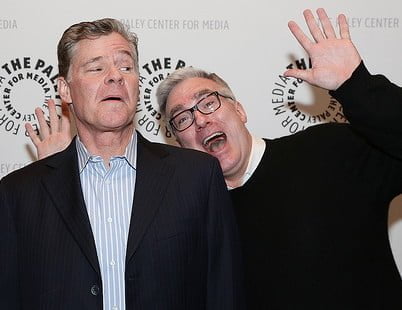 A: I was always a big fan of Dan Patrick, Keith Olbermann, Kenny Mayne, Stu Scott and Steve Levy on ESPN growing up. Back then, it was appointment viewing to watch SportsCenter and either catch up on the highlights of the day or see how those guys would put a spin on something, even though you knew the result.
Q: Where did you get your start and how did you end up at 610 The Fan?
A: I actually started at another sports talk station in town (they shall remain nameless) and actually flipped formats from music to sports. I was 23, fresh out of college and willing to do anything and everything. I booked guests, produced the show, handled all production for the station, cut spots, handled co-hosting duties occasionally and worked a lot of 12-14 hour days for about 10 months while making next-to-nothing (thanks to mom and dad letting me crash at their place rent-free).
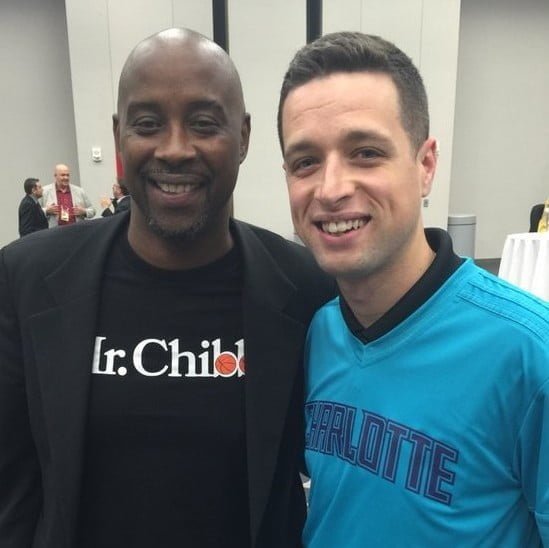 I also did some part-time work with IMG College which led to becoming a full-time producer, host and utility PxP guy. I did that for about 3 years in Winston-Salem, working with all the Pac-12 properties (Arizona, ASU, Cal, Oregon, UCLA, UW, WSU and Texas) on their radio broadcasts.
Being from Charlotte, once I saw the afternoon slot open up a few years ago, I sent in my resume and aircheck and got a phone call back, an opportunity to try out and as they say, the rest is history.
Q: What do you consider the toughest part of hosting a 4-hour afternoon show?
A: Since we rotate different co-hosts, the hardest part is bringing the energy every single day. While I know the personalities we have coming in, I have to be the consistent one. That also means bending my desires and interests in show topics to what fits their strengths and desires. I always have to be trying to pull the best out of them while handling myself too.
Q: How do prepare, and who else is involved in your program’s creative process?
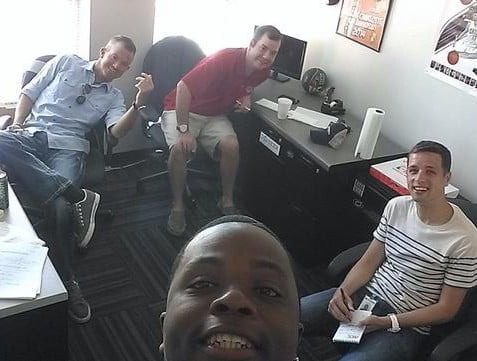 A: It’s usually myself and Producer Tony. Tony has produced this format for years, so he’s got a great feel for what a co-host can offer every day and how to take advantage of it. We’ll bat ideas back and forth and often gauge other talent around the station on what they think will play that given day.
Q: What importance do you place on the show’s ratings, and how often do you and your Program Director (DJ Stout) work on the show together?
A: Honestly, and this might sound bad, I don’t put a ton of weight into that stuff. That’s not to say that I don’t care or am not interested in the ratings and what they say, but I’m more of a macro guy. Especially since I’m still young and learning in the industry.
I try to take care of a lot of the day-to-day things on and off the air that I think are important to putting on a great show, and I trust that everything else will fall in line because of it. My Program Director (DJ Stout) and I meet every few weeks to make tweaks and discuss what’s working and what’s not.
 Q: What’s the best piece of advice DJ’s given to you?
A: Have fun. I’m a high-energy guy in the first place so it comes naturally, but if we’re having fun, the listener most likely is too.
Q: On a daily basis, how many topics do you try to introduce to the audience?
A: It depends on the season. During the slower times of the year (post-NFL and summer months), I try to throw a lot the listener’s way to keep them engaged, and keep the show moving. Being caller-driven, once football season rolls around, we can roll with less topics, and allow the show to take off.
Q: Which subjects do you focus on most? Are there areas you try to stay away from, and if so, why?
 A: I’ve grown up in an era where Charlotte has shifted from being a college sports town to a pro sports town, specifically a Panthers town. Panthers, Hornets, college football and college basketball drive the ship and approximately in that order.
I enjoy the larger issues in sports: contracts, feuds, coaching/player dynamics, team building, etc. Anyone can break down a box score, but I enjoy the deeper discussions that exist in the sports world. I don’t mind some controversial topics when they pop up, whether it’s race, cultural, crime, etc. It’s not everyone’s cup of tea, but I think the larger social topics that exist in sports are fascinating.
Q: How much value do you place on callers being a part of the show? Why do/don’t they matter to you?
A: We are a caller-driven show and station. Callers are a big part what we do for two reasons: 1) good, consistent callers build a community around the show 2) awful callers generate more show content and fodder, which can generate more calls.
Q: When it comes to guests, how many do you try to secure for each day’s program? How do you decide who gets booked? And what is it you’re looking to gain out of each conversation?
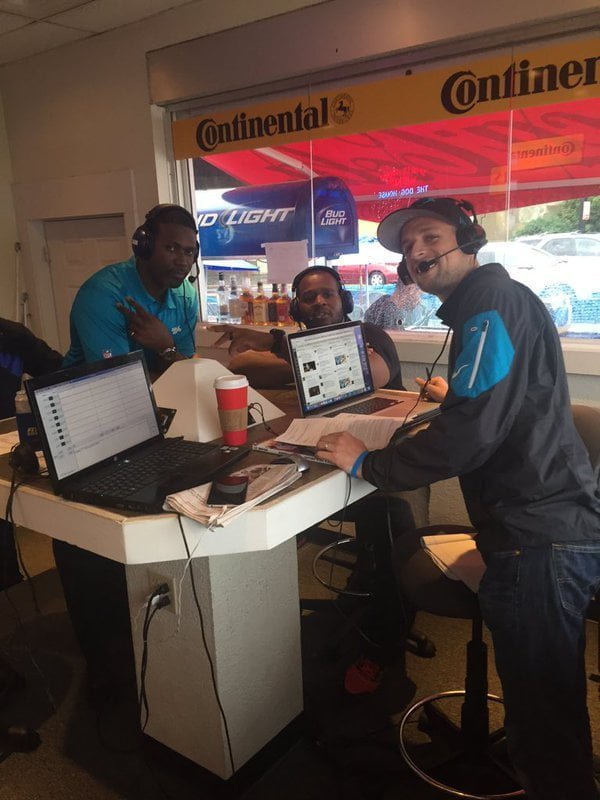 A: When it comes to guests, there’s no magic number. Mondays/Fridays during the NFL season are often pretty wide open, most times just one per show maximum. During the middle of the week, 2-3 is a normal number.
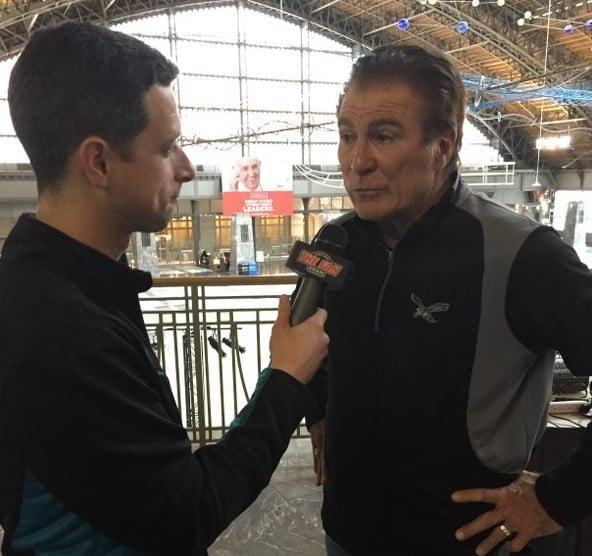
I think interviewing is my greatest strength, so I love having great guests, but they need to be just that, great. I want perspective from guests. They need to offer something to our audience that either I or my co-hosts can’t provide. Otherwise, what’s the point?
A sound bite isn’t what we’re after from a guest. We want stories, expertise, and a way to put into context the things we’re discussing on the show. For booking, my producer often comes to me with what he’s thinking and I’ll often shoot back with who I think would be great on a given topic. We work together.
Q: Looking at the world of sports radio today, what’s one area that you feel is getting worse and how can it be improved?
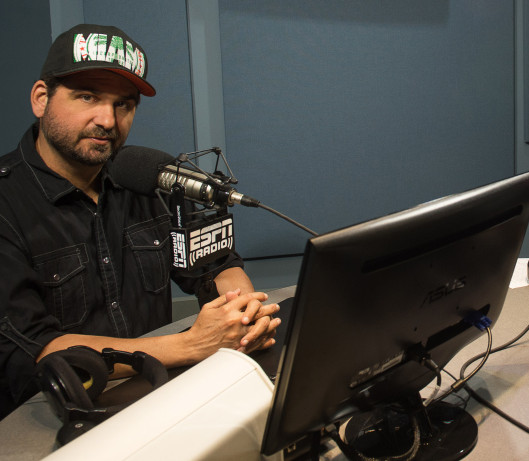 A: I think things are stale. I firmly believe Dan Le Batard has the best show going and it’s a perfect example of not being afraid to try things and fail miserably live on the air. And it’s that failure and embracing it that I think makes the show. If they screw up, don’t sweep it under the rug. Throw it into the massive stew that is the show.
They’ve found a way to take the intrinsic hate that exists around sports talk and media in general to become part of the show itself. They talk about music, TV, life, movies, things real people care about. At the end of the day, our demo is men. We all care about things outside of sports, so why not bring that stuff into the conversation every day?
I think this format is saturated with complacency and impatience. Try some things out, see if it takes root. I don’t think there are enough PD’s and talent out there willing to do that.
Q: For someone who’s considering this career path, what advice can you pass along to help them avoid mistakes and be successful?
 A: The best advice I could give someone is be willing to say “yes” and then know when the time comes to say “no.” I did anything and everything I could to get my foot in the door, gain experience and build a resume. With today’s media landscape, being diversified is as important as ever. I think that was a huge part of getting to where I am and hopefully where I’m still going.
On the other side, you do have to know and trust when you’ve earned your shot. I reached that point a few years ago and was determined to not settle with my career. I think it’s vital for people in the industry to know when they are ready and to not listen to the doubters or the things holding them back. Taking a job or gig isn’t as important as taking the right one.
Chris Kroeger can be heard weekdays from 3p-7p on 610 The Fan in Charlotte. To follow him on Twitter click here.