Home Blog Page 2804

Playing The Game Without Coaches

0

Imagine this scenario. It’s the fourth quarter, less than a minute left, your football team is down 1 point, and your offense is on the field and on the verge of crossing the 50. The goal is to either score a Touchdown or kick a field goal and win the game.
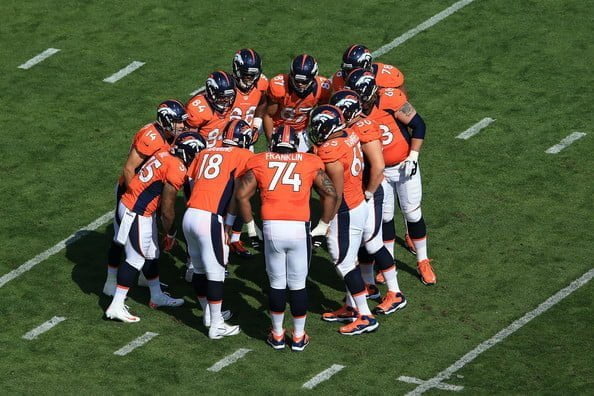
qb1The players approach the huddle looking to the quarterback for instruction on what play they’ll be executing, only this time the quarterback has no answer.

He explains to the group that the coaches have vacated the sideline and are no longer calling plays, so they’re now left to their own devices and the outcome of the game rests in their hands.

The Quarterback selects a play which he hopes will work and propel the team onto victory, and on this day, his decision making pays off and the team exits the field with a 2 point victory.
nocoachesThe excited bunch head to the locker room, ready to celebrate, except when they arrive, their pride and enthusiasm are deflated when they realize that there are no coaches around to offer a post-game speech or distribute game balls to the team’s top performers.

They leave the stadium, and head home, trusting that the next day will be different. Except it isn’t.

They arrive at the practice facility expecting to get treatments and go over game tape but once again the coaches are absent. This leaves the players upset, confused, and frustrated. Although they are talented and enjoy some independence, they also want to improve and receive guidance from their coaches.

winningHoping to get a sense of what’s going on, the quarterback seeks out the owner. When he explains how the group is frustrated because they’re receiving no coaching, the owner replies “Relax. All that matters is that we make money. Winning and losing is not important”.

The quarterback leaves the owner’s office, returns to his locker, and tries to process what he’s been told. If the only thing that matters is selling tickets, advertising, and broadcasting rights, then why does it matter who’s on the field, if they make plays, and who wins the contest?

This example may be farfetched for the National Football League, but it’s unfortunately a reality inside a number of radio stations today.

nielsenI was raised in this business with the understanding that the ratings are your report card. The grade you receive from the audience tells you whether or not your product is successful. A higher number means more interest from advertisers and the more they spend, the easier it becomes to distribute raises to employees for a job well done.

While there are brands that care deeply about the performance of their radio stations, there are many others that measure success by the revenue generated by their sales teams. Although I agree that sales are vital, I also believe that results should be delivered on the programming end too.
wantThe audience is not privy to your business plan, nor do they care what you make or lose each year or if your stock price has risen or declined. They simply want to tune in, hear a local host discuss the teams and topics they care most about, and gain something from the content to share with their friends and family. The more unique content experiences you provide, the more tune-ins you’ll receive.

But how exactly do you produce unique on-air content experiences? Is it solely the responsibility of the on-air talent? Does a producer have skin in the game? What about the Program Director’s involvement?

The answer in my opinion is that it’s a shared responsibility. More times than not it’s going to start with having an inquisitive talent on the air who is masterful with the english language and has a brain that allows them to consider possibilities that are uncommon to the rest of us. That’s part of being a special talent.

coachesBut even the best thinkers and content creators experience brain freeze and need to be coached, challenged, and given tips on how to improve.

If you watch baseball, you probably know the names Mike Trout and Bryce Harper. They’re incredible players who have each won an MVP Award and they’re also both under 25 years of age. As great as they are, they still need to be coached.

Do you think just because they have talent that they have it all figured out and won’t ever fail?
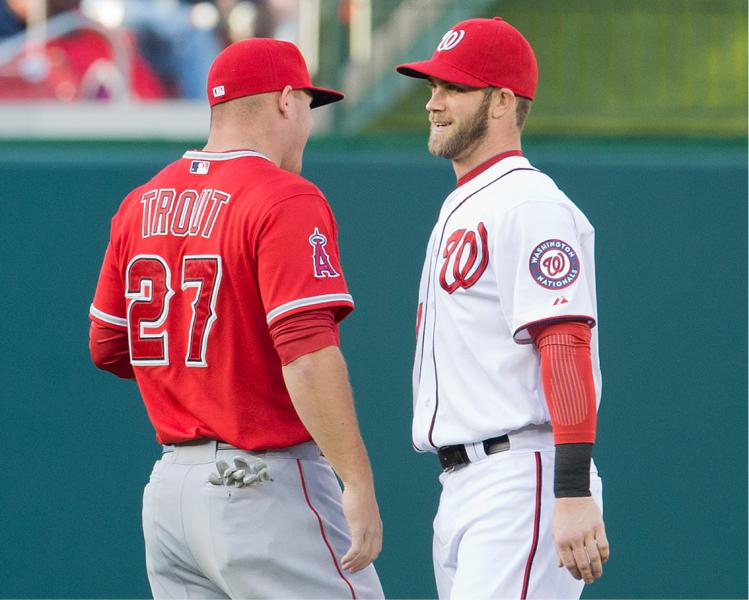
mlbThere’s a lot left in their respective careers and there are many obstacles they’ve yet to face. Regardless of how naturally skilled they may be, they each will need the benefit of great guidance to help them reach their full potential.

When a new pitcher comes up and has a certain strategy for attacking the zone, do you think that information might be helpful to them before they enter the batter’s box? Sure, maybe they’ll get lucky and connect on the first pitch and hit a homerun, but great players seek every advantage they can get to be successful and they rely on their coaches to help them.

What happens when they each sign larger contracts in the future and become Major League Baseball’s highest paid athletes, generating over 500 million dollars apiece? Do you think they won’t deal with different pressures, expectations, larger challenges off the field, and jealousy from inside their own clubhouses? When that happens, don’t you think they’ll want coaches they can trust to help them through some of their uncomfortable moments?

aloneNow think about that from a radio standpoint. There are some operators who assume just because an individual possesses talent, and receives a big paycheck that they don’t need coaching. The feeling becomes “He/She knows what they’re doing so leave them alone”. When that happens, many stop learning, and begin to treat their show as a responsibility instead of a labor of love.

I understand that it is a business, so if a company wants to adopt that approach and leave the talent in the middle of the ocean to swim to shore without a life preserver, that’s certainly their right. But I believe that you get the most out of people when you show them you care about the work they’re doing and invest time in gauging how they feel about the show, offering ideas to make it feel and sound better, and addressing any issues or concerns that are creating tension. It tells them that you’re paying attention and care about their progress.
creed2Each week I receive dozens of emails from people across this country seeking my coaching. I’m grateful that they think enough of me to want my feedback and it impresses me to see individuals seeking outside help to try and get better. That commitment to self improvement is what helps good performers become great. Every radio company should want people like that working for them because when people possess talent and treat their craft seriously, it pushes those they work with to be their best.

As excited as I am to see many striving to get getter, I’m equally saddened by the reminder of how many radio stations invest little to no time in their most important asset – their people.

chefI realize that the business has become difficult for programmers. Many corporate executives and station managers are disconnected from the product and don’t understand how the meal gets made, who’s involved in making it, or why the customer is eating it. They simply look at the total amount of meals made, what it cost, how many were sold, and what type of profit they generated from it.

That’s business, and business does come first. But unlike music stations which have the benefit of relying on the music created by artists to fill their airwaves, sports talkers only go as far as their on-air talent can take them. If the talent is left to roam through the desert without a compass, it’s only a matter of time until you’re sending in the search party to find them. The great ones will find their way, but even those who aren’t great right now, may have the ability to reach that level in the future, but without coaching you’re limiting their potential to grow.

When I landed my first Program Director job in Poughkeepsie, NY I had no idea what I was doing. I had passion, a good work ethic, and my co-workers responded well to my lead. I had no idea though what content made the most sense to focus on, what separated a good promo from a bad promo, how the station could increase its ratings, or why an on-air talent should or shouldn’t take calls or conduct interviews. There was no book, seminar or mentor available to teach me how to become a good programmer. I was just thrust into the position and had to learn on the job.

NHB and Devito in PoughkeepsieBut that was Poughkeepsie, NY. In most smaller markets where budgets don’t exist, that’s to be expected. Why it’s set up that way though in some top 20 markets is frightening.

I know some programmers today who are running three or four radio stations inside one building, and also have roles either in production or on a talk show. There is even a situation where one sports station is led by a music station programmer who has a strong disdain for sports talk and tells the staff that he wants no involvement with them.

When I hear of these situations it’s very concerning. We can blame the individuals for a bad attitude and not getting enough out of the staff, but the bigger question is, how did these positions get created in the first place?

Maybe someone accepted the position because it included a raise. Or they were pressured into it by their company. If employers though believe an individual is going to make people better, maximize the radio station’s potential, and do good work when they’re spread that thin and running formats they dislike, they’re kidding themselves. A few may skate by for a while but eventually the results suffer and people leave.

cashI had a conversation last week with someone I previously worked with who’s on a station that is getting soundly beaten in their local market by the competition. When I asked him what he was doing to reverse the latest trends and make a bigger impact with the audience, he told me that the ratings performance didn’t matter in his building, only the station’s revenue. When I asked him “how do you factor into that if you don’t deliver numbers or sell advertising for the company” he said “I just go to and from work, do my show and let the sales people worry about it”.

That answer bothered me because if you work in programming in this industry, the reason you do it is because you’re creative, passionate, love sports, enjoy competition, and want to be a success. The better you perform, the more money you make, the more popular you become, and the more successful you feel.

You also value the audience and have pride in your work, and care about the product you’re delivering. When you decided to pursue a career in this business, you didn’t do it because you wanted to fill air time and be seen as someone who was in a chair to sell sponsor messages. You pursued being a host because you felt you had something to say, you enjoyed connecting with people, and you felt your knowledge and presentation could help a company command a larger audience which in turn would help them generate revenue.

If the only thing defining your success now is whether Johnny or Suzy in sales sell spots inside of your show and meet their sales budget, then why are you even necessary? If it’s only about the advertising revenue, shouldn’t Johnny or Suzy host the show? I bet they’d increase their sales if they also had the air time to go with their selling skills.

If you’re not a host but are responsible for managing the radio station, and you’re not making time to coach your people and grow the radio station’s ratings, why aren’t you? Your title says “Program Director” not “Sales Assistant”, “Corporate Associate”, or “Budget Administrator”. I understand that the position is demanding and every department wants your time, but sometimes you have to say no.

assetThere is nothing more important to your future success and maintaining your position then the way you connect with your people. If they don’t get your input and their perception of you is that you’re uninterested in the product and their personal growth, they will eventually leave. When a brand’s best people depart, the performance declines, and when that happens, don’t be surprised if you’re the next one the company is calling on to vacate the premises.

Talent has to matter and factor into every sports radio station’s strategy and success. No brand wins without great on-air personalities and they don’t reach their full potential without regular coaching from experienced leaders who understand how to help them win. Why that’s not considered important in some buildings is beyond my level of comprehension. You’d think that with competition increasing in the audio space today that there’d be an even larger focus placed on securing great leaders who can guide a brand to bigger results. Unfortunately though that’s not the case in each location.

When I hear a brand state that only sales matter, it’s usually because their programming isn’t generating big numbers. There’s nothing wrong with wanting to make money. Believe me, I want to win the revenue game too, and feed my family lobster instead of ramen noodles. But programming is the lifeblood of the sports radio format and if it’s not great, and not consistently worked on, then you become non-essential to the audience. Without an audience, your business is on life support.

peopleThe goal in every organization should be to maximize the talent’s skills, show them the strengths and weaknesses in their show, and point out where the opportunities exist in the market to enjoy larger success. You do that by holding regular conversations, critiquing content, pointing out trends in the ratings, and explaining why they should do more or less of something during the show.

At first, many personalities will resist the feedback because they’re prideful and insecure and hate being judged. But when they walk away and think about what you said, they’ll appreciate it, respect it, and look to improve because every great performer wants to earn the trust, respect and support of the person they work for.

Some companies value coaching and the impact it has on their people. Others do not. Neither is right or wrong but a strong performance benefits every single company and individual. You can focus on helping your company make money, and that may be the ultimate measure of your brand’s success, but if you really want to laugh all the way to the bank, do yourself a favor and invest some time in your talent. After all, they’ll be the ones most responsible for your audience listening, your advertisers calling, and your sales budget being exceeded.

Rosalyn Gold-Onwude Hopes To Inspire Other Women

0

In the world of high stakes sports analysis and sideline reporting, women of color can be rare finds. Rosalyn Gold-Onwude is even more of an anomaly because she’s a former college basketball star-turned-sideline reporter for Comcast Sportsnet Bay Area where, for the last two years, she has covered the Golden State Warriors.

“As a woman of color in sports broadcasting, I want to do good work and have a positive, visible influence,” said Rosalyn, a Stanford University grad who is a former Pac 10 defensive player of the year. “I hope other young women will look at what I’m doing and realize they too could have a career in sports media if they desire.”

After graduating from Stanford with a Bachelor’s degree in Communications and a Master’s degree in Sociology, Rosalyn met Doris Burke, a color analyst for both men’s and women’s basketball at the Final Four. After expressing an interest in pursuing a career in sports broadcasting, Burke invited Rosalyn to shadow her at the NBA Finals.

Since then, Rosalyn’s career has taken off, making her almost as big of a celebrity in the San Francisco Bay Area as the team she covers. Drake posted photos on social media and raved about meeting her, and then there’s that famous YouTube video showing Ros outshooting the Cleveland Cavaliers’ LeBron James in the basketball game, Pig.

To read the full interview visit NBC News where this article was originally published

Melissa Stark Joining The Fight Game on HBO

0

Melissa Stark is joining HBO’s The Fight Game with Jim Lampley this March. She will become the new interviewer and correspondent for Lampley’s boxing studio program. She will also continue her broadcasting duties for the NFL Network.

The Fight Game launched in 2012 with ESPN’s Michelle Beadle previously serving in the reporting and interviewing role. The season premiere of The Fight Game is set for Wednesday, March 16 at 11pm EST on HBO.


CBS Extends NCAA Tournament Show To Two Hours

0

Selection Sunday is getting bigger. The NCAA Basketball Championship Selection Show, featuring the exclusive, live first-time announcement of the pairings for the 2016 NCAA Division I Men’s Basketball Championship, is expanding to two hours. Turner Sports and CBS Sports will begin the road to the 2016 Final Four with the newly expanded show, airing Sunday, March 13, from 5:30-7:30 p.m. ET on CBS.

The bigger Selection Show will feature more analysis, more discussion, more interviews and more reactions from teams as they learn their seed, region and opponent. Ernie Johnson will join Greg Gumbel to host the show from the CBS Broadcast Center in New York City. Clark Kellogg, Charles Barkley, Kenny Smith, Seth Davis and Doug Gottlieb will provide analysis breaking down the bracket. Previously, the one-hour Selection Show aired from 6-7 p.m.

Joseph R. Castiglione, Chairman of the NCAA Division I Men’s Basketball Committee, will join in-studio to discuss the selection process.

Jim Edmonds Joining Cardinals TV Booth

0

Having spent his career analyzing the game from his position in center field, eight-time Gold Glove winner Jim Edmonds is now poised to offer his insight from a new perch, as a member of the FOX Sports Midwest broadcast team.

After three seasons of working as an analyst for the FOX Sports Midwest pregame and postgame shows, Edmonds is moving to the broadcast booth, where he’ll work alongside play-by-play announcer Dan McLaughlin for 30 regular-season games.

The addition of Edmonds is part of a shuffle designed to help the Cardinals’ Radio Network fill its analyst spot on the road now that Mike Shannon will be broadcasting only home games. Rick Horton will take Shannon’s place alongside radio play-by-play man John Rooney on the road, leaving him with a smaller slate of TV games overall.

Al Hrabosky and Tim McCarver will also rotate in as analysts alongside McLaughlin throughout the season. Edmonds will maintain his in-studio presence as well, as FOX Sports Midwest has him lined up to serve as the pregame and postgame analyst for approximately 20 other games.

To continue reading this article visit Cardinals.com where it was originally published

FiveThirtyEight Plans To Stick Around For a While

0

When ESPN turned out the lights on Grantland last fall, one of the big questions was how long it would be until FiveThirtyEight, Nate Silver’s data journalism outfit, followed Grantland out the door. After all, the metrics-focused site was just as much of an odd fit within the sports media empire.

But, two years after its launch, FiveThirtyEight is growing both its traffic and headcount — and says that ESPN has every interest in keeping it around. Its editorial staff is now at 43, and it’s pushing out 10 stories a day, with plans to double that number this year.

Managing editor David Firestone pointed to FiveThirtyEight’s headcount, which increased by 17 people in the past year. Three of those additions were to the site’s video team, which is helping FiveThirtyEight with short-form clips, such as “The Dean Scream,” a 10-minute exploration of Howard Dean’s campaign-ending yawp in 2004.

On that front, FiveThirtyEight seems to realize it can’t live off politics coverage alone, especially after the presidential election. So in addition to politics and sports, it’s also applied its formula to cover The Oscars, Fandango’s Rotten Tomatoes deal and Harper Lee. It’s also building out its science and health coverage (it hired The New York Times Magazine science columnist Maggie Koerth-Baker this week). FiveThirtyEight even plans to venture into eSports coverage later this year.


The bigger nagging question, though, is how long ESPN’s support for FiveThirtyEight will last. While the company said that it was “totally committed” to FiveThirtyEight, ESPN itself is in a bit of a rough patch. In Disney’s last quarter, ESPN’s unit, which also includes the Disney Channels and ABC, posted a 5.6 percent decline in operating income, thanks to subscriber declines and higher programming costs. It’s going to be hard for ESPN to justify keeping something like FiveThirtyEight around if it’s not generating revenue.

“They have to support themselves, because ESPN is not going to he happy about losing money anywhere,” said Seth Alpert, managing director at advisory firm AdMedia Partners, adding that FiveThirtyEight already seems to be further along, monetization-wise, than Grantland was when ESPN pulled the plug.


“Grantland had some issues after [founder Bill] Simmons left. There was some tension there, but that’s not the situation here,” said Firestone, who said that the site has a “great” relationship with ESPN. “I know people looked at Grantland and said something similar would happen to us, but I don’t think there’s any sign of that. Everyone’s committed to this for the long haul.”

To read the rest of the article visit Digiday where it was originally published


Sharing Your Success With Your Audience

0

Earlier this week I posted two stories highlighting the positive gains made in Nashville by 104.5 The Zone, and in Houston by ESPN 97.5. Both brands produced great January ratings which has many inside both organizations feeling good.

It’s what took place after I wrote those stories that really caught my attention. I couldn’t help but think back to an earlier column I wrote last year about the importance of telling your own story, and not following the advice of Nielsen who recommend keeping your data private.

nielsenThat’s one thing I’ve never understood about the radio business. We give millions of dollars each year to Nielsen to measure the performance of radio stations in each market, only to receive information that many consider flawed due to small sample sizes. Then, whether we have a strong story to share or not, we’re encouraged to keep the results to ourselves.

Oh and by the way, if you don’t tell your story and the information gets into the hands of a local newspaper or your competitor creates a narrative to strengthen their image and devalue yours, you’re left to defend yourself, and your performance, when in fact you should’ve never had to in the first place.

Does that make any sense?

If a radio company is spending their money for a service to capture the way their brands are received by the local audience, shouldn’t they expect an accurate performance and have the right to use the information the way they see fit?

mensCan you imagine going into Men’s Wearhouse, spending money for a new suit, only to be told that they’re not sure if they can offer you the right size and you can only wear the outfit on select days?

That seems pretty ridiculous doesn’t it?

When I raise the issue about the importance of sharing your story, it’s these reasons above why I’m so passionate and committed to it. Putting together the various ratings reports that I do on this website takes a lot of time, and research but I believe it can provide a lot more good than bad. Judging by the way the articles are consumed, shared and responded to, it’s obvious that it matters to people.

Before I display some examples to show you the positives that can come from it, let me remind you that a strong ratings performance doesn’t mean that a brand is successful. There are plenty of radio stations that generate high revenues and connect with large audiences yet don’t  necessarily see the credit in their monthly numbers.

However, it is the system we operate in and it is the report card we’re dealt each month. A fair share of advertisers still decide where to place their dollars based on what they see on your scorecard, so if it’s important enough to influence future spending with your company, then it should matter enough to you and your organization to deliver a healthy number.

So when you do produce that positive number, and you’re feeling good inside the hallways of your operation, how do you make sure that others beyond your own walls know about it? Are you telling the industry trades? Your clients? Your listeners? Or are you keeping it internal, and letting the opportunity to highlight your brand, your people, and more importantly, your audience, pass you by?

promoSometimes industry professionals make the mistake of thinking that by acknowledging a job well done that it means they’re boasting or downgrading the others they compete against. There’s a difference between saying “I’m proud of what we’ve done, and we’re grateful for your support” and “We’re #1 because we’re great and nobody else belongs in the conversation”. If that’s what you decide to say, then yes you’re bragging and likely going to have everyone rooting for you to fail rather than wanting to be part of your success.

Let me share with you a few samples from this past week. You’ll see how much people appreciate hearing that their listenership matters, and how they respond when they feel involved in a brand’s success.

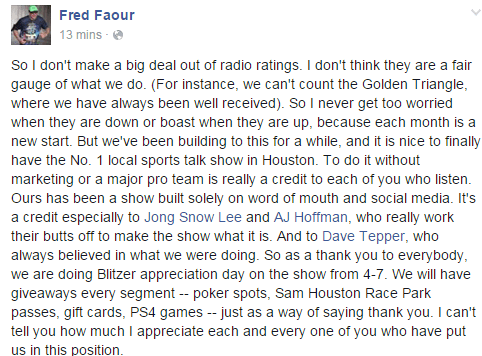
First, let me show you what Fred Faour of ESPN 97.5 posted on Facebook after I posted the story about his radio station’s success in the January ratings book. His afternoon program “The Blitz” which he hosts with AJ Hoffman, was the top rated show in the Houston market for the month, and that’s something that both men should be extremely proud of. But it’s the way that Fred addressed the news, that captured why the show is connecting in strong fashion with Houston sports radio listeners.

sharingsuccess

By giving the credit to the audience, and thanking them for being part of the journey, especially with the twist of “Blitz Appreciation Day” (they took a good story and made it great), the fans felt included in the success of the show, which led to a lot of positive response.

Houston1

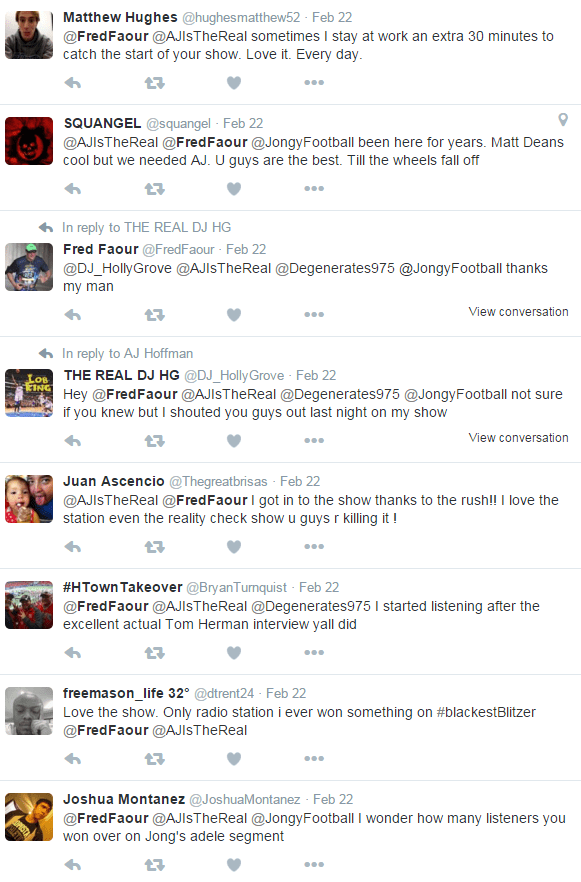
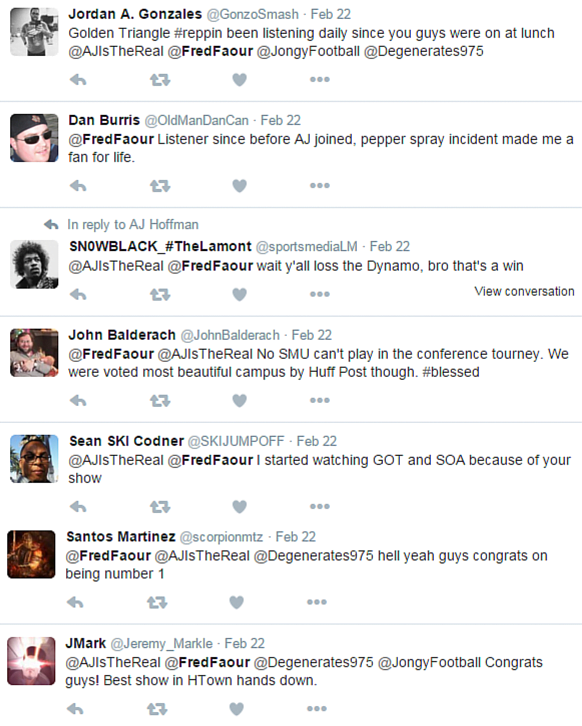
And it wasn’t just on Facebook either. The same engagement took place on Twitter.

houston2 Untitled design

We often hear about social media bringing out the worst in people, and I’m not here to dispute that, because there are plenty of issues that exist in the social space. What we don’t hear much though are the ways it can provide a positive experience. As you can see above, when you share a good story, and include people in the process, they’re proud to express their appreciation and that type of marketing doesn’t cost a dime and can be very powerful.

If you’re wondering if it’s a matter of Houston fans operating differently than other cities, guess again. I saw the same result in Nashville.

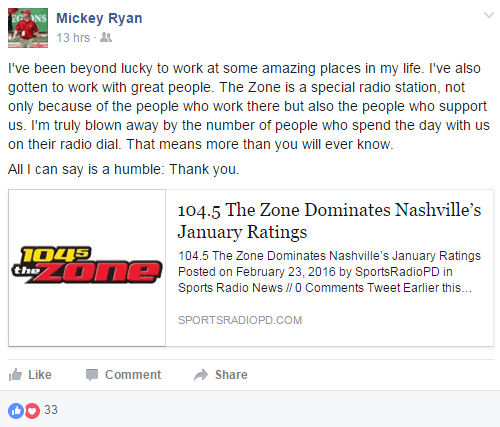
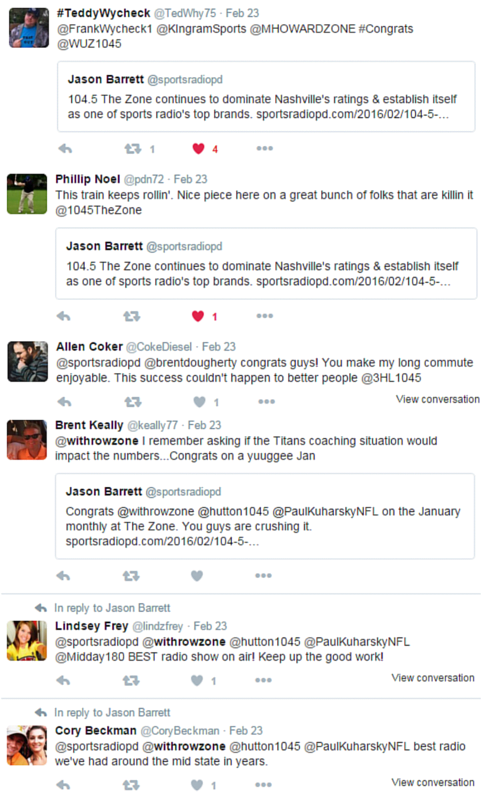
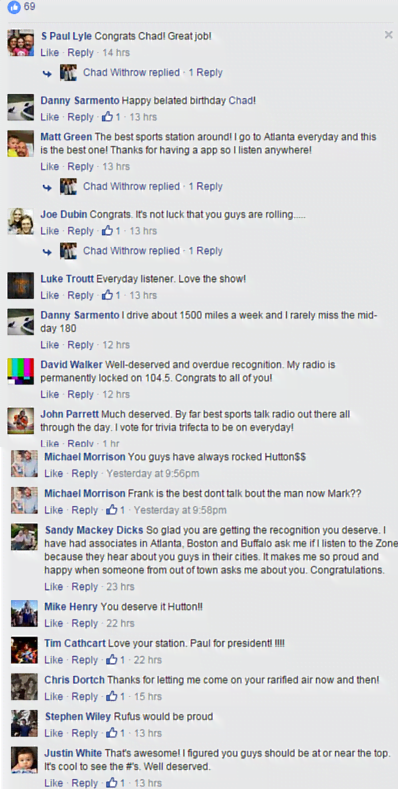
A couple of the crew at 104.5 The Zone shared the good news with their listeners on social media, and wouldn’t you know it, people were happy to learn about it. I pulled Mickey Ryan’s post on Facebook, and audience reactions to Jonathan Hutton and Chad Withrow. I also threw in some tweets which poured in after I shared the Nashville ratings story on Twitter.

nsh7


Untitled design (1)

Untitled design (2)

Altogether there were hundreds of comments, likes, and retweets on social media, and the reaction from the audience was positive. They felt important, empowered, and part of the brand’s success. When listeners feel like they’re receiving special access and information, it makes them feel valued, and they begin to tell the story of your brand better than any television commercial or print ad ever could.

These are two great success stories and there are others out there just like them. I can’t force this industry to promote itself, and I can’t make programmers, talent, and executives want to share their story. I can only offer to help and remind them of why it matters.

If there’s one thing I’ve been frustrated by throughout the years, it’s how this format gets beaten up in print by writers who don’t understand the ratings game or the numerous ways sports radio stations measures their success.

corporatemediacontrol1Some columnists have an axe to grind with certain local personalities or they don’t respect the medium because they believe any person can get behind a microphone, offer a strong opinion and generate a response. They see sports radio as a threat to their platform, and can’t understand how some could consider what we do to be art. When an opportunity arises to ignore a station’s success or poke holes in their performance, they take full advantage of it.

While we can sit here and complain each time a column is written that paints a negative picture of our brands and format, I believe it’s the responsibility of each radio station to get out in front of their own story.

Remember this, no columnist owes you a positive article. They decide what content they want to feature on their platform, and although you may believe you deserve recognition in their publication for what you’ve accomplished, if they disagree, you lose.

So then how do you change that?

Social media today is yesterday’s newspaper. Many of us used to wake up, open up the sports section, read the articles, check the box scores and latest stats, and then talk about it with our friends and family. Now though, social media is where we begin, continue, and end our day, and many of the things we discover, appear right in front of our eyes on our own timelines.

smIf your brand has put the time and resources into building its audience on Facebook, Twitter, Instagram, Snapchat, or Periscope, then you’re in the right locations. The people who follow your brand are doing so because they enjoy your personalities and content. When you treat them to inside stories such as a new hire, a private contest, an internal debate, or a successful month in the ratings, they often share the information and engage in discussion about it. They become a verbal marketing machine for your organization.

Many operators lose sight of the fact that their own CEO’s are sharing their company story once per quarter with investors. Sales reps and Market Managers are doing the same in person, by phone, and through email with advertisers and local partners. So if those things are taking place, then what are you worried about? Even if your brand has a bad month, it’s forgotten thirty days later.

I’m only one man with an opinion, and you’re more than welcome to disagree with my point of view. Lord knows I’ve been wrong before and will be again at some point.

But from where I sit, I see a lot of good stories taking place across the country in this format. Many of them could provide a couple of local sales staffs with some great ammunition to land larger dollars, while also igniting the local audience and making them want to spend more time supporting their favorite local sports radio stations.

The last time I checked, the goal was to increase the amount of time listeners spend with the radio station and generate more revenue. If that’s the case, and sharing your success helps you take a step closer to accomplishing both goals, then why on earth would you not do it?

The examples above from Nashville and Houston are proof of what can happen when you let people share in your success. The only question you should be asking yourself now is, what exactly are you gaining by not letting them know?

Dodgers Television Woes Continue In Los Angeles

0

The Los Angeles Dodgers’ television network (SportsNet LA) has made another decision which has local fans unhappy. The team announced it was cutting back spring training broadcasts from 31 to 16.

It sounds like a joke, but it’s real. A network that exists solely to telecast Dodgers games will not be telecasting some Dodgers games. A network accessible to only 40% of Southern California homes has decided, what the heck, let’s shut out everyone.

Luckily for local baseball fans, there is always FS West, which will broadcast 31 Angels spring games, including being the sole television provider for the first two Dodgers-Angels Cactus League games March 9 and 11.

This is not about the importance of watching spring exhibitions, which become awfully boring when all the good players hit the golf courses by the fifth inning. SportsNet LA is not alone in taking a spring break, as most teams televise only a smattering of games — and even KLAC radio is broadcasting only 14 games from Arizona. And yes, it makes sense when Time Warner Cable officials say they are cutting back because of lousy midweek afternoon ratings.

But when the Dodgers and Time Warner Cable continue to deny 60% of Southern California households a chance to watch their team because of ego and greed, then each misstep becomes more galling than the previous one, and every stumble becomes emblematic of a legendary fall.

At this point in the three-year debacle, it is worth wondering whether this might be the worst team-TV partnership in modern sports history. If the Dodgers keep Vin Scully from Los Angeles during his final season, that seals it.

To continue reading visit the Los Angeles Times where it was originally published

104.5 The Zone Dominates Nashville’s January Ratings

0

Earlier this month we released our “2015 Best In Sports Radio” series which highlighted the Top 20 in a number of different categories. If you read my follow up piece, you likely recall how I pointed out that a number of smaller market stations and shows didn’t receive their due when many had a legitimate gripe.

In the case of great brands like 610 Sports in Kansas City, 101 ESPN in St. Louis, and 99.9 The Fan in Raleigh, they did everything they were supposed to do from a performance standpoint. Their only crime in receiving credit was not tripling the size of their population and becoming a top 10 market, and that’s unfair.

Well, one brand that didn’t bellyache over any of the results but had as strong of a reason to as anyone, was 104.5 The Zone in Nashville.

To many on the outside, the Nashville market may be best known for the Titans and Country music but to plenty of industry insiders, The Zone has become a well respected brand in the sports talk format. It has been and continues to be one of the highest rated brands in the nation, but even many who work in the sports radio field aren’t aware of just how dominant their performance is.

I was able to do some digging and gather the ratings data for the January book in the Nashville market, and I’m excited to share it with you because I believe this is a story that deserves to be told. In my opinion, it’s flown under the radar for far too long.

Let’s start by focusing on M-SU 6a-Mid with Men 25-54.

  • 104.5 The Zone = 11.2 (1st)

*** The Zone’s closest competitor, 102.5 and 94.9 The Game, finished tied for 16th with a 1.8.

Next up, M-F 6a-7p with Men 25-54.

  • 104.5 The Zone = 12.7 (1st)

When you turn the attention towards the radio station’s weekday programs, it’s the same story. Let’s begin by looking at M-F 6a-10a with Men 25-54.

  • 104.5 The Zone (The Wakeup Zone) = 14.2 (1st)

Shifting gears, we move on to middays M-F 10a-3p with Men 25-54.

  • 104.5 The Zone (Dan Patrick Show and Midday 180) = 11.7 (1st)

To wrap things up we shine the spotlight on M-F 3p-7p with Men 25-54.

  • 104.5 The Zone (3HL and Primetime) = 12.3 (1st)

Even the radio station’s weekends deliver a 9.7 which is also good enough for 1st.

At this point, the real internal story is which show is going to gain bragging rights for being the best on the radio station. The threat of competition is not on the radio station’s radar. For this month, the honor of being recognized as the station’s best belongs to ‘The Wake Up Zone” which features Kevin Ingram, Frank Wycheck and Mark Howard.

What’s scary is that when you look at the money demo (Persons 25-54), the same story exists.

For example, The Zone was tied for 5th M-SU 6a-Mid with a 6.8. They were 4th M-F 6a-7p with a 7.5. In mornings they finished 2nd with an 8.6. Middays came in 5th with a 7.1. And in afternoon drive, they’re 4th with a 6.9.

What this data tells us is that The Zone owns the market with Men 25-54, and the real competitive focus is on beating brands in the Persons 25-54 category. When a sports station is able to do that, it puts a company in position to have huge financial success.

Let me be clear about one thing as it pertains to this story. I don’t work for 104.5 The Zone or Cumulus who owns the radio station. The only thing I gain by sharing this story is some additional web traffic, a few thank you’s from listeners and industry folks who are appreciative of learning the information, and if I play my cards right, maybe a retweet from Mickey Ryan, Brent Dougherty and Blaine Bishop of 3HL.

If The Zone was losing badly, I wouldn’t hesitate to share that story because I believe in being fair, objective, and honest. In this case though there isn’t much to say other than “congrats on a job well done!”

The purpose of this piece is to educate you on what this brand has created in its local market, and acknowledge why they deserve to be in the conversation among elite brands in the sports radio format. Stations such as 98.5 The Sports Hub and WEEI in Boston, WFAN in New York, 97.1 The Ticket in Detroit, and KFAN in Minneapolis all deserve to be at the top of the list, but 104.5 The Zone can make an argument for why they belong in the same discussion.

When you’re delivering double digit ratings and 1st place finishes month after month, that’s impossible to ignore. It’s these types of stories that demonstrate the power sports radio has in local markets, and the more we become familiar with them, the more the mainstream media will have to take notice of the way this format and its personalities connect with local audiences, and deliver results for advertisers.

I know this much, if you’re an advertiser looking to reach Men in the Nashville market, and you’re not investing the majority of your budget on The Zone, your strategy is severely flawed. There’s an old saying in sports radio “you fish where the fish are” and in this case, they’re all swimming in The Zone’s waters.

ESPN To Have a Heavy Presence At The NFL Scouting Combine

0

Highlighting ESPN’s coverage of the NFL Scouting Combine this week, NFL Insiders will originate from Indianapolis from Wednesday, Feb. 24, through Monday, Feb. 29, with one-hour shows at 1:30 p.m. ET (no show Saturday or Sunday). Suzy Kolber will host with Adam Schefter, Bill Polian and Louis Riddick and NFL Draft analyst Todd McShay. NFL Insiders Josina Anderson, Adam Caplan, John Clayton, Mark Dominik, Dan Graziano and Field Yates and national correspondent Sal Paolantonio will also contribute to ESPN’s on-site coverage, appearing on NFL Insiders, NFL Live (one-hour shows follow each NFL Insiders) and SportsCenter throughout the Combine.

Additionally, the following NFL Nation reporters will be on site contributing to ESPN’s multi-platform coverage of the Combine: Todd Archer (Dallas Cowboys), Rob Demovsky (Green Bay Packers), Jeff Dickerson (Chicago Bears), Mike DiRocco (Jacksonville Jaguars), Jeremy Fowler (Pittsburgh Steelers), Tania Ganguli (Houston Texans), Coley Harvey (Cincinnati Bengals), Jamison Hensley (Baltimore Ravens), Paul Kuharsky (Tennessee Titans), Jeff Legwold (Denver Broncos), Vaughn McClure (Atlanta Falcons), Pat McManamon (Cleveland Browns), Mike Rothstein (Detroit Lions), Adam Teicher (Kansas City Chiefs), Nick Wagoner (Los Angeles Rams), Josh Weinfuss (Arizona Cardinals) and Mike Wells (Indianapolis Colts).

The First Draft podcast will also include coverage of the Combine. McShay, fellow NFL Draft analyst Mel Kiper Jr. and ESPN.com senior editor Chris Sprow welcome an NFL prospect to this week’s show.

Credit to ESPN Media Zone who originally published this information